💥Mains Ready By December. Smash Mains & Smash PYQ Admissions Open

Subject: International Stories of Key Importance

  • In news: Operation Storm Makers II

    Central Idea

    • The Interpol operation Storm Makers II against fraud schemes fuelled by victims of human trafficking has unearthed further evidence that the trend is expanding beyond the Southeast Asian region.

    About Operation Storm Makers II

    • This operation was a special mission organized by Interpol Headquarters in Lyon, France.
    • The operation took place from October 16 to 20.
    • It involved law enforcement in 27 countries across Asia and other regions.

    The operation targeted human trafficking and cyber scams. It resulted in:

    1. Rescue of 149 human trafficking victims
    2. Hundreds of arrests
    3. More than 270,000 inspections and police checks

    Back2Basics: INTERPOL

    Details
    Full Name International Criminal Police Organization
    Member Countries Comprises 195 member countries
    Function Facilitates coordination among police forces globally; shares data on crimes and criminals
    Headquarters Located in Lyon, France
    Global Complex Has a Global Complex for Innovation in Singapore
    Satellite Offices Several regional offices in different parts of the world
    India’s Membership Joined in June 1956
    National Central Bureau (NCB) Each member country has an NCB; in India, it’s under the Ministry of Home Affairs (MHA)

    NCBs are the contact points for Interpol’s General Secretariat and other NCBs; run by police officials of the country

    Databases Manages 19 police databases with real-time access to information on crimes and criminals
    Investigative Support Provides forensic, analysis, and assistance in locating fugitives globally
    Red Notice (RN) Issued to alert police worldwide about fugitives wanted for prosecution or to serve a sentence; for provisional arrest pending extradition or similar legal action
  • The hypocrisy of Western democracy

    Understanding the Israel-Palestine conflict - Frontline

    Central idea 

    The article explores the tragic situation in Palestine, emphasizing the West’s complicity in enabling Israel’s actions. It highlights the suppression of freedom of expression, media bias, and challenges in Europe, calling for an exposé of Western democracies’ hypocrisies and a truthful reckoning to address the root causes of Palestinian oppression.

    Key Highlights:

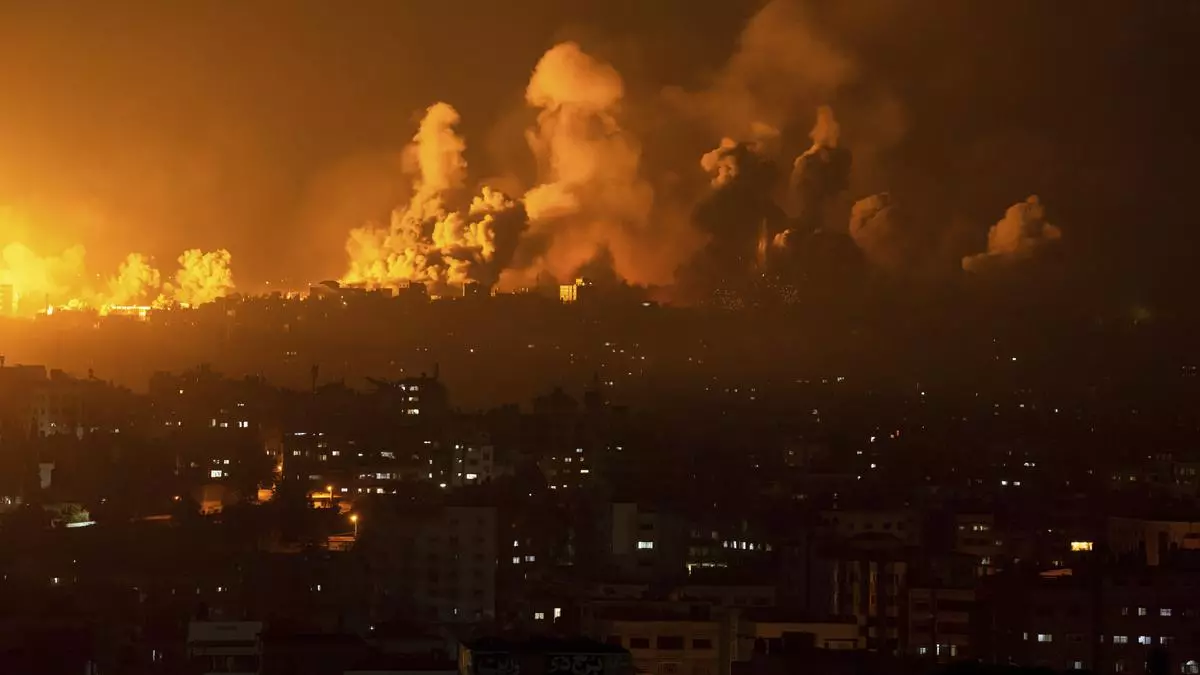
    • Tragic Toll: The passage reveals the staggering death toll of over 17,000 Gazans since October 7, underscoring the magnitude of the ongoing tragedy.
    • West’s Enabling Role: The West is implicated in enabling Israel’s actions through support, framing the conflict, and reducing Palestine to the actions of Hamas.

    Key Challenges:

    • Freedom of Expression Suppression: Western societies, despite professing democracy, are suppressing freedom of expression, particularly in universities, where pro-Palestine advocates face public exposure.
    • Media Bias: The media, a significant influencer, is criticized for its overwhelming bias towards Israel, neglecting the historical roots and international illegality of Israeli occupation.

    Key Terms and Phrases:

    • Zionism and Apartheid: These terms highlight ideological aspects and the discriminatory nature of certain Israeli policies.
    • Genocidal Intent and Settler Colonialism: These phrases emphasize the severity of actions and the historical context of Israeli actions in Palestinian territories.

    Key Quotes:

    • “The West has shockingly enabled this [tragedy] in various ways,” pointing to the culpability of Western nations.
    • “The media has been key in framing the Palestine-Israel conflict for 75 years,” exposing the media’s role in shaping public perception.

    Key Examples and References:

    • University Actions: Instances of Harvard and Columbia exposing details of pro-Palestine students highlight the suppression faced by advocates.
    • European Countries’ Stance: The passage cites bans on pro-Palestinian protests in countries like the U.K., France, Germany, and Italy as concrete examples of European support for Israel.

    Key Facts and Data:

    • Death Toll: Over 17,000 Gazans killed since October 7, quantifying the scale of the tragedy.
    • Harvard’s Philanthropy Dependency: Highlighting that 45% of Harvard’s revenue in 2022 came from philanthropy underscores the potential influence of donors.

    Critical Analysis:

    • Suppression of Free Speech: The critical analysis underscores the severe impact of suppressing freedom of expression on informed dialogue.
    • Media’s Role: Emphasizing media bias prompts reflection on the potential manipulation of public opinion.

    Way Forward:

    • Expose Hypocrisies: Advocates for change should actively expose the hypocrisies of Western democracy, challenging the status quo.
    • Acknowledge Complicity: A call to acknowledge Western complicity in Palestinian oppression encourages introspection and accountability.
    • Listen to Dissenting Voices: Encouraging the acknowledgment of dissenting voices, including Jewish dissenters, fosters a more inclusive dialogue.
    • Truthful Reckoning: Highlighting the need for a truthful reckoning emphasizes the importance of understanding historical roots and actions for a sustainable resolution.
  • Is the United Nations toothless in ending wars?

    Central idea 

    The article discusses the escalating conflicts in the Israel-Hamas and Russia-Ukraine situations, questioning the UN’s effectiveness in maintaining global peace. It highlights challenges such as the post-Cold War dilemma, erosion of the liberal order, and veto impasse, emphasizing the need for innovative conflict resolution mechanisms, UN reforms, and global public engagement to address the complexities in today’s geopolitical landscape.

    Key Highlights:

    • Escalating Conflicts: Israel-Hamas clashes intensify post-October 7 attack. Simultaneous Russia-Ukraine conflict adds global complexity.
    • Strategic Dialogue: Rakesh Sood and Vivek Katju discuss UN’s peacekeeping challenges. Moderated by Kallol Bhattacherjee, the dialogue addresses current geopolitical unrest.
    • Global Impact: UN’s role questioned in resolving modern conflicts. Increasing doubts about UN’s effectiveness in maintaining global peace.
    • Diverse Perspectives: Perspectives on the liberal international order and its alleged demise. Shift from unipolarity to multipolarity examined in the post-Cold War era.

    Challenges:

    • Post-Cold War Dilemma: Diminished UN conflict resolution post-Cold War. Major powers’ discord paralyzes UN decision-making.
    • Erosion of Liberal Order: Dispute over the existence of a liberal international rules-based order. Unipolar moment disappears by 2008, raising concerns.
    • Veto Impasse: UNSC’s efficacy hampered by veto powers. National interests obstruct addressing conflicts effectively.
    • Internal Israeli Complexities: Netanyahu’s divisive leadership influences Israel’s stance. Domestic protests and judicial reforms contribute to complexity.
    • Global Power Discord: Lack of consensus among major powers hinders UN efforts. Veto powers in the UNSC obstruct conflict resolution.
    • Nuances in Israel’s Approach: Israel’s response to Hamas extends beyond national security. Commitment to eliminating Hamas reflects deep resolve.
    • UN’s Passive Role: Criticism for UN’s passive role in recent conflicts. Major powers’ differences render the UN a bystander.
    • Shift to Multipolarity: Multipolarity after 2008 presents challenges. Multipolarity without multilateralism leads to chaos.

    Concerns:

    • Global Power Discord: Lack of consensus hinders UN’s conflict resolution. Veto powers impede the organization’s ability to act decisively.
    • Nuances in Israel’s Approach: Israel’s response to Hamas goes beyond national security. Commitment to eliminating Hamas reflects a profound resolve.
    • UN’s Passive Role: UN criticized for passive role in recent conflicts. Major powers’ differences render UN a bystander.
    • Shift to Multipolarity: Transition to a multipolar world after 2008 presents challenges. Multipolarity without effective multilateralism leads to chaos.

    Analysis:

    • Inert UN Dynamics: UN’s perceived ineffectiveness raises questions. Major powers’ disagreements cripple the UN’s active role.
    • Multipolarity Challenges: Emergence of a multipolar world introduces complexities. Lack of a new order suited for a multipolar world contributes to global unrest.
    • Strategic US Interventions: US interventions post-Cold War questioned for legitimacy. Iraq, Afghanistan, Mali, and Libya conflicts showcase UN’s limited role.
    • Dilemmas in Conflict Resolution: Complexities in resolving conflicts beyond traditional UN approaches. Calls for exploring alternative mechanisms acknowledging evolving geopolitical landscapes.

    Key Terms:

    • UN, Israel-Hamas conflict, Russia-Ukraine crisis, liberal international order, multipolarity, major powers, ceasefire.

    Way Forward:

    • Revamping Conflict Resolution: Urgency in exploring innovative conflict resolution mechanisms. Recognition of complexities beyond traditional UN paradigms in today’s geopolitical scenario.
    • India’s Global Role: Acknowledges India’s increasing global significance. Emphasizes the need for realistic expectations given the superior dynamics at play.
    • Multilateral Diplomacy: Strengthening multilateral diplomatic efforts for conflict resolution. Encouraging dialogue and cooperation among major powers to overcome discord.
    • UN Reforms: Advocating reforms in UN structures for increased agility. Addressing veto-related challenges to enhance the UN’s role in global peacekeeping.
    • Global Public Engagement: Fostering global public engagement in conflict resolution. Leveraging public sentiment to influence diplomatic decisions and encourage peaceful solutions.
  • Isthmus of Kra Land Bridge Project

    Isthmus of Kra

    Central Idea

    • Thailand, with its distinctive geography resembling a plume of smoke rising from the sea, is considering a bold and historic project – the creation of an Isthmus of Kra Land Bridge.
    • This project aims to revolutionize global trade routes and significantly impact Thailand’s economy.

    About the Isthmus of Kra

    Details
    Location Southern Thailand, separating the Malay Peninsula
    Width Approximately 44 km
    Geographic Features Connects Andaman Sea (west) to South China Sea (east)
    Strategic Importance Historical trade route; potential shortcut for maritime trade


    The Land Bridge Project: A Historical Dream

    • Centuries-Old Idea: The dream of connecting Thailand’s two coasts across the Isthmus of Kra dates back to King Narai the Great of the Ayutthaya Kingdom in 1677.
    • Early Efforts: British and French colonial interests led to surveys and studies in the 19th century to create a maritime channel through the isthmus.
    • Modern Proposal: In 2021, Thailand introduced a new proposal, envisioning a land bridge instead of a canal.

    Current Vision

    • Reducing Shipping Distance: Thai PM envisions a 90-kmland bridge with road and rail networks, connecting deep-sea ports on both coasts.
    • Strait of Malacca Alternative: This project could offer a shorter, safer, and cost-effective route, saving approximately 1,200 km and 2 to 3 days of travel compared to the congested Strait of Malacca.
    • Economic Benefits: It aims to stimulate economic growth, create jobs, and reduce transport time, benefiting Thailand’s economy and its position in Southeast Asia.

    Conclusion

    • Thailand’s proposal to create an Isthmus of Kra Land Bridge reflects its ambition to redefine global trade routes, boost its economy, and strengthen its role in Southeast Asia.
    • While financial, geopolitical, and environmental challenges loom large, this project symbolizes Thailand’s determination to shape its future on the world stage.
  • Places in news: Dagestan

    Dagestan

    Central Idea

    • A recent incident involving anti-Israel protesters storming an airport in Makhachkala, Dagestan, has drawn international attention.
    • This incident highlights the unique position of Dagestan, which, while sounding like a country, is actually a province within Russia.

    About Dagestan

    • Dagestan, officially known as the Republic of Dagestan, is a province within the Russian Federation, dispelling any confusion arising from its name.
    • Situated in the southernmost part of Russia, it holds strategic importance for the country.

    Geographical Location

    • Land of Mountains: Dagestan’s name translates to “land of the mountains,” emphasizing its mountainous terrain.
    • North Caucasus: Located in the eastern part of the North Caucasus, it shares borders with Georgia and Chechnya to the west and Azerbaijan to the south. To the east lies the Caspian Sea.
    • Inaccessible Terrain: Some areas within Dagestan’s mountains are so remote that reaching them requires helicopters.

    Ethnic Diversity

    • Over 40 Ethnicities: The province is home to at least 40 different ethnic groups.
    • 30+ Languages: More than 30 languages are spoken in this region.
    • Prominent Ethnic Groups: The largest ethnic group in Dagestan is the Avars, comprising approximately one-fifth of the population. Other significant groups include Dargins, Kumyks, and Lezgins.
    • Ethnic Russian Presence: Despite the ethnic diversity, around 10% of Dagestan’s population is ethnically Russian.

    Capital: Makhachkala

    • Strategic Coastal City: Makhachkala, the capital of Dagestan, is situated along the Caspian Sea coast.
    • Historical Significance: Once a major trading port, Makhachkala was conquered by the Russian Imperial Army in the 19th century.
    • Oil and Gas Hub: Today, Dagestan serves as a crucial conduit for oil and gas pipelines connecting the Caspian Sea to Russia’s heartland, possessing its own reserves of these resources.
    • Challenges: The region has grappled with organized crime and instability, with Russian security forces combating armed insurgencies and militant groups in Dagestan and neighboring areas.
  • UNGA Vote on Gaza War, and why India abstained

    unga hamas israel

    Central Idea

    • The recent United Nations General Assembly (UNGA) vote on a resolution calling for an immediate humanitarian truce in the Israel-Hamas conflict saw India abstaining from the vote.

    What are UNGA Resolutions?

    UNGA Resolutions and Voting
    What is it? Cover diverse global issues, including disarmament, climate change, and humanitarian aid.
    Types Include regular, consensus (adopted without a vote), and procedural resolutions.
    Who can initiate? Originates from member states, UN committees, or regional groups after negotiations and debates.
    Nature of Enforcement Non-binding but hold moral and political influence on member states and UN bodies.
    Significance Shape international norms, public opinion, and state behavior despite lacking legal enforcement.
    Features of UNGA Resolutions Discussed and adopted during annual sessions, with possible special sessions when required.
    Equal Voting Rights Each member state has an equal vote, ensuring equality regardless of size or influence.
    Majority Requirements Typically adopted with a two-thirds majority of present and voting member states (e.g., 128 votes if all 193 are present).
    Varied Majority Types Some require a simple majority, while others, like UN Charter amendments, need a two-thirds majority of all member states.
    Abstentions Member states can abstain, signifying neutrality without supporting or opposing.
    Challenges and Divisions Resolutions may face opposition or receive no votes, leading to international discussions and divisions.

    Resolution over Israel-Hamas War

    • The resolution, titled “Protection of civilians and upholding legal and humanitarian obligations,” was proposed by Jordan on behalf of the Arab League and co-sponsored by approximately 40 countries.
    • It called for an immediate humanitarian truce, cessation of hostilities, and unhindered humanitarian access to Gaza.
    • However, it did not specifically refer to the cowardly terror attacks by Hamas, which resulted in numerous Israeli casualties and hostages.
    • Ultimately, the resolution passed with 120 votes in favor, 14 against (including US and UK), and 45 abstentions, with India among the abstaining nations.

    India’s Abstinent

    • India defended its abstention by citing the absence of “explicit condemnation” of the October 7 terror attacks in Israel in the resolution.
    • Since India’s concerns regarding these omissions were not addressed in the final text of the resolution, abstaining was the chosen course of action.
    • The government emphasized that there should be no ambiguity when it comes to condemning terrorism and that its position on this matter remains “steadfast and consistent.”
    • Key elements of India’s statement include-
    1. Condemnation of violence, including the October 7 attacks by Hamas.
    2. Acknowledgement of the humanitarian crisis in Gaza and support for international de-escalation efforts.
    3. Concern about the security situation and a call for all parties to exercise restraint.
    4. Reiteration of India’s support for a negotiated two-state solution in the Israel-Palestine issue.
    5. Encouragement for diplomacy and dialogue to create conditions for peace negotiations.

    Why so furore over India’s action?

    • India’s abstention differed from its previous vote in favour of a UNGA resolution calling for a ceasefire in Gaza in 2018 and other similar votes in the past.
    • Opposition parties in India criticized the government for refusing to take a stronger stand on the humanitarian issue.
    • They argued that India’s abstention stood alone among countries in the Global South, South Asia, and BRICS, all of which had voted in favour of the resolution.

    Significance of India’s action

    • Balanced Position: India’s abstention mirrors its approach to other global conflicts, such as the Russia-Ukraine war, where it seeks to maintain a diplomatic balance between opposing sides.
    • Not Legally Binding: Unlike UN Security Council resolutions, UNGA resolutions are not legally binding, meaning that Israel and the US are not obligated to act on it.
    • Weight and Moral Authority: Despite its non-binding nature, the resolution carries significant moral weight, with 120 votes in favour signifying support for international law and proportionate use of force.
    • India’s Principled Stand: India reiterated its support for a negotiated two-state solution to the Israel-Palestine issue and called for diplomacy and dialogue to resolve the conflict.

    Conclusion

    • India’s abstention in the recent UN General Assembly vote reflects its balanced and nuanced approach to international conflicts.
    • While it has drawn criticism from some quarters, it underscores India’s commitment to principles of diplomacy and its focus on a negotiated resolution to complex global issues.
  • With life of eight Indians in Qatar at stake, India needs deft diplomacy

    Central idea

    Qatar’s unprecedented death sentences for eight retired Indian naval personnel on espionage charges pose a formidable diplomatic challenge for the government. Minister Jaishankar’s cautious response and public expectations add layers to this sensitive situation.

    What Happened?

    • Recently, Qatar handed death sentences to eight retired Indian naval personnel, a shocking move.
    • Unlike previous cases involving murder or narcotics, these charges relate to espionage.

    Minister Jaishankar’s Response and Diplomatic Sensitivity

    • Assurances to Parliament: Minister Jaishankar assured Parliament that the matter is a priority, urging patience due to its sensitivity. The focus is on keeping the welfare of the eight individuals at the forefront.
    • Media Statements and Caution: Media statements exercise caution due to the confidential nature of the case. Not commenting further is a diplomatic approach, respecting the sensitivity of ongoing proceedings.

    Current Challenges:

    • Diplomatic Problem: The government faces a tough situation with Qatar giving death sentences to eight retired Indian naval people.
    • Public Worries: People, along with opposition parties, are worried about the safety of those convicted, putting pressure on the government to bring them back home.
    • Sensitive Matter: The case involves spying charges against a group of retired defense officers, making it a delicate issue in the diplomatic world.
    • Limited Information: Because the case details are confidential, the government can’t share much, leading to people guessing and worrying more.

    Way Forward:

    • Talking with Qatar: India should keep discussing with Qatar, telling them to be fair and just while following their laws.
    • Helping with Consular Stuff: Making sure the convicted individuals can meet with Indian officials regularly and watching over their court case is really important.
    • Telling People What’s Up: The government needs to tell people what it can, being honest but also keeping some things private.
    • Getting Support: Asking other countries for support and help can make Qatar rethink its decision.
    • Using Legal Moves: Trying legal ways, like making appeals and talking with Qatar, is crucial to get the naval people released.
    • Calming People Down: Making sure veterans and the public know what’s happening and addressing their worries is super important.
  • The legality of using white phosphorus

    white phosphorus

    Central idea

    The article explores the legality of using white phosphorus in armed conflicts, focusing on instances like Israel’s alleged use in Gaza. It delves into the ethical concerns, relevant legal frameworks, and the need for strengthening regulations to prevent harm to civilians and the environment.

    Key highlights in the Article:

    • Human Rights Watch accused Israel of using white phosphorus munitions in Gaza.
    • The 2008-2009 Gaza War witnessed allegations of Israel using white phosphorus in the Gaza Strip.
    • The UN Fact Finding Mission on the Gaza Conflict condemned IDF’s use of white phosphorus in civilian areas.
    • The Israel military, in the case of Yoav Hass and others v. Chief of Staff (2013), agreed to abandon white phosphorus use except in specified situations communicated to the court.

    Know about the White Phosphorus (WP):

    • Chemical Properties: WP is a chemical substance with phosphorus as its primary component. It has unique properties, including self-ignition in the presence of oxygen.
    • Military Applications: Used in incendiary devices like grenades and artillery shells. Creates dense smoke screens for military operations.
    • Incendiary Effects: Can cause intense and persistent fires effective against people, equipment, and structures. Poses significant ethical concerns due to its potential for causing severe burns and suffering.
    • International Humanitarian Law (IHL): Governed by IHL principles, including distinction, proportionality, and the prohibition of indiscriminate attacks. Use in civilian areas raises concerns about adherence to these principles.

    Learn the difference UPSC might trick you in prelims

    Criteria Chemical Weapons Convention (CWC) Convention on Certain Conventional Weapons (CCW)
    Objective Comprehensive elimination of chemical weapons, toxic chemicals, and precursors. Restriction of specific conventional weapons causing excessive harm.
    Coverage Covers a broad range of chemical agents used in warfare. Addresses particular categories such as incendiary weapons, blinding lasers.
    Focus Prohibits the development, production, and use of chemical weapons. Addresses concerns related to specific conventional weapons without complete prohibition.
    Verification Robust verification regime, including inspections and declarations. Less extensive verification mechanisms, more targeted to specific weapon categories.
    Examples Prohibition of nerve agents like Sarin and VX. Regulations on incendiary weapons like white phosphorus, blinding lasers.


    Legality in its use:

    • Not covered by the Chemical Weapons Convention (CWC) when used as an incendiary weapon, not for chemical warfare. White phosphorus, although a chemical agent and toxic, is not covered by the CWC
    • Regulated by Protocol III under the Convention on Certain Conventional Weapons (CCW). Protocol III under the CCW specifically deals with incendiary weapons. Article 1 of this protocol defines an “incendiary weapon” as a weapon or munition primarily designed to set fire to objects or to cause burn injury to persons through the action of flame, heat, or combination thereof, produced by a chemical reaction of a substance delivered on the target.
    • Article 1(b)(i) includes an exemption in this classification for munitions that may cause unintended incendiary effects, such as illuminants, tracers, smoke, or signalling systems.
    • White phosphorus munitions are primarily intended to produce illuminating and smokescreen effects, with the incendiary aspects being secondary or unintentional. Consequently, incendiary munitions clearly fall within the exceptions outlined in Protocol III’s definition of an “incendiary weapon.”
    • When employed as an incendiary weapon and not for chemical warfare, white phosphorus falls under the regulations of Protocol III of the CCW.
    • However, Protocol III does not effectively regulate multi-purpose munitions such as those containing white phosphorus, which can cause harm in the same way as the incendiary weapons it defines.

    Ongoing Concerns:

    • Recent accusations against Israel highlight continued concerns about the use of WP in conflict zones.
    • Its effects on civilians and the environment underscore the importance of legal regulations.
    • White phosphorus has diverse applications, including creating smoke screens and as an ingredient in incendiary devices.
    • Environmental dangers and ethical concerns arise due to its potential to cause severe burns and suffering.

    Way Forward:

    • Strengthening Protocol III to effectively regulate multi-purpose munitions, including those containing white phosphorus.
    • Consideration of legal precedents, such as the Advisory Opinion on the Legality of the Threat or Use of Nuclear Weapons and Additional Protocol I of the Geneva Conventions.
    • Emphasis on upholding international law, treaties, and protocols to reduce harm to civilians and the environment.
    • Strengthening legal frameworks and removing ambiguities would enhance global efforts to curb the misuse of substances like white phosphorus in armed conflicts.
  • Places in news: Rafah Crossing

    rafah crossing

    Central Idea

    • Palestinians have been gathering at the Rafah border crossing with Egypt in the southern Gaza Strip.
    • Meanwhile, Egypt has opened the borders for UN humanitarian aid for Palestinians.

    What is Rafah Crossing?

    • The Rafah Crossing is a border crossing point between the Gaza Strip and Egypt, located in the southern Gaza Strip.
    • It serves as one of the few access points for people and goods to enter or exit the Gaza Strip, which is a Palestinian territory along the eastern coast of the Mediterranean Sea.
    • Egypt has maintained strict movement restrictions at the Rafah crossing for years, raising concerns that it indirectly supports Israel’s Gaza blockade, which began in 2007 after Hamas took control.

    Egypt’s Role and Restrictions

    • Security Concerns: Security concerns in North Sinai, where Egypt has battled jihadists linked to Al Qaeda, have largely justified these restrictions.
    • Avoiding Exodus: Egypt may be reluctant to open the crossing without clear conditions and guarantees to avoid a mass exodus of Palestinians from Gaza.
    • Responsibility Concerns: Egypt is concerned about being responsible for a large influx of Gazans if the crossing is opened indefinitely.
    • Permanent Resettlement: Egypt is reluctant to facilitate a permanent resettlement of hundreds of thousands of Palestinians from Gaza.
  • India’s Evolving Relations with Israel and Palestine

    israel

    Central Idea

    • The recent attack by Hamas (Arab sponsored Jihadist outfit) on Israel has prompted PM Modi to express solidarity with Israel, highlighting the complex nature of India’s relations with both Israel and Palestine.
    • Over the past seven decades, India’s stance on these nations has undergone significant shifts, reflecting its evolving foreign policy priorities and diplomatic considerations.

    About Israel-Palestine Conflict

    • Historical Background: The land of contention was under the Ottoman Empire and later the British Empire.
    • Anti-Semitism as Official Policy: Several Islamic countries, including the Arab world, Turkiye and Pakistan, have officially expressed hatred against Jews citing reference to religious scriptures.
    • Denial of Access: Jews, as a micro-minority of the world, have been denied access to their historic homeland.
    • Arab Resistance: Arabs resisted, claiming the land as their own, known as Palestine at the time.
    • Balfour Declaration: In 1917, the United Kingdom expressed support for the establishment of a Jewish homeland in Palestine.
    • Violent Resistance: Arab resistance to the declaration led to violence and further tensions.

    India’s quest for Balancing Relations

    India’s Post-Independence Stance

    • Nehru and Gandhi’s Stand: Post-independence, India was staunchly pro-Palestine as Jawaharlal Nehru and Mahatma Gandhi opposed religious exclusivity and supported the Palestinian cause.
    • UN Votes: India voted against the partition of Palestine and Israel’s admission to the UN but recognized Israel in 1950 after Turkey and Iran did so.

    Era of Indira and Rajiv Gandhi

    • Support for Palestine: During Indira Gandhi’s rule, India continued its support for the Palestinian struggle, elevating the PLO to the sole legitimate representative of Palestine.
    • Solidarity and Diplomacy: Strong ties were forged with Yasser Arafat, and India hosted the NAM summit in 1983, emphasizing solidarity with Palestine.

    Changing Dynamics

    • Critics and Shifts: Critics within India raised concerns about its pro-Arab stance, given Arab countries’ neutrality during India’s wars with China and Pakistan.
    • Indian-Israeli Relations: India recognized Israel in 1992, establishing full diplomatic relations after the end of the Cold War and BJP’s rise to power.
    • Kargil Conflict: During the Kargil conflict in 1999, Israel provided crucial military support, strengthening bilateral ties.

    Recent Developments

    • PM Modi’s Approach: Prime Minister Modi’s approach has balanced India’s ties with Israel and Palestine. He visited Israel in 2017, signaling a shift in focus.
    • De-hyphenation: Modi achieved a de-hyphenation of the relationship by separately visiting Palestine in 2018.
    • Wider Regional Engagement: India has deepened ties with Israel and West Asian nations like Saudi Arabia, Egypt, Qatar, and Iran over the past decade.

    Current Dilemma

    • Diplomatic Tight Spot: Recent hostilities in the region have placed India in a diplomatic dilemma. The conflict tests India’s relations with Israel and Palestine against the backdrop of the Abraham Accords and shifting Middle East dynamics.
    • Dividends at Stake: India had hoped to benefit from the newfound peace in the region, given its significant diaspora, connectivity, and energy imports from West Asia.

    Conclusion

    • India’s relationship with Israel and Palestine has evolved significantly since independence, influenced by domestic politics, global shifts, and regional considerations.
    • While India continues to support the Palestinian cause, it has also strengthened its strategic ties with Israel.
    • The recent escalation in hostilities in the region poses challenges for India’s diplomatic balancing act and its aspirations in the Middle East.