💥Join UPSC 2027,2028 Mentorship (July Batch) + XFactor Notes & Microthemes PDF

Subject: Judiciary

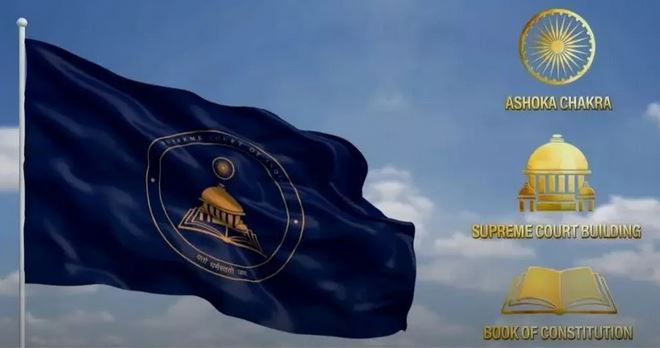
  • Diamond Jubilee celebrations of the Supreme Court

    Introduction

    • The Prime Minister inaugurated the diamond jubilee year celebrations of the Supreme Court, marking an important milestone in India’s judicial history.

    About Supreme Court of India

    • Apex Judicial Body: The Supreme Court of India is the highest judicial authority as per the Constitution of India.
    • Constitutional Mandate: Article 124 of the Constitution stipulates the establishment of the Supreme Court.
    • Birth of the Supreme Court: The Supreme Court came into being on January 26, 1950, coinciding with the commencement of the Indian Constitution.
    • Inauguration: Two days after India became a Sovereign Democratic Republic, the Supreme Court was officially inaugurated on January 28, 1950.
    • Initial Location: Initially, the Supreme Court operated from the old Parliament House until it relocated to its present site on Tilak Marg, New Delhi, in 1958.
    • Inaugural Event: The inaugural ceremony of the current Supreme Court building was presided over by Dr. Rajendra Prasad, the first President of India, on August 4, 1958.

    Evolution of Judicial Bench Strength

    • Changing Dynamics: The original 1950 Constitution envisioned a Supreme Court comprising a Chief Justice and 7 puisne Judges, allowing Parliament to alter this number.
    • Progressive Growth: Over the years, the number of Judges increased to accommodate the growing workload: 8 in 1950, 11 in 1956, 14 in 1960, 18 in 1978, 26 in 1986, 31 in 2009, and the current strength of 34 Judges.
    • Judicial Structure: Judges sit in panels of two or three and convene in larger benches of 5 or more, known as Constitution Benches, to resolve conflicting decisions between different Supreme Court benches or address significant constitutional interpretations.
    • Official Language: Proceedings in the Supreme Court are conducted exclusively in English.

    Powers and Jurisdiction

    • Multifaceted Jurisdiction: The Supreme Court possesses original, appellate, and advisory jurisdiction.
    • Final Arbiter: It serves as the ultimate court of appeal and the ultimate interpreter of the Constitution.
    • Original Jurisdiction: The Supreme Court’s original jurisdiction extends to disputes involving the Government of India and one or more States, inter-State disputes, and issues related to Fundamental Rights.
    • Writ Jurisdiction: Article 32 of the Constitution empowers the Supreme Court with extensive original jurisdiction to enforce Fundamental Rights by issuing writs like habeas corpus, mandamus, prohibition, quo warranto, and certiorari.
    • Inter-High Court Cases: The Supreme Court can direct the transfer of civil or criminal cases between High Courts.
    • International Commercial Arbitration: Under the Arbitration and Conciliation Act, 1996, the Supreme Court can initiate International Commercial Arbitration.
    • Appellate Authority: High Courts can grant certificates for appeals to the Supreme Court under Article 132(1), 133(1), or 134 in cases with substantial questions of constitutional interpretation.
    • Certified Appeals: In civil cases, High Courts may certify that a case involves a significant question of general importance, warranting Supreme Court adjudication.
    • Criminal Appeals: In criminal cases, appeals lie to the Supreme Court if the High Court has reversed an acquittal, sentenced an accused to death, imprisonment for life, or imprisonment for over 10 years, or if the High Court certifies the case’s suitability for Supreme Court appeal.
    • Parliamentary Empowerment: Parliament can confer additional powers on the Supreme Court to hear appeals from High Courts in criminal proceedings.
    • Special Leave to Appeal: Under Article 136, the Supreme Court may, at its discretion, grant special leave to appeal from any judgment, decree, or order passed by any Court or Tribunal in India.
    • Advisory Role: The Supreme Court exercises advisory jurisdiction under Article 143, wherein the President of India can refer specific matters to the Court.
    • Election Petitions: Part III of the Presidential and Vice-Presidential Elections Act, 1952, allows direct filing of election petitions in the Supreme Court.
    • Contempt Powers: Articles 129 and 142 empower the Supreme Court to punish for contempt of Court, including self-contempt.
    • Curative Petitions: After dismissing a review petition, the Supreme Court can reconsider its final judgment through a curative petition on limited grounds.
    • Binding Authority: As India’s highest court, its judgments are binding on all other courts in the country.

    Location of the Supreme Court

    • Article 130: Article 130 of the Constitution grants the Chief Justice of India the authority to choose the location of the Supreme Court, which can be in Delhi or any other place.
    • CJI’s Discretion: The Article vests exclusive discretionary powers with the Chief Justice of India regarding the Supreme Court’s location.
    • No External Compulsion: No external authority can compel the Chief Justice to act in a particular manner under this Article.

    Advocating for Circuit Benches

    • Law Commission Recommendation: The Law Commission’s 229th Report suggested establishing a Constitution Bench in New Delhi and four other benches in different regions of India.
    • Diverging Views: However, this proposal did not garner favor among Supreme Court Judges.
  • Judicial contradiction in Delhi Chief Secretary’s extension

    Robert H. Jackson quote: There is danger that, if the Court does not  temper...

    Central Idea:

    The article criticizes the Supreme Court of India’s November 2023 judgment allowing a six-month extension to Delhi’s Chief Secretary despite serious corruption allegations. It highlights the Court’s perceived inconsistency in upholding constitutional principles, particularly concerning the Government of National Capital Territory of Delhi (Amendment) Act 2023, and expresses concerns about the erosion of constitutional logic and past judicial wisdom.

    Key Highlights:

    • The Supreme Court’s decision to permit the extension of Delhi’s Chief Secretary’s tenure is viewed as an instance of judicial self-abnegation.
    • The article questions the Court’s reversal of its own earlier Services judgment, which emphasized the elected government’s control over services in Delhi.
    • Serious corruption charges against the Chief Secretary and the Delhi Chief Minister’s recommendation for his removal create a conflict of interest.
    • The Court’s reliance on the 2023 amendment and the interpretation of the Chief Secretary’s role is criticized for being inconsistent with past rulings, including Royappa.
    • The article points out the Court’s failure to acknowledge that the 2023 amendment did not exclude the application of the Royappa case.

    Key Challenges:

    • The Supreme Court’s perceived inconsistency in interpreting constitutional principles, especially regarding the Chief Secretary’s extension and the 2023 amendment.
    • Addressing the conflict of interest posed by serious allegations against the Chief Secretary and the breakdown of trust between the elected government and bureaucracy.
    • The Court’s deviation from its past rulings, particularly the Services judgment and Royappa case, creates a challenge in maintaining a coherent judicial stance.

    Key Terms/Phrases:

    • Judicial self-abnegation
    • Government of National Capital Territory of Delhi (Amendment) Act 2023
    • Constitutional logic
    • Chief Secretary’s extension
    • Services judgment
    • Royappa case
    • Conflict of interest
    • Constitutional interpretation
    • Erosion of trust
    • Unilateral extension

    Key Quotes:

    • “The Court’s judgments become ‘writ in water’ when it reverses its own reasoning for the government’s convenience.”
    • “The Court has lost sight of constitutional logic and past wisdom that attributed great value to constitutional interpretation.”

    Key Statements:

    • “The article questions the Court’s deviation from its earlier stance, leading to a perceived erosion of constitutional principles and inconsistency.”
    • “The conflict of interest arising from serious charges against the Chief Secretary and the breakdown of trust between the elected government and bureaucracy is a significant concern.”

    Key Examples/References:

    • The Supreme Court’s November 2023 judgment permitting the Chief Secretary’s extension and its reliance on the 2023 amendment.
    • The Services judgment emphasizing the elected government’s control over services and the Royappa case defining the role of the Chief Secretary.

    Key Facts/Data:

    • The Government of National Capital Territory of Delhi (Amendment) Act 2023 had been challenged by the Delhi government but was not stayed by the courts.
    • Serious allegations of corruption against the Chief Secretary and the Chief Minister’s recommendation for immediate removal.

    Critical Analysis:

    The article critically examines the Supreme Court’s handling of the Chief Secretary’s extension, highlighting perceived inconsistencies, conflicts with past judgments, and a departure from established constitutional principles. It raises concerns about the erosion of trust between the elected government and bureaucracy.

    Way Forward:

    • The Supreme Court needs to revisit and reconcile its past judgments, especially the Services and Royappa cases, to ensure a coherent judicial stance.
    • Addressing conflicts of interest and corruption allegations in bureaucratic appointments is crucial for maintaining public trust.
    • The Court should uphold constitutional principles consistently, considering the broader impact on governance and accountability.
    • Future decisions related to the Government of National Capital Territory of Delhi (Amendment) Act 2023 should be made with a clear understanding of constitutional logic and democratic principles.
  • Justice for Bilkis Bano, questions on remission

    A New Beginning : Bilkis Bano on the SC Ruling Nullifying Guj Govt's Remission Order - Read What

    Central Idea:

    The article discusses a recent Supreme Court decision regarding the remission of 11 convicts in the Bilkis Bano case. It highlights the court’s condemnation of illegalities and collusion between the petitioners and the Gujarat government. While celebrating the decision as a triumph for justice, the author also raises concerns about the lack of transparency and unchecked discretion in the remission process.

    Key Highlights:

    • The Supreme Court cancels remission orders for 11 convicts due to fraud and collusion with the Gujarat government.
    • The decision is praised for upholding the rule of law and addressing the exceptional injustice faced by Bilkis Bano.
    • The article acknowledges the inspiring resilience of Bilkis Bano and applauds women’s rights lawyers for their commitment.

    Key Challenges:

    • Lack of transparency in the formation and decision-making process of remission committees.
    • Unchecked discretion and potential for arbitrary exercise of power in remission decisions.
    • Concerns about non-application of mind and identical orders in the remission process, as seen in the Bilkis Bano case.

    Key Terms:

    • Remission: Reduction of sentence through earned days based on rehabilitation activities.
    • Per incuriam: Declared as illegal due to a mistake or oversight.
    • Retributive punishment: Focused on punishment rather than rehabilitation.
    • Judicial review: Examination of a decision for legality and fairness.
    • Usurpation of power: Unauthorized assumption of authority.

    Key Phrases:

    • “Injustice of exceptionalism”: Describes the grant of remission in the Bilkis Bano case as a unique and unjust situation.
    • “Resilience that prevailed”: Commends Bilkis Bano’s enduring strength in the face of injustice.
    • “Soothing balm”: Refers to the comfort provided by the Supreme Court’s firm decision.
    • “Unchecked discretion”: Highlights the potential for arbitrary decision-making in remission cases.

    Key Quotes:

    • “Rule of law and equality before the law would be empty words if their violation is not a matter of judicial scrutiny.”
    • “Remission is rooted in the logic that prisons are meant to be rehabilitative spaces.”
    • “Justice Nagarathna’s words come as solace in light of the disturbing memory of the celebrations that followed the release of the 11 convicts.”

    Key Examples and References:

    • Bilkis Bano case: Illustrates the background of the Supreme Court decision and the injustices faced by the victim.
    • Union of India vs V. Sriharan (2015): Reference to a Constitution Bench decision on the appropriate government for remission.
    • Epuru Sudhakar vs State of Andhra Pradesh (2006): Supreme Court ruling on the judicial review of remission orders.

    Key Facts and Data:

    • Life convicts must serve a minimum of 14 years before applying for remission.
    • Remission policies in some states deny opportunities based on crime categories.
    • The Gujarat government’s remission orders for the 11 convicts were identical.

    Critical Analysis:

    The article raises concerns about the arbitrary exercise of power in remission decisions, citing the lack of transparency and identical orders in the Bilkis Bano case. It prompts a reflection on whether certain offenders should be ineligible for remission or if a focus on fair compliance with conditions is more appropriate.

    Way Forward:

    • Advocate for increased transparency in the formation and functioning of remission committees.
    • Emphasize the importance of considering individual circumstances and compliance with remission conditions.
    • Encourage a reevaluation of remission policies to avoid blanket denials based on crime categories.
    • Address the issue of unchecked discretion to ensure a fair and rehabilitative approach in the remission process.
  • Curb the disillusionment with the traditional rule of law

    Bharatiya Nyaya Sanhita, 2023 (BNS) upsc | What is the need for Bharatiya  Nyaya Samhita and related reforms?

    Central Idea:

    • The article explores challenges to the credibility of the rule of law, emphasizing the delicate balance between traditional norms and modern adaptations.
    • Recent legal reforms in India, particularly the Jan Vishwas Act, are discussed, along with concerns about potential abuses of power through shortcuts in law enforcement.

    Key Highlights:

    • The article underscores the significance of faith in the inherent goodness of legal norms for trust in the rule of law.
    • Discussion on the Jan Vishwas Act addressing outdated laws to facilitate business activities and reduce compliance burdens.
    • Replacement of colonial-era laws with the Bharatiya Nyaya (Second) Sanhita to modernize legal thinking and rebuild credibility.
    • The credibility crisis is attributed to shifts in perceptions of law as a power resource and the adoption of shortcut methods in law enforcement.

    Key Challenges:

    • Potential misuse of power through encounters and ‘bulldozer’ methods without democratic checks and balances.
    • Concerns about the crude nature of an abridged rule of law, leading to arbitrary justice and unpredictability.

    Key Terms:

    • Jan Vishwas Act
    • Bharatiya Nyaya (Second) Sanhita
    • Credibility crisis
    • Shortcut or abridged rule of law model

    Key Phrases:

    • “Normative raison d’etre” – referring to the fundamental basis or justification of norms.
    • “Smart governance” – addressing infirmities and outdatedness in laws through effective governance.
    • “Encounter killings” and “bulldozer action” – methods of law enforcement discussed in the article.

    Key Quotes:

    • “Fear of imprisonment for minor offences is a major factor hampering the growth of the business ecosystem.”
    • “The real credibility crisis of the rule of law is located not so much at the normative level but at the level of the rule of law reality.”

    Key Statements:

    • Acknowledgment of the government’s faith in the traditional rule of law as a positive aspect.
    • Highlighting the dangers of growing reliance on shortcut or abridged rule of law models.

    Key Examples and References:

    • The Dandi March as an example of civil disobedience against an unjust law.
    • Instances of police encounters and ‘bulldozer’ actions leading to potential abuses of power.

    Key Facts:

    • The Jan Vishwas Act addressed changes in numerous central Acts, including the Indian Post Office Act, and the Cinematograph Act.
    • Replacement of colonial-era Indian Penal Code, Code of Criminal Procedure, and Indian Evidence Act in the second phase.

    Critical Analysis:

    • The article critically examines the evolving landscape of the rule of law, highlighting potential challenges and consequences of shortcut methods in law enforcement. It questions the credibility crisis and emphasizes the importance of maintaining faith in traditional norms.

    Way Forward:

    • The article suggests staying alert to the dangers of shortcut or abridged rule of law models.
    • Encouragement to continue faith in the traditional rule of law while acknowledging the need for necessary reforms.
  • Justice BR Gavai appointed as Chairman of Supreme Court Legal Services Committee

    Supreme Court Legal Services Committee

    Introduction

    • Justice BR Gavai has been appointed as the Chairman of the Supreme Court Legal Services Committee (SCLSC), succeeding Justice Sanjiv Khanna.

    Understanding the Supreme Court Legal Services Committee

    • Constitution and Purpose: The SCLSC, established under Section 3A of the Legal Services Authorities Act, 1987, aims to provide free legal services to weaker sections of society in cases under the Supreme Court’s jurisdiction.
    • Composition: Chaired by a sitting Supreme Court judge, the committee includes members with prescribed experience and qualifications, all nominated by the Chief Justice of India (CJI).

    Composition and Functioning of the SCLSC

    • Current Members: As of now, the SCLSC comprises Chairperson BR Gavai and nine other members appointed by the CJI.
    • Staffing and Administration: The Committee can appoint officers and employees as per the Centre’s guidelines, in consultation with the CJI.

    Need for Legal Services in India

    • Constitutional Basis: The Indian Constitution, particularly Article 39A, emphasizes the state’s role in ensuring legal justice is accessible to all citizens, regardless of economic or other disabilities.
    • Historical Development: The concept of legal aid in India evolved over decades, with significant progress marked by the establishment of a national committee under Justice PN Bhagwati in 1980.

    Legal Services Authorities Act and Its Provisions

    • Statutory Framework: The 1987 Act provides a legal basis for offering free and competent legal services to eligible groups, including women, children, SC/ST, EWS categories, and others.
    • Establishment of NALSA: Formed in 1995, the National Legal Services Authority (NALSA) oversees legal aid programs and formulates policies for legal services.
    • Nationwide Network: The Act envisions a network across India for legal aid, with State Legal Services Authorities (SLSAs) and District Legal Services Authorities (DLSAs) implementing these services at state and district levels, respectively.

    Role of State and District Legal Services Authorities

    • State-Level Implementation: Each SLSA, led by the Chief Justice of the respective High Court, executes NALSA’s policies and provides free legal services.
    • District and Taluk Committees: DLSAs and Taluk Legal Services Committees, chaired by district and senior civil judges respectively, conduct legal awareness programs and provide various legal services.
  • Kapil Sibal writes: The Collegium system has failed India

    Burning Issue] Judiciary in Times of COVID-19 Outbreak - Civilsdaily

    Central Idea:

    The author highlights the challenges faced by the Indian judiciary, emphasizing the need for unbiased judges and a political system that separates religion from politics. The use of religious sentiments for divisive purposes is criticized, calling for a transparent and merit-based judicial appointment system.

    Key Highlights:

    • Judicial challenges in handling a growing population and increasing litigations.
    • Delayed justice in the Supreme Court, impacting the relevance of decisions.
    • Concerns about the quality of judges and perceived ideological alignments in appointments.
    • Critique of the current collegium system and its lack of transparency.

    Key Challenges:

    • Overburdened judiciary with a rising number of cases.
    • Delayed justice affecting the effectiveness of legal decisions.
    • Perceived ideological biases in judicial appointments.
    • Lack of a transparent and merit-oriented system for judge selection.

    Key Terms:

    • Collegium System: The system of appointing judges through a committee of senior judges.
    • Ideological Alignment: Alleged connections between judges and specific political or religious ideologies.
    • Judicial Hierarchy: The levels of the judicial system, with the Supreme Court being the highest.

    Key Phrases:

    • “Bedevilled with challenges”: Describing the complex issues faced by the judiciary.
    • “Divide and rule”: Criticizing the use of religious emotions for political manipulation.
    • “Seminal issues”: Highlighting the critical issues decided by the Supreme Court.

    Key Quotes:

    • “India needs judges who deliver justice unconcerned with majoritarian sentiments.”
    • “The collegium system has failed us.”
    • “For the judiciary to regain its glory, it needs to do more than just decide on cases.”

    Key Examples and References:

    • Reference to the Chief Justice addressing dormant cases but acknowledging the urgency needed.
    • Critique of the appointment of judges based on perceived proximity to political power.

    Key Facts and Data:

    • Increase in litigants seeking justice due to a burgeoning population.
    • Delayed hearings and decisions in the Supreme Court.
    • Issues with the current system of appointing judges.

    Critical Analysis:

    The author criticizes the judiciary’s current state, highlighting issues of delayed justice, ideological biases, and the failure of the collegium system. Emphasis is placed on the need for transparency and merit in the appointment process.

    Way Forward:

    • Reforming the judicial appointment process to ensure transparency and meritocracy.
    • Addressing the backlog of cases to expedite justice delivery.
    • Advocating for a political system that separates religion from politics to avoid divisive agendas.
  • Tribunals cannot direct Government to frame policy: SC

    Central Idea

    • The Supreme Court clarified that tribunals, bound by their governing legislations, cannot compel the government to formulate policy.
    • It emphasized the separation of powers, stating that policy-making is outside the judiciary’s domain, including quasi-judicial bodies like tribunals.

    What are Tribunals?

    Details
    Nature Judicial or quasi-judicial institutions established by law
    Purpose Provide faster adjudication compared to traditional courts

    Offer expertise on specific subject matters

    Functions Adjudicating disputes

    Determining rights between parties

    Making administrative decisions

    Reviewing existing administrative decisions

    Constitutional Recognition 42nd Amendment Act, 1976 introduced Articles 323-A and 323-B in the Constitution
    Article 323A Empowers Parliament to constitute administrative Tribunals for public service matters
    Article 323B Allows Parliament or state legislatures to constitute tribunals for specific subjects like taxation, land reforms
    Composition Comprises expert (technical) members and judicial members
    Expert Members Selected from various fields, including central government departments
    Judicial Members Persons with a judicial background, such as High Court judges or eligible lawyers
    Supreme Court’s Stance Technical members not required if tribunal’s aim is expeditious disposal of matters

    Case in Focus: Armed Forces Tribunal (AFT) and Policy Direction

    • Specific Case Reviewed: The Bench addressed whether the AFT could direct the government to create a policy for appointing the Judge Advocate General (Air).
    • General Observation: It has been consistently observed that courts cannot mandate the government to enact legislation or develop a policy.

    Judicial Analysis and Reasoning

    • Justice Karol’s Observations: Justice Sanjay Karol noted that the AFT, with powers akin to a civil court, lacks the authority of the Supreme Court or High Courts.
    • High Courts’ Limitations: Even High Courts, under Article 226 of the Constitution, cannot order the government or its departments to establish specific policies.
    • Government’s Prerogative: The judgment reinforced that policy creation, especially concerning defense personnel services or their regularization, is exclusively the government’s responsibility.

    Implications of the Judgment

    • Tribunals’ Restricted Powers: Tribunals must operate within the confines of their governing legislation and lack the jurisdiction to influence policy formation.
    • Judiciary’s Role in Policy Matters: The judgment highlights the judiciary’s limited role in policy-making, even in cases where fundamental rights might be at stake.
    • Separation of Powers: This ruling underscores the principle of separation of powers, delineating the distinct functions of the legislative, executive, and judicial branches.

    Conclusion

    • Respecting Institutional Boundaries: The judgment serves as a reminder of the importance of respecting the boundaries and roles of different government institutions in a democratic setup.
    • Broader Implications: This decision has significant implications for how tribunals and courts interact with policy-making processes, emphasizing judicial restraint and adherence to the constitutional framework.
  • New criminal law Bills endanger civil liberties

    Revamp Of Criminal Laws - PWOnlyIAS

    Central idea 

    The article critiques the withdrawal and reintroduction of criminal law bills in India, highlighting concerns over civil liberties, overcriminalisation, and expanded police powers. It emphasizes the alarming increase in police custody duration and the absence of a transformative vision in the proposed legislations.

    Key Highlights:

    • Legislative Changes: The government withdraws and reintroduces criminal law bills, including Bharatiya Nyaya Sanhita (BNS-II), Bharatiya Nagarik Suraksha Sanhita (BNSS-II), and Bharatiya Sakshya Bill (BSB-II), reflecting potential shifts in the criminal justice system.
    • Concerns Over State Control: The bills raise concerns about the expansion of state control, overcriminalisation, and enhanced police powers, potentially compromising civil liberties and increasing the risk of police excesses.
    • Police Custody Duration: The BNSS proposes a significant increase in the maximum duration of police custody, from 15 days to 60 or 90 days, raising concerns about potential exposure to abuse and coercion.

    Key Challenges:

    • Risk of Overcriminalisation: The bills introduce broadly worded offenses, especially related to the security of the state, potentially leading to overcriminalisation and ambiguous legal provisions.
    • Expanded Police Powers: The BNSS’s expansion of police custody duration, combined with vague offenses, raises concerns about the potential for misuse of power and coercive tactics.
    • Lack of Transformative Vision: The bills lack a transformative vision for criminal law and justice, potentially entrenching colonial-era logic and emphasizing state control over citizen liberties.

    Key Terms and Phrases:

    • Bharatiya Nyaya Sanhita (BNS-II): A proposed legislation to replace the Indian Penal Code (IPC, 1860), reflecting potential changes in criminal law.
    • Bharatiya Nagarik Suraksha Sanhita (BNSS-II): A bill aimed at replacing the Criminal Procedure Code (CPC, 1973) with potential implications for civil liberties and police powers.
    • Bharatiya Sakshya Bill (BSB-II): Legislation seeking to replace the Indian Evidence Act (IEA, 1872), indicating potential shifts in the criminal justice system.

    Key Quotes and Statements:

    • “The expansion under the proposed BNSS heightens the risk of exposure to police excesses… a shocking expansion of police powers.”
    • “These Bills present a missed opportunity to correct the entrenched injustices of our criminal justice system.”

    Key Examples and References:

    • Overcriminalisation Concerns: The bills introduce broadly framed offenses, including criminalizing misinformation, raising fears of overcriminalisation and potential misuse.
    • Expansion of Police Custody: The BNSS proposes a substantial increase in the duration of police custody, contributing to concerns about potential abuse and coercive practices.

    Key Facts and Data:

    • Duration of Police Custody: The BNSS proposes expanding the maximum limit of police custody from 15 days to either 60 or 90 days, depending on the nature of the offense.

    Critical Analysis:

    • Missed Opportunity: The bills are criticized for not addressing deep-seated issues in the criminal justice system and potentially entrenching colonial-era logic without a transformative vision.
    • Efficiency vs. Fairness: Emphasizes that goals of speedy justice and effective investigation, while important, cannot be achieved without addressing structural barriers and ensuring fairness.

    Way Forward:

    • Comprehensive Regulatory Ecosystem: Advocates for a regulatory framework ensuring fairness, transparency, and accountability, especially in the context of expanded police powers and overcriminalisation.
    • Structural Reforms: Emphasizes the need for fundamental transformations in the criminal justice system, addressing issues like judicial vacancies, infrastructure, and scientific validity of forensic methods.
  • Why Parliament passed the Advocates Amendment Bill?

    Central Idea

    • The primary aim of the recent legislative changes is to eliminate ‘touts’ from the legal system and streamline legal practice in India.
    • The Legal Practitioners Act, 1879, a colonial-era law, and the Advocates Act, 1961, have been central to the regulation of legal practitioners in India.
    • The Bill repeals the 1879 Act and amends the 1961 Act to reduce redundant laws and repeal obsolete ones.

    The Legal Practitioners Act, 1879

    • Inception and Scope: Enacted in 1880, it aimed to consolidate the law relating to legal practitioners in certain Indian provinces.
    • Definition of Legal Practitioner: The Act defined legal practitioners as advocates, vakils, or attorneys of any High Court.
    • Introduction of ‘Tout’: A significant aspect was the definition of ‘tout’, referring to individuals who procure clients for legal practitioners for remuneration.

    The Advocates Act, 1961

    • Consolidation of Legal Practice Laws: This Act was enacted to unify and amend laws relating to legal practitioners and establish Bar Councils and an All-India Bar.
    • Pre-1961 Legal Framework: Previously, legal practitioners were governed by multiple acts, including the 1879 Act.
    • Law Commission and All-India Bar Committee Recommendations: Post-independence, reforms were suggested by the Law Commission and the All-India Bar Committee, leading to the 1961 Act.

    The Advocates Amendment Bill, 2023

    • New Provisions: The Bill introduces a new section (Section 45A) in the 1961 Act, focusing on illegal practice and the regulation of touts.
    • Punishment for Illegal Practice: It prescribes imprisonment for persons illegally practicing in courts and other authorities.
    • Regulation of Touts: The Bill empowers High Courts and district judges to frame and publish lists of touts, ensuring due process before inclusion.
    • Penalties for Touts: It includes provisions for punishing individuals acting as touts with imprisonment, fines, or both.

    Rationale and Implications

    • Streamlining Legal Enactments: The Bill aims to reduce superfluous laws and repeal those that have become obsolete.
    • Government’s Policy on Obsolete Laws: In line with the government’s policy to repeal outdated pre-independence Acts, the Bill seeks to modernize legal practice regulations.
    • Consultation with Bar Council of India: The amendments were made in consultation with the Bar Council of India, reflecting a collaborative approach to legal reform.

    Conclusion

    • Addressing Legal System Complexities: The Bill addresses long-standing issues in the legal system, particularly the exploitation of legal complexities by touts.
    • Balancing Tradition and Modern Needs: By repealing outdated laws and amending existing ones, the Bill balances the need to respect legal traditions with the demands of contemporary legal practice.
    • Future Outlook: These changes are expected to enhance the integrity and efficiency of legal practice in India, contributing to a more transparent and accessible legal system.
  • Kapil Sibal is wrong — judiciary’s independence is not under threat

    Kapil Sibal's three strikes bring political embarrassment for Congress

    Central idea 

    The article discusses the challenge of legislators practicing law, particularly the dual role of legislator-lawyers, raising concerns about potential conflicts and the normalization of political intervention in the judiciary. It criticizes Kapil Sibal’s confrontational approach, citing its impact on judicial independence, and emphasizes the delicate balance needed for an independent judiciary amid intertwining political and legal roles.

    Key Highlights:

    • Dual Roles of Legislator-Lawyers: Legislators practicing law face a dilemma, mixing politics with the legal profession, raising concerns about potential conflicts of interest.
    • Normalization of Political Intervention: Allegations by Kapil Sibal suggest a trend of normalizing political intervention in the judiciary, using claims like “courts being on trial” to influence decisions.
    • False Equivalence with Emergency Era: Critique based on a false equivalence between the 1975 Emergency and present times, disregarding the unique historical context and the active role of the judiciary.

    Key Challenges:

    • Political-legal Nexus: The intertwining of political and legal roles, especially in the case of legislator-lawyers, poses challenges to the independence and integrity of the judiciary.
    • Confrontational Criticism: Sibal’s confrontational criticism, accusing the judiciary of undergoing a radical shift under external pressures, raises concerns about the impact on public trust and institutional respect.
    • Undermining Judicial Independence: Multi-layered actions that undermine judicial independence can erode public faith in legal institutions and potentially influence future verdicts.

    Key Terms and Phrases:

    • Constitutional Amendments: Reference to the numerous constitutional amendments during the 1975 Emergency.
    • Judicial Review: The Supreme Court’s expanded role in reviewing legislation on grounds like constitutional morality, manifest arbitrariness, and transformative constitutionalism.
    • Impeachment Proceedings: Mention of the threat of impeachment proceedings against Chief Justice Dipak Misra, perceived as an attempt to pressure the judiciary.

    Key Quotes:

    • “Courts being on trial” – Described as a sophisticated tool to easily deride any unfavorable decision and question the judiciary’s independence.
    • “Institutional sabotage” – Sibal’s comments on institutional sabotage are deemed wildly inaccurate and speculative.

    Key Statements:

    • False Equivalence Critique: The critique based on a false equivalence between the 1975 Emergency and present times, emphasizing the active role of the judiciary in the current era.
    • Confrontational Criticism Impact: Sibal’s confrontational criticism may have a chilling effect on the judiciary’s functioning, potentially influencing future verdicts and legal processes.
    • Delicate Balance: Emphasizing the need to respect the delicate balance between political advocacy and judicial independence, especially for legislator-lawyers.

    Key Examples and References:

    • Defections Cases: Reference to recent Supreme Court decisions concerning defections impacting public trust in the democratic process.
    • Impeachment Proceedings Threat: Mention of the perceived attempt to pressure the judiciary through the threat of impeachment proceedings against Chief Justice Dipak Misra.
    • Sibal’s Role in Criticism: Highlighting Sibal’s consistent and atypical criticism of Supreme Court verdicts, raising questions about his dual roles.

    Key Facts and Data:

    • Supreme Court’s Intrusive Role: Acknowledgment of the Supreme Court’s more intrusive role in the past decade, impacting the role of the democratically elected legislature.
    • Sibal’s Political Transition: Recognition of Kapil Sibal’s transition from a Congress leader to seeking political space, influencing his views and legal perspectives.

    Critical Analysis:

    • Intertwining Roles Challenge: The intertwining of political and legal roles challenges the delicate balance needed for an independent judiciary and erodes public trust.
    • Ethical Standards for Politician-Lawyers: The need for politicians, especially legislator-lawyers, to adhere to ethical standards and maintain the delicate balance between political advocacy and judicial independence.
    • Impact on Democracy: Actions perceived as undermining judicial independence can have a profound impact on democracy, influencing public perception and institutional respect.

    Way Forward:

    • Respect for Judicial Independence: Emphasizing the crucial need to respect the delicate balance between political advocacy and judicial independence to safeguard the credibility of legal institutions.
    • Ethical Considerations: Encouraging politicians, especially those with legal acumen, to consider ethical standards in their dual roles to avoid eroding public faith in the judiciary.
    • Public Perception Management: Considering how opinions are presented to manage public perception and maintain institutional respect, ensuring a constructive dialogue between the legal and political spheres.