đŸ’„Join UPSC 2027,2028 Mentorship (July Batch) + XFactor Notes & Microthemes PDF

Subject: Social Justice

  • “Earn while you learn’ scheme needs to be strengthened to make vocational education and skill training meaningful.” Comment. (150 words)

    India’s demographic dividend can be fully realized only through quality skill development. The scheme provides students opportunities for on-the-job training and financial independence.

    Significance of the Scheme

    Bridging Education-Employment Gap: (55% employability)

    Promoting Financial Inclusion: Encourages economically weaker students to continue education.

    Industry-Ready Workforce: Provides hands-on skills needed for job readiness and entrepreneurship.

    Encouraging Dignity of Labour: Changes social perception towards blue-collar jobs.

    Education – College drop-out rates can come down.

    Exposure and experience- To their subject and field.

    Inculcate soft skills, business acumen in students.

    Challenges in Implementation

    Limited Industry – academia Linkages

    Vocational education is often treated as inferior to mainstream courses.

    Lack of Standardization: Weak alignment with National Skill Qualification Framework (NSQF).

    Funding Constraints: Poor financial incentives for students and industries to participate.

    Monitoring and Quality Issues: Weak oversight of apprenticeships and training outcomes.

    Gender Disparities due to mobility constraints, safety concerns, and societal norms

    Way Forward

    Strengthen Industry-Academia Linkages: Implement the Dual System of Training (DST) as in Germany.

    Integrate with PMKVY and National Skill Development Mission for convergence.

    Incentivize Employers: Tax benefits and recognition for industries providing apprenticeship.

    Embed Life Skills & Entrepreneurship Training to enhance employability.

    The ‘Earn While You Learn’ model embodies the vision of NEP 2020 and SDG-4 by promoting skill-based, inclusive education. “Skilling is building a better India. ” – PM Narendra Modi

  • The Right of Children to Free and Compulsory Education Act, 2009 remains inadequate in promoting incentive-based system for children’s education without generating awareness about the importance of schooling. Analyse.

    Enacted under Article 21A, the RTE Act (2009) aims to provide free and compulsory elementary education to all children aged 6-14 years.

    Key Features of RTE Act

    Fundamental Right: Makes eight years of quality elementary education a justiciable right.

    25% Reservation: Mandates private unaided schools to reserve seats for disadvantaged groups.

    Infrastructure Norms: Sets binding standards for Pupil-Teacher Ratio, buildings, and toilets.

    No-Detention Policy: Prohibits failing or expelling students until Class 8 (subject to later state-level amendments).

    Zero Screening: Bans capitation fees and interview-based admissions for children or parents.

    Teacher Standards: Mandates minimum professional qualifications and clearing of the Teacher Eligibility Test (TET).

    Major Incentives Provided

    Mid-Day Meals: Ensures nutritional support to improve attendance and concentration.

    Free Uniforms and Textbooks: Eliminates the direct out-of-pocket costs of schooling.

    Transport Allowances: Provided to children in remote areas lacking a neighborhood school.

    Special Training: Bridge courses for out-of-school children to join age-appropriate classes.

    Infrastructure Grants: Funding for functional girls’ toilets and drinking water facilities.

    Scholarships: Target-based financial aid for SC, ST, and minority students.

    Major Issues in Promoting Incentive-Based System

    Prevalence of Child Labour and lack of awareness about Education importance – Eg- High seasonal dropouts in agriculture-heavy districts of Bihar/UP in 2025. (ASER 2025)

    Marginalized families remain unaware of the 25% EWS quota and online application portals.

    Perverse Incentives: Focus on attendance for meals/books rather than actual learning engagement or outcomes.

    The “Class 9” Cliff: Incentives stop at Class 8, leading to massive dropouts once fees are introduced.

    Learning Poverty Paradox: ASER 2024 reports that only ~43% of Class V students can read a Class II-level text.

    Geographical Exclusion: Over 8.1 million children from urban slums remained out of school in early 2026. (NAC Implementation Report)

    Stigmatization: EWS children in elite schools face social alienation

    Way Forward

    Awareness Campaigns: Use “Nukkad Nataks” and local influencers to explain the “value” of education beyond meals. Eg- “Vidyanjali 2.0” community volunteer programs.

    Extension of Mandate: Extend free education up to Class 12 to prevent the “Class 9 dropout” crisis. (NEP 2020)

    Outcome-Based Incentives: Transition from “enrollment incentives” to “outcome-linked” benefits for schools and students. Eg- NIPUN Bharat performance-linked grants

    Documentation Camps: Organize “on-the-spot” certificate camps in schools for EWS/Caste certificate verification.

    Social Integration Training: Sensitize private school teachers to prevent the stigmatization of EWS students in classrooms.

    Strengthening SMCs: Empower School Management Committees to conduct local social audits of learning quality.

    Public School Revamp: Elevate government school quality (PM SHRI) to make them the “first choice” for parents.

    RTE must shift from a “Right to Enrollment” to a “Right to Learning” by prioritizing awareness over mere fiscal incentives.

  • Besides the welfare schemes, India needs deft management of inflation and unemployment to serve the poor and the underprivileged sections of the society. Discuss.

    The Indian Constitution envisions a Welfare State under the DPSP (Articles 36-51), mandating the State to ensure social, economic, and political justice through equitable development. However, impact is undermined by macroeconomic instability, particularly high inflation (8%) and unemployment (6-8%).

    Welfare Schemes

    Financial Inclusion

    PM Jan Dhan Yojana -55 Cr accounts opened

    Aadhaar -1.35 Billion generated

    Direct Benefit Transfer (DBT) -minimizes leakages.

    Social Security Nets

    Atal Pension Yojana for unorganised sector workers.

    PM Maan Dhan Yojana -old-age income security

    Food Security

    Atal Kalyan Yojana / PMGKAY – 67% population covered

    Mid-Day Meal (PM Poshan)

    Support for Vulnerable Sections

    PM Matru Vandana Yojana

    Ayushman Bharat

    Skills and Training

    PM Kaushal Vikas Yojana (PMKVY)

    ‘Earn While You Learn’ Scheme

    Social Infrastructure

    Swachh Bharat Mission

    Ujjwala Yojana -10 Cr LPG connections

    Gram Sadak Yojana

    Women and SC-ST empowerment

    PM Mudra Yojana

    Stand-Up India

    The Impact of Inflation on the Poor

    Erosion of Real Income: Inflation disproportionately affects low-income households as food and fuel form over 50% of their consumption basket.

    Reduced Effectiveness of Welfare Schemes: High prices diminish the real value of cash transfers under DBT or PM-Kisan.

    Rural Distress: Inflation widens the rural-urban gap, as agricultural incomes lag behind input costs (fertilizer, diesel).

    Fiscal Stress: Rising subsidy bills due to inflation crowd out developmental spending.

    Unemployment and Its Consequences for the Poor

    Jobless Growth: Despite 7%+ GDP growth, unemployment among youth remains 17.3% (PLFS 2022-23).

    Informalisation: Around 90% of India’s workforce remains in the informal sector, lacking job security or social protection.

    Poverty Persists12.9% Indians still multidimensionally poor (NITI Aayog, 2023).

    Gender Disparity: Female LFPR, though improved to 41% (2022-23), still trails male LFPR (78%) and Global Average (48%)

    Welfare Dependency: Lack of stable income pushes people to rely on welfare transfers, which creates fiscal burden and undermines self-reliance.

    Policy Measures for Deft Management

    Inflation Management:

    Strengthen Monetary-Fiscal Coordination between RBI and Ministry of Finance.

    Build food supply buffers via eNAM and cold chain networks.

    Promote energy transition to reduce import-driven inflation.

    Employment Generation:

    Expand PM Vishwakarma, PMEGP, and Start-Up India for entrepreneurship.

    Promote labour-intensive sectors – textiles, food processing, tourism. (Economic Survey)

    Urban MGNREGA to reduce urban poverty

    Invest in green and digital jobs through the IndiaAI Mission and National Green Hydrogen Mission.

    Integrate Skill India with industry demand mapping.

    Capability Approach: increase expenditure on Health (2.5% of GDP) and Education (6% of GDP)

    Only by aligning macro-economic management with social justice objectives can India realise the vision of “Sabka Saath, Sabka Vikas, Sabka Vishwas”

  • The Rights of Persons with Disabilities Act, 2016 remains only a legal document without intense sensitisation of government functionaries and citizens regarding disability. Comment.

    The RPwD Act, 2016 was enacted to align India’s legal framework with the UN Convention on the Rights of Persons with Disabilities (UNCRPD) to promote equality, ensure dignity, and protect rights of PwDs.

    Key Features of the RPwD Act, 2016

    Expanded definition: Disability categories increased from 7 to 21, including autism, thalassemia, acid attack survivors, etc.

    Reservation: 4% in government jobs and 5% in higher education for PwDs.

    Accessibility: Mandates barrier-free public infrastructure, ICT accessibility, and universal design.

    Institutional Framework: Establishment of Central and State Advisory Boards, Chief Commissioner and State Commissioners for PwDs.

    Legal Protection: Punishment for discrimination, and provision of special courts to handle disability-related matters.

    Major Issues Hindering Effective Implementation

    Bureaucratic Issues

    Poor Institutional Implementation- As per Department of Empowerment of PwDs, only 23 of 35 States/UTs had constituted State Advisory Boards.

    Inaccessible Infrastructure- Under Accessible India Campaign (Sugamya Bharat), only 3% of government buildings were made fully accessible by 2024.

    Tokenistic Compliance- Disability cells in ministries lack funds and trained staff.

    Delay in appointing state commissioners and lack of special courts restrict legal recourse for PwDs.

    Fragmented Coordination- Overlap between ministries (Social Justice, Urban Affairs, HRD) causes slow execution of inclusive programs.

    Citizen Awareness and Social Sensitisation Issues

    Social Stigma and Prejudice- PwDs continue to face exclusion, pity narratives, and stereotypes in media and public life.

    Lack of Awareness Among Citizens and Local Institutions- Rural households and PRIs remain unaware of provisions such as disability certificates or reservation rights.

    Educational Exclusion- Despite RTE inclusion, schools lack special educators and assistive devices; enrolment gaps persist.

    Digital Divide and Communication Barriers- Most government websites and platforms fail web accessibility compliance standards (WCAG).

    Media Misrepresentation- Stereotyping of PwDs continues despite Supreme Court directives (2024) against derogatory portrayals in films and media.

    Way Forward

    Sensitisation – Conduct mandatory disability awareness training for civil servants, teachers, and health workers.

    Grassroots Awareness Campaigns: Use community radio, local NGOs, and ASHA/Aanganwadi networks.

    Institutional Strengthening: Fully operationalize State Advisory Boards, ensure adequate funding and monitoring.

    Accessibility Revolution: Enforce Sugamya Bharat milestones with real-time audits.

    True inclusion demands a “whole-of-society” approach-one that blends policy, participation, and perception change to realise the vision of “Sabka Saath, Sabka Vikas, Sabka Vishwas.”

  • The crucial aspect of development process has been the inadequate attention paid to Human Resource Development in India. Suggest measures that can address this adequacy.

    Human Resource Development refers to the strategic investment in education, health, and skills to empower individuals, foster productivity, and ensure sustainable national growth.

    Inadequate Attention to HRD in India

    Stagnant Public Spending: Education spending is ~2.9% of GDP (2024-25), far below the 6% target set by NEP 2020. (Economic Survey 2025-26)

    Learning Poverty Paradox: ASER 2024 reports that only ~43% of Class V students can read a Class II-level text.

    Acute Skill Mismatch: Only 56.35% of Indian graduates were found employable by industry standards in 2026. (India Skills Report 2026)

    Chronic Nutrition Crisis: 35.5% of children under five are stunted, affecting long-term human capital. (NFHS-5)

    Gender Participation Gap: Female Labour Force Participation Rate (FLFPR) stands at 32.7% compared to over 75% for males. (PLFS 2024-25)

    The Persistence of Digital Divide: Unequal access to tech-enabled learning alienates rural and economically vulnerable students.

    Vocational Stigma: Less than 5% of the workforce has formal vocational training. (NSDC 2024)

    Healthcare Infrastructure Gaps: Public health spending remains around 2.1% of GDP. (NHP recommended 2.5%)

    Mental Health Neglect: Rising student anxiety and workplace burnout are modern HRD barriers.

    Brain Drain: Failure to provide high-end research infrastructure leads to the flight of top-tier talent.

    Measures to Address HRD Inadequacy

    Capability Approach – increase spending on Health (2.5%of GDP) and Education (6% of GDP)

    Foundational Literacy Focus: Prioritize the NIPUN Bharat Mission to ensure every child achieves grade-level competency

    Vocational-Academic Integration: Mandate vocational training in secondary schools to bridge the gap between schooling and work. (NEP, 2020)

    Strengthening Primary Health: Expand the Ayushman Bharat Health and Wellness Centres to ensure preventative care is a “right.”

    Bridging the Digital Gap: Use BharatNet Phase-III to provide high-speed fiber connectivity to every rural school.

    Empowering Women Workers: Provide safe transport, childcare, and flexible work to boost female participation. Eg: Karnataka’s Shakti Yojan and free higher education for girls.

    Institutionalizing Mental Wellness: Make Socio-Emotional Learning (SEL) a core part of the school and office curriculum.

    R&D and Innovation Hubs: Establish the National Research Foundation (NRF) to fund deep-tech innovation and retain high-end talent.

    By integrating health, education, and skills into a holistic HRD framework, India can achieve inclusive growth and the vision of a developed nation by 2047.

  • “Development and welfare schemes for the vulnerable, by its nature, are discriminatory in approach.” Do you agree? Give reasons for your answer.

    As Dr. B.R. Ambedkar said, “Political democracy cannot last unless there lies at the base of it social democracy.” Development and welfare schemes are pivotal for uplifting vulnerable sections of society.

    Welfare Schemes – “Discriminatory”

    Targeted Beneficiaries – Eg- Stand-Up India provides loans only to SC/ST and women entrepreneurs.

    Resource Allocation Bias – Eg- Special Component Plan (SCP) and Tribal Sub-Plan (TSP) earmark fixed budgetary percentages.

    Political and Regional Disparities – Eg- 90% central funding to North East and Special Category states under CSS

    Dependency and Moral Hazard – Overemphasis on welfare transfers can foster dependency rather than empowerment.

    Bias and Perceived Discrimination – Non-reserved categories view these schemes as diluting meritocracy and unfair. Eg- Reservation Policies

    Welfare Schemes – Corrective, Not Discriminatory

    Constitutional Mandate for Positive Discrimination – Articles 15(4) and 46 empower the state to make special provisions for the advancement of socially and educationally backward classes.

    Bridge Structural Inequalities and corrects historical injustices. Eg- 106th Amendment Act

    Inclusive Human Development – Programs like Ayushman Bharat, PM Poshan, and PM Matru Vandana Yojana address basic capabilities of health, nutrition, and education.

    Aligns with the UN SDGs (Goal 1: No Poverty, Goal 10: Reduced Inequality) which encourage special focus on vulnerable populations.

    Resource Optimization- Limited resources necessitate prioritizing those most in need, ensuring efficient use of funds.

    Impact Maximization- Eg- Pradhan Mantri Awas Yojana (PMAY) for affordable housing.

    Social Cohesion- Inclusive growth fosters social stability and reduces tensions arising from socio-economic disparities.

    Impact

    India lifted 248 million people out of multidimensional poverty between 2013-14 and 2022-23 (NITI Aayog, MPI Report 2024).

    MGNREGA: Women’s participation stands at over 57%, reflecting strong gender inclusion.

    PM Ujjwala Yojana – Over 10.5 crore LPG connections provided since 2016

    PM Jan Dhan Yojana: 55 crore accounts opened, with 56% held by women

    Way Forward

    Capability Approach: increase expenditure on Health (2.5% of GDP) and Education (6% of GDP)

    Bottom-up Planning – Porto Alegre Brazil Model

    Welfare schemes for the vulnerable may appear discriminatory in form, but they are affirmative in purpose to realise the vision of “Sabka Saath, Sabka Vikas, Sabka Vishwas”

    Women Empowerment

  • Skill development programs have succeed in increasing human resources supply to various sectors. In the context of the statement analyze the linkages between education, skill and employment.

    Education, skill, and employment form the triad of human capital formation, driving productivity and inclusive growth.

    Education-Skill-Employment Linkages

    Education as Foundation: provides cognitive abilities, literacy, and numeracy, forming the base for advanced skill acquisition. Eg- NEP 2020 integrates vocational exposure from Class 6

    Formal education develops critical thinking, problem-solving abilities, and soft skills like communication and teamwork, essential for the workplace.

    Skill as Bridge: transforms theoretical knowledge into practical competence needed by industries. Schemes like PMKVY and DDU-GKY create job-ready youth.

    Employment as Outcome: Skilled and educated individuals meet the sectoral demands in manufacturing, services, and digital sectors, ensuring sustainable livelihoods.

    Circular Relationship:

    Employment reinforces education and upskilling through continuous learning.

    Promotes innovation, productivity, and entrepreneurship, especially in MSME and start-up ecosystems.

    Challenges

    Mismatch between academic curricula and industry needs.

    Regional disparity in training infrastructure.

    Lack of soft skills and digital literacy.

    Lack of continuous updating of curriculum to match evolving industry needs.

    Challenges in ensuring high-quality training and certification aligned with industry standards.

    Fragmented implementation (In-silos approach) of schemes like PMKVY, PM-NAPS, and JSS

    Low Formal Skill Penetration – Only 4.7% of India’s workforce has received formal vocational training (NSDC, 2025), compared to 52% in the U.S. and 80% in South Korea.

    Limited Apprenticeship Penetration – Only ~0.1% of the workforce is engaged in formal apprenticeships, due to low awareness and regulatory burdens for employers.

    Way Forward

    Evidence-Based Interventions – Enhance skill mapping to align training programs with evolving job market needs.

    Adopt Result-Based Financing (RBF) and Skill Impact Bonds to link funds with placement, wage gain, and retention outcomes.

    Strengthen industry-academia collaboration through apprenticeship models. Adopt Germany’s dual vocational system.

    Align education with the National Skills Qualification Framework (NSQF).

    Promote lifelong learning and digital reskilling.

    Strengthening this linkage is essential for realizing India’s demographic dividend and building an Atmanirbhar Bharat.

  • In a crucial domain like the public healthcare system, the Indian State should play a vital role to contain the adverse impact of marketisation of the system. Suggest some measures through which the State can enhance the reach of public healthcare at the grassroots level.

    The Directive Principles of State Policy (Articles 38, 39, 42, and 47) mandate the State to ensure the health and well-being of all citizens. However, increasing marketisation of healthcare has led to inequality and exclusion, necessitating proactive state intervention.

    Adverse Impacts of Marketisation

    High OOPE: Nearly 47% of health expenditure in India is borne out-of-pocket (NHA 2023).

    Around 75% of private hospitals are located in urban areas, creating rural-urban disparities

    Profit Orientation: Commercial motives undermine equity and quality.

    Violation of Right to Health under Article 21 (Olga Tellis Case)

    Neglect of Preventive and Primary Care – Private sector prioritises curative and high-profit specialities

    Erosion of Equity and Ethics: Healthcare becomes a commodity

    Weak Regulation and Accountability leads to price inflation, quackery, and malpractice.

    Brain Drain from Public Sector due to better pay and infrastructure in private sector

    Role of the State

    As per Article 38 and 47, the State must promote public health and ensure equitable access.

    Ensuring Universal Health Coverage (UHC): State intervention is key to fulfilling SDG-3 (Good Health and Well-being) and ensuring healthcare equity.

    Correcting Market Failures: Government must act as a regulator and service provider, ensuring affordability, quality, and inclusivity.

    Measures to Enhance Reach of Public Healthcare at the Grassroots Level

    Upgrade Sub-Centres, PHCs, and CHCs under the Ayushman Bharat. Ensure diagnostic labs, maternity wards, and telemedicine facilities at PHC level.

    Raise public health spending to 2.5% of GDP (National Health Policy 2017). Prioritise spending on rural and preventive healthcare.

    Recruit and train ASHA, ANM, and community health officers with proper incentives and infrastructure.

    Implement transparent PPPs for tertiary healthcare in district hospitals (NITI Aayog)

    Expand Pradhan Mantri Jan Aushadhi Kendras for affordable drugs. Mandate prescription of generic medicines.

    Decentralised Health Governance – Empower Panchayati Raj Institutions and urban local bodies for health planning, awareness, and monitoring. (Kerala Model)

    Preventive Health – Strengthen immunisation, sanitation, and nutrition programmes (e.g., POSHAN Abhiyaan, Swachh Bharat).

    Promote health literacy through ASHA-led campaigns.

    Expand telemedicine (eSanjeevani) to connect rural PHCs with urban specialists.

    Integrate AYUSH systems with allopathic care at PHC level for holistic wellness.

    By strengthening primary care, the State can transform healthcare into a rights-based, inclusive, and sustainable system, achieving the goal of “Swastha Bharat, Samriddh Bharat.”

    Issues Related to Poverty and Hunger

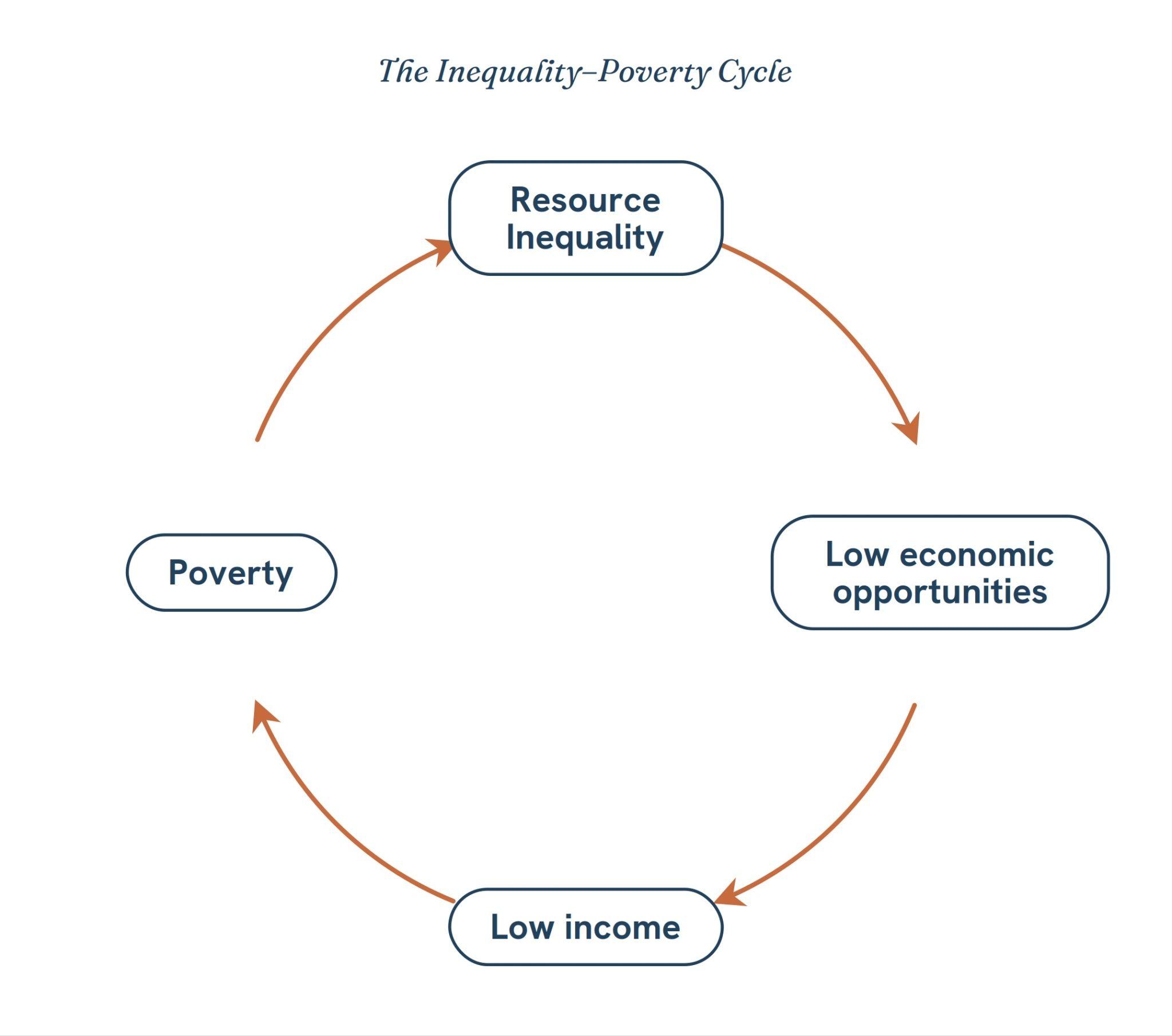
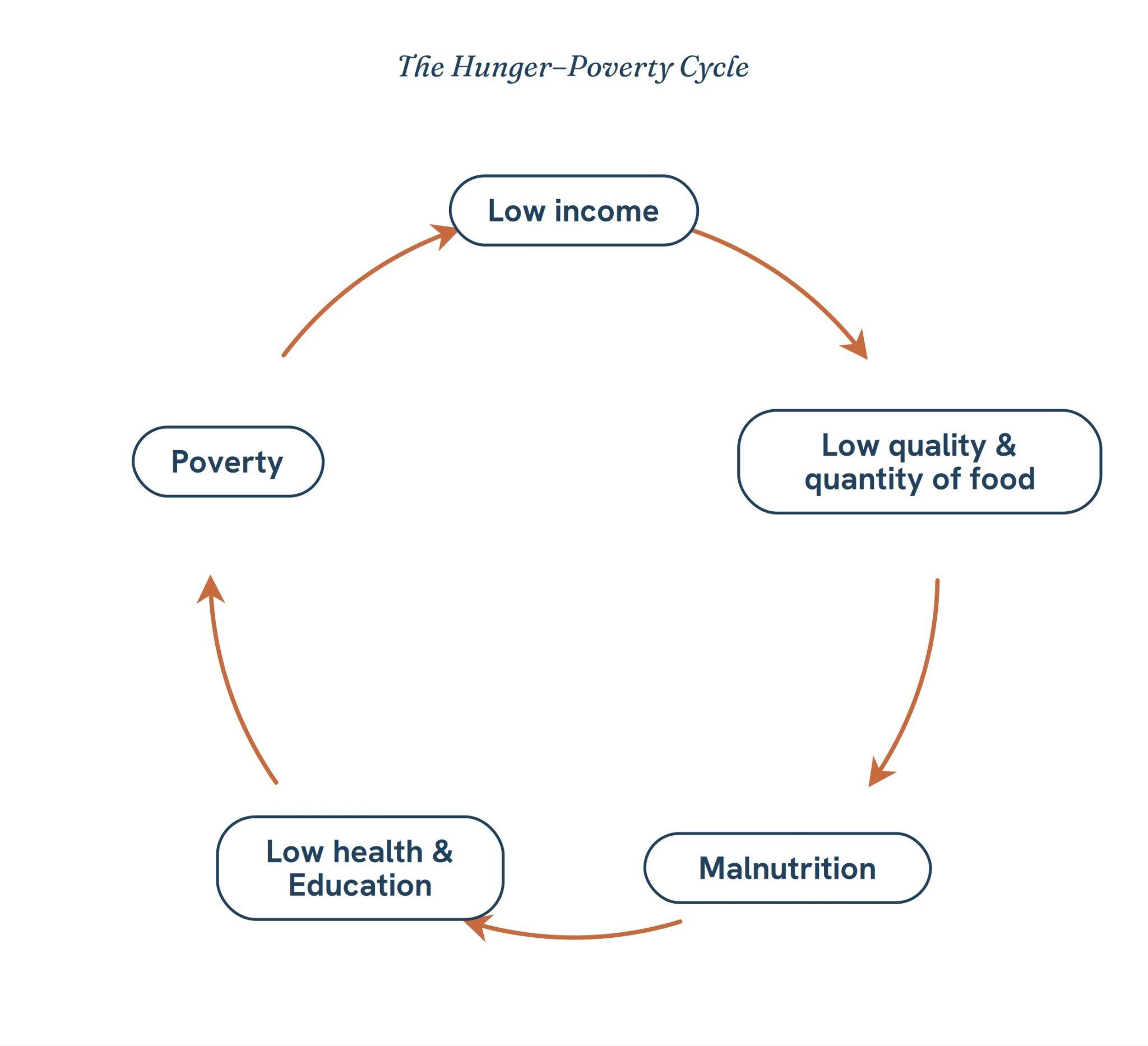
  • Poverty and malnutrition create a vicious cycle, adversely affecting human capital formation. What steps can be taken to break the cycle?

    Impact of poverty and malnutrition on Human Capital Formation

    World Bank (2024): India loses nearly 4% of GDP annually due to malnutrition-related productivity loss.

    Chronic malnutrition causes stunting and wasting among children, leading to weaker immunity and frequent illness.

    Impact on Cognitive Development – Poverty forces children into child labor or causes school dropouts. Malnourished children suffer from impaired brain development, lower IQ, and learning disabilities.

    High disease burden (anaemia, diarrhoea, TB) reduces life expectancy and working life span. Malnutrition contributes to 45% of child deaths (UNICEF, 2024).

    The International Labour Organization (ILO) notes that productivity losses due to undernutrition can reach up to 10% of lifetime earnings per individual.

    Women’s malnutrition (57% anaemic, NFHS-5) leads to poor maternal health and undernourished children.

    Expand NFSA and PMGKAY to include pulses, millets, and fortified foods, not just cereals.

    Steps to break the cycle

    Encourage local community kitchens and anganwadi-based feeding programs. Eg- TN Amma Canteens

    Strengthen Pradhan Mantri Matru Vandana Yojana (PMMVY) to ensure 1000-day nutrition support (pregnancy to age 2)

    Health and Sanitation Reforms

    Expand Ayushman Bharat – Health and Wellness Centres to deliver preventive and curative services.

    Water, Sanitation, and Hygiene (WASH): Accelerate Jal Jeevan Mission for clean drinking water.

    Expand MGNREGA and link with climate-resilient livelihoods (water conservation, afforestation).

    Women Empowerment by adopting best practices like Kerala’s Kudumbshree Model

    Integrated Policy Framework: Ensure coordination across ministries. Gati Shakti Mission Model

    Adopt data-driven local interventions under Aspirational Districts Programme to target high-burden regions.

    Adopt Brazil’s Bolsa Família conditional cash transfer scheme

    This can ensure whole of government and life-cycle approach to realise the vision of Viksit Bharat@2047

  • Women’s social capital complements in advancing empowerment and gender equity. Explain.

    Social capital refers to networks, relationships, and norms that enable collective action for mutual benefit. For women, social capital is built through Self-Help Groups (SHGs), PRIs, and grassroots networks.

    Women’s Social Capital Advancing Empowerment

    Strengthening Collective Voice in governance and community decision-making.

    Economic Empowerment – Social capital facilitates microfinance, entrepreneurship, and livelihood diversification. Eg- Kudumbashree (Kerala) and Jeevika (Bihar)

    Promoting Information and Knowledge Sharing – Eg- Mahila Kisan Sashaktikaran Pariyojana (MKSP) enables peer learning in sustainable agriculture and technology use.

    Building Social Solidarity and Mutual Support – Women’s collectives provide psychosocial and emotional support against domestic violence, exclusion, and crises.

    Expanding Political Participation- Women constitute 46% of Panchayati Raj representatives (MoPR, 2024), many emerging from SHG or NGO networks.

    Improving Social Accountability – act as watchdogs, ensuring transparency in welfare programs. Eg- SHG federations in Andhra Pradesh monitor PDS.

    Women’s Social Capital Promoting Gender Equity

    Challenging Patriarchal Norms -Collective action enables women to question gender stereotypes and claim public space.

    Redistributing Power -women influence policy and community priorities.

    Inclusive Development -Strengthens intersectional representation (Dalit, tribal, minority women).

    Bridging Social Divides -Networks connect women across caste, class, and regional boundaries, fostering shared identity and solidarity.

    Challenges

    The enduring Devī-Dāsī dichotomy-idolizing women as sacred yet accepting their subjugation-reveals deep-rooted cultural norms that legitimize gender inequality.

    Tokenism in representation: Eg-“Sarpanch Pati” culture undermines effective female leadership

    “Missing Middle” finance trap – SHGs they outgrow microcredit but cannot access medium-scale loans.

    Regional Imbalance: Concentration of SHGs in southern states (71%); weak in the north and northeast.

    Way Forward

    Gender Sensitisation in Governance: Mandatory training for bureaucrats and police.

    Implementation of Nari Shakti Vandan Adhiniyam (2023): Ensure 33% reservation in legislatures.

    Integrate unpaid domestic work into GDP measurement and social protection systems.

    Adopting ILO’s 5Rs (recognition, reduction, redistribution, reward, representation) can help in realising Nari Shakti and SDG 5.

    Human Resources