💥Join UPSC 2027,2028 Mentorship (July Batch) + XFactor Notes & Microthemes PDF

Author: Dr V

  • Economic Survey For IAS | Chapter 06 | Bounties for the Well-Off


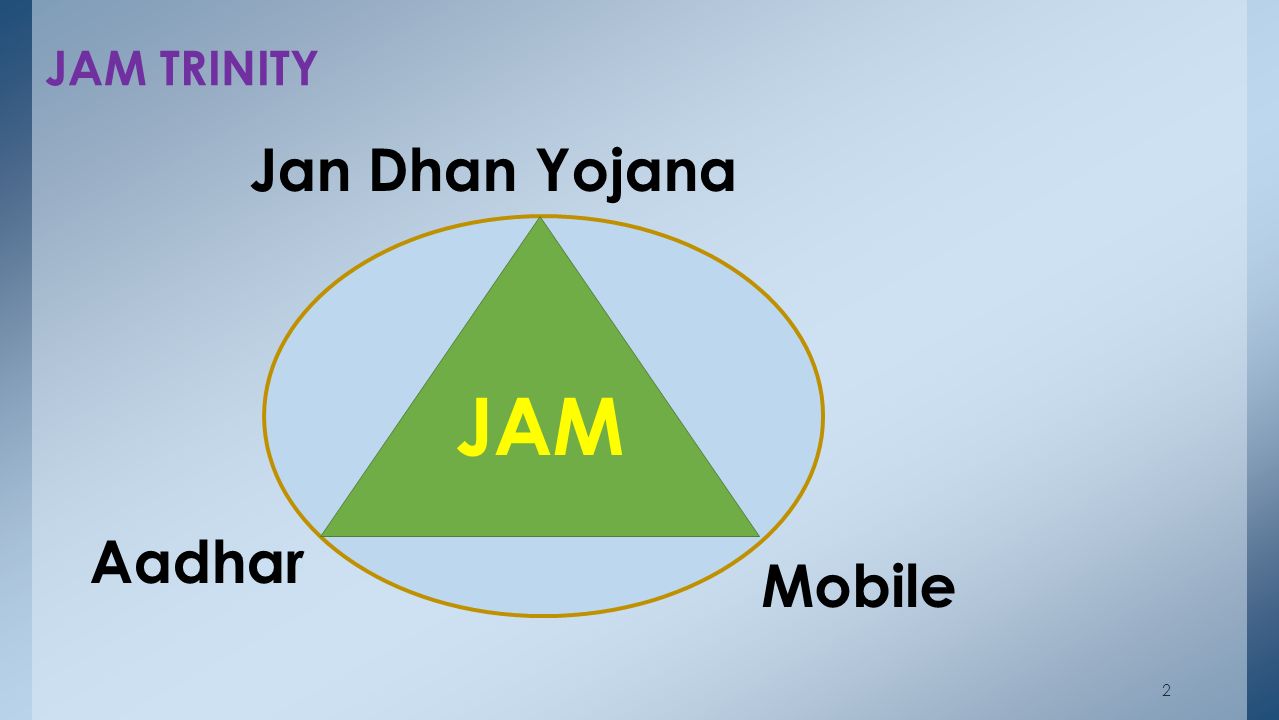
    In the article on fiscal policy (click here to read) we discussed conceptual framework behind subsidies. A good subsidy will be on merit goods (for everyone) and should be well targeted (to poor). If the subsidy is not well targeted, it can result in inclusion error (well offs getting benefits) and exclusion error (poor not getting benefits). We also discussed govt should be most sensitive about exclusion errors as they affect poor directly <poor woman not getting kerosene won’t be able to light up her home>. In the JAM chapter of the economic survey, we read JAM trinity has the potential to weed out ghost beneficiaries and thus minimize inclusion error. In this chapter we shall discuss, subsidies which leak to relatively well off sections of society <above bottom 30% in income distribution>.

    Performance of a subsidy programme can be judged on two criteria

    1. Equity- i.e subsidizing those goods and services that account for a large share of expenditures of poorer households <for instance food account for >50% share of household budget of poor but very little share of rich, subsidisng food or not taxing it at all will be proportionately more beneficial for poor than rich>.> On the other hand subsidizing a good/ service such as airfares/ ATF (aviation turbine fuel) which is mostly consumed by rich will not benefit the poor and thus will not be equitable>
    2. Effectiveness– depends on how well targeted the subsidy is .Suppose a good is consumed by poor such as kerosene but also used in other industries <adulterating diesel for instance>, not targeting well will result in leakage. Higher the amount used by non targeted goods, lesser the effectiveness of subsidy.

    Based on these aspects, let’s discuss the bounties for the well off by the govt.

    The government spends nearly 4.2% of GDP subsidising various commodities and services. this data is from last year’s economic survey. This considers all implicit as well as explicit subsidies at both central and state level such as subsidised passenger fares, subsidised electricity etc. This is not how subsidies are shown in the budget. As we discussed in the fiscal policy article, govt budgets about 10% of expenditure as subsidies i.e about 1.6% of GDP (only major explicit subsidies are considered there).

    Case of small savings – These schemes were created to mobilise saving by encouraging “small earners” to save, and offered above market deposit rates in accessible locations like post offices.


    We discussed that one distortion of small savings rate where rate is decided by govt is incomplete transmission of monetary policy (click here to read more about monetary policy and transmission) by banks but the issue here is are these schemes even benefiting small savers i.e. poor.

    First things first, these are not just small. There are three types of schemes-

    1.  “actually small” schemes- Eg. postal deposits, schemes for the elderly and women <poor people deposit small amount>
    2. “notso-small” schemes- Eg. Public Provident Fund (PPF) <generally tax payers deposit upto 1.5 lakh rs limit i.e not so small amount and tax payers are at the top 5% of income distribution in India i.e not at all poor, not even middle but rich>
    3. not-small-atall” schemes– Eg. tax-free bonds issued by Public sector Companies <generally rich people deposit on avg 6 lakh per person i.e not small and poor don’t have 6 lakh rs to deposit>

    Moral of the story so far is that we should not grudge first type of small schemes (post office savings schemes) for they are for the really needed i.e equity principle holds true.

    But the benefit these schemes confer are much beyond the difference b/w rates of interest. Actual benefit is because of tax concessions and here they become even more iniquitous <poor even middle income groups are so poor, they don’t pay income tax. Only top 5% of population pay income tax>

    How are savings taxed

    Savings can be taxed at three stages

    1. Contribution stage <when you deposit the amount>
    2. Interest accrual <interesting earnings>
    3. Withdrawal stage<when you take out principal and interest>

    Income tax is inherently biased against savings; it leads to double taxation in so far both the savings and the earnings are taxed <taxation of deposits as well as interest earnings>. So to eliminate this bias and promote savings, tax incentives are given. So savings may not be taxed at all in what is known as EEE (exempt exempt exempt) i.e exempt from taxes at all three stages of taxation. Or they can be taxed at deposit and earning stage (TTT). Or tax at the time of withdrawal only (EET) or making earnings tax free (TET)

    Note that, TTT or TET does not mean you are tax both at the time of deposit and withdrawal. Same income won’t be taxed twice. Hence taxation at the time of contribution is deemed to be taxed at the time of withdrawal.

    Let’s understand this with example

    Scheme Deposit Initial Tax savings (30%) Interest (10%) Tax on interest (30%) Tax at withdrawal Real interest
    TTT 100k 0 10k 30k 0 10k-3k =7k
    TET 100k 0 10k 0 0 10k
    EEE 100k 30k 10k 0 0 10k + 30k in tax savings
    EET 100k 30K 10k 0 30k + 3k 7k

    Clearly EEE scheme (provident fund) and TET (tax free bonds) give higher returns. Survey calculates that implicit subsidy is about 6% (R 12,000 crore) on Provident fund (not so small savings) and 3.7% on tax-free bonds (not at all small saving and investment by largely rich).

    This is based on data that only 5.8% of population earns more than 2 lakh rupees to come under income tax net. Even more starkly, major benefit is reaped by those in 30% tax bracket (income more than 10 lakh) who are among top .5% of population. IN developed countries, greater proportion of population pay taxes and thus these schemes benefit middle class as well.

    So how should savings be taxed?

    Case for concessional tax treatment of savings -tax concession for savings # higher post-tax return for the investor # positive substitution effect in favour of savings rather than current consumption. <higher savings # higher investment # good for economy esp for a capital starved economy like India>

    But problems with the way scheme is designed in India

    • It also creates a disincentive for savings (income effect), since the higher returns now require lower savings to meet the lifetime savings target. <If a person needed to save 1lakh rupee for his old age, he now will have to invest less to save equivalent amount>
    • Tax incentives for savings, as designed in India, do not encourage net savings (contribution plus accumulation minus withdrawals) since withdrawals are also exempt from tax <no incentive not to withdraw full amount at the maturity>
    • Tax incentives for savings distort the interest structure and choice of saving instruments. They just divert funds to specified savings instruments.
    • They also increase the interest rate at which households are willing to lend funds to banks (i.e., make deposits) , thereby adversely affecting investment.<depositors won’t lend to banks at lower rates hence banks unable to pass rate cuts to consumers>
    • regressive as they provide relatively higher tax benefits to investors in the higher tax bracket; in fact, the real “small savers”, who are largely outside the tax net, do not enjoy any form of tax subsidy on their savings.

    Overall, tax incentives for savings, more so as designed in India, are economically inefficient, inequitable and do not serve the intended purpose. Hence, there is a strong case for review of the design of the tax incentives for savings schemes.

    Economic survey suggests EET method of taxation for following reasons-

    1. savings (contribution) reduce cash flow # the ‘ability’ to pay # taxation would create hardship # disincentive to save.<if I save 100k, consumption decreases by equivalent amount and over that govt taxes me, why would I save>. Taxation at the point of withdrawal (principal or earnings) occurs when the ability to pay is greater and therefore, justified on principles of taxation <after all, now my income is actually increasing>
    2. TEE # taxation at the point of contribution # no immediate incentive to save # exemption of withdrawals # encourages withdrawal. Under EET # full deduction at the point of contribution and accumulation # incentive for savings # taxation at the point of withdrawal # disincentive for withdrawal.
    3. TEE # withdrawals are exempt irrespective of the amount # no incentive for consumption smoothening <will withdraw the whole amount in one go>, Under EET # More you withdraw # come under higher income tax bracket # withdraw in staggered manner # consumption smoothening
    4. no uncertainty about the potential tax liability
    5. extremely simple in terms of compliance and administration
    6. most developed countries and many developing countries are implementing the EET method of taxation of savings

    Other bounties

    Case of Gold-Top 20% consumes 80% of gold yet gold is taxed at rate of <2% compared to standard tax rate of 26% (centre + states)

    Railways– Reserved class is hardly used by poor (bottom 30%), yet upto 34% of reserved class fare is subsidized.

    LPG-91 % of subsidies are accounted for by the better-off as their share of consumption of LPG is 91% compared to 9% for poor (bottom 30%)

    Electricity– Better off are subisdized about 32% of electricity bill while poor about 49%. But since 84% of electricity consumption is by better off, acutual subsidy amount will be pretty high.

    ATF- There’s no point subsidizing ATF or taxing it less than diesel for no poor travels by air. Yey ATF tax is 20% compared to 55% for diesel and industry still keep clamoring for lower taxes on ATF.

    Kerosene– 50% of PDS kerosene is consumed by better off.plus adulteration etc

    If we add it all total subsidy to well off comes out to be more than 1lakh crore i.e 16b$ (.8% of GDP).rupees and we haven’t yet added corporate tax exemptions. Contrast this with expenditure on health, a merit good, social responsibility of govt, just 1.3% of GDP.

    Addressing these interventions and rectifying some egregious anomalies may be good not only from a fiscal and welfare perspective <more govt budget for actual needy i.e poor>, but also from a political economy welfare perspective, lending credibility to other market-oriented reforms. <govt is pro rich barbs whenever any market oriented reforms are undertaken> It is also an opportunity foregone to help the truly deserving.

    Criticism of this analysis (personal views)

    • Higher taxes on gold hurts the jewelers. But most importantly promote black marketing, black money generation and corruption <people will buy gold at cheaper rate in Thailand and smuggle to India>
    • People earning 2 lakh rupees or 5 lakh rupees can not be termed super rich by any stretch of imagination.5 lakh per annum for a family of 5 turns out to be kust 1lakh per capita i.e 8k rupees per person per month. Problem is with super rich(top .1%, not even 1%) and high amount og agri income not being taxed(issue addressed in next chapter)
    • Political economy argument-Just as govt reduced interest rate on provident funds, barbs of pro rich, pro-corporate started being labelled on govt. Fact is that voice of vociferous minority(salaried middle class, super rich according to survey) is much more than silent minority(poor) as we discussed in chapter on exit problem.
  • Economic Survey For IAS | Chapter 05 | Mother and Child

    If you haven’t read first four chapters, read them here firstChapter two, Chapter three, chapter four

    Despite the high economic growth during the last two decades, India has not been able to improve it’s maternal and child health indicators at the desired pace. We failed to achieve health goals related to Millennium Development Goals(MDGs) and our maternal and infant mortality remains unacceptably high.


    India is in the middle of a demographic dividend which is going to last till about 2035-2040 (25 more years or one more generation) and it’s imperative that we invest in human capital to reap the fruits of demographic dividend. This will raise our long run economic growth potential.<What is demographic dividend? How does it help raise long run growth potential? Answer in the comments below.>

    In this context, economic survey argues that given fiscal constraint <we can only spend as much as we tax plus some borrowing, never behave like arm chair pundits asking to raise budgetary allocation for everything without raising any taxes or train fares or bus fares> and state’s limited capacity to deliver public services <we know how state i.e. govts mess up almost every sector they get into, just see the performance of public schools i.e. state should not take tasks beyond it’s capacity; first improve capacity and then take additional tasks; just passing RTE or establishing 5 more AIIMS or IITs is not enough>, state should invest in relatively low cost maternal and early life health and nutrition programmes.

    What’s the rationale behind investing in mother and child?

    Intrinsic reasons– it improves quality of life directly and expands possibilities for the individual <if someone is not born healthy, chances are he would be unhealthy in later life as well>

    Narrow economic logic

    1. Research has shown that countries with better maternal and infant health “at takeoff” grew faster over the subsequent 20 years. <takeoff stages is similar to takeoff of an airplane, slow growing economy suddenly starts to grow very fast. For instance, China post economic reforms in 1979>
    2. Tomorrow’s worker is today’s child or foetus and  events which occur while a child is in the womb i.e inside pregnant mother or very young (<2 yrs) affect cognitive development and health status even in adulthood i.e. if today’s child is weak, chances are tomorrow’s worker would be less productive.

    Why does health of new born affects outcome much beyond the childhood?

    1. the most rapid period of physical and cognitive development in a person’s life occurs in the womb <rapid development phases are most susceptible to environmental insults>
    2. Dynamic complementarities in human capital accumulation- it simply means one human capital for instance health would affect accumulation of other human capital for instance education and training/skill in a dynamic way and vice versa. For instance healthy mother # healthy baby # learns better <cognitive development better in the womb as mother is healthy> and stays on in school longer. Or consider # unhealthy mother # weak baby # learns less and stays in schools for shorter period # less skilled and competent 
    • research has shown that low birth-weight children benefit less from early-life cognitive stimulus programs i.e. early we intervene the better i.e. investment in mother and fetus. very young children
    • success of subsequent interventions—schooling and training—are influenced by early-life development
    • programs targeting younger children also appear relatively cheap in comparison to investments made in older children. For instance, iodine supplementation is way more cheaper compared to improving teacher quality or re-designing institutions to raise school accountability <good for fiscally constrained govt.>, also requires less service delivery capacity from the state, for instance, improving teacher quality would require teacher training, monitoring that they actually show up and teach in schools <investing in mother and child good for capacity constrained govt.>

    The Dismal State of (Child’s) Play in India

    Height is a good proxy for early life conditions and height is determined by early life environment and net nutrition.

    net nutrition” is defined as the sum total of (i) the nutrition available from the mother in the womb and during breastfeeding, (ii) the quantity and quality of the food that complements breast milk from 6-24 months, and (iii) energy losses due to disease and infection, and poor absorption of nutrients. <part 3 is an important cause of malnutrition in India due to open defecation and subsequent infections resulting in reduced absorption and increased losses in feces as well as due to high metabolism during infections>

    Quick statistics

    1. 48% of under 5 children are stunted (low height) compared to 39% in Sub Saharan Africa
    2. 43% are underweight compared to 20% in Sub Saharan Africa
    3. 28% are born low birth weight compared to 13% in Sub Saharan Africa

    This data is taken from Amartya Sen’s book An Uncertain Glory which took data from UNICEF(2012). This condition of poor nutrition indicators comapred to much poorer and war torn Sub Saharan Africa is known as South Asian Enigma or The Indian Paradox and the low status of women is cited as one of the explanation.


    3 quick points about height for age in India

    1. there has been improvement over time in both urban and rural India
    2. there is a persistent rural-urban height gap which has not closed over the past decade
    3. despite the progress made, India remains a negative outlier—our children are on avg shorter than healthy children

    Consequences-height-cognitive development gradient

    Greater the height, greater the cognitive development (of course corrected for genetic potential for height not that because Chinese are short they are less smart then tall Caribbeans)

    • taller Indian children are considerably better readers than shorter ones (height proxy for nutrition which affects cognitive development)
    • absolute reading ability has not increased over time i.e we have not made much progress in addressing the nutrition and education challenge

    Clearly much more needs to be done to improve the nutrition situation in India.

    The Dismal State of Maternal Health

    As we have already discussed first 1000 days of life (nine month in womb plus 2 years) are most critical for a child’s development. They depend critically on maternal health (esp 9 months in the womb)

    70% of infant mortality (children who die before reaching their 1st birthday) is due to neonatal mortality(dying before 1 month). A leading cause of this is low birth weight which is clearly due to poor maternal health and nutrition.

    Consider this data-

    1. 42.2% of Indian women are underweight at the beginning of pregnancy
    2. 50% of pregnant ladies are anemic(low hemoglobin in blood) <data from An Uncertain Glory>
    3. Women from richer households in India start pregnancy heavier,suggesting that resources are at least part of the reason for low pre-pregnancy weight <poor #less to spend on nutritious food #low pre pregnancy weight>

    No surprises then that women in India gain only about 7 kgs during pregnancy, substantially less than the 12.5- 18 kg gain that the WHO recommends for underweight women.

    Very very important sociological insights

    Use these observations in paper 1 (society) and essay. They will certainly add value to your answers.

    1. reason for poor maternal health is that social norms accord young women low status in joint households. <When compared across the same ages, till about age 35, fraction of underweight women exceeds that of men by at least 5 percentage points. > within-household nutritional differentials are stark
    2. lower status of younger daughter-inlaws in families. <children of younger brothers in joint family households are significantly more likely to be born underweight than children of their older brother> Chacha’s children more likely to be born low birth weight than Tau’s<Tijori ki Key Badi bahu ke haath mein>
    3. Indian firstborn sons are found to have a height advantage over African firstborn sons, and the height disadvantage appears first in second-born children, increasing for subsequent births<preference for healthy male heir>

    Improving Maternal Health in India

    Clearly much more needs to be done to improve maternal health.

    Govt response-. The National Food Security Act of 2013 legislated a universal cash entitlement for pregnant women of at least 6,000 rupees.

    But it will only be successful if families convert these payments into more, higher-quality food and more rest for pregnant women and to make sure it happens, the cash transfer could be paired with education about how much weight a woman should gain during pregnancy and why weight gain during pregnancy is important. <cash transfer plus health education>

    You can follow the whole women empowerment story, click here

    Universal v/s conditional cash transfers

    Should cash transfer be universal i.e given to every pregnant women regardless of what she does with that money or conditional on women performing certain tasks such as visit hospital regularly, getting delivered in hospital, vaccinating her child etc as in Indira Gandhi Matritva Sahiyog Yojana (IGMSY)?

    Conditional cash transfer seems better but it entails high administrative costs, delays and often lead to significant exclusion. Hence survey suggests the cash transfer should be given in a single, lump-sum payment early in pregnancy to avoid delays, reduce administrative costs, and ensure that it is possible for the household to spend the money on better food during pregnancy.

    Case for going universal and problems with conditional cash transfer

    1. 2013-2014 Rapid Survey on Children (RSOC) finds that a little less than half of the women aged 15-18 are underweight
    2. Maternal nutrition is so poor that Indian women actually weigh less at the end of pregnancy than sub-Saharan African women do at the beginning
    3. Government should put new emphasis on educating women and their families about weight gain during pregnancy
    4. It should combat the common, though false, notion that women should eat less, not more, during pregnancy<need for health education>
    5. But conditional transfers solve only demand problems while India chiefly faces supply problems i.e. unavailability of health services.
    6. Also the need to document the fact that conditions have been met invites corruption<health worker might not give the women the proof of attending health clinic without a bribe>

    With careful design and significant investment of state capacity, maternal health could be significantly improved during pregnancy.

    The problem of open defecation

    Facts-open defecation in India is much more common than in even much poorer countries <61% in rural India v/s 37 % Nepal, 32% rural Sub Saharan Africa, just 1.8% B’Desh>

    Only lack of toilets or income constraints is not the reason, but there are sociological reasons

    Fact- many people in rural India who live in households that contain working latrines that are in use by other household members nevertheless defecate in the open.

    Research suggests that rural Indian households reject the types of latrines promoted by the WHO and the Indian government partly because their pits needed to be emptied every few years and empty the latrine pit is associated with the strong notion of purity and pollution <history of untouchability- work of disposing of human faeces is associated with severe forms of social exclusion and oppression>

    Consequences- disease, diarrhoea, environmental enteropathy (reduced absorption of food) resulting in less amount of net nutrition available to kids as we discussed above.

    Building toilets and ensuring people defecate in the open is an example of public good as even those who don’t defecate in the open get sick due to germs from people who defecate in the open.

    Addressing open defecation

    Govt. response- swatch Bharat Abhiyan

    • In the last year alone, the government built over 80 lakh toilets
    • UN’s Sustainable Development Goals commit to ending open defecation worldwide by 2030

    Historically, open defecation in India has declined by about 1 % per year  <about 50 years before India becomes open defecation free>. We need to more than triple the rate of reduction to achieve SDG. For that, it is important to understand barriers to toilet adoption in rural India and promote latrine use <as we just learnt, it;s much of a sociological, behavioral problem>

    Influencing social norms to make investment yield better return


    A big challenge is deeply entrenched norms and facilitating behavioural change. One can build clinics in villages or transfer money to pregnant mothers or build latrines, but how does one bring out the right usage of all this physical capital ?

    Govt has a progressive role to play in changing norms, and thus the importance of high pitch campaigns such as Swatch Bharat Abhiyans.

    The government has recognised the importance of influencing social norms in a wide variety of sectors—

    • persuading the rich to give up subsidies they do not need (give up lpg subsidy campaign)
    • reducing social prejudices against girls (selfie with daughter)
    • educating people about the health externalities of defecating in the open (swatch bharat)
    • and encouraging citizens to keep public spaces clean (swatch Bharat)

    Way forward-

    • Invest more resources in understanding the behavioral patterns and how to change them
    • Create a Nudge unit within government for behavior change communication as other countries have done

    You might want to read- Blog from CD published on The Better India

    7 Rights Every Pregnant Woman in India Should Know About (govt schemes for pregnant women in short, imp for exam)


    Open all the hyperlinks. Learn, understand and revise

    Ask all your doubts in the comment section below or in doubts clearing forum . All your suggestions, criticism and feedback are most welcome.


    If you like what you read, show your support to Civilsdaily and give us a hi 5 at the Android Play – Click here.

  • Part 7 | I am the most backward! | Landmark Judgements that Transformed India

    If you haven’t read the story upto the Mandal judgement, read it here first, Part 6|Landmark judgement | I am the most backward 

    Indira Sawhney case (Manadal Judgement)

    He challenged the govt decision in supreme court on familiar grounds of equality and non-discrimination

    9 judge bench sat in judgement and decided-

    1. 27% reservation valid but will not apply to creamy layer.
    2. 10% quota for Economically weaker section invalid.

    Why?

    • No constitutional provision of reservation solely on economic grounds
    • Purpose of reservation is to uplift historically disadvantaged groups not to eradicate poverty
    • Reservation in promotion invalid
    • Constitute National Commission for Backward Classes (NCBC) for inclusion and exclusion in the list of OBCs.
    • Not to exceed 50%

    In accordance with the judgement government constituted statutory national commission on backward classes. Note that its function was limited to inclusion and exclusion into the list of OBCs and recommendations for reservation. Its recommendations are ordinarily binding on the government except for compelling reasons.

    Obviously government wouldn’t accept not giving reservation in promotion. On such issues, there’s always all party consensus.

    77th Constitutional Amendment Act, 1995

    To nullify ruling related to promotion, it introduced art 16 (4A) to provide promotion in favour of SC and ST if in the opinion of state they were not adequately represented.

     81st Constitutional Amendment Act

    It introduced 16 (4B) which provided that unfilled vacancies of SC and ST will be carried forward and will not be counted to calculate 50% ceiling.

    Well government was not satisfied with just promotions. Promotions had to be with consequential seniority.

    85th Constitutional Amendment Act,2001

    It accorded consequential seniority to the SC and ST candidates promoted under 16(4A). If you want to know the ultimate fraud, it was to come into effect retrospectively from 1995. You could be demoted.


    M.Nagraj vs UOI case

    Challenged 77th CAA and 85th CAA

    Court held them constitutional but contended these are only enabling provison and any law must satisfy 3 conditions

    1. Proof of Social and Educational Backwardness
    2. Proof of inadequate representation
    3. It will not affect efficiency in administration (art 335)

    Court’s argument for holding them constitutional

    It is the duty of the State not only to protect human dignity but facilitate it by taking positive steps in that direction.

    UP govt promoted it’s employees which was challenged

    Rajesh Kumar v/s UP Power Corporation

    Court held such promotions invalid for no quantifiable data related to inadequate representation was presented before the court.

    117th CAB

    • SC AND ST will be deemed socially and educationally backwards.
    • Art 16 4A and 335 will not apply for promotion of SC and ST

    Meanwhile as with Indian govt, courts were also trapped in socialist utopia in which state would provide for everything, at least education and health and that for profit educational institutions were bad bad thing. For the record, education sector can not be run for profit even today.

    Unni Krishnan Vs. State of Andhra Pradesh

    Origin of fundamental right to education

    • Court held that every child/citizen has a right to free education up to the age of 14 years.
    • But very significantly it was also observed that right to establish educational institutions can neither be a trade or business nor can it be a profession within the meaning of Article 19(1)(g).

    I can only say wowwwww!

    T.M.A.Pai Foundation v. State of Karnataka

    Earlier ruling was overruled.

    1. The right to establish and administer educational institutions is guaranteed under the Constitution to all citizens under Article 19(1)(g) and 26, and to minorities specifically under Article 30.
    2. All citizens have a right to establish and administer educational institutions under Articles 19(1)(g) and 26, but this right will be subject to the provisions of Articles 19(6) and 26(a).

    Very significant aspect of this judgement was that majority community i.e. Hindus were put on equal footing with minority community in matter of administration of educational institutions. Obviously secularists of this country wouldn’t like it and they would do something to take away this equality. (Conspiracy theory)

    P.A.Inamdar v. State of Maharashtra

    Supreme court held that reservations cannot be enforced on Private Unaided educational institutions.

    93rd CAA in 2005

    It was passed to nullify Inamdar and once again put minorities on pedestal w.r.t. administration of educational institutions. This had to be done by secularists. (conspiracy theory)

    Introduced Art 15(5)

    State can by law (enabling provision) provide for reservation of seats for backward classes in educational institution including pvt unaided institutions but excluding minority educational institutions..

    Note here that it applies to majority unaided institutions but not even to minority aided institutions.

    • Parliament then passed central educational institution act providing reservation for OBCs in IITs, IIMs. AIIMS etc.
    • RTE Act provided for reservation of 25% of seats in private unaided educational institutions aided or unaided but excluding minority institutions,

    Pramati Educational and Cultural Society

    93rd CAA was challenged on grounds of freedom of profession.

    Supreme court found it consistent with reasonable restriction clause.

    Article 15 (5) is consistent with the socialistic goals set out in the Preamble and the directive principles and to ensure the march and progress of the weaker sections resulting in progress to socialistic democratic State establishing the egalitarian ethos/egalitarian equality, which is the mandate of the Constitution.

    It also contended that the minority aided educational institutions could not be compelled to provide free and compulsory education to children belonging to weaker sections from minorities themselves.

    It’s applicable to elementary education now. Govt can extend it any time to higher educational institutions.

    A few more points-

    Issue of Jat reservation (Again raised during bloody agitation)

    You all are aware that it was struck down. Reasons were

    1. Government acted against recommendations of NCBC without giving any compelling reasons.
    2. Adequate data was not collected to show backwardness while on the face of it community is very politically organized.
    3. Data was a decade old.

    These supreme court observations will help you in mains, essay and interview on issues related to caste and reservation.

    1. “caste” and “historical injustice” cannot blind a state in according backward status to a community and that new emerging groups such as transgenders must be identified for quota benefits.
    2. social groups which would be most deserving must necessarily be a matter of continuous evolution”.
    3. the principle of affirmative action under the Constitution obligated the state “to reach out to the most deserving” class.
    4. social backwardness had to be the prime consideration for granting OBC status and such recognition could not be associated with caste alone.
    5. “Backwardness is a manifestation caused by the presence of several independent circumstances which may be social, cultural, economic, educational or even political.
    6. New practices, methods and yardsticks have to be continuously evolved, moving away from caste-centric definition of backwardness. This alone can enable recognition of newly emerging groups in society which would require palliative action,”
    7. Wrong inclusion in the past can not be the ground for inclusion of similarly situated groups at present

    Issues related to sub quota for Muslims within OBCs

    Rangnath Mishra Commission and Sachar Committee suggested providing a separate 10 % quota for Muslims within OBC. This quota within quota is known as Horizontal reservation.

    • Andhra Pradesh govt provided for 4% quota for Muslims.
    • Quota was quashed by High court and high court judgement stayed by supreme court. Matter is till pending in the supreme court.
    • Whatever BJP might say about reservation on religious grounds, it is constitutionally valid provided subgroups are classified in a reasonable manner and data relating to backwardness and inadequate representation is suitably collected and presented to the court.
    • In the similar case Bombay high court while quashing separate quota for Marathas, upheld separate quota for Muslims in educational institutions.

    Issue of reservation in private sector

    • With liberalization of economy, public sector jobs have been coming down and private sector has become major employer. Data suggests representation of weaker sections is very poor especially in top echelons of private sector corporations and next battle for reservation will predictably shift to private sector.
    • As I write this article, NCBC has recommended to the government to provide for 27% quota in private sector jobs for OBCs for government provided so many benefits to private corporations.

    Issue of Reservation and Caste consciousness

    Supreme court judgement in Indira Sawhney case was roundly criticized for bringing the issue of caste to the fore in Indian politics and promoting caste consciousness. Court virtually equated caste with class but first step in resolving any social evil is recognition that evil exists. Supreme court observed that caste had become the cancer cell of Hindu society and biggest curse for India.

    Reservation, data vacuum and SECC

    Present OBC reservation is based on census conducted in 1931. Public policy of such magnitude can not be allowed to operate in data vacuum. That’s why there is urgent need to reveal findings of SECC. Of course findings should be credible, not like other data which does not match with that of NSSO.

    Consequential Seniority explained (not imp for exams)

    Consider two candidates A (General) and B (Reserved) who are in the same class of service Grade 1.  Say, A is 5 years senior to B and both are awaiting promotion to the next level ,Grade 2.  B now gets promoted over A. Eventually say after 3 years A also gets the promotion to the same grade as B. What happens now ? Under the Consequential Seniority, A will not regain his seniority of 5 years over B.

    Now A and B are in Grade 2 – B has been there for 3 years and A has recently been promoted.A is now junior to B. The fact that he was 5 years senior to B before the promotion of B is deemed immaterial. For further promotion to Grade 3 , A will be considered 3 years junior to B. In other words, A has lost 8 years inter se B.


    If you enjoyed reading this post, read up everything that we have written on this aspect of Indian Polity to help you understand things in details.

  • Economic Survey For IAS | Chapter 04 | Agriculture: More from Less

    If you haven’t read first three chapters, read them here firstChapter two, Chapter three

    Source-designpublic.in
    Source-designpublic.in


    India lives in villages and agriculture is the soul of Indian economy- Mahatma Gandhi

    “Most of the world’s poor people earn their living from agriculture, so if we knew the economics of agriculture, we would know much of the economics of being poor.”- Theodore Schultz, Nobel laureate

    As per NSS data avg annual income of the median farmer net of production costs from cultivation is less than Rs 20,000 (avg per cpaita income at current prices is about 98000 per annum in India)

    Post independence agricultural success

    • Chronic food shortages of 1960s (recall PL 480 programme) have given way to  grain self-sufficiency (not nutrition self sufficiency) despite a two-and-a-half fold increase in population.
    • In 1966-67, Indian wheat and milk production were just about 1/3 of US output.  Contrast it with recent figures with wheat output being 60% higher than America’s, while milk output being 50% higher. (Result of green and white revolution)

    This seems like a remarkable success. Then, what’s the problem with Indian agriculture?

    • Indian agriculture has become cereal-centric (wheat and rice production to the neglect of pulses and oil seed production even though demand for protein based items is rising)
    • It is regionally biased (Punjab, Haryana, western UP cornering all agri subsidies) and input-intensive, consuming generous amounts of land, water, and fertiliser
    • Input intensive cultivation means there is sharp decline in cultivable land available per capita as also much lower levels of water per capita
    • Challenge of climate change – erratic monsoon, more frequent flood and droughts
    • Challenge of income- As we mentioned above avg income of farmer from agriculture is just 20000 per annum.

    Let’s discuss some major issues with agriculture

    1. Productivity/ Yield-  low productivity esp. in pulses is the central challenge facing Indian agriculture.

    Consider the case of wheat and rice-

    As already stated, Indian agriculture has become cereal centric and input intensive and these two crops are grown on most fertile tracts with irrigation facilities and corner bulk of agri support available to all crops across country. Yet, if we compare average yield of wheat and rice in India with China, we find that

    1. avg yields of wheat is 39% below China and in case of rice 46% below that of China’s.
    2. In wheat save for Punjab and Haryana, most states have yield lower than that of B’desh
    3. In paddy even Punjab trails behind yield level of China while other states trail behind even B’desh.

    Now if we compare productivity in pulses of which India is topmost producer, consumer as well as importer, yield gaps are even more stark.

    1. On an avg, countries like Brazil, Nigeria, and Myanmar have higher yields
    2. even the key pulse producing state of M.P. has 60% yield of China’s

    Take home message from above analysis-

    • Yield gap varies among states in India and we could make rapid gains in productivity through convergence within India
    • For instance, in pulses, if all states were to attain even Bihar’s level of productivity, pulses production would increase by an estimated 41% on aggregate and we would be self sufficient in pulses

    Why is pulses productivity so low (land related reasons)

    • Most of the land dedicated to growing pulses in each state is unirrigated
    • National output of pulses comes predominantly from un-irrigated land

    Issue of Intensive use of water (problem of Indian agriculture becoming highly input intensive)

    • Although water is one of India’s most scarce natural resources, We use 2 to 4 times more water to produce a unit of major food crop than does China and Brazil.
    • We have invested in flood irrigation method (canal and tube wells) which is highly inefficient way of using water
    • Also despite being water scarce, we are virtually exporting water by exporting water guzzling crops such as paddy, sugarcane, cotton also meat (not exactly crop)
    • India now exports about 1 per cent of total available water every year (demand of 13m people)
    source- wikipedia
    source- wikipedia

    Reason for inefficient use of water-subsidies on power and water for agriculture.

    Result– water tables are declining at a rate of 0.3 meters per year

    Solution-  shift to sprinkler and drip irrigation and rainwater harvesting.

    • Leverage MGNREGA labour to build rainwater harvesting structures.
    • accord “infrastructure lending” status to these new technologies (infra lending status decreases cost of borrowing to invest in these technologies)

    Govt. response– Convergence of various schemes under PM krishi Sinchai Yojana which will help in convergence of investments in irrigation, from water source to distribution and end-use i.e. at individual farm level.

    What is drip irrigation?

    source-wikipedia
    source-wikipedia
    • A type of micro irrigation method in which perforated pipes are placed either above or slightly below ground and drip water on the roots and stems of plants, directing water more precisely to crops that need it
    • It reduces consumption of fertiliser (through fertigation ) and water lost to evaporation, and higher yields than traditional flood irrigation <Fertigation is the process of introducing fertiliser directly into the crop’s irrigation system.>

    Problem in adoption of drip irrigation- high initial cost of purchase and the skill required for maintenance.

    Solution- the increase in yields and reduction in costs of power and fertiliser use can help farmers recover the fixed cost quickly. Hence, provision for credit to farmers to adopt this technology.

    But there are teething troubles in agri finance as mentioned in last year’s economic survey box-

    Problem of agri finance-

    1. 40% of agri finance still by informal sector
    2. 26% by usurious moneylenders
    3. Share of long-term finance i.e. capital loans in overall credit going down over the years (70% in 1991 to 40% in 2011)
    4. Share of small loans decreasing (less than 2lakh rupee loan from 78% of total in 2000 to 48 % in 2011 and 10 lakh and above from 8% in 2000 to 28%in 2011) March rush (jan to march quarter) in loan disbursal i.e. loan in lean season to comply with PSL
    5. More and more agri loans going to urban and metropolitan areas

    Implication of all this is that lending to agriculture is grossly misallocated # largely to ;arge farmers # not being used for capital formation # worst of all may not even be going into agriculture.

    Issue of Minimum support Price (MSP) and Procurement being cereal centric and regionally biased

    • while the government announces MSP for 23 crops, effective MSP-linked procurement occurs mainly for wheat, rice and cotton and indirectly for sugarcane via sugar mills
    • Even in these crops majority of procurement is from Punjab, Haryana, Western UP.
    • Poor farmers aof Rajasthan and Jharkhand are not even aware of any such MSP policy

    Result– Regional disparity, excess stock of wheat and pulses and import and volatility in prices of pulses.

    Solution-reorienting agriculture price policies, such that MSPs are matched by public procurement efforts towards crops that better reflect the country’s natural resource scarcities i.e. provide higher MSP for those crops which we import such as pulses and oil seeds and at the same time procure thise crops so that MSP policy is effective on the ground.

    One way we discussed in chapter two was to not only taking economic but social and environmental costs and benefit into account while deciding MSP. Copy pasting from chapter two

    • Eg. Costs of producing cereals in Punjab and Haryana; declining water table, soil quality degradation, post harvest burning of stalks causing pollution, rich farmers getting benefits
    • v/s benefits from pulses; nitrogen fixation, lower import dependency etc.

    For cereals a system of Price Deficiency payment can be instituted

    Under this system if the price in an APMC mandi fell below the MSP then the farmer would be entitled to a maximum of, say, 50% of the difference between the MSP and the market price. This subsidy could be paid to the farmer via Direct Benefits Transfer (DBT)

    For eg. If say MSP for wheat is 100 rs per kg. In present scenario, govt would procure it at 100 no matter if market demand is very low and prices some 10 rs per kg. Farmer has no incentive to switch to other crops to reflect market demand.

    But in price deficiency payment, he will receive only 10 + (1/2*100-10) = 10 + 45 = 55 rs. It protects farmers while signalling him to produce crops reflecting market demand.

    Issue of Agri Research and extension 

    Agricultural extension is the application of scientific research and new knowledge to agricultural practices through farmer education. Basically educating farmers about the latest technologies being developed in the labs i.e. lab to land linkage.

    While Indian Council of Agricultural Research (ICAR) with agriculture research universities played a key role in the Green revolution. Of late agriculture research has been plagued by severe under investment and neglect.

    Three key weaknesses

    1. Agri education is weak in states due to (i) resource crunch, (ii) difficulty in attracting talented faculty, (iii) limited linkages and collaborations with international counterparts, (iv) weakening of the lab-to-land connect; and, (v) lack of innovation
    2. Low investment in public agricultural research in India. As share of agriculture GDP, it is even less than that of Bangladesh and Indonesia
    3. Majority (63.5 per cent) of scientists have low to very low level of productivity

    Solution

    • There is need of instituting performance indicators in universities.
    • Improve investment as a proportion of agri GDP
    • securing participation from the private sector
    • instituting a system in which the winner is offered a proportionately large enough award for innovating desirable agricultural traits (such as improving pules productivity considerably) but the intellectual property rights of the innovation are transferred to the government
    • Leverage mobile phones to provide timely information to farmers
    • Leverage the potential of drones (UAVs) to provide crucial information on crop health, irrigation problems, soil variation and even pest and fungal infestations that are not apparent at eye level to farmers
    • Improve regulatory process to address concerns against GM crops while adapting high yielding technologies

    Agriculture market segmentation

    Last year’s economic survey mentions, effectively, India has not one, not 29 but thousands of agricultural markets.

    Why are so many markets bad?

    Whole capitalistic economy is dependent on trade, competition and specialisation and so many markets prevent that thus reduces overall welfare because it prevents gains through competition, efficient resource allocation, specialization in sub sectors (everyone has to produce everything as they can’t trade with others resulting in jack of all trades master of none) and fewer intermediaries. 

    • If there were one common market, prices would be same from Kashmir to Kanyakumari and Dwarka to Puri (don’t add transport and storage cost please).
    • In USA which has a common market, maximum price variation is in case of peanuts with highest prices being 1.75 times that of lowest prices. Remarkably it is lower than India’s minimum price variation crop Tur dal.
    • It creates particular problem for perishables such as fruits, vegetables, onions, hence sudden and sharp spike in prices in one area while being sold at throwaway prices in some other area

    Solution-

    • Pass GST bill
    • Create common national agriculture market
    • Create better physical infrastructure
    • Improved price dissemination campaign
    • Remove laws that force farmers to sell to local monopolies i.e APMC act

    What you have to read for yourself

    1. All the figures which are basically curves
    2. Open all the hyperlinks. Learn, understand and revise
    3. Read chapter eight A National Market for Agricultural Commodities- Some Issues and the Way Forward  from last year’s economic survey to understand concepts behind need for common agri market

    Ask all your doubts in the comment section below or in doubts clearing forum . All your suggestions, criticism and feedback are most welcome.


    If you like what you read, show your support to Civilsdaily and give us a hi 5 at the Android Play – Click here.

  • Short Videos relevant for IAS preparation

    This thread is dedicated to short videos, preferably less than five minutes (can extend up to 10 if very interesting) which would add value to UPSC preparation.

    Posting is simple. Just introduce the topic of video and post the youtube link. Further discussion on the subject cam commence in the thread itself.

    P.S.- Don’t post political stories, motivation videos and RSTV, LSTV long 30 minutes videos. You can create separate thread for the same.

  • Economic Survey For IAS | Chapter 03 | Spreading JAM across India’s economy

    source-slideplayer.com
    source-slideplayer.com

    If you haven’t read chapter one and two, read them here first, Chapter two

    Data which you can quote in exam to buttress your point-

    • 975 million individuals now hold an Aadhaar card – over 75% of the population and nearly 95% of the adult population
    • Nearly one-third of all states have Aadhar coverage rates greater than 90%; and only in 4 states—Nagaland (48.9), Mizoram (38.0), Meghalaya (2.9) and Assam (2.4)—is penetration less than 50%
    • Basic savings account penetration in most states is still relatively low – 46% on average and above 75% in only 2 states (Madhya Pradesh and Chattisgarh).
    • only 27% of villages have a bank within 5 km
    • The Kenyan BC:population ratio is 1:172. By contrast, India’s average is 1:6630, less than 3% of the Kenyan level
    • spatial density of BC’s in India is 17% the Kenyan level
    • Mobile penetration-Only in Bihar (54%) and Assam (56%) is penetration lower than 60%
    • there are approximately 1.4 million agents or service posts to serve the approximately 1010 million mobile customers in India, a ratio of about 1:720

    This contrast of bank account penetration and accessibility v/s mobile penetration suggests that-

    • India should take advantage of its deep mobile penetration and agent networks by making greater use of mobile payments technology. Govt response- licensing of payment banks
    • Mobiles can not only transfer money quickly and securely, but also improve the quality and convenience of service delivery
    • For example, they can inform beneficiaries that food supplies have arrived at the ration shop or fertilizer at the local retail outlet

    Let’s come to the main issue of Direct Benefit Transfer using JAM-

    Suppose the govt wanted to transfer 1000$ to every Indian tomorrow. It would require-

    1. Ability to identify beneficiaries (Authentication / identification or first mile)
    2. Ability to transfer money to beneficiaries (bank account )
    3. Ability to withdraw money from bank accounts (accessibility to bank branches / last mile)


    First mile/ identification issues-

    • Failure on identification front leads to leakage – benefits intended for the poor flow to rich and “ghost” households, resulting in fiscal loss
    • It was due to administrative and political discretion involved in granting identity proofs like BPL cards, driving licenses and voter IDs (not giving BPL card to poor etc)
    • Aadhaar uses technology to replace human discretion and can better help in identification

    3 Broad issues-

    1. Targeting –  targeted subsidies are harder to JAM than universal programs, as they require government to have detailed information about beneficiaries.  For instance-  Subsidies targeted at the poor (like food and kerosene) require government to know people’s wealth while a universal subsidy like LPG requires no such information.
    2. Beneficiary databases: to identify beneficiaries, the government needs a database of eligible individuals in digital form to be seeded with Aadhaar. Socioeconomic caste census (SECC) data needs to be continuously updated to serve as a baseline in sectors where data does not exist.
    3. Eligibility: household-individual connection, while Aadhaar is an individual identifier, some schemes such as PDS ration are implemented at household level and spending priorities of male and female beneficiaries are often different.

    2. Middle mile- administrative challenge of coordinating government actors and the political economy challenge of sharing rents with supply chain interest groups.

    1. Within-government coordination: among various ministries, departments, state govt., departments etc.
    2. Supply chain interest groups: distributors need incentives before they invest in JAM infrastructure and if their interests are threatened, they would obstruct the spread of JAM.

    3. Last mile/ Transfer and Access issues (Bank account and access)- failure here  risks excluding genuine beneficiaries, especially the poor.

    1. Beneficiary financial inclusion: Bank accounts and accessibility to bank branches.

    In rural areas physical connectivity to the banking system remains limited, and BCs, banking correspondents and mobile money providers have not yet solved this last-mile problem

    2. Beneficiary vulnerability: amount of subsidy consumed by poor

    • exclusion error risks increase when the beneficiary population is poorer
    • For instance, the poorest 30% of households consume only 3% subsidized LPG consumption, but 49% of subsidized kerosene i.e. if excluded from LPG subsidy not much effect on poor but exclusion from kerosene subsidy will hurt them the most

    Where next to spread JAM?

    Policymakers should decide where to apply JAM based on two considerations of-

    1. Amount of leakages- subsidies with higher leakages will have larger returns from introducing JAM
    2. Control of the central government-control of central government will reduce administrative challenges of co-ordination and political challenges of opposition by interest groups (middle mile challenge)

    Fertilizer subsidies (huge leakages) and within-government transfers (govt control) are two most promising areas for introduction of the JAM

    JAM Preparedness Index:

    • Aadhaar penetration, basic bank account penetration and Banking Correspondents (BC) density are used as indicators for the indices
    • Preparation across states is varied with urban preparation being better than rural one
    • In urban areas, Madhya Pradesh and Chattisgarh show preparedness scores of about 70% while Bihar and Maharashtra, have scores of only about 25%
    • DBT rural preparedness has an average score of 3% and a maximum of just 5%(Haryana)

    It is clear that last-mile financial inclusion is the main constraint to making JAM happen in much of rural India. Jan Dhan’s vision must truly succeed before much of India can JAM

    What is this BAPU?

    Biometrically Authenticated Physical Uptake

    • It is an interim solution– while banking correspondent networks develop and mobile banking spreads
    • Beneficiaries verify their identities through scanning their thumbprint on a POS (point of sale) machine while buying the subsidised product—say kerosene at the PDS shop just like your biometric attendance machine
    • BAPU preparedness is much better (12%) than for Rural DBT preparedness (3%)

    Remarkable success of LPG DBT scheme (PAHAL) 

    Source-Pradhanmantrijoajana
    Source-Pradhanmantrijoajana


    • Use of Aadhaar has made black marketing harder (commercial establishments buying subsidiesd domestic cylinder)
    • LPG leakages have reduced by about 24 per cent with limited exclusion of genuine beneficiaries

    However, diversion of LPG from domestic to commercial sources continues, because of the differential tax treatment of “commercial” and “domestic” LPG (no tax on domestic unsubsidized cylinders (after 12 cylinders) v/s upto 30% tax on commercial cylinders)

    Solution- apply the One Product One Price principle and equalise taxes across end-uses

    Way forward on JAM

    In those areas where the centre has less control, it should incentivise the states to-invest in first-mile capacity (by improving beneficiary databases),deal with middle-middle challenges (by designing incentives for supply chain interest groups to support DBT) and improve last-mile financial connectivity (by developing the BC and mobile money space). States should be incentivised by sharing fiscal savings from DBT.

    • Centre can invest in last-mile financial inclusion via further improving BC networks and promoting the spread of mobile money
    • Regulations governing the remuneration of BCs need to be reviewed to ensure that commission rates are sufficient to encourage BCs to remain active

    What you have to read for yourself

    1. All the boxes from the chapter
    2. Open all the hyperlinks. Learn, understand and revise
    3. Read this chapter wiping every tear from every eye from last year’s economic survey to understand conceptual framework behind DBT and also follow this story on Direct Benefit Transfer

    Ask all your doubts in the comment section below or in doubts clearing forum . all your suggestions, criticism and feedback are most welcome.


    If you like what you read, show your support to Civilsdaily and give us a hi 5 at the Android Play – Click here.

  • Economic Survey For IAS | Chapter 02 | The Chakravyuha Challenge of the Indian Economy

    You can enter son but exit is not allowed Source-wikimedia
    You can enter son but exit is not allowed
    Source-wikimedia


    If you haven’t read chapter one, read that here first

    We follow the standard pattern delineated in chapter one i.e. ‘quotable quotes’, statistics, major themes and recommended reading. Click on the hyperlinks in green to read and revise the topic hyperlinked.

    Let’s get started

    • A market economy requires unrestricted entry of new firms, new ideas, and new technologies so that the forces of competition can guide capital and labour resources to their most productive and dynamic uses
    • But it also requires exit so that resources are forced or enticed away from inefficient and unsustainable uses
    • Joseph Schumpeter expounded the concept of “creative destruction,” the “process of industrial mutation that incessantly revolutionizes the economic structure from within, incessantly destroying the old one, incessantly creating new ones”

    Structural impediments to India’s progress-

    Problems of entry i.e. “licence-quota-permit Raj”

    It has been largely taken care of by-

    • liberalization(delicensing, end of permit quota system) , privatization (Divestment and end of public sector monopoly), Globalization (FDI and reduced tariff) reforms of 1991
    • New initiative of across the board FDI liberalization and Start up-Stand up programme aim to further liberalize the entry.

    But exit (chakrvyuah) remains the major challenge-

    What is this problem of exit and what’s it’s magnitude?

    • Inefficient and unsustainable firms are not allowed to wind down their operations and exit from the market
    • In a normal economy, old firms would be the ones that were efficient, only then could they survive for that long and hence should be much bigger in size than new firms
    • But in India avg 40 year old firm is just 1.5 times larger than a new firm (8 times in US
    • Worst part is that a decade back they were 2.5 times larger i.e. inefficient firms are not allowed to exit and they remain small

    What are the costs of impeded exit?

    #1. Fiscal cost

    • Of course, inefficient firms are supported by explicit (bailouts) or implicit (free power, reduced tariff, interest subvention etc) government subsidies
    • High subsidies # high borrowings # high fiscal deficit # high debt # high interest cost.
    • Add to this the tax revenue forgone, if efficient firms were allowed to take their place i.e. Double whammy of low tax and high subsidies

    #2. Economic cost-

    • Market economy is supposed to allocate resources/ factors of production (capital and labour) in the most efficient way towards most profitable ventures
    • Lack of exit leads to misallocation of resources with enormous costs for a capital starved country such as India
    • Overhang of stressed assets on corporate and bank balance sheets reflect same problem (remember twin balance sheet challenges, 4Rs solution discussed in part one) of  difficulty of apportioning costs of past mistakes

    #3. Political costs

    Anti poor, anti dalit, anti minority source-fabfilmz.in
    Anti poor, anti dalit, anti minority
    source-fabfilmz.in


    1. Benefits of impeded exit follows to rich (firms are owned by richie rich naa) # govt charged as pro rich # No political constituency for reform measures (recall debate on land ordinance)
    2. No action against willful defaulters # erosion of legitimacy of regulatory institutions such as RBI

    Let’s take an example of fertilizer subsidies

    • Fiscal cost- .8% of GDP, much of which leaks abroad or to non-agricultural uses, or goes to inefficient producers, or to firms given the exclusive privilege to import.
    • But precisely for these reasons it has proved politically impossible to close the inefficient firms or eliminate the canalisation of imports. Rich farmers have internalised the benefits and prevent reforms

    What causes an exit problem?

    3 Is

    #1. Interests – Power of vested interests which is aggravated by certain imbalances or asymmetry

    • Concentrated producer interests (a few losers stand to lose by lot) v/s diffused consumer interests (individual benefit small but aggregate benefit large)
    • Concentrated interests have more voice, backed by financial power and often democratic political systems tend to give disproportional influence to them (vocal minority v/s silent majority)
    • In the case of administrative schemes, vested interests often create a market of their own, planning their actions to benefit from it: put differently, this is a case of supply creating its own demand
    • Bureaucratic inertia perpetuates persistence
    • 50 percent of schemes are 25 years old. extra vigilance is necessary to ensure that schemes remain relevant and useful over time. And vigilance should probably increase in proportion to the longevity. (for these reasons only concept of ZERO based budgeting was introduced)

    Q. List down advantages/ disadvantages of zero based budgeting.

    #2. Institutions Paradoxical situation of both weak and strong institutions delaying exit

    Weak institutions –

    • Inability to punish willful defaulters (legitimacy of institutions itself is questioned)
    • Judiciary- Tareekh pe Tareekh (time and cost overrun)
    source-worldlistz.com
    source-worldlistz.com


    • Eg. Debt recovery tribunal- share of settled cases is small and declining (4 lakh crore locked up)

    Strong institutions so called referee or vigilance institutions– CBI, CVC, CAG, Judiciary combined with the asymmetric incentives for bureaucrats that favours abundant caution and hence the status quo.

    Incentives are stacked against decisions to precipitate exit for fear of being seen as favouring corporate interests and hence susceptible to scrutiny, encouraging ever-greening of loans, postponing exit

    #3. Ideas/ ideology

    • Very difficult to phase out entitlements especially in a country with sizable poverty and inequality and one that is a democracy
    • The objective is often laudable but once the policies and programs have been set in place, they are very difficult to reverse
    • For instance, minimum support prices (MSPs) were envisioned as an insurance mechanism for farmers, but have become price floors instead, favouring some crops in some regions at the expense of other

    How to address the problem

    #1. Avoid exit through liberal entry: promote competition via private sector entry rather than change ownership through privatization. Eg. BSNL, MTNL were not privatized but liberal entry to private telcos

    Advantage- It bypasses opposition from managers as well as labour interests.

    #2. Direct policy action- Frame better laws, align incentives with the objectives

    Govt response– a new bankruptcy law (solves weak institution problem), amendment to prevention of corruption act (solves strong referee institution problem), reforms in PPP (Kelkar Committee Report)

    #3. Technology and the JAM solution:  Direct Benefit Transfer (DBT) for targeting and protecting the poor while removing distortions

    • Brings down human discretion and the layers of intermediaries
    • Breaks the old shackles and old ways of doing business

    #4. Transparency: Transparently reflect economic as well as social, environmental and health costs and benefits

    • Eg. Costs of producing cereals in Punjab and Haryana; declining water table, soil quality degradation, post harvest burning of stalks causing pollution, rich farmers getting benefits
    • v/s benefits from pulses; nitrogen fixation, lower import dependency etc.

    #5. Exit as an opportunity- It’s not the business of govt to be in business. For eg. loss making Air India

    • Opposition from existing managers or employees’ interests;  solution- earmark resources earned from privatization for compensation and retraining;
    • credibly ensure that reservation policies will be maintained in the privatized enterprise as well
    • convert part of land into land bank and develop industrial clusters or in dense urban areas nurture start ups

    A few more points about strong referee institution problems

    1. Prevention of corruption act (PCA) definition of corruption does not include words like ‘corruptly’ or ‘wrongfully’ i.e. no requirement of mens rea or guilty intent hence even a benefit conferred inadvertently is sufficient to be prosecuted
    2. For example, suppose an honest public servant makes, in good faith, an error of judgment and undervalues an asset which is being disinvested. Obviously that undervaluation causes a pecuniary gain to the buyer of the asset and is not in public interest, he is in way benefited but can still be prosecuted.
    3. Misaligned incentive structure– external monitoring in the public sector tends to be skewed towards bad decisions that were taken rather than good decisions that were not taken (i.e. opportunities that were missed).
    4. This promotes a culture where avoidance of mistakes is more important than the pursuit of opportunities

    Result –

    1. The reluctance of government to accept responsibility for its own delays in projects
    2. The penchant for departments to appeal even fair and reasonable arbitration awards or lower court judgments
    3. The tendency to raise tax disputes based on audit objections even if the tax authority disagrees with the auditor
    4. The reluctance of civil servants to sell land or divest public enterprises

    Solution:

    Source- telegraphindia.com
    Source- telegraphindia.com


    1. Amendment to prevention of Corruption act (prs bill summary) to prevent prosecution for mere administrative errors,  differentiating cases of graft from those of genuine errors of decision-making 
    2. Providing investigative agencies with tools, skills and training to do a proper investigation of modern day financial crime and corruption so that culprits do not go scot free either
    3. Reexamine the cost of elaborate but largely ineffective and counterproductive vigilance machinery

    What you have to read for yourself

    1. All the boxes from the chapter plus bankruptcy box from statistical appendix
    2. Open all the hyperlinks. Learn, understand and revise.

    Ask all your doubts in the comment section below or in doubts clearing forum . all your suggestions, criticism and feedback are most welcome.


    If you like what you read, show your support to Civilsdaily and give us a hi 5 at the Android Play – Click here.


  • How to best read India Year Book for IAS


    India 2016, better known as INDIA YEAR BOOK (IYB) among the IAS aspirants was released couple of weeks back. The book is considered as holy grail of UPSC preparation. Offline coaching wallahs and book publishers would give you separate notes for IYB.

    Online IAS gurus turned coaching wallahs (you know who I am talking about) would post a strategy with page numbers for most important stuff and after the exam, search from IYB for questions asked in the IAS prelims and sometimes even IAS mains and would put them in Yearbook stuff questions category.

    New age coaching wallahs (online test series and micro planing wallahs) would assure you that they would include questions from year book in their tests and they would make you read the IYB. Even some toppers would recommend reading IYB especially for first time aspirants (or freshers as they say).

    By all accounts IYB seems like a very important book to read for IAS preparation. It’s a very fat book, some 1000+ pages. It has a great cover pic jacket. So question arises, how to read this book effectively?

    Well I am not a big fan of this book. Naah, I said it very mildly, this book is pure rubbish. If you have already bought it, aaj hi raddi wale ko de do.


    First let me bust the myth of a lot questions being directly asked from the book and strategy of selective reading. Click on hyperlinked texts to read analysis and questions of coaching wallahs.

    VVRIAS analysis of IYB  and GS score or IAS score analysis of IYB

    Copy pasting a few questions directly from there

    #1. Consider the following rivers:

    1. Barak
    2. Lohit
    3. Subansiri

    Which of the above flows / flow through Arunachal Pradesh?

    (a) 1 only (b) 2 and 3 only (c) 1 and 3 only (d) 1, 2 and 3

    (Chapter Land the People: The Brahmaputra rises in Tibet, where it is known as Tsangpo and runs a long distance till it crosses over into India in Arunachal Pradesh under the name of Dihang. Near Passighat, the Debang and Lohit join the river Brahmaputra and the combined river runs all along the Assam in a narrow valley. It crosses into Bangladesh downstream of Dhubri. The principal tributaries of Brahmaputra in India are the Subansiri, Jia Bhareli, Dhansiri, Puthimari, Pagladiya and the Manas….)

    1. Seriously, they want you to prepare geography from IYB. Are you kidding me?
    2. It does not tell anything about Barak river, how would I know whether or not Barak river flows from Arunachal or not. I would need to see the map and yessss IYB does not teach you geography through maps.
    3. It does not tell me whether or not Subansiri also flows through Arunachal.

    You decide it for yourself, if that’s not fraud, what is. Would you want to prepare polity from India year book? Okay, let’s see

    #2. The power of Supreme Court of India to decide disputes between the Centre and the States falls under its

    1. advisory jurisdiction
    2. appellate jurisdiction
    3. original jurisdiction
    4. writ jurisdiction

    Two questions which made IYB relevant again

    1. Saka era, 21st March
    2. Satyamev jayate, mundak upanishad

    These are given in the national symbol chapter but they come in news every year on 21st March.

    Satyamev jayate? Come onnnn, everyone studies it in 5th standard and if you didn’t remember it, chances are you wouldn’t even after reading this chapter.

    And national symbol chapter is also given in history book Grover and Grover, so i can say, questions directly asked from Grover, start reading Grover also for history.

    Other questions as you can all see are all far fetched hyperboles!

    Let’s come to their selective reading strategy. I read what they recommended. For instance in energy chapter, IAS Score recommended reading e wastes, renewable energy etc. I did and result was waste of 20 previous minutes of my life.

    A few facts

    1. India 2016 is updated only till November 2015, in most cases till June 2015. IAS Mains will be in Dec 2016, won’t be of any use
    2. There are only facts no analysis making it a very boring read (second to none)!
    3. Presentation is worse than the worst presented book you would have read. Someone ask them to at least put 10 images in a 1000 page book. In geography, they don’t even present maps. The font size is going to make you want to go for prescription glasses! 
    4. Every economic, commercial and agricultural data is infinite times better presented in economic survey.

    Then what explains the popularity and seemingly unwavering faith in the so called India year book?

    India year book was meant for the time when IAS paper was more static in nature and Internet was not available (80s, 90s even early noughties). It provided every scheme even if incomplete, non analytical and only factual information in one place.

    Internet 1st entered into India on 15th August 1995 and became ubiquitous if I can say so during last decade, more precisely in 2010s only.

    • IAS aspirants are budding bureaucrats. They are status quoists and risk averse (even though this exam itself is the biggest gamble). So for instance, when everyone had left Orkut and migrated to Facebook and other social platforms, they continued on Orkut. During its final days, Orkut was sustained by IAS aspirants community alone. You don’t believe me? check out with the ForumIAS admins!
    • On top of that fraud payed by coaching wallahs and online gurus help perpetuate the myth that is INDIA YEAR BOOK

    Now there are 4 options available with you

    1. Read the book from cover to cover or as coaching wallah and online gurus suggest, 1st reading only to highlight important stuff and then in 2nd reading highlighted stuff as well as notes making and 3rd reading, only reading notes. May god be with you!
    2. Buy any substandard summary of book from the market. Well, it will save time compared to option one but you would still get nothing out of that
    3. Read chapter 2 national symbols, chapter 4 agriculture , global and regional security scenario from chapter 9, defence and last chapter diary of national events. Read chapter 28, welfare if you do not have any idea about schemes for weaker sections
    4. Not reading the book at all and using that time to read good books, newspapers, magazines. Very decent approach.

    You can make out my order of recommendations.

    What you should do instead

    Use your time effectively and most efficiently. Good luck mitroooon!


    Want to read something more?

  • Economic Survey For IAS | Chapter 01 | Economic Outlook, Prospects, and Policy Challenges

    economic survey


    Having discussed how to read Economic Survey earlier, we now start our series on economic survey chapter by chapter. We shall follow a standard pattern across all chapters. We shall begin by highlighting ‘quotable quotes’ or observations which might not otherwise come for discussion but nevertheless very important for general understanding, general studies papers and essay. We shall then present some very basic statistics from the chapter and move to discuss broad themes of the chapter. In the end, important reading from the chapter shall be recommended.

    I have hyperlinked text with articles previously covered. So go back in time and read the articles if any doubt. Take this opportunity to revise the economy section of syllabus.

    So let’s get started

    1. It’s futile to expect “Big Bang” reforms because of two reasons
    • dispersed nature of power in India, too many veto centers
    • the absence of that impelling driver—crisis

    Note that reform of 1991 was in response to major crisis, SEBI was given statutory backing in response to major scam in stock market and recent merger of Forward Market Commission (FMC) with SEBI was also a response to major scam.

    Therefore, “persistent, creative and encompassing incrementalism” will be the key.

    2. Being pro industry and pro market or pro competition is not one and the same

    • India has moved away from being reflexively anti-markets and uncritically pro-state to being pro-entrepreneurship and skeptical about the state
    • But being pro industry must evolve into being genuinely pro competition, and the legacy of the pervasive exemptions Raj and corporate subsidies highlights why favoring business (and not markets) can actually impede competition
    • Similarly, skepticism about the state must translate into making it leaner, without delegitimizing its essential roles and indeed by strengthening it in important areas

    3. Amid the world economy which is full of turbulence and volatility, India is a refuge of stability and an outpost of opportunity

    Fastest Growing Economy
    Fastest Growing Economy


    1. Survey projects GDP growth of 7-7.75% for the financial year (FY) 17
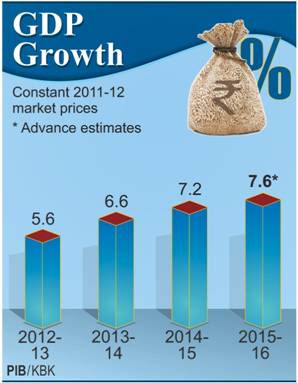
    2. For FY16, GDP growth is estimated to be 7.6%
    3. Forex reseves have risen to >350b$

    Let’s now discuss some broad issues

    India becoming more and more intertwined with global growth

    • the correlation between India’s growth rate and that of the world has risen sharply to .42 from .2 for the period 1991- 2002 i.e. 1 % decrease in the world growth rate # 0.42 % decrease in Indian growth rates
    • India’s exports of manufactured goods and services now constitute about 18 percent of GDP, up from about 11 percent a decade ago

    Realizing long term potential growth of 8-10% requires a push on at least three fronts-

    1. Creating genuinely pro competitive market by allowing inefficient firms to exit (Chakravyuha challenge) – Govt response- new bankruptcy code, rehabilitation of stalled projects, Kelkar Committee guidelines on PPP renegotiation
    2. major investments in people— health and education- to exploit India’s demographic dividend.
    3. Don’t neglect agriculture as 42% of Indian households derive the bulk of their income from farming. Smaller farmers and landless laborers especially are highly vulnerable to productivity, weather, and market shocks changes that affect their incomes. Govt response – PM Fasal Bima Yojana

    Evolution of relative role of centre and states in the delivery of services-

    1. With increased devolution of resources (courtesy 14th Finance commission), states need to expand their capacity and improve the efficiency of service delivery.
    2. shift the focus from outlays to outcomes, and to learn by monitoring, innovating, and even erring.
    3. the Centre should focus on improving policies, strengthening regulatory institutions, and facilitating cooperative and competitive federalism
    4. while the states mobilize around implementing programs and schemes to ensure better service delivery

    How does competitive federalism help?

    Ease of Doing Business in States
    Ease of Doing Business in States


    States that perform well are increasingly becoming “models and magnets.”

    • Successful experiments in one state are models for others states to emulate by showing what can be done and stripping away excuses for inaction and under-performance.
    • They are also magnets because they attract resources, talent and technology away from the lagging states, forcing change via channel of exit.

    Twin Balance Sheet Challenge

    What are twin balance sheets – Bank balance sheet and corporate balance sheet

    Basically both are interlinked, as asset on bank balance sheet is liability on corporate balance sheet and if corporate does not repay debt, asset turns bad (Non Performing Asset or NPA) and both balance sheets get stretched. It results in banks not lending and corporate not investing resulting in vicious circle.

    Solution-

    What has been done so farIndradhanush scheme, Strategic Debt Restructuring (SDR) scheme, 5:25 scheme

    What needs to be done– 4Rs

    1. Recognition-  Banks must value their assets as far as possible close to true value i.e. recognize NPAs as NPAs
    2. Recapitalization–  capital position must be safeguarded via infusions of equity
    3. Resolution– the underlying stressed assets in the corporate sector must be sold or rehabilitated
    4. Reform–  future incentives for the private sector and corporates must be set right to avoid a repetition of the problem

    But where would resources for recapitalization would come from given that government is committed to the path of fiscal consolidation?

    1. Divest govt. equities in non financial companies and invest in PSBs
    2. Dilute RBI’s capital to capitalize banks
    3. govt can dilute its equity in banks to raise resources from the market

    What should be the stance of fiscal consolidation?

    Revised FRBM Target
    Revised FRBM Target


    Learn Various types of Budget Deficits here- Budget Deficits Explained

    Govt announced revised FRBM timeline last year with fiscal deficit target of 3.9% for FY16 and 3.5% for FY17. In this context question arises whether or not we remain committed to the same path of fiscal consolidation.

    Arguments for accelerated fiscal consolidation

    1. debt ratio of the consolidated government (Centre plus states), 67 per cent of GDP is high compared to some countries in Emerging Asia
    2. would reinforce govt’s credibility
    3. also why such a commitment should be abandoned when the economy is growing at more than 7 per cent
    4. Higher deficits may increase short term interest rates and thus hurt corporate investment and increase govt spending on interest

    Arguments against-

    1. 7th Pay commission award will increase expenditure by about .5% of GDP, to maintain same fiscal deficit, govt might need to slash capital expenditure
    2. Public investment may need to be increased further to address a pressing backlog of infrastructure needs
    3. current global environment is fraught with risks and India should not take chances against growth

    In this context it is important that government utilizes resources available to it to increase capital expenditure in roads, railways, ports etc which increases overall productivity and competitiveness of economy.

    Update- Government chose prudence and stuck to fiscal deficit target of 3.5% of GDP in the budget announced today.

    India and WTO

    WTO


    Two issues in agriculture-

    1. Special safeguard mechanism (SSM) which came for discussion in Nairobi ministerial meeting . The question which arises is whether India even needs such protection
    • We are already allowed tariff  from 40 per cent to 100 per cent (India’s modal rate in agriculture) to 150 per cent.
    • In a preponderance of tariff lines, there is a considerable gap between applied tariffs and the level of tariff binding
    • India’s only real need for SSM arises in relation to a small fraction of its tariff lines—some milk and dairy products, some fruits, and raw hides—where its tariff bindings are in the range of about 10-40 percent, uncomfortably close to India’s current tariffs, limiting India’s options in the event of import surges

    India should call for a discussion of SSMs not as a generic issue of principle but as a pragmatic negotiating objective covering a small part of agricultural tariffs.

    2. Food security/ stockholding issue

    • The particular policies (MSP) which are being defended are those that India intends to move out of in any case because of their well-documented impacts:
    • decline in water tables, over-use of electricity and fertilizers (causing health harm), and rising environmental pollution, owing to post-harvest burning of husks
    • the government is steadfastly committed to providing direct income support to farmers and crop insurance which will not be restricted by WTO rules

    The way forward in WTO on agriculture

    India should consider offering reduction in its very high tariff bindings and instead seek more freedom to provide higher levels of domestic support: this would be especially true for pulses going forward where higher minimum support prices may be necessary to incentivize pulses production

    India’s “big-but-poor” dilemma

    • India’s self-perception as a poor country translates into a reluctance to recognize and practice reciprocity (give-and-take) in trade negotiations
    • India’s policies have a significant impact on global markets and it has become a large economy in which partner countries have a legitimate stake in seeking market access

    Net effect- India is unable to play reciprocal game in trade negotiations and WTO is fast becoming irrelevant (not good for India)

    Cost of reluctant engagement-

    • India is excluded from Trans Pacific Partnership (TPP) and it is shaped in a way that do not take into account India’s important interests (the rules on intellectual property)
    • If and when India joins, it will be not on India’s terms but on terms already cast in stone, terms that India could not influence because of being perceived as not engaged fully

    What should be India’s response-

    We should use our growing markets as leverage to attain our own market interests abroad, including the mobility of labor and engage in reciprocal game to strengthen WTO.

    How should trade policy deal with ongoing stress?

    Chinese dumping, weak global environment, protectionist measures abroad, beggar thy neighbor policies etc .

    Broad principle- resist calls to seek recourse in protectionist measures, especially in relation to items that could undermine the competitiveness of downstream firms and industries. For instance– imposing higher duty on imported steel hurts domestic manufacturers such as cycle manufacturers and lead to inverted duty structure.

    Three sets of responses-

    1. Exchange rate. Keep rupee’s value fair, avoid strengthening using some combination of monetary relaxation, allow gradual declines in the rupee if capital flows are weak, intervention in foreign exchange markets if inflows are robust.
    2. India should strengthen procedures that allow WTO-consistent and hence legitimate actions against dumping (anti-dumping), subsidization (countervailing duties), and surges in imports (safeguard measures) to be taken expeditiously and effectively.
    3. India should eliminate all the policies that currently provide negative protection for Indian manufacturing and favor foreign manufacturing. Implement GST asap.

    What you have to read for yourself-

    1. All the boxes- read especially Box 1.5: El Niño, La Niña and Forecast for FY 2017 Agriculture
    2. Open all the hyperlinks. Learn, understand and revise.

    Ask all your doubts in the comment section below or in doubts clearing forum . all your suggestions, criticism and feedback is most welcome.

    Suggested Reading

  • How to read the Economic Survey – Part 2

    economic survey


    Having already discussed how to best read volume one of economic survey,  I shall now discuss, what to focus on and what to leave in the volume two of this amazing document.

    Those who haven’t read part one, don’t move ahead without reading part one – How to read the Economic Survey

    At the very outset let me tell you that volume two is not that interesting and is full of facts and figures and not much of analysis. Hence only selective reading is recommended.

    There are nine chapters in volume two which basically cover happenings in the economy during last one year with some forward guidance. Chapters are pretty longish with most of them crossing 20 pages (only 9-13 pages in volume one).

    Chapter one gives broad overview of the economy and glimpses of what to expect from the subsequent chapters. After that there are chapters on fiscal policy, monetary policy, external sector, agriculture, economy and services, climate change and human development. As I have already mentioned, there’s not much of analysis and most of the chapters make for very boring reading and not much important for examination.

    There’s only one chapter which I would recommend you to read line to line, for every word is a virtual gold mine and that chapter is chapter eight, climate change and sustainable development. Please note down important points and try to understand the analysis of double counting of aid as climate finance, why CDM market is down and various issues associated with green finance.

    What else to study?

    1. As mentioned in the part one, boxes are important. But in this volume many boxes are rubbish. I am highlighting not to be missed boxes, rest you can skim through. Box 1.1, 2,3, 3.2, 3.3, 3.4, 3.5, 4.1(very imp), 4.2, 4.3 (very very imp), 5.1, 5.2, 6.1, 6.2 (very imp), 6.4 (imp), 6.5, 6.6, 7.1 (read), 7.2 (only first part related to medical tourism), 9.2.9.3
    2.  Following selected portions are recommended for line to line reading
    • Pathways to productivity in agriculture in chapter five from 5.26 to 5.61,
    • Tourism including medical tourism in chapter seven from 7.25 to 7.29
    • Issue of women employment, unpaid work and care economy in chapter nine from 9.5 to 9.23
    • Draft bankruptcy code on page no. A 4 of statistical appendix

    What else is important in volume two?

    Authentic data about GDP growth, share of agriculture, industry and services in GDP and employment, savings, investment, gross fixed capital formation, major export and import items, major trading partners etc.

    Data is dispersed in the survey so, let us make it easier for you. We will bring to you all the important data at one place as we cover economic survey chapter by chapter. In the meantime, start reading volume one from cover to cover for as I said before, they could be the best 150 pages you would ever read for exam purpose.