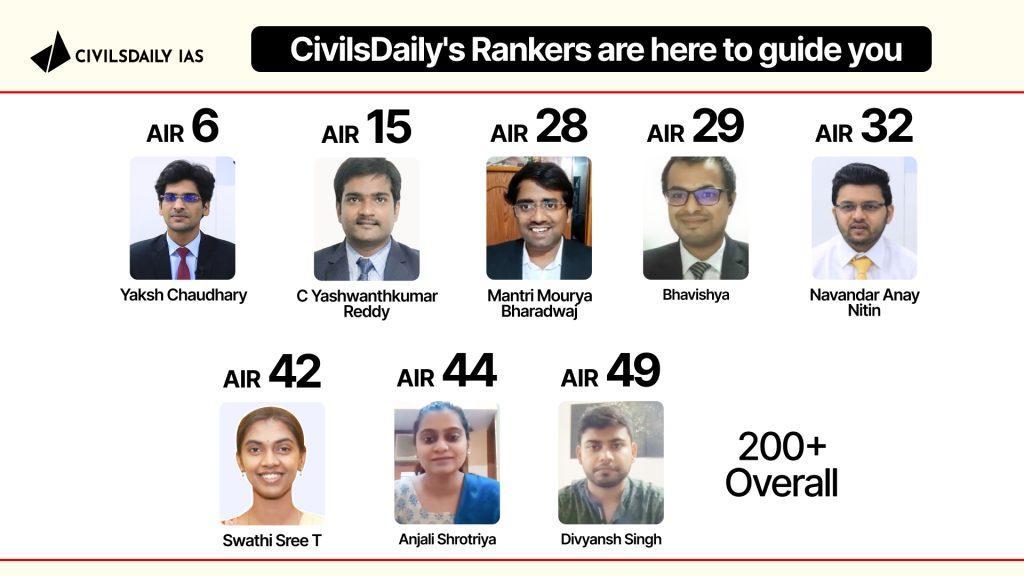
💥Join UPSC 2027,2028 Mentorship (August Batch) + XFactor Notes & Microthemes PDF

Category: Ranker Webinars

  • The essence of CD War Zone | Can you attempt the question of the day?| Get Feedback on the same day from Mentors of Civilsdaily| Join CD WAR ZONE (link inside)

    Question of the day: What do you mean by the Minimum Support Price (MSP)? Critically analyse the efficacy of MSP in achieving its objectives? (15 Marks- 250 words)

    Join this telegram group:

    We call this daily answer writing as Daily Answer Wars. Apart from this we also do Daily Check-ins making your daily Timetable and in Night owl discussions, we discuss important terms in news. 

    The essence of CD War Zone

    With Daily Answer Wars and Night Owl Discussions our aim is to ensure that you write and discuss themes/topics/terms that have a very high probability of appearing in the exam. 

    Writing is a whole different ball game. When you sit down to write, it’s an entirely different process. It’s about streamlining your thinking, and your ideas. You might be thorough with a concept but you might fail to pen it down. That’s worse than not having ideas at all. Moreover, when we all sit together and write an answer, we get access to various unexplored dimensions. By doing a Peer Review, you can add those dimensions to your War Notes. These War Notes will come handy when you would be revising your Mains notes. 

    When you discuss, you will almost always discover new concepts in the process. There is no substitute for this kind of discovery. Talking with others is a good way to develop a deeper understanding and ensure you retain better. Retention is everything. When you share with your fellow Aspirants regarding Academic and Non-Academic issues of the UPSC Exam, you get the best solutions to those problems. 

    So many aspirants just keep looking for content and hoard all kinds of PDFs. At Civilsdaily we don’t believe such PDFs are helpful at all. You need to be on a path of discovery and be actively involved. If you are a serious aspirant, you can’t afford to just consume information. That is why our emphasis is on the Notes(read War Notes) that you yourself prepare in this process. We Believe every Answer has the potential to become a Model Answer, rather than giving you a Model Answer, we help you make your Answers a Model answer

    Join the Civilsdaily Telegram Group to become a part of an extremely Positive and Vibrant UPSC Community.

    Here is how we start the day 

    Daily Check-in 

    Daily Answer Wars 

    Daily Answer Wars Result 

    Night owl discussions

    Join the telegram group here:

  • [Sansad TV] Perspective: Russian Oil Price Cap

    Context

    • The US has proposed to cap price of Russia’s oil exports along with other G7 allies as a way to limit Russia’s earnings while keeping Russian oil flowing to the global economy.
    • The cap is set to take effect from today, the same day when European Union will impose a boycott on most Russian oil.
    • If there was ever any doubt what the premise of the cap was, it’s now clear: the US and its allies want Russia’s crude to keep flowing.

    What is the Russian Oil Price Cap?

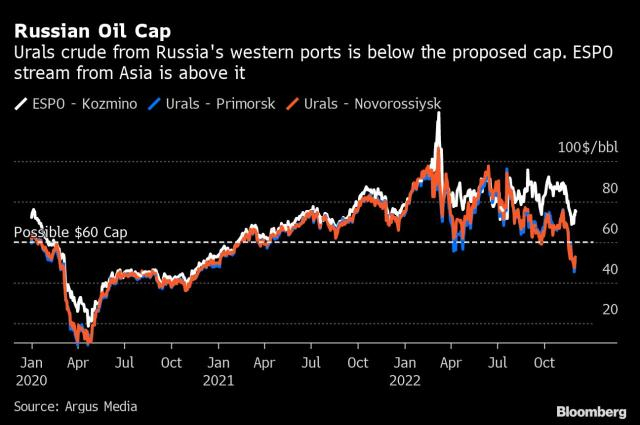
    • The $60 per barrel cap is intended to cut Russia’s oil revenues while keeping Russian crude on the market by denying insurance, maritime services, and finance provided by the Western allies for tanker cargoes priced above a fixed dollar-per-barrel cap.
    • Without insurance, tanker owners may be reluctant to take on Russian oil and face obstacles in delivering it.
    • The US-proposed cap aims to hurt Moscow’s finances while avoiding a sharp oil price spike if Russia’s oil is suddenly taken off the global market.

    How would oil keep flowing to the global economy?

    • Universal enforcement of the insurance ban, imposed by the EU and U.K. in earlier rounds of sanctions, could take so much Russian crude off the market that oil prices would spike.
    • Western economies would suffer, and Russia would see increased earnings from whatever oil it can ship in defiance of the embargo.
    • Russia, the world’s No. 2 oil producer, has already rerouted much of its supply to India, China and other Asian countries at discounted prices after Western customers shunned it even before the EU ban.

    Russian response to the cap

    • Russia has said it will not observe a cap and will halt deliveries to countries that do.
    • It could retaliate by shutting off shipments in hopes of profiting from a sharply higher global oil price on whatever it can sell around the sanctions.
    • Buyers in China and India might not go along with the cap, while Russia or China could try to set up their own insurance providers to replace those barred by US, UK and Europe.

    How can Russia bypass this cap?

    • Using dark fleet: Russia also could sell oil off the books by using “dark fleet” tankers with obscure ownership, as have Venezuela and Iran.
    • Blending: Oil could be transferred from one ship to another and mixed with oil of similar quality to disguise its origin.

    How does it impact G7?

    • For countries that join the coalition, it would mean simply not buying Russian oil unless the price is reduced to where the cap is determined.
    • For countries that don’t join the coalition, or buy oil higher than the cap price, they would lose access to all services provided by the coalition countries including for example, insurance, currency payment, facilitation and vessel clearances for their shipments.
    • Most insurers are located in the EU or the United Kingdom and could be required to participate in the cap.

    Implications of the Oil Price Cap

    • Inflationary impacts: Initially, traders and the tanker owners would find it difficult. There might be a drop in exports and some shock in the production of necessary commodities.
    • Energy insecurity: Countries all over the world will have to bear the spillovers effects of the cap. The effect will be more pronounced for developing countries.

    Efficacy of the Cap

    • Non-comprehensiveness: There is no consensus regarding the cap that should be imposed because of internal disputes in the European Union (EU). Moreover, there is no clarity on the price yet.
    • Dual pricing: It is going to create a dual-price market with an official price and a discounted price. We already know that Russia is already selling oil at a discounted price to India, China, and Turkey.
    • Global price dynamics: The implications of the sanction on Russia will depend on a number of factors including the World oil prices.   
    • Loopholes of sanctions: Sanctions are difficult to enforce. Earlier sanctions on Russia have not yielded the desired results.

    Hurdles to US intentions

    • OPEC+ price control: Much remains to be seen on the response of the OPEC plus countries, where Russia is a major player.
    • Lack of consensus: The enforcement of the sanctions would be difficult as there is no consensus among the members.

    Impacts on India

    • The price cap imposed by the G7, EU and which also includes Australia is aimed to force Russia to sell its crude not above $60.
    • China and India purchased crude at a massive $33.28 discount to Brent, indicating that the prices were well below the price cap imposed this week.
    • The price cap applies to nations intending to use Western ships and Western insurers—which means it won’t apply to India.

    How has India responded?

    • The US tried to bring India on board with: from asking India to change its uncritical stance on Russia by-
    • Cutting down oil imports
    • Stopping defence and other purchases from Russia and
    • Avoid the rupee-rouble payment mechanism that circumvent their sanctions
    • India has rejected any “moral” duty to join the price cap coalition.

    Conclusion

    • India has made it clear, through its cabinet ministers, that it will work to ensure energy security of its citizens and will prioritise that over anything else.

    Click and get your FREE Copy of CURRENT AFFAIRS Micro Notes

    (Click) FREE 1-to-1 on-call Mentorship by IAS-IPS officers | Discuss doubts, strategy, sources, and more

  • Seminar for Marathi aspirants by IPS, Amol Murkut | Career guidance session on how to prepare for government competitive exams including MPSC and UPSC | Register now

    Seminar for Marathi aspirants by IPS, Amol Murkut | Career guidance session on how to prepare for government competitive exams including MPSC and UPSC | Register now

    Marathi Seminar by IPS, Amol Murkut sir | Career guidance session on how to prepare for government competitive exams including MPSC and UPSC | Register & Get Value-added Free notes for MPSC & UPSC

    *Click here to read what will be discussed in this Seminar

    Guys, Every year millions of candidates start and sit for various Govt. job exams. As vacancies are few and aspirants are many, only a minuscule number of candidates can get through these exams.

    Apart from that Government Job vacancies have also dwindled in recent years. So, be it MPSC, UPSC, or any other Govt. job exam every aspirant needs experts’ guidance with some sort of motivation.

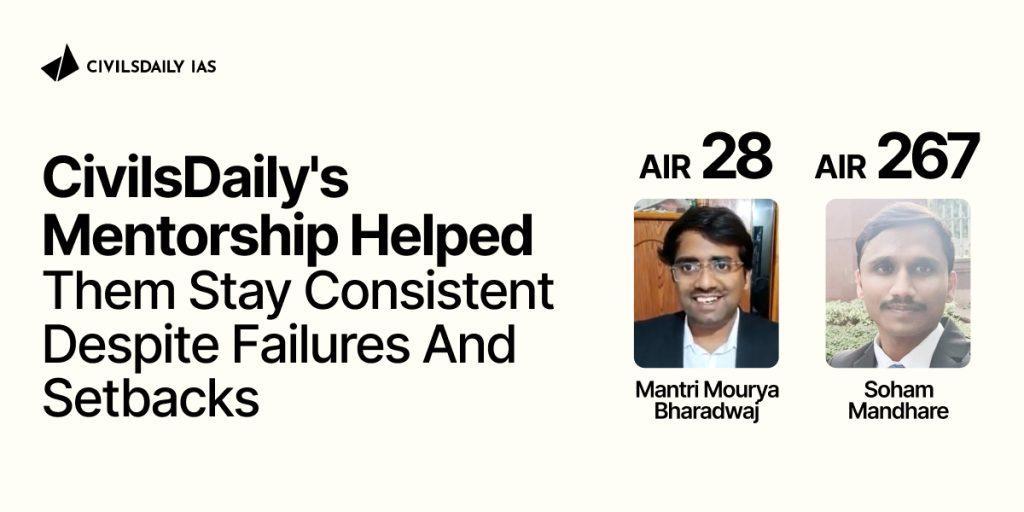
    Civilsdaily’s Mentorship Students are today’s UPSC Rankers

    Success is nothing but more than a few simple disciplines practiced every day

    Amol Murkut, IPS

    The journey to the final job offer is very long, especially in today’s time. Have you ever thought about what you would do if finally you find that you faced only failure? What will be the consequences if you choose any other profession just leaving Govt job preparation? Can you easily succeed soon?

    Make hay while the sun shines, the proverb means that we must not let any opportunity slip, but make prompt and full use of it whenever it comes. 

    Opportunities do not always come. If we miss one opportunity, we may miss it forever and suffer consequences. Therefore, we must always take full and prompt advantage of any opportunity that may come our way.

    Acknowledging the need for the removal difficulties of Freshers/unsuccessful students, Dr. Amol Murkut, IPS officer and Super mentor in Civilsdaily is conducting a need of the hour Career guidance session on how to prepare for government competitive exams including MPSC and UPSC. Registration is absolutely free. 

    Details of the Seminar

    Date5th December (Monday)

    Time: 11 am

    Mode: Online/offline (zoom link will be shared with you all)

    Speakers: Amol Murkut, IPS

    Get FREE PDF notes on registration. Register now

    Venue:

    • Offline – CivilsDaily IAS, Pune center
      • (Address: Civilsdaily IAS, First floor, 518, Ramprasad, opposite Radhika Bhel, Sadashiv Peth, Pune, Maharashtra 411030)
    • Online- Zoom link will be emailed to you.

    Post-seminar CivilsDaily will share a special Preparatory Package both for UPSC & MPSC candidates.

    You are also entitled to a personalized intensive mentorship session by a senior IAS mentor wherein you can avail of a personalized study plan, schedule, and doubt resolution session.

    This is for you if you are:

    1. A UPSC/MPSC beginner – confused about the syllabus, prioritizing subjects, making timetables & targets, or just getting started.
    2. A working professional or college student who will be attempting UPSC 2023 with a job. Facing a serious time crunch and mismanagement in UPSC preparation.
    3. A veteran or aspirant trying to improve your rank in UPSC 2023 attempt.

    Strategic planning will help you fully uncover your options, set priorities for them, and define the methods to achieve them.

    Key takeaways of the Seminar

    This is going to be an interactive 1-1 session with Senior mentors and an IPS officer. You will get ample time and opportunity to discuss this with Amol sir. These points will be discussed.

    1. What is the basic but mostly required strategy to crack any Government job is your first attempt? How to make a plan for the day. Day-to-day time management.

    2. Dealing with negative emotions such as despair and stress. How did Soham study when he was feeling down?

    3. His sources for current events, and strategy 

    4. Should an aspirant participate in a study group and prepare? Soham responds.

    6. What practices did Soham altogether avoid what was popular among other aspirants?

    7. What shall be the macro plan for the next coming months

    8. Revision Cycle strategy

    9. Different approach of Prelims and mains and Integrated Preparation of both for MPSC and UPSC – 2023, 24.

    10. Answer Writing Strategy 

    11. Importance of hobby

    12. Essay approach: what things work.

    13. How toppers prioritize momentum mover content and content over structure. ‘How to fix your static answer writing structure, improved with the current affairs?

    14. Whether your answers ought to reflect the editorial standards of The Hindu! What should be the foolproof strategy of note-making from current affairs? What points ought to be included in your notes?

    15. How to create a basic conceptual framework of the current affairs answer before committing anything to paper. Implications of overstretching your imagination.

    16. What is the difference between ‘Opinion-based current affairs’ & ‘Current issues with Fact-based’ questions will also be discussed thoroughly in this webinar.

    17. How to enhance writing patterns, where to take mock regularly, and how many mock tests are optimal?

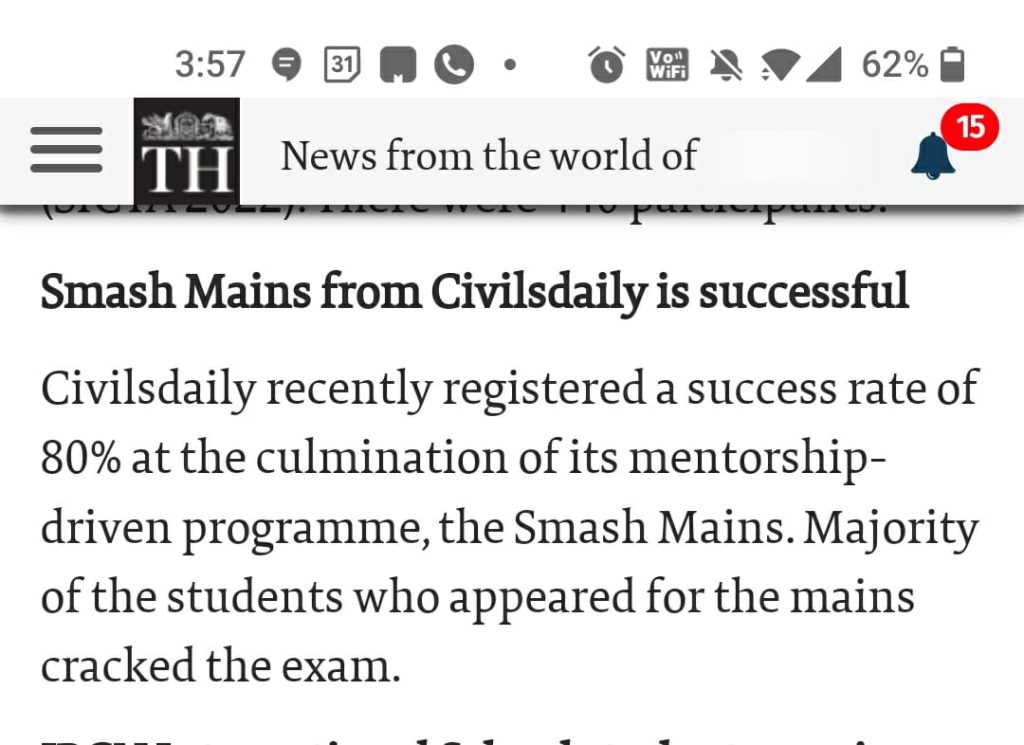
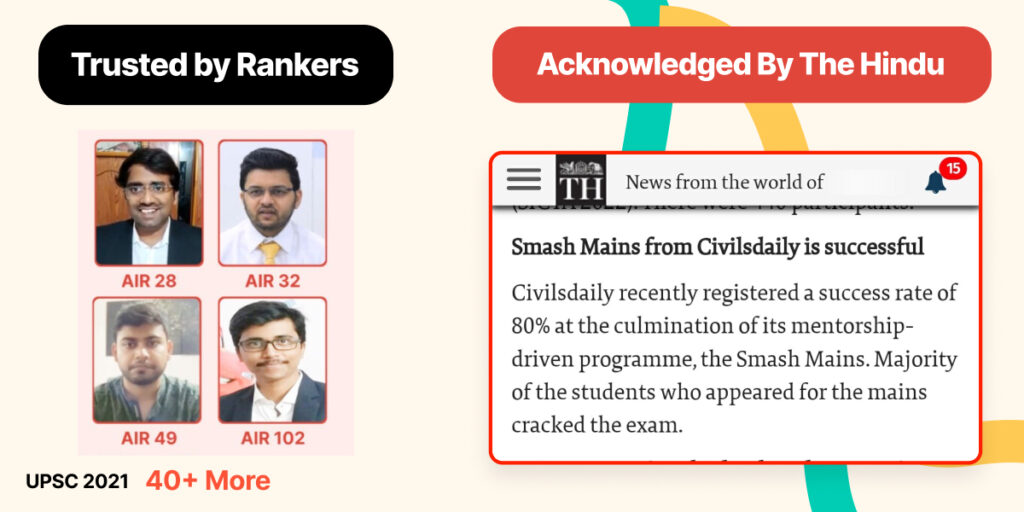
    Civilsdaily Mentorship is acknowledged by The Hindu

    Some of our Ranker from Maharashtra

  • Webinar by AIR 109, Areeba, IPS- The best way to build ‘content’ & add value to UPSC 2023 Mains Answers, Essay? Making UPSC notes & Integrating Current Affairs-GS in your answers | Get FREE GS notes on registration

    Webinar by AIR 109, Areeba, IPS- The best way to build ‘content’ & add value to UPSC 2023 Mains Answers, Essay? Making UPSC notes & Integrating Current Affairs-GS in your answers | Get FREE GS notes on registration

    Get FREE Economic Geography and Internal Security PDF notes on registration | Areeba ma’am, IPS and Parth sir will be LIVE Webinar on 3rd Dec at 6 pm | Register now for direct link |

    (click here for key takeaways)

    How to solve the UPSC Content and Value Addition problem for UPSC 2023?

    Everyone who is preparing for the UPSC-CSE follows the same or similar UPSC notes and resources, be it current affairs or GS. But, what is the difference which makes one succeed?

    Hey all, being a Senior UPSC Faculty I get to interact with a lot of students like you. In the past couple of months, I had 1-on-1 conversations with hundreds of aspirants (even rankers), and almost 90% of aspirants mentioned lack of content as their biggest handicap.

    You’ve to be extremely selective and don’t need to read everything under the sun for UPSC CSE.

    For instance, I am faced with questions like What are the best sources for XYZ? How to collect content for UPSC answers? What could be avoided from the syllabus? How to collect and organize value-added content like case studies, anecdotes, meetings, etc for UPSC preparation?

    Areeba, AIR 109 will be LIVE with you all for a special Webinar Masterclass to solve these issues for you.

    I will be there with Areeba for this special session for UPSC CSE 2023-24 aspirants. We will be focussing on UPSC Mains and Prelims as well.

    Get FREE Economic Geography and Internal Security PDF notes on registration | Areeba ma’am will be LIVE on 3rd Dec at 6 pm | Register now

    In the previous seminar, Areeba gave a 6 months strategy for UPSC 2023 Prelims aspirants.

    Table of content:


    Details of the Webinar

    Date: 3rd December (Saturday)

    Time: 6 pm

    Mode: Online (zoom link will be shared with you all)

    Speakers: Areeba Nomaan and Parth Verma

    Get FREE Economic Geography and Internal Security PDF notes on registration | Areeba ma’am will be LIVE on 3rd Dec at 6 pm | Register now

    Key takeaways from the webinar

    1. How and from where to prepare content and collect/organize value addition concepts for UPSC Mains answers? Like case studies, data, facts, anecdotes, etc.
    2. How to link Current Affairs and GS Static parts in UPSC Preparation and particularly for UPSC answers? Integrating content in your answers for a toppers’ level answer.
    3. How to prepare notes and content for GS Mains papers separately and how to interlink them?
    4. Notes making is quite often confused with writing everything down on paper or digital devices. So, ‘How to make effective notes from current affairs and GS static part’?
    5. Best, authentic, minimum source of current Affairs for UPSC-CSE prelims & Mains Preparation. Do’s & Dont’s, How to remake ‘Recognition of information’ into ‘recall, analyze & express’.
    6. How toppers prioritize momentum mover content and content over structure. ‘How to fix your static answer writing structure, improved with the current affairs?
    7. Whether your answers ought to reflect the editorial standards of The Hindu! What should be the foolproof strategy of note-making from current affairs? What points ought to be included in your notes?
    8. How to create a basic conceptual framework of the current affairs answer before committing anything to paper. Implications of overstretching your imagination.
    9. What is the difference between ‘Opinion-based current affairs’ & ‘Current issues with Fact-based’ questions will also be discussed thoroughly in this webinar.
    1. How to enhance writing patterns, where to take mock regularly, and how many mock tests are optimal?

    CivilsDaily’s Webinar package

    upsc 2023 
upsc content
upsc notes 
webinar

    Post-webinar we will share important PDFs, timetable framework, and notes

    Other than this a strategy package will be emailed to you.

    You can schedule your 1-1 mentorship call with Senior IAS mentor or UPSC Rankers for FREE


    What The Hindu mentioned about Civilsdaily Mentorship

    The Hindu has acknowledged the success rate of CD’s Smash mains Mentorship

    See you all in the Webinar on Saturday!

  • Consistency comes from Discipline | If discipline is your #1 struggle, let us help plan a strategy for you| Fill Samanvaya form for IAS 2023-24

    Consistency comes from Discipline | If discipline is your #1 struggle, let us help plan a strategy for you| Fill Samanvaya form for IAS 2023-24

    This world is full of unsuccessful talents, unrewarded geniuses, and educated derelicts. Nothing in this world can take the place of discipline and persistence.

    Click here for details of CivilsDaily’s Preparatory package


    There comes a time in our lives when we realize our calling, in your case, it is cracking the UPSC IAS exam. When to get where we have to go – even if there are no doors or windows, we will walk through a wall. If this is that time for you please continue reading.

    In our discussion with over 1000 bright students last month, we realized that it wasn’t a lack of motivation that stood in the way of their success, it was something else…

    Motivation will get you started but it is discipline alone that will keep you growing. Remember, even a drop of rain every day will make a hole in the most stubborn stone. Be that goddamn drop of rain!

    It is persistence and discipline that is the bridge between your goals and accomplishments.


    Two phases of discipline: 4 failures and then success

    Before and After


    A common misconception about discipline is that it is about punishment and suffering. No, It is not! It is about accountability – daily, weekly, monthly.. for the entire journey of your IAS preparation.

    Click here for details of CivilsDaily’s Preparatory package

    This image has an empty alt attribute; its file name is ashish.jpg
    The progress of CivilsDaily’s Mentorship student is closely monitored through regular interactions

    How to set and enforce that accountability to keep your journey disciplined and always on track?

    This is where our 3 tier mentoring comes in:

    1. 1st step starts with this Samanvaya call: Once you fill in the form, we get on a 30-40 minute call with you to understand your prep level, working/ study constraints, and current strategies and create a step-by-step plan for the next week, next month and so on

    You get a UPSC ranker as your personalized mentor

    2. You are directed and given access to relevant resources and invite-only platform, Habitat where you can ask your daily doubts, discuss your test-prep questions and have real-time, live sessions on news and op-eds, and find your optional groups.

    This image has an empty alt attribute; its file name is WhatsApp-Image-2021-05-05-at-10.14.09-AM-4-576x1024.jpeg
    Daily target monitoring.

    3. The third and the most personalized tier is the 1 on 1 mentor allotment who stays with you through the course of your UPSC preparation – always-on chat and on scheduled calls to help you assess, evaluate, and chart the next milestone of your IAS 2023-23 journey.

    This image has an empty alt attribute; its file name is Santosh-Sir-7-1024x512.jpg
    This image has an empty alt attribute; its file name is WhatsApp-Image-2022-06-24-at-11.29.32-AM-1024x512.jpeg

    Click to fill the form: Samanvaya for IAS 2023-24

    What you’ll get as a part of the Special Preparatory Package?

    1. FREE Mentorship session with Senior IAS Mentor on strategy and approach for UPSC 2023. (You can schedule by clicking here as well)
    2. Samachar Manthan’s current week’s module and Mains Questions
    3. Prelims Weekly MCQ PDF
    4. Mains 250+ Value notes
    5. Current month’s Monthly Magazine

    Who are you?

    1. Working Junta? If you are preparing for IAS 2023-24 and working simultaneously, we can help you design a timetable that fits right in your hectic schedule.
    2. First-time prep? If you are in the last year of college or thinking of dropping a year and preparing for IAS 2023-24 full-time, we can help you pick the right books and craft a practical & personal strategy.
    3. UPSC Veteran?

    You just have to take 5 minutes out and fill this form: Samanvaya For IAS 2023-24

    Once done, we will call you within 24 hours or so.


    Click to fill the form: Samanvaya for IAS 2023-24

  • [Sansad TV] Diplomatic Dispatch: India & Global Partnership on Artificial Intelligence

    Context

    • India has recently been elected as the new chair of the Global Partnership on Artificial Intelligence (GPAI).
    • In the election for the Council Chair, India received more than a two-thirds majority of the first-preference votes and was followed by Canada and the US, respectively.

    In this article, we shall examine how Artificial Intelligence can be a game changer for India.

    What is GPAI?

    • GPAI is an international and multi-stakeholder initiative to guide the responsible development and use of AI, grounded in human rights, inclusion, diversity, innovation, and economic growth.
    • Its establishment was announced during the 2018 G7 Summit by Canadian PM Justin Trudeau and French President Emmanuel Macron. GPAI was officially launched on June 15, 2020
    • It is the league of leading economies including India, USA, UK, EU, Australia, Canada, France, Germany, Italy, Japan, Mexico, New Zealand, Republic of Korea, and Singapore.
    • GPAI will be supported by a Secretariat, to be hosted by Organization for Economic Cooperation and Development (OECD) in Paris, as well as by two Centers of Expertise- one each in Montreal and Paris.

    What makes it a special initiative?

    • First of its kind: GPAI is the first initiative of its type for evolving better understanding of the challenges and opportunities around AI using the experience and diversity of participating countries.
    • Collaboration: In order to achieve this goal, the initiative will look to bridge the gap between theory and practice on AI by supporting cutting-edge research and applied activities on AI-related priorities.

    Aims and Objectives

    • In collaboration with partners and international organizations, GPAI will bring together leading experts from industry, civil society, governments, and academia to collaborate to promote the responsible evolution of AI.
    • It will also help evolve methodologies to show how AI can be leveraged to better respond to the global crisis since COVID-19.

    Themes of working

    1. Responsible AI: RAI’s mandate aligns closely with that vision and GPAI’s overall mission, striving to foster and contribute to the responsible development, use and governance of human-centred AI systems, in congruence with the UN Sustainable Development Goals.
    2. Data governance: It  aims to collate evidence, shape research, undertake applied AI projects and provide expertise on data governance, to promote data for AI being collected, used, shared, archived and deleted in ways that are consistent with human rights, inclusion, diversity, innovation, economic growth, and societal benefit.
    3. Future of work: Its mandate is to conduct critical technical analysis on how the deployment of AI can affect workers and working environments as well as how workers and employers can better design the future of work.
    4. Innovation and commercialization: Its mandate is to study and recommend tools and methods to drive international collaboration on AI R&D and innovation,

    About Artificial Intelligence (AI)

    • AI is a constellation of technologies that enable machines to act with higher levels of intelligence and emulate the human capabilities of sense, comprehend and act.
    • Thus, computer vision and audio processing can actively perceive the world around them by acquiring and processing images, sound and speech.
    • Natural language processing and inference engines can enable AI systems to analyze and understand the information collected.
    • An AI system can also take action through technologies such as expert systems and inference engines or undertake actions in the physical world.
    • These human-like capabilities are augmented by the ability to learn from experience and keep adapting over time.
    • AI  systems are finding ever-wider application to supplement these capabilities across various sectors.

    Potential of Artificial Intelligence

    Artificial Intelligence has the potential to provide huge value to different sectors and can become a key source of competitive advantage for firms.

    (1) Healthcare: Helps address the issue of access to healthcare facilities, particularly in rural areas that suffer from poor connectivity and the limited supply of healthcare professionals.

    (2) Agriculture

    • It can address challenges such as inadequate demand prediction, lack of assured irrigation, and overuse/misuse of pesticides and fertilizers.
    • Improves crop yield through real-time advisory, advanced detection of pest attacks, and prediction of crop prices to informed sowing practices.

    (3) Smart Mobility, including Transports and Logistics

    • Autonomous fleets for ride sharing,
    • Semi-autonomous features such as driver assist, and
    • Predictive engine monitoring and maintenance.

    (4) Retail

    To improve user experience and sale through:

    • personalized suggestions,
    • preference-based browsing
    • image-based product search
    • customer demand anticipation
    • improved inventory management  
    • efficient delivery management

    (5) Manufacturing: To create a flexible and adaptable technical system to automate processes and machinery to respond to unfamiliar or unexpected situations by making smart decisions.

    (6) Energy: Energy system modelling and forecasting to decrease unpredictability and increase efficiency in power balancing and usage.

    (7) Smart Cities: Integration of AI in smart cities and infrastructure help meet the demands of a rapidly urbanizing population and provides enhanced quality of life.

    (8) Education and Skilling

    • Improving the learning experience through personalized learning,
    • automating and expediting administrative tasks, and
    • Predicting the need for student intervention to reduce dropouts or recommend vocational training.

    AI and Climate change

    • AI is a disruptive paradigm that has greater potential to assess, predict, and mitigate the risk of climate change with the efficient use of data, learning algorithms, and sensing devices.
    • It performs a calculation, makes predictions, and takes decisions to mitigate the impacts of climate change.
    • By developing effective models for weather forecasting and environmental monitoring, AI makes us better understand the impacts of climate change across various geographical locations.
    • It interprets climatic data and predicts weather events, extreme climate conditions, and other socio-economic impacts of climate change and precipitation.
    • From a technical perspective, AI offers better climatic predictions, shows the impacts of extreme weather, finds the actual source of carbon emitters and includes numerous other reasonable contributions. 
    • This enables the policymakers to be aware of the rising sea levels, earth hazards, hurricanes, temperature change, disruption to natural habitats, and species extinction.

    Applications of AI for Climate Change mitigation

    The following are the few areas in which AI can directly help mitigate the risks posed by climate change:-

    • AI-assisted prediction models for climate change mitigation
    • Role of machine vision in climate informatics and forecasting
    • Recent trends in AI to reduce carbon footprints for a sustainable environment
    • AI for earth hazard management
    • AI to promote eco-friendly energy production and consumption
    • AI-assisted expert systems for climate change risk prediction and assessment
    • AI-assisted big data analytics Synergy of IoT, big data, cloud computing, and AI techniques in climate change prediction and mitigation
    • Machine learning for a sustainable green future
    • AI in reducing the impacts of global warming
    • Deep learning for sustainable earth surveillance and earth informatics

    India’s AI Potential

    • AI is expected to add US $967 billion to Indian economy by 2035 and US $450–500 billion to India’s GDP by 2025, accounting for 10 per cent of the country’s USD 5 trillion GDP target.
    • It is pertinent to note that India has recently launched the National AI Strategy and National AI Portal.
    • It has also started leveraging AI across various sectors such as education, agriculture, healthcare, e-commerce, finance, telecommunications, etc. with inclusion and empowerment of human being approach by supplementing growth and development.
    • By joining GPAI as a founding member, India will actively participate in the global development of Artificial Intelligence, leveraging upon its experience around the use of digital technologies for inclusive growth.

    Way forward

    • Citizens should be brought to the table during the process of policymaking.
    • It will open the door to collective intelligence.
    • Also, there should be an effort from companies, ML practitioners and researchers.
    • Finally, governments should take measures to revisit policies.  

    Click and get your FREE Copy of CURRENT AFFAIRS Micro Notes

    (Click) FREE1-to-1 on-call Mentorship by IAS-IPS officers | Discuss doubts, strategy, sources, and more

  • (WATCH Live.) How to ensure 100+ in CSAT for UPSC Prelims 2023? | Making CSAT a cakewalk, even for non-engineering/science background aspirants| By Zeeshan sir

    (WATCH Live.) How to ensure 100+ in CSAT for UPSC Prelims 2023? | Making CSAT a cakewalk, even for non-engineering/science background aspirants| By Zeeshan sir

    Join Zoom Meeting

    https://us06web.zoom.us/j/85604790744?pwd=Z0h6QTQzQ2dHYlFRbGNBczJxU2FTUT09

    Meeting ID: 856 0479 0744
    Passcode: 882928


    Reserve 30th November, Wednesday for an important MASTERCLASS on How to ensure 100+ in CSAT for UPSC Prelims 2023 by Zeeshan Hashmi Sir


    Despite being qualifying in nature, CSAT is getting more and more critical in surpassing the first hurdle of the UPSC-CSE exam. The Prelims is the first phase of the CSE exam but not necessarily the simplest.


    Even a top-notch GS preparation might not be enough to sail you through prelims if you are not clearing CSAT.

    Gone are the days when only humanities or non-science and non-engineering background students used to worry about CSAT. Now many IITian aspirants and even Areeba, AIR 109 in UPSC 2021, was not able to clear CSAT despite her engineering background and amazing performance academically all through.

    Having said that let me make a claim: It is easy to score 100+ if certain rules are followed and practiced diligently. It is not about engineering or technical background or ability to do maths but rather smartly tackling selected questions and preparing accordingly.

    My CSAT students from 2021 batch

    Points to remember, the CSAT is a major stabilizing factor, at least for someone with a basic knowledge of 10th-standard maths and general aptitude.

    Acknowledging the need to ensure the removal of difficulties, the students face in clearing CSAT paper, I will be conducting an on-demand MASTERCLASS on How to ensure 100+ in CSAT for UPSC Prelims 2023?

    CSAT MASTERCLASS DETAILS

    Topic: How to ensure 100+ in CSAT for UPSC Prelims 2023.

    Date and Time: 30th November, 7 pm (Wednesday)

    Link: Zoom link will be shared on email post registration

    Important Takeaways:

    1. Trend analysis of the last 4 years of CSAT paper. How UPSC CSAT has been evolving, changing pattern and difficulty level?
    2. How to deal with maths and logical reasoning questions irrespective of your academic background?
    3. How to select topics and sections which are high scoring and having high return of investment wrt time spend during preparation?
    4. List of super easy topics for CSAT that you must not ignore.
    5. From where and how to start reading and practicing comprehension. How many comprehensions you should try to solve in the paper?
    6. How to approach CSAT paper for best time management and high score?
    7. How to use smart elimination techniques in CSAT paper? Most important part of this webinar masterclass.

    What my students have to say about my CSAT and Prelims sessions?


  • (WATCH Live Direct link inside) MPSC-UPSC Webinar: 20 Best Practices of Answer Writing to Score like Topper in UPSC Mains | 1-1 LIVE session by Pravin Garje sir

    (WATCH Live Direct link inside) MPSC-UPSC Webinar: 20 Best Practices of Answer Writing to Score like Topper in UPSC Mains | 1-1 LIVE session by Pravin Garje sir

    Webinar: 20 Best Practices of Answer Writing to Score like Topper in UPSC Mains | 1-1 LIVE session by Pravin Garje sir | Register and receive CD’s mains Notes and PDF post webinar session

    Broadly speaking, two types of skills are required for creating excellent, rule-of-thumb answers in UPSC mains- execution of facts and integration of an administrator-like opinion.

    And it’s true that almost 100 out of 100 toppers develop these 2 must-have skills. And these must-have skills completely depend on the 20 best practices of UPSC mains answer writing.

    Click to add a reminder

    Besides, an aspirant should understand the bare minimum requirements needed for effective answer writing. Because these 1750 marks of the Mains exam will decide your IAS destiny. 

    Though UPSC has given a very detailed and crisp syllabus, it can’t resist the urge of adding surprising elements in questions every year to keep candidates on their toes and to test their mettle. 

    To boost your Mains score by more than 100 marks. And that is enough to make the difference where a single mark can decide success and failure. 

    Acknowledging the need to ensure the removal of difficulties, the students face, we’re conducting an on-demand MASTERCLASS by Pravin Sir on What are the 20 Best Practices of Answer Writing to Score like Topper in Mains & How to boost your mains Score in 2023, sticking to the basic sources, and practicing answer writing in expert-prescribed ways, even after many things are pending.

    This is the right time to focus on the principles that Pravin sir discussed in the FREE MASTERCLASS.  (details below)

    20 Best Practices of Answer Writing in UPSC Mains Masterclass details: 28th November (Wednesday), 6 PM

    The main points to be discussed:

    “*The 20 best answer writing practices are divided into 3 sections:- 5 basics, 5 intermediate, and 10 advanced”

    1. Identifying and tackling directive words and tail words in the Mains Question. There are more than 30 directives and you must answer according to that only. We will discuss how to approach an answer wrt to these directives

    2. When, where, and how to use diagrams, flowcharts, tables, etc?

    It is a common notion that more diagrams = more marks, but this is not true. You must draw diagrams/flowcharts to address certain parts of the question only. 

    3. Understanding the core and non-core parts of the questions. 

    There is one part of the Mains question that is directly asked and is an obvious question. The non-core part at times might not be obvious but you must address that. 

    4. How to use anecdotes, facts, data, examples, and case studies? – even using the most common ones in the most impactful manner, in such a manner that it fetches you more marks

    5. How to answer a question with limited content or knowledge? Basically – Bouncer/googly questions. Keywords in question: Pravin sir will thoroughly explain what each keyword means. Analyzing critically is different from explaining or elaborating. So, how to read the question carefully and then start answering?

    6. How to complete the paper in 3hours? And what should be the correct sequence of answering sections in the Mains paper? 

    This is very essential to maintain your speed as well as consistency in your thinking process. 

    7. Make a trade-off between quality and quantity in your answers. You might now be able to recall every piece of info for all the answers.

    8. When to write answers in Paragraph form and when to write in heading, subheading, and points? What should be the ideal length of a sentence, paragraph, and number of points?

    9. What should be your strategy for the last week before Mains 2022?

    10. How to go about the Final Revision before Mains 2022? Focus on making more revisions: If you can’t remember any points, how to put things in your notes during the exam? What are the exact ways to revise at least 10 times before the exam? Things must be your tips.


    Pravin Sir: Pravin sir is a mentor with CivilsDaily for nearly 4+ years and is now Working as a Mentor Head in Civilsdaily Mains Guidance Program. He has done 6 attempts of UPSC CSE with, written multiple mains and two UPSC interviews, PSIR as an optional, CAPF Interview 2017.


    What The Hindu opined about Civilsdaily Mentorship

  • The essence of CD War Zone | Can you attempt the question of the day?| Get Feedback on the same day from Mentors of Civilsdaily| Join CD WAR ZONE (link inside)

    Question of the day: Panchayati Raj Institutions (PRIs) in India can become suitable agents for public service delivery. Discuss. (15 marks- 250 words) 

    Join this telegram group:

    We call this daily answer writing as Daily Answer Wars. Apart from this we also do Daily Check-ins making your daily Timetable and in Night owl discussions, we discuss important terms in news. 

    The essence of CD War Zone

    With Daily Answer Wars and Night Owl Discussions our aim is to ensure that you write and discuss themes/topics/terms that have a very high probability of appearing in the exam. 

    Writing is a whole different ball game. When you sit down to write, it’s an entirely different process. It’s about streamlining your thinking, and your ideas. You might be thorough with a concept but you might fail to pen it down. That’s worse than not having ideas at all. Moreover, when we all sit together and write an answer, we get access to various unexplored dimensions. By doing a Peer Review, you can add those dimensions to your War Notes. These War Notes will come handy when you would be revising your Mains notes. 

    When you discuss, you will almost always discover new concepts in the process. There is no substitute for this kind of discovery. Talking with others is a good way to develop a deeper understanding and ensure you retain better. Retention is everything. When you share with your fellow Aspirants regarding Academic and Non-Academic issues of the UPSC Exam, you get the best solutions to those problems. 

    So many aspirants just keep looking for content and hoard all kinds of PDFs. At Civilsdaily we don’t believe such PDFs are helpful at all. You need to be on a path of discovery and be actively involved. If you are a serious aspirant, you can’t afford to just consume information. That is why our emphasis is on the Notes(read War Notes) that you yourself prepare in this process. We Believe every Answer has the potential to become a Model Answer, rather than giving you a Model Answer, we help you make your Answers a Model answer

    Join the Civilsdaily Telegram Group to become a part of an extremely Positive and Vibrant UPSC Community.

    Here is how we start the day 

    Daily Check-in 

    Daily Answer Wars 

    Daily Answer Wars Result 

    Night owl discussions

    Join the telegram group here:

  • [Sansad TV] Perspective: Legalizing Same-Sex Marriage

    Context

    • The Supreme Court has issued notice to the Centre Govt on a plea by two gay couples seeking recognition of same-sex marriage under the Special Marriage Act, 1954.
    • The petition drew on earlier landmark rulings including one declaring privacy a fundamental right and another that decriminalized gay sex in 2018.
    • Centre has to now file its response on this matter before the Supreme Court in four weeks.

    What is Same-Sex Marriage?

    sex
    • Same-sex marriage is marriage between partners of the same sex and/or gender identity.
    • For example, a marriage between two men or two women.
    • In the west, it is considered a civil partnership as a legally registered relationship which offers same sex couples rights similar to those of married couples of the opposite sex.

    Judicial basis for same-sex marriage: Decriminalization of IPC section 377

    Ans. Navtej Singh Johar & Ors. V. Union of India (2018)

    • In this landmark verdict, the Supreme Court today scrapped the controversial Section 377– a 158-year-old colonial law on consensual gay sex.
    • Section 377, which is part of an IPC 1861, banned “carnal intercourse against the order of nature with any man, woman or animal” — which was interpreted to refer to homosexual sex.
    • The Supreme Court reversed its own decision and said Sectuion 377 is irrational and arbitrary.
    • The judgment was delivered by a Bench of Chief Justice of India Dipak Misra and Justices Rohinton Nariman, AM Khanwilkar, DY Chandrachud and Indu Malhotra.

    Centre’s earlier stance

    • Directly opposed: In 2021 central Government had opposed same sex marriage in Delhi High Court citing it against the provisions of the Special Marriage Act, 1954.
    • Considers biological gender: It stated that a marriage in India can be recognised only if it’s between a biological man and biological woman capable of producing progeny.
    • Societal morality clause: In its argument then Central govt had also said that considerations of “societal morality” are relevant in considering the validity of a law.
    • Claiming responsibility: It argued that, it is for the Legislature to enforce such societal morality and public acceptance based upon Indian ethos.

    Reasons behind centre’s opposition

    • Legal revamp required: The registration of marriage of same-sex persons also results in a violation of existing personal as well as codified law provisions — such as ‘degrees of prohibited relationship’; ‘conditions of marriage’; ‘ceremonial and ritual requirements’ under the personal laws governing the individuals”.
    • Definition of spouse: In a same-sex marriage, it is neither possible nor feasible to term one as ‘husband’ and the other as ‘wife’ in the context of the legislative scheme of various personal laws.
    • Against cultural norms:  The social order in our Country is religion based which views procreation as an obligation for the execution of various religious ceremonies.
    • Property and other civil rights: Property rights post marriage is a much contested issues in India. Same sex marriage will not create any immunity for the law but increase complex interpretations.

    Issues with such marriages

    The issue of homosexual conduct to this fore in recent legal and political debate for main reasons, which are as follows:

    • Morality: This has brought with it a change in social attitudes, so that the stigma attached to the homosexuality has to a greater extent disappeared.
    • Rising activism: Campaigns for lesbian and gay rights taken on an increasingly radical character, arguing for an end to all forms of discrimination against homosexuality.
    • Religious sanctions: Same sex acts are punishable by death in Arab countries. No religion openly embraces same sex marriage. More or less, they are considered un-natural everywhere.
    • Social stigma:  Apart from the harsh legal scenario, homosexuals face social stigma as well. Same sex marriages are still unimaginable as any instance of sexual relations between a couple of the same sex draws hatred and disgust.  
    • Patriarchy: It must not be forgotten that the Indian society is patriarchal in nature and the fact that certain women and men have different choices, which is not sanctioned by the ‘order’, frightens them in a way.
    • Burden of collectivity: Our society is very community oriented and individualism is not encouraged in the least, any expression of homosexuality is seen as an attempt to renounce tradition and promote individualism.

    Arguments in favor

    • Pursuit of happiness: Homosexuality is not an offence, it is just a way of pursuit of happiness, a way to achieve sexual happiness or desire.
    • Right to privacy: The fundamental right to liberty (under Article-21) prohibits the state from interfering with the private personal activities of the individual.
    • Arbitrariness: Infringement of, the right to equal protection before law requires the determination of whether there is a rational and objective basis to the classification introduced.
    • Issues with definition: Section-377 assumes that natural sexual act is that which is performed for procreation. Hence, it thereby labels all forms of non-procreative sexual act as unnatural.
    • Discrimination: Section-377 discriminates on the basis of sexual orientation which is forbidden under Article-15 of the Constitution. Article-15 prohibits discrimination on several grounds, which includes Sex.
    • Human rights: The universal law of Human Rights states that social norms, tradition, custom or culture cannot be used to curb a person from asserting his fundamental and constitutional rights.
    • Many countries recognizing: According to global think tank Council of Foreign Relations, same sex marriages are legal in at least 30 countries, including the United States, Australia, Canada and France.

    Way forward

    • Dissociating from religion: Such marriages are forbidden in almost every religion. Hence no single religion should be considered a hindrance in creating a legal sanction.
    • Doing away with discrimination: The same-sex community needs an anti-discrimination law that empowers them to build productive lives and relationships irrespective of gender identity.   
    • Letting the society evolve: The society has to imbibe the doctrine of progressive realization of rights and it cannot be forcibly convinced by law.
    • Creating awareness: Certainly this is not an overnight phenomenon. We are society where practice of Sati and Nikah halala was considered a religious order.

    Conclusion

    • What should be the right approach to deal with same sex marriages, the issues are quite vast and complex.
    • However, the desirability and feasibility of such an approach remain to be ascertained.

    Click and get your FREE Copy of CURRENT AFFAIRS Micro Notes

    (Click) FREE1-to-1 on-call Mentorship by IAS-IPS officers | Discuss doubts, strategy, sources, and more