The 29th COP to the United Nations Framework Convention on Climate Change (UNFCCC) will begin on November 11, 2024, in Baku, the capital of Azerbaijan.
As global leaders gather near the Caspian Sea, the surrounding region of the South Caucasus faces significant climate challenges.
Key Areas at Risk:
(1) Regional/transboundary areas:
Northern Armenia and southern Georgia
North-west Azerbaijan and north-east Georgia (Alazani/Ganykh river basin)
(2) Within countries:
Yerevan and Ararat Valley (Armenia)
Lake Sevan (Armenia)
Kura-Ara(k)s lowlands (Azerbaijan)
Baku and Absheron peninsula (Azerbaijan)
Adjara and the Black Sea coast (Georgia)
Tbilisi, Mtskheta-Mtianeti, and Kakheti regions (Georgia)
AboutSouth Caucasus Region (Transcaucasia):
Details
Location
South of the Greater Caucasus Mountains, bordered by Russia (north), Turkey and Iran (south), between the Black Sea (west) and Caspian Sea (east).
Countries
Armenia, Azerbaijan, and Georgia; includes disputed territories like Nagorno-Karabakh (Artsakh), Abkhazia, and South Ossetia.
Mountains
Lesser Caucasus Mountains (up to 3,000m); includes the Zangezur Range, Meskheti Range, and Armenian Highlands.
Seas
Between the Black Sea and Caspian Sea; Absheron Peninsula (Azerbaijan) extends into Caspian Sea, rich in oil.
Rivers and Lakes
Major rivers: KuraRiver (Georgia & Azerbaijan) and Aras River (Armenia & Azerbaijan). Key lake: Lake Sevan (Armenia).
Climate
Continental climate: hot summers and cold winters;
Subtropical climate along Georgia’s Black Sea coast;
Semi-arid to desert climate near Caspian Sea, especially Azerbaijan.
Natural Resources
Rich in oil and natural gas, particularly in Azerbaijan; critical hub for energy pipelines like the Baku-Tbilisi-Ceyhan pipeline.
Geopolitical Importance
Strategic transit route for energy resources to Europe; region of geopolitical tensions due to conflicts (Nagorno-Karabakh, South Ossetia, Abkhazia).
Hurricane Milton made landfall near Siesta Key, Florida, USA which caused heavy rain, flooding and strong winds resulting in significant damage and loss of lives.
Hurricane Milton: Origin and Causes
Hurricane Milton was a powerful storm that made landfall in Florida near Siesta Key, causing widespread damage.
It was a Category 5 hurricane with wind speeds of 285 km/h, making it one of the strongest hurricanes ever recorded in the Atlantic Ocean.
It originated in the Gulf of Mexico, an area connected to the Atlantic Ocean.
Why it was an unusual storm?
Milton went from a Category 1 storm to a Category 5 storm in just 12 hours.
Usually, hurricanes intensify at a slower pace, but Milton’s wind speeds increased by 145 km/hin one day, which is very rare.
Sea-surface temperatures of 31°C were much higher than the 26°C needed for hurricane formation.
This excess heat allowed Milton to intensify quickly.
Most hurricanes follow a westward path, but Milton moved eastward and made landfall on the western coast of Florida.
According to scientists, very few hurricanes have taken this path before.
Wind shear is a change in wind speed and direction that can weaken hurricanes.
In Milton’s case, there was almost no wind shear, allowing the storm to grow stronger without interference.
PYQ:
[2020] Consider the following statements:
1. Jet streams occur in the Northern Hemisphere only.
2. Only some cyclones develop an eye.
3. The temperature inside the eye of a cyclone is nearly 10ºC lesser than that of the surroundings.
Which of the statements given above is/are correct?
Q) What do you understand by ‘The String of Pearls’? How does it impact India? Briefly outline the steps taken by India to counter this. (UPSC CSE 2013) Q) Explain the formation of thousands of islands in the Indonesian and Philippines archipelagos. (UPSC CSE 2014) Q) Project ‘Mausam’ is considered a unique foreign policy initiative of the Indian government to improve relationships with its neighbors. Does the project have a strategic dimension? Discuss (UPSC CSE 2015) Q) Why is India considered as a subcontinent? Elaborate your answer. (UPSC CSE 2021)
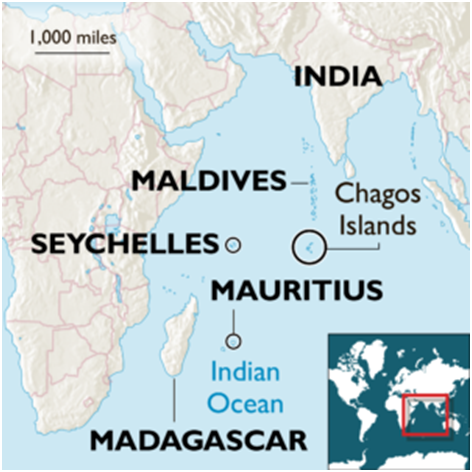
Mentor’s Comment: The Chagos Archipelago consists of 58 islands and is located approximately 500 km south of the Maldives in the Indian Ocean. The French were the first to colonize Mauritius along with the Chagos Islands in 1715. In the late 18th century, the French brought in slave labor from Africa and India to work in newly established coconut plantations. However, the UK took control of the region in 1814 after the fall of France’s Napoleon Bonaparte.
Today’s editorial by Mohamed Nasheed emphasizes the importance of the United Kingdom’s approach to its colonial legacy in the Indian Ocean, particularly concerning the Chagos Archipelago. It highlights the need for sustainable marine conservation and collaborative governance as Britain prepares to relinquish control over these islands.
_
Let’s learn!
Why in the News?
On October 9, 2024, the UK agreed to cede sovereignty of the Chagos Archipelago to Mauritius, while retaining sovereign rights over Diego Garcia for military purposes. The deal is historic as it recognizes Mauritius’s claims over the archipelago, which has been contested since the 1980s.
Historical background of Chagos Archipelago:
Historically, these islands were part of the Maldives until their detachment by the UK in 1965 to establish the British Indian Ocean Territory (BIOT).
This move was made to facilitate a military base for the United States on Diego Garcia, leading to the expulsion of the indigenous Chagossians.
The ICJ had previously ruled in 2019 that the UK’s detachment of Chagos from Mauritius was illegal and called for an end to British colonial administration in the area.
This ruling added pressure on the UK to negotiate a resolution with Mauritius
Key highlights of the agreement:
Resettlement of Chagossians: Mauritius can now resettle people on the Chagos Archipelago, except Diego Garcia, where Britain evicted 2,000 islanders for a US naval base. The deal grants Mauritius full sovereignty over the archipelago except Diego Garcia island.
Establishment of the Trust Fund: The UK has also promised to create a new trust fund for the benefit of the people of Chagos.
Other major Initiatives taken and Collaborations needed:
Sovereignty and Decolonization: The sovereignty of the Chagos Islands has been a contentious issue, with historical ties to both Mauritius and the Maldives.
The UK has agreed to transfer sovereignty of the Chagos Islands to Mauritius while securing military rights over Diego Garcia for an initial period of 99 years.
Marine Conservation Efforts: Britain’s decision to place the entire Chagos Archipelago under protected status, emphasizing its significance for marine conservation is commendable.
The Maldives employs sustainable fishing techniques that minimize bycatch, contrasting with industrial fishing practices that threaten fish stocks.
Collaborative Future: As part of the decolonization process, it is crucial for island nations in the Indian Ocean—Maldives, Mauritius, Seychelles, and Sri Lanka—to collaborate on maintaining the protected status of Chagos.
Britain needs to learn from its past mistakes in decolonization, particularly regarding India’s Partition in 1947, which had severe human costs.
How did the historical conflicts between the UK and France influence the sovereignty of the Chagos Islands?
The Chagos Islands were initially part of French colonial territory, known as Isle de France, where they established coconut plantations using enslaved African labor in the 18th century.
Following the defeat of Napoleon in 1814, the Treaty of Paris ceded Mauritius and its dependencies, including the Chagos Islands, to Britain. This marked the beginning of British administration over these territories.
In 1965, during preparations for Mauritian independence, the UK separated the Chagos Archipelago from Mauritius to create the British Indian Ocean Territory (BIOT). This move was motivated by strategic interests, particularly to establish a military base on Diego Garcia.
The UK forcibly removed the indigenous Chagossians to facilitate military operations, which has been condemned as a violation of human rights.
Despite the ICJ decision, pressure, and legal challenges, the UK maintained its claims over the islands due to their strategic military importance, particularly Diego Garcia.
Conclusion: A respectful and collaborative exit strategy is needed for the UK from its Indian Ocean territories. It advocates for joint efforts among regional nations to ensure that marine conservation is prioritized while addressing historical grievances related to colonialism.
After decades of steady increases in human life expectancy due to advancements in medicine and technology, recent trends suggest that these gains are starting to slow down, according to a new study.
The Key Findings of the Study:
Slowing of Life Expectancy Gains: After decades of rising life expectancy due to medical and technological advancements, the pace of these increases has slowed significantly. The study suggests that human life expectancy has nearly plateaued, with dramatic extensions unlikely without breakthroughs in anti-aging medicine.
Regional Analysis: The study analyzed life expectancy data between 1990 and 2019 from regions with the longest life spans, such as Australia, Japan, and Sweden.
Even in these regions, life expectancy increased by only 6.5 years on average over the 29-year period.
Challenges of Radical Life Extension: Researchers found that while people live longer due to improvements in healthcare, the human body’s aging process—marked by the declining function of internal organs—limits life span. Even if diseases like cancer and heart disease are eliminated, aging itself remains a barrier.
Low Probability of Reaching 100: The study estimates that girls born in the longest-living regions have only a 5.3% chance of reaching 100 years, while boys have a 1.8% chance. Thus, despite medical advancements, reaching 100 years remains rare without interventions to slow aging.
Aging as the Primary Barrier: Researchers argue that extending average life expectancy dramatically will require breakthroughs that slow the aging process rather than just better treatments for common diseases.
Some experimental drugs, like metformin, have shown potential in animal studies, but human trials are needed.
India’s Present Status:
Lower Life Expectancy: As of 2024, India’s average life expectancy is around 70 years, In contrast, countries like Japan and Switzerland boast life expectancies exceeding 83 years.
Healthcare Advancements: While India has made significant progress in combating infectious diseases and improving maternal and child health, chronic illnesses and lifestyle diseases (such as heart disease and diabetes) are emerging as leading causes of death.
What Needs to Be Done: (Way forward)
Focus on Anti-Aging Research: India must invest in research on aging and regenerative medicine, exploring ways to slow down the aging process rather than just treating diseases.
Strengthening Healthcare Systems: Expanding access to quality healthcare and preventive medicine to manage age-related diseases can enhance the quality of life in later years, even if life expectancy does not rise dramatically.
Policy Support for Longevity Research: There is a need for policies supporting medical research into life-extension technologies, including drug trials and clinical studies focused on aging.
Public Health Interventions: Improved public health measures targeting lifestyle diseases (obesity, diabetes) and better management of age-related conditions can enhance life span and overall well-being.
Mains PYQ:
Q The increase in life expectancy in the country has led to newer health challenges in the community. What are those challenges and what steps need to be taken to meet them? (UPSC IAS/2022)
The World Development Report 2024 highlights the “middle-income trap,” where economies stagnate as growth slows. Only 34 middle-income nations advanced to high-income status in 34 years.
How does the World Bank define the threshold for middle-income economies?
The World Bank defines middle-income economies as those with incomes between $1,136 and $13,845 per capita.
The middle-income trap refers to a slowdown in growth when an economy reaches a certain income threshold, about 11% of U.S. per capita income.
Only 34 middle-income countries have transitioned to higher-income status over the last 34 years, indicating the difficulty of escaping the middle-income trap.
Why is state intervention crucial for breaking the middle-income trap?
State intervention is vital for coordinating development goals, as seen in South Korea and Chile, where governments played an active role in shaping industries and ensuring the private sector’s alignment with national development objectives.
The state ensures investment, infusion of global technologies, and domestic innovation, which are critical for modern economies. This is known as the 3i approach (Investment, Infusion, Innovation).
State intervention disciplines local elites, ensuring firms succeed based on performance, not political connections. Underperforming firms are allowed to fail, promoting efficiency and innovation.
What lessons can be drawn from South Korea and Chile?
South Korea adopted a state-led industrialization strategy with a focus on export-driven manufacturing:
The state actively directed private sector activities, ensuring businesses were competitive on the global stage.
Chaebols (large business conglomerates) were supported based on their performance, promoting technological advancement and innovation.
Chile achieved success by focusing on natural resource exports, like its salmon industry:
The state’s role was crucial in developing and supporting industries with growth potential, showing how targeted interventions can help small but strategically important sectors thrive.
What challenges does India face in balancing state intervention with democratic values?
Economic Power Concentration: India faces a growing concentration of wealth among powerful business houses, which are perceived to be closely linked to the state. This risks cronyism rather than performance-based growth, which could hinder innovation and investment.
Manufacturing Stagnation: Unlike South Korea, India’s manufacturing sector has not experienced significant growth. With global export demand slowing and increased protectionism, manufacturing is less likely to drive India’s growth.
Wage Stagnation: Real wage growth has been stagnant, as inflation erodes the benefits of nominal wage increases. This limits domestic demand, a critical factor in economic dynamism.
Premature Deindustrialization: India, like many developing economies, faces premature deindustrialization, meaning that manufacturing’s contribution to GDP is declining at a lower level of income than historically seen in developed economies.
Balancing State Intervention with Democracy: South Korea and Chile implemented aggressive state interventions under authoritarian regimes. However, India, as the world’s largest democracy, must ensure that growth strategies do not come at the cost of democratic values and labor rights.
World Bank recommendation to escape the middle-income trap:
World Development Report 2024: This report outlines a three-pronged approach for middle-income countries to escape the trap:
Investment: Initially focusing on increasing investment.
Technology Infusion: Incorporating modern technologies into domestic industries.
Innovation: Ultimately fostering innovation to enhance competitiveness and productivity
Way forward:
Economic Growth Strategy: Niti Aayog CEO emphasized the need for a comprehensive economic strategy to avoid the middle-income trap, which he described as the “biggest threat” to India’s growth.
Free Trade and Global Integration: Niti Aayog CEO advocated for increased openness to free trade and alignment with global value chains.
Urban Development and Infrastructure: The government should focus on transforming urban areas into economic hubs, which is seen as crucial for driving growth.
In alignment with the theme of this year’s ASEAN Summit—“Enhancing Connectivity and Resilience”—PM Modi laid out the following ten key suggestions for strengthening cooperation.
Back2Basics: Association of Southeast Asian Nations (ASEAN)
ASEAN, founded in 1967 with the Bangkok Declaration, aims for economic growth, regional peace, and an integrated ASEAN community.
The ASEAN Charter, launched in 2008, formalized ASEAN’s legal status and sought to establish a single free-trade area.
The ASEAN Intergovernmental Commission on Human Rights (AICHR) was established in 2009, adopting the ASEAN Human Rights Declaration in 2012.
ASEAN members comprises Brunei, Cambodia, Indonesia, Laos, Malaysia, Myanmar, the Philippines, Singapore, Thailand, and Vietnam. East Timor (Timor-Leste) applied for membership in 2011 but is not yet a member.
ASEAN Plus Three (China, Japan, South Korea) aims to deepen regional integration among Southeast Asia and East Asian countries.
East Asia Summit (EAS), including ASEAN Plus Three + India, Australia, and New Zealand, enhances strategic dialogue and cooperation in the region.
Ten suggestions by PM Modi for ASEAN Connectivity and Resilience:
No.
Suggestion
Details
1
ASEAN-India Year of Tourism (2025)
Declare 2025 as ASEAN-India Year of Tourism, with India committing USD 5 million to promote tourism between India and ASEAN.
2
Celebrating a Decade of India’s Act East Policy
Organize events connecting artists, youth, entrepreneurs, and think tanks, including a Music Festival, Youth Summit, Hackathon, etc.
3
Women Scientists’ Conclave
Hold an annual Women Scientists’ Conclave under the India-ASEAN Science and Technology Fund to promote collaboration and innovation.
4
Scholarships for ASEAN Students
Double the Masters scholarships for ASEAN students at Nalanda University and launch a new scholarship program for ASEAN students in agriculture.
5
Review of ASEAN-India Trade Agreement
Complete the review of the ASEAN-India Trade in Goods Agreement by 2025 to enhance economic ties and build a secure, resilient supply chain.
6
Disaster Resilience
Allocate USD 5 million from the ASEAN-India Fund for disaster resilience, with collaboration between India’s NDMA and ASEAN’s Humanitarian Assistance Centre.
7
Health Resilience
Institutionalize the ASEAN-India Health Ministers Meeting and invite two experts from each ASEAN country to India’s National Cancer Grid Vishwam Conference.
8
Digital and Cyber Resilience
Establish a cyber-policy dialogue between India and ASEAN to strengthen digital and cyber resilience.
9
Promoting a Green Future
Organize workshops on green hydrogen involving experts from India and ASEAN to promote sustainable energy solutions.
10
Climate Resilience
Promote the “Ek Ped Maa Ke Naam” (Plant for Mother) campaign to encourage tree planting and strengthen climate resilience.
PYQ:
[2016] Evaluate the economic and strategic dimensions of India’s Look East Policy in the context of the post-Cold War international scenario.
[2015] India is a member of which among the following? (2015)
Asia-Pacific Economic Cooperation
Association of South-East Asian Nations
East Asia Summit
Select the correct answer using the code given below:
The survey gathered primary data from 1 lakh rural households across 28 states and Union Territories of Jammu & Kashmir and Ladakh.
The first NAFISsurvey was conducted for the agricultural year 2016-17, with results released in 2018.
This survey provides valuable information on rural economic and financial indicators, especially in the post-COVID period.
Key Highlights from NAFIS 2021-22:
Details
1. Increase in Average Monthly Income
• Average monthly income increased by 57.6% from Rs. 8,059 in 2016-17 to Rs. 12,698 in 2021-22, indicating a nominal CAGR of 9.5%.
• Agricultural households earned slightly more, with an average income of Rs. 13,661, compared to Rs. 11,438 for non-agricultural households.
• Salaried employment was the largest income source for all households, accounting for approximately 37% of total income.
• For agricultural households, cultivation was the main income source, contributing about one-third of their monthly earnings.
• For non-agricultural households, government/private services contributed 57% of the total household income.
2. Rise in Average Monthly Expenditure
• Average monthly expenditure increased from Rs. 6,646 in 2016-17 to Rs. 11,262 in 2021-22.
• Agricultural households had higher expenditure at Rs. 11,710, compared to Rs. 10,675 for non-agricultural households.
• In states like Goa and Jammu & Kashmir, monthly household expenditure exceeded Rs. 17,000.
• Overall, agricultural households demonstrated both higher income and expenditure levels than non-agricultural households.
3. Increase in Financial Savings
• Annual average financial savings rose to Rs. 13,209 in 2021-22 from Rs. 9,104 in 2016-17.
• 66% of households reported saving money in 2021-22, up from 50.6% in 2016-17.
• 71% of agricultural households reported savings, compared to 58% of non-agricultural households.
• States with 70% or more households saving money include Uttarakhand (93%), Uttar Pradesh (84%), and Jharkhand (83%).
• States with less than half of households reporting savings are Goa (29%), Kerala (35%), Mizoram (35%), Gujarat (37%), Maharashtra (40%), and Tripura (46%).
4. Kisan Credit Card (KCC) Usage
• 44% of agricultural households possessed a valid Kisan Credit Card (KCC).
• Among those with land holdings greater than 0.4 hectares or who had taken agricultural loans from banks in the past year, 77% had a valid KCC.
5. Insurance Coverage
• Households with at least one member covered by any form of insurance increased from 25.5% in 2016-17 to 80.3% in 2021-22.
• 80.3% means that four out of every five households had at least one insured member.
• Agricultural households had higher insurance coverage than non-agricultural households by about 13 percentage points.
• Vehicle insurance was the most prevalent, with 55% of households covered.
• Life insurance coverage extended to 24% of households, with agricultural households showing slightly higher penetration (26%) compared to non-agricultural ones (20%).
6. Pension Coverage
• Households with at least one member receiving any form of pension increased from 18.9% in 2016-17 to 23.5% in 2021-22.
• Overall, 54% of households with at least one member over 60 years old reported receiving a pension.
• Pensions included old age, family, retirement, or disability pensions, highlighting their importance in supporting elderly members of society.
7. Financial Literacy
• Respondents demonstrating good financial literacy increased from 33.9% in 2016-17 to 51.3% in 2021-22, a rise of 17% points.
• Individuals exhibiting sound financial behavior increased from 56.4% to 72.8% during the same period.
• When assessed on financial knowledge, 58% of rural respondents and 66% of semi-urban respondents answered all questions correctly.
Key aspects that contribute to Rural Empowerment
The survey shows significant progress in rural financial inclusion since the first survey in 2016-17.
Rural households have seen improvements in income, savings, insurance coverage, and financial literacy.
Government schemes like Pradhan Mantri Kisan Samman Nidhi, MGNREGS, and PMAY-G have contributed to the improvement in the lives of rural people.
PYQ:
[2015] Pradhan Mantri Jan-Dhan Yojana was launched by the Prime Minister of India Narendra Modi on 28 August 2014. What is the main objective of the scheme?
(a) To provide housing loan to poor people at cheaper interest rates
(b) To promote women’s Self Help Groups in backward areas
(c) To promote financial inclusion in the country
(d) To provide financial help to marginalised communities
Q). Besides being a moral imperative of a Welfare State, primary health structure is a necessary precondition for sustainable development.” Analyse. (UPSC CSE 2021)
Q) The public health system has limitations in providing universal health coverage. Do you think that the private sector can help in bridging the gap? What other viable alternatives do you suggest? (UPSC CSE 2015)
Mentor’s Comment: In July, a 26-year-old executive from a multinational consulting firm ended her life due to immense work pressures, shedding light on a critical issue affecting millions of working Indians. In September, a 38-year-old software engineer in Chennai also took his life, battling depression caused by work-related stress.
Despite outwardly successful careers, these tragic losses highlight India’s growing mental health crisis, where success is often tied to relentless productivity and material wealth. With over 197 million people suffering from mental health disorders, according to the Lancet Psychiatry Commission, India’s economic growth has increased societal pressures, neglecting mental well-being and fostering disconnection from community and self-awareness. In today’s editorial, we will dive more into the causes and impacts of Mental Health in Indian Society.
_
Let’s learn!
Why in the News?
This year’s theme for World Mental Health Day (October 10) focuses on ‘prioritizing mental health in the workplace. India faces a mental health crisis driven by urban stress, financial instability, and intense competition.
Key points related to Mental Health issues as per WHO:
• According to WHO, India has a significant burden of mental health issues with 2443 Disability-Adjusted Life Years (DALYs) per 100,000 population. • India’s age-adjusted suicide rate is 21.1 per 100,000, among the highest globally. • The economic loss due to mental health conditions between 2012-2030 is estimated to be USD 1.03 trillion.
What are the reasons behind the rising stress and anxiety?
Mental Health Epidemic: India is facing a growing mental health crisis, with millions suffering from disorders like depression, anxiety, and stress.
Pressures of Urban Living: Urban life, financial instability, and intense competition contribute significantly to rising stress.
Material Success vs. Well-being: Despite material success, many people feel isolated and disconnected from their communities, leading to a sense of purposelessness.
Consumerism and Social Comparison: In urban areas, consumerism fosters a culture where wealth and luxury goods define status, causing feelings of inadequacy and stress.
Fear of Insignificance: As per Ernest Becker’s theory, much of human behavior is driven by the fear of impermanence. People chase material wealth for social validation, but this pursuit neglects self-awareness and deeper emotional needs.
Mental Health Policy and Legal Frameworks by Govt:
• National Mental Health Policy, 2014: Promotes a rights-based and participatory approach for quality service delivery. • Mental Healthcare Act, 2017: Provides a legal framework that aligns with the UNCRPD (United Nations Convention on the Rights of Persons with Disabilities), focusing on protecting the rights of individuals with mental illness, decriminalizing suicide, and ensuring access to mental health services.
Collective Action, Community as Solutions:
Shifting focus to Collective Well-being: The emphasis needs to move from individual success to collective well-being. Strong social connections, supportive communities, and meaningful work are critical to mental health.
Examples from other Countries: Initiatives like Brazil’s community gardens promote shared responsibilities, fostering a sense of belonging and combating isolation.
Value of Community Living: Community living provides a sustainable alternative to individualistic consumerism by promoting shared responsibility and collective purpose, strengthening social support networks, reducing competition, and offering a sense of purpose.
Way forward:
Strengthen Community-Based Mental Health Programs: Focus on building strong social connections and support systems through community-based initiatives, promoting collective well-being over individual competition, and addressing isolation.
Enhance Accessibility to Affordable Mental Health Services: Expand access to cost-effective, quality mental health care at the primary health care level, ensuring services are available to all, especially in underserved areas.
Approximately two-thirds of workers at Samsung’s flagship factory in Chennai have been on strike for a month, demanding higher wages, an eight-hour workday, improved conditions, and union recognition.
What are the main demands of the striking workers?
Higher Wages: Workers are demanding increased salaries to improve their financial conditions.
Eight-Hour Work Day: The employees seek the implementation of an eight-hour workday to ensure better work-life balance.
Better Working Conditions: Strikers are advocating for improved health and safety standards in the workplace.
Recognition of Labour Union: The workers want formal acknowledgment of their recently formed union, the Samsung India Workers Union (SIWU).
What is Samsung’s union policy?
Historically, Samsung has maintained a strict no-union policy for over 80 years, resisting any collective bargaining efforts by employees.
In July 2021, the company began to recognize unions after successful negotiations at Samsung Display and Samsung Electronics, allowing for some degree of collective bargaining.
Samsung now has various unions representing its workforce globally, with significant representation in South Korea.
Why was SIWU unrecognised?
Registration Challenges: SIWU’s registration has been opposed by Samsung management, citing trademark violations due to the use of the name “Samsung” in the union’s title.
Legal Precedents: SIWU argues that trademark issues should not apply, as their activities do not involve commercial undertakings that could infringe on the trademark.
Pending Legal Review: The case regarding SIWU’s registration is pending further court hearings, with the government examining objections raised by the management.
What has been the govt.’s response?
Indifferent Stance: SIWU and the Centre of Indian Trade Unions (CITU) have accused the Tamil Nadu government of being indifferent and supportive of Samsung management, which the government denies.
Support for Workers’ Rights: The government claims it considers the registration application in light of Samsung’s objections and aims to ensure fair treatment of both workers and management.
CITU’s Position: Union leaders assert that government intervention in favor of management undermines the rights of workers and can deter unionization efforts, despite evidence showing that unions can benefit both employees and companies.
Present Legislation in India:
Notice Period and Conditions for Strikes: Under the Industrial Relations Code, 2020, workers must provide a 14-day notice before striking, which cannot exceed a maximum of 60 days.
Strike definition: The definition of a strike now includes “mass casual leave,” where over 50% of employees taking leave can be classified as a strike.
Increased Flexibility for Employers: The code has increased the threshold for layoffs from 100 to 300 workers, allowing companies to lay off employees without government approval.
This change aims to give employers greater flexibility in managing their workforce, which has raised concerns among labor unions about job security and workers’ rights.
Way forward:
Facilitate Dialogue and Mediation: Establish a formal dialogue between the workers, Samsung management, and government representatives to address grievances, negotiate demands, and work towards a mutually beneficial agreement.
Strengthen Legal Framework for Union Recognition: Amend or clarify existing labor laws to ensure timely and transparent registration processes for unions, protecting their rights and enabling effective collective bargaining.
The ‘Fairwork India Ratings 2024’ highlights that platform aggregators in India fail to ensure local living wages and resist recognizing the collective rights of workers.
Who are the Gig Workers?
Gig workers are individuals who take up short-term, flexible work assignments, typically managed via digital platforms. In the Indian context, gig workers operate in various sectors such as food delivery, ride-hailing, logistics, and personal/domestic care services.
These workers are not considered employees in the traditional sense and often lack the benefits associated with full-time employment, such as job security, healthcare, and social protection.
Examples of platforms using gig workers include Swiggy, Zomato (food delivery) Uber, Ola (transportation), etc.
Key highlights as per the report:
No Platform Scored Perfectly: No digital labor platform scored more than 6 out of 10 points, and none met all criteria across the five principles — Fair Pay, Fair Conditions, Fair Contracts, Fair Management, and Fair Representation.
Fair Pay: Only BigBasket and Urban Company ensured a minimum wage, but no platform met the criteria for guaranteeing a living wage after work-related costs.
Fair Conditions: Several platforms (e.g., Amazon Flex, Swiggy, Zepto) provided safety equipment and training, but only a few offered comprehensive accident insurance and income loss compensation.
Fair Contracts: BigBasket, Swiggy, and others made contracts accessible and comprehensible, and provided data protection for workers.
Fair Management: Platforms like BluSmart and Zomato implemented processes for addressing grievances and preventing discrimination.
Present Status of Gig Economy in India:
Growth of the Gig Economy: India is witnessing rapid growth in the gig economy, with millions of workers depending on digital platforms for their livelihoods.
The rise of app-based platforms such as Uber, Zomato, and Urban Company has driven the expansion of gig work across urban areas.
Government Focus: Recent years have seen increasing political and legislative attention to gig worker welfare. Karnataka and Jharkhand are examples of states that have proposed new legislation to regulate platform work and protect gig workers’ rights.
Worker Conditions: Despite the expansion of gig work, platforms in India still lag in ensuring fair pay, safety, and management of gig workers.
The Fairwork India Ratings 2024 reveal that no platform scored above 6 out of 10, signaling considerable gaps in adhering to key labor standards.
Challenges faced by the Gig Economy
Low Wages and Unstable Earnings: Many platforms fail to ensure a local living wage for workers after accounting for work-related costs. Only a few platforms like Bigbasket and Urban Company guarantee the local minimum wage, but none meet the standard of ensuring a living wage.
Lack of Social Security and Benefits: Most gig workers lack access to benefits such as healthcare, insurance, and paid leave. While a few platforms provide accident insurance, broader social security protections remain elusive.
Poor Working Conditions: Platforms often do not ensure adequate safety training or measures. While some like Swiggy, Zomato, and Zepto offer basic safety equipment and training, broader protections, especially in terms of income loss and sick leave, are limited.
Inflexible Contracts: Contracts on platforms are frequently unclear, lengthy, and not always comprehensible for workers, making it difficult for them to fully understand their rights and obligations.
Management Issues and Bias: Workers face arbitrary decisions and discipline without proper recourse. Though some platforms have mechanisms for workers to appeal decisions, few have adopted policies to ensure fairness in work allocation.
Collectivization Challenges: Platforms resist recognizing gig workers’ right to form unions or collective bodies. Despite the growing movement for gig worker collectivization, no platform showed evidence of supporting or acknowledging these efforts.
Way forward:
Strengthen Legal Protections and Social Security: Introduce comprehensive legislation ensuring gig workers receive fair wages, social security benefits like healthcare and insurance, and clear, comprehensible contracts.
Promote Worker Representation and Fair Management: Encourage platforms to recognize collective bodies of gig workers, ensuring their right to unionize. Implement transparent and bias-free management practices, along with grievance redressal mechanisms, to improve working conditions and fairness.