💥Join UPSC 2027,2028 Mentorship (July Batch) + XFactor Notes & Microthemes PDF

Distribution: yearly

  • In news: Dibru-Saikhowa National Park (DSNP)

    The Oil India Ltd (OIL) leak in Assam has contaminated water bodies that flow into the Maguri Motapung Beel, a large wetland, and the Dibru-Saikhowa National Park (DSNP).

    Try this PYQ from CSP 2019:

    Q. Which of the following are in Agasthyamala Biosphere Reserve?

    (a) Neyyar, Peppara and Shendurney Wildlife Sanctuaries; and Kalakad Mundanthurai Tiger Reserve

    (b) Mudumalai, Sathyamangalam and Wayanad Wildlife Sanctuaries; and Silent Valley National Park

    (c) Kaundinya, Gundla Brahme-swaram and Papikonda Wildlife Sanctuaries; and Mukurthi National Park

    (d) Kawal and Sri Venkateswara Wildlife Sanctuaries; and Nagarjunasagar-Srisailam Tiger Reserve

    About Dibru-Saikhowa National Park

    • DSNP is a national park in Assam located in Dibrugarh and Tinsukia districts.
    • It was designated a Biosphere Reserve in July 1997 with an area of 765 sq.km.
    • The park is bounded by the Brahmaputra and Lohit Rivers in the north and Dibru river in the south.
    • It mainly consists of moist mixed semi-evergreen forests, moist mixed deciduous forests, canebrakes and grasslands.
    • It is the largest Salix swamp forest in north-eastern India, with a tropical monsoon climate with a hot and wet summer and cool and usually dry winter.
  • Species in news: Band-tail Scorpionfish

    A rare band-tail scorpionfish was recently found in the Gulf of Mannar.

    A stand-alone species being mentioned in the news for the first time (and that too from Southern India) find their way into the prelims. Make special note here. Usually, note the species and its habitat location (IUCN status if available), in the purview of a generic prelims question.

    Band-tail scorpionfish

    • The band-tail scorpionfish (Scorpaenospsis neglecta) camouflages within the seagrass meadows.
    • It is well-known for its stinging venomous spines and ability to change colour.
    • The fish has the ability to change colour and blend with its surrounding environment to escape from predators and while preying.
    • The fish is called ‘scorpionfish’ because its spines contain neurotoxic venom.
  • Three thresholds in Industrial Disputes Act that need revision

    Sometimes the measures we come up with end up doing exactly the opposite of what they were supposed to do. This might be the case with some provisions in the Industrial Dispute Act. This article deals with 3 such provisions in the IDA. So, what are these provisions? How the issues caused by these provisions could be resolved? Read to know more…

    How provisions of IDA could be detrimental?

    • What made so many migrants suddenly long for their village after lockdown?
    • The answer lies in our Industrial Disputes Act (IDA), the motherboard of our labour laws.
    • IDA has encouraged short-term employment, low skills and zero security.
    • It did this by setting up thresholds which disincentivised long-term commitment of workers to entrepreneurs and vice versa.
    • It also kept firms informal and unwilling to invest in human capital.
    • This is why when the lockdown happened, it turned into a migrant crisis.

    Let’s look at  3 thresholds in IDA that are causing harm

    • 1) Hire more than 99 workers, and you will have to notify the government before you can fire any one of them.
    • 2) Hire more than 20 and you open yourself up to provident fund commitments and bonus payments.
    • 3) If you want to deny workers severance pay, never keep them continuously employed for more than 240 days.

    So, how IDA ends up discouraging formalisation?

    • Given these provisions in the IDA, entrepreneurs are reluctant to hire more than 99 workers for over 240 days.
    • The employers are naturally tempted to observe these thresholds and duck under the radar.
    • This is made easier by the fact that these thresholds mesh well with the fear that the middle-class — and upwards — have of a working-class takeover.
    • As a result, these thresholds have only encouraged the informal sector, where both unregistered labour and unregistered entrepreneurs dominate.
    • It has led to the proliferation of informal enterprises and low-skill workers.
    • In the first 15 years of this century itself, over half the increase in total employment has been that of contract workers.
    • This has also led to a phenomenal rise in MSMEs as the IDA has discouraged entrepreneurs from harbouring any ambitions to grow big and formal.
    • The MSMEs have, consequently, increased in number from 3.6 crore units in 2012 to about 6 crore today.
    • Since there are constraints on both the workforce size and duration of employment, upskilling and R&D naturally become early casualties.
    • India spends only 0.7 per cent of its GDP in R&D, one of the lowest in the world, while South Korea spends 4.2 per cent.

    Contribution of MSME in GDP is not increasing

    • Over 94 per cent of MSMEs are in the Micro sector and their contribution to GDP is just not measuring up.
    • In 2012, MSMEs produced 37.54 per cent of our GDP.
    • But this number fell to 30.7 per cent in 2015, and in 2019 it decreased further to 29.7 per cent, though they are still working full throttle.
    • Yet, the lure to stay on the good side of the IDA thresholds is so compelling that even formal units are today outsourcing from the informal ones.
    • Over time, the IDA has succeeded in converting a large number of organised sector companies into strange, hybrid economic creatures, both fishy and foul.

    But, how removal of the 3 thresholds will change the situation?

    • If the 3 mentioned thresholds are removed, every worker — regardless of factory size — is entitled to the same rights.
    • Likewise, every employer, regardless of factory size, can hire and fire workers.
    • There is greater freedom on both sides, but this freedom comes with a price that does not discourage either size or skills in an enterprise.
    • The worker can now be fired without notifying the government, but must be compensated with severance wages, regardless of the size of the firm.
    • Also, unlike the IDA, all the firms must have a formal dispute resolution board.
    • Now that the enterprises have been freed of the size threshold, entrepreneurs get no advantage in dwarfing their firms.
    • Other reforms can soon follow, such as allowing for workers’ representation in a firm’s supervisory board, as it happens in Germany.
    • Measures such as these create trust between employees and employers, and also remove the threatening spectre of a working-class strike.

    Consider the question “Various provision of the Industrial Disputes Act which were enacted but with a different purpose now seems to place both the workers and employers in a disadvantageous position. In light of this statement, examine the issues with the threshold limits of the number of employees and number of employment days in the Industrial Disputes Act.”

    Conclusion

    In the ultimate analysis, the IDA does not produce winners, only losers. The workers remain skill-stunted and insecure, and the entrepreneurs, too, pull back from releasing their much-vaunted “animal spirits”. So, the IDA thresholds must go and not be merely fiddled with, as some states have done.


    Back2Basics: Industrial Disputes Act 1947

    • The main purpose of the Industrial Disputes Act, 1947 is to ensure fair terms between employers and employees, workmen and workmen as well as workmen and employers.T
    • The objective of the Industrial Disputes Act is to secure industrial peace and harmony by providing machinery and procedure for the investigation and settlement of industrial disputes by negotiations.
  • How would Direct Benefit Transfer (DBT) of power subsidy work?

    Context

    • Punjab has been providing free power to the agriculture sector.
    • The new Electricity Amendment Bill 2020 has proposed providing subsidy on power to farmers through DBT, which is contrary to the prevailing ‘free power’ system in Punjab.

    Free or subsidised power is being provided to millions of consumers in almost every state. Punjab is no exception but its free power scheme is. Other states can learn from the example of Punjab, here.

    Practice questions for mains:

    Q. Discuss the efficacy of Direct Benefit Transfer in power subsidy for farmers.

    Punjab on knees

    • Before it submits suggestions regarding the Electricity Amendment Bill 2020, recently drafted by the Union Power Ministry to amend the Electricity Act 2003, a big challenge lies ahead for the Punjab government.
    • Under the garb of DBT, it is a move to stop the free power supply to them.

    What is the current system of power subsidy for farmers in Punjab?

    • At present, Punjab is supplying free power to 14.16 lakh electricity-run tubewells of the agriculture sector which are getting power through 5,900 Agricultural Pumpset Feeders (APFs).
    • These APFs are metered and the Punjab Power Corporation charges the state government for consumed units recorded in metered APFs.

    The Free Power Scheme

    • Farmers are getting power supply for their Kharif and Rabi crops from these feeders as per the recommendations of the Punjab Agriculture University (PAU), Ludhiana.
    • It is supplied for around eight hours every day in Kharif season and four hours on alternate days during Rabi crop season.
    • The state government pays around Rs 6,000 crore power subsidy bill to Power Corporation every year under the scheme to the farming sector.

    What would change under the DBT allowed under the new Electricity Bill 2020?

    • Under DBT, farmers will have to pay the bill for the power consumed for agriculture purposes.
    • After that, they will get the subsidy in their bank accounts through DBT.
    • A meter would be installed on every individual tubewell.

    Issues with Punjab farmer

    • Approximately the annual power bill will come to around Rs 46,000 to Rs 48,000, and farmers are required to pay a bill of Rs 4,000 per month.
    • In Punjab, 67 per cent of farmers come under the small and marginal categories with 1-2 hectares land.
    • Paying bills in advance is not possible for them due to debt.
    • If farmers don’t pay their bills, the department will disconnect their connection, which could lead to farmers’ agitation.

    Can it work like DBT on LPG gas cylinders?

    • The bill suggests the subsidy be paid directly to consumers in cash on the pattern of LPG subsidy.
    • This proposal should be tried in a pilot project and if results are encouraging, only then it should be included in the amendment bill.
    • It is not feasible to provide meters on every pump set up across the country and then give cash subsidy every month after the consumer has paid the bill.

    Punjab government’s own DBT scheme titled ‘Paani Bachao Paisa Kamao’ is also working here. How it is different from DBT under the new Bill?

    • The Punjab government’s scheme is a voluntary one.
    • The farmers who have adopted it need to get install a power meter on their tubewell but are not required to pay any power bill.
    • The main purpose of PBPK is to save groundwater by using it judiciously because, under the traditional system, several farmers are misusing the water by over-irrigating the crops due to free power available to them.

    What do farmers’ organisations think of this?

    • Farmers’ organisations say that if the Punjab government agrees to this bill, they will fight it tooth and nail.
    • From where will poor farmers pay such heavy bills when they get an income after six months following the sale of their crop, they ask.
    • Anywhere in the world, the agrarian sector cannot run without the support of the government as it is the base of every human being who is dependent on farmers’ produce from his/her morning tea to dinner.

    Back2Basics

    [pib] Draft Electricity Act (Amendment) Bill, 2020

  • Delimitation Commission for NE states and UTs

    Lok Sabha speaker has nominated 15 MPs to assist the Delimitation Commission in redrawing the Lok Sabha and the Assembly constituencies of the northeastern states and the Union Territories.

    Practice question for mains:

    Q. What is the Delimitation of Constituencies? Discuss its significance.

    What is Delimitation? Why is it needed?

    • Delimitation is the act of redrawing boundaries of Lok Sabha and state Assembly seats to represent changes in population.
    • In this process, the number of seats allocated to different states in Lok Sabha and the total number seats in a Legislative Assembly may also change.
    • The main objective of delimitation is to provide equal representation to equal segments of a population.
    • It also aims at a fair division of geographical areas so that one political party doesn’t have an advantage over others in an election.

    Legal status

    • Delimitation is carried out by an independent Delimitation Commission (DC).
    • The Constitution mandates that its orders are final and cannot be questioned before any court as it would hold up an election indefinitely.

    How is delimitation carried out?

    • Under Article 82, the Parliament enacts a Delimitation Act after every Census.
    • Once the Act is in force, the Union government sets up a DC made up of a retired Supreme Court judge, the Chief Election Commissioner and the respective State Election Commissioners.
    • The Commission is supposed to determine the number and boundaries of constituencies in a way that the population of all seats, so far as practicable, is the same.
    • The Commission is also tasked with identifying seats reserved for Scheduled Castes and Scheduled Tribes; these are where their population is relatively large.
    • All this is done on the basis of the latest Census and, in case of difference of opinion among members of the Commission, the opinion of the majority prevails.

    Implementation

    • The draft proposals of the DC are published in the Gazette of India, official gazettes of the states concerned and at least two vernacular papers for public feedback.
    • The Commission also holds public sittings.
    • After hearing the public, it considers objections and suggestions, received in writing or orally during public sittings, and carries out changes, if any, in the draft proposal.
    • The final order is published in the Gazette of India and the State Gazette and comes into force on a date specified by the President.

    How often has delimitation been done in the past?

    • The first delimitation exercise in 1950-51 was carried out by the President (with the help of the Election Commission).
    • The Constitution at that time was silent on who should undertake the division of states into Lok Sabha seats.
    • This delimitation was temporary as the Constitution mandated redrawing of boundaries after every Census. Hence, delimitation was due after the 1951 Census.

    Why more independence to DC?

    • Pointing out that the first delimitation had left many political parties and individuals unhappy, the EC advised the government that all future exercises should be carried out by an independent commission.
    • This suggestion was accepted and the DC Act was enacted in 1952.
    • DCs’ has been set up four times — 1952, 1963, 1973 and 2002 under the Acts of 1952, 1962, 1972 and 2002.
    • There was no delimitation after the 1981 and 1991 Censuses.

    Why postponed till 2026?

    • Although the freeze on the number of seats in Lok Sabha and Assemblies should have been lifted after the 2001 Census, another amendment postponed this until 2026.
    • This was justified on the ground that a uniform population growth rate would be achieved throughout the country by 2026.
    • So, the last delimitation exercise — started in July 2002 and completed on May 31, 2008 — was based on the 2001 Census and only readjusted boundaries of existing Lok Sabha and Assembly seats and reworked the number of reserved seats.

    Back2Basics: History of Delimitation in J&K

    • Delimitation of J&K’s Lok Sabha seats is governed by the Indian Constitution, but the delimitation of its Assembly seats (until special status was abrogated recently) was governed separately by its Constitution and J&K Representation of the People Act, 1957.
    • As far as the delimitation of Lok Sabha seats is concerned, the last DC of 2002 was not entrusted with this task. Hence, J&K parliamentary seats remain as delimited on the basis of the 1971 Census.
    • As for Assembly seats, although the delimitation provisions of the J&K Constitution and the J&K RP Act, 1957, are similar to those of the Indian Constitution and Delimitation Acts.
    • They mandate a separate DC for J&K. In actual practice, the same central DC set up for other states was adopted by J&K in 1963 and 1973.
    • While the amendment of 1976 to the Indian Constitution suspended delimitation in the rest of the country till 2001, no corresponding amendment was made to the J&K Constitution.
    • Hence, unlike the rest of the country, the Assembly seats of J&K were delimited based on the 1981 Census, which formed the basis of the state elections in 1996.
    • There was no census in the state in 1991 and no DC was set up by the state government after the 2001 Census as the J&K Assembly passed a law putting a freeze on fresh delimitation until 2026.
  • ‘Rozgar Setu’ Scheme for skilled workers

    The Madhya Pradesh has announced the launch of the ‘Rozgar Setu’ Scheme to help secure employment for skilled workers who have returned.

    State schemes are quite often seen in the news. They are very important from the prelims perspective:

    Rytha Bandu (Telangana): Cash transfer scheme of Rs 5,000/acre, per season

    KALIA (Krushak Assistance for Livelihood and Income Augmentation) Scheme (Odisha)

    Mukhya Mantri Krishi Aashirwad Yojana (Jharkhand)

    Krishak Bandhu Scheme (West Bengal)

    ‘Rozgar Setu’ Scheme

    • The ‘Rozgar Setu’ scheme to provide work to the maximum number of returned skilled workers.
    • After such workers requiring employment are identified, the government will contact factory and workshop owners and contractors overseeing infrastructure projects such as road and bridge construction.
    • This would fulfil the manpower requirement of industries as well as provide employment to workers during the COVID-19 pandemic.
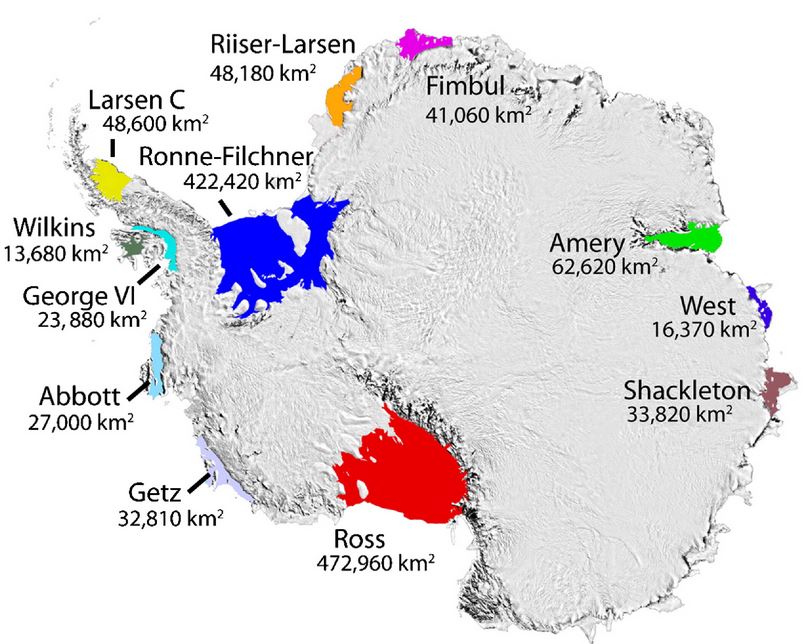
  • Expansion of the Amery Ice Shelf


    There would be a 24% increase in the expansion of the Amery Ice Shelf (AIS) boundaries in Antarctica by 2021 and another 24 per cent by 2026 from its 2016 positions, the National Centre for Polar and Ocean Research (NCPOR) in Goa has predicted.

    Practice question for mains:

    Q. Discuss the interrelation between Cryosphere and Climate change in context to the melting ice shelves in the Antarctic region.

    Amery Ice Shelf (AIS)

    • The Amery Ice Shelf is a broad ice shelf in Antarctica at the head of Prydz Bay between the Lars Christensen Coast and Ingrid Christensen Coast.
    • It is part of Mac. Robertson Land.
    • The name “Cape Amery” was applied to a coastal angle mapped on February 11, 1931.
    • The AIS is one of the largest glacier drainage basins in the world, located on the east coast of Antarctica, at about 70ºS Latitude, 70ºE Longitude.
    • The AIS dynamics and mass balance help in understanding the changes in the global climate scenario.

    Significance of the study

    • NCPOR observations revealed a critical cooling of the sea surface temperature, resulting in an advancement of the ice shelf by 88 per cent in the past 15 years.
    • These changes would contribute in a major way to climate variability.
    • The study clearly demonstrated the future dynamism of ocean heat fluctuation and Antarctic Amery ice shelf mass shifting-extent.

    Back2Basics: Ice Shelves

    • The floating sheets of ice called ‘ice shelves’ play a multi-faceted role in maintaining the stability of a glacier. Ice shelves connect a glacier to the landmass.
    • The ice sheet mass balance, sea stratification, and bottom water formation are important parameters for the balancing of a glacier. Latent and sensible heat processes do play important roles here.
    • The insulation of ice shelves from atmospheric forcing is dependent on a temperature gradient that the ocean cavity beneath the ice shelves provides.
    • It is the pressure exerted by the ice shelves upon the ocean cavity that determines this temperature gradient.
  • Missile Park ‘AGNEEPRASTHA’

    Foundation Stone for a Missile Park “AGNEEPRASTHA” was recently laid at INS Kalinga, Vizag.

    Caution: Agneeprastha is a missile park of the eastern naval command of the Indian Navy. It has nothing to do with the Agni missiles.

    Missile Park ‘Agneeprastha’

    • ‘Agneeprastha’ aims to capture glimpses of Missile History of INS Kalinga since 1981 till date.
    • The Missile Park has been set up with a replica of missiles and Ground Support Equipment (GSE) that showcase the evolution of missiles handled by the unit.
    • The exhibits have been created from scrap / obsolete inventory which have been reconditioned in-house.
    • The main attraction is P-70 ‘Ametist’, an underwater launched anti-ship missile from the arsenal of the old ‘Chakra’ (Charlie-1 submarine) which was in service with IN during 1988-91.
    • It will also provide a one-stop arena for motivation and stimulation of inquisitive minds regarding the missiles and related technologies, from school children to naval personnel and their families.
  • India-China confrontation: Not a standalone event

    The recent India-China standoff in Ladakh points to a larger picture of the Chinese agenda of regional dominance. The US-China tension has proved to be the backdrop against which the Ladakh standoff is playing out. This article suggests that this standoff is not a standalone event. It could well be a trigger for domino effect.

    What the intensification of tension between India-China suggests?

    1) China is feeling threatened

    • An authoritarian regime whose legitimacy rests primarily on its economic performance is faced with a situation where growth is expected to plummet.
    • It is a sign that Beijing is increasingly feeling beleaguered.
    • In response, it has embarked on a strategy of brinkmanship with several goals in mind.
    • External adventurism, when cloaked in the garb of ultra-nationalism, can shore up a regime’s legitimacy at home.

    2) It could be a move to divert the attention of the world

    • Simultaneously, it can act as a diversionary measure to escape international criticism for Beijing’s attempt to cover up the spread of the coronavirus.
    • Many countries hold China responsible for the huge cost in human lives and suffering as well as the unprecedented economic distress.
    • In the face of such criticism, the Chinese regime is increasingly using jingoistic jargon to build up domestic support.
    • President Xi Jinping’s recent speech to the PLA is an outstanding example of this strategy.
    • He exhorted the Chinese armed forces to “prepare for war” in order to “resolutely safeguard national sovereignty” and “the overall strategic stability of the country”.
    • This is a sign that the Communist Party of China (CPC) feels increasingly threatened both domestically and externally.

    Let’s look at the deterioration of the US-China relations

    • China’s relations with the U.S. have been going downhill almost since the beginning of the Donald Trump presidency.
    • Washington has periodically imposed economic sanctions on China and Beijing has retaliated in kind.
    • Trade talks have faltered because of growing protectionist sentiments in the U.S. and Chinese inability to adequately respond to them.
    • The chipping away at Hong Kong’s autonomous status by Beijing and the suppression of the pro-democracy movement in Hong Kong has led to severe criticism by the U.S. administration and in the Congress.
    • Differences over the issue of Taiwan have added to tensions, with China viewing the U.S. as the primary impediment preventing Taiwan’s integration.
    • The Trump administration has significantly increased support to Taiwan with arms sales that have added to China’s concern.

    U.S.-China rivalry in South-China Sea

    • Above all, the U.S.-China rivalry in the South China Sea acts as the potential flashpoint that may well lead to a shooting war.
    • So far, it has been careful that these moves do not trigger a serious confrontation with the U.S.
    • Washington has a strong interest in preventing China from asserting control over the South China Sea as maintaining free access to this waterway is important to it for economic reasons.
    • It also has defence treaty obligations to the Philippines, which has vigorously contested Chinese territorial claims.
    • Further, China’s control of the South China Sea would be a major step toward replacing the U.S. as the foremost power in the Indo-Pacific region.

    India-China relation questions have been the leitmotif in the UPSC papers. Just the theme of the question changes. Consider 2017 question “China is using its economic relations and positive trade surplus as a tool to develop potential military power status in Asia. In light of this statement, discuss its impact on India as her neighbour.”

    Conclusion

    Increased Chinese adventurism could result in an escalation of U.S.-China confrontation in the South China Sea. If that happens, the India-China face-off in Ladakh could become part of a much larger “great game”, with the U.S. trying to preserve the status quo and China attempting to change it to further its objective of regional dominance at the U.S.’s expense. The current India-China crisis should, therefore, be seen in its proper context and not as an isolated event.

  • Foreign direct investment (FDI) in India

    The FDI in India grew by 13% to a record of $49.97 billion in the 2019-20 financial years, according to official data.

    Get aware with the recently updated FDI norms. Key facts mentioned in this newscard can make a direct statement based MCQ in the prelims.

    Ex. FDI source in decreasing order: Singapore – Mauritius – Netherland – Ceyman Islands – Japan – France

    Data on FDI

    • The country had received an FDI of $44.36 billion during April-March 2018-19.
    • The sectors which attracted maximum foreign inflows during 2019-20 include services ($7.85 billion), computer software and hardware ($7.67 billion), telecommunications ($4.44 billion), trading ($4.57 billion), automobile ($2.82 billion), construction ($2 billion), and chemicals ($1 billion).
    • Singapore emerged as the largest source of FDI in India during the last fiscal with $14.67 billion investments.
    • It was followed by Mauritius ($8.24 billion), the Netherlands ($6.5 billion), the U.S. ($4.22 billion), Caymen Islands ($3.7 billion), Japan ($3.22 billion), and France ($1.89 billion).

    What is FDI?

    • An FDI is an investment in the form of a controlling ownership in a business in one country by an entity based in another country.
    • It is thus distinguished from a foreign portfolio investment by a notion of direct control.
    • FDI may be made either “inorganically” by buying a company in the target country or “organically” by expanding the operations of an existing business in that country.
    • Broadly, FDI includes “mergers and acquisitions, building new facilities, reinvesting profits earned from overseas operations, and intra company loans”.
    • In a narrow sense, it refers just to building a new facility, and lasting management interest.

    FDI in India

    • Foreign investment was introduced in 1991 under Foreign Exchange Management Act (FEMA), driven by then FM Manmohan Singh.
    • There are two routes by which India gets FDI.

    1) Automatic route: By this route, FDI is allowed without prior approval by Government or RBI.

    2) Government route: Prior approval by the government is needed via this route. The application needs to be made through Foreign Investment Facilitation Portal, which will facilitate the single-window clearance of FDI application under Approval Route.

    • India imposes a cap on equity holding by foreign investors in various sectors, current FDI in aviation and insurance sectors is limited to a maximum of 49%.
    • In 2015 India overtook China and the US as the top destination for the Foreign Direct Investment.

    Back2Basics

    Amendment in the FDI Policy for curbing opportunistic takeovers/acquisitions of Indian companies