💥Join UPSC 2027,2028 Mentorship (July Batch) + XFactor Notes & Microthemes PDF

Distribution: yearly

  • Sahyadri Megha

    The University of Agricultural and Horticultural Sciences (UAHS), Shivamogga (K’taka) has developed ‘Sahyadri Megha’, a new red variety of paddy that is resistant to blast (a fungal disease) and rich in nutrients.

    Sahyadri Megha

    • It is a red variety of paddy that is resistant to blast disease and rich in nutrients.
    • It was developed under the hybridization breeding method by cross-breeding the best among the ‘Jyothi’ variety with that of ‘Akkalu’, a disease-resistant and protein-rich paddy variety.
    • The new variety will be notified under the Indian Seed Act 1966 shortly after which it will become part of the seed chain.

    Key features

    • The protein content in it is 12.48%, higher than the other red rice varieties grown.
    • The yield per hectare from ‘Sahyadri Megha’ is around 65 quintals, substantially higher than other red paddy varieties.
    • It is a medium-term paddy that can be grown when there is a delay in the onset of monsoon. It can be harvested after 120 days of sowing.
  • Role of Lieutenant Governor

    The Madras High Court has held that the role of Puducherry’s Lieutenant Governor and that of an elected government in the UT were intertwined as per law, and therefore they were expected to act in unison and not in division.

    What did the court rule?

    • The government headed by the CM and the Administrator/Lieutenant Governor of Puducherry shall work in unison and not in division.
    • The Madras HC set aside a single bench judgment that had held that the Lieutenant Governor (LG) does not have the right to interfere in the daily affairs of the elected government of Puducherry.
    • The HC has held that the Administrator is bound by the aid and advice of the Council of Ministers in matters where the Legislative Assembly is competent to enact laws.
    • This power of Assembly is contemplated under Section 44 of the Government of Union Territories Act, 1962.

    How is Puducherry different from other UTs?

    • UT of Puducherry is headed by the Lieutenant Governor of Puducherry as its nominal head, with a democratically elected CM as real head of the executive.
    • Other union territories don’t have an elected government and legislative assembly.
    • Puducherry, National Capital Territory of Delhi and Jammu and Kashmir (newly formed UT) are the three territories which have democratically elected governments like Indian states.
    • The State legislatures were a creation of the Constitution, whereas the UT legislatures were created under a law such as the Government of UTs Act, 1963.
    • The constitutional provisions, the 1963 Act as well as the Rules of Business of the Government of Puducherry lay expect the Lieutenant Governor to act as a bridge between the local government and the Centre.
    • The Administrator is expected to play the role of an umpire whenever there was a disagreement between the Lieutenant Governor and the Council of Ministers.
  • Explained: Epidemic Diseases Act, 1897

    Till today, at least 60 COVID-19 cases have been confirmed in India. So it was decided in a Cabinet Secretary meeting that States and UTs should invoke provisions of Section 2 of Epidemic Diseases Act, 1897, so that Health Ministry advisories are enforceable.

    History of the 1897 Epidemic Diseases Act

    • The Epidemic Diseases Act is routinely enforced across the country for dealing with outbreaks of diseases such as swine flu, dengue, and cholera.
    • The colonial government introduced the Act to tackle the epidemic of bubonic plague that had spread in the erstwhile Bombay Presidency in the 1890s.
    • Using powers conferred by the Act, colonies authorities would search suspected plague cases in homes and among passengers, with forcible segregations, evacuations, and demolitions of infected places.
    • Historians have criticised the Act for its potential for abuse.
    • In 1897, the year the law was enforced, Lokmanya Tilak was punished with 18 months’ rigorous imprisonment after his newspapers Kesari and Mahratta admonished imperial authorities for their handling of the plague epidemic.

    Provisions of the 1897 Epidemic Diseases Act

    • The Act is one of the shortest Acts in India, comprising just four sections. It aims to provide for the better prevention of the spread of Dangerous Epidemic Diseases.
    • The then Governor-General of colonial India had conferred special powers upon the local authorities to implement the measures necessary for the control of epidemics.
    • Although, the act does define or give a description of a “dangerous epidemic disease”.

    Its various sections can be summarized as under:

    • The first section describes all the title and extent, the second part explains all the special powers given to the state government and centre to take special measures and regulations to contain the spread of disease.
    • The second section has a special subsection 2A empowers the central government to take steps to prevent the spread of an epidemic, especially allowing the government to inspect any ship arriving or leaving any post and the power to detain any person intending to sail or arriving in the country.
    • The third section describes the penalties for violating the regulations in accordance with Section 188 of the IPC. Section 3 states, “Six months’ imprisonment or 1,000 rupees fine or both could be charged out to the person who disobeys this Act.”
    • The fourth and the last section deals with legal protection to implementing officers acting under the Act.

    Examples of implementation

    The act has been invoked several times since independence. Few recent incidents include-

    • In 2018, the district collector of Gujarat’s Vadodara issued a notification under the Act declaring a town as cholera-affected.
    • In 2009, to tackle the swine flu outbreak in Pune, Section 2 powers were used to open screening centres in civic hospitals across the city, and swine flu was declared a notifiable disease.
  • Genome sequencing of Coronavirus

    Scientists across the world are trying to develop a line of treatment and a possible vaccine for COVID-19. However, with the most optimistic timelines we don’t see a line of treatment or vaccine arriving before next year.

    Genome sequencing of Coronavirus

    • A global effort is on to collect and analyse the genetic composition of the new virus, which would be key to developing a cure and a vaccine.
    • Genome sequence is the unique code of genetic material of any organism, and determines the characteristic of any organism.
    • Whole genome sequencing is the process of determining the complete DNA sequence of an organism’s genome at a single time.
    • The gene composition of novel coronavirus, for instance, is different from that of the influenza virus. Every organism has a unique genome sequence.
    • Laboratories in various countries have been isolating and sharing the genome sequences of the virus on an international platform.

    Why are so many genome sequences being isolated?

    • When viruses multiply, or reproduce, there is a copying mechanism that transfers the gene information to the next generation.
    • However, no copying mechanism is perfect. When the virus multiplies, there will be small changes, which are called mutations.
    • These mutations accumulate over time, and after prolonged periods, are responsible for evolution into new organisms.
    • Within a single reproduction, the changes are extremely minor. More than 95 per cent of the gene structure remains the same.

    How it helps scientists?

    • However, the small changes that occur are crucial to understanding the nature and behaviour of the organism.
    • In this case, for example, the small changes could provide scientists with information about the origin, transmission, and impact of the virus on the patient.
    • It could also hold clues to the differing effects the virus could have on patients with different health parameters.

    How many genome sequences are required?

    • India has far fewer positive cases compared to China, South Korea, Iran, Italy, or even the US.
    • Patients who have been infected with the virus in similar conditions are unlikely to show any significant changes in the genome sequences.
    • Patients with existing medical conditions could be other candidates from where genome sequences of this virus could be isolated.
    • This could help scientists to look for clues to possible impact of virus amidst those existing medical conditions.

    Currently, what is the most effective medication?

    • As of now, there is none such. Right now, drugs are being repurposed, meaning old drugs for similar diseases are being checked for their efficacy against COVID-19.
    • These drugs, if they work, will require clinical trials, and then can be made widely available for people.
    • In most cases, symptomatic treatment for fever, body ache, and cough will be sufficient. More severe cases will require oxygen and respiratory support.
  • AT-1 bonds

    India’s fourth-largest private lender YES bank was placed under a moratorium by RBI and its perpetual debt additional tier-1 (AT1 bonds) would become worthless if RBI does ask mutual funds to write down their value.

    What are AT1 bonds?

    • AT-1, short for Additional Tier-1 bonds, are a type of unsecured, perpetual bonds that banks issue to shore up their core capital base to meet the Basel-III norms.
    • AT-1 bonds are complex hybrid instruments, ideally meant for institutions and smart investors who can decipher their terms and assess if their higher rates compensate for their higher risks.
    • They carry a face value of ₹10 lakh per bond.
    • There are two routes through which retail folk have acquired these bonds — initial private placement offers of AT-1 bonds by banks seeking to raise money; or secondary market buys of already-traded AT-1 bonds based on recommendations from brokers.

    Why are they important?

    AT-1 bonds have several unusual features lurking in their fine print, which make them very different from plain bonds.

    • One, these bonds are perpetual and carry no maturity date. Instead, they carry call options that allow banks to redeem them after five or 10 years. But banks are not obliged to use this call option and can opt to pay only interest on these bonds for eternity.
    • Two, banks issuing AT-1 bonds can skip interest payouts for a particular year or even reduce the bonds’ face value without getting into hot water with their investors, provided their capital ratios fall below certain threshold levels. These thresholds are specified in their offer terms.
    • Three, if the RBI feels that a bank is tottering on the brink and needs a rescue, it can simply ask the bank to cancel its outstanding AT-1 bonds without consulting its investors. This is what has happened to YES Bank’s AT-1 bond-holders who are said to have invested ₹10,800 crore.
  • [pib] ARI-516 Grape Variety


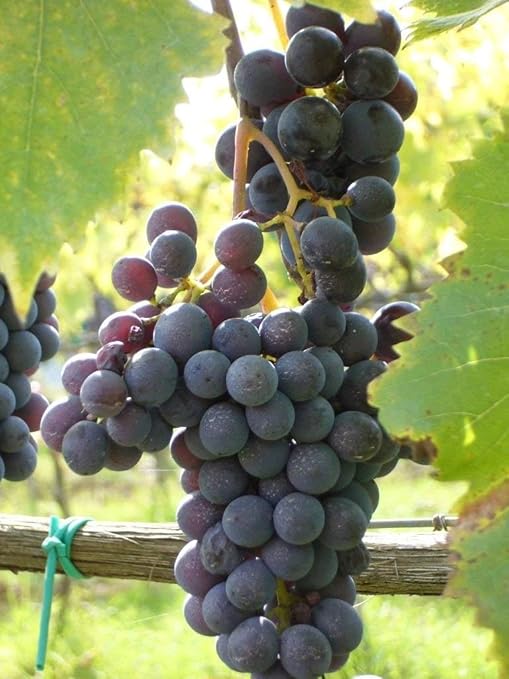
    Pune’s Agharkar Research Institute (ARI), an autonomous institute of the DST has developed a hybrid variety of grapes which is resistant to fungal diseases, high yielding and has excellent juice quality.

    ARI-516

    • The hybrid variety ARI-516 has been developed by interbreeding of two species from the same genus — Catawba variety of Vitis labrusca and Beauty seedless variety of Vitis vinifera.
    • It is a result of collaboration between Maharashtra Association for the Cultivation of Science (MACS) and ARCI and can benefit farmers, the processing industry and consumers.
    • This variety of grapes is resistant to fungal diseases, high yielding and has excellent juice quality.
    • The fungal resistance of ARI-516 has been derived from Catawba, which is an American grape variety.

    Commercial benefits

    • It is also suitable for preparation of juice, raisin, jam and red wine and farmers are enthusiastically adopting the variety.
    • It has superior quality fruits and higher yield per unit area.
    • An early ripening hybrid, it matures in 110 – 120 days after pruning.
    • Being moderately resistant to a majority of fungal diseases, its cost of production is lower.

    Back2Basics

    Grape production in India

    • India ranks twelfth in the world in terms of grape production.
    • About 78% of grape production in India is utilized for consumption, 17-20 % for raisin production, 1.5 % for wine and 0.5 % for juice.
    • Maharashtra leads in the production of grapes in India with a share of 81.22 %. A negligible share of grapes is used for juice production.
    • A majority of farmers in Maharashtra cultivate ‘Thompson seedless’ and its clones for table purpose or raisin making.
  • A prescription for revival

    Context

    The root cause of the present malaise in our economy is the “death of demand”.

    How demand matters for growth?

    • The relation between demand and growth: Growth in any economy depends on the growth in demand, both for investment as well as consumer goods.
    • How slackened demand leads to a vicious cycle: If demand slackens, then the installed capacity will not be fully utilised, the fresh investment will not take place, employment will slacken and the economy will get caught in a vicious cycle, as we are experiencing today.

    What needs to be done to break the vicious cycle?

    • What sequence to follow in reviving demand? The basic challenge, therefore, is to revive demand in the economy in a sequence where the revival takes place first in the investment goods sector, automatically followed by a boost in demand for consumer goods through enhanced employment opportunities.
    • Past precedents: This is the prescription we had followed in the Atal Bihari Vajpayee government when we were faced with the East Asian crisis and the post-Pokhran global economic sanctions soon after the government assumed office in March 1998.

    Demand in India

    • No dearth of demand in India: In a developing country like India, there is no dearth of “good” demand.
      • We still have to provide so many goods and services to our people in order to improve their “quality of life”.
    • Need to create new infrastructure: Simultaneously, we have to create new infrastructure and improve the existing ones to reduce the transaction cost in our economy and make it more competitive.
    • How infrastructure creation lead to the creation of demand: The emphasis on the construction of roads of all kinds — rural, state and national highways, the new telecom policy, the investment in railways, the emphasis on housing construction and development of the real estate, the improvement in rural infrastructure and reform in the agricultural sector were all meant to lead to the creation of demand in the economy.
    • Creation of the virtuous cycle: The creation of demand should be in such a way that the demand for investment goods picks up first and faster, which creates the virtuous cycle of full capacity utilisation.
      • Demand for consumer goods: Demand for investment goods is followed by fresh investment for new capacity creation, larger employment opportunities of various kinds — unskilled, skilled and highly skilled — which reached money into the pockets of people leading to a surge in demand for consumer goods.

    How the government should deal with the situation

    • Deal with the demand side instead of supply-side: All commentators are agreed now that instead of tackling the demand side government is dealing with the supply side.
      • Tax relief to corporates: For instance, if, instead of wasting a precious amount of Rs 1,45,000 crore on tax relief to a limited number of corporates the government had spent that money on rural infrastructure and agriculture and a part of it on railways and highways, it would have led to the creation of demand both for investment goods as well as consumer goods.
    • Issue of sticking to the fiscal deficit target: There is also the issue of resources. The government claims that it has stuck to the fiscal deficit targets.
      • But the provisions of Fiscal Responsibility and Budget Management (FRBM) Act have been treated in a cavalier manner by all subsequent governments.
      • What was the basic purpose of the act? The basic purpose of the act was to eliminate the revenue deficit completely within a short period of time and live with a limited fiscal deficit.
      • The original FRBM Act, therefore, mandated that revenue deficit should be eliminated completely and the rest of the fiscal deficit should be limited to one per cent of GDP.
      • In special circumstances like today, the fiscal deficit should be allowed to go up to even two per cent of the GDP, which will mean an amount of Rs four lakh crore.

    Figures of the latest budget and need for the reforms

    • Fiscal deficit figures: The government has taken credit in the Budget for the fact that it has successfully restricted total fiscal deficit for this fiscal to 3.8 per cent and for next fiscal at 3.5 per cent of the GDP.
    • The issue involved in fiscal deficit figures: The revenue deficit for the current fiscal is 2.4 per cent of the GDP and for the next fiscal it is 2.7 per cent. In other words, minus the revenue deficit the fiscal deficit is only 1.4 per cent of GDP for this year and for the next year, it is 1.7 per se.
    • Need for managing the expenditure: So, the real villain of the piece is revenue deficit and not fiscal deficit per se.
      • Need for the reforms: It is clearly the government’s responsibility to manage its expenditure and carry out reforms in it, including austerity in expenditure.
      • How will the reforms help? Controlled fiscal deficit will make more money available in the market for private sector investment and help RBI in reducing interest rates — things which will have an overall benign influence on the economy.

    Conclusion

    A lot of other things apart from austerity majors will have to be done, no doubt, like preventing companies, especially banks from failing, to further strengthen the growth impulses but in the present situation, the key is government spending and in the desired sequence.
  • Explained: Sir Creek Dispute


    Former Pakistan Minister recalls plan for Sir Creek pact.

    Sir Creek

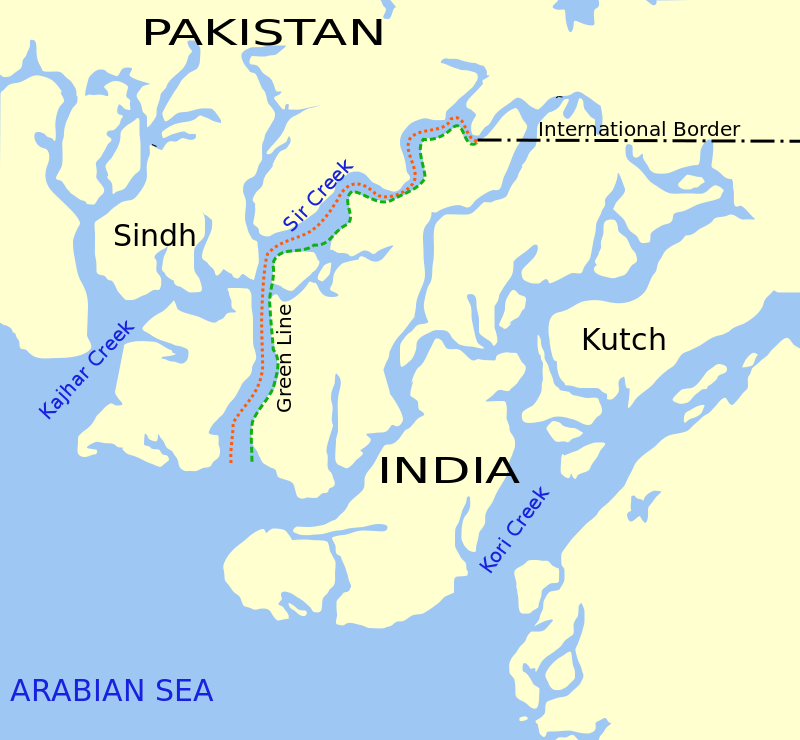
    • Sir Creek is a 96-km strip of water disputed between India and Pakistan in the Rann of Kutch marshlands. Originally named Ban Ganga, Sir Creek is named after a British representative.
    • The Creek opens up in the Arabian Sea and roughly divides the Kutch region of Gujarat from the Sindh Province of Pakistan.

    What’s the dispute?

    • The dispute lies in the interpretation of the maritime boundary line between Kutch and Sindh. Before India’s independence, the provincial region was a part of the Bombay Presidency of British India.
    • But after India’s independence in 1947, Sindh became a part of Pakistan while Kutch remained a part of India.
    • Pakistan claims the entire creek as per paragraphs 9 and 10 of the Bombay Government Resolution of 1914 signed between then the Government of Sindh and Rao Maharaj of Kutch.
    • The resolution, which demarcated the boundaries between the two territories, included the creek as part of Sindh, thus setting the boundary as the eastern flank of the creek popularly known as Green Line.
    • But India claims that the boundary lies mid-channel as depicted in another map drawn in 1925, and implemented by the installation of mid-channel pillars back in 1924.

    The Genesis 

    • The marshland of Sir Creek first became disputed in the early 20th century when the Rao of Kutch and the Chief Commissioner of Sindh Province of British India, due to different perceptions of the boundaries, laid claims over the creek.
    • The case was taken up by then Government of Bombay, which conducted a survey and mandated its verdict in 1914.
    • This verdict has two contradictory paragraphs, which make the India and Pakistan contenders on the same issue.
    • Paragraph 9 of this verdict states that the boundary between Kutch and Sindh lies ‘to the east of the Creek,’ (Green Line) which effectively implied that the creek belonged to Sindh and, therefore, to Pakistan.
    • On the other hand, Paragraph 10 states that since Sir Creek is navigable most of the year.
    • According to international law and the Thalweg principle, a boundary can only be fixed in the middle of the navigable channel, which meant that it has be divided between Sindh and Kutch, and thereby India and Pakistan.
    • India has used this para to consistently argue that the boundary needs to be fixed in the middle of the creek.
    • Pakistan, however, claims that Sir Creek isn’t navigable but India claims that since it’s navigable in high tide, the boundary should be drawn from the mid channel.

    What’s the importance of Sir Creek?

    • Apart from the strategic location, Sir Creek’s core importance is fishing resources. Sir Creek is considered to be among the largest fishing grounds in Asia.
    • Another vital reason for two countries locking horns over this creek is the possible presence of great oil and gas concentration under the sea, which are currently unexploited thanks to the impending deadlock on the issue.

    UNCLOS supports India’s stand

    • If Thalweg principle is to be upheld, Pakistan would lose a considerable portion of the territory that was historically part of the province of Sindh.
    • Acceding to India’s stance would mean shifting of the land/sea terminus point several kilometres to the detriment of Pakistan, leading in turn to a loss of several thousand square kilometres of its Exclusive Economic Zone under the United Nations Convention on Law of the Sea (UNCLOS).

    War in 1965 and tribunal

    • After the 1965 war, British Prime Minister Harold Wilson successfully persuaded both countries to end hostilities and set up a tribunal to resolve the dispute.
    • The verdict of the tribunal came in 1968 which saw Pakistan getting 10% of its claim of 9,000 km (3,500 sq. miles).
    • Since 1969, 12 rounds of talks have been held over the issue of Sir Creek, but both sides have denied reaching any solution.
    • The region fell amid tensions in 1999 after the Pakistan Navy shot down a MiG-21 fighter plane, but the last rounds of talks were held in 2012. Since then it’s been status quo.
  • Haryana’s ‘quota within SC quota

    The Haryana Assembly last week passed a Bill to split the 20% quota for Scheduled Castes (SCs) in the state’s higher educational institutions into two, creating a quota within the quota for a new group of “Deprived Scheduled Castes”.

    Deprived Scheduled Castes

    • This category has 36 communities including Valmiki, Bazigar, Sansi, Deha, Dhanak, and Sapera.

    What does the new law say?

    • Fifty per cent of the 20 per cent seats reserved for SCs for admission in any Government educational institution shall be set aside for candidates belonging to DSCs.
    • Where a seat set aside for candidate from deprived Scheduled Castes is not filled up in any academic year due to non-availability of such candidate; it shall be made available to candidate of Scheduled Castes.

    Constitutional Provisions incited

    • Article 15(5) of the Constitution authorizes the State to make special provisions for the advancement of any socially and educationally backward classes of citizens or for SCs/STs for admission to educational institutions.
    • However Article 15(5) did not mention powers to bifurcate the quota.

    Is this sub-quota a new idea?

    • The present Haryana government has replicated the initiative of the state government in 1994.
    • Then government bifurcated the Scheduled Caste quota into two categories: Block A and Block B.

    Why such move?

    • The Statement of Objects and Reasons of the Act says that the representation of the SCs now categorised as DSCs” is “only 4.7%, 4.14% and 6.27% in Group A, Group B and Group C services respectively, even though their population is about 11% of the total State population.
    • The population of other SCs in Haryana is also about 11% of the total State population but in respect of representation in Government Services their share is 11%, 11.31% and 11.8% in Group A, B and C, respectively.”
    • The reason for the poor representation of the DSCs in government jobs can be found in their educational qualifications.
    • Thus, even though the “minimum prescribed educational qualification for majority of the posts of Group A, B & C services… is Graduation, the Socio-Economic Caste Census data reveals that in terms of education.
    • Only 3.53% population of the DSCs is Graduate, 3.75% of them are Senior Secondary level and 6.63% are Matric/Secondary level. Also 46.75% of them are illiterate.
  • How plants dissipate excess sunlight as heat?

    Photosynthesis is a life-sustaining process by which plants store solar energy as sugar molecules. However if sunlight is in excess it can lead to leaves being dehydrated and damaged.

    What is Photosynthesis?

    • Photosynthesis is the process used by plants, algae and certain bacteria to harness energy from sunlight and turn it into chemical energy.
    • There are two types of photosynthetic processes: oxygenic photosynthesis and anoxygenic photosynthesis.
    • The general principles of anoxygenic and oxygenic photosynthesis are very similar, but oxygenic photosynthesis is the most common and is seen in plants, algae and cyanobacteria.
    • During oxygenic photosynthesis, light energy transfers electrons from water (H2O) to carbon dioxide (CO2), to produce carbohydrates.
    • Ultimately, oxygen is produced along with carbohydrates. Oxygenic photosynthesis is written as follows:

    6CO2 + 12H2O + Light Energy → C6H12O6 + 6O2 + 6H2O

    Here, six molecules of carbon dioxide (CO2) combine with 12 molecules of water (H2O) using light energy. The end result is the formation of a single carbohydrate molecule (C6H12O6, or glucose) along with six molecules each of breathable oxygen and water.

    How do plants dissipate heat?

    • To prevent such damage, plants dissipate extra light as heat.
    • While this was known there has been a debate over the past several decades over how plants actually do so.
    • Now for the first time researchers have directly observed one of the possible mechanisms through which plants dissipate extra sunlight.
    • The new research has been able to determine–by using a highly sensitive type of spectroscopy–that excess energy is transferred from the pigment chlorophyll, which gives leaves their green colour, to other pigments called carotenoids.
    • The carotenoids then release the energy as heat. After the carotenoids accept excess energy, most of it is released as heat, thus preventing damage to the cells.

    Why does plant dissipate light?

    • During photosynthesis, light-harvesting complexes play two seemingly contradictory roles.
    • They absorb energy to drive water-splitting and photosynthesis, but at the same time, when there’s too much energy, they have to also be able to get rid of it.
    • Plants quickly adapt to changes in sunlight intensity. Even in very sunny conditions, only 30 per cent available sunlight is converted into sugar, and the rest is released as heat.
    • The excess energy, if not released, leads to the creation of free radicals that can damage proteins and other important cellular molecules.

    Significance of the research

    • So far, it had been difficult to observe the heat dissipation phenomenon, given that it occurs on a very fast time scale, in femtoseconds or quadrillionths of a second.
    • Using the new technique, researchers could observe that chlorophylls absorb red light and carotenoids absorb blue and green light, thus being able to monitor energy transfer.