💥Join UPSC 2027,2028 Mentorship (July Batch) + XFactor Notes & Microthemes PDF

Distribution: yearly

  • Don’t blame it on NSO

    Context

    The latest GDP data witnessed significant revisions that have gone largely unnoticed.

    The GDP data revision and its criticism

    • Revisions an act of due diligence: In the last few years there has been a lot of noise regarding the data revisions.
      • The need for closer examination: While part of revision requires closer examination, we must be fair to our statistical system as such revisions are, in large part, due diligence and happen globally.
    • Schedule of NSO estimates
      • First estimate: The NSO releases the first estimates of any fiscal year in January.
      • Revises the January’s first estimates in February.
      • And then again in May.
      • Simultaneous revision in February: Simultaneously, it revises the previous year estimates in February, alongside the February data release.
    • Suspicion of statistically protecting the 5% growth: The primary criticism, with the current year’s fiscal data, is that the revisions in February for 2019-20 and the 4th revision in 2018-19 are almost identical, implying that the sanctity of 5 per cent growth was statistically protected.

    Examining the criticism purely on the data

    • Precedence of 1st and 2nd quarter revision: There is precedence to the first and second quarter revisions for the current financial year that happen in February.
      • For example, while in the current fiscal, the cumulative downward revision was close to Rs 30,000 crore.
      • In FY19, there was even a greater upward revision of roughly Rs 86,000 crore in February.
    • Is there precedence of such large first-time revisions? Yes, there has been since 2014-15. In 2018-19, the first-time data was revised by a sharp Rs 1.43 lakh crore, while in 2017-18, it was revised by an even larger Rs 1.69 lakh crore.
    • Revision in the same direction: The simultaneous revisions are mostly in the same direction, though different in magnitude, and hence it is unfair to say that the 2018-19 data was revised downwards to protect the 2019-20 numbers.

    What was the problem?

    • Uncertainty: The problem has been that the global and domestic uncertainties in 2017-18 and 2018-19 have been so swift that it has been virtually impossible to predict the outcome initially.
      • While in 2017-18, the final estimates were progressively higher.
      • In 2018-19, while the interim estimates were higher, they were drastically scaled-down later as the impact of the NBFC crisis began to unfold.
    • The US example: The US Fed had also missed the possibility of the US economy bouncing back in 2018 on the back of tax cuts when in 2015 it had projected the economy to expand by only 2 per cent, only to change it to 3 per cent in 2018 (almost at par with scale of revisions in India).

    Why such unconditional biases arise?

    • Asymmetric loss function: It is common for such unconditional bias to arise due to the fact that the statistical reporting agency produces releases according to an asymmetric loss function.
      • For example, there may be a preference for an optimistic/pessimistic release in the first stage, followed by a more pessimistic/optimistic one in the later stage.
    • Cost factor: Intuitively, one might argue that the cost of a downward readjustment of the preliminary data is higher than the cost of an upward adjustment.
    • This asymmetric loss function is not so relevant at the reporting stage but at the forecasting stage.
    • Interpreting the data revision: A statistical reporting agency like the NSO simply does not have all the data at hand and has to forecast the values of the yet to be collecting data.
      • It is at that moment that the asymmetric loss function comes into play.
      • So, we must be careful about interpreting data revisions by the NSO by attributing ulterior motives as we more often tend to do.

    India lagging in the use of data analysis

    • Unlike countries across the world, India is still significantly lagging in its use of data analysis.
      • Methodologies based on thin surveys: Some of the current methodologies of data collection is based mostly on thin surveys.
      • Not supported by the data in public domain: It is also not supported by data available in the public domain that are more comprehensive, less biased and real-time in nature, based on digital footprints.
      • The end result is that we end up publishing survey results that are misleading.

    Way forward

    • Development of big data and AI bases ecosystem: We must develop an ecosystem that is high quality, timely and accessible.
      • Big data and artificial intelligence are key elements in such a process.
      • Big data helps acquire real-time information at a granular level and makes data more accessible, scalable and fine-tuned.
    • Use of payment data: The use of payments data can also help track economic activity, as is being done in Italy.
      • Different aggregates of the payment system in Italy, jointly with other indicators, are usually adopted in GDP forecasting and can provide additional information content.

    Conclusion

    To be fair to both the RBI and the NSO, the volatility of oil prices and structural changes in the economy make the forecasting of inflation and GDP a difficult job indeed. However, we should supplement our existing measurement practices with “big data” to make our statistical system more comprehensive and robust.

  • Species in news: Red Panda


    According to a report by the TRAFFIC report, there has been a considerable reduction in the poaching of Red Panda (ailurus fulgens). The report also recommended trans-boundary law enforcement co-operation through the use of multi-government platforms like SAWEN (South Asia Wildlife Enforcement Network).

    Red Panda

    IUCN Red List Status: Endangered

    • The red panda (Ailurus fulgens) is a mammal native to the eastern Himalayas and southwestern China.
    • Its wild population is estimated at fewer than 10,000 mature individuals and continues to decline due to habitat loss and fragmentation, poaching, and inbreeding depression.
    • Despite its name, it is not closely related to the giant panda
    • The animal has been hunted for meat and fur, besides illegal capture for the pet trade.
    • An estimated 14,500 animals are left in the wild across Nepal, Bhutan, India, China and Myanmar.
    • About 5,000-6,000 red pandas are estimated to be present in four Indian states – Arunachal Pradesh, Meghalaya, Sikkim and West Bengal.
    • The diminishing habitat is a major threat to the species which is a very selective feeder and survives on selected species of bamboos.

    About South Asia Wildlife Enforcement Network (SAWEN)

    • SAWEN is a Regional network is comprised of eight countries in South Asia: Afghanistan, Bangladesh, Bhutan, India, Maldives, Nepal, Pakistan and Sri Lanka.
    • It aims at working as a strong regional intergovernmental body for combating wildlife crime by attempting common goals and approaches for combating illegal trade in the region.
    • The South Asia region is very vulnerable to illegal traffic and wildlife crimes due to the presence of precious biodiversity and large markets as well as traffic routes for wildlife products in the south East Asian region.
    • The collaboration in harmonizing as well as enforcing the wildlife protection in the region is considered very important for effective conservation of such precious biodiversity.
    • India adopted the Statute of the SAWEN and became its formal member in 2016.

    Back2Basics

    TRAFFIC

    • The TRAFFIC, the Wildlife Trade Monitoring Network, is a leading non-governmental organisation working on wildlife trade in the context of both biodiversity conservation and sustainable development.
    • It is a joint program of World Wildlife Fund (WWF) and the IUCN.
    • It aims to ensure that trade in wild plants and animals is not a threat to the conservation of nature.
    • The TRAFFIC is governed by the TRAFFIC Committee, a steering group composed of members of TRAFFIC’s partner organizations, WWF and IUCN.
    • TRAFFIC also works in close co-operation with the Secretariat of the Convention on International Trade in Endangered Species of Wild Fauna and Flora (CITES).
  • Supreme Court upholds 2018 order on land acquisition

    • The Supreme Court reaffirmed its February 2018 ruling on Section 24 on land acquisition compensation awards given by a three-judge bench led by Justice Arun Mishra in the Indore Development Authority.
    • It also has overruled an earlier co-ordinate Bench ruling in the Pune Municipal Corporation case of 2014 under the Right to Fair Compensation and Transparency in the Act of 2013.

    What is the provision and why it needed interpretation?

    • The Right to Fair Compensation and Transparency in Land Acquisition, Rehabilitation and Resettlement Act 2013 (2013 Act) replaced the Land Acquisition Act, 1894 (1894 Act).
    • The new Act provides for higher compensation to those deprived of land by the government for both public and private sector projects.
    • It also mandates consent of a majority of land-owners, and contains provisions for rehabilitation and resettlement.
    • Under Section 24(2) land acquisition made under the old law of 1894 lapses if the award of compensation had been made five years before the new Act came into force, but has not been paid.
    • In such cases, the process will have to be gone through afresh under the new Act, which mandates higher compensation.

    Issue over compensation

    • There are cases in which farmers and other land-owners have refused the compensation, leading to delay in the government taking possession.
    • In this situation, the compensation amount is deposited in the government treasury. According to one interpretation, if this is done, the acquisition process is saved.
    • Then again, others contend that such cases will fall under the new Act because compensation has not been paid to the land-owners, and the lapsing clause in Section 24 should be applied.
    • If, through interpretation, a long-pending land acquisition process is closed under the old law and fresh acquisition proceedings started under the new one, the land-owners stand to benefit, but project proponents will have to pay higher compensation.
    • Therefore, the provision concerned is often a subject of litigation.

    What happened in the case before the Supreme Court?

    • On January 24, 2014 the court ruled that the acquisition of a piece of land had “lapsed” because the compensation awarded had neither been paid to the landowners/persons interested nor deposited in the court.
    • The deposit of the compensation amount in the government treasury was held to be “of no avail” as it was not equivalent to the compensation being “paid”.
    • Based on this judgment, subsequent cases were decided on the same principle: acquisition that had taken place earlier than five years before the new Act commenced would lapse if compensation amount was not paid to the land-owners or, in cases in which the owners refused to accept compensation, deposited in court.

    How was this precedent dealt with in another case in 2018?

    • The same question arose in Indore Development Authority vs. Shailendra. Another Bench did not accept the earlier Bench’s view.
    • On February 8, 2018, the majority, consisting of the first two judges, ruled that the acquisition would not lapse merely because the compensation amount was not deposited in court, but was instead deposited in the treasury.
    • It ruled that the past practice of more than a century, under which the amount was deposited in the treasury, was not taken into account by the earlier Bench.
    • Some provisions and orders that allowed this practice were not placed before that Bench. Further, the land acquisition in that particular case had been quashed by a High Court in 2008.
    • Since it was not a subsisting process, the question under Section 24(2), whether the acquisition lapsed because of non-payment of compensation or non-deposit in the court, did not arise at all.
    • On these grounds, Justice Mishra and Justice Goel overruled the earlier judgment and held that it was per incuriam, that is a verdict passed in disregard of law and, therefore, wrong.

    What does the controversy mean for land-owners and project proponents?

    • A ruling that old acquisitions lapse for non-deposit of compensation will be more beneficial to land-owners and farmers as they stand to get higher compensation and rehabilitation and resettlement measures.
    • On the other hand, project proponents feel such an interpretation would mean that those who refused to take compensation, even after it had been fixed and the money deposited in the government treasury, would be taking advantage of their own wrong.

    Present ruling

    On Acquisition

    • The provision said that in such cases if the physical possession has not been taken “or” the compensation is not paid, the acquisition proceeding is “deemed to have lapsed”.
    • The court held that a land acquisition proceeding under Section 24(2) would only lapse if the authorities have neither taken physical possession nor paid the compensation due to the landowner for five or more years prior to January 1, 2014.
    • For this an “or” in the Section was “interpreted” as an “and”.
    • Further, the Bench held that Section 24(2) of the Act of 2013 does not give rise to a new cause of action to question the legality of concluded proceedings of land acquisition.

    On compensation

    • The government if it so wishes would have to initiate “fresh acquisition proceedings” under the new Act of 2013 which provides for “fair-compensation”.
    • The judgment however said compensation would be considered paid if the amount is put in the Treasury.
    • There was no obligation that the amount should be deposited in the court in order to sustain the land acquisition proceedings under the 2013 Act.
    • Thus there is no lapse if possession has been taken and compensation has not been paid. Similarly, there is no lapse if compensation has been paid and possession not taken of the land.
  • Foreign Funding of Public Organizations

    The Central government cannot brand an organisation ‘political’ and deprive it of its right to receive foreign funds for using “legitimate forms of dissent” like bandh, hartal, road roko or jail ‘bharo’ to aid a public cause, the Supreme Court held.

    Why such Judgement?

    • The verdict came on a petition filed by Indian Social Action Forum challenging certain provisions of the Foreign Contribution Regulation Act (FCRA), 2010 and the Foreign Contribution (Regulation) Rules of 2011.
    • Both of these confer the Centre with “unguided and uncanalised power” to brand organisations ‘political’ and shut down their access to foreign funds.
    • The FCRA 2010 prohibited acceptance and utilization of foreign contribution or foreign hospitality for any activities detrimental to the national interest, it the court said.
    • The FCRA and its Rules allowed the government to indulge in its whims and fancies to deprive organisations of their foreign contributions.
    • The terms used in the statute like ‘political objectives’, ‘political activities’, ‘political interests’ and ‘political action’ had no clarity.

    Issues with FCRA

    • The provisions under challenge before the court included Section 5 (1) of the FCRA.
    • This provision allowed the Centre a free hand to decide whether a seemingly non-political organisation was actually political in nature. INSAF argued that Section 5(1) was vague and thus unconstitutional.
    • The Delhi High Court, which INSAF approached first, said the provision was “expansive” and not vague. The Supreme Court agreed with the High Court.
    • The next provision under the microscope was Section 5(4) of the FCRA.
    • INSAF said the provision did not exactly identify the authority before which an organisation could represent its grievance. But the apex court dismissed this contention.
    • INSAF had also challenged the various clauses of Rule 3 of the 2011 Rules. This provision identified the various types of ‘political’ activities for which/organisations whose foreign funding could be stopped by the government.

    Foreign funds are permissible for non-political organizations

    • Any organisation which supports the cause of a group of citizens agitating for their rights without a political goal or objective cannot be penalized by being declared as an organisation of a political nature.
    • But the foreign funding pipeline could be cut if an organisation took recourse to these forms of protest to score a political goal, the court said.
    • It struck a similar balance in the cases of organisations of farmers, workers, students, youth based on caste, community, religion, language, etc.
    • It said their foreign funding could continue as long as these organisations worked for the “social and political welfare of society” and not to further “political interests”.

    What about Political Organizations?

    • The court wholesomely agreed that organisations with avowed political objectives in its memorandum of association or bye laws cannot be permitted access to foreign funds.
    • Such organisations were clearly of a “political nature,” it concluded.

    Why regulate foreign funding?

    • The purpose for which the statute prevents organisations of a political nature from receiving foreign funds is to ensure that the administration is not influenced by foreign funds.
    • Prohibition from receiving foreign aid, either directly or indirectly, by those who are involved in active politics is to ensure that the values of a sovereign democratic republic are protected.
    • On the other hand, such of those voluntary organisations which have absolutely no connection with either party politics or active politics cannot be denied access to foreign contributions.

    Back2Basics

    FCRA

    • Government of India enacted the Foreign Contribution (Regulation) Act (FCRA) in the year 1976 with an objective of regulating the acceptance and utilization of foreign contribution.
    • The act was majorly modified in 2010 with several amendments because many NGOs were found using illegal use of foreign funding.
    • It is a consolidating act whose scope is to regulate the acceptance and utilisation of foreign contribution or foreign hospitality by certain individuals or associations or companies.
    • It aims to prohibit funding for any activities detrimental to the national interest and for matters connected therewith.
    • In 2016 license of about 20,000 NGOs were cancelled after reviewing their work.
  • N95 Mask

    In a new mandate to curb unnecessary demand, the Maharashtra Food and Drug Administration said that chemists cannot sell N95 masks without a doctor’s prescription. The FDA also warned that serious action would be taken against those who are found selling masks at high prices or hoarding them.

    Why such a move?

    • Personal Protective Equipment (PPE) kits and N95 masks are being sold at very high prices in medical shops. The State has received many complaints about the same.
    • It has also been found that many are making bulk purchases and hording PPE kits and N95 masks.
    • Since the COVID-19 outbreak in China, shortage of PPE gear and masks has been reported from across the world.
    • While the Indian government has currently banned exports of N95 masks, the manufacturers are focussed on making other surgical marks to get good returns from exports.

    N95 mask

    • A disposable N95 mask (respirator) is a safety device that covers the nose and mouth and helps protect the wearer from breathing in some hazardous substances.
    • An N95 respirator is designed to achieve a very close facial fit and very efficient filtration of airborne particles.
    • The ‘N95’ designation means that when subjected to careful testing, the respirator blocks at least 95 percent of very small (0.3 micron) test particles.
    • If properly fitted, the filtration capabilities of N95 respirators exceed those of face masks. However, even a properly fitted N95 respirator does not completely eliminate the risk of illness or death.
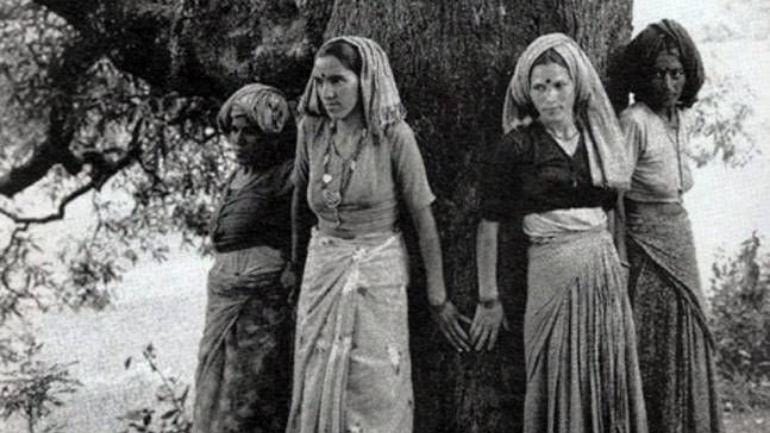
  • [pib] Person in news: Gaura Devi


    Union HRD Minister along with senior women officers of the Ministry planted a sapling in memory of Gaura Devi, Chipko Activist in New Delhi.

    Gaura Devi

    • Gaura Devi was born in 1925 in a village named Lata in the state of Uttarakhand. She moved to a nearby village named Reni by the Alaknanda River.
    • She was elected to lead the Mahila Mangal Dal (Women’s Welfare Association) in the wake of the Chipko movement. The organization worked on the protection of community forests.

    Her contributions in Chipko Movement

    • Gaura Devi came to notice in 1974 when she was told that local loggers were cutting the trees.
    • The men of Reni village had been tricked out of the village by news that the government was going to pay out compensation for land used by the army.
    • She challenged the men to shoot her instead of cutting down the trees and she described the forest with her maika (mother’s house).
    • They managed to halt their work by hugging the trees despite the abuse of the armed loggers.
    • They kept guard of the trees that night and over the next three or four days other villages and villagers joined the action. The loggers left leaving the trees.

    Impact

    • After this incident, the Uttar Pradesh Government established a committee of experts to investigate the issue of felling of trees, and the lumber company withdrew its men from Reni.
    • The committee stated that the Reni forest was an ecologically sensitive area and that no trees should be felled there.
    • Thereafter the government of Uttar Pradesh placed a 10-year ban on all tree-felling in an area of over 1150 km².
  • When does Speaker suspend MPs from Lok Sabha?

    Seven MPs of a political party were suspended for unruly behaviour in the Lok Sabha. The motion was passed by a voice vote.

    What is the reason for suspending an MP?

    • The general principle is that it is the role and duty of the Speaker of Lok Sabha to maintain order so that the House can function smoothly.
    • This is a daunting task even at the best of times.
    • In order to ensure that proceedings are conducted in the proper manner, the Speaker is empowered to force a Member to withdraw from the House (for the remaining part of the day), or to place him/her under suspension.

    What are the rules under which the Speaker acts?

    Rule Number 373 of the Rules of Procedure and Conduct of Business says:

    • The Speaker, if is of the opinion that the conduct of any Member is grossly disorderly, may direct such Member to withdraw immediately from the House, and any Member so ordered to withdraw shall do so forthwith and shall remain absent during the remainder of the day’s sitting.

    To deal with more recalcitrant Members, the Speaker may take recourse to Rules 374 and 374A. Rule 374 says:

    1. The Speaker may, it deems it necessary, name a Member who disregards the authority of the Chair or abuses the rules of the House by persistently and wilfully obstructing the business thereof.
    2. If a Member is so named by the Speaker, the Speaker shall, on a motion being made forthwith put the question that the Member (naming such Member) be suspended from the service of the House for a period not exceeding the remainder of the session: Provided that the House may, at any time, on a motion being made, resolve that such suspension be terminated.
    3. A member suspended under this rule shall forthwith withdraw from the precincts of the House.

    What is the procedure for revocation of a Member’s suspension?

    • While the Speaker is empowered to place a Member under suspension, the authority for revocation of this order is not vested in her.
    • It is for the House, if it so desires, to resolve on a motion to revoke the suspension.

    What happens in Rajya Sabha?

    • Like the Speaker in Lok Sabha, the Chairman of the Rajya Sabha is empowered under Rule Number 255 of its Rule Book to “direct any Member whose conduct is in his opinion grossly disorderly to withdraw immediately” from the House.
    • Any Member so ordered to withdraw shall do so forthwith and shall absent himself during the remainder of the day’s meeting.
    • The Chairman may name a Member who disregards the authority of the Chair or abuses the rules of the Council by persistently and wilfully obstructing business.
    • In such a situation, the House may adopt a motion suspending the Member from the service of the House for a period not exceeding the remainder of the session.
    • The House may, however, by another motion, terminate the suspension.
    • Unlike the Speaker, however, the Rajya Sabha Chairman does not have the power to suspend a Member.

    Way Forward: Striking a balance

    • There can be no question that the enforcement of the supreme authority of the Speaker is essential for smooth conduct of proceedings. A balance has to be struck.
    • However, it must be remembered that her job is to run the House, not to lord over it.
    • The solution to unruly behaviour has to be long-term and consistent with democratic values.
    • A step in that same direction could be to discontinue the practice of herding people out of the visitors’ gallery when the House witnesses chaos.
    • So, the ruling party of the day invariably insists on the maintenance of discipline, just as the Opposition insists on its right to protest. And their positions change when their roles flip.
  • World University Rankings by Subject 2020


    Indian higher-education institutes have improved their performance on the global stage, with a greater number getting ranked in the top-100 programs, according to the latest edition of the Quacquarelli Symonds (QS) World University Rankings by Subject 2020.

    Major findings of the report

    • IIT Bombay (44), IIT Delhi (47), IIT Kharagpur (86), IIT Madras (88) and IIT Kanpur (96) found place in top 100 of this category.
    • In the Natural Sciences category, three Indian institutions made it to the top 200: IIT-Bombay at 108th rank closely followed by the IISc, Bangalore at the 111th position, while IIT-Madras scraped in at the 195th rank.
    • Jawaharlal Nehru University remained the country’s top institution in the Arts and Humanities category, with a global ranking of 162, followed at a distance by Delhi University at 231.
    • Delhi University topped the Social Sciences and Management category, with a global ranking of 160, followed by IIT-Delhi at 183.
    • There are no Indian institutions in the world’s top 200 when it comes to Life Sciences and Medicine.
    • The top institution in the country is the All India Institute of Medical Sciences, which had a global ranking of 231.
    • Other top subjects included physics & astronomy with 18 Indian institutes, biological sciences (16), electrical engineering (15), chemical engineering (14) and mechanical engineering (14).
    • MIT, Stanford University and the University of Cambridge has secured top three positions in the Engineering and Technology category.
  • [pib] Law for Rain Water Harvesting


    The Ministry of Housing & Urban Affairs has issued the Model Building Bye Laws, 2016 for guidance of the States/UTs and has a chapter on ‘Rainwater Harvesting’.

    Why such move?

    • These laws aim to regulate the over-exploitation and consequent depletion of ground water.
    • It would enable States/UTs to enact suitable ground water legislation for regulation of its development, which includes provision of rain water harvesting.

    About the Bye Laws

    • 33 States/UTs have adopted the rainwater harvesting provisions.
    • The provisions of this chapter are applicable to all the buildings.

    Various provisions

    • As per Model Building Bye Laws- 2016, provision of rainwater harvesting is applicable to all residential plots above 100 sq.m.
    • Water being a State subject, initiatives on water management including conservation and water harvesting in the Country is primarily States’ responsibility.
    • So the implementation of the rainwater harvesting policy comes within the purview of the State Government/Urban Local Body / Urban Development Authority.

    Back2Basics

    Groundwater governance in India

    • Central Ground Water Authority (CGWA) has been constituted under Section 3(3) of the ‘Environment (Protection) Act, 1986’ for the purpose of regulation and control of groundwater development and management in the Country.
    • CGWA is regulating ground water withdrawal by industries/infrastructure/ mining projects in the country for which guidelines/ criteria have been framed which includes rainwater harvesting as one of the provisions while issuing No Objection Certificate.
  • [pib] Mega Consolidation in Public Sector Banks 

    The Union Cabinet, chaired by the Prime Minister has approved the mega consolidation of ten PSBs into four which include the –

    • Amalgamation of Oriental Bank of Commerce and United Bank of India into Punjab National Bank
    • Amalgamation of Syndicate Bank into Canara Bank
    • Amalgamation of Andhra Bank and Corporation Bank into Union Bank of India
    • Amalgamation of Allahabad Bank into Indian Bank

    About the merger

    • The amalgamation would be effective from 1.4.2020 and would result in creation of seven large PSBs with scale and national reach with each amalgamated entity having a business of over Rupees Eight lakh crore.
    • The Mega consolidation would help create banks with scale comparable to global banks and capable of competing effectively in India and globally.
    • Greater scale and synergy through consolidation would lead to cost benefits which should enable the PSBs enhance their competitiveness and positively impact the Indian banking system.

    Must read

    Bank Mergers

    [Burning Issue] Merger of Public Sector Bank