💥Join UPSC 2027,2028 Mentorship (July Batch) + XFactor Notes & Microthemes PDF

Distribution: yearly

  • Count work, not workers

    Context

    India is one of the few countries in the world where women’s work participation rates have fallen sharply — from 29 per cent in 2004-5 to 22 per cent in 2011-12 and to 17 per cent in 2017-18.

    What could be the possible explanations for the decline?

    • No consensus among economists: Trying to explain whether women are choosing to focus on domestic responsibilities or whether they are pushed out of the workforce has become a minor industry among economists.
    • Can the quality of data be the explanation? Strangely, the one explanation we have not looked at is whether the declining quality of economic statistics may account for this trend.
      • Our pride in the statistical system built by PC Mahalanobis is so great that we find it unimaginable that it could fail to provide us with reliable employment data.
      • However, as challenges to economic statistics have begun to emerge in such diverse areas as GDP data and consumption expenditure, perhaps it is time to consider the unimaginable.
      • Issue of data collection: Is the decline in women’s labour force participation real or is it a function of the way in which employment data are collected?

    Anatomy of the decline in participation rates

    • Driven by rural women: The anatomy of the decline in women’s work participation rates shows that it is driven by rural women.
    • Data of the prime working-age group: In the prime working-age group (25-59)-
      • Urban area data: Urban women’s worker to population ratios (WPR) fell from 28 per cent to 25 per cent between 2004-5 and 2011-12, stagnating at 24 per cent in 2017-18.
      • Rural area data: However, compared to these modest changes, rural women’s WPR declined sharply from 58 per cent to 48 per cent and to 32 per cent over the same period.
    • Among rural women, the largest decline seems to have taken place in women categorised as unpaid family helpers — from 28 per cent in 2004-5 to 12 per cent in 2017-18.
      • This alone accounts for more than half of the decline in women’s WPR. The remaining is largely due to a drop of about 9 percentage points in casual labour.
    • In contrast, women counted as focusing solely on domestic duties increased from 21 per cent to 45 per cent.

    What are the explanations for this massive change?

    • Data collection issue: It is the change in our statistical systems that drives these results.
      • Change of workforce collecting data: The questionnaires through which the National Statistical Office (NSO) collects employment data have not changed, but the statistical workforce has, and the surveys that performed reasonably well in the hands of seasoned interviewers are too complex for poorly trained contract data collectors.
    • How data is collected? The National Sample Surveys (NSS) do not have a script that the interviewer reads out. They have schedules that must be completed. The interviewer is trained in concepts to be investigated and then left to fill the schedules to the best of his or her ability.
      • The NSS increasingly relies on contract investigators hired for short periods, who lack
    • Need for redesigning the surveys: Do we need to return to the days of permanent employees or can we design our surveys to overcome errors committed by relatively inexperienced interviewers?
      • A survey design experiment led by Neerad Deshmukh at the NCAER-National Data Innovation Centre provides an intriguing solution.
      • In this experimental survey, interviewers first asked about the primary and secondary activity status of each household member, mimicking the NSS structure.
      • They then asked a series of simple questions that included ones like, “do you cultivate any land?” If yes, “who in your household works on the farm?”
      • Similar questions were asked about livestock ownership and about people caring for the livestock, ownership of petty business and individuals working in these enterprises.
    • What was the result of survey experiment: The results show that the standard NSS-type questions resulted in a WPR of 28 per cent for rural women in the age group 21-59, whereas the detailed activity listing found a WPR of 42 per cent — for the same women.
      • This is an easily implementable module that does not require specialised knowledge on the part of the interviewer.

    Identifying the sectors from which women are excludes

    • Missing the identification of sector: In our concern with ostensibly declining women’s work participation, we have missed out on identifying sectors from which women are excluded and more importantly, in which women are included.
    • What data for men indicate? For rural men, ages 25-59, between 2004-5 and 2017-18, casual labour declined by about 6 percentage points.
      • However, this decline is counterbalanced by regular salaried work which increased by 4 percentage points.
      • Thus, it seems likely that men are exchanging precarious employment with higher-quality jobs.
    • What data for women indicate? In contrast, women’s casual work has declined by 9 percentage points while their regular salaried work increased by a mere 1 percentage point.
      • Moreover, the usual route to success, gaining formal education, has little impact on women’s ability to obtain paid work.
    • The explanation for the disparity: Rural men with a secondary level of education have options like working as a postman, driver or mechanic — few such opportunities are open to women.
      • It is not surprising that women with secondary education have only half the work participation rate compared to their uneducated sisters.
    • Takeaway: The focus on employment for women needs to be on creating high-quality employment rather than getting preoccupied with declining employment rates.

    Conclusion

    It may be time for us to return to the recommendations of ‘Shramshakti: Report of National Commission on Self Employed Women and Women in the Informal Sector’ and develop our data collection processes from the lived experiences of women and count women’s work rather than women workers. Without this, we run the risks of developing misguided policy responses.
  • Speaker vs Governor Tussle

    With the Supreme Court set to hear on a plea seeking a directive to the government in Madhya Pradesh to take a floor test “within 12 hours”, the spotlight is back on the legal debate on the powers of the Governor and the Speaker under the Constitution.

    Primacy to Floor Test

    • Since 2014, the legal-political tussle between the Governor and Speaker has prompted the Supreme Court’s intervention in three major instances — in the Arunachal Pradesh and Uttarakhand cases in 2016 and in the Karnataka case in 2019.
    • In all three cases, the court emphasised the primacy of the floor test.
    • In the Arunachal and Uttarakhand cases, the House was in suspended animation as President’s Rule had been imposed.
    • The Supreme Court ordered that the House be summoned and a floor test held to end the impasse.
    • But Article 212 of the Constitution bars courts from inquiring into proceedings of the Legislature.

    Earlier instances

    • Earlier, the Sarkaria Commission had recommended that, if the CM neglects or refuses to summon the Assembly for a floor test, the Governor should summon the Assembly.
    • If the House is adjourned sine die or prorogued without holding a floor test, then all options are open before the Governor.
    • However, when the House is in session, the question of whether the court can direct the Speaker to hold a floor test is yet to be settled.
    • In 1998, in the Jagadambika Pal case, the SC had ordered a composite floor test when the House was in session.
    • However, in that case, there were two claimants to the chief minister’s post.
  • Short Selling of Stocks

    The stock exchanges have clarified that the Securities and Exchange Board of India (SEBI) was not considering any proposal regarding a ban on short selling to curb the ongoing volatility and equity sell-off.

    What is Short Selling?

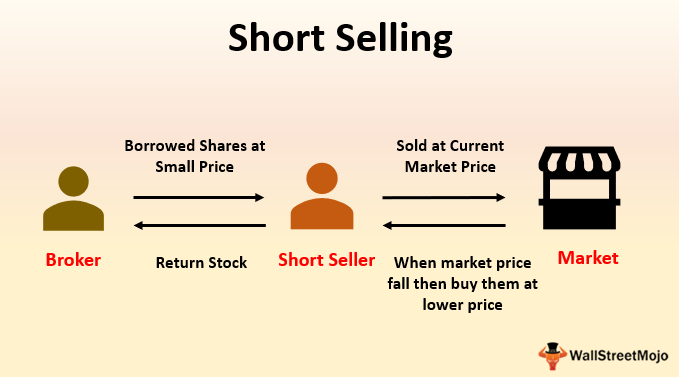
    • Short-selling allows investors to profit from stocks or other securities when they go down in value.
    • In order to do a short sale, an investor has to borrow the stock or security through their brokerage company from someone who owns it.
    • The investor then sells the stock, retaining the cash proceeds.
    • The short-seller hopes that the price will fall over time, providing an opportunity to buy back the stock at a lower price than the original sale price.
    • Any money left over after buying back the stock is profit to the short-seller.

    When does short-selling makes sense?

    • Most investors own stocks, funds, and other investments that they want to see rise in value.
    • Over time, the stock market has generally gone up, albeit with temporary periods of downward movement along the way.
    • For long-term investors, owning stocks has been a much better bet than short-selling the entire stock market.
    • Sometimes, though, you’ll find an investment that you’re convinced will drop in the short term (as in case of COVID 19 outbreak).
    • In those cases, short-selling can be the easiest way to profit from the misfortunes that a company is experiencing.
    • Even though short-selling is more complicated than simply going out and buying a stock, it can allow making money when others are seeing their investment portfolios shrink.

    The risks of short-selling

    • Short-selling can be profitable when one makes the right call, but it carries greater risks than what ordinary stock investors experience.
    • When we buy a stock, the most we can lose is what you pay for it. If the stock goes to zero, we suffer a complete loss, but will never lose more than that.
    • By contrast, if the stock soars, there’s no limit to the profits one can enjoy. With a short sale, however, that dynamic is reversed.

    Example:

    • For instance, say you sell 100 shares short at a price of $10 per share. Your proceeds from the sale will be $1,000.
    • If the stock goes to zero, you’ll get to keep the full $1,000. However, if the stock soars to $100 per share, you’ll have to spend $10,000 to buy the 100 shares back.
    • That will give you a net loss of $9,000 — nine times as much as the initial proceeds from the short sale.
  • What is Herd Immunity?

    As Europe was declared the epicentre of the novel coronavirus outbreak last week, Britain announced a different strategy to tackle the situation. Officials said that Britain would contain the spread of the virus but would not suppress it completely to build up a degree of ‘herd immunity’.

    Herd Immunity

    • Herd immunity is when a large number of people are vaccinated against a disease, lowering the chances of others being infected by it.
    • When a sufficient percentage of a population is vaccinated, it slows the spread of disease.
    • It is also referred to as community immunity or herd protection.
    • The decline of disease incidence is greater than the proportion of individuals immunized because vaccination reduces the spread of an infectious agent by reducing the amount and/or duration of pathogen shedding by vaccines, retarding transmission.
    • The approach requires those exposed to the virus to build natural immunity and stop the human-to-human transmission. This will subsequently halt its spread.

    Can it work?

    • Globally, this strategy has been criticized.
    • COVID-19 is a new virus to which no one has immunity. More people are susceptible to infection.
    • The goal seems to have been delaying urgent action to allow an epidemic to infect large numbers of people.
    • To combat COVID-19, there is an urgent need to implement social distancing and closure policies.
  • [pib] Unnat Bharat Abhiyan 2.0

    The Union Minister for Human Resource Development has informed Lok Sabha about the progress of the Unnat Bharat Abhiyan (UBA).

    Unnat Bharat Abhiyan 2.0

    • Unnat Bharat Abhiyan 2.0 is the upgraded version of Unnat Bharat Abhiyan 1.0.
    • The scheme is extended to all educational institutes; however, under UBA 2.0 Participating institutes are selected based on the fulfilment of certain criteria.

    About UBA

    • It is a flagship programme of the Ministry of HRD, which aims to link the Higher Education Institutions with a set of at least 5 villages so that these institutions can contribute to the economic and social betterment of these village communities using their knowledge base.
    • It is a significant initiative where all Higher Learning Institutes have been involved for participation in development activities, particularly in rural areas.
    • It also aims to create a virtuous cycle between the society and an inclusive university system, with the latter providing knowledge base; practices for emerging livelihoods and to upgrade the capabilities of both the public and private sectors.
    • Currently under the scheme UBA, 13072 villages have been adopted by 2474 Institutes.
  • [pib] Employees’ Pension Scheme (Amendment) Scheme, 2020

    The Union Ministry of Labour & Employment has informed about the total enrollments under EPS.

    Employees Pension Scheme (EPS)

    • EPS is a social security scheme that was launched in 1995 and is facilitated by EPFO.
    • The scheme makes provisions for pensions for the employees in the organized sector after retirement at the age of 58 years.
    • Employees who are members of EPFO automatically become eligible for EPS.
    • Both employer and employee contribute 12% of employee’s monthly salary (basic wages plus dearness allowance) to the Employees’ Provident Fund (EPF) scheme.
    • EPF scheme is mandatory for employees who draw a basic wage of Rs. 15,000 per month.
    • Of the employer’s share of 12 %, 8.33 % is diverted towards the EPS.

    Features of the 2020 Amendment

    • EPS pensioners will get normal pension even after getting a reduced pension due to commutation.
    • On retirement, if the employee opts for commutation of pension, a portion is paid as a lump sum based on the commutation factor while on the balance the pension begins.
    • In simple terms, commutation means a lump sum payment in lieu of periodic payments of pension.
    • In such a case, the amount of pension will be lower than the amount of pension without any commutation.
    • The amendment seeks to restore the original amount of pension as per the commutation table, after 15 years equal to the same amount as it would have been without commutation.
  • Excise Duty on Petrol and Diesel

    The Central levies on petrol and diesel were hiked amid sliding global crude oil prices. But the price of petrol and diesel registered a decline after oil companies further cut auto fuel prices in light of the substantial fall in global crude oil prices.

    What is Excise Duty?

    • Excise duty is a form of tax imposed on goods for their production, licensing and sale.
    • It is the opposite of Customs duty in sense that it applies to goods manufactured domestically in the country, while Customs is levied on those coming from outside of the country.
    • At the central level, excise duty earlier used to be levied as Central Excise Duty, Additional Excise Duty, etc.
    • Excise duty was levied on manufactured goods and levied at the time of removal of goods, while GST is levied on the supply of goods and services.

    Purview of excise duty

    • The GST introduction in July 2017 subsumed many types of excise duty.
    • Today, excise duty applies only on petroleum and liquor.
    • Alcohol does not come under the purview of GST as exclusion mandated by constitutional provision.
    • States levy taxes on alcohol according to the same practice as was prevalent before the rollout of GST.
    • After GST was introduced, excise duty was replaced by central GST because excise was levied by the central government. The revenue generated from CGST goes to the central government.

    Types of excise duty in India

    Before GST kicked in, there were three kinds of excise duties in India.

    Basic Excise Duty

    • Basic excise duty is also known as the Central Value Added Tax (CENVAT). This category of excise duty was levied on goods that were classified under the first schedule of the Central Excise Tariff Act, 1985.
    • This duty was levied under Section 3 (1) (a) of the Central Excise Act, 1944. This duty applied on all goods except salt.

    Additional Excise Duty

    • Additional excise duty was levied on goods of high importance, under the Additional Excise under Additional Duties of Excise (Goods of Special Importance) Act, 1957.
    • This duty was levied on some special category of goods.

    Special Excise Duty

    • This type of excise duty was levied on special goods classified under the Second Schedule to the Central Excise Tariff Act, 1985.
    • Presently the central excise duty comprises of a Basic Excise Duty, Special Additional Excise Duty and Additional Excise Duty (Road and Infrastructure Cess) on auto fuels.
  • [pib] National Creche Scheme

    The WCD Minister has informed about some progress in the National Creche Scheme. As of today, 6453 creches are functional across the country under the Scheme.

    National Creche Scheme

    • Earlier named as Rajiv Gandhi National Creche Scheme, the NCS is being implemented as a Centrally Sponsored Scheme through States/UTs with effect from 1.1.2017.
    • It aims to provide daycare facilities to children (age group of 6 months to 6 years) of working mothers.

    Salient features of the Scheme

    • Daycare Facilities including Sleeping Facilities.
    • Early Stimulation for children below 3 years and pre-school education for 3 to 6 years old children.
    • Supplementary Nutrition ( to be locally sourced)
    • Growth Monitoring
    • Health Check-up and Immunization

    Further, the guidelines provide that :

    • Crèches shall be open for 26 days in a month and for seven and a half (7-1/2) hours per day.
    • The number of children in the crèche should not be more than 25 per crèche with 01 Worker and 01 helpers respectively.
    • User charges to bring in an element of community ownership and collected as under:
      1. BPL families – Rs 20/- per child per month.
      2. Families with Income (Both Parents) of up to Rs. 12,000/- per month – Rs. 100/- per child per month
      3. Families with Income (Both Parents) of above Rs. 12,000/- per month – Rs. 200/- per child per month.


  • What is a Pandemic and various other terms?

    What is the news: The World Health Organization (WHO) has declared the COVID-19 outbreak a pandemic.

    What is a pandemic?

    • Simply put, a pandemic is a measure of the spread of a disease.
    • When a new disease spreads over a vast geographical area covering several countries and continents, and most people do not have immunity against it, the outbreak is termed a pandemic.
    • It implies a higher level of concern than an epidemic, which the US Centers for Disease and Control Prevention (CDC) define as the spread of a disease in a localised area or country.
    • There is no fixed number of cases or deaths that determine when an outbreak becomes a pandemic.
    • The Ebola virus, which killed thousands in West Africa, is an epidemic as it is yet to mark its presence on other continents.
    • Other outbreaks caused by coronaviruses such as MERS (2012) and SARS (2002), which spread to 27 and 26 countries respectively, were not labelled pandemics because they were eventually contained.

    Which outbreaks have been declared pandemics in the past?

    • A major example is the Spanish flu outbreak of 1918, which killed between 20-50 million.
    • Cholera pandemics have been declared multiple times between 1817 and 1975.
    • In 1968, a pandemic was declared for H3N2 that caused about a million deaths.
    • The last pandemic declared by the WHO was in 2009, for H1N1.

    Does the declaration change the approach to the disease?

    • Describing the situation as pandemic does not change WHO’s assessment of the risk posed by the virus. However, the categorization as a pandemic can lead to more government attention.
    • The categorization by WHO indicates the risk of disease for countries to take preventive measures.
    • It will help improve funding by international organisations to combat coronavirus.

    Difference Between Endemic, Epidemic, Outbreak and Pandemic:

    • AN EPIDEMIC is a disease that affects a large number of people within a community, population, or region.
    • A PANDEMIC is an epidemic that’s spread over multiple countries or continents.
    • ENDEMIC is something that belongs to a particular people or country.
    • AN OUTBREAK is a greater-than-anticipated increase in the number of endemic cases. It can also be a single case in a new area. If it’s not quickly controlled, an outbreak can become an epidemic.

    Epidemic vs. Pandemic

    • A simple way to know the difference between an epidemic and a pandemic is to remember the “P” in the pandemic, which means a pandemic has a passport. A pandemic is an epidemic that travels.

    Epidemic vs. Endemic

    • An epidemic is actively spreading; new cases of the disease substantially exceed what is expected.
    • More broadly, it’s used to describe any problem that’s out of control, such as “the opioid epidemic.”
    • An epidemic is often localized to a region, but the number of those infected in that region is significantly higher than normal.
    • For example, when COVID-19 was limited to Wuhan, China, it was an epidemic. The geographical spread turned it into a pandemic.
    • Endemics, on the other hand, are a constant presence in a specific location.
    • Malaria is endemic to parts of Africa. Ice is endemic to Antarctica.

    Endemic vs. Outbreak

    • Going one step farther, an endemic can lead to an outbreak, and an outbreak can happen anywhere.
    • Last summer’s dengue fever outbreak in Hawaii is as an example. Dengue fever is endemic to certain regions of Africa, Central and South America, and the Caribbean. Mosquitoes in these areas carry dengue fever and transmit it from person to person.
    • But in 2019 there was an outbreak of dengue fever in Hawaii, where the disease is not endemic. It’s believed an infected person visited the Big Island and was bitten by mosquitoes there.
    • The insects then transferred the disease to other individuals they bit, which created an outbreak.

    You can see why it’s so easy to confuse these terms. They’re all related to one another and there’s a natural ebb and flow between them as treatments become available and measures for control are put in place — or as flare-ups occur and disease begins to spread.

  • [pib] The Mineral Laws (Amendment) Bill, 2020

    Parliament has passed The Mineral Laws (Amendment) Bill, 2020 for amendments in Mines & Mineral (Development and Regulation) Act 1957 and The Coal Mines (Special Provisions) Act, 2015. The bill will transform the mining sector in the country boosting coal production and reducing dependence on imports.

    Acts to be amended

    • The MMDR Act regulates the overall mining sector in India.
    • The CMSP Act provides for the auction and allocation of mines whose allocation was cancelled by the Supreme Court in 2014.
    • Schedule I of the Act provides a list of all such mines; Schedule II and III are sub-classes of the mines listed in the Schedule I.
    • Schedule II mines are those where production had already started then, and Schedule III mines are ones that had been earmarked for a specified end-use.

    Features of the Mineral Laws (Amendment) Bill, 2020 

    Removal of restriction on end-use of coal

    • Currently, companies acquiring Schedule II and Schedule III coal mines through auctions can use the coal produced only for specified end-uses such as power generation and steel production.
    • The Bill removes this restriction on the use of coal mined by such companies.
    • Companies will be allowed to carry on coal mining operation for own consumption, sale or for any other purposes, as may be specified by the central government.

    Eligibility for auction of coal and lignite blocks

    • The Bill clarifies that the companies need not possess any prior coal mining experience in India in order to participate in the auction of coal and lignite blocks.
    • Further, the competitive bidding process for auction of coal and lignite blocks will not apply to mines considered for allotment to:
    1. a government company or its joint venture for own consumption, sale or any other specified purpose; and
    2. a company that has been awarded a power project on the basis of a competitive bid for tariff.

    Composite license for prospecting and mining

    • Currently, separate licenses are provided for prospecting and mining of coal and lignite, called prospecting license, and mining lease, respectively.
    • Prospecting includes exploring, locating, or finding mineral deposit.  The Bill adds a new type of license, called prospecting license-cum-mining lease.
    • This will be a composite license providing for both prospecting and mining activities.

    Non-exclusive reconnaissance permits holders to get other licenses

    • Currently, the holders of non-exclusive reconnaissance permit for exploration of certain specified minerals are not entitled to obtain a prospecting license or mining lease.
    • Reconnaissance means preliminary prospecting of a mineral through certain surveys.
    • The Bill provides that the holders of such permits may apply for a prospecting license-cum-mining lease or mining lease.   This will apply to certain licensees as prescribed in the Bill.

    Transfer of statutory clearances to new bidders

    • Currently,upon expiry, mining leases for specified minerals (minerals other than coal, lignite, and atomic minerals) can be transferred to new persons through auction.
    • This new lessee is required to obtain statutory clearances before starting mining operations.
    • The Bill provides that the various approvals, licenses, and clearances given to the previous lessee will be extended to the successful bidder for a period of two years.

    Reallocation after termination of the allocations

    • The CMSP Act provides for the termination of allotment orders of coal mines in certain cases.
    • The Bill adds that such mines may be reallocated through auction or allotment as may be determined by the central government.
    • The central government will appoint a designated custodian to manage these mines until they are reallocated.

    Prior approval from the central government

    • Under the MMDR Act, state governments require prior approval of the central government for granting reconnaissance permit, prospecting license, or mining lease for coal and lignite.
    • The Bill provides that prior approval of the central government will not be required in granting these licenses for coal and lignite, in certain cases.
    • These include cases where: (i) the allocation has been done by the central government, and (ii) the mining block has been reserved to conserve a mineral.

    Advance action for auction

    • Under the MMDR Act, mining leases for specified minerals (minerals other than coal, lignite, and atomic minerals) are auctioned on the expiry of the lease period.
    • The Bill provides that state governments can take advance action for auction of a mining lease before its expiry.

    With inputs from PRS India