💥Join UPSC 2027,2028 Mentorship (July Batch) + XFactor Notes & Microthemes PDF

Distribution: yearly

  • Tilhan Mission

    The government will launch Tilhan Mission to make the country self-reliant in oilseed production.

    Why such mission?

    • India is the fourth largest vegetable oil economy in the world after the USA, China and Brazil.
    • Today, the oilseeds account for 13% of the cropped area in the country.
    • Still, India is the largest importer of palm oil in the world.

    Oilseed production in India

    • Total Oilseeds production in the country during 2019-20 is estimated at 34.19 million tonnes which is higher by 2.67 million tonnes than the production of 31.52 million tonnes during 2018-19.
    • Further, the production of oilseeds during 2019-20 is higher by 4.54 million tonnes than the average oilseeds production.
  • [pib] International protection for Great Indian Bustard, Bengal Florican and Asian Elephant

    India’s proposal to include Great Indian Bustard, Asian Elephant and Bengal Florican in Appendix I of UN Convention on migratory species was unanimously accepted at the undergoing CMS CoP in Gandhinagar.

    Great Indian Bustard

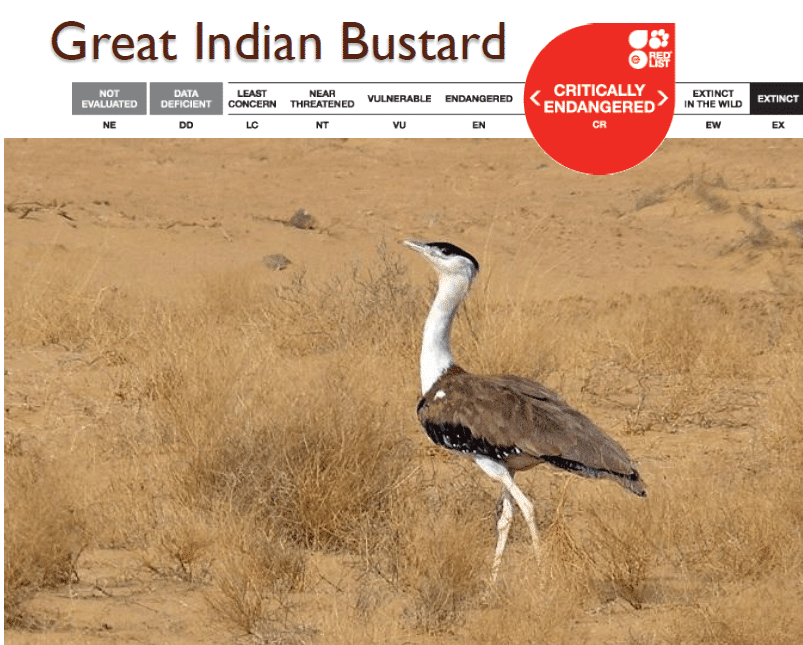
    • The Great Indian Bustard, an iconic, critically endangered and conservation dependent species, exhibits transboundary movements, and its migration exposes it to threats such as hunting in the boundary area of Pakistan-India and power-line collisions in India.
    • Inclusion of the species in Appendix I of CMS will aide in transboundary conservation efforts facilitated by International conservation bodies and existing international laws and agreement.

    Asian Elephant

    • The Government of India has declared Indian elephant as National Heritage Animal. It is also provided with the highest degree of legal protection by listing it in Schedule I of the Wildlife (Protection) Act, 1972.
    • The Great Indian Bustard is a Critically Endangered species with a small population of about 100–150 individuals that is largely restricted to Thar desert in Rajasthan, India.
    • The species has disappeared from 90% of this range; their population has reduced by 90% within 50 years (six generations), and their threats are expected to increase in future.

    Bengal Florican

    • The Bengal Florican an iconic, critically endangered species of topmost conservation priority, exhibits transboundary movements, and its migration exposes it to threats such as land-use changes, collision with power transmission line at the boundary area of India-Nepal and probable power-line collisions.
    • Inclusion of the species in Appendix I of CMS will aid in transboundary conservation efforts facilitated by International conservation bodies and existing international laws and agreement.
    • It populations has declined as a result of habitat loss, hunting and the species no longer breeds outside Protected Areas in the Indian subcontinent, except in a few areas of Assam.
  • Trading with America

    Context

    Trump has made India’s trade headache more acute. But he has also opened up opportunities.

    Political polarisation in both countries

    • Impeachment attempt: The Democrats in the US have struggled to oust Trump from the White House and rarely find anything they can agree with their President on.
    • The deeper political divide in India: While ousting Narendra Modi through a legal process of impeachment is not an option in India, the political divide is even deeper.
    • No consensus on foreign policy
      • Under Trump, consensus on foreign policy in Washington has broken down.
      • In Delhi, the Opposition has never been willing to acknowledge the diplomatic successes of the government.
      • But the usually bipartisan support for foreign policy in the strategic community has eroded.
      • Many leading voices of the establishment who have a long and distinguished service have become major critics of foreign policy.

    Comparison of India’s trade with the US and China

    • Trade with the US: In 1995, total two-way trade, including goods and services, between India and the US was $11 billion.
      • In 2018, it crossed $140 billion.
      • It is reported to be around $150 billion in 2019.
      • In trade with the US, India enjoys a surplus of nearly $23 billion.
      • A 14-fold increase in trade turnover in 25 years is certainly not something to sneer at.
      • Can India and the US do better on trade? Yes, of course.
      • Only a few years ago, the two sides were looking at an annual trade target of $500 billion. That looks rather ambitious amidst the current disputes
    • Trade with China: India’s China trade too has risen, even more rapidly.
      • From a couple of hundred million dollars in the mid-1990s to nearly $90 billion in 2019.
      • India has a deficit of nearly $57 billion with China.

    Trade disputes between India-US

    • Trade has long been a contentious issue between Delhi and Washington.
    • There had been enduring tension since the late 1980s between the US demand for-
      • Greater market access.
      • Intellectual property protection.
      • And a host of other demands and India’s own cautious approach to economic liberalisation.
    • Rise in pressure under Trump administration: All recent US administrations have applied continuous pressure on India for trade agreements.
      • The pressure has significantly risen under President Trump.
    • Trade dispute at the centre of the relationship: If his predecessors were willing to cut some slack for India by citing larger political and strategic considerations in the bilateral ties, Trump has put trade disputes at the front and centre of the relationship.
      • Officials in the Department of Commerce and the US Trade Representative’s office have adopted extremely aggressive tactics in the negotiation with India.
    • Result of a radical reorientation of US trade policy: Trump has undertaken a radical reorientation of US trade policy.
      • For Trump, this is a matter of long-standing ideological conviction as well as a political convenience.
      • He has bet that the anti-free-trade White working classes in the American rust belt are the key to his re-election.
    • No option but to deal with it: Given America’s pole position in the global trading system, you have no option but to deal with it.
      • Trump is getting away with his demand for the restructuring of trade relations with key economic partners.
      • He has renegotiated the NAFTA with neighbours Canada and Mexico and has compelled China to start reducing the massive trade deficit with the US.
    • The difference in India and China’s response to the US: In response to Trump’s pressure, Xi reaffirmed his commitment to economic globalisation and domestic liberalisation and wooed American investors with even greater vigour than before.
      • India embracing protectionism: India appears to be sending the opposite signal — of a definitive drift towards protectionism. India’s trade troubles are certainly not limited to the engagement with the US.

    Problem with India’s trade policies

    • India walking away from RCEP: Delhi walked away at the very last minute from signing the RCEP agreement last year to deep disappointment among its partners including the ASEAN, Australia, Japan and New Zealand.
      • The trade deficit with China: One of the main arguments cited by India was the massive trade deficit with China and the potential danger of it widening further under RCEP.
    • Failure in negotiations with the EU: The European Union is reluctant so far to restart trade negotiations that ended in great frustration for Brussels some years ago.
    • No deal with Australia and New Zealand: Australia and New Zealand have given up.
    • Neighbours complaint: India’s immediate neighbours complain that India’s rhetoric on connectivity and regionalism is matched by the multiple non-tariff barriers that continue to constrain commerce across the South Asian frontiers.
    • Why so many deals are pending? It is certainly probable, statistically, one in a million, that the fault lies, always, with India’s partners. But one would think there might be a real problem with Delhi’s own trade policies.

    Conclusion

    • New opportunity: Trump has certainly made India’s trade headache more acute. But he has also opened up opportunities.
      • His trade war on China has put pressure on the global supply chains centred around China.
      • India not the beneficiary of the US-China trade war: Many companies are moving their production out of China, but only a few are turning towards India.
      • While Delhi has talked the talk on taking advantage of the US-China trade war, it is yet to get its act together.
    • No opposition against protectionism at home: What makes Delhi’s devaluation of trade as a key instrument of economic growth potentially irreversible is the fact that there is little domestic political opposition to it.
    • Time to take a hard look at trade policy: For now, though, India’s partnership with the US might not only survive the current trade tensions but advance during Trump’s visit.
      • There is so much happening elsewhere in the relationship — especially in the defence and security domain.
      • But the time has come for Delhi to take a hard look at its current trade policy that threatens to undermine India’s regional and international prospects.


  • Assisted Reproductive Technology Regulation Bill, 2020


    The Union Cabinet has approved the Assisted Reproductive Technology Regulation Bill, 2020 to monitor medical procedures used to assist people to achieve pregnancy.

    What is ART?

    • Assisted reproductive technology (ART) is used to treat infertility.
    • Assisted reproductive technology includes medical procedures used primarily to address infertility.
    • This subject involves procedures such as in vitro fertilization, intracytoplasmic sperm injection, cryopreservation of gametes or embryos, and/or the use of fertility medication.

    Highlights of the bill

    • National Board: The Bill provides for a national Board which will lay down a code of conduct to be observed by those operating clinics.
    • Standardization: It will also formulate minimum standards for laboratory and diagnostic equipment and practices to be followed by human resources employed by clinics and banks.
    • National registry: Under the proposed law, a national registry and registration authority will maintain a database to assist the national Board to perform its functions.
    • Confidentiality clause: The Bill will also ensure confidentiality of intending couples and protect the rights of the child.

    Strict punishment:

    • India has one of the highest growths in the number of ART centres and ART cycles performed every year.
    • India has become one of the major centres of this global fertility industry, with reproductive medical tourism becoming a significant activity.
    • This has also introduced a plethora of legal, ethical and social issues; yet, there is no standardisation of protocols and reporting is still very inadequate.
    • The Bill thus proposes stringent punishment for those who practise sex selection; indulge in sale of human embryos or gametes and those who operate rackets.

    Other such Bills

    Taken together, theses proposed legislations create an environment of safeguards for women’s reproductive rights, addressing changing social contexts and technological advances.

    Surrogacy Regulation Bill 2020

    • The Surrogacy (Regulation) Bill, 2020 proposes to regulate surrogacy in India by establishing National Board at the central level and State Boards and Appropriate Authorities in the States and Union Territories.
    • The major benefit of the Act would be that it will regulate the surrogacy services in the country.
    • While commercial surrogacy will be prohibited including sale and purchase of human embryos and gametes, ethical surrogacy to the Indian Married couple, Indian Origin Married Couple and Indian Single Woman (only widow or Divorcee) will be allowed on fulfillment of certain conditions.
    • As such, it will control the unethical practices in surrogacy, prevent commercialization of surrogacy and will prohibit potential exploitation of surrogate mothers and children born through surrogacy.

    Medical Termination Pregnancy Amendment Bill 2020

    • The Medical Termination of Pregnancy Act, 1971 (34 of 1971) was enacted to provide for the termination of certain pregnancies by registered medical practitioners and for matters connected therewith or incidental thereto.
    • The said Act recognised the importance of safe, affordable, accessible abortion services to women who need to terminate pregnancy under certain specified conditions.
    • Besides this, several Writ Petitions have been filed before the Supreme Court and various High Courts seeking permission for aborting pregnancies at gestational age beyond the present permissible limit on the grounds of foetal abnormalities or pregnancies due to sexual violence faced by women.
  • USTR takes India off Developing Country List

    Context

    The United States’s annual exercise of designating developing, and least developed countries has assumed importance for India this year: it has been dropped from the list of developing countries.

     ‘Developing’ or ‘developed’ country designation by the US

    • Last week, the United States officially designated developing and least-developed countries for the purposes of implementing the countervailing measures.
      • The division is provided by the Agreement on Subsidies and Countervailing Measures (ASCM) of the World Trade Organisation (WTO).
    • Why the designation matters?
      • The higher level of subsidies allowed: According to the ASCM, developing countries are allowed to grant higher levels of subsidies as compared to the developed countries before countervailing duties (CVD) can be imposed.
      • What are the limits? The maximum limit of the subsidy is-
      • For developed country: Limit is maximum 1% of the import value of the investigated product.
      • For developing country: Limit is a maximum 2% of the import value of the investigated product.
      • If the limit is breached the importing country can impose a countervailing duty on the product.

    India as a target by the US

    • Provision of self-designation: Under the WTO rules, any country can “self-designate” itself as a developing country.
    • No criteria specified by the WTO: The WTO does not lay down any specific criteria for making a distinction between a developed and a developing country member, unlike in the World Bank where per capita incomes are used to classify countries.
    • Arbitrary criteria used to designate India: Despite this clearly laid down criterion in the WTO rules, the United States Trade Representative (USTR) employed an arbitrary methodology that took into consideration-
      • Economic, trade, and other factors, including the level of economic development of a country (based on a review of the country’s per capita GNI) and a country’s share of world trade” to exclude India from list of designated developing countries.
    • Second such instance after denying GSP: Excluding India from the lists of developing countries for the purposes of using countervailing measures or denying benefits of GSP are but two of the more recent initiatives that the U.S. has taken to challenge India’s status as a developing country in the WTO.

    What would the impact on India?

    • Loss of Special and Differential Treatment (S&DT): India would lose the ability to use the special and differential treatment (S&DT) to which every developing country member of the WTO has a right.
      • What is S&DT? In short, S&DT lessens the burden of adjustment that developing countries have to make while acceding to the various agreements under the WTO.
      • How S&DT benefited India?S&DT has been particularly beneficial for India in two critical areas: one, implementation of the disciplines on agricultural subsidies and, two, opening up the markets for both agricultural and non-agricultural products.
    • Limits on subsidies: The WTO Agreement on Agriculture(AoA) provides an elaborate discipline on subsidies.
      • Subsidies are classified into three categories, but two of these are virtually outside the discipline since the WTO does not limit spending on these categories of subsidies.
      • Limits on price support measures: The discipline exists in case of price support measures (minimum support price) and input subsidies which is the more common form of subsidies for most developing countries, including in India.
      • Limits on spending on prices support measures: For developing countries, spending on price support measures and input subsidies taken together cannot exceed 10% of the total value of agricultural production.
      • In contrast, developed countries are allowed to spend only 5% of their value of agricultural production.

    Shifting to DBT

    • Why shifting to DBT necessary? India is a major user of price support measures and input subsidies.
      • And given the constraints imposed by the AoA, the government has spoken about its intention to move into the system of direct benefit transfer (DBT) for supporting farmers.
      • No limit on spending through DBT: A shift to DBT is attractive for India since there are no limits on spending, unlike in case of price support measures and input subsidies.
      • Rework subsidies’ programme: Faced with on-going farm distress, the government has had to rework its subsidies’ programme in order to extend greater benefits, especially to small and marginal farmers.
    • Challenges in the implementation of DBT
      • Implementation of DBT in agriculture has several insurmountable problems.
      • Difficulty in identifying the beneficiary: Targeting potential beneficiaries of DBT seems difficult at this juncture for a number of reasons, including inadequate records of ownership of agricultural land on the one hand, and the presence of agricultural labour and tenants on the other.
      • This implies that in the foreseeable future, India would continue to depend on price support measures and input subsidies.
      • How it matters: Given this scenario, the government needs the policy space to provide adequate levels of subsidies to a crisis-ridden agricultural sector.
      • And therefore it is imperative that continues to enjoy the benefits as a developing country member of the WTO.

    Issue of tariffs

    • The issue of market access, or the use of import tariffs, is one of the important trade policy instruments.
    • Provision of no reciprocal tariff cuts: It has some key provisions on S&DT, which the developing countries can benefit from. The most important among these is the undertaking from the developed countries that they would not demand reciprocal tariff cuts.
      • Over the past two years, the government of India has been extensively using import tariffs for protecting Indian businesses from import competition.
      • With the increasing use of tariffs, almost across the board, India’s average tariffs have increased from about 13% in 2017-18 to above 17% at present.
    • Why it matters? Developed country members of the WTO have generally maintained very low levels of tariffs, and, therefore, India’s interests of maintaining a reasonable level of tariff protection would be well served through its continued access to S&DT, by remaining as a developing country member of the WTO.

    Conclusion

    With the changing stance of the US towards India, the government must ensure its international trade and agriculture at home is not adversely impacted.


  • Aditya L1 Mission


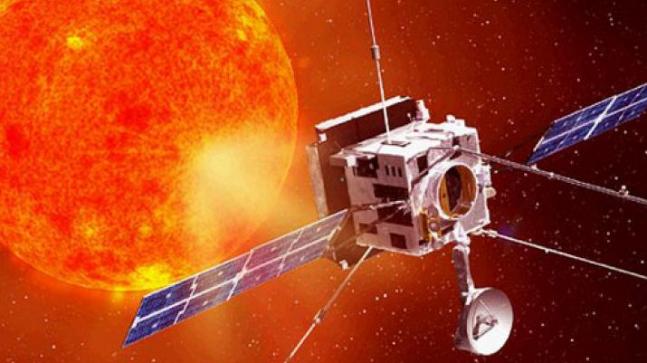
    NASA’s Parker Solar Probe launched on August 12, 2018 has completed its fourth close approach — called perihelion very recently, whizzing past at about 3.93 lakh km/h, at a distance of only 18.6 million km from the Sun’s surface.

    Aditya L1: Exciting ahead

    • The ISRO is preparing to send its first scientific expedition to study the Sun.
    • Named Aditya-L1, the mission, expected to be launched early next year, will observe the Sun from a close distance, and try to obtain information about its atmosphere and magnetic field.
    • ISRO categorizes Aditya L1 as a 400 kg-class satellite that will be launched using the Polar Satellite Launch Vehicle (PSLV) in XL configuration.
    • The space-based observatory will have seven payloads (instruments) on board to study the Sun’s corona, solar emissions, solar winds and flares, and Coronal Mass Ejections (CMEs), and will carry out round-the-clock imaging of the Sun.
    • Aditya L1 will be ISRO’s second space-based astronomy mission after AstroSat, which was launched in September 2015.

    What is L1?

    • L1 refers to Lagrangian/Lagrange Point 1, one of five points in the orbital plane of the Earth-Sun system.
    • Lagrange Points, named after Italian-French mathematician Josephy-Louis Lagrange, are positions in space where the gravitational forces of a two-body system (like the Sun and the Earth) produce enhanced regions of attraction and repulsion.
    • These can be used by spacecraft to reduce fuel consumption needed to remain in position.
    • The L1 point is home to the Solar and Heliospheric Observatory Satellite (SOHO), an international collaboration project of NASA and the European Space Agency (ESA).
    • The L1 point is about 1.5 million km from Earth, or about one-hundredth of the way to the Sun.

    But why is studying the Sun important?

    • Every planet, including Earth and the exoplanets beyond the Solar System, evolves — and this evolution is governed by its parent star.
    • The solar weather and environment, which is determined by the processes taking place inside and around the sun, affects the weather of the entire system.
    • Variations in this weather can change the orbits of satellites or shorten their lives, interfere with or damage onboard electronics, and cause power blackouts and other disturbances on Earth.
    • Knowledge of solar events is key to understanding space weather.
    • To learn about and track Earth-directed storms, and to predict their impact, continuous solar observations are needed.
    • Every storm that emerges from the Sun and heads towards Earth passes through L1, and a satellite placed in the halo orbit around L1 of the Sun-Earth system has the major advantage of continuously viewing the Sun without any occultation/eclipses.

    Why are solar missions challenging?

    • What makes a solar mission challenging is the distance of the Sun from Earth (about 149 million km on average, compared to the only 3.84 lakh km to the Moon).
    • More importantly the super hot temperatures and radiations in the solar atmosphere make it difficult to study.
    • NASA’s Parker Solar Probe has already gone far closer — but it will be looking away from the Sun.
    • The earlier Helios 2 solar probe, a joint venture between NASA and space agency of erstwhile West Germany, went within 43 million km of the Sun’s surface in 1976.

    Problem of Heat

    • The Parker Solar Probe’s January 29 flyby was the closest the spacecraft has gone to the Sun in its planned seven-year journey so far.
    • Computer modelling estimates show that the temperature on the Sun-facing side of the probe’s heat shield, the Thermal Protection System, reached 612 degrees Celsius, even as the spacecraft and instruments behind the shield remained at about 30°C, NASA said.
    • During the spacecraft’s three closest perihelia in 2024-25, the TPS will see temperatures around 1370°C.

    Hurdles for Aditya L1

    • It will stay much farther away, and the heat is not expected to be a major concern for the instruments on board. But there are other challenges.
    • Many of the instruments and their components for this mission are being manufactured for the first time in the country, presenting as much of a challenge as an opportunity for India’s scientific, engineering, and space communities.
    • One such component is the highly polished mirrors which would be mounted on the space-based telescope.
    • Due to the risks involved, payloads in earlier ISRO missions have largely remained stationary in space; however, Aditya L1 will have some moving components, scientists said.
  • Specie in news: ‘World’s largest’ subterranean fish


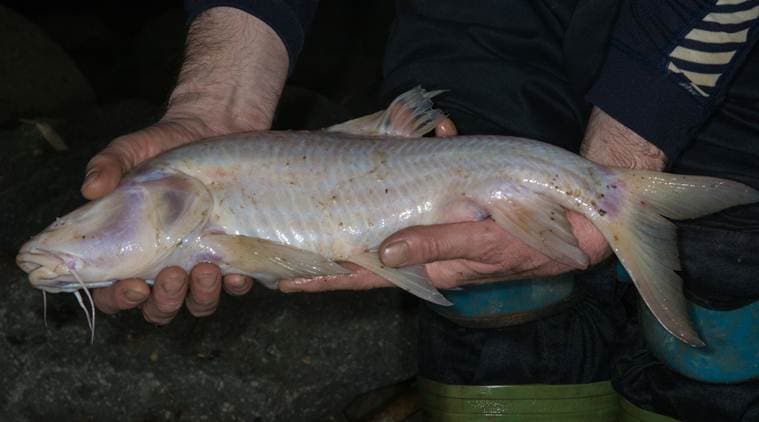
    Systematic exploration of the Meghalayan caves has been underway for almost 30 years and hundreds of kilometres of cave passages have been explored and mapped. In a cave in a remote forested area of Meghalaya’s Jaintia Hills a research expedition found large specie of a subterranean fish (occurring under the earth’s surface).

    About the fish

    • The blind fish was over 40 cm. It has not been named so far.
    • It is nearly five times the mean length (85mm/8.5 cm) for all known subterranean fish to date.
    • The only other species exceeding 300mm (30 cm) in length are eel-like Synbranchidae with nothing like the bulk of the new fish.
    • The 250-known subterranean (occurring under the earth’s surface) fish species around the world measure only around 8.5 cm on average.
    • The specialists say that possibly one (or more) populations of these fish became isolated deeper in the caves and over generations became adapted to the dark, losing their eyes in the process.

    Closest resemblance

    • The experts feel that the fish species is very similar to the Golden Mahseer or the Tor Putitora, one of the most famous game fish of the Himalayan rivers.
    • Unique characters that distinguishes it from the Golden Mahseer is the lack of pigmentation, a lack of eyes and of course, its subterranean habitat – being locked in caves.
    • There are ‘normal’ Golden Mahseer in the area too but there is not much surface water (at least in the dry winter months) so fish end up in the cave pools and underground rivers.

    Features of Subterranean ecosystems

    • Subterranean ecosystems are considered extreme, high-stress environments characterised by darkness, truncated food webs and food scarcity.
    • Despite this, they harbour exceptional vertebrate and invertebrate taxa (21,000+ species), many of which are evolutionarily unique, and relics of ancient fauna given their long-term isolation.
    • Many cave fish show different adaptations – some don’t have eyes, some have reduced eyes, some don’t have fins, some have weird body shapes.
  • The $5 trillion arithmetic

    Context

    The Indian government has set itself a big target, namely, that the Indian economy will have an aggregate income or gross domestic product (GDP) of $5 trillion by 2024-25.

    Lack of clarity

    • There is little effort to take it beyond a slogan.
    • When it comes to targets and aims pertaining to the economy, it is important to have-
      • The officials and advisers go beyond the headline.
      • To lay out the details and the road-map for the target.
    • Matter for investors: For international observers and particularly investors, not to see these details creates doubts about professionalism.

    What growth rate is required to reach that target?

    • How long will it take to achieve the target at the present growth rate?
      • In 2018-19, India’s GDP was $2.75 trillion.
      • India’s latest official growth rate happens to be 5 per cent.
      • Target will be reached in 2032-33: Continue in the same fashion to compute the size of the GDP and it becomes clear that the target of $5 trillion will be reached not in 2024-25, but in 2032-33.
    • What is the required rate? Set the target as $5 trillion dollars for 2024-25 the required rate turns out to be 10.48 per cent or, approximately, 10.5 per cent.

    Why 10.5 rate is an ambitious target?

    • The only example of any nation growing for six consecutive years at an average annual rate of over 10.5 per cent was China from 2003 to 2009.
    • Can India achieve this rate?
      • From 1947 till now, India’s economy grew at over 10 per cent only twice — in 1988-89 and 2007-8.
      • Of these, the first may be dismissed because the previous year the economy had grown very slowly, by 3.5 per cent.
    • What we can learn from the past growth rate?
      • The only example to learn from: The only example from which we can learn is the remarkable growth in 2007-8, made all the more remarkable by the fact that India had been growing well for several years, starting from 2003.
      • And from 2005, India was actually growing over 9 per cent.
      • What factors played the role in high growth?
      • This was a period of professional fiscal policy and steady effort at building infrastructure.
      • India’s economy was making big news in the international media and investment poured in.
      • India’s investment-to-GDP rate climbed to an all-time record of 39 per cent.
    • Current investment-to-GDP ratio: Our investment-to-GDP ratio has crashed to 30 per cent and this takes time to re-build.
      • If we can get back to a growth rate of 7 per cent we will be lucky.

    Can inflation make the target achievable?

    • Combination of real growth and inflation can make it possible: Virtually all serious commentators agree that in purely real terms, the $5-trillion target is unreachable.
      • But maybe we can make it by a combination of real growth and inflation.
      • How the combination will work? One way India can get to the target is if alongside say 7 per cent growth, India has inflation of say 3.5 per cent.
      • Then India’s nominal GDP growth rate will be 10.5 per cent.
    • Why the inflation argument is flawed?
      • The five trillion target is in dollar terms.
      • Inflation will lead to depreciation: Typically, if India has higher inflation than the US, the rupee would depreciate vis-à-vis the dollar to account for that.
      • For the sake of pure arithmetic, assume US inflation is zero, India’s inflation is 10 per cent, and India’s real growth rate is 0.
      • In that case, in rupee terms, India’s economy will grow by 10 per cent. But how much will India’s economy grow in dollar terms?
      • The answer is zero.
      • Why is it so? This is because the rupee will typically depreciate by 10 per cent to match the inflation differential, and so the larger GDP of India in rupee terms, when converted to dollars will show no growth.
    • The other possibility of achieving the target?
      • What if the dollar loses value? But this should immediately make it clear that there is another way of getting to the target.
      • This can happen if the US dollar loses value.
      • We can then get to the target of $5 trillion because that will mean less in real terms.

    Conclusion

    There are two routes to achieve the target of $5 trillion: A huge policy initiative to boost real growth or the luck of dollar depreciation. The luck of dollar would mean nothing for us in the real term so the best course of action for the government is to seek the first option and try to achieve it.
  • State of India’s Birds 2020 (SoIB) Assessment


    State of India’s Birds 2020 (SoIB) assessment was recently released.

    Highlights of the report


    • The SoIB was produced using a base of 867 species (among 1,333 birds ever recorded in India), and analysed with the help of data uploaded by birdwatchers to the online platform, eBird.
    • Adequate data on how birds fared over a period of over 25 years (long-term trend) are available only for 261 species.
    • Current annual trends are calculated over a five-year period.

    Alarming declines

    • The SoIB assessment raises the alarm that several spectacular birds, many of them endemic to the sub-continent, face a growing threat from loss of habitat due to human activity, widespread presence of toxins including pesticides, hunting and trapping for the pet trade.
    • Diminishing population sizes of many birds because of one factor brings them closer to extinction because of the accelerated effects of others, the report warned.
    • Over a fifth of India’s bird diversity, ranging from the Short-toed Snake Eagle to the Sirkeer Malkoha, has suffered strong long-term declines over a 25-year period.
    • More recent annual trends point to a drastic 80% loss among several common birds.

    Various species mentioned

    • Of 101 species categorised as being of High Conservation Concern — 59 based on range and abundance and the rest included from high-risk birds on the IUCN Red List.
    • Endemics such as the Rufous-fronted Prinia, Nilgiri Thrush, Nilgiri Pipit and Indian vulture were confirmed as suffering current decline.
    • And all except 13 had a restricted or highly restricted range, indicating greater vulnerability to man-made threats.
    • Peafowl, on the other hand, are rising in numbers, expanding their range into places such as Kerala, which is drying overall, and areas in the Thar desert where canals and irrigation have been introduced. Stricter protection for peacocks under law also could be at work.
  • National Groundwater Management Improvement Programme

    The Government of India and the World Bank have signed a $450 million loan agreement to support the national programme to arrest the country’s depleting groundwater levels and strengthen groundwater institutions.

    About the Programme

    • The World Bank-supported programme will be implemented in the states of Gujarat, Maharashtra, Haryana, Karnataka, Rajasthan, Madhya Pradesh, and Uttar Pradesh and cover 78 districts.
    • These states span both the hard rock aquifers of peninsular India and the alluvial aquifers of the Indo-Gangetic plains.
    • They were selected based on several criteria, including degree of groundwater exploitation and degradation, established legal and regulatory instruments, institutional readiness, and experience in implementing initiatives related to groundwater management.
    • This programme will contribute to rural livelihoods and in the context of climatic shifts, build resilience of the rural economy.

    Objectives

    The programme will, among others, enhance the recharge of aquifers and introduce water conservation practices; promote activities related to water harvesting, water management, and crop alignment; create an institutional structure for sustainable groundwater management; and equip communities and stakeholders to sustainably manage groundwater.

    Particulars of the programme

    • The programme will introduce a bottom-up planning process for community-driven development of water budgets and Water Security Plans (WSPs).
    • Water budgets will assess surface and groundwater conditions (both quantity and quality) and identify current and future needs.
    • The WSP, on the other hand, will focus on improving groundwater quantity and incentivize selected states to implement the actions proposed.
    • Such community-led management measures will make users aware of consumption patterns and pave the way for economic measures that reduce groundwater consumption.
    • Crop management and diversification will be the other focus areas.