💥Join UPSC 2027,2028 Mentorship (July Batch) + XFactor Notes & Microthemes PDF

Distribution: yearly

  • Species in news: Eurasian Otters


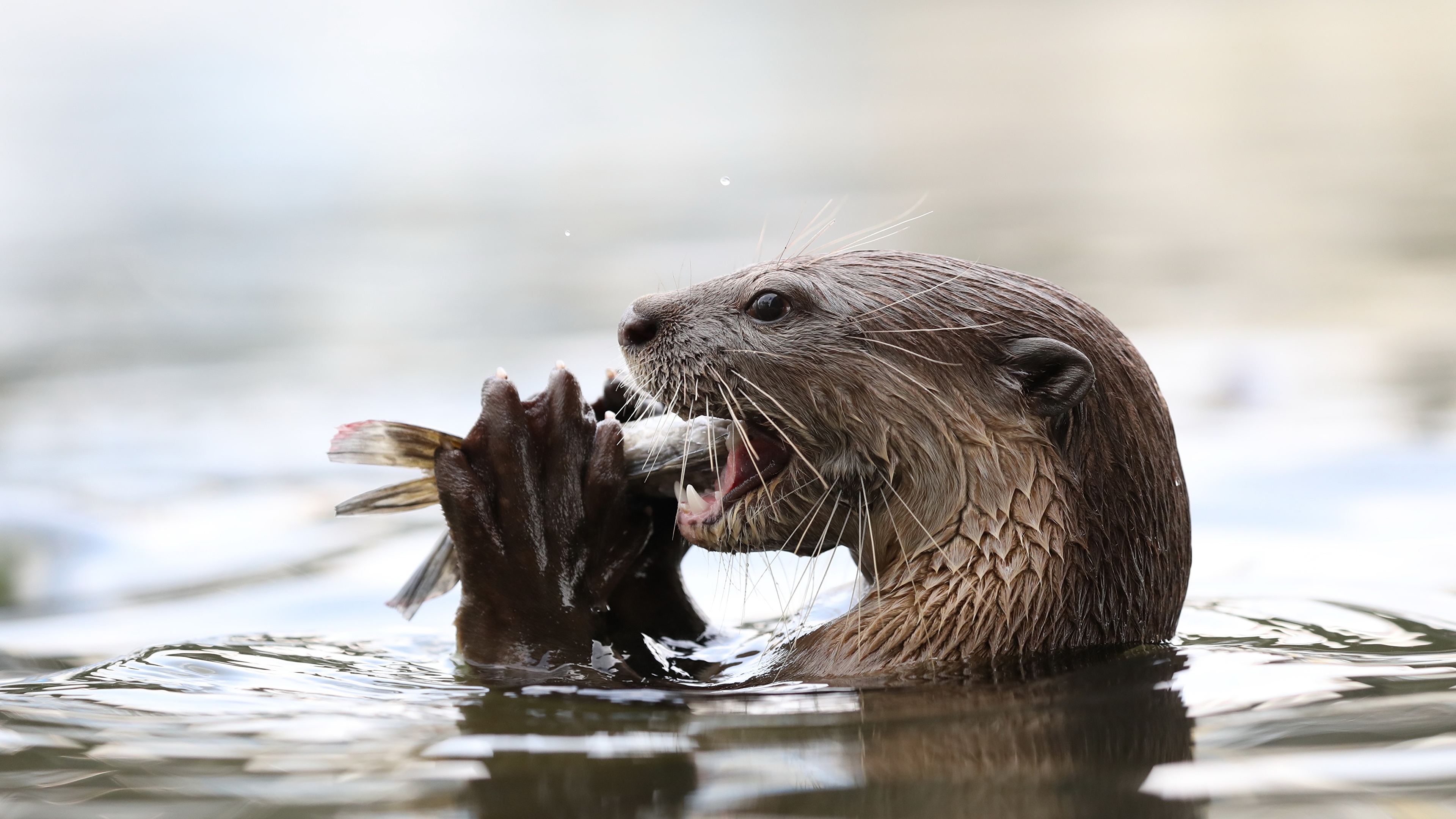
    Researchers conducting a study in Odisha’s Chilika Lake have found the presence of a viable, breeding population of Eurasian Otters, a fishing cat in the brackish water lagoon.

    Eurasian Otters

    • IUCN Status: Near Threatened
    • Species in India: Smooth-coated, Asian small-clawed and Eurasian Otters
    • Habitat: Smooth-coated — all over India; Asian small-clawed — only in the Himalayan foothills, parts of the Eastern and southern Western Ghats; Eurasian — Western Ghats and Himalayas.
    • Diet comprises several small animals, mainly crabs and small fishes.
    • Lives in small packs, is mostly nocturnal, but can be diurnal in areas which are less disturbed.
  • Explained: Marine Heatwave (MHW)


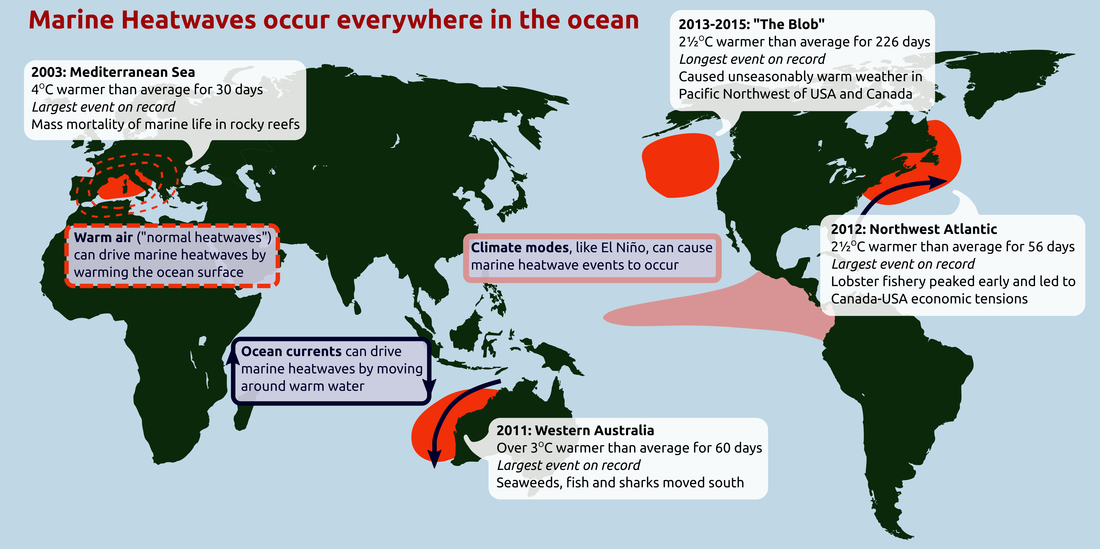
    Scientists have observed unusually high sea surface temperatures (SSTs) in the Pacific Ocean around the western coast of the United States.  This marine heatwave (MHW), covering an area of roughly 6.5 million square kilometres, can affect marine life and lead to droughts in the surrounding regions.

    What are MHWs?

    • We know that heatwaves occur in the atmosphere. We are all familiar with these extended periods of excessively hot weather.
    • However, heatwaves can also occur in the ocean and these are known as marine heatwaves, or MHWs.
    • These marine heatwaves, when ocean temperatures are extremely warm for an extended period of time can have significant impacts on marine ecosystems and industries.

    When do they occur?

    • Heatwaves can happen in summer and also in winter, where they are known as “winter warm-spells”.
    • These winter events can have important impacts, such as in the southeast of Australia where the spiny sea urchin can only colonize further south when winter temperatures are above 12 °C.

    What causes marine heatwaves?

    • Marine heatwaves can be caused by a whole range of factors, and not all factors are important for each event.
    • The most common drivers of marine heatwaves include ocean currents which can build up areas of warm water and air-sea heat flux, or warming through the ocean surface from the atmosphere.
    • Winds can enhance or suppress the warming in a marine heatwave, and climate modes like El Niño can change the likelihood of events occurring in certain regions.
    • MHWs can be caused due to large-scale drivers of the Earth’s climate like the El Niño Southern Oscillation (ENSO).

    Impacts of the MHWs

    • Marine heatwaves affect ecosystem structure, by supporting certain species and suppressing others.
    • For example, after the 2011 marine heatwave in Western Australia the fish communities had a much more “tropical” nature than previously and switched from kelp forests to seaweed turfs.
    • Marine heatwaves can cause economic losses through impacts on fisheries and aquaculture.
    • Temperature-sensitive species such as corals are especially vulnerable to MHWs. In 2016, marine heatwaves across northern Australia led to severe bleaching of the Great Barrier Reef.

    How do we measure marine heatwaves?

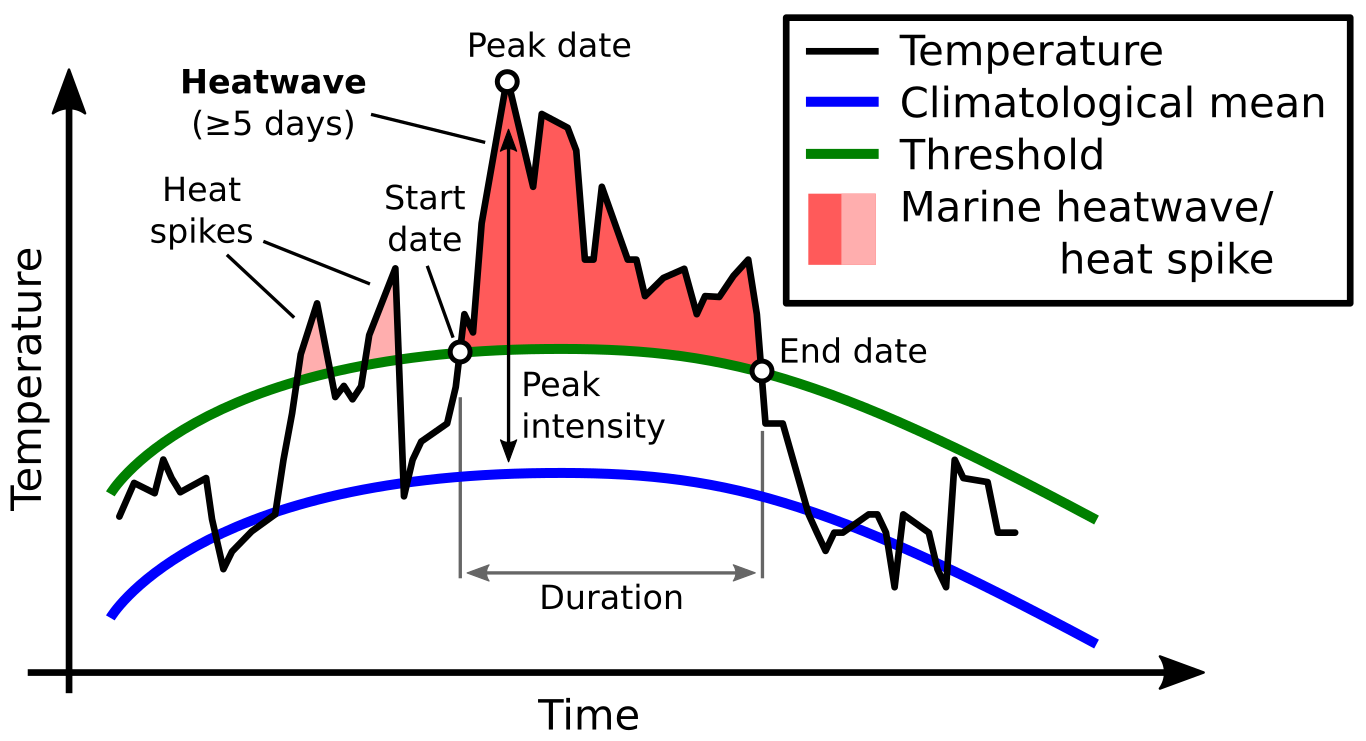
    • A marine heatwave occurs when seawater temperatures exceed a seasonally-varying threshold (usually the 90th percentile) for at least 5 consecutive days.
    • Successive heatwaves with gaps of 2 days or less are considered part of the same event.

    Why study MHWs?

    • MHWs are increasing in frequency due to climate change. MHWs increased by 54 per cent in the last 30 years.
    • Despite their potential impact on the health of marine ecosystems, MHWs remain one of the least studied consequences of global warming.

    Way Forward

    • Marine heatwaves clearly have the potential to devastate marine ecosystems and cause economic losses in fisheries, aquaculture, and ecotourism industries.
    • However, their effects are often hidden from view under the waves until it is too late.
    • By raising general awareness of these phenomena, and by improving our scientific understanding of their physical properties and ecological impacts, we can better predict future conditions and protect vulnerable marine habitats and resources.
  • Locust Invasions and its mitigation


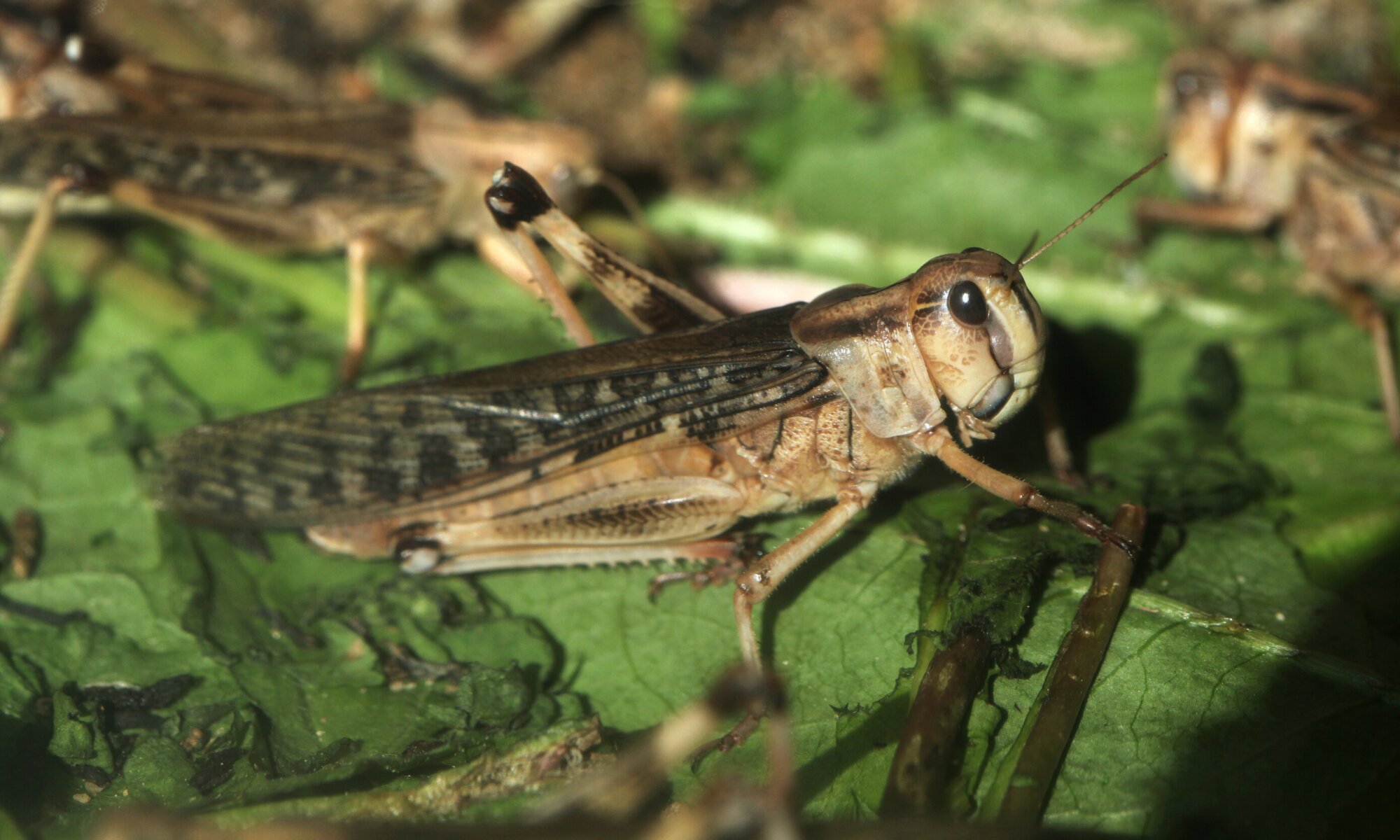
    The locust, a short-horned, desert grasshopper that attacks standing crops and green vegetation, has been making news in India since May-June 2019 when it appeared in Rajasthan and Gujarat. In Kharif season last year, it was also seen in a few areas along Punjab’s border with Rajasthan.

    Context

    • The Locust Warning Organisation (LWO) has been taking measures to control attacks by the pest for the past eight decades in the country.
    • Despite all of LWO’s efforts, the chain of periodic locust attacks in India is yet to be broken.

    Why Locusts attacks are deadly?

    • Adult locust swarms can fly up to 150 km (93 miles) a day with the wind and adult insects can consume roughly their own weight in fresh food per day.
    • A very small swarm eats as much in one day as about 35,000 people.
    • If allowed to breed unchecked in favourable conditions, locusts can form huge swarms that can strip trees and crops over vast areas.

    About LWO

    • In India, the scheme Locust Control and Research (LC&R) is responsible for control of Desert Locust.
    • It is being implemented through Organisation known as “Locust Warning Organisation (LWO)” established in 1939 and later amalgamated with the Directorate of Plant Protection Quarantine and Storage in 1946.
    • Locust Warning organization (LWO) is responsible to monitor and control the locust situation in Scheduled Desert Area (SDA) mainly in the States of Rajasthan and Gujarat while partly in the States of Punjab and Haryana.
    • It keeps itself abreast with the prevailing locust situation at National and International level through monthly Desert Locust Bulletins of FAO.

    What measures are being taken by the LWO to control locust breeding/attacks in India?

    • Experts at the LWO said around three dozen offices including 10 circle offices are working on this issue.
    • They have been doing regular field surveys to keeping a close and regular watch on an over two lakh sq. km area (nearly 11,500 villages) of three states including 1.79 lakh sq. km in Rajasthan (52 per cent of the state’s total area), and the remaining in Gujarat and Haryana.
    • To observe the locust, intensive surveys are conducted by walking along the wind direction and driving at low speed to count flying locusts.

    How often have there been locust attacks in India?

    • The pests have been appearing periodically after a gap of 2-3 or 5-7 years. Around 26 locust attacks have taken place in India in two major cycles.
    • After independence (1947), 25 attacks were observed. Among these, the attacks of 1949-55, 1962 and 1993 were most devastating when 167 and 172 swarms were noticed in 1962 and 1993 respectively.
    • Since 1993, locust attacks have occurred less frequently. The latest attack of 2019-20, has had quite a severe effect on crops in Rajasthan.

    Financial losses incurred

    • According to LWO, to date, the financial loss due to locusts is said to be Rs 50 lakh, Rs 2 lakh and Rs 7.18 lakh in 1962, 1978 and 1993 respectively.
    • A loss of Rs 2 crore was incurred in 1940-46 and 1949-55. Before the LWO was formed, a loss of Rs 10 crore is estimated in the 1926-31 cycle.

    Why has the chain not been broken even after 80 years?

    • LWO experts said it is because there are 30 countries in four regions of different continents that have an arid climate with large deserts that provide an ideal breeding ground for the locust.
    • Most of the time, locusts are coming to India from Pakistan, or from the Middle East via Pakistan.
    • There are four commissions for these 30 countries which include Iran, Pakistan, Afghanistan and India.
    • Laxity by any country would lead to its spread in all these countries which they invade one after another by following almost the same path.
    • The swarms which are coming to India (Rajasthan) have been following the same path, starting from central or western region and then Pakistan mostly in summers.
    • Apart from breaking the chain of summer attacks, the winter swarm has now posed another challenge.

    Where did the current locust attack originate?

    • The locust breeds in high temperatures and high humidity, which is prevalent in areas around the Red Sea.
    • The current attack in India, which started in 2019, has its origin in Yemen, where there was internal conflict and civil war.
    • When the locust was breeding in heavy numbers there in 2018-19, the country could not take care due to its attention towards the civil war and lack of resources to control it.
    • The insect went out of control, took the route of Saudi Arabia, Iran, Pakistan, Somalia, Ethiopia and other countries located on both sides of the Red Sea where they multiplied rapidly.

    Control measures

    • The chain can be broken only when the pest is killed at the time of breeding or before migration to another country.
    • Farmers used to try to drive away the locusts by lighting fires. They also dug up the eggs.
    • Now crops can be sprayed with insecticides from vehicles or airplanes.
    • Scientists are trying to improve the control of locusts, by preventing or dispersing swarms.

    Also read:

    https://www.civilsdaily.com/news/desert-locusts-incursion-in-india/

  • What is the ‘Raman effect’?


    Yesterday, February 28th was celebrated as National Science Day. In 1986, the Govt. of India designated this Day, to commemorate the announcement of the discovery of the “Raman effect”.

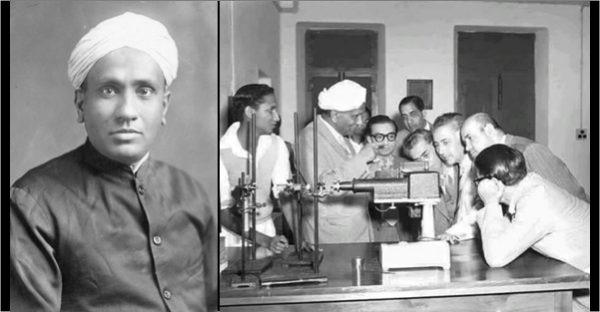
    CV Raman

    • Raman conducted his Nobel-prize winning research at IACS, Calcutta.
    • While he was educated entirely in India, Raman travelled to London for the first time in 1921, where his reputation in the study of optics and acoustics was known to physicists such as JJ Thomson and Lord Rutherford.
    • The Raman Effect won scientist Sir CV Raman the Nobel Prize for physics in 1930.
    • It was also designated as an International Historic Chemical Landmark jointly by the American Chemical Society (ACS) and the Indian Association for the Cultivation of Science (IACS).
    • His speciality was the study of vibrations and sounds of stringed instruments such as the Indian veena and tambura, and Indian percussion instruments such as the tabla and mridangam.

    The Raman Effect

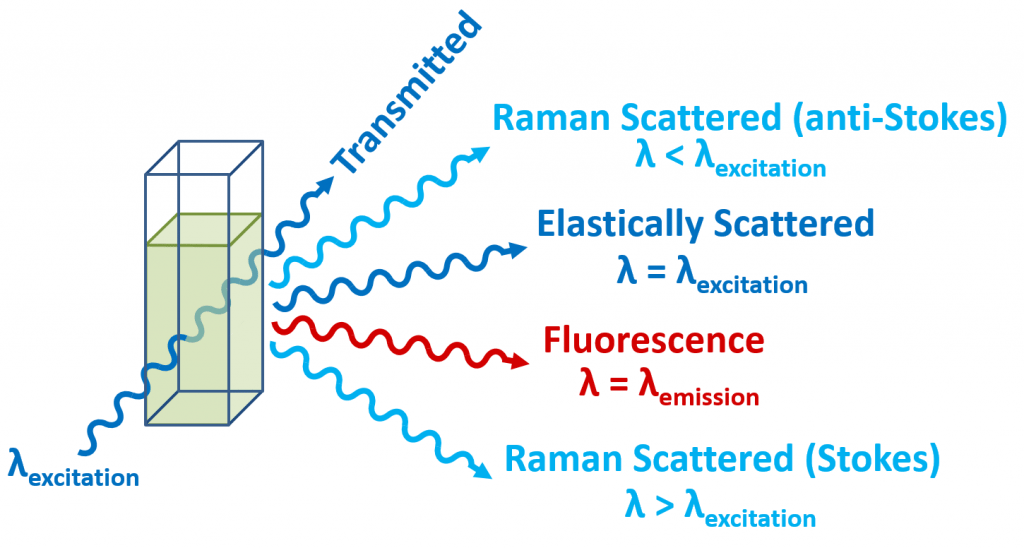
    • In 1928, Raman discovered that when a stream of light passes through a liquid, a fraction of the light scattered by the liquid is of a different colour.
    • While Raman was returning from London in a 15-day voyage, he started thinking about the colour of the deep blue Mediterranean.
    • He wasn’t convinced by the explanation that the colour of the sea was blue due to the reflection of the sky.
    • As the ship docked in Bombay, he sent a letter to the editor of the journal Nature, in which he penned down his thoughts on this.
    • Subsequently, Raman was able to show that the blue colour of the water was due to the scattering of the sunlight by water molecules.
    • By this time he was obsessed with the phenomenon of light scattering.

    Observing the effect

    • The Raman Effect is when the change in the energy of the light is affected by the vibrations of the molecule or material under observation, leading to a change in its wavelength.
    • Significantly, it notes that the Raman effect is “very weak” — this is because when the object in question is small (smaller than a few nanometres), the light will pass through it undisturbed.
    • But a few times in a billion, light waves may interact with the particle. This could also explain why it was not discovered before.
    • In general, when light interacts with an object, it can either be reflected, refracted or transmitted.
    • One of the things that scientists look at when light is scattered is if the particle it interacts with is able to change its energy.

    Applications

    • Raman spectroscopy is used in many varied fields – in fact, any application where non-destructive, microscopic, chemical analysis and imaging is required.
    • Whether the goal is qualitative or quantitative data, Raman analysis can provide key information easily and quickly.
    • It can be used to rapidly characterize the chemical composition and structure of a sample, whether solid, liquid, gas, gel, slurry or powder.
  • Red Snow in Antarctica


    Over the last few weeks, photographs of “red snow” off the coast of Antarctica’s northernmost peninsula, have gone viral. “Red snow” or “watermelon” is a phenomenon that has been known since ancient times. Now, it raises concerns about climate change.

    Red snow in Antarctica: Why it happens 

    • Aristotle is believed to be one of the first to give a written account of red snow, over 2,000 years ago.
    • What Aristotle described as worms and grub, the scientific world today calls algae.
    • This alga species, Chlamydomonas Chlamydomonas nivalis, exists in the snow in the polar and glacial regions and carries a red pigment to keep itself warm.

    Signs of faster melting 

    • In turn, the red snow causes the surrounding ice to melt faster. The more the algae packed together, the redder the snow.
    • And the darker the tinge, the more the heat absorbed by the snow. Subsequently, the ice melts faster.
    • While the melt is good for the microbes that need the liquid water to survive and thrive, it’s bad for glaciers that are already melting from a myriad of other causes, the study said.
    • These algae change the snow’s albedo — which refers to the amount of light or radiation the snow surface is able to reflect back. Changes in albedo lead to more melting.
  • Svalbard Global Seed Vault


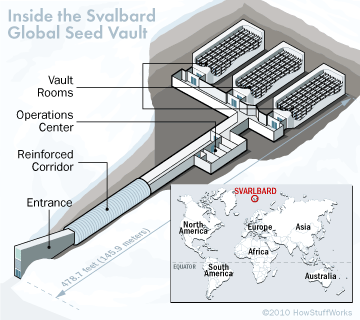
    The Svalbard Global Seed Vault — referred to as the earth’s ‘doomsday vault’ — now contains about 1.05 million seeds.

    Global Seed Vault

    • The vault — in the island of Spitsbergen, midway between Norway and the North Pole — opened in 2008 and preserves seeds for several food varieties.
    • The aim of the vault is to preserve a vast variety of crop seeds in the case of a doomsday event, calamity, climate change or national emergency.
    • The vault is artificially cooled at temperatures of minus 18 degrees Celsius.
    • The low temperature and limited access to oxygen will ensure low metabolic activity and delay seed ageing.
    • The permafrost surrounding the facility will help maintain the low temperature of the seeds if the electricity supply fails.

    Access to seeds

    • Vault seed samples are copies of samples stored in the depositing genebanks.
    • Researchers, plant breeders, and other groups wishing to access seed samples cannot do so through the seed vault; they must instead request samples from the depositing genebanks.
    • The samples stored in the genebanks will, in most cases, be accessible in accordance with the terms and conditions of the International Treaty on Plant Genetic Resources for Food and Agriculture, approved by 118 countries or parties.
  • No gains for taxpayers

    Context

    Loss expected from lower tax rates may be countered by gains from the settlement of cases, higher dividend taxes on top incomes, and the wider scope for taxing international incomes.

    Simplification and providing ease to the taxpayers

    • Fiscal constraints leaving no room for a lower rate: Ahead of The Union budget, taxpayers had anticipated a wide range of measures that they hoped would stoke demand.
      • These ranged from lower tax rates to a more even tax structure on income from various sources.
      • As the former was less feasible given the fiscal constraints, the budget proposals focused on simplification and providing ease to the taxpayer.
    • Simplification in personal tax: The recalibration of personal income tax slabs was suggested as a step towards simplification.
      • However, its uptake is contingent on the preference for new slabs.
      • Who will not opt for a new slab? Switching over to the new slab rates is not beneficial to-
      • An individual currently claiming full exemptions.
      • An individual with incomes comprising largely of capital gains.
      • It is possible, however, that individuals do not claim such exemptions or deductions.
    • How switching to new slab impact revenue? An analysis of data published by the Central Board of Direct Taxes suggests that for the assessment year 2018-19, it suggest improvement in the collection.
      • 1% improvement: If individuals do switch over to the new regime, it may translate to a 1 per cent improvement in tax collections, rather than a loss.
    • Limited takers of the new slab: It can be inferred that this option may be exercised by few individuals, if at all, since the potential gains from foregoing exemptions and the intended simplification is expected to be limited.

    Tax disputes

    • The new scheme proposed: A common concern among taxpayers is protracted disputes. To reduce litigation, a new scheme has been proposed.
    • Importance of precedence in disputes: 39 per cent of the cases made a reference to a similar case in the previous year. This underscores the importance of precedence.
    • In such cases, the settlement is not a superior option as the waiver of the penalty and interest does not offer any advantage against a decision that would impact future assessment.
    • Success rates of disputes: The success rate of the tax department is 27 per cent at the Income Tax Appellate Tribunal (ITAT) and the Supreme Court and 12 per cent in appeals filed in high courts.
      • Given the odds of success, an assessee may thus be tempted to pursue litigation.
    • Incentivising the settlement: Taxpayers may choose to settle for the waiver of interest and penalty in cases where it is one time and does not set a precedent for future transactions.

    Dividend Distribution Tax (DDT)

    • What is DDT?  It is one of the significant change is in the taxation of dividends.
      • The dividend distribution tax is a unique levy on distributed profits and is payable by the distributing company.
      • What is the shortcoming in DDT? The shortcoming of such tax is that foreign investors can’t claim the credit.
      • Additional 10 % of DDT: In an effort to make the tax progressive, an additional dividend tax of 10 per cent was introduced for domestic investors receiving dividend in excess of Rs 10 lakh.
    • Dividend pay-out decreased after DDT: Changes in DDT were accompanied by a decline in dividend pay-out – the proportion of profits paid as dividends declined from 30 per cent in early 2000s to 22 per cent in 2019 (BSE 500 companies).
      • Chance of improvement in pay-outs: It is expected that the reversion to the classical system may improve dividends pay-outs.
      • However, this will benefit individual taxpayers with incomes below Rs 5 lakh as the slab rate applicable is less than the existing rate.

    Taxing cross-border income

    • In the international arena, India is determined to tax cross-border incomes.
    • Taxing digital companies: The addition of explanation 3A to the Income Tax Act reinforces India’s commitment to taxing digital companies.
    • What comprises the business with nexus to India: The proposed amendment clarifies that incomes related to the advertisement, sale of data of a person residing in India and sale of goods and services based on the data of a person residing in India, may be attributed to a business with nexus in India.
    • Taxing citizen not taxable anywhere: To tax Indian citizens that are not taxable in any other jurisdiction, the Act will now deem such individuals as resident taxable in India.
      • While the application of the law may be challenged giving rise to disputes, it is a step forward.

    The proposal of Citizen’s charter

    • Charter on rights and obligations: The finance minister also referred to introducing a citizen’s charter that incorporates taxpayer’s rights and obligations.
      • Limits of charters: International experience shows that charters have limited enforceability unless adopted in primary legislation.
    • Supporting charters with legislation: Introducing charter to the statutes may, therefore, prove to be a positive initiative.
      • Faith can be built through enforcement of the charter.
      • However, the penal provisions must be well-thought-out so as to avoid adding another contentious element.

    Conclusion

    • Lack of uniformity: The budget proposals aimed to provide simplicity, yet much remains to be done, given the lack of uniformity in the taxation of incomes such as capital gains.
    • Limited revenue implications: The success of schemes proposed is contingent on the traction they gain. As for the revenue implications, the impact of these measures may, in fact, be limited.
    • Countering loss through gains from settlements: Loss expected from lower tax rates may be countered by gains from the settlement of cases, higher dividend taxes on top incomes, and the wider scope for taxing international incomes.
  • Explained: Central Consumer Protection Authority (CCPA)


    Recently the Union Ministry of Consumer Affairs has announced that a Central Consumer Protection Authority (CCPA) will be established by the first week of April.

    What is the Central Consumer Protection Authority?

    • The authority is being constituted under Section 10(1) of The Consumer Protection Act, 2019.
    • The Act replaced The Consumer Protection Act, 1986, and seeks to widen its scope in addressing consumer concerns.
    • The CCPA, introduced in the new Act, aims to protect the rights of the consumer by cracking down on unfair trade practices, and false and misleading advertisements that are detrimental to the interests of the public and consumers.

    Why need CCPA?

    • The new Act recognizes offences such as providing false information regarding the quality or quantity of a good or service, and misleading advertisements.
    • It also specifies action to be taken if goods and services are found “dangerous, hazardous or unsafe”.
    • The CCPA will have the powers to inquire or investigate into matters relating to violations of consumer rights or unfair trade practices suo motu, or on a complaint received, or on a direction from the central government.

    What can the possible structure of CCPA be?

    • The proposed authority will be a lean body with a Chief Commissioner as head, and only two other commissioners as members — one of whom will deal with matters relating to goods while the other will look into cases relating to services.
    • It will be headquartered in the NCR of Delhi but the central government may set up regional offices in other parts of the country.
    • The CCPA will have an Investigation Wing that will be headed by a Director General.
    • District Collectors too, will have the power to investigate complaints of violations of consumer rights, unfair trade practices, and false or misleading advertisements.

    What kind of goods and food items in particular, can be classified as “dangerous, hazardous or unsafe”?

    • This is not specified in the notification of the Act.
    • Regarding food, an official said the CCPA will ensure that all standards on packaged food items set by regulators such as the FSSAI are being followed.

    What will the CCPA do if any goods or services are found not meeting these standards?

    Under Section 20 of The Consumer Protection Act, the proposed authority will have powers to:

    1. recall goods or withdrawal of services that are “dangerous, hazardous or unsafe;
    2. pass an order for refund the prices of goods or services so recalled to purchasers of such goods or services and
    3. discontinuation of practices which are unfair and prejudicial to consumer’s interest

    Penalties:

    For manufacture, selling, storage, distribution, or import of adulterated products, the penalties are:

    1. If injury is not caused to a consumer, fine up to Rs 1 lakh with imprisonment up to six months;
    2. If injury is caused, fine up to Rs 3 lakh with imprisonment up to one year;
    3. If grievous hurt is caused, fine up to Rs 5 lakh with imprisonment up to 7 years;
    4. In case of death, fine of Rs 10 lakh or more with a minimum imprisonment of 7 years, extendable to imprisonment for life.

    How will it deal with false or misleading advertisements?

    • Section 21 of the new Act defines the powers given to the CCPA to crack down on false or misleading advertisements.
    • The CCPA may order investigation that any advertisement is false or misleading and is harmful to the interest of any consumer, or is in contravention of consumer rights.
    • If dissatisfied, the CCPA may issue directions to the trader, manufacturer, endorser, advertiser, or publisher to discontinue such an advertisement, or modify it in a manner specified by the authority, within a given time.

    Penalties:

    1. The authority may also impose a penalty up to Rs 10 lakh, with imprisonment up to two years, on the manufacturer or endorser of false and misleading advertisements.
    2. The penalty may go up to Rs 50 lakh, with imprisonment up to five years, for every subsequent offence committed by the same manufacturer or endorser.
    3. CCPA may ban the endorser of a false or misleading advertisement from making endorsement of any products or services in the future, for a period that may extend to one year.
    4. The ban may extend up to three years in every subsequent violation of the Act.

    What other powers will the CCPA have?

    • While conducting an investigation after preliminary inquiry, officers of the CCPA’s Investigation Wing will have the powers to enter any premise and search for any document or article, and to seize these.
    • For search and seizure, the CCPA will have similar powers given under the provisions of The Code of Criminal Procedure, 1973.
    • The CCPA can file complaints of violation of consumer rights or unfair trade practices before the District, State, and the National Consumer Disputes Redressal Commission.
    • It will issue safety notices to alert consumers against dangerous or hazardous or unsafe goods or services.

    Also read:

    https://www.civilsdaily.com/news/five-new-rights-you-get-as-a-consumer/
  • Enhanced Access and Service Excellence (EASE) 3.0


    Union Finance minister has released Enhanced Access and Service Excellence (EASE) 3.0, the new reform agenda for tech-enabled banking.

    EASE 3.0

    • EASE 3.0 aims at providing smart, tech-enabled public sector banking experience for aspiring India, by establishing paperless and digitally-enabled banking at places where people visit the most such as malls, stations etc.
    • With EASE 3.0, the government is trying to enhance the customer experience with the introduction of features like Dial-a-loan, credit at a click, alternate-data-based lending or other analytics-based credit offers.

    Various features

    • Palm Banking for “End-to-end digital delivery of financial service
    • “Banking on Go” via EASE banking outlets at frequently visited spots like malls, stations, complexes, and campuses
    • Digitalizing the experience at public sector bank branches
  • Market Intelligence and Early Warning System (MIEWS)


    The Union Food Processing Ministry has launched a new Market Intelligence and Early Warning System (MIEWS) portal to monitor the prices of TOP crops – Tomato, Onion and Potato.

    About MIEWS

    • MIEWS portal is the first-of-its-kind platform for ‘real-time monitoring’ of prices of tomato, onion and potato.
    • The system has been designed to provide advisories to farmers to avoid cyclical production and issue early warnings in situations of gluts.
    • It will simultaneously generate alerts for price intervention under the terms of Operation Greens (OG) scheme.
    • It will generate early alerts in case there is going to be a major change in the prices of these crops.
    • This will help in planning and timely intervention for price stabilization. The portal can be accessed at this link- http://miews.nafed-india.com.

    Utility of MIEWS

    The MIEWS would:

    • Monitor the supply situation for timely market intervention,
    • Assist in rapid response during times of glut to move the produce from glut regions to regions with deficit supply.
    • Provide inputs for export/import decision making.

    Back2Basics

    Operation Greens

    • In the budget speech of Union Budget 2018-19, a new Scheme “Operation Greens” was announced on the line of “Operation Flood” to promote Farmer Producers Organizations (FPOs #), agri-logistics, processing facilities and professional management.
    • Accordingly, the Ministry has formulated a scheme for integrated development of Tomato, Onion and Potato (TOP) value chain.
    • Under the OG Scheme, during a glut situation, the evacuation of surplus production from producing areas to consumption centres will be undertaken in the following cases:
    1. When the price falls below the average market price at the time of harvest in the preceding 3 years.
    2. When the price falls more than 50 percent in comparison to the previous year’s market price at the time of harvest.
    3. When the price falls below the benchmark, if any, fixed by either the state or central government for a stipulated period.

    For additional readings, navigate to:

    https://mofpi.nic.in/Schemes/operation-greens