💥Join UPSC 2027,2028 Mentorship (July Batch) + XFactor Notes & Microthemes PDF

Distribution: yearly

  • [pib] ‘1000 Springs’ Initiative


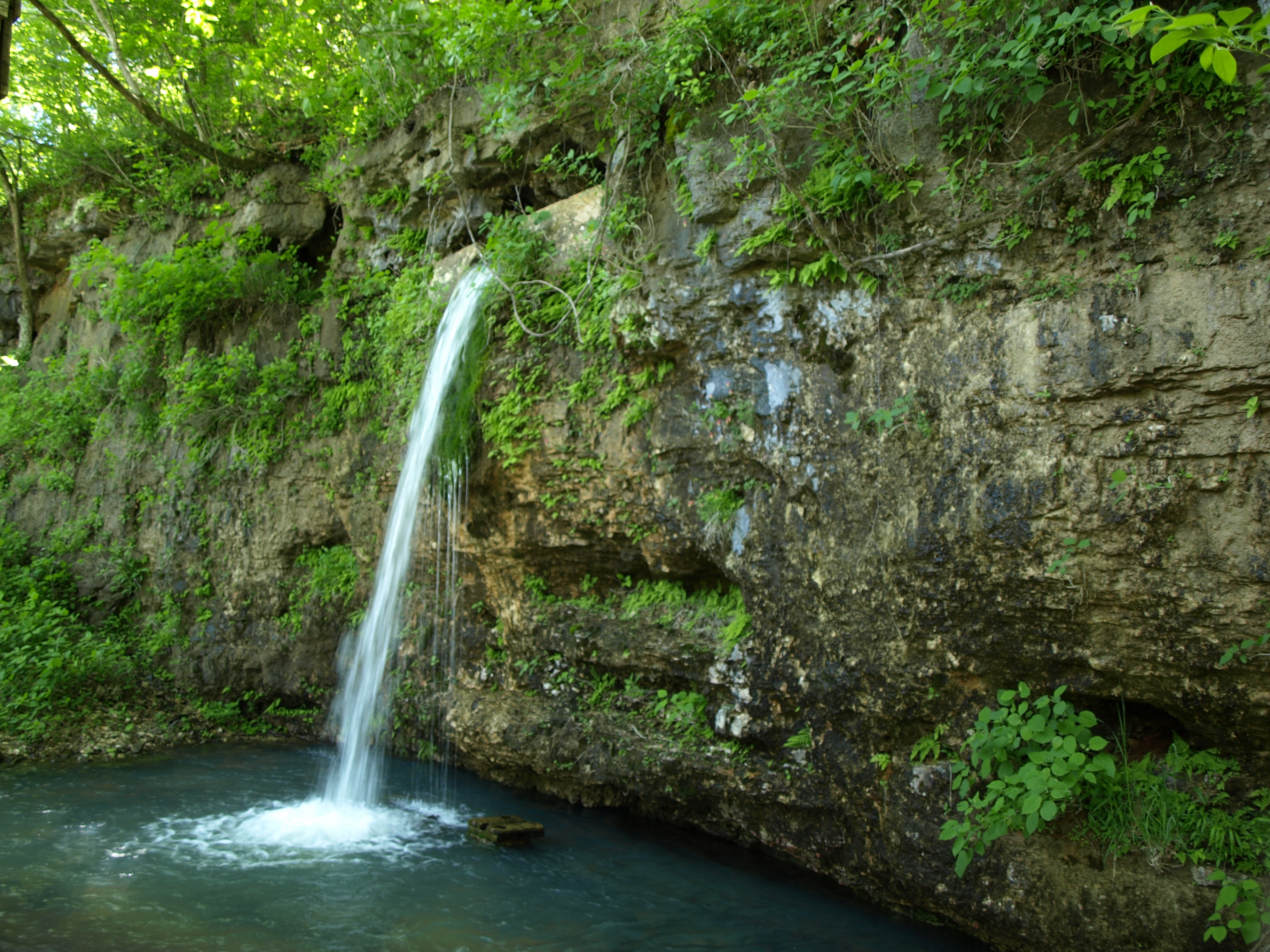
    Union Tribal Affairs Ministry has launched “1000 Spring Initiatives” and an online portal on GIS-based Spring Atlas with hydrological and chemical properties of the Springs on the occasion.

    ‘1000 Springs’ Initiative

    • The ‘1000 Springs Initiative’ aims at improving access to safe and adequate water for the tribal communities living in a difficult and inaccessible part of rural areas in the country.
    • It is an integrated solution around natural springs.
    • It includes the provision of infrastructure for piped water supply for drinking; provision of water for irrigation; community-led total sanitation initiatives; and provision for water for backyard nutrition gardens, generating sustainable livelihood opportunities for the tribal people.
    • It will help in harnessing the potential of perennial springs’ water to address the natural scarcity of water in tribal areas.

    Spring Atlas

    • Springs are natural sources of groundwater discharge and have been used extensively in the mountainous regions across the world, including India.
    • However, in the central and eastern Indian belt with more than 75% tribal population, it remains largely unrecognized and under-utilized.
    • An online portal on GIS-based Spring Atlas has been developed to make these data easily accessible from an online platform.
    • Presently, data of more than 170 springs have been uploaded on the Spring Atlas.
  • Explained: Assam-Mizoram Boundary Dispute


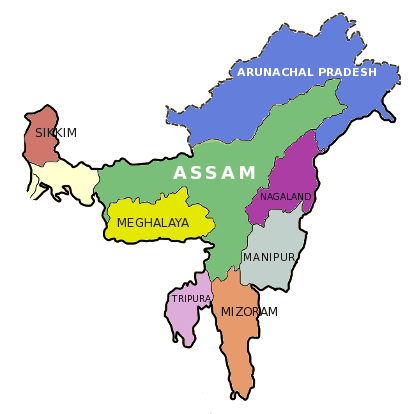
    Assam is at the centre of a fresh inter-State border row in the northeastern region. The Mizoram government has sought the revision of the boundary with Assam, based on the Bengal Eastern Frontier Regulation (BEFR) of 1873 and the Inner Line of the Lushai Hills Notification of 1993.

    Background

    • Since 1962 most of the state borders of states carved out of Assam were divided following the myopic vision of the Central government.
    • On ground these borders still do not run in sync with the tribal territories and identities, creating repetitive conflicts in the region and disturbing its peace.
    • Assam finds itself at the center of all the conflicts since most of the neighboring states were carved out of its territory since independence.
    • This was done to consolidate the Indian Union at the time by catering to the aspirations of the local tribes and including them in the mainstream by giving them independent statehoods.

    What is the dispute?

    • Mizoram shares a 123-km border with southern Assam and has been claiming a 509-square mile stretch “occupied” by the neighbouring State.
    • Mizoram used to be the Lushai Hills district of Assam before being made a Union Territory in 1972 and a State in 1987.
    • Both States have been disputing an extensive stretch of this boundary.

    About Bengal Eastern Frontier Regulation

    • The Inner Line Regulations, commonly referred to as the Inner Line Permit system (ILP), first gained legal effect through the Bengal Eastern Frontier Regulation, 1873.
    • At present the BEFR continues to apply, but only in present-day Arunachal Pradesh, Nagaland and Mizoram.
    • It had been lifted in the whole of Assam, as well as the entirety of present-day Meghalaya.
    • The BEFR allows Arunachal Pradesh, Manipur, Mizoram and Nagaland not to let non-resident Indians in without an inner-line permit for a temporary stay.

    Present status of ILP

    • The Foreigners (Protected Areas) Order, 1958 is the modern embodiment of the ILP.
    • This Order was passed in furtherance of the Foreigners Act, 1946.
    • The Order defined the ‘inner line’ throughout present-day India starting from Jammu and Kashmir and ending at Mizoram.
    • This inner line is different from the one envisioned in the Bengal Frontier Regulations.
    • This line represents the furthest point up to the international border where a foreigner can visit on the strength of a visa alone.
  • National Technical Textiles Mission

    The Cabinet Committee on Economic Affairs has given its approval to set up a National Technical Textiles Mission with a view to position the country as a global leader in Technical Textiles.

    What are Technical Textiles?

    • Technical textile is a textile product manufactured for non-aesthetic purposes, where the function is primary criterion.
    • They are functional fabrics that have applications across various industries including automobiles, civil engineering and construction, agriculture, healthcare, industrial safety, personal protection etc.
    • Technical Textiles is a high technology sunrise sector which is steadily gaining ground in. India.

    National Technical Textiles Mission

    • The Mission would have a four year implementation period from FY 2020-21 to 2023-24.
    • It will move into sunset phase after four years period.
    • A Mission Directorate in the Min. of Textiles headed by an eminent expert in the related field will be made operational.
    • The Directorate will not have any permanent employment and there will be no creation of building infrastructure for the Mission purpose.

    Components of the mission

    Component-I:  Promoting both (i) fundamental research at fibre level and (ii) application-based research in geo-textiles, agro-textiles, medical textiles, mobile textiles and sports textiles and development of bio­degradable technical textiles.

    Component-II: Promotion and Market Development.

    Component-III: Export promotion of technical textiles and ensuring 10% average growth in exports per year upto 2023-24. An Export Promotion Council for Technical Textiles will be set up for this purpose.

    Component-IV: Promoting technical education at higher engineering and technology levels related to technical textiles.

  • Rights, duties and the Constitution

    Context

    At an International Judicial Conference 2020 this weekend, the Chief Justice of India, S.A. Bobde, drew attention to the Constitution’s Fundamental Duties chapter.

    The logic of duties

    • Wide range of duties: The first thing to note is that as citizens, there exists a wide range of duties that bind us in everyday life.
      • Duties towards the state and individual: These duties are owed both to the state and to other individuals.
    • Legal duties: We have a legal duty to pay our taxes, to refrain from committing violence against our fellow-citizens, and to follow other laws that Parliament has enacted.
      • Breach of these legal duties triggers financial consequences (fines), or even time in jail.
    • Following the duties is price for living in the society: At any given time, therefore, we are already following a host of duties, which guide and constrain how we may behave.
      • This is the price that must be paid for living in society, and it is a price that nobody, at least, in principle, objects to paying.
    • Self-contained whole: Our duties and the consequences we bear for failing to keep them, therefore, exist as a self-contained whole.
      • Co-existence and sacrifice: The peaceful co-existence requires a degree of self-sacrifice, and that if necessary, this must be enforced through the set of sanctions.

    The logic of rights

    • Understanding the logic through history: Rights, on the other hand, follow a different logic entirely. This is a logic that is best understood through history.
      • Two concerns: At the time of the framing of the Indian Constitution and its chapter on Fundamental Rights, there were two important concerns animating the Constituent Assembly.
      • Treatment as subjects: The first was that under the colonial regime, Indians had been treated as subjects.
      • Their interests did not count, their voices were unheard, and in some cases — for example, the “Criminal Tribes”- they were treated as less than human.
      • Holocaust example: Apart from the long and brutal history of colonialism, the framers also had before them the recent example of the Holocaust, where the dignity of more than six million people had been stripped before their eventual genocide.
    • The first role of fundamental rights chapter: To stand as a bulwark against dehumanisation.
      • Dignity and equality guaranteed: Every human being no matter who they were or what they did had a claim to basic dignity and equality that no state could take away, no matter what the provocation.
      • Unconditional right: One did not have to successfully perform any duty, or meet a threshold of worthiness, to qualify as a rights bearer. It was simply what it meant to be human.
    • Second role of the fundamental rights: To stand against the hierarchy.
      • Removing the subordination and degradation: The axes of gender, caste and religion had all served to keep masses of individuals in permanent conditions of subordination and degradation.
      • Equalising and democratising: Through guarantees against-
      • Forced labour.
      • Against “untouchability”.
      • Against discriminatory access to public spaces, and others.
      • Fundamental rights were meant to play an equalising and democratising role throughout society, and to protect individuals against the depredations visited on them by their fellow human beings.
    • Significance of the above two roles
      • Transformative purpose: The twin principles of anti-dehumanisation and anti-hierarchy reveal the transformative purpose of the fundamental rights chapter.
      • The recognition that true democracy could not exist without ensuring that at a basic level, the dignity and equality of individuals were protected, both from the state as well as from social majorities.
      • Rise from subject to citizen: It was only with these guarantees could an individual rise from the status of subject to that of the citizen.
      • And, as should be clear by now, it was only after that transformation had been wrought, that the question of duties could even arise.
    • Importance of the language of the duty:
      • The language of duties can play an important role in a society that continues to be divided and unequal.
      • In such a society, those who possess or benefit from entrenched structural and institutional power (starting with the state, and going downwards) certainly have a “duty” not to use that power to the detriment of those upon whom they wield it.
      • That is precisely what the guarantees against “untouchability”, forced labour, and discriminatory access in the Constitution seek to accomplish.

    Issue of conflating duties and rights

    • The problem lies in the conflation of rights and duties.
    • In that context, it is always critical to remember Dr B.R. Ambedkar’s words in the Constituent Assembly (which were also cited by the CJI in his speech): that the fundamental unit of the Constitution remains the individual.
    • If the position of the individual and the Constitution’s commitment to combating hierarchy is kept in mind, then the language of duties can be understood in its proper context.
    • Chances of duties leading to unpleasant consequences: Without the moral compass of rights and their place in the transformative Constitutional scheme the language of duties can lead to unpleasant consequences.
      • It can end up entrenching existing power structures by placing the burden of “duties” upon those that are already vulnerable and marginalised.
    • The constitution is about rights: It is for this reason that, at the end of the day, the Constitution, a charter of liberation, is fundamentally about rights.

    Conclusion

    It is only after guarantee to all the full sum of humanity, dignity, equality, and freedom promised by the Constitution, that we can ask of them to do their duty. Perhaps, then, it is time to update Hind Swaraj for the constitutional age: “real duties are the result of the fulfilment of rights”.

  • Yongle Blue Hole (YBH)


    Carbon more than 8,000 years old has been found inside the world’s deepest blue hole — the Yongle Blue Hole (YBH).

    Yongle Blue Hole (YBH)

    • The deepest known marine cavern is the Yongle blue hole, which measures roughly 300 metres from top to bottom.
    • Blue holes are marine caverns filled with water and are formed following dissolution of carbonate rocks, usually under the influence of global sea level rise or fall.
    • Its waters are mostly isolated from the surrounding ocean and receive little fresh water from rainfall, making it a rare spot to study the chemistry of oxygen-deprived marine ecosystems.
    • What distinguishes them from other aquatic caverns is that they are isolated from the ocean and don’t receive fresh rainwater.
    • They are generally circular, steep-walled and open to surface.

    Significance of YBH

    • YBH has a depth of 300 metres, far deeper than the previously recorded deepest blue hole, Dean’s Blue Hole in Bahamas, which had a depth of 202 metres.
    • However, like most blue holes, it is anoxic i.e. depleted of dissolved oxygen below a certain depth. This anaerobic environment is unfavorable for most sea life.
    • Such anoxic ecosystems are considered a critical environmental and ecological issue as they have led to several mass extinctions.
    • Concentrations of carbon, usually found in deep marine holes like YBH, provide a natural laboratory to study carbon cycling and potential mechanisms controlling it in the marine ecosystem.
    • The transition from aerobic to anaerobic environment adversely affects the biogeo-chemistry of the ocean.
  • Making the super-rich pay their fair share

    Context

    It is now beyond obvious that India cannot revive its economy without increasing public spending, and so increasing its fiscal resources is essential. Among other measures, this requires urgent adoption of legislation and institutional reforms to end financial opacity.

    The opacity in the data

    • Unlikely Budget estimates: The Union Budget was presented, based on numbers for revised estimates for the current year and Budget estimates for the coming year that the Finance Ministry itself knows are
    • Where else the opacity in data extends: The opacity of data also extends to cross-border movement of funds generated through a range of activities, including tax evasion, misappropriation of state assets, laundering of the proceeds of crime, and bribery.
      • Even here, India still has a lot to do, as confirmed by the recent publication of the Financial Secrecy Index by the Tax Justice Network, a U.K.-based financial advocacy group.
    • Financial Secrecy Index rank: On the surface, India has managed to reduce its contribution to global financial secrecy, with its rank falling from 32 on the 2018 index to 47 in 2020.
      • But this is partly because the new edition of the index covers more countries than it did two years ago.

    Transparency Reforms by the government

    • Arrangement with Switzerland: It is true that the government has adopted and supported a few transparency reforms, such as the automatic exchange of tax and financial information with other jurisdictions, like Switzerland.
      • What the arrangement with Switzerland mean? If an Indian citizen has an account with a Swiss bank and has a balance over a certain threshold, this information will be sent to the Indian tax authorities automatically.
    • Beneficial ownership register: The government did create a beneficial ownership register- which would allow the identification of the beneficial owner of an asset regardless of whose name the title of the property is in.
      • Exemption making the law weak: The law is weak since it exempts a lot of people at the discretion of the authorities.
      • Also, this register is not accessible to the public.

    Making multinationals and the super-rich pay their fair share of taxes 

    • Need to do more: Stopping the financial haemorrhage and making multinationals and the super-rich pay their fair share of taxes requires much more.
    • Capital flight and consequence for the country’s development: Capital flight out of India by Indian elites and foreigners alike has been undermining our country’s development for decades.
      • Outdated international system: An important part of these flows is the result of artificial profit shifting by multinational companies taking advantage of an outdated international tax system.
    • How the multinationals shifts profits? These multinationals may be making profits in India but can easily declare those profits in a low tax jurisdiction like Hong Kong and justify that transaction as a payment for the use of a patent.
      • The magnitude of loss-$27.5 billion: According to one estimate, this strategy represented a loss of $27.5 billion in 2014 for the Indian government, up from $142 million in 2000.

    Onshore financial services and issues with it

    • Paradoxical decision: Three years ago, the government took the paradoxical decision to set up onshore international financial services in the country.
      • This is how the International Financial Services Centre in the Gujarat International Finance Tec-City (GIFT-City), Gandhinagar, emerged.
      • It was modelled after offshore financial centres such as Hong Kong, Singapore, the City of London and Dubai.
    • Increasing the possibility of regulatory arbitrage: While this has not created much employment, it has led to growing possibilities for regulatory arbitrage by financial firms, with potentially very problematic consequences.

    The issue with the policy of tax incentives

    • Little evidence of attracting investment: The government keeps granting tax incentives on a discretionary basis, even though there is little evidence that these incentives attract investment.
    • What factors matters for investment: Recent research by International Monetary Fund, factors such as-
      • Quality of infrastructure.
      • A healthy and skilled workforce.
      • Market access and-
      • Political stability matters much more.
    • Consequences of the policy-reduction in tax revenue: The massive reduction in corporate tax rates has thus far not led to any increase in private investment.
      • But it has meant a significant reduction in tax revenues, with devastating consequences.
      • Implications for health, educations etc.: Reduction in tax revenue translates into a lack of resources for education, healthcare, food and nutrition and infrastructure.
      • Low tax-GDP ratio: India is already an outlier among similarly placed developing countries with its low tax-GDP ratio of 18%.
      • Making the budget dependent on indirect taxes: The government budget is also highly dependent on indirect taxes like the Goods and Services Tax which are regressive and hit ordinary citizens harder.

    Way forward

    • Legislation to end financial opacity: Adoption of legislation and institutional reforms to end financial opacity- including, for example-
      • Opening the beneficial ownership register to the public and-
      • Stopping the creation of onshore tax havens is the need of the hour.
    • Opening the debate on how to make the multinationals pay their fair share: The Government of India must also assume a more vocal role in the international debate about how to make multinationals pay their fair share of taxes.
      • This means continuing to appeal for a United Nations tax body, which is much more legitimate than the Organisation for Economic Co-operation and Development (OECD).
      • The issue with the OECD’s proposal: The OECD’s proposals, published at the end of 2019, are neither ambitious nor fair enough.
    • Explore the possibility of going alone: If the organisation continues to remain deaf to the demands of developing countries, India must be prepared to go it alone, thinking unilaterally about how to make multinationals pay what they owe.


  • Delhi’s ‘Happiness Class’

    On the upcoming visit to India, US President Trump will visit a Delhi government school, where they will attend a happiness curriculum class.

    What is Delhi’s ‘happiness curriculum’?

    • The curriculum calls for schools in India to promote development in cognition, language, literacy, numeracy and the arts along with addressing the well-being and happiness of students.
    • It further says that future citizens need to be “mindful, aware, awakened, empathetic, firmly rooted in their identity…” based on the premise that education has a larger purpose, which cannot be in isolation from the “dire needs” of today’s society.
    • For the evaluation, no examinations are conducted, neither will marks be awarded.
    • The assessment under this curriculum is qualitative, focusing on the “process rather than the outcome” and noting that each student’s journey is unique and different.

    Objectives of the curriculum

    The objectives of this curriculum include:

    • developing self-awareness and mindfulness,
    • inculcating skills of critical thinking and inquiry,
    • enabling learners to communicate effectively and
    • helping learners to apply life skills to deal with stressful and conflicting situations around them

    Learning outcomes of this curriculum

    The learning outcomes of this curriculum are spread across four categories:

    • becoming mindful and attentive (developing increased levels of self-awareness, developing active listening, remaining in the present);
    • developing critical thinking and reflection (developing strong abilities to reflect on one’s own thoughts and behaviours, thinking beyond stereotypes and assumptions);
    • developing social-emotional skills (demonstrating empathy, coping with anxiety and stress, developing better communication skills) and
    • developing a confident and pleasant personality (developing a balanced outlook on daily life reflecting self-confidence, becoming responsible and reflecting awareness towards cleanliness, health and hygiene).

    How is the curriculum implemented?

    • The curriculum is designed for students of classes nursery through the eighth standard.
    • Group 1 consists of students in nursery and KG, who have bi-weekly classes (45 minutes each for one session, which is supervised by a teacher) involving mindfulness activities and exercise.
    • Children between classes 1-2 attend classes on weekdays, which involves mindfulness activities and exercises along with taking up reflective questions.
    • The second group comprises students from classes 3-5 and the third group is comprised of students from classes 6-8 who apart from the aforementioned activities, take part in self-expression and reflect on their behavioural changes.
  • Biojet fuel that powered the IAF aircraft


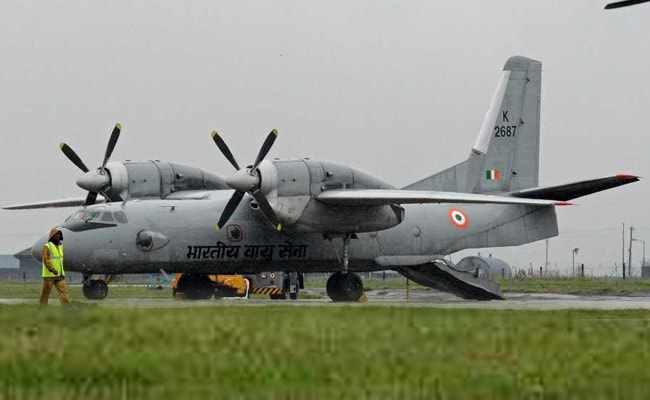
    In his monthly Mann ki Baat radio address, PM hailed the use of biofuel in an Indian Air Force transport aircraft.

    What did PM cite?

    • IAF’s An-32 aircraft successfully used a 10% blend of Indian biojet fuel and took off from Leh’s Kushok Bakula Rimpoche Airport on January 31.
    • This was the first time that this mix was used in both engines of an aircraft.
    • Leh is at an altitude of 10,682 ft above mean sea level and is among the world’s highest and most difficult operational airfields.
    • Even during clear weather, operating an aircraft at Leh is a challenge, given the reduced power output of the engines in the rarefied atmosphere, turbulent winds, and proximity of the mountains.

    What is Biojet fuel?

    • Biojet fuel is prepared from “non-edible tree borne oil” and is procured from various tribal areas of India.
    • This fuel is made from Jatropha oil sourced from Chattisgarh Biodiesel Development Authority (CBDA) and then processed at CSIR-IIP, Dehradun.
    • Generally, it is made from vegetable oils, sugars, animal fats and even waste biomass, and can be used in existing aviation jet engines without modification.
    • Jatropha oil is suitable for conversion to jet fuel. This biojet fuel has received wide acceptance from the airline industry.

    Why it matters?

    • Evaluating the performance of biojet fuel under conditions prevalent in Leh was considered extremely important from an operational perspective.
    • The success of the flight validated the capability of the aircraft’s engines to operate smoothly with biojet fuel at the extremities of the operational envelope.
    • The tests were conducted by a team comprising test pilots from the Aircraft and Systems Testing Establishment (ASTE), Bengaluru and pilots from the operational squadrons.
    • The successful test flight also demonstrated the IAF’s capability to absorb newer technology, while sponsoring indigenization.
  • Habitable-zone Planet Finder (HPF)


    At 100 light-years from Earth, a low-mass star was sending signals in a pattern that suggested that an exoplanet was orbiting the star confirmed the Habitable-zone Planet Finder (HPF).

    Habitable-zone Planet Finder

    • NASA’s Kepler mission observed a dip in the host star’s light, suggesting that the planet was crossing in front of the star during its orbit.
    • To confirm, researchers turned to an instrument called Habitable-zone Planet Finder (HPF). It has confirmed that there is indeed an exoplanet.
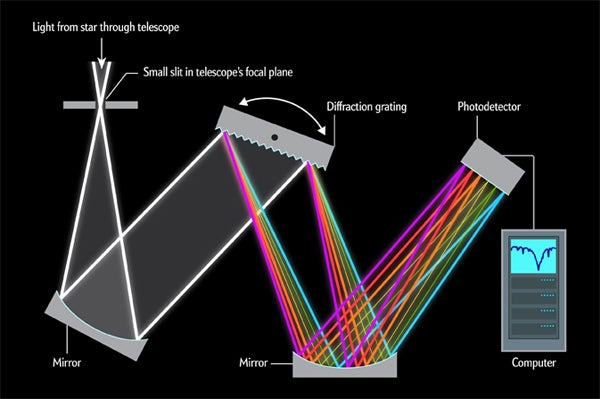
    • HPF is an astronomical spectrograph, built by Penn State University scientists, and recently installed on the 10m Hobby-Eberly Telescope at McDonald Observatory in Texas.
    • The instrument is designed to detect and characterize planets in the habitable zone — the region around the star where a planet could sustain liquid water on its surface — around nearby low-mass stars.
    • The newly confirmed planet, called G 9-40b, is the first one validated by HPF. It is about twice the size of Earth and orbits its star once every six Earth-days.

    How it works

    • A spectrograph is an instrument that splits light into its component wavelengths.
    • Scientists then measure the properties of light over a specific portion of the spectrum and draw conclusions on what is responsible for the trends they observe.

    Why need HPF?

    • Kepler’s observations alone were not enough to confirm a planet. It was possible that a close stellar companion was responsible for the dip in the star’s light.
    • Precision spectroscopic observations from HPF ruled out this possibility.
    • Shooting a high-power laser into the air, researchers generated a “laser guide star”, and subsequent observations found no evidence of blending of light or other stellar companions.
    • Finally, using HPF, an analysis of a set of radial velocities helped provide estimates for the planet’s mass.
  • Worldwide Educating for the Future Index (WEFFI) 2019


    India has jumped five ranks in the Worldwide Educating for the Future Index (WEFFI) 2019.

    About WEFFI

    • The report is published by The Economist Intelligence Unit. The report and index were commissioned by the Yidan Prize Foundation.
    • The index ranks countries based on their abilities to equip students with skill-based education.
    • The report analyses the education system from the perspective of skill-based education “in areas such as critical thinking, problem-solving, leadership, collaboration, creativity and entrepreneurship, as well as digital and technical skills.”

    Global scenario

    • Among the world’s largest economies, the US, UK, France and Russia all fell back in the index, while China, India and Indonesia took steps forward.
    • Finland was at the apex of the index, with strengths across each category followed by Sweden.

    India’s performance

    • India ranked 35th on the overall index in 2019 with a total score of 53, based on three categories – policy environment, teaching environment and overall socio-economic environment.
    • India scored 56.3 in policy environment falling from a 61.5 score in 2018.
    • India’s score of 52.2 in the teaching environment category and 50.1 in the socio-economic environment category increased significantly from 32.2 and 33.3 in 2018 respectively.
    • Earlier, India ranked 40th with an overall score of 41.2 across categories in 2018.

    What made India progress?

    • The report attributed India’s growth to the new education policy introduced by the government.
    • India’s Finance Minister Nirmala Sitharaman, in the Union Budget 2020, had highlighted a
    • The New Education Policy announced in this year budget under ‘Aspirational India’ will focus on “greater inflow of finance to attract talented teachers, innovate and build better labs.
    • The policy will focus further on skill-based education.

    Various shortcomings highlighted

    • The 2018 WEFFI report had highlighted the shortcomings in India’s education system emphasizing upon its inability to utilise the opportunity of internationalizing its higher education system.
    • A decentralized education system is another shortcoming of India’s education policy according to the 2019 report.
    • Well-intentioned policy goals relating to future skills development often do not get filtered downward, a hazard in economies such as the US and India that have large, decentralized education systems, the report said.