💥Join UPSC 2027,2028 Mentorship (July Batch) + XFactor Notes & Microthemes PDF

GS Paper: Major Crops & Cropping Patterns

  • Tilhan Mission

    The government will launch Tilhan Mission to make the country self-reliant in oilseed production.

    Why such mission?

    • India is the fourth largest vegetable oil economy in the world after the USA, China and Brazil.
    • Today, the oilseeds account for 13% of the cropped area in the country.
    • Still, India is the largest importer of palm oil in the world.

    Oilseed production in India

    • Total Oilseeds production in the country during 2019-20 is estimated at 34.19 million tonnes which is higher by 2.67 million tonnes than the production of 31.52 million tonnes during 2018-19.
    • Further, the production of oilseeds during 2019-20 is higher by 4.54 million tonnes than the average oilseeds production.
  • [op-ed of the day] The flawed spin to India’s cotton story

    Context

    This year, India is expected to be the world’s largest cotton producer, surpassing China in output. However, India’s productivity (yield per unit area), is much lower than other major cotton-producing countries.

    India’s experience with cotton

    • India is the only country growing hybrids: India is the only country that grows cotton as hybrids and the first to develop hybrid cotton back in 1970.
      • What are hybrids: Hybrids are made by crossing two parent strains having different genetic characters.
      • Greater yields: These plants have more biomass than both parents, and capacity for greater yields.
      • Require more inputs: They also require more inputs, including fertilizer and water.
      • Expensive seed production: Though hybrid cottonseed production is expensive, requiring manual crossing, India’s low cost of manual labour makes it economically viable.
      • Rest of the countries: All other cotton-producing countries grow cotton, not as hybrids but varieties for which seeds are produced by self-fertilization.
    • Key issues with the use of hybrids
      • Hybrid seed cannot be propagated over generations: A key difference between hybrids and varieties is that varieties can be propagated over successive generations by collecting seeds from one planting and using them for the next planting.
      • Purchasing the seeds is must: Hybrid seeds have to be remade for each planting by crossing the parents. So for hybrids, farmers must purchase seed for each planting, but not for varieties.
      • Pricing control to the companies: Using hybrids gives pricing control to the seed company and also ensures a continuous market.
      • Increased yield used as justification for high prices: Increased yield from a hybrid is supposed to justify the high cost of hybrid seeds.
      • However, for cotton, a different strategy using high-density planting (HDP) of compact varieties has been found to outperform hybrids at the field level.

    Cotton planting strategies

    • What other countries do?
      • Compact and short-duration varieties: For over three decades, most countries have been growing cotton varieties that are compact and short duration.
      • 5kg seeds/acre: These varieties are planted at high density (5 kg seeds/acre).
      • These varieties have 5-10 bolls per plant.
    • What is done in India?
      • Low density and long duration: Hybrids in India are bushy, long duration and planted at a ten-fold lower density.
      • 0.5 kg seeds/acre: Hybrids are planted at a lower density of 0.5kg/acre.
    • Which strategy is more beneficial?
      • The lower boll production by compact varieties (5-10 bolls per plant) compared to hybrids (20-100 bolls/plant) is more than compensated by the ten-fold greater planting density.
      • Experience of Brazil: The steep increase in productivity for Brazil, from 400 to 1,000 kg/hectare lint between 1994 and 2000 coincides with the large-scale shift to a non-GM compact variety.

    Why should India opt for short duration variety?

    • Cotton being a dryland crop: Cotton is a dryland crop and 65% of the area under cotton in India is rain-fed.
      • Advantage of short duration variety in the rain-fed area: Farmers with insufficient access to groundwater in these areas are entirely dependent on rain. Here, the shorter duration variety has a major advantage as it reduces dependence on irrigation and risk.
      • Particularly late in the growing season when soil moisture drops following the monsoon’s withdrawal.
      • This period is when bolls develop and water requirement is the highest.
    • Productivity and input costs of the varieties: It has more than twice the productivity.
      • Half the fertilizer (200 kg/ha for hybrids versus 100 kg/ha for varieties).
      • Reduced water requirement.
      • And less vulnerability to damage from insect pests due to a shorter field duration.

    Impact of Policy

    • Why India persisted with hybrids during 1980-2002
      • Two phases of policy have contributed to this situation.
      • The first phase- Before GM cotton: The answers lie with the agricultural research establishment.
      • The second phase: The phase where the question of hybrids versus compact varieties could have been considered, was at the stage of GM regulation when Bt cotton was being evaluated for introduction into India.
      • International experience not taken into account: It would not have been out of place to have evaluated the international experience, including the context of the introduction of this new technology.
      • Agro-economic conditions were not taken into account: Importantly, agro-economic conditions where it would be used should have been a guiding factor.
      • The narrow scope of evaluation: The scope of evaluation by the GM regulatory process in India was narrow, and did not take this into account.
      • Consequently, commercial Bt hybrids have completely taken over the market, accompanied by the withdrawal of public sector cottonseed production.

    Key takeaways

      • FristOutcome of technology depends upon the context: Outcome of using a technology such as Bt is determined by the context in which it is deployed, and not just by the technology itself.
        • Negative fallout: If the context is suboptimal and does not prioritise the needs of the principal stakeholders (farmers), it can have significant negative fallouts, especially in India with a high proportion being marginal and subsistence farmers.
      • SecondBetter consultation in policy: There is a need for better consultation in policy, be it agriculture as a whole or crop-wise.
        • Socioeconomic consideration in GMO risk assessment: India is a signatory to international treaties on GMO regulation (the Convention on Biological Diversity, and the Cartagena Protocol on Biosafety), which specifically provide for the inclusion of socio-economic considerations in GMO risk assessment.
        • However, socioeconomic and need-based considerations have not been a part of the GMO regulatory process in India.

    Conclusion

    Given the distress, the cotton-growing farmers are facing this is the right time to review the grounds on which Bt cotton was introduced in India.

  • Arabica Coffee

    India’s Arabica production has hit an all-time low this coffee-picking season.

    Coffee Production in India

    • Coffee is grown in three regions of India with Karnataka, Kerala and Tamil Nadu forming the traditional coffee growing region.
    • It is followed by the new areas developed in the non-traditional areas of Andhra Pradesh and Orissa in the eastern coast of the country and with a third region comprising the NE states.
    • Indian coffee, grown mostly in southern states under monsoon rainfall conditions, is also termed as “Indian monsooned coffee”.
    • The two well known species of coffee grown are the Arabica and Robusta.

    History of Coffee in India

    • In the Indian context, coffee growing started with a saint, Baba Budan who, while returning from a pilgrimage to Mecca, smuggled seven coffee beans from Yemen to Mysore in India.
    • He planted them on the Chandragiri Hills now named after the saint as Baba Budan Giri in Chikkamagaluru district of Karnataka.
  • Technology Missions in India

    Technology Missions in India

    The technological missions in India was initiated in 1987 by the Rajiv Gandhi led Congress government. Rajiv Gandhi had chosen his close aid Sam Pitroda to lead the Mission. The mission had the task to cover five critical area which were considered very important for the development of the Indian economy and society.

    The Core Focus areas were:

    The sixth goal of Dairy Production was added in the succeeding years.

    The Specific Goals of the Technology mission was


    The Progress Made

    Drinking Water: The drinking water mission identified 100,000 problem villages. Research was done, using geohydrological mapping, to determine where to drill new wells, increasing water sources.

    Many villages had some water, but did not have access to clean water. Water was tested in labs, and official standards of quality and quantity were established.

    The mission also included an effort to educate people how to repair broken pumps when they broke. Before, when pumps broke, they usually stayed broken due to lack of local knowhow. Easy to understand repair manuals were distributed in each of India’s fifteen languages, and later made available online.

    Immunization: In 1987, India had the highest amount of polio in the world. The mission met with top immunization experts decided to begin immunizing the country using an oral vaccine. As a live virus vaccine, the oral version had to be refrigerated. They developed a cold chain for handling the vaccines with industrialists to get refrigeration to all parts of India.

    The mission also launched India’s polio vaccine production capacity. In 1987, India had zero production capacity. With government backing, they began to study France and Russia’s methods. Several years later, India was producing all of their own vaccines.

    25 years later, in 2013, India was declared polio-free.

    Literacy: When the Technology Missions began, India’s literacy rate was around 50%. Several hundred million adults were illiterate, most of them women.

    The mission had the dual focus of motivating people (adults in particular) to learn, and providing materials and teachers.

    Oilseeds: India was importing one billion dollars of cooking oils each year, when large portions of Indian land are well suited to growing oil crops. Farmers did not grow these crops because they found other crops were more profitable. This was causing India costly economic situation.

    Their goal was to make farmers see the benefits of planting oilseeds.

    Kurian, who handled buffer stocks, described his plan as such: “We move into areas where there is gross exploitation and try to restructure the marketing system so that the small producer is not fleeced by middlemen or the oil kings.”

    Once the intervention on oil was complete, India was exporting oil cakes at the rate of 600 million per year.

    Telecommunication: The official goal of the telecom mission was to improve service, dependability, and accessibility of telecommunications across the county, including rural areas. This was through indigenous development, local young talent, rural telecom, digital switching networks, local manufacturing and privatization.

    Today, India has made maximum progress in providing accessible and cheap telecom services to 924 Million people.

    Dairy Farming: The goal of the dairy mission was to develop and implement technologies to improve breeding, animal health, and fodder and milk production.

    Today, India is the number one producer of milk in the world.

    After the Defeat of Rajiv Gandhi led Congress Government at the centre, the successive governments have transferred the responsibility of each of the core areas to the respective parent ministries.

    Technology Missions in Agriculture and Horticulture

    National Mission for Integrated Development of Horticulture

    A Centrally Sponsored Scheme of MIDH has been launched for the holistic development of horticulture in the country during XII Plan. The Scheme, which took off from 2014-15, integrates the ongoing schemes of National Horticulture Mission, Horticulture Mission for North East & Himalayan States, National Bamboo Mission, National Horticulture Board, Coconut Development Board & Central Institute for Horticulture, Nagaland.


    Horticulture Mission for North East and Himalayan States

    HMNEH is a part of Mission for Integrated Development of Horticulture (MIDH), being implemented for overall development of horticulture in NE and Himalayan states. The Mission covers all NE states including Sikkim and Jammu & Kashmir, Himachal Pradesh & Uttarakhand. The Mission addresses the entire spectrum of horticulture from production to consumption through backward & forward linkages.


    National Horticulture Mission

    A National Horticulture Mission was launched in 2005-06 as a Centrally Sponsored Scheme to promote holistic growth of the horticulture sector through an area based regionally differentiated strategies. The Scheme has
    been subsumed as a part of Mission for Integration Development of Horticulture (MIDH) during 2014-15.


    National Mission on Oilseeds and Palm Oil

    NMOOP envisages increase in production of vegetable oils sourced from oilseeds, oil palm & tree borne oilseeds. The Mission is implemented through three Mini Missions (Oilseeds, Oil Palm & TBOs) with specific targets.

    The strategy includes increasing Seed Replacement Ratio with focus on varietal replacement; increasing irrigation coverage; diversification of area from low yielding cereals; intercropping; use of fallow land; expansion of cultivation in watersheds & wastelands; increasing availability of quality planting materials; enhancing procurement of oilseeds and collection & processing of TBOs.


    Technology Mission on Coconut

    The Mission was launched to converge & synergize all the efforts through integration of existing programs & address the problems and bridge the gaps through appropriate programs in mission mode to ensure adequate, appropriate, timely & concurrent action to make coconut farming competitive & to ensures reasonable returns.


    Technology Mission on Oilseeds, Pulses and Pulses

    The Mission was launched 1986 to increase the production of oilseeds to reduce import and achieve self-sufficiency in edible oils. Subsequently, pulses, oil palm & maize were also brought within the purview of the Mission.

    Schemes under TMOP are:

    • Oilseeds Production Program
    • National Pulses Development Project
    • Accelerated Maize Development Program
    • Post-Harvest Technology
    • Oil Palm Development Program
    • National Oilseeds and Vegetable Oil Development Board


    National Livestock Mission

    The Mission covers all activities required to ensure improvement in livestock production systems & capacity building of all stakeholders. It covers everything for improvement of livestock productivity & support projects & initiatives subject to condition that such initiatives cannot be funded under other Centrally Sponsored Schemes

    It has 4 Sub-Missions:

    1. Livestock Development;
    2. Pig Development in NE Region;
    3. Feed & Fodder Development; and
    4. Skill Development, Technology Transfer & Extension
    5. Technology Mission on Cotton.

    The aims of the Mission are: to improve the yield and quality of cotton; to increase the income of cotton growers by reducing the cost of cultivation & by increasing the yield; to improve the quality of processing of cotton.

    It had four Mini Missions-

    I: Cotton Research and Technology Generation;

    II: Transfer of Technology and Development;

    III: Development of Market Infrastructure;

    IV: Modernization / Setting up of new G&P factories

    Technology Mission on Literacy

    National Digital Literacy Mission

    The Digital Saksharta Abhiyan (DISHA) or National Digital Literacy Mission (NDLM) Scheme has been formulated to impart IT training to 52.5 lakh persons, including Anganwadi & ASHA workers and authorised ration dealers in
    all the States/UTs so that non-IT literate citizens become IT literate so as to enable them to actively & effectively participate in the democratic and developmental process and also enhance their livelihood.


    National Mission on Education through Information and Communication Technology

    NMEICT has been envisaged as a Centrally Sponsored Scheme to leverage the potential of ICT in teaching and learning process for the benefit of all the learners in higher education institutions in any time anywhere mode.
    ​It has two major components: providing connectivity, along with provision for access devices to institutions & learners; & content generation.


    Nano Technology Mission

    The Government of India, in 2007, approved the launch of a Mission on Nano Science & Technology (Nano Mission) with an allocation of Rs. 1000 crore for 5 years.

    The Department of Science and Technology is the nodal agency for implementing the Nano Mission. Capacity-building in this area of research will be of utmost importance for the Nano Mission so that India emerges as a global knowledge-hub in this field.

    Other important Technological Missions

    Technology Missions on Indian Railways

    TMIR is a consortium of Ministry of Railways, Ministry of Human Resource Development, Ministry of Science and Technology and Department of Heavy Industry  on an investment sharing model for taking up identified railway projects for applied research and use on Indian Railways.

    It will also monitor progress of research projects of the existing Railway Research Centre, Kharagpur & other 4 upcoming Railway Research Centres sanctioned in Budget 2015-16. Thus, Railways’ investment in applied research activities will be fruitfully converted to technology development for actual use in railway working.


    Technology Mission on Railway Safety

    A Technology Mission has been launched to focus attention and drive modern technologies of monitoring, control, communications, design, electronics and materials for railway safety. It will help to initiate and incubate design & development projects of significant national importance.

    Its objective is to develop & adopt state-of-the-art safety, control and design technologies defined by needs related to Indian conditions. It will formulate and implement projects aimed towards achieving higher throughput, lower cost of transmission per unit & safer train movement.


    Technology Mission on Technical Textiles

    The Mission was announced in 2007 to address the “major constraints for improving production & consumption of technical textiles”.

    In 2008-09, 4 Centres of Excellence were set up to catalyse industry support & build capacity in the area of Geotech (geotextiles used in civil engineering applications), Protech (personal & property protective clothing), Meditech (medical textiles) and Agrotech (specialized agriculture use).

    Technology Mission on Water and Clean Energy

    Water Technology Initiative Program

    It was initiated in August 2007 aims to promote R&D activities aimed at providing safe drinking water at affordable cost and in adequate quantity using appropriate Science and Technology interventions evolved through indigenous efforts.

    Since quality is the main consideration of safe drinking water, processes which imply nano-material and filtration technologies have been focused.

    The initiative also includes the pilot testing of credible number of products and referencing of selected technologies to the social context of the application region.
    In pursuance of directives of Hon’ble Supreme Court, Technology Mission on Winning, Augmentation and Renovation (WAR) for Water has been launched in August 2009 to undertake research-led solutions, through a coordinated approach, to come out with technological options for various water challenges in different parts of the country.

    Aims and Objectives

    This pro-active India – centric ‘solution science’ endeavour aims to strengthen the R&D capacity and capability to develop the technological solutions for existing and emerging water challenges facing the country.

    1. Promote national and collaborative developmental Research to address prevalent and emerging water challenges
    2. Capacity building of research professionals and water managers
    3. Evolve methodology for development of customised solutions suited to social context
    4. Develop synergies with line departments at Central/ State level for last mile connectivity of the research findings
    5. Evolve S&T based sustainable models with industry and recommend appropriate policy inputs
    6. Conduct techno- economic-social analysis of technologies and their suitability in specific context
    7. Support Impact Assessment Studies/ development of Research Packages/ Technology Status Reports and other documentation required by different users/ agencies
    8. Upscaling and Replication of technologies/ solutions to credible scale.


    Scope and Thrust Areas

    This demand oriented user centric initiative includes development research in laboratories as well as application research in field.

    The scope of initiative covers the entire value chain of R&D right from water oriented basic and applied research, pre competitive technology development , technology based classification & assessment of technology options, pilot-demonstration of technology leads from laboratories and academic institutions assessment of available technology options to evolve a basket of technology options and mounting of technically, socially, environmentally and eventually affordable convergent solutions based on evolving, novel as well as known technologies suited to socio-economic context.

    It also envisages to nurture enabling activities such as human and institutional capacity building such as fellowships for researchers, training of water managers to enable identify and select most appropriate technology option, promoting centers of excellence for water research and nurturing nascent water technologies for last mile connectivity etc.

    The thrust areas for initiative dynamically evolve based on need for technology based solution from the users, requirement of R&D inputs by stakeholders, assessment of S&T requirements to enable achieve technology prowess in water sector etc. The thrust areas specific to call for proposals are articulated in call document uploaded on DST website periodically.

    Clean Energy Research Initiative

    It was initiated in January, 2009 the initiative aims to develop national research competence to drive down the cost of clean energy through pre-competitive translational research, oriented research led disruptive innovations & human and institutional capacity development.

    Aims and Objectives

    CERI has been envisaged to –

    1. Support upstream end of research, where knowledge, more advanced than the current practice in the industry must have a space.
    2. Develop India centric innovations developed around user needs and forge collaboration between industry and academics as much as possible and gain value for such collaborations.
    3. To develop critical mass of researchers to meet requirement of R&D professionals for clean energy.

    Scope and Thrust Areas

    The scope of initiative includes support for solar oriented fundamental research for solar devices, sub-systems and systems. The initiative supports feasibility assessment of fresh ideas/ concepts, including various emerging and disruptive technologies, for their potential conversion into useful technology/ product.

    The envisaged thrust areas are –

    • Solar energy materials
    • Solar energy devices (for user direct load applications)
    • Storage devices
    • Power electronics for grid synchronization
    • Capacity building to create critical mass for solar energy research
    • Development of systems/ subsystems for solar photovoltaic, solar thermal, storage smart energy grid and building energy efficiency.
    • Convergent Solar thermal technology solutions (25 kw to 1 MW)
    • Convergent Solar Photo Voltaic Technology solutions
    • Any other topic, considered to be of relevance to country needs.


    By
    Himanshu Arora
    Doctoral Scholar in Economics & Senior Research Fellow, CDS, Jawaharlal Nehru University
  • Soil Health Management – NMSA, Soil Health Card, etc.

    Soil Health Card – A Tool For Agri Revolution

    Launched by the central government in February 2015, the scheme is tailor-made to issue ‘Soil card’ to farmers which will carry crop-wise recommendations of nutrients and fertilizers required for the individual farms.

    Agriculture as primary activity in India

    • Agriculture since ages is the mainstay of the Indian population.
    • The story of Indian agriculture has been a spectacular one, with a global impact for its multi-functional success in generating employment, livelihood, food, nutritional and ecological security.
    • Agriculture and allied activities contribute about 18% to the GDP of India (as of 2014-15). The green revolution had heralded the first round of changes.
    • India is the second largest producer of wheat, rice, sugar, groundnut as also in production of cash crops like coffee, coconut and tea.

    What is the scope and focus of government in agriculture?

    • India is now eyeing second Green Revolution in eastern India.
    • The need for enhanced investment in agriculture with twin focus on higher quality productivity and welfare of farmers.
    • In the entire scenario, importantly the government has laid emphasis on the awareness campaign and enhanced agri knowledge for the farming community.

    Why is there a need of awareness in assessing soil health position?

    • Awareness of soil health position and the role of manures would help in higher production of foodgrains in eastern India too and this would help tackle the decline in production in central and peninsular India.
    • The growth in foodgrains, rice and wheat, from eastern India would provide an opportunity to procure and create foodgrain reserves locally.
    • This would reduce the agricultural pressure on Punjab and Haryana as well.


    Is it Gujarat’s model programme?

    • From 2003-04, Gujarat has been the first state to introduce Soil Health cards, to initiate the scientific measures for Soil Health care.
    • In Gujarat, over 100 soil laboratories were set up and the result of scheme was found quite satisfactory.
    • To start with, the agriculture income of Gujarat from Rs 14000 crore in 2000-01 had gone up to staggeringly high Rs 80,000 crore in 2010-11.

    Why did government start taking effective action on soil health card initiative?

    • According to renowned expert and the ‘father of Green Revolution’, M S Swaminathan, there is need to opt for wide range of crops cultivation.
    • The awareness of soil health conditions would only make these operations easier and more result oriented. The government can help farmers adopt crop diversification.
    • The Soil Health Card mechanism definitely aims to help herald some essential revolutionary changes and salutary effect in country’s agricultural scene.
    • Farmers would understand the fertility factor of the land better and can be attracted towards value added newer crops.
    • This would help reduction in risk in farming and also the cost of overall cultivation process would get reduced.

    Why has Soil Health Card portal been launched?

    • Some states are already issuing Soil Health Cards but, it was found that, there was no uniform norm for sampling, testing and distribution of Soil Health Cards across the states.
    • Taking a holistic view on these, the central government has thus rightly taken measures like launching of a Soil Health Card portal.
    • This would be useful for registration of soil samples, recording test results of soil samples and generation of Soil Health Card (SHC) along with Fertilizer Recommendations.
    • Soil Health Card portal aims to generate and issue Soil Health Cards based on either Soil Test-Crop Response (STCR) formulae developed by ICAR or General Fertilizer Recommendations provided by state Governments.

    How will it be implemented by Union and State governments?

    • The scheme has been approved for implementation during 12th Plan with an outlay of Rs.568.54 crore.
    • For the current year (2015-16) an allocation of Rs.96.46 crore – only for the central government share-has been made.
    • The scheme is to be otherwise implemented on 50:50 sharing pattern between Government of India and state Governments.
    • In order to improve quality of soil and ultimately for better nutrient values and higher yields.
    • Experts say while at present, general fertilizer recommendations are followed by farmers for primary nutrients, the secondary and micronutrients are often overlooked.

    Can proactive steps and such programs lead to efficient and effective agriculture? Really?

    • The government is effectively marching in quite ambitiously for a grand success of the Soil Health Card scheme and proposes to ensure that all farmers in the country have their respective Soil Health Cards by 2017.
    • In the first year of NDA regime 2014-15, a sum of Rs 27 crore was sanctioned and in 2015-16, there is an allocation of Rs 100 crore to all the states to prepare soil health cards.
    
    
  • Organic Farming – Paramparagat Krishi Vikas Yojna (PKVY), NPOF etc.

    The market for organic food in this country is likely to treble in the next four years, according to a report from business chamber Assocham and TechSci Research, a non-government body.
    source

    • What is organic farming?
    • Need for organic farming in India
    • Key characteristics of organic farming
    • Steps taken by the Government to promote organic farming in India
    • Key features of PKVY
    • Status of Organic farming in India
    • Why demand for organic products are increasing in recent years?
    • Challenges and constraints faced by Organic farming in India

    What is organic farming?

    Organic farming system in India is not new and is being followed from ancient time.

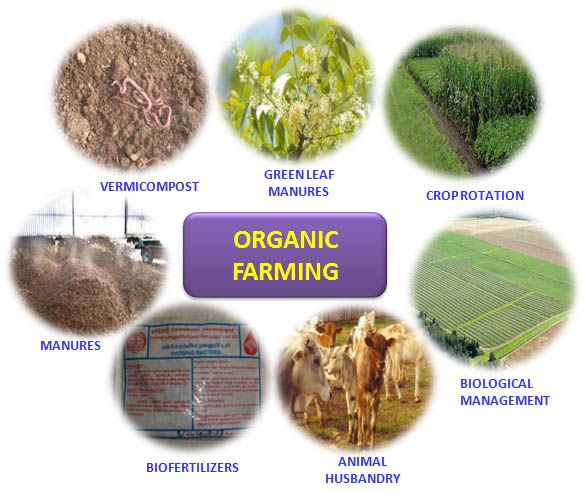
    It is a method of farming system which primarily aimed at cultivating the land and raising crops in such a way, as to keep the soil alive and in good health by use of organic wastes (crop, animal and farm wastes, aquatic wastes) and other biological materials along with beneficial microbes (biofertilizers) to release nutrients to crops for increased sustainable production in an eco friendly pollution free environment.

    Need for organic farming in India

    With the increase in population our compulsion would be not only to stabilize agricultural production but to increase it further in sustainable manner.

    The scientists have realized that the ‘Green Revolution’ with high input use has reached a plateau and is now sustained with diminishing return of falling dividends.

    Thus, a natural balance needs to be maintained at all cost for existence of life and property. The obvious choice for that would be more relevant in the present era, when these agrochemicals which are produced from fossil fuel and are not renewable and are diminishing in availability. It may also cost heavily on our foreign exchange in future.

    The key characteristics of organic farming include

    • Protecting the long term fertility of soils by maintaining organic matter levels, encouraging soil biological activity, and careful mechanical intervention
    • Providing crop nutrients indirectly using relatively insoluble nutrient sources which are made available to the plant by the action of soil micro-organisms
    • Nitrogen self-sufficiency through the use of legumes and biological nitrogen fixation, as well as effective recycling of organic materials including crop residues and livestock manures
    • Weed, disease and pest control relying primarily on crop rotations, natural predators, diversity, organic manuring, resistant varieties and limited (preferably minimal) thermal, biological and chemical intervention
    • The extensive management of livestock, paying full regard to their evolutionary adaptations, behavioral needs and animal welfare issues with respect to nutrition, housing, health, breeding and rearing
    • Careful attention to the impact of the farming system on the wider environment and the conservation of wildlife and natural habitats

    Steps taken by the Government to promote organic farming in India

    Government is promoting Organic farming through various schèmes

    1. National Project on Organic Farming (NPOF)
    2. National Horticulture Mission (NHM)
    3. Horticulture Mission for North East and Himalyan States (HMNEH)
    4. Rashtriya Krishi Vikas Yojana (RKVY)
    5. Network Project on Organic Farming of Indian Council Agricultural Research (ICAR).
    6. In addition to this, Government is implementing  a Cluster based programme   to encourage the farmer for promoting organic farming called Paramparagat Krishi Vikas Yojana (PKVY)

    Key features of PKVY

    • Groups of farmers would be motivated to take up organic farming under Paramparagat Krishi Vikas Yojana (PKVY). Fifty or more farmers will form a cluster having 50 acre land to take up the organic farming under the scheme.
    • In this way during three years 10,000 clusters will be formed covering 5.0 lakh acre area under organic farming. There will be no liability on the farmers for expenditure on certification.
    • Every farmer will be provided Rs. 20,000 per acre in three years for seed to harvesting of crops and to transport produce to the market.
    • Organic farming will be promoted by using traditional resources and the organic products will be linked with the market.
    • It will increase domestic production and certification of organic produce by involving farmers

    Status of Organic farming in India

    source

    • The current market (pulses and foodgrain the bulk) of organic food is at $500 million (about Rs 3,350 crore). It was $360 million (Rs 2,400 crore) in 2014.
    • Although nascent, the Indian organic food market has begun growing rapidly in last few years. A report by Yes Bank in 2014 said that the organic food sector is growing at about 20% in India, with more than 100 retail organic outlets in Mumbai and about 60 in Bangalore.
    • Total area under organic certification in India in 2013-14 is estimated to be 4.72 million ha with 15 per cent are certified and the rest under forest area. India has the highest number of organic producers in the world (5,97,873), mainly due to small holdings.
    • During 2013-14, India exported 135 products, realisation from which was to the tune of $403, million including $183 million contributed by exports of organic textile. Major destinations for organic products from India are the US, EU, Canada, Switzerland, Australia, New Zealand, South-East Asian countries, West Asia, South Africa, etc.
    • Soyabean (70 per cent) lead among the products exported followed by cereals and millets other than basmati (six per cent), processed food products (five per cent), basmati rice (four per cent), sugar (three per cent), tea (two per cent), pulses and lentils (one per cent), dry fruits (one per cent), spices (one per cent).

    Why is the demand for organic products increasing in recent years

    source

    Challenges and constraints faced by Organic farming in India

    • The most important issue facing organic farming is its failure to raise the productivity to keep pace with the growing population. Studies, according to a latest report in The Wall Street Journal, have shown that organic yields are far less than yields of conventional farming. As per the 2011 survey data of National Agricultural Statistics Service, a branch of the US organic farming would require 14.5 million acres more to equal conventional farming’s production of 14 staple (human-focused food crops).
    • There is a wide gap in scientific validation and research compared to the progress in the same for general agriculture. Also, there is a need to aid farmers with advisory services (technical and managerial support to form cluster and adopt best management practices).
    • Due to lack of government support, the courage needed to convert inorganic land into organic land is missing also there is  absence of globally recognized consultancy for timely guidance to farmers. Thus, huge support from states and the Centre is required.
    • Key problems faced by organic farmers during the transition phase are non-realisation of premium.

    References:

  • Pulses Production – Subramanian Committee, Eco Survey, etc.

    Pulses are important source of protein, high in fibre content and provide ample quantity of vitamins and minerals. India having the largest shares about 25% production, about 33% acreage and about 27% consuming of total pulses of the world.

    Although India is the highest producer of pulses in the world, its domestic demand outstrips domestic production. The shortfall is met from imports. In last 1 year prices of pulses have increased sharply which has made pulses unaffordable for the common man.

    In this article We will explain why despite India being the largest producer of pulses, the price of pulses have increased so rapidly and we will also discuss steps taken by government in this regard and why those steps have not achieved intended results.

    • What Factors caused increase in prices of pulses in recent years?
    • Government steps in recent years to curb pulse prices
    • Why government steps have failed to reduce prices?
    • Will creating buffer stock for pulses would be able to curb pulses price?

    source

    What factors caused increase in prices of pulses in recent years?

    • Draught: Successive back to back drought i.e failure of crops in 3 successive seasons biggest reason for current price increase in pulses
    • Low MSP: Low production of pulses due to Lower MSP prices for pulses in comparison to wheat and rice and even this low target for pulses procurement is not realized by the government, all these factors disincentives farmers towards pulse production.
    • Grown in only Marginal Land: Since pulses could be grown in marginal land, a trend has developed in India where pulses are only grown in marginal and arid lands and mostly by small farmers, all this has led to low productivity for pulse crop. Only 15% of the 25 million hectares area sown annually for pulses in India is irrigated, compared to 60% for paddy and 90-95% for wheat and sugarcane
    • Limited option of import: Option of import are limited in case of pulses since its production is restricted to few countries in Africa and Asia and even there due to lack of local demand, the production of pulses are low.
    • Rise in demand: Rise in rural income due to MNREGA and better functioning of PDS has increased demand for protein rich food including pulses in last few years.

    Steps taken by Government in recent years to curb pulse prices

    • Banned exports and future trade in pulses.
    • Created buffer stock for pulses
    • Government has signed agreement with Mozambique under which India will encourage greater production of pulses in Mozambique with an assurance that it will be purchased by India at a mutually-agreed price.
    • Allowed import of pulses at zero duty.
    • Government has imported 50000 tonnes of pulses and also subsidized the domestic cost of transport, handling and milling through a price stabilization fund.
    • Imposing essential commodities act and cracking down on hoarders and black marketer through imposition of stock holding limit.
    • Government has increased MSP price of 2 pulse crops i.e. Arhar and masur by Rs 250 per quintal.
    • Inclusion of cluster demonstrations in rice fallows for pulses cultivation in rabi season from 2015-16 under BGREI (Bringing Green Revolution in Eastern India) scheme in order to increase production of pulses in Eastern India in states of Assam, Bihar, Chhattisgarh, Jharkhand, Odisha, Eastern U.P. and West Bengal
    • A special programme for demonstration of new varieties of pulses through Krishi Vigyan Kendra (KVKs) has been taken up from Rabi 2015-16 in order to increase availability of seeds of new varieties of pulses and promote adoption of new varieties

    Why government steps failed to reduce prices?

    • Firstly steps taken against stockers are discouraging them to further invest in warehouses and cold storage. In the absence of stockiest, market prices of pulses collapse, discouraging farmers from growing them in current season.
    • Secondly by suspending future and forward market in pulses, the government has simply shot the messenger. Forward and future market give signal about likely future prices and if harnessed they could actually help the government take preventive measures.
    • Thirdly government imported just 7000 tonnes to tame prices, whereas overall consumption is 3.3 to 4 million tones.
    • Fourthly the government announced MSP norms in November 2015 , which had a limited impact on Pulse production in 2016, since by that time farmers had already made decision regarding which crop they will sow in rabi season.

    Will creating buffer stock for pulses help curb the rising pulses price?

    • Creation of buffer stock of 150000 tonnes from both domestic production and imports could reduce fluctuations in prices as the accumulated reserve could be released in market whenever price of pulses spikes
    • It could also increase production of pulses, since The Food Corporation of India, National Agricultural Cooperative Marketing Federation of India, Small Farmers’ Agribusiness Consortium and other agencies would be engaged in purchasing the crop from farmers.
    • The payment for these purchases would be made from the price stabilisation fund created by the government. This will encourage farmers to take up pulses production on a larger scale and will enable India to help achieve self-sufficiency in pulses in a few years
    • However buffer stock alone would not be able to curtail price in the long run, alongside this step the government has to take number of other steps which include

    source

    The Way forward?

    1. Create a crop-neutral incentive structure for farmers, which at present are skewed in favour of rice, wheat & sugarcane. This could be done by rapidly increasing MSP for pulses in next few years.
    2. Greater public investment in providing irrigation facilities in areas under pulse production could increase productivity of pulses
    3. Augment seed availability of pulses
    4. More allocation should be done on scientific research related to pulses varieties so that better varieties of pulses could be developed

    References: