India is considering potential institutional reforms in light of the Pannun issue and alleged assassination attempts.
The US Deputy Secretary emphasized the US seeks accountability from the Indian government and consistently requests updates on the investigation.
What is the Pannun Case?
The Pannun case involves an alleged foiled plot to assassinate Khalistani separatist Gurpatwant Singh Pannun on American soil. Here are the key points:
Background:
Gurpatwant Singh Pannun, who holds dual citizenship of the US and Canada, is wanted in India on terror charges.
In November last year, US federal prosecutors charged Indian national Nikhil Gupta with working alongside an Indian government employee in the plot to kill Pannun in New York.
Following these allegations, India appointed a high-level inquiry committee to investigate the inputs provided by the US regarding the plot.
US Position:
The US has consistently pressed India for updates on the investigation.
US Deputy Secretary of State emphasized seeking accountability from the Indian government and raised the issue directly at senior levels during discussions with Indian counterparts.
The US seeks transparency and accountability in the case.
What is the Khalistan Conspiracy?
The Khalistan movement is a separatist movement aiming to establish a sovereign state called Khalistan (Land of the Khalsa) in the Punjab region of India and Pakistan.
During the Khalistan movement, several significant events shaped its trajectory:
Operation Blue Star (1984): The Indian government launched a military operation to flush out Sikh militants who had taken refuge in the Golden Temple complex in Amritsar. The operation resulted in heavy casualties and damage to the temple, leading to widespread anger among Sikhs.
Assassination of Prime Minister Indira Gandhi (1984): In retaliation for Operation Blue Star, two Sikh bodyguards assassinated Prime Minister Indira Gandhi. This event triggered anti-Sikh riots across India, resulting in the deaths of thousands of Sikhs.
1985 Punjab Accord: The Indian government and moderate Sikh leaders reached an agreement known as the Punjab Accord. It aimed to address Sikh grievances by granting greater autonomy to Punjab and recognizing the Sikh identity. However, hardline separatists rejected this accord.
Continued Violence (1980s): The 1980s witnessed violent clashes between Sikh militants and security forces. Bombings, assassinations, and attacks on civilians became common. The insurgency intensified, leading to a cycle of violence.
Air India Flight 182 Bombing (1985): A bomb planted by Khalistani militants exploded on Air India Flight 182, killing all 329 passengers and crew. This remains one of the deadliest aviation-related terrorist acts in history.
Decline and Suppression (1990s): By the early 1990s, the Khalistan movement lost momentum due to crackdowns by security forces, factionalism, and disillusionment among Sikhs. Many militants surrendered or were killed.
Recent rise of events
Diaspora Influence: The Sikh diaspora, particularly in countries like the United States, Canada, and the United Kingdom, plays a significant role. These communities maintain strong ties to Punjab and actively advocate for Khalistan, using social media platforms to amplify their message.
Social Media: The widespread use of social media allows pro-Khalistan activists to connect, organize, and spread their ideology globally. Online platforms provide a powerful tool for mobilization and recruitment.
Leadership: Figures like Amritpal Singh have emerged as charismatic leaders, galvanizing support among disaffected Sikhs. Their influence extends beyond geographical boundaries, inspiring followers both in India and abroad.
PYQ:
[2016] Has the formation of linguistic states strengthened the cause of Indian unity?
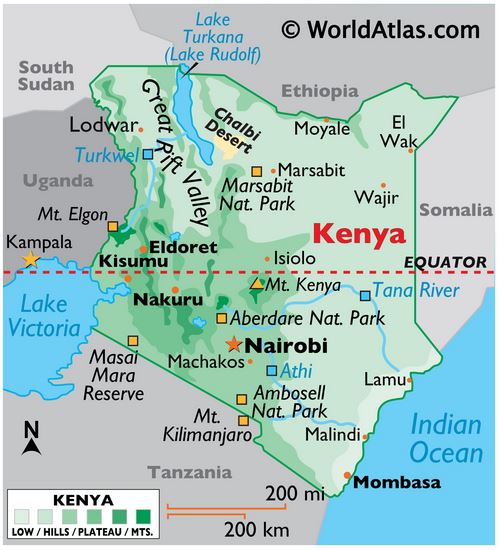
India has shown interest in partnering with Kenya to develop and expand Africa’s space capabilities for predicting and monitoring extreme weather events.
Kenya aims to be an active player in the global space economy, projected to grow significantly by 2035.
Conference Highlights and Recommendations
Conference Conclusion: Calls for more resources for sustainable space activities, including accurate weather and climate event monitoring.
Awareness and Innovations: The expo, themed ‘Space technology for societal benefits,’ aimed to raise awareness about space opportunities for societal benefits like climate change mitigation and socio-economic development.
Support for Private Sector: Experts recommended that African governments support private sector innovations for data commercialization and explore funding models to de-risk the space sector.
STEM Education: Emphasis on boosting national capabilities in space science, breaking entry barriers for women, and promoting STEM education.
India-Kenya Space Collaboration
The India-Kenya Space Collaboration particularly aims for:
Addressing Food Security: Space technology will be crucial for food security, providing accurate early warning systems for farmers and real-time monitoring for climate change mitigation.
Sustainable Development: Space technology integration offers enhanced data for informed decision-making, essential for Kenya’s sustainable development.
Regional Collaboration: Kenya is pursuing collaboration on peaceful uses of outer space with African countries such as South Africa, Angola, Rwanda, Uganda, Ethiopia, Sudan, Egypt, Algeria, Nigeria, and Ghana.
Capacity Development: Focus on developing indigenous capacity in space systems engineering and utilising space services for socio-economic development through joint projects.
Kenyan endeavours so far
Earth Observation Centre: Plans to establish a Centre for Earth Observation at the Luigi Broglio Malindi Space Centre.
International Training Centre: Partnership with the Italian Space Agency to establish a Training Centre for Space Education, enhancing national and regional capabilities.
Back2Basics: India-Kenya Relations
Historical Ties:
Early Connections: Trade between India and the Swahili Coast dates back to ancient times, as documented in the ‘Periplus of the Erythraean Sea’ (60 CE).
Colonial Era: Both nations share a legacy of struggle against colonialism, with Indian communities actively supporting Kenya’s freedom struggle.
Diplomatic Relations:
Establishment of Diplomatic Presence: India set up the office of Commissioner for British East Africa residents in Nairobi in 1948, and a High Commission was established following Kenya’s independence in 1963. An Assistant High Commission is also located in Mombasa.
High-Level Visits: Numerous high-level visits by Indian leaders, including Presidents and Prime Ministers, have strengthened bilateral ties.
Bilateral Trade:
Trade Agreement: The India-Kenya Trade Agreement signed in 1981 granted both nations Most Favoured Nation status.
Indian Exports to Kenya: Petroleum products, pharmaceuticals, steel products, machinery, yarn, vehicles, and power transmission equipment.
Kenyan Exports to India: Soda ash, vegetables, tea, leather, and metal scrap.
Investment: India is the second-largest investor in Kenya, with over 60 major Indian companies operating in sectors like manufacturing, real estate, pharmaceuticals, telecom, IT & ITES, banking, and agro-based industries.
Development Cooperation:
Development Assistance: India provides loans, credit, and developmental support to Kenya, including capacity-building initiatives such as scholarships for Kenyan students.
Agricultural Support: India aids in agrarian development by supplying machinery and facilitating technology transfer.
Healthcare Contributions: India is a key supplier of pharmaceuticals to Kenya and has supported healthcare initiatives, including donating 1.12 million doses of the Covishield vaccine in 2021.
Environmental Conservation: Cheetahs under the reintroduction project are also being brought from Kenya.
Cultural and Diaspora Links:
Indian Community: Indians have a long-standing presence in Kenya, contributing significantly to its society and economy.
Official recognition: In 2017, the Kenyan government recognized the Indian descent as the 44th tribe of the country.
International Cooperation:
Common Interests: Both nations share interests in various international forums, including the Commonwealth, Non-Aligned Movement, and Indian Ocean Rim Association (IORA).
Regional Engagement: Kenya is an active member of the African Union, with which India has long-standing connections.
PYQ:
[2015] Increasing interest of India in Africa has its pro and cons. Critically Examine.
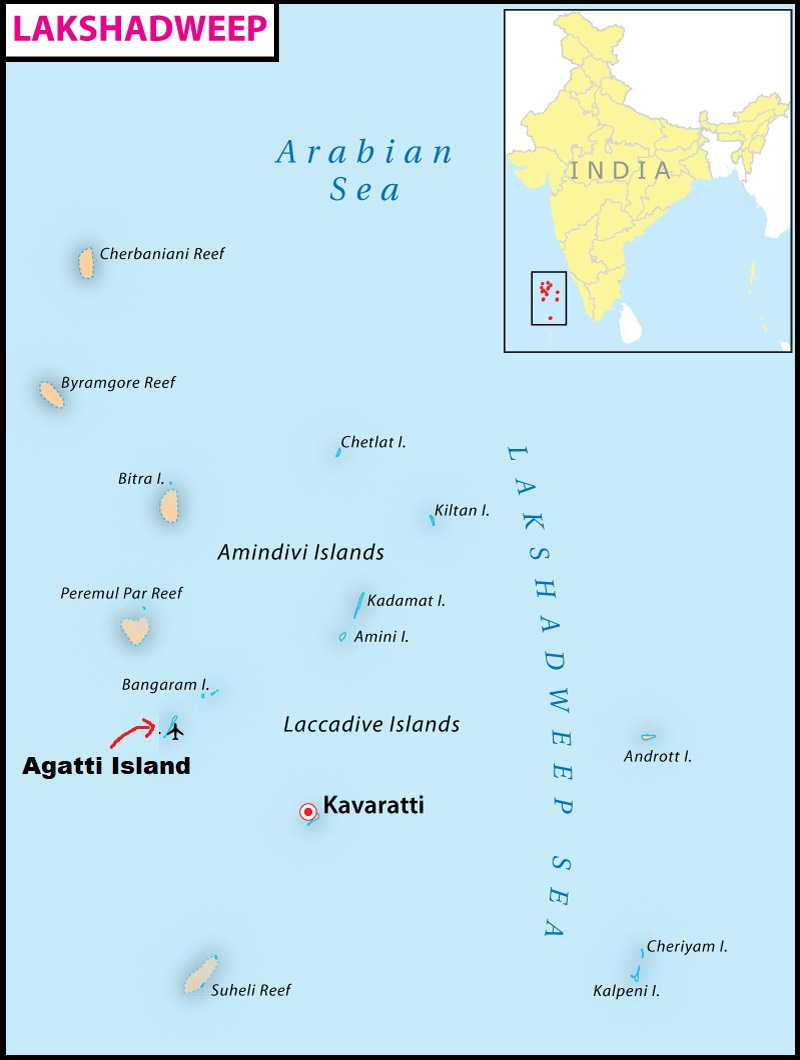
Lakshadweep has been severely affected by the fourth global coral bleaching event (GCBE4), the most severe on record according to the National Oceanic and Atmospheric Administration (NOAA).
Global Coral Bleaching Events (GCBE)
A GCBE means significant coral bleaching has been confirmed in all the ocean regions wherewarm-water corals live: the Pacific, Atlantic, and Indian Oceans in both the Northern and Southern Hemispheres.
Previous Events: Mass coral bleaching recorded in 1998, 2010, and 2014-2017.
Current Event (GCBE4): Began early 2023, with over 70.7% of the world’s coral reefs impacted by bleaching-level heat stress as of May 23, 2024.
Lakshadweep Specifics
Kavaratti atoll survey indicated an 84.6% bleaching extent, with mass bleaching observed. Previous bleaching events in Lakshadweep were 81% (1998), 65% (2010), and 41.9% (2020).
Resilient species also showing signs: Acropora digitifera, Pocillopora grandis, Isopora palifera, Pavona venosa, Hydnophora microconos.
Contributing Factors: Increased temperatures attributed to global warming; from April 1 to May 2, 2024, temperatures ranged between 29.6°C to 32.8°C.
Importance of Coral Reefs
Marine Biodiversity: Support diverse marine life including fish, invertebrates, and algae.
Coastal Protection: Act as natural barriers against erosion and storm surges.
Local Economy: Provide sustenance and livelihood for local communities and attract tourists.
GCBE-4 and Indian Context
Gujarat Coast: Monitoring coral bleaching mid-summer, with 30-40% bleaching observed annually; most corals recover.
Tamil Nadu: Lesser impact in the Gulf of Mannar due to late bleaching onset and early monsoon reducing seawater temperatures.
Temperature Reduction: The onset of monsoon has slightly reduced water temperatures in Lakshadweep.
Recovery Uncertain: The long-term health of corals depends on sustained cooler conditions and the absence of further stressors.
Back2Basics: Corals
Corals are made up of genetically identical organisms called polyps.
These polyps have microscopic algae called zooxanthellae living within their tissues in a mutualistic relationship.
The coral provides the zooxanthellae with the compounds necessary for photosynthesis.
In return, the zooxanthellae supply the coral with organic products of photosynthesis, like carbohydrates, which are utilized by the coral polyps for the synthesis of their calcium carbonate skeletons.
Corals are marine invertebrates or animals which do not possess a spine.
They are the largest living structures on the planet.
Each coral is called a polyp and thousands of such polyps live together to form a colony, which grows when polyps multiply to make copies of themselves.
Coral reefs are also called the “rainforests of the seas”.
Types of Coral
Corals are of two types — hard corals and soft corals:
Hard corals extract calcium carbonate from seawater to build hard, white coral exoskeletons. Hard corals are in a way the engineers of reef ecosystems and measuring the extent of hard coral is a widely-accepted metric for measuring the condition of coral reefs.
Soft corals attach themselves to such skeletons and older skeletons built by their ancestors. Soft corals also add their own skeletons to the hard structure over the years. These growing multiplying structures gradually form coral reefs.
Conditions Needed for Corals to Flourish
Extensive submarine platforms for the formation of colonies by the coral polyps (not more than 90m below sea level).
High mean annual temperature ranging 20-21 degrees Celsius.
Clean sediment-free water because muddy water or turbid water clogs the mouths of coral polyps resulting into their death.
Oceanic salinity ranging between 27-30 ppt.
Ocean currents and waves, as they bring food supply for the polyps.
PYQ:
2014: Which of the following have coral reefs?
Andaman and Nicobar Islands
Gulf of Kachchh
Gulf of Mannar
Sunderbans
Select the correct answer using the code given below:
Why is it that some aspirants seem to be confident about their preparation and successful in their first attempt, while the vast majority struggle attempt after attempt?
Three things stand out more than others:
Rankers have had a system in place since day zero.
Rankers developed a mindset, i.e., believing in the timetable and mock test accountability.
Rankers worked smart by taking weekly feedback from qualified mentors.
If you want results, you must approach things like a ranker, not a regular ‘go with the flow’ aspirant. You must learn to control the direction of your preparation. It all comes down to your approach.
So, What’s the difference? Actually, there are many differences:
99% of aspirants focus on completing the syllabus. Rankers focus on PYQ-based preparation.
99% of aspirants stop when they achieve a good mock score. Rankers sit with mentors to understand that the initial achievement is just a launchpad for the next step.
99% of aspirants are reactive. Rankers are proactive.
99% of aspirants want to win the mock tests. Rankers want to win in the exam, meaning they think long-term.
99% of aspirants wait for the exam result to tell their blindspots and issues; Rankers go to their mentors and take feedback.
99% of aspirants are kind of in. Rankers are all-in.
99% of aspirants focus on the outcome. Rankers focus on the process.
99% of aspirants think they are good at everything. Rankers understand their strength and weaknesses and use them to their advantage in exam.
99% of spirants see feedback as someone criticising who they are. Rankers know they have blind spots and seek out thoughtful criticism from mentors.
99% of aspirants value doing it once. Rankers value doing it consistently.
99% of aspirants focus on being right. Rankers concentrate on getting the best outcome.
99% of aspirants worry about what they see. Rankers worry about what they can’t see.
99% of aspirants blame others. Rankers accept responsibility.
99% of aspirants are intermittent. Rankers are consistent.
99% of aspirants focus on speed. Rankers focus on velocity.
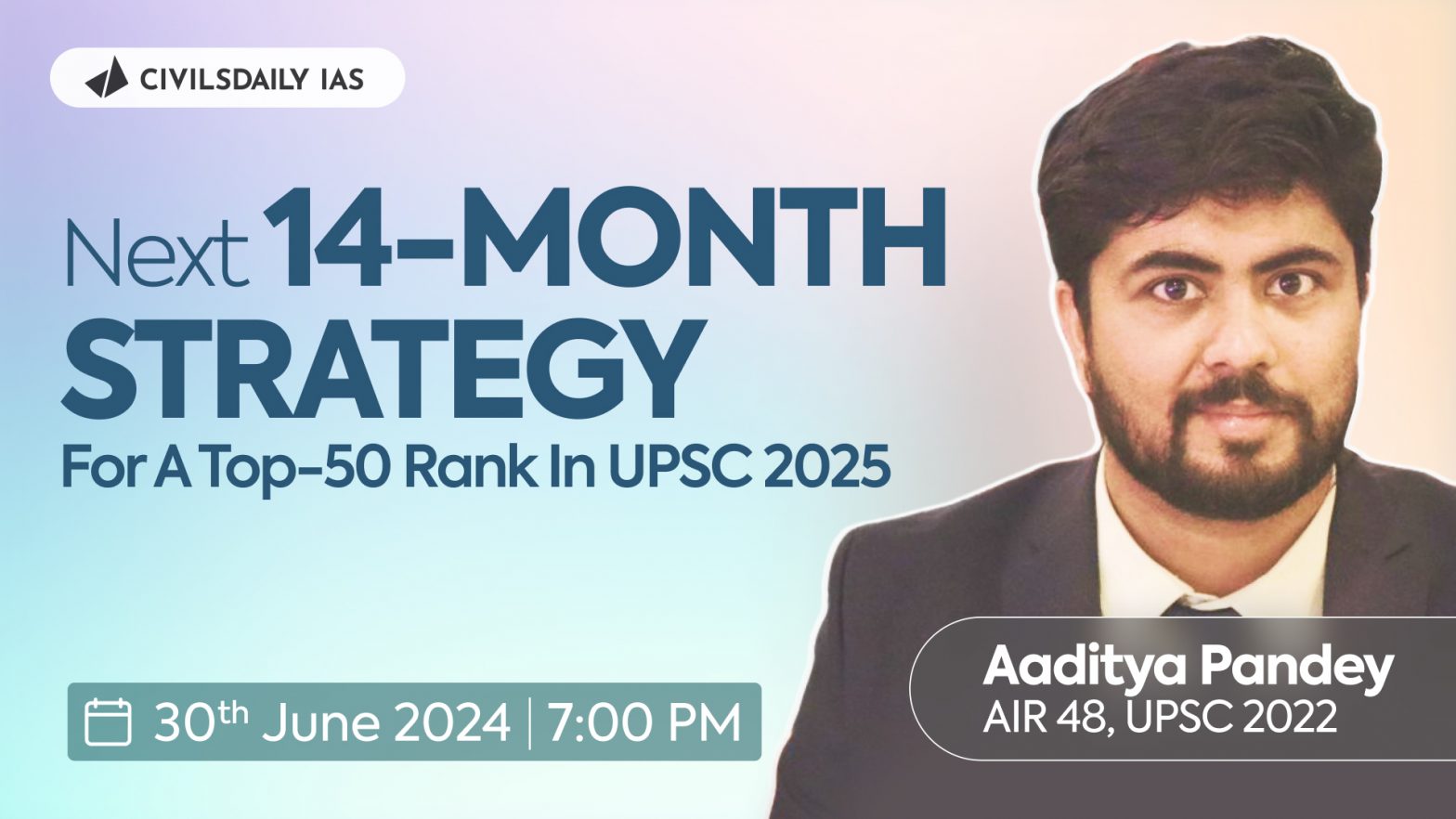
Register for AIR 48, Aaditya sir’s webinar on 14 month blueprint for UPSC 2025
Read what IAS, Aaditya Pandey, AIR 48 sir has to say about UPSC preparation and approach
“I’m Aaditya, got rank 48 in UPSC 2022. Guys, thinking and preparing for UPSC can feel exciting and a bit scary. I’ve been in your shoes, and now I want to help you through it.
Whether you are someone who can immerse themselves in preparation for 7-8 hours daily, or a UPSC warriors balancing work or college with 4-5 hours of study, remember, it’s about quality, not just quantity.
Join me on a Zoom session on 30th June 2024 at 7:00 pm. It’s for everyone – whether you’re new to UPSC or you’ve tried before but targeting a Top-50 rank in UPSC 2025.
In the session we will talk about how to start and strategize your prep for UPSC 2025. I will share precise step wise studyplan and apporach you should have for a top-50 rank. More than that I will also talk about the philosophy of UPSC prep, what UPSC expects, and how you should adapt towards meeting those expectations.
We will deal with all the aspects for a comprehensive UPSC preparation.
We’ll talk about how to start with the basics, NCERTs that aren’t just textbooks but your foundation stones. And how you will have to complement this with a disciplined approach to reading newspapers and covering CA. It’s not about skimming through; it’s about understanding the world around you, which is crucial for both Prelims and Mains.
Gradually how to progress to standard books, but do so with a strategy. You don’t just read; but analyze and understand. And here’s where the mindset plays a massive role. Transforming from an aspirant to a top ranker isn’t just about hard work; it’s about smart work, the right attitude, and persistence.
Focus on mastering answer writing should be from early on. Your notes should be concise, clear, and, most importantly, useful. You have to learn to weave current affairs with static portions seamlessly. This isn’t just preparation; it’s about building a habit, a discipline that will stand you in good stead not just for UPSC but for life.
I’ve talked to thousands of UPSC hopefuls on YouTube and through Civilsdaily. I know what you’re up against because I’ve been there. In this webinar, I’ll also share my notes with you.
See you in the webinar”
Register for AIR 48, Aaditya sir’s webinar on 14 month blueprint for UPSC 2025
A 45-minute deep dive on how to plan your UPSC 2025 strategy from scratch: Level-0 to IAS in 1st attempt
How do first attempt IAS Rankers plan their weeks, months, and year?
Insider tips that only the top IAS and IPS rankers know and apply in every attempt
By the end, you’ll have razor-sharp clarity and a clear roadmap for approaching and qualifying your UPSC 2025 exam with confidence and near-perfect certainty.
Aaditya Pandey sir, IAS, AIR 48
Join AIR 48, IAS Aaditya Pandey’s FREE Webinar on 30th June 2024, 7:00 pm
First 100 will get personalized study plan and mentorship session
(Don’t wait—the next webinar won’t be until July 24)
These masterclasses are packed with value. They are conducted in private with a closed community. We rarely open these webinars for everyone for free. This time we are keeping it for 300 seats only.
Following the 2024 election results, NDA allies Janata Dal (United) and Lok Janshakti Party (Ram Vilas) raised concerns about the Agnipath scheme and called for discussions on the matter.
What is the Agnipath scheme?
The Agnipath scheme recruits soldiers, sailors, and airmen into the Indian armed forces for a four-year term, replacing the previous system of permanent recruitment. After completing their four-year tenure, up to 25% of Agniveers can be selected for permanent positions within the armed forces.
Agniveers can obtain educational certificates and skill certifications during their service. They receive a lump sum amount upon completing their tenure but are not eligible for a pension.
Issues Associated with the Scheme
Personnel Shortage: There is a significant shortage of personnel in the ‘below officer’s rank’ cadres, exacerbated by the recruitment freeze during the COVID-19 pandemic. The Army retires around 60,000 soldiers annually but only recruits 40,000, leading to a growing shortfall.
Low Conversion Rate: The 25% conversion rate from Agniveers to regular soldiers is considered insufficient to address the personnel shortage.
Compressed Training: The four-year tenure necessitates a shorter training period, which may impact the quality of training.
Political and Social Opposition: The scheme has faced political opposition and led to violent protests in some parts of the country. Critics argue for a clause-by-clause review or complete scrapping of the scheme.
Present Scenario
As the Agnipath scheme marks two years since its implementation, the Department of Military Affairs (DMA) in the Defence Ministry is reviewing the scheme based on feedback from the armed forces.
Feedback Compilation: The Navy and Air Force have compiled their feedback, while the Army is still in the process.
Recommendations: Suggestions include increasing the intake numbers, raising the permanent recruitment rate from 25% to at least 50%, and extending the age limit for technical recruits from 21 to 23 years.
Review Process: The DMA will compile all recommendations and submit them to the Defence Ministry for potential adjustments to the scheme.
Way forward:
Enhance Educational and Skill Development Opportunities: Partner with educational institutions to provide Agniveers with advanced degrees and certifications that are recognized nationwide. Offer vocational training and skill development programs that are aligned with industry standards, improving post-service employability.
Increase Permanent Induction Rate: Raise the conversion rate of Agniveers to permanent positions from 25% to at least 50% to address the personnel shortage effectively.
After last year’s deficient monsoon, the Maharashtra government declared several parts of the state as drought-hit.
Why do different regions of Maharashtra experience varied levels of water stress?
Geographical Differences: Coastal areas receive excessive rainfall leading to flooding. Marathwada lies in the rain-shadow region, receiving significantly less rainfall (600-800 mm) compared to the western side of the Western Ghats (2,000-4,000 mm).
Topography and Soil: Marathwada has clayey black soil (regur) which retains moisture but has a low infiltration rate, leading to poor groundwater recharge. The region’s topography, with parallel tributaries and gently sloping hills, results in uneven water distribution, with valleys having perennial groundwater and upland areas facing acute water scarcity.
Impact of Climate Change: Increasing drought severity and frequency in central Maharashtra due to climate change, worsening water stress in regions like Marathwada and North Karnataka.
Why is sugarcane production not suited for regions with less rainfall?
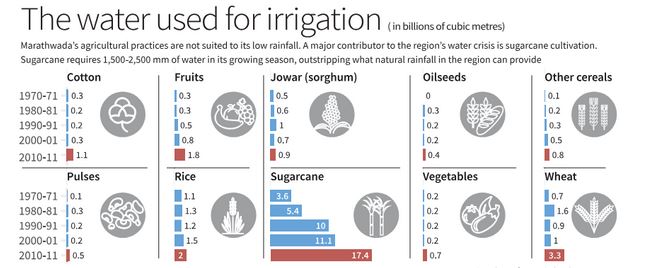
High Water Requirement: Sugarcane needs 1,500-2,500 mm of water during its growing season, which is much higher than the annual rainfall in low-rainfall areas like Marathwada.
Irrigation Demands: Sugarcane requires almost daily irrigation, consuming 61% of the region’s irrigation water while occupying only 4% of the cropped area. This heavy water usage restricts the irrigation of other crops that are more suitable for the region’s climate, such as pulses and millet.
Government Policies: Long-standing government support for sugarcane pricing and sales has encouraged its cultivation in unsuitable regions. The recent promotion of sugarcane-juice-based ethanol production exacerbates the issue, diverting water resources away from more sustainable agricultural practices.
What is meant by the rain-shadow effect?
The rain-shadow effect occurs when moist winds from the Arabian Sea rise over the Western Ghats, causing heavy rainfall on the western side. By the time these winds descend on the eastern side (Western Maharashtra and Marathwada), they lose most of their moisture, resulting in significantly lower rainfall.
Impact on Marathwada: Marathwada, located in the rain-shadow region, receives only 600-800 mm of annual rainfall, contributing to its dry climate and water scarcity issues.
Note: Marathwada and North Karnataka have emerged as the second driest regions in India after Rajasthan.
How can supply-side solutions help the situation?
Watershed Management: Building water-conserving structures such as contour trenches, earthen bunds, and gully plugs to capture and store runoff. Designing silt-trapping mechanisms to prevent soil erosion and maintain water retention structures.
Rainwater Harvesting: Implementing measures to capture rainwater runoff from agricultural fields to recharge groundwater and reduce dependency on external water sources.
Utilizing Government Programs: Leveraging funds from the Mahatma Gandhi National Rural Employment Guarantee Scheme (MGNREGS) for watershed management projects and training farmers in water conservation techniques.
Promoting Water-Efficient Practices: Encouraging the use of water-efficient irrigation methods, such as drip irrigation, to optimize water usage. Shifting to drought-resistant crops and high-value, low-water-using crops to reduce water demand and improve agricultural sustainability.
Conclusion: The state government has announced a massive Rs 59,000 crore package to transform the Marathwada region, with a focus on tackling the water crisis. This includes reviving stalled irrigation projects worth Rs 13,677 crore to make the region drought-free through water linking and diverting floodwaters to the Godavari basin
Mains PYQ:
Q Elaborate the impact of National Watershed Project in increasing agricultural production from waterstressed areas. (UPSC IAS/2019)
The newly elected National Democratic Alliance government is confronted with several longstanding and complex national security issues.
Strategic Relations with the US and Competition with China:
China’s Multifaceted Challenges: China poses an unprecedented array of interconnected challenges, including a significant naval build-up, geoeconomic clout in South Asia, and leverage in global supply chains.
Strategic Relations with the US: India must navigate its strategic partnership with the United States while managing competition with China.
Global Conflicts Impact: Distant conflicts, such as those in Ukraine and Gaza, reveal new technologies and tactics of war that could spread to India’s neighbourhood, influencing its strategic relations and defence strategies.
Challenges Involved in the near future for the Indian Government:
Decisions on Military Investments: The government must decide on key defence projects, such as building another aircraft carrier and implementing theaterisation.
Holistic National Security: There is a need to step back and consider national security holistically, rather than making piecemeal decisions that could waste resources and undermine national goals.
Managing Strategic Risks: Addressing strategic risks like climate change, pandemics, and China’s growing influence requires coordinated, long-term policy efforts.
Synchronizing Efforts: Various arms of the government, including the military and national security agencies, need to synchronize their efforts more effectively.
Blueprint for Expanding Power:
Comprehensive Strategic Assessment: A National Security Strategy (NSS) would compel the government to thoroughly review threats, opportunities, and global security trends.
Framework for Long-Term Planning: An NSS would provide a coherent framework for long-term strategic planning, helping to allocate resources effectively and develop necessary military capabilities and international partnerships.
Signaling Intent to Allies and Adversaries: An NSS would clarify India’s strategic intent, signaling its role as a net security provider in the Indian Ocean and its stance on regional security issues.
Coordinated National Security Efforts: An NSS would align the efforts of different national security agencies and military branches, fostering better coordination and integration.
Issue of Accountability:
Transparency and Accountability: An NSS would serve as a tool to ensure that the government’s policies are transparent and accountable to Parliament and the citizens.
Adherence to Political Leadership’s Intent: It would help ensure that the bureaucracy adheres to the political leadership’s strategic direction.
Public Document: A strong NSS should be a public document, endorsed by the Prime Minister, to synchronize efforts across the government and signal political intent both domestically and internationally.
Rational Decision-Making: An NSS would help identify trade-offs and opportunity costs, enabling political leaders to make informed, rational decisions for long-term national growth and security.
Conclusion: Develop a coherent strategic framework within the NSS that outlines India’s national security objectives, priorities, and methodologies for achieving them. This framework should guide decision-making on defense investments, international partnerships, and response strategies to global challenges like climate change and pandemics.
Mains PYQ:
Q What introduces friction into the ties between India and the United States is that Washington is still unable to find for India a position in its global strategy, which would satisfy India’s National self-esteem. (UPSC IAS/2019)
On Monday, June 24, the International Criminal Court (ICC) issued arrest warrants for former Russian Defence Minister Sergei Shoigu and current Chief of Staff of the Armed Forces Valery Gerasimov for “alleged international crimes” related to the Ukraine war.
Who are the Russian leaders and what effect does the move have on them?
Sergei Shoigu: Former Russian Defence Minister, key ally of Putin, led the invasion of Ukraine in February 2022, removed from his post in May 2024.
Valery Gerasimov: Current Chief of Staff of the Armed Forces, Deputy Defence Minister since November 2012, seen as the most powerful man in the government after Putin and Shoigu.
Impact on Shoigu and Gerasimov: Both have suffered reputational damage since the war began, criticized by Russian nationalists for failing to swiftly win the war against Ukraine.
What do the ICC charges say?
Charges Against Shoigu and Gerasimov: Directing attacks at civilian objects, causing excessive incidental harm to civilians or damage to civilian objects.
Responsibility: The two officials bear individual criminal responsibility for their actions, ordering the commission of crimes, and failing to exercise proper control over their forces.
Specific Acts: Missile strikes against Ukrainian electric infrastructure, constituting multiple acts against a civilian population.
What is ICC?
Establishment: Headquartered in The Hague, Netherlands, established under the 1998 Rome Statute.
Purpose: Investigates and tries individuals charged with genocide, war crimes, crimes against humanity, and the crime of aggression.
Membership: 123 countries are party to the Rome Statute, including Britain, Japan, Afghanistan, and Germany. The USA, India, and China are not members.
Function: Prosecutes heinous offences when a country’s own legal system fails to act, unlike the ICJ which deals with inter-state disputes.
Jurisdiction: Limited to offences occurring after July 1, 2002, committed in a country that ratified the agreement or by a national of a ratifying country, or cases referred by the UN Security Council.
Does ICC have the power to prosecute Russia?
Russia’s Stance: Kremlin spokesman Dmitry Peskov stated that any decision of the ICC was “null and void” due to Russia not being an ICC member.
Effect on Leaders: Putin and other leaders risk arrest if they travel to a state party to the ICC, which is obliged to arrest them under international law. This deepens Russia’s isolation from the West.
Ukraine’s Position: Ukraine is not a State Party to the Rome Statute but has accepted ICC’s jurisdiction over alleged crimes occurring on its territory under Article 12(3) of the Statute. This requires Ukraine to cooperate with the ICC without delay or exception.
Conclusion: The ICC’s charges against Russian leaders highlight significant legal and geopolitical challenges, deepening Russia’s isolation and emphasizing the need for global accountability in addressing war crimes and international conflicts.
Mains question for practice:
Q In light of the recent arrest warrants issued against Russian leaders, discuss the effectiveness and limitations of the ICC in prosecuting individuals from non-member states.15M
Q What are the two major legal initiatives by the state since Independence, addressing discrimination against Scheduled Tribes (ST)? (UPSC IAS/2017) Q Why are the tribals in India referred to as ‘the Scheduled Tribes’? Indicate the major provisions enshrined in the Constitution of India for their upliftment. (UPSC IAS/2016)
Mentors’ comment: The Meiteis and Kuki-Zos are the two major ethnic communities in Manipur engaged in a violent conflict since May 2022. The Meiteis, the dominant group in the Imphal valley, have demanded Scheduled Tribe status, which the Kuki-Zos in the hills oppose fearing loss of land and jobs. The conflict has led to over 220 deaths, thousands injured, and tens of thousands displaced, creating a humanitarian crisis.
Let’s learn!
Why in the news?
The absence of Manipur Chief Minister N. Biren Singh was notable at the high-level security meeting on Manipur convened by Union Home Minister Amit Shah in New Delhi on June 17, 2024.
Background issue:
Communities Involved: The primary conflict is between two major ethnic communities in Manipur: the Meitei and the Kuki-Zo tribes.
Violence and Casualties: The clashes have resulted in significant violence, including attacks on civilians and property. The conflict has led to a considerable loss of life, with casualties reported on both sides.
Displacement: The violence has caused widespread displacement within Manipur. Both Meiteis and Kuki-Zos have been forced to flee their homes, contributing to a humanitarian crisis in the region.
Reason: The roots of the conflict are deep-seated and include historical grievances and disputes over land, resources, and political representation.
Issues related to High-Level Security Meeting:
Exclusion from High-Level Meetings: Manipur Chief Minister N. Biren Singh was conspicuously excluded from a high-level security meeting convened by Union Home Minister Amit Shah in New Delhi on June 17, 2024.
Centralized Control: Speculations arose about an undeclared President’s Rule in Manipur, indicating that the State government’s authority in handling the ethnic clashes between Meitei and Kuki-Zo tribes has been significantly diminished.
Appointment of Officials: The Director General of Police and Security Adviser for Manipur were appointed from outside the State following the outbreak of violence, highlighting a shift in administrative control away from local authorities.
Recent challenges:
Misguided Separation Strategy: An attempt to create a buffer zone between the warring communities by dividing responsibilities between central forces and state police backfired.
Lack of Resolution Efforts: While violence temporarily subsided, underlying causes of discord between Meiteis and Kuki-Zos were not addressed, allowing tensions to persist and escalate unpredictably.
Presence of Security Forces: Despite a large deployment of around 70,000 personnel, the strategy has focused on managing rather than resolving the conflict, leading to sustained distrust and communal tensions.
Impact on Meiteis and Kuki-Zos communities:
Casualties and Displacement: Official figures report 225 deaths, with significant displacement and mutual ethnic cleansing affecting both Meiteis and Kuki-Zos communities.
Blurred Victim-Perpetrator Lines: Over time, the distinction between victims and perpetrators has become less clear, complicating reconciliation efforts and deepening communal divisions.
Humanitarian Impact: The conflict has exacted a heavy toll on lives and properties, necessitating empathy and shared acknowledgement of suffering as a basis for reconciliation and eventual peace-building.
Way forward:
Inclusion of Local Leadership: Ensure the meaningful participation of Manipur Chief Minister N. Biren Singh and local community leaders in high-level security meetings and decision-making processes. This can help in fostering trust and ownership of initiatives aimed at resolving the conflict.
Address Root Causes: Conduct a comprehensive assessment to identify and address the underlying causes of ethnic tensions, such as historical grievances, competition over resources, and political representation. Develop policies and initiatives that aim at long-term reconciliation rather than short-term management of conflict.
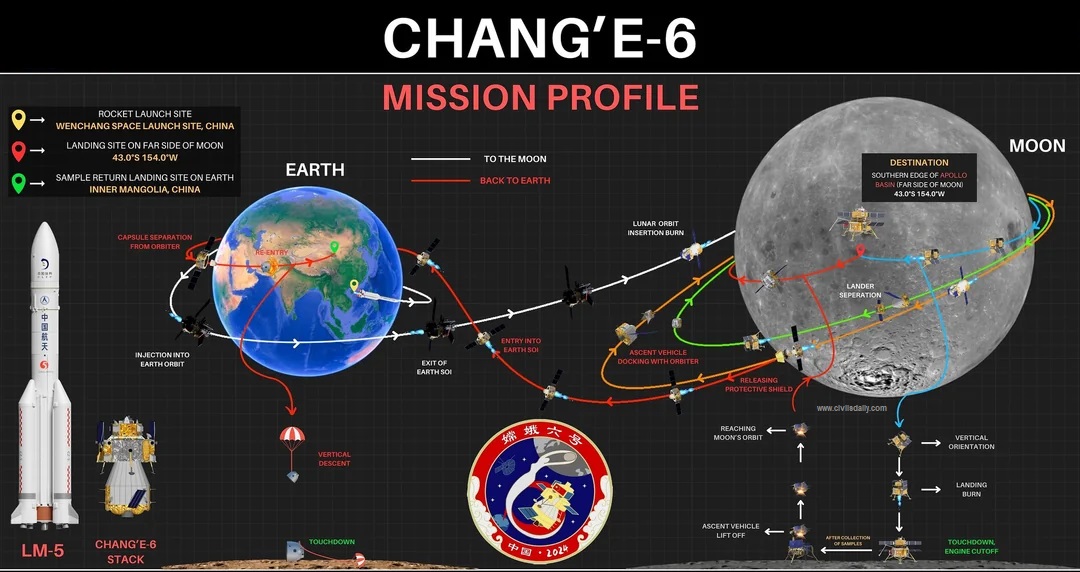
On June 25, Chang’e-6 became the world’s first spacecraft to bring back samples from the far side of the Moon.
Chang’e-6 successfully returned with samples from the lunar far side, making China the first country to achieve this feat.
About Chang’e-6 Mission
The mission lasted 53 days, starting with a launch on May 3, 2024, and ending with the return capsule landing on June 25, 2024.
The lander descended into the South Pole-Aitken basin, one of the largest impact basins in the solar system, believed to contain material from the lunar mantle.
The lander used robotic scoops and drills to collect about 2 kilograms of lunar material, including both surface soil and subsurface samples.
Components of Chang’e-6
Lander: Equipped with drills and scoops for sample collection.
Ascender: Transported samples from the lunar surface to lunar orbit.
Orbiter: Carried the samples from lunar orbit back to Earth.
Returner: Brought the samples safely back to Earth.
Collaboration and Payloads
The mission carried instruments from international partners, including:
French DORN: Studied lunar dust and volatiles.
Italian INRRI: Measured distances using a retroreflector.
Swedish NILS: Detected negative ions on the lunar surface.
Pakistani ICUBE-Q CubeSat: Imaged the lunar surface and obtained magnetic field data.
Scientific Goals
Sample Analysis: Scientists aim to learn more about the Moon’s internal structure and the differences between its near and far sides.
China’s Lunar Exploration Program
Chang’e-6 follows previous missions under China’s Lunar Exploration Program, marking the next step in incremental technological advancements.
Phases of Exploration: The program has four phases:
First Phase: Reaching lunar orbit, completed by Chang’e 1 (2007) and Chang’e 2 (2010).
Second Phase: Landing and roving, achieved by Chang’e 3 (2013) and Chang’e 4 (2019).
Third Phase: Sample collection and return, accomplished by Chang’e 5 (2020) and Chang’e 6 (2024).
Fourth Phase: Developing a robotic research station near the Moon’s South Pole, aiming for crewed lunar landings in the 2030s.
Previous Lunar Sample Missions
Apollo 11 Mission (1969): The US mission brought 22 kg of lunar material, including 50 rocks.
Luna 16 Mission (1970): Soviet robotic mission brought lunar samples to Earth.
Chang’e-5 Mission (2020): Predecessor to Chang’e-6, returned 2 kg of lunar soil from the near side.
Significance of Sample Return Missions
Laboratory Analysis: Allows the use of sophisticated instruments to study the chemical, isotopic, mineralogical, structural, and physical properties of samples.
Long-term Preservation: Samples can be preserved and re-examined by future generations with advanced technology.
Technological Feat: Recovering samples from the far side is a significant technological achievement.
Step Towards Human Exploration: Success of Chang’e-6 is seen as a step towards China’s goal of landing astronauts on the Moon by 2030.
Launch Pad for Deep Space: The Moon could serve as a base for future deep space missions and extraterrestrial exploration.
Outcome: New Lunar Race
Global Participation: India, China, Japan, the US, and Russia launched lunar missions in 2023.
Future Missions: Over 100 Moon missions by governments and private companies are expected by 2030.
Long-term Goals: Unlike the 20th-century space race, today’s missions aim to establish a long-term presence and use lunar resources.
India’s Chandrayaan-4 Mission
Chandrayaan-4, under development by ISRO, will also be a sample return mission to be launched tentatively by 2028.
Chandrayaan-3 landed near the Moon’s South Pole last year, about 600 km from the target area for Chandrayaan-4.
PYQ:
[2016] Discuss India’s achievements in the field of Space Science and Technology. How the application of this technology helped India in its socio-economic development?
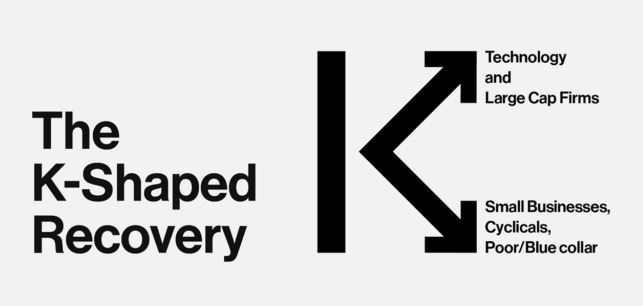
India is experiencing a K-shaped recovery, with uneven growth patterns. This recovery is causing divergent inflation trends, with food and rural prices rising faster than other goods and services, and urban inflation.
What is K-Shaped Recovery?
A K-shaped recovery is an economic scenario in which different sectors, industries, or groups within an economy recover from a recession at markedly different rates.
This results in a divergent economic recovery pattern, with some parts of the economy experiencing robust growth and others continuing to struggle or even decline.
Features of K-Shaped Recovery
Divergent Recovery Rates: Certain sectors, such as technology and finance, may recover quickly and strongly. Other sectors, like hospitality and retail, may continue to struggle or recover much more slowly.
Income Inequality: High-income individuals and businesses may see significant improvements in their financial situations. Low-income individuals and small businesses may face prolonged financial hardships.
Sectoral Disparities: Industries that can adapt to remote work or have online business models (e.g., tech, e-commerce) thrive.
Indian Context: Consumption Patterns Post-Pandemic
High-End Goods Demand: Post-pandemic recovery is driven by increased demand for higher-end goods and services.
Mass Consumption Items: Lower-income households’ consumption of mass-market items remains relatively subdued.
Contrast Inflation Rate:
Rural vs. Urban Inflation: Rural inflation is outpacing urban inflation.
Food Prices vs. Other Goods: Food price inflation is higher compared to inflation in other goods and services.
Goods vs. Services Inflation: Goods inflation is higher than services inflation.
Input vs. Output Prices: Input prices are rising faster than output prices.
Policy Implications
Sensitive Policymaking: Government policies need to be sensitive to the impact on different groups affected by supply-side shocks.
Careful Planning: Reforms should be carefully explained and planned to mitigate adverse impacts.
PYQ:
[2021] Do you agree that the Indian economy has recently experienced V-shaped recovery? Give reasons in support of your answer.
The Space Variable Objects Monitor (SVOM) satellite jointly developed by China and France was launched from the Xichang Satellite Launch Center.
About Space Variable Objects Monitor (SVOM)
The SVOM is designed to study gamma-ray bursts (GRBs) resulting from explosive cosmic events like black hole births and neutron star collisions.
It is the first astronomy satellite developed jointly by China and France, following their collaboration on an oceanographic satellite launched in 2018.
Importance of Studying Gamma-Ray Bursts (GRBs)
GRBs are highly energetic bursts of gamma rays, lasting from less than a second to several minutes, occurring in distant parts of the universe.GRBs can erupt with a luminosity a quintillion times that of the Sun.
Types of GRBs:
Short GRBs: Result from collisions of neutron stars or a neutron star with a black hole, lasting less than two seconds, often followed by kilonovas.
Long GRBs: Result from the explosive deaths of massive stars, lasting two seconds or longer.
Mission and Objectives of SVOM
Primary Objective: To search for and study GRBs across the universe.
Data Collection: Measure and analyze electromagnetic radiation properties of GRBs.
Scientific Goals: Unlock mysteries about the universe’s evolution and gravitational waves, which are often associated with neutron star collisions.
Real-time Detection: Transmit GRB data to ground control within about one minute, enabling coordinated observations with ground-based stations globally.
Features and Capabilities of SVOM
Satellite Specifications: Weighs 930 kg and is equipped with four payloads, two developed by France and two by China.
French Contributions: ECLAIRs and MXT telescopes to detect and capture GRBs.
Chinese Contributions:
Gamma Ray Burst Monitor (GRM): Measures the spectrum of GRBs.
Visible Telescope (VT): Detects and observes visible emissions immediately after a GRB.
Orbit Details: Placed in a low Earth orbit at an altitude of 625 km, with an orbital period of 96 minutes.
Significance of SVOM’s Findings
Early Universe Insights: Aim to detect the earliest GRBs, providing information on the universe’s early stages and evolution.
Kilonova Detection: Capability to search for kilonovas, enhancing understanding of stellar evolution and the origin of heavy elements like gold and silver in the universe.
PYQ:
[2019] Recently, scientists observed the merger of giant ‘blackholes’ billions of light-years away from the Earth. What is the significance of this observation?
(a) ‘Higgs boson particles’ were detected.
(b) ‘Gravitational waves’ were detected.
(c) Possibility of inter-galactic space travel through ‘wormhole’ was confirmed.
(d) It enabled the scientists to understand ‘singularity’.
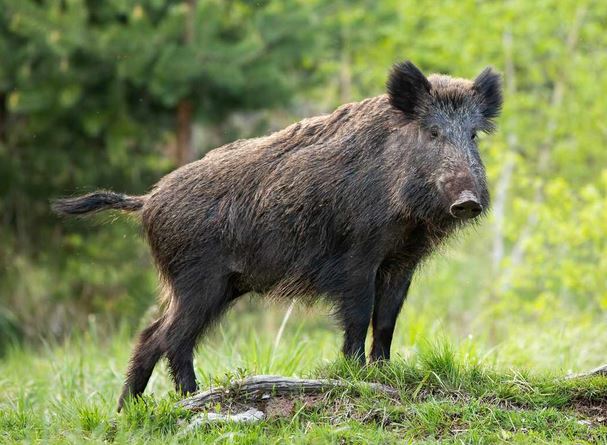
The Tamil Nadu government has approved the controlled hunting of wild boars causing distress to farmers near forest areas.
Presently, Wild boars are NOT listed as Vermin under the Schedule V of the Wildlife Protection Act, 1972.
About the Farmers’ Conflict Resolution Committee
The Committee includes representatives from the Departments of Forest, Revenue, Agriculture, and Horticulture, along with scientific experts and wildlife enthusiasts.
Objective: The committee was formed to study the impact of raids by elephants and wild pigs on agricultural crops.
Implementation Protocol:
Approval Process: The culling will require approval from a local three-member checking body.
Composition of the Checking Body: The body will include a forester or forest guard, the Village Administrative Officer, and the ward member.
Supervision: Culling operations must be conducted in the presence of these three members.
Zoning for Culling Operations
Areas adjacent to reserve forests will be divided into three zones:
Zone A: Within one kilometre from forest limits.
Zone B: One to five kilometres from forest limits.
Zone C: Beyond five kilometres from forest limits.
Restrictions: Shooting of wild pigs is prohibited within five kilometres of the reserve forest (Zones A and B).
Scientific Approach to Culling:
Scientific Methodology: The shooting of wild boars must adhere to a scientific approach, considering the intensity and frequency of conflict incidents.
Expert Concerns: Experts highlight the ecological role of wild boars and caution against indiscriminate killing.
About Indian Wild Boar
Details
Scientific Name
Sus scrofa cristatus
Habitat and Distribution
High grass, bushes, forests, high crops, dense forests, grasslands, scrublands, agricultural areas; Indian subcontinent, various altitudes from sea level to mountains
Gestation: around four months; Litter size: multiple piglets
Ecological Role
Seed dispersal aiding plant propagation;
Important prey species maintaining predator-prey balance in the ecosystem
Conservation Status
IUCN Red List: Least Concern
Wildlife (Protection) Act, 1972: Schedule III
Proposed reclassification to Schedule V (vermin) due to agricultural damage.
Present Culling
Section 11-B (1) of the Wildlife (Protection) Act, 1972 allows the Chief Wildlife Warden to issue special orders to kill dangerous wild animals.
Back2Basics: Schedule III of WPA, 1972
Protection Level: Lesser degree of protection compared to Schedule I and II.
Prohibition: Hunting of these species is prohibited except under special circumstances defined by the Act.
Penalties: Violations related to these species attract penalties, though they are less stringent than those for higher schedules.
Species Listed in Schedule III: As per the latest available data, the following are examples of species listed under Schedule III of the Wildlife (Protection) Act, 1972:
Chinkara (Gazella bennettii): Also known as the Indian Gazelle, found in various parts of India.
Blackbuck (Antilope cervicapra): A species of antelope native to India.
Blue Bull (Boselaphus tragocamelus): Also known as the Nilgai, the largest Asian antelope.
Indian Wild Boar (Sus scrofa cristatus): A subspecies of the wild boar native to the Indian subcontinent.
Sambar (Rusa unicolor): A large deer native to the Indian subcontinent.
Legal Provisions:
Hunting Prohibition: Hunting any animal listed under Schedule III is prohibited except for purposes like scientific research, education, and when permitted by the authorities under specific conditions.
Penalties: The penalties for offenses involving Schedule III animals include imprisonment up to three years, or a fine up to Rs. 25,000, or both.
PYQ:
[2017] In India, if a species of tortoise is declared protected under Schedule I of the Wildlife (Protection) Act, 1972, what does it imply?
(a) It enjoys the same level of protection as the tiger.
(b) It no longer exists in the wild, a few individuals are under captive protection; and now it is impossible to prevent its extinction.
(c) It is endemic to a particular region of India.
(d) Both B and C stated above are correct in this context.
It was first issued in 1917 by the Dogra Maharaja of J&K, the ordinance remains in effect.
The ordinance mandates death or rigorous imprisonment for life, or imprisonment up to 10 years with a fine for aiding the enemy or engaging in actions detrimental to Indian military operations.
Its Evolution:
Post-Partition Incorporation: The ordinance was retained as a law in J&K post-1947 and amended over time.
Changes Post-2019: Following the repeal of Article 370, the Jammu and Kashmir Reorganisation Act retained the Enemy Agents Ordinance and other security laws while replacing many state laws with Indian laws, such as the Indian Penal Code.
Trial Procedures under the Ordinance
Special Judge Appointment: Trials are conducted by a special judge appointed by the government in consultation with the High Court.
Legal Representation: Accused individuals can only engage a lawyer if permitted by the court.
No Appeal Provision: Verdicts can only be reviewed by a High Court judge chosen by the government, with the decision being final.
Publication Bar: Unauthorized disclosure or publication of trial information is punishable by imprisonment up to two years, fine, or both.
Notable Application of the Ordinance
Notable Cases: Many Kashmiris have been tried under the ordinance, including Maqbool Bhat, the founder of Jammu Kashmir Liberation Front, who was hanged in Tihar Jail in 1984.
Current Context: The Enemy Agents Ordinance continues to be a critical tool in addressing militant assistance in J&K, reflecting the stringent legal measures in place to maintain security.
PYQ:
[2019] The banning of ‘Jamaat-e-Islami’ in Jammu and Kashmir brought into focus the role of over-ground workers (OGWs) in assisting terrorist organizations. Examine the role played by OGWs in assisting terrorist organizations in insurgency affected areas. Discuss measures to neutralize the influence of OGWs.
[2019] Indian government has recently strengthen the anti-terrorism laws by amending the unlawful activities (Prevention) Act, (UAPA), 1967 and the NIA Act. Analyze the changes in the context of prevailing security environment while discussing scope and reasons for opposing the UAPA by human rights organisations.
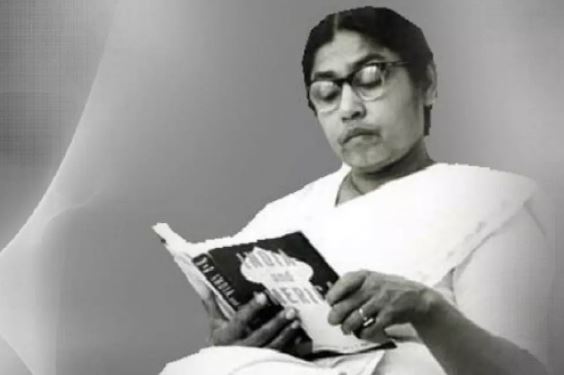
June 25 is the birth anniversary of “Sucheta Kripalani”,India’s first woman Chief Minister.
Who wasSucheta Kripalani?
Sucheta Kripalani was born on June 25, 1908, in Ambala, Punjab. Daughter of S. N. Majumdar, a government surgeon. She studied at Indraprastha College for Women and St. Stephen’s College, University of Delhi.
She married J. B. Kripalani, a former Congress president and Gandhian, in April 1936 against familial and Mahatma Gandhi’s wishes.
Political Journey and Chief Ministership
Early Career: Joined BHU to teach Constitutional History in 1929, participated in Satyagraha, and was imprisoned in 1940.
Congress Role: Organized the foreign affairs wing of AICC and later founded the All India Mahila Congress.
She won by a margin of 99 votes over Kamalapati Tripathi and was sworn in as CM on October 2, 1963.
Contributions and Achievements
Educational Reforms: Waived school fees for girls up to Class 10 from January 1965. Established Meerut University and Kanpur University.
Social Reforms: Increased reservation for SCs in government jobs to 24% in Group C and 45% in Group D until the 18% target was achieved.
Infrastructure Developments: Established a Sainik School in Ghorakhal, a new medical college in Meerut, and the UP Awas Vikas Parishad. She created the post of agriculture production commissioner.
Crime Control: Neutralized many dacoits in the Chambal Valley with the help of the Police Radio Unit.
Anti-Corruption Stance: Emphasized the need to tackle growing corruption in public services, supporting the Union government’s initiative to appoint a vigilance commission.
Multifaceted Contributions: Involved in relief activities for the 1934 Bihar earthquake, Noakhali riots, Tibetan refugee rehabilitation, and the Indo-Pak War of 1971.
Criticism and Response: Faced criticism for being influenced by English, despite being a staunch supporter of Hindi. Advocated for creating an atmosphere for Hindi in governance.
Later Life and Legacy
Post-CM Career: Served as Lok Sabha MP until 1971.
Impact: Her tenure as CM and various social contributions left a lasting impact on Indian politics and society, especially in terms of women’s leadership and social reforms.
PYQ:
[2011] With reference to the Indian freedom struggle, Usha Mehta is well-known for:
(a) Running the secret Congress Radio in the wake of the Quit India Movement
(b) Participating in the Second Round Table Conference
(c) Leading a contingent of the Indian National Army
(d) Assisting in the formation of Interim Government under Pandit Jawaharlal Nehru
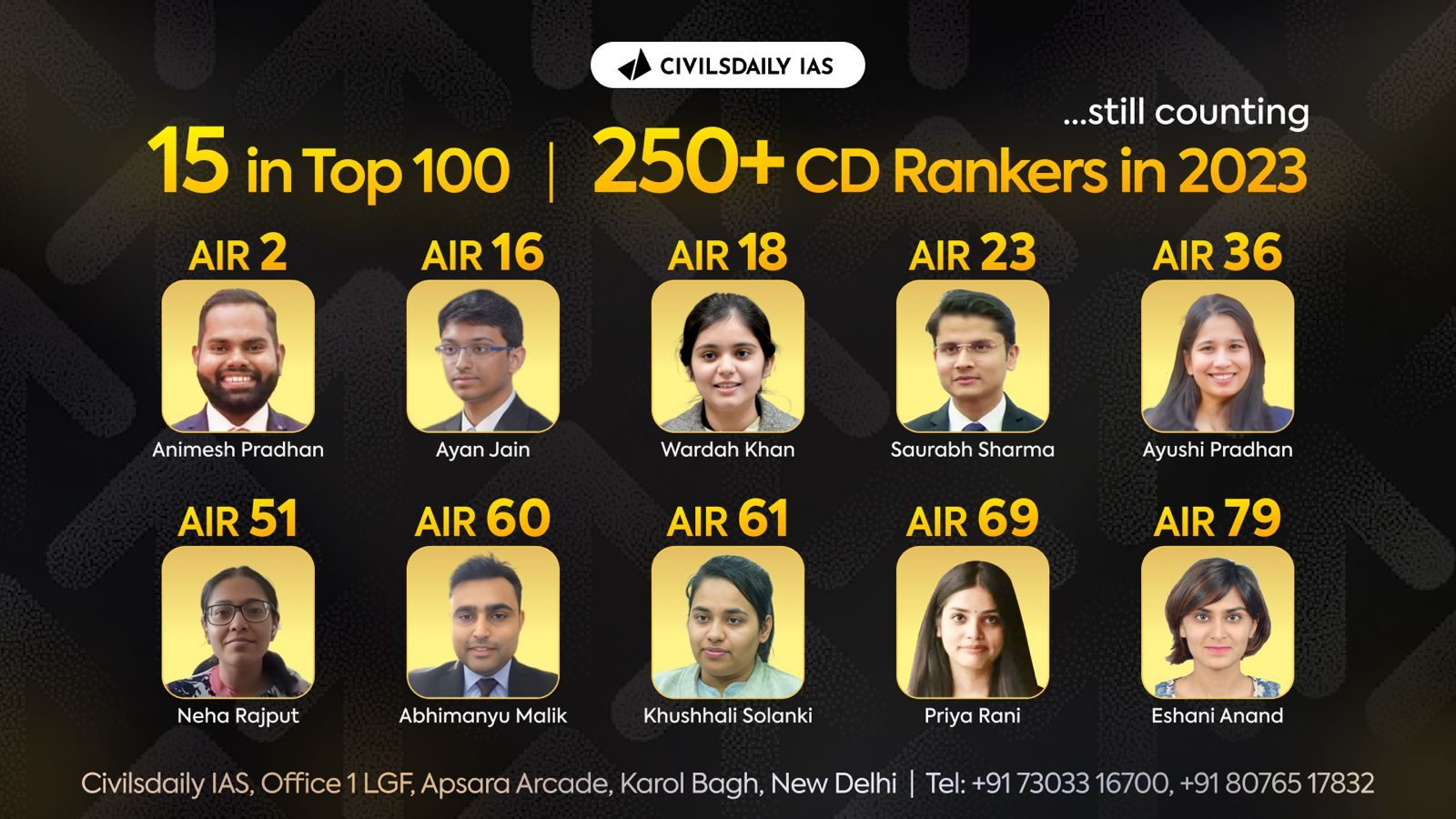
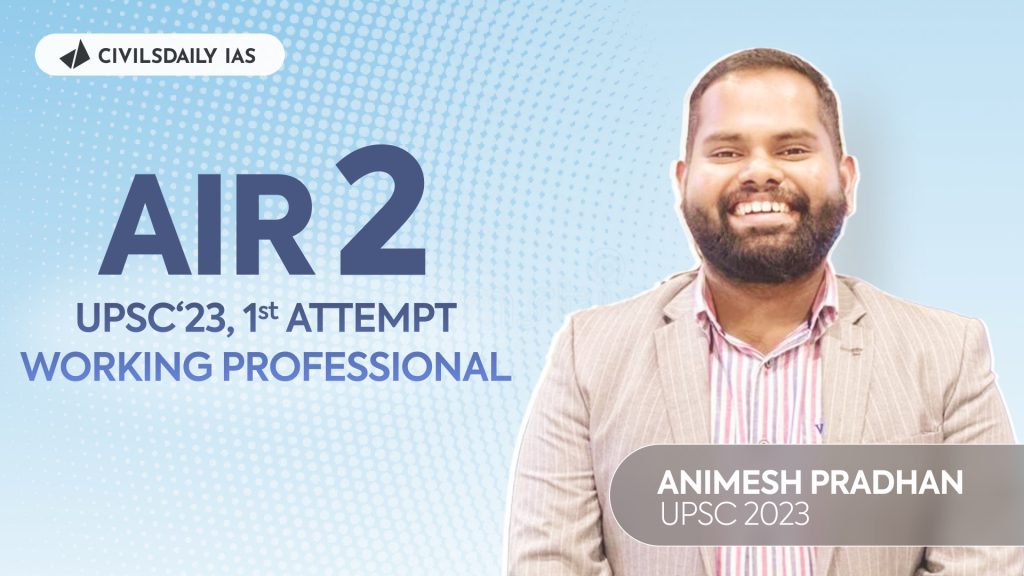
This year’s Smash Mains Program has AIR-2 Animesh Pradhan as Super Mentor. The same program that helped him get 473 marks in GS Mains.
As a Super Mentor, he will hold lectures and copy discussion sessions. Smash Mains Program is not just a Mains Test Series. It includes something very critical. and impactful i.e. Classes to cover various important and recurring themes in Mains exam.
First, let’s understand why we must rethink the Mains preparation and how Smash Mains differs from all other Mains Programs.
Traditional methods believe that mains prep is just about Answer Writing. In reality, that is just 20% of overall Mains prep.
They don’t focus on Notes, Revision, Answer Thinking, Enrichment, Structure etc.
Conventional wisdom doesn’t work, and it worries us that so many Mains aspirants still follow outdated methods and obsolete, ‘far from reality’ programs.
Conventional wisdom is lazy thinking. It’s looking at old and obsolete ways and believing that’s what will work in the future, too. Continuing to rely on outdated methods is similar to expecting a horse and carriage to compete with a modern car.
It’s looking at average notes, incomplete revision, and existing approaches to Mains Prep and then believing that’s the best you can do.
The opposite of conventional wisdom is first principles. Rethinking the whole Mains Prep from scratch and building from there to align with UPSC requirements. Rigorously testing each Mains question and answer in a mock test and giving sharp feedback to continuously improve the score.
If you still believe in those methodologies, then Smash isn’t for you. But if you have tried old ways and realized their futility, then apply for Smash Mains today.
Before joining any test series, get your copies evaluated by our Mentors
Animesh’s command on answer writing grew month after month with each test. We did a detailed session discussing his evolution.
He didn’t follow conventional wisdom. He knew precisely what to focus on and what was important, and this is what he brings to the students of Smash Mains this year.
Smash Mains is the entire Mains program re-engineered.
Not putting Penguins among the Fowls – You already know how to write an average answer (you’re missing it by a few marks actually). You want to know how to increase your score from 90 to 110-115. The approach followed by other institutes in their Test series is the same for a veteran and a complete newbie and here lies the problem. Without personalized one-to-one interaction, it will be difficult for you to rectify these minute yet very important shortcomings.
Evaluation is a strength of this program and we put it on a high priority. Arvind sir himself is involved in the process, unlike other institutes where evaluation is outsourced to those who themselves might not have appeared for mains (It’s bizarre). It shouldn’t be based on ‘model answers’ as there are 3-4 ways of approaching an answer. Only a seasoned player will be able to go beyond these model answers and be able to appreciate your approach (If it’s innovative) even if it differs from the model answers provided.
Test copies get checked in a time-bound manner. The questions, answers, and material provided are of the highest quality.
Always on time and insightful discussions end with a reality check and motivation to perform better in the next test.
Emphasis on execution and utilization of knowledge—Mains is not only about knowledge but also about optimally expressing the relevant knowledge.
Our mentor’s interventions are highly specific and not generalized. Sitting right in front of you, he walks you through each question. He is always there, and he will not let you lose your focus.
Q Climate change is a global problem. How India will be affected by climate change? How Himalayan and coastal states of India will be affected by climate change? (UPSC IAS/2017)
Q Should the pursuit of carbon credits and clean development mechanisms set up under UNFCCC be maintained even though there has been a massive slide in the value of a carbon credit? Discuss with respect to India’s energy needs for economic growth.(UPSC IAS/2014)
Mentor comment: The Indian Himalayan Region is crucial for its rich biodiversity, serving as a habitat for diverse flora and fauna, including endangered species. It plays a vital role in regulating regional and global climate patterns, hosting the source of major rivers essential for water supply and agriculture. Culturally and spiritually significant, it supports the livelihoods of indigenous communities, offering opportunities for tourism, research, and sustainable development.
Let’s learn!
Why in the News?
The dissonance between the special development needs and the development model being pursued in the Indian Himalayan Region.
Supreme Court’s Stance on Sustainable Development
Rights-Based Regime: Recent Supreme Court judgments indicate a move towards recognising sustainable development as a fundamental right.
Case Highlight: In the State of Telangana and Others vs. Mohd. Abdul Qasim (2024), the Court emphasised the need for an ecocentric view of the environment.
Trusteeship of Earth: The Court stated that humanity must act as trustees of the Earth, respecting the rights of natural entities like rivers, lakes, and mountains.
A model of destruction
Hydroelectric Power Stations: Rampant construction of hydroelectric power stations without consideration for the rights of rivers and streams.
Road Widening: Reckless widening of hill roads to four lanes, leading to frequent damage during river floods.
Construction Violations: Rampant construction violates norms and regulations, including building on river beds, flood plains, steep slopes, seismic zones, and landslide-prone areas.
Environmental Disasters: Instances like the Teesta dam breach in Sikkim and monsoon floods and landslides in Himachal Pradesh in 2023 highlight the destructive impact of the development model on the environment, ecology, and local communities.
Need for a Balanced Development Approach
Ecocentric and Anthropocentric Views: Both approaches require aligning growth aspirations with environmental science and the rights of people and nature.
Supreme Court’s Guidance: The Court’s judgments stress the intersectionality of environmental protection and human rights.
Carrying Capacity and Developmental Rights: Judicial Precedence
Carrying Capacity Studies: In Ashok Kumar Raghav vs Union of India (2023), the Supreme Court sought a way forward to manage the carrying capacity of Himalayan states.
Right to a Clean Environment: In the Great Indian Bustard case, the Court linked the right to life and equality with the right to be free from adverse climate impacts.
Significance of Infrastructure and Climate Resilience
Sustainable Infrastructure: Development must be resilient to climate change impacts to ensure equality and access to opportunities.
Impact on Social Inequality: Disasters amplify social inequality, disproportionately affecting the poor.
Judicial Mandate: The Supreme Court’s judgments call for integrating disaster management in development planning.
Fundamental Right to Sustainable Development
New Fundamental Right: The right to be free from adverse climate impacts is now recognized as a fundamental right.
Implications for IHR: People in the IHR have a fundamental right to a development model that is sustainable and respects the region’s carrying capacity.
Need for Legal Framework: The Supreme Court’s judgments should guide the creation of a legal framework to ensure sustainable development in the IHR.
Way Forward
Integrated Approach Needed: Development planning must incorporate disaster prevention and resilience measures.
Convergence of Authorities: The planning stage convergence of different authorities is essential to ensure that all disaster and climate resilience concerns are addressed before project implementation.
Role of Science and Policy: Science, policy, and action must align in an integrated approach involving policymakers, planners, scientists, and communities.
Call for Action: The Supreme Court’s judgments provide a basis for necessary course corrections in development practices, especially in the IHR.
Balancing Development and Resilience: Achieving a balance between development and disaster resilience is crucial for sustainable progress.
The opposition party has demanded the immediate suspension of all clearances granted to NITI Aayog’s Great Nicobar Island (GNI) Project.
It alleged violations of due process, legal and constitutional provisions protecting tribal communities.
Great Nicobar Island: An Overview
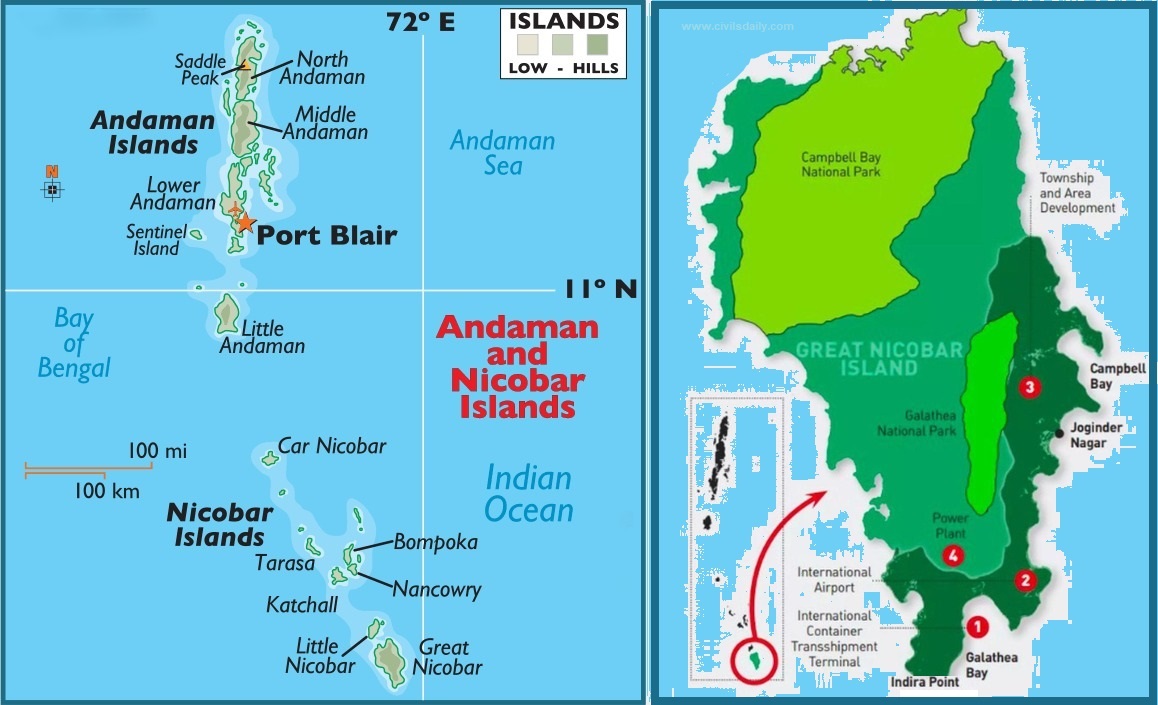
Geography and Ecology: Southernmost tip of India, part of the Andaman and Nicobar archipelago comprising 600-odd islands.
Environment: Hilly, covered with lush rainforests, annual rainfall of around 3,500 mm.
Biodiversity: Hosts numerous endangered and endemic species including the giant leatherback turtle, Nicobar megapode, Great Nicobar crake, Nicobar crab-eating macaque, and Nicobar tree shrew.
Area: 910 sq km with mangroves and Pandan forests along the coast.
Indigenous Communities:
Shompen Tribe: Approximately 250 people live in interior forests, predominantly hunter-gatherers, classified as a Particularly Vulnerable Tribal Group.
Nicobarese Community: Two groups – Great Nicobarese and Little Nicobarese, practice farming and fishing.
Resettlement: The Great Nicobarese were resettled in Campbell Bay after the 2004 tsunami.
Administrative Hub: Campbell Bay serves as the administrative hub, housing local offices of the Andaman and Nicobar administration and the panchayat.
Back2Basics:“Nicobar Triangle”
It is named after the Nicobar Islands, which are located at the northern apex of this triangular area.
The islands within the Nicobar Triangle include:
Nicobar Islands: This group of islands belongs to India and is situated to the south of the Andaman Islands. They are known for their diverse flora and fauna and are inhabited by indigenous tribes.
Andaman Islands: Located to the north of the Nicobar Islands, the Andaman Islands are also part of India. They are well-known for their lush forests, coral reefs, and indigenous tribes.
Indonesian Archipelago: To the south and southeast of the Nicobar Islands lies the Indonesian archipelago, which includes thousands of islands spanning a vast area between the Indian and Pacific Oceans.
What is GNI Project?
The GNI Project refers to the “Holistic Development of Great Nicobar Island,” a proposed mega project being piloted by NITI Aayog.
Implementing Agency: The project is to be implemented by the Andaman and Nicobar Islands Integrated Development Corporation (ANIIDCO).
Historical Context: Development plans for a port in Great Nicobar date back to the 1970s, aimed at leveraging its strategic location near the Malacca Strait.
The project aims to develop the southern end of the Andaman and Nicobar group of Islands in the Bay of Bengal by constructing –
Transshipment port
Dual-use military-civil international airport
Power plant (450 MVA gas and solar-based) and
A township over a span of 30 years on more than 160 sq. km of land, of which 130 sq. km is primary forest
Features of the Project
Transshipment hub of the East: The proposed port will allow Great Nicobar to participate in the regional and global maritime economy by becoming a major player in cargo transshipment.
Naval control: The port will be controlled by the Indian Navy, while the airport will have dual military-civilian functions and will cater to tourism as well.
Urban amenities: Roads, public transport, water supply and waste management facilities, and several hotels have been planned to cater to tourists.
Significance of the project
Economic significance: The proposed port would allow GNI to become a significant player in cargo transhipment, as it is positioned equidistant from Colombo, Port Klang (Malaysia), and Singapore.
Strategic significance: The proposal to develop GNI has been on the table since the 1970s, and it has been highlighted repeatedly as a crucial element for national security and consolidation of the Indian Ocean Region.
In recent years, the escalating Chinese presence in the Indian Ocean has added greater urgency to this imperative.
Issues with the Project
The project entails the deforestation of 130 sq km, and felling 10 lakh trees, threatens biodiversity at Galathea Bay, displaces indigenous tribes, lacks thorough impact assessments, and poses seismic risks to vulnerable communities.
Due-process Violations highlighted by the ‘Opposition’
(1) Did not recognise the grant ownership: The island administration did not recognise or grant ownership of any forest land to local tribespeople as per FRA, a requisite step under the Forest Conservation Rules, 2017, before Stage-I clearance is granted.
This is despite the fact that Rule 6(3)(e) of Forest Conservation Rules-2017 (FCR) requires that any diversion of forest land first requires the District Collector to recognise and vest rights to locals under the FRA.
The legislation allows forest communities the right to control and manage the use of the forest land over which they hold titles, and their consent is mandatory for diverting it.
(2) Inconsistencies with Stage-I Clearance: The Stage-I clearance for the project was granted in October 2022, two years after the application was received. Monthly progress reports show that the district administration did not process any claims over forest land under the FRA in the 26 months since project sanction.
(3) Withdrawal of Consent: Weeks after the Stage-I clearance was granted, the Tribal Council at Campbell Bay withdrew the consent granted by the Gram Sabha.
Srinagar has become the fourth Indian city to be recognised as a ‘World Craft City’ by the World Craft Council (WCC), three years after it was designated as part of the UNESCO Creative City Network (UCCN) for crafts and folk arts.
Craft Sector in Kashmir
The Indian National Trust for Art and Cultural Heritage-Kashmir (INTACH-K) is working with the J&K Handicrafts department to map Srinagar’s craft sector in preparation for the final nomination.
Srinagar boasts a rich artisanal heritage, with over 20,000 registered craftsmen engaged in various disciplines such as papier mâché, walnut wood carving, hand-knotted carpets, and more.
Handicrafts contribute significantly to the local economy, with approximately 2.64% of J&K’s overall economic output attributed to the sector by 2016-17.
Notable Craft: Papier-Mache, Walnut Wood Carving, Carpets, Sozni embroidery and Pashmina and Kani shawls.
About World Craft Council (WCC International)
Details
What is it?
Non-profit, Non-governmental organization
Working
Establishment in 1964;
Registered in Belgium as an international association without lucrative purpose (AISBL).
Affiliated to the UNESCO
Founders
Kamaladevi Chattopadhay and Aileen Osborn Webb
Purpose
To promote fellowship among craftspersons worldwide, foster economic development through craft-related activities, organize exchange programs, workshops, conferences, seminars, and exhibitions, and offer encouragement and advice to artisans.
Legal Status
Registered in Belgium as an international association without lucrative purpose (AISBL)
WCC is organized into five regions: Africa, Asia Pacific, Europe, Latin America, and North America.
Meetings
European branch meets annually;
The General Assembly occurs every four years (took place in Chennai in 2012).
What is World Craft City (WCC) Designation?
The WCC initiative was launched in 2014 by the World Crafts Council AISBL (WCC-International).
It recognizes the pivotal role local authorities, craftspeople, and communities play in cultural, economic, and social development worldwide.
India has only 3 cities designated as World Craft City:
Jaipur (Kundan Jadai (Gem setting), Meenakari Jewellery, Lac-based craft, Gotta Patti Work etc. )
Mysuru (Kinnal paintings, Sandalwood carvings, Rosewood Inlay etc. )
Mamallapuram (Stone Carving continuing since Pallava dynasty (275 CE to 897 CE))
PYQ:
[2018] Safeguarding the Indian art heritage is the need of the moment. Comment (10M)
[2018] Consider the following pairs:
Puthukkuli shawls — Tamil Nadu
Sujni embroidery — Maharashtra
Uppada Jamdani saris — Karnataka
Craft Heritage of which of the pairs given above is/are correct?
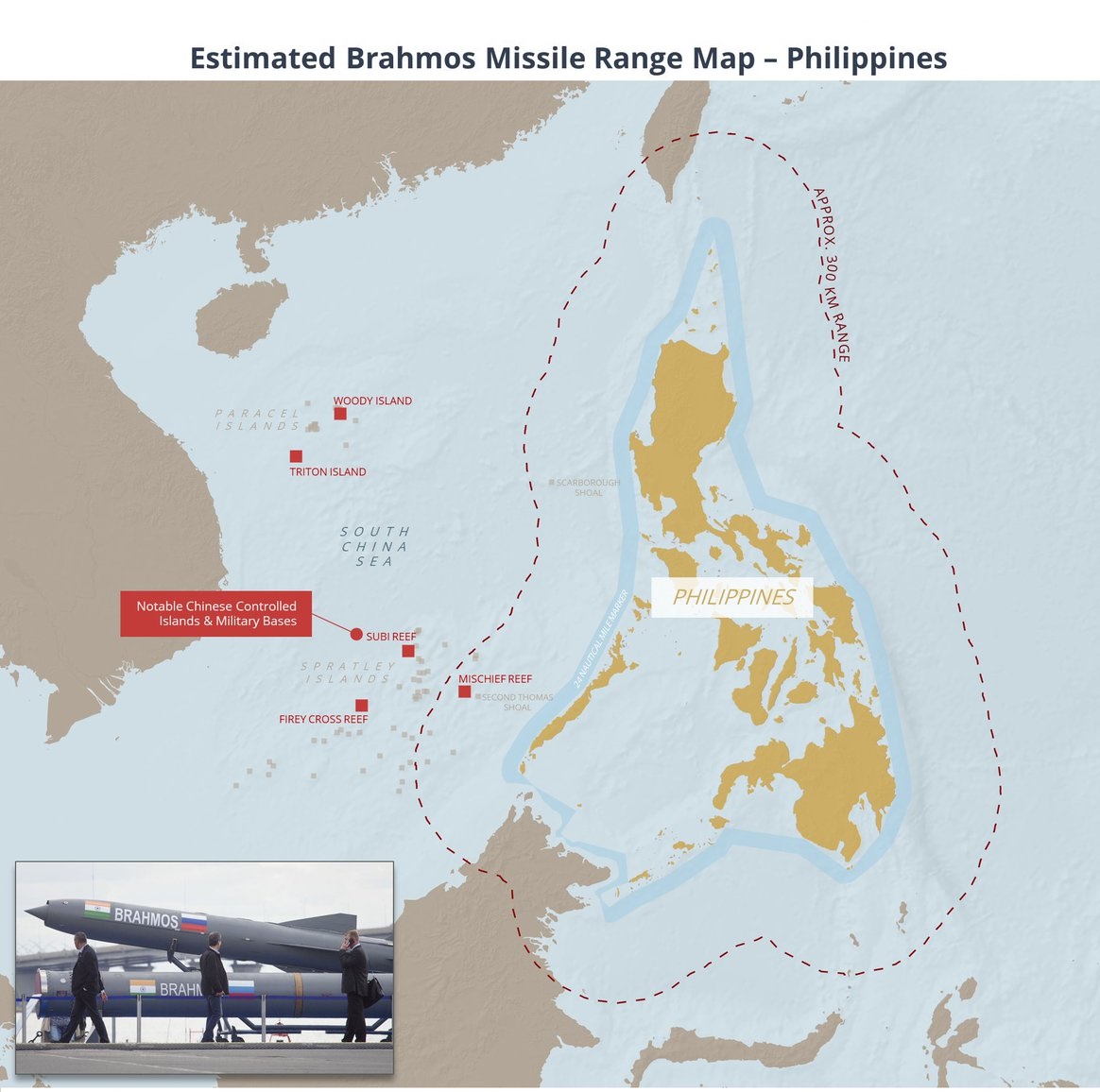
The BrahMos cruise missiles so inducted are termed a “game changer” by the Philippines envoy. The missiles provide credible defence and deterrent capabilities to the Philippines’ armed forces.
About BrahMos Missiles
BrahMos is a joint venture between the DRDO and Russia’s NPO Mashinostroyeniya.
The name BrahMos comes from the two rivers, the Brahmaputra of India and the Moskva of Russia.
The first successful test in 2001 was conducted from a specially designed land-based launcher.
Capabilities:
BrahMos is a medium-range ramjet supersonic cruise missile.
Launched from: submarines, ships, aircraft, or land.
It is the fastest supersonic cruise missile in the world.
It has two stages:
The first stage comprised a solid-fuelrocket booster and
The second stage comprises a liquid-fueled ramjet. ( because it provides the capability to manoeuvre and increase the range of missiles)
Warhead:
Ship-launched and land-based missiles can carry a 200 kg warhead,
Aircraft-launched variant (BrahMos A) can carry a 300 kg warhead.
Variants and Range
The missile travels at speeds of Mach 2.8 to 3.0, which is being upgraded to Mach 5.0.
A hypersonic version of the missile, BrahMos-II, is also presently under development with a speed of Mach 7-8 to boost aerial fast strike capability.
Initially restricted by the Missile Technology Control Regime to a range of 290km, the BrahMos missile’s range was extended to 450km following India’s entry into the regime in June 2016.
Ongoing efforts aim further to extend the missile’s range beyond 600km, enhancing its operational reach and effectiveness in various scenarios.
India-Philippines Relations: A quick recap
Context: 2023 marked the 75th anniversary of bilateral relations between India and the Philippines.
Equipment Transfers: These agreements facilitated government-to-government procurement of defence material and equipment.
Details of the BrahMos Deal
A MoU on defence cooperation was signed in 2006, reinforced by a 2017 MoU on defence industry and logistics cooperation.
Contract Details: In January 2022, the Philippines signed a $375 million deal with India for three batteries of shore-based anti-ship BrahMos missiles.
First Export Customer: The Philippines became the first export customer for the joint India-Russia venture.
Delivery Milestone: The first batch of missiles was delivered in April 2024.
Boost to India’s Defence Export: This deal marks India’s first overseas export of the BrahMos, showcasing India’s growing defence industry capabilities.
Bilateral Trade and Economic Cooperation
Trade Milestone: In 2023, bilateral trade crossed the $3 billion mark for the first time, with a trade balance in India’s favour.
Preferential Trade Agreement (PTA): Ongoing negotiations for a PTA aim to enhance trade balance and diversification.
Trade Partnerships: India is among the top 15 trade partners for the Philippines.
Modernisation of the Philippines Armed Forces
Phase-3 Modernisation: The Philippines armed forces are in phase-3, termed Horizon-3, of their modernisation programme.
Focus Areas: They are looking at acquiring ships, aircraft, and radars, and enhancing Maritime Domain Awareness (MDA).
Strategic Goals: Aiming to defend entitlements and secure their Exclusive Economic Zone (EEZ) against China over its claims for the South China Sea.
PYQ:
[2014] Which reference to the Agni-IV Missile,
which of the following statements is/are correct?
It is a surface-to-surface missile.
It is fuelled by liquid propellant only.
It can deliver one-tonne nuclear warheads about 7500 km away.
Select the correct answer using the code given below.

![[Biggest Announcement of the Year] Civilsdaily’s Smash Mains Program 2024](https://www.civilsdaily.com/wp-content/uploads/2024/06/SM-Launcg_Final-1568x882.jpg)
![[25th June 2024] The Hindu Op-ed: The Court spells the way in Himalaya’s development](https://www.civilsdaily.com/wp-content/uploads/2024/06/25-June-1568x882.jpg)