💥UPSC 2026, 2027, 2028 UAP Mentorship (March Batch) + Access XFactor Notes & Microthemes PDF

Search results for: “”

  • Chapter 4 | Vedic and Later Vedic Period (1500BC – 600BC)

    Note4Students

    It is important to understand the transformations that occur from the Vedic to the Later Vedic period as many of them are carried forward. During this time, the class-divided society transformed into a caste-divided one, polytheistic religion into a sacrificial ritual-dominated one, the condition of women deteriorated, and simple tribal polity transformed into a monarchy.

    The table will help you visualize the contrast better.

     Vedic(1500BC – 1000BC)Later Vedic(1000BC – 600BC)
    SourcesRig VedaAll the other vedas.

    Towards the end, upanishads were compiled. They criticized rituals and emphasized on philosophy.

    LocationThe northern and western parts of the Subcontinent. Sapt-Sindhu Region. They didn’t know land beyond Yamuna.Northern and western part of the Subcontinent. Sapt-Sindhu Region. They didn’t know land beyond Yamuna.
    PolityNo concept of territory. Only Tribes (Jana) – Total members not larger than 100.

    Kings(Rajan) were advised by assemblies like Sabha & Samiti.

    Had no standing armies.

    Wars known as Gavati are fought for cattle and not for territory.

    Chiefs received voluntary offerings called Bali(remember its not sacrifices)

    Extended to the whole of western UP, Ganga-Yamuna doab and also penetrated to the Deccan, Vindhyas & South India.
    EconomyConcept of territory and territorial administration appear. Janapada-State. Rashtra – Territory.
    Royal power increases many folds. Rituals and sacrifices were performed to strengthen the king’s position – Rajasuya(consecration ceremony), Vajpeya(chariot race) and Asvamedha(horse sacrifice).

    Character of Sabha & Samiti changed. The were dominated by chiefs and rich nobles. Women were no longer permitted.

    Even in the Later Vedic times, king didn’t possess a standing army(as per NCERT).

    Wars were fought not only for cattle but territory.

    Bali which was a voluntary gift became a mandatory tax.

    Settled life. Agriculture and crafts.
    AgricultureMostly barley.Barley continued but rice and wheat became chief crops.
    Family and womenFamily – Kula. Household – Griha. Joint-family. Patriarchal society with indications of polyandry. Women could attend assemblies, they could offer sacrifices along with their husbands. Widow remarriage was allowed. No instances of child marriage and the marriageable age seems to be 16-17.Position of the father increased and women were given lower position. Position of women became deplorable. They couldn’t attend assemblies. Child marriages also came into vogue.
    Institution of gotra appears later vedic period. Marriage within the gotra was not permitted.
    Social DivisionsSociety was largely egalitarian.

    Varna was the term for color. The indigenous people conquered by Aryans were called Dasas and Dasyus. Differentiation based on occupation existed.

    Society divided into 4 varnas. The growing cult of sacrifices added to the power of the Brahmanas.

    4 Ashramas – Brahmachari, grihast, vanprastha, Sanyasi.

    ReligionNature gods. Indra – mentioned in most number of passages. Agni – 2nd highest mentions.

    Soma – sacred drink.

    Sacrifices less important. Mostly Prayers.

    Nature gods are replaced by Prajapati, Rudra & Vishnu. Idolatry appears.

    Pushan regarded as the god of Shudras

    Sacrifices became more important than prayers.

    Vedic(1500BC – 1000BC) vs Later Vedic(1000BC – 600BC)

    The rise of Buddhism and Jainism was the direct result of this socio-economic problem.

  • Case Study | Ajanta and Ellora Caves

    Rock-cut cave architecture occupies a very important place in the Indian Art tradition. From the humble beginnings at the Barabar Caves, they evolve into spectacular caves at Ajanta and Ellora. Both these caves have been accorded the UNESCO World Heritage Site status.

    Table summing up the contrasting features are as follows

    Ajanta Caves Ellora/ Elura/Verul Lena Caves
    Location Near Aurangabad district of Maharashtra North West of Aurangabad district of Maharashtra
    Timeline Constructed between 2nd Century BC to 6th Century AD Constructed between 6th Century AD to 10th Century AD
    Number of caves 30 caves with one incomplete so sometimes considered 29.

    4 chaityas and rest viharas.

    100 caves with 34 open for public. Caves dedicated to Hinduism are more followed by Buddhist caves.

    Cave 10 is the only Chaitya while rest are viharas.

    Religions Entirely Buddhism Hinduism, Buddhism and Jainism
    Patronage Satavahanas, Vakatakas and Chalukyas Rashtrakutas, Kalachuris, Chalukyas and the Yadavas
    Chronology of Construction 2nd-1st Century BC – Hinayana Phase

    5th – 6th Century AD – Mahayana Phase

    550 – 600 AD – Hindu Phase

    600 – 730 AD – Buddhist Phase

    730 – 950 AD – Hindu and Jain Phase

    Major attraction Paintings, architecture and sculptures Architecture and sculptures.

    Especially the Kailashnath temple.


    Ajanta Caves

    Ajanta caves are a series of 30 Buddhist caves located in Aurangabad district, Maharashtra. This site is declared a World Heritage Site by UNESCO. It encompasses both Theravada (Hinayana) and Mahayana Buddhist traditions. The Ajanta caves preserve some of the best masterpieces of Buddhist art in India.

    F:\UPSC\Civils_Culture_Module\Images\Ajanta_plan.png

    CAVE PLAN – AJANTA

    1. History of Ajanta Caves

    The earliest Ajanta caves were carved in the 2nd Century BC out of horse-shoe shaped cliff along the Waghora River. They were used by Buddhist monks as prayer halls (chaitya grihas) and monasteries (viharas) for about nine centuries.

    Out of the 30 excavated caves, five (cave no. 9, 10, 19, 26, and 29) are chaitya grihas (prayer halls) and the rest are viharas (monasteries).

    In date and style, these caves can be divided into two broad phases.

    Phase I (2nd Century to 1st Century BCE) – The earliest excavations were done by the Satavahanas and belong to the Hinayana (Theravada) phase of Buddhism. The object of worship is a stupa here. Caves 9, 10, 12, 13 and 15A belong to this era.

    Phase II (5th Century AD to 6th Century AD) – These excavations are a major contribution of the Vakatakas and Chalukyas and belong to Mahayana phase of Buddhism.


    1. AJANTA CAVE ARCHITECTURE

    Study under the two phases

    1. Phase I/ Satavahana Phase Throughout his life Buddha was against the idea of sculpting and painting images of him. Hence, this phase depicts the Lord via symbols.

    Of these, caves 9 and 10 are stupa containing worship halls of chaitya-griha form, and caves 12, 13, and 15A are viharas.

    Cave 9 : This apsidal chaitya griha is datable to second century B.C. and belongs to the Hinayana phase of Buddhism. It is a large liturgical hall, with monolithic stone stupa carved from a living rock.

    https://upload.wikimedia.org/wikipedia/commons/thumb/b/b8/Ajanta%2C_cave_9%2C_chaitya-griha%2C_with_stupa_%289842167554%29.jpg/800px-Ajanta%2C_cave_9%2C_chaitya-griha%2C_with_stupa_%289842167554%29.jpg

    CAVE 9 – Worship Hall with a stupa but no idols

    Cave 10 –

    The cave consists of a central hall and a rock stupa around which a circumambulatory path is provided.
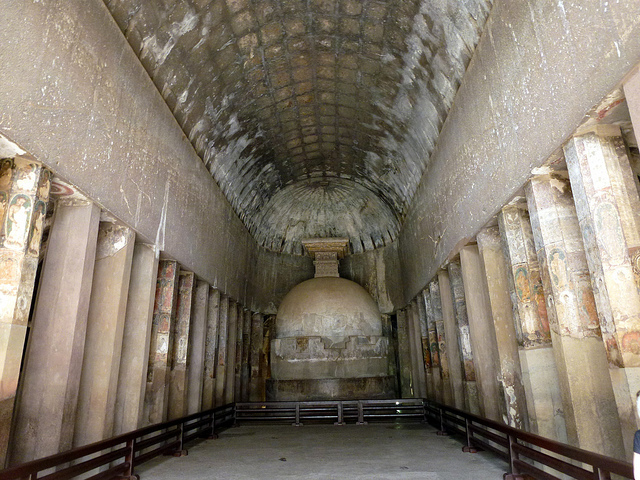
    Image result for cave 10 ajanta

    CAVE 10 – Worship Hall with a stupa and circumambulatory path

    1. Phase 2 / Vakataka Phase – The second phase was of greater artistic activity at Ajanta during the rule of the Vakataka dynasty. King Harishena is credited to have been at the forefront of the development cycle.

    Major difference from Phase I is the depiction of Buddha as a result of the spread of Mahayana Buddhism which believes in revering the Master through images and idols.

    Caves – Caves 19, 26, and 29 are chaitya-grihas, the rest viharas.

    CAVE 19 :

    This chaitya griha is datable to fifth century A.D. The stupa is carved with a standing image of Buddha. This cave is known for its sculptural grandeur of the facade. The hall has painted depictions of Buddha in various postures. Cave 19 is first example of a chaitya wholly in stone.

    The stunning variety of panel and bracket decoration in this cave includes images of Buddha, mounted riders, flying celestials, lion heads in the panels at intervals and vegetation.

    Image result for cave 19 ajanta standing buddha

    Standing Buddha in the interior cave covered with drapery, topped by a majestic three tiered umbrella in front of a stupa.

    Besides the richly carved interior, the exterior walls of the caves of later phase are well sculptured and ornamented.

    Image result for naga consort ajanta

    LOCAL NAGA DEITY WITH HIS CONSORT – CAVE 19

    CAVE 26 –

    This chaityagriha is quite similar to Cave 19, but of a larger dimension and more elaborately and exquisitely provided with sculpted figures.

    The chaitya griha consists of a hall, side aisles (pradikshana) and a rock-cut stupa front by an image of seated Buddha. The facade, the inner pillars, the triforium (between pillars and roof arch), aisles side walls are extensively carved with images and decorative designs.

    Image result for cave 26 ajanta

    CAVE 26 – SEATED BUDDHA STUPA

    The most striking and prominent image is that of Mahaparinirvana of Buddha on the right aisle wall and the assault of Mara during Buddha’s penance adorns the same wall.

    Image result for cave 26 ajanta Temptation by Mara
    Temptation by Mara

    • Mara in Buddhism is a demon who tempted Gautam Buddha by trying to seduce him with the vision of beautiful women who, in various legends, are often said to be Mara’s daughters.

    Image result for cave 26 ajanta Parinirvana

    MAHAPARINIRVANA

    • In Buddhism, the term parinirvana is commonly used to refer to nirvana-after-death, which occurs upon the death of the body of someone who has attained nirvana during his or her lifetime.
    • This sculpture is also known as the reclining Buddha.

    The artists of Ajanta have given us an insight into a time we know little about, through the illustrations of these two stories. Through this visual window, we know more about the attire the kings donned at the time, their general facial features (which are strikingly central Asian), the arms they carried and more.

    Transition over ages

    Image result for cave 9 ajanta stupa

    CAVE 9 CAVE 10 CAVE 19 CAVE 26

    The above shows how transition occurred with time and evolution of Mahayana sect which worships Buddha in form of idols and images.

    1. AJANTA PAINTINGS

    Ajanta Paintings are finest surviving examples of ancient Indian art. According to UNESCO, these are masterpieces of Buddhist religious art that influenced Indian Art. These masterpieces at Ajanta were executed more or less in two phases. The paintings at Ajanta are not frescoes but murals.

    What are murals?

    Murals are paintings done on already dried surfaces.

    How are murals different from frescoes?

    Fresco is a technique of painting executed upon freshly laid lime plaster. The wet plaster binds the paint to the plaster itself hence the color pigments get absorbed in the wall.
    In case of Murals color is mixed with some adhesive and is applied on the dry surface.

    Vishnodarottar Purana written in the Post Gupta Period describes how the paintings were made in the ancient times. All the painting experiments suggest this book was followed.

    Study under the two phases –

    1. Phase I – These paintings belong to the Hinayana era (200 BC- 1 BC). Depiction of Buddha has been done via symbolism. Paintings of this era have mostly been lost.

    CAVE 9 –

    Of all paintings of this era very few have survived. These are –

    1. Frieze Of Animals And Herdsmen
    2. Naga Worshippers
    3. Giant Horseshoe Window
    4. Phase II – The second phase departs from the earlier one with the introduction of new pattern in layout as well as the centrality of Buddha image due to Mahayana influence, both in sculpture as well as in paintings

    The main theme of the paintings is the depiction of various Jataka stories, different incidents associated with the life of Buddha, and the contemporary events of social life.

    The ceiling decoration invariably consists of decorative patterns, geometrical as well as floral.

    CAVE 1 – This cave has one of the most elaborately carved facades with scenes carved from the life of the Buddha as well as a number of decorative motifs.


    It contains the famed paintings of Bodhisvattas Padmapani and Vajrapani along with a seated figure of Buddha in dharma chakra parivartana mudra in the sanctum.


    https://upload.wikimedia.org/wikipedia/commons/thumb/c/c5/AjantaHoehle1HaupthalleCella.jpg/1024px-AjantaHoehle1HaupthalleCella.jpg

    The Buddha in the shrine room is seen through the aisle and vestibule in dharmachakraparivartana mudra with Bodhisvattas Padmapani and Vajrapani on either sides.

    Macintosh HD:Users:rohitpande:Downloads:King Shibi Mural at Ajanta caves.png

    Scene from Shibi Jataka

    • King Shibi who offered his own flesh to save a pigeon.

    CAVE 2 –

    F:\UPSC\Civils_Culture_Module\Images\CAVE-2 Mahadevi _ Buddha birth.png

    Mahadevi gives birth to Buddha


    CAVE 17 – Cave 17 is a Mahayana Vihara. It is full of the finest paintings.

    Few important among these are –

    Macintosh HD:Users:rohitpande:Downloads:Buddha visist his son at Ajanta Caves.jpg


    Buddha returns from enlightenment to his own home to beg from his wife Yashodhara, while his son Rahula looks astonished.

    Related image

    A flying Apsara to worship the Buddha

    Image result for vessantara jataka cave 17

    Vessantara Jataka

    • A prince is trying to cheer his distressed wife who is upset over the news of his impending banishment (Vessantara Jataka)

    Image result for cave 17 matriposhaka jataka

    MATRIPOSHAKA JATAKA STORY – The story of a Bodhisattva elephant who had blind parents. In this story, the Bodhisattva elephant chooses to take care of his blind parents readily giving away palatial comforts.

    CAVE 10 – Though this cave majorly belongs to the Hinayana phase, the cave was worked upon in the Mahayana era too. This is explained by presence of Buddha’s images and idols that belong to the later era.

    F:\UPSC\Civils_Culture_Module\Images\Ajanta_2.png

    CAVE 10 – MURALS ON THE VAULT

    CAVE 16 –

    Macintosh HD:Users:rohitpande:Downloads:Dying Princess Jataka at Ajanta Caves.jpg

    The Dying Princess

    The story tells how Nanda who was passionately in love with this girl was tricked away from her by the Buddha and carried up to heaven.

    Overwhelmed by the beauty of the Apsaras, Nanda forgot his earthly love and consented to enter the Buddhist order as a shortcut to heaven.

    In time, he came to see the vanity of his purely physical aim and became a Buddhist but the Princess, his beloved, was cruelly left to her fate without any such consolation.

    Decorative Pictures

    Besides religious paintings there is another category of painting. These paintings are decorative and secular. They fill up all the available space on the ceilings, walls and vaults.

    Macintosh HD:Users:rohitpande:Downloads:Decorative pictures at Ajanta Caves.jpg

    1. Ellora Caves

    It one of the largest rock-hewn monastic-temple complexes in the entire world. There are 34 caves, structures are excavated out of the vertical face of the hills.

    F:\UPSC\Civils_Culture_Module\Images\ellora_plan.png

    CAVE PLAN – ELLORA

    1. Cave Architecture –

    Out of these, there are 12 Mahayana Buddhist caves (caves 1-12), 17 Hindu caves (caves 13-29) and 5 caves of the Jain faith (caves 30-34). The Ellora Caves are not only a unique artistic creation but also with its sanctuaries devoted to Buddhism, Hinduism and Jainism, it illustrates the spirit of tolerance that was characteristic of ancient India.

    1. Buddhist Monuments [CAVE 1- 12]

    Among these 12 caves only one is a prayer hall (chaitya griha) while others are monasteries.

    Cave 5 is unique because it is designed as a hall with two parallel refectory benches in the centre with a Buddha statue in the rear. Cave 5 of Ellora and Cave 11 of the Kanheri caves are only two such Buddhist caves in India.

    Vishvakarma Cave [CAVE 10]-

    Image result for carpenter's cave ellora

    Vishvakarma Cave – Seated Buddha in preaching position (vyakhyana mudra)

    • This is the only chaitya-griya in Ellora.
    • Also known as Carpenter’s Cave because the artistic finish gives the rock an appearance of wooden beams.
    • It follows the pattern of construction of Caves 19 and 26.


    1. Hindu Monuments [CAVE 13- 29]

    The Kalachuris and the Rashtrakutas were major contributors.

    Dhumar Lena [CAVE 29] –

    These caves are dedicated to Lord Shiva. All these cave temples contain a rock cut linga-yoni within the core of the shrine, surrounded by a space for circumambulation (parikrama).

    The Dashavatara [Cave 15] – This cave has many well carved sculptures. Lord Vishnu is depicted in his ten incarnations.

    Other Important sculptures –

    https://upload.wikimedia.org/wikipedia/commons/thumb/6/6f/The_Dashavatara%2C_Ellora_cave_no._15.jpg/800px-The_Dashavatara%2C_Ellora_cave_no._15.jpg

    Vishnu at the Dashavatara Ellora temple.

    F:\UPSC\Civils_Culture_Module\Images\Shiv_Parvati.png

    Shiv Parvati Marriage

    Image result for ellora Andhakasura

    Andhakasuravadha

    Other important panels are –

      • Gangadhara panel
      • Tripurantika of Shaktism tradition
      • Nandi in mandapa
      • Dancing Shiva

    Kailashnath Temple [CAVE 16]

    Ascribed to Krishna I, a Rashtrakuta ruler this temple was constructed around the middle 8th Century AD. This temple is world famous for being the largest single monolithic excavation in the world. The temple architecture shows traces of Pallava and Chalukya styles. This amalgamation is a result of influence of Virupaksha temple of Pattadakal (Chalukyan temple) and Kailasa temple of Kanchi (Pallave temple). Though it needs to be specified, Kailash temple is not an exact imitation of these temples.

    The temple is chiefly a Shaivite temple although sculptures belonging to Vaishnavism are also found here.

    The temple consists of four parts – the main shrine, the entrance gateway, an intermediate shrine for Nandi and mandapa surrounding the courtyard.

    Image result

    Kailashnath Temple

    The Kailasa temple is an architectural marvel with it beautiful sculptures.

    Important Sculptures –

    Image result for kailashnath temple durga slaying mahishasura ellora

    Goddess Durga slaying the Buffalo demon

    F:\UPSC\Civils_Culture_Module\Images\rava_himalaya_Ellora.png

    Ravana shaking Mount Kailasa, the abode of Siva

    Besides these, scenes of Ramayana are also depicted on the walls.

    Other Hindu caves

    Other notable Hindu caves are the Ravan ki Khai (Cave 14) and the Nilkantha (Cave 22) also have several sculptures. Cave 25 features Surya carved in its ceiling.

    1. Jain Monuments [CAVE 30- 34]-

    These caves belong to Digambara sect. The emphasis in the Jain caves is the depiction of twenty four Jinas (spiritual conquerors who have gained liberation from the endless cycle of rebirths). Along with them yakshas, yakshis and human devotees are depicted.

    The most remarkable Jain shrines are the Chhota Kailash (cave 30), the Indra Sabha (cave 32) and the Jagannath Sabha (cave 33).

    Amongst its devotional carvings, the Jain Ellora caves offer some of the earliest Samavasarana images. Samavasarana is of special interest to Jains, as it is a hall where the Tirthankara preaches after attaining Kevala Jnana (liberating omniscience).

    1. Ellora Paintings –

    Paintings from Ellora are not very significant. They too like Ajanta are murals and depict both religious and secular images. Important among these is an early painting of Vishnu and Lakshmi being borne out of a cloud by a Garuda.

    Conclusion-

    The above study reveals how culture and tradition varied over a large span of time. They also reveal how historically Indian rulers were not only tolerant towards different religions but also patronized them. Lessons can be drawn from these times and implemented in contemporary times to defeat social unrest and intolerance.

    References

    1. http://www.sacred-destinations.com/india/ajanta-caves
    2. https://en.wikipedia.org/wiki/Ajanta_Caves#Caves_of_the_first_.28Satavahana.29_period
    3. http://asi.nic.in/asi_monu_whs_ajanta_caves.asp
    4. www.abiyoyo.com/articles/2817_ajanta_cave_19.html
    5. http://www.themeadowsresort.com/images/map3_ellora.jpg
    6. http://ajantacaves.com/caves/ajanta%20cave%209-10-11.asp
    7. http://www.gizmodo.in/indiamodo/Indias-Own-Ajanta-Caves-May-Be-The-Birthplace-Of-Indian-Art/articleshow/41199370.cms
    8. http://www.ancient.eu/article/849/
    9. http://www.shunya.net/Pictures/South%20India/Ajanta/Ajanta.htm
    10. http://shodhganga.inflibnet.ac.in/bitstream/10603/16705/11/11_chapter%206.pdf http://www.kamit.jp/02_unesco/02_ajanta/aja_eng.htm
    11. http://www.speakingtree.in/blog/ajanta—cave-17—25
    12. http://www.slideshare.net/swami99/ajanta-paintings
    13. http://recomparison.com/comparisons/101017/ajanta-vs-ellora-caves-buddhist-architectural-jewels/
    14. https://en.wikipedia.org/wiki/Ellora_Caves
    15. NCERTs
    16. CCRT
    17. NIOS
  • Chapter 2 | Chalcolithic Age

    Note4Students

    This chapter, again, is not important from UPSC perspective. Make a note of various cultures that developed in this period and the regions they were confined to. Some predate Harappan sites while others postdate Harappan sites.

    Ahar Culture
    oldest
    Malwa Culture(1700BC-1200BC)
    Jorwe Culture (1400BC-700BC) – newest
    East – UP, Bihar and Bengal
    Location
    South Eastern Rajasthan
    Ahar and Gilund lie in Banas valley spread over 4 acres.
    Western Madhya Pradesh
    Malwa, Kayatha and Eran.
    Navdatoli – largest settlement of Malwa.
    Kayatha – Junior contemporary of Harappan Culture.
    Western Maharashtra
    -Jorwe, Nevasa, Daimabad in Ahmednagar District.
    -Chandoli, Songaon and Inamgaon in Pune District
    -Prakash and Nasik
    Vidhyan region of Allahabad district. Chirand, West Bengal – Randu Rajar Dhibi in Burdwan
    Settlement
    Gilund used burnt bricks.
    Ahar – Stone houses
    Kayatha and Eran – fortified.
    Daimabad and Inamgaon reached urban stage.
    Inamgaon 2 phases – Mud houses with ovens and circular pits.
    2- 2 tier settlement.
    1>Houses with 5 rooms, 4 rectangular and 1 circular. Suggests house of chiefs. 2>Craftsmen lived on the western fringes.
    Chirand – post-holes and round houses.
    Agriculture
    Barley and wheat.
    Due to Black Cotton Soil – couldnt practice cultivation.
    Barley and wheat
    Navdatoli – All foodgrains have been found.
    Barley and wheat
    Rice+fishhooks
    Pottery
    BRW with white designs. Channel spouted pots, dishes on stands and bowls on stand.
    Ochre Colored Pottery in Ganeshwar.
    Burial
    Maharashtra people buried under the floor of the house in north-south position.
    They didnt use separate cemeteries.
    Chandoli and Nevasa some children were buried with copper based necklaces.
    Inamgaon – buried with pottery and copper.
  • Chapter 1 | Stone Age – Paleolithic, Mesolithic and Neolithic

    Note4Students

    This topic is not one of UPSC’s favorites. A deeper understanding is not required. You need to make a note of 2 things.

    1. Understand the evolution of tool technology, memorize which technology(flint, flakes, microliths) corresponds to which age.

    2. Refer to the table at the end. Memorize what started in which age.

    Paleolithic Age – It is the longest phase divided into 3 phases.

    1) Early (lower) – 500K -50K BC

    2) Middle – 50K – 40K BC

    3) Late (upper) – 40K – 10K BC

    Followed by the Mesolithic Age(9K to 4K BC) which is regarded as a transitory phase and then Neolithic Age. The Neolithic Age began at different times in different parts of the country. But generally Neolithic settlements found in India are no older than 2500 BC.

    EVOLUTION OF TOOL TECHNOLOGY

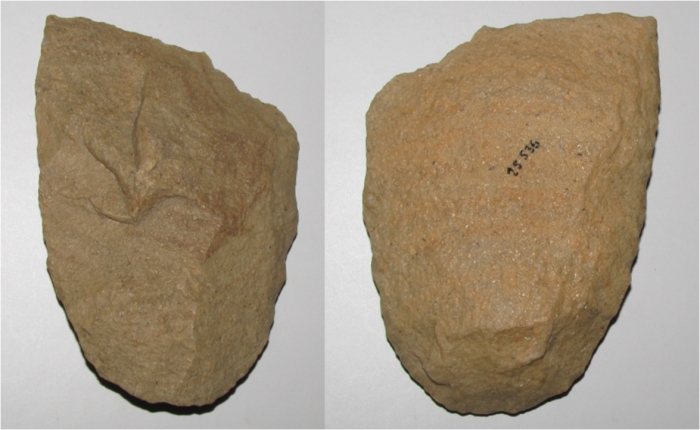
    Tools were made by keeping one stone fixed and striking it with another stone. If the tools were made out of the larger leftover ‘core’, they were called core tools. If made using the smaller piece of stone ‘flaked’ out, they were called flake tools.

    EARLY PALEOLITHIC AGE – Made of the core part.

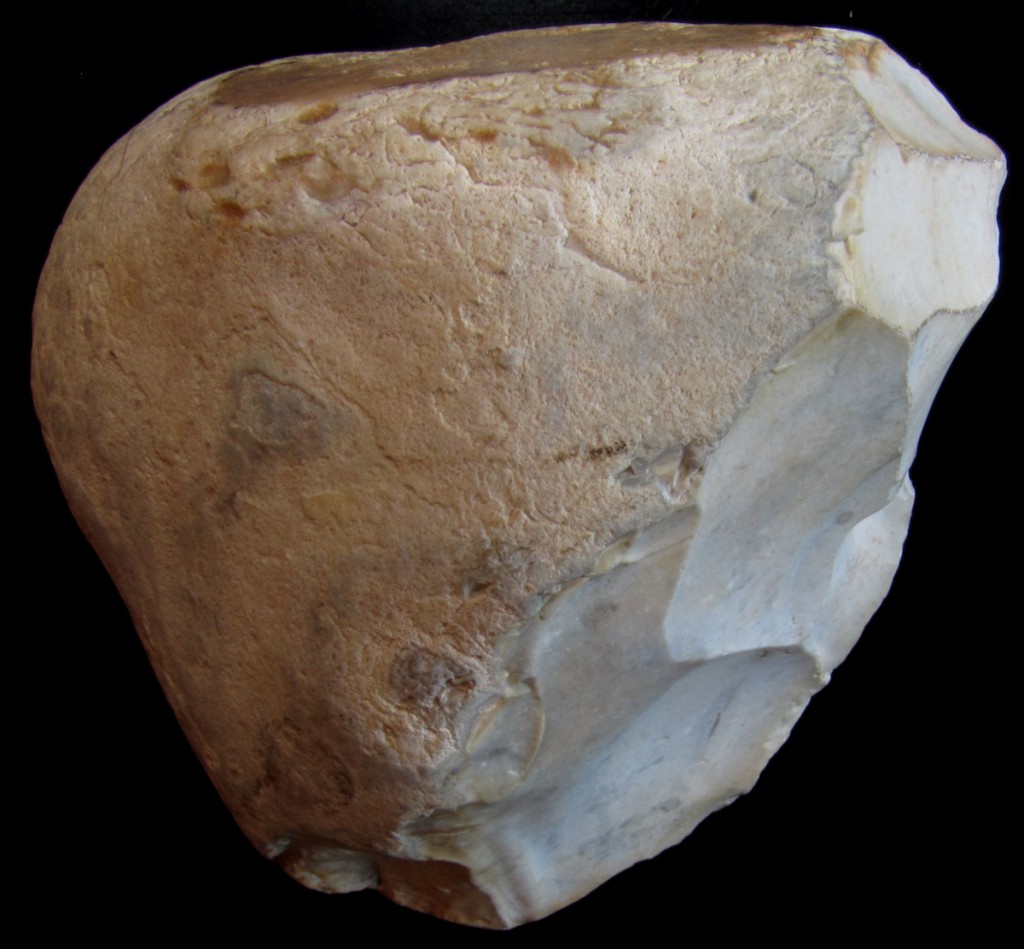
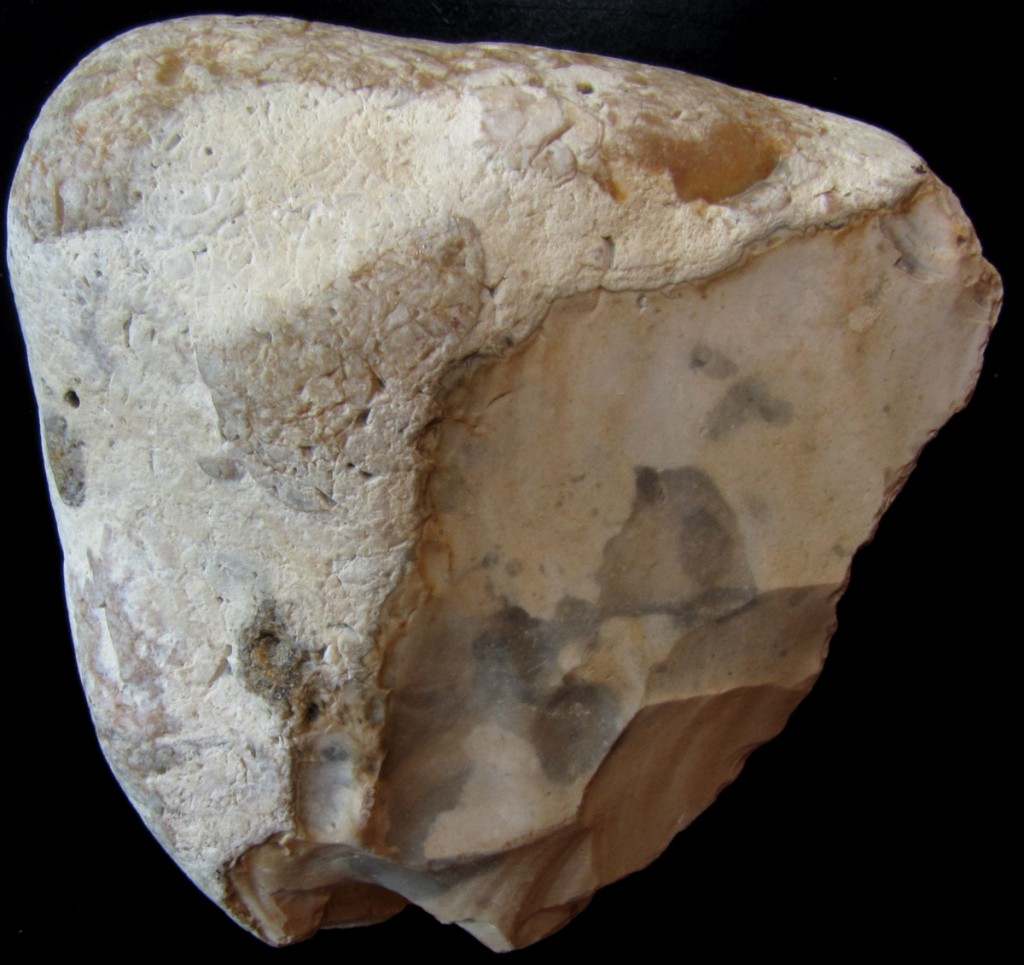
    1. Chopper: using a bowl-shaped piece of stone, a heavy and bold tool was created. Only one side was worked on (unifacial).

    2. Chopping tool: same as the chopper but with 2 edges worked on (bifascial). Chopper and chopping tool are characteristic of lower palaeolithic.

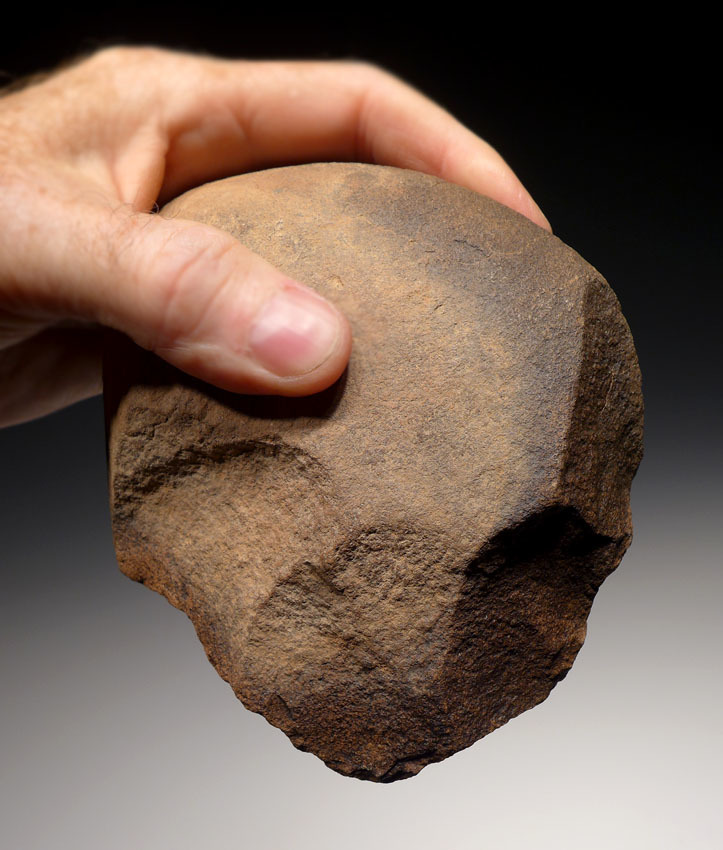
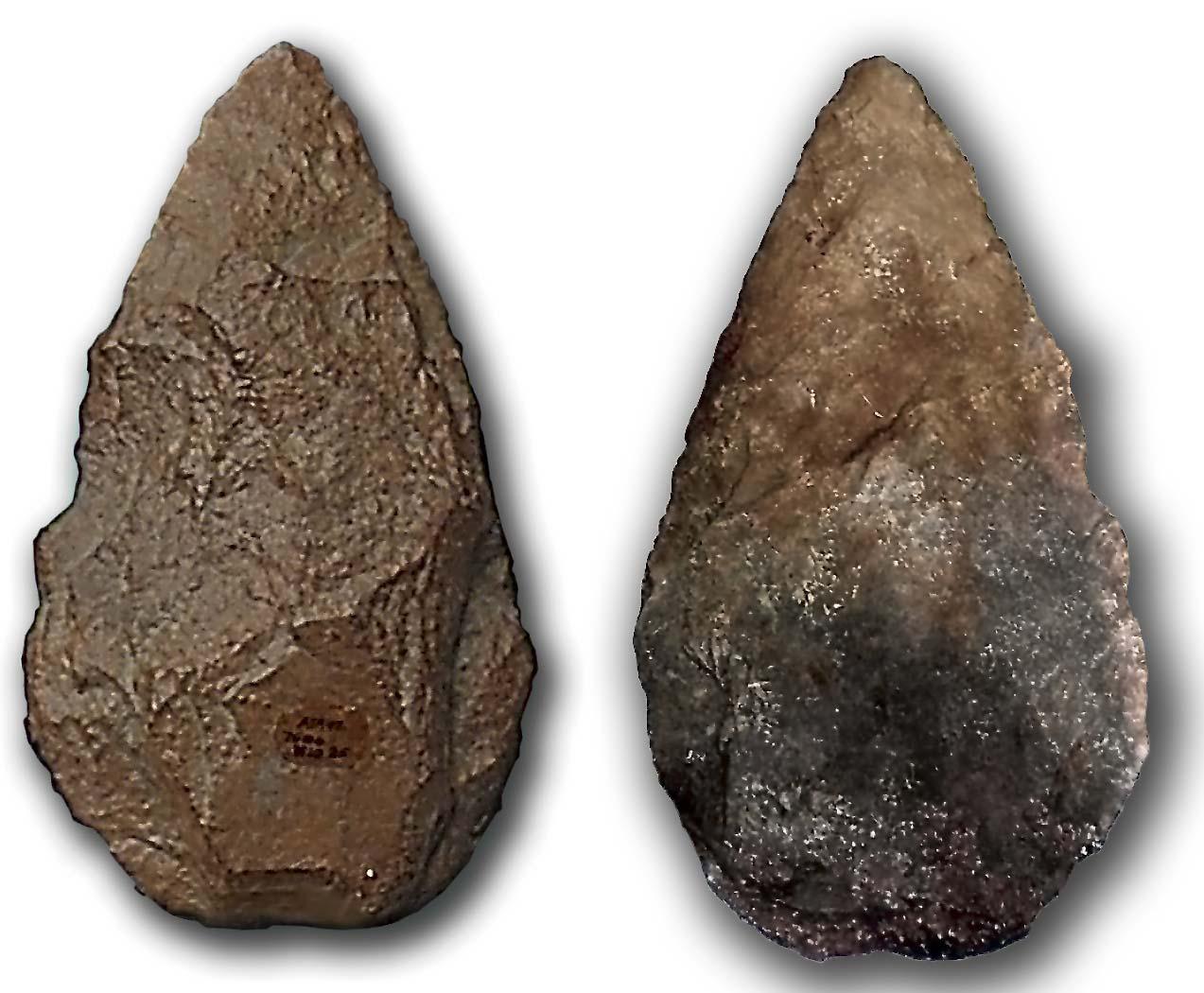
    3. Hand axe: A tool requiring much greater control than the chopper, a narrower tool with a vertical working edge.

    4. Cleaver: cleavers are different from hand axes in having a transverse or horizontal working edge.

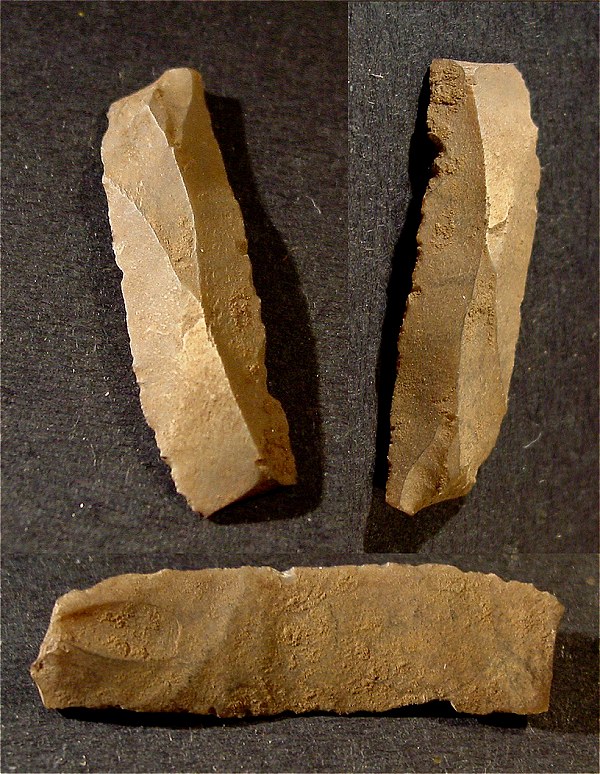
    MIDDLE PALEOLITHIC AGEFlake tools. They are lighter, more precise.

    1. Blades: Parallel working edges.

    2. Scraper: parallel working edges on the sides, similar to the blade, with the difference being blades are much longer than they are wide. This is also a flake tool.

    3. Points: sharpened up to a tip: like a point. 2 sideways working edges meet up to the tip. These are sometimes grafted onto a wooden handle, for which a shoulder is present.

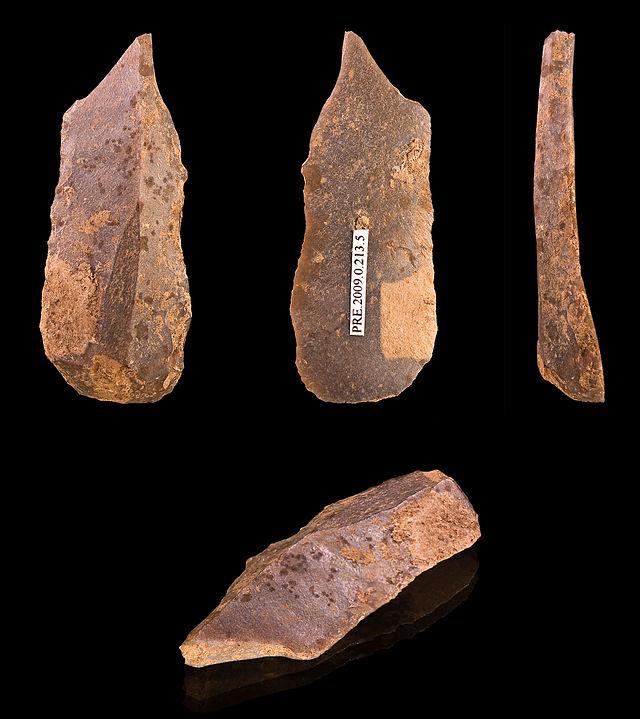
    UPPER PALEOLITHIC – Flint Tools

    1. Burins: unlike a point, the tip is flat like the end of a screwdriver.

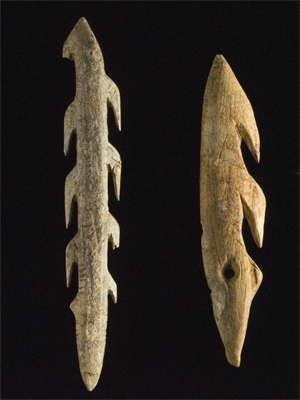
    2. Bone tools: Eg. harpoon: used for fishing as fishing hooks. May be one-sided or two-sided.

    MESOLITHIC AGE

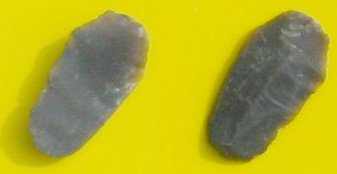
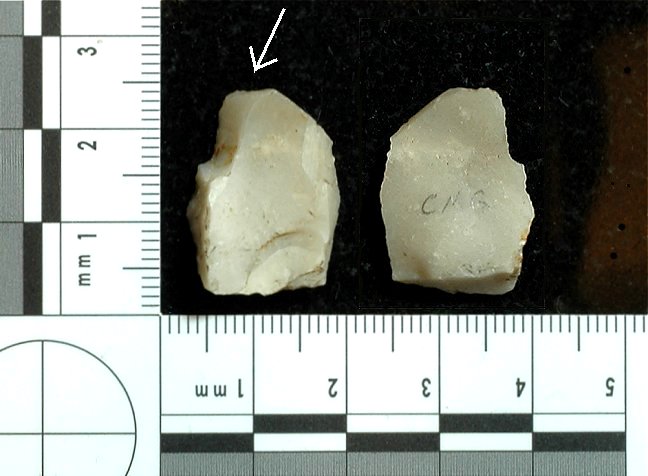
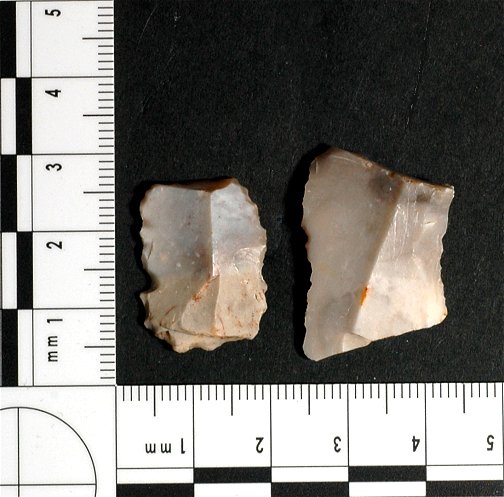
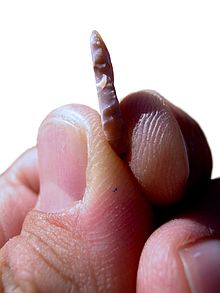
    In this age, we get Microliths. These are very small tools (1cm to 8cm) often geometrical in shape, these were used for beautification (eg) tattooing, shaving etc.

    Sometimes they were grafted onto wooden shafts: called composite tools.

    Names were according to the shape of the tool: trapezoid, lunate, microlith points, microlith blades etc.

    NEOLITHIC AGE – Polished Tools

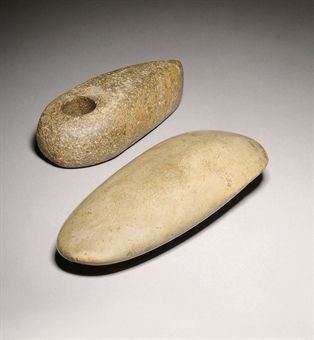
    We see remarkable Polished tools. Rounded heavy tools discovered, which could have been possibly used to level the ground. May have the provision for a handle as well.

    1. Celt: used for digging the ground, like an edge.

    MAIN CHARACTERISTICS

     Early (lower) – 500K -50KMiddle – 50K – 40KLate (upper) – 40K – 10KMesolithic (9K to 4K)Neolithic
    Technology FlakesFlintsMicrolithsPolished Tools.
    Stone UsedQuartziteQuartziteChert, JasperAgateDyke, Basalt, Dolomite.
    OccupationHunting, food gathering and fishing.Hunting, food gathering and fishingHunting, food gathering and fishing.

    In the later phase, they start domesticating animals.

    Hunting, food gathering and fishing.

    In the later phase, they start domesticating animals.

    Hunting, food gathering, and fishing came to an end.

    Regular agriculture begins. Settled in smaller villages

    Food producing age.

    Mehrgarg – wheat, cotton

    Mirzapur – cultivation of rice.

    SitesSoan or Sohan Valley, Punjab

    Belan Valley , Mirzapur District, UP (near Allahabad)

    Didwana, Rajasthan

    Bhimbetka, MP

    Geography coincides roughly with the Lower Paleolithic sites.Upper levels of Gujrat Dunes.

    Andhra, Karnataka, Maharashtra, Central MP, south UP.

    Bhimbetka caves used as shelters.

    Adamgargh, MP & Bagor, Rajasthan – earliest evidence of domestication of animals.

    Salt Lake, Sambhar deposits suggest cultivation of plants.

    North

    Kashmiri – dwelling pits, range of ceramics, variety of stone and bone tools and absence of microlith. Burzahom, Gufkrul

    Bihar – Chirand

    SouthSouth of Godavari

    EastAssam, Garo Hills

    BurialNo burial foundBurzahom – Domestic dogs buried with their masters.
    PotteryNo pottery foundFirst, reference of pottery.

    Burzahom – coarse grey pottery.

    Hand-made pottery found in this age. Later period – footwheel is also used.

    Included black-burnished ware, greyware and mat-pressed ware.

    PaintingBimbetka in Madhya Pradesh, Belan Valley in Uttar Pradesh and Narmada Valley have prehistoric art belonging to all the 3 phases.
  • Terms and Definitions

    Defining all the recurring themes in one place.


    1. Stupas

    These are hemispherical dome structures originally built over the relics of Buddha after his death. There were 8 of them in distributed in places where Buddha seemed to have lived – Rajagraha, Vaishali, Kapilvastu, Allakapa, Ramagrama, Vethadipa, Pava, Kushinagar. We see stupas being built for the first time during the time of Ashoka. He is believed to have commissioned the construction of 84000 stupas.

    The components of a Stupa are shown in the diagram below


    For the uninitiated, the practitioner does not enter the stupa, it is a solid object. Instead, the practitioner circumambulates (walks around) it on the pradakshina path (refer above) as a meditational practice focusing on the Buddha’s teachings.

    The following video of circumambulation will give you some idea.


    2. Chaityas and Viharas

    Buddhist rock-cut architecture was primarily Chaityas or Viharas. Chaityas were congregational prayer halls while viharas were places for monks to rest.

    The video explains them in considerable depth.


    Further, students can refer to this presentation for an in-depth analysis.


    3. Pillars

    During the reign of Ashoka many monolithic stone pillars were built to preach his Dhamma. Each pillar has 3 components – the prop (which is buried under the ground), the shaft – the straight column and the capital – which has the seated animal. Watch this video to understand in detail the components of the Sarnath Pillar.


    Characteristics of the pillars are as follows

    • Monolithic meaning carved out of one stone.
    • 2 kinds of stones used – Chunar sandstone, Varanasi and Spotted-red sandstone, Mathura
    • Highly polished surfaces – known as Mauryan polish.
    • These pillars are plain and undecorated.
    • Capitals – Capitals are the crowning element atop the pillar. This capital is also termed as the ‘bell capital’ which resembles an inverted lotus.
    • Abacus – Platform over which the seated animal rests.
    • Crowning animal – The topmost portion contains a crowning animal. Various animals are used on different pillars.


    These pillars were inspired from Achaemenid pillars of middle-east.

    • It has been suggested that Ashoka got the idea of inscribing proclamations on pillars from the achaemenids.
    • The polished surface.
    • Capital design including motifs like inverted lotus and the animals.
    • The stiff heraldic pose of the lions is seen as further evidence of western influence.

    However they significantly differed from them in many ways. They were monolithic pillars carved out of a single stone while Achaemenian pillars were made by placing bounders one on top of the other.


    4. Bodhisattva

    Related to the Mahayana sect, Bodhisattva is buddha in his previous birth. It has all the qualities to enable him attain nirvana but sacrifices doing so by choice to let his disciples have a chance at attaining it.

    The Jataka tales contain a vast body of folklore in which the Bodhisattva, whether in human or animal form makes great sacrifices in order to help others. These are represented across different buddhist architectures.

    The most common Bodhisattavas are Avalokiteshvara & Vajrapani found in Ajanta cave paintings. You can read about various boddhisattavas in our Ajanta and Ellora Case study.

    An exhaustive list of various Bodhisattvas and where they belong can be found here – https://en.wikipedia.org/wiki/List_of_bodhisattvas

    A must-watch video for more on Bodhisattavas.


    5. Mudras of Buddha

    Buddhas and Bodhisattavas are shown with their hands forming a number of different ritualized and stylized poses (Mudrâs). Each by itself and in combination with others have specific meanings. Abhayamudrâ is the most common mudra.

    An exhaustive list of mudras can be found here – http://www.buddhas-online.com/mudras.html


  • Ancient & Medieval History | Art and Culture

    Art and Culture of Ancient and Medieval India is considered one of the toughest subjects in UPSC preparation. The reason being its sources are very scattered, and reaching a basic understanding requires you to read 2-3 NCERTs, CCRT, NIOS, etc. None of these sources are specifically designed for UPSC.

    Our objective in developing this module is to have one consolidated source, with clear-cut categories, complete with images to make things crystal clear for students.

    The expectation of an aspirant is that he’s able to identify the different time periods and have substantial knowledge of the developments that took place in them.

    This series will help in breaking down the vast syllabus into easily consumable chunks.

    CONTENTS

    Terms and Definitions

    Chapter 1 | Stone Age – Paleolithic, Mesolithic and Neolithic Ages

    Chapter 2 | Chalcolithic Age

    Chapter 3 | Harappan Civilization – Early (3500BC – 1900BC), Mature (1900BC-1400BC)

    Chapter 4 | Vedic Period (1500BC – 600BC) – Early(1500BC – 1000BC) and Later Vedic(1000BC – 600BC)

    Chapter 5 | Mauryan Period (400BC – 200BC)

    Chapter 6 | Post Mauryan Period/Pre-Gupta Period (200BC – 300AD)

    Chapter 7 | Gupta Period (300AD-600AD)

    Chapter 8 | Post – Gupta Period I (600AD – 750AD)

    Chapter 9 | Post – Gupta Period II (750AD – 1000AD)

    Chapter 10 onwards | Medieval Period – Coming Soon

    Please follow the guidelines below to make the most out of this series

    1. STRUCTURE – This is the most important part of the series. All the chapters after the Vedic Period have the following sub-headings

    I. Political Background

    II. Literature and Language

    III. Religion

    A. Hinduism, B. Buddism … and so on

    IV. Architecture

    A. Rock-cut caves, B. Stupas, C. Temples … and so on

    V. Independent Art

    A. Paintings (development starts pretty late), B. Pottery … and so on

    They all start with a roman numeral (I, II …) and are colored in Red.

    Under these, there are sub-headings in alphabets (A, B, C…). E.g. Architecture has A. Rock-cut caves, B. Stupas, C. Temples so on and so forth.

    Make sure you follow this structure properly so that you don’t miss anything.

    2. MAPS and TIMELINE – Half your job is done if you are able to identify what art/architecture belongs to which era and who patronized them. This knowledge can be of immense help in eliminating options.

    That’s why all our chapters represent one period and start with a series of maps describing it. Study them carefully. They will help you locate contemporaneous kingdoms, their geographical extent and both, their contraction and expansion.

    3. VISUALS – Artistic aspects are best understood through visuals. Hence we’ve tried to include a lot of pictures, videos so you can understand the features better and retain what you’ve studied.

    4. CASE STUDIES – Case studies talk about specific cross-period topics in considerable depth. You will enjoy reading our issue on Pottery and the comparison of Ajanta Caves with Ellora.

    References

    Map sources – http://www.worldhistorymaps.info/

  • 16 August 2017 | Prelims Daily with Previous Year Questions & Tikdams

    Q.1) Consider the following statements regarding the ‘International Maritime Search and Rescue Exercise (IMMSAREX)’:
    1. It was started in 1991.
    2. This year, it will be held under the chairmanship of Bangladesh.
    Which of the statements given above is/are correct?
    a) 1 only
    b) Both are correct
    c) 2 only
    d) Neither 1 nor 2

    Q.2) Consider the following statements regarding the ‘National Commission for Backward Classes’:
    1. It is a Constitutional Body.
    2. It was the outcome of Indra Sawhney & Ors. Vs. Union of India.
    Which of the statements given above is/are correct?
    a) 2 only
    b) 1 only
    c) Both are correct
    d) Neither 1 nor 2

    Q.3) Which of the following Commission was established by Union Government of India to “identify the socially or educationally backward”?
    a) Nanavati Commission
    b) Sarkaria Commission
    c) Kothari Commission
    d) Mandal Commission

    Q.4) Which of the following technique is related to ‘Gene Editing’?
    a) ELISA
    b) CRISPR
    c) SPUTUM
    d) None of the above

    Q.5) Which of the following statements regarding the ‘Indian Ocean Naval Symposium (IONS)’ is/are correct?
    1. It was launched by India in 2008.
    2. Pakistan is not its member.
    Select the correct option using the codes given below.
    a) 1 only
    b) Both are correct
    c) 2 only
    d) Neither 1 nor 2

    Q.6) Consider the following pairs : (CSE: 2015)
    Medieval Indian State : Present Region
    1. Champaka : Central India
    2. Durgara : Jammu
    3. Kuluta : Malabar
    Which of the above pairs is/are correctly matched?
    a) 1 and 2
    b) 2 only
    c) 1 and 3
    d) 3 only

    Q.7) Consider the following rivers : (CSE: 2015)
    1. Vamsadhara
    2. lndravati
    3. Pranahita
    4. Pennar
    Which of the above are tributaries of
    a) 1, 2 and 3
    b) 2, 3 and 4
    c) 1, 2 and 4
    d) 2 and 3 only

    Q.8) When a bill is referred to a joint sitting of both the Houses of the Parliament, it has to be passed by (CSE: 2015)
    a) a simple majority of members present and voting
    b) three-fourths majority of members present and voting
    c) two-thirds majority of the Houses
    d) absolute majority of the Houses


    IMPORTANT STUFF: 

    1. Daily newscards have been enriched with back2basics and note2students – Make notes daily

    2. Join Full Year Prelims TS – prelims.civilsdaily.com

    3. Solutions will be uploaded at 11.30 p.m. Click here for Solutions

    4. For attempting previous Prelims Daily Questions – Click here

  • India – ASEAN | Origins, member countries, trade history and the growing geo politic discourses

    Keep a tab on their relative positions. UPSC tends to ask map based questions in prelims

    Backgrounder

    Despite India’s geographical proximity to South-East Asia, sharing over 1,600 km of land boundary with Myanmar and maritime boundaries with Myanmar, Thailand and Indonesia, South-East Asia was hardly a priority area in Indian foreign policy before the 1990s. Initiated in the early part of the 1990s, India’s ‘Look East’ policy has been directed to the region through the Association of Southeast Asian Nations (ASEAN).

    Though it is claimed that the Look East policy encompasses the entire Asia-Pacific region, its primary focus was undoubtedly on South-East Asia during the first phase of this policy that lasted until recently. It appears that during the second phase, India, apart from consolidating its relations with South-East Asia, is looking beyond at the larger Asia-Pacific region.

    ASEAN members were, anyway, initially lukewarm to any idea of India’s membership in the regional association for individual reasons:

    • Indonesia, the natural and de facto leader of the organization, feared that if India became a member it would dominate the organization.
    • India’s strong anti-Chinese feelings, particularly after the Sino–Indian border conflict of 1962, might have created an adverse impact on Singapore’s majority ethnic Chinese population if India at that time had been admitted as a member of ASEAN.
    • Furthermore, Thailand and the Philippines were opposed to India’s non-aligned foreign policy and were overtly pro-USA.
    • Moreover, after the signing of the Indo-Soviet Treaty of Peace, Friendship and Co-operation by India in 1971, the ASEAN states were suspicious of the USSR’s role in determining India’s foreign policy towards the region in general, and Viet Nam in particular.
    • After Viet Nam’s military intervention in Kampuchea in December 1978, India, by its decision to recognize the Heng Samrin regime in Kampuchea backed by Viet Nam forfeited whatever little goodwill it enjoyed in the ASEAN region at that time. Such Cold War postures created a distance between India and the ASEAN for a long time until the world bipolar structure collapsed in the late 1980s, ushering in a new era of regional equations.

    Focus on the last lines of each member countries to get a sense of where the new loyalties lie

    source

    Changes in the Discourses

    • The cumulative impact of the political and strategic changes that followed the end of the Cold War after the demolition of USSR
    • The adoption of market reforms by the Congress (I) Government in India headed by P.V. Narasimha Rao (1991–96) led to a gradual transition in Indian-ASEAN relations. It was during this time that the Congress Government in India initiated the Look East policy, with the aim of re-ordering India’s relations with the states in the South-East Asian region
    • Many ASEAN states were attracted by the economic opportunities that a huge market like India offered after the decision to liberalize the Indian economy was taken. India was, in turn, attracted by the economic vitality of South-East Asia
    • After 1998 Nuclear explosions provided an option to play off against china in the region (Chinese policies were quite aggressive towards Southeast Asian nations)

    ASEAN: Origins

    • The Association of Southeast Asian Nations, or ASEAN, was established on 8 August 1967 in Bangkok, Thailand
    • The Founding Fathers of ASEAN were, namely Indonesia, Malaysia, Philippines, Singapore and Thailand
    • Since then, membership has expanded to include Brunei, Cambodia, Laos, Myanmar (Burma), and Vietnam
    • The creation of ASEAN was motivated by a common fear of communism, and a thirst for economic development


    Musyawarah & Mufakat

    ASEAN follows the principle of “ASEAN way”:

    1. Musyawarah And Mufakat  [deliberation and consensus]
    2. Don’t use force/confrontation
    3. Don’t interfere in the internal matters of states
    4. Informal discussion
    5. Minimal institutionalisation

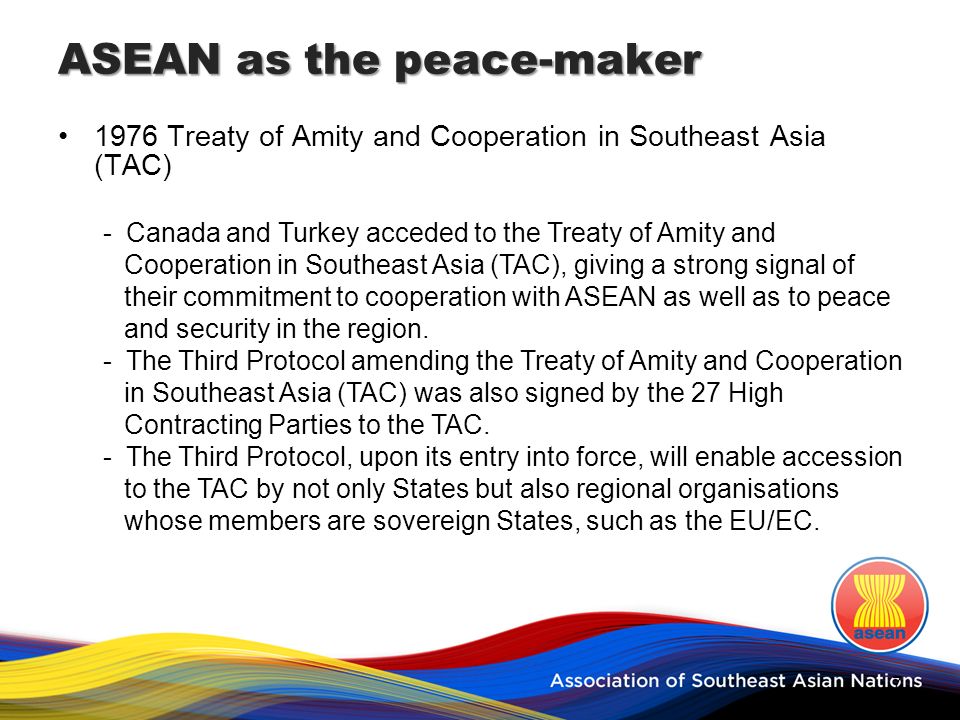
    To achieve “the ASEAN way”, Treaty of Amity and Cooperation in Southeast Asia (TAC) was signed.

    TAC Treaty

    It provides the guiding principles of ASEAN

    1. They’ll not interfere in the internal affairs of one another,
    2. They’ll not use threat or use of force to settle differences / disputes
    3. They’ll settle of differences or disputes by peaceful means,
    4. They’ll effectively cooperate among themselves.
    5. They’ll mutually respect each other’s’ independence, sovereignty, equality, territorial integrity and national identity
    6. Every State has right lead its national existence free from external interference, subversion or coercion, India had signed TAC treaty with ASEAN in 2003

    Timeline: Growth of ASEAN since 90s

    source

    A generic timeline wrt. origins and expansion

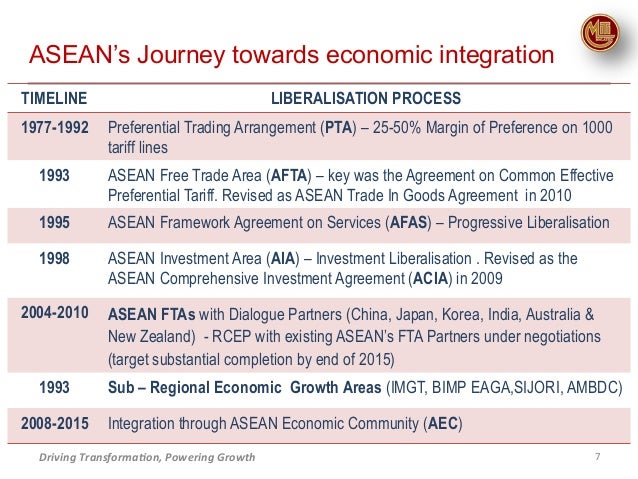
    1994 ASEAN regional forum (ARF)
    1997 ASEAN+3 is formed to increase regional integration. This includes

    1. China
    2. Japan
    3. South Korea
    2002 Treaty to control haze pollution in South East Asia
    2006 ASEAN gets observer status in UNGA (General assembly)
    2007 Cebu declaration for energy securities and renewable energy.
    2010 Chiang Mai Initiative (CMI)

    It is a currency swap agreement among ASEAN +3,

    It provides emergency liquidity to those economies during crises.

    2012 Asean Human Rights Declaration

    21st ASEAN Summit in Phnom Penh Combodia with theme:“ASEAN: One Community, One Destiny”

    2013 22nd ASEAN summit in Brunei, theme: Our People, Our Future Together.
    2015 ASEAN community will be setup.

    ASEAN Community (2015)

    Similar to European Union, ASEAN community is a dream with three pillars

    1. ASEAN Political Security Community
    2. ASEAN Economic Community
    3. ASEAN Socio-Cultural Community

    This old article at The Diplomat analyses the importance (or lack of it) of such initiatives. The important paragraphs are reproduced here:

    The ASEAN Leaders have declared that the 2009-2015 Road Map consisting of the three Community Blueprints – Economic (AEC), Political-Security (APSC), Socio-Cultural (ASCC) -shall form the basis of the overall ASEAN Community (AC15). Of course, the ASEAN Charter and other subsequent key initiatives would also define the AC15. By focusing on the broader goals, objectives, strategies, and targets set in these instruments, the contours and key markers of the AC15 can be easily framed, both in quantitative and qualitative terms as appropriate.

    More work needs to be done on trade facilitation, expedited uniform customs clearance, removal of non-tariff measures, and facilitated movement of skilled persons. The Open Sky policy has clearly benefitted the people resulting in a dramatic increase in air travel, physically bringing ASEAN people closer for meaningful interaction and regional integration.

    The fact that ASEAN has been a relatively peaceful region compared to the rest of the world should score high for APSC. The Preah Vihear Temple, Sipadan and Ligitan Islands, Pedra Branca, and even development issues such as the Malayan Railway Land deal between Malaysia and Singapore have shown the States’ maturity in using bilateral, regional and international mechanisms to resolve disputes amicably while accepting the verdicts gracefully.

    Such multiple channels of dispute settlement should be pursued concurrently for the South China Sea disputes.

    ASEAN has also been affected by terrorism and transnational crimes. Ensuring a drug-free ASEAN by 2015, on hindsight, is way off the mark, but with recent record-breaking seizure of illegal drugs, coordinated enforcement, and severe penalties we should be moving steadily towards that goal. The ASEAN Intergovernmental Commission on Human Rights is already operational, and more needs to be done on human rights protection.

    Has ASEAN worked for the world & how?

    ASEAN’s 3 greatest contributions are peace, prosperity, and geopolitical stability for Southeast Asia. We source this content from a Mckinsey study:

    A. Why is peace such a big thing to achieve & maintain here? Here’s why:

    ASEAN includes 240 million Muslims, 125 million Christians, 150 million Buddhists, 7 million Hindus, and 50 million followers of folk religions. ASEAN’s political systems, too, span a wide spectrum, from competitive democracies to one-party states and monarchies.

    How did ASEAN achieve peace?

    #1. It cultivated a culture of “musyawarah and mufakat” (“consultation and consensus” in Indonesian). This ethos is now hailed by many as the “ASEAN way” and has helped nations such as Myanmar achieve a peaceful transition from decades of harsh military rule, while nations in similar situations in other regions—Syria, for example—were riven by conflict

    #2. ASEAN now organizes more than 1,000 meetings a year that touch on virtually every topic, from trade to tourism and from health to the environment. As a result, thousands of invisible formal networks have evolved in the region

    #3. ASEAN embraced a policy of nonintervention. The West frowned on this and encouraged ASEAN states to criticize one another when their human-rights records slipped. Yet ASEAN countries wisely ignored this advice and assiduously avoided meddling in one another’s domestic affairs. The result has been peace

    B. With peace comes prosperity and poverty reduction

    #1. From 2001 to 2013 alone, ASEAN’s combined GDP rose threefold, reaching $2.4 trillion. If the ASEAN bloc were a country, its growth rate during those years would rank second to China as the highest in Asia

    #2. Between 2004 and 2011, ASEAN member states’ trade volumes, among one another and with the rest of the world, more than doubled

    N4S: You do not have to memorise the figures and chances are you won’t be much overwhelmed by them because much of you wont remember similar figures across other economies. Chill. Just understand that ASEAN has done better economically 🙂

    C. Geopolitical collaboration among major powers

    ASEAN has played an important role in reducing geopolitical tension and rivalries by providing an annual platform for all the great powers to meet and resolve outstanding issues. Don’t take our word for that:

    In 2010, when Sino–Japanese relations took a downturn over disputed islands in the East China Sea, Chinese Premier Wen Jiabao and Japanese Prime Minister Naoto Kan met on the sidelines of an ASEAN meeting in Hanoi.

    In addition, each year the ASEAN Regional Forum (ARF) plays host to 27 different countries to discuss security issues in the region. Many major powers attend, including the United States, the European Union, China, India, Japan, Russia, and South and North Korea.

    Sensitive topics that have been discussed on the sidelines of the ARF include North Korea’s nuclear program and maritime disputes in the South China and the East China Seas.

    Potential threats to continued success? Note these 2:

    A. Geopolitical Risk (USA/ China)

    World’s greatest power, the United States, and the world’s biggest emerging power, China—poses a new threat to stability throughout Asia. Why do we say so?

    1. In Phnom Penh in July 2012, for the first time in its history, ASEAN failed to issue a joint communiqué after its annual meeting. This failure stemmed from the unwillingness of Cambodia, then the ASEAN chair, to allow mention of several member states’ maritime disputes with China, a close economic partner
    2. At the 24th ASEAN summit in Naypyidaw, Myanmar; there, despite harsh remarks by Vietnam’s prime minister, the official ASEAN statement made no mention of the Chinese deployment of a giant oil rig in waters claimed by both nations about 150 miles from Vietnam’s coast

    B. Rising of India, China as Asia superpowers

    In the 1970s and 1980s, when China was just opening up its economy and India remained closed, ASEAN had little difficulty in outpacing either in attracting FDI. While China has caught up now, India’s share of global FDI has remained low, reaching only 1.9 percent in 2012, but that could change quickly if India follows through with the economic-reform agenda it began more than two decades ago.

    Good news for India then (UPSC ahoy!) but bad news for ASEAN:

    In response to this new competition from China and India, ASEAN launched two major economic projects:

    1. The ASEAN Economic Community (AEC) and
    2. Regional Comprehensive Economic Partnership, both due for completion in 2015

    We all know that ASEAN countries are a lil liberal with their timelines 🙂

    India and ASEAN relationship

    A quick overview. Important items are highlighted:

    1992: India becomes ASEAN’s sectoral dialogue partner

    1995: India invited to become full dialogue partner in 5th ASEAN Summit, Bangkok

    1996: ASEAN invites India to become member of ASEAN Regional Forum

    2002: India and ASEAN begin to hold annual summit level meetings

    2003: India accedes to the Treaty of Amity and Cooperation in Southeast Asia at Bali summit

    2003: India signs framework pact for free trade agreement with Thailand in October

    2004: India-Thailand sign Free Trade Agreement

    2004: Negotiations with Malaysia begins on comprehensive economic cooperation agreement, Dec 20

    2005: India-Singapore sign Comprehensive Economic Cooperation Agreement, June 29

    2005: Joint study group set up for comprehensive economic cooperation agreement with Indonesia, Nov 11

    2007: India-ASEAN target $50m bn bilateral trade by 2010

    2008: India-ASEAN conclude free trade pact, Aug 28

    2008: India-ASEAN agree to negotiate pact on investment and services, Aug 28

    2014: India-ASEAN signs FTA


    Before you read ahead, please ensure that you know about the pecking order of the trade agreements – click here to read the different types of trade agreements

    Cons of India FTA Agreement:

    1. While there are many benefits to the ASEAN-India FTA, there is concern in India that the agreement will have several negative impacts on the economy.
    2. Aim of FTAs? To reduce their tariffs on a majority of their traded goods. This will allow them to increase the market access of their products. It is criticised, however, that India will not experience as great an increase in market access to ASEAN countries as ASEAN will in India.
    3. The economies of the ASEAN countries are largely export-driven, maintaining high export-to-GDP ratios (in 2007, Malaysia had a ratio of over 100%)
    4. Considering this, as well as the global financial crisis and India’s expansive domestic market, the ASEAN countries will look eagerly towards India as a home for its exports

    Kerala raised issues with PM Modi on this:

    Before the agreement was signed, the Chief Minister of Kerala, V.S. Achuthanandan, led a delegation to the Indian Prime Minister protesting against the FTA:

    1. The state of Kerala is an important exporter in the national export of plantation products. It fears that cheap imports of rubber, coffee, and fish would lower domestic production, adversely affecting farmers and ultimately its economy
    2. Kerala has already experienced a flooding of its market with inexpensive imports under the South Asia Free Trade Agreement of 2006. What’s that?
    3. Cheap coconuts from Sri Lanka and palm oil from Malaysia has since hindered Kerala’s coconut cultivation.

    If you have the bandwidth to study more on the legacy issues between India and ASEAN, here are some references:

    1. http://www.ipcs.org/article/india/india-asean-fta-gap-between-expectation-and-reality-4644.html
    2. http://www.mckinsey.com/industries/public-sector/our-insights/asean-the-way-forward
    3. http://www.idsa.in/idsanews/india-asean-approach_080416
    4. http://www.ideasforindia.in/article.aspx?article_id=1593

    Previous Year Questions

    Q.1) Evaluate the economic and strategic dimensions of India’s Look East Policy in the context of the post-Cold War international scenario. (2016 Mains)

    Q.2) With respect to the South China sea, maritime territorial disputes and rising tension affirm the need for safeguarding maritime security to ensure freedom of navigation and over flight throughout the region. In this context, discuss the bilateral issues between India and China. (2014 Mains)

  • 14 Aug 2017 | Target Mains: GS Questions With Official Answers

    GS Paper 1: World History

    Q.1) Industrial Revolution paved the way for new imperialism. Comment.

    NCERT

    Hints:

    Answer structure:

    1.  The Industrial Revolution began in Great Britain in the early 18th century, a time when European imperialism in the New World and around the coasts of Africa and Asia was already well underway. However, the Industrial Revolution fundamentally changed the nature of colonialism. It had previously focused primarily on trade in Africa and Asia and gold and agriculture in the New World.
    2. The Industrial Revolution vastly increased productivity in industrialized areas, leading to a need for more raw materials to keep up with technological capacity. As a result, Great Britain needed a source for raw materials, such as cotton to keep its textile mills running. The need for cotton was part of the reason for British takeovers in India, Egypt and other areas.. Additionally, colonies gave the Western powers a ready-made market for their goods, as the colonized people were left with little to no legal recourse to produce their own finished products.
    3. Technological advances in Western arms and transportation commonly made indigenous resistance to imperial incursions futile and short-lived, as Westerners had far superior weapons, ammunition, strategy and tactics.
    4. Additionally, technological advances made former threats to European settlement and survival in equatorial zones less daunting. For example, the development of the steamship eradicated the danger posed by the mouths of many African rivers. The steamship could simply be dissembled, brought inland and then reassembled for river travel, while wooden sailing ships previously could not. Similarly, industrial age advances in medicine brought quinine, a supplement that exponentially increased the survival rate of Western imperialists in malarial areas, acting as a preventative, though not a cure. Thus, Westerners could now worry much less about disease, whereas before quinine, severe fever and even death often came within weeks after arrival.

    GS Paper 2: Polity & Governance

    Q.2) Do you think article 35A should be abolished? Critically comment.

    Source:

    http://www.huffingtonpost.in/2017/08/07/why-its-dangerous-for-the-centre-to-tamper-with-article-35a-in_a_23068270/

    http://www.firstpost.com/india/article-35a-apart-a-larger-debate-over-article-370-is-needed-for-permanent-solution-to-kashmir-problem-3907729.html

    https://swarajyamag.com/politics/why-article-35-a-has-to-go-and-go-now-

    Introduction:

    • Article 35 A of Indian Constitution provides special powers to the state of Jammu and Kashmir legislature in respect of granting citizenship rights to any Indian or a group of Indians. It empowers the state legislature to define the classes of persons who are, or shall be permanent resident(s); gives special rights and privileges or imposes restrictions in matters or availing state facilities.
    • The provision of this article has been in controversy recently because of its discriminatory and biased nature and hence many experts demand it to be amended or abrogated.

    The following argument supports its abrogation:

    • Article 35 A was added to the Constitution by a Presidential order and hence has not been followed the procedure under Art 368. It ultra virus the basic structure and violates the Constitutional procedures established by law as Article 370 (special privileges to J&K) does not anywhere confer on the President legislative or executive powers so vast that he can amend the Constitution or alone perform the function of Parliament.
    • It facilitates the violation of the right of women to ‘marry a man of their choice’ by not giving the heirs any right to property, if the woman marries a man not holding Permanent Resident Certificate (PRC).
    • The industrial sector & whole private sector suffers due to the property ownership restrictions. Good doctors don’t come to the state for the same reason.
    • It gives a free hand to the state government and politicians to discriminate between citizens of India, on an unfair basis and give preferential treatment to some by trampling over others, since the non-residents of the state are debarred from buying properties, getting a government job or voting in the local elections.
    • It ruins the status of West Pakistani refugees. Being citizens of India they are not stateless persons, but being non-permanent residents of Jammu and Kashmir, they cannot enjoy the basic rights and privileges as being enjoyed by permanent residents of Jammu and Kashmir.
    • The Valmikis who were brought to the state during 1957 were given Permanent Resident Certificates on the condition that they and their future generations could stay in the state only if they continued to be safai-karmacharis (scavengers). And even after six decades of service in the state, their children are safai-karmacharis and they have been denied the right to quit scavenging and choose any other profession.
    • In nut and shell we can say that the provisions of Article 35A violates Right to equality under Article 14, 15, 16, 17 and 18; right to reside anywhere in India Article 19; right to live with dignity Article 21; Right to vote Article 326 and many of the rights conferred under Directive Principles of State Policies particularly related to women and children.

    However, many expert calls this move raised with ‘communal minded majoritarian’ intentions and support the existing of Article 35A on the following grounds:

    • It protects demographic status of the state in its prescribed constitutional form by not allowing any outsiders to own any property.
    • The Article does not only recognizes the special protection granted to the state of J&K in terms of constitutional, legislative, executive orders but also clarifies and validates their existing provisions and hence this Article, on its own, does not give anything new to the State.
    • The rebate given to the state of J&K in instrument of accession and subsequently added to the constitution of India in the form of Article 370. This Article 35 A is a clarificatory provision draws its rights from Article 370 and strengthens the provision of Article 370 without bringing anything new in demand.

    Conclusion:

    • However, the recent debate fuels the already ongoing unrest in the valley. Any temptation will further lead to violent unrest and bloodshed in the region. The separatist will get opportunity to divide the opinion of the masses causing uncontrolled situation if anything done on this sensitive issue.
    • The government however needs to deal with promptness and utmost vigour to balance the situation by dialogues, campaigns and debates by involving leaders, stakeholders & state citizens and convincing them about the post benefits of bringing changes.  The debate over the larger interest is the need of the hour which also includes the provisions of Article 370.
    • If Jammu and Kashmir is the integral part of India, it should not posses discriminatory provisions with other residents of the country and should adhere the constitutional provisions as a Union of India and not for the small state. The time demands the dynamism in law to do away with the flaws and the citizens of J&K should be the active part of it without having any vested interests.


    GS Paper 3: Indian Economy

    Q.3) “A more appropriate exchange rate would stimulate exports and dampen imports, just as it would help domestic manufacturing firms to be more competitive.” Upto what extent, this statement is correct from Indian Economy perspective.


    Source: http://www.livemint.com/Opinion/Iwsgmu6mIxf1eo0AYABdmL/A-strong-rupee-hurts-the-economy.html


    Exchange rate is the value of the currency of one country in terms of another currency. An exchange rate thus has two components, the domestic currency and a foreign currency. Based on exchange rate, a currency can be overvalued or undervalued. Currently, India follows the floating exchange rates unlike the fixed exchange rates in the past most. Currency fluctuations are a natural outcome of the floating exchange rate system that is the norm for most major economies.

    With the recent strengthening of the rupee to Rs 63.50 per US dollar and foreign exchange reserves at a record level of $393 billion, the picture looks bright one might claim. It is further believed that rupee will fall to Rs 60 per dollar by end of 2017.This might be a source of joy and pride for a few. But if our object is to stimulate investment, create employment and foster growth, it is a cause for serious concern.

    Overvaluation Vs Undervaluation of Rupee:

    Overvaluation of the rupee means that its price in terms of foreign currencies is too high compared to what it would be with a more appropriate exchange rate. This makes our exports expensive in foreign markets and our imports cheap in the home market.

    Undervaluation of the rupee means the opposite. Its price in terms of foreign currencies is too low, so that it discriminates against imports and in favour of exports.

    The exchange rate is a crucial price that determines the amount of rupees earned per dollar of exports and rupees paid per dollar of imports. Thus, it is a determinant of the price competitiveness of exports in world markets and the price competitiveness of imports in the domestic market.

    The persistently overvalued exchange rate in India means that the rupee is overpriced. The economy needs a strong exchange rate for confidence, together with high interest rates for profitability, to sustain such portfolio investment. These capital inflows drive prices up in stock markets and add to foreign exchange reserves.

    The consequent switch in domestic expenditure from home-produced goods to imports did lead to a contraction in aggregate demand which would have had a dampening impact on economic growth.

    Some part of the explanation lies in domestic economic factors such as infrastructure or quality but these have been problems for a long time. The exchange rate of the rupee has been the main culprit in recent years.

    First, portfolio investment flows have a significant impact on the exchange rate. If we plot the exchange rate of the rupee on one axis and portfolio investment inflows on the other axis in a graph, for every month in recent years, it is apparent that large inflows lead to an appreciation of the rupee and large outflows lead to a depreciation of the rupee.

    The appreciating overvalued rupee erodes the price competitiveness of exports and enhances the price competitiveness of imports, which hurts the profitability of domestic firms and is bound to enlarge the trade deficit. At a macro level, this also leads to a contraction in aggregate domestic demand so that economic growth is slower than it would have been in the absence of an appreciating rupee.

    In addition, further tightening of monetary policy at a time when the domestic currency is already unduly strong may exacerbate the problem by attracting more hot money from foreign investors, who are seeking higher yielding investments (which would further push up the domestic currency).

    The way forward:

    A strong domestic currency exerts a drag on the economy, achieving the same end result as tighter monetary policy (i.e. higher interest rates). It should be imperative to now drop interest rates, which would also help the exchange rate depreciate. Together, these would stimulate investment and revive exports, which in turn will drive economic growth and employment creation from the demand side. The time is also most opportune as the consumer price annual inflation rate has also dropped to 1.5% in June 2017. A holistic approach and a balance in the exchange rates is necessary to avoid multiplier adverse effects in the various sectors of the economy.


    GS Paper 4: Ethics & Integrity

    Q.4) In India under-utilisation and misutilisation of public funds and their implications is a serious concern. Discuss the role of effective utilization of public funds in meeting development goals. Suggest with examples how public funds can be effectively utilised.

    In India, the funds are either underused or misused. The various reasons for this are

    Budgetary allocations-March rush- not properly utilized
    -Lack of awareness/reluctance on the part of the bureaucrats, though provisions existing
    -Divesting of funds from certain departments to other.
    -Following result based approach, neglecting spill-over effects of funding eg: education, health.

    -Funds like MPLADS are not properly spent rather used in the next elections for vote-buying
    -Not following transparent mechanisms like auctioning in awarding tenders
    -Government giving bail out to certain loss-making PSUs

    This has serious consequences such as unearthing of lot of scams affects people’s faith in democracy and their tax compliance- because they feel cheated. Due to increase of black money, India is lagging in many human development indicators.

    It is very important to ensure that the funds are utilised effectively. This can be done by
    1) Promoting transparency in the use of funds.
    2) Bringing awareness among people to use RTI mechanism effectively
    3) Strengthening ombudsman systems like Lokpal, Lokayukta.
    4) Curbing political interference.
    5) Audit by independent authorities and CAG to audit those corporate bodies which take substantial amount for projects from Govt.,
    6) Curbing lobbying activities.
    7) Addressing the issues of red-tapism, nepotism.
    8) Better usage of technology and e-governance
    9) Target driven approach to bureaucrats in spending and obtaining results.

More posts