💥UPSC 2026, 2027, 2028 UAP Mentorship (March Batch) + Access XFactor Notes & Microthemes PDF

Search results for: “”

  • Civilsdaily.com featured on Killerstartups.com

    Read the complete article here: http://killerstartups.com/startup-reviews/civilsdaily-current-affairs

    News Flash: Civilsdaily Gives Current Affairs A Much Needed Overhaul

    Don’t get me wrong, I’m a fan, but there’s a whole lot more going on in the world than Stephen Colbert beginning his tenure at The Late Show.

    Good grief, it’s become difficult to get to real news these days.

    There’s so much content available online that it’s tough to cut through the noise and get to the goods. Even if you do reach “news” sites, the offerings are pretty scant. Soundbites. Breezy writing, more about entertainment than delivering news. And lots and lots of vapid clickbait.

    Civilsdaily looks to put the news back into news. At the moment, this news source can be found on either desktop or for download on Android devices at Google Play.


    Civilsdaily delivers breaking news and daily events in the form of flashcards. Before your mind runs to Flipboard (because the app does bear a useful similarity) Civilsdaily does more than toss out headlines. It provides news cards with a curated list of key point summaries. It shares, you know, details, information – the news instead of the preprogrammed response of so many media outlets.

     To be fair, the Internet has diversified the voices covering the news. Reading or listening options outside the mainstream abound. However, crisp and smart coverage is still lacking. Huge props to Civilsdaily if they can turn a penetrating spotlight back onto current affairs that truly matter.

    The chronology of flashcards makes it much easier to follow stories (just getting started, the focus at the moment is almost entirely on India). No, gleaning stories from all over the web that are related to a topic isn’t the same as keeping a clear view of a developing story. Civilsdaily collects stories on the website for connecting the dots and gaining a better understanding of milestone events in a news cycle.


    Like other news apps, there’s room for discussion, the ability to search news by category, and to receive the latest from your favorite news sources. You’ll get to decide for yourself, of course, but a quick survey shows that, in addition to these common news  elements, the top stories and most discussed stories on Civilsdaily have a gravitas that is both refreshing and hard to come by online.

     So, if you’ve had your fill of mindless lists and excess silly videos, if you’d prefer more news and less attitude in your news – basically, if you’re hungry for a better, on point news source, you’ll want to have a closer look at civilsdaily.com without delay.

  • PM Modi’s Big Boss House!

    September 8, 2015. There was a flurry of activity at 7, Race Course Road. After all, PM Modi had decided to host the Big Boss show in his own house. The who’s who of industry, banks, industry associations, ministries, mutual funds and the RBI would be called in as inmates. The event was bound to be full of masala and histrionics.

    Inmate selection had been a nightmare. Cyrus Mistry had been extremely ruffled by the huge outlays that Big Boss had promised on roads and infrastructure in the last budget. “After all the pain we took to create a toy car which can navigate all the potholes! This guy is going to kill my small car business!” Even after 10 phone calls from the PMO, the man refused to attend. It was only after FM Arun Jaitley cleverly pointed out that there is a difference in outlay on roads and laying out the road that Mistry came to the House.

    Sunil Mittal pooh-poohed the whole idea of having a physical meeting in digital India and offered 5G connections to ModiG. “What an absurd idea!” remarked Kumar Mangalam Birla, deciding to nominate the Airtel candidate for eviction immediately.

    “Hehehe. Do what you will, guys, but end of the day, there’ll be only one winner. RIL.” That was Mukesh Ambani, the one inmate who had immediately accepted the Big Boss’ invite. He had already won several Big Boss seasons. Mallya did not have dates in his calendar and was not invited.

    Culinary conundrum

    There was a big issue over who would cook. Chief Economic Advisor Arvind Subramanian, having established himself firmly in the culinary department with the introduction of JAM (Jan Dhan, Aadhar and Mobile scheme) in the Economic Survey, was called in to cook up some steam in the stale economy. Pancake would be cooked by Panagariya, the other Arvind. Minister Goyal, the “power” factor, was jealous of Minister Dharmendra Pradhan, whose job of supplying oil at low prices was being undertaken by the Saudi Prince himself.

    The Governor of the People’s Bank of China Zhou Xiaochuan was invited as the firang guest. However, he cleverly declined seeing that the mutual fund inmates had donned “khali” looks at the mere mention of yuan devaluation. It is a nice game of thrones, thought Big Boss, with the policy team at loggerheads with implementation. “Take risks!” he boomed and the game began.

    The games begin

    RIL wanted all taxes to go; no I-T, no MAT, and certainly no GST. It also demanded no SIA and no ecological assessment when it acquired land. FM Jaitley, startled at such extreme demands, remarked that Mukesh needs to be the next FM. Mutual funds wanted bears out of the house. The bears said volatility needs to be evicted. The industry pointed fingers at banks for keeping rates so high. SBI chief Ms Bhattacharya bristled visibly and asked why the inmates had taken loans they couldn’t repay.

    “But why don’t you reduce interest rates?” There was a sudden silence as Big Boss spoke. Ms Chanda Kochhar delicately looked at her empty glass. “No liquidity, Big Boss.” RBI Governor Raghuram Rajan, who was brought in to keep “interest” on the show high, started uncomfortably. No matter how slowly the government moves on critical infrastructure, he knew that eventually his interest rate policy would be blamed for the slow pace of investments. “The weak transmission,” he began but was shouted down by the other inmates. The show had begun.

    Big Boss smiled. He could see his TRPs going up.

  • Demystifying The Concept Of Diplomatic Immunity

    As the news gather storm over a Saudi diplomat facing allegations of rape and assault by two Nepalese women, we thought of demystifying the concept of diplomatic immunity, its different variants and international obligations governing it.

    Diplomatic immunity is a form of legal immunity to ensure that the diplomats are given safe passage. The diplomats are not prone to legal case/prosecution under the host country’s laws.

    Now, the obvious question arises, what is the need for such kind of immunity?

    Because this helps the Diplomats to perform their functions without fear, threat or intimidation from host country. You would have guessed this as well, right? Heh. So the budding IFS officers have something to look forward! Roam freely in a country *like a boss*! But let’s look over to some sober aspects of this provision.


    Diplomatic Immunity is classified under 3 heads:

    #1. Embassy

    An embassy is a primary diplomatic presence established by one country in another that it recognises.

    • The chief official posted here is Ambassador
    • It is usually situated in the capital city
    • There is only one embassy per foreign country

    Immunity: The diplomats along with their family members enjoy complete immunity. The administrative and technical staff, who are posted at embassy, receive immunity along with their families. This kind of immunity is inviolable. It is governed by The Vienna Convention on Diplomatic Relations.

    #2. Consular/Consulate Office

    • It is generally located where many of its citizens live or visit.
    • The purpose is to provide government services to individuals living in a country where consulate is located.
      <And now you would be thinking, if there is already a embassy for this, then why do we need it all!>

      We will try to understand with an example, that is, if millions of Indians are living in US, then would it feasible for all Indians living in different parts of US to visit Washington <where the Indian embassy is located> to avail services like renewing passport, or any other assistance. No right? Similarly, if American citizen who is willing to visit India will have to get their visa by visiting embassy. Wouldn’t it be difficult for Indian’s as well as American’s?

    That is the reason, India has multiple consulate offices at US. Now, let’s move on to the kind of services a Consulate provides?

    1. Issues visas to foreign nationals
    2. Issues and renews passports for its own citizens, living in a foreign country
    3. Assists its citizens travelling abroad with issues of marriage, divorce, adoption, legal emergencies, etc.

    IFS probables might be wondering about the immunity clause for such offices

    Immunity: Diplomats posted at consulate gets immunity, except for charges of serious crimes, if a warrant is issued. However, there is no diplomatic immunity for the family. This is also governed by The Vienna Convention on Consular Relations.

    #3. International Organisations

    Some countries would have missions in international organisations. The diplomatic immunity then depends on the status provided by the country, whose mission is located at other country. For instance, India has a permanent mission at United Nation. It enjoys the status of embassy. Therefore, all the immunity of an embassy applies here.

    <Now, starts the journey for the recent controversy, the most awaited thing for the stalwarts>

    So, what are the conditions when the immunity can be waived?

    Officially, the home country can waive immunity, when the official has committed a serious crime, unconnected with their diplomatic role.

    However, it is discretion of the home country to decide whether it wants to waive it or not. Alternatively, it can also prosecute the individual in their own country.

    Won’t it be better if we explore what Vienna Convention at this point of time?

    The diplomatic immunity cannot be violated, unless the country that has posted the diplomat waives it off.

    It also says that the diplomatic residence of a diplomatic agent shall enjoy the same status <protection> as the premises of mission. <Recently, the Gurgaon police violated this clause and entered the residence of Saudi diplomat to rescue the two Nepalese women.>

    I hope, if you are able to remember the curious case of Devyani Khobragade. Hope you could recall that! let’s bring that in this big picture now.

    She was posted as a deputy consul general at the Indian Consulate in New York. Since, she was posted in a consulate, she was governed under the Vienna Convention on Consular Relations, which provided her limited immunity. This led to her arrest and strip searched for alleged visa fraud, violating domestic laws of US.

    And later on, as you would remember, the Indian govt. transferred her to the Permanent Mission of India to UN, which enjoys the status of an embassy.

    Hope, it clears the grey areas present in the diplomatic immunity!


    Published with inputs from Pushpendra


  • How to Study Effectively for Civil Services

    Over the years, across the generations a lot of gyan has flown through on how to crack this or that exam.

    While we do believe that every IAS aspirant needs to develop his/her own strategy keeping his/her strengths and weaknesses in perspective, there are some basic things which you can keep in check right from the start!


    … and crack the civil services with elan!


    Space out your study sessions – Don’t let your enthusiasm get the better of you!


    Cracking Civil Services is no mean task. Make sure you do not constrain yourself in a 4*4 room.


     There’s a lot to study and a lot to memorize!

    Mornings: Your mind has not yet been burdened with all the information and stress you accumulate throughout the day.

    Evenings: Information obtained right before sleep is much more likely to be transferred into your long-term memory.

    Right after Class: It’s the best time to review since you don’t have to deal with re-learning things you might have forgotten if you delay it until later.


    Most of these points have been distilled from studies across the internet and they hold true across most of the exams. We are sure that most of you will vouch for them as well!

    We would love to know what works best for you! Share your peak performance strategies with us and we would feature them in our blog posts!


  • Debating Santhara: The Right to Death

    What is Santhara?

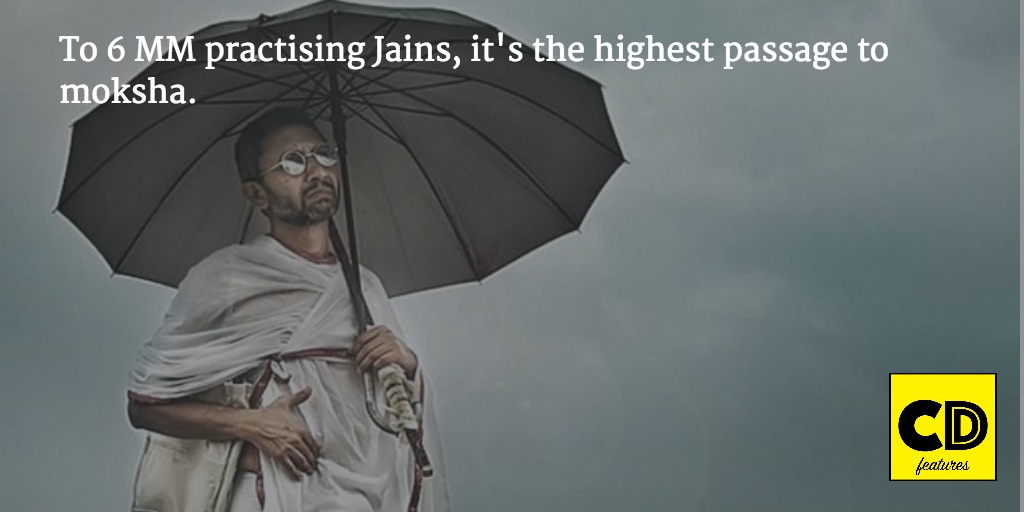
    Santhara also called as Sallekhana, Samadhi-marana, Sanyasana-marana, is the Jain ritual practice of facing death voluntarily at the end of one’s life.

    What’s so significant about this practice?

    1. From Jain community, Santhara, is believed to have been practised since the foundation of Jainism and finds mention in its agams (religious texts).
    2. The Pratikramana Sutra in Shravaka Anuvrata (the code of conduct for Jains) clearly explains santhara, saying that when all purposes of life have been served, or when the body is unable to serve any more purpose, a person can opt for it.

    Then, why do some people oppose it?

    1. Human rights activists alleged that it’s a social evil, and old people are made to undertake Santhara by family members who don’t want to look after them for a variety of reasons.
    2. The petition in the High Court compared the practice with that of Sati.

    Okay, so how did it all started? When did the case come up before the Rajasthan High Court?

    1. In 2006, Jaipur-based lawyer Nikhil Soni filed a public interest litigation and sought directions under Article 226 to the central and state governments to treat Santhara, the fast unto death practised by Swetambara Jains (Digambars call it Sallekhana), as illegal and punishable under the laws of the land.
    2. Calling it suicide and, therefore, a criminal act, the PIL also sought prosecution of those supporting the practice for abetment to suicide.
    3. The PIL argued that death by Santhara was not a fundamental right under Article 25 (freedom of conscience and free profession, practice and propagation of religion), because it violated the right to life guaranteed under Article 21. It argued that religious freedom is subject to public order, morality and health.

    What did the High court say in its order?

    1. The Bench said that it was not established that Santhara or Sallekhana is an essential practice of the Jain religion. Jain scriptures or texts don’t say that moksha (salvation) can be achieved only by Santhara.
    2. According to the judges, it was one thing to argue that Santhara is not suicide, and quite another to say that it is a permissible religious practice protected by Articles 25 and 26.
    3. The court asked the state to stop the practice in any form, and directed that any complaint made in this regard be registered as a criminal offence in accordance with Section 309 (attempted suicide) or Section 306 (abetment to suicide) of the IPC.

    So many articles cites, so much legalities brought into the picture! So, what did the Jain Community say?

    1. Jain community defends that, Santhara is an ancient religious practice aimed at self-purification.
    2. The vow of Santhara/Sallekhana is taken when all purposes of life have been served, or when the body is unable to serve any purpose of life. It is not the giving up of life, but taking death in their stride.

    How did the Jain community react to the judgment? What line have the Rajasthan, Madhya Pradesh and central governments taken?

    1. No government has articulated an official line, but politicians, including ministers, have criticised the judgment.
    2. Members of the Jain community took to the streets immediately by organising protest rallies.
    3. On August 24, the community took out massive silent rallies in several cities and towns. In meetings held before the rallies, members of the community openly criticised the judges, calling them ignorant and disrespectful of religious practices.

    How does constitution interpret this issue? <and this is the part which should be important for an IAS Aspirant>

    1. The preamble to the Constitution states that the Constitution secures to all its citizens liberty of thought, expression, belief, faith and worship.
    2. Article 25 guarantees that every person in India shall have freedom of conscience and a right to profess, practice and propagate religion.
    3. Article 29 goes further and declares that any section of citizens having a distinct culture shall have a right to conserve the same. If any law comes in conflict with constitutional rights, it will have to yield.”

    Relief from SC judgement?
    The Supreme Court restored the Jain religious practice of a ritualistic fast unto death by staying an order of the Rajasthan High Court, which compared it to an act of suicide.

    Some philosophical issues which spring out of this debate

    This has been a debate that pits state versus individual; law versus custom; and the right to life versus the right to choose the outcome of one’s own life.

    1. In the context of law the issue is presented as a conflict of rights, that is, between the right to freedom of religion and the right to life. When posed in this way, Santhara comes to be cast as a ritual or a religious practice, an action, rather than a way of knowing and being.
    2. It is framed as a choice to die rather than as a fast unto freedom, expressed in terms such as “she left her body” as opposed to “she died” or that “she is dead.”
      The practice exemplifies how the subject or self is regarded as continuing to exist and flourish long after it leaves the body, rather than as coming to an end.
    3. This practice cannot be compared to Sati, as some have done, arguing that it is coerced and mainly forced upon women. Not only is the vow made by both men and women in the Jain community, the fast is undertaken by the concerned subject for self-realisation, and not for some dead husband or for the sake of honour, self sacrifice, and all the other hugely problematic reasons given to justify violent acts towards women through the language of familialism and sacrality.

    Have other religious practices faced legal challenges earlier?

    1. Bal Diksha, the controversial practice in which children as young as 8 years take diksha to become ‘Bal Munis’, a role that requires them to observe a strict, regimented lifestyle, has been challenged in the courts.
    2. Case was filed in Goa against a naked Digambar monk for obscenity. When an amendment in the Wildlife Protection Act was proposed to ban domestic trade of peacock feathers, the community feared that monks would be stopped from carrying peacock feathers.
    3. The community is also against a ban on open defecation because that is the way some monks answer nature’s call.

    So, what’s your opinion on Santhara ritual? It’s curse or sacred in fundamental nature of ritual?


    Published with inputs from Arun
  • India’s immunization Program: How is IPV different from OPV?

    Before we proceed to understand how IPV works, let us first explore the concept of vaccination?


    The basic principle behind the vaccination/immunization is that the pathogen is introduced into the body either in the live attenuated/killed form, to generate memory cells. <Why and How of this will be explored in a short while>

    A vaccine will generate a primary immune response which helps in establishing the memory about the foreign antigen. This is what principally happens in the body, when a vaccine is provided into the body.

    Now, what will happen when actual virus attacks the body?
    There will be a strong secondary <mind it, primary response was seen during vaccination> immune response quickly, which will involve the massive production of antibodies against the same infection.

    Now, let’s analyse the difference between primary and secondary immune response?
    The primary immune response is weak in potency and work for short duration, where as secondary immune response generates large concentration of antibodies in short duration. The latter helps in providing strength and these antibodies circulate for the longer period of time, mitigating foreign antigens.

    Live Attenuated vis-a-vis Inactivated Vaccine
    In live attenuated (meaning weakened), the virus which is introduced in the body is not dead, it is only weakened. This virus shows more properties of a real polio virus, which will lead to vaccinated individual developing more memory of polio virus and handling it.

    Inactivated vaccines is produced by killing the disease-causing microbe with chemicals, heat, or radiation. Such vaccines are more stable and safer than live attenuated vaccines. The dead microbes can’t mutate back to their disease-causing state.

    Now, we come to explore the Vaccine Derived Virus
    Actual discussion starts here, because this will showcase the need to introduce IPV for Polio.

    One of the disadvantage of live attenuated vaccination is that the safety margins are little less, i.e. if a person is suffering from any serious ailment such as TB, HIV,etc., then his immune system is vulnerable, which might lead to multiplication and mutation of vaccine virus. This will cause clinical infection, which is also called vaccine derived infection.

    Now, it will be easy for you to understand the debate on OPV vs. IPV – How is IPV different from OPV?

    Injectable Polio Vaccine is made up of heat-killed virus that cannot cause the disease in any case, because the pathogen is not alive. However, it does produce the memory in the cells, required for immunity.

    Oral Polio Vaccine is made up of live-attenuated virus, which is nearly incapable of producing an infection.  This type of vaccination helps in providing immunity to wild-type of virus.

    Now, what exactly India is planning to do?

    1. National Technical Advisory Group on Immunisation (NTAGI) recommended that India should introduce Injectable vaccine, as we have achieved polio free status.<wild type infection only>
    2. India is introducing IPV in its Universal Immunization Programme (UIP).
    3. There will be shift from tri-valent variety OPV(P1, P2 and P3) to bivalent OPV (P1 and P3), so as to reduce incidence of vaccine-derived poliovirus.
    4. However, IPV will be administered for all the 3 strains of virus, providing immunity to a child from all 3 strains.
    5. IPV will be given in addition to existing OPV, in order to boost population immunity.

    Now, the obvious question that arises, that why are we stopping OPV for P2 type?

    The wild-type P2 variant was eliminated in 1999. As, it will not be administered in OPV form, the propensity to manifest as a vaccine derived infection will be countered.<In simple words, we will be able to eliminate vaccine derived polio virus of P2 type>

    If OPV can lead to vaccine-derived polio infection, then why don’t we switch to IPV only regimen? Because my friend, there are huge challenges in administering IPV:

    • It requires skilled professional, as the vaccine needs to be injected
    • The dosage is very costly, approx $1/dose!

    Any further questions?


    Published with inputs from Pushpendra
  • A Beginner’s Guide on How to Clear IAS

    IMP: Civilsdaily IAS Prelims 2018 Test Series Module Launched – Click here


    If you have come across this page via a simple google search on “How to Clear IAS” or “How to Prepare for Civil Services” or any related SOS call on this mother of all examination, then we can safely deduce 2 things –

    1. We are sort of getting famous (or at least we would like to think so!)

    2. You have already made up your mind and probably want some really basic – quick tips to start with – just to see that you get the initial things correct OR you are the done with the 9to5 job – start up idea nahi hai – life mein kya karein junta and you are thinking of giving Civil Services a shot!

    If on the other hand, you are a regular reader at this website, you would agree that it’s a customary job of every self respecting IAS Prep site to give out occasional gyan on how to clear IAS!


    Update #1: Prelims Paper 1 Syllabus for UPSC

    Fair enough? In quick points then, here are the 5 commandments that will do well to get started with the IAS Prep. Advanced gyan later!


    #1. Start slow, Build on your strengths & Focus on Environment & Biodiversity

    Preparing from civil services is like taking an extended sabbatical from regular life and getting on a train to Hogwarts  Wasseypur to take on an unprecedented enemy. One day you are casually browsing through articles such as this and the other day you have 10kg worth of material piled up on your study desk!

    You might have cleared the gruelling JEE or that unnerving CAT, got a stellar rating in those demanding corporate jobs or a magna-cum-laude certificate from a US university BUT nothing, virtually nothing overwhelms you like UPSC does!

    So, take things slow. It’s a long race and you need to develop an appreciation for the syllabus. This could be a start of something good – you will get to know policy matters, economic realities and the sad social reality of the country you live in and you might just be able to connect with your surroundings and grow a new found love for India in general!

    Except maybe for environment & biodiversity – We are yet to find a person who loved mugging up all the national parks and endangered species for the love of god! So, please have a headstart on E&B – Keep a tab on all small, big enviro related things in the current affairs and make a note in a copy – most of the questions are asked from the current affairs.

    A more comprehensive post on how to tackle E&B has been written by Satish (CSE 2014: AIR 97) – How to Approach Enviro & Biodiversity?


    #2. The Old and New NCERTs and then a few more Books!

    Remember the time when you used to scoff at civics – that thin, small, parchment sized book which used to form a meagerly 20% part of your SST syllabus in class 9th and 10th? Of course you do!

    That non-existent subject now forms a big part of the UPSC Syllabus in a new avatar – The Indian Polity.

    Remember those moral science classes you used to have where the teachers tried hard to make an adarsh balak out of you? Yes, no? Well, UPSC has made a full fledged GS Paper out of it – Ethics, Integrity and Aptitude.

    So, what’s the point? 

    The point is that this is the time to pay homage to the old gods and new those NCERTs and quickly brush up on the concepts. Do not waste time hankering between old or new books. Get hold of the new NCERTs – go through them briskly – they are easy to read, are less boring and may delude you into believing that clearing IAS is a cake walk!


    That’s where you need to graduate you to a bit heavier books – Laxmikanth for Indian Polity, Bipan Chandra for Pre and Post Independence and so on. We will furnish the reference books in a separate post and link that here soon.


    #3. Don’t over indulge on daily news. Not just yet. Build your basics first

    We made the Civilsdaily Android App for one reason and one reason alone – To make Current Affairs more approachable. So, keep up with the daily Newscards on the app – you will slowly get a hang on the events of national and international importance.

    Once you cover the NCERTs and build some command over the static part of the syllabus, you will be able to understand news better. You would understand what Raghuram Rajan mean by rate cuts, what’s going on with India and the world or why is there so much clamour about the Judicial Appointments System.

    That’s when the real magic starts! That’s when you will be able to attempt questions better and bring out better analysis points!

    Update #2: Read our 3 point strategy post on Newspapers for IAS Prep

     #4. Discuss, debate and regroup!

    The golden rule is this – You will learn more from your peers than from your teachers. This held true in college and this holds true even now. But why’s that?

    We tend to have our biases and blind spots in life. We give more importance to some subjects, some themes (even at the expense of leaving out on other exam related important stuff) because that’s just how we are. And here is where your peers come to save you – their take on some issue could complement your learning and vice versa.

    You are more likely to remember those passionately argued points on labour laws or women issues than the ones mentioned in the XEROX booklets at Karol Bagh.

    The whole idea of this expansive UPSC syllabus is to make the future bureaucrats more sensitive about the various issues plaguing our country and having passionate aspirants in your study groups help!


    #5. Choose your Optional wisely

    All men are equal but some are more equal than others… And the 2 papers worth 500 marks @ IAS Mains are dedicated to the optional which will make or mar your chances. For some it’s a continuation of their graduation subject and for some it’s a whole new science (or arts if we should be precise).

    A good optional also serves as a good breather for the time when you feel overwhelmed and over-annoyed with all the GS around! So, take your time and test the waters before zeroing on one. We will come to your rescue with posts from some of the IAS Rankers on how and why they chose their optionals. Some of them are –

    For the benefit of our readers, we have compiled some 30+ posts written on the theme of “How to clear IAS”. Please click through this collection to read more –


  • 5 UPSC Memes for Every IAS Aspirant

    A few banners to light you up while you prepare for the CSE Mains ahead! In no particular order then, here are the top 5 UPSC memes:

    Everytime I attempt the CSE Prelims Paper 1 and feel like taking a guess, the options throw me off!


    And just after the Prelims gets over and you get the answer keys, here’s where SHOLAY waley Chachaji comes in the frame…


    And if that wasn’t enough, you have a new found army of relatives to take care of when they ask:


    In those moments of solitude and self reflection, you think…


    And then the eternal reality unfolds – First attempt ho yaa last attempt, UPSC shall prevail!

    Hope this puts up a cheerful smile! We thought it’s about time that we show the lighter side of Civilsdaily. A lot of you guys have been reading daily news with us and we hope that current affairs are a bit easier to follow ever since!

    Feel like adding more to this list of meme? We would love to hear from you guys. Share it among your friends or study groups to lighten things up!

    Download the Civilsdaily Android App - Click here.

    Had your share of laugh? Good. Now get down to some real work and read the essential strategies for clearing IAS Pre and Mains, here:

More posts