💥UPSC 2026, 2027, 2028 UAP Mentorship (March Batch) + Access XFactor Notes & Microthemes PDF

Search results for: “”

  • Sunday Edition Prelims Questions Part 1

    **While the Diwali festivities draw to a close and The Hindu Editions and the Prelims Daily questions resume, try these ones:

    Q1. Consider the following statements:

    1. Botanical Garden Conservation International (BGCI) is the largest plant conservation network in the world.
    2. BGCI is an IUCN-led conservation network.
    3. BGCI aims to collect and conserve samples of world’s plants to act as an insurance against their extinction in the wild.

    Which of the above statements is/are correct?

    (a) 2 only
    (b) 1 and 3 only
    (c) 1 and 2 only
    (d) 1, 2 and 3

    Q2. Crinum Malabaricum (‘Kanthanga’) is a critically endangered aquatic plant and has its only known natural habitat in

    (a) Arunachal Pradesh
    (b) Andaman and Nicobar Islands
    (c) Kerala
    (d) West Bengal

    Q3. The R M Lodha Committee, sometimes in the news, is related to

    (a) restoration of the degraded wetlands
    (b) containing the child mortality
    (c) recapitalization of public sector banks
    (d) reforms in the game of cricket

    Q4. Consider the following statements:

    1. Algal blooms in oceans can pose serious threats to water quality and risks to human and animal health.
    2. The Bay of Bengal is relatively free of algal blooms compared to the Arabian sea.
    3. Algal blooms are found only on the surface of the water bodies.

    Which of the above statements is/are correct?

    (a) 1 and 3 only
    (b) 2 and 3 only
    (c) 1 and 2 only
    (d) 1, 2 and 3

    Q5. Cross-breeding of crop plants can have multiple benefits including:

    1. Making agriculture more water efficient.
    2. Increase in the crop yield.
    3. Increase in the nutritive value of the crops.
    4. Reduction in the release of certain green house gases from agricultural activities.

    Which of the above statements is/are correct?

    (a) 1, 2 and 3 only
    (b) 2 and 3 only
    (c) 1 and 4 only
    (d) 1, 2, 3 and 4

    Q6. Which one of the following terms indicates the process by which the nutritional quality of food crops is improved through agronomic practices, conventional plant breeding or modern biotechnology?

    (a) Bioaccumulation
    (b) Biofortification
    (c) Biomagnification
    (d) Phytoremediation

    Q7. In a significant find, the scientists at NASA have discovered deep, steep-sided canyons flooded with liquid methane on which of the following celestial body?

    (a) Charon
    (b) Titan
    (c) Europa
    (d) Phobos

    Q8. Consider the following statements:

    1. Swamp deer is found in its natural habitat only along the littoral and swamp regions of the eastern coast of India.
    2. Hog deer is found in its natural habitat only in the banni grasslands of Gujarat.
    Which of the above statements is/are correct?
    (a) 1 only
    (b) 2 only
    (c) Both 1 and 2
    (d) Neither 1 nor 2

    Q9. Consider the following statements:

    1. Wildlife Institute of India (WII) is an autonomous institution under the Environment Ministry.
    2. It releases the Red Data Book of Indian Animals.
    3. It shall house the country’s first repository on tigers.

    Which of the above statements is/are correct?

    (a) 1 only
    (b) 1, 2 and 3
    (c) 1 and 3 only
    (d) 2 and 3 only

    Q10. Consider the following statements:

    1. National Tiger Conservation Authority (NTCA) is a statutory body under the Environment Ministry.
    2. It is headed by the Prime Minister.

    Which of the above statements is/are correct?

    (a) 1 only
    (b) 2 only
    (c) Both 1 and 2
    (d) Neither 1 nor 2

    Q11. Consider the following statements:

    1. International Fund for Animal Welfare (IFAW) is an autonomous institution under the aegis of WWF.
    2. It works to safeguard the populations and preserve the habitats of wild animals only.

    Which of the above statements is/are correct?

    (a) 1 only
    (b) 2 only
    (c) Both 1 and 2
    (d) Neither 1 nor 2

    Q12. Consider the following statements about Chhotanagpur and Meghalaya Plateaus:

    1. Both are rich in minerals.
    2. Both receive rainfall from South-west monsoon.
    3. Both are covered with Tropical Deciduous forests.

    Which of the above statements is/are correct?

    (a) 1 and 3 only
    (b) 2 only
    (c) 1, 2 and 3
    (d) 1 and 2 only

    Q13. Which of the following is most southerly located?
    (a) Chilka Lake
    (b) Sunderbans
    (c) Bhubaneshwar
    (d) Gir Forests

    Q14. Features known as ‘kayals’ are generally found in/along the

    (a) Utkal Coast
    (b) Malabar Coast
    (c) Shiwalik Foothills
    (d) Lower course of rivers

    Q15. Consider the following statements about Indian vegetation:

    1. Tropical Evergreen forests are found only along the slopes of Western Ghats.
    2. Mangroves are not found along the Eastern coast of India.

    Which of the above statements is/are correct?

    (a) 1 only
    (b) 2 only
    (c) Both 1 and 2
    (d) Neither 1 nor 2

    Q16. According to Koeppen’s scheme of classification of climates, which of the following regions in India has ‘Aw’ type of climate?

    (a) Western Rajasthan
    (b) Arunachal Pradesh
    (c) Peninsular Plateaus
    (d) Coromandal Coast

    Q17. Which of the following types of forests are generally found in regions that receive about 100-200 cm of annual precipitation?

    (a) Dry Deciduous forests
    (b) Tropical Evergreen forests
    (c) Wet Deciduous forests
    (d) Littoral and Swamp forests

    Q18. Consider the following pairs:

    1. Saddle Peak : Nicobar Islands
    2. Saramati Peak : Garo Hills
    3. Blue Mountain : Naga Hills

    Which of the above pairs is/are correctly matched?
    (a) 1 only
    (b) 2 and 3 only
    (c) 3 only
    (d) None of the pairs above is correctly matched

    Q19. Consider the following statements:

    1. The State executive consists of the governor, the chief minister and the council of ministers only.
    2. The governor of a state is appointed by the President only in concurrence with the chief minister of the state.

    Which of the above statements is/are correct?
    (a) 1 only
    (b) 2 only
    (c) Both 1 and 2
    (d) Neither 1 nor 2

    Q20. Recently, the researchers revealed that ‘Bramble Cay melomys’ has become the first mammal species driven to extinction by anthropogenic climate change. The mammal was endemic to
    (a) Andes Mountains
    (b) Southern Alps
    (c) Great Barrier Reef
    (d) Marshall Islands

    Q21. India recently joined the Hague Code of Conduct against Ballistic Missile Proliferation (HCoC). Consider the following statements in this context:

    1. HCoC aims at phasing out the production of ballistic missiles.
    2. It is legally binding international agreement.
    3. It was agreed upon in the year 1970 when the Nuclear Non-Proliferation Treaty (NPT) came into force.

    Which of the above statements is/are correct?
    (a) 1, 2 and 3
    (b) 1 only
    (c) 1 and 3 only
    (d) None of the statements given above is correct

    Q22. Consider the following statements:

    1. World Environment Day (WED) is a global initiative of UNEP to raise awareness to protect the environment.
    2. WED was initiated by the United Nations General Assembly in 2002 during the World Summit on Sustainable Development.

    Which of the above statements is/are correct?

    (a) 1 only
    (b) 2 only
    (c) Both 1 and 2
    (d) Neither 1 nor 2

    Q23. Which of the following missions to study the ‘Red Planet’ have been launched by NASA?

    1. Mars Express Mission (MEM)
    2. Mars Reconnaissance Orbiter (MRO)
    3. Mars Atmosphere and Volatile EvolutioN (MAVEN)

    Select the correct alternative using the codes given below.

    (a) 2 and 3 only
    (b) 2 only
    (c) 1 and 3 only
    (d) 1, 2 and 3

    Q24. Consider the following statements:

    1. International Seabed Authority (ISA) is an autonomous organization established under the United Nations Convention on the Law of the Sea.
    2. ISA governs the living and the non-living resources of the seabed of international waters.

    Which of the above statements is/are correct?

    (a) 1 only
    (b) 2 only
    (c) Both 1 and 2
    (d) Neither 1 nor 2

    Q25. In recent times, there has been a scramble among the nations for harnessing the poly-metallic nodules from the ocean beds. Poly-metallic nodules contain various elements including

    1. Plutonium
    2. Gold
    3. Silver
    4. Nickel
    5. Copper

    Select the correct answer using the codes given below.

    (a) 1, 2 and 3 only
    (b) 3, 4 and 5 only
    (c) 2, 3, 4 and 5 only
    (d) 1, 2, 3, 4 and 5
  • Got a Diwali hangover? Here’s what to do today

    Diwali is over and all of you must be feeling guilty about taking the day off. And you must also be wondering why can’t every day be a holiday like yesterday! Well, if you are stuck in the never land between wishing for more holidays and also wanting to get back to your studies here’s what you should do –

    1. Write an essay – go here. The topic was in fact chosen keeping Diwali in mind!

    2. Over time we have added a lot of content on the Civilsdaily site – We recently took the time to categorise it. It is now properly classified under the headings of GS1, GS2 and GS3. You can also access these through the sidebar on the left. Go through these to make notes for those topics which you haven’t studied. There are around 400+ writeups categorised there.

    Leave suggestions for more articles in the comments below. Suggest topics + relevance as you put in your comments.

    3. You can still attempt Saturday’s mains questions (in case you started your Diwali early!).

    4. New Target mains and Prelims Daily will resume from Wednesday, however Saturday’s questions will be checked.

    5. We hope you downloaded the first FREE Target Mains compilation (September 2016) – Click here to get the FREE Instamojo link if you did not If you have gone through the pdf, tell us how you feel about it? Could you click on individual dates and go to the website links to read the best answers of the day? Did everything work fine?

    6. And finally – if you haven’t already – please do take 2 minutes to rate the Civilsdaily App on your android phones – Click here to give us a hi 5!

  • [Official] Commerce Optional | IAS Mains | Daily Initiative

    This is the official thread for Commerce & Accountancy optional. This is a self driven initiative for the aspirants with the above mentioned optional subject.

  • A Comprehensive History of GM crops in India | Issues with Bt Cotton, Brinjal, Mustard

    India has the world’s 4th largest GM crop acreage. The world order is – USA, Brazil, Argentina, India. If that’s not interesting enough, then let me add another fact on this – this rank is largely on the strength of Bt cotton, the only genetically modified crop allowed in the country. 

    At present, 96% of India’s cotton cultivation area is under Bt cotton crops.

    And that’s not just it. After the introduction of Bt cotton in 2002, India’s cotton imports fell, exports grew and as of 2015-16 India is expected to have overtaken China as the biggest cotton producer it the world.

    2 major events raked in controversies in the GM food arena in 2016

    source

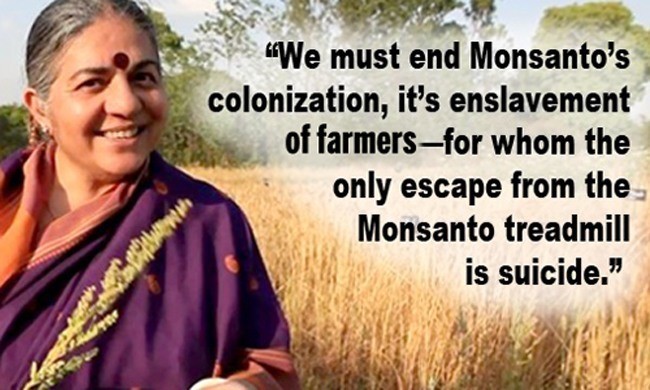
    – Government price interventions and litigation around the royalty or trait fee paid to Mahyco Monsanto Biotech (India), or MMB, a joint venture set up by Monsanto, by local seed companies using its technology

    – A hold on Bt Mustard’s (food crop) field trials despite government’s pushing on a vocal agenda on GM adoption in agriculture. Remember NITI Aayog released this statement in 2016 – “As a part of its strategy to bring a Second Green Revolution, India must return to permitting proven and well tested GM technologies with adequate safeguards.”

    To understand these issues in a comprehensive manner, we will have to understand the legal frameworks and debates around these crops in detail.

    Bt cotton (cash crop) and its introduction in India

    Bt cotton was the first genetically modified crop to be approved for cultivation in India in 2002, with the introduction of Monsanto’s GM cotton seeds. (Monosanto is the same company which threatened to walk out of India early in 2016 when government stepped in to check its monopoly and cut its royalty by ~70%) 

    Note: To understand the basics of GMO, the 2016 GM mustard controversy and the governmental setup around it – read this exclusive story on the GMO Debate (with infograph)

    Bt stands for Bacillus thuringiensis, a bacterium that produces toxins harmful to a variety of insects, including bollworms that attack cotton. Bt cotton was created by introducing genes from the bacterium into the cotton seed, creating a crop resistant to this pest. We read the 96% dominance on cotton production and a significant reduction in insecticide use over time.

    Legal Framework on GM Crops in India

    In our country, the GM crops are regulated under the following:

    #1. Environment Protection Act and GEAC (apex committee) 

    All transgenic crops in India require environmental clearance under 1989 “Rules for Manufacture, Use, Import, Export and storage of hazardous microorganisms/Genetically Engineered Organisms or Cells” notified under the Environment (Protection) Act, 1986.

    A Genetic Engineering Approval Committee (GEAC) was established in 1989, as apex body for this matter.

    In 1989, some Biosafety regulatory frameworks were issued by the MOEF which covered areas of research as well as large scale applications of GMOs and hazardous microorganisms which may not be genetically modified. <this is an important point>

    Presently there are 6 committees under the rules of 1989. The mandate of the six Committees notified under Rules 1989 is as follows:

    A. Genetic Engineering “Appraisal” Committee (GEAC) – [Apex Body] For approval of activities involving large scale use of hazardous microorganisms and recom­binants in research and industrial production from the environ­mental angle.

    Also responsible for ap­proval of proposals relating to release of genetically engineered organisms and products into the environment including experimen­tal field trials.

    B. State Biotechnology Coordination Committee (SBCC’s) –  State level monitoring

    C. District Level Committees (DLCs) – District level monitoring

    D. Recombinant DNA Advisory Committee (RDAC) – The functions are of an advisory nature and involve review of developments in biotechnology at national and international levels

    E. Review Committee on Genetic Manipulation (RCGM) – Monitor safety related aspects

    F. Institutional Biosafety Committee (IBSC) – Oversee in GMO research + Help RCGM

    #2. National Biological Diversity Act 2002

    National Biological Diversity Act 2002 has provisions to deal with the possible risks associated with the application of modern biotechnology. The apex body constituted under this act is National Biodiversity Authority (NBA).

    The NBA is Autonomous body and that performs facilitative, regulatory and advisory function for Government of India on issue of Conservation, sustainable use of biological resource and fair equitable sharing of benefits of use.

    On state level this act makes provisions for state level biodiversity board.

    But the complexities of this legal framework went for a toss in 1998 when Maharashtra Hybrid Seeds Company Ltd. (Mahyco) started field trials of Bt Cotton in nine states and no one exactly knew which authority allowed it to do so.

    Anyway, back in 2002 – with growing yield of cotton in field trials and little evidence to prove any far reaching disadvantages on the environmental scale, Bt cotton’s commercialisation was approved. Four to five years later, activists filed a PIL against GM crops in the Supreme Court and the whole controversy around side effects of Bt cotton started.

    The side effects of Bt Cotton

    –  The seeds are more expensive than local, non-genetically modified varieties

    –  The seeds cannot be reused and farmers need to buy new stock for every growing season

    –  The diffusion of illegal Bt hybrids that hadn’t been cleared for biosafety standards, leading to fears of environmental toxicity. There were more than 1000 varieties of cotton hybrids and uninformed and vague choices on the part of the farmers led to stagnant production these Bt hybrids were unsuitable for rain-fed cotton lands.

    –  There were issues around the actual efficacy of the Bollgard seeds with reports of bollworm infestations even in Bt cotton crops. In reality, this could just be a case of misplaced analysis. The Bt cotton is resistant only towards one type of cotton pest but leaves the plant open to other kinds.


    Not all is wrong with Bt Cotton. There is a major issue of Late Maturing Hybrids

    In India, Cotton is an important rainfed crop. Most of the Bt hybrids are of 180-to 200-day duration and are not suitable for rain-fed conditions. Since the Hybrid seeds are costly, they are sown late, only when the farmers ensured that there is adequate soil moisture. The boll formation in the late sown maturing hybrids suffers from severe moisture stress because it takes place much later after the rains recede. This ultimately results in low yields.

    Instead, the advantage with straight varieties would have been that farmers can reuse farm-saved seeds and can take the liberty of early dry sowing, even before the onset of the monsoon, without having to worry about the risks of poor germination and re-sowing. Then, many of these hybrids are susceptible to sap-sucking insects, leaf-curl virus and leaf reddening, adding to input costs.

    source

    The 2016 pricing controversy with Monsanto & GOI

    An antitrust investigation was launched by the Competition Commission of India (CCI) into the seed pricing and around the royalty or trait fee paid to Mahyco Monsanto Biotech (India), or MMB, a joint venture set up by Monsanto, by local seed companies using its technology.

    Hope you know about CCI. If you do not, read up on it. It was in news very recently on this issue – CCI fines cement firms for cartelisation


    The National Seed Association of India, a trade group representing seed companies sided with the government on the fee controls. They say that the lower technology fees are justified because the seeds aren’t as effective as when they were first introduced in 2002.

    The company argues that technology fees represent 2% of Indian farmers’ overall cost of growing a crop, and that such fees for biotech cotton in India are “already the lowest in the world but the GOI hasn’t budged on it.

    The curious case of Bt Brinjal & Bt Mustard

    In 2010, Environment Ministry imposed a moratorium on the release of the transgenic brinjal hybrid. The stakes were high this time. Brinjal was a food crop and cotton (which got approved in 2002) was a cash crop.


    It is interesting to note that India has been accused of double standards here with regards to this extra caution of cash crops vs. food crops. Cottonseed oil is a cooking oil extracted from the seeds of cotton plants of various species.

    As far as India is concerned, I think it maintains double standards. It grows Bt cotton (90 per cent of the cotton grown in India is genetically modified), consumes edible oil from it, yet bans Bt brinjal. (source)

    The reasons behind the moratorium were –

    • Lack of clear consensus among the scientific community;
    • Opposition from 10 State governments, especially from the major brinjal-producing States;
    • Questions about the safety and testing process;
    • Lack of an independent biotechnology regulatory authority (GEAC);
    • negative public sentiment and fears among consumers and the lack of a global precedent

    GEAC’s name changed from approvals to appraisals

    Companies/ people should not think they are coming for automatic approvals. They take it for granted…They must remember that we have a right to reject it as well.

    In 2010, Genetic Engineering Approvals Committee (GEAC), which had recommended approval of Bt brinjal had a name change — with “Approvals” changed to “Appraisal”.

    As for an independent regulatory authority – National Biotechnology Regulatory Authority was supposed to be set up. The Biotechnology Regulatory Authority of India bill (2009) which is still on hold. If you want to read more on this bill, read up on this PRSindia link.

    Note: It is worthwhile to recall that Greenpeace fought a 30-month RTI battle with the Department of Biotechnology and finally it took a Supreme Court order to get the government release the Bt brinjal bio-safety dossier submitted by Mahyco, the company that developed the crop in India with Monsanto.

    This is an important point regarding activism by NGOs in India and this played an important role in imposing the moratorium on Bt Brinjal.

    Criticisms on the ban:

    The environment ministry’s temporary but open-ended moratorium had no basis in global scientific consensus. It drew from the playbook of the anti-GM non-governmental organisations (NGOs) that have created a parallel world of science of their own. (source)

    The ban also ignored the tests. These were carried out according to best international standards by not only the seed company, but also by Indian Council of Agricultural Research (ICAR) laboratories over eight years.

    One reason proffered for the ban was that a multinational companies would have a monopoly over the seeds—a generic complaint against all GM crops and one that is fallacious.

    source

    The case for rejection/ approval of Bt Mustard is still in fray and we would recommend that you read this article – Other environmental concerns apart, GM mustard could also send bees buzzing away to get a bird’s eye view.

    To keep yourself updated – continue following this newstrail by CD – The great GMO Debate


    Questions from Prelims Daily 

    #1. Consider the following statements:

    1. Micro-propagation is the practice of multiplying plants using modern techniques like tissue culture.

    2. It is used to multiply novel plants like genetically modified ones.

    Which of the above statement(s) is/are correct?

    (a) 1 only

    (b) 2 only

    (c) Both 1 and 2

    (d) Neither 1 nor 2

    #2. The Genetic Engineering Appraisal Committee is constituted under the

    (a) Food Safety and Standards Act, 2006
    (b) Geographical Indications of Goods (Registration and Protection) Act, 1999
    (c) Environment (Protection) Act, 1986
    (d) Wildlife (Protection) Act, 1972

    #3. The controversy regarding the use of Bt corn is that it

    a. is potentially harmful to monarch butterflies
    b. is a potential allergen to humans
    c. both (a) and (b)
    d. can contaminate groundwater

    #4. The FAO accords the status of ‘Globally Important Agricultural Heritage Systems (GIAHS)’ to traditional agricultural systems. What is the overall goal of this initiative?

    1. To provide modern technology, training in modern farming methods and financial support to local communities of identified GIAHS so as to greatly enhance their agricultural productivity

    2. To identify and safeguard eco-friendly traditional farm practices and their associated landscapes, agricultural biodiversity and knowledge systems of the local communities

    3. To provide Geographical Indication status to all the varieties of agricultural produce in such indentified GIAHS

    Select the correct answer using the code given below.

    (a) 1 and 3 only

    (b) 2 only

    (c) 2 and 3 only

    (d) 1, 2 and 3

    Questions from Target Mains

    #1. Recently genetically modified crops and seeds have been in the news. Should GM crops be allowed? Discuss with special reference to environment and biodiversity.

    #2. In your opinion can cultivation of GM (Genetically Modified) crops ensure food security for India? Critically examine the arguments presented in opposition and in favour of GM technology.

    #3. Critically discuss all the issues related to GM Mustard in India from the perspective of developers of the crop, government and consumers.

    #4. Can genetically modified (GM) food crops ensure food security in India? Why has government allowed GM cotton but not GM food crops for cultivation in India? Do you think it’s time for India to start cultivating GM food crops? Critically comment.

    If you liked reading this article – do let me know in the comments! 

  • Santosh Kumar Hindi medium IAS Topper 2013


    Santosh Kumar says that becoming an IAS Officer was his childhood dream. His story is like a film script consisting of all those – dream, struggle, step-by-step move towards the goal, hits and misses; and at last with so many difficulties he achieved his goal.

    Background:

    As he was from a rural background, having inadequate resources, he was lacking all the comfort and ease which many others had in their lives. But he never had inferiority complex in front of others. He always had firm belief that God has given him everything that others have; and if there is anything less, then he shall achieve and earn it with his hard word.

    Like all other youngsters his first aim was to settle in life. With his affirmed efforts and luck in 2010, he was selected in SSC (Graduate Level) Exam and got posted in Central Secretariat, New Delhi. After marriage and government services he attained stability in his life. In true sense he actually started preparing for CSE at the age of 27 plus.

    Preparation journey:

    It was not a smooth sail. Many a times there were situations where he was compelled to re-think of his decision of attempting for CSE exams as the resources which he had were scarce and the uncertainty of clearing the exam with it.

    He felt weak, disheartened and his economic conditions forced him to postpone his plans to appear in Civil Service Examination. Meanwhile, he got married and was blessed with a daughter. He gave his full time to family and in return their love, affection and much needed mental peace helped him think beyond and achieve his goal.

    In tune with the saying that, when something good has to happen, almost all things fall in place, same was the case of Santosh Kumar. He got serious about his career in CSE as his wife kept on encouraging him to make an attempt. In true sense she was keener towards this exam and has truly believed that he could do it.

    Delhi being the hub for CSE preparation fulfilled all that he required to move ahead with his preparation plans. Books, Study material, guidance and right kind of advice- he received all of it in Delhi. In total Santosh Kumar made 3 attempts for Civil Service Examination. In his first attempt in 2011, he cleared the preliminary Examination but was unable to move ahead. In his next attempt in CSE 2012, he scored 665th rank and was allotted INDIAN REVENUE SERVICE (INCOME TAX) but in his third attempt he finally achieved his goal of IAS and felt a deep sense of relief.

    Preparation Strategy:

    Almighty has given everyone some strengths and weaknesses. Santosh Kumar had strong willpower and never overlooked his capabilities. No sooner did he complete his graduation, than he thought of appearing for Civil Service Examination as he was confident that he can do it. He had in his mind that he is very much eligible to appear in CSE. He always used to prefer standard textbooks as he could understand it very well and also the entire syllabus of CSE is woven around that level. He was hardly worried about getting success. He just went on doing his hardwork.

  • 30 Oct 2016 | Target Mains: Weekly Essay Challenge

    As civilization advances culture declines.

    (2003 UPSC Essay Topic)

    Instructions: Write the following essay in 1000-1200 words.


    Download FREE Target Mains compilation – Click here to know how

  • grant of special package or special category status to the state of A.P

    CENTRAL ASSISTANCE FOR THE BENEFIT OF THE PEOPLE OF ANDHRA PRADESH

  • IAS Mains GS 2 Syllabus | Revised UPSC Exam Pattern

    Official IAS Mains Syllabus for GS2 | As per UPSC Guidelines

    Click the [Click here] to find a comprehensive listing of blogs written by Civilsdaily on these topics

    # Indian Polity [Click here]

    • Indian Constitution – Historical underpinnings, evolution, features, amendments, significant provisions and basic structure.
    • Functions and responsibilities of the Union and the States, issues and challenges pertaining to the federal structure, devolution of powers and finances up to local levels and challenges therein.
    • Separation of powers between various organs, dispute redressal mechanisms and institutions
    • Comparison of the Indian constitutional scheme with that of other countries.
    • Parliament and State Legislatures – structure, functioning, conduct of business, powers & privileges and issues arising out of these.
    • Structure, organisation and functioning of the Executive and the Judiciary Ministries and Departments of the Government; pressure groups and formal/informal associations and their role in the Polity.
    • Salient features of the Representation of People’s Act.
    • Appointment to various Constitutional posts, powers, functions and responsibilities of various Constitutional Bodies.
    • Statutory, Regulatory and various quasi judicial bodies.

    # Governance and Social Justice [Click here]

    • Government policies and interventions for development in various sectors and issues arising out of their design and implementation.
    • Development processes and the development industry – the role of NGOs, SHGs, various groups and associations, donors, charities, institutional and other stakeholders.
    • Welfare schemes for vulnerable sections of the population by the Centre and States and the performance of these schemes, mechanisms, laws, institutions, and bodies constituted for the protection and betterment of these vulnerable sections.
    • Issues relating to development and management of social sector/services related to health, education, human resources.
    • Issues related to poverty, hunger
    • Important aspects of governance, transparency and accountability. E-governance – applications, models, successes, limitations and potential.
    • Citizen charters, transparency and accountability and institutional and other measures.
    • Role of civil services in a democracy.

    # International Relations & World Institutions [Click here]

    • India and its neighbourhood relations
    • Bilateral, regional and global groupings and agreements involving India and/or affecting India’s interests
    • Effect of policies and politics of developed and developing countries on India’s interests, Indian diaspora.
    • Important international institutions, agencies and Fora – their structure and mandate
  • IAS Mains GS 1 Syllabus | Revised UPSC Exam Pattern

    Official IAS Mains Syllabus for GS1 | As per UPSC Guidelines

    Click the [Click here] to find a comprehensive listing of blogs written by Civilsdaily on these topics

    Indian Heritage and Culture  [Click here]

    • Indian culture will cover the salient aspects of Art Forms, Literature and Architecture from ancient to modern times.

    History [Click here]

    • Modern Indian history from about the middle of the eighteenth century until the present- significant events, personalities, issues.
    • The Freedom Struggle – its various stages and important contributors and contributions from different parts of the country.
    • Post-independence consolidation and reorganization within the country.
    • History of the world will include events from 18th century such as industrial revolution, world wars, redrawal of national boundaries, colonization, decolonization, political philosophies like communism, capitalism, socialism etc.- their forms and effect on the society.

    Topics related to Indian Society [Click here]

    • Salient features of Indian Society, Diversity of India.
    • Role of women and women’s organization, population and associated issues, poverty and developmental issues, urbanization, their problems and their remedies.
    • Effects of globalization on Indian society.
    • Social empowerment, communalism, regionalism & secularism.

    Indian & World Geography [Click here]

    • Salient features of world’s physical geography.
    • Important Geophysical phenomena such as earthquakes, Tsunami, Volcanic activity, cyclone etc.
    • Geographical features and their location-changes in critical geographical features (including water-bodies and ice-caps) and in flora and fauna and the effects of such changes.
    • Distribution of key natural resources across the world (including South Asia and the Indian sub-continent)
    • Factors responsible for the location of primary, secondary, and tertiary sector industries in various parts of the world (including India)

More posts
