Prime Minister’s recent activities, commemorating the 94th anniversary of the Dandi March at the Sabarmati Ashram, mark a significant step towards the redevelopment and expansion of this historic site.
Ashrams Built by Mahatma Gandhi
Gandhi set up five settlements during his lifetime — two in South Africa (Phoenix Settlement in Natal, and Tolstoy Farm outside Johannesburg), where he lived from 1893 to 1914, and three in India, where he arrived in January 1915.
South Africa Settlements:
Phoenix Settlement in Natal: Founded in 1904, the Phoenix Settlement was established by Gandhi as a communal living space and center for social and political activism. It served as a hub for his Satyagraha campaigns against racial discrimination and injustice in South Africa.
Tolstoy Farm outside Johannesburg: Gandhi established Tolstoy Farm in 1910 as a self-sustaining community inspired by the teachings of Russian writer Leo Tolstoy. It served as a refuge for Indian immigrants and a base for organizing resistance against discriminatory laws.
Indian Settlements:
Ahmedabad Ashram (Kocharab Ashram): Gandhi’s first ashram in India was established in Kocharab, Ahmedabad, in 1915. It was initially a rented space and was later moved to a larger site on the banks of the Sabarmati River, becoming the Sabarmati Ashram.
Sabarmati Ashram: Read the article below.
Sevagram Ashram: Established in 1936 near Wardha in Maharashtra, Sevagram Ashram was Gandhi’s final residence in India. It was intended to be a model village based on principles of self-reliance, sustainability, and nonviolence. Gandhi spent the last years of his life here, engaging in various constructive programs and campaigns.
Try this PYQ from CSE Mains 2019:
Q. Many voices had strengthened and enriched the nationalist movement during the Gandhian Phase. Elaborate.
AboutSabarmati Ashram
Founded in 1917 by Mahatma Gandhi, the Sabarmati Ashram holds immense historical significance in India’s struggle for independence and Gandhian philosophy.
Situated on the western bank of the Sabarmati River, north of the village of Juna Vadaj in Ahmedabad, Gujarat, the ashram became a focal point for various movements and experiments led by Gandhi.
Key Movements and Initiatives
Champaran Satyagraha (1917): The ashram served as a base for Gandhi’s involvement in the Champaran Satyagraha, a movement against oppressive indigo planters in Bihar.
Khadi Movement (1918): Gandhi initiated the Khadi movement from Sabarmati Ashram, promoting the use of hand-spun cloth as a means to boycott foreign goods and promote self-reliance.
Ahmedabad Mill Strike (1918) and Kheda Satyagraha: Gandhi led the workers’ strike in Ahmedabad and the peasants’ movement in Kheda, both of which were pivotal in India’s struggle for independence.
Non-Cooperation Movement (1920): The ashram played a crucial role in Gandhi’s call for non-cooperation with British authorities, urging Indians to boycott British goods and institutions.
Dandi March (1930): One of the most iconic events in India’s freedom struggle, the Dandi March, commenced from Sabarmati Ashram. Gandhi, along with his followers, marched to Dandi to protest against the salt tax imposed by the British.
Philosophy and Ideals
Gandhi envisioned Sabarmati Ashram as a community based on principles of simplicity, self-reliance, and communal living.
He emphasized the importance of truth, non-violence (Ahimsa), and Satyagraha (nonviolent resistance) as tools for social and political change.
Activities and Structures
The ashram housed various facilities and structures, including:
Hriday Kunj: Gandhi’s residence at the ashram, where he lived with his wife Kasturba.
Gandhi Smarak Sangrahalaya: A museum dedicated to Gandhi’s life, showcasing his personal belongings, letters, and photographs.
Magan Niwas: A guesthouse for visitors and volunteers.
Vinoba-Mira Kutir: Residence of Vinoba Bhave and Mira Behn, Gandhian disciples.
Health ministers from 11 African nations grappling with the heaviest malaria burdens have recently signed the Yaounde Declaration.
What is Yaounde Declaration?
Details
Signed at
Yaoundé conference, hosted by WHO and the Government of Cameroon in Yaoundé, Cameroon (capital).
Participants
Ministers of Health, global malaria partners, funding agencies, scientists, civil society organizations, and other malaria stakeholders.
Signatory countries
Burkina Faso, Cameroon, the Democratic Republic of the Congo, Ghana, Mali, Mozambique, Niger, Nigeria, Sudan, Uganda, and Tanzania.
These countries collectively account for over 70% of the global malaria burden.
Pledges
Effective tackling of malaria threat in Africa, leading better and investing more money in fighting malaria, using new technology for data, etc.
Investing more in health infrastructure, personnel, and programs, collaborating across sectors, forming partnerships for funding, research, and innovation.
Showing strong commitment to quickly reducing malaria deaths and holding each other and their countries accountable for the commitments.
PYQ Relevance: Prelims: The Government of India has established NITI Aayog to replace the [UPSC CSE 2015] a) Human Rights Commission b) Finance Commission c) Law Commission d) Planning Commission
Mains: 1. How have the recommendations of the 14th Finance Commission of India enabled the States to improve their fiscal position? [UPSC CSE 2021]
2. How is the Finance Commission of India constituted? What do you know about the terms of reference of the recently constituted Finance Commission? Discuss. [UPSC CSE 2018]
3. Though the federal principle is dominant in our Constitution and that principle is one of its basic features, it is equally true that federalism under the Indian Constitution leans in favor of a strong Centre, a feature that militates against the concept of strong federalism. [UPSC CSE 2014]
From The Hindu
Note4Students:
Mains: Finance Commission;Centre-State relations;
Prelims: Recommendations by Finance Commission;
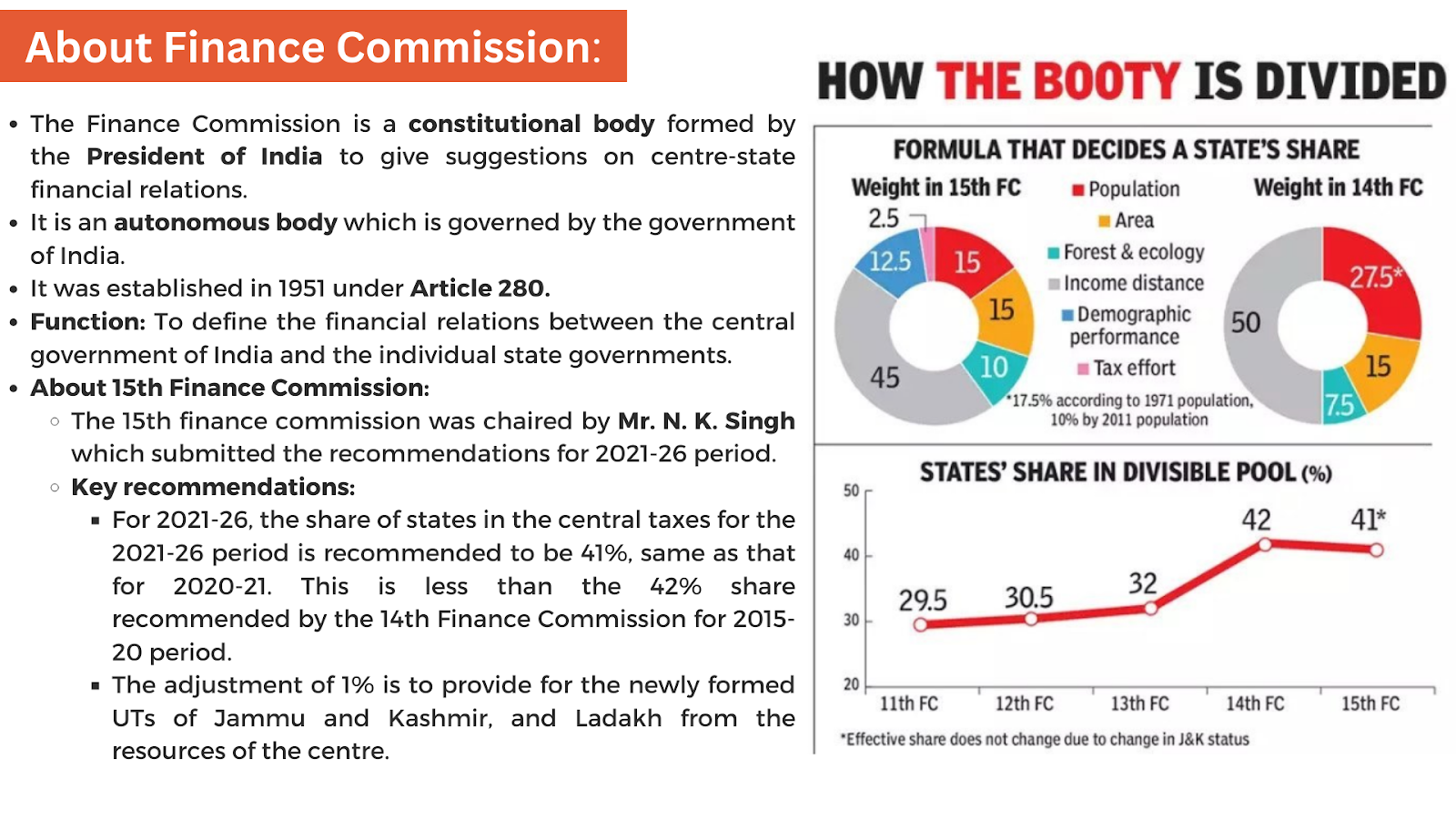
Mentor comments: The issue of declining shares of some States in central transfers, is particularly affecting southern States like Karnataka and Tamil Nadu, stems from factors like the income distance criterion and changes in population data used for calculations. The income distance criterion, which rewards states further from the highest income state, has led to losses for southern States. To address this issue, we need to reduce the weight of the income distance criterion and limiting cesses and surcharges of the Centre’s gross tax revenues. Overall, today’s debate is over central transfers who need to have a balanced approach that considers various criteria like income distance and population while ensuring equitable distribution among all states.
Let’s learn.
—
Why in the News?
The Southern States have been facing a decline in their share out of the resources transferred from the Centre to the States. Considering this situation, there are many issues that the Sixteenth Finance Commission will have to deal with.
Background:
The revenue sharing through the Finance Commission between Centre and the Southern States has fallen over the last two decades.
The share of states in combined revenue receipts rose but has since fallen, highlighting the need for fair distribution mechanisms.
Additionally, the shift in population data from 1971 to 2011 has impacted tax devolution, with some southern states feeling disadvantaged.
What is the income distance criterion and how does it affect state shares? The income distance criterion in the context of Finance Commission allocations is a measure of the distance between a state’s income and the state with the highest income, calculated based on the average per capita Gross State Domestic Product (GSDP). States with lower per capita income receive a higher share to ensure equity among states.
Significance of this criteria:
It remains crucial for ensuring fair distribution among states. It also plays a significant role in determining the distribution of union taxes to each state, with states further from the highest income state receiving a higher share.
What are the 3 major challenging observations in Centre-State Tax Devolution?
1) Issue of share with states in Tax Devolution:
Firstly, we need to look at which States have been gaining and which are losing their share over time; the criteria of horizontal distribution which has led to some States steadily losing their share; and what can be done to reverse this trend.
In Table 1, the shares of groups of States and those for selected States are shown, for the 12th FC to the 15th FC (final report).
Southern States have been on a steady fall in their share, from 19.785% to 15.800%. The northern and eastern States have also lost. The ‘gainer States’ were the hilly, central, and western States including Maharashtra.
The low-income States such as Bihar and Uttar Pradesh show, in terms of their overall share, a loss of 0.970% points and 1.325% points.
The main reason for the loss to the southern States due to the distance criterion amounted to 8.055% points, although the overall loss was much less at 3.985% points, implying that there was a gain under other criteria.
2) Issue over the Income Distance:
Inconsistency: Table 2 provides a list of the different criteria used by Finance Commissions, from the Twelfth to the Fifteenth.
Decreasing weight: The distance criterion has been accorded the highest weight amongst these criteria. Its weight was reduced from 50% to 47.5% by the 13th FC and further reduced to 45% by the 15th Fifteenth FC.
Hampering equalization: The above two observations challenge the Socio-economic justice principles which has always been regarded as a key principle in governing distribution.
3) Issue over the Population:
Data Updation issue: Until the Fourteenth Finance Commission, the data for the population in 1971 was used. For the Fifteenth Finance Commission, data for the population in 2011 was used.
Mismatched data: In order not to penalize States 15th FC showed better performance in reducing fertility rates, and the demographic change criterion was eventually introduced.
The joint impact of these two changes has been marginal for all groups of States. For Tamil Nadu, the joint impact was marginally positive.
Recommendation for Sixteenth Finance Commission:
Balanced allocation approach: Need to consider reducing the weight of the income distance criterion by 5% to 10% points. On Cesses and Surcharges: Need to evaluate and potentially impose an upper limit on cesses and surcharges to safeguard the divisible pool size and states’ revenue shares.
What steps need to be taken? (Way Forward)
Maintain Income Distance Criterion: The income distance criterion is essential for equitable distribution among states and should not be abandoned. We need to consider reducing its weightage while enhancing other criteria to balance allocations.
Manage Divisible Pool Size: We need to limit cesses and surcharges to 10% of the Centre’s gross tax revenues to prevent reducing the size of the divisible pool.The increase in states’ share from 32% to 42% by the Fourteenth Finance Commission should not be offset by additional levies.
Review Revenue Sharing Trends: Need to analyze the impact of changing criteria on state shares over time to ensure fair and balanced distribution. Further, we also need to address concerns raised by states experiencing declining shares due to existing allocation mechanisms.
Basic idea: CAA, 2019, aims to amend the Citizenship Act, 1955, to grant Indian citizenship to specific categories of illegal migrants.
Eligible Religions: CAA targets Hindu, Sikh, Buddhist, Jain, Parsi, and Christian illegal migrants from Afghanistan, Bangladesh, and Pakistan, making them eligible for Indian citizenship.
Objective: The primary objective is to facilitate citizenship for non-Muslim immigrants from India’s three Muslim-majority neighboring countries.
Residence Requirement: The Citizenship Act, 1955, normally requires 11 of the previous 14 years of residence in India as a condition for naturalization.
Amendment: CAA reduces this requirement to 6 years for applicants belonging to the specified religions and countries.
Exemption from Criminal Cases: Members of the designated communities are exempted from criminal cases under the Foreigners Act, 1946, and the Passport Act, 1920, if they entered India before December 31, 2014.
Defining Illegal Migrants
Status under Present Laws: Existing laws prohibit illegal migrants from acquiring Indian citizenship.
CAA’s Definition: CAA classifies an illegal migrant as a foreigner who enters India without valid travel documents (passport and visa) or overstays beyond the allowed period.
Penalties: Illegal migrants can face imprisonment or deportation under the Foreigners Act, 1946, and The Passport (Entry into India) Act, 1920.
Exceptions under CAA
Conditions for Exemption: CAA outlines four conditions that, if met, exempt certain individuals from being treated as illegal migrants:
They belong to the specified religions (Hindu, Sikh, Buddhist, Jain, Parsi, or Christian).
They hail from Afghanistan, Bangladesh, or Pakistan.
They entered India on or before December 31, 2014.
They are not in certain tribal areas of Assam, Meghalaya, Mizoram, or Tripura (Sixth Schedule) or “Inner Line” permit areas (Arunachal Pradesh, Mizoram, and Nagaland).
Controversies Surrounding CAA
Country of Origin: CAA categorizes migrants based on their country of origin, specifically Afghanistan, Pakistan, and Bangladesh.
Religious Exclusivity: It raises questions about why only six specified religious minorities have been considered in the Act.
Omission of Rohingya: The Act doesn’t address the Rohingya Muslims from Myanmar, who have faced persecution.
Entry Date Differentiation: The differential treatment of migrants based on their entry date, i.e., before or after December 31, 2014, has generated debate.
Secularism Concerns: Critics argue that granting citizenship based on religion contradicts the secular principles of India’s Constitution, considered part of the unalterable basic structure.
Constitutionality Check
The challenge may rest primarily on the grounds that the law violates Article 14 of the Constitution that guarantees that no person shall be denied the right to equality before law or the equal protection of law in the territory of India.
The Supreme Court has developed a Two-Pronged Testto examine a law on the grounds of Article 14.
First, any differentiation between groups of persons must be founded on “intelligible differentia”
Second, differentia must have a rational nexus to the object sought to be achieved by the Act
Simply put, for a law to satisfy the conditions under Article 14, it has to first create a “reasonable class” of subjects that it seeks to govern under the law.
Even if the classification is reasonable, any person who falls in that category has to be treated alike.
Impact on Assam and Assam Accord
Intersection with Section 6A: The CAA intersects with Section 6A of The Citizenship Act, 1955, which determines citizenship criteria in Assam.
Assam Accord: Section 6A, linked to the Assam Accord, sets criteria for determining citizenship in Assam, posing potential conflicts with the CAA’s provisions.
Base Cut-off Date and Regularization: The Assam Accord establishes a base cut-off date for identifying and regularizing foreigners in Assam, impacting the implementation of the CAA in the state.
Way forward
India is a constitutional democracy with a basic structure that assures a secure and spacious home for all Indians.
Being partitioned on religious grounds, India has to undertake a balancing act to protect the religious minorities in its neighbourhood.
These minorities are under constant threat of persecution and vandalism.
India needs to balance its civilization duties to protect those who are prosecuted in the neighbourhood.
Try this PYQ from CSE Prelims 2021:
Q.With reference to India, consider the following statements:
There is only one citizenship and one domicile.
A citizen by birth only can become the Head of State.
A foreigner once granted the citizenship cannot be deprived of it under any circumstances.
Which of the statements given above is/are correct?
India’s recent successful testing of an Agni-5 Missile equipped with Multiple Independently Targetable Re-entry Vehicle (MIRV) technology with multiple warhead capabilities, termed Mission Divyastra, marks a significant milestone in the nation’s defense capabilities.
What are Agni Missiles?
Agni missiles are long range, nuclear weapons capable surface to surface ballistic missile.
The first missile of the series, Agni-I was developed under the Integrated Guided Missile Development Program (IGMDP) and tested in 1989.
After its success, Agni missile program was separated from the IGMDP upon realizing its strategic importance.
It was designated as a special program in India’s defence budget and provided adequate funds for subsequent development.
Variants of Agni missiles
Agni I: It is a Medium Range Ballistic Missile with a Range of 700-800 km.
Agni II: It is also a Medium Range Ballistic Missile with a Range more than 2000 km.
Agni III: It is also an Inter-Medium Range Ballistic Missile with Range of more than 2,500 Km
Agni IV: It is also an Inter-Medium Range Ballistic Missile with Range is more than 3,500 km and can fire from a road mobile launcher.
Agni-V: Currently it is the longest of Agni series, an Inter-Continental Ballistic Missile (ICBM) with a range of over 5,000 km.
Agni- VI: The longest of the Agni series, an ICBM with a range of ICBM 11,000–12,000 km.
About Agni-5 Missiles
Indigenous Development: Agni missiles, developed by the Defence Research and Development Organisation (DRDO), have been integral to India’s defense arsenal since the early 1990s.
MIRV Technology: The latest variant of Agni incorporates Multiple Independently Targetable Re-entry Vehicle (MIRV) technology, a sophisticated capability possessed by only a handful of countries globally.
Developments in MIRV Technology
Targeting Versatility: MIRV technology enables a single missile to target multiple locations, potentially hundreds of kilometers apart, significantly enhancing its operational effectiveness.
Range and Strategic Focus: Agni, equipped with nuclear warheads, boasts a range exceeding 5,000 km, primarily aimed at countering threats from China.
Limited MIRV-Equipped Nations: Currently, major nations possessing MIRV-equipped missiles include the United States, Russia, China, France, and the United Kingdom, with emerging capabilities in Pakistan and Israel.
Complex Technology: Developing MIRV technology requires miniaturization of warheads, independent guidance systems, and sequential release mechanisms, making it a challenging endeavor.
Strategic Significance of the Mission Divyastra
Versatile Strike Capabilities: MIRV-equipped missiles enable simultaneous strikes on multiple targets, overwhelming enemy defenses and maximizing damage potential.
Deterrence and Defense Penetration: These missiles pose a significant challenge to missile defense systems, as multiple warheads with independent trajectories can thwart interception efforts.
Strategic Balance and Deterrence: For nations like India with a no-first-use policy, MIRV technology enhances the credibility of response strikes, serving as a potent deterrent against aggression.
Try this PYQ from CS Prelims 2014:
Which reference to Agni-IV Missile, which of the following statements is/are correct?
It is a surface-to-surface missile.
It is fuelled by liquid propellant only.
It can deliver one-tonne nuclear warheads about 7500 km away.
Select the correct answer using the code given below.
Nestled along the Deesa-Tharad highway in Gujarat’s Banaskantha district lies India’s pioneering gas-filling station, seemingly unremarkable at first glance.
However, this station, powered by cattle and buffalo dung, marks a significant leap in renewable energy innovation.
Fuel Production from Dung: A Technological Marvel
Innovative Concept: The ‘BioCNG’ outlet in Dama village of Deesa taluka stands as India’s sole gas-filling station utilizing cattle and buffalo dung.
Daily Operations: The outlet serves 90-100 vehicles daily, selling 550-600 kg of gas generated from 40 tonnes of dung processed at an adjacent plant.
Dung Utilization: Approximately 40,000 kg of dung are sourced daily from 2,700-2,800 animals belonging to 140-150 farmers residing within a 10 km radius of the plant.
Understanding the Dung-to-Fuel Process
Biogas Production: Fresh dung, rich in methane and water, undergoes anaerobic digestion in a sealed vessel, yielding raw biogas.
Purification Process: The raw biogas undergoes purification to remove impurities like CO2 and H2S, resulting in compressed biogas (CBG) suitable for vehicle use.
Production Output: From 40 tonnes of dung, the plant generates 2,000 cubic meters of raw biogas containing 55-60% methane, 35-45% CO2, and 1-2% hydrogen sulphide (H2S) and moisture.
Dual Benefits: Fuel and Fertilizer
Fuel Value: CBG is sold at the station for Rs 72/kg, offering a renewable and eco-friendly alternative to traditional fuels.
Fertilizer Production: The process also yields bio-fertilizer, enriching soil health and providing an additional income stream for farmers.
Fertilizer Sales: The Banaskantha Union markets 8,000-10,000 kg of bio-fertilizer daily, with phosphate-rich organic manure (PROM) fetching Rs 15-16/kg and compost Rs 8-10/kg.
Significance: Decentralized Model for Sustainable Agriculture
Community Involvement: The initiative engages local farmers, who supply dung to the plant, fostering community participation and economic empowerment.
Replicability and Scalability: The model holds potential for replication across districts and states, offering a scalable solution for energy and agricultural needs.
Investment Plans: The Banaskantha Union plans to commission four additional 100-tonnes capacity plants by 2025, with a total investment of Rs 230 crore.
Conclusion
The establishment of India’s first dung-based gas-filling station represents a significant stride towards renewable energy adoption and agricultural sustainability.
As technology continues to evolve, decentralized models like these hold promise for transforming rural economies while mitigating environmental impact.
With ongoing support and investment, such initiatives can pave the way for a greener and more resilient future.
Try this PYQ from CSE Prelims 2019:
Q.In the context of proposals to the use of hydrogen-enriched CNG (H-CNG) as fuel for buses in public transport, consider the following statements:
The main advantage of the use of H-CNG is the elimination of carbon monoxide emissions.
H-CNG as fuel reduces carbon dioxide and hydrocarbon emissions.
Hydrogen up to one-fifth by volume can be blended with CNG as fuel for buses.
H-CNG makes the fuel less expensive than CNG.
Which of the statements given above is/are correct?
The Food and Agriculture Organization of the United Nations (FAO) and the Indian Council of Agricultural Research (ICAR) jointly published the surveillance data of the Indian Network for Fishery and Animal Antimicrobial Resistance (INFAAR) for 2019-22.
This report marks the first comprehensive analysis of antimicrobial resistance (AMR) trends in India’s fisheries and livestock sectors.
About INFAAR
Network Formation: INFAAR, established under ICAR, comprises 20 laboratories, including 17 ICAR Research Institute Laboratories, one Central Agriculture University Laboratory, one State Agriculture University Laboratory, and one State Veterinary University.
Collaborative Support: Technical assistance from FAO and the United States Agency for International Development (USAID) enhances INFAAR’s capabilities for data collection and analysis.
Expansion Goals: INFAAR aims for further expansion to encompass more laboratories and enhance surveillance coverage.
Antibiotic Use and AMR Trends
Impact of Antibiotics: Antibiotic usage in food animal production contributes to AMR development, necessitating surveillance to inform policy decisions.
Production Systems: Three key aquaculture systems—freshwater, brackish-water, and marine—were surveyed, covering diverse environments.
Panel of Antibiotics: Antibiotics tested included amikacin, ampicillin, amoxicillin-clavulanic acid, aztreonam, cefotaxime, cefepime, cefoxitin, ceftazidime, chloramphenicol, co-trimoxazole, enrofloxacin, gentamicin, imipenem, meropenem, and tetracycline.
Surveillance Methodology
Sample Collection: Samples collected from 3,087 farms spanning 42 districts in 12 states of India, including fish or shrimp tissues and pond or seawater samples.
Bacterial Isolates: A total of 6,789 bacterial isolates were analyzed, including 4,523 freshwater, 1,809 shrimp, and 457 mariculture isolates.
Resistance Profiles: Resistance profiles were analyzed for Staphylococcus aureus, coagulase-negative Staphylococcus species (CONS), Escherichia coli, Vibrio parahaemolyticus, Vibrio sp., and Aeromonas species.
Key Findings:
(1) Resistance Patterns in Fisheries Sector
Species Specific Resistance: Isolates of Staphylococcus aureus and coagulase-negative Staphylococcus species exhibited high resistance against penicillin across all systems.
Variation across Environments: Freshwater fish showed notable resistance to ciprofloxacin, while marine samples demonstrated higher resistance to cefotaxime.
Shrimp Aquaculture: Notable resistance against ampicillin and cefotaxime was observed in shrimp samples, indicating a concerning trend.
(2) Resistance Patterns in Livestock Sector
Animal Origins: E. coli and Staphylococcus isolates from cattle, buffalo, goat, sheep, pig, and poultry were characterized for AMR profiles.
Poultry Resistance: Poultry-origin isolates exhibited higher resistance rates across various antibiotics compared to other food animals.
(3) Multidrug Resistance Analysis
Emergence of MDR: Approximately 39% of aquaculture-origin E. coli isolates and 15.8% of poultry isolates exhibited multidrug resistance (MDR).
ESBL and AmpC Producers: Detection of extended spectrum β-lactamase (ESBL) and AmpC type β-lactamase producers underscores the complexity of AMR challenges.
Key Recommendations by the Study
Baseline Data: The report provides foundational data for understanding AMR trends and evaluating intervention effectiveness.
Judicious Use: High resistance to critical antibiotics underscores the importance of prudent antibiotic use in food animal production.
Policy Implications: The findings will inform policy and decision-making for AMR containment in India’s fisheries and livestock sectors.
Conclusion
The INFAAR surveillance report sheds light on the evolving landscape of antimicrobial resistance in India’s fisheries and livestock sectors.
By highlighting resistance patterns and advocating for responsible antibiotic usage, this initiative paves the way for effective AMR containment strategies and sustainable agricultural practices.
The Bhojshala Temple-Kamal Maula Mosque complex in Dhar district, an ASI-protected 11th-century monument, has been a subject of contention regarding its nature and usage.
To address this, the Indore Bench of the Madhya Pradesh High Court has directed the Archaeological Survey of India (ASI) to conduct a scientific survey of the site.
About Bhojshala Complex
Details
Location
Dhar district, Madhya Pradesh, India
Historical Background
Established by Raja Bhoj, the greatest ruler of the Parmar dynasty, as an educational institute
Date of Establishment
11th century
Transformation
Originally a Goddess Wagdevi (Saraswati temple), later converted into Kamal Maulana Mosque by Muslim rulers
Architectural Features
Large open courtyard (Mahaāyata)
Verandah with decorated pillars (Sthāpanā)
Prayer hall with intricately carved ceilings (Shikharākāra)
Inscriptions
Two hymns depicting the Karmavatar of Vishnu (Avatār)
Sarpabandha pillar inscriptions with Sanskrit alphabet and grammatical rules (Vyākaraṇa)
Archaeological Significance
Protected by the Archaeological Survey of India (ASI) as an 11th-century monument
Controversy over Bhojshala Complex
Religious Claims: Hindus regard the site as the temple of Goddess Wagdevi (Saraswati), while Muslims believe it to be the Kamal Maula mosque.
Usage Agreement: The Archaeological Survey of India (ASI) allows Hindus to pray on Tuesdays and Basant Panchami, and Muslims to offer namaz on Fridays.
Recent Developments
Basant Panchami Dispute: A recent order allowing Hindus to worship during Basant Panchami hours led to discontent among some Right-wing activists.
Demand for Extended Access: Hindu groups demand all-day access to the shrine on such occasions, leading to protests and petitions filed in the High Court.
PYQ Relevance: Mains: 1. Analyze the distinguishing features of the notion of Right to Equality in the Constitutions of the USA and India. (UPSC CSE 2021)
2. ‘Women’s movement in India has not addressed the issues of women of lower social strata.’ Substantiate your view. (UPSC CSE 2018)nt in the formal sector of the Indian economy? Is increased informalization detrimental to the development of the country? [UPSC CSE 2016]
From The Hindu
Note4Students:
Mains: Social Issues and Justice; Women Issues;
Prelims: Women’s rights in the Indian Constitution;
Mentor comments: France became the first country to enshrine the freedom of women to voluntarily terminate a pregnancy in its Constitution. This decision is rooted in the groundbreaking work of French feminist icon Simone de Beauvoir, who in 1949 published “The Second Sex,” a philosophical work advocating for women’s right to choose and challenging societal norms around motherhood and abortion. Secondly, France’s commitment to women’s rights is reflected in its feminist foreign policy, advocating for gender equality globally. Through this Article, we need to study the collaboration between France and India that holds great potential to further advance women’s rights on a global scale, building on their shared commitments to gender equality and empowerment.
Let’s learn.
—
Why in the News?
On March 4, 2024, France became the first country to enshrine the “freedom of women to voluntarily terminate a pregnancy” in its Constitution, marking a historic moment that sends a universal message of solidarity to women worldwide.
What is the recent groundbreaking Work on Women’s Rights in France?
Legalization of Abortion in France: The constitutional amendment aims to safeguard abortion access amidst global threats and challenges to reproductive health rights. This step is crucial for ensuring autonomy and informed decision-making regarding sexual and reproductive health care, including abortion.
Women’s right to choose: Simone de Beauvoir (1949), in her “The Second Sex,”(seminal work in feminist philosophy) challenged traditional views of women as solely mothers and caregivers, advocating for women’s right to choose.
Right to abortion: Simone de Beauvoir highlighted the need for free, safe, and legal abortion services to empower women in controlling their destinies. On this background, France recently enshrined the right to abortion in its constitution, a historic move to protect reproductive rights.
What are the major two criticisms and challenges ahead?
Prevalent inequalities: Despite progress, France still faces barriers to abortion care and other women’s rights issues like violence and discrimination.
On setting priorities: The move has sparked debates about the government’s priorities and the actual accessibility of abortion services for all French women.
What other rights are protected by the French constitution? The French Constitution protects a range of rights beyond the recent inclusion of the right to abortion.
1. Safeguarding individual liberties: The Declaration of the Rights of Man and the Citizen, a foundational document in French constitutional history, outlines key rights and principles. – These include the recognition that all men are born free and equal in rights, with social distinctions based only on public utility. – The aim of political associations is to preserve the natural and inalienable rights of man, which encompass liberty, property, security, and resistance to oppression
2. Promoting equality: The French Constitution emphasizes equality before the law for all citizens without distinction and guarantees fundamental freedoms such as freedom of speech, religion, and opinion.
3. Ensuring accountability: It establishes the right to property as inviolable unless public necessity requires its deprivation with just compensation.
Additionally, the Constitution ensures that public taxes are equally apportioned among citizens according to their means and that society has the right to hold public agents accountable for their actions.
What is France’s Commitment on feminist foreign policy?
France champions a feminist foreign policy, prioritizing gender equality and women’s rights in its diplomatic efforts.
The country integrates gender perspectives into bilateral relations, development aid, and advocacy at international forums.
France’s co-chairing of the Generation Equality Forum in 2021 underscores its dedication to advancing women’s rights globally.
Impacts of such decisions:
Global Impact and Scenario:
France’s decision sets a precedent globally, emphasizing the importance of securing reproductive rights as fundamental freedoms.
The amendment reflects a broader international focus on advancing women’s rights and addressing gender disparities worldwide.
Indian Scenario:
India has a history of supporting women’s rights internationally, aligning with Sustainable Development Goal 5 and participating in initiatives for Gender Equality.
India’s recent membership in the United Nations Commission on the Status of Women highlights its commitment to promoting gender equality on a global scale.
Conclusion
At a moment when women’s rights are under threat in many regions of the world, this decision also sends out a universal message of solidarity to women across the globe.
Learnings and Collaborative Potential:
There is significant potential for France and India to collaborate on advancing women’s rights worldwide through joint initiatives and partnerships.
By leveraging their shared values and commitments to gender equality, France and India can amplify their impact on promoting women’s empowerment and rights internationally.
India has inked a momentous Free Trade Agreement (FTA) with the European Free Trade Association (EFTA), comprising Iceland, Liechtenstein, Norway, and Switzerland.
The accord, aimed at attracting a staggering $100 billion in investment over 15 years, signifies a significant leap towards diversifying imports and forging robust economic ties with key European nations.
About the European Free Trade Association (EFTA) Bloc
Description
Member
Iceland, Liechtenstein, Norway, Switzerland
Formation
Established in 1960 by seven European countries as an alternative trade bloc to the EU
Trade Relations
Free trade agreements among themselves and with other regions
Activities
Participate in European Single Market through the EEA Agreement
But have close economic ties and trade agreements with EU countries
Why was this FTA revived?
Resurgence of Talks: The trade deal comes to fruition after a hiatus of 16 years, during which discussions were stalled due to differences between the parties.
Strategic Realignment: Evolving geopolitical dynamics and mutual interests in reducing dependence on China played a pivotal role in reigniting negotiations and reaching a consensus.
Key Decisions
Investment Commitments: EFTA countries pledge to invest $100 billion in India, aiming to generate 1 million jobs within 15 years, demonstrating a shared commitment to mutual prosperity and development.
Market Access: The agreement ensures enhanced market access for both goods and services, with provisions for tariff concessions and non-discriminatory treatment of service providers.
Sectoral Focus: Priority sectors such as pharma, chemicals, minerals, and services receive particular attention, reflecting the potential for growth and collaboration in these areas.
Key Highlights of the Trade Pact
Scope of Agreement: The agreement covers tariff concessions for pharma, chemical products, minerals, and other key sectors, facilitating enhanced bilateral trade relations.
Binding Commitments: The pact includes a binding commitment to increase FDI from EFTA states into India by $50 billion within the first ten years and an additional $50 billion in the subsequent five years.
Mechanisms for Investment Facilitation: The agreement outlines mechanisms to facilitate investment flows from the private sector in EFTA countries, ensuring transparency and accountability.
Rebalancing Concessions: Provisions are in place to withdraw tariff concessions if the expected investment commitments are not met, ensuring accountability and adherence to agreed-upon terms.
Market Access Commitments: The agreement opens avenues for Indian service providers, particularly in audio-visual services, with commitments from EFTA nations to ensure non-discrimination and market access.
Visa Facilitation: EFTA countries have provided visa categories for intra-corporate transferees and independent professionals, enhancing opportunities for Indian service providers.
Tariff Reduction: The agreement entails the elimination of tariffs on industrial goods exported to India by EFTA companies, including pharmaceuticals, machinery, watches, and chemicals.
Agricultural Products Exemption: While agricultural items are largely excluded, meaningful tariff concessions have been granted for both basic and processed agricultural products.
Significance of the FTA’s Timing
Election Concerns: With numerous countries, including India, embarking on electoral processes, the window for negotiating free trade agreements (FTAs) may narrow significantly. Seizing the moment is imperative amid a global shift in supply chains away from China.
Geopolitical Opportunity: As global investors eye alternative destinations, delays in fostering investment flows and global integration could result in missed geopolitical advantages for India.
Addressing Trade Deficit: India seeks to mitigate trade deficits prevalent with many trading partners, including ASEAN nations. While previous FTAs provided access to intermediate goods, India’s relatively high average tariffs disadvantaged its position, granting preferential market access to FTA partners.
Challenges in India-EFTA Trade Agreement
Limited Tariff Benefits: Existing zero or low tariffs in EFTA countries limit the potential gains for Indian goods exports, particularly in industrial and agricultural sectors.
Trade Deficit Concerns: India’s significant trade deficit with EFTA, especially driven by imports of gold and precious metals, raises concerns about the imbalance in trade relations.
Market Access Limitations: The scope for increasing market access for Indian goods in EFTA remains low, posing challenges for trade expansion efforts.
Competition from Other Countries: EFTA investment commitments may face competition from other countries like Vietnam and Mexico, potentially impacting India’s ability to attract investment.
Political Uncertainty: The timing of signing the agreement is crucial due to upcoming elections in many countries, which could delay future trade agreements and geopolitical opportunities.
Opportunities in India-EFTA Trade Agreement
Investment Inflow: Commitments for $100 billion in investment over 15 years offer significant economic opportunities, including job creation and sectoral growth.
Services Sector Development: The agreement could bolster India’s services sector, enhancing its competitiveness and contributing to economic growth.
Sectoral Benefits: Key sectors like pharma, chemicals, food processing, and engineering stand to benefit from investment inflow, potentially reducing dependency on imports from China.
Joint Ventures: Collaboration in identified sectors through joint ventures could facilitate technology transfer, skill development, and product diversification.
Wider Economic Impact: Investment from EFTA countries, including Norway’s substantial sovereign wealth fund, could stimulate economic activity and fuel India’s growth trajectory.
Conclusion
The forthcoming trade agreement with EFTA signals a paradigm shift in India’s trade dynamics, emphasizing economic diversification and bolstering strategic sectors.
As India navigates evolving global trade landscapes, leveraging investments from EFTA nations presents an opportunity to stimulate growth, foster innovation, and reduce dependency on a single market.
A recent study conducted by the People’s Association in Grassroots Action and Movements highlights the working conditions and challenges encountered by app-based cab and delivery drivers/persons in India.
The findings underscore the critical need for enhanced social security measures and regulatory oversight to safeguard the welfare of gig workers in the country.
Key Findings on Gig Workers
Extended Working Hours: Approximately a third of app-based cab drivers work for over 14 hours daily, with over 83% working more than 10 hours and 60% exceeding 12 hours, reflecting the demanding nature of their work.
Caste-wise Impact: The study reveals a disproportionate impact on drivers from Scheduled Castes and Tribes, with over 60% working beyond 14 hours compared to only 16% from the unreserved category.
Financial Strain: More than 43% of participants earn less than ₹500 per day or ₹15,000 monthly after expenses, highlighting the precarious financial situation faced by many workers.
Financial Hardship: A significant majority (76%) of delivery persons struggle to meet their financial needs, indicative of the economic challenges inherent in the gig economy.
Other Challenges: Issues such as ID deactivation and customer misbehaviour further compound the difficulties faced by workers in the app-based transport and delivery sector.
Implications of the Report
Social Disparities: Income disparities exacerbate existing social inequalities, particularly among workers from different caste backgrounds, perpetuating cycles of poverty and distress within these communities.
Health and Safety Risks: Prolonged working hours contribute to physical exhaustion and increased risk of road traffic accidents, compounded by pressure from e-commerce platforms to achieve rapid delivery times. Lack of social and job security adds to stress levels and poses potential health risks for workers.
Understanding the Gig Economy
In a gig economy, temporary, flexible jobs are prevalent, with companies often hiring independent contractors and freelancers instead of full-time employees.
Tech-enabled platforms connect consumers with gig workers for short-term services across various sectors.
Sectors such as media, real estate, legal, hospitality, and technology are already operating within the gig economy framework, offering opportunities for self-employed individuals, freelancers, and part-time workers.
Key Drivers for Gig Economy Growth
Changing Work Preferences: Millennials prefer flexible work arrangements over traditional full-time employment, driven by hectic lifestyles and a desire for autonomy.
Startup Culture: Startups hire contractual freelancers to reduce fixed costs associated with full-time employees, fostering the growth of the gig economy.
Freelancing Platforms: The proliferation of freelancing platforms facilitates connections between gig workers and businesses, enabling seamless transactions.
Post-Pandemic Transition: The pandemic has prompted laid-off employees to explore freelance opportunities, contributing to the expansion of the gig economy.
Advantages and Challenges
[A] Advantages for Workers
Profit through Diversification: Gig workers can supplement their income by engaging in multiple gigs simultaneously.
Empowerment and Flexibility: Women and retired individuals benefit from the flexibility offered by gig work, empowering them to balance work and personal responsibilities.
Cost Savings and Convenience: Work-from-home arrangements reduce travel costs and offer convenience to workers, enhancing their overall quality of life.
[B] Advantages for Employers
Efficiency and Productivity: Gig workers often exhibit higher efficiency and productivity compared to traditional employees, driving business growth.
Cost Savings: Employers save on benefits, office space, and training costs associated with full-time employment, optimizing resource allocation.
Challenges in the Gig Economy
Lack of Employment Perks: Gig workers miss out on traditional employee benefits such as pension and gratuity, leading to financial insecurity.
Job Insecurity: Unfair termination and inadequate wages pose significant challenges for gig workers, contributing to job insecurity.
Legal Protections: Gig workers lack bargaining power and legal protections, making it difficult to negotiate fair terms with employers.
Access and Connectivity: The gig economy remains inaccessible to rural populations with limited internet connectivity and infrastructure.
Way Forward
Policy Reforms: The government must fine-tune existing social security policies to address the unique needs of gig workers, ensuring comprehensive protection and support.
Collaborative Efforts: Stakeholders across sectors should collaborate to establish industry-wide standards and best practices for gig work, promoting fair treatment and equitable opportunities.
Technology Integration: Leveraging technology can enhance access to gig opportunities and streamline processes for both workers and employers, fostering a more inclusive and efficient gig economy ecosystem.
Conclusion
The gig economy presents both opportunities and challenges for workers and businesses alike.
By addressing key issues and fostering a conducive regulatory environment, India can harness the full potential of the gig economy while ensuring the well-being and rights of all stakeholders involved.
France’s historic decision to enshrine the right to abortion in its constitution marks a pivotal moment in the global struggle for women’s reproductive rights.
France’s constitutional council previously upheld abortion rights based on the notion of Liberty enshrined in the 1789 Declaration of the Rights of Man.
Why discuss this?
The legislative journey leading to this transformative reform and its implications resonate far beyond France’s borders, resonating with ongoing debates on reproductive rights worldwide.
Abortion in France: Legislative Progression
National Assembly and Senate Approval: Initially passed by the National Assembly in January, the amendment received unanimous support from the Senate last week, culminating in a joint parliamentary session for final ratification.
Bipartisan Consensus: With an overwhelming majority of legislators voting in favor, the reform underscores broad bipartisan consensus on safeguarding women’s reproductive freedoms.
Constitutional Modification: The amendment elevates abortion from a statutory right to a constitutionally guaranteed freedom, solidifying its legal protection against potential legislative changes.
Amendment Provisions
Constitutional Revision: The amendment revises Article 34 of the French constitution, stipulating that women’s freedom to terminate pregnancies is constitutionally guaranteed.
Preservation of Existing Rights: By mandating that future legislation uphold existing abortion laws, the amendment ensures continuity and stability in reproductive healthcare policies.
Global Context: Acknowledging global trends of encroachment on abortion rights, the legislation reaffirms France’s commitment to resisting regressive measures that curtail women’s autonomy.
Global Implications
Unprecedented Precedent: France becomes the first nation to embed abortion rights in its constitution, setting a groundbreaking precedent for global reproductive justice movements.
European Landscape: Amidst escalating efforts to restrict abortion access in some European countries, France’s bold initiative offers a beacon of hope and inspiration for defenders of reproductive rights across the continent.
European Charter of Fundamental Rights: The amendment’s resonance with fundamental rights principles may catalyze broader efforts to incorporate abortion protections into the European Charter of Fundamental Rights.
Public Reception and Political Landscape
Public Support: Reflecting widespread public sentiment, opinion polls indicate overwhelming support for constitutionalizing abortion rights, with 81% of respondents endorsing the reform.
Political Consensus: Unlike the polarized discourse on abortion in some countries, France’s political spectrum exhibits remarkable unity in upholding women’s reproductive autonomy.
Criticism and Allegations: While critics decry the reform as a political maneuver by President Macron to court left-leaning factions, its substantive impact on women’s rights remains undeniable.
Global Abortion Landscape
European Context: Against the backdrop of escalating abortion restrictions in some European nations, France’s progressive stance contrasts starkly with regressive measures adopted elsewhere.
Global Reverberations: France’s pioneering initiative may reverberate globally, emboldening movements to advance abortion rights and combat legislative regressions worldwide.
India’s Abortion Policies
Legal Framework: India implemented the Medical Termination of Pregnancy (MTP) Act in 1971, allowing abortions under specific conditions up to 20 weeks, with recent amendments extending the limit to 24 weeks in certain cases.
Recent Amendments: The 2021 amendment extends the permissible gestational limit for abortions and streamlines the approval process for certain categories of pregnancies.
Continued Advocacy: While India’s legal framework for abortion is comparatively progressive, ongoing advocacy efforts seek to further enhance access to safe and legal abortion services nationwide.
Pregnancy Laws in India:
The Medical Termination of Pregnancy (MTP) Act, enacted on April 1, 1972, applied to all of India except Jammu and Kashmir.
Section 312of IPC Code, 1860, criminalizes voluntarily causing miscarriage, even with the pregnant woman’s consent, except to save her life, leading to potential prosecution for abortion.
The MTP Act, 1971, permitted pregnancy termination in two stages:
Up to 12 weeks after conception, abortion required a single doctor’s opinion.
Between 12 to 20 weeks, two doctors’ opinions determined if continuing the pregnancy posed risks to the woman’s life or mental/physical health or if the child would be seriously handicapped.
Amendments in 2021:
The law now allows abortions up to 20 weeks based on one doctor’s advice.
For pregnancies between 20 to 24 weeks, two doctors’ opinions are needed.
Specific categories eligible for termination under section 3B of the MTP Act rules include survivors of sexual assault, minors, marital status changes, physically disabled women, mentally ill women, foetuses with severe abnormalities, and pregnancies in humanitarian settings.
Conclusion
By embedding abortion rights within its constitutional fabric, France sets a transformative precedent for advancing women’s autonomy and healthcare choices worldwide.
As the international community grapples with escalating threats to reproductive rights, France’s bold stance offers a beacon of hope and solidarity for women everywhere, underscoring the imperative of safeguarding reproductive freedoms as fundamental human rights.
The 13th Ministerial Conference (MC13) of the World Trade Organization (WTO) convened in Abu Dhabi, UAE, from February 26 to March 2, drawing participation from 166 member countries.
The conference culminated in the adoption of a ministerial declaration outlining a reform agenda to bolster the WTO’s role in regulating global trade and facilitating seamless cross-border commerce.
About World Trade Organization (WTO)
Details
Establishment
1995, replacing GATT
Objective
To regulate international trade
Headquarters
Geneva, Switzerland
Members
164
India is a Founding Member.
Objectives
Formulate rules for trade
Negotiate further liberalization
Settle disputes
Assist developing countries
Cooperate with major economic institutions
Principles
Non-Discrimination
Most Favored Nation
National Treatment
Reciprocity
Predictability through Binding Commitments
Transparency
Encourage Development and Reforms
Important Trade Agreements
Agreement on Agriculture (AoA),
Agreement on TRIPS (Trade-Related Aspects of Intellectual Property Rights),
Agreement on the Application of Sanitary and Phytosanitary Measures (SPS),
Agreement on Technical Barriers to Trade (TBT),
Agreement on Trade-Related Investment Measures (TRIMS),
General Agreement on Trade in Services (GATS) etc.
WTO Agreement on Agriculture (AoA)
Negotiated during Uruguay Round (1995)
Aims to reform trade in agriculture
Allows support for rural economies with fewer trade “distortions”
Focuses on improving market access, reducing subsidies, and eliminating export subsidies
Subsidies Types:
Green Box – No distortion in trade
Amber Box – Can distort production and trade (subject to limits)
Blue Box – Subsidies linked to production-limiting programs
Most Favoured Nation Clause
Ensures non-discriminatory trade
Prevents discrimination among trade partners
First clause in GATT
Special trade statuses extended to all WTO members
Key Decisions at MC13
Dispute Settlement System: Member countries reaffirmed their commitment to establishing a fully functional dispute settlement system by 2024.
Special and Differential Treatment (S&DT): Emphasis was placed on enhancing the utilization of S&DT provisions to support the development objectives of developing and least developed countries (LDCs).
Challenges to Multilateral Trading Order
Rising Protectionism: Developed economies, amid growing domestic pressures, have exhibited a propensity towards protectionist policies, challenging the prevailing globalized trade paradigm.
Supply Chain Disruptions: Ongoing conflicts and sanctions have disrupted global supply chains, necessitating a reassessment of trade norms to ensure resilience and efficiency.
Development Disparities: Concerns persist regarding the equitable treatment of nations, with attention directed towards mitigating disparities between richer nations and LDCs.
India’s Approach
Public Stockholding (PSH) Programme: India advocated for a resolution concerning the PSH program, crucial for ensuring food security. The program enables the procurement and distribution of essential food grains to millions of beneficiaries at subsidized rates.
Fisheries Subsidies: India proposed measures to regulate fisheries subsidies, advocating for support to poor fishermen within national waters while curbing subsidies for industrial fishing in international waters.
E-commerce Customs Duties: India pressed for the removal of the moratorium on customs duties for cross-border e-commerce, citing the need to safeguard revenue generation in the digital trade landscape.
Outcomes
Agriculture: MC13 witnessed the formulation of a text addressing agricultural issues, marking a significant milestone after decades of negotiations.
Fisheries: Progress towards consensus on fisheries regulations was noted, with expectations of finalization by mid-year.
E-commerce Duties: Despite efforts, the exemption from customs duties for e-commerce transactions was extended for an additional two years, disappointing several developing economies.
Conclusion
The outcomes of MC13 underscore the imperative for collaborative efforts to address pressing challenges in global trade.
While strides were made in certain areas such as agriculture and fisheries, unresolved issues surrounding e-commerce and development disparities persist.
As nations navigate the evolving trade landscape, sustained dialogue and concerted action are essential to foster inclusive and sustainable economic growth worldwide.
Try this PYQ from CSE Prelims 2015:
The terms ‘Agreement on Agriculture’, ‘Agreement on the Application of Sanitary and Phytosanitary Measures’ and Peace Clause’ appear in the news frequently in the context of the affairs of the:
(a) Food and Agriculture Organization
(b) United Nations Framework Conference on Climate Change
Santiniketan celebrates ‘Gandhi Punyaha Din’ on March 10 every year, honoring Gandhi’s teachings on self-reliance and communal harmony.
This event highlights the profound friendship between MK Gandhi and Rabindranath Tagore that spanned from 1914-15 until Tagore’s passing in 1941.
Try this PYQ from CSE Mains 2016:
Q. Highlight the differences in the approach of Subhash Chandra Bose and Mahatma Gandhi in the struggle for freedom.
AboutRabindranath Tagore
Details
Birth
Born in Calcutta on 7th May 1861.
About
Known as ‘Gurudev’, ‘Kabiguru’, and ‘Biswakabi’.
Influential Bengali poet, novelist, and painter.
Literary Contributions
Composed over 2000 songs, known as ‘Rabindra Sangeet’.
Modernized Bengali prose and poetry.
Notable works include Gitanjali, Ghare-Baire, Gora, Manasi, Balaka, Sonar Tori, and Ekla Chalo Re.
Established Vishwa-Bharati University.
Awards
Awarded the Nobel Prize in Literature in 1913 for Gitanjali.
First non-European to receive the Nobel Prize.
Awarded knighthood in 1915, renounced in 1919.
Death
Passed away on 7th August 1941 in Calcutta.
Quotes
“You can’t cross the sea merely by standing and staring at the sea.” – “Don’t limit the child to your own learning, for he was born in another time.”
“If I can’t make it through one door, I’ll go through another door- or I’ll make a door. Something terrific will come no matter how dark the present.”
“Facts are many, but the truth is one”.
Gandhi and Tagore:Genesis of Friendship
First Encounter (March 6, 1915): Gandhi’s visit to Santiniketan, West Bengal, where he spent nearly a month, profoundly influenced Tagore’s idyllic school and laid the foundation for their friendship.
Shared Ideals: Both Gandhi and Tagore were proponents of education, social reform, and cultural revival, fostering a deep connection rooted in their common vision for India’s future.
Meeting of Two Titans
Tagore’s Acclaim: Tagore was already a global figure, having won the Nobel Prize in Literature in 1913, whereas Gandhi was yet to emerge as the leader he would become.
Crossing Paths: C F Andrews, recognizing their ideological synergy, facilitated their meeting in Santiniketan, marking the beginning of their enduring friendship.
Intellectual Exchange: Their initial encounter sparked lively discussions on spirituality, ethics, and the future of India, setting the stage for a profound intellectual partnership.
Diverse Perspectives and Respectful Disagreements
Philosophical Disputes: Gandhi and Tagore engaged in spirited debates on various issues, including social, political, and economic matters, reflecting their diverse perspectives.
Respecting Differences: Despite their disagreements, they maintained a deep respect for each other’s viewpoints, fostering a relationship that transcended ideological disparities.
Intellectual Integrity: Both leaders valued intellectual honesty and integrity, allowing for open dialogue and constructive criticism, even when their opinions diverged.
A Tale of Mutual Admiration
Endearing Nicknames: Tagore referred to Gandhi as “Mahatma,” signifying his reverence for Gandhi’s moral stature, while Gandhi addressed Tagore as “Gurudev,” acknowledging his role as a spiritual guide.
Common Ground: Despite their differences, both leaders shared a commitment to truth, non-violence, and service to humanity, which formed the bedrock of their friendship.
Shared Vision: Gandhi and Tagore envisioned a free and inclusive India, where diversity was celebrated, and social justice prevailed, inspiring generations to strive for a better future.
Legacy and Influence
Historical Reflections: Their friendship reflected an era of profound intellectual exchange and collaboration, shaping India’s socio-cultural fabric during a pivotal period in its history.
Modern Interpretations: Scholars continue to analyze their correspondence and interactions, offering insights into the complexity and depth of their relationship, which remains relevant in contemporary discourse.
Global Impact: The principles espoused by Gandhi and Tagore continue to resonate globally, inspiring movements for peace, justice, and human rights across the world.
Conclusion
The enduring friendship between Gandhi and Tagore stands as a testament to the power of intellectual exchange, mutual respect, and shared ideals.
Their bond, characterized by respectful disagreements and a commitment to truth, continues to inspire generations and holds lessons for fostering dialogue and understanding in today’s world.
As we reflect on their legacy, we recognize the enduring relevance of their teachings in shaping a more inclusive and compassionate society.
In a recent milestone, researchers from Cambridge University and the California Institute of Technology achieved a remarkable feat: transforming a sexually reproducing fruit-fly species into one capable of asexual reproduction through minor genetic modifications.
About Drosophila
Drosophila is a genus of two-winged flies commonly known as fruit flies that are used in evolutionary and developmental studies.
It is a genus of flies, belonging to the family Drosophilidae, whose members are often called “small fruit flies” or pomace flies, vinegar flies, or wine flies, a reference to the characteristic of many species to linger around overripe or rotting fruit.
The Drosophila melanogaster genome has 200,000,000 base pairs distributed across four DNA molecules, encoding about 13,600 genes.
Hence it is one of the most widely-used and preferred model organisms in biological research across the world for the last 100 years.
Parthenogenesis (Asexual Reproduction) in Drosophila Family
Parthenogenesis Discovery: Parthenogenesis, or fatherless reproduction, was observed in Drosophila mangebeirai, a species consisting solely of females.
Facultatively Parthenogenetic Species: Approximately 76% of sexually reproducing species, including Drosophila mercatorum, were found to exhibit facultative parthenogenesis, wherein isolated virgin females hatch eggs that develop into offspring without fertilization by males.
Canonical Species: Drosophila melanogaster, the standard species for research, strictly reproduces sexually.
Genetic Basis of Parthenogenesis
Identifying Relevant Genes: Researchers aimed to identify genes facilitating parthenogenetic development in Drosophila mercatorum eggs and modify the Drosophila melanogaster genome accordingly.
RNA Sequencing: Utilizing RNA sequencing, researchers identified 44 genes in parthenogenetic D. mercatorum eggs that exhibited differential expression compared to sexually reproducing eggs.
Engineering Asexual Reproduction
Genetic Modifications: Researchers manipulated the expression levels of specific genes in the Drosophila melanogaster genome to mimic those observed in parthenogenetic D. mercatorum eggs.
Outcome: Genetic alterations, including overexpression of the pologene and Myc gene and reduced expression of the Desat2 gene, resulted in approximately 1.4% of D. melanogaster eggs exhibiting parthenogenesis, with viable offspring reaching adulthood.
Reproductive Potential: Parthenogenetically produced adult flies were capable of mating with males and producing progeny, demonstrating facultative parthenogenesis in a strictly sexually reproducing species.
Mechanism Involving Polar Bodies
Role of Polar Bodies: Polar bodies, by-products of chromosome transmission mechanisms during fertilization, were implicated in initiating embryonic development in unfertilized eggs.
Efficiency Alterations: Genetic modifications likely impaired the sequestration and disposal of polar bodies, enabling them to substitute for the missing male pronucleus and initiate embryonic development.
Implications for Pest Control
Pest Management: Raises concerns about unintended consequences in pest control strategies reliant on sterilization or genome editing.
Genetic Engineering: Opens avenues for genetic manipulation in model organisms, aiding research in gene drive technology and population control.
Conservation Biology: Offers insights into species adaptability and potential impacts of genetic interventions on natural populations.
The field of genomics has witnessed remarkable progress over the last two decades, marked by significant advancements in sequencing, analysis, and interpretation of genomes.
As costs continue to decline, the next decade is set to witness widespread integration of genome sequencing in clinical settings, offering unprecedented opportunities alongside new challenges.
India’s Progress in Human Genomics
Milestones: India has achieved notable milestones in genomics, from the first genome sequencing in 2009 to the recent completion of sequencing 10,000 genomes. These endeavours have provided valuable insights into disease prevalence and catalyzed research and decision-making.
Population Diversity: With a diverse population exceeding 1.4 billion, India holds immense potential for genomic research. However, realizing this potential requires ambitious yet pragmatic strategies to ensure inclusivity and equitable access to genomic benefits.
Challenges in the field
Lack of Data Protection Laws: Absence of robust data protection laws raises concerns about privacy and security of genetic information.
Fragmented Genetic Data: Fragmentation of genetic data across organizations hampers accessibility for public health decision-making.
Discrimination Risks: Absence of laws against genetic discrimination exposes individuals to risks in areas like insurance and employment.
Advancements in Genome Sequencing: Milestones like sequencing 10,000 genomes offer insights into disease prevalence and accelerate research.
Diverse Population Base: India’s diverse population provides a rich source of data for understanding genetic variations and disease susceptibilities.
Cost-effective Testing Potential: Aggregating genetic data can enable the development of affordable genetic tests for early disease detection.
Ethical Framework Development: Prioritizing the development of ethical frameworks ensures responsible use of genomic technologies and fosters public trust.
Healthcare Transformation: Genomics has the potential to revolutionize healthcare delivery, offering personalized treatment approaches and improved health outcomes.
Ethical Considerations and Equity
Ethical Use of Technology: Ensuring ethical use of genomic technology is paramount to safeguarding individual rights and promoting equitable access to healthcare. Evidence-based guidelines and mechanisms to ensure the quality and validity of genomic tests are essential.
Equity and Diversity: Addressing disparities in access to genomic data and healthcare services is critical, particularly in a diverse country like India. Unregulated market forces could exacerbate existing barriers, widening disparities in healthcare access and research opportunities.
Way Forward for India
Role of Regulations: Effective regulations and policies foster trust among stakeholders, encouraging collaboration and innovation in genomic research.
Potential of Genomics: With proper oversight, genomic research can revolutionize healthcare by offering personalized treatments, disease prevention strategies, and diagnostic tools.
India’s Leadership Potential: India has the opportunity to lead in genomic research by enabling access to genomic technologies on a mass scale, contributing to a healthier future for its people
Conclusion
The advancement of human genomics holds immense potential to transform healthcare and improve outcomes.
However, realizing this potential requires concerted efforts to address regulatory gaps, promote equity and diversity, and ensure ethical use of genomic technologies.
With the right guidance and policies, India can emerge as a leader in genomic research, paving the way for a healthier and more prosperous future for its citizens.
The Cabinet Committee on Security (CCS) has approved a Rs 15,000 crore project for the development of India’s fifth-generation Advanced Medium Combat Aircraft (AMCA), marking a significant stride in indigenous defense capabilities.
About Advanced Medium Combat Aircraft (AMCA)
The AMCA project aims to design and manufacture a stealthy multirole fighter jet to bolster the Indian Air Force’s (IAF) combat fleet.
It was first initiated in 2007.
It is led by the Aeronautical Development Agency (ADA) under the DRDO.
Features of AMCA
Stealth Technology: Equipped with advanced stealth features, the 25-tonne twin-engine aircraft will evade enemy radar detection, placing it on par with or even surpassing other fifth-generation stealth fighters globally.
Fuel and Weapons Capacity: The aircraft will feature a concealed internal fuel tank with a capacity of 6.5 tonnes and an internal weapons bay for carrying a diverse range of weapons, including indigenous armaments.
Engine Specifications: Initially powered by the US-built GE414 engine, the AMCA Mk2 variant will utilize a more powerful 110kN engine developed indigenously by DRDO’s Gas Turbine Research Establishment (GTRE) in collaboration with foreign defense partners.
Specialized Design Features: The AMCA will incorporate innovative design elements such as a diverterless supersonic inlet and a serpentine air intake duct to optimize engine performance and minimize radar emissions.
Significance of the development
Indigenous boost: AMCA project underscores India’s quest for self-reliance in defense technology, following its withdrawal from the Fifth Generation Fighter Aircraft (FGFA) collaboration with Russia in 2018.
Stealth Advantages: As a fifth-generation fighter, the AMCA will possess low electromagnetic signature, enhancing survivability and lethality in modern combat scenarios.
Enhanced Capabilities: With advanced sensors and weaponry, the AMCA will be capable of detecting and engaging enemy aircraft while remaining undetected, offering a significant advantage over fourth-generation counterparts.
Development Timeline and Prospects
Flight Schedule: Following CCS approval, the ADA aims to conduct the first flight of the AMCA within four and a half to five years, with full development expected to span around a decade.
Manufacturing Partnerships: HAL will undertake aircraft production, with private industry collaboration anticipated to expedite the manufacturing process.
Operational Imperatives: The IAF’s requirement for seven squadrons of AMCA underscores its pivotal role in augmenting India’s air combat capabilities amid dwindling fighter squadron numbers.
Global Context and Future Prospects
Limited Fifth-Generation Fleet: While countries like the US, China, and Russia possess fifth-generation stealth fighters, the AMCA will add India to this exclusive list, enhancing its strategic posture in the region.
IAF’s Modernization Needs: Amidst retiring legacy aircraft, the induction of AMCA squadrons will address critical operational gaps, ensuring a potent air combat fleet for the future.
Conclusion
The development of AMCA heralds a new era of indigenous defence manufacturing in India, underlining the nation’s commitment to technological advancement and military modernization.
With its advanced capabilities and stealth features, the AMCA promises to be a game-changer in the realm of aerial warfare, reinforcing India’s position as a formidable force in the global defence arena.
Recently Philippines and China Coast Guard collided with each other near the Second Thomas Shoal of the Spratly Islands in South China Sea.
About Second Thomas Shoal
It is located approximately 105 nautical miles (195 km) west of Palawan, Philippines.
It lies within the Philippines’ EEZ (exclusive economic zone).
The shoal is part of the Spratly Islands, which are subject to overlapping territorial claims by multiple countries, including China, the Philippines, Vietnam, Malaysia, and Taiwan.
It is strategically significant due to its location in the South China Sea, a major maritime trade route rich in natural resources.
Note: An Exclusive Economic Zone (EEZ) is an area of the ocean, generally extending 200 nautical miles (230 miles/370.15 km) beyond a nation’s territorial sea, within which a coastal nation has jurisdiction over both living and non-living resources.
What is the South China Sea Dispute?
It is a dispute over territory and sovereignty over ocean areas, and the Paracels and the Spratlys – two island chains claimed in whole or in part by a number of countries.
China, Vietnam, the Philippines, Taiwan, Malaysia, and Brunei all have competing claims.
Alongside the fully-fledged islands, there are dozens of rocky outcrops, atolls, sandbanks, and reefs, such as the Scarborough Shoal.
China claims by far the largest portion of territory – an area defined by the “nine-dash line” which stretches hundreds of miles south and east from its most southerly province of Hainan.
Beijing says its right to the area goes hundreds of centuries to when the Paracel and Spratly island chains were regarded as integral parts of the Chinese nation.
It showed the two island groups falling entirely within its territory. Those claims are mirrored by Taiwan.
Spat over Chinese claims
China has backed its expansive claims with island-building and naval patrols.
The US says it does not take sides in territorial disputes but has sent military ships and planes near disputed islands, calling them “freedom of navigation” operations to ensure access to key shipping and air routes.
Both sides have accused each other of “militarizing” the South China Sea.
There are fears that the area is becoming a flashpoint, with potentially serious global consequences.
Try this PYQ from CSE Prelims 2011:
Q.Southeast Asia has captivated the attention of global community’ over space and time as a geostrategically significant region. Which among the following is the most convincing explanation for this global perspective?
(a) It was the hot theatre during the Second World War
(b) Its location between the Asian powers of China and India
(c) It was the arena of superpower confrontation during the Cold War period
(d) Its location between the Pacific and Indian oceans and its pre-eminent maritime character

![[12 March 2024] The Hindu Op-ed: Central transfers — arresting the decline in shares of some States](https://d18x2uyjeekruj.cloudfront.net/wp-content/uploads/2024/03/Frame-2715-1-1568x882.jpg)



![[11 March 2024] The Hindu Op-ed: France’s exceptional women, their imprint on diplomacy](https://d18x2uyjeekruj.cloudfront.net/wp-content/uploads/2024/03/Frame-2715-1568x882.jpg)