💥UPSC 2026, 2027, 2028 UAP Mentorship (March Batch) + Access XFactor Notes & Microthemes PDF

Search results for: “”

  • International Org. | Part 5 | Indian-Ocean Rim Association (IORA)

    This post continues from the series on International Relations for IAS Prep. Read the essential posts here –

    When was IORA conceived?

    1997 in Ebene Cyber City, Mauritius

    Origins:

    • First established as Indian Ocean Rim Initiative in Mauritius on March 1995 and formally launched in 1997 by the conclusion of a multilateral treaty known as the Charter of the Indian Ocean Rim Association for Regional Cooperation.
    • It is based on the principles of Open Regionalism for strengthening Economic Cooperation particularly on Trade Facilitation and Investment, Promotion as well as Social Development of the region.

    Members:

    20 member states (including India) and 7 dialogue partners, the Indian Ocean Tourism Organisation and the Indian Ocean Research Group has observer status. 20th member was Comoros (latest added in 2012)
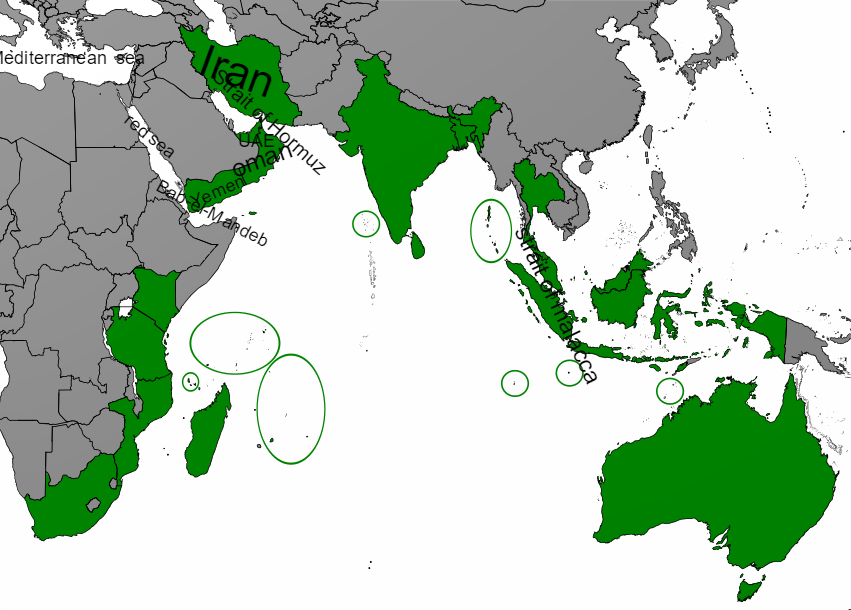
     

    Surce-wikipedia
    Locate all these islands and straits in your map.  Source-wikipedia


    Objectives:

    • To promote sustainable growth and balanced development of the region and member states
    • To focus on those areas of economic cooperation which provide maximum opportunities for development, shared interest and mutual benefits
    • To promote liberalisation, remove impediments and lower barriers towards a freer and enhanced flow of goods, services, investment, and technology within the Indian Ocean rim
    • In recent years, new and emerging issues for the better management and governance of Indian Ocean resources have begun taking shape.
    • Such issues include blue economy development and sectoral integration

    Six priority areas:

    1. Maritime safety and security
    2. Trade and investment facilitation
    3. Fisheries management
    4. Disaster risk management
    5. Academic science and technology cooperation
    6. Tourism and cultural exchanges

    First IORA Ministerial Blue Economy Conference –

    • In 2015, First IORA Ministerial Blue Economy Conference, titled as, Enhancing Blue Economy Cooperation for Sustainable Development in the IORA Region, was held in Mauritius
    • Blue Economy is a new comprehensive concept, incorporating the Ocean Economy, environment and sustainability to provide basic human needs such as potable water, food, jobs and habitable shelter
    • Conference aims to act as an ideal platform to bring together Member States and Dialogue Partners of the IORA to promote Blue Economy in the Indian Ocean region

    Conference focused on 4 priority areas namely :

    1. Fisheries & Aquaculture
    2. Renewable Ocean Energy
    3. Seaports & Shipping
    4. Seabed Exploration & Minerals

    China’s thrust for IORA membership: Is it push for Go Global policy?

    • China is the second-largest economy after the USA, among the current dialogue partners of the IORA (China, Egypt, Japan, the USA, the UK and France)
    • Recently, China is even reported to have expressed its interest in becoming a full member of the IORA
    • China’s dialogue with the IORA has been propelled by trends of globalisation and the process of regional integration, where she can play a leading role
    • China vigorously implements the ‘go global’ strategy by encouraging well-established Chinese enterprises to invest in and cooperate with countries in the Indian Ocean Rim region
    • While pushing ahead a going global strategy, China urges companies with proper capabilities to go to Indian Ocean Rim countries to invest
    • China would pursue active participation with the IOR-ARC in light of economic globalisation and regional economic integration

    What is the real significance (geostrategic and geoeconomic) of IORA for China?

    • As a connector between Africa, Asia and Oceania, it is the most important transport zone, almost 80% of the global oil and liquid natural gas shipments pass through it
    • Three strategic chokepoints – the Strait of Hormuz, Bal-el-Mandeb and the Strait of Malacca, connect the IOR with the Persian Gulf, the Red Sea and the South China Sea resp.
    • They have 7 adjacent IORA member countries, namely Oman, the UAE, Iran (Strait of Hormuz), Yemen (Bal-el-Mandeb), Indonesia, Malaysia and Singapore (Strait of Malacca)
    • Almost 85% of China’s oil and gas supplies and most of its maritime cargo, trade and transport pass through these choke-points

    Do It Yourself (DIY)– Learn more about other major choke points of the world.

    Future Ahead for India

    India along with IORA could transform the region, and focusing on Security and Growth for All in the Region (SAGAR), as envisioned by Prime Minister Modi during his recent visit to Mauritius.

    UPSC ke Sawaal

    #1. With reference to ‘Indian Ocean Rim Association for Regional Cooperation (10R-ARC)’, consider the following statements : (IAS pre 2015)
    I. It was established very recently in response to incidents of piracy and accidents of oil spills.
    2. It is an alliance meant for maritime security only.
    Which of the statements given above is/are correct?
    (a) I only
    (b) 2 only
    (c) Both I and 2
    (d) Neither I nor 2

    #2.   Between India and east Asia, the navi-gation-time  and distance can be greatly reduced by which of the following ? (IAS pre 2010) #importance of map marking

    1. Deepening the Malacca straits between Malaysia and Indonesia.
    2. Opening a new canal across the kra isthmus between the gulf of Siam and Andaman sea.

    Which of the statements given above is/are correct ?

    (a) 1 only. (b)  2 only. (c) Both 1 and 2. (d) Neither 1 nor 2

    #3. Which one of the following can one come across if one travels through the Strait of Malacca? (IAS pre 2011) #importance of map marking

    A. Bali
    B. Brunei
    C. Java
    D. Singapore

  • Short Videos relevant for IAS preparation

    This thread is dedicated to short videos, preferably less than five minutes (can extend up to 10 if very interesting) which would add value to UPSC preparation.

    Posting is simple. Just introduce the topic of video and post the youtube link. Further discussion on the subject cam commence in the thread itself.

    P.S.- Don’t post political stories, motivation videos and RSTV, LSTV long 30 minutes videos. You can create separate thread for the same.

  • How to study Economics (GS) for cracking IAS Prelims

    First things first,

    Why is Economics important?

    economics


    On average 16 questions are asked from economy portion and all the questions are very doable i.e. solid 32 marks you can easily get out of 105-100 needed to clear prelims i.e. solid 30% from economy alone! Unlike Environment and Biodiversity part of syllabus, there is no Greek or Latin here.

    But very often when I talk to aspirants, I hear the usual refrain, I have no background in economics, my economy portion is weak, I don’t understand anything in economics and so I don’t read economics/ business section of newspaper  and am not able to attempt many questions correctly in mock tests as well as actual exam.

    What lies behind this mortal fear of economics?

    1. Before starting preparation for IAS, most of us have neither read economics as a subject in school or college nor would we follow news items related to economy save for budget may be. We only watch political debates on TV
    2. Economy section of newspaper is filled with economic jargon such as repo, SLR, CRR, core inflation, terms of trade, monetary transmission, real GDP, nominal GDP, fiscal deficit, current account deficit ..list just goes on. To average reader it doesn’t make any sense so he doesn’t care to read that section. It takes you into a vicious cycle and makes you hate economy
    3. Economics books available in the market for UPSC preparation ain’t great. They just write anything and everything under the sun in boring mundane language. Of course we all have better things to do in life. So, people buy the recommended books, read 10 pages and never open that book again for by now they hate economics even more
    4. Websites which simplify economics such as investopedia are not written with Indian audience in mind, people just get lost
    5. Fundamental questions are not answered on Indian Website while useless detail is incorporated in the article. Average reader begins to rattaofy every data set and soon loses interest

    We can hear you shouting, we all agree with you, that’s exactly the problem, now tell us the solution and if all books are shitty which one would you recommend. Please don’t tell us you are bringing a new book in the market.


    Before we come to the solution, let’s read the syllabus in the words of UPSC

    • Economic and Social Development Sustainable Development, Poverty, Inclusion, Demographics, Social Sector initiatives, etc.
    • It does not say anything about conceptual macroeconomics but we all know therein lies the crux of matter.

    We divide the conceptual part into following parts for convenience-

    National income accounting; Budget and Fiscal policy,Banking and finance,RBI and monetary policy; Money Market and Stock Market; International Market, trade and balance of payment; Micro economy

    So, what’s the solution?

    Solution emerges from the problem my friends. Real crux of the problem is economic jargon and solution lies in dejargonising economics. We can hear you whispering, what an idiot, there are so many economic dictionaries in the market to do just that thing.

    Friends problem with economic dictionary is the same as problem with normal English dictionary. You didn’t learn your vocabulary from dictionary, did you? We built our vocabulary as we kept reading. We can’t understand things without context and often the context is missing there.

    So what do we recommend?

    1. Start with NCERT class 12 Macroeconomics. This book has very very basic stuff, lots of derivations which will not be asked in exam but if you want to understand economics well, sit tight with pencil and paper and derive those equations. There are just 6 chapters, less than 100 pages yes, not even 100 pages. If you read one chapter at a time, it will take not more than two hours and in less than a week, you will be own the macroeconomics.
    2. Read 11th standard economics book, India’s economic development. Read it like a story but try to understand important stuff like poverty, human resource development etc. It won’t take many hours.
    3. For those who are game, read 12th standard microeconomics. It’s not a must read, sirf jinda dil logon ke liye.
    4. Now comes the most important part. Read economy/ business section of newspaper everyday. Ask questions,why has RBI raised rates, why are industrialists clamoring for rate cut and try to answer them when you read them. It will consolidate your concepts.
    5. Do a simple Google search whenever you come across a term you don’t understand. Still don’t understand, get it resolved here.
    6. If you are game, watch Crash Course Macroeconomics or Khan academy videos (just one 10 minute video a day)
    7. Having done one to six faithfully, read two volumes of Sriram Economy book. But only after doing point one to six.

    But certainly NCERT won’t be sufficient for UPSC right. That’s why I said, read volume one of economic survey line to line and selective reading of volume two. Keep reading business/economy section of newspaper. Get your doubts cleared then and there.

    Economics at the entry level (GS pre and mains) is the easiest subject. There’s not much to mug up and only two concepts, concept of demand and supply and that of opportunity cost. Every other principle, theorem can be derived from this concept. For instance, you think just because you don’t have to pay anything to read this article, it’s free. It has cost my friends, opportunity cost. You could be doing something else in the time if not reading the article. Why have I written this article? Simple, I feel there was demand for such an article. That’s it. These are the only concepts.

    You don’t trust us, right. Don’t trust anyone. Always verify. So here is my verification. Click on separate hyperlinks

    1. IAS pre Economy In depth analysis part 1  and solutions
    2. IAS pre Economy In depth analysis part 2  and solutions
    3. IAS pre Economy In depth analysis part 3  and solutions

    But, we would make things much simpler for you and this is what we have planned for you-

    1. Stories and news cards related to economy are already being covered regularly. That will help you with the current economics
    2. Economic survey will be covered very comprehensively chapter by chapter.
    3. Concepts presented in economic survey such as genesis of various financial crises or how the flexible exchange rate system reduces the ferocity of crisis or why government plans to disband classification into plan and non plan etc., will be dealt with separately depending on use appetite
    4. Concepts of economics will be covered in a very dynamic fashion. Everything will be dejargonisied by breaking them into component parts. Fundamental questions will be answered without cluttering the articles with useless data copy pasted from official reports. It will help you solidify your concepts but I would still recommend reading NCERT macro first.
    5. International organisations like WTO, IMF, World Bank group will be covered under our IR series, click here

    We have already pushed a few articles as back to basics. More will be available on your desk very soon. Every concept will be covered here but I would still recommend you read economic survey very carefully. More than half of your economics will be done.

    We don’t recommend Dutt and Sundaram, kapadia, Mishra and Puri, Ramesh Singh are useless books. Don’t waste your time over reading those books. Wikipedia and Investopedia will give you more information in a much better way.


    Economics for mains is a different story altogether but without basics, you won’t be able to do that either. We shall analyse economics for mains some other day.

    If you are at a stage where you can appreciate Indian Economics discussions or annual budget discussions, do give these a read – 


  • Discussing Budget 2016-17 | Infrastructure and Investment

    In this section, we will deal with the sector that holds the potential to transform India – Infrastructure and Investment Sector.

    budget_infra

    Focus Area

    Road Sector

    The process of road construction will be accelerated and govt. has allocated Rs. 55,000 crore in the Budget for roads and highways. Govt. will approve nearly 10,000 kms of National Highways in 2016-17 and nearly 50,000 kms of State highways will also be taken up for up-gradation as National Highways.

    Read more about Developments In Road Sector.

    Port

    Govt has started a series of measures for modernizing the ports and increasing their efficiency. Govt. is planning to develop new greenfield ports both in the eastern and western coasts of the country along with expedition of National Waterways.

    Read more about Sagarmala Project.

    Civil Aviation

    Govt. is drawing an action plan for revival of un-served and under-served airports. There are some 160 airports and air strips which can be revived at an indicative cost of Rs. 50 crore to Rs. 100 crore each. Union govt. will partner with the States to develop some of these airports for regional connectivity.

    Read more about Developments In Civil Aviation Sector.

    Oil and Gas

    Govt is planning to incentivise gas production from deep-water, ultra deep-water and high pressure-high temperature areas, which are presently not exploited on account of higher cost and higher risks.

    Read more about Ministry of Petroleum and Natural Gas: Important Updates.

    Power Sector

    Govt. will diversify the sources of power generation for long term stability. A comprehensive plan will be prepared to augment the investment in nuclear power generation.

    Read more about India’s Nuclear Dilemma at the World’s Stage and Policy Wise: India’s Power Sector and recently launched UDAY scheme.

    Financing

    Govt will permit mobilisation of additional finances by various institutions such as NHAI, PFC, REC, IREDA, NABARD and Inland Water Authority to the extent of Rs. 31,300 crore through raising of bonds during 2016-17.

    New Initiatives

    Abolition of Permit-Raj

    Govt. will bring necessary amendments in the Motor Vehicles Act and open up the road transport sector in the passenger segment. An enabling eco-system will be provided for the States which will have the choice of adopting the new legal framework. Entrepreneurs will be able to operate buses on various routes, subject to certain efficiency and safety norms.

    Impact: It will lead to more efficient public transport facilities, greater public convenience, new investments, creation of new jobs, growth of start-up entrepreneurs and other multiplier effects.

    Reviving the Public Private Partnership

    Govt. will take various measures to revive the PPP sector:

    • It will introduce Public Utility (Resolution of Disputes) Bill to streamline institutional arrangements for resolution of disputes in infrastructure related construction contracts, PPP and public utility contracts
    • Guidelines for renegotiation of PPP Concession Agreements will be issued without compromising transparency
    • A new credit rating system for infrastructure projects will be developed, instead of relying upon a standard perception of risk which often result in mispriced loans

    Read more about recently released Kelkar Committee Report.

    Reforms in FDI policy

    100% FDI will be allowed through FIPB route in marketing of food products produced and manufactured in India, as lot of fruits and vegetables either do not fetch the right prices or fail to reach the markets. This move will benefit farmers, give impetus to food processing industry and create vast employment opportunities.

    Govt. has also proposed changes in the areas of insurance and pension, Asset Reconstruction Companies, Stock Exchanges, etc

    Public Sector Enterprises

    Govt. has approved a new policy for management of its investment in PSUs, including disinvestment and strategic sale. Govt. will leverage the assets of CPSEs for generation of resources for investment in new projects. The NITI Aayog will identify the CPSEs for strategic sale.

    The Department of Disinvestment is being re-named as the Department of Investment and Public Asset Management (DIPAM).

    Challenge

    There is a need for consolidation, starting from approval to implementation, apart from an institutional mechanism for fair pricing and competition in infrastructure policy.

    Criticism

    There are no big reforms or major policy turnarounds in this regard.

    PS: Please click on the green hyperlinked text to read more about the concepts. Revise and revise & feel free to ask pertinent questions.


    Published with inputs from Pushpendra | Image: Finmin
  • IAS Smita Sabharwal through a 10 point lens – schooling, UPSC Rank and more

    smita sabharwal

    1. This 38-year-old officer is a Bengali from Darjeeling. Her fans and supporters say she is a “Hyderabadi at Heart”.

    2. As her father Lt Col PK Das was a part of Indian defence force, she did her schooling in various parts of the country.

    3. From Class 9 onward, she studied only in Hyderabad. She first studied in Army School, Secundarabad, but then completed her Class XII from St Ann’s, Marredpally, Hyderabad. She got the first rank in the all-India ICSE Class 12 exams.

    4. In graduation, she studied commerce with accounts and economics as subjects. She did her BCom from St. Francis College.

    5. Before her UPSC examination, she said she studied six hours a day apart from reading news paper and magazines.

    6. She took public administration and anthropology for her mains examination in civil services.

    7. She failed to clear her prelims in the first attempt, but in the next chance, he clinched the all-India 4th rank. “It’s incredible! …After the grilling interview session, I expected maybe the 50th rank, but definitely not the 4th rank” she told in an interview to a newspaper then.

    8. In the UPSC interview, she was asked questions on foreign policy, China-US dispute, banking scenario in India and banks’ non-performing assets.

    9. She is a trained athlete. She also learnt Hindustani classical music, and she sings.

    10. Her inspiration: her mother Purabi Das. Her quote: “Everything becomes relevant once you put your heart into it.” (as quoted in an interview to Hyderabad Times after securing the 4th rank in civil services examinations)


    This article was first published here
  • Transforming Dantewada | O P Chaudhary


    About O P Chaudhary

    A 2005 batch IAS officer.
    He is the first IAS from Chattisgarh.
    He was posted as collector Dantewada, Chattisgarh.
    It is a Left Wing Extremism affected area.

    Everything you need to know about his stay at Dantewada

    In his stint as collector, he changed the face of Dantewada from an underdeveloped district into a progressive and vibrant one. His initiatives here were really path breaking and non-traditional. The key feature about these are the way he used the integration approach to arrange for funding, pooling being done from MGNREGS, BRGF, IAP, Sarva Siksha Abhiyaan, CSR and countless other schemes, whichever is appropriate. Against all odds, he proved that government schemes can function, despite the apparent perpetual crunch of funds.

    His initiatives:

    #1. Solar Powered Education City:
    As part of what he calls “the long-term solution”, he is supervising the construction of a 150-acre, solar-powered Education City. It aims to establish Dantewada as an education hub at the international level.
    It will house 15 institutions, including an industrial training institute, a polytechnic college and various residential schools. The campus would cater to more than 5,000 students and is expected to be completely functional in a-year-and-a-half.
    Recently, the consultancy firm KPMG listed it among the world’s top 100 innovative infrastructure projects for its potential to provide opportunities to the youth in developing their skills.

    #2. Choolo Asman:


    It comprises two coaching centres where the district’s brightest students are taught by teachers from the ‘Mecca’ of engineering and medical coaching, Kota, in Rajasthan.

    Moreover, Chaudhary turned the barracks vacated by the Border Roads Organisation into a campus for girls, adding an additional floor by using bamboo-based sheets so as not to overburden the existing structure. Thus, the existing space was doubled at half the cost of constructing new buildings.

    #3. Tamannah:
    This has been implemented after observing that the children in this part of the world lack even the basic exposure.
    Under the project, a science museum, district library, and a state of the art audio-visual theatre were set up with a view to broaden the horizons of all levels of students in the district.
    Tamanna film festivals were conducted where students from far off villages visit every day in the buses deployed by the administration and meet with district level functionaries.
    This helped to bridge the gap between citizens and administration.

    #4. Nanhey Parindey:
    To ensure the admission of deprived children in the quality schools like Navodaya Vidyalaya, Sainik Schools etc.
    These schools are providing opportunity for holistic growth of a child without any fee. But unfortunately, due to their basic admission process suitable to population that is relatively aware and exposed, they invariably end up enrolling only those children who are more aware, exposed to the world rather than the worse off who languish in the wilderness.

    To tackle this issue, project ‘NANHE PARINDE’ has been started, under which residential facilities were created at district headquarter and 105 children from interior villages belonging to marginalized background were provided special coaching for Navodaya and Sanik School entrance examination with 5th class regular schooling.

    With only 10 months of mentoring, 30 children were selected in Navodaya Vidyalaya Barsoor out of a total of 60 selections. Sainik School in Ambikapur-Surguja -1 child selected from NanheParinde project, 24 children selected in Karpawand, Eklavya Vidyalaya, Bastar 25 girls selected in Eklavya Kanya Shiksha Parisar, Katekalyan and 5 girls selected for Parchanpal Kanya Parisar, Bastar.

    #5. Education Clusters and Shiksha Savari Yojana:
    Dantewada suffered from one of the highest dropout rate at the stage of pre-matric level.
    This was because the high schools, which are lesser in numbers than the elementary schools, are located at places which are usually at some distance from their villages. Adding to this, poor transportation facilities and non-availability of residential facilities in high schools demotivate these children to go for higher studies.

    Clusters of important junctions in the district were chosen and Educational Clusters were created by providing residential facilities to children from 9th to 12th standard. Such residential facilities called Pota Cabins not only helped in increasing and sustaining the enrollment ratio but also improved quality of education for children in such schools.

    Additionally, the students getting enrolled in class 9th were provided bicycles under ‘Shiksha Savari Yojna’, a scheme initiated only in Dantewada District supported by IAP fund. As a result, dropout rate among school children decreased from 50% to 13% in just 2 years (2011-2013). This project is considered among top 100 most innovative projects throughout the world, by KPMG.

    #6. Livelihood College (GujarBasar College):
    This is a college for the unemployed youth, who have missed the formal education. It provides residential facility on PPP model.
    Admissions are open to all regardless of educational qualification, any income or caste criteria.

    Reputed organizations like IL&FS, IndiaCan, Tomorrow‘s Foundation, Cap Foundation, ISAP, ESAB, have been brought under the same umbrella to impart skill education to the youth. There is a provision for practical and class room training in more than 25 different trades and further linkages for placement with industries across India. Two types of trades have been focused upon : emerging market trends (hospitality, industrial stitching, sales, tally etc.) and to improve local skill deficit (plumber, electrician, mason, solar panel establishment and maintenance, mobile repairing etc.

    The recognition:

    For all his Herculean effort to achieve this miraculous feat, in which he literally risked his life many times, he got the well-deserved Prime Minister’s Award for Excellence in Public Administration for the year 2011-12.


    Published with inputs from Swapnil
  • Important Judgements of Supreme Court in 2015 | Part 4


    Catch up on the previous links to this series:

    #7. States cannot unilaterally grant remission

    Union of India vs. Sriharan

    Summary:

    In a setback to seven life convicts in the Rajiv Gandhi assassination case which includes four Sri Lankans, will remain in Vellore Central Prison in Tamil Nadu, as a five judge Constitution bench of the Supreme Court ruled that the Tamil Nadu government headed by J Jayalalithaa could not have unilaterally granted them remission.

    Observations:

    • Since the case was probed and prosecuted by CBI, a central agency, the decision should not have been taken without the “concurrence” of the Central government
    • Life sentence in such cases should mean life in jail till death
    • ‘REMISSION CAN BE CANCELLED’: SC upheld the 2008 Swamy Shraddananda judgment- Courts can ignore remission right of prisoner in heinous crimes like mass murder and terrorism by awarding sentences ranging from 20 to 40 years unless it is not rarest of rare offences meritting death sentence.
    • Interpreting Section 435 (2) of the CrPC: the word ‘consultation’ means ‘concurrence’. This means that TN Govt should have got the prior consent of the Centre before issuing its February 19 order to remit the sentences.

    Politics of remission:

    Read more here: reviving the politics of remission

    Recently polls have been announced in Tamil Nadu.
    There is every possibility that remission action can be used as a trump card to gain votes.
    So, need we not check this as it goes against Model Code of Conduct- influencing votes by populist policies?

    What does Election Commission of India has to say on it?
    Q- Would action be taken if any reference was made on the Tamil Nadu government’s decision to remit the life sentence of the Rajiv Gandhi assassination case convicts?
    Ans- As and when the reference comes, the Commission will take an appropriate view to ensure that our voters are not influenced.

    #8. Minimum Edu Qualification rule for Panchayat elections upheld

    Rajbala vs. State of Haryana

    Summary:

    Two Judge Bench of the Supreme Court of India upheld the validity of Haryana Panchayati Raj (Amendment) Act, 2015 (Act 8 of 2015), which introduced the minimum educational qualification for candidates to contest the panchayat elections. The Bench consisting of Justice Chelameswar and A.M.Sapre held that both the rights namely “Right to Vote” and “Right to Contest” are not fundamental Rights but only constitutional rights of the citizen.

    Observations:

    • Prescription of an educational qualification is not irrelevant for better administration of the PANCHAYATS
    • The classification cannot be said either unreasonable or without a reasonable nexus with the object sought to be achieved
    • Every person who is entitled to vote is not automatically entitled to contest for every office under the Constitution
    • Constitution itself imposes limitations on the right to contest depending upon the office
    • It also authorises the prescription of further disqualifications/qualification with respect to the right to contest

    Trivia:

    Supreme Court also upheld the clauses of the Act which disqualify persons who are in arrears of amounts to cooperative bodies and the electricity bills and also if a person has no functional toilet at his place of residence.


    Published with inputs from Swapnil
  • Oil and Gas Sector – HELP, Open Acreage Policy, etc.

    Recently, Cabinet has approved new Hydrocarbon Exploration and Licensing Policy (HELP), which will replace New Exploration Licensing Policy (NELP), for Oil and Gas exploration, Will that make any change in oil and gas exploration regime? Let’s see this in brief!

    Let’s first take an overview of New Exploration Licensing Policy (NELP)

    • New Exploration Licensing Policy (NELP) was created in 1997
    • To provide an equal platform to both Public and Private sector companies in exploration and production of hydrocarbons
    • Directorate General of Hydrocarbons (DGH) was a nodal agency for its implementation
    • Between 1998 and 2012, there were 9 rounds of oil and gas block auction (NELP 1 to NELP 9)
    • Although 126 discoveries have been made in 41 active blocks, commercial production has commenced only in 3 blocks
    • Reasons for the delay vary from inadequate technology to delayed regulatory approvals
    • Today, only 2 blocks, the Reliance Industries-operated KG D6 block and the Gujarat State Petroleum Corporation-operated Cambay onshore block, are producing oil or gas

    <Let’s Move towards new version of Policy>

    What are the Main facets of HELP policy?

    • Uniform License for exploration and production of all forms of hydrocarbon
    • Open acreage policy
    • Easy to administer Revenue sharing model
    • Marketing and pricing freedom for the crude oil and natural gas produced

    What is Unified Licensing Policy?

    • As the name suggests, all licenses are unified i.e. this allows exploration and production of all hydrocarbons such as oil, gas, coal bed methane and shale oil and gas in a block
    • Contrast this with NELP, which required separate licensing for different types of hydrocarbons time and cost overruns

    Concept of Open Acreage Policy

    • Contractors will now have the flexibility to request bidding for any block on-tap under Open Acreage Licensing
    • Earlier, they had to wait for the government to auction blocks, and could only bid for blocks that were put up for auction
    • This will enable Exploration & Production (E&P) companies choose the blocks from the area they like

    What’s new in Revenue-sharing formula?

    • Present system is that of of production sharing based on Investment Multiple and cost recovery/ production linked payment
    • Under the new revenue-sharing formula, contractors will share the revenue from the time first drop of oil/gas starts flowing from the field.

    How this policy of revenue sharing is in tune with Ease of Doing Business?

    • Earlier, under the Production/profit Sharing Methodology, it became necessary for the Govt to scrutinize cost details of private participants and this led to many delays and disputes<as govt was given its share only after all the costs were recovered, govt had to make sure that private parties do not inflate cost to reduce govt’s share>
    • To prevent loss of government revenue, there were requirements for Government approval at various stages to prevent the contractor from exaggerating the cost
    • Activities could not be commenced till the approval was given.  This process became a major source of delays and disputes
    • Under the new regime, the Govt will not be concerned with the cost incurred and will receive a share of the gross revenue from the sale of oil, gas etc.
    • So, no CAG audit, no approvals required, no micromanagement by govt.
    • Companies would worry less about the govt and focus more on operations
    Parameter Production sharing Contract Revenue Sharing Contract
    Risk Investor can take higher risk as he will be able to recover investment before sharing with govt Won’t take higher risk, has to share revenues from the first drop of oil
    Govt interference Higher as costs have to be rechecked minimal
    Useful for High risk high cost environment such as deep fields Low cost environment, fully explored blocks
    Recommended by Kelkar Committee Rangrajan Committee
    Govt policy NELP HELP

    India remains one of the least explored countries and could hold large potential resources. For example, 15 basins out of a total 26 sedimentary basins in India spread over on-land, offshore and deepwater, are estimated to hold prognosticated hydrocarbon resources of over 200 billion barrels of oil equivalent. Hence some recommend Production sharing contracts for India with investing capacity to manage such contracts better.

     Graded system of royalty to boost investment

    • The current policy regime, in fixing royalties, does not distinguish between shallow water fields (lower costs and risks) and deep/ultra-deep water fields(much higher costs and risks)
    • Under the new policy, there is lower royalty rates for difficult areas compared to NELP royalty rates
    • A graded system of royalty rates have been introduced, in which royalty rates decreases from shallow water to deepwater and ultra-deep water
    • Royalty rate for onland areas have been kept intact so that revenues to the state governments are not affected

    Pricing and Marketing Freedom

    At present, natural gas price is determined by taking into account the average of prices in gas-surplus countries such as the US, Canada and Russia, but proposed formula is market-efficient

    • New Policy allows pricing freedom to companies with a cap on prices to protect consumer interest
    • Gas price will be the lowest of imported fuel price; weighted avg of naphtha, coal and fuel oil; and the price of imported LNG
    • Policy also gives marketing freedom
    • The new price will apply to undeveloped gas discoveries and not on currently producing fields

    So, new price formula combined with lower royalty rates will help in undeveloped gas discoveries in deep-sea, ultra-deep sea and high-temperature, high-pressure fields. Increased investment and competition will eventually bring down gas prices as well as import dependence of India and lead to the development of a competitive gas market in the country.

    From NELP to HELP

    UNIFORM Licensing Policy One license for E&P of all the hydrocarbons from a block
    Open acreage system Licenses on tap
    Revenue sharing model Minimal govt interference
    Marketing and pricing freedom Sell to whoever you want at market determined prices subject to a ceiling price


    How Contract extension will help to remove further obstacles?

    • The grant of extension of production sharing contracts for 28 small, medium sized discovered fields is welcome
    • Because, this move will remove uncertainty and help contractors plan their investments in these blocks
    • The extension will be for 10 years, both for oil and gas fields or economic life of the field, whichever is earlier

    Way forward

    • India currently produces around 90 mmscmd (Million Metric Standard Cubic Meter Per Day) of gas, hardly meeting 40 per cent of the needs (imports majority of gas from Qatar)
    • Oil and Natural Gas Corp (ONGC), Reliance Industries and Gujarat State Petroleum Corporation(GSPC) will now get freedom to price gas from its idle discoveries in deep sea, ultra deepsea and high-pressure and high-temperature areas
    • So, overall we can say that, Govt’s target for O&G seems to be on track, to attract more investments, boost production and take away govt discretion from Oil and Gas Exploration
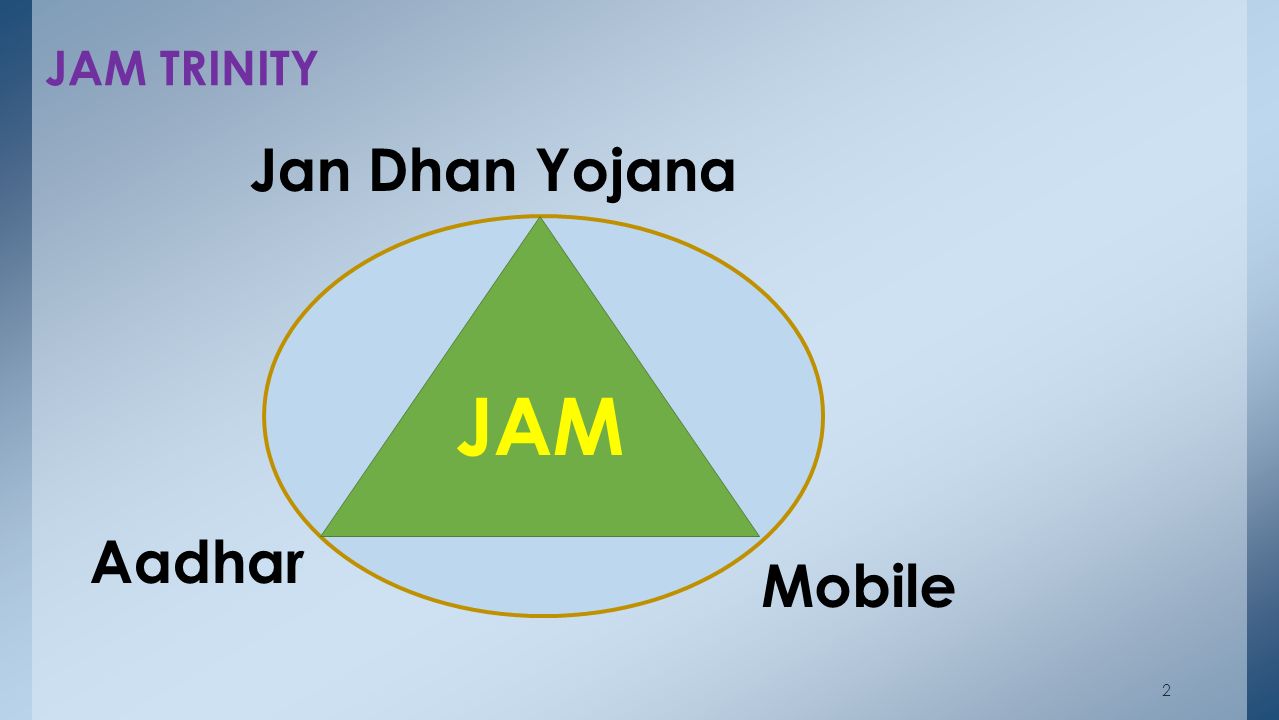
  • Economic Survey For IAS | Chapter 03 | Spreading JAM across India’s economy

    source-slideplayer.com
    source-slideplayer.com

    If you haven’t read chapter one and two, read them here first, Chapter two

    Data which you can quote in exam to buttress your point-

    • 975 million individuals now hold an Aadhaar card – over 75% of the population and nearly 95% of the adult population
    • Nearly one-third of all states have Aadhar coverage rates greater than 90%; and only in 4 states—Nagaland (48.9), Mizoram (38.0), Meghalaya (2.9) and Assam (2.4)—is penetration less than 50%
    • Basic savings account penetration in most states is still relatively low – 46% on average and above 75% in only 2 states (Madhya Pradesh and Chattisgarh).
    • only 27% of villages have a bank within 5 km
    • The Kenyan BC:population ratio is 1:172. By contrast, India’s average is 1:6630, less than 3% of the Kenyan level
    • spatial density of BC’s in India is 17% the Kenyan level
    • Mobile penetration-Only in Bihar (54%) and Assam (56%) is penetration lower than 60%
    • there are approximately 1.4 million agents or service posts to serve the approximately 1010 million mobile customers in India, a ratio of about 1:720

    This contrast of bank account penetration and accessibility v/s mobile penetration suggests that-

    • India should take advantage of its deep mobile penetration and agent networks by making greater use of mobile payments technology. Govt response- licensing of payment banks
    • Mobiles can not only transfer money quickly and securely, but also improve the quality and convenience of service delivery
    • For example, they can inform beneficiaries that food supplies have arrived at the ration shop or fertilizer at the local retail outlet

    Let’s come to the main issue of Direct Benefit Transfer using JAM-

    Suppose the govt wanted to transfer 1000$ to every Indian tomorrow. It would require-

    1. Ability to identify beneficiaries (Authentication / identification or first mile)
    2. Ability to transfer money to beneficiaries (bank account )
    3. Ability to withdraw money from bank accounts (accessibility to bank branches / last mile)


    First mile/ identification issues-

    • Failure on identification front leads to leakage – benefits intended for the poor flow to rich and “ghost” households, resulting in fiscal loss
    • It was due to administrative and political discretion involved in granting identity proofs like BPL cards, driving licenses and voter IDs (not giving BPL card to poor etc)
    • Aadhaar uses technology to replace human discretion and can better help in identification

    3 Broad issues-

    1. Targeting –  targeted subsidies are harder to JAM than universal programs, as they require government to have detailed information about beneficiaries.  For instance-  Subsidies targeted at the poor (like food and kerosene) require government to know people’s wealth while a universal subsidy like LPG requires no such information.
    2. Beneficiary databases: to identify beneficiaries, the government needs a database of eligible individuals in digital form to be seeded with Aadhaar. Socioeconomic caste census (SECC) data needs to be continuously updated to serve as a baseline in sectors where data does not exist.
    3. Eligibility: household-individual connection, while Aadhaar is an individual identifier, some schemes such as PDS ration are implemented at household level and spending priorities of male and female beneficiaries are often different.

    2. Middle mile- administrative challenge of coordinating government actors and the political economy challenge of sharing rents with supply chain interest groups.

    1. Within-government coordination: among various ministries, departments, state govt., departments etc.
    2. Supply chain interest groups: distributors need incentives before they invest in JAM infrastructure and if their interests are threatened, they would obstruct the spread of JAM.

    3. Last mile/ Transfer and Access issues (Bank account and access)- failure here  risks excluding genuine beneficiaries, especially the poor.

    1. Beneficiary financial inclusion: Bank accounts and accessibility to bank branches.

    In rural areas physical connectivity to the banking system remains limited, and BCs, banking correspondents and mobile money providers have not yet solved this last-mile problem

    2. Beneficiary vulnerability: amount of subsidy consumed by poor

    • exclusion error risks increase when the beneficiary population is poorer
    • For instance, the poorest 30% of households consume only 3% subsidized LPG consumption, but 49% of subsidized kerosene i.e. if excluded from LPG subsidy not much effect on poor but exclusion from kerosene subsidy will hurt them the most

    Where next to spread JAM?

    Policymakers should decide where to apply JAM based on two considerations of-

    1. Amount of leakages- subsidies with higher leakages will have larger returns from introducing JAM
    2. Control of the central government-control of central government will reduce administrative challenges of co-ordination and political challenges of opposition by interest groups (middle mile challenge)

    Fertilizer subsidies (huge leakages) and within-government transfers (govt control) are two most promising areas for introduction of the JAM

    JAM Preparedness Index:

    • Aadhaar penetration, basic bank account penetration and Banking Correspondents (BC) density are used as indicators for the indices
    • Preparation across states is varied with urban preparation being better than rural one
    • In urban areas, Madhya Pradesh and Chattisgarh show preparedness scores of about 70% while Bihar and Maharashtra, have scores of only about 25%
    • DBT rural preparedness has an average score of 3% and a maximum of just 5%(Haryana)

    It is clear that last-mile financial inclusion is the main constraint to making JAM happen in much of rural India. Jan Dhan’s vision must truly succeed before much of India can JAM

    What is this BAPU?

    Biometrically Authenticated Physical Uptake

    • It is an interim solution– while banking correspondent networks develop and mobile banking spreads
    • Beneficiaries verify their identities through scanning their thumbprint on a POS (point of sale) machine while buying the subsidised product—say kerosene at the PDS shop just like your biometric attendance machine
    • BAPU preparedness is much better (12%) than for Rural DBT preparedness (3%)

    Remarkable success of LPG DBT scheme (PAHAL) 

    Source-Pradhanmantrijoajana
    Source-Pradhanmantrijoajana


    • Use of Aadhaar has made black marketing harder (commercial establishments buying subsidiesd domestic cylinder)
    • LPG leakages have reduced by about 24 per cent with limited exclusion of genuine beneficiaries

    However, diversion of LPG from domestic to commercial sources continues, because of the differential tax treatment of “commercial” and “domestic” LPG (no tax on domestic unsubsidized cylinders (after 12 cylinders) v/s upto 30% tax on commercial cylinders)

    Solution- apply the One Product One Price principle and equalise taxes across end-uses

    Way forward on JAM

    In those areas where the centre has less control, it should incentivise the states to-invest in first-mile capacity (by improving beneficiary databases),deal with middle-middle challenges (by designing incentives for supply chain interest groups to support DBT) and improve last-mile financial connectivity (by developing the BC and mobile money space). States should be incentivised by sharing fiscal savings from DBT.

    • Centre can invest in last-mile financial inclusion via further improving BC networks and promoting the spread of mobile money
    • Regulations governing the remuneration of BCs need to be reviewed to ensure that commission rates are sufficient to encourage BCs to remain active

    What you have to read for yourself

    1. All the boxes from the chapter
    2. Open all the hyperlinks. Learn, understand and revise
    3. Read this chapter wiping every tear from every eye from last year’s economic survey to understand conceptual framework behind DBT and also follow this story on Direct Benefit Transfer

    Ask all your doubts in the comment section below or in doubts clearing forum . all your suggestions, criticism and feedback are most welcome.


    If you like what you read, show your support to Civilsdaily and give us a hi 5 at the Android Play – Click here.

  • Important Judgemets of Supreme Court in 2015 | Part 3


    Catch up on the previous links to this series:

    #5. Unwed mother can become sole guardian of a child

    ABC vs. State (NCT of Delhi)

    Summary:

    In a landmark judgment, a Supreme Court bench headed by Justice Vikramajit Sen held that an unwed mother in India can apply to become the sole guardian of a child, without giving notice to the father of the child and without disclosing his identity.

    The Court also directed that if a single parent/unwed mother applies for the issuance of a Birth Certificate for a child born from her womb, the Authorities concerned may only require her to furnish an affidavit to this effect, and must thereupon issue the Birth Certificate, unless there is a Court direction to the contrary.

    Background:

    • The child was born in 2010, and the woman petitioner raised him without any assistance from or involvement of his putative father
    • She desired to make her son her nominee in all her savings and other insurance policies
    • But was informed that she must either declare the name of the father or get a guardianship/adoption certificate from the Court
    • She then filed an application under Section 7 of the Guardians and Wards Act, 1890 (the Act) before the Guardian Court for declaring her the sole guardian of her son
    • Section 11 of the Act requires a notice to be sent to the parents of the child before a guardian is appointed
    • However, both the Courts (the guardian court and Delhi High court) held that she needed to disclose the father’s name to get his consent while filing a guardianship petition
    • Then she filed a petition in SC against ruling of the trial court and the Delhi High Court

    SC observations:

    • The predominant thought in these jurisdictions, as is in India, is to bestow guardianship and related rights to the mother of a child born outside of wedlock
    • The mother need not disclose the identity of the father and include him as a party to the guardianship petition in certain cases
    • The ruling relied on the best interest of the child, which requires that the procedural requirement should be done away with

    #6. Section 364A IPC awarding death penalty not unconstitutional

    Vikram Singh vs. Union of India

    Summary:

    The Supreme Court of India dismissed an appeal by a death row convict, and held that Section 364A awarding death penalty as a possible punishment, for kidnapping any person threatening to cause death in order to compel Government or any other person, to pay ransom, is not unconstitutional.

    Three Judge Bench of Justices T.S. Thakur, R.K. Agrawal and Adarsh Kumar Goel examined the background of the Section 364A and held that it was enacted for the safety and security of the citizens and the unity, sovereignty and integrity of the country.

    About Section 364A:

    • Introduced: 1993
    • Awards: death penalty or life imprisonment
    • For: kidnapping or abducting any person and threatening to cause death or hurt to such person
    • Protects: the Government, any foreign State or international inter-governmental organisation or any other person

    Observations:

    • Private persons are also covered:
      Section 364A is wide enough to cover even cases where the demand for ransom is made not as a part of any terrorist act but also for monetary gain from a private individual.
    • 364A deals with ordinary crimes too:
      The counsel for petitioner had argued- since the Kidnapping/abduction of a person for ransom is already covered by other provisions of IPC hence Section 364A was added only to deal with terrorist related ransom situations and not ordinary crimes.
      However, the SC held that ingredients of 364A are unique, and cannot be found in other provisions of IPC even in the provisions dealing with extortion.
    • Rule of Ejusdem generis does not apply:
      The meaning of the term ‘person’ can not be restricted to the ‘government’ or ‘foreign State’ or ‘international inter-governmental organisations’ only.
    • Section 364A not disproportionate:
      Citing various Indian and foreign decisions, the court laid down the principles governing proportionality of punishments
      ○ Punishments must be proportionate to the nature and gravity of the offences for which the same are prescribed
      ○ Prescribing punishments is the function of the legislature and not the Courts’.
      ○ The legislature is presumed to be supremely wise and aware of the needs of the people and the measures to meet those needs
      ○ Courts show deference to the legislative will and wisdom and are slow in upsetting the enacted provisions dealing with the quantum of punishment prescribed for different offences
      ○ Courts, however, have the jurisdiction to interfere when the punishment prescribed is so outrageously disproportionate or so inhuman or brutal which cannot be accepted by any standard of decency
      ○ Absence of objective standards for determining the legality of the prescribed sentence makes the job of the Court reviewing the punishment difficult
      ○ Courts cannot interfere with the prescribed punishment only because the punishment is “perceived to be” excessive

    What is Ejusdem Generis?

    • A Latin term which means “of the same kind
    • It is used to interpret loosely written statutes
    • Where a law lists specific classes of persons or things and then refers to them in general then the general statements only apply to the same kind of persons or things specifically listed


    Published with inputs from Swapnil

More posts