Know more about our Mains Guidance Program 2019 and join here: https://www.civilsdaily.com/mains-ts-2019/
Search results for: “”
-
UPSC Mains 2018 GS Paper 1 – Solutions, Sample Structures and Repeated Questions from CD Mains TS
Click here to view the schedule + detailed syllabus with sources
Click here to know the features and enroll.
Our Mains Test Series had the highest hit ratio among all the Test Series. In GS 1 itself, close to 13 questions came directly from our 3 Full-Length-Tests(60 questions). If you followed our website/study material, you would’ve written above average answers for all questions. YES! All questions.
*These are not solutions but pointers/line of thought to be followed.
**Please do not look for a precise 1-1 match between the UPSC paper and our Test Series. The comparison is there to help you get a feel of the approach we follow in our Test Series.
***In the comments section, let us know interesting points along with the reasons that could enrich these answers.1) Safeguarding the Indian art heritage is the need of the moment. Comment (10 marks)
We had written a note on heritage 2 years back.
1. What is heritage erosion and how can we manage it?
2. What are the components of heritage?
It was accessible via clicking on Paper 1 on left sidebar – https://www.civilsdaily.com/
gspaper/paper1/ We can’t claim this question but at the same time, we will work to ensure that good content from which questions are expected are made more accessible before the exams.
Approach
>Introduction – Start with defining Indian Art Heritage.
The term heritage has wide connotations spanning across nature, culture, food and other dimensions. Art heritage primarily refers to the tangible heritage comprising of
1.Paintings and art forms
2.Ancient Monuments and Archaeological Sites
3.Sculpture
4.Scriptures
5.Artifacts
Preserving our heritage is enshrined as a Fundamental Duty in our Constitution
Threats to Art Heritage
1.Lack of public awareness -This makes the local administrator break the buildings and replace it with other structures.
2.Duplication of paintings and art forms
3.Theft
4.Smuggling
Reasons for safeguarding
Cultural
1.Identity and pride of our country.
Economic
2. Tourism involves around monuments.
3. Infrastructure development takes place in and around the areas. Eg. Khajuraho despite being a small village has excellent infrastructure.
4. Creates jobs.
Social
5. It creates a feeling of community, a sense of attachment. enhances a sense of belonging.
Way forward
Strengthening institutions
-Ministry of Culture, ASI, Museums, Archives, etc.
Cultural awareness programs.
-Curriculum modification – Identification and inclusion of heritage as an asset in school, Open departments of Heritage management on the lines of Ahmedabad University
-Introduction of a compulsory offline and online training for tourism purposes willing to undertake ventures.
-Heritage depiction and promotion through immersive technology & augmented reality
-Re-Classify heritage and announce awards for people with exceptional heritage sense.
Adaptive reuse of heritage sites
-Restoring the historical sites in the form of festivals and inducing festivity link perceptions.
2) Assess the importance of the accounts of the Chinese and Arab travelers in the reconstruction of the history of India. (10 marks)
Similar question from Test Series – Round1 GS1
19. Greek and Roman literary account proved extremely useful in writing the history of Ancient India? Discuss.
This shows how our thinking is on the spot. Make a note of this question. Absolutely important for prelims and mains next year.
Approach
Foreign travelers in the past played a more profound role than tourists of the present day. They were agents of civilizational contact and exchange, bringing with them new ideas, skills and technologies and returning with new knowledge.
They left elaborate records of their travels often mentioning facts that native writers simply took for granted and hence ignored.
Chinese travelers visited India during the Gupta and Post-Gupta period when Buddhism was prominent while notable Arab travelers can be seen during the medieval period with the advent of Islamic rulers. Few important accounts are as follows.
Fa-Hien – Account of the Gupta Period
An extensive account of society. first to talk about the caste system and shudras. Shudras were kept outside the town and entered the town by making a noise with a stick. Fahien had also mentioned about Shaiv and Vaishnav religion.
Comprehensive eyewitness account of the history and customs of Central Asia and India.
Economic account. Stated that income of the government was mainly based on the revenue taxes which were one-sixth of the total production.
Similarly, talk about
Hsuan-Tsang – Account during Harshavardhan’s era.
Al Beruni (AD 973 – 1048) – Mahmud of Ghazni. Culture of Indians especially the hindus.
Abdur Razzaq – Vijaynagar Empire
Conclusion – They provide enriching narratives highlighting the diversity of our past.
3) Throw light on the significance of the thoughts of Mahatma Gandhi in the present times. (10 marks)
Similar question from Test Series – Round3 GS1
5. By offering an ideological critique of the western civilization in its modern phase, Gandhiji was effectively contesting the moral legitimacy of the Raj that rested on a stated assumption of the superiority of the west. Comment (10 marks)
One of the most important topics from UPSC perspective relevant for Essay, GS1, GS4. A more difficult question was asked in the test series.
Approach
Start with a line like Gandhi is regarded as the greatest Indian since Gautama Buddha and the greatest man since Jesus Christ.
Elaborate on the following writing 1-2 lines and you’ll score an 8/10.
1.Truth
2.Ahimsa – believer in peace and harmony.
3.Satyagraha
4.Swaraj – Multidimensional concept spanning political, cultural, economic and technological spheres.
5.Dharma – Multidimensional concept meaning many things depending upon the situation – obedience to law, morality, being virtuous, etc.
6.Trusteeship Model – Though a failed model but inspired Corporate Social Responsibility. The best companies in the world invest heavily in social projects.
7.Ram Rajya/ Decentralized polity – Democracy is about giving power to the masses. Debates around strengthening the Panchayati Raj system all based on this ideal.
8.Sarvodaya and Antyodaya
9.Campaign against untouchability
10.Campaign for cleanliness – Inspired swatch bharat.
11.Ethical journalism – Gandhi was a journalist at heart. He published 4 newspapers and used it as a medium to generate awareness.
12.Opposition to western materialism, appreciation for sciences and bringing back spiritualism from our past.
4) Why is the Indian Regional Navigational Satellite System (IRNSS) needed? How does it help in navigation? (10 marks)
Straightforward question.
Approach
IRNSS constellation of eight satellites, NavIC. Three satellites are located in suitable orbital slots in the geostationary orbit and the remaining four are located in geosynchronous orbits with the required inclination and equatorial crossings in two different planes.
It is needed for the following
- Terrestrial, Aerial and Marine Navigation
- Disaster Management
- Vehicle tracking and fleet management
- Integration with mobile phones
- Precise Timing
- Mapping and Geodetic data capture
- Terrestrial navigation aid for hikers and travelers
- Visual and voice navigation for drivers
Besides the above applications, it has implications for India’s security. It will help India become self-reliant to keep a close watch on its boundaries and remove its dependence on US-based GPS. Hence, its military applications remain important.
It is also playing an important role in India’s softer diplomacy by providing services to our neighboring countries.
It helps in navigation in the following manner
>It uses the principle of triangulation.
It requires only three satellites to provide a precise location. The other satellites add to the accuracy.
<draw a diagram with the intersection of 3 circles>
If you are positioned somewhere on Earth with three satellites in the sky and if you know how far away you are from satellite A, then you know you must be located somewhere on the red circle. If you do the same for satellites B and C, you can work out your location by seeing where the three circles intersect.
5) Why is India taking a keen interest in the Arctic Region? (10 marks)
Similar question from Test Series – Round 3 GS 3.
Q2 As the Arctic has continued to warm and the temperature difference relative to the equator has reduced, many strange climate anomalies have been witnessed around the world. Examine.
Previously asked mains question on Arctic Council. Since questions are hardly repeated we had left this question.
Approach
The introduction can start with the definition
Arctic Region refers to the polar region located at the northernmost part of Earth. It consists of the Arctic Ocean, adjacent seas, and parts of countries like Alaska, Finland, Greenland, etc.
Once ignored because of the prevalence of ice, it has started gaining importance due to the melting of ice caps because of global warming. Its implications have caught India’s interest.
1. Climate change concerns – Global Warming leading to the melting of ice can lead to the release of more methane and CO2 accelerating Global Warming. This can further lead to a rise in sea levels across the globe impacting India as it remains surrounded by water on 3 sides. This concern needs to be addressed.
2. Navigation routes – New and shorter strategic sea routes that will change the pattern of energy flow on sea lanes of communications (SLOCs).
3.Oil Beds – Arctic seabed may contain substantial oil fields which may become accessible if the ice covering them melts.
4. Finally, Arctic Region is not considered as a global common and its discourse remains dominated by the Arctic Five countries and the Arctic Council. This doesn’t work in India’s favor.
Hence, it’s in India’s interest to make Arctic talks more accessible. With Russia, China already laying their claims on various parts of the region, India should try to push its agenda in the Arctic Council. It should try to ensure that developing countries have a say in the matters of Arctic Region. This will not only ensure that its economic, security and environmental interests are protected but will see India play a leadership role in promoting south-south solidarity.
6) Define mantle plume and explain its role in plate tectonics. (10 marks)
Similar question from Test Series – Round1 GS1
16. Without magma man’s survival and progress would have been difficult. Comment.
17. The theory of plate tectonics has greatly contributed to our understanding of the earth. Comment.
Though not precisely the same question, attempting the test would’ve ensured that you don’t leave the question blank and write some quality points on plate tectonics and mantle.
7) What are the consequences of spreading of ‘Dead Zones’ on marine ecosystem? (10 marks)
8) “Caste system is assuming new identities and associational forms. Hence, the caste system cannot be eradicated in India.” Comment. (10 marks)
Similar question from Test Series – Round 2 GS1
Q.18) Caste in its old form is irrelevant and cannot exist in the modern or contemporary Indian society. Comment(15)
Hope you appreciate the similarities in the questions. We asked Caste in its old form is irrelevant and the question said caste system is assuming new identities and associational forms. Had you gone through the model answer, you would’ve gotten some rich points to attempt this question.
9) ‘Despite the implementation of various programmes for the eradication of poverty by the government in India, poverty is still existing’. Explain by giving reasons. (10 marks).
Very general question. Asked across our TS in GS1, GS2, GS3 in various forms linking with lack of female participation, etc.
10) How the Indian concept of secularism different from the western model of secularism? Discuss. (10 marks)
Similar question from Test Series Round 2 GS1
Q.19) India needs a reinvented secularism 2.0 rooted in the complete separation of religion and state. Critically comment(15)
Approach
Secularism broadly refers to the separation of religion from state and its confinement to the private sphere. It’s a western construct whose roots can be traced back to the treaty of Westphalia which called for state sovereignty and its separation of religion. However, the relationship between religion and states remain complex.
There are 2 prominent models of secularism regarded as western models
1.France –> wall of separation model – which calls for a water-tight separation between the religion and state exists. The state actively tries to confine people’s religion to their private spheres and bans public appearances. Eg. banning burkinis, hijab, etc.
2.USA -> no-preference model – which calls for equal treatment of all religions by the state and no preferential treatment. In USA, you have every right to wear your religion in public.
The version of Indian Secularism has been a matter of intense debate. Secularism is a part of the Preamble and the Constitution calls for no discrimination on the basis of religion. However, it also allows the state to intervene in matters of religion via Art. 25-30. The DPSP for establishing UCC also goes against the principles of Secularism.
Some matters where the state has interfered
1.The Hindu Marriage Act.
2.The Triple Talaq Ban
3.Jallikatu, Temple Entry, etc.
Hence one can see it is neither a wall of separation model nor a no-preference model.
The Indian Secularism can be best described as that of ‘Principled Distance’. The doctrine of Principled Distance allows states to interfere in matters of religion to stop discrimination and ensure that all religion are treated equally.11) The Bhakti movement received a remarkable re-orientation with the advent of Sri Chaitanya Mahaprabhu. Discuss. (15 marks)
Similar question from Test Series – Round3 G S1
4.Kabir was one of the chief exponents of the Bhakti movement in the medieval period. Discuss the Relevance of the teachings of Kabir in Contemporary India? (10 marks)
Instead of Chaitanya, we asked Kabir. We could’ve asked any Bhakti saint like Dadu Dayal, Tulsi Das. We went with Kabir so students could at least attempt Kabir if it was asked in the exam.
Approach
Chaitanya – Bengal+Orissa. He takes Bhakti Movement to the east of India where it flourishes.
Popularised Kirtans
Founder of Gaudiya Samaj. Gaudiya Vaishnavism.
Gaudiya Nritya is one of the dances accepted in the UNESCO world heritage.
Bhidabhida philosophy school.Leads to many important cultural developments in east India.
15) Defining blue revolution, explain the problems and strategies for pisciculture development in India. (15 marks)
Straightforward question asked in GS3.
16) What is the significance of Industrial Corridors in India? Identifying industrial corridors, explain their main characteristics. (15 marks)
Approach
Industrial Corridors are envisioned to create a strong economic base with the globally competitive environment and state-of-the-art infrastructure to activate local commerce, enhance foreign investments and attain sustainable development
Their significance is as follows
1. The corridor approach is a proven concept to ensure industrial development in under-utilized regions.
2. Integration between industry and infrastructure
-World class infrastructure such as high-speed transportation (rail, road) network, ports with state-of-the-art cargo handling equipment, modern airports, special economic regions/ industrial areas, logistic parks/transshipment hubs, knowledge parks focused on feeding industrial needs, complementary infrastructure such as townships/ real estate, and other urban infrastructure along with enabling policy framework.
3. Opportunities for private sector investment in the provision of various infrastructure projects associated with the exploitation industrial opportunity. Enhancing ‘Make in India’.
4. Ensure smooth access to industrial production units, decreased transportation, and communications costs, improved delivery time and reduction in inventory cost. The strategy of an industrial corridor is thus intended to develop a sound industrial base, served by world-class competitive infrastructure as a prerequisite for attracting investments into export-oriented industries and manufacturing.
5. Technological Prowess.
6. Social Upliftment.Write a few unique points about the following, the involvement of foreign organizations, etc.
Delhi Mumbai Industrial Corridor
Chennai Bengaluru Industrial Corridor
Bengaluru Mumbai Economic Corridor
Amritsar Kolkata Industrial Corridor
East Coast Economic Corridor17) Mention core strategies for the transformation of aspirational districts in India and explain the nature of convergence, collaboration, and competition for its success. (15 marks)
18) ‘Women’s movement in India has not addressed the issues of women of lower social strata.’ Substantiate your view. (15 marks)
Approach
Women’s movement in India has come a long way since the humble efforts of Raja Ram Mohan Roy and Ishwar Chand Vidyasagar to fight for women’s rights.
In their time, it was the upper social strata who were subjected to inhumane practices like Sati. However, the scenario seems to have changed today. Women of lower social strata either belonging to lower castes, minority religion or economically backward regions continue to face hardships.
Political sphere
-elite women with influence occupying offices in governments, panchayats and other bodies.
Economic sphere
-glass ceiling breaking in corporations like google, microsoft. But the wage gap remains prominent for semi-skilled and unskilled workers.
Social sphere
The worst forms of Patriarchy is more prominent in the lower social strata. Haryana with primarily agricultural economy had the poorest child sex ratio.
Education sphere
Access to both lower and higher education remains limited.Women empowerment can happen when everyone works towards it – the government, society, families, and individuals.
The government programs targeted towards women empowerment have started to bear fruits. Beti Bachao Beti Padhao, Dhanlaxmi scheme and others have acted as catalysts to promote behavior and mindset changes.
The society should be forthcoming to support women. The story of Phogat Sisters tells us how women can bring accolades to the country. All started with a father, an individual questioning established norms.
19) ‘Globalisation is generally said to promote cultural homogenisation but due to this cultural specificities appear to be strengthened in the Indian society.’ Elucidate.
Similar question from Test Series – Round 2 GS1
18. While Globalization has destroyed many traditional practices and Industries in India it has also given new lease of life to some of them who were on the ventilator. Examine. (15)
We did not ask a question on Globalization and culture as it had been asked by UPSC before. Hence we went with other dimension of Globalization.
Approach
Globalisation refers to the increases interconnected due to technological advancements leading to a shrinking of time and space and flattening of the world. Though thought of as an economic phenomena, it is now accepted to impact all spheres of life – political, social and cultural.
In its initial days, globalisation was equated with westernisation or americanisation which meant that the culture of the west was spreading across the globe. One could travel to new york and new delhi and find them to be similar in almost all spheres including culture. Thus globalisation was supposed to have a homogenizing tendency.
However, the relationship between globalisation and culture is a complex one. Globalisation has not been able to replace old existing cultures. Instead evidence suggests that globalisation has strengthened them and even modified them.
1.Indian cuisines traveling to the west
Indian food restaurants are now available all around the world. Indian curries and masalas have also become a part of our soft power diplomacy.
2.Ancient indian practices like yoga and ayurveda being adopted around the globe.
People are now looking for the most authentic experience.
3. With the advent of ecommerce, global value chains and internet, local arts and crafts are also
Top hotels of the world are buying handwoven Indian designs sourced from traditional communities. Ikkat, block painting, etc designs are gaining popularity world over.
4.Traditional Indian forms of music and communities like the Manganiars are being studied in the Berkeley School of Music.
5. Contemporary cinema Bollywood has increased its fan following across the globe.At the same time, local cultures are modifying western cultures. McDonalds serving a menu catering to Indian taste buds is a case in point. This phenomena has been termed as ‘glocalization’
From the above, it can be seen that the relationship between globalisation and culture is complex with each impacting the other. The above examples indeed prove that cultural specificities appear to be strengthened in the Indian society.
20) ‘Communalism arises either due to power struggle or relative deprivation.’ Argue by giving suitable illustrations. (15 marks)
Communalism in the Indian context refers to the ideology which states that society is divided into different religious communities whose interests differ from, and at times oppose, each other. Historically, Indian society has been regarded as a melting pot of various religions that have been tolerant of each other. However, the British policy of divide and rule laid the foundations of communalism which the Indian state has found hard to tackle post-independence.
Communalism indeed arises due to power struggle and relative deprivation
Power struggle
-Power struggle between political parties leading to vote bank politics with each trying to garner votes based on identity markers such as religion. Eg. Congress and BJP both trying to appease Muslims and in turn strengthening the Hindu Muslim divide.
-Between majority and minority groups. Eg. Sikhs and Hindus.Relative deprivation
Deprivation makes groups to fight for limited resources.
-Case with Assamese and Non-Assamese. Deprivation of the native groups led to movements throughout the state.
Deprivation makes it easier to influence a group. Rather than self-introspect they blame others for their condition. It causes them to support anyone who can help them marginally move above their misery.
-Vice President Ansari had pointed out the relative deprivation among Muslims to be the biggest causes of communal tension.Long-Term Remedy for Communalism
- There is a need to initiate the process of de-communalization of the people at all levels, say, by exposing communal assumptions, by explaining to them the socio-economic and political roots of communalism, and by letting them know that what the communalists project as problems are not the real problem and what they suggest as remedies are not the real remedies.
- Communalism of state and of the political elite in power has to be checked because it leads to inaction against communal violence and covert or overt political and ideological support to communalism by the state apparatuses, including the media under state control.
- Communalization of civil society also needs to be checked because it leads to more communal roots and other forms of communal violence. It is here that intellectuals, political parties, and voluntary organizations can be the most effective.
- The role of education, particularly value-oriented education, both in schools and colleges is important in preventing communal feelings.
- The media can prove to be significant in preventing communal feelings. Communal press can be banned and legal action can be taken against communal writers.
- 6. The ideology that economic development, industrialization, the growth of capitalism and the growth of the working class would automatically weaken and ultimately eliminate communalism should not be overplayed.
Click here to view the schedule + detailed syllabus with sources
-
4 October 2018 | Prelims Daily with Previous Year Questions
Q.1) Udyam Abhilasha, the Entrepreneurship Awareness Campaign is launched by-
a) NITI Aayog
b) SIDBI
c) Ministry of Skill Development and Entrepreneurship
d) Ministry of HRD
Inspired by: [pib] Udyam Abhilasha
https://www.civilsdaily.com/news/pib-udyam-abhilasha/
Q.2) MASCOT the first robot to land on the surface of an asteroid is launched by:
a) ISRO and NASA
b) Japanese space agency- JAXA
c) European Space Agency
d) Russian Federal Space Agency
Inspired by: Japan drops new robot on asteroid
https://www.civilsdaily.com/news/japan-drops-new-robot-on-asteroid/
Q.3) The Quintero One, a product recently launched is the name of an:
a) Intercontinental Ballistic Missile
b) Hyperloop Passenger Capsule
c) Fastest Bullet Train
d) Largest Turboprop Aircraft
Inspired by: ‘1,200 km/hour’: World’s first Hyperloop passenger capsule unveiled
https://www.civilsdaily.com/news/1200-km-hour-worlds-first-hyperloop-passenger-capsule-unveiled/
Q.4) With reference to the Mission Gange Rafting Expedition, which of the following statements is/are correct?
- The mission is partnered by NITI Aayog.
- It will begin from Gangotri and conclude in the Bay of Bengal.
- It will be led by the first Indian woman to scale Mount Everest Ms. Bachendri Pal.
Select the correct codes:
a) All are correct.
b) 1 only
c) 2 only
d) 3 only
Inspired by: [pib] Rafting expedition “Mission Gange”
https://www.civilsdaily.com/news/pib-rafting-expedition-mission-gange/
Q.5) Global Skills Park (GSP) to be established in Madhya Pradesh is set to be financed by:
a) BRICS Bank
b) Asian Development Bank
c) World Bank
d) None of these.
Inspired by: [pib] India and Asian Development Bank (ADB) sign up for India’s First Global Skills Park
https://www.civilsdaily.com/news/pib-india-and-asian-development-bank-adb-sign-up-for-indias-first-global-skills-park/
For Solutions – Click Here
Prelims Daily Archive – Click here
-
05 October 2018 | High Relevance vs Low Relevance News
Reading News for UPSC is utmost important and rising number of questions year on year in UPSC Prelims is a testimony of this
We are starting a daily series where we will analyze news covered in The Hindu, Indian Express and other newspapers which are important from exam perspective and which are not
Important news would have been covered in our daily news coverage in form of newscards.
Unimportant ones will be mentioned here and a short description regarding why it is not relevant for the exam
Click on news headlines to read the full news
High Relevance News
https://www.civilsdaily.com/news/no-trial-in-sewer-death-cases/
Read about Rashtriya Garima Abhiyan. Can be asked in Prelims. Continuation of manual scavenging can be a topic for Mains.
India launches ‘Operation Samudra Maitri’ to help tsunami-hit Indonesia
https://www.civilsdaily.com/news/india-launches-operation-samudra-maitri-to-help-tsunami-hit-indonesia/
Read about the rescue operation and cause of tsunami covered in B2B. Important for Prelims.
[pib] 21 IORA Countries adopt the Delhi Declaration on Renewable Energy
https://www.civilsdaily.com/news/pib-21-iora-countries-adopt-the-delhi-declaration-on-renewable-energy/
Read about IORA & Global Renewable Energy Atlas. Can be asked in Prelims.
Low Relevance News
The Supreme Court has sought the Central government’s response to a petition seeking action against government officials who cleared the sale of the “faulty” DePuy ASR hip implants of Johnson and Johnson “without proper clinical trial”
No important points in the news from the exam point of view.
-
[Burning Issue] India-Iran Relations

India Iran Relations WHY INDIA NEEDS IRAN?
- Conventionally, for energy security
- Iran is amongst India’s top oil suppliers
- But since the 1990s, Iran’s importance has become ‘strategic’
- Iran’s cooperation is critical for India’s security given that
- Pak supports terrorism in India
- India’s influence in Afghanistan is marginal
- India needs Iran to moderate Pak’s influence in West Asia
- Iran is a leader in the Muslim world
- Pak is anti-India
- Access to Afghanistan and Central Asia
- Till 1947 (undivided India), India shared a border with Iran
WHY IRAN NEEDS INDIA
- India is Iran’s second largest oil buyer after China.
- While Iran is of strategic importance to India, the reverse is not true. India is, at best, a trade partner for Iran
IRRITANTS IN INDO-IRAN TIES
- Growing Saudi-India-US-Israel relations have irked Iran.
- in retaliation, Iran, for the first time, has linked the plight of Muslims in Gaza, Yemen, and Bahrain, with those in Kashmir
- Warming Iran-Pak-China ties have annoyed India.
- Slow Chahbahar port development has annoyed Iran
- Iran has indicated that the port will not be used exclusively by India and that China and Pak may be invited
JOINT COMPREHENSIVE PLAN OF ACTION (JCPOA)
- About the deal
- Signed between Iran and P5+1 (the five permanent members of the U.N. Security Council and Germany) in 2015.
- Iran agreed to a joint comprehensive plan of action (JCPOA) in return for removal of the economic sanctions against it.
- The JCPOA drastically reduced Iran’s uranium enriching capacity & levels, enriched stockpiles and centrifuges. Besides, it provided for stringent inspection and monitoring by international agencies.
- Has Iran complied?
- Yes. All other signatories as well as the UN (The IAEA) have confirmed Iran’s compliance of the deal (latest report, Aug 2017)
- Benefits for Iran
- Removal of sanctions boosted her economy. GDP grew at 9.2% in the latest quarter (jul-sep 2017).
- Why USA/Trump wants to trash the deal?
- The present deal doesn’t address (US ally) Israel’s concerns adequately.
- Moreover, Trump administration has never explicitly stated why it considers the JCPOA “the worst agreement in American diplomatic history”.
- Trump has been hawkish towards Iran since he took over as President.
- Imposing new sanctions on its missile programmes and joining hands with its regional rivals in West Asia have been part of Trump’s Iran policy.
Possible ramifications of cancellation of the JCPOA
- Hardliners in Iran will make a political comeback which will lead to uncertainty and instabilty in West Asian geopolitics
- Threat of nuclear proliferation as Iran may resume its nuclear weapons programme.
- Since EU supports Iran, the withdrawal will hurt US-EU relations. The Trans-Atlantic Security Partnership will lead to secondary US sanctions against EU companies dealing with Iran.
- USA’s unilateral decision to withdraw will hurt its stature as a global leader.
Impact on India
- Indian Diaspora
- Political instability in West Asia will undermine their security and remittances.
- Crude Oil
- Iran accepts payment in Indian currency for its oil.
- India will have to depend more on Saudi Arabia and Iraq for oil supplies.
- Reduction of supplier diversity will make India more vulnerable to oil price shocks
- Chabahar
- India could lose access to Chahbahar port of Iran which is a strategic necessity for India’s access to Central Asia.
- Iran-Pak-China
- This axis could get strengthened.
Way ahead for India
- India will have to maintain a fine balance between US, Israel and Saudi on the one hand and Iran on the other.
- India should make greater use of Euro-denominated transactions for its oil trade to minimise the adverse impacts.
- Also, efforts should be made to revitalise mechanisms like the Asian Clearing Union.
-
04 October 2018 | High Relevance vs Low Relevance News
Reading News for UPSC is utmost important and rising number of questions year on year in UPSC Prelims is a testimony of this
We are starting a daily series where we will analyze news covered in The Hindu, Indian Express and other newspapers which are important from exam perspective and which are not
Important news would have been covered in our daily news coverage in form of newscards.
Unimportant ones will be mentioned here and a short description regarding why it is not relevant for the exam
Click on news headlines to read the full news
High Relevance News
‘1,200 km/hour’: World’s first Hyperloop passenger capsule unveiled
https://www.civilsdaily.com/news/1200-km-hour-worlds-first-hyperloop-passenger-capsule-unveiled/
Read and make notes about Hyperloop technology. Important for Prelims.
Gujarat acts to save its pride
https://www.civilsdaily.com/news/gujarat-acts-to-save-its-pride/
Note unique features of Gir lions and the geographical features of Gir forests. Can be asked in Prelims.
Lagoon villas to come to Lakshadweep’s emeralds
https://www.civilsdaily.com/news/lagoon-villas-to-come-to-lakshadweeps-emeralds/
India’s coastline has huge trade and tourism potential. Note all such points. Can be used in mains answers.
Low Relevance News
Russian President Vladimir Putin arrives in India
Russian President Vladimir Putin landed in New Delhi on October 4 for the annual India-Russia summit which could see the signing of military deals totalling close to $10 billion
No important points in the news from the exam perspective
-
3 October 2018 | Prelims Daily with Previous Year Questions
Q.1) With reference to RE-INVESTMENT, consider the following statements:
- It is an initiative of NITI Aayog.
- RE-Invest is a global platform to explore strategies for development and deployment of renewables.
Which of the given statements is/are correct?
a) Both 1 and 2
b) Only 1
c) Only 2
d) None of the above
Inspired by: [pib] PM inaugurates first assembly of the International Solar Alliance
https://www.civilsdaily.com/news/pib-pm-inaugurates-first-assembly-of-the-international-solar-alliance/
Q.2) With reference to the Karnataka Good Samaritan and Medical Professional (Protection and Regulation during Emergency Situations) Bill 201, consider the following statements:
- The legislation aims to give protection to good Samaritans and ensure immediate medical assistance for road accident victims within the ‘golden hour’.
- It also makes it mandatory for all government and private hospitals to give first aid to accident victims
- It covers the costs of “running around to courts and police stations” and grants the “Samaritans” exemption from repeated attendance in courts.
Which of the given statements is/are incorrect?
a) 2 and 3
b) Only 2
c) Only 3
d) None of the these
Inspired by: President gives assent to India’s first good Samaritan Bill
https://www.civilsdaily.com/news/president-gives-assent-to-indias-first-good-samaritan-bill/
Q.3) Global Geoparks Network (GGN) is an initiative of:
a) WWF
b) IUCN
c) UNESCO
d) UNEP
Inspired by: Geological Survey chooses heritage locations in Maharashtra and Karnataka for UNESCO site status
https://www.civilsdaily.com/news/geological-survey-chooses-heritage-locations-in-maharashtra-and-karnataka-for-unesco-site-status/
Q.4) With reference to the “Experimental Forecasts Land Surface Product”, a hydrological model for Moisture Mapping of India, consider the following statements:
- The model has been prepared by ISRO.
- This for the first time will provide a country-wide soil moisture forecast at seven and 30-day lead times.
- The forecast is crucial for the Kharif Season.
Which of the given statements is/are correct?
a) All of the above
b) 1 and 2
c) Only 2
d) Only 3
Inspired by: For the first time, India gets its soil moisture map
https://www.civilsdaily.com/news/for-the-first-time-india-gets-its-soil-moisture-map/
Q.5) The Economic Freedom Index is released by:
a) IMF
b) World Bank
c) WEF
d) None of the above
Inspired by: India is placed 96th among 162 countries on Economic Freedom Index
For Solutions – Click Here
Prelims Daily Archive – Click here
-
Samachar Manthan Week 16: Ayushman Bharat Scheme
To know more about our Samachar Manthan course which deals with enhancing your Mains answer writing skills along with Current Affairs preparation, read & Subscribe here: https://www.civilsdaily.com/samachar-manthan/
-
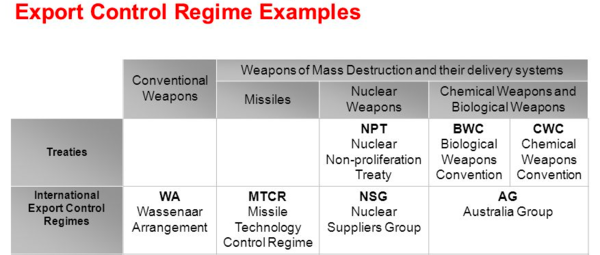
[Burning Issue] India’s membership of Australia Group and Wassenaar Group

Why in News?
In last 1-year India has become the member of Australia group and the Wassenaar group
India Joins the Australia Group
- India has admitted as the 43rd member of the Australia Group
- The group is an informal bloc of countries that keep a tight control over exports of substances used in the making of chemical weapons
The Australian Group
- The Australia Group is a multilateral export control regime (MECR) and an informal group of countries (now joined by the European Commission) established in 1985 (after the use of chemical weapons by Iraq in 1984) to help member countries to identify those exports which need to be controlled so as not to contribute to the spread of chemical and biological weapons
- The group, initially consisting of 15 members, held its first meeting in Brussels, Belgium, in September 1989.
- With the incorporation of India on January 19, 2018, it now has 43 members, including Australia, the European Commission, all 28 member states of the European Union, Ukraine, and Argentina
- The name comes from Australia’s initiative to create the group. Australia manages the secretariat
- The initial members of the group had different assessments of which chemical precursors should be subject to export control
- Later adherents initially had no such controls
- Today, members of the group maintain export controls on a uniform list of 54 compounds, including several that are not prohibited for export under the Chemical Weapons Convention but can be used in the manufacture of chemical weapons
- In 2002, the group took two important steps to strengthen export control
- The first was the “no-undercut” requirement, which stated that any member of the group considering making an export to another state that had already been denied an export by any other member of the group must first consult with that member state before approving the export
- The second was the “catch-all” provision, which requires member states to halt all exports that could be used by importers in chemical or biological weapons programs, regardless of whether the export is on the group’s control lists
- Delegations representing the members meet every year in Paris, France
Significance for India
- With its admission into the Australia Group, India is now part of three of the four key export control groups in the world
- This includes the Missile Technology Control Regime, the Wassenaar Arrangement. The only export control group that India is not a part of is the elite Nuclear Suppliers Group (NSG)
- Series of multilateral export control groups that India has joined “helps in establishing our credentials” for joining the NSG.
- Joining the Australia Group would also help in “strengthening supply chain security in the dynamic industry fields of biotechnology and chemicals”, along with meeting non-proliferation objectives.
India joins the Wassenaar arrangement
- Elite export control regime Wassenaar Arrangement (WA) has decided to admit India as its new member
About Wassenaar Agreement
- The Wassenaar Arrangement was founded in 1996
- Its stated aim is “to contribute to regional and international security and stability, by promoting transparency and greater responsibility in transfers of conventional arms and dual-use goods and technologies, thus preventing destabilizing accumulations.”
- Its (WA) member countries are required to ensure that transfers of these items do not contribute to the development or enhancement of military capabilities which undermine these goals. The aim is also to prevent the acquisition of these items by terrorists.
- New members are accepted based on specific criteria, including countries which produce/export arms or associated dual-use goods and technologies; establish national policies that restrict sale of arms and sensitive technologies to countries of concern; and adhere to non-proliferation regimes.
- It is clubbed with mechanisms such as the Nuclear Suppliers Group (NSG), the Missile Technology Control Regime (MTCR) and the Australia Group
- It comes on the heels of membership last year of the MTCR.
Why did India get membership of Wassenaar Arrangement?
- Even though India is not a signatory to the Non-Proliferation Treaty, it has managed to make its entry into the Wassenaar group.
- India has managed to do that by updating its export control lists earlier this year, to bring it in line with international standards, including those required by the Wassenaar Arrangement.
- To be precise, India approved SCOMET (Special Chemicals, Organisms, Materials, Equipment, and Technologies) items, mandatory under the Wassenaar Arrangement. Through the revised list of items, India also seeks to send a message about its larger commitment to non-proliferation.
Significance for India

- Boost international image: India’s formal entry into this group would further boost its image in the international arena.
- Enhance its credentials in the field of non-proliferation: Even though India is not a signatory to the Non-Proliferation Treaty, it has managed to make its entry into the Wassenaar group, which would enhance its credentials in the field of non-proliferation.
- India has built strong for NSG: With this development, India’s has built a strong case for its entry into the Nuclear Suppliers Group (NSG), which was opposed by China last year
- Facilitate high technology tie-up: It will also facilitate high technology tie-ups with Indian industry and ease access to high-tech items for our defence and space programmes. It will also create grounds for realignment of India in export control policy framework of other WA members, including eligibility for certain licensing exceptions.
- Enhances India’s chance to be member of UNSC: Being a responsible state in the international system, India is eyeing to play a more proactive role globally. Being a part of major groups like WA enhances India’s chances to get a permanent seat in United Nations Security Council in future.
-
2 October 2018 | Prelims Daily with Previous Year Questions
Q.1) Which of the following countries is/are the members of Gulf Cooperation Council?
- Bahrain
- Kuwait
- Oman
- Qatar
Select the correct codes:
a) 2, 3, 4
b) 1 and 3
c) 2 and 4
d) All of the above.
Inspired by: [op-ed snap] Raja Mandala: The Gulf in foreign policy
https://www.civilsdaily.com/news/op-ed-snap-raja-mandala-the-gulf-in-foreign-policy/
Q.2) The RUN-LLP (Reserve Unique Name – Limited Liability Partnership) is an initiative of-
a) Ministry of Micro, Small and Medium Enterprises
b) Ministry of Corporate Affairs
c) Ministry of Commerce and Industry
d) Ministry of Electronics and Information Technology
Inspired by: [pib] Incorporation of Limited Liability Partnership (LLP) through a complete online system
https://www.civilsdaily.com/news/pib-pib-incorporation-of-limited-liability-partnership-llp-through-a-complete-online-system/
Q.3) Consider the following statements about Purchasing Managers’ Index (PMI):
- It is an indicator of business activity both in the manufacturing and services sectors.
- It is calculated separately for the manufacturing and services sectors.
Which of the given statements is/are correct?
a) Both 1 and 2
b) Only 1
c) Only 2
d) None of the above
Inspired by: Growth of Indian manufacturing sector picks up: Nikkei India Manufacturing PMI
Q.4) Vayoshreshtha Samman is a Scheme of National Awards instituted by –
a) Ministry of Social Justice & Empowerment
b) Ministry of HRD
c) Ministry of Health and Family Welfare
d) Ministry of Personnel, Public Grievances and Pensions
Inspired by: Vice President Confers “Vayoshreshtha Samman – 2018”
Q.5) The Wardha Resolution of the Working Committee of the INC is popularly known as:
a) Swadeshi Resolution
b) Quit India Resolution
c) Civil Disobedience Resolution
d) Resolution for Complete Independence
Inspired by: CWC to meet in Wardha on Oct. 2
For Solutions – Click Here
Prelims Daily Archive – Click here