Join my session and we will be discussing these notes.
Species in News is the top theme among the 20 SureShot Themes. At least 3-5 questions are expected from it.
[2021]Q.Consider the following animals 1. Hedgehog 2. Marmot 3. Pangolin To reduce the chance of being captured by predators, which of the above organisms rolls up/roll up and protects/protect its/their vulnerable parts? (a) 1 and 2 (b) 2 only (c) 3 only (d) 1 and 3
[2022]Q.Which of the following is not a bird?
(a) Golden Mahseer
(b) Indian Nightjar
(c) Spoonbill
(d) White Ibis
But getting these questions right is not easy. We need to prioritize news and cover all dimensions.
You need to be thorough with
Species repeatedly in news
Species that are higher up in the IUCN status
Most striking fact – heaviest bird, only flying squirrel, etc.
If its a state animal.
Natural Habitat.
Conservation measures.
Our material is built using this philosophy. It covers everything. Here is a snippet
To combat the menace of growing antibiotic resistance, scientists at CSIR-Indian Institute of Integrative Medicine (IIIM), Jammu, have made a groundbreaking discovery.
They found that phytocannabinoids, compounds found in the cannabis plant, possess previously untapped antibiotic properties.
Understanding India’s AMR Challenge
Escalating AMR Threat: AMR occurs when bacteria, viruses, fungi, and parasites no longer respond to antibiotics, leading to increased disease risk and treatment complications.
Alarming Statistics: In 2019, India reported 2.97 lakh deaths attributed to AMR and 10.42 lakh linked to AMR-related factors.
Contributing Factors: Overuse of antibiotics, misuse in animal husbandry, and inadequate waste disposal practices are exacerbating AMR, potentially making India the “AMR capital of the world.”
Cannabis Unveils Antibiotic Potential
Phytocannabinoid Research: IIIM researchers explored the antibiotic properties of tetrahydrocannabidiol (THCBD), a semisynthetic phytocannabinoid derived from cannabis.
Fighting MRSA: THCBD exhibited remarkable efficacy against Methicillin-resistant Staphylococcus aureus (MRSA), a highly resistant strain of bacteria responsible for numerous deaths worldwide.
Synergy with Existing Antibiotics: THCBD complemented or showed indifference to common antibiotics like mupirocin, penicillin G, and ciprofloxacin, suggesting potential combinatory treatments.
Overcoming Cannabis Research Challenges
Legal Constraints: Cannabis research faces legal constraints due to its intoxicating properties, making collaboration with other institutes challenging.
Policy Advocacy: The research project aims to advocate for a unified national policy for cannabis research, highlighting its antibacterial potential and transforming it into a valuable resource.
Future Prospects for THCBD
Collaborative Efforts: IIIM researchers seek collaborations to expedite their progress in developing THCBD as a potential drug.
Addressing Solubility Challenge: Ensuring THCBD’s solubility is a critical step. The molecule leans slightly towards lipophilicity, requiring optimization for proper absorption in biological systems.
Healthcare Impact: This research not only promises significant contributions to the healthcare system but also offers economic benefits by establishing related industries and creating sustainable job opportunities.
The Union Ministry of New and Renewable Energy (MNRE) has embarked Strategic Interventions for Green Hydrogen Transition (SIGHT) Programme within the National Green Hydrogen Mission.
SIGHT Programme: An Overview
Mission Alignment: SIGHT is an integral component of the National Green Hydrogen Mission, strategically designed to foster domestic electrolyser manufacturing and green hydrogen production.
Financial Commitment: A substantial investment of Rs 17,490 crore has been allocated to SIGHT until 2029-30.
Dual Incentive Mechanisms: SIGHT introduces two distinct financial incentive mechanisms:
Incentive for Electrolyser Manufacturing: To boost the production of essential electrolysis equipment.
Incentive for Green Hydrogen Production: Encouraging the generation of clean and sustainable green hydrogen.
Adaptive Evolution: The incentive schemes and programs will evolve in response to market dynamics and technological advancements, ensuring the Mission’s adaptability.
Execution Authority: The Solar Energy Corporation of India (SECI) is entrusted with executing the scheme, driving its effective implementation.
About National Green Hydrogen Mission
Strategic Implementation: Launched by the MNRE, the mission commits an outlay of ₹ 19,744 crore from FY 2023–24 to FY 2029–30.
Global Hub for Green Hydrogen: The overarching aim is to position India as a global hub for the production, utilization, and export of green hydrogen and its derivatives.
Vision for 2030:
Production Capacity: India’s green hydrogen production capacity is projected to reach 5 million metric tons (MMT) per annum, diminishing fossil fuel imports and saving ₹1 lakh crore by 2030.
Economic Impact: The mission anticipates attracting over ₹8 lakh crore in investments and generating employment for more than 6 lakh people.
Carbon Emission Reduction: A targeted production and utilization of green hydrogen is expected to avert nearly 50 MMT per annum of CO2 emissions.
Pilot Projects: The Mission encompasses support for pilot initiatives in low-carbon steel, mobility, shipping, and ports.
Flexible Allocations: The Mission allocates resources for various sub-components like SIGHT, pilot projects, research and development (R&D), enabling the funding of selected projects.
State-Wide Impact: While the Mission has no state-wise allocation, its broad scope promises nation-wide benefits.
Significance of Green Hydrogen
Eco-Friendly Production: Green hydrogen is produced through electrolysis, splitting water into hydrogen and oxygen using renewable energy sources like solar, wind, or hydropower.
A Sustainable Fuel: This process yields a clean, emission-free fuel with immense potential to supplant fossil fuels and mitigate carbon emissions.
A politician was recently denied entry to Assam’s Batadrava Than for his political campaigning.
About Batadrava Than
Location: Situated in Nagaon district, Batadrava Than, also known as Bordowa Than, holds deep significance for Assamese Vaishnavites.
Birthplace of Srimanta Sankardeva: It stands at the birthplace of Srimanta Sankardeva (1449-1568), a revered Vaishnavite reformer-saint.
Founder of Kirtan Ghar: Sankardeva established the first-ever Kirtan Ghar at Bordowa in 1494 AD, where he practiced and preached the neo Vaishnavite faith.
Sankardeva’s Philosophy
Ek Saran Naam Dharma: Sankardeva’s philosophy centered on worship through bhakti (devotion) to Lord Krishna, emphasizing the singing and congregational listening of His name and deeds.
Society Based on Equality: He advocated for a society free from caste distinctions, orthodox Brahmanical rituals, and sacrifices, promoting equality and fraternity.
Devotion over Idol Worship: Sankardeva’s teachings favored prayer and chanting (naam) over idol worship.
Four Components of Dharma: His dharma was founded on four components: deva (god), naam (prayers), bhakats (devotees), and guru (teacher).
Legacy of Sankardeva’s Movement
Monastic Institutions: Sankardeva’s Neo-Vaishnavite reformist movement led to the establishment of monastic institutions known as Thans/Sattras across Assam.
Religious, Social, and Cultural Reforms: These Thans/Sattras became centers for religious, social, and cultural reforms in the 16th century.
“Worship Through Art” Approach: Today, the Sattras propagate Sankardeva’s unique approach of “worship through art” with music (borgeet), dance (xattriya), and theater (bhauna).
Nucleus of Naamghar: Each Sattra has a naamghar (worship hall) as its nucleus and is led by an influential “Sattradhikar.”
Political Significance and Controversies
Assamese Identity: Thans/Sattras are integral to Assamese identity, and Batadrava Than is frequently visited by politicians.
Electoral Issue: The government has highlighted “land grabbing around Sattras by illegal settlers” as an electoral issue.
Proposed Land Law: The CM has announced plans for a law preventing “non-indigenous people” from buying land within an eight-kilometer radius of Batadrava Than.
Beautification Project: Home Minister Amit Shah launched a Rs 188 crore beautification project at Batadrava Than in 2021.
The year 2023 witnessed alarming signs of climate change, from record-breaking summer temperatures to shrinking Antarctic sea ice and extreme weather events across the globe.
Despite the overwhelming scientific consensus on climate change, there remains confusion and misinformation on this critical issue.
Is the Earth Becoming Warmer?
Temperature Measurement: Temperature measurements since the late 1880s show global warming trends. Satellite data confirms an increase of at least 1.1 degrees Celsius since 1880.
Indirect Verification: Analyzing natural indicators like tree rings and ice cores. Observing effects such as warming oceans, shrinking ice cover, and rising sea levels. Multiple monitoring systems enhance confidence in global-scale warming.
Acceleration of Warming: Recent decades witness unprecedented rapid warming. The majority of warming observed since 1975. 2022 marked the 46th consecutive year of temperatures above the 20th-century average.
Role of Human Activities
Natural Factors: Throughout Earth’s history, natural factors like solar variations and volcanic activity influenced climate.
Current Acceleration: However, natural factors exert too little influence and operate too slowly to account for recent rapid warming, as acknowledged by NASA.
Greenhouse Gases: The primary driver of global warming is the increasing concentration of greenhouse gases, particularly carbon dioxide (CO2), methane (CH4), and water vapor.
Human Influence: Since the Industrial Revolution, human activities, especially the burning of fossil fuels, have released substantial greenhouse gases into the atmosphere.
Unprecedented Change: Changes that would typically occur over hundreds of thousands of years are now happening within decades.
Overwhelming Evidence
Scientific Consensus: The Intergovernmental Panel on Climate Change (IPCC) has stated that “human influence on the climate system is clear and growing.”
Unprecedented Warmth: 2022 marked the 46th consecutive year with global temperatures exceeding the 20th-century average, with the last nine years ranking among the warmest.
1.5 Degree Celsius Threshold
Paris Agreement: 195 countries pledge to limit warming to “well below 2 degrees Celsius” and aim to limit the increase to 1.5 degrees Celsius.
Baseline Year: Pre-industrial levels based on measurements from 1850 to 1900, providing a reliable historical reference.
Reason for 1.5 Degrees: Scientific consensus: 1.5 degrees is a defense line against severe climate impacts. It avoids extreme and irreversible consequences associated with 2 degrees warming.
Continuous Improvement: Lowering the target reduces climate risks further. Science supports aiming for the lowest possible temperature increase.
Consequences of Breaching the Threshold
Increased Extreme Weather: More frequent and intense heavy precipitation. Elevated drought intensity and frequency in some regions.
Warmer Oceans: Higher number of strong hurricanes with rapid strengthening.
Intensified Wildfires: Longer-lasting and more intense wildfires.
Rapid Sea Ice Melt: Accelerated sea-level rise.
Emerging Consequences: Many of these impacts are already underway. Breaching the threshold exacerbates these effects.
How Close Are We to Breaching the Threshold?
WMO Warning: World Meteorological Organisation (WMO) warns of a 66% chance of crossing the 1.5-degree limit between 2023 and 2027.
Hottest Year: 2023 declared the hottest year on record, 1.48 degrees Celsius warmer than pre-industrial levels.
Daily Fluctuations: Daily temperatures occasionally exceed 1.5 degrees Celsius, but long-term trends are the focus.
Conclusion
The evidence of climate change and global warming is undeniable.
Human activities, primarily the release of greenhouse gases, are driving these changes at an unprecedented rate.
Understanding the science behind climate change is crucial in addressing this real global crisis.
In recent developments, the Foreign Contribution Regulation Act, 2010 (FCRA) registration of two prominent non-governmental organizations (NGOs), the Centre for Policy Research (CPR) and World Vision India (WVI), has been cancelled.
FCRA: Regulating Foreign Donations
Objective: FCRA regulates foreign donations to ensure they do not adversely affect India’s internal security.
Compulsory Registration: Any association, group, or NGO intending to receive foreign donations must register under FCRA.
Amendments: The FCRA was first enacted in 1976 and amended in 2010, with further changes in 2020.
Registration and Renewal
Initial Registration: NGOs initially register under FCRA for five years, with the possibility of renewal if they adhere to the specified norms.
Scope of Usage: Registered groups can receive foreign contributions for various programs, including social, educational, religious, economic, and cultural.
Cancellations and Renewals
Cancellations: Since 2015, over 16,000 NGOs have had their FCRA registrations cancelled due to violations.
Active NGOs: As of January 22, 16,989 FCRA-registered NGOs were active in India.
Expired Registrations: Nearly 6,000 NGOs’ FCRA registrations ceased from January 1, 2022, either due to the MHA’s refusal to renew or NGOs not applying for renewal.
Significance and Controversies
Risk of Money Laundering and Terrorism Financing: The MHA’s 2012 report highlighted the vulnerability of the NGO sector to money laundering and terrorist financing risks.
Record Number of Registrations: In 2023, 1,111 associations received fresh FCRA registrations.
Reasons for Rejection: Out of 1,615 applications received for FCRA registration in 2021 and 2022, 722 were granted clearance, while 225 were rejected.
Foreign Contribution Amount: In 2019-2022, a total of 13,520 associations received ₹55,741.51 crore in foreign contributions.
Reasons for Cancellation: CPR and WVI
CPR Allegations: The MHA accused CPR of diverting foreign donations to fund protests and legal battles against developmental projects, affecting India’s economic interests. CPR’s publication of current affairs programs using foreign funds was deemed a violation.
CPR’s Response: CPR deemed the ministry’s decision incomprehensible and disproportionate, challenging the reasoning behind equating policy reports on their website with current affairs programming.
WVI’s Allegations: WVI had its FCRA registration cancelled for alleged violations from 2012-13 to 2020-21. WVI received the highest amount of foreign donations among all NGOs registered under the Act in 1986.
FCRA Amendments: Recent Changes
The FCRA underwent significant amendments in 2020, introducing several restrictions:
Fund Transfer Prohibition: Section 7 of the Act prohibits the transfer of foreign funds received by an organization to any other individual or association.
Designated Bank Account: Recipients must open an FCRA bank account in a designated SBI branch in New Delhi, mandating that all foreign funds be received in this account.
Shared Information: The designated bank informs authorities about foreign remittances with source and receipt details.
Aadhaar Requirement: The Government can collect Aadhaar numbers of key functionaries of organizations applying for FCRA registration.
Cap on Administrative Expenditure: The portion of funds allowed as administrative expenditure was reduced from 50% to 20%.
Criticisms and Government’s Perspective
Arbitrary Restrictions: NGOs criticize the prohibition on fund transfer as arbitrary and restrictive.
Non-Sharing of Funds: This prohibition hinders the sharing of aid received as material, impacting collaborative efforts.
Inconvenient Designated Bank: The requirement for a Delhi-based bank account is inconvenient for NGOs operating elsewhere.
Government’s Justification: The government maintains that these amendments are necessary to prevent foreign state and non-state interference in India’s internal affairs and to curb malpractices in fund utilization.
Conclusion
The FCRA plays a crucial role in regulating foreign donations to NGOs in India.
The recent cancellations of CPR and WVI registrations, coupled with the amendments, highlight the complex and evolving landscape of foreign contributions and their impact on Indian NGOs.
Understanding these developments is essential for comprehending the dynamics of funding, regulation, and accountability in the non-profit sector.
PM Modi announced the launch of the ‘Pradhan Mantri Suryodaya Yojana,’ a government initiative aimed at providing rooftop solar power systems to one crore households in India.
This ambitious scheme builds upon previous efforts to promote rooftop solar installations in the country, addressing the growing demand for clean and sustainable energy sources.
About Pradhan Mantri Suryodaya Yojana
Rooftop Solar Installations: The scheme focuses on the installation of solar power systems on 1 crore residential rooftops.
Reduced Electricity Bills: It aims to reduce electricity bills for households, especially benefitting the “poor and middle class.”
Energy Self-Reliance: The scheme aligns with India’s goal of achieving self-reliance in the energy sector.
India’s Current Solar Capacity
Total Solar Capacity: As of December 2023, India boasts a total solar power installed capacity of approximately 73.31 GW.
Rooftop Solar Capacity: The rooftop solar capacity stands at around 11.08 GW, emphasizing the need for expansion.
Leading States: Rajasthan leads in total solar capacity with 18.7 GW, while Gujarat tops the list in rooftop solar capacity with 2.8 GW.
Importance of Expanding Solar Energy
Growing Energy Demand: India is projected to experience substantial energy demand growth over the next 30 years, requiring a reliable energy source.
Diversifying Energy Mix: To meet this demand and reduce dependency on coal, India aims to reach 500 GW of renewable energy capacity by 2030.
Solar Power Growth: India has significantly increased its solar power capacity, from less than 10 MW in 2010 to 70.10 GW in 2023.
Existing schemes: Rooftop Solar Programme
Launched in 2014: The programme seeks to boost rooftop solar installations in the residential sector.
Financial Assistance: It offers Central Financial Assistance and incentives to distribution companies (DISCOMs).
Capacity Target: The programme aims to achieve 40 GW of rooftop solar capacity by March 2026, having already grown from 1.8 GW in March 2019 to 10.4 GW by November 2023.
Consumer Benefits: Consumers can access the scheme through DISCOM tendered projects or the National Portal. They have the flexibility to select vendors and solar equipment. Subsidies are directly transferred to their bank accounts, and surplus solar power can be exported to the grid, offering monetary benefits.
Conclusion
The news scheme signifies India’s commitment to harnessing solar power as a clean and sustainable energy source for its growing population.
With a focus on residential rooftop installations, this scheme aims to reduce electricity bills for millions of households while contributing to India’s energy self-reliance goals.
India aims to balance economic growth and environmental concerns as it strives to become the fastest-growing economy, focusing on decarbonizing the power sector, ensuring development, and securing energy needs. Coal remains crucial, but strategies involve managing existing assets, enhancing coal fleet flexibility, incentivizing energy storage, and promoting domestic manufacturing of renewable energy technologies.
Key Highlights:
India is actively involved in climate action, reducing fossil fuel subsidies, and planning a threefold increase in renewable power capacity by 2030.
Coal, despite being essential, is slated to persist until India attains developed country status.
Strategies include better managing thermal plant outages, increasing coal fleet flexibility, incentivizing energy storage, and promoting domestic clean energy manufacturing.
Key Challenges:
Balancing economic growth with the imperative to phase down unabated coal.
Uncertainty in predicting India’s coal reliance due to rising electricity demand.
Adapting existing coal plants for flexibility in integrating renewable energy.
Compensating entities for energy storage services and boosting domestic value and job creation in clean energy.
Key Terms:
COP-28: The 28th Conference of the Parties, relevant to global climate change negotiations.
Unabated Coal: Coal burning without a reduction in carbon emissions.
Renewable Power Generation: Electricity from sustainable sources like wind, solar, and hydropower.
Atmanirbhar: A Hindi term signifying self-reliance, commonly used in promoting domestic manufacturing.
Key Phrases:
“Decarbonizing the power sector while ensuring economic development and energy security.”
“Reducing overall fossil fuel subsidies” and “tripling installed renewable power generation capacity by 2030.”
“Managing thermal plant outages during peak demand periods.”
“Increasing the flexibility of the existing coal fleet to integrate more renewable energy into the grid.”
“Indigenizing supply chains for battery storage and renewable energy technologies.”
Key Quotes:
“India has reduced overall fossil fuel subsidies by 76% between FY14 and FY22.”
“Coal will remain a vital energy source until India reaches the status of a developed country.”
“Entities deploying batteries must be compensated for the value they bring to grid operation.”
“Boosting domestic value and job creation in clean energy will mitigate concerns associated with disruptions in the global supply chain.”
Key Statements:
“To keep the economy powered while decarbonizing, India must use existing assets better and invest in energy storage capabilities.”
“Improving availability and utilization of existing plants can mitigate the need for investments in new thermal assets.”
“Indigenizing supply chains for clean energy will support exports and domestic value additions, mitigating concerns of global supply chain disruptions.”
Key Examples and References:
“In 2023, coal-based power plants in India witnessed unplanned outages during peak demand days.”
“The PLI scheme committed funds to solar manufacturing, supporting domestic value additions.”
Key Facts and Data:
“India reduced overall fossil fuel subsidies by 76% between FY14 and FY22.”
“India produced coal worth substantial amounts in FY22, providing significant revenues to the government.”
“The PLI scheme committed funds to solar manufacturing, supporting potential domestic value addition.”
Critical Analysis:
The article underscores the tension between economic growth and environmental concerns in India’s energy strategy.
Emphasizing strategies for managing existing assets and enhancing coal fleet flexibility reflects a pragmatic approach to the transition to renewables.
Highlighting the importance of incentivizing energy storage services and promoting domestic manufacturing underscores the need for a comprehensive and sustainable energy policy.
Way Forward:
Prioritize transparent assessments of long-term opportunity costs of conventional power sources.
Focus on affordable electricity for all segments of the economy.
Build on the success of the PLI scheme to further indigenize supply chains for clean energy.
Implement policies encouraging flexibility in the coal fleet and compensating entities for energy storage services.
Continue investing in renewable energy and storage technologies to align with global decarbonization commitments while ensuring energy security.
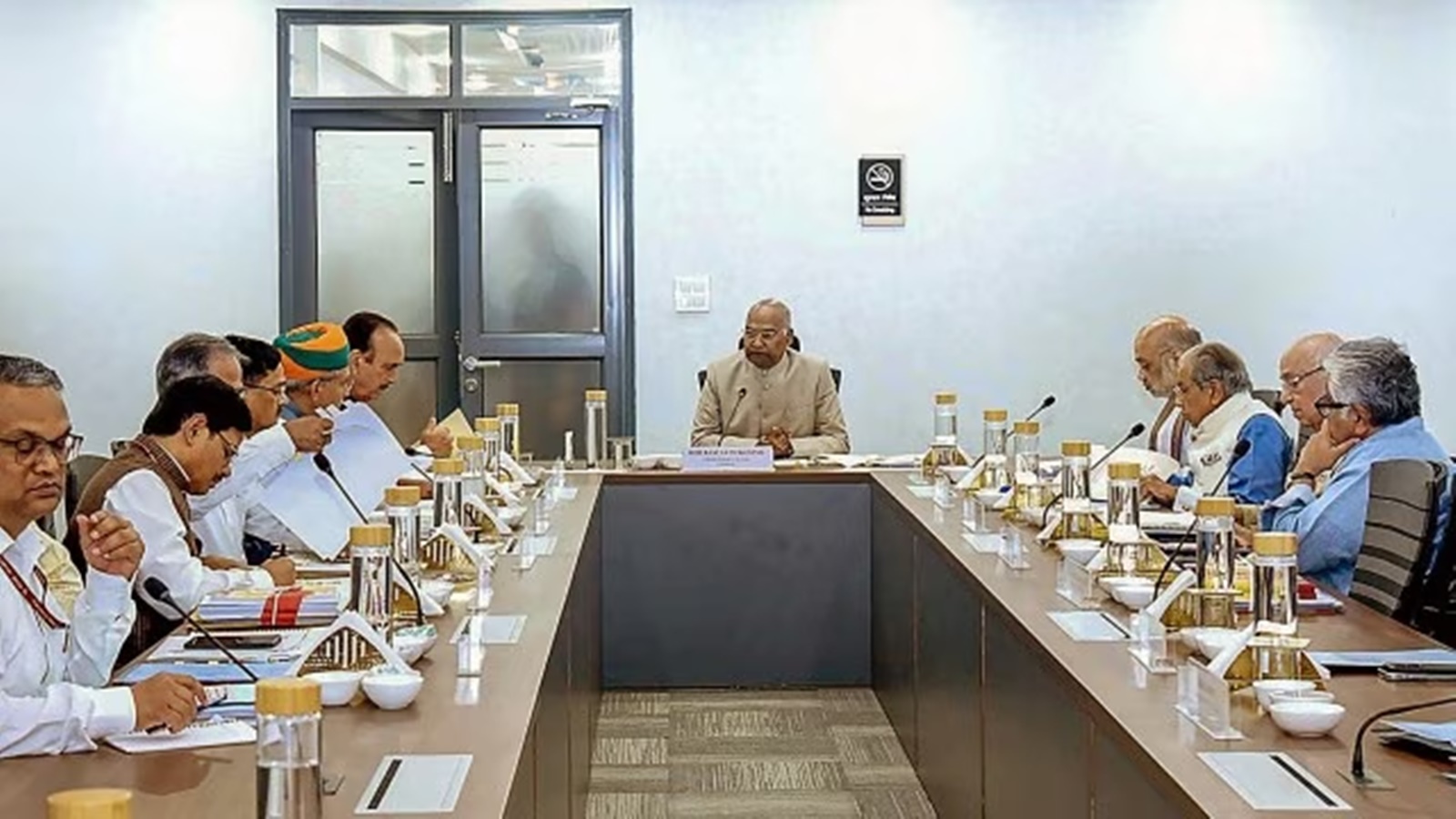
The article discusses the formation and potential implications of the ‘High Level Committee on One Nation, One Election’ set up by the Union Government in September 2023. It delves into the reasons for and against the concept, focusing on the financial aspects and governance downtime. The author raises legal concerns, particularly regarding the constitutional autonomy of states, linguistic bias in consultations, and the role of the Election Commission. The looming possibility of a constitutional showdown in the Supreme Court is emphasized, drawing parallels with the U.S. case of Baker v. Carr.
Key Highlights:
Formation of the ‘High Level Committee on One Nation, One Election’ chaired by former President Ramnath Kovind.
Reasons supporting the concept include reducing election expenses and minimizing governance downtime caused by the Model Code of Conduct.
Opposition argues that democratic processes, including elections and the Model Code of Conduct, are essential for a functioning democracy.
Legal concerns raised, citing potential violation of state autonomy and constitutional provisions, particularly as stated in the S.R. Bommai case.
The linguistic bias in consultations, with the committee’s website available only in English and Hindi, is highlighted.
The Election Commission’s seemingly passive role and lack of involvement in the process are questioned.
Key Challenges:
Constitutional and legal concerns regarding the potential alteration of the duration of State Legislative Assemblies.
Linguistic bias in consultations, limiting the inclusivity of the decision-making process.
Potential compromise of the Election Commission’s independence and autonomy.
Balancing financial considerations with the fundamental principles of democracy.
The challenge of ensuring a fair and unbiased decision-making process amid political interests.
Key Terms and Phrases:
One Nation, One Election
High Level Committee
Model Code of Conduct
S.R. Bommai case
Constitutional autonomy
Governance downtime
Baker v. Carr moment
Linguistic bias
Election Commission
Constitutional showdown
Key Quotes:
“The cost of holding free and fair elections… is a price that can never be high.”
“The introduction of a common election process would necessarily require alteration of the existing duration of a number of State Legislatures.”
“Similar to demonetisation, when the Reserve Bank of India was kept in the dark, the Election Commission seems to be a silent spectator.”
Key Statements:
“The Supreme Court would be called upon to determine the ultimate fate of Indian democracy.”
“The potential alteration of the duration of State Legislatures would be anti-federal and unconstitutional.”
“The stage is set for a constitutional showdown in the not-too-distant future.”
Key Examples and References:
Baker v. Carr case in the U.S. as a reference for the potential role of the Supreme Court in a constitutional showdown.
Comparison with demonetization to highlight concerns about the Election Commission’s apparent lack of involvement.
Key Facts and Data:
The estimated cost of the 2014 general elections was ₹3,870 crore.
The High Level Committee’s website is available only in English and Hindi.
Critical Analysis:
The article critically examines the potential consequences of One Nation, One Election, questioning its feasibility and highlighting legal and constitutional concerns. It underscores the importance of democratic processes and the need for the Supreme Court to play a pivotal role in preserving India’s constitutional architecture.
Way Forward:
Ensure comprehensive and inclusive consultations in multiple languages to address linguistic bias.
Strengthen the autonomy of the Election Commission and ensure its active participation in decision-making processes.
Balance financial considerations with the preservation of democratic principles.
Address legal concerns, particularly those related to state autonomy and constitutional provisions.
Encourage public discourse to raise awareness and engage citizens in the decision-making process.
The article advocates for the inclusion of tax contribution, particularly from Goods and Services Tax (GST) and petroleum consumption, as a significant efficiency indicator in the distribution formula used by Finance Commissions to allocate Union tax revenue among states. The authors argue that these measures provide a fair and stable representation of a state’s economic contribution to the national exchequer.
Key Highlights:
Finance Commissions play a crucial role in recommending the distribution of Union tax revenues among states.
Historically, tax contribution had less weight in the distribution formula, but it was completely dropped since the 10th Finance Commission.
The article contends that tax contribution, especially under the GST regime, is a reliable measure of efficiency, unlike other indicators like tax effort and fiscal discipline.
The authors propose that GST and petroleum consumption, being stable and indicative of income, should be given a substantial weight in the distribution formula.
Key Challenges:
Resistance from states that may perceive a potential shift in their shares based on tax contribution.
The stability of indicators like tax effort and fiscal discipline is questioned, making it challenging to assign them higher weights.
The need to ensure that the inclusion of tax contribution does not lead to unfair outcomes or discourage states from adopting progressive tax policies.
Key Terms:
Goods and Services Tax (GST): A unified consumption-based destination tax equally divided between the State and Central governments.
Tax Contribution: The amount of revenue generated by a state through taxes, considered as an efficiency indicator.
Finance Commission: A body responsible for recommending the distribution of Union tax revenues among states in India.
Key Phrases:
“Equity and efficiency in tax revenue transfers.”
“Tax contribution as an efficiency indicator.”
“GST and petroleum consumption as fair measures of states’ contributions to the national exchequer.”
Key Quotes:
“Tax contribution is an efficiency indicator because a State’s level of development and economic structure decides its tax contribution.”
“GST satisfies the criterion of stability in tax structure, making it an ideal efficiency indicator.”
“There is a persuasive case for the 16th Finance Commission to debate and include these ratios as a measure of efficiency.”
Key Statements:
“Since the 10th Finance Commission, tax contribution was dropped from the distribution formula.”
“GST is a consumption-based destination tax that is equally divided between the State and Central governments.”
“The Finance Commissions have always favored assigning more than 75% weight to equity indicators.”
Key Examples and References:
The article references the 15th Finance Commission’s distribution formula, which included tax effort, fiscal discipline, and demographic performance.
The stability of GST as an efficiency indicator is supported by calculations presented by the authors.
Key Facts:
The share of personal and corporate income taxes is 64% in Central tax revenue in 2021-22.
Finance Commissions historically assigned 10% to 20% weight to tax contribution in the distribution formula.
Key Data:
The weightage of tax effort in the 15th Finance Commission’s distribution formula was 2.5%, with demographic performance receiving a weight of 12.5%.
The recommended weight for equity indicators in the same formula was 85%.
Critical Analysis:
The article provides a compelling argument for the inclusion of tax contribution in the distribution formula, highlighting the stability and fairness of GST as an efficiency indicator. However, potential challenges such as resistance from states and the need for careful consideration to prevent unintended consequences are acknowledged.
Way Forward:
The authors suggest that the 16th Finance Commission should actively debate and consider including GST and petroleum consumption with a substantial weight in the distribution formula. This, they argue, would better represent states’ contributions to the national exchequer and promote efficiency in resource allocation.
With just four months left for UPSC Prelims 2024, it’s time for smart, strategic preparation.
Forget endless hours of random study; first, assess where you stand in your prep.
Realign your approach with the changing trends of the UPSC exam.
We’re diving into an intensive 4-month plan, broken into productive weeks.
Target four comprehensive revisions and 60 practice tests to master your skills.
Complete your syllabus a month early for that crucial final review.
Join Pratik Korde, IRS (IT), in our upcoming webinar for an effective self-study strategy.
Make every day count in your journey to UPSC success. Join us and transform your preparation!
Read what Pratik Korde sir has to say about UPSC prelims preparation and approach
“Hello everyone, this is Pratik Korde, IRS, from the UPSC 2022 batch, and I am here to talk to you about a critical phase in your UPSC Prelims 2024 preparation journey.
These upcoming four months, from January to May, are going to be the make-or-break period that determines your success in this prestigious examination.
Now, let me begin by emphasizing that UPSC Prelims preparation is not what it used to be. Gone are the days of mindlessly mugging up books and attempting random tests. It’s time for a paradigm shift in your approach. It’s time to be strategic, focused, and adaptive.
At this moment, you should not rush into the study routine blindly. First, take a step back and assess your preparation. Understand where you currently stand in terms of knowledge and problem-solving abilities.
Recognize that UPSC’s trend for the Prelims examination is constantly evolving, and you need to adapt accordingly.
So, what’s the game plan? It’s about devising an intensive and strategic plan for the next four months, and that’s what I want to discuss with you in my upcoming webinar.
We’ll break these four months down into weeks, ensuring that you have a clear roadmap to follow. The goal should be to aim for at least four revisions of the syllabus, attempt a minimum of 60 practice tests, and ensure that you cover the entire syllabus at least a month before the actual exam.
But remember, it’s not just about the quantity; it’s about the quality of your preparation. During this webinar, I’ll share insights on how to make the most of your study hours and how to approach the UPSC Prelims strategically.
So, join me on 22nd Jan at 6 pm for this transformative webinar. Let’s dive deep into the intricacies of UPSC Prelims 2024 preparation. Together, we’ll explore how you can not only cover the syllabus but also develop the analytical and problem-solving skills required to excel in this exam.”
By the end, you’ll have razor-sharp clarity and a clear roadmap for approaching and qualifying your UPSC 2024 prelims exam with confidence and near-perfect certainty.
IRS Pratik sir
(Don’t wait—the next webinar won’t be until March 25)
Registration open! Join now to attend the webinar for FREE
These masterclasses are packed with value. They are conducted in private with a closed community. We rarely open these webinars for everyone for free. This time we are keeping it for 300 seats only.
Fee:
Special Access (extra 15 min with IRS, Pratik sir) – Free (only for first 100 registrations, register before 20th Jan 2024)
Early Access – Rs. 299 (for the next 100 registrations, register before 21st Jan 2024, 1 PM)
Late Access – Rs. 499 (for last 100 registrations, register before 21st Jan 2024, Post 1 PM)
In the remote colony of Kookanam, Kerala, the Chakaliya community faces a sobering reality—their unique language, Madhika, teeters on the brink of extinction.
With no script to preserve it, Madhika is struggling for survival, and the last two speakers.
About Madhika Language
A Linguistic Blend: Madhika may sound reminiscent of Kannada, but its influences run deeper, encompassing Telugu, Tulu, Kannada, and Malayalam.
Endangered Heritage: The younger generation, drawn to mainstream languages like Malayalam, shows little interest in preserving Madhika, leading to its decline.
Chakaliya Community’s History
Nomadic Origins: The Chakaliya community was once nomadic and worshippers of Thiruvenkatramana and Mariamma.
Migration to Kerala: Centuries ago, they migrated from the hilly regions of Karnataka to northern Malabar in Kerala.
Change in Status: Initially recognized as Scheduled Tribe, they were later included in the Scheduled Caste category in Kerala.
Historical References: References to the Chakaliya community can be found in the book “Caste and Tribes of Southern India.”
Social Stigma and Its Impact
Untouchability and Dehumanization: The Chakaliya community faced social stigma, including untouchability and exclusion from important feasts and ceremonies.
Modern Disassociation: Many young and educated members of the community seek to disassociate themselves from the past, preferring to speak Malayalam over Madhika.
In recent months, several regions in India, including Andhra Pradesh, Odisha, and Punjab, have resorted to releasing mosquitofish into local water bodies as a means to combat mosquito-borne diseases.
While this approach aims to address a pressing public health concern, it brings to light ecological challenges associated with the introduction of mosquitofish.
Understanding Mosquitofish
Biological Control of Mosquitoes: Mosquitofish, particularly Gambusia affinis and Gambusia holbrooki, were introduced in freshwater ecosystems in the 1960s as an eco-friendly alternative to chemical pesticides for mosquito control.
Widespread Distribution: Originally native to the U.S., these fish have become global inhabitants due to their adaptability and tolerance to environmental fluctuations.
Unintended Consequences: Despite good intentions, the proliferation of mosquitofish has led to detrimental ecological and environmental effects.
Historical Use in India
Early Introduction: Gambusia was first introduced in India in 1928 during British rule as a measure to combat malaria.
Government and Non-Governmental Involvement: Various governmental organizations, such as the Indian Council of Medical Research (ICMR) and the National Institute of Malaria Research (NIMR), as well as local municipal corporations and health departments, were entrusted with introducing mosquitofish.
Widespread Distribution: Gambusia species are now established in multiple habitats across India.
Ecological Impact
Invasive Alien Species: Mosquitofish are among the hundred most detrimental invasive alien species worldwide, leading to the displacement and extinction of native fauna.
Threat to Biodiversity: They exhibit voracious feeding habits and aggressive behavior, posing a threat to native fish, amphibians, and freshwater communities.
Global Examples: Studies in Australia, New Zealand, and India have shown the harmful consequences of Gambusia presence, including the decline of endemic species and predation on native fish and frogs.
Sustainable Alternatives
WHO Recommendations: The World Health Organization stopped recommending Gambusia as a mosquito control agent in 1982.
Government Recognition: In 2018, the National Biodiversity Authority of the Government of India designated G. affinis and G. holbrooki as invasive alien species.
Local Solutions: Collaborative efforts between mosquito biologists, entomologists, invasion ecologists, and fish taxonomists can identify native fish species capable of mosquito control.
River Basin Approach: Authorities can compile lists of native fish species in each river basin that are effective in controlling mosquito larvae, offering an eco-friendly alternative to invasive species.
Conclusion
The introduction of mosquitofish in India, once intended to combat mosquito-borne diseases, has led to ecological challenges and the disruption of native ecosystems.
To mitigate the adverse effects and protect indigenous aquatic biodiversity, it is essential to discontinue the use of Gambusia and instead explore sustainable alternatives rooted in local solutions.
By adopting a river basin approach and collaborating across disciplines, India can strike a balance between mosquito control and environmental preservation.
NASA’s Mars helicopter, Ingenuity, recently regained contact with Earth after a brief communication lapse during its 72nd flight on the Red Planet.
This remarkable solar-powered robotic chopper has accomplished groundbreaking feats in extraterrestrial aviation, making history with its powered, controlled flight on Mars.
AboutIngenuity
Inaugural Flight: Ingenuity landed on Mars on February 18, 2021, alongside the Perseverance Rover. On April 19 of the same year, it achieved the first powered extraterrestrial flight in human history.
Launch and Deployment: NASA launched a spacecraft on July 30, 2020, carrying the Perseverance rover with Ingenuity attached. The helicopter was deployed on the Martian surface on April 4, 2021, after reaching a suitable “airfield” location.
Experimental Purpose: Ingenuity’s primary mission was experimental, aiming to test powered, controlled flight on another celestial body.
Historic Flight: During its maiden flight, Ingenuity hovered, covered the same spot, and remained airborne for an impressive 39.1 seconds, establishing a historic milestone.
Challenges and Impressive Records
Vast Distances: Despite the relatively short flight duration, Mars’ distance of over 225 million kilometres from Earth results in signal delays of 5 to 20 minutes.
Harsh Martian Conditions: Ingenuity must endure Mars’ challenging conditions, including low atmospheric density, “continent-sized” dust storms, and various hazards.
Significance of Mars Flight
Historical Milestone: On April 19, 2021, Ingenuity’s inaugural flight marked two significant achievements. Firstly, it was the first aircraft to fly on another planet. Secondly, it operated in Mars’ thin atmosphere, unsuitable for conventional flight.
Challenges of Martian Flight: Ingenuity’s flight on Mars was challenging due to the planet’s lower gravity, one-third that of Earth’s, and its extremely thin atmosphere with just 1% of Earth’s surface pressure.
Autonomous Operation: Ingenuity is an autonomous aircraft, piloted by onboard guidance, navigation, and control systems, running algorithms developed by NASA’s Jet Propulsion Laboratory. Perseverance serves as a crucial link between the chopper and Earth.
Evolving Mission Role
Scouting and Exploration: Initially designed for a limited number of flights, Ingenuity’s role evolved as scientists began to use it for scouting. It aided Perseverance in exploring Martian terrain efficiently, avoiding unexceptional rocks and enhancing mission productivity.
Impressive Flight Record: Before the recent communication lapse, Ingenuity completed 72 flights, accumulating more than 128 minutes of flight time and covering a total distance of 17.7 kilometers, as recorded in the mission’s flight log.
The governments of Uttar Pradesh and Haryana, in collaboration with the National Skill Development Corporation (NSDC), have initiated the recruitment of around 10,000 workers for employment in Israel, primarily for construction roles.
These workers are being recruited to address employment challenges and offer an opportunity for overseas employment.
Labour Laws: International Practices
ILO Conventions: International labor standards are governed by conventions of the International Labour Organisation (ILO).
India’s Non-Ratification: India has not ratified these conventions, while Israel ratified the Migration for Employment Convention (Revised), 1949, in 1953.
Action against Misleading Propaganda: The 1949 convention calls for action against misleading propaganda related to emigration and immigration.
Emigration Rules
Registration Requirement: Workers going to conflict zones or regions lacking sufficient labor protections are required to register on the Ministry of External Affairs’ ‘e-migrate’ portal.
Exclusion of Israel: However, Israel is not on the list of countries covered by this requirement, despite ongoing violence in certain areas.
Opposition and Legal Concerns
Conflict Zone Concerns: Central trade unions argue that sending workers to a region of conflict goes against the principles of bringing back citizens from such zones.
Political Motivation: They assert that the government’s move is politically motivated and aimed at pleasing Israel.
Service Charges: Trade unions highlight that the Emigration Act prohibits the collection of service charges exceeding ₹30,000 from workers.
High Recruitment Costs: In the case of recruitment for Israel, workers are required to pay a significant fee to the NSDC, as well as cover other expenses, adding up to nearly ₹1 lakh.
Violating Emigration Act: This paid recruitment in a conflict zone facilitated by governments is seen as a violation of the Emigration Act, 1983.
Way Forward
ILO’s Outlook: The ILO’s World Employment and Social Outlook: Trends 2024 report highlights rising global unemployment rates in 2024.
Migration Policy: Countries are urged to design sensible migration policies and skill development initiatives to support and develop local labor markets.
Education and Training: Strengthened education and training systems are also recommended in countries with growing labor resources.
Conclusion
The recruitment of workers for employment in Israel has sparked legal concerns and opposition from trade unions.
These concerns center on the Emigration Rules, paid recruitment in a conflict zone, and the need for strengthened labor protections.
International labor standards and the demographic transition of countries with excess labor resources are important considerations in the context of overseas employment.
The epic narrative of the Ramayana, cherished in India for millennia, has transcended its geographical boundaries to become a cherished tale worldwide.
This enduring journey of the Ramayana highlights how the Indian diaspora, including traders, preachers, and indentured laborers, played a pivotal role in its global dissemination.
Ramayana’s Path across Asia
The Ramayana embarked on its Asian voyage during the early centuries of the Common Era. It traversed three distinct routes:
Northern Route: From the regions of Punjab and Kashmir, the epic story ventured into China, Tibet, and East Turkestan overland.
Southern Route: Originating from Gujarat and South India, it sailed across seas to reach Java, Sumatra, and Malaya, making it a significant part of these cultures.
Eastern Route: Through the eastern overland route, the Ramayana entered Burma, Thailand, and Laos, reaching Vietnam and Cambodia via Java.
This expansion was primarily attributed to Indian traders who embarked on their journeys for commerce, trading spices, gold, and aromatic wood.
Many of these travelers eventually settled in these regions, contributing to the dissemination of Indian religion, culture, and philosophy.
Cultural Influence on Southeast Asia
The Indian diaspora brought with them a profound influence on the native cultures of Southeast Asia.
Brahmin priests, Buddhist monks, scholars, and adventurers played a crucial role in transmitting Indian traditions.
Over time, the Ramayana became an integral part of these countries’ cultural fabric.
Thailand: The Ayutthaya kingdom drew inspiration from the Ramayana, with Ayutthaya itself resembling the mythical city of Ayodhya. The Ramayana remains Thailand’s national epic, profoundly influencing its culture and royalty.
Cambodia: The Angkor Wat temple complex, originally dedicated to Vishnu, features captivating murals narrating episodes from the Ramayana.
Contemporary Influence in Southeast Asia
Even today, the Ramayana continues to hold a significant place in the cultures of Southeast Asian countries.
Despite diverse dominant religions, ranging from Buddhism to Islam, the epic persists as a source of inspiration.
Thailand: The Ramakien, a Thai version of the Ramayana, is Thailand’s national epic, with rulers of the Chakri dynasty adopting names from the Ramayana.
Laos: The story of Phra Ram is considered the national epic, with unique interpretations reflecting Lao culture.
Variations in these narratives often mirror local cultures and traditions, emphasizing the enduring appeal of the Ramayana across Southeast Asia.
Ramayana beyond Asia
The 19th century witnessed another phase in the global dissemination of the Ramayana, propelled by the movement of indentured laborers, known as girmitiyas, from India to regions such as Fiji, Mauritius, Trinidad and Tobago, Guyana, and Suriname.
These laborers carried with them the cultural heritage of India, prominently featuring Tulsidas’s Ramcharitmanas, an iconic religious text in North India.
Preservation amidst Adversity
Girmitiya Migration: Indentured laborers, primarily from Uttar Pradesh and Bihar, were sent abroad to work on plantations after the abolition of slavery.
Preservation of Culture: Despite their modest means, the girmitiyas preserved their culture and religion. The Ramcharitmanas became a symbol of their homeland in an unfamiliar land.
Cultural Sustenance: The Ramayana offered solace and nostalgia, fostering a sense of belonging and connection to their roots.
Conclusion
Remarkable journey of the Ramayana from India’s heartland to distant shores underscores the enduring power of storytelling, culture, and tradition.
Whether in the ancient temples of Southeast Asia or the hearts of indentured laborers in faraway lands, the Ramayana continues to inspire and resonate, bridging the geographical gaps of our diverse world.
What initially began as a localized conflict between Israel and Hamas has rapidly spiralled into a regional security crisis, casting a shadow of uncertainty and instability over West Asia.
This evolving crisis involves a complex web of state and non-state actors, each with its own objectives and strategies, making it a highly volatile and unpredictable situation.
Escalation beyond Borders
As Israel launched its military campaign in Gaza in response to Hamas’s cross-border attacks, concerns grew that the conflict could spill over beyond the borders of Palestine. The involvement of various actors has further complicated the situation:
Hezbollah’s Solidarity: Hezbollah, the Lebanese Shia group backed by Iran, fired rockets at Israeli forces in solidarity with the Palestinians. This action marked an extension of the conflict beyond the immediate theatre of operations.
Exchange of Fire: Israel and Hezbollah engaged in multiple exchanges of fire, with both sides exercising restraint to prevent a full-scale war. Nevertheless, these incidents escalated regional tensions.
Iran-Backed Militias: Iran, a key supporter of non-state actors in the region, provided backing to groups such as Hamas, the Islamic Jihad, Hezbollah, Houthis, and Shia militias in Iraq and Syria. This support has contributed to the widening of the crisis.
Houthi Disruptions: In a bid to express solidarity with the Palestinians, Houthi rebels in Yemen began targeting commercial vessels in the Red Sea. Controlling significant portions of Yemen, including the Red Sea coast, the Houthis disrupted maritime traffic in a crucial international waterway.
Global Ramifications
The crisis in West Asia has not remained confined to the region; it has global implications:
U.S. Airstrikes in Yemen: The United States, in support of Israel’s actions, conducted airstrikes in Yemen, directly involving itself in the regional conflict. These airstrikes added a new dimension to the crisis.
Hashad al-Shabi’s Escalation: The Shia Mobilisation Forces of Iraq and Syria, backed by Iran, launched over a hundred attacks against U.S. troops stationed in these countries. These attacks were seen as retaliation against U.S. support for Israel.
Spread of Instability: As instability spread across the region, extremist groups, including the Islamic State, sought to exploit the situation. Iraq and Syria, in particular, remained vulnerable to internal and external challenges.
Cross-Border Retaliation: In response to Iran’s actions, Pakistan carried out airstrikes in Iranian territory, further escalating tensions in the region.
Key Players and Their Objectives
Understanding the crisis requires an examination of the key players and their objectives:
Israel’s Aims: Israel’s primary objectives include dismantling Hamas and securing the release of hostages held by the group. Israel enjoys unwavering support from the United States in pursuing these goals.
Iran’s Backing: Iran plays a central role as the primary supporter of various anti-Israel non-state actors in West Asia, offering support to groups such as Hamas, the Islamic Jihad, Hezbollah, Houthis, and Shia militias.
U.S. Interests: The United States, with a significant military presence in the region, seeks to ensure Israel’s security, protect American troops and assets, and maintain the U.S.-led order in West Asia.
Implications for Regional Security
The crisis in West Asia has ushered in a period of heightened insecurity and instability:
Widespread Security Crisis: Unlike previous conflicts that often involved nation-states or specific non-state actors, this crisis encompasses a broader range of powerful states and non-state actors, creating a highly volatile environment.
Disruption of the Old Order: The crisis has exposed the fragility of the old U.S.-led order in the region. Iran-backed proxies directly target Israeli and American positions, while Iran flexes its military muscle through cross-border attacks.
Looking Ahead
As the crisis continues to unfold, several key factors warrant consideration:
No Clear Resolution: With more than 100 days of conflict, Israel’s objectives in Gaza remain unfulfilled, and there is no apparent path to a resolution. The ongoing war fuels retaliatory attacks by Hezbollah and Houthis.
Effectiveness of U.S. Airstrikes: U.S. airstrikes against various groups have not proven effective in deterring them from launching new attacks. The region remains volatile.
Potential for Further Instability: The ongoing instability in West Asia creates opportunities for extremist groups, including the Islamic State, to exploit the situation. Iraq and Syria remain particularly susceptible to internal and external challenges.
Changing U.S. Role: Historically, the United States played a dominant role in the region, but it now appears more as a disruptor than a guarantor of peace and stability. Restoring stability and ending the war present significant challenges.
A Glimmer of Hope: Amid the ongoing crisis, a positive development is the maintenance of the Saudi-Iran détente and the Saudi-Houthi peace, providing a ray of hope amidst the turmoil.
Conclusion
The escalating regional crisis in West Asia underscores the intricate interplay of state and non-state actors in a highly volatile environment.
As the situation continues to evolve, its implications for regional stability and global security remain a subject of concern and vigilance.
![[FREE pdf]All Species Compilation for Prelims 2024+Z Sir’s Session Today](https://d18x2uyjeekruj.cloudfront.net/wp-content/uploads/2024/01/Screenshot-2024-01-23-at-2.38.12-PM-1568x1084.jpg)