💥UPSC 2026, 2027, 2028 UAP Mentorship (March Batch) + Access XFactor Notes & Microthemes PDF

Search results for: “”

  • Social justice, sexual education, the need of our times

    Sex education funding: There has to be a better way - National Committee  For Responsive PhilanthropySex education funding: There has to be a better way - National Committee  For Responsive Philanthropy

    Central idea

    In India, caste and gender issues affect students, leading to conflicts. Education, crucial for democracy, breaks down these barriers by promoting empathy and critical thinking. Additionally, sexual education in schools aims to transform relationships by fostering respect, consent, and understanding of diverse identities.

    Key Highlights:

    • Intersectionality Challenges: Caste and gender intersections pose challenges for adolescents in Indian schools.
    • Media Reports Impact: Media reports highlight caste conflicts and consensual relationships, leading to legal consequences.
    • Educational Imperatives: Education for social change and sexuality is crucial for fostering critical thinking and creating a healthy society.

    Key Challenges:

    • Structural Hurdles: Hierarchical societal structures hinder the establishment of well-functioning democratic institutions.
    • Cultural Emphasis: Emphasis on racial purity and cultural values perpetuates dominance by the majority/powerful.
    • Educational Gaps: Lack of faith in social justice education results in teacher absenteeism, blame on children, and physical abuse.

    Key Terms:

    • Intersectonality: The interconnected nature of social categorizations such as caste and gender.
    • Affirmative Action: Policies promoting equal opportunities, especially for depressed communities.
    • Empathetic Understanding: Developing the ability to understand and share the feelings of others.
    • Socratic Active Learning: Engaging students in dialogue to stimulate critical thinking.
    • Social Constructs of Gender: Societal perceptions and expectations related to gender roles.
    • Consent and Personal Boundaries: Respect for mutual agreement and individual limits in interpersonal relationships.

    Key Phrases for quality mains answers:

    • “Education for democracy requires critical thinking about one’s own life.”
    • “Children learn that self-help and seeking help are not signs of weakness.”
    • “Recognition of vulnerability is crucial for attaining social justice.”
    • “Sexual education prepares students to respect gender identities and interpersonal relationships.”
    • “Empathetic understanding and accommodation of differences are essential for a healthy democratic society.”

    Key Examples and References:

    • Legal Recognition: Calcutta High Court’s judgment on children’s right to access sexual education.
    • Government Initiatives: The Adolescent Reproductive and Sexual Health Strategy (ARSH) and the National Adolescent Health Programme (RKSK).

    Key Facts:

    • Impactful Research: Sexual education delays the first sexual intercourse, reduces frequency, and curbs risky behavior.
    • Government Action: Tamil Nadu’s committee, chaired by Justice K. Chandru, addressing discriminations in schools and colleges.

    Critical Analysis:

    • Educational Imperatives: Emphasizes the importance of social justice education in addressing societal cleavages.
    • Empowering Teachers: Highlights the role of education in fostering empathy, critical thinking, and challenging societal norms.
    • Government Role: Recognizes the need for government support in implementing sexual education for a comprehensive curriculum.

    Way Forward:

    • Advocacy for Inclusive Education: Promote comprehensive social justice education to address caste and gender-based conflicts.
    • Teacher Empowerment: Advocate for teacher training to instill faith in social justice education and create a supportive learning environment.
    • Urgent Implementation: Stress the urgent need for implementing sexual education in schools with a focus on consent, gender respect, and prevention of abuse.
  • Aamir, AIR 154’s UPSC PYQ based Mains Preparation Strategy for 430+ GS Mains Marks | FREE Masterclass on 30th Nov at 6 pm

    Aamir, AIR 154’s UPSC PYQ based Mains Preparation Strategy for 430+ GS Mains Marks | FREE Masterclass on 30th Nov at 6 pm

    UPSC Mains Masterclass at 6 PM on Thursday, 30th Nov 2023

    First 100 will get scanned PDF UPSC Notes by AIR 154, Aamir


    In the last 3 years, a lot of things have changed about UPSC-CSE

    Especially the ‘UPSC Main’ examination

    Standard resources and mocks can’t make you feel prepared anymore

    Now, Every ranker who qualifies Mains crafts a process for it, painstakingly

    Civilsdaily Masterclasses allow you to access the real work from those who have done it before

    All rankers built their own preparation system. What’s stopping you?

    Never start from scratch on your UPSC preparation

    Start like a Topper.

    Read what AIR 154, Aamir Khan has to say about his UPSC experience

    “In the fiercely competitive world of UPSC, scoring high in GS Mains isn’t just about hard work; it’s about smart work and precision.

    I realized early that relying solely on standard resources and conventional practices wouldn’t suffice to secure a top rank.

    It’s about dissecting and internalizing the nuances of previous year questions (PYQs) – they are your window into the examiner’s mind.

    This Wednesday, I invite you to join my masterclass at Civilsdaily IAS, where I will dive deep into the strategic use of PYQs for a 430+ score in GS Mains.

    I’ll share how PYQs shaped my answer writing, and how they can revolutionize yours too.

    My session is more than just a sharing of strategies; it’s an immersive experience into effective UPSC Mains preparation.

    Whether you are just starting or looking to refine your approach, this masterclass is your gateway to understanding the intricacies of UPSC answer writing and enhancing your performance.”

    Attend Masterclass by AIR 154 Aamir for FREE

    In this masterclass, you will get:

    1. 45 minutes of topic-by-topic deep dive on how I utilized UPSC PYQs for 430+ in Mains GS score.
    2. PDF scans of my notes which helped me master Mains topics
    3. Insider tips that only the top IAS and IPS rankers know and apply in every attempt

    Attend Masterclass by AIR 154 Aamir for FREE

    First 100 will get scanned PDF UPSC Notes by AIR 154 Aamir

    By the end, you’ll have razor-sharp clarity and a clear roadmap for approaching and qualifying your Mains exam with ease

    Aamir, AIR 154, UPSC CSE 2022
    • No cringy templates or short-term hacks. Only the real thing that actually helps you. 
    • A hand-curated-invite-only community of aspirants who will add value to your preparation. 

    Registration open! Join now to attend the masterclass for FREE

    Go from the ‘hit and trial method’ to a proven process to score in Mains Paper

    It’s 2023. Mains paper demands more than just covering standard books and mocks.

    (Don’t wait—the next masterclass won’t be until Dec 23)

    We live in an infinite content and attention-deficit world. If you can’t craft a result-oriented process, and become consistent with exam preparation… you’ll never qualify for it. 


    This Masterclass is crafted to ensure the following

    You don’t just consume books and lectures but apply and test consistently what you have learned. 

    To equip you with a ranker-verified process to score high in the Mains Exam

    You develop a daily habit of studying to cover the syllabus or attempt and analyze mocks, note-making, revision or improve marks with a consistent approach. 

    We won’t just tell you WHAT you should study. We’ll teach you WHY you should study it based on timeless UPSC-CSE principles. And you’ll apply everything you learn with support from us and other smart aspirants and toppers.

    Register Now!

    Attend Masterclass by AIR 154 Aamir for FREE

    First 100 will get scanned PDF UPSC Notes by AIR 154 Aamir


    Why should you attend this masterclass?

    There are countless UPSC-CSE webinars out there. Most are conducted by teachers, ex-aspirants, or toppers who built a large following and explain WHAT they did.

    This Masterclass focuses on the WHY and the HOW. You’ll learn the timeless UPSC-CSE principles to become a top 1% rank-worthy aspirant.

    Deeply understand yourself and your constraints

    The best aspirants and toppers aren’t the ones who know the most about the syllabus & topics. They know the most about… themselves and their constraints. 

    It’s time to get clear about your way of preparing for the exam, finally. And you’ll build a much-needed process to understand what makes you score high marks in the UPSC Main Exam. No more guessing. Lots more results.

    Attend Masterclass by AIR 154 Aamir for FREE

    First 100 will get scanned PDF UPSC Notes by AIR 154 Aamir


    Masterclass was created by Civilsdaily. We know first-hand how valuable these insights are – They are the bedrock for a successful attempt.

    These masterclasses are packed with value. They are conducted in private with a closed community. We rarely open these masterclasses for everyone for free. This time we are keeping it for 300 seats only.

    Fee:

    • Special Access (extra 15 min with Ranker) – Free (only for first 100 registrations, register before 29th Nov, 7 PM)
    • Early Access – Rs. 299 (for the next 100 registrations, register before 29th Nov, 1 PM )
    • Late Access – Rs. 499 (for last 100 registrations, register 29th Nov, post 1 PM)

    Ready to attend the Masterclass?

    Let’s make 2024-25 your best attempt yet. You deserve this.


    Not sure yet?

    We recommend you register here. It takes less than 10 seconds to register.

    • No spam! Once in a while, we’ll only send you high-quality exam-related content. 
    • We will inform you about the upcoming Masterclasses that might benefit you.
    • You can demand one free mentorship call from verified Civilsdaily mentors. 
    • You can always choose to unsubscribe. 
  • Dominate Prelims 2024 Advanced: Test, Mentorship, and Strategy Sessions for UPSC Prelims 2024 | Enrollment Open

    Dominate Prelims 2024 Advanced: Test, Mentorship, and Strategy Sessions for UPSC Prelims 2024 | Enrollment Open


    Hi everyone, 

    As prelims become tougher and closer there is a need to switch gears and start preparing accordingly.

    With just 6 months left for UPSC Prelims 2024, it is crucial to approach preparation with an intensive, smart, and efficient plan of action.

    Enrollment Open

    Dominate Prelims Advanced Mentorship Program for UPSC Prelims 2024

    If you have covered the basic books and NCERTs this is for you

    Orientation and Strategy sessions

    Zeeshan Sir will hold an orientation session followed by weekly sessions sharing wisdom that takes years to compile. 

    Start attempting Test Series 

    • Civilsdaily’s Test Series (60 Tests – GS + CSAT)
    • Evidence-based questions based on the UPSC’s current trends
    • Go through the TS discussion session to understand the nuances. 

    Post-test discussion and analysis on weekly basis

    • A detailed post-test discussion and analysis on Zoom, after you attempt a test to understand your gaps. 
    • Assess if you have higher accuracy vs a higher number of attempts.  
    • What is more effective, attempting from question 1 or going section-wise?

    IPS, Divyank sir’s Prelims Top 1% Sessions

    Get the edge in your UPSC Prelims preparation with 9 sessions by IPS Divyank who improved his Prelims score from 75 to 125 marks.

    Enroll now

    Program Inclusion

    • Civilsdaily’s Prelims Test Series: 54 GS and 6 CSAT Tests
    • Orientation session by Zeeshan sir
    • Zoom post-test discussion sessions on a weekly basis 
    • Zeeshan sir’s Prelims strategy Zoom sessions
    • IPS, Divyank sir’s Prelims Top 1% sessions

    Program Details

    Course fee: Rs 8000 + GST = Rs 9440

    Program starts: 3rd December 2024

    Whatsapp/Call here for queries: +91 73033 16700


  • ‘Music Frog’ Species discovered in Arunachal Pradesh

    Music Frog

    Central Idea

    • Scientists have identified a new species of ‘music frog’, named Nidirana noadihing, in Arunachal Pradesh, India.

    Nidirana noadihing: The Music Frog

    • Location: It came from the place, Noa-Dihing River, from where the specimens were collected.
    • Size: The frogs grow up to 6 cm, with males measuring between 1.8 to 2.3 inches and females between 2.4 to 2.6 inches.
    • Appearance: They have a robust body, a rounded snout, smooth skin with bony protrusions on their backs, and a pale cream line bordered with dark brown running down their bodies.
    • Eye Features: The frogs have irregularly shaped spots on their eyelids, moderately large eyes with gold-rimmed pupils, and dark brown irises with a golden spackle.
    • Colouration: Their throat, forelimbs, thighs, and lower legs are light brown and pinkish, while their groin and the outside of their thighs are pale yellow with irregular dark olive patches.

    Habitat and Behavior

    • Habitat: Nidirana noadihing inhabits swamps, ponds, and paddy fields, often constructing nests for egg-laying.
    • Vocalization: The species is distinguished by its unique call, which led to its discovery near the Noa-Dihing river.
  • Second phase of Kashi Tamil Sangamam

    Central Idea

    • The Centre announced the schedule for second phase of the Kashi Tamil Sangamam from December 17 to 30.

    Kashi Tamil Sangamam

    • Kashi Tamil Sangamam celebrates the historical and cultural ties between North and South India.
    • It is managed by IIT Madras and BHU (Banaras Hindu University).
    • Its main goal is to bring together the knowledge and cultural traditions of North and South India, helping people understand our shared history and strengthen connections between these regions.
    • The Ministry of Education organizes this event with help from other ministries like Culture, Textiles, Railways, Tourism, Food Processing, Information & Broadcasting, and the Uttar Pradesh Government.
    • This effort aligns with the National Education Policy (NEP), 2020, which focuses on combining traditional Indian knowledge with modern knowledge systems.

    Cultural Significance

    • In the 15th century, King Parakrama Pandya from the Madurai area wanted to build a Lord Shiva temple, so he went to Kashi (Uttar Pradesh) to get a lingam.
    • On his way back, he rested under a tree, but the cow carrying the lingam wouldn’t move when he tried to continue his journey.
    • Parakrama Pandya took this as a divine sign and set up the lingam there, in what is now known as Sivakasi, Tamil Nadu.
    • The Pandyas built the Kasi Viswanathar Temple in present-day Tenkasi, southwestern Tamil Nadu, near the Kerala border, for those who couldn’t travel to Kashi.
  • What is Project Q*, the AI breakthrough from OpenAI?

    Central Idea

    • OpenAI, a leading AI technology company, has been embroiled in a high-profile controversy following the dismissal of Sam Altman, its CEO.
    • At the heart of the controversy is the development of a new AI model named Q* (Q-star), which has raised significant concerns among OpenAI staff and the broader tech community.

    What is Project Q*?

    • Advanced AI Algorithm: Q* represents a significant advancement in AI, capable of solving complex mathematical problems, even those outside its training data.
    • Step towards AGI: This model is seen as a stride towards Artificial General Intelligence (AGI), capable of performing any intellectual task that a human can.
    • Development Team: The breakthrough is attributed to Ilya Sutskever, with further development by Szymon Sidor and Jakub Pachoki.

    Why is Q* Feared?

    • Potential for Accelerated Scientific Progress: Researchers have expressed concerns about Q*’s ability to rapidly advance scientific discovery, questioning the adequacy of existing safety measures.
    • Internal Warnings: Reports suggest that Q*’s capabilities could pose a threat to humanity, a concern believed to be a major factor in Altman’s dismissal.

    Concerns Surrounding Project Q*

    • Advanced Reasoning and Abstract Understanding: Q* reportedly exhibits unprecedented logical reasoning and understanding of abstract concepts, raising concerns about unpredictable behaviors.
    • Combination of AI Methods: According to researcher Sophia Kalanovska, Q* might merge deep learning with human-programmed rules, enhancing its power and versatility.
    • AGI Implications: As a step towards AGI, Q* could surpass human capabilities in various domains, leading to control, safety, and ethical issues.
    • Capability for Novel Idea Generation: Unlike existing AI models, Q* could potentially generate new ideas and pre-emptively solve problems, leading to decisions beyond human control or understanding.
    • Risks of Misuse and Unintended Consequences: The advanced capabilities of Q* heighten the risk of misuse or unforeseen harmful outcomes.
  • Parthenon Sculptures Dispute: A Diplomatic Row between Greece and the UK

    Central Idea

    • UK PM Rishi Sunak cancelled his meeting with visiting Greek PM over the latter’s comments on ancient Parthenon Sculptures housed in the British Museum.

    Parthenon Sculptures

    • The Parthenon Sculptures are ancient Greek stone sculptures over 2,000 years old, originally part of the Parthenon temple in Athens.
    • These sculptures, including a 75-meter-long frieze, are significant artifacts of Athens’ Golden Age, depicting gods, heroes, and mythical beings.
    • In the early 19th century, Thomas Bruce, 7th Earl of Elgin and British ambassador to the Ottoman Empire, removed the sculptures from the Parthenon.
    • The marbles were subsequently purchased by British Museum in 1816.

    Debate over Legitimacy

    • Greece has accused Lord Elgin of stealing the sculptures, while he maintained he had permission from the Ottoman authorities.
    • The original document granting permission has been lost, leading to disputes over its authenticity and content.

    Greece’s Campaign for Return

    • Greece’s demand for the sculptures’ return dates back to its independence in the early 1830s.
    • The campaign gained momentum in the 1980s, spearheaded by Greek actress and then-culture minister Melina Mercouri.
    • The British Museum argues that the sculptures were legally acquired and rejects Greece’s demands for their return.
    • The museum contends that public benefit lies in having the sculptures in two locations, citing the impossibility of reassembling them completely and concerns over safe return.

    Current Developments

    • Prime Minister Sunak has described the marbles as a significant asset to the UK and opposes changing laws to facilitate their return.
    • Despite the cancelled meeting, Greek officials intend to continue negotiations with the British Museum.
  • Death by suicide of a 16-year-old queer person: Why don’t you care when we are bullied?

    Being LGBT in India: Some home truths | Mint

    Central idea 

    Bullying is the lived reality of thousands of queer kids in this country and yet, we have no regimen in place to deal with it, both in schools and at an institutional level.

    Key Highlights:

    • Personal Experience: The author shares personal experiences of facing bullying for being effeminate during school.
    • Recent Tragedy: The article addresses the recent suicide of Pranshu, a sixteen-year-old queer teen, due to online bullying.
    • Nature of Bullying: Bullying of queer kids includes name-calling, physical violence, and sexual violence, impacting mental health.
    • Global Impact: Global data shows LGBTQ+ youth face higher health and suicide risks.
    • Systemic Deficiency: Lack of a comprehensive system to address bullying and support LGBTQ+ students.
    • Challenges in Communication: Efforts to address homophobia through communication with school management faced obstacles.
    • Initiative Opposition: The NCERT’s teacher-training manual for helping queer children faced opposition and was taken down.
    • NCPCR Critique: The National Commission for Protection of Child Rights (NCPCR) is criticized for not protecting queer kids.
    • Media Disparity: Limited media coverage and attention to the suicides of queer individuals compared to other LGBTQ+ issues.

    Key Challenges:

    • Bullying Complexity: Widespread bullying of queer kids in schools, including name-calling, violence, and sexual harassment.
    • Systemic Deficiency: Lack of a comprehensive system to address bullying and support LGBTQ+ students.
    • Initiative Challenges: Opposition and challenges faced by initiatives, like the NCERT’s teacher-training manual, aimed at helping queer children.
    • Media Disparity: Limited media coverage and attention to the suicides of queer individuals compared to other LGBTQ+ issues.

    Key Terms:

    • Queer
    • Bullying
    • Homophobia
    • LGBTQ+
    • NCERT
    • NCPCR
    • Suicide
    • Online Bullying

    Key Phrases:

    • “Mass online bullying”
    • “Name-calling, physical, and sexual violence”
    • “Systematic approach to address bullying”
    • “Teacher-training manual”
    • “National Commission for Protection of Child Rights”
    • “Media coverage for queer deaths”

    Key Examples and References:

    • Personal experiences of the author facing bullying.
    • Suicide of Pranshu, a sixteen-year-old queer teen.
    • NCERT’s teacher-training manual for queer children.
    • National Commission for Protection of Child Rights (NCPCR).

    Key Facts:

    • Global data indicates higher health and suicide risks for LGBTQ+ youth.
    • Lack of media coverage for deaths of queer individuals compared to other LGBTQ+ issues.
    • Initiatives, like the NCERT’s manual, face opposition and challenges.

    Key Data:

    • Specific data on the prevalence of bullying or suicide rates among queer youth is not provided.

    Critical Analysis:

    • The article highlights the urgent need for a comprehensive system to address bullying and support queer kids.
    • Criticizes the NCPCR for its perceived failure to protect queer children.
    • Raises questions about media coverage and societal attention to the suicides of queer individuals.
    • Emphasizes the importance of teacher training and institutional measures to combat homophobia.

    Way Forward:

    • Model anti-bullying programs after successful initiatives in countries like Canada and Sweden.
    • Allocate funds for the development and implementation of anti-bullying programs in collaboration with NGOs.
    • Adopt the approach taken by the United Kingdom, where teacher training includes LGBTQ+ inclusive education.
    • Introduce mandatory LGBTQ+ sensitivity training for teachers through national education boards.
    • Follow the success of LGBTQ+ awareness campaigns in cities like San Francisco. Sponsor and promote community workshops with the involvement of local leaders and LGBTQ+ activists.
  • In cyber attacks, terror has a found a new face

    Recent Cyber Attacks In India 2020

    Central idea

    The article underscores the transformation of terrorism into cyberspace, emphasizing the significance of robust cybersecurity measures in the face of escalating state-sponsored cyberattacks.

    Key Highlights:

    • Mumbai holds the unfortunate title of the most terror-attacked city globally.
    • The November 26, 2008 (26/11) attacks were the most audacious, lasting three days.
    • Intelligence was available before 26/11 attacks, but preventive measures failed.
    • Post-attack, significant changes were made in the police department and security apparatus.

    Key Challenges:

    • Despite reforms, the landscape of terror warfare has shifted to cyberspace.
    • The Russia–Ukraine and Israel–Hamas conflicts demonstrate the growing threat of cyber warfare.
    • State-sponsored cyberattacks against India increased by 278% between March 2021-September 2023.

    Key Terms and Phrases:

    • 26/11 terror attacks, cyberspace, cyber warfare, state-sponsored cyberattacks.

    Key Examples and References:

    • November 26, 2008, terror attacks in Mumbai.
    • Israel-Hamas conflict and the failure of the Iron Dome against cyber threats.
    • 2023 India Threat Landscape Report by Cyfirma.

    Key Facts and Data:

    • State-sponsored cyberattacks on India increased by 278% from March 2021-September 2023.
    • India faced 13.7% of all global cyberattacks.
    • 13.91 lakh cybersecurity incidents in India in 2022.

    Critical Analysis:

    • Cybersecurity is of paramount importance in a highly digitized world.
    • Recent incidents, including Apple’s warning, highlight the urgency for robust cybersecurity measures.
    • The need for nationwide education and training on cyber threats is crucial.

    Way Forward:

    • Urgent investment in robust cybersecurity measures across government, private sector, and individual citizens.
    • Comprehensive education programs, starting in schools, to raise awareness about cyber threats.
    • Adequate training and financial support for government agencies to strengthen cybersecurity.

    In conclusion, the evolving landscape of terrorism emphasizes the shift to cyberspace, demanding urgent and comprehensive cybersecurity measures, education, and training to safeguard against potential online threats like a “cyber 26/11.”

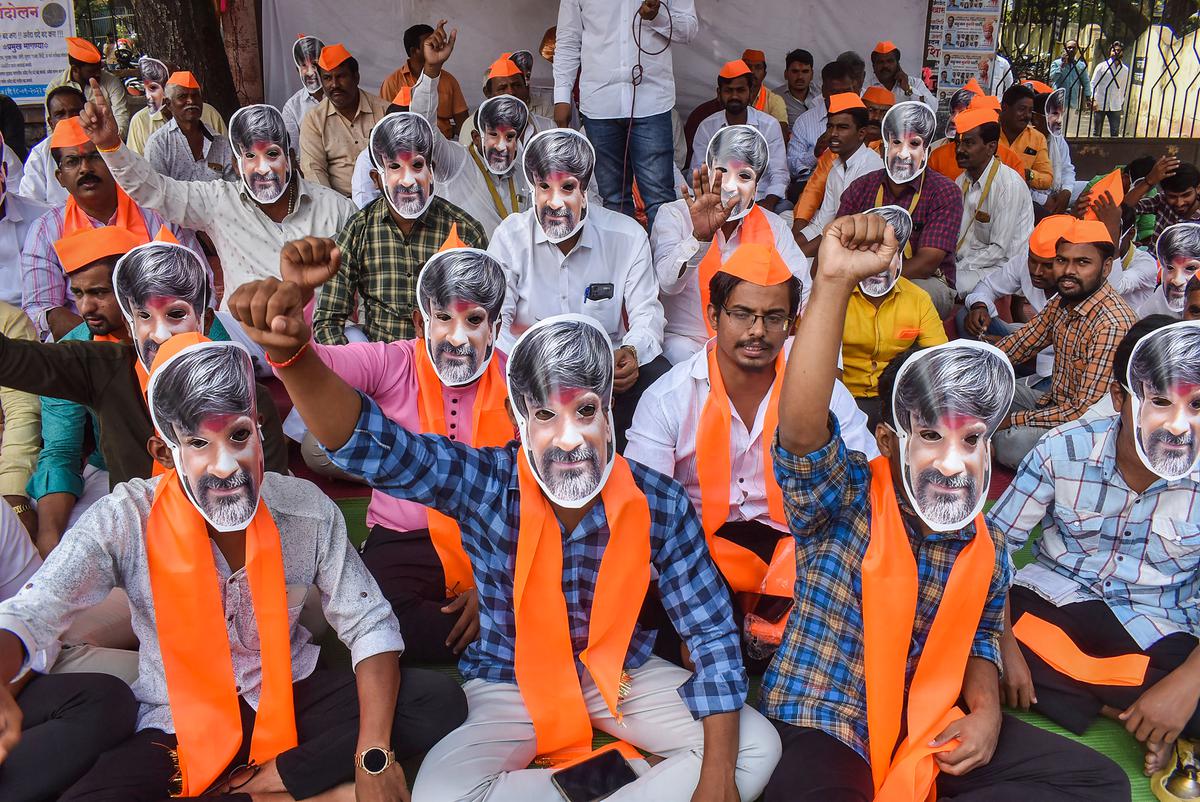
  • Why are the Marathas mobilising now?

    The Marathas' Demand for Reservation: A Litigation History [2014-21] -  Supreme Court Observer

    Central Idea:

    • The Maratha community’s demand for reservation in education and employment stems from a crisis of dominance, influenced by urban and rural challenges.

    Urban Crisis:

    • Well-paid jobs in urban areas, historically held by Marathas, have rapidly disappeared since the late 1990s.
    • Large-scale manufacturing industries and establishments providing such jobs have closed or downsized, leading to increased competition for fewer opportunities.
    • Marathas, historically socially superior, used their dominant caste position to secure a significant share of jobs, particularly in the public sector.
    • Economic liberalization and the shrinkage of public sector jobs have intensified competition among Marathas for limited opportunities.

    Rural Crisis:

    • Closure of factories has led to the return of workers to villages, disrupting the pattern of workers retiring in villages and their offspring working in cities.
    • Rural youth face challenges migrating to urban areas for better-paying jobs, impacting the financial support they traditionally provided to family members in villages.
    • Informal sector jobs become the primary option for rural Maratha youth, diminishing their social standing and pride in rural settings.
    • The focus on secure public sector jobs, which have also decreased, becomes crucial for rural Maratha youth.

    Maratha quota agitation | OBC leaders warn Shinde govt. of trying to grab  their reservation - The Hindu

    Education Challenges:

    • Increased aspirations for higher education among Marathas face a decline in government institutions and a rise in private unaided colleges with exorbitant fees.
    • Marathas, with limited financial resources, compete for a limited number of open-category seats in public institutions.
    • Decrease in government-run educational institutions exacerbates the challenges faced by Maratha aspirants.

    Crisis of Dominance:

    • The combination of urban and rural crises contributes to a crisis of dominance for the Marathas.
    • Disturbance of caste hierarchy norms due to Dalit mobility and OBC economic and political assertion adds to Marathas’ anxiety.
    • The demand for reservation reflects the need for increased formal sector jobs and the expansion of public educational institutions to address the crisis.

    Key Highlights:

    • Maratha community demands reservation in education and public employment, intensifying since 2016.
    • Historically, Marathas dominated well-paid jobs, but recent urban and rural crises have led to increased competition and challenges.
    • Closure of manufacturing industries, decreasing public sector jobs, and rural youth’s struggles contribute to the crisis.
    • Educational aspirations face challenges with a decline in government institutions and increased private college fees.

    Key Challenges:

    • Disappearance of well-paid urban jobs, increased competition, and shrinking public sector employment.
    • Rural crisis disrupts the traditional pattern of workers retiring in villages and offspring working in cities.
    • Decline in government-run educational institutions, limited open-category seats, and rising private college fees.

    Key Terms and Phrases:

    • Urban crisis, rural crisis, crisis of dominance, economic liberalization, formal sector jobs.
    • Reservation, Maratha mobilization, well-paid jobs, private unaided colleges, public sector employment.

    Key Examples and References:

    • Maratha protests since 2016, closure of manufacturing industries, decreased public sector jobs.
    • Disturbance in traditional caste hierarchies due to Dalit mobility and OBC economic and political assertion.

    Key Facts and Data:

    • Marathas historically occupied over 29% of open-category jobs in government.
    • Jobs in the private formal sector increased from 2% to 3.5%.
    • Contractual government jobs increased from 0.7 million to 15.9 million in 2017-18.
    • Only 22.2% of colleges are managed by the government as of 2019.

    Critical Analysis:

    • Maratha crisis stems from economic shifts, urban-rural dynamics, and disturbance in caste hierarchies.
    • Limited opportunities, competition, and declining public sector jobs contribute to the community’s mobilization.
    • Educational challenges add to the complexity, demanding a comprehensive solution.

    Way Forward:

    • Address urban and rural crises by creating more formal sector jobs.
    • Expand public educational institutions and implement large-scale scholarship programs.
    • Focus on inclusive policies to reduce competition and restore traditional patterns of employment.

    Conclusion:

    • The Maratha mobilization for reservation is rooted in the challenges posed by the disappearance of well-paid jobs, urban-rural dynamics, and the disruption of traditional caste hierarchies. Addressing these challenges requires a focus on creating more opportunities in the formal sector and expanding accessible public education.
  • The challenge of maritime security in the Global South

    The challenge of maritime security in the Global South - The Hindu

    Central idea 

    The article underscores the evolving challenges in the maritime domain, emphasizing the shift from traditional military approaches to a developmental model for maritime security. It highlights the need for collaboration among developing nations to address unconventional threats, such as illegal fishing and climate change, while acknowledging the reluctance to prioritize collective action over political and strategic autonomy.

    Key Highlights:

    • Evolution of Maritime Challenges: New dimensions in hard security challenges, including asymmetrical tactics and grey-zone warfare. Use of land attack missiles and combat drones reshaping the security landscape.
    • Shift in Demand for Maritime Security: Growing demand from states facing unconventional threats such as illegal fishing, natural disasters, and climate change. Need for a broader approach beyond military means to address diverse maritime challenges.
    • India’s Developmental Approach: Maritime Vision 2030 focuses on economic growth and livelihood generation through port, shipping, and inland waterway development. Indo-Pacific Oceans Initiative with seven pillars, including maritime ecology, marine resources, and disaster risk reduction.

    New Threats in Maritime Domain:

    • Recent developments include Ukraine’s asymmetrical tactics and China’s maritime militias, indicating a shift to improvised strategies.
    • Emerging threats involve grey-zone warfare, land attack missiles, and combat drones.

    Demand for Maritime Security:

    • Majority of recent demand stems from unconventional threats like illegal fishing, natural disasters, and climate change.
    • Addressing these challenges requires commitment of capital, resources, and specialized personnel.

    Global South’s Perspective:

    • Developing nations perceive Indo-Pacific competition among powerful nations as detrimental to their interests.
    • Challenges involve interconnected objectives in national, environmental, economic, and human security.

    Challenges in Global South:

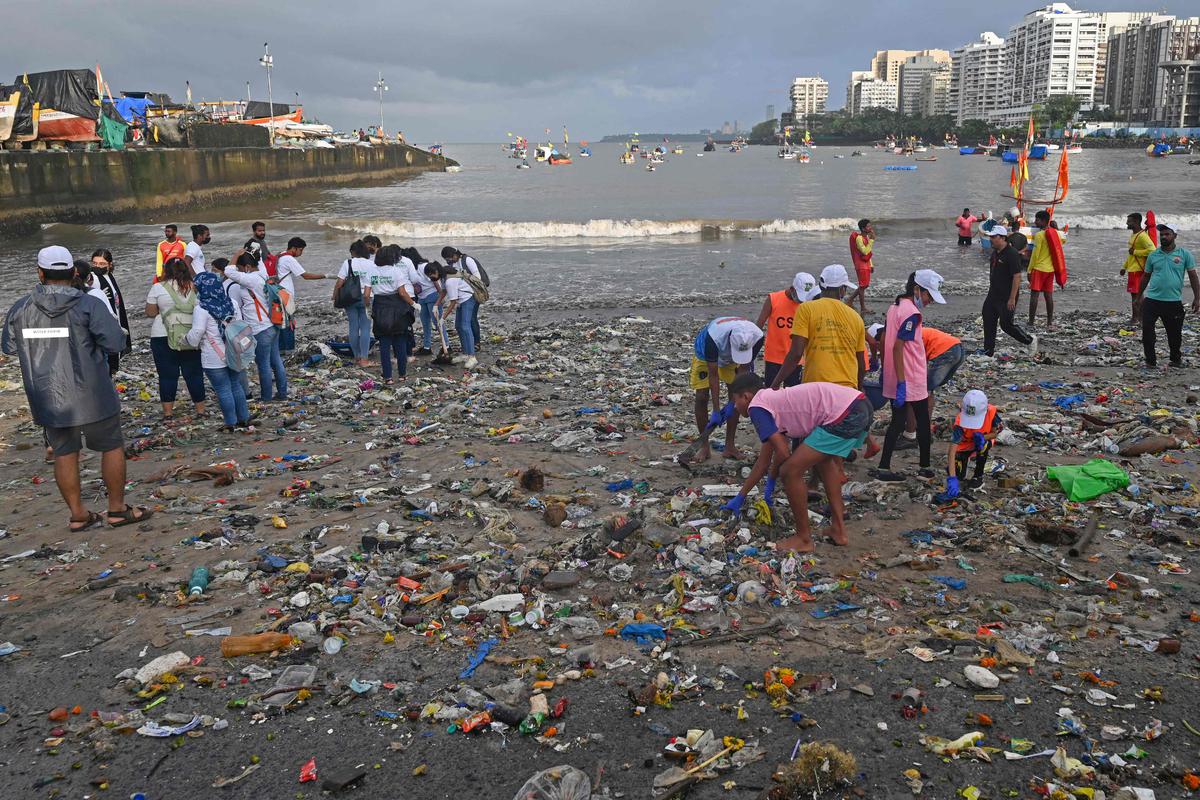
    • Rising sea levels, marine pollution, climate change disproportionately impact less developed states, leading to vulnerability.
    • Unequal law-enforcement capabilities and lack of security coordination hinder joint efforts against maritime threats.

    Creative Models for Maritime Security:

    • Maritime security transcends military actions, focusing on generating prosperity and meeting societal aspirations.
    • India’s Maritime Vision 2030 emphasizes port, shipping, and inland waterway development for economic growth.
    • Dhaka’s Indo-Pacific document and Africa’s Blue Economy concept align with a developmental approach.

    Fight Against Illegal Fishing:

    • Significant challenge in Asia and Africa marked by a surge in illegal, unreported, and unregulated fishing.
    • Faulty policies encouraging destructive methods like bottom trawling and seine fishing contribute to the problem.

    India’s Indo-Pacific Oceans Initiative:

    • Encompasses seven pillars, including maritime ecology, marine resources, capacity building, and disaster risk reduction.
    • Advocates collective solutions for shared problems, garnering support from major Indo-Pacific states.

    Challenges in Achieving Consensus:

    • Implementation of collaborative strategy faces hurdles in improving interoperability, intelligence sharing, and establishing a regional rules-based order.
    • Balancing sovereignty and strategic independence remains a priority for many nations, hindering consensus.

    Key Challenges:

    • Complexity of Unconventional Threats: Conventional military approaches insufficient; requires capital, resources, and specialist personnel. Challenges include illegal fishing, marine pollution, human trafficking, and climate change.
    • Global South’s Coordination Challenges: Unequal law-enforcement capabilities and lack of security coordination among littoral states. Reluctance to prioritize collective action due to varying security priorities and autonomy concerns.
    • Vulnerability of Less Developed States: Disproportionate impact of rising sea levels, marine pollution, and climate change on less developed states. Vulnerability stemming from inadequate resources to combat environmental and security challenges.
    • Lack of Consensus and Reluctance: Reluctance among littoral states to pursue concrete solutions and collaborate. Paradox of non-traditional maritime security, where collective issues clash with political and strategic autonomy.

    Key Terms and Phrases:

    • Grey-Zone Warfare: Tactics that fall between peace and war, creating ambiguity in conflict situations.
    • Asymmetrical Tactics: Strategies that exploit an opponent’s weaknesses rather than confronting strengths directly.
    • Maritime Vision 2030: India’s 10-year blueprint for economic growth in the maritime sector.
    • Blue Economy: Sustainable use of ocean resources for economic development.
    • Indo-Pacific Oceans Initiative: India’s initiative with pillars like maritime ecology, marine resources, and disaster risk reduction.
    • IUU Fishing: Illegal, unreported, and unregulated fishing.
    • Bottom Trawling and Seine Fishing: Destructive fishing methods contributing to illegal fishing.

    Key Examples and References:

    • Ukraine’s Asymmetrical Tactics: Utilization of unconventional strategies in the Black Sea.
    • China’s Maritime Militias: Deployment in the South China Sea as an example of evolving threats.
    • India’s Maritime Vision 2030: Illustrates a developmental approach to maritime security.
    • Illegal Fishing in Asia and Africa: Rising challenge with negative environmental and economic impacts.

    Key Facts and Data:

    • Maritime Vision 2030: India’s 10-year plan for the maritime sector.
    • Indo-Pacific Oceans Initiative: Seven-pillar initiative for collective solutions in the maritime domain.

    Critical Analysis:

    • Shift to Developmental Model: Emphasis on generating prosperity and meeting human aspirations in addition to traditional security measures.
    • Comprehensive Maritime Challenges: Recognition of diverse challenges beyond military threats, including environmental and economic goals.
    • Littoral State Reluctance: Paradox in the Global South, where collective issues clash with autonomy, hindering collaborative solutions.

    Way Forward:

    • Collaborative Strategies:Improved interoperability, intelligence sharing, and agreement on regional rules-based order.
    • Prioritizing Collective Action: Developing nations must prioritize collective action over sovereignty for effective maritime solutions.
    • Sustainable Development Goals: Prioritize sustainable development goals in littoral states, addressing challenges such as illegal fishing and climate change.
  • In news: Guru Nanak Jayanti

    guru nanak

    Central Idea

    • Guru Nanak Jayanti commemorates the birth of Guru Nanak, the founder of Sikhism and the first of its ten Gurus.
    • It is celebrated worldwide as Guru Nanak Gurpurab on Kartik Poornima, the full-moon day in the month of Katak (October–November).

    Five Key Aspects of Guru Nanak’s Life

    [1] Early Life and Philosophical Inclination:

    • Born on April 15, 1469, in a Hindu family in Nankana Sahib (now in Pakistan).
    • Displayed an early interest in philosophical and spiritual questions.
    • Worked as an accountant before embarking on a spiritual journey with a Muslim minstrel, Mardana.

    [2] Mystical Experience at Age 30:

    • Had a transformative spiritual experience during an early morning ablution by a river.
    • Received a divine mission to spread a message of unity and devotion.
    • Emerged after three days with the profound declaration, “There is no Hindu, there is no Mussalman.”

    [3] Extensive Travels and Interfaith Dialogue:

    • Traveled widely, including to Sri Lanka, Baghdad, and Mecca, on journeys called ‘udaasis’.
    • Engaged with various religious figures, including Hindu pandits and Sufi saints.
    • Advocated for the oneness of God and universal brotherhood.

    [4] Preaching the Oneness of God:

    • Emphasized the unity of humanity and the presence of one God in all.
    • Challenged religious orthodoxy and rituals, promoting a direct connection with the divine.
    • His teachings laid the foundation for Sikhism, attracting followers from diverse backgrounds.
    • His teachings and hymns are compiled in the Guru Granth Sahib, the holy scripture of Sikhism.
    • He wrote in Punjabi, using a script known as Gurmukhi.

    [5] Succession and Legacy:

    • Spent his final years in Kartarpur, establishing a community with daily prayers and hymns.
    • Introduced the practice of ‘langar’, a communal kitchen serving free meals.
    • Chose Lehna (later Guru Angad) as his successor, bypassing his own sons.
    • Passed away on September 22, 1539, leaving behind a legacy of spiritual and social reform.
  • Rythu Bandhu Scheme suspended ahead of Elections

    Central Idea

    Rythu Bandhu Scheme: Key Facts

    • The Rythu Bandhu scheme is also known as Farmer’s Investment Support Scheme (FISS).
    • It is a welfare programme for farmers started in 2018 by the Telangana government.
    • Under the scheme, the state government provided the 58 lakh farmers in Telangana with ₹5,000 per acre of their land as a farm investment for two crops.
    • There is no ceiling on the number of acres held by a farmer.
    • So, a farmer who owns two acres of land would receive Rs 20,000 a year, whereas a farmer who owns 10 acres would receive Rs 1 lakh a year from the government.
    • This investment is made twice a year, once for kharif harvest and once for Rabi harvest.
    • It is the country’s first direct farmer investment support scheme where cash is paid directly to the beneficiary.

    Reasons for suspension

    • The election commission had allowed the disbursement of funds for the rabi harvest this season, provided they are not publicised, in accordance with the model code of conduct.
    • However, the model code was violated after the state finance minister made a public announcement of the same.
  • Evolution and Future of Fiber Optic Technology

    Fiber Optic

    Central Idea

    • COVID-19 pandemic highlighted the crucial role of the internet in maintaining global connectivity, facilitated largely by high-speed internet connections.
    • These connections, enabling video chats, online payments, and virtual meetings, largely depend on the technology of optical fibers.

    Understanding Optical Fibers

    • Composition and Size: Optical fibers are thin strands of glass, almost as thin as a human hair, used for transmitting information.
    • Information Transmission: They carry various forms of data, including text, images, and videos, at speeds close to that of light.
    • Everyday Relevance: Optical fibers play a vital role in everyday communications like text messaging and phone calls.
    • Fragility vs. Strength: Despite their thinness, these fibers are strong and durable when encased in protective materials.
    • Versatility: They are flexible enough to be laid underground, underwater, or wound around spools.

    Historical Perspective

    • Charles Kao’s Contribution: About 60 years ago, physicist Charles Kao proposed using glass fibers for telecommunications, a suggestion that earned him a Nobel Prize in 2009.
    • Replacing Copper Wires: Kao’s idea was initially met with skepticism but eventually replaced copper wires in telecommunication.

    How Optical Fibers Work?

    • Light as an Electromagnetic Wave: Light, part of the electromagnetic spectrum, can be controlled and guided through optical fibers.
    • Total Internal Reflection: This phenomenon allows light to travel long distances within the fiber with minimal loss of power.
    • Fiber Optic Communication System: This system includes a transmitter, the optical fiber, and a receiver to encode, carry, and reproduce information.

    Data Transmission and Resistance

    • High Data-Transmission Rate: Optical fibers can transmit data at rates of several terabits per second.
    • Insensitivity to External Disturbances: Unlike copper cables, they are not affected by external factors like lightning or bad weather.

    Development of Fiber Optic Cables

    • Early Experiments: The concept of guiding light in transparent media dates back to the 19th century, with demonstrations by Jean-Daniel Colladon and others.
    • Medical and Defense Applications: Early glass objects were used in medicine and defense before their adaptation for data transmission.
    • Advancements in the 20th Century: Significant progress occurred in the 1950s and 1960s, including the development of glass-clad fibers and the invention of lasers.

    Modern Manufacturing

    • Fiber-Optic Cable Production: Today, glass fibers are produced using the fiber-drawing technique, ensuring high purity and engineered refractive index profiles.
    • Loss Reduction: Modern optical fibers have significantly reduced signal loss, less than 0.2 dB/km.

    Future of Fiber Optics

    • Expanding Applications: Fiber optics technology is now integral to various fields, including telecommunication, medical science, and laser technology.
    • India’s National Mission: The Indian government’s 2020 Union Budget announced a significant investment in quantum technologies and applications, highlighting the future potential of fiber optics.
    • Quantum Optics and Communication: The technology stands at the forefront of a new era, with expanding possibilities in quantum optics and home connectivity.

    Conclusion

    • Impact of Fiber Optics: The evolution of fiber optics has revolutionized communication and connectivity, offering high-speed, reliable data transmission.
    • Continued Growth and Innovation: As the technology continues to advance, its applications are likely to expand further, driving innovations in various sectors and enhancing global connectivity.
  • Dollarization and Economic Policy: The Case of Javier Milei’s Argentina

    Central Idea

    • Argentina faces over 100% inflation and widespread poverty, prompting public support for Milei’s unique economic policies.
    • This has prompted the newly elected Javier Milei replacing the peso with the dollar, abolishing the Central Bank, and cutting government spending.

    Concept of Dollarization

    • Dollarization is the process by which a country adopts a foreign currency in addition to or instead of its national currency.
    • Here are 2 types of dollarization:
    1. Full Dollarization: This occurs when a country adopts a foreign currency (such as the US dollar) as its sole legal tender. In this scenario, the foreign currency completely replaces the domestic currency for all financial transactions.
    2. Partial Dollarization: In this case, the foreign currency is used alongside the national currency. It often happens unofficially, where residents hold a significant portion of their assets or conduct a large number of their transactions in the foreign currency.

    Motive behind Argentine move

    • Hyperinflation Solution: Dollarization could break the cycle of rising prices and money supply, as the dollar is not easily manipulated for political gains.
    • Growth Potential: By using dollars, economies might focus on exports and attract foreign investment, benefiting from the dollar’s stability.

    Potential Challenges

    • Loss of Monetary Policy Control: Adopting the dollar means losing the ability to control the money supply through domestic monetary policy.
    • Dependence on Export Promotion: Economies must rely solely on export promotion for economic stability, as currency depreciation is no longer an option.

    Ecuador’s Experience  

    • Economic Turnaround: Ecuador, after adopting the dollar, saw significant improvements in GDP growth, poverty reduction, and inflation control.
    • Oil and Gas Reserves: Ecuador’s success was partly due to its natural resources, which helped maintain a steady dollar inflow.
    • Beyond Dollarization: Ecuador’s economic prosperity was also due to effective fiscal policies and government interventions in the oil sector.
    • Social Spending: Increased social spending played a crucial role in translating economic gains into societal benefits.

    Comparative Analysis: Greece and the Euro

    • Euro Adoption in Greece: Greece’s adoption of the euro initially spurred growth but later limited its fiscal and monetary policy options.
    • Austerity Measures: The Eurozone crisis forced Greece into austerity, highlighting the risks of adopting an external currency without policy autonomy.

    Conclusion

    • Not a Panacea: Dollarization, while potentially stabilizing, is not a standalone solution and requires complementary domestic policies.
    • Argentina’s Uncertain Future: With Milei’s intent to slash government spending and abolish the Central Bank, Argentina’s economic future under his administration remains uncertain.
  • James Webb Space Telescope finds ‘Teenage’ Galaxies

    james webb space telescope

    Central Idea

    • Recently, the James Webb Space Telescope has provided detailed insights into slightly older galaxies, known as ‘teenagers’ in galactic terms, shedding light on their evolution and unique characteristics.
    • This research is part of the CECILIA Survey, utilizing Webb to analyze the chemistry of distant galaxies, named after astronomer Cecilia Payne-Gaposchkin.

    Study of Teenage Galaxies

    • Formation Period: The study focuses on galaxies that formed around 2-3 billion years after the Big Bang, which occurred about 13.8 billion years ago.
    • Research Methodology: Researchers analyzed light across various wavelengths from 23 such galaxies using Webb, akin to studying their ‘chemical DNA.’
    • Key Discoveries: These teenage galaxies exhibit distinct chemical compositions, indicative of intense star formation and rapid developmental phases.

    Characteristics of Teenage Galaxies

    • Contrast with Modern Galaxies: These galaxies show significant differences in appearance and behavior compared to contemporary galaxies.
    • Developmental Mysteries: They undergo crucial, yet not fully understood, processes during this phase, shaping their final structure and nature.
    • High Temperatures in Star-Forming Regions: Star-forming areas in these galaxies show temperatures around 24,000 degrees Fahrenheit, much higher than in present-day galaxies.
    • Young Stars and Gas Properties: This temperature variation suggests differences in the stars and gas properties of teenage galaxies.
    • Detected Elements: Observations identified these galaxies glowing with elements like hydrogen, helium, oxygen, nitrogen, sulfur, argon, nickel, and silicon.

    Significance of Oxygen and Nickel

    • Oxygen’s Crucial Role: As a key component of galactic DNA and the third-most abundant element in the universe, oxygen is vital for tracking galaxies’ growth history.
    • Nickel – An Unexpected Find: The presence of nickel, usually not bright enough to be observed in nearby galaxies, suggests unique aspects of massive stars in these galaxies.
    • Undetected Elements: Astronomers believe that additional elements likely exist in these galaxies but remain undetected due to current technological limits.

    Implications of the Findings

    • Chemical Immaturity and Rapid Growth: The study indicates that these galaxies are in a phase of rapid formation and are still chemically immature.
    • Insights into Star Formation: Understanding the chemical makeup of these galaxies provides valuable information about their star formation history and rate.
  • Embryonic Development: Unraveling the Mysteries of HERVH and ‘Jumping Genes’

    Central Idea

    • Recent breakthroughs in genetic research have shed light on the complexities of early embryonic development, particularly focusing on the inner cell mass, a key component in forming the human body.

    Embryonic Development Explained

    • Life’s Commencement: Life begins with the fusion of sperm and egg, creating a zygote, the first cell of a new individual.
    • Cellular Multiplication: The zygote undergoes rapid cell division, marking the onset of embryonic development.
    • Diverse Cell Differentiation: As the embryo develops, cells differentiate into various types, leading to the formation of organs and tissues.
    • Journey to Birth: This intricate process culminates in the birth of a newborn after nine months of gestation.

    Early Stages of Development

    • Inner Cell Mass Formation: Early embryonic cells cluster around the inner cell mass, vital for the embryo’s development.
    • Pluripotency of Cells: These cells are pluripotent, meaning they can develop into any cell type in the body.
    • Scientific Focus: The inner cell mass is a primary subject of study due to its critical role in human development.

    Gene Expression in Embryonic Cells

    • Analyzing Gene Activity: Researchers study the proteins produced by genes to understand cell-specific gene expression.
    • Deciphering Cell Development: This research provides insights into the active genes in each cell, revealing the mechanisms of cell development.

    Discoveries in the Inner Cell Mass

    • 2016 Research Insights: Manvendra Singh’s reanalysis of gene expression data identified a new group of non-committed cells in the inner cell mass.
    • Enigma of Cell Death: These cells, unlike others, do not progress to later developmental stages and are eliminated early on.

    HERVH Gene and Cell Survival

    • HERVH’s Crucial Function: A 2014 study revealed that HERVH, a gene with virus-like properties, is essential for maintaining pluripotency in embryonic stem cells.
    • Gene Expression Variations: Singh’s research showed that while most inner cell mass cells express HERVH, the non-committed cells that eventually die do not.
    • Independent Confirmation: This discovery was corroborated by researchers at the University of Spain in lab-fertilized embryos.

    Understanding ‘Jumping Genes’

    • Transposons in Non-Committed Cells: The non-committed cells express transposons, or ‘jumping genes’, which can cause DNA damage and lead to cell death.
    • HERVH’s Protective Role: HERVH protects most cells from the harmful effects of transposons, but cells lacking HERVH expression are vulnerable.
    • Natural Selection in Embryos: The early human embryo acts as a selection ground, favoring cells with HERVH expression.
    • HERVH’s Unique Nature: Interestingly, HERVH itself is a transposon but functions protectively rather than destructively.

    Implications for Placenta and Beyond

    • Placental Development: Cells that form the placenta also exhibit transposon activity but manage to survive without HERVH expression.
    • Impact on Regenerative Medicine: Understanding HERVH’s role in cell pluripotency has profound implications for regenerative medicine and could influence embryo viability in fertility treatments.Top of Form
  • In international law, government cannot override Parliament

    Central idea 

    Tax treaties or protocols signed by the executive to alter or vary the provisions of the IT Act must withstand the rigours of the constitutional and statutory requirements

    Key Highlights:

    • Landmark Decision: The Supreme Court’s decision in Assessing Officer (International Tax) vs Nestle SA is a landmark ruling reaffirming the constitutional principle that international obligations assumed by the executive require specific legislative conditions for legal effect.
    • Constitutional Framework: The judgment delves into the interplay between domestic law and international law within India’s constitutional framework, emphasizing the need for parliamentary approval when international obligations conflict with domestically enacted laws.
    • Article 73 and Article 253: The powers of the Union executive, as per Article 73, are co-terminus with those of Parliament, allowing the executive to assume international obligations without legislation. However, Article 253 emphasizes the dualism between international law and municipal law, requiring a domestic legislative process for conflicting obligations.
    • Delegated Powers: Parliament can delegate treaty-making powers to the executive, exemplified by tax treaties under section 90 of the Income Tax (IT) Act. The court clarifies that assuming international obligations and enforcing them domestically are distinct processes.
    • Section 90 of IT Act: The judgment interprets section 90, titled “Agreement with foreign countries or specified territories,” emphasizing the necessity of a notification for the implementation of agreements related to the avoidance of double taxation.
    • MFN Clauses: Most-Favoured-Nation (MFN) clauses, aimed at altering taxation provisions, must be notified for incorporation into domestic tax law. Failure to do so would create uncertainty in the tax system, with no constitutional or statutory backing for unnotified application.
    • Chaos and Uncertainty: Unnotified application of MFN clauses could lead to chaos and uncertainty, with taxpayers and assessing officers interpreting and applying the clauses based on individual understanding, lacking legal foundation.
    • Scope of Judgment: The judgment’s scope is limited to the need for a notification for the implementation of MFN clauses, and questions related to diplomatic accountability or the executive’s capacity to prolong the performance of international obligations were not addressed.
    • Importance of Constitutional Principles: The Supreme Court’s decision is applauded for upholding democratic principles, ensuring that international obligations assumed by the executive align with constitutional and statutory requirements.

    Challenges:

    • Future Events Contingency: The activation of MFN clauses contingent upon future events poses challenges in their timely application and raises questions about the executive’s diplomatic accountability.

    Key Phrases:

    • Dualism of Legal Systems: The constitutional framework recognizes international law and municipal law as separate and distinct legal systems.
    • Domestic Legislative Processes: International obligations conflicting with domestic laws must undergo legislative processes for enforceability in courts.
    • Separation of Powers: The judgment underscores the importance of the doctrine of separation of powers in judicially incorporating international obligations into domestic law.

    Critical Analysis:

    The court’s decision provides a robust interpretation of constitutional principles, ensuring that assumed international obligations align with domestic legal processes. The focus on the necessity of notifications for the implementation of MFN clauses reflects the court’s commitment to maintaining clarity and avoiding chaos in the tax system.

    Key Examples and References:

    • Article 73 and 253 of the Constitution: The judgment extensively refers to constitutional provisions such as Article 73 and Article 253 to establish the legal framework.

    Way Forward:

    • Legislative Precision: Policymakers should ensure precision in legislative processes, especially concerning the implementation of international obligations, to avoid legal ambiguities.
    • Clarity in Notification: The executive should prioritize clarity in notifications, particularly when activating clauses contingent upon future events, to prevent interpretational challenges.
    • Review of Existing Treaties: Periodic reviews of existing tax treaties to ensure they align with constitutional and statutory requirements and to address any potential issues related to conflicting obligations.
    • Enhanced Diplomatic Engagement: Diplomatic efforts should focus on ensuring that assumed international obligations are seamlessly integrated into domestic legal frameworks to uphold constitutional principles.

    The Supreme Court’s judgment serves as a guide for maintaining the sanctity of constitutional principles in the execution of international obligations, particularly in the context of tax treaties.

More posts