💥UPSC 2026, 2027, 2028 UAP Mentorship (March Batch) + Access XFactor Notes & Microthemes PDF

Search results for: “”

  • Assessing the Indian Economy: A Fuzzy Picture with Bright Spots

    Economy

    Central Idea

    • The Indian economy is in a state of ambiguity, with different viewpoints and statistics painting a fuzzy picture. While some argue that India is well-positioned to be an economic superpower, the true picture is not that straightforward.

    An assessment of the Indian economy based on various factors

    1. Inflation:
    • According to the MPC meeting minutes, inflation is under control, but households are witnessing an increase in the prices of goods and services.
    • While the base effect will bring down the inflation numbers, households still complain of having a cumulative inflation of over 18 per cent in the last three years.
    1. Growth:
    • The growth picture is ambivalent, with the new normal appearing to be 6-7 per cent.
    • While some argue that India is the fastest-growing economy, this is only true if smaller nations are excluded.
    • There is not too much optimism about being on track for the 8 per cent-plus growth rate, which we were used to earlier.
    1. Exports: While there has been satisfaction expressed by the new heights achieved in the exports of goods and services, exports of merchandise are not too satisfactory. For example, if refinery products are excluded from the export’s basket, there has been a fall in FY23.
    2. Investment:
    • The official position is that investment is picking up in the private sector, but data on all funding sources show that there is a slowdown.
    • Bank credit is buoyant more on the retail end than manufacturing. Debt issuances are dominated by the financial sector with manufacturing lagging.
    • External Commercial Borrowings (ECBs) have slowed down mainly due to the higher cost of loans.
    1. Consumption: The consumption picture is also fuzzy, with nominal consumption growing by 16 per cent in FY23, but this is pushed up by inflation, and pent-up demand for both goods and services post the full removal of the lockdown in 2022.
    2. Employment:
    • The average unemployment rate is around 7.5 per cent, but the concern is more on the labour participation rate, which has been coming down. This indicates a growing population in the working age group that is not interested in working.
    • Start-ups have not yet been job creators to the degree that was expected, given the push by the government over the years.
    1. Banking sector: The banking sector has emerged stronger with lower NPA levels and improved profitability, which implies that as and when the economy gets into the take-off mode, banks will be well-equipped to provide the funds.

    Facts for prelims: Basics

    External Commercial Borrowings (ECBs):

    • ECBs are loans obtained by entities in one country from non-resident lenders in another country.
    • ECBs provide an alternative source of funds for borrowers, enabling access to international capital markets.
    • They are primarily used by companies, banks, or other entities to finance activities, investments, or expansion plans.
    • The borrowing and utilization of ECBs are subject to guidelines and regulations set by the borrowing country’s central bank or regulatory authority.
    • The regulatory framework aims to control external debt, manage foreign exchange exposure, and ensure financial stability.

     What are the concerns?

    • Employment Generation: The decline in the labor force participation rate and layoffs in certain sectors raise significant challenges in terms of job creation and reducing unemployment levels.
    • Manufacturing Competitiveness: The decline in merchandise exports (excluding refinery products) indicates potential hurdles in enhancing the competitiveness of the manufacturing sector and expanding exports.
    • Execution of Investment Intentions: The gap between investment intentions and actual investments is a concern as it indicates potential bottlenecks or challenges in translating investment plans into action.
    • Consumption Growth and Affordability: Affordability issues due to inflation impacting real consumption growth raise concerns about sustained consumer demand.
    • Export Diversification: The dependence on a few economies for exports and the potential impact of a global economic slowdown on Indian exports are concerns. Diversifying export destinations and exploring new markets can help reduce vulnerability to global economic fluctuations and strengthen export resilience.
    • Effective Implementation of Banking Sector Reforms: While improvements have been observed in the banking sector, concerns about funding sources and the need for increased credit flow to the manufacturing sector indicate ongoing challenges.

    Economy

    Way ahead

    • Focus on inflation control: While the MPC has managed to keep inflation under control from a policy perspective, efforts should continue to address the impact of rising prices on households. Measures to enhance supply chain efficiency, promote competition, and reduce production costs can help alleviate inflationary pressures.
    • Promote sustainable and inclusive growth: While the current growth rate is positive, efforts should be made to achieve higher and more inclusive growth. This can be done by investing in infrastructure development, skill development programs, and initiatives that support the growth of MSMEs (Micro, Small, and Medium Enterprises).
    • Boost exports: Enhancing the competitiveness of Indian goods and services in global markets is crucial for a robust export sector. Continued efforts to improve the ease of doing business, implement the Production-Linked Incentive (PLI) scheme effectively, and diversify export destinations can help boost exports.
    • Facilitate investment: Policy measures should focus on encouraging private sector investment and reducing funding bottlenecks. This can involve improving the ease of doing business, simplifying regulatory processes, and providing incentives for both domestic and foreign investments.
    • Strengthen consumer demand: Initiatives to support consumer demand can include income support programs, targeted subsidies, and measures to enhance consumer confidence. Reducing the impact of inflation on household budgets and boosting purchasing power can help drive consumption growth.
    • Address unemployment and labor force participation: Policies aimed at promoting skill development, entrepreneurship, and job creation can help address unemployment concerns. Encouraging sectors with higher labor-intensive potential, such as manufacturing and services, and supporting start-ups and MSMEs can be vital in generating employment opportunities.
    • Continue banking sector reforms: While the banking sector has made progress in reducing NPAs and improving profitability, ongoing reforms should be sustained to strengthen the sector further. Maintaining prudent lending practices, enhancing risk management frameworks, and promoting transparency and governance will be essential.
    • Foster domestic innovation and technology adoption: Encouraging innovation, research and development, and technology adoption can boost productivity and competitiveness across sectors. This can be achieved through policies that promote collaboration between industry and academia, provide incentives for innovation, and invest in digital infrastructure.
    • Maintain macroeconomic stability: Ensuring fiscal discipline, sound monetary policy, and a stable regulatory environment will be crucial for sustaining macroeconomic stability. This can help maintain investor confidence and provide a conducive environment for economic growth.

    Conclusion

    • The Indian economy’s broad numbers look statistically realistic, but the triad of employment, consumption, and private investment has to bear fruit. Domestic initiatives have to drive the story forward, as the world economy slows down.

    Get an IAS/IPS ranker as your personal mentor for UPSC 2024 | Schedule your FREE session and get the Prelims prep Toolkit!

    Also read:

    Indian Economic Growth Prospects: A Comprehensive Analysis


  • Early Childhood Care and Education through Anganwadis

    Central Idea: The Centre is planning to promote ‘Early Childhood Care and Education’ through anganwadi centres as part of the ‘Poshan Bhi, Padhai Bhi’ slogan announced by the Women and Child Development Minister.

    What is Anganwadi scheme?

    • The scheme was started in 1975 and aims at the holistic development of children and empowerment of mother.
    • It is a Centrally-Sponsored scheme. The scheme primarily runs through the Anganwadi centre.
    • The scheme is under the Ministry of Women and Child Development.

    Moto: Poshan Bhi, Padhai Bhi

    • The focus will be on both nutrition and early learning for children under 6 years, with a particular emphasis on those under 3 years.
    • Early learning has been neglected in the Integrated Child Development Scheme (ICDS) and seen as secondary to nutrition.
    • Anganwadi centres will be repositioned as pre-schools to provide early learning access to socially and educationally backward communities.

    Why such move?

    • Two emerging trends are noted: young children shifting to private pre-schools and under-age children being admitted to Class 1 in some states.
    • The quality of services provided at Anganwadi centres is perceived as inferior, leading to the shift to private nursery schools.

    Task Force and Recommendations

    • Rebranding anganwadis: The task force recommends a “mission-mode approach” to rebranding anganwadis, including infrastructure upgrades, materials, play equipment, etc.
    • Focus on volunteer support: It suggests involving panchayat raj institutions, women’s self-help groups, local NGOs, and college volunteers to enhance the learning environment.
    • Boost to Anganwadi sisters: The task force proposes re-designating anganwadi workers as anganwadi teachers and helpers as childcare workers.
    • Nutrition boost: Infrastructure improvements, additional nutrition supplements (such as eggs and milk), extended timings, creches, and day care services are recommended.
    • MGNREGS liasion: The task force suggests leveraging funds from the Mahatma Gandhi National Rural Employment Guarantee Scheme (MGNREGS).

    Major target: Improve Child Nutrition

    • The task force highlights that over 35% of young children in India are stunted, according to the latest NFHS data.
    • Although there has been a reduction, India still has the largest population of stunted children globally.
    • Child stunting affects developmental outcomes and the ability to learn at school.
    • NFHS-5 reveals that only 11.3% of children below 2 years receive an adequate diet.
    • The task force recommends introducing eggs as an effective intervention for nutrition.


    Get an IAS/IPS ranker as your personal mentor for UPSC 2024 | Schedule your FREE session and get the Prelims prep Toolkit!

  • Nikaalo Prelims Spotlight || Constitutional Bodies, Statutory Bodies, Local government/ ULBs

    Dear Aspirants,

    This Spotlight is a part of our Mission Nikaalo Prelims-2023.

    You can check the broad timetable of Nikaalo Prelims here

    Session Details

    YouTube LIVE with Parth sir – 7 PM  – Prelims Spotlight Session

    Evening 04 PM  – Daily Mini Tests

    Join our Official telegram channel for Study material and Daily Sessions Here


    11th May 2023

    Constitutional Bodies

    Constitutional bodies derive their powers and authorities from the Constitution of India. They are mentioned in the Constitution. Since they get their power from the Indian Constitution, any change in the mechanism of the constitutional bodies would require a constitutional amendment.

    The list of constitutional bodies in India along with the article pertaining to it in the Constitution and other details are given below:

    • Attorney General of India
    Attorney General
    Article in the Constitution76
    Tenure & RemovalHolds office during the pleasure of the President
    Further AppointmentYes
    PowersPrivileges of an MPRight of an audience in all Indian courtsCan attend both Lok Sabha and Rajya Sabha but cannot vote
    • Comptroller and Auditor General (CAG)
    Comptroller & Auditor General of India
    Articles148
    Tenure & removalHolds the office for six years or 65 years (whichever comes earlier)Removal is the same as for a judge of the Supreme Court
    Further appointmentNo
    PowersAudits accounts concerned with the Contingency Fund, the Consolidated Fund of India and states,  and the Public Accounts Fund of the states and centre.Advisory function with respect to accounts to the country’s President
    • Election Commission
    Election Commission of India
    Article324
    CompositionCEC/Chief Election Commissioner, Other Election Commissioners
    Tenure & removalPresently for 6 years or 65 years, whichever is earlier
    Further appointmentYes
    PowersConduct of free and fair elections in IndiaPolitical parties’ registrationOverseeing elections
    • Finance Commission
    Finance Commission of India
    Article280
    CompositionChairman, Four members
    Further appointmentYes
    PowersDecides the basis for sharing the divisible taxes by the centre and the statesAny matter in the interest of sound finance can be referred to the Presidentevaluates the rise in the Consolidated Fund of a state in order to affix the resources of the state Municipalities and PanchayatsFC has the powers of a civil court
    • National Commission for Scheduled Castes
    National Commission for Scheduled Castes
    Articles338
    CompositionChairman, Vice-chairman, 3 other members
    Tenure & removal3 years
    Further appointmentYes
    PowersIt is a quasi-judicial bodyMonitoring and reporting about the implementation of constitutional safeguards for Scheduled CastesIt has a civil court’s powers
    • National Commission for Scheduled Tribes
    National Commission for Scheduled Tribes
    Articles338-A
    CompositionChairman, Vice-chairman, 3 other members
    Tenure & removal3 years
    Further appointmentYes
    PowersIt is a quasi-judicial bodyMonitoring and reporting about the implementation of constitutional safeguards for Scheduled TribesIt has a civil court’s powers
    • National Commission for Backward Classes
    National Commission for Backward Classes
    Articles338-B
    CompositionChairman, Vice-chairman, 3 other members
    Tenure & removal3 years
    Further appointmentYes
    PowersExamine complaints and welfare measures regarding socially and educationally backward classesIt has a civil court’s powers
    • Special officer for Linguistic Minorities
    Special officer for Linguistic Minorities
    Articles350 B
    CompositionCommissioner, Deputy Commissioner, Assistant Commissioner
    Tenure and removalPleasure of the President
    Further appointmentYes
    PowersMonitoring and reporting the working of constitutional safeguards for linguistic minorities
    • Union Public Service Commission
    Union Public Service Commission
    Articles315 – 323
    Composition9 to 11 members
    Tenure & removalPresently for 6 years or 65 years (whichever is earlier) whichever is earlier
    Further AppointmentUPSC Chairman is not eligible for a second term. Other members are eligible only for an appointment within SPSC and UPSC
    PowersRecruitment of All India Services, public services of centrally administered territories, Central services, advisory powers

    State Public Service Commission

    State Public Service Commission
    Articles315 – 323
    Tenure & removalPresently for 6 years or 62 years, whichever is earlier


    Statutory Bodies in India

    • Statutory bodies are established by acts that Parliament or State Legislatures.
    • Statutory bodies have the authority to make laws and make decisions on behalf of the state or country.
    • A statutory body is a self-governing corporate body. A statutory body is established via an Act of Parliament or an Act of State Legislatures. The Act also specifies the body’s powers, objectives, and functions.
    • These bodies are known as statutory bodies because they get their power from statutes or laws adopted by Parliament.
    • Statutory Bodies are divided into two types depending on their tasks and responsibilities. They are classified as:
      • Regulatory Bodies
      • Quasi-Judicial Bodies.
    • Regulatory Bodies – A regulatory body is a government entity responsible for exerting autonomous power over a specific area of human activity in a regulatory or supervisory role.
    • For example, the Biodiversity Authority of India (BAI), the Pension Fund Regulatory and Development Authority (PFRDA), and others.
    • Quasi-Judicial bodies – Non-judicial bodies that can interpret the law are referred to as quasi-judicial bodies. They vary from judicial entities in that their scope is narrower than that of a court.
    • For example, the National Green Tribunal, the National Human Rights Commission, and the Central Information Commission.

    Local Government

    • About:
      • Local Self Government is the management of local affairs by such local bodies who have been elected by the local people.
      • The local self-Government includes both rural and urban government.
      • It is the third level of the government.
      • There are 2 types of local government in operation – panchayatas in rural areas and Municipalities in urban areas.
    • Rural Local Governments:
      • Panchayati Raj Institution (PRI) is a system of rural local self-government in India.
      • PRI was constitutionalized through the 73rd Amendment Act, 1992 to build democracy at the grass roots level and was entrusted with the task of rural development in the country.
        • This act has added a new Part-IX to the Constitution of India. This part is entitled as ‘The Panchayats’ and consists of provisions from Articles 243 to 243 O.
        • In addition, the act has also added a new Eleventh Schedule to the Constitution. This schedule contains 29 functional items of the panchayats. It deals with Article 243-G.
      • In its present form and structure PRI has completed 30 years of existence. However, a lot remains to be done in order to further decentralization and strengthen democracy at the grass root level.
    • Urban Local Governments:
      • They were established with the purpose of democratic decentralisation.
      • There are eight types of urban local governments in India – Municipal Corporation, Municipality, Notified Area Committee, Town Area Committee, Cantonment Board, township, port trust, special purpose agency.
      • At the Central level the subject of ‘urban local government’ is dealt with by the following three Ministries.
        • The Ministry of Urban Development was created as a separate ministry in 1985 (now Ministry of Housing and Urban Affairs).
        • Ministry of Defense in the case of cantonment boards.
        • Ministry of Home Affairs in the case of Union Territories.
      • The 74th Amendment Act pertaining to urban local government was passed during the regime of P.V. Narsimha Rao’s government in 1992. It came into force on 1st June, 1993.
        • Added Part IX -A and consists of provisions from articles 243-P to 243-ZG.
        • Added 12th Schedule to the Constitution. It contains 18 functional items of Municipalities and deals with Article 243 W.

    What are the Salient Features of 73rd Constitutional Amendment?

    • Compulsory Provisions:
      • Organisation of Gram Sabhas;
      • Creation of a three-tier Panchayati Raj Structure at the Zila, Block and Village levels;
      • Almost all posts, at all levels to be filled by direct elections;
      • Minimum age for contesting elections to the Panchayati Raj institutions be twenty one years;
      • The post of Chairman at the Zila and Block levels should be filled by indirect election;
      • There should be reservation of seats for Scheduled Castes/ Scheduled Tribes in Panchayats, in proportion to their population, and for women in Panchayats up to one-third seats;
      • State Election Commission to be set up in each State to conduct elections to Panchayati Raj institutions;
      • The tenure of Panchayati Raj institutions is five years, if dissolved earlier, fresh elections to be held within six months;
      • A State Finance Commission is set up in each State every five years.
    • Voluntary:
      • Giving voting rights to members of the Central and State legislatures in these bodies;
      • Providing reservation for backward classes; and
      • The Panchayati Raj institutions should be given financial powers in relation to taxes, levy fees etc. and efforts shall be made to make Panchayats autonomous bodies.

    What are the Salient Features of 74th Amendment Act?

    • Compulsory:
      • Constitution of nagar panchayats, municipal councils and municipal corporations in small, big and very big urban areas respectively;
      • Reservation of seats in urban local bodies for Scheduled Castes / Scheduled Tribes roughly in proportion to their population;
      • Reservation of seats for women up to one-third seats;
      • The State Election Commission, constituted in order to conduct elections in the Panchayati raj bodies (see 73rd Amendment) will also conduct elections to the urban local self- governing bodies;
      • The State Finance Commission, constituted to deal with financial affairs of the panchayati raj bodies also looks into the financial affairs of the local urban selfgoverning bodies;
      • Tenure of urban local self-governing bodies is fixed at five years and in case of earlier dissolution fresh elections are held within six months;
    • Voluntary:
      • Giving voting rights to members of the Union and State Legislatures in these bodies;
      • Providing reservation for backward classes;
      • Giving financial powers in relation to taxes, duties, tolls and fees, etc;
      • Making the municipal bodies autonomous and devolution of powers to these bodies to perform some or all of the functions enumerated in the Twelfth Schedule added to the Constitution through this Act and/or to prepare plans for economic development.


  • Celebrating India’s Nuclear Tests

    Nuclear Tests

    Central Idea

    • On May 11 and 13, 1998, India conducted five nuclear tests that brought about significant changes in the country’s self-esteem and status in the world. The country’s military nuclear policy had been shrouded in ambiguity and opacity for two decades since its first test in 1974. However, with the 1998 tests, India emerged as a nuclear weapons state, which was received with mixed reactions from the international community, resulting in sanctions and isolation. Nonetheless, the tests marked a significant moment for India’s self-confidence and awareness of its potential.

    Nuclear Tests

    India’s nuclear tests

    • Smiling Buddha (Pokhran-I): India’s first nuclear test was conducted on May 18, 1974, in Pokhran, Rajasthan. The test was code-named “Smiling Buddha” and was a “peaceful nuclear explosion.”
    • Pokhran-II: India’s second series of nuclear tests were conducted on May 11 and 13, 1998, in Pokhran, Rajasthan. The tests included three underground nuclear tests on May 11 and two on May 13. These tests were conducted under the leadership of Prime Minister Atal Bihari Vajpayee and were code-named Operation Shakti.

    Nuclear tests dispelled myths that had dominated international opinion

    • India’s Isolation: The myth that India would be isolated and its economy would collapse under the weight of sanctions and international opprobrium was dispelled. Instead, the US took the first steps to mainstream India, treating it as an exceptional case, which culminated in the India-US Civil Nuclear Agreement in 2005.
    • India’s Inability to Manage nuclear weapons: The ethnocentric myth perpetuated by non-proliferation absolutists of the West that India and South Asia could not be trusted to manage nuclear weapons was also dispelled.

    Facts for prelims

    Treaty/Agreement Objective India’s Status
    NPT (Non-Proliferation Treaty) To prevent the spread of nuclear weapons and weapons technology Non-signatory
    CTBT (Comprehensive Nuclear-Test-Ban Treaty) To ban all nuclear explosions for both civilian and military purposes Signatory
    FMCT (Fissile Material Cut-Off Treaty) To prohibit the production of fissile material for nuclear weapons or other explosive devices Supporter
    NSG (Nuclear Suppliers Group) A group of countries that seeks to contribute to the non-proliferation of nuclear weapons through the implementation of guidelines for nuclear exports and nuclear-related exports Not a member but has applied for membership
    New START (Strategic Arms Reduction Treaty) To limit the number of deployed strategic nuclear warheads and delivery systems Not a signatory
    MTCR (Missile Technology Control Regime) To limit the spread of missiles and unmanned aerial vehicles capable of delivering weapons of mass destruction Member since 2016

    Advantages of the nuclear tests: From India’s point of view

    • Deterrence: The nuclear tests provided India with a credible nuclear deterrence capability, which could potentially deter other nuclear-armed adversaries and prevent them from using nuclear weapons against India.
    • National pride and self-confidence: The successful nuclear tests were seen as a major achievement and a source of national pride for many Indians. They helped boost India’s self-confidence and reaffirmed its status as a major global power.
    • Recognition: India’s successful nuclear tests brought it international recognition and established it as a nuclear-armed state. This recognition was particularly important for India’s security and diplomatic interests.
    • Negotiating power: With its new nuclear status, India gained greater negotiating power in international forums and in its bilateral relationships with other countries.
    • Technological advancement: The development and testing of nuclear weapons required advanced scientific and technological capabilities, and the successful tests demonstrated India’s progress in these areas.

    International Consequences: series of events

    • The United States imposed sanctions against India under the Glenn Amendment.
    • Pakistan conducted a series of nuclear tests in response.
    • Many other countries, including China, castigated India for what they saw as an outrageous contempt for the common will of the international community.

    Nuclear Tests

    Conclusion

    • India’s nuclear tests on May 11 and 13, 1998, marked a significant moment in the country’s history, boosting its self-confidence and changing its status in the world. Despite facing international criticism and sanctions, India’s nuclear program has helped to create a credible nuclear deterrent, making it a vital player in the international system.

    Get an IAS/IPS ranker as your personal mentor for UPSC 2024 | Schedule your FREE session and get the Prelims prep Toolkit!

    Also Read:

    Whether The Nuclear Power in India Should Be Phased Out?


  • China objects to Indian proposal to blacklist terrorist at UN

    Central Idea: China has objected to India’s proposal to blacklist Abdul Rauf Azhar, a senior terrorist from Pakistan-based Jaish-e Mohammed (JeM) on the UN Security Council’s 1267 List.

    China’s objection to the proposal

    • China is a permanent, veto-wielding member of the UN Security Council.
    • It has put a hold on proposals to blacklist other Pakistan-based terrorists in the past, including Hafiz Talah Saeed, Shahid Mahmood, and Sajid Mir.

    The UNSC 1267 list

    • The UNSC resolution 1267 was adopted unanimously on 15 October 1999.
    • It came to force in 1999, and strengthened after the September 2001 attacks.
    • It is now known as the Da’esh and Al Qaeda Sanctions Committee.

    What is UNSC 1267 committee?

    • It comprises all permanent and non-permanent members of the United Nations Security Council (UNSC).
    • The 1267 list of terrorists is a global list, with a UNSC stamp.
    • It is one of the most important and active UN subsidiary bodies working on efforts to combat terrorism, particularly in relation to Al Qaeda and the Islamic State group.
    • It discusses UN efforts to limit the movement of terrorists, especially those related to travel bans, the freezing of assets and arms embargoes for terrorism.

    How is the listing done?

    (1) Submission of Proposal

    • Any member state can submit a proposal for listing an individual, group, or entity.
    • The proposal must include acts or activities indicating the proposed individual/group/entity had participated in the financing, planning, facilitating, preparing, or perpetrating of acts or activities linked to the said organizations.

    (2) Actual decision

    • Decisions on listing and de-listing are adopted by consensus.
    • The proposal is sent to all the members, and if no member objects within five working days, the proposal is adopted.
    • An “objection” means rejection for the proposal.

    (3) Putting and resolving ‘Technical Holds’

    • Any member of the Committee may also put a “technical hold” on the proposal and ask for more information from the proposing member state.
    • During this time, other members may also place their own holds.
    • The matter remains on the “pending” list of the Committee.
    • Pending issues must be resolved in six months, but the member state that has placed the hold may ask for an additional three months.
    • At the end of this period, if an objection is not placed, the matter is considered approved.

    Here is a timeline of how China disrupts the global efforts against terrorism:

    • 2009: After the 26/11 Mumbai attacks, India moved an independent terror designation proposal against Masood Azhar but China blocked the move.
    • 2016: After seven years, India proposes listing of Masood Azhar as a global terrorist and is supported by the US, the UK and France. China blocks the move again.
    • 2017: The trio moves a third proposal only to be blocked by China again.
    • 2019: After the attacks on the CRPF personnel in J-K’s Pulwama, India calls 25 envoys of different countries to highlight the role Islamabad plays in funding, promoting and strengthening global terrorism. India moves the fourth proposal demanding Masood Azhar’s listing. China lifted its technical hold.
    • June 2022: China blocked a proposal by India and the US to list Pakistan-based terrorist Abdul Rehman Makki as a ‘Global Terrorist’
    • August 2022: China blocks India-US joint proposal to list Jaish-e-Mohammad (JeM) deputy chief Abdul Rauf Azhar as UNSC designated terrorist.

    Conclusion

    • China’s actions expose its double speak and double standards when it comes to the international community’s shared battle against terrorism.
    • This clearly depicts its care for its vassal state Pakistan.

    Back2Basics: United Nations Security Council

    Description
    Purpose International peace and security
    Powers Establish peacekeeping operations, impose international sanctions, and authorize military action. Its resolutions are binding.
    Membership 15 members. 5 permanent members are Russia, the United Kingdom, France, China, and the United States. The remaining 10 are non-permanent members elected on a regional basis to serve two-year terms.
    Veto Power P5 members have veto power, which means they can veto any substantive resolution, including those on new member states or candidates for Secretary-General.
    Presidency Rotates monthly among its members.


    Get an IAS/IPS ranker as your personal mentor for UPSC 2024 | Schedule your FREE session and get the Prelims prep Toolkit!

  • Indian Space Policy 2023: A Vision that Needs Legislative Support

    Space Policy

    Central Idea

    • India’s new space policy released in 2023 is a promising move towards a flourishing commercial presence in space. However, the policy needs to be accompanied by clear rules and regulations and suitable legislation to create a conducive environment for private sector participation in the Indian space industry.

    The Indian Space Policy 2023

    • The Indian Space Policy 2023 is a short 11-page document that includes a vision to enable, encourage and develop a flourishing commercial presence in space.
    • It recognizes the private sector as a critical stakeholder in the entire value chain of the space economy.
    • It makes five key points and outlines the roles of various entities, including the Department of Space, ISRO, Indian National Space Promotion and Authorisation Centre (IN-SPACe), and the NewSpace India Limited (NSIL).
    • The policy lays out a strategy and spells out the roles of the entities mentioned above.

    What is mean by The Second Space Age and its features?

    • The Second Space Age refers to a period in the space industry following the early 1990s when private sector involvement in space technology began to increase.
    • The Second Space Age is characterized by the following features:
    • Increased private sector involvement: The Second Space Age has seen private sector companies take a more prominent role in the space industry. This shift has led to innovation and growth, with private companies investing in space tourism, satellite-based services, and other commercial applications of space technology.
    • Commercial applications of space technology: The Second Space Age is marked by a shift towards commercial applications of space technology. Private sector companies are investing in satellite-based services such as broadband, OTT, and 5G, which promise a double-digit annual growth rate.
    • Increased global competition: The Second Space Age has led to increased global competition in the space industry. Countries such as China, India, and private companies like SpaceX, Blue Origin, and Virgin Galactic are competing for a share of the space industry’s market.
    • Increased collaboration: The Second Space Age has seen increased collaboration between government agencies and private sector companies. This collaboration has led to the development of new technologies and innovative solutions to problems faced in space exploration.

    Space Policy

    Facts for prelims

    IN-SPACe

    • IN-SPACe stands for Indian National Space Promotion and Authorization Centre.
    • It is a new regulatory body that was set up by the Indian government in 2020 to promote and regulate the activities of non-government entities (NGEs) in the Indian space sector.
    • The primary objective of IN-SPACe is to create an enabling environment for private sector participation in the Indian space industry.
    • IN-SPACe will be responsible for granting licenses and permits to private companies for carrying out space-related activities, including the establishment and operation of space objects, ground-based assets, and related services such as communication, remote sensing, and navigation.

    New Space India Limited (NSIL)

    • NSIL is a public sector company under the Department of Space, Government of India.
    • It was established in March 2019 as the commercial arm of ISRO to enable commercial exploitation of ISRO’s research and development activities, products, and services.
    • NSIL’s primary objective is to facilitate the transfer of technologies developed by ISRO to industries for commercial exploitation.
    • It aims to promote the development of the Indian space industry and create a level playing field for the private sector in the space domain.
    • NSIL also aims to launch new satellites and provide space-based services such as satellite-based communication, navigation, and remote sensing.
    • NSIL is also responsible for organizing and coordinating the participation of Indian industries in international exhibitions, symposiums, and workshops related to the space sector.

    Gaps in Indian Space Policy 2023

    • Lack of legislative framework: The policy provides a broad framework for promoting private sector participation in the Indian space industry but lacks a legislative framework to support it. A regulatory body like IN-SPACe needs legislative authority to be effective.
    • Lack of clear rules and regulations: The policy framework envisaged will need clear rules and regulations pertaining to FDI and licensing, government procurement to sustain the new space start-ups, liability in case of violations, and an appellate framework for dispute settlement.
    • Ambiguity in IN-SPACe’s position: IN-SPACe currently functions under the purview of the Department of Space, and its position is ambiguous. The Secretary (Space) is also the Chairman of ISRO, the government entity to be regulated by IN-SPACe. This ambiguity could create conflicts of interest and undermine IN-SPACe’s effectiveness.
    • Lack of timelines: The policy sets out an ambitious role for IN-SPACe but provides no timeline for the necessary steps ahead. There is no indicative timeline for ISRO’s transitioning out of its current practices, nor is there a schedule for IN-SPACe to create the regulatory framework.

    Way ahead: Steps to implement the policy effectively

    • Enactment of a new Space Activities Bill: The draft Space Activities Bill, which lapsed in 2019 with the outgoing Lok Sabha, needs to be reintroduced and enacted. The Bill will provide a comprehensive legislative framework to support the Indian Space Policy 2023 and regulate space activities carried out by government and non-government entities.
    • Establishment of a clear regulatory framework: IN-SPACe needs to create a clear regulatory framework that sets out the rules and regulations for private sector participation in the Indian space industry. This will ensure a level playing field and promote the growth and development of the industry.
    • Timely implementation of the policy: The Indian government needs to work closely with ISRO and other stakeholders to ensure the timely implementation of the policy. This will require setting clear timelines for the necessary steps ahead and ensuring their effective implementation.
    • Promotion of private sector participation: The Indian government needs to promote private sector participation in the Indian space industry by providing incentives, facilitating technology transfer, and creating a conducive environment for innovation and growth.
    • Collaboration with international partners: The Indian government needs to collaborate with international partners to share knowledge, expertise, and resources in the space domain. This will help in promoting innovation and growth in the Indian space industry and enhancing India’s global competitiveness.

    Space Policy

    Conclusion

    • The Indian Space Policy 2023 is a promising move towards creating a conducive environment for private sector participation in India’s space industry. However, it needs legislative support to create a stable and predictable regulatory framework and ensure a level playing field for the private sector. A vision that needs legislative support to launch India into the Second Space Age.

    Get an IAS/IPS ranker as your personal mentor for UPSC 2024 | Schedule your FREE session and get the Prelims prep Toolkit!

    Also read:

    The Indian Space Policy 2023 and The Role of Private Sector


  • Santiniketan in tentative list for UNESCO World Heritage list

    santiniketan

    Central Idea

    • The article announces that Santiniketan, the home of Nobel laureate Rabindranath Tagore in West Bengal, has been recommended for inclusion in UNESCO’s World Heritage List.

    About Santiniketan

    Santiniketan is a renowned cultural and heritage place located in Birbhum District, West Bengal, India. It holds historical significance and is known for its association with Nobel laureate Rabindranath Tagore. Here are key points about Santiniketan:

    • It was the home of Rabindranath Tagore, where he lived and composed many of his literary works, including songs, poems, and novels.
    • The Santiniketan campus is adorned with splendid sculptures, frescoes, murals, and paintings created by renowned artists such as Rabindranath Tagore, Nandalal Bose, Ramkinkar, Binodbehari Mukhopadhyay, and others.
    • The region of Birbhum District, where Santiniketan is located, is also famous for its fairs and festivals. Some notable ones are Poush Mela (December), Joydev Mela (January), Basanta Utsav (Holi) in March, and the famous mystic Baul Singers.
    • Special cultural events are held during Bengali New Year and Rabindra Janmotsav (birth anniversary of Rabindranath Tagore) in the Bengali month of Boisakh with great enthusiasm.
    • Santiniketan celebrates unique festivals like Briksharopan (festival of Planting Saplings) and Halakarshan (festival of Plowing the Fields) on the 22nd and 23rd days of Sravana (August), respectively.
    • Varshamangal, the festival of rains, is celebrated during August/September.
    • Poush Mela is an annual fair and festival held in Santiniketan, starting on the 7th day of the month of Poush. The fair officially lasts for three days, but vendors may stay until the end of the month. It is known for live performances of Bengali folk music, particularly by bauls (traditional wandering minstrels), and also features tribal dances like Santali.

    Recommendation by ICOMOS

    • The recommendation for Santiniketan’s inclusion was made by the International Council on Monuments and Sites (ICOMOS), which is the advisory body to the UNESCO World Heritage Centre.
    • ICOMOS is a France-based international cultural body dedicated to the conservation and enhancement of global architectural and landscape heritage.

    West Bengal’s Representation in World Heritage List

    • If selected, Santiniketan would be the second cultural symbol from West Bengal to be included in the UNESCO list.
    • In 2021, UNESCO included ‘Durga Puja in Kolkata’ in its list of Intangible Cultural Heritage of Humanity.

    Back2Basics: UNESCO World Heritage Sites

    Description
    UNESCO World Heritage Sites Landmarks or areas selected by UNESCO for their cultural, historical, scientific, or other significant value, legally protected by international treaties.
    Importance World Heritage Sites represent collective and preservative interests of humanity, signifying remarkable accomplishments and intellectual history.
    Selection Criteria Sites must be already-classified landmarks, unique and significant culturally or physically, such as ancient ruins, historical structures, cities, monuments, etc.
    Conservation World Heritage Sites require practical conservation to protect them from risks like trespassing, uncontrolled access, or administrative negligence.
    World Heritage Committee Selects and monitors World Heritage Sites, manages the World Heritage Fund, and provides financial assistance. Composed of 21 states parties elected for a four-year term.
    Membership India is not a member of the World Heritage Committee.

    Note: “States parties” refer to the countries that have ratified the World Heritage Convention and participate in the decision-making process.


    Get an IAS/IPS ranker as your personal mentor for UPSC 2024 | Schedule your FREE session and get the Prelims prep Toolkit!

  • Indian Sludge Shows High Fertilizer Potential: First Study Reveals

    Central Idea: The article discusses the results of an analysis of the sludge found in Indian sewage treatment plants (STP) that were set up to treat polluted water from the Ganga under National Mission for Clean Ganga.

    About National Mission for Clean Ganga

    Description
    Launch 2014
    Aim Cleaning and rejuvenating the Ganga river
    Interventions Development of sewage treatment infrastructure, riverfront development, and public awareness campaigns
    Approach River basin approach, identifying pollution hotspots and implementing targeted interventions
    Implementing Agency NMCG
    Responsibilities Coordinating efforts across stakeholders, including state governments, municipalities, and civil society organizations
    Objective Improve water quality and ensure ecological and socio-economic sustainability of the Ganga river


    Sludge classification

    • India doesn’t yet have standards classifying sludge as class A or B.
    • Treated sludge can be classified as class A or class B, as per the standards of the United States Environment Protection Agency.
    1. Class A sludge: It is safe to be disposed of in the open and useful as organic fertilizer.
    2. Class B sludge: It can be used in restricted agricultural applications, with the edible parts of the crop not exposed to the sludge-mixed soil, and animals and people not come into extensive contact.

    Current sludge disposal practices

    • Currently, those awarded contracts for developing and maintaining STPs under the Namami Ganga Mission are also apportioned land for disposing off sludge.
    • However, the sludge is rarely treated, and during rains, it often makes its way back into rivers and local water sources.

    Study’s findings

    • The sludge analysed after drying fell into the class B category.
    • Nitrogen and phosphorus levels were higher than those recommended by India’s fertilizer standards, but potassium levels of some sludges were less than recommended.
    • The degree of pathogens, as well as heavy metal contamination, was above the recommended fertilizer standards.
    • The calorific value of sludge ranged from 1,000-3,500 kcal/kg, which is lower than the average calorific value of Indian coal.

    Recommendations to improve sludge quality

    • The report recommends storing the sludge for at least three months to kill pathogens and blending it with cattle manure and husk or local soil to reduce heavy metal.
    • However, this would still put it in class B, and converting it into grade A sludge would require far more extensive treatment.


    Get an IAS/IPS ranker as your personal mentor for UPSC 2024 | Schedule your FREE session and get the Prelims prep Toolkit!

  • Significance of Meerut: Birthplace of India’s First War of Independence

    meerut

    Central Idea

    • The article highlights the historical significance of Meerut, a city in western Uttar Pradesh.
    • Alamgirpur, the easternmost settlement of the Harappa civilization, is located in Meerut and has archaeological importance.
    • However, Meerut gained fame for its role in India’s First War of Independence on May 10, 1857, also known as the Indian Mutiny or Revolt.

    Meerut: Historical origins and name

    • Meerut has historical origins, possibly deriving its name from Mayarashtra, the capital of Mayasura, who was Ravana’s father-in-law.
    • The archaeological site of Vidura-ka-tila, located northeast of Meerut, is believed to be the remains of Hastinapur, the ancient capital of the Kauravas and Pandavas from the Mahabharata.
    • Meerut was ruled by the Scindias before being ceded to the British in 1803, which eventually paved the way for the British exit from India.

    The 1857 Rebellion

    • The rebellion in Meerut was sparked by the introduction of the Enfield rifle and the use of cartridges rumored to be greased with a mixture of cow and pig fat.
    • Sepoys (Indian soldiers) who refused to use the cartridges were punished and stripped of their uniforms.
    • This incident led to a rebellion among the sepoys and a call for the uprising against British rule.

    Outbreak of the Mutiny

    • On May 10, 1857, while the European residents of Meerut were attending church, the sound of musketry and columns of smoke signalled the revolt of the native troops.
    • The sepoys, having revolted, marched towards Delhi, considering it the power center and the capital of Mughal India.

    Meerut’s Significance

    • Meerut played a crucial role in the Indian Mutiny, serving as the starting point for the rebellion that spread across the country.
    • The mutiny in Meerut inspired and influenced the subsequent events of the uprising.
    • D. Savarkar later referred to the Mutiny as the First War of Independence.


    Get an IAS/IPS ranker as your personal mentor for UPSC 2024 | Schedule your FREE session and get the Prelims prep Toolkit!

  • Answer writing with IAS-IPS Rankers; Ranker Mains Guidance Program 2024 | Replicating 85% Success Rate of Mains 2022 results | Enrollment Open

    Answer writing with IAS-IPS Rankers; Ranker Mains Guidance Program 2024 | Replicating 85% Success Rate of Mains 2022 results | Enrollment Open

    UPSC 2024 calls for an integrated approach whereby you are learning and sharpening your Mains answer writing skills from DAY 1 along with your prelims prep. RMGP 2024 encapsulates this idea.


    GS feels like a massive, insurmountable mountain with 1000 marks spread across the four papers in Mains. Polishing your thought is essential for success, and to keep up with the hands of the clock, practice, and practice are the only things that matter the most to an IAS aspirant.

    What should be your motto to clear UPSC Mains?

    The simple answer is writing more tests, Doing more practice, and improving answer writing skills, for fetching better scores.

    But under a strategically devised plan, constant evaluation, and measurement of progress. (Check how we measure and evaluate progress)

    And this time, to fulfill the motto Civilsdaily Mains program (Led by Sukanya Ma’am)

    Civilsdaily had a great 2022. With 85% of the questions in UPSC Mains were directly/indirectly from our previous RMGP tests. And after receiving feedback from nearly 1000+ of our successful UPSC candidates, we decided to increase the number of tests this time.

    Check Program Inclusion Details👉

    “Impressed by the efforts put in to improve my answer writing, structured phone calls. Grateful for personal guidance.”

    Karishma Nair, AIR 14, UPSC 2020

    “UPSC level questions, detailed evaluation, and in-depth discussion of tests (question by question) improved my score.”

    AIR 28, Mourya Bharadwaj UPSC 2021

    To satisfy the high demand, we are fully prepared now to launch RMGP 2024 batch.


    Table of Content:


    What is RMGP 2024?

    Rankers Mains Guidance Program (RMGP) 2024 is your solution to low confidence wrt Mains Answer writing. You shouldn’t procrastinate and instead deliberately start answer writing, learning the skills and techniques right now.

    Rankers Mains Guidance Program 2024 is a Mentor guided comprehensive and intensive program for GS Mains papers. The focus is on making students understand the requirement of the Mains Question, and its elements, using information and imparting answer writing skills for that.


    Why start Mains answer writing now?

    Your knowledge is tested through your answers: If you have not learned the art to articulate your thoughts on paper, then that’s a disaster waiting to happen. Studying and writing answers is a symbiotic relationship and one reinforces the other.

    • Helps you retain concepts, facts, and figures.
    • Learning the trick to formulate the structure of the answer.
    • Helps to revise things and learn new things not covered by conventional books.
    • Improves your writing speed, and handwriting.
    https://www.youtube.com/watch?v=mhKgcq_AOqY

    Know-How Our Mains Test Program Stands Apart?

    1. Personalised 1-1 Mentorship to correct you at each step

    We believe in personalized individual attention. A one-to-one discussion with your Mentor will not only highlight your weaknesses but will also help in tracking your improvements over the subsequent tests. It will also ensure consistency, continuity, and progressive improvement.

    Students usually get swayed by only seeing the theme of the question. The question is not about electoral bonds only. Many aspirants write everything they know about electoral bonds. You need to first mention how it will cleanse India’s electoral system. After that, link it with democracy. How it violates key features of democracy like transparency, accountability, and a level playing field. Writing only Pros and Cons will not fetch you marks.

    Just schedule a call with our mentor to clear all your doubts and queries.

    2. Our performance review system ensures your progress is being evaluated and measured

    After every test we prepare and update your performance on two levels: one by the evaluator – who actually checked your test answer copy, and at the second level by Mentor.

    We evaluate and review it on the basis of gaps that you have to overcome and there are four such gaps identified by Sukanya ma’am:

    • Knowledge gap
    • Value addition gap
    • Structure gap
    • Representation gap

    3. Quality standards of questions in our test series

    Our Test series questions have consistently proven to be similar to UPSC standards.

    Here’s the proof

    The whole syllabus will be divided into portions like history, economics, and geography. The other 12 tests will be spread over 8 months. This will ensure that your basic static preparation happens continuously alongside your Mains answer writing program. Killing two birds with one stone!


    Program Inclusion Details:

    • 36 Tests: 24 sectional + 12 FLT – We are adding 12 extra tests from our test series – to practice sectional subjects better
    •  1-on-1 mentorship after every test
    • Lecture sessions with IAS-IPS Rankers – Exclusive for students of this test series, we’ll have IAS-IPS rankers like Areeba (AIR 109), Shubham, IPS and Soham (AIR 267) take LIVE sessions with students on answer writing skills, strategy building, conceptual clarity, doubt resolution and more of such topics. This will ensure that you are learning from the best and keeping up to date with the latest Main trends.
    • Monthly webinar session with Sajal sir to discuss Mains strategy.
    • Performance Review reportNew feature added for 2024 series. (Check here)
    • Civilsdaily’s hand holding: Interact with peers on strategies to improve your Mains writing. You can also contact mentors like Sajal sir, Sukanya ma’am, Rahul sir, and Parth sir. They all have interview-level experience, so utilize their experience to your benefit.
    • High-value Mains Content:
      • Mains Value added material: 250+ Most Probable Topics
      • Documents on the latest and most relevant Case Studies, data
      • Best answer writing practices PDF
      • Civilsdaily magazine: Your current affairs will be covered with access to our 1-year subscription. (June 2023 to May 2024)

    Our Philosophy Behind RMGP 2024

    1. Question Formulation

    It happens under a team of experienced Civilsdaily faculty. Questions framed are from the most important UPSC relevant themes and papers are based on the latest pattern of UPSC.

    Our questions specifically state:

    • Whether they are straightforward or thought-provoking/analytical.
    • Whether they have subparts.
    • Why this question – similar to previous year’s questions, the importance of the theme, etc.

    CD InnovationRed highlight – to let you know about the necessary and innovative points.

    2. One-to-One Discussion

    We believe in personalized individual attention. This is the biggest reason why you should join our TS. Students can schedule a call within 2 days of receiving their checked copies.

    A one-to-one discussion with your Mentor will not only highlight your weaknesses but will also help in tracking your improvements over the subsequent tests. It will also ensure consistency, continuity, and progressive improvement.

    3. Answer Checking

    Our evaluation focuses on multiple dimensions and parameters like structure, flow, presentation, contextuality, relevance to question, analytical excellence, and cross-domain inter-linkages than simply on superficial, memory-based lapses.

    Evaluated answer copy – 1 (Click to download)

    Evaluated answer copy – 2 (Click to download)
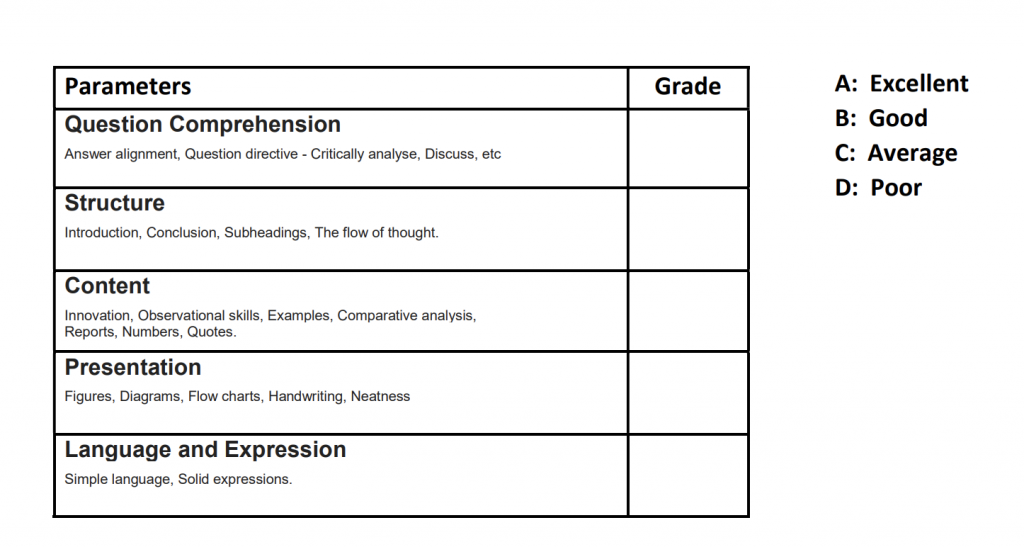
    Parameters we use to evaluate your answers

    4. Model Answers

    More than just simply providing information, our model answers cover all the aspects of a question and provide enriching points to the student. They also include:

    • For ‘thought-provoking/analytical’ type of questions, we’ll provide the best way to approach them.
    • Alternate introductions
    • Subheadings and categorization to enhance readability and answer structure.
    • Colour coding for main arguments, reports, data, scholars, etc.
      OTB – Out-of-the-box points for additional marks

    5. Civilsdaily’s Handholding

    You’ll be assigned to a special group on Civilsdaily’s Habitat, there you can interact with different mentors like Sajal Sir, Sukanya Ma’am, Parth Sir, Rahul sir, and others.

    6. Value-added material

    Current affairs magazines – Civilsdaily’s Magazines are the best in terms of comprehensive coverage, superb design, and high readability.

    Listicles and other relevant study material – Supplementary content provided will help cover multiple related questions.


    About Mentor:

    Sukanya Rana:

    Sukanya Ma’am has firsthand experience of 4 mains and 2 interviews with UPSC. In 2019, she scored 140 in ethics. She has also appeared in the State PCS interview. Before she worked as a Probationary officer at Canara Bank. Now at Civilsdaily, she heads the Mains program and is engaged in a core team of Civilsdaily.

    As per need, we will also involve our Civilsdaily core mentors like Swatantra sir, Parth sir, etc.

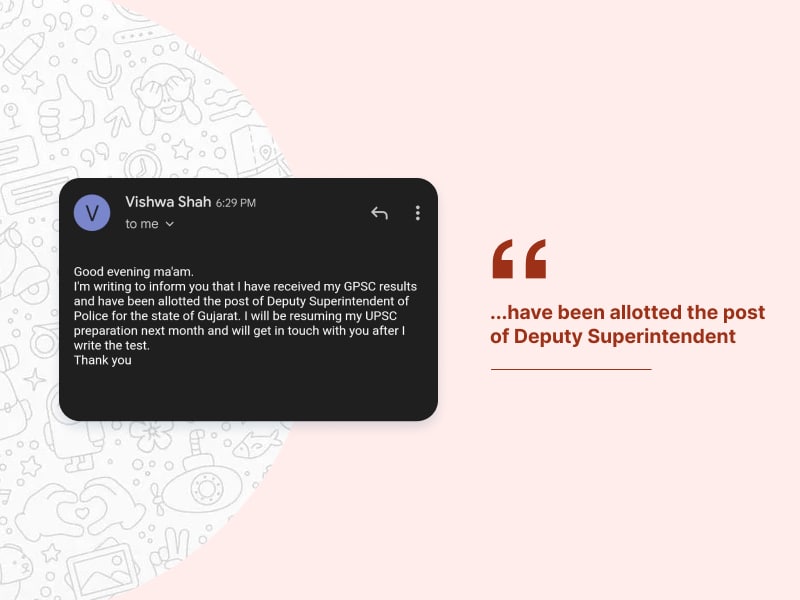

    This is what our students have to say…

    From Quora’s answer. (Read the full answer here)

  • India-Gulf Partnership: Opportunities and Challenges

    Gulf

    Central Idea

    • The recent meeting in Riyadh between Saudi Crown Prince Mohammed bin Salman and the national security advisers of the US, UAE, and India highlights India’s new possibilities in the Arabian Peninsula. The growing strategic convergence between India and USA in the Gulf and the opportunities and challenges for India in the emerging.

    India-US Gulf Partnership: Departure from Traditional Approaches

    • Shedding the Anti-Western Lens: The Nehruvian foreign policy of keeping a distance from the US in the Middle East is being discarded, and India is working with the US in the Gulf region.
    • Building New Partnerships: The formation of a four-nation grouping called I2U2, comprising the US, India, Israel, and the UAE, highlights the growing strategic convergence between Delhi and Washington in the Gulf.
    • Rejection of Ideological Taboo: India is shedding its ideological taboo of keeping its distance from Israel, and transforming its relations with the two Arabian kingdoms, Saudi Arabia and the UAE, into solid strategic partnerships.
    • Expansion of Partnerships: In addition to the US, India is beginning to work with France in the Gulf and the Western Indian Ocean.
    • Change in Perception: The US is leading the West to discard its pro-Pakistan bias and rethink the relationship between the Subcontinent and the Gulf.

    New Strategic Opportunities for India in the Gulf

    • Economic growth: The emerging Arabian Peninsula presents enormous new possibilities for India’s economic growth, given the massive financial capital and ambitious economic transformation of Gulf kingdoms like Saudi Arabia and the UAE.
    • Connectivity and security: India can play a productive role in promoting connectivity and security within Arabia and between it and abutting regions, including Africa, the Middle East, Eastern Mediterranean, and the Subcontinent.
    • Overcoming extremism: The engagement with the Gulf can also help India overcome the dangerous forces of violent religious extremism within the Subcontinent.
    • Elevating India’s standing: The new opportunities in Arabia and the emerging possibilities for partnership with the US and the West position India to rapidly elevate its own standing in the region.

    Challenges that India may face in pursuing strategic opportunities in the Gulf

    • Regional instability: The Gulf region is prone to political and security instability due to ongoing conflicts, political tensions, and the presence of non-state actors. This can pose a challenge for India in pursuing its interests in the region.
    • Dependence on hydrocarbons: India is heavily dependent on hydrocarbon imports from the Gulf, which makes it vulnerable to supply disruptions and price volatility. The shift towards renewable energy sources and reducing dependence on hydrocarbons may take time and require significant investments.
    • Competition with other powers: India faces competition from other major powers such as China, the United States, and European countries, who are also seeking to expand their strategic presence in the Gulf region.
    • Cultural differences: There may be cultural differences between India and some Gulf countries, which could pose challenges in developing strong partnerships and cooperation in areas such as security and counter-terrorism.
    • Domestic political constraints: Domestic political constraints, such as political opposition to closer ties with certain Gulf countries, could hinder India’s efforts to deepen its strategic engagement in the region.

    Way ahead: Steps is to continue building on the momentum

    • Strengthening economic ties: India should focus on deepening its economic relations with the Gulf countries, including diversifying its trade and investment portfolio, exploring opportunities in non-oil sectors, and leveraging its expertise in areas such as technology, healthcare, and renewable energy.
    • Enhancing security cooperation: India should work with its Gulf partners to enhance security cooperation, including counter-terrorism and intelligence sharing, and contribute to regional stability and security.
    • Promoting people-to-people ties: India should encourage greater people-to-people exchanges with the Gulf countries, including through cultural and educational exchanges, tourism, and sports.
    • Supporting regional initiatives: India should support regional initiatives aimed at promoting stability, connectivity, and development in the Gulf and the wider Middle East region.
    • Balancing relations with various actors: India should strive to balance its relations with various actors in the region, including the US, France, Saudi Arabia, the UAE, and Iran, and avoid getting embroiled in regional rivalries.

    Conclusion

    • The emerging India-US partnership in the Gulf region presents a new era of cooperation that has the potential to promote economic growth, connectivity, and security within the region. The partnership marks a departure from traditional approaches to the Middle East and has the potential to elevate India’s standing in the Gulf.

    Get an IAS/IPS ranker as your personal mentor for UPSC 2024 | Schedule your FREE session and get the Prelims prep Toolkit!

    Also Read:

    India and Saudi Arabia: Strengthening the Bond


  • Energy Transition to Renewables: Challenges and the Way Ahead

    Energy

    Central Idea

    • Access to affordable and reliable energy is essential for economic development and public services. However, the global energy market has been disrupted due to demand and supply-side factors leading to rising prices and disruptions in energy supply chains. As a result, countries with a high dependence on fossil fuels, including India, faced a significant challenge.

    The correlation: Energy availability and economic development

    • The correlation between energy availability and economic development is that energy availability and accessibility are essential inputs for many public services, and securing affordable and reliable access to energy remains a central political and economic imperative for almost all governments.
    • Energy availability and accessibility are necessary for economic growth and development, and a lack of access to energy can hamper the growth of industries, limit productivity, and impede social development.

    Energy

    Factors that contributed to the Global Energy Crisis

    • Demand and Supply-side Factors: There have been disruptions in the oil and gas supply chains due to the ongoing Russia and Ukraine war. Additionally, energy prices came under pressure due to a sudden rise in demand resulting from abnormally high temperatures and associated heatwaves across the globe. These factors inflated the international price of oil and natural gas.
    • Dependence on Finite Fossil Fuels: Fossil fuels account for over 80% of global energy requirements and over 64% of electricity generation worldwide. Additionally, most countries are net importers of fossil fuels, and thus prone to adverse supply shocks resulting from various geopolitical and economic events.
    • Overdependence on Fossil Fuels: Many countries turned to coal to meet their energy needs, while those already using coal intensified its exploitation, putting immense pressure on the coal market.
    • Increased Cost of Electricity: The increased cost of electricity due to a higher usage of fossil fuel-based sources imposed a heavy burden on low-income households since they spend a larger share of their incomes on electricity and gas.
    • Widespread Power Outages: Widespread power outages in many countries due to disruptions in electricity supply threw lives out of gear.
    • Dependence on Imported Fossil Fuels: Europe, for instance, faced a challenging situation due to its historic high dependence on imported gas from Russia to meet its energy requirements.
    • Climate Change: Fossil fuels account for 75% of global greenhouse gas emissions and around 90% of carbon dioxide emissions. Climate events, such as floods and droughts, cause immense human and economic loss.

    Impact on countries

    • High energy prices: The increased cost of electricity due to a higher usage of fossil fuel-based sources imposes a heavy burden on low-income households since they spend a larger share of their incomes on electricity and gas.
    • Power outages: Widespread power outages in many countries due to disruptions in electricity supply throw lives out of gear. For instance, Bangladesh witnessed a countrywide blackout as many gas- and diesel-based power plants, responsible for approximately 85 percent of the country’s electricity generation, were forced to shut down due to fuel shortages.
    • Slowdown in economic growth: Increased prices and disrupted supply severely impacted those countries with a high dependence on fossil fuels, particularly its import, and led to a slowdown in global economic growth, forcing some countries and regions into recession.
    • Environmental degradation: Overdependence on fossil fuels impacts countries adversely in the form of air and water pollution and soil degradation, while also being a significant cause of climate change.
    • Foreign exchange reserves: The dependence on fossil fuels also affects countries’ foreign exchange reserves, as the fluctuations in prices of fossil fuels affect their import bills and balance of payments.
    • Revenue loss: Many regions and their economies, especially in developing countries, depend on incomes derived from fossil fuel-based employment, such as mining, power generation, transmission, and distribution and storage. In many regions, governments are also dependent on the revenue generated from fossil fuels to enhance infrastructure that enables local communities to expand and diversify their livelihood options.

    Challenges in way of transition to renewable sources of energy

    • Mobilizing capital: While the cost of clean energy is declining, many clean energy technologies require high upfront investment costs, which may be beyond the capacities of most developing countries. Additionally, international support for developing countries is lacking, making it difficult for them to transition to renewable energy sources without supportive international actions.
    • Ensuring a just transition: There is a need to ensure decent work opportunities and social support for people likely to lose their livelihoods in the process of transitioning to low-carbon and renewable-based economies. Many people are employed in the fossil fuel industry globally, and there is a risk of destabilizing local economies during the transition process.
    • Technical challenges: The transition to renewable energy sources may require significant upgrades to infrastructure, including energy storage and transmission systems, which can be costly.
    • Policy and regulatory challenges: The transition to renewable energy sources requires significant policy and regulatory changes, including reforms to subsidy systems, pricing mechanisms, and energy markets.
    • Reliability and intermittency of renewable sources: Unlike fossil fuels, renewable energy sources are often intermittent, making it difficult to guarantee a stable supply of electricity. This may require investments in energy storage and backup power systems to ensure reliable supply.
    • Public acceptance: The transition to renewable energy sources may face resistance from some stakeholders, including those who are reliant on fossil fuels for their livelihoods or those who are concerned about the visual and environmental impacts of renewable energy infrastructure.

    Energy

    Way ahead: Addressing these challenges

    • Mobilizing capital: Developed countries need to fulfill their commitment to providing climate finance to developing countries. Innovative financial instruments such as green bonds and blended finance could also be used to attract private investment.
    • Ensuring a just transition: Governments need to develop comprehensive plans that protect workers and communities affected by the shift to renewable energy. This could involve retraining programs, investment in new industries, and social safety nets.
    • Investing in research and development: Governments, international organizations, and the private sector need to invest in research and development to drive down the costs of renewable energy technologies and improve their efficiency.
    • Promoting energy efficiency: Governments and businesses need to prioritize energy efficiency measures such as retrofitting buildings and improving industrial processes to reduce energy demand and costs.
    • Accelerating deployment of renewable energy: Governments need to set ambitious targets for renewable energy deployment and create policy frameworks that incentivize investment in clean energy.
    • Building energy infrastructure: Governments need to invest in building the infrastructure needed to support the deployment of renewable energy, including grid upgrades, energy storage, and electric vehicle charging stations.
    • Promoting international cooperation: The transition to renewable energy requires international cooperation, especially between developed and developing countries. Developed countries can support developing countries through technology transfer, capacity building, and financial support.

    Facts for prelims

    Distributed Renewable Energy (DRE)

    • DRE refers to the generation and distribution of electricity from renewable energy sources, such as solar, wind, hydro, geothermal, and biomass, through small-scale, decentralized systems.
    • These systems are often installed in remote or rural areas where it is difficult or expensive to connect to a centralized power grid.
    • DRE systems can range from individual rooftop solar panels to small-scale wind turbines, mini-hydro systems, and biomass generators.
    • They are typically designed to serve a single household or community, rather than a large urban or industrial center.
    • DRE systems are also known as off-grid or mini-grid systems, and they can be standalone or connected to a larger power grid.

    Conclusion

    • The transition towards renewables is an attractive option for countries to hedge against the risks associated with fossil fuel-based energy sources. However, this requires access to affordable finance and international support to enable a just transition through on-the-job retraining programs, infrastructure investments, and so on. Access to affordable and reliable energy is crucial for sustainable economic development.

    Get an IAS/IPS ranker as your personal mentor for UPSC 2024 | Schedule your FREE session and get the Prelims prep Toolkit!

    Also Read:

    Lessons Learned: Transition To A Self-reliant Clean Energy System


  • Rebuilding the Idea and Reality of Manipur

    Manipur

    Central Idea

    • The recent communal riots in Manipur have led to unprecedented human displacement, loss of lives and property, and destruction of the geopolitical foundations of Manipur beyond any immediate repair. To secure future stability and peace, there is a need to confront the truth about the nature of these riots and their principal cause and take adequate measures to ensure institutional accountability, recognition, and accommodation of distinctive rights and identities.

    What is the principal cause?

    • The principal cause of the riots in Manipur is the failure of the state government to recognize and accommodate the territorial rights and identities of the different communities in the state.
    • The state’s aggressive integrationist project, which seeks to dissolve tribal land rights in the valley areas, has been a major source of tension between the Meitei and tribal communities.
    • Additionally, the lack of functional sub-state asymmetrical institutions and the weakness of the state-society model have contributed to the instability and ethnic security dilemma in the state.

    Who are the Meiteis?

    • Largest community: The Meiteis are the largest community in Manipur.
    • Community’s Language: They speak the Meitei language (officially called Manipuri), one of the 22 official languages of India and the sole official language of Manipur State.
    • Geographical Distribution: Manipur is geographically divided into the Imphal Valley and the surrounding hills. The Imphal Valley is dominated by the Meitei community, which accounts for more than 64% of the population. The hills, which comprise 90% of Manipur’s geographical area, are inhabited by more than 35% recognized tribes, which are largely Christians.
    • Major Festivals: festivals of meiteis are Lai Haraoba, Cheiraoba, Yaosang among others. Also, The Manipuri martial art Thang-ta had its origin in the Meitei knights during the king’s rule.

    Need for recognition and accommodation: Illustration

    • Recognition of territorial rights: The stability and integrity of a pillarized society like Manipur can only be secured through recognition of territorial rights and identities of all communities. This means recognizing the land rights and heritage of the Meiteis and the tribals in the hills.
    • Substantive accommodation: In addition to recognition, it is necessary to provide substantive accommodation to different communities. This can involve granting tribal communities more autonomy in decision-making and representation in government.
    • Genuine dialogue: Accommodation requires genuine dialogue between communities that is based on mutual respect and a willingness to compromise. This is crucial for building trust and reducing tensions.
    • End of aggressive integrationist projects: The idea that one community should dominate others must be replaced with a more inclusive approach that values diversity and recognizes the rights of all communities.
    • Working institutions: Accommodation requires that institutions function effectively and equitably. The weak state-society model in Manipur needs to be strengthened and institutional trust and legitimacy must be restored.
    • Respect for differences: Recognition and accommodation require a respect for differences and a commitment to finding common ground. This can be facilitated by an appreciation of the historical pedigree of extant sub-State constitutional asymmetry and a willingness to address the concerns of all communities.

    Way ahead: Steps to promote State-building

    • Strengthening state institutions: The state government should focus on building strong and effective institutions that can deliver basic services to citizens, maintain law and order, and protect the rights of all communities. This could involve reforming the police force, improving the efficiency of the bureaucracy, and strengthening the judiciary.
    • Promoting inclusivity: The state government should ensure that all communities, including tribal and non-tribal groups, have equal access to government services and are included in the political process. This could involve implementing affirmative action policies and promoting dialogue between different communities.
    • Improving infrastructure: The state government should invest in improving infrastructure, including roads, water supply, and electricity, to promote economic growth and development. This could help reduce poverty and inequality and improve the quality of life for all citizens.
    • Addressing grievances: The state government should address the grievances of different communities, including land rights issues, to build trust and promote peace. This could involve setting up a judicial commission to investigate past violence and ensure accountability for those responsible.
    • Building regional partnerships: The state government should work with other states in the region and the central government to promote regional cooperation and address common challenges. This could involve promoting trade and investment, sharing resources, and collaborating on regional security issues.

    Facts for prelims: Major tribes of Manipur

    • Naga Tribes: The Nagas are one of the largest and most prominent tribes in Manipur. They are primarily concentrated in the hill areas of the state, and are known for their distinct culture and traditions.
    • Kuki Tribes: The Kukis are another major tribe in Manipur, and are also primarily concentrated in the hill areas. They are known for their love of music and dance, and have a rich cultural heritage.
    • Meitei Tribe: The Meitei are the dominant community in the valley areas of Manipur, and have their own distinct language and culture. They are known for their love of traditional sports such as Thang Ta (a form of martial arts) and Sagol Kangjei (a game similar to polo).
    • Hmar Tribe: The Hmars are a smaller tribe in Manipur, but are still an important part of the state’s cultural fabric. They are known for their traditional dance forms, such as the Cheraw and Chheihlam
    • Zomi Tribe: The Zomis are another smaller tribe in Manipur, but are spread across several states in Northeast India. They are known for their love of music and dance, and have a rich cultural heritage.
    • Pangal Tribe: The Pangal tribe, also known as the Manipuri Muslims, is a minority community in Manipur. They have a distinct culture and language and are primarily concentrated in the valley region.
    • Anal Tribe: The Anal tribe is a smaller ethnic group in Manipur and is primarily concentrated in the hill areas. They have a unique culture and are known for their traditional dress, dance, and music.

    Conclusion

    • Serious and concerted inter-community reconciliation efforts must be initiated immediately if Manipur as an inclusive idea and a geopolitical space of accommodation were to be revived. Any prolonged conflagrations will be mutually destructive and self-defeating. The government must adopt even-handedness in its dealing with diverse communities and must not cave into the pressure of the majority in the future.

    Get an IAS/IPS ranker as your personal mentor for UPSC 2024 | Schedule your FREE session and get the Prelims prep Toolkit!

    Also Read:

    Private: Manipur Ethnic Violence
  • Nikaalo Prelims Spotlight || Fundamental Rights/ DPSP/duties, Federal vs Unitary Features, Parliament/ Legislature, Supreme Court/ High Court


    Dear Aspirants,

    This Spotlight is a part of our Mission Nikaalo Prelims-2023.

    You can check the broad timetable of Nikaalo Prelims here

    Session Details

    YouTube LIVE with Parth sir – 7 PM  – Prelims Spotlight Session

    Evening 04 PM  – Daily Mini Tests

    Join our Official telegram channel for Study material and Daily Sessions Here


    10th May 2023

    Fundamental Rights/ DPSP/duties, Federal vs Unitary Features, Parliament/ Legislature, Supreme Court/ High Court

    Fundamental Rights

    Fundamental rights are given in Part III of the Indian Constitution from Articles 12 to 35. They are an essential feature of the Indian Constitution. These rights are necessary for the peaceful and dignified existence of the country’s citizens. The Indian Constitution that deals with the people’s fundamental rights are often described as the Magna Carta of the Indian Constitution.

    Fundamental rights are called fundamental because the Constitution guarantees them as its fundamental laws. The state cannot take away these rights from any individual. That said, there can be certain limitations to these rights. The Constitution of the United States inspires the Fundamental Rights in the Indian Constitution.

    The Fundamental Rights given by the Indian Constitution can be classified as:

    • Right to Equality

    The Fundamental Rights from Articles 14 to 18 deal with the right to equality. These rights ensure that everyone is treated equally without discrimination and equal employment opportunities.

    • Right to Freedom

    The rights from Articles 19 to 22 touch upon the concept of the right to freedom. Provisions in these articles deal with different kinds of personal freedom, choices, and dignity.

    Article 19 gives the freedom of six rights that include the right to free speech and expression, freedom of assembly, freedom of forming an association, freedom of movement, freedom of residence, and freedom of choosing any profession. 

    • Right Against Exploitation

    Articles 23 and 24 are provided from the concept of rights against the exploitation of individuals. These rights give the provisions to safeguard the people from the evils of human trafficking and child labour.

    • Right to Freedom of Religion

    The rights mentioned in Articles 25 to 28 give the people the freedom to practice, profess, and propagate their religious beliefs. The Indian Constitution was made with an idea of a secular state. However, unlike Western democracies, the Indian Constitution doesn’t isolate religion. Rather, it provides for the equal treatment of all religions.

    • Rights for the Minorities

    Articles 29 and 30 deal with minority rights. These rights provide for the protection of the language and culture of minorities and give them the freedom to manage educational institutions.

    • Right Relating to the Constitutional Remedies

    Often considered an essential right given to the people, Article 32 of the Constitution provides the right to move the Supreme Court to enforce any fundamental rights.

    Note: Article 31 of the Indian Constitution, which dealt with the Right to Property, was deleted as one of the Fundamental Rights by the 44th Constitutional Amendment Act of 1976. Following the amendment, the Right to Property was made legal and incorporated in Article 300-A.

    The Directive Principles of State Policy (DPSPs)

    The Directive Principles of State Policy or simply DPSPs are incorporated in Part IV of the Indian Constitution. The DPSPs are given from Article 36 to Article 51 in the Constitution.

    The Directive Principles refer to the ideals and principles that the state must consider while forming a policy or enacting a law in the legislative process.

    The Irish Constitution inspired the concept of DPSPs; however, the Irish Constitution was inspired by the Spanish Constitution. The articles dealing with the directive principles deal with various economic, social, and political principles.

    Some essential features of DPSPs are as follows:

    • The Directive Principles work as instructions for the state in making policies and enacting laws; in this sense, they are essential to the legislative system.
    • The DPSPs are non-justiciable and can’t be challenged in courts for their violation.
    • The state cannot be compelled to enforce the DPSP.
    • The courts can use DPSPs to determine the constitutional validity of a law of parliament.

    The Fundamental Duties

    The fundamental duties were not part of the original Constitution; it was only in 1976 when the Parliament of India found it necessary to add fundamental duties into the Constitution of India. 

    By the amendment of the Constitution in 1976, a new part was added in the Constitution as Part IV A. This part consists of only one article: Article 51 A. The idea of fundamental duties comes from the former USSR’s Constitution.

    Here are some key features of the Fundamental Duties:

    • There are different kinds of duties, such as moral and civic duties.
    • The Fundamental Duties are confined to the citizens of India only, unlike fundamental rights and DPSPs
    • Fundamental Duties are non-justiciable.
    • There is no legal provision or sanctions for the violation of fundamental duties.

    Federal Features – Indian Constitution

    The federal features of the Constitution of India are given below:

    Written Constitution:

    Features of the Indian Constitution is not only a written document but also the longest constitution in the world. Originally, it included a Preamble, 395 articles (22 parts), and 8 schedules.

    Dual Polity:

    The constitution establishes a dual polity that includes the union at the periphery. Each is endowed with sovereign powers to be exercised in the field assigned to them respectively by the Constitution.


    Bicameralism:

    The constitution provides for a bicameral legislature in which an upper house (Rajya Sabha) and a lower house (Lok Sabha). Rajya Sabha represents the states of the Indian Union, whereas The Lok Sabha represents the people of India as a whole.

    Division of Powers:

    The Constitution divided the powers between the Center and the states in terms of the Union List, State List, and Concurrent List in the Seventh Schedule.

    Supremacy of the Constitution:

    The Constitution is the supreme law of the country. The laws made by the Center and the states should be in conformity with Provision. Otherwise, they may be declared invalid by the Supreme or High Court through its power of judicial review.


    Rigid Constitution:

    The division of powers established by the Constitution as well as supremacy of the constitution can be maintained only if the method of its amendment is rigid. It is necessary for both houses to agree to amend the constitution.

    Independent judiciary:

    The constitution establishes an independent judiciary headed by the Supreme Court for two purposes: one, to protect the supremacy of the constitution, and two, to settle the disputes between the Centre and states or between the states.

    Unitary features – Indian Constitution

    Besides the above federal features, the Indian constitution also possesses the following unitary features:

    Strong Centre:

    The division of powers is in favor of the center and unequal from a federal point of view. Firstly, the Union list contains more subjects than the state list, secondly, the more important subjects have been included in the union list and the Centre has overriding authority over the concurrent list.

    Single constitution:

    The constitution of India embodies not only the constitution of the Centre but also those of the states. Both the Centre and the States must operate within this single frame.

    States not indestructible:

    Unlike in other federations, the states in India have no right to territorial integrity. The parliament can change the area, boundaries, or name of any state.

    Emergency provisions:

    The emergency provisions are contained in Part XVIII of the Constitution of India, from Articles 352 to 360. In the emergency provisions, the central government becomes all-powerful and the states go into total control of the Centre.

    Single citizenship:

    Single citizenship means one person is the citizenship of the whole country. The constitution deals with citizenship from Articles 5 and 11 under Part 2.

    All India services:

    In India, there are all India services [IAS, IPS and IFS] which are common to both the Centre and the states. These services violate the principle of federalism under the constitution.

    Appointment of governor:

    The governor is appointed by the president. He also acts as an agent of the Centre. Through him, the Centre exercises control over the states.

    Integrated election machinery:

    The election commission conducts elections for central and state legislatures. But the Election commission is constituted by the president and the states have no say in this matter.

    No equality of state representation:

    The states are given representation in the upper house on the basis of population. Hence, the membership varies from 1 to 31.

    Integrated Judiciary:

    The term Integrated Judiciary refers to the fact that rulings made by higher courts bind lower courts. The Supreme Court of India incorporates all lower courts, from the Gram Panchayat to the High Courts. The Supreme Court is at the very top.

    Integrated Audit Machinery:

    The Comptroller and Auditor-General of India has an organization that is run by officials from the Indian Audit and Account Services, a central service that is responsible for not just the Union Government’s accounts and auditing, but also the accounts and auditing of the States.

    Veto Over State Bills:

    The governor has the authority to hold certain sorts of laws passed by the state legislature for presidential consideration. The President has the authority to refuse to sign such bills not only in the first instance but also in the second. As a result, the President has absolute (rather than suspensive) veto power over state legislation. However, in the United States and Australia, states are independent within respective fields, and no such reservation exists.


    Tabular Comparison of Parliament and State Legislature

    Union Parliament State Legislatures
    Bicameral  Mostly unicameral – only 6 states are bicameral
    Article 79 to122 in Part V of the Constitution Articles 168 to 212 in Part VI of the Constitution
    If a bill is introduced in a House, and it passes it, then the other House can:


    1. Pass the bill as it is.
    2. Reject the bill altogether.
    3. Pass the bill with some modifications and return it to the first House for reconsideration.
    4. Nothing is done to the bill for 6 months, which means both Houses are in disagreement.

    In this case, a joint sitting of both the Houses is convened and made, to break the constitutional deadlock.

    Note: In the case of Money Bills, which are to be introduced only in the Lok Sabha, the Rajya Sabha has restricted powers.

    The Legislative Councils (LC) have only advisory powers by and large.


    They have lesser powers when it comes to law-making.

    If a bill is introduced in the LC, which is passed by it, and it goes on to the Assembly:

    1. The Assembly rejects the bill.
    2. It passes the bill with some modifications which are unacceptable to the LC.

    In both the above cases, the bill comes to an end.

    However, if the bill originates in the Assembly, and it is either rejected or passed with modifications not acceptable by the LC, it does not come to an end.

    There is no provision for a joint sitting of the Council and the Assembly. In the case of a disagreement, the decision of the Assembly is deemed final.

    Note: Money bills can originate only in the Legislative Assembly.

    Members: Lok Sabha: 552 (Max.)


                     Rajya Sabha: 250 (Max.)

    Members: Legislative Assembly: Between 40 and 500


    Legislative Council: Not more than one-third of the membership of the State Legislative Assembly, and cannot be under 40.

    Election to the Rajya Sabha:


    Members are elected by the elected members of the State Legislative Assemblies by means of proportional representation by means of a single transferable vote.

    Election to the Legislative Councils:


    Members are elected by five different constituencies through a process of the single transferable vote system.

    1. ⅓ of the members are elected by the local authorities’ representatives (Gram Panchayats, Municipalities, Block Parishads, etc.)
    2. ⅓ of the members by the MLAs.
    3. 1/12 of the members are elected by the teachers (of secondary schools, colleges, and universities) in the state.
    4. 1/12 are elected by the graduates in the state.
    5. The remaining 1/6th are nominated by the Governor from persons having experience or knowledge in the fields of science, art, literature, social service, or cooperative movement.

    The Supreme Court of India

    The Supreme Court of India replaced the colonial era Federal Court of India, established in 1937 under the Government of India Act of 1935 and worked as the highest court of British India. In the constitution, provisions related to the organisation, jurisdiction, powers, procedures, independence, etc., of the Supreme Court are given from Article 124 to Article 147.

    Presently, the Supreme Court of India has 31 judges, including the Chief Justice of India.

    Judges of the Supreme Court

    The President of India appoints the judges to the Supreme Court; however, the Chief Justice of India is appointed by the President of India with consultation with the Supreme Court collegium. However, the President must consult the Chief Justice of India to appoint other judges to the Supreme Court.

    The Judiciary in India follows a collegium system for the appointments of the judges; in this system, a group of sitting judges recommends the appointments of the eligible candidates as the judge of the Supreme Court.

    Chief Justice of India

    The Chief Justice of India is the highest judicial officer in India. He/she is usually the senior-most judge of the Supreme Court. After the inauguration of the Supreme Court in 1950, traditionally, the senior-most judge of the Supreme Court has been appointed as the Chief Justice. However, in 1973 and 1977, the collegium recommended judges superseding the senior judges.

    Qualifications

    To be appointed as a judge of the Supreme Court of India, you must satisfy the following qualifications:

    1. A person appointed as a judge of S.C must be a citizen of India.
    2. A person appointed as a judge of S.C must have been a judge of a High Court of any Indian state for at least 5 years.
    3. A person appointed as a judge of S.C must have been an advocate of a High Court of any Indian state for at least 10 years.
    4. A person to appoint as a judge of S.C must be a distinguished jurist in the opinion of the President of India.

    The constitution of India does not provide for a minimum age requirement for the appointment as a judge of the Supreme Court.

    High Court of India

    The Indian judiciary system has followed a single integrated judiciary system; the High Court operates below the Supreme Court. Each state of India is provided with a High Court by the constitution of India. The functioning of High Courts is given under Article 214 to Article 231.

    All the High Courts consist of one chief justice and several other judges. The President determines the number of judges of the High Court; the President can change the number of judges in any High Court as necessary.

    Judges of the High Courts

    The President of India appoints the judges to the High Courts across the states. The President of India appoints the chief justice of a High Court after consulting the chief justice of India and the Governor of the respective state. In the appointment of other judges to the high court, the President of India consults the Chief Justice of the Supreme Court of India.

    When two or more states share a High Court (e.g., Haryana and Punjab), the governors of all concerned states are consulted by the President of India.

    Qualifications

    For a person to be appointed as a judge in any High Court of any Indian state, he/she shall satisfy the following qualifications:

    1. For a person to be appointed as a judge of H.C, he/she shall be a citizen of India.
    2. To become a judge of H.C, he/she should have held a judicial office for at least 10 years.
    3. To be appointed as a judge, he/she should have advocated the High Court for 10 years.

    The constitution of India does not provide for a minimum age requirement for appointment as a judge of the high court. The constitution also doesn’t provide for the President to appoint a jurist as the judge of a high court.


  • [Burning Issue] Western Media’s Bias Against India

    india

    Context

    • Recently, A federal U.S. commission, Commission on International Religious Freedom (USCIRF) has urged the Biden administration to impose targeted sanctions on Indian Government agencies and officials responsible for “severe violations” of religious freedom in the country by freezing their assets.
    • In this context, this edition of Burning Issue will talk about this issue and the overall propaganda of West against India.

    About USCIRF and its report

    • The United States Commission on International Religious Freedom (USCIRF) is an independent U.S. federal government agency created by the 1998 International Religious Freedom Act (IRFA).
    • USCIRF monitors the universal right to freedom of religion or belief (FoRB) abroad; makes policy recommendations to the President, Secretary of State, and US Congress; and tracks the implementation of these recommendations. 
    • The USCIRF report assesses the status of religious freedom around the world.
    • It provides a comprehensive analysis of the state of religious freedom in countries across the globe, highlighting issues of concern and making recommendations for action by the US government.
    • Its report is an important tool for raising awareness of violations of religious freedom and advocating for greater protection of this fundamental human right.

    More on the recent report

    • In its annual report on religious freedom, the USCIRF asked the U.S State Department to designate India as a “country of particular concern” on the status of religious freedom along with several other nations.
    • The USCIRF also recommended to Congress to raise the issue of religious freedom during U.S.-India bilateral meetings and hold hearings on it.
    • The USCIRF has been making similar recommendations to the State Department since 2020, which have not been accepted. The recommendations of USCIRF are not mandatory for the State Department.

    What is religious freedom?

    • Freedom of religion or belief is an expansive right that includes the freedoms of thought, conscience, expression, association, and assembly. 
    • Inherent in religious freedom is the right to believe or not believe as one’s conscience leads, and live out one’s beliefs openly, peacefully, and without fear. 

    Religious Freedom in India

    Article 25: Freedom of Religion

    • Article 25 guarantees the right to freedom of religion to all citizens of India. It ensures that every person is free to practice, profess, and propagate the religion of their choice. However, this right is subject to certain restrictions, such as public order, morality, and health. The government also has the power to regulate economic, financial, political, or other activities that are associated with religious practices.

    Article 26: Freedom to Manage Religious Affairs

    • Article 26 guarantees every religious denomination the right to manage its own affairs in matters of religion. This includes the right to establish and maintain institutions for religious purposes, and the right to manage its own property. However, this right is subject to public order, morality, and health, as well as to other provisions of the Constitution.

    Article 27: Freedom from Taxation for Religious Purposes

    • Article 27 prohibits the state from compelling any person to pay taxes for the promotion or maintenance of any particular religion or religious institution. This means that the state cannot use public funds to support or promote any particular religion, nor can it force individuals to financially support religious institutions.

    Article 28: Freedom from Religious Instruction in Educational Institutions

    • Article 28 guarantees the right of all religious denominations to establish and maintain their own educational institutions. It also prohibits the state from providing any religious instruction in public educational institutions funded by the state. However, students attending such institutions are free to receive religious instruction from outside sources, as long as it does not interfere with the educational activities of the institution.

    Reports’ Allegations against India

    Policies

    • It is alleged that the Indian government at the national, state, and local levels promoted and enforced religiously discriminatory policies, including: Laws targeting religious conversion, Interfaith relationships, Ban over wearing of hijabs and cow slaughter
    • This has negatively impacted Muslims, Christians, Sikhs, Dalits, and Adivasis citizens of the country.

    Laws of so-called ‘Suppression

    • The report also alleges that the national government continued to suppress critical voices, particularly of religious minorities and those advocating on their behalf through Surveillance, Accusations of Sedition, Demolition of Property, Detention under the Unlawful Activities Prevention Act (UAPA), Targeted banning of NGOs ex. Missionaries of Charity under the Foreign Contribution Regulation Act (FCRA).
    • The continued enforcement of discriminatory laws facilitated a culture of impunity for widespread campaigns of threats and violence by mobs and vigilante groups.

    India’s response

    • India has slammed USCIRF for “misrepresenting” facts and described it as an “organisation of particular concern”.
    • The Indian government rejected the biased and inaccurate comments.
    • Foundation of Indian and Indian Diaspora Studies (FIIDS) slammed USCIRF for its biased report and failure to acknowledge the cultural and economic significance of cows to Indians.

    History

    • Ever since India gained independence, the Western media have painted a negative picture of the country. Indeed, many did not expect India to last long as a nation. There are countries that are failed states and countries which are engulfed in civil wars, but they do not get much of a mention from British and other Western media. 

    Previous cases of such allegations

    • In February 2020, a major daily national declared the North Delhi riots were called the riots a “Hindu nationalist rampage”
    • Also, India is being frequently labelled as ‘Intolerant Democracy’ or depicted as a poor nation. Recent example is the Cartoon from a German newspaper mocking Indian Railway’s infrastructure developments.
    • The BBC Documentary on PM Modi and 2002 Gujarat riots was also a part of this targeting by western media.

    Why such reports often falsely target India?

    • Sensationalized news: Negative news stories tend to receive more attention because they can be more emotionally engaging and impactful. For example, a study found that negative news stories receive significantly more engagement on social media than positive news stories.
    • Political biases: Media outlets may have different political affiliations or biases that shape their coverage of certain countries or events. For example, some media outlets may have a pro-Western bias and view India as a less developed or “exotic” country. Additionally, some outlets may have a negative view of Indian government policies or leadership, which can influence their reporting.
    • Complex challenges: India is a large and diverse country with many challenges, including poverty, inequality, and political instability, which can be difficult to report on accurately and without bias.For example, India has one of the highest rates of income inequality in the world, with the top 1% of the population holding nearly 60% of the country’s wealth. Additionally, India has a history of caste discrimination and violence, which can be challenging to report on accurately and sensitively.
    • Differing perspectives: Different media outlets may have different perspectives on issues related to India, which can lead to differing coverage.For example, some outlets may focus on India’s economic growth and potential as a major player in the global economy, while others may highlight the country’s challenges and inequalities.Additionally, media outlets from different countries may have different cultural or historical perspectives on India that influence their reporting.
    • Lack of objectivity: There have been instances in the past where these reports have been criticized for being one-sided and lacking objectivity.
    • US lobby against everyone: It is important to note that reports like USCIRF’s are based on the organization’s own assessments.
    • Inherent bias against India: Such allegations are prevalent ever since India attained its Freedom.
    • Self-proclaimed father of democracy: US has infamous for selectively promoting democracy and human rights, and for supporting authoritarian regimes that align with its strategic interests.
    • Anti-regime: Such reports often overlook the efforts made by the present regime in India towards promoting religious tolerance and communal harmony.

    Way forward

    • Urgent action: India needs to take prompt and necessary steps to address religious freedom issues and take everyone’s faith in the government and democratic process.
    • Nuanced understanding: International organizations and foreign governments must make a conscious effort to understand the complexities of India’s social, political, and economic landscape before making any recommendations or issuing reports.
    • Avoid sweeping generalizations: It is important to avoid sweeping generalizations and presenting a one-sided view of the situation, which can be detrimental to India’s reputation and lead to misunderstandings.
    • Self-reflection by the US: The US must address its own issues related to religious freedom and human rights violations, and not just sermon other countries.

    Countering western media’s allegations

    • India’s historical diversity and pluralism: India has a long history of diversity, pluralism, and peaceful coexistence among different communities.
    • Constitutional guarantees: The Constitution guarantees fundamental rights to all citizens, regardless of their religion, caste, or creed.
    • Media as a strong pillar: The country has a vibrant democracy and a free and independent media that regularly scrutinizes the government and its policies. This eliminates the scope for anyone’s oppression.
    • Nation-building: All communities have contributed significantly to the country’s cultural and social fabric. Success of India is often unwelcomed by the US. People should not fall prey to foreign propaganda.

    Conclusion

    • It’s important to approach news coverage critically and evaluate the sources and biases behind the stories. This can involve reading articles from a variety of sources, fact-checking claims, and considering the cultural and historical context of the news.
    • EAM S Jaishankar has rightly summarized west’s biasness, “Problem of Europe is world’s problem but problem of world is not problem of Europe”.

    Get an IAS/IPS ranker as your personal mentor for UPSC 2024 | Schedule your FREE session and get the Prelims prep Toolkit!

  • How to minimise the threat from IEDs?

    Central Idea: The article discusses various measures that need to be taken to minimise errors in anti-terrorist operations. This has been particularly discussed after recent incidents of IED (improvised explosive device) explosions.

    What are IED (Improvised Explosive Device)?

    • IEDs are homemade explosive device made from commonly available materials such as fertilizer, diesel fuel, and metal scraps.
    • They are typically used as a form of guerrilla warfare by non-state actors such as terrorists, insurgents, and other militant groups.

    Why discuss IEDs?

    • IEDs are a popular choice for such groups as they are relatively easy to construct, difficult to detect, and can be triggered by a range of mechanisms including pressure plates, remote control, and tripwires.
    • IEDs are often responsible for a large number of casualties and fatalities in conflict zones.

    Disadvantage faced by Indian armed forces

    • The security forces are dealing with an enemy who is faceless, unidentifiable, and hidden among the people.
    • Security personnel can open fire only in self-defence, not on apprehension, giving militants the ‘first mover advantage’.
    • The reaction or the response time available for “Immediate Action (IA) or Counter Ambush drill” is a few seconds.
    • All standard operating systems and procedures, technological measures, etc., are directed towards the identification and detection of IEDs/landmines and to avoid being caught in them.

    Preventing IED Fatalities

    (1) Minimizing Errors

    • Avoid vehicle travel: To avoid casualties/fatalities in Maoist territories, vehicle travel should be avoided.
    • Foot patrolling: Routine operations like area domination, cordon-and-search, long-range patrolling, ambush-cum-patrolling should only be undertaken on foot.
    • Route security: If vehicle travel is essential, the onward and return journeys should never be by the same route, nor undertaken during the daytime.
    • Smaller convoys: Security forces should travel in a convoy of a minimum of two to three vehicles, maintaining a distance of at least 40 to 50 meters between them.

    (2) Camouflage and Protective Gear

    • In certain war zones, vehicular deployment is inevitable.
    • Security forces should be equipped with appropriate protective gear and their vehicles should be equipped with V-shaped and armour-plated hull, blast-resistant technology, and proper sandbagging to minimize damage in the event of an explosion.

    (3) Making a Region Safe for Travel

    • Detection: Rigorous and regular implementation of various detection methods, such as metal detectors, ground-penetrating radar, and trained sniffer dogs, to locate and clear landmines and IEDs, is essential.
    • Multi strata surveillance: This carried out through drones and road opening parties equipped with UGVs (Unmanned Ground Vehicles) can detect the presence of terrorists and pick tell-tale signs of a likely ambush.
    • Mapping of such areas: Areas known or suspected to contain landmines or IEDs can be mapped, and contingency plans prepared for them.

    (4) Intelligence Inputs and Investigation

    • Confidence building: Winning of hearts and minds is essential to gather actionable intelligence.
    • Diligent and scientific investigation: Establishment of linkages through meticulous collection and marshalling of evidence, framing of chargesheets, followed by speedy trials and conviction, serve as a strong deterrent to terrorism.

    Policy measures required

    • Regulating explosives: Legislative measures are required for the mandatory addition of odoriferous chemicals and/or biosensors to explosives used in industry and mining for their easy detection during transport.
    • Collaboration with international organizations: Other countries have taken several counter-IED measures, such as the U.S. setting up the Joint Improvised-Threat Defeat Organization and spending about $20 billion on counter-IED measures since 2005.
    • Overarching agency: It is needed under the Ministry of Home Affairs to coordinate the efforts of both the GoI and the states, and to provide legislative, technological, and procedural support to law enforcement agencies.

    Conclusion

    • It is crucial for governments to take necessary measures to protect their security personnel and prevent casualties caused by IEDs.
    • Again it is essential to raise awareness about the challenges and dangers faced by security personnel in conflict zones and to find effective solutions to mitigate the risks.


    Get an IAS/IPS ranker as your personal mentor for UPSC 2024 | Schedule your FREE session and get the Prelims prep Toolkit!

More posts