💥Mains Ready By December. Smash Mains & Smash PYQ Admissions Open

Subject: Basic Sciences

  • Punjab bans use of 10 insecticides

    Amid reports that several samples of basmati rice contained the residue of certain pesticides above the maximum residue level (MRL), the Punjab government has decided to ban the use of 10 formulations.

    Which are the chemicals banned?

    • The State government believed that the sale, stock distribution, and use of Acephate, Buprofezin, Chloropyriphos, Methamidophos, Propiconazole, Thiamethoxam, Profenofos, Isoprothiolane, Carbendazim, and Tricyclazole was not in the interest of basmati rice growers.
    • It is said that there is a risk of breaching the MRL fixed by the competent authority for basmati rice.

    What is the Maximum Residue Limit (MRL)?

    • MRL is the highest level of pesticide residue that is legally tolerated in or on food or feed when pesticides are applied correctly in accordance with Good Agricultural Practice promulgated by Food and Agriculture Organization (FAO).
    • The MRL is usually determined by repeated (on the order of 10) field trials at an appropriate pre-harvest interval or withholding period has elapsed.
    • For many pesticides, this is set at the Limit of determination (LOD) – since only major pesticides have been evaluated and understanding of acceptable daily intake (ADI) is incomplete.


    UPSC 2023 countdown has begun! Get your personal guidance plan now! (Click here)

  • Indian Virtual Herbarium, biggest database of country’s flora, is a global hit

    With details of about one lakh plant specimens, the Indian Virtual Herbarium, the biggest virtual database of flora in the country, is generating a lot of interest and turning out to be an eye-catching endeavour.

    Indian Virtual Herbarium

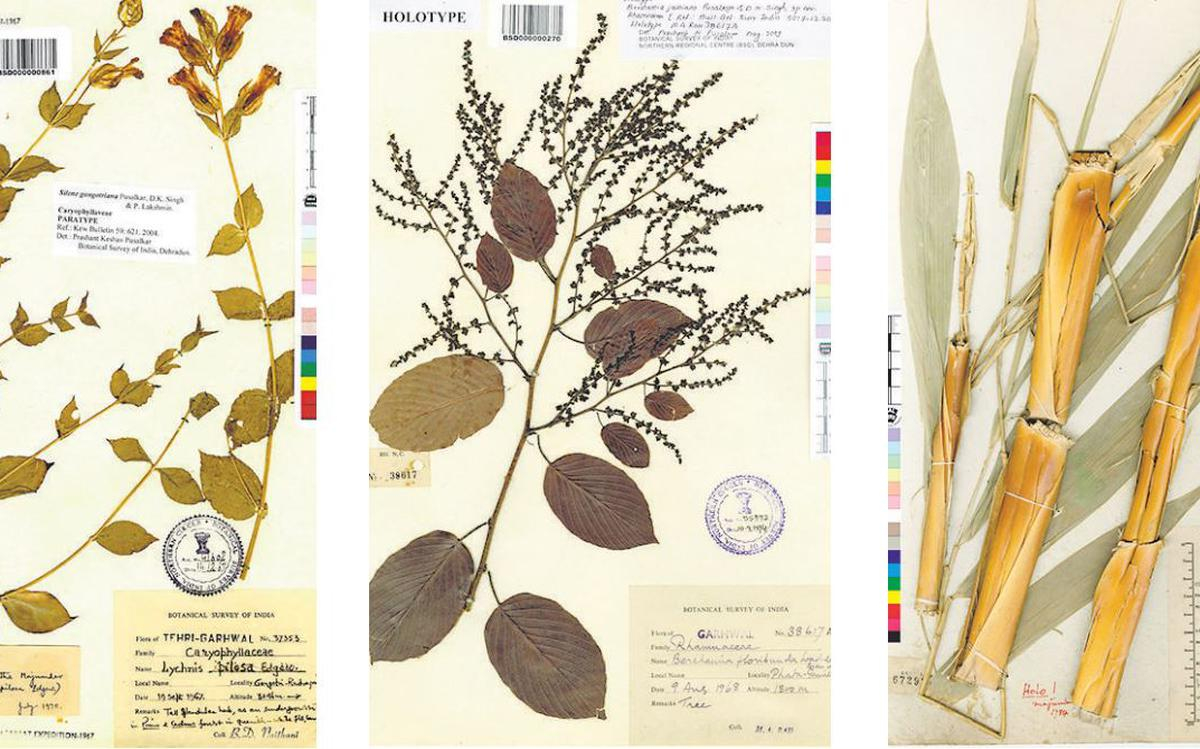
    • A herbarium specimen is consists of dried plant parts with labelled information on Scientific name and collection data.
    • It has immense use in plant identification, systematics studies and ecological studies.
    • The Botanical Survey of India has more than 30,00,000 herbarium specimens persevered in different herbaria located in different parts of the country.
    • Developed by scientists of the Botanical Survey of India (BSI), the herbarium was inaugurated by Union Minister of Environment Forest and Climate Change in Kolkata last month.

    Why in news?

    • Since launch, the portal ivh.bsi.gov.in has had nearly two lakh hits from 55 countries.
    • The portal includes about one lakh images of herbarium specimens.
    • Each record in the digital herbarium includes an image of the preserved plant specimen, scientific name, collection locality, and collection date, collector name, and barcode number.
    • The digital herbarium includes features to extract the data State-wise, and users can search plants of their own States, which will help them identify regional plants and in building regional checklists.

    Significance of the herbaria

    • Scientists say that there are approximately three million plant specimens in the country which are with different herbaria located at zonal centres of the BSI.
    • About 52% of our type specimens are from foreign nations and collected from 82 countries of the world during the British-era.
    • The herbarium is also deeply linked with the botanical history of the country.
    • The portal provides most valuable historical collections of botanists like William Roxburgh, Nathaniel Wallich and Joseph Dalton Hooker, considered the founding fathers of botany in India.
    • The digital herbarium has some of the oldest botanical specimens dating as early as 1696.


    UPSC 2023 countdown has begun! Get your personal guidance plan now! (Click here)

  • Hellfire R9X missile: The mystery weapon

    The US military used its ‘secret weapon’ — the Hellfire R9X missile – to kill Al Qaeda chief Ayman al-Zawahiri on the balcony of a safehouse in Kabul.

    What is the Hellfire R9X missile?

    • Better known in military circles as the AGM-114 R9X, the Hellfire R9X is a US-origin missile known to cause minimum collateral damage while engaging individual targets.
    • Also known as the ‘Ninja Missile’, this weapon does not carry a warhead and instead deploys razor-sharp blades at the terminal stage of its attack trajectory.
    • This helps it to break through even thick steel sheets and cut down the target using the kinetic energy of its propulsion without causing any damage to the persons in the general vicinity or to the structure of the building.
    • The blades pop out of the missile and cut down the intended target without causing the massive damage to the surroundings which would be the case with a missile carrying an explosive warhead.

    When did the Hellfire missile enter active service?

    • The Hellfire 9RX missile is known to have been in active service since 2017.
    • However, its existence became public knowledge two years later in 2019.
    • It is a variant of the original Hellfire missile family which is used in conventional form with warheads and is traditionally used from helicopters, ground-based vehicles, and sometimes small ships and fast moving vessels.
    • For several years now, the Hellfire family of missiles, including the ‘Ninja Missile’, are armed on Combat Unmanned Aerial Vehicles or drones.

    What is known about the other Hellfire missile variants?

    • Hellfire is actually an acronym for Heliborne, Laser, Fire and Forget Missile and it was developed in the US initially to target tanks from the Apache AH-64 attack helicopters.
    • Later, the usage of these missiles spread to several other variants of helicopters and also ground and sea-based systems and drones.
    • Developed by Lockheed Martin and Northrop Grumman, the Hellfire missile has other variants such as ‘Longbow’ and ‘Romeo’ apart from the ‘Ninja’.


    UPSC 2022 countdown has begun! Get your personal guidance plan now! (Click here)

  • 5G

    The much-awaited auction for telecom spectrum, including for 5G airwaves, will begin tomorrow.

    Spectrums for auctions

    • A total of 72,097.85 MHz (or 72 Ghz) of spectrum with a validity period of 20 years will be put on the block.
    • Airwaves across low (600 MHz, 700 MHz, 800 MHz, 900 MHz, 1800 MHz, 2100 MHz, 2300 MHz), mid (3300 MHz) and high (26 GHz) frequency bands, valued at ₹4,316 billion ($56 billion) at least, will be put up for bidding.

    What is (Electromagnetic) Spectrum?

    • Devices such as cellphones and wireline telephones require signals to connect from one end to another.
    • These signals are carried on airwaves, which must be sent at designated frequencies to avoid any kind of interference.
    • The Union government owns all the publicly available assets within the geographical boundaries of the country, which also include airwaves.
    • With the expansion in the number of cellphones, wireline telephone and internet users, the need to provide more space for the signals arise from time to time.

    Spectrum allocations

    • Spectrum refers to the invisible radio frequencies that wireless signals travel over. The frequencies we use for wireless are only a portion of what is called the electromagnetic spectrum.
    • To sell these assets to companies willing to set up the required infrastructure to transport these waves from one end to another, the central government through the DoT auctions these airwaves from time to time.
    • These airwaves called spectrum is subdivided into bands which have varying frequencies.
    • All these airwaves are sold for a certain period of time, after which their validity lapses, which is generally set at 20 years.

    What is 5G technology?

    • 5G or fifth generation is the latest upgrade in the long-term evolution (LTE) mobile broadband networks.
    • It mainly works in 3 bands, namely low, mid and high-frequency spectrum — all of which have their own uses as well as limitations.

    Three bands of 5G

    (1) Low band spectrum

    • It has shown great promise in terms of coverage and speed of internet and data exchange, the maximum speed is limited to 100 Mbps (Megabits per second).
    • This means that while telcos can use and install it for commercial cellphones users who may not have specific demands for very high-speed internet, the low band spectrum may not be optimal for the specialized needs of the industry.

    (2) Mid-band spectrum

    • It offers higher speeds compared to the low band but has limitations in terms of coverage area and penetration of signals.
    • Telcos and companies, which have taken the lead on 5G, have indicated that this band may be used by industries and specialized factory units for building captive networks that can be molded into the needs of that particular industry.

    (3) High-band spectrum

    • It offers the highest speed of all the three bands, but has extremely limited coverage and signal penetration strength.
    • Internet speeds in the high-band spectrum of 5G have been tested to be as high as 20 Gbps (gigabits per second), while, in most cases, the maximum internet data speed in 4G has been recorded at 1 Gbps.

    Where does India stand in the 5G technology race?

    • On par with the global players, India had, in 2018, planned to start 5G services as soon as possible, with an aim to capitalize on the better network speeds and strength that the technology promised.
    • Indian private telecom players have been urging the DoT to lay out a clear road map of spectrum allocation and 5G frequency bands so that they would be able to plan the rollout of their services accordingly.
    • One big hurdle, however, is the lack of flow of cash and adequate capital with some companies due to their AGR dues.

    Global progress on 5G

    • More than governments, global telecom companies have started building 5G networks and rolling it out to their customers on a trial basis.
    • In countries like the US, some companies have taken the lead when it comes to rolling out commercial 5G for their users.
    • A South Korean company, which had started researching on 5G technology way back in 2011, has, on the other hand, take the lead when it comes to building the hardware for 5G networks for several companies.


    UPSC 2022 countdown has begun! Get your personal guidance plan now! (Click here)

  • Dwindling fighter strength of the IAF

    In a tragic accident, a MIG-21 trainer jet of the Indian Air Force (IAF) crashed in Rajasthan killing both the high-ranked officer pilots onboard.

    What is the status of the MIG-21 jets in the IAF?

    • The MIG-21 was inducted into the IAF in the early 1960s and since then more than 800 variants of the supersonic fighter were inducted into service.
    • It remained the frontline fighter jet of the force for a long time.
    • During this period, there were over 400 accidents involving the jet which claimed the lives of around 200 pilots.

    Nature of service

    • Currently, there are four MIG-21 squadrons in service consisting of the upgraded Bison variant.
    • IAF officials have stated that there is technical life still left in them.
    • There are only four squadrons of the MIG-21 aircraft.

    Why use outdated aircraft?

    • With delays in new inductions, the IAF has been forced to continue the last four MIG-21 Bison squadrons in service.
    • One squadron is set to be phased out in the next few months, while the remaining three squadrons are planned to be phased out in the next three years.
    • This phase-out was worked out much before last week’s tragic incident.

    What is the present fighter strength of the IAF?

    • The IAF has an authorized strength of 42 fighter squadrons.
    • As time passes, the drawdown is increasing as the total technical life is completed.
    • However, the rate of new inductions is not matching the drawdown, depleting the overall number of fighter squadrons.
    • Additionally, several frontline aircraft in the inventory including the Jaguars, and MIG-29s will begin phasing out by the end of the decade.
    • For instance, by 2027-28 the first of the MIG-29s, inducted in the late 1980s, will start going out.

    New squadrons to be inducted

    • In the last few years, the IAF has inducted two squadrons of the indigenous Light Combat Aircraft (LCA) Tejas and two squadrons of Rafale fighter jets procured from France which pushed the squadron strength to 32.
    • In January 2021, the IAF had signed a contract with Hindustan Aeronautics Limited (HAL) for 83 of the more advanced LCA MK-1A which it will start receiving from early 2024 onwards.
    • Along with that the to-be-acquired 114 Multi-Role Fighter Aircraft (MRFA) will help arrest the drawdown.
    • A larger and even more capable LCA-MK2, as well as the fifth generation Advanced Medium Combat Aircraft (AMCA), are under development.
    • However, their availability in enough numbers will take some time.

    Inherent limitations to the IAF

    • Hardware/Technological Challenges: Technology is at the core of an air force – acquiring and assimilating it is our primary challenge. The lack of it curtails national options, impacting postures and doctrines. Denial and selective availability of technology are all enmeshed in international relations.
    • Maintenance Challenges: Maintenance challenges determine how long aircrafts last and their cost-effectiveness. ‘Maintainability’, which includes logistical issues, is therefore, crucial.
    • Relying on Upgrades: IAF is badly in need of new Fighter Aircraft to compete with new 5th generation Modern jets. At current there are old aircraft and it is mostly dependant on Super Manoeuvrable Modern Generation Fighter Jet Su 30 MKI.
    • Delaying of Aircraft Delivery: The current order of IAF the Rafale is expected to be completed in 2024. The LCA Tejas of HAL has now produced 21 but still it has to manufacture in more number to replace the retiring MIG 21 BISON.

    Roadmap to shore up fighter strength

    • No easy roadmap: The IAF has acknowledged that they will not be able to achieve the desired strength for the time being and that they are doing the best they can.
    • Indigenous aircraft: In addition to the indigenous aircraft coming up, the IAF is confident that increasing the low availability rates of Su-30 and other fighters in service will offset some of the shortfalls in the interim.
    • Offsets of war: This could be potentially impacted due to the war in Ukraine even though officials have said that they are assessing the impact of the war and western sanctions.

    Way forward

    • Air power is becoming technologically more refined with unmanned platforms, cyber-space linkages and AI advances.
    • The inherent trans-border nature of this military capability needs astute professional and political husbanding.
    • Acquiring credible aerospace power with a meaningful degree of indigenization will need a greater degree of national resolve, professional integrity and resource allocation than is the case now.
    • China has demonstrated the degree of suasion and intimidation that airpower can bring to bear in relation to Taiwan.


    UPSC 2022 countdown has begun! Get your personal guidance plan now! (Click here)

  • AlphaFold: AI-based Protein Structure Prediction Tool


    DeepMind, a company based in London and owned by Google, announced that it had predicted the three-dimensional structures of more than 200 million proteins using AlphaFold.

    This is the entire protein universe known to scientists today.

    What is AlphaFold?

    • AlphaFold is an AI-based protein structure prediction tool.
    • It is based on a computer system called deep neural network.
    • Inspired by the human brain, neural networks use a large amount of input data and provide the desired output exactly like how a human brain would.
    • The real work is done by the black box between the input and the output layers, called the hidden networks. AlphaFold is fed with protein sequences as input.
    • When protein sequences enter through one end, the predicted three-dimensional structures come out through the other.
    • It is like a magician pulling a rabbit out of a hat.

    How does AlphaFold work?

    • It uses processes based on “training, learning, retraining and relearning.”
    • The first step uses the available structures of 1,70,000 proteins in the Protein Data Bank (PDB) to train the computer model.
    • Then, it uses the results of that training to learn the structural predictions of proteins not in the PDB.
    • Once that is done, it uses the high-accuracy predictions from the first step to retrain and relearn to gain higher accuracy of the earlier predictions.
    • By using this method, AlphaFold has now predicted the structures of the entire 214 million unique protein sequences deposited in the Universal Protein Resource (UniProt)

    What are the implications of this development?

    • Proteins are the business ends of biology, meaning proteins carry out all the functions inside a living cell.
    • Therefore, knowing protein structure and function is essential to understanding human diseases.
    • Scientists predict protein structures using x-ray crystallography, nuclear magnetic resonance spectroscopy, or cryogenic electron microscopy.
    • These techniques are not just time-consuming, they often take years and are based mainly on trial-and-error methods.
    • The development of AlphaFold changes all of that.
    • It is a watershed movement in science and structural biology in particular.

    What does this development mean for India?

    • Vaccine development: Understanding the accurate structures of COVID-19 virus proteins in days rather than years will accelerate vaccine and drug development against the virus.
    • Structural biology: From the seminal contribution of G. N. Ramachandran in understanding protein structures to the present day, India is no stranger to the field and has produced some fine structural biologists.

    Back2Basics: Proteins

    • Protein is found throughout the body—in muscle, bone, skin, hair, and virtually every other body part or tissue.
    • It makes up the enzymes that power many chemical reactions and the hemoglobin that carries oxygen in your blood.
    • At least 10,000 different proteins make you what you are and keep you that way.
    • Protein is made from twenty-plus basic building blocks called amino acids.
    • Because we don’t store amino acids, our bodies make them in two different ways: either from scratch or by modifying others.
    • Nine amino acids—histidine, isoleucine, leucine, lysine, methionine, phenylalanine, threonine, tryptophan, and valine—known as the essential amino acids, must come from food.
    • Chemically, amino acids are organic compounds made of carbon, hydrogen, nitrogen, oxygen or sulfur.
    • There are seven types of proteins: antibodies, contractile proteins, enzymes, hormonal proteins, structural proteins, storage proteins, and transport proteins.


    UPSC 2022 countdown has begun! Get your personal guidance plan now! (Click here)

  • Three new ‘exotic’ sub-atomic particles discovered  

    The Large Hadron Collider beauty (LHCb) experiment has observed three never-before-seen particles.

    What is the discovery?

    • CERN was investigating the slight differences between matter and antimatter by studying a type of particle called the “beauty quark”, or “b quark”.
    • The three “exotic” additions — a new kind of “pentaquark” and the first-ever pair of “tetraquarks” — to the growing list of new hadrons were found.
    • This discovery will help physicists better understand how quarks bind together into these composite particles.

    What are Quarks?

    • Quarks are elementary particles that come in six “flavours”: up, down, charm, strange, top, and bottom.
    • They usually combine together in groups of twos and threes to form hadrons such as the protons and neutrons that make up atomic nuclei.
    • But they can also combine into four-quark and five-quark particles, called tetraquarks and pentaquarks.
    • These exotic hadrons were predicted by theorists about six decades ago — around the same time as conventional hadrons — but they have been observed by LHCb and other experiments only in the past 20 years.

    What about tetraquarks and pentaquarks?

    • Most exotic hadrons discovered in the past two decades are tetraquarks or pentaquarks.
    • They contain a charm quark and a charm antiquark — with the remaining two or three quarks being an up, down or strange quark or their antiquarks.


    UPSC 2023 countdown has begun! Get your personal guidance plan now! (Click here)

  • What is Fields Medal, the ‘Mathematics Nobel’?

    Ukrainian mathematician Maryna Viazovska was named as one of four recipients of the prestigious Fields Medal, which is often described as the Nobel Prize in mathematics.

    What is Fields Medal?

    • The Fields Medal is awarded by the International Mathematical Union (IMU), an international non-governmental and non-profit scientific organisation.
    • It is awarded every four years to one or more mathematicians under the age of 40 in recognition of “outstanding mathematical achievement for existing work and for the promise of future achievement”.
    • The winners are announced at the International Congress of Mathematicians (ICM), which was supposed to be held in Russia this year, but was moved to Helsinki.

    Belongings of the award

    • The honour carries a physical medal of 14K gold, 63.5 mm in diameter and weighing 169 g, and with a unit price of approximately 5,500 Canadian dollars.
    • There is also a cash award of CAD 15,000.
    • The obverse of the medal is embossed with the head of Archimedes facing right, and some Latin quotes.

    History of the Medal

    • According to the IMU website, the 1924 ICM in Toronto adopted a resolution that at each conference, two gold medals would be awarded to recognise outstanding mathematical achievement.
    • The Canadian mathematician Prof J C Fields, who was secretary of the 1924 Congress, later donated funds to establish the medals, which were named in his honour.
    • In 1966, it was agreed that, in light of the great expansion of mathematical research, up to four medals could be awarded at each Congress.

    Indian-origin winners

    • Among the more than 60 mathematicians who have been awarded the Fields Medal since 1936, there are two of Indian origin.
    • Akshay Venkatesh of the Institute for Advanced Study at Princeton, won in 2018, the last time the honour was announced.
    • Manjul Bhargava of the Department of Mathematics at Princeton University was awarded in 2014.


    UPSC 2023 countdown has begun! Get your personal guidance plan now! (Click here)

  • What is the Large Hadron Collider (LHC)?

    The world’s most powerful particle collider, the Large Hadron Collider (LHC), will begin smashing protons into each other at unprecedented levels of energy beginning July 5.

    What is the LHC?

    • The Large Hadron Collider is a giant, complex machine built to study particles that are the smallest known building blocks of all things.
    • Structurally, it is a 27-km-long track-loop buried 100 metres underground on the Swiss-French border.
    • In its operational state, it fires two beams of protons almost at the speed of light in opposite directions inside a ring of superconducting electromagnets.
    • The LHC’s second run (Run 2) began in 2015 and lasted till 2018. The second season of data taking produced five times more data than Run 1.
    • The third run will see 20 times more collisions as compared to Run 1.

    How does it work?

    • The magnetic field created by the superconducting electromagnets keeps the protons in a tight beam and guides them along the way as they travel through beam pipes and finally collide.
    • Just prior to collision, another type of magnet is used to ‘squeeze’ the particles closer together to increase the chances of collisions.
    • The particles are so tiny that the task of making them collide is akin to firing two needles 10 km apart with such precision that they meet halfway.

    Extreme conditions involved

    • Since the LHC’s powerful electromagnets carry almost as much current as a bolt of lightning, they must be kept chilled.
    • The LHC uses a distribution system of liquid helium to keep its critical components ultracold at minus 271.3 degrees Celsius, which is colder than interstellar space.
    • Given these requirements, it is not easy to warm up or cool down the gigantic machine.

    What is the latest upgrade?

    • Three years after it shut down for maintenance and upgrades, the collider was switched back on this April.
    • This is the LHC’s third run, and it will operate round-the-clock for four years at unprecedented energy levels of 13 tera electron volts.

    Note: A TeV is 100 billion, or 10-to-the-power-of-12, electon volts. An electron volt is the energy given to an electron by accelerating it through 1 volt of electric potential difference.

    Targets this year

    • It now aims to be delivering 1.6 billion proton-proton collisions per second.
    • The last time, the proton beams will be narrowed to less than 10 microns — a human hair is around 70 microns thick — to increase the collision rate.
    • ATLAS is the largest general purpose particle detector experiment at the LHC.
    • The Compact Muon Solenoid (CMS) experiment is one of the largest international scientific collaborations in history, with the same goals as ATLAS, but which uses a different magnet-system design.

    Previous runs & ‘God Particle’ discovery

    • Ten years ago, in 2012, scientists at CERN had announced to the world the discovery of the Higgs boson or the ‘God Particle’ during the LHC’s first run.
    • The discovery concluded the decades-long quest for the ‘force-carrying’ subatomic particle, and proved the existence of the Higgs mechanism, a theory put forth in the mid-sixties.
    • This led to Peter Higgs and his collaborator François Englert being awarded the Nobel Prize for physics in 2013.
    • The Higgs boson and its related energy field are believed to have played a vital role in the creation


    UPSC 2023 countdown has begun! Get your personal guidance plan now! (Click here)
  • Researchers found gene regulating Nitrogen absorption in Plant

    Researchers led by those from the National Centre of Biological Sciences, Tata Institute of Fundamental Research, Bengaluru (NCBS-TIFR), have found a new pathway that regulates nitrate absorption in plants.

    Nitrogen in plant nutrition

    • Nitrogen is one of the most important macronutrients needed for development of a plant.
    • It is a part of chlorophyll, amino acids and nucleic acids, among others.
    • It is mostly sourced from the soil where it is mainly absorbed in the form of nitrates and ammonium by the roots.
    • Nitrates also play a role in controlling genome-wide gene expression that in turn regulates root system architecture, flowering time, leaf development, etc.
    • Thus, while a lot of action takes place in the roots to absorb and convert nitrogen into useful nitrates, the absorbed nitrates in turn regulate plant development apart from being useful as a macronutrient.

    What is MADS27?

    • The gene MADS27, which regulates nitrate absorption, root development and stress tolerance, is activated by the micro-RNA, miR444, therefore offers a way to control these properties of the plant.
    • The researchers studied this mechanism in both rice (monocot) and tobacco (dicot) plants.

    Regulatory switches

    • In addition to this route, several gene regulatory switches that regulate nitrate absorption and root development, such as the micro-RNA, miR444, are known in monocot plants, such as rice.
    • The micro-RNA ‘miR444’ is specific to monocots.
    • When this is not made, its target, MADS27, is produced in higher abundance, and it improves biosynthesis and transport of the hormone auxin, which is key for root development and its branching.
    • This regulatory miR444 switch is known to turn off at least five genes called MADS box transcription factor genes.
    • The speciality of the MADS box transcription factors is that they function like switch boxes of their own.
    • They bind to their favourite specific DNA sequences and they switch the neighbouring genes “on.”

    Why is the discovery important?

    • Presence of nitrates is important for the plant development and also for grain production.
    • However, the overuse of nitrates in fertilizers, for instance, can lead to the dumping of nitrates in the soil which leads to accumulation of nitrates in water and soil.
    • This accumulation adds to soil and water pollution and increased contribution to greenhouse gases.
    • Also, since the whole process of nitrate absorption takes place in the roots, a well-developed root system is needed for this to take place optimally.
    • At one level, it is known that the hormone auxin is responsible for well-developed roots across all plants.
    • A number of genes are known to help with auxin production, improved nitrate transport and assimilation in plants.

    Significance of MADS27

    • The MADS27 transcription factor has a three-pronged effect on the plant.
    • First, it regulates nitrate absorption by switching “on” proteins involved in this process.
    • Second, it leads to better development of the roots by regulating auxin hormone production and transport.
    • Finally, and somewhat surprisingly to the researchers, it helps in the abiotic stress tolerance by keeping the main stress player proteins “on.”


    UPSC 2023 countdown has begun! Get your personal guidance plan now! (Click here)