💥Mains Ready By December. Smash Mains & Smash PYQ Admissions Open

Subject: Basic Sciences

  • What is the Whitest Paint?

    Engineers in the US have created what they are calling the whitest paint yet.

    What is the whitest paint?

    • The researchers created an ultra-white paint pushing the limits of how white paint can be.
    • This older formulation was made of calcium carbonate, while the new one is made up of barium sulphate, which makes it more white.
    • The newer paint is whiter and keeps the surface areas it is painted on cooler than the formulation before this could.
    • If this new paint was used to cover a roof area of 1,000 square feet, it may be able to get a cooling power of 10 kilowatts.
    • Most ovens use up about 2.3 kilowatts to run for an hour and a 3 ton 12 Seasonal Energy Efficiency Ratio (SEER) air conditioner uses up about 3 kilowatts to run for an hour.

    The researchers have claimed that this paint may be the closest equivalent to the blackest black paint called “Vantablack” which is able to absorb up to 99.9 per cent of visible light.

    What determines if a colour absorbs or reflects light?

    • To understand how this works one needs to note that whenever an object is seen by the eye, it is either because of sunlight or the artificial light in the room.
    • This light is made up of seven different colours (Violet, Indigo, Blue, Green, Yellow, Orange and Red or VIBGYOR).
    • Specifically, light is made up of wavelengths of different colours.
    • If an individual is looking at a sofa that is green, this is because the fabric or material it is made up of is able to absorb all the colours except green.
    • This means that the molecules of the fabric reflect the green coloured wavelengths, which is what the eye sees.
    • Therefore, the colour of any object or thing is determined by the wavelength the molecules are not able to absorb.

    Try this PYQ:

    Q.Rainbow is produced when sunlight falls on drops of rain. Which of the following physical phenomena are responsible for this?

    1. Dispersion
    2. Refraction
    3. Internal reflection

    Select the correct answer using the codes given below:

    a) 1 and 2 only

    b) 2 and 3 only

    c) 1 and 3 only

    d) 1, 2 and 3

    What determines which wavelength of light will be reflected and absorbed?

    • This is dependent on how electrons are arranged in an atom (the building block of life, an atom is made up of electrons, protons and neutrons.
    • These three particles make up everything in the known universe from mountains, planets, humans to pizza and cake).
    • In contrast, if an object is black, it is because it has absorbed all the wavelengths and therefore no light is reflected from them.
    • This is the reason that darker objects, as a result absorbing all wavelengths tend to heat up faster (during absorption the light energy is converted into heat energy).

    So, what makes the paint so white?

    There are two features:

    1. One is the paint’s high concentration of a chemical compound called barium sulfate, which is also used to make photo paper and cosmetics white.
    2. The second feature is that the team has used different sized particles of this chemical compound, which means different sizes scatter different amounts of light.

    In this way, the varying size of particles of the compound makes sure that the paint can scatter more of the light spectrum from the sun.

  • Tiki Formation in Madhya Pradesh

    The Tiki Formation in Madhya Pradesh, a treasure trove of vertebrate fossils, has now yielded a new species and two genera of cynodonts, small rat-like animals that lived about 220 million years ago.

    Tiki Formation

    • The Tiki Formation is a Late Triassic geologic formation in Madhya Pradesh.
    • Dinosaur remains are among the fossils that have been recovered from the formation, although none have yet been referred to a specific genus.
    • Phytosaur remains attributable to the genus Volcanosuchus have also been found in the Tiki Formation.
    • The genera Tikiodon, Tikitherium and Tikisuchus and species Rewaconodon tikiensis, Hyperodapedon tikiensis and Parvodus tikiensis have been named after the Tiki Formation.

    Findings of the new study

    • The fossil teeth were studied for size, crown shape, structure of the cusps and compared with previously reported cynodonts.
    • Cynodonts are important in evolutionary studies as this group ultimately gave rise to the present-day mammals.
    • By studying their molar and premolar teeth, we see how they slowly evolved and modified.
    • Their crown shape shows that these animals are actually intermediate forms that are very near to the mammalian line of evolution.
    • Cynodonts and living mammals both belong to a group of egg-laying vertebrates (amniotes) called synapsids.
    • The close relationship of cynodonts with living mammals is seen in their bones.
  • Species in news: Azhdarchid Pterosaurs

    Azhdarchid pterosaurs, the giant reptiles that flew in the skies nearly 65 million years ago, had necks longer than that of a giraffe (i.e. more than 6fts).

    What are pterosaurs?

    • Pterosaurs are reptiles that are close cousins of dinosaurs, the first animals after insects to evolve powered flight.
    • Some pterosaurs were as large as an F-16 fighter jet, while others were as small as a paper aeroplane.
    • Pterosaurs went extinct about 65-66 million years ago (end of the Cretaceous period) and while they did not leave any of their descendants behind.
    • One reason for this is that few pterosaurs lived in places where fossils tend to form, because of which their bones are preserved poorly.

    Revise the geological timescale from your NCERT textbook.

    Azhdarchid pterosaurs

    • They are one type of pterosaur and one of the distinguishing characteristics about them is how big they were, especially their long necks.
    • Some of these pterosaurs were the largest animals to have flown in the sky, with wingspans greater than 30 feet.
    • The name azhdarchid, as per a blog on Scientific American comes from Azhdarcho, a Central Asian form named by Russian ornithologist and palaeontologist in 1984.

    What have the researchers found?

    • Researchers involved in this study were curious about how the reptile’s long neck functioned and how it was able to support the pterosaur’s body, allowing them to capture and eat heavy prey animals.
  • [pib] National Internet Exchange of India (NIXI)

    The Ministry of Electronics & Information Technology (MeitY) has inaugurated three path-breaking initiatives for the National Internet Exchange of India (NIXI).

    What is NIXI?

    National Internet Exchange of India (NIXI) is a not-for-profit organization (section 8 of the Companies Act 2013) working since 2003 for spreading the internet infrastructure to the citizens of India through the following activities:

    1. Internet Exchanges through which the internet data is exchanged amongst ISP’s, Data Centers and CDNs.
    2. .IN Registry, managing and operation of .IN country-code domain and .भारत IDN domain for India.
    3. IRINN, managing and operating Internet protocol (IPv4/IPv6).

    Which are the three new initiatives?

    (1) IPv6 Expert Panel (IP Guru) (https://nixi.in):

    • IP Guru is a group to extend support to all the Indian entities who are finding it technically challenging to migrate and adopt IPv6.
    • In addition to this, the IPv6 expert group will help in identifying & hiring an agency that will help end customer by providing necessary technical support to adopt IPv6.
    • This panel will guide all such Indian entities and help in increasing IPv6 adoption.

    Note: An Internet Protocol (IP) address is a numerical label assigned to each device connected to a computer network that uses the Internet Protocol for communication. An IP address serves two main functions: host or network interface identification and location addressing.

    (2) NIXI Academy (https://training.nixi.in):

    • NIXI Academy is created to educate technical/non-technical people in India to learn and relearn technologies like IPv6 which are normally not taught in Educational Institutes.
    • NIXI academy comprises an IPv6 training portal which is developed with the help of various technical experts in order to provide mass training to the community.
    • The easy-to-use platform helps network operators and educators understand networking best practices, principles and techniques; manage Internet resources better; and use appropriate Internet technologies more effectively.

    (3) NIXI-IP-INDEX (https://ipv6.nixi.in):

    • NIXI has developed an IPv6 index portal for the Internet community.
    • NIXI-IP-INDEX portal will showcase the IPv6 adoption rate in India and across the world.
    • It can be used to compare the IPv6 Indian adoption rate with other economies in the world.
    • NIXI will populate this portal with web adoption in IPv6, IPv6 traffic etc. in the coming days.
    • This portal will motivate organisations to adopt IPv6, provide inputs for planning by technical organisations and research by academicians.
  • Monkeydactyl: the flying reptile with the ‘oldest opposable thumbs’

    Researchers have described a pterosaur species with opposable thumbs, which could likely be the earliest-known instance of the limb.

    Monkeydactyl

    • The pterosaur species were reptiles, close cousins of dinosaurs and the first animals after insects to evolve powered flight.
    • They evolved into various species; while some were as large as an F-16 fighter jet, others were as small as paper aeroplanes.
    • The new pterosaur fossil was discovered in the Tiaojishan Formation of Liaoning, China, and is thought to be 160 million years old.
    • It has now been described by an international team of researchers from China, Brazil, the UK, Denmark and Japan, and has been named Kunpengopterus antipollicatus, also dubbed “Monkeydactyl”.

    What has the team found?

    • “Antipollicatus” in ancient Greek means “opposite thumbs”, and it was attached to the name because the researchers’ findings could be the first discovery of a pterosaur with an opposed thumb.
    • Researchers suggested that K. antipollicatus could have used its hand for grasping, which is likely an adaptation for arboreal life.

    What makes it special?

    • Opposability of the thumb enables the species to “simultaneously flex, abduct and medially rotate the thumb” in a way that one is able to bring the tip of the thumb to touch the tips of the other fingers.
    • Along with humans, some ancient monkeys and apes also had opposable thumbs. Humans, however, have a relatively long and distally placed thumb, and larger thumb muscles.
    • This means that humans’ tip-to-tip precision grip when holding smaller objects is superior to non-human primates.
    • This is the reason that humans are able to hold a pen, unscrew an earring stopper, or put a thread through a needle hole.
    • The grasping hands of primates developed as a result of their life in the trees — an opposable thumb made it easier for the common ancestor of all primates to cling on to tree branches.

    Try this PYQ:

    Q.Some species of plants are insectivorous. Why?

    (a) Their growth in shady and dark places does not allow them to undertake sufficient photosynthesis and thus they depend on insects for nutrition

    (b) They are adapted to grow in nitrogen deficient soils and thus depend on insects for sufficient nitrogenous nutrition

    (c) They cannot synthesize certain vitamins themselves and depend on the insects digested by them

    (d) They have remained in that particular stage of evolution as living fossils, a link between autotrophs and heterotrophs

  • [pib] NanoSniffer: A Microsensor based Explosive Trace Detector

    A Union Minister has launched NanoSniffer, the world’s first Microsensor based Explosive Trace Detector (ETD) developed by NanoSniff Technologies, an IIT Bombay incubated startup.

    Can you name some explosives?

    NanoSniffer

    • NanoSniffer is a 100% Made in India product in terms of research, development & manufacturing.
    • It can detect explosives in less than 10 seconds and it also identifies and categorizes explosives into different classes. It detects all classes of military, conventional and homemade explosives.
    • It gives visible & audible alerts with a sunlight-readable colour display.
    • NanoSniffer provides trace detection of the nano-gram quantity of explosives & delivers result in seconds.
    • It can accurately detect a wide range of military, commercial and homemade explosives threats.
    • Further analysis of the algorithms also helps in the categorization of explosives into the appropriate class.
  • Muon G–2 Experiment

    The results from the Muon g-2 experiment show that fundamental particles called muons behave in a way that is not predicted by the Standard Model of particle physics.

    After genetics, AI and the blockchain, Particle Physics is making several headlines these days. This is something intuitive.

    What is Muon?

    • Fermilab, the American particle accelerator, has released first results from its “muon g-2” experiment.
    • These results spotlight the anomalous behaviour of the elementary particle called the muon.
    • The muon is a heavier cousin of the electron and is expected to have a value of 2 for its magnetic moment, labelled “g”.
    • Now, the muon is not alone in the universe.
    • It is embedded in a sea where particles are popping out and vanishing every instant due to quantum effects.
    • So, its g value is altered by its interactions with these short-lived excitations.

    Main characteristic: Anomalous magnetic moment

    • The Standard Model of particle physics calculates this correction, called the anomalous magnetic moment, very accurately.
    • The muon g-2 experiment measured the extent of the anomaly and announced that “g” deviated from the amount predicted by the Standard Model.
    • That is, while the calculated value in the Standard Model is 2.00233183620 approximately, the experimental results show a value of 2.00233184122.
    • They have measured “g” to an accuracy of about 4.2 sigma when the results are combined with those from a 20-year-old experiment.
    • This makes physicists sit up and take note, but it is not yet significant enough to constitute a discovery – for which they need a significance of 5 sigma.

    The g factor

    • The muon is also known as the fat electron.
    • It is produced copiously in the Fermilab experiments and occurs naturally in cosmic ray showers.
    • Like the electron, the muon has a magnetic moment because of which, when placed in a magnetic field, it spins and processes, or wobbles, slightly, like the axis of a spinning top.
    • Its internal magnetic moment, the g factor, determines the extent of this wobble.
    • As the muon spins, it also interacts with the surrounding environment, which consists of short-lived particles popping in and out of a vacuum.
  • Xenobots: Robots developed from stem cells of frogs

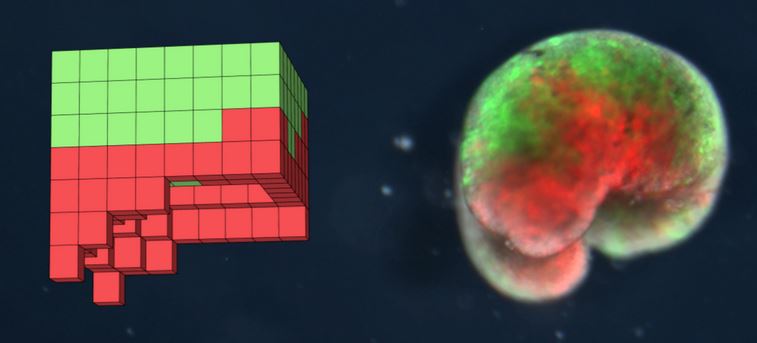
    Researchers have developed robots from stem cells of frogs called Xenobots.

    Xenobots, the name itself suggests its peculiarity.

    Xenobots

    • Xenobots, named after the African clawed frog are synthetic organisms that are automatically designed by computers to perform some desired function and built by combining together different biological tissues.
    • They are less than a 1 millimeter (0.039 inches) wide and composed of just two things: skin cells and heart muscle cells, both of which are derived from stem cells harvested from early (blastula stage) frog embryos.
    • They can self-heal after damage, record memories and work together in groups.
    • These biological robots can record information about their surroundings and move using cilia – minute hair like particles present on their surface.

    Its applications

    • These soft-body living machines can have several applications in biomedicine and the environment.
    • They could be made from a human patient’s own cells, which would bypass the immune response challenges of other kinds of micro-robotic delivery systems.
    • Such xenobots could potentially be used to scrape plaque from arteries and with additional cell types and bioengineering, locate and treat disease.
  • Large Hadron Collider beauty Experiment

    The LHCb experiment at CERN (European Council for Nuclear Research) has announced the results of their latest analysis of data.

    LHCb Experiment: An easy explanation

    • LHCb is an experiment set up to explore what happened after the Big Bang that allowed the matter to survive and build the Universe we inhabit today.
    • Fourteen billion years ago, the Universe began with a bang.
    • Crammed within an infinitely small space, energy coalesced to form equal quantities of matter and antimatter.
    • But as the Universe cooled and expanded, its composition changed.
    • Just one second after the Big Bang, antimatter had all but disappeared, leaving the matter to form everything that we see around us — from the stars and galaxies to the Earth and all life that it supports.

    What is the new finding?

    • CERN scientists are excited enough to reveal that if the anomaly they had detected was confirmed.
    • Because, if confirmed, it would require a new physical process, such as the existence of new fundamental particles or interactions.

    What is this excitement all about?

    It is necessary to delve into the world of elementary particles to understand this.

    (1) Particle zoo

    Until now it is believed that the electron, muon and tauon and their antiparticles, though they differ in mass, behave similarly in particle interactions.

    • Broadly speaking, elementary particles are classified into the particles called baryons – which include protons, neutrons and their antiparticles the antiprotons etc.
    • The “middle mass” particles, roughly speaking, are called the mesons and they include members such as the K and B particles.
    • We then have the leptons, which include the electron and its cousins the muon and tau particles and the anti-particles.
    • At a still smaller scale, there are tiny particles called quarks and gluons.
    • There are six flavours of quarks: up, down, truth, beauty, charm and strange. They too have antiquarks associated with them.

    In this particle zoo, while the baryons are made up of combinations of three quarks, the mesons contain two quarks, more accurately a quark and antiquark pair, and the leptons are truly fundamental and are thought to be indivisible.

    Do you know?

    Higgs Boson is called the god particle.

    (2) Colliding particle beams

    By interactions here, is meant the following:

    • If a huge particle accelerator such as the LHC were to accelerate beams of hadrons (such as protons) to very high speeds, a fraction of that of light, and then cause them to collide.
    • Basically, smash through the repulsive nuclear forces and shatter them, the hadrons would break up into constituents which would recombine to form short-lived particles, which would decay into stabler states.
    • Roughly speaking, during this process, they are imaged in a huge multistorey detector and the number of specific processes and particles are counted.

    (3) Lepton universality principle

    • One such process that was measured was the decay of a meson B (which contained the beauty quark) into K-meson (which contains the strange quark) and a muon-antimuon pair, and this was compared with the decay of B into K and an electron-antielectron pair.
    • The expectation is that the ratio of the strengths of these two sets of interactions would be just one.
    • This is because the muons are not essentially different from the electrons as per the Standard Model, the presently accepted theoretical model of all elementary particle interactions.
    • This is called the lepton universality principle.
  • Species in news: Hypnea Indica

    Two new species of seaweed have been discovered by a group of marine biologists from the Central University of Punjab, Bathinda.

    What are the species?

    • Named Hypnea indica (after India) and Hypnea bullata (because of the blisterlike marks on its body – bullate), the seaweeds are part of the genus Hypnea or red seaweeds.
    • They grow in the intertidal regions of the coast, namely the area that is submerged during the high tide and exposed during low tides.

    Do you know?

    Red Algae have great ecological importance. They form a vital part of the food chain and are also involved in producing about 40 to 60 per cent of the total global oxygen for both terrestrial habitat and other aquatic habitats.

    Details of the genus

    • The genus Hypnea consists of calcareous, erect, branched red seaweeds.
    • While Hypnea indica was discovered Kanyakumari in Tamil Nadu, and Somnath Pathan and Sivrajpur in Gujarat, Hypnea bullata was discovered from Kanyakumari and Diu island of Daman and Diu.
    • There are 61 species of which 10 were reported in India.

    Significance for the food industry

    • Species of Hypnea contain the biomolecule carrageenan, which is widely used in the food industry.
    • As the two species have been found on the west and south-east coasts of India, it suggests good prospects for their cultivation which can be put to good use economically.
    • The extensive calcareous deposit on the body that has been observed also provides room for thought.