💥Mains Ready By December. Smash Mains & Smash PYQ Admissions Open

Subject: Basic Sciences

  • Life deep beneath Antarctica’s ice shelves

    Researchers have accidentally discovered living under the ice shelves of the Antarctic — in extremely cold and harsh conditions.

    Life beneath the Antarctic

    • Scientists have discovered sessile sponges — a pore bearing multicellular organism and other alien species — attached to the sides of rock beneath the ice sheets.
    • The unidentified species are estimated to be related to sponges, ascidians (sea squirts), hydroids, barnacles, cnidarian or polychaete. All of these look like bristle worms.
    • Scientists are yet to discover how these organisms access food.
    • They would use Environment Deoxyribonucleic acid (e-DNA) technology in future to identify the organisms.

    Organisms discovered

    Sponges

    • Sponges are the members of the phylum Porifera.
    • They are multicellular organisms that have bodies full of pores and channels allowing water to circulate through them, consisting of jelly-like mesohyl sandwiched between two thin layers of cells.

    Ascidians

    • Ascidians, or sea squirts, are invertebrate chordates that belong to the earliest branch in the chordate phylum.
    • Ascidians are found all over the world, usually in shallow water with salinities over 2.5%.

    Hydroids

    • Hydroids are a life stage for most animals of the class Hydrozoa, small predators related to jellyfish.
    • Some hydroids such as the freshwater Hydra are solitary, with the polyp attached directly to the substrate.

    Barnacles 

    • Barnacles are a highly specialized group of crustaceans.
    • A barnacle is a type of arthropod related to crabs and lobsters.

    Cnidarians

    • Cnidarians, also called coelenterate, any member of the phylum Cnidaria (Coelenterata), a group made up of more than 9,000 living species.
    • Mostly marine animals, the cnidarians include the corals, hydras, jellyfish, Portuguese men-of-war, sea anemones, sea pens, sea whips, and sea fans.

    Now take this chance to revise your biology basics on various phyla. It will be beneficial for state PSC exams. UPSC has also begun puzzling us on core biology questions.

    Defying old theories

    • The discovery has left many of them baffled for it contradicts earlier theories of non-survival of life in such extreme conditions.
    • Until now, scientists believed that sea life decreased with an increase in the depth of the Antarctic ice floor.
  • Explained: National Hydrogen Energy Mission (NHEM)

    Recently, the Finance Minister in her budget speech formally announced the National Hydrogen Energy Mission which aims for generation of hydrogen from green power resources.

    Background

    • With this announcement, India has made an uncharacteristically early entry in the race to tap the energy potential of the most abundant element in the universe, hydrogen.
    • The proposal in the Budget will be followed up with a mission draft over the next couple of months — a roadmap for using hydrogen as an energy source.
    • The mission would have a specific focus on green hydrogen, dovetailing India’s growing renewable capacity with the hydrogen economy.

    Hydrogen as an element

    • The most common element in nature is not found freely.
    • Hydrogen exists only combined with other elements and has to be extracted from naturally occurring compounds like water (which is a combination of two hydrogen atoms and one oxygen atom).
    • Although hydrogen is a clean molecule, the process of extracting it is energy-intensive.
    • The sources and processes, by which hydrogen is derived, are categorised by colour tabs.

    Its types as fuel

    • Hydrogen produced from fossil fuels is called grey hydrogen; this constitutes the bulk of the hydrogen produced today.
    • Hydrogen generated from fossil fuels with carbon capture and storage options is called blue hydrogen; hydrogen generated entirely from renewable power sources is called green hydrogen.
    • In the last process, electricity generated from renewable energy is used to split water into hydrogen and oxygen.

    Hydrogen for mobility

    • While proposed end-use sectors include steel and chemicals, the major industry that hydrogen has the potential of transforming is transportation.
    • This sector contributes a third of all greenhouse gas emissions, and where hydrogen is being seen as a direct replacement of fossil fuels, with specific advantages over traditional EVs.
    • Hydrogen fuel cell cars have a near-zero carbon footprint.
    • Hydrogen is about two to three times as efficient as burning petrol because an electric chemical reaction is much more efficient than combustion.

    We already had H-CNG!

    • In October 2020, Delhi became the first Indian city to operate buses running on hydrogen spiked compressed natural gas (H-CNG) in a six-month pilot project.
    • The buses will run on a new technology patented by Indian Oil Corp for producing H-CNG — 18 per cent hydrogen in CNG — directly from natural gas, without resorting to conventional blending.

    Try this PYQ from CSP 2019:

    In the context of proposals to the use of hydrogen-enriched CNG (H-CNG) as fuel for buses in public transport, consider the following statements :
    1. The main advantage of the use of H-CNG is the elimination of carbon monoxide emissions.
    2. H-CNG as a fuel reduces carbon dioxide and hydrocarbon emissions.
    3. Hydrogen up to one-fifth by volume can be blended with CNG as fuel for buses.
    4. H-CNG makes the fuel less expensive than CNG.
    Which of the statements given above is/are correct?
    (a) 1 only
    (b) 2 and 3 only
    (c) 4 only
    (d) 1, 2, 3 and 4

    Green hydrogen has specific advantages

    1. One, it is a clean-burning molecule, which can decarbonize a range of sectors including iron and steel, chemicals, and transportation.
    2. Two, renewable energy that cannot be stored or used by the grid can be channelled to produce hydrogen.
    • This is what the government’s Hydrogen Energy Mission, to be launched in 2021-22, aims for.

    Philosophy behind NHEM

    • India’s electricity grid is predominantly coal-based and will continue to be so.
    • In several countries that have gone in for an EV push, much of the electricity is generated from renewables — in Norway for example, it is 99 per cent from hydroelectric power.
    • Experts believe hydrogen vehicles can be especially effective in long-haul trucking and other hard-to-electrify sectors such as shipping and long-haul air travel.
    • Using heavy batteries in these applications would be counterproductive, especially for countries such as India, where the electricity grid is predominantly coal-fired.

    Back2Basics: How hydrogen fuel cells work?

    • Hydrogen is an energy carrier, not a source of energy.
    • Hydrogen fuel must be transformed into electricity by a device called a fuel cell stack before it can be used to power a car or truck.
    • A fuel cell converts chemical energy into electrical energy using oxidizing agents through an oxidation-reduction reaction.
    • Inside each individual fuel cell, hydrogen is drawn from an onboard pressurized tank and made to react with a catalyst, usually made from platinum.
    • As the hydrogen passes through the catalyst, it is stripped of its electrons, which are forced to move along an external circuit, producing an electrical current.
    • This current is used by the electric motor to power the vehicle, with the only byproduct being water vapour.

      Issues with H-Fuel cells

    • A big barrier to the adoption of hydrogen fuel cell vehicles has been a lack of fuelling station infrastructure.
    • There are fewer than 500 operational hydrogen stations in the world today, mostly in Europe, followed by Japan and South Korea.
    • Safety is seen as a concern. Hydrogen is pressurized and stored in a cryogenic tank, from there it is fed to a lower-pressure cell and put through an electrochemical reaction to generate electricity.
    • Scaling up the technology and achieving critical mass remains the big challenge.
    • More vehicles on the road and more supporting infrastructure can lower costs. India’s proposed mission is seen as a step in that direction.
  • Mechanophotonics: Manipulating light through crystals

    Crystals are normally rigid, stiff structures, but researchers from the University of Hyderabad have shown how crystals can be sliced and even bent using atomic force microscopy. They have named this technique as “mechanophotonics”.

    The newscard discusses an out of the box technology which if brought to reality in practical use, can create immense disruptions in the technology market.

    Manipulating light through crystals

    • Manipulating them with precision and control comes in very useful in the field of nanophotonics, a qualitative, emerging field.
    • The aim is to go beyond electronics and build-up circuits driven entirely by photons (light).

    If the technique can be successfully developed, this can achieve an unprecedented level of miniaturisation and pave the way to all-optical-technology such as pliable, wearable devices operated by light entirely.

    What Indian researchers have achieved?

    : Bending light path

    • Light, when left to itself moves along straight paths, so it is crucial to develop materials and technology that can cause its path to bend along what is required in the circuits.
    • This is like using fibre optics, but at the nanoscale level using organic crystals.
    • The Hyderabad group has demonstrated how such crystals can be lifted, bent moved, transferred and sliced using atomic force microscopy.

    : How?

    • Researchers add a crucial piece to the jigsaw puzzle of building an “organic photonic integrated circuit” or OPIC.
    • Generally, millimetre- to centimetre-long crystals were bent using hand-held tweezers.
    • This method lacks precision and control. Also, the crystals used were larger than what was required for miniaturisation.
    • The atomic force microscopy (AFM) cantilever tip could be used to lift a crystal, as crystals tend to stick to the tip due to tip–crystal attractive forces.
    • Thus they demonstrated the real waveguiding character of the crystal lifted with a cantilever tip.

    In 2014, for the first time, the group led by Rajadurai Chandrasekar of the Functional Molecular Nano/Micro Solids Laboratory in University of Hyderabad demonstrated that tiny crystals could be lifted and moved with precision and control using atomic force microscopy.

    What is Atomic Force Microscopy (AFM)?

    • AFMs are a type of electron microscope used for the observation at an atomic level.
    • It is commonly used in nanotechnology.
    • The AFM works by employing an ultra-fine needle attached to a beam.
    • The tip of the needle runs over the ridges and valleys in the material being imaged, “feeling” the surface.
  • [pib] FASTag declared mandatory

    Ministry of Road Transport & Highways has decided that all lanes in the fee plazas on National Highways shall be declared as “FASTag lane of the fee plaza”.

    Fastag went unnoticed this year. The RFID technology deployed in this holds an intuition for its relevance in CS prelims and many forthcoming exams.

    What is ‘FASTag’?

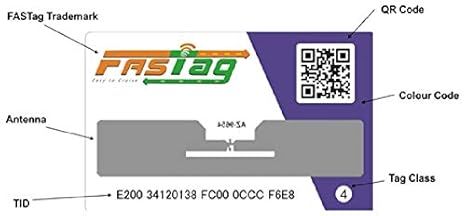
    • FASTags are stickers that are affixed to the windscreen of vehicles and use Radio Frequency Identification (RFID) technology to enable digital, contactless payment of tolls without having to stop at toll gates.
    • The tags are linked to bank accounts and other payment methods.
    • As a car crosses a toll plaza, the amount is automatically deducted, and a notification is sent to the registered mobile phone number.

    How does it work?

    • The device employs Radio Frequency Identification (RFID) technology for payments directly from the prepaid or savings account linked to it.
    • It is affixed on the windscreen, so the vehicle can drive through plazas without stopping.
    • RFID technology is similar to that used in transport access-control systems, like Metro smart card.
    • If the tag is linked to a prepaid account like a wallet or a debit/credit card, then owners need to recharge/top up the tag.
    • If it is linked to a savings account, then money will get deducted automatically after the balance goes below a pre-defined threshold.
    • Once a vehicle crosses the toll, the owner will get an SMS alert on the deduction. In that, it is like a prepaid e-wallet.

    Must read:

    [Burning Issue] Implementation of FASTags

  • [pib] National Monsoon Mission

    Under the National Monsoon Mission (NMM), Ministry of Earth Sciences has developed the state-of-the-art weather and climate prediction models, which are now in operational use.

    Tap to read about the mechanism of Indian Monsoon System at:

    The Southwest Monsoon Season (Jun – Sep) | Part 1

    National Monsoon Mission (NMM)

    • Ministry of Earth Sciences (MoES) had launched NMM in 2012 with a vision to develop a state-of-the-art dynamical prediction system for monsoon rainfall on different time scales.
    • The responsibility of execution and coordination of this mission is vested to the Indian Institute of Tropical Meteorology (IITM), Pune.
    • Climate Forecast System (CFS) of USA has been identified as the basic modelling system for the above purpose, as it is one of the best among the currently available coupled models.

    Targets of NMM

    • Development of a seamless prediction system using monsoon mission model, on different time scales, like Seasonal (for whole Monsoon season), extended-range (upto 4 weeks), short-range prediction (up-to 5days).
    • Initiate and coordinate the working partnership between Indian and foreign institutes to develop a system for prediction of extremes and climate applications
    • Develop and implement the system for climate applications having social impacts (such as agriculture, flood forecast, extreme events forecast, wind energy, etc.
    • Advanced data assimilation system for preparing high-quality data for model predictions.

    Achievements of NMM during the last 3 years

    • Setting up of an advanced prediction system for Seasonal prediction; Extended range prediction and Very high-resolution Short-range prediction.
    • Commissioning of a Global Ensemble Forecast System (GEFS) for short and medium-range prediction at 12km.
    • The Cyclone track and intensity prediction has also shown a steady improvement over the last three years.
    • The operationalization of Monsoon Mission dynamical model (MMCFS) to prepare operational seasonal forecast of monsoon rainfall and temperatures during the hot and cold weather seasons over India.
    • Development of an algorithm to monitor and predict the Monsoon Intra-seasonal Oscillations (MISO) and Madden-Julian Oscillation (MJO) on the extended range.
    • Development of an index to predict the genesis and evolution of tropical cyclones and other cyclonic disturbances over the north Indian Ocean.
  • Dickinsonia fossil discovered in Bhimbetka

    Researchers have found the first-ever fossil in India of a Dickinsonia —the Earth’s ‘oldest animal’, dating back 570 million years — on the roof of what’s called the ‘Auditorium Cave’ at Bhimbetka.

    Dickinsonia

    • Dickinsonia is an extinct genus of basal animal that lived during the late Ediacaran period in what is now Australia, Russia and Ukraine.
    • The individual Dickinsonia typically resembles a bilaterally symmetrical ribbed oval.
    • Its affinities are presently unknown; its mode of growth is consistent with a stem-group bilaterian affinity, though some have suggested that it belongs to the fungi or even an “extinct kingdom”.
    • The discovery of cholesterol molecules in fossils of Dickinsonia lends support to the idea that Dickinsonia was an animal.

    What are the new findings?

    Like the awe-inspiring rock shelters themselves, this fossil was discovered by chance.

    • Dickinsonia fossils have shown that they could exceed four feet in length but the one found in Bhimbetka is 17 inches long.
    • Eleven feet above the ground, almost blending with the rock and easily mistaken by laymen for prehistoric rock art, they found imprints of the Dickinsonia.
    • It is believed to be one of the key links between the early, simple organisms and the explosion of life in the Cambrian Period, about 541 million years ago.

    Cambrian Explosion and Dickinsonia

    • The ‘Cambrian Explosion’ is the term given to the period of time in history when complex animals and other macroscopic organisms such as molluscs, worms, arthropods and sponges began to dominate the fossil record.
    • Researchers from Australian found the Dickinsonia fossil since its tissue contained molecules of cholesterol a type of fat that is the hallmark of animal life.

    Do you know?

    Cosmogenic nuclide dating is deployed to determine time of earliest human culture. India’s oldest stone-age tools, up to 1.5 million years old, are at a prehistoric site near Chennai.

    About Bhimbetka

    • The Bhimbetka rock shelters are an archaeological site in central India that spans the prehistoric Paleolithic and Mesolithic periods, as well as the historic period.
    • It exhibits the earliest traces of human life in India and evidence of Stone Age starting at the site in Acheulian times.
    • It is located in the Raisen District in Madhya Pradesh about 45 kilometres (28 mi) south-east of Bhopal.
    • It is a UNESCO World Heritage Site that consists of seven hills and over 750 rock shelters distributed over 10 km (6.2 mi).
    • At least some of the shelters were inhabited more than 100,000 years ago.
    • Some of the Bhimbetka rock shelters feature prehistoric cave paintings and the earliest are about 10,000 years old (c. 8,000 BCE), corresponding to the Indian Mesolithic.
    • These cave paintings show themes such as animals, early evidence of dance and hunting.
    • The Bhimbetka rock shelters were found by V S Wakankar 64 years ago. Since then, thousands of researchers have visited the site, but this rare fossil went undetected.
  • Einsteinium: the mysterious element named after Albert Einstein

    The University of California has reported some of the properties of element 99 in the periodic table called “Einsteinium”, named after Albert Einstein.

    Try this PYQ:

    Q.The known forces of nature can be divided into four classes, viz, gravity, electromagnetism, weak nuclear force and strong nuclear force.

    With reference to them, which one of the following statements is not correct? (CSP 2012)

    (a) Gravity is the strongest of the four

    (b) Electromagnetism act only on particles with an electric charge

    (c) Weak nuclear force causes radioactivity

    (d) Strong nuclear force holds protons and neutrons inside the nuclear of an atom.

    Einsteinium

    • It was discovered in 1952 in the debris of the first hydrogen bomb (the detonation of a thermonuclear device called “Ivy Mike” in the Pacific Ocean).
    • Since its discovery, scientists have not been able to perform a lot of experiments with it because it is difficult to create and is highly radioactive.
    • Therefore, very little is known about this element.
    • With this new study published in the journal Nature last week, for the first time researchers have been able to characterize some of the properties of the element.

    The discovery of the element

    • Ivy Mike was detonated on November 1, 1952, as part of a test at a remote island location called Elugelab on the Eniwetok Atoll in the South Pacific.
    • The blast produced an explosion that was about 500 times more destructive than the explosion that occurred at Nagasaki.
    • Subsequently, the fallout material from this explosion was sent to Berkeley in California for analysis which identified over 200 atoms of the new element.

    Properties of the element

    • Einsteinium has a half-life of 20 days.
    • Because of its high radioactivity and short half-life of all einsteinium isotopes, even if the element was present on Earth during its formation, it has most certainly decayed.
    • This is the reason that it cannot be found in nature and needs to be manufactured using very precise and intense processes.
    • Therefore, so far, the element has been produced in very small quantities and its usage is limited except for the purposes of scientific research.
    • The element is also not visible to the naked eye and after it was discovered, it took over nine years to manufacture enough of it so that it could be seen with the naked eye.
  • [pib] KAPILA for patent awareness

    The Government has launched a campaign namely KAPILA for Intellectual Property Literacy and creating patent awareness, informed Union Ministry for Education to the Parliament.

    Remember one thing, ‘KAPILA’ Program is related to IP awareness. It sounds much like an animal husbandry related initiative.

    KAPILA Initiative

    • KAPILA is an acronym for Kalam Program for IP (Intellectual Property) Literacy and Awareness.
    • Under this campaign, students pursuing education in higher educational institutions will get information about the correct system of the application process for patenting their invention and they will be aware of their rights.
    • The program will facilitate the colleges and institutions to encourage more and more students to file patents.

    Why in news?

    • As many as 46,556 users have registered for the Union Government’s Intellectual Property Literary project.
    • This marks the success of the campaign.
  • 5G Technology and India’s preparedness


    The Department of Telecommunications (DoT) has sought inputs from telcos and other industry experts on the sale and use of radiofrequency spectrum over the next 10 years, including the 5G bands.

    Try this PYQ:

    Q. In India, which of the following review the independent regulators in sectors like telecommunications, insurance, electricity, etc.?

    1. Ad Hoc Committees set up by the Parliament
    2. Parliamentary Department Related Standing Committees
    3. Finance Commission
    4. Financial Sector Legislative Reforms Commission
    5. NITI Aayog

    Select the correct answer using the code given below:

    (a) 1 and 2

    (b) 1, 3 and 4

    (c) 3, 4 and 5

    (d) 2 and 5

    What is 5G technology?

    • 5G or fifth generation is the latest upgrade in the long-term evolution (LTE) mobile broadband networks.
    • It mainly works in 3 bands, namely low, mid and high-frequency spectrum — all of which have their own uses as well as limitations.

    Three bands of 5G

    • The low band spectrum has shown great promise in terms of coverage and speed of internet and data exchange, the maximum speed is limited to 100 Mbps (Megabits per second).
    • This means that while telcos can use and install it for commercial cellphones users who may not have specific demands for very high-speed internet, the low band spectrum may not be optimal for specialised needs of the industry.
    • The mid-band spectrum, on the other hand, offers higher speeds compared to the low band but has limitations in terms of coverage area and penetration of signals.
    • Telcos and companies, which have taken the lead on 5G, have indicated that this band may be used by industries and specialised factory units for building captive networks that can be moulded into the needs of that particular industry.
    • The high-band spectrum offers the highest speed of all the three bands, but has extremely limited coverage and signal penetration strength.
    • Internet speeds in the high-band spectrum of 5G have been tested to be as high as 20 Gbps (gigabits per second), while, in most cases, the maximum internet data speed in 4G has been recorded at 1 Gbps.

    Where does India stand in the 5G technology race?

    • On par with the global players, India had, in 2018, planned to start 5G services as soon as possible, with an aim to capitalize on the better network speeds and strength that the technology promised.
    • Indian private telecom players have been urging the DoT to lay out a clear road map of spectrum allocation and 5G frequency bands so that they would be able to plan the rollout of their services accordingly.
    • One big hurdle, however, is the lack of flow of cash and adequate capital with some companies due to their AGR dues.

    Global progress on 5G

    • More than governments, global telecom companies have started building 5G networks and rolling it out to their customers on a trial basis.
    • In countries like the US, some companies have taken the lead when it comes to rolling out commercial 5G for their users.
    • A South Korean company, which had started researching on 5G technology way back in 2011, has, on the other hand, take the lead when it comes to building the hardware for 5G networks for several companies.

  • Lithium deposits in Karnataka

    Alongside a move to tap into the global lithium value chain, India has initiated a concerted domestic exploration in Karnataka’s Mandya district.

    Lithium reserves in Karnataka

    • Preliminary surveys by the Atomic Minerals Directorate for Exploration and Research (AMD), an arm of the Department of Atomic Energy has carried out the exploration.
    • AMD is carrying out surface and sub-surface exploration for lithium in potential geological domains of the country.
    • Their research has shown the presence of 1,600 tonnes of lithium resources in the igneous rocks of the Marlagalla-Allapatna region of Karnataka’s Mandya district.

    Must read:

    Global producers of lithium

    • Australia and Chile have swapped positions as the world’s leading lithium-producing country over the past decade. In 2019, the world’s Top 5 lithium producers were:
    1. Australia – 52.9% of global production
    2. Chile – 21.5%
    3. China – 9.7%
    4. Argentina – 8.3%
    5. Zimbabwe – 2.1%
    • The U.S. ranked 7th with 1.2% of the world’s lithium production.

    In 2019, the world’s Top 5 lithium reserves by country were:

    1. Chile – 55.5% of the world’s total

    2. Australia – 18.1%

    3. Argentina – 11.0%

    4. China – 6.5%

    5. U.S. – 4.1%

    Why is the exploration significant?

    • India currently imports all its lithium needs.
    • The find in Mandya is extremely small in quantitative terms, but it marks some initial success in the attempt to domestically mine the silver-white metal by way of hard-rock extraction of the ore.
    • The domestic exploration push comes at a time when India has stepped up its economic offensive against China, a major source of lithium-ion energy storage products being imported into the country.
    • The Marlagalla-Allapatna area is seen as among the most promising geological domains for potential exploration for lithium and other rare metals.

    What lies ahead?

    • India is seen as a late mover in attempts to enter the lithium value chain, coming at a time when EVs are predicted to be a sector ripe for disruption.
    • 2021 is likely to be an inflexion point for battery technology – with several potential improvements to the li-ion technology, and alternatives to this tried-and-tested formulation in advanced stages of commercialization.

    Back2Basic: Li-Ion battery

    • Whittingham developed the first functional lithium-ion battery in 1976, Goodenough brought in a major improvement in 1980, while Yoshino made the first practical-use lithium-ion battery in 1985.
    • Commercially manufactured lithium-ion batteries, based on what Yoshino had developed, made their first appearance in 1991.

    Its’ working

    • Batteries convert chemical energy into electricity.
    • A battery comprises two electrodes, a positive cathode and a negative anode, which is separated by a liquid chemical, called an electrolyte, which is capable of carrying charged particles.
    • The two electrodes are connected through an electrical circuit.
    • When the circuit is on, electrons travel from the negative anode towards the positive cathode, thus generating an electric current, while positively charged ions move through the electrolyte.