💥Join UPSC 2027,2028 Mentorship (August Batch) + XFactor Notes & Microthemes PDF

Subject: Biotech and Medical Sciences

  • Naegleria fowleri: The Brain-eating Amoeba

    naegleria

    South Korea reported its first case of infection from Naegleria fowleri or “brain-eating amoeba”.

    What is Naegleria fowleri (Amoeba)?

    • Amoeba is a type of cell or unicellular organism with the ability to alter its shape, primarily by extending and retracting pseudopods.
    • Naegleria is an amoeba, a single-celled organism, and only one of its species, called Naegleria fowleri, can infect humans.
    • It was first discovered in Australia in 1965 and is commonly found in warm freshwater bodies, such as hot springs, rivers and lakes.
    • So far, Naegleria fowleri has been found in all continents and declared as the cause of PAM in over 16 countries, including India.

    How does it infect humans?

    • The amoeba enters the human body through the nose and then travels up to the brain.
    • This can usually happen when someone goes for a swim, or dive or even when they dip their head in a freshwater body.
    • In some cases, it was found that people got infected when they cleaned their nostrils with contaminated water/ vapour/ or aerosol droplets.
    • Once Naegleria fowleri goes to the brain, it destroys brain tissues and causes a dangerous infection known as primary amebic meningoencephalitis (PAM).

    What are the symptoms of PAM?

    • The CDC says the first signs of PAM start showing within one to 12 days after the infection.
    • In the initial stages, they might be similar to symptoms of meningitis, which are headache, nausea and fever.
    • In the later stages, one can suffer from a stiff neck, seizures, hallucinations, and even coma.
    • The infection spreads rapidly and on average causes death within about five days.

    How its spread is linked to climate change?

    • With the rising global temperatures, the chances of getting Naegleria fowleri infection will go up as the amoeba mainly thrives in warm freshwater bodies.
    • The organism best grows in high temperatures up to 46°C and sometimes can survive at even higher temperatures.
    • Various recent studies have found that excess atmospheric carbon dioxide has led to an increase in the temperature of lakes and rivers.
    • These conditions provide a more favourable environment for the amoeba to grow.


    Click and get your FREE Copy of CURRENT AFFAIRS Micro Notes

    (Click) FREE 1-to-1 on-call Mentorship by IAS-IPS officers | Discuss doubts, strategy, sources, and more

  • How can mRNA vaccines help fight cancer?

    mrna

    The results of a trial of an experimental cancer vaccine built on the mRNA (messenger ribonucleic acid) platform, made by Moderna and MSD (Merck&Co.), have shown promising results.

    What is mRNA?

    mrna

    • Messenger RNA (mRNA) is a single-stranded RNA (Ribo Nucleic Acid) molecule that is complementary to one of the DNA strands of a gene.
    • The mRNA is an RNA version of the gene that leaves the cell nucleus and moves to the cytoplasm where proteins are made.
    • During protein synthesis, an organelle called a ribosome moves along the mRNA, reads its base sequence, and uses the genetic code to translate each three-base triplet, or codon, into its corresponding amino acid.

    What are mRNA vaccines?

    • mRNA vaccines work by introducing a piece of mRNA that corresponds to a viral protein, usually a small piece of a protein found on the virus’s outer membrane.
    • Individuals who get an mRNA vaccine are not exposed to the virus, nor can they become infected with the virus by the vaccine.
    • As part of a normal immune response, the immune system recognizes that the protein is foreign and produces specialized proteins called antibodies.
    • Antibodies help protect the body against infection by recognizing individual viruses or other pathogens, attaching to them, and marking the pathogens for destruction.
    • Once produced, antibodies remain in the body, even after the body has rid itself of the pathogen, so that the immune system can quickly respond if exposed again.

    How does the vaccine work?

    • The personalized cancer vaccine uses the same messenger-RNA technology that was used to produce the COVID vaccine.
    • It allows the body’s immune system to seek and destroy cancerous cells, in this case melanoma, but with the hope that it could lead to new ways to fight other types of cancers too.

    Why is it a significant feat?

    • The cancer vaccine showed a 44% reduction in the risk of dying of cancer or having the cancer progress.
    • As a personalized cancer vaccine, it is tailor-made for every patient.
    • As a consequence, it is expected to be very expensive to make.
    • But oncologists across the world have welcomed this as an exciting new opportunity in cancer care.


    Click and get your FREE Copy of CURRENT AFFAIRS Micro Notes

    (Click) FREE 1-to-1 on-call Mentorship by IAS-IPS officers | Discuss doubts, strategy, sources, and more

  • What is Base Editing?

    A teenage cancer patient suffering from T-cell acute lymphoblastic leukaemia (T-ALL) has defeated her seemingly incurable cancer with the help of base editing technique.

    Base Editing

    • Bases are the language of life. The four types of base – adenine (A), cytosine (C), guanine (G) and thymine (T) – are the building blocks of our genetic code.
    • Just as letters in the alphabet spell out words that carry meaning, the billions of bases in our DNA spell out the instruction manual for our body.
    • Base editing allows scientists to zoom to a precise part of the genetic code and then alter the molecular structure of just one base, converting it into another and changing the genetic instructions.
    • The large team of doctors and scientists used this tool to engineer a new type of T-cell that was capable of hunting down and killing cancerous T-cells.

    base-editing

    What is T-Cell?

    • T (thymus) cells are type of white blood cell.
    • They are part of the immune system and develop from stem cells in the bone marrow.
    • They help protect the body from infection and may help fight cancer.
    • Also called T lymphocyte and thymocyte.

    How base editing helped this teenage cancer patient?

    • Doctors started with healthy T-cells that came from a donor and set about modifying them.
    • The first base edit disabled the T-cells targeting mechanism so they would not assault patient’s body.
    • The second removed a chemical marking, called CD7, which is on all T-cells.
    • The third edit was an invisibility cloak that prevented the cells being killed by a chemotherapy drug.
    • The final stage of genetic modification instructed the T-cells to go hunting for anything with the CD7 marking on it so that it would destroy every T-cell in patient’s body – including the cancerous ones.
    • That’s why this marking has to be removed from the therapy – otherwise it would just destroy itself.
    • If the therapy works, the patient’s immune system – including T-cells – will be rebuilt with the second bone-marrow transplant.


    Click and get your FREE Copy of CURRENT AFFAIRS Micro Notes

    (Click) FREE 1-to-1 on-call Mentorship by IAS-IPS officers | Discuss doubts, strategy, sources, and more

  • Removing the Menopause taboo

    Menopause

    Click and get your FREE Copy of CURRENT AFFAIRS Micro Notes

    Context

    • Recent announcement by the National Health Services (NHS) in the UK that menopausal women on their staff will be able to work out of the home should their symptoms require it, is about path-finding and working the middle ground in the workplace.
    • NHS chief Amanda Pritchard said that other employers should follow suit to help middle-aged women “thrive” at work and those “silently suffering” should not be expected to “grin and bear it.”

    Background: A menopausal taboo questions women’s potential?

    • The context opening up the conversation at least: If nothing, such a move has at least been a conversation starter about what has been so far a taboo in the workplace and a reason to hive off women than allow them ease of thriving.
    • Misconception that women may not work efficiently: Yet, just like pregnancy, the end of a woman’s reproductive cycle is seen as her losing energy, drive, desire, stamina, excitement and capability, in short, a cliff-jumping drop of her value in wisdom and experience.
    • On the contrary most women do best in this phase: Ironically, this phase, between the mid-40s to the mid-50s, is where you would find most women reaching the top, having battled biases of motherhood, leaving no questions unanswered on their competence and commitment.
    • Yet questions raised about her worth and never about her comfort: When a woman employee crosses the age bar, she has to prove her worth all over again. Is she as good, is she capable of thinking afresh, can she pull long hours? It is never about “is she comfortable?” Sadly, her body of work matters little.
    • Constant pressure on women to prove the worth forces to overlook themselves: And it is this constant pressure to feed expectations that forces even confident women to overwork themselves to stay relevant despite those painful bouts of endometriosis, heavy bleeding, hot flushes, insomnia, fatigue, anxiety, hypertension and palpitations. All of these are terribly debilitating but manageable with a little breathing space.

    What is menopause?

    • Menopause is a point in time 12 months after a woman’s last period.
    • Menopausal transition may commonly be referred to as “menopause,” true menopause doesn’t happen until one year after a woman’s final menstrual period.

    Menopause

    Menopausal transition

    • The years leading up to that point, when women may have changes in their monthly cycles, hot flashes, or other symptoms, are called the menopausal transition or perimenopause.
    • The menopausal transition most often begins between ages 45 and 55.
    • It usually lasts about seven years but can be as long as 14 years.The duration can depend on lifestyle factors such as smoking, age it begins, and race and ethnicity.
    • During perimenopause, the body’s production of estrogen and progesterone, two hormones made by the ovaries, varies greatly.
    • Estrogen is used by many parts of a woman’s body. As levels of estrogen decrease, one could have various symptoms. Many women experience mild symptoms that can be treated by lifestyle changes. Some women don’t require any treatment at all.

    Did you know?

    • According to the Harvard Medical School, a post-menopausal woman’s symptoms of a heart attack are “different from a man’s and she’s much more likely than a man to die within a year of having a heart attack.
    • Women also don’t seem to fare as well as men do after taking clot-busting drugs or undergoing certain heart-related medical procedures.”

    What are the signs and symptoms of menopause?

    • Change in your period: Women periods may no longer be regular. They may be shorter or last longer. Bleeding may be more or less than usual.
    • Hot flashes: Many women have hot flashes, which can last for many years after menopause. They may be related to changing estrogen levels. A hot flash is a sudden feeling of heat in the upper part or all of the body.
    • Disturbed Sleep: Around midlife, some women start having trouble getting a good night’s sleep.
    • Vaginal health and sexuality: After menopause, the vagina may become drier, which can make sexual intercourse uncomfortable. Women may find that the feelings about sex are changing.
    • Mood changes: Women might feel moodier or more irritable around the time of menopause. Scientists don’t know why this happens. It’s possible that stress, family changes such as growing children or aging parents, a history of depression, or feeling tired could be causing these mood changes.
    • Body features may alter: The body begins to use energy differently, fat cells change, and women may gain weight more easily. Women might have memory problems as well as joints and muscles could feel stiff and achy.

    Menopause

    How menopause affects Women health?

    • Severe and unexpected physiological challenges: As the hormone oestrogen dips, it pushes up bad cholesterol or LDL levels, raising their cardiac risk more than men. They even have higher concentrations of total cholesterol than men.
    • Psychological challenges: Strangely even women in the menopausal period are not concerned about their life risks as they get caught in the vanity trap and worry more about issues related to their body image, sexuality and self-esteem. Some rush into Menopausal Hormone Therapy (MHT), which is not quite the elixir of youth, and often has deadly side effects like uterine and breast cancer. These elevated risk factors, however, can be reduced if women were to be less stressed about tiring out their bodies to prove a point.

    The conversation over the menopause

    • In India: However, in India, where motherhood is seen as a major career impediment for women, menopause is a far cry, often bottled up in hushed conversations among women in the office loo.
    • Progressive step in UK: The UK Parliament commissioned a survey that showed how one in three women were missing work due to menopause.
    • Italy and Australia: Italy and Australia are debating about including menopause in work ethics norms.
    • EU parliament: Recently, the EU Parliament put out a statement, saying, “The failure to address menopause as a workplace issue is increasingly leading to insufficient protection of female workers and the early exit of women from labour markets, and thereby increasing the risk of women’s economic dependence, poverty and social exclusion, contributing to the loss of women’s knowledge, skills and experience, and leading to significant economic losses.”

    Menopause

    Conclusion

    • Considering that women will go through this biological phase at least for eight years in their work life, a little sensitivity to their concerns would matter more than a debate on whether they should be allowed extra benefits.

    Mains Question

    Q. What is menopausal transition? Menopause at work place often seen as taboo to talk, In this background, highlight the changes taking place.

    (Click) FREE1-to-1 on-call Mentorship by IAS-IPS officers | Discuss doubts, strategy, sources, and more

  • Gold-Mushroom Nanoparticle to ease Drug Delivery

    gold

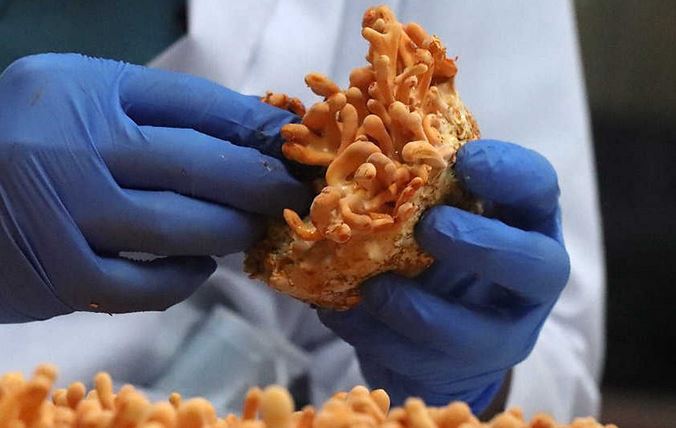
    Cordy gold nanoparticles (Cor-AuNPs), the outcome of a collaborative experiment by scientists from four Indian institutions, has earned an international patent from Germany.

    What is Cordy gold nanoparticles ?

    • Cordy gold nanoparticles (Cor-AuNPs) are derived from the synthesis of the extracts of Cordyceps militaris and gold salts.
    • They could make drug delivery in the human body faster and surer.
    • Cordyceps militaris is a high-value parasitic fungus, lab-grown at the Department of Biotechnology’s Technology Incubation Centre (TIC) in Bodoland University.
    • Gold salts are ionic chemical compounds of gold generally used in medicine.

    Benefits offered by this nanoparticle

    • Penetration in the cells is more when the drug particles are smaller.
    • Cordyceps militaris adds bioactive components to the synthesis of gold nanoparticles for better penetration.
    • It can be delivered as ointments, tablets, capsules, and in other forms.

    Back2Basics: Gold Nanoparticles for Medicines

    • Gold nanoparticles (AuNPs) are small gold particles with a diameter of 1 to 100 nm which, once dispersed in water, are also known as colloidal gold.
    • Functionalized gold nanoparticles with controlled geometrical and optical properties are the subject of intensive studies and biomedical applications.
    • They find applications in genomics, biosensorics, immunoassays, clinical chemistry, laser phototherapy of cancer cells and tumors, the targeted delivery of drugs etc.


    Click and get your FREE copy of Current Affairs micro notes

  • An Indian Pioneer of ORT

    ORT

    Context

    • In the demise of Dilip Mahalabnis on October 16 we lost a pioneering public health physician the ORS pioneer who helped save millions of lives. In 1978, a Lancet editorial termed ORS the most important medical advance in this century.

    Background

    • ORT was first introduced worldwide in the 1970s to treat millions of children suffering from severe dehydration in crisis-stricken and impoverished areas. At the time, the world’s leading general medical journal The Lancet called ORT “potentially the most important medical advance since penicillin.”
    • A Lancet editorial in 1978 termed it “potentially the most important medical advance this century”.

    Interesting story of Dilip Mahalabnis and invention of ORT

    • Mahalanabis was trained as a paediatrician and joined the Cholera Research Programme of the Johns Hopkins University Center for Medical Research and Training (JHCMRT) in Calcutta in 1966.
    • His team was treating cases of the cholera epidemic in a camp in Bangaon, West Bengal that housed 3,50,000 refugees but ran out of intravenous fluids. He thought that it would be opportune to use ORS. As no ORS packets were available, they mixed salt and sugar solution (ORS) in drums and administered it to the cholera patients in the camps.
    • The library of the JHCMRT was converted into a factory. This was not a mandated mode of treatment and at great personal risk, Mahalanabis chose to respond to the humanitarian crisis in this manner.
    • It was evident in two to three weeks’ time that not only was the therapy working but that it was possible to administer ORT through volunteers (in the absence of a sufficient number of trained workers).
    • It was subsequently analyzed that ORS reduced mortality due to cholera or acute diarrhoeal diseases in these camps from 40 per cent to 5 per cent. They coined the term “oral saline” and rest is the story.

    ORT

    What is Oral Rehydration Therapy (ORT)?

    • A fluid to correct dehydration: Oral Rehydration Therapy (ORT) entails drinking water with modest amounts of sugar and salts, specifically sodium and potassium to correct dehydration due to fluid losses from diarrhoea.
    • ORT ingredients: ORT combines three ingredients such as salts, sugars and water to quickly reverse the signs of dehydration. Through the process of osmosis, the salts and sugars pull water into your bloodstream and speed up rehydration.
    • Essential electrolytes which replenish Blood: ORT also replenishes your blood with essential electrolytes (minerals) that are lost due to intense exercise, exposure to extreme weather conditions, or diarrhea and other illnesses. Water doesn’t contain electrolytes and so, ironically, water alone cannot cure dehydration like ORT.
    • An effective electrolyte: Administration of fluids through the intravenous route used to be the mainstay of management of cholera till the results of a study demonstrated that an oral solution of glucose and electrolytes was effective for replacing water and electrolyte losses.
    • Quick and efficient: The translation of the basic science concept to quick and efficient practice was, however, not easy. And that is the fascinating story and sterling contribution of Mahalanabis and his co-workers on ORT.

    What is Dehydration?

    • Dehydration occurs when you use or lose more fluid than you take in, and your body doesn’t have enough water and other fluids to carry out its normal functions. If you don’t replace lost fluids, you will get dehydrated.

    ORT

    What is Disease Cholera?

    • Cholera is an acute diarrhoeal infection caused by ingestion of food or water contaminated with the bacterium Vibrio cholerae that can kill within hours if left untreated.
    • Most of those infected will have no or mild symptoms and can be successfully treated with oral rehydration solution. Cholera affects both children and adults.
    • Provision of safe water and sanitation is critical to prevent and control the transmission of cholera and other waterborne diseases.
    • Cholera remains a global threat to public health and an indicator of inequity and lack of social development.

    Recent outbreak of cholera In India

    • Cholera is said to be endemic in India. However, the reported cases in India tend to be much lesser than the actual numbers, say doctors and experts.
    • The number of cases is rising in India because we still lack the basic sanitation, hygiene and access to clean water in many communities,
    • The country reports nearly 20,000 to 30,000 cases of cholera every year, usually during the monsoon season of July to September.
    • Climate change adds up another layer to the cholera outbreak.

    Contribution of ORT to the world.

    • As a perfect alternative over the prevailing doctrine: ORT was in marked contrast to the then prevailing doctrine of patients being given only sips of water without food, euphemistically called “resting the stomach”, often worsening the underlying malnutrition.
    • For Diarrhoea: An estimated 54 million diarrhoeal deaths were averted by ORT alone between 1978 and 2008, such was the magnitude of its beneficial impacts. ORT for the management of severe diarrhea was developed in the latter half 1960s. WHO launched a worldwide campaign in 1978 to reduce mortality related to diarrhea, with ORT as one of the key elements.
    • For cholera: Administration of fluids through the intravenous route used to be the mainstay of management of cholera till the results of a study demonstrated that an oral solution of glucose and electrolytes was effective for replacing water and electrolyte losses
    • Cholera pandemic: This period coincided with the seventh cholera pandemic (El Tor biotype) that started in Indonesia in 1961 and spread to East Pakistan (Bangladesh) by 1963 and to India in 1964. Though experiments with ORS were underway, the WHO responded in 1970 by distributing large amounts of intravenous fluids – a move marked by high transportation costs and limited utilization on account of a shortage of a trained health workforce. The focus of the Southeast Asia Treaty Organization (SEATO), through the Cholera Research Laboratory in Dhaka, was to find a vaccine to protect the US troops from cholera attacks in Southeast Asia.
    • One solution for everyone: Athletes; people with illnesses, especially babies and toddlers; seniors; military personnel stationed in extreme climates; air travelers who lose electrolytes every time they fly: They all stand to dramatically improve their health and well-being with ORT.

    ORT

    Conclusion

    • Dilip Mahalanabis pioneered a simple and effective solution for diarrhoea that saves millions of lives which can be considered as one of the greatest contributions of Indian in medical sciences. To carry the carry legacy forward young scientists should step in.

    Mains Question

    Q. What do you Understand by Oral Rehydration Therapy? How it could be effective in tackling the yearly outbreaks of Cholera in India and the world. Discuss.

    UPSC 2023 countdown has begun! Get your personal guidance plan now! (Click here)

  • Dr. Mahalanabis: the man behind ORS no more

    ors

    While Oral Rehydration Solution (ORS) as a simple, effective remedy for dehydration is known around the world, the physician who pioneered the treatment, Dr. Dilip Mahalanabis, passed away.

    What is ORS?

    • Oral rehydration therapy is a type of fluid replacement used to prevent and treat dehydration, especially due to diarrhea.
    • It involves drinking water with modest amounts of sugar and salts, specifically sodium and potassium.
    • Oral rehydration therapy can also be given by a nasogastric tube.

    About Dr. Mahalanabis

    • Born on November 12, 1934 in West Bengal, Dr Mahalanabis studied in Kolkata and London.
    • He joined the Johns Hopkins University International Centre for Medical Research and Training in Kolkata in the 1960s, where he carried out research in oral rehydration therapy.
    • When the 1971 war broke out, millions of people from then East Pakistan took refuge in India.
    • Clean drinking water and sanitation were problems at these refugee camps, and cholera and diarrhoea broke out among people anyway exhausted and dehydrated.
    • Dr Mahalanabis and his team were working in one such camp at Bongaon.
    • Stocks of intravenous fluids were running out, on top of which there weren’t enough trained personnel to administer the IV treatment.

    How he discovered ORS?

    • From his research, Dr Mahalanabis knew that a solution of sugar and salt, which would increase water absorption by the body, could save lives from Cholera.
    • He and his team then prepared solutions of salt and glucose in water and began storing them in large drums, from where patients or their relatives could help themselves.
    • The oral solution then consisted of 22 gm glucose (as commercial monohydrate), 3.5 gm sodium chloride (as table salt) and 2.5 gm sodium bicarbonate (as baking soda) per liter of water.
    • This was the simplest formula, containing the minimum number of ingredients, previously found to be effective in severely ill patients with cholera.

    His legacy

    • While initially, the medical fraternity was septical, the WHO eventually adopted ORS as the standard method for treating cholera and other diarrhoeal diseases.
    • Today, the WHO recommends a combination of sodium chloride, anhydrous glucose, potassium chloride and Trisodium citrate dihydrate as the ORS formula.
    • In India, July 29 is observed as ORS Day.


    UPSC 2023 countdown has begun! Get your personal guidance plan now! (Click here)

  • Medicine Nobel for Work on Human Evolution

    Swedish scientist Svante Paabo won the Nobel Prize in medicine for his discoveries on human evolution that provided key insights into our immune system and what makes us unique compared with our extinct ancestors.

    Svante Paabo: His work, explained

    • Svante Paabo’s seminal discoveries provide the basis for exploring what makes us uniquely human.
    • Hominins refer to the now-extinct species of apes that are believed to be related to modern humans, as well as modern humans themselves.
    • Paabo found that gene transfer had occurred from these now extinct Hominins to Homo sapiens following the migration out of Africa around 70,000 years ago.
    • This ancient flow of genes to present-day humans has physiological relevance today, for example affecting how our immune system reacts to infections.
    • Paabo established an entirely new scientific discipline, called paleogenomics that focuses on studying the DNA and genetic information of extinct hominins through reconstruction.

    What is the relation between evolution and biology?

    • Paabo’s discoveries have established a unique resource, which is utilized extensively by the scientific community to better understand human evolution and migration.
    • We now understand that archaic gene sequences from our extinct relatives influence the physiology of present-day humans.

    How did Paabo establish the linkage?

    • Paabo extracted DNA from bone specimens from extinct hominins, from Neanderthal remains in the Denisova caves of Germany.
    • The bone contained exceptionally well-preserved DNA, which his team sequenced.
    • It was found that this DNA sequence was unique when compared to all known sequences from Neanderthals and present-day humans.
    • Comparisons with sequences from contemporary humans from different parts of the world showed that gene flow, or mixing of genetic information among a species, had also occurred between Denisova and Homo sapiens – the species of modern-day humans.
    • This relationship was first seen in populations in Melanesia (near Australia) and other parts of South East Asia, where individuals carry up to 6% Denisova DNA.
    • The Denisovan version of the gene EPAS1 confers an advantage for survival at high altitudes and is common among present-day Tibetans.

    What are the challenges in carrying out such research?

    • There are extreme technical challenges because with time DNA becomes chemically modified and degrades into short fragments.
    • The main issue is that only trace amounts of DNA are left after thousands of years, and exposure to the natural environment leads to contamination with DNA.

    Back2Basics: Neanderthal Man

    neanderthal

    • Neanderthals were humans like us, but they were a distinct species called Homo Neanderthalensis.
    • Together with an Asian people known as Denisovans, Neanderthals are our closest ancient human relatives. Scientific evidence suggests our two species shared a common ancestor.
    • Current evidence from both fossils and DNA suggests that Neanderthal and modern human lineages separated at least 500,000 years ago. Some genetic calibrations place their divergence at about 650,000 years ago.
    • The best-known Neanderthals lived between about 130,000 and 40,000 years ago, after which all physical evidence of them vanishes.
    • They evolved in Europe and Asia while modern humans – our species, Homo sapiens – were evolving in Africa.


    UPSC 2023 countdown has begun! Get your personal guidance plan now! (Click here)

  • MeFSAT Database for Medicinal Fungi

    mefsat

    An analytical study of medicinal fungi using MeFSAT carried out by researchers from Chennai shows that some chemicals they secrete may find use as novel drugs.

    What is MeFSAT?

    • MeFSAT (Medicinal Fungi Secondary Metabolites and Therapeutics) is a database that compiles information on 184 medicinal fungi, including mushrooms.
    • It is a manually curated database that compiles information on secondary metabolites and reported therapeutic uses of medicinal fungi from published research articles and specialized books on the subject.

    Why in news?

    • Chennai-based researchers analysed the structure of 1,830 secondary metabolites of medicinal fungi.
    • Secondary metabolites are chemical compounds that fungi produce when they are stressed.
    • They enhance the fungus’ ability to survive.

    What are medicinal fungi?

    • Medicinal fungi belongs to two taxonomic divisions namely, basidiomycota and ascomycota.
    • Mushrooms belong to the basidiomycota division. An example is Agaricus bisporus, the button mushroom, which can be consumed.
    • Fungi belonging to the ascomycota division are generally not mushrooms.

    Examples of fungi-based medicines

    • Cordycepin, a secondary metabolite produced by Cordyceps species of fungus, is known to have anti-tumor properties.
    • Not only cordycepin, in general, but several secondary metabolites are also known to be beneficial for humans in terms of both therapy and health.


    UPSC 2023 countdown has begun! Get your personal guidance plan now! (Click here)

  • Explained: Lumpy Skin Disease in India

    lumpy

    The Mumbai Police have ordered the prohibition of cattle transportation in the city to prevent the spread of the lumpy skin disease (LSD).

    What is the Lumpy Skin Disease?

    • Lumpy skin disease is caused by the lumpy skin disease virus (LSDV), which belongs to the genus capripoxvirus, a part of the poxviridae family.
    • Smallpox and monkeypox viruses are also a part of the same family.
    • The LSDV shares antigenic similarities with the sheeppox virus (SPPV) and the goatpox virus (GTPV) or is similar in the immune response to those viruses.

    How does it spread?

    • It is not a zoonotic virus, meaning the disease cannot spread to humans.
    • It is a contagious vector-borne disease spread by vectors like mosquitoes, some biting flies, and ticks and usually affects host animals like cows and water buffaloes.
    • Infected animals shed the virus through oral and nasal secretions which may contaminate common feeding and water troughs.
    • Thus, the disease can either spread through direct contact with the vectors or through contaminated fodder and water.
    • Studies have also shown that it can spread through animal semen during artificial insemination.

    How does it affect the animal?

    • LSD affects the lymph nodes of the infected animal, causing the nodes to enlarge and appear like lumps on the skin, which is where it derives its name from.
    • The cutaneous nodules, 2–5 cm in diameter, appear on the infected cattle’s head, neck, limbs, udder, genitalia, and perineum.
    • The nodules may later turn into ulcers and eventually develop scabs over the skin.
    • The other symptoms include high fever, sharp drop in milk yield, discharge from the eyes and nose, salivation, loss of appetite, depression, damaged hides, wasting of animals, infertility and abortions.

    Do it kills the animal?

    • The incubation period or the time between infection and symptoms is about 28 days according to the FAO, and 4 to 14 days according to some other estimates.
    • The morbidity of the disease varies between two to 45% and mortality or rate of date is less than 10%.
    • However, the reported mortality of the current outbreak in India is up to 15%, particularly in cases being reported in the western part (Rajasthan) of the country.

    What is the geographical distribution and how did it spread to India?

    • The disease was first observed in Zambia in 1929.
    • Subsequently it got spread to most African countries, followed by West Asia, Southeastern Europe, and Central Asia, and more recently spreading to South Asia and China in 2019.
    • As per the FAO, the LSD disease is currently endemic in several countries across Africa, parts of the West Asia (Iraq, Saudi Arabia, Syrian Arab Republic), and Turkey.

    Lumpy in India

    • The spread in South Asia first affected Bangladesh in July 2019 and then reached India in August that year, with initial cases being detected in Odisha and West Bengal.
    • The long porous borders between India, Nepal and Bangladesh allow for a significant amount of bilateral and informal animal trade, including cattle and buffaloes.
    • This may have contributed to the spread of LSD in July-August 2019 between Bangladesh and India.
    • While the 2019 outbreak later subsided, the recent spread in India began in June this year.

    Is it safe to consume the milk of affected cattle?

    • Studies say that it has not been possible to ascertain the presence of viable and infectious LSDV virus in milk derived from the infected animal.
    • However, that a large portion of the milk in Asia is processed after collection and is either pasteurised or boiled or dried in order to make milk powder.
    • This process ensures that the virus is inactivated or destroyed.

    Economic implications of Lumpy on Dairy Sector

    • Milk reduction: Lumpy leads to reduced milk production as the animal becomes weak and also loses appetite due to mouth ulceration.
    • Animal wasting: The income losses can also be due to poor growth, reduced draught power capacity and reproductive problems associated with abortions, infertility and lack of semen for artificial insemination.
    • Impact of trade ban: Movement and trade bans after infection also put an economic strain on the whole value chain.

    Why India is at higher risk?

    • India is the world’s largest milk producer at about 210 million tonnes annually.
    • India also has the largest headcount of bovines
    • In Rajasthan, which is witnessing the worst impact of LSD, it has led to reduced milk production, which lessened by about three to six lakh litres a day.
    • Reports indicate that milk production has also gone down in Punjab owing to the spread of the disease.
    • According to FAO, the disease threatens the livelihoods of smaller poultry farmers significantly.
    • Notably, farmers in Uttar Pradesh and Punjab have incurred losses due to cattle deaths and are seeking compensation from their State governments.

    How bad is the current spread in India?

    • Lumpy has infected over 16 lakh cattle in 197 districts as of September 11.
    • Of the nearly 75,000 cattle that the disease has killed, more than 50,000 deaths, mostly cows, have been reported from Rajasthan.

    Remedies available in India

    • The Union Ministry of Fisheries, Animal Husbandry and Dairying informed that the ‘Goat Pox Vaccine’ is very effective against LSD.
    • It is being used across affected States to contain the spread.

    Way forward

    The FAO has suggested a set of spread-control measures for LSD, which involves:

    • Vaccination of susceptible populations with more than 80% coverage
    • Movement control of bovine animals and quarantining
    • Implementing biosecurity through vector control by sanitising sheds and spraying insecticides
    • Strengthening active and passive surveillance
    • Spreading awareness on risk mitigation among all stakeholders involved, and
    • Creating large protection and surveillance zones and vaccination zones


    UPSC 2023 countdown has begun! Get your personal guidance plan now! (Click here)