💥Join UPSC 2027,2028 Mentorship (July Batch) + XFactor Notes & Microthemes PDF

Subject: Climate Change

1. Global Warming and Issues
2. All about Pollution

  • Data shows seas rising faster around Maldives, Lakshadweep than believed

    Introduction

    Sea-level rise is one of the most significant consequences of global warming, threatening ecosystems, economies, and human settlements. In the Indian Ocean, recent findings based on coral microatolls suggest that sea levels began rising rapidly as early as the 1950s, decades before satellite and tide-gauge data had indicated. This challenges existing assumptions in climate change studies and raises critical questions about preparedness for vulnerable island states like Maldives, Lakshadweep, and the Chagos archipelago.

    Coral Microatolls as Natural Recorders of Sea-Level History

    • Unique natural recorders: Coral microatolls are disk-shaped colonies that stop growing upwards once constrained by the lowest tide, making their surface a natural reflection of long-term sea-level change.
    • Longevity and accuracy: They can survive for decades or centuries, providing high-resolution, continuous data.
    • Study site: Research conducted on Mahutigalaa reef, Huvadhoo Atoll (Maldives), measured a Porites microatoll covering 1930–2019.

    Acceleration and Scale of Sea-Level Rise in the Indian Ocean

    • Accelerated rise: Data showed a 0.3 metre increase over 90 years.
    • Rates of rise:
      • 1930–1959: 1–1.84 mm/year
      • 1960–1992: 2.76–4.12 mm/year
      • 1990–2019: 3.91–4.87 mm/year
    • Striking revelation: Sea-level rise began in the late 1950s, not around 1990 as earlier assumed.
    • Cumulative impact: Maldives, Lakshadweep, and Chagos have witnessed 30–40 cm rise in half a century, worsening flooding and erosion risks.

    Climate Variability and Environmental Signals Captured in Corals

    • Climate variability: Slow or interrupted coral growth coincided with El Niño and negative Indian Ocean Dipole (IOD) events.
    • Astronomical influence: The 18.6-year lunar nodal cycle was reflected in the growth bands, showing tidal and sea-level oscillations.
    • Tectonic stability: Critical factor ensuring that coral growth data reflects sea-level change rather than land movement.

    Regional Significance of Findings for the Indian Ocean Basin

    • Above-average warming: The Indian Ocean is heating faster than the global average, amplifying sea-level fluctuations.
    • Strategic gaps: Despite its ecological and geopolitical importance, the central Indian Ocean is one of the least-monitored basins.
    • Regional variations: Coastal areas saw recent acceleration, but the central basin experienced earlier, stronger rise, influenced by shifts in Southern Hemisphere westerlies, ocean heat uptake, and the Intertropical Convergence Zone.

    Vulnerabilities and Adaptation Imperatives for Island Nations

    • Existential threat: Infrastructure and communities are concentrated just above sea level in Maldives and Lakshadweep.
    • Adaptation strategies: Understanding historic timing and magnitude of sea-level rise is vital for coastal planning, disaster preparedness, and climate resilience.
    • Scientific value: Microatolls cannot replace tide gauges or satellites but offer a vital complementary tool to refine projections in data-sparse regions.

    Conclusion

    The discovery that sea-level rise in the Maldives and Lakshadweep began decades earlier than thought is a wake-up call for policymakers and communities. Coral microatolls, silent sentinels of the ocean, have revealed the urgency of accelerating adaptation and resilience measures. As the Indian Ocean warms faster than global averages, the survival of low-lying nations will depend on proactive international cooperation and evidence-based planning.


    Value Addition

    Global Reports and Scientific Frameworks

    • IPCC AR6 (2021–22): Predicts global mean sea level rise of 0.28–1.01 m by 2100, depending on emission scenarios.
    • World Meteorological Organization (WMO): State of the Global Climate 2023: Confirms Indian Ocean warming faster than the global average, intensifying regional sea-level anomalies.
    • UNFCCC & Paris Agreement: Commitments to limit warming below 2°C directly shape adaptation strategies for vulnerable island nations.

    Case Studies for Enrichment

    • Maldives: Declared intent to become a carbon-neutral nation by 2030; adaptation measures include artificial islands and elevated infrastructure.
    • Kiribati (Pacific Island): Purchased land in Fiji to relocate populations – showcases climate migration.
    • Lakshadweep Islands: Reports of shoreline erosion, freshwater lens salinity, and threat to tourism livelihoods.

    Scientific Concepts for Enrichment

    • Thermal Expansion: Ocean water expands as it warms, contributing ~50% to global sea-level rise.
    • Cryosphere–Ocean Linkages: Melting of Greenland & Antarctic ice sheets accelerates rise beyond thermal expansion.
    • Lunar Nodal Cycle (18.6 years): Natural oscillation in tides influencing local sea-level variability, as confirmed in microatoll data.

    PYQ Relevance

    [UPSC 2023] The Intergovernmental Panel on Climate Change (IPCC) has predicted a global sea level rise of about one metre by AD 2100. What would be its impact in India and the other countries in the Indian Ocean region?

    Linkage: The article’s findings on coral microatolls show that sea-level rise in the Maldives, Lakshadweep, and Chagos began as early as the 1950s, much earlier than assumed. This reinforces IPCC projections of accelerated rise, highlighting existential risks for low-lying islands. For India and the wider Indian Ocean region, the impacts include intensified coastal erosion, loss of habitats, and the need for urgent adaptation strategies.

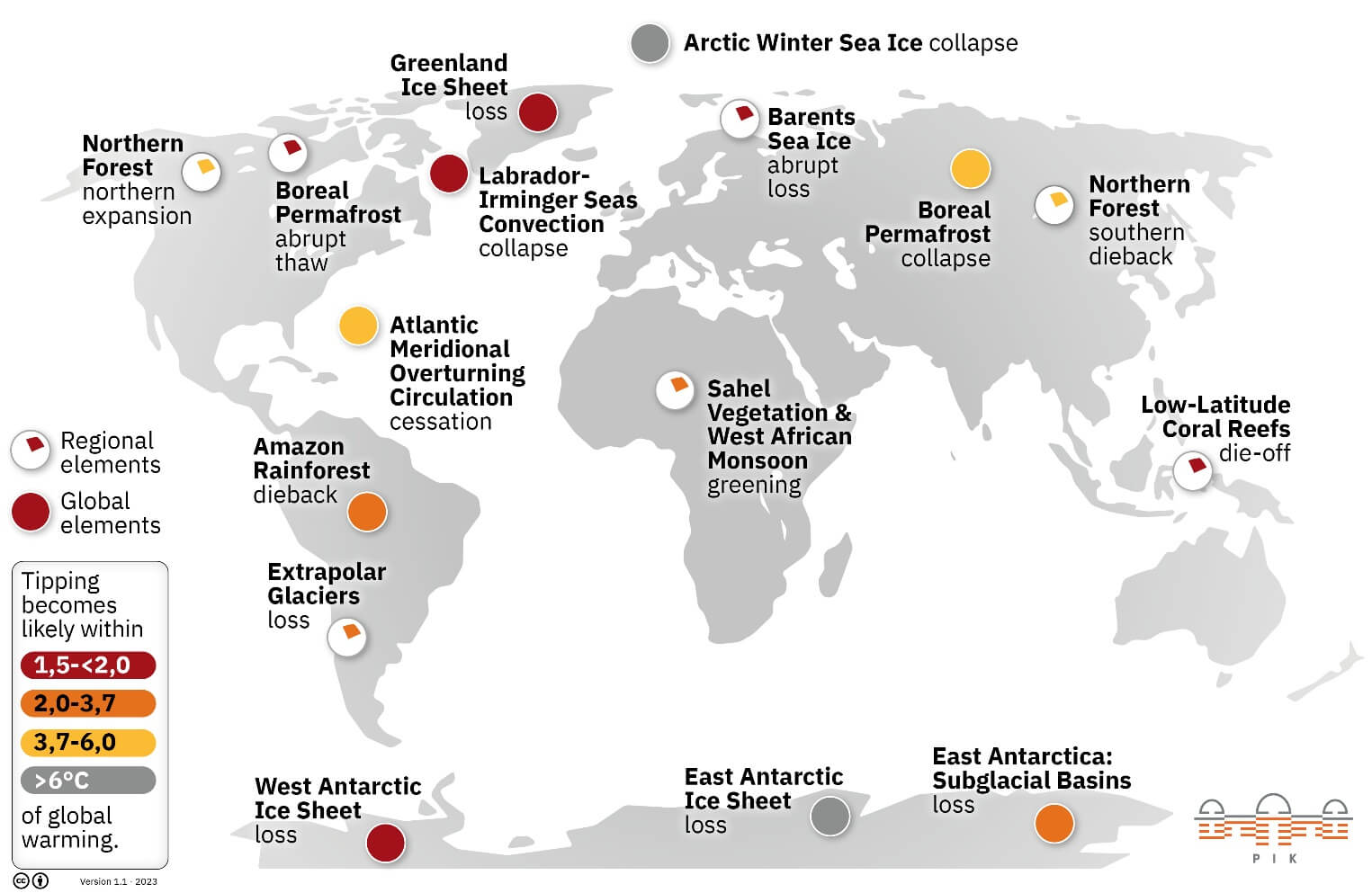
  • Collapse of Atlantic Meridional Overturning Circulation (AMOC)

    Why in the News?

    A new study warned that the collapse of the Atlantic Meridional Overturning Circulation (AMOC) is no longer a low-likelihood scenario.

    What is AMOC?

    • Overview: It is a large system of ocean currents, part of the thermohaline circulation (THC) or global ocean conveyor belt.
    • Function: Moves warm tropical surface waters northward.
    • Deep Currents: In the North Atlantic, cooled water sinks and flows back south as deep currents.
    • Global Link: Connected to the Antarctic Circumpolar Current, making it part of a worldwide circulation system.
    • Key Role: Distributes heat and nutrients across the world’s oceans.

    Collapse of Atlantic Meridional Overturning Circulation (AMOC)

    Why is AMOC slowing down?

    • Melting Ice Sheets: Greenland and Arctic ice melt releases freshwater, lowering seawater density, preventing sinking, and weakening circulation.
    • Indian Ocean Warming (2019 Study): Extra rainfall in the Indian Ocean reduces rainfall in the Atlantic.
    • Temporary Boost: Atlantic water becomes saltier, sinks faster, giving AMOC short-term strengthening.
    • Future Outlook: Effect fades once Pacific and other oceans catch up in warming.
    • Climate Models: Predict a 34–45% weakening of AMOC by 2100 under continued global warming.

    What happens if AMOC collapses?

    • Severe Cooling: Europe and the North Atlantic would face strong cooling.
    • Rainfall Reduction: Decline in rainfall over Europe.
    • ENSO Impact: Altered El Niño–Southern Oscillation patterns.
    • Sea Ice Expansion: Increase in Greenland–Iceland–Norwegian seas.
    • Rain-belt Shift: Southward movement over the tropical Atlantic.
    • Long-term Impact: Global climate instability with regional extremes.
    [UPSC 2012] Consider the following factors:

    1. Rotation of the Earth 2. Air pressure and wind 3. Density of ocean water 4. Revolution of the Earth

    Which of the above factors influence the ocean currents?

    Options: (a) 1 and 2 Only (b) 1, 2 and 3* (c) 1 and 4 (d) 2, 3 and 4


  • United Nations Conference on Environment and Development (UNCED)

    Why in the News?

    This year marks three decades since the landmark Earth Summit in Rio de Janeiro in 1992, which established the United Nations Framework Convention on Climate Change (UNFCCC).

    About United Nations Conference on Environment and Development (UNCED):

    • Event: Also called the Earth Summit, held in Rio de Janeiro, Brazil (June 3–14, 1992).
    • Participation: 178 countries, 117 heads of state, thousands of NGOs and civil society groups.
    • Objective: Reconcile economic growth with environmental protection, mainstreaming sustainable development globally.
    • Key Outcomes:
      • Rio Declaration (27 principles, including precautionary principle & Common but Differentiated Responsibilities (CBDR)).
      • Agenda 21 (non-binding action plan for sustainable development).
      • UNFCCC (binding treaty on climate change; later Kyoto Protocol, Paris Agreement).
      • Convention on Biological Diversity (CBD) (binding treaty on biodiversity).
      • Statement of Forest Principles (non-binding guidelines for sustainable forests).
      • Commission on Sustainable Development (CSD) created to monitor implementation.
    • Significance: Landmark in international environmental diplomacy, embedding sustainability in global policy and leading to follow-ups (Rio+10, Rio+20).

    India and UNCED:

    • Stance & Advocacy:
      • Strongly pushed for Common but Differentiated Responsibilities (CBDR); developed nations must bear greater responsibility due to historical emissions and resource use.
      • Emphasized poverty eradication and the right to economic growth for developing countries.
      • Called for financial support and technology transfer from developed countries to the Global South.
    • Commitments:
      • Signed & ratified all key Rio agreements: Rio Declaration, Agenda 21, UNFCCC, CBD.
    • Domestic Follow-up:
      • Integrated Agenda 21 principles into national policies (sustainable resource use, biodiversity protection, EIAs).
      • Strengthened environmental legislation under the Environment Protection Act (1986).
    • Role: Positioned itself as a voice of developing countries, balancing environment with development imperatives.
    [UPSC 2010] The United Nations Framework Convention on Climate Change (UNFCCC) is an international treaty drawn at-

    Options:

    (a) United Conference on the Human Environment, Stockholm, 1972

    (b) UN Conference on Environment and Development, Rio De Janerio, 1992 *

    (c) World Summit on Sustainable Development, Johannesburg, 2002

    (d) UN Climate Change Conference, Copenhagen, 2009


  • [20th August 2025] The Hindu Op-ed: Making India’s climate taxonomy framework work

    PYQ Relevance

    [UPSC 2022] Discuss global warming and mention its effects on the global climate. Explain the control measures to bring down the level of greenhouse gases which cause global warming, in the light of the Kyoto Protocol, 1997.

    Linkage: If such a theme on international climate governance and mechanisms can be asked, then India’s Climate Finance Taxonomy also becomes a significant area. It connects global agreements like the Paris Agreement (Article 6.4) with India’s domestic instruments such as the Carbon Credit Trading Scheme and green bonds.

    Mentors Comment

    In May 2025, the Ministry of Finance released the draft Climate Finance Taxonomy, India’s first attempt to formally define what counts as climate-aligned investment. The framework seeks to mobilise green finance, prevent greenwashing, and give clarity to investors. Its success, however, depends on strong review systems, accountability, and stakeholder engagement.

    Introduction

    The draft taxonomy marks a turning point in India’s climate governance. This is India’s first unified framework for climate finance, introduced amid rising greenwashing risks and investor uncertainty. Arriving alongside the operationalisation of the Carbon Credit Trading Scheme and the rise of green bonds, it comes at a moment of growing pressure to align finance with net-zero goals. As a “living framework,” it promises adaptability to evolving national and global priorities. But without transparency, legal coherence, and institutional accountability, the taxonomy risks undermining India’s climate finance ecosystem instead of strengthening it.

    The Review Architecture for a Living Framework

    1. Two-tier review system: Suggestion of annual reviews for short-term corrections and five-year reviews for deep reassessment.
    2. Annual reviews: Triggered by implementation gaps, international obligations, or stakeholder feedback, with structured timelines, documentation protocols, and public consultation.
    3. Five-year reviews: Linked with India’s NDC cycle and global stocktake under the UNFCCC; ensures long-term resilience in a changing climate finance ecosystem.

    Key aspects of the Substantive Review

    1. Legal coherence: Taxonomy must align with Energy Conservation Act, SEBI norms, Carbon Credit Trading Scheme, and India’s international commitments.
    2. Harmonisation: Review should remove overlaps, clarify redundancies, and integrate with green bonds, blended finance, and environmental risk disclosures.
    3. Content clarity: Definitions must remain readable, coherent, and technically precise. Quantitative thresholds (e.g., emissions reduction, energy efficiency benchmarks) must be regularly updated with empirical data.
    4. Inclusivity: Framework must remain accessible to MSMEs, informal sector, agriculture, and small manufacturing with staggered compliance timelines and proportionate expectations.

    Strengthening Governance through Accountability Structures

    1. Standing unit in the Ministry of Finance: Dedicated body within the Department of Economic Affairs or an expert committee involving financial regulators, climate science institutions, civil society.
    2. Public dashboards: Mechanisms to receive inputs, document experiences, and publish reports.
    3. Transparency: Annual review summaries and five-year revision proposals should be made public in consolidated formats to enhance investor trust and policy coherence.

    Significance of the Climate Finance Taxonomy for India’s Green Transition

    1. Carbon Credit Trading Scheme: Soon to be fully operational, requiring clear rules for market credibility.
    2. Green bonds: Entering mainstream portfolios and stock exchanges, need alignment with taxonomy standards.
    3. Public investment flows: Rising pressure to align fiscal spending with long-term climate goals.
    4. Risk of failure: A weak or opaque taxonomy could undermine India’s net-zero transition by encouraging greenwashing and eroding investor trust.

    Conclusion

    India’s climate taxonomy is more than a definitional exercise, it is a governance tool that can determine the credibility of India’s climate finance system. A “living document” is meaningful only if it is kept alive through active review, structured revision, and transparent engagement. By embedding legal coherence, inclusivity, and accountability, India can ensure the taxonomy becomes a reliable foundation for mobilising investments, reducing greenwashing, and achieving its climate goals.

    Value Addition

    • Article 6.4 of the Paris Agreement: Provides a framework for carbon market instruments with legal and editorial review mechanisms; offers a model for India’s taxonomy to ensure transparency, credibility, and alignment with global norms.
    • Carbon Market Types:
      • Compliance Markets: Mandated by law (e.g., EU ETS, upcoming India’s Carbon Credit Trading Scheme).
      • Voluntary Markets: Corporate/individual offsetting of emissions beyond legal requirements.
    • Green Bonds in India:
      • First Sovereign Green Bonds issued in 2023 worth ₹16,000 crore.
      • Used for renewable energy, clean transport, and climate adaptation projects.
      • Support India’s target of net-zero by 2070 and deepen climate finance flows.

    Mapping Microthemes

    • GS Paper II: Governance, public consultation, accountability mechanisms.
    • GS Paper III: Climate finance, carbon markets, sustainable development, green bonds, energy efficiency.
    • GS Paper IV: Ethical finance, transparency, preventing greenwashing.
  • How does plastic pollution affect health?

    Introduction

    Plastic pollution represents one of the gravest environmental crises of our times. Despite decades of regulation and bans, plastics remain ubiquitous, cheap, and nearly indestructible. Talks in Geneva involving 180 countries failed to secure an internationally binding legal agreement to limit plastic pollution, reflecting deep divisions over whether the treaty should target waste alone or include production.

    Global Plastic Treaty Deadlock: Why It Matters

    • Global deadlock: 180 countries failed to agree on a binding treaty on plastic pollution in Geneva, despite a UNEP-backed resolution already in place.
    • First-time sharp focus on health: Unlike earlier discussions centred only on waste management, the health impact of plastics is now central.
    • Scale of problem: Plastics contain more than 16,000 chemicals, with little knowledge on 10,000+ of them. A Nature study showed 4,000 chemicals of concern are present across major plastic types.
    • Striking evidence: Microplastics detected in blood, breast milk, placenta, bone marrow, bringing urgency to the debate.

    The Persistence and Ubiquity of Plastics

    1. Symbol of consumption economy: Cheap and versatile, plastics reflect today’s global consumption.
    2. Persistence and flexibility: Synthetic, fossil-fuel-derived polymers are non-biodegradable and endure for decades.
    3. Waste mismanagement: Cheap production, ubiquity, and limited recycling capacity turn plastics into the prime source of litter.

    Plastics and Human Health: Emerging Evidence

    1. Chemicals of concern: Plastics use ethylene, propylene, styrene derivatives, along with bisphenols, phthalates, PCBs, PBDEs, and PFAS.
    2. Products of exposure: Found in food containers, bottles, teething toys, polyester, IV bags, cosmetics, paints, electronics, adhesives.
    3. Health links: Studies link plastic chemicals to thyroid dysfunction, hypertension, kidney/testicular cancer, gestational diabetes.
    4. Evidence base: Around 1,100 studies, involving 1.1 million individuals, compiled by Boston College & Minderoo Foundation dashboard.
    5. Nature of studies: Mostly associative; longitudinal studies (gold standard) are still underway.

    The Microplastic Menace

    1. Definition: Plastics smaller than 5 mm, found in additives or broken-down products.
    2. Recent discoveries: Detected in human blood, breast milk, placenta, bone marrow.
    3. Health uncertainty: Exact impacts still under study, but linked to multiple disorders.

    Policy Responses: Global and Indian Perspectives

    • Global scene: Negotiations divided on waste vs production; developing countries demand funding support.
    • India’s stance: 
      • Ban on single-use plastics in ~20 States
      • Administrative push for Extended Producer Responsibility (EPR)
      • Views plastics as a waste management issue, not a health issue.
      • Prefers health dimension to be dealt with at WHO, not in the plastics treaty.

    Conclusion

    The Geneva deadlock reflects not just a failure of diplomacy but the widening gap between scientific evidence and policy action. Plastics are no longer an invisible convenience; they are a pervasive health hazard. While India treats plastics as a waste issue, ignoring health risks leaves a blind spot in policy. A robust, binding treaty addressing both production and health impact is indispensable if the world is to prevent plastics from becoming the new tobacco of the 21st century.

    PYQ Relavance

    [UPSC 2023] What is oil pollution? What are its impacts on the marine ecosystem? In what way is oil pollution particularly harmful for a country like India?

    Linkage: Since UPSC has already asked about oil pollution (2023), it shows the exam’s focus on pollution and ecosystem impacts. Plastic pollution, like oil, originates from fossil fuels and has severe effects on marine life and human health. Hence, a direct question on plastic pollution and its health–environment nexus is highly probable.

    Practice Mains Question

    Plastics are no longer merely a waste management problem but a serious health hazard. Critically examine the health risks associated with plastic use and evaluate India’s stance in global plastic treaty negotiations.

    Mapping Microthemes

    • GS-1: Impact of industrialisation and consumerism on environment.
    • GS-2: International negotiations, India’s foreign policy stance in environmental treaties.
    • GS-3: Pollution, waste management, health-environment nexus.
    • GS-4: Ethics of sustainability, intergenerational justice, corporate responsibility.
  • Why the ICJ’s advisory opinion on climate change opens the window for a new, restorative vision of environmental law in India

    Why in the News?

    Recently, the International Court of Justice (ICJ) delivered a landmark advisory opinion on July 23, 2025, clarifying the legal obligations of states regarding climate change.

    Note: The International Court of Justice (ICJ) is the principal judicial organ of the United Nations. While advisory opinions are not formally binding, they hold persuasive (Convince other) legal weight and reflect the Court’s authoritative interpretation of international law.

    What does the ICJ say about saving nature and the climate?

    • Nature is a climate actor, not just a victim: ICJ recognizes ecosystems like forests, oceans, and coral reefs as active parts of the climate system. Eg: Forests absorb CO₂ and regulate rainfall.
    • Protecting nature is a legal climate duty: Countries have a responsibility to safeguard nature as part of their climate obligations. Eg: Wetlands must be preserved to manage floods and store carbon.
    • Ecological literacy is essential: Decision-makers must understand ecosystem roles in climate regulation. Eg: Mangrove destruction worsens storm impact and carbon release.
    • Biodiversity and climate are equal: Climate action must not come at the cost of biodiversity. Eg: Solar parks should not destroy grasslands or wildlife zones.
    • Global justice includes nature’s rights: The ICJ promotes a shift from human-centred to eco-centred justice. Eg: Legal personhood to rivers (like Ganga) aligns with this approach.

    How can India align the ICJ view with Articles 21 and 48A of the Constitution?

    • Recognize environmental rights as part of Right to Life (Article 21): Link clean air, water, and a healthy ecosystem to the fundamental right to life. Eg: Supreme Court’s recognition of the right to a healthy environment in the Subhash Kumar case.
    • Implement Directive Principle on environment (Article 48A): Strengthen policies to protect and improve forests, rivers, and biodiversity. Eg: Initiatives like Namami Gange align with this duty.

    What are the roles of Tribals in India’s climate plans?

    The roles of tribals in India’s climate plans are crucial because they are deeply connected with nature and are key to conservation and climate resilience.

    • Traditional Ecological Knowledge: Tribals have deep understanding of local ecosystems, useful for conservation and climate adaptation. Eg: Bhil tribes, Madhya Pradesh – traditional water harvesting for drought resilience.
    • Forest and Biodiversity Guardianship: Indigenous communities act as forest protectors and biodiversity custodians, aiding carbon sequestration. Eg: Dongria Kondh, Odisha – protect Niyamgiri Hills’ biodiversity.
    • Sustainable Livelihood Practices: Tribes follow low-carbon, eco-friendly practices, supporting climate goals. Eg: Apatani tribe, Arunachal Pradesh – eco-friendly wet rice farming (growing rice in flooded fields).
    • Community-Based Climate Adaptation: Local innovation enables faster climate resilience and resource management. Eg: Women in Kutch, Gujarat – build check dams for water security.
    • Effective Implementation of Climate Schemes: Grassroots involvement improves policy success, ensures inclusive development. Eg: Van Dhan Yojana – empowers tribal collectives for sustainable forest use.

    Which laws should India improve to better protect nature and fight climate change?

    • Strengthen Environmental Impact Assessment (EIA): Make public consultations more transparent and science-based. Eg: Dilution in EIA 2020 draft faced criticism for reducing oversight on polluting projects.
    • Amend Forest Conservation Act (FCA): Ensure tribal rights and ecological value are protected during land diversion. Eg: FCA 2023 allowed exemptions for some forest lands, risking biodiversity loss.
    • Update Air (Prevention and Control of Pollution) Act, 1981: Include stricter penalties and real-time monitoring for industrial emissions. Eg: Delhi’s recurring smog highlights the law’s limited deterrence.

    Way forward:

    • Empower Local Communities: Recognize and support tribal and grassroots climate efforts through legal rights, funding, and capacity building.
    • Mainstream Climate in Policy Planning: Integrate climate adaptation and mitigation into urban planning, agriculture, and infrastructure development.
    • Promote Green Finance and Innovation: Incentivize clean technologies, nature-based solutions, and public-private partnerships for sustainable development.

    Mains PYQ:

    [UPSC 2023] The most significant achievement of modern law in India in the constitutionalization of environmental problems by the Supreme Court. Discuss this statement with the help of relevant case laws.

    Linkage: The article highlights that India’s Supreme Court has interpreted Article 21 (right to life) to include the right to a healthy environment, and the ICJ’s opinion internationalizes this idea, providing a strong basis for India’s legal framework to embrace a restorative vision.

  • Assessing India’s Carbon Credit trading scheme targets 

    Why in the News?

    The Indian government recently set greenhouse gas (GHG) emissions intensity targets for key industrial sectors under its Carbon Credit Trading Scheme (CCTS). These targets apply to eight major industries, including steel, cement, aluminium, and textiles, and aim to reduce emissions per unit of production.

    What is CCTS?

    The Carbon Credit Trading Scheme (CCTS) allows entities—such as factories, refineries, or power plants—that emit less than their permitted carbon limits to earn carbon credits. These credits can then be traded with other entities that have exceeded their emission limits.

    What is the importance of assessing carbon targets at the economy-wide level?

    • Reflects true environmental impact: Evaluating targets at the economy-wide level ensures we understand the overall reduction in greenhouse gas emissions, which is the ultimate goal of climate action.
    • Enables flexible compliance: It allows efficient entities to overachieve and trade credits with less efficient ones, reducing total emissions cost-effectively. Eg: In India’s PAT scheme, cement plants exceeding targets sold energy-saving certificates to aluminium units lagging behind.
    • Aligns with national commitments: It supports the evaluation of whether India is on track to meet its Nationally Determined Contributions (NDCs) and net-zero targets, beyond fragmented sectoral views. Eg: India aims to reduce emissions intensity of GDP by 45% by 2030 – a goal only visible through economy-wide analysis.

    What is the PAT Scheme?

    The PAT Scheme sets energy efficiency targets for large, energy-intensive industries. Companies that exceed their targets earn Energy Saving Certificates (ESCerts), which they can trade with other companies that fail to meet their targets.

    How has the PAT scheme proven effective in reducing energy intensity?

    • Encouraged market-based efficiency: The Perform, Achieve and Trade (PAT) scheme allowed industries to meet energy targets using tradable efficiency certificates, creating a cost-effective compliance mechanism.
    • Achieved aggregate reduction: Despite mixed results at the entity or sector level, overall energy intensity in India declined across PAT cycles, proving its system-wide impact. Eg: Between 2012–14, even as chlor-alkali sector’s intensity rose, combined data showed less energy used per unit of output.
    • Enabled flexible transition: PAT helped industries adopt incremental improvements or buy credits instead of making costly in-house upgrades, ensuring participation without economic strain. Eg: Aluminium units improved production processes, while others chose certificate trading to meet targets.

    Why are entity-level targets insufficient to assess emission reduction?

    • Limited Scope of Impact: Targets at the entity level show progress in isolation and may miss the broader picture. For instance, even if some paper or chlor-alkali plants increase their energy use per unit of output, overall national emissions may still fall due to reductions in other sectors.
    • Focus on Transactions, Not Outcomes: These targets often guide financial trades between companies rather than ensuring actual emissions reduction. A steel plant may meet its target not by cutting emissions but by buying efficiency certificates from another unit.
    • Inconsistency Across Sectors: Emission reductions may vary widely across sectors. While cement and aluminium sectors may improve efficiency, others may lag. Solely relying on entity targets could misrepresent the real national decarbonisation progress.

    What limits the comparison of CCTS targets with past and future benchmarks?

    • Mismatch in Scope: The CCTS targets apply only to a part of India’s industrial base, making it difficult to compare them with economy-wide goals like the Nationally Determined Contributions (NDCs). Eg. CCTS covers only 8 industrial sectors, while NDCs span all sectors including agriculture and transport.
    • Changing Baselines and Ambition Levels: Past schemes like PAT Cycle I had relatively modest targets. Comparing them with current CCTS goals may underestimate the urgency for stronger action aligned with net-zero by 2070. Eg. A sector that achieved 1% reduction earlier may now require over 2.5% annual reduction to stay on track.
    • Different Indicators Used: Past targets often focused on energy intensity, while future goals (like NDCs) emphasise emissions intensity per GDP or value added, making direct comparison methodologically inconsistent. Eg. Comparing energy saved per unit of production vs emissions per unit of GDP distorts true climate ambition.

    How do CCTS targets align with India’s NDC and net-zero goals?

    • Partial Alignment with Emission Intensity Reduction: The CCTS targets aim to reduce emissions intensity in key industrial sectors, contributing to India’s NDC goal of reducing emissions intensity of GDP by 45% by 2030 (compared to 2005 levels). However, the annual reduction rateof ~1.68% in CCTS sectors is lower than the required pace for full alignment.
    • Lag Behind Power Sector Decarbonisation: Compared to the power sector, which has low-cost mitigation options and a projected 3.44% annual decline in emissions intensity, the industrial sector’s slower pace (~2.53%) under CCTS may hinder the broader net-zero pathway.
    • Need for Greater Sectoral Ambition: The current CCTS trajectory appears less aggressive than necessary for the 2070 net-zero target. Without scaling upambition across more sectors and tightening targets, CCTS alone cannot ensure full alignment with India’s long-term climate goals.

    Way forward: 

    • Enhance Sectoral Ambition with Dynamic Targeting: Revise CCTS targets periodically based on economy-wide modelling aligned with India’s NDC and net-zero goals, ensuring progressively stringent emission intensity reductions across all major industrial sectors.
    • Integrate Technology and Incentives: Promote adoption of clean technologies through financial incentives, carbon pricing, and capacity-building support to enable industries to decarbonize efficiently without compromising growth.

    Mains PYQ:

    [UPSC 2014] Should the pursuit of carbon credit and clean development mechanism set up under UNFCCC be maintained even through there has been a massive slide in the value of carbon credit? Discuss with respect to India’s energy needs for economic growth.

    Linkage: The article talks about the concept of “carbon credit,” which is a fundamental component of carbon trading schemes, including India’s Carbon Credit Trading Scheme (CCTS) which is related to the demand of the question.

  • UN Framework Convention on Climate Change (UNFCCC)

    Why in the News?

    The UN Framework Convention on Climate Change (UNFCCC) negotiations are facing a credibility crisis, as years of underperformance, weak accountability, and neglect of developing countries’ concerns have created growing frustration.

    About the UN Framework Convention on Climate Change (UNFCCC):

    • Overview: The UNFCCC is an international treaty adopted at the 1992 Rio Earth Summit to address climate change by stabilizing greenhouse gas (GHG) concentrations in the atmosphere.
    • Entry into Force: The Convention entered into force on 21 March 1994 and currently has 197 Parties, including all UN member states.
    • Governing Body – COP: The Conference of the Parties (COP) is the supreme decision-making body under the UNFCCC, which meets annually to assess progress and set new targets.
    • Consensus-Based Process: The Convention operates on the principle of consensus, meaning all Parties must agree for a decision to be adopted.
    • Article 2 Objective: The objective of the UNFCCC, as per Article 2, is to stabilize GHG levels at a point that prevents dangerous anthropogenic interference with the climate system.
    • Key Agreements: The UNFCCC framework led to major global climate agreements such as the Kyoto Protocol (1997) and the Paris Agreement (2015).
    • Institutional Structure: It has three main institutional bodies:
      1. SBSTA: Subsidiary Body for Scientific and Technological Advice
      2. SBI: Subsidiary Body for Implementation
      3. UNFCCC Secretariat: Headquartered in Bonn, Germany
    • Party Classifications:
      • Annex I: Developed countries (OECD + Economies in Transition); Obligated to reduce GHG emissions and submit regular reports.
      • Annex II: Subset of Annex I (OECD members); Required to provide financial and technological support to developing countries.
      • Non-Annex I: Developing countries; No binding emission targets but eligible for support and encouraged to act voluntarily.
      • LDCs (Least Developed Countries): Low-income, highly vulnerable nations; Receive priority support under UNFCCC for adaptation and capacity building.

    India and the UNFCCC:

    • Ratification: India ratified the UNFCCC in 1993 and has participated actively in all COP meetings since then.
    • Party Classification: India is classified as a Non- Annex I Party, meaning it has no binding emission reduction targets under the Convention.
    • Paris Agreement Commitments: Under the Paris Agreement (2015), India submitted Nationally Determined Contributions (NDCs), including:
      • Reducing emissions intensity of GDP by 45% by 2030 from 2005 levels
      • Achieving 50% cumulative electric power capacity from non-fossil fuel sources by 2030
    • Climate Diplomacy:
      • India advocates the principle of Common But Differentiated Responsibilities and Respective Capabilities (CBDR–RC) in all negotiations.
      • India co-founded the International Solar Alliance (ISA) and launched the LiFE Movement (Lifestyle for Environment) to promote sustainable lifestyles.
      • India has opposed unilateral trade measures such as the EU’s Carbon Border Adjustment Mechanism (CBAM) at multiple climate forums.

    Issues with the UNFCCC Process:

    • Weak Enforcement: The process lacks enforcement mechanisms; countries that fail to meet commitments face no penalties.
    • Consensus Delays: The consensus-based approach often leads to delays and diluted agreements due to the ability of a few nations to block progress.
    • Unmet Commitments: Developed countries have not fulfilled the promised $100 billion per year in climate finance, which was due by 2020.
    • Neglected Developing Country Needs: Critical needs for adaptation finance, capacity building, and technology transfer remain largely unmet for developing nations.
    • Controversial Host Nations: The selection of host countries (e.g., UAE for COP28 and Azerbaijan for COP29) has drawn criticism due to their fossil fuel dependence.
    • Demand for Reforms: At the Bonn Climate Conference (2024), developing countries called for reforms such as:
      • Shifting to majority-based decision-making
      • Imposing limits on fossil fuel industry participation in climate talks
    [UPSC 2016] With reference to the Agreement at the UNFCCC Meeting in Paris in 2015, which of the following statements is/are correct?

    1. The Agreement was signed by all the member countries of the UN and it will go into effect in 2017.

    2. The Agreement aims to limit the greenhouse gas emissions so that the rise in average global temperature by the end of this century does not exceed 2°C or even 1.5°C above pre-industrial levels.

    3. Developed countries acknowledged their historical responsibility in global warming and committed to donate $1000 billion a year from 2020 to help developing countries to cope with climate change.

    Select the correct answer using the code given below:

    (a) 1 and 3 only (b) 2 only (c) 2 and 3 only (d) 1, 2 and 3


  • Rising seas, shifting lives and a test of democratic values

    Why in the News?

    India is seeing a worrying rise in people being forced to leave their homes due to climate change along its coasts, revealing serious gaps in how the country manages the environment and supports affected communities.

    What are the socio-economic impacts of coastal climate change?

    • Displacement of Coastal Communities: Rising sea levels, saltwater intrusion, and erosion force people from traditional coastal villages to resettlement colonies. Eg: In Satabhaya, Odisha, entire villages have been submerged, displacing residents with little access to sustainable livelihoods.
    • Loss of Traditional Livelihoods: Coastal degradation affects fishing and agriculture, disrupting long-standing economic systems. Eg: In Honnavar, Karnataka, fishing communities face livelihood loss due to mangrove destruction and tourism development.
    • Forced Migration to Urban Informal Sectors: Displaced people migrate to cities and enter unprotected labour markets, often in exploitative conditions. Eg: Many end up as construction or brick kiln workers in cities like Mumbai or Chennai, without labour rights.
    • Labour Exploitation and Gender Vulnerability: Migrants, especially women, face debt bondage, abuse, and trafficking due to informal employment and lack of legal safeguards. Eg: Displaced women entering domestic work are underpaid and vulnerable to exploitation.
    • Social Inequality and Lack of Legal Protection: The absence of targeted legal frameworks leads to exclusion from welfare schemes and labour protections, worsening socio-economic inequality. Eg: Existing laws like the BOCW Act, 1996, do not cover climate migrants, leaving them unprotected.

    How does climate-induced displacement test India’s democratic values?

    • Right to Life and Dignity (Article 21): Climate displacement challenges the constitutional guarantee of life with dignity, as displaced communities often lack shelter, healthcare, and livelihood.
    • Denial of Free, Prior, and Informed Consent (Article 19(1)(a)): Many infrastructure and tourism projects along the coast proceed without consulting local communities, violating their freedom of expression and participation in governance.
    • Suppression of Protest and Association (Article 19(1)(b) and 19(1)(c)): Environmental defenders and activists resisting unjust displacement face police action, surveillance, and criminalisation, undermining their freedom to protest and form associations.

    Why is a legal framework for climate migrants essential?

    • To Recognise and Protect the Rights of the Displaced: Climate migrants often lose access to housing, work, and basic services. A legal framework ensures their right to life and dignity is upheld under Article 21 of the Constitution. Eg: Villagers displaced from Satabhaya, Odisha, lack legal recognition as climate migrants, preventing access to structured rehabilitation.
    • To Fill Gaps in Existing Laws and Policies: Current laws like the Disaster Management Act, 2005 and CRZ Notification, 2019 focus on emergency response or environmental regulation, not long-term rehabilitation or labour rights. Eg: The NAPCC identifies vulnerability but has no mechanism to integrate displaced people into labour or housing policies.
    • To Prevent Labour Exploitation and Ensure Social Justice: Without legal safeguards, climate migrants, especially in urban informal sectors, face wage theft, abuse, and gendered violence. Eg: Migrants working in brick kilns or as domestic workers in cities remain outside labour codes, exposing them to exploitation.

    What is the role of local movements in protecting coastal communities?

    • Grassroots Resistance Against Destructive Projects: Local movements mobilize communities to protest against unsustainable infrastructure and industrial projects that threaten coastal ecosystems. Eg: The Save Satabhaya campaign in Odisha resisted sea-erosion-driven displacement and demanded proper rehabilitation.
    • Advocacy for Environmental Justice and Rights: These movements highlight environmental injustices, defend the livelihoods of traditional communities, and demand informed consent and legal protection. Eg: Pattuvam Mangrove Protection Movement.
    • Challenging Development Narratives and Policy Gaps: Local struggles question top-down development policies, push for sustainable alternatives, and expose policy loopholes that ignore climate and social impacts. Eg: Protests against the Adani port expansion at Ennore Creek, Tamil Nadu.

    Which reforms can ensure rights-based climate migration policies? (Way forward)

    • Legal Recognition of Climate Migrants: Integrate climate-induced displacement into national migration and disaster policies to ensure affected individuals are officially recognized and protected under law.
    • Labour Code Reforms for Informal Workers: Amend existing labour laws to include climate migrants, especially those in vulnerable sectors like construction and domestic work, ensuring fair wages, social security, and workplace protections.
    • Participatory Coastal Zone Management: Redesign Coastal Regulation Zone (CRZ) rules to prioritize ecological sustainability and the rights of local communities, with mandatory community consent before approving commercial projects.

    Mains PYQ:

    [UPSC 2024] What is sea surface temperature rise? How does it affect the formation of tropical cyclones?

    Linkage: The article highlights “rising seas, saltwater intrusion” and “coastal degradation” as impacts of climate change. This question directly relates to a key oceanic phenomenon influenced by climate change and its effect on extreme weather events like cyclones.

  • New Collective Quantified Goal (NCQG)

    Why in the News?

    With focus shifting to COP30, climate finance is in the spotlight as the Fourth International Financing for Development Conference (FfD4) works to finalise the New Collective Quantified Goal (NCQG) — a more ambitious target to replace the unmet $100 billion annual pledge.

    About New Collective Quantified Goal (NCQG):

    • Overview: It is a new global climate finance target under negotiation to replace the unmet $100 billion pledge made by developed countries in 2009.
    • Basis: It is being framed through the Meeting of the Parties to the Paris Agreement (CMA).
    • Minimum Starting Point: The goal will begin at a minimum of $100 billion per year, with future revisions based on real needs of developing nations.
    • Areas to be Covered: NCQG supports mitigation, adaptation, and resilience, with an explicit focus on the needs of developing countries.

    How it differs from earlier Pledge?

    • From Political to Need-Based: The earlier $100 billion was a political promise, while NCQG is a data-driven, needs-based goal.
    • Backed by National Priorities: Funding estimates will use developing countries’ own assessments and climate plans.
    • Greater Transparency and Trust: NCQG seeks to rebuild trust by addressing the trust deficit from past failures and improving accountability.

    True Scale of Climate Finance Needs:

    • Requirement: As per UNFCCC (2021), developing countries may need $6 trillion/year by 2030 to meet their climate goals.
    • Global Energy Transition Costs: A low-carbon global transition could need $4–6 trillion annually until 2050.
    • Renewable Energy Goals: Tripling renewables by 2030, agreed at COP28, may cost $30 trillion (IRENA).
    • India’s Stand: India has proposed an NCQG of $1 trillion/year, with a focus on grants and concessional finance, avoiding debt-heavy solutions.
    [UPSC 2024] Which one of the following launched the ‘Nature Solutions Finance Hub for Asia and the Pacific’?

    Options: (a) The Asian Development Bank (ADB) (b) The Asian Infrastructure Investment Bank (AIIB) (c) The New Development Bank (NDB) (d) The International Bank for Reconstruction and Development (IBRD)