💥Join UPSC 2027,2028 Mentorship (July Batch) + XFactor Notes & Microthemes PDF

Subject: Climate Change

1. Global Warming and Issues
2. All about Pollution

  • UNEP pitches for Global Greenhouse Gas Monitoring Infrastructure

    greenhouse

    Central idea: The article discusses the United Nations’ development of a new system for tracking greenhouse gas emissions.

    Greenhouse Gases

    • Greenhouse gases are gases that trap heat in the Earth’s atmosphere and contribute to the greenhouse effect.
    • Examples of greenhouse gases include-
    1. Water vapor (H2O)
    2. Carbon dioxide (CO2)
    3. Methane (CH4)
    4. Nitrous oxide (N2O)
    5. Fluorinated gases, including hydrofluorocarbons (HFCs), perfluorocarbons (PFCs), and sulfur hexafluoride (SF6)
    6. Ozone (O3)
    • The greenhouse effect is a natural process that occurs when certain gases in the atmosphere absorb and re-emit infrared radiation from the sun, trapping heat and keeping the planet warm enough to sustain life.
    • Human activities such as burning fossil fuels, deforestation, and industrial processes have significantly increased the concentration of greenhouse gases in the atmosphere, leading to an enhanced greenhouse effect and causing global warming and climate change.

    Global Greenhouse Gas Monitoring Infrastructure

    • The new system, also known as the Common Global Standard for Sustainability, is being developed by the United Nations Environment Programme (UNEP).
    • It will provide a standardized framework for measuring and reporting greenhouse gas emissions across various sectors, including agriculture, transport, and energy.

    Need for the new system

    • The current system for tracking greenhouse gas emissions is fragmented and lacks standardization, making it difficult to compare emissions across different sectors and countries.
    • The new system aims to address this issue by providing a standardized framework for measuring and reporting emissions.

    Benefits offered

    • The new system will provide a more accurate and comprehensive picture of greenhouse gas emissions across different sectors and countries.
    • It will enable policymakers and businesses to develop more effective strategies for reducing emissions and mitigating the impacts of climate change.

    Challenges

    • The success of the new system will depend on the willingness of countries and businesses to adopt and implement it.
    • There may be resistance from some countries and businesses that are reluctant to disclose their emissions data or make changes to their current reporting practices.


    Are you an IAS Worthy Aspirant? Get a reality check with the All India Smash UPSC Scholarship Test

    Get upto 100% Scholarship | 900 Registration till now | Only 100 Slots Left

  • Heat Waves and the anatomy behind

    heat

    The Indian Meteorological Department (IMD) has already started sensing the first signs of heat waves for this summer season.

    What is the news?

    • The IMD warned that the maximum temperatures over northwest, west, and central India would be 3-5° C higher than the long-term average in this week.
    • If the heat waves had played out, they would have been the earliest these regions would have experienced this deadly phenomenon.

    What are Heat Waves?

    • Heatwaves generally occur over India between March and June.
    • IMD declares a heatwave event when the maximum (day) temperature for a location in the plains crosses 40 degrees Celsius.
    • Over the hills, the threshold temperature is 30 degrees Celsius.

    How are they formed?

    • Heatwaves form when high pressure aloft (3,000–7,600 metres) strengthens and remains over a region for several days up to several weeks.
    • This is common in summer (in both Northern and Southern Hemispheres) as the jet stream ‘follows the sun’.
    • On the equator side of the jet stream, in the upper layers of the atmosphere, is the high pressure area.
    • Summertime weather patterns are generally slower to change than in winter. As a result, this upper level high pressure also moves slowly.
    • Under high pressure, the air subsides (sinks) toward the surface, warming and drying adiabatically, inhibiting convection and preventing the formation of clouds.
    • Reduction of clouds increases shortwave radiation reaching the surface.
    • A low pressure at the surface leads to surface wind from lower latitudes that brings warm air, enhancing the warming.
    • Alternatively, the surface winds could blow from the hot continental interior towards the coastal zone, leading to heat waves.

    Following criteria are used to declare heatwave:

    To declare heatwave, the below criteria should be met at least in 2 stations in a Meteorological subdivision for at least two consecutive days and it will be declared on the second day.

    (a) Based on Departure from Normal

    • Heat Wave: Departure from normal is 4.5°C to 6.4°C
    • Severe Heat Wave: Departure from normal is >6.4°C

    (b) Based on Actual Maximum Temperature (for plains only)

    • Heat Wave: When actual maximum temperature ≥ 45°C
    • Severe Heat Wave: When actual maximum temperature ≥47°C


    Recent context: El Nino + heat waves

    • The last three years have been La Nina years, which has served as a precursor to 2023 likely being an El Nino
    • The El Nino is a complementary phenomenon in which warmer water spreads west-east across the equatorial Pacific Ocean.
    • As we eagerly await the likely birth of an El Nino this year, we have already had a heat wave occur over northwest India.
    • Heat waves tend to be confined to north and northwest India in El Nino years.

    Why do heat waves occur in the first place?

    • Heat waves are formed for one of two reasons: because warmer air is flowing in from elsewhere or because something is producing it locally.
    • Air is warmed locally when the air is warmed by higher land surface temperature or because the air sinking down from above is compressed along the way, producing hot air near the surface.

    How do different processes contribute to the formation of a heat wave?

    • The direction of air flowing in from the west-northwest, warming in the Middle East, and compression over mountains of Afghanistan and Pakistan cause warm air to enter India.
    • The warming Arabian Sea also contributes to the warming trend.
    • Upper atmospheric westerly winds control near-surface winds, which rotate faster than the planet itself.
    • Additionally, the lapse rate, or the rate at which temperatures cool from surface to upper atmosphere, is declining due to global warming.

    Regional occurrences

    • The other factors that affect the formation of heat waves are the age of the air mass and how far it has traveled.
    • The north-northwestern heatwaves are typically formed with air masses that come from 800-1,600 km away and are around two days old.
    • Heat waves over peninsular India on the other hand arrive from the oceans, which are closer (around 200-400 km) and are barely a day old.
    • As a result, they are on average less intense.
  • Centre in final stages of notifying Emissions Trading Scheme

    After the passing of the Energy Conservation (Amendment) Bill last December, the Centre is now in the final stages of notifying an Emissions Trading Scheme (ETS).

    Emissions Trading Scheme (ETS)

    • India does not currently have a national Emissions Trading Scheme (ETS). However, there have been some efforts to introduce an ETS in the country.
    • In 2018, the Ministry of Environment, Forest and Climate Change (MoEFCC) released a draft of the National Clean Air Programme (NCAP).
    • It proposed the introduction of a market-based mechanism for reducing air pollution for the first time.
    • The mechanism was not explicitly called an ETS, but it was described as a “cap-and-trade system.”

    Successful example of Carbon Market: EU’s emissions trading system (ETS)

    • Under the EU’s ETS launched in 2005, member countries set a cap or limit for emissions in different sectors, such as power, oil, manufacturing, agriculture, and waste management.
    • This cap is determined as per the climate targets of countries and is lowered successively to reduce emissions.
    • Entities in this sector are issued annual allowances or permits by governments equal to the emissions they can generate.
    • If companies produce emissions beyond the capped amount, they have to purchase additional permit, either through official auctions or from companies.
    • This makes up the ‘trade’ part of cap-and-trade.

    How is carbon price determined?

    • The market price of carbon gets determined by market forces when purchasers and sellers trade in emissions allowances.
    • Notably, companies can also save up excess permits to use later.
    • Through this kind of carbon trading, companies can decide if it is more cost-efficient to employ clean energy technologies or to purchase additional allowances.
    • These markets may promote the reduction of energy use and encourage the shift to cleaner fuels.

    Other such examples

    • China launched the world’s largest ETS in 2021, estimated to cover around one-seventh of the global carbon emissions from the burning of fossil fuels.
    • Markets also operate or are under development in North America, Australia, Japan, South Korea, Switzerland, and New Zealand.

    Significance of Carbon Market

    • The World Bank estimates that trading in carbon credits could reduce the cost of implementing NDCs by more than half — by as much as $250 billion by 2030.
    • Last year, the value of global markets for tradable carbon allowances or permits grew by 164% to a record 760 billion euros ($851 billion).
    • The EU’s ETS contributed the most to this increase, accounting for 90% of the global value at 683 billion euros.
    • As for voluntary carbon markets, their current global value is comparatively smaller at $2 billion.

    What is the progress at UN?

    • The UN international carbon market envisioned in Article 6 of the Paris Agreement is yet to kick off as multilateral discussions are still underway about how the inter-country carbon market will function.
    • Under the proposed market, countries would be able to offset their emissions by buying credits generated by greenhouse gas-reducing projects in other countries.
    • In the past, developing countries, particularly India, China and Brazil, gained significantly from a similar carbon market under the Clean Development Mechanism (CDM) of the Kyoto Protocol, 1997.
    • India registered 1,703 projects under the CDM which is the second highest in the world.
    • But with the 2015 Paris Agreement, the global scenario changed as even developing countries had to set emission reduction targets.

    India’s efforts

    The new Bill empowers the Centre to specify a carbon credits trading scheme.

    • Issuance of credit certificates: Under the Bill, the central government or an authorised agency will issue carbon credit certificates to companies or even individuals registered and compliant with the scheme.
    • Tradable carbon credits: These carbon credit certificates will be tradeable in nature. Other persons would be able to buy carbon credit certificates on a voluntary basis.

    Existing mechanisms

    • Notably, two types of tradeable certificates are already issued in India-
    1. Renewable Energy Certificates (RECs) and
    2. Energy Savings Certificates (ESCs)
    • These are issued when companies use renewable energy or save energy, which are also activities which reduce carbon emissions.

    Lacunas of the bill

    • No clear mechanism: The Bill does not provide clarity on the mechanism to be used for the trading of carbon credit certificates— whether it will be like the cap-and-trade schemes or use another method— and who will regulate such trading.
    • Confusion over nodal agency: The right ministry to bring in a scheme of this nature, pointing out that while carbon market schemes in other jurisdictions like the US, UK are framed by their environment ministries, the Indian Bill was tabled by the power ministry instead of the MoEFCC.
    • Ambiguity over existing certificates: The Bill does not specify whether certificates under already existing schemes would also be interchangeable with carbon credit certificates and tradeable for reducing carbon emissions.
    • Overlapping: The question, thus, is whether all these certificates could be exchanged with each other. There are concerns about whether overlapping schemes may dilute the overall impact of carbon trading.

    Challenges to carbon markets

    • Double counting: of greenhouse gas reductions
    • Quality and authenticity: These parameters of climate projects that generate credits to poor market transparency
    • Greenwashing: Companies may buy credits, simply offsetting carbon footprints instead of reducing their overall emissions or investing in clean technologies.
    • Inefficiency: The IMF points out that including high emission-generating sectors under trading schemes to offset their emissions by buying allowances may immensely increase emissions on net.

    Way forward

    • Alignment with NDCs: The UNDP emphasizes that for carbon markets to be successful, emission reductions and removals must be real and aligned with the country’s NDCs.
    • Transparent financing: It says that there must be “transparency in the institutional and financial infrastructure for carbon market transactions”.


    Attempt UPSC 2024 Smash Scholarship Test | FLAT* 100% OFF on UPSC Foundation & Mentorship programs

    Get your Rs 10,000 worth of UPSC Strategic Package for FREE | PDFs, Zoom session, Tests, & Mentorship

  • Cooling Earth with Moon Dust

    moon

    The article introduces the idea of using Moon dust to cool the Earth and explores the feasibility and potential risks associated with the proposal.

    Moonlight cooling of Earth

    • The idea of using lunar dust to cool the Earth’s temperature is based on a natural phenomenon called “moonlight cooling.”
    • When the Moon’s surface reflects the sun’s rays, it cools down rapidly after sunset.
    • Scientists believe that a thin layer of lunar dust could be used to create a similar effect on the Earth’s surface.
    • The proposal suggests launching a spacecraft to the Moon to collect dust particles, which would then be transported to the Earth’s atmosphere and released.

    Feasibility of the move

    • This is not a new idea. In fact, it has been proposed before as a way to combat global warming, and several studies have been conducted to explore its feasibility.
    • One study published in the journal Earth’s Future estimated that the technique could reduce the Earth’s temperature by 1.5 degrees Celsius, which is a significant amount in the context of climate change.

    Risks and Drawbacks

    • Health concerns: The dust could harm the environment or respiratory health if it is not properly controlled.
    • Threats to aviation: The particles are abrasive and could damage aircraft engines or other machinery if they were to fall to the ground.
    • Feasibility and cost: Collecting enough dust to make a significant impact on the Earth’s temperature would require a significant investment of resources, including launching multiple spacecraft to the Moon.

    Frankenstein’s Monster Analogy

    • The article draws a comparison between the proposed use of moon dust and the story of Frankenstein’s monster, in which a scientist creates a monster that ultimately causes destruction and chaos.
    • The analogy suggests that the use of moon dust could have unintended consequences that are difficult to predict, and that such large-scale climate interventions should be approached with caution.


    Attempt UPSC 2024 Smash Scholarship Test | FLAT* 100% OFF on UPSC Foundation & Mentorship programs

    Get your Rs 10,000 worth of UPSC Strategic Package for FREE | PDFs, Zoom session, Tests, & Mentorship


  • Thwaites glacier at mercy of sea warmth increase

    thwaites

    The new research suggests that even low amounts of melting can potentially push Thwaites glacier further along the path toward eventual disappearance.

    Thwaites Glacier

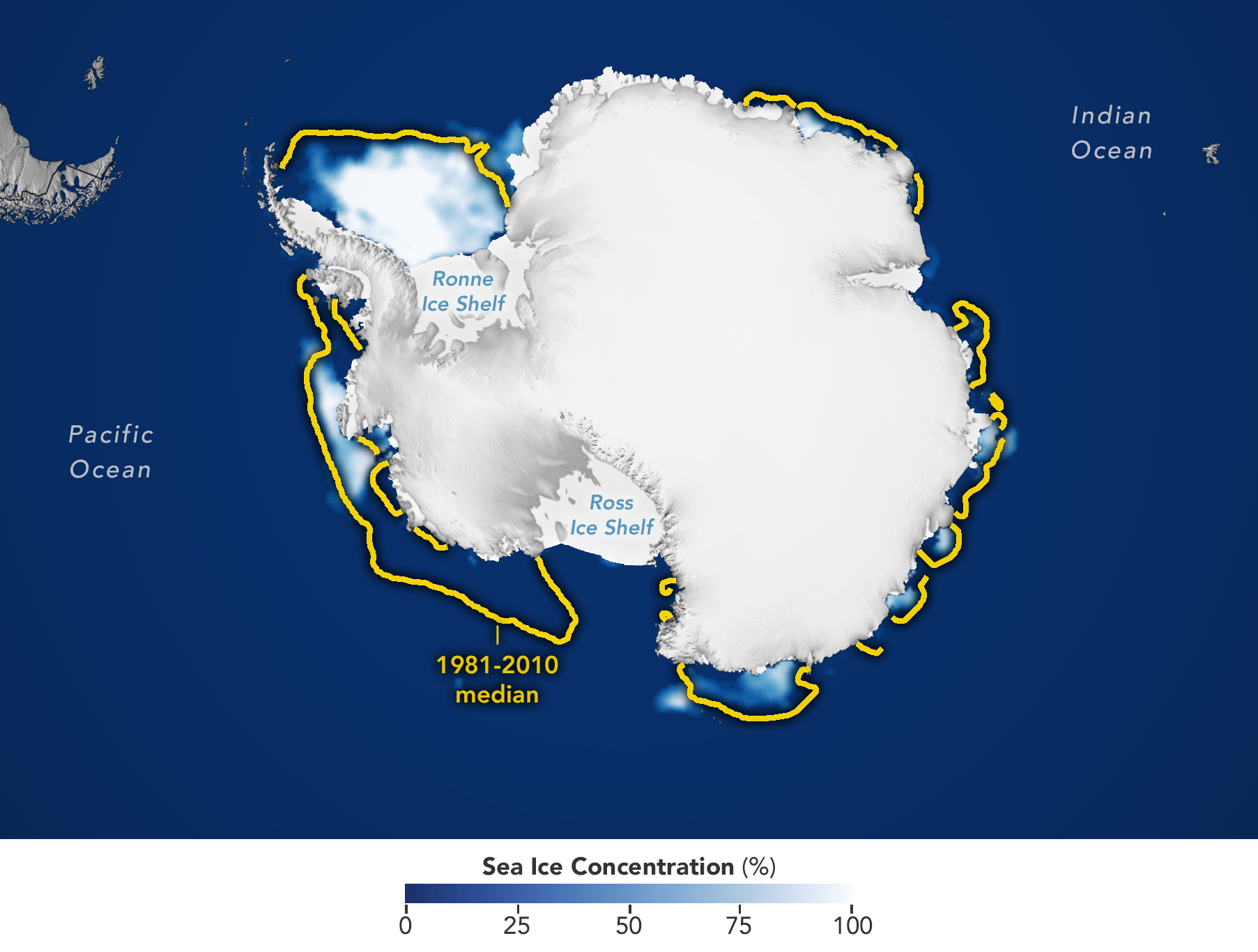
    • Called the Thwaites Glacier, it is 120 km wide at its broadest, fast-moving, and melting fast over the years.
    • Because of its size (1.9 lakh square km), it contains enough water to raise the world sea level by more than half a meter.
    • Studies have found the amount of ice flowing out of it has nearly doubled over the past 30 years.
    • Thwaites’s melting already contributes 4% to global sea-level rise each year. It is estimated that it would collapse into the sea in 200-900 years.
    • Thwaites is important for Antarctica as it slows the ice behind it from freely flowing into the ocean. Because of the risk it faces — and poses — Thwaites is often called the Doomsday Glacier.

    How is Thwaites glacier melting?

    thwaites

    • Thwaites Glacier is melting due to a combination of warming ocean currents and a weakening of the ice shelf that acts as a barrier between the glacier and the ocean.
    • The cause of the melting is thought to be the influx of relatively warm bottom water drawn in from the wider ocean.
    • In the 1990s it was losing just over 10 billion tonnes of ice a year. Today, it’s more like 80 billion tonnes.

    Why is this glacier so important?

    • Huge size: Flowing off the west of the Antarctic continent, Thwaites is almost as big as Great Britain.   It is one of the largest and most important glaciers in Antarctica, as it acts as a gateway to a vast area of the continent.
    • Melting faster: It’s a majestic sight, with its buoyant front, or “ice shelf”, pushing far out to sea and kicking off huge icebergs. But satellite monitoring indicates this glacier is melting at an accelerating rate.
    • Seal level rise: Thwaites’ ice loss contributes approximately 4% to the annual rise in global sea-levels, with the potential to add 65cm in total should the whole glacier collapse.  Its melting could also destabilize the entire West Antarctic Ice Sheet, leading to a further rise in sea levels.


    Crack Prelims 2023! Talk to our Rankers

    (Click) FREE 1-to-1 on-call Mentorship by IAS-IPS officers | Discuss doubts, strategy, sources, and more

  • How do ruminants contribute to Methane Pollution?

    methane

    Bill Gates has invested in a climate technology start-up that aims to curtail the methane emissions of cow burps.

    What is the news?

    • The startup Rumin8 is developing a variety of dietary supplements to feed to cows in a bid to reduce the amount of methane they emit into the atmosphere.
    • The supplement includes red seaweed, which is believed to drastically cut methane output in cows.

    What is Methane?

    • Methane is a greenhouse gas, which is also a component of natural gas.
    • There are various sources of methane including human and natural sources.
    • The anthropogenic sources are responsible for 60 per cent of global methane emissions.
    • It includes landfills, oil and natural gas systems, agricultural activities, coal mining, wastewater treatment, and certain industrial processes.
    • The oil and gas sectors are among the largest contributors to human sources of methane.
    • These emissions come primarily from the burning of fossil fuels, decomposition in landfills and the agriculture sector.

    How do cows and other animals produce methane?

    • Ruminant animals such as cows, sheep, goats, and buffaloes release this methane mainly through burping.
    • They have a special type of digestive system that allows them to break down and digest food that non-ruminant species would be unable to digest.
    • Stomachs of ruminant animals have four compartments, one of which, the rumen, helps them to store partially digested food and let it ferment.
    • This partially digested and fermented food is regurgitated by the animals who chew through it again and finish the digestive process.
    • However, as grass and other vegetation ferments in the rumen, it generates methane, a potent greenhouse gas.

    How much do these ruminants contribute to emissions?

    • Given the very large numbers of cattle and sheep on farms in dairy-producing countries, these emissions add up to a significant volume.
    • It is estimated that the ruminant digestive system is responsible for 27 per cent of all methane emissions from human activity.

    Why is methane such a big problem?

    • Methane is one of the main drivers of climate change, responsible for 30 per cent of the warming since preindustrial times, second only to carbon dioxide.
    • Over a 20-year period, methane is 80 times more potent at warming than carbon dioxide, according to a report by the UNEP.
    • It’s also the primary contributor to the formation of ground-level ozone, a colourless and highly irritating gas that forms just above the Earth’s surface.
    • According to a 2022 report, exposure to ground-level ozone could be contributing to 1 million premature deaths every year.
    • Several studies have shown that in recent years, the amount of methane in the atmosphere has dramatically shot up.

    Mitigating methane emissions

    • Scientists have been working on to make these animals more sustainable and less gassy.
    • A 2021 study, published in the journal PLUS ONE, found that adding seaweed to cow feed can reduce methane formation in their guts by more than 80 per cent.
    • Apart from this, researchers are also trying to find gene-modifying techniques to curtail methane emissions in these animals.
    • Last year, scientists in New Zealand announced they had started the world’s first genetic programme to address the challenge of climate change by breeding sheep that emit lower amounts of methane.

    Global collaboration against methane pollution

    Ans. Global Methane Initiative (GMI)

    • GMI is a voluntary Government and an informal international partnership having members from 45 countries including the United States and Canada.
    • India last year co-chaired along with Canada the GMI leadership meet held virtually.
    • The forum has been created to achieve global reduction in anthropogenic methane emission through partnership among developed and developing countries having economies in transition.
    • The forum was created in 2004 and India is one of the members since its inception and has taken up Vice-Chairmanship for the first time in the Steering Leadership along with USA.

    Back2Basics: CO2 Equivalents

    • Each greenhouse gas (GHG) has a different global warming potential (GWP) and persists for a different length of time in the atmosphere.
    • The three main greenhouse gases (along with water vapour) and their 100-year global warming potential (GWP) compared to carbon dioxide are:

    1 x – carbon dioxide (CO2)

    25 x – methane (CH4) – I.e. Releasing 1 kg of CH4into the atmosphere is about equivalent to releasing 25 kg of CO2

    298 x – nitrous oxide (N2O)

    • Water vapour is not considered to be a cause of man-made global warming because it does not persist in the atmosphere for more than a few days.
    • There are other greenhouse gases which have far greater global warming potential (GWP) but are much less prevalent. These are sulphur hexafluoride (SF6), hydrofluorocarbons (HFCs), and perfluorocarbons (PFCs).
    • There are a wide variety of uses for SF6, HFCs, and PFCs but they have been most commonly used as refrigerants and for fire suppression.
    • Many of these compounds also have a depleting effect on ozone in the upper atmosphere.


    Crack Prelims 2023! Talk to our Rankers

    (Click) FREE 1-to-1 on-call Mentorship by IAS-IPS officers | Discuss doubts, strategy, sources, and more


  • Munroe Thuruthu: Kerala’s Sinking Island

    munroe

    A study conducted by the National Centre for Earth Science Studies (NCESS) has revealed anthropogenic interventions as the main reason for the sinking of Munroe Thuruthu Kerala’s, Kerala’s Sinking Island.

    Note: This Island has nothing to do with Thomas Monroe, the erstwhile Governor of Madras Presidency (1820-27).

    Munroe Thuruthu

    • Munroe Thuruthu is an inland island group located at the confluence of Ashtamudi Lake and the Kallada River, in Kollam district of Kerala.
    • The place is named in honour of Resident Colonel John Munro of the former Princely State of Travancore.
    • It is a group of eight small islets comprising a total area of about 13.4 km2.
    • This island is also known as “Sinking Island of Kerala”.

    How was this island inhabited?

    • In 1795 the British established their supremacy in South India and the princely state of Travancore came under their governance.
    • From 1800 onwards, a Resident was appointed by East India Company as administrative head of Travancore.
    • The first Resident was Colonel Colin Macaulay, followed by Colonel John Munro.
    • During his tenure Munro oversaw the land reclamation efforts in the delta where Kallada River joins Ashtamudi Lake and the reclaimed island was named after him as Munroe Island.

    Why in news?

    • The islanders are facing steady land subsidence, tidal flooding and lower agricultural productivity, all of which have triggered a mass exodus from the region.
    • According to the study, almost 39% of the land area of the Munroe Thuruthu has been lost with Peringalam and Cheriyakadavu islands recording a land depletion of around 12% and 47% respectively.
    • The study finds that anthropogenic activities have considerably affected the isostatic conditions and land neutrality of Munroe Thuruthu.


    Crack Prelims 2023! Talk to our Rankers

    (Click) FREE 1-to-1 on-call Mentorship by IAS-IPS officers | Discuss doubts, strategy, sources, and more


  • What is Liquefied Natural Gas (LNG), and how it impacts the climate?

    lng

    The EU is weaning itself off piped Russian gas by rapidly expanding imports of liquefied natural gas (LNG) from US.

    What is Liquefied Natural Gas or LNG?

    • LNG is natural gas reduced to a liquid state (liquefaction) through intense cooling to around -161 degrees Celsius (-259 Fahrenheit).
    • It is constituted almost wholly of methane — a potent greenhouse gas and can be transported around the world by ship.
    • This liquid gas is 600 times smaller than the original volume and is half the weight of water.
    • After arriving at its destination, the cargo is regasified in a floating terminal and redistributed through pipelines.

    Economic feasibility of LNG

    • High cost of liquefaction: despite LNG’s export potential, the high cost of liquefaction and producing LNG has limited its market.
    • Losses: Between 10-25% of the energy of the gas is being lost during the liquefaction process.
    • Costly transport: The cooling, liquefying and transport processes, as well as the post-transport regasification procedures, also require a lot of energy.

    What’s the climate impact of LNG?

    • Emission: With LNG creating almost 10 times more emissions than piped gas by one estimate, its rapid expansion will likely compromise climate targets.
    • Risks of methane leakages: Methane loss across the supply chain risks also contributes to LNG’s high emissions.
    • Huge carbon equivalence: Meanwhile, LNG emits 14 times as much carbon as solar power when producing the equivalent amount of energy, and 50 times as much carbon as wind power.


    Crack Prelims 2023! Talk to our Rankers

    (Click) FREE 1-to-1 on-call Mentorship by IAS-IPS officers | Discuss doubts, strategy, sources, and more

  • Ozone Hole filling up now

    ozone

    The ozone ‘hole’, once considered to be the gravest danger to planetary life, is now expected to be completely repaired by 2066, a scientific assessment has suggested.

    What is Ozone and Ozone Layer?

    ozone

    • An ozone molecule consists of three oxygen atoms instead of the usual two (the oxygen we breathe, O2, makes up 21% of the atmosphere).
    • It only exists in the atmosphere in trace quantities (less than 0.001%), but its effects are very important.
    • Ozone molecules are created by the interaction of ultra-violet (UV) radiation from the Sun with O2 molecules.
    • Because UV radiation is more intense at higher altitudes where the air is thinner, it is in the stratosphere where most of the ozone is produced, giving rise to what is called the ‘ozone layer’.
    • The ozone layer, containing over 90% of all atmospheric ozone, extends between about 10 and 40km altitude, peaking at about 25km in Stratosphere.

    Why need Ozone Layer?

    • The ozone layer is very important for life on Earth because it has the property of absorbing the most damaging form of UV radiation, UV-B radiation which has a wavelength of between 280 and 315 nanometres.
    • As UV radiation is absorbed by ozone in the stratosphere, it heats up the surrounding air to produce the stratospheric temperature inversion.

    What is Ozone Hole?

    • Each year for the past few decades during the Southern Hemisphere spring, chemical reactions involving chlorine and bromine cause ozone in the southern polar region to be destroyed rapidly and severely.
    • The Dobson Unit (DU) is the unit of measure for total ozone.
    • The chemicals involved ozone depletion are chlorofluorocarbons (CFCs for short), halons, and carbon tetrachloride.
    • They are used for a wide range of applications, including refrigeration, air conditioning, foam packaging, and making aerosol spray cans.
    • The ozone-depleted region is known as the “ozone hole”.

    Tropical Ozone Hole

    • According to the study, the ozone hole is located at altitudes of 10-25 km over the tropics.
    • This hole is about seven times larger than Antarctica, the study suggested.
    • It also appears across all seasons, unlike that of Antarctica, which is visible only in the spring.
    • The hole has become significant since the 1980s. But it was not discovered until this study.

    What caused an ozone hole in the tropics?

    • Studies suggested another mechanism of ozone depletion: Cosmic rays.
    • Chlorofluorocarbon’s (CFC) role in depleting the ozone layer is well-documented.
    • The tropical stratosphere recorded a low temperature of 190-200 Kelvin (K).
    • This can explain why the tropical ozone hole is constantly formed over the seasons.

    Try this PYQ

    Q.Consider the following statements:

    Chlorofluorocarbons, known as ozone-depleting substances are used:

    1. In the production of plastic foams
    2. In the production of tubeless tyres
    3. In cleaning certain electronic components
    4. As pressurizing agents in aerosol cans

    Which of the statements given above is/are correct?

    (a) 1, 2 and 3 only

    (b) 4 only

    (c) 1, 3 and 4 only

    (d) 1, 2, 3 and 4


    [wpdiscuz-feedback id=”4vi3n055n3″ question=”Please leave a feedback on this” opened=”1″]Post your answers here:[/wpdiscuz-feedback]


    Crack Prelims 2023! Talk to our Rankers

    (Click) FREE 1-to-1 on-call Mentorship by IAS-IPS officers | Discuss doubts, strategy, sources, and more

  • What are Black Carbon Aerosols?

    black carbon

    Black carbon aerosols have indirectly affected the mass gain of the Tibetan Plateau glaciers by changing long-range water vapour transport from the South Asian monsoon region, a study has found.

    What are Black Carbon Aerosols?

    • Black Carbon (BC) aerosol, often called soot, is the dominant form of light absorbing particulate matter in the atmosphere.
    • They are emitted by incomplete combustion processes, both human (e.g., diesel engines) and natural (e.g., wildfire).
    • Its ability to absorb visible and infrared radiation means BC can heat the atmosphere and darken surfaces, specifically snow and ice.
    • These effects have important consequences on earth’s climate and climate change.
    • BC may also have adverse impacts on human health. Unlike long-lived greenhouse gases such as carbon dioxide, BC is removed from the atmosphere in 1-2 weeks, so its impacts tend to be more regional rather than global.

    Deposition over Himalayas

    • The South Asia region adjacent to the Tibetan Plateau has among the highest levels of black carbon emission in the world.
    • Many studies have emphasised black carbon aerosols from South Asia can be transported across the Himalayas to the inland region of the Tibetan Plateau.

    Impact on glaciers melting

    • Black carbon deposition in snow reduces the albedo of surfaces — a measure of how much of Sun’s radiations are reflected.
    • This accelerates the melting of glaciers and snow cover, thus changing the hydrological process and water resources in the region.
    • They heat up the middle and upper atmosphere, thus increasing the North-South temperature gradient.
    • As a result, precipitation in the central and the southern Tibetan Plateau decreases during the monsoon, especially in the southern Tibetan Plateau.
    • The decrease in precipitation further leads to a decrease of mass gain of glaciers.
    • From 2007 to 2016, the reduced mass gain by precipitation decrease accounted for 11% of the average glacier mass loss on the Tibetan Plateau and 22.1% in the Himalayas.


    Crack Prelims 2023! Talk to our Rankers

    (Click) FREE 1-to-1 on-call Mentorship by IAS-IPS officers | Discuss doubts, strategy, sources, and more