PYQ Relevance[UPSC 2021] How and to what extent would micro-irrigation help in solving India’s water crisis? Linkage: The PYQ examines demand-side water management through efficient irrigation to address India’s growing water stress. The editorial argues that India’s water crisis is rooted in governance and inefficient water use, and highlights micro-irrigation, wastewater reuse, climate-resilient infrastructure, and basin-level water accounting as key solutions for achieving long-term water security.
Mentor’s Comment
India is witnessing an intensifying water crisis, with major cities facing acute shortages despite the onset of the monsoon. The crisis exposes that water security is fundamentally a governance and infrastructure challenge rather than merely a rainfall deficit, requiring a shift from reactive supply augmentation to resilient water management.
What has changed in India’s water crisis, and why does it matter now?
Urban water stress: Cities such as Delhi, Bengaluru and Mussoorie are experiencing severe shortages despite annual monsoon cycles.
River basin distress: According to CEEW, 11 of India’s 15 major river basins have fallen below water stress levels, with several approaching water scarcity thresholds.
Groundwater depletion: Aquifers are being extracted beyond sustainable recharge rates, reducing long-term water availability.
Climate variability: Erratic rainfall is increasing floods and droughts simultaneously, making historical rainfall patterns unreliable for planning.
Water insecurity: The crisis has shifted from seasonal shortages to persistent risks affecting households, agriculture, industries and urban economies.
Urban examples: Delhi, Bengaluru and Mussoorie illustrate that even major urban centres are facing recurring water shortages.
Global context: Nearly 4 billion people face severe water scarcity for at least one month every year.
Why is India’s water crisis fundamentally a governance problem rather than a scarcity problem?
Infrastructure deficit: Poor maintenance, ageing pipelines and inadequate storage reduce effective water availability.
High transmission losses: Significant quantities of treated water are lost before reaching consumers.
Limited wastewater treatment: Large volumes of wastewater remain untreated instead of being recycled.
Weak planning: Investments are rarely guided by climate-risk assessments or basin-level planning.
Data deficiency: Absence of comprehensive water accounting prevents efficient allocation and demand management.
Limited water endowment: India possesses only 4% of the world’s freshwater resources but supports 18% of the global population.
Water scarcity threshold: Several river basins have fallen below 1,000 m³ of water availability per person per year, indicating water scarcity.
Why must climate resilience become the foundation of future water infrastructure?
Risk-based planning: Climate-risk assessments should guide investments in reservoirs, pipelines and urban water systems.
Protecting critical infrastructure: Water planning should prioritise hospitals, schools, electricity networks and other essential services.
Localised assessment: Urban Local Bodies and Panchayats require climate-risk mapping suited to local conditions.
Targeted financing: Mechanisms such as the Urban Challenge Fund can finance resilient water infrastructure projects.
Preventive investment: Building resilience before disasters is more cost-effective than post-crisis reconstruction.
Why is demand-side management more important than expanding water supply?
Wastewater reuse: Treated wastewater should replace freshwater for industrial and non-potable urban uses.
Circular water economy: Recycling reduces freshwater extraction and improves long-term sustainability.
Micro-irrigation: Drip and sprinkler systems significantly improve irrigation efficiency.
Crop diversification: Farmers should shift towards less water-intensive and higher-value crops where feasible.
Why can technology strengthen water governance only if supported by institutional reforms?
Smart metering: Digital meters improve monitoring of water consumption and reduce leakages.
Artificial Intelligence: AI can detect distribution losses and optimise water supply networks.
Water accounting: Basin-level measurement of withdrawals, losses and consumption enables evidence-based allocation.
Transparency: Reliable public data discourages over-extraction and improves accountability.
Institutional capacity: Technology succeeds only when supported by capable local institutions and effective governance.
Conclusion
India’s water crisis reflects a failure of governance rather than a failure of rainfall. Climate-resilient infrastructure, efficient water reuse, demand-side management and transparent data systems must replace the traditional focus on expanding water supply. Water security will ultimately depend on treating water as a managed economic and ecological resource rather than an unlimited public good.
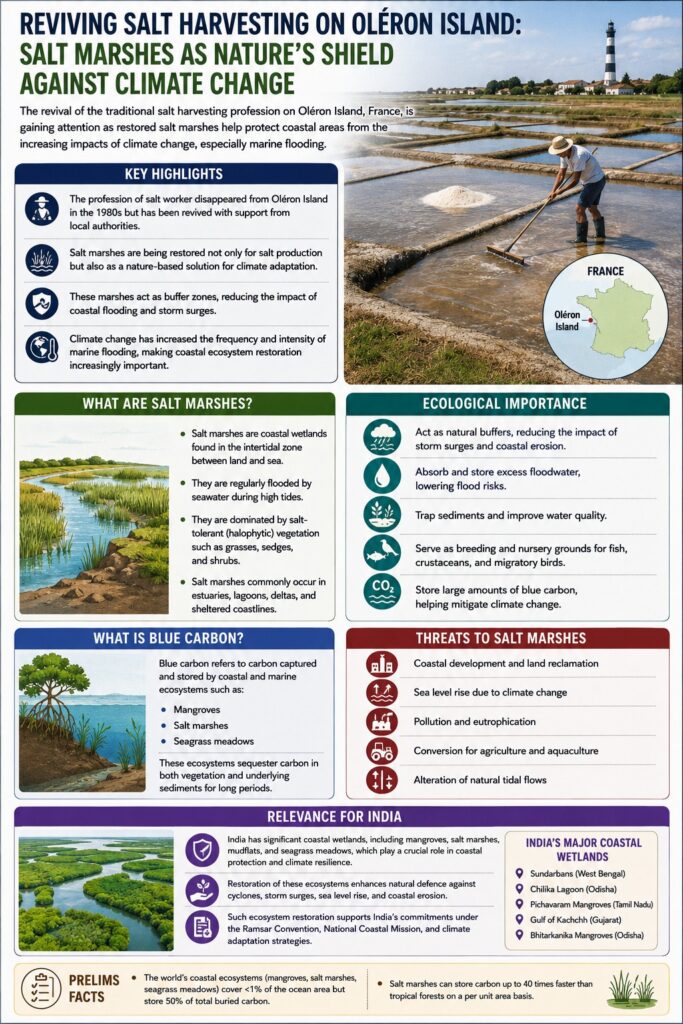
The revival of the traditional salt harvesting profession on Oléron Island, France, is gaining attention as restored salt marshes help protect coastal areas from the increasing impacts of climate change, especially marine flooding.
Key Highlights
The profession of salt worker disappeared from Oléron Island in the 1980s but has been revived with support from local authorities.
Salt marshes are being restored not only for salt production but also as a nature-based solution for climate adaptation.
These marshes act as buffer zones, reducing the impact of coastal flooding and storm surges.
Climate change has increased the frequency and intensity of marine flooding, making coastal ecosystem restoration increasingly important.
What are Salt Marshes?
Salt marshes are coastal wetlands found in the intertidal zone between land and sea.
They are regularly flooded by seawater during high tides.
They are dominated by salt-tolerant (halophytic) vegetation such as grasses, sedges, and shrubs.
Salt marshes commonly occur in estuaries, lagoons, deltas, and sheltered coastlines.
Ecological Importance
Act as natural buffers, reducing the impact of storm surges and coastal erosion.
Absorb and store excess floodwater, lowering flood risks.
Trap sediments and improve water quality.
Serve as breeding and nursery grounds for fish, crustaceans, and migratory birds.
Store large amounts of blue carbon, helping mitigate climate change.
What is Blue Carbon?
Blue carbon refers to carbon captured and stored by coastal and marine ecosystems such as: Mangroves, Salt marshes, and Seagrass meadows
These ecosystems sequester carbon in both vegetation and underlying sediments for long periods.
Threats to Salt Marshes
Coastal development and land reclamation.
Sea level rise due to climate change.
Pollution and eutrophication.
Conversion for agriculture and aquaculture.
Alteration of natural tidal flows.
Relevance for India
India has significant coastal wetlands, including mangroves, salt marshes, mudflats, and seagrass meadows, which play a crucial role in coastal protection and climate resilience.
Restoration of these ecosystems supports India’s commitments under the Ramsar Convention, National Coastal Mission, and climate adaptation strategies.
[2021] What is blue carbon?
[A] Carbon captured by oceans and coastal ecosystems
[B] Carbon sequestered in forest biomass and agricultural soils
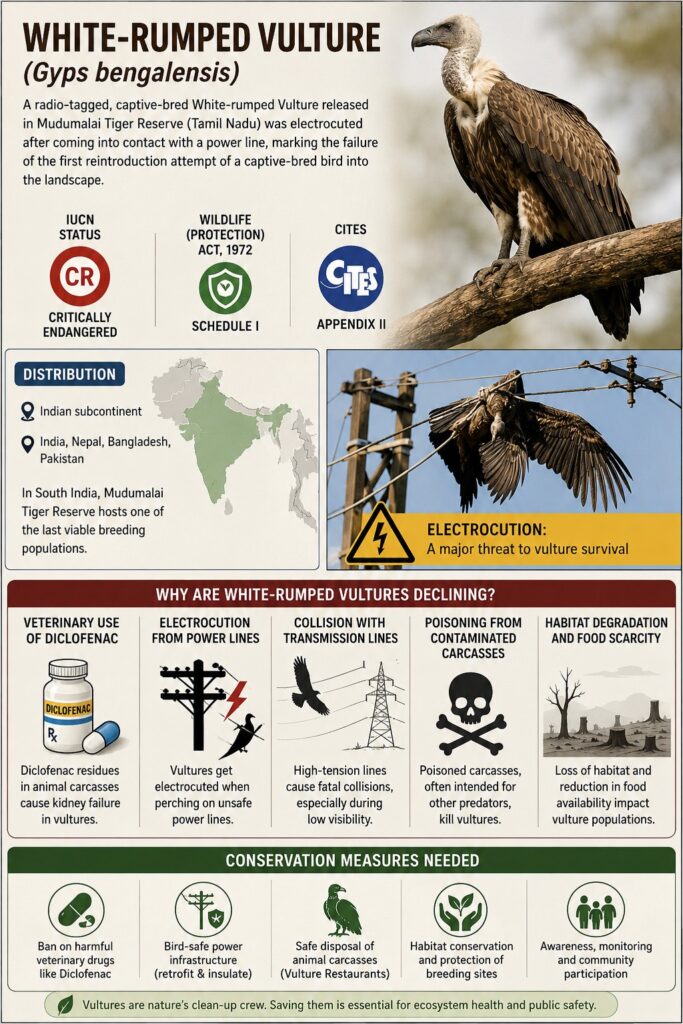
A radio-tagged, captive-bred White-rumped Vulture released in Mudumalai Tiger Reserve (Tamil Nadu) was electrocuted after coming into contact with a power line, marking the failure of the first reintroduction attempt of a captive-bred bird into the landscape.
White-rumped Vulture (Gyps bengalensis)
Scientific name: Gyps bengalensis
IUCN Status: Critically Endangered
Wildlife (Protection) Act, 1972: Schedule I
CITES: Appendix II
Distribution: India, Nepal, Bangladesh, Pakistan. In South India, Mudumalai Tiger Reserve hosts one of the last viable breeding populations.
Why are White-rumped Vultures Declining?
Veterinary use of Diclofenac, causing kidney failure.
Electrocution from power lines.
Collision with transmission lines.
Poisoning from contaminated carcasses.
Habitat degradation and food scarcity.
[2017] In India, if a species of tortoise is declared protected under Schedule I of the Wildlife (Protection) Act, 1972, what does it imply?
[A] It enjoys the same level of protection as the tiger.
[B] It no longer exists in the wild, a few individuals are under captive protection; and not it is impossible to prevent its extinction.
[C] It is endemic to a particular region of India.
[D] Both (b) and (c) stated above are correct in this context.
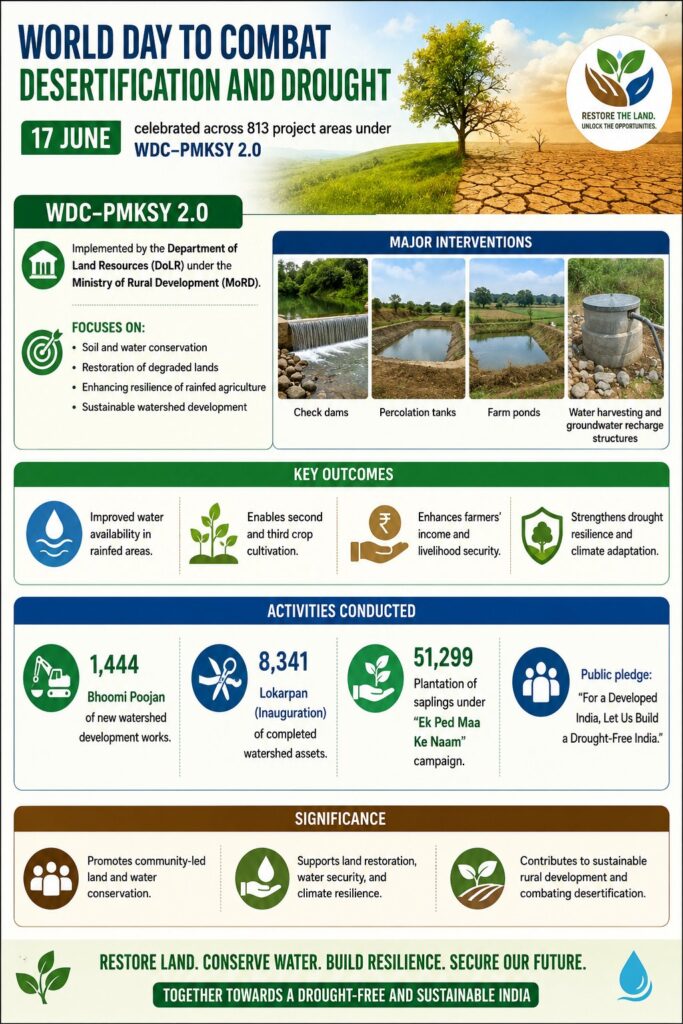
The World Day to Combat Desertification and Drought (17 June) was celebrated across 813 project areas under the WDC–PMKSY 2.0 (Watershed Development Component of Pradhan Mantri Krishi Sinchayee Yojana 2.0).
WDC–PMKSY 2.0
Implemented by the Department of Land Resources (DoLR) under the Ministry of Rural Development (MoRD).
Focuses on:
Soil and water conservation.
Restoration of degraded lands.
Enhancing resilience of rainfed agriculture.
Sustainable watershed development.
Major Interventions
Check dams, Percolation tanks, Farm ponds, Water harvesting and groundwater recharge structures
Key Outcomes
Improved water availability in rainfed areas.
Enables second and third crop cultivation.
Enhances farmers’ income and livelihood security.
Strengthens drought resilience and climate adaptation.
Activities Conducted
Bhoomi Poojan of 1,444 new watershed development works.
Lokarpan (Inauguration) of 8,341 completed watershed assets.
Plantation of 51,299 saplings under “Ek Ped Maa Ke Naam” campaign.
Public pledge: “For a Developed India, Let Us Build a Drought-Free India.”
Significance
Promotes community-led land and water conservation.
Supports land restoration, water security, and climate resilience.
Contributes to sustainable rural development and combating desertification.
[2016] What is/are the importance/importances of the ‘United Nations Convention to Combat Desertification’?
1. It aims to promote effective action through innovative national programmes and supportive international partnerships.
2. It has a special focus on South Asia and North Africa regions, and its Secretariat facilitates allocation of major portions of financial resources to these regions.
3. It is committed to a bottom-up approach, encouraging participation of local people in combating desertification.
Major Indian cities such as Delhi, Chennai, Bengaluru and Hyderabad experienced severe water shortages in the summer of 2026. India’s urban water crises persist not because cities lack water sources, but because governance continues to prioritize creating new supplies over fixing leakages, regulating groundwater, managing demand, ensuring transparency, and reusing wastewater. The problem is not a knowledge deficit; it is an execution deficit.
Why have seasonal water shortages evolved into a chronic urban governance crisis?
Recurring Emergencies: Urban water emergencies have become a regular feature rather than an exceptional summer event
Widespread Impact: Similar shortages were reported across Delhi, Chennai, Bengaluru and Hyderabad.
Severe Scarcity: In parts of New Delhi, large families survived on a single 20-litre water can per day.
Emergency Dependence: Delhi Jal Board deployed more than 1,000 tankers to manage shortages.
Systemic Failure: Long queues, tanker dependence, anxiety and protests indicate structural weaknesses rather than temporary disruptions.
Persistent Vulnerability: The same pattern repeats every year despite advance awareness of summer demand pressures.
Why are cities becoming more water-insecure despite having access to multiple water sources?
Multiple Sources: Cities obtain water from reservoirs, groundwater and interconnected supply systems.
Groundwater Depletion: Urban populations extract groundwater faster than aquifers can naturally replenish.
Local Buffer Erosion: Rivers, lakes and ponds that previously moderated water stress have deteriorated.
Encroachment: Urban water bodies have been occupied and degraded by expanding settlements.
Infrastructure Decay: Existing supply networks suffer from leakages and maintenance deficits.
Demand Expansion: Rapid urbanisation has increased consumption beyond the capacity of existing systems.
How does climate variability expose weaknesses that already exist in urban water systems?
Dual Extremes: Cities increasingly experience floods and droughts within the same annual cycle.
Reduced Storage Capacity: Urban ecosystems cannot retain water for future use.
Illustrative Example: Bengaluru experienced flooding after intense rains and tanker dependence a few weeks later.
Infrastructure Stress: Climate shocks reveal weaknesses that already exist in water governance systems.
Declining Resilience: Urban water systems have lost their capacity to absorb environmental fluctuations.
Why does the crisis persist even when cities know what the problem is?
Execution Deficit: Policymakers understand the causes of water stress but fail to implement corrective measures consistently.
Maintenance Neglect: Authorities search for new sources instead of repairing existing systems.
Regulatory Weakness: Groundwater extraction remains inadequately regulated and enforced.
Institutional Fragmentation: Urban planning, water supply and wastewater management operate in separate administrative silos.
Policy Bias: Infrastructure expansion receives greater attention than system efficiency.
Short-Term Responses: Crisis management frequently substitutes for long-term planning.
How can Indian cities shift from crisis-driven water management to long-term urban water security?
Solution
Key Measures Suggested
Problem Addressed
Transparent Emergency Planning
Prepare city-level water emergency plans; identify vulnerable areas; publicly disclose supply schedules, duration of shortages and distribution plans; provide regular updates.
Panic, uncertainty, poor crisis management and lack of public trust.
Recover Water Already Available
Detect and repair leakages; conduct ward-level audits; reduce Non-Revenue Water (NRW); set targets for loss reduction.
Massive distribution losses; article notes nearly 30% of water is lost before reaching consumers.
Demand Management and Conservation
Conduct water audits in campuses and commercial complexes; repair internal leaks; restrict non-essential consumption during peak months; promote community-led conservation.
Rising urban demand, wastage and unsustainable consumption patterns.
Equity-Centred Emergency Response
Regulate tanker supply and pricing; ensure minimum water access for vulnerable groups; provide temporary treatment support; spread awareness on safe storage and usage.
Unequal access, exploitation during shortages and disproportionate burden on low-income households.
Wastewater Reuse and Sewerage Reform
Upgrade sewage treatment plants; improve aeration, de-weeding and desludging; reduce sewer leakages; recycle treated wastewater; support groundwater recharge.
Water pollution, untreated wastewater discharge and underutilisation of recycled water.
Is the real challenge water scarcity or the absence of transparent and accountable management?
Information Deficit: Residents often receive little information regarding duration, frequency and extent of supply disruptions.
Uncertainty Costs: Lack of communication increases panic, rumours and public distrust.
Emergency Planning Gap: Cities lack clear and publicly available water emergency plans.
Vulnerability Mapping: Authorities rarely identify the most affected neighbourhoods before crises emerge.
Public Accountability: Regular public updates improve trust and strengthen compliance with conservation measures.
Governance Failure: Scarcity becomes more disruptive when management systems fail to communicate and coordinate effectively.
Why does recovering lost water offer greater returns than creating new water sources?
Non-Revenue Water: Nearly 30% of water is lost before reaching consumers.
Leakage Reduction: Repairing pipelines immediately increases available supply.
Cost Efficiency: Water recovery is often cheaper than developing new infrastructure.
Targeted Audits: Authorities can identify high-loss zones through local leak detection exercises.
Virtual Source Creation: Saved water functions as a new source without requiring new extraction.
Supply Reliability: Efficient distribution reduces dependence on emergency tanker operations.
Why must urban water policy shift from supply augmentation to demand management?
Large Consumers: Campuses and commercial complexes consume significant volumes of urban water.
Water Audits: Internal audits can identify avoidable wastage.
Basic Maintenance: Leak repairs generate substantial water savings.
Consumption Norms: Cities should establish clear limits during peak-demand months.
Community Participation: Resident welfare groups can promote conservation practices.
Behavioural Change: Demand reduction lowers pressure on stressed water systems.
Non-Essential Use Restrictions: Limiting discretionary consumption preserves supplies during emergencies.
Why does equitable crisis management matter as much as water availability?
Distributional Justice: Water shortages disproportionately affect low-income households.
Tanker Regulation: Authorities must regulate tanker pricing and distribution.
Basic Water Security: Emergency systems should guarantee minimum water access.
Temporary Treatment Support: Areas facing contamination require interim treatment facilities.
Safe Storage Communication: Public guidance reduces health risks during shortages.
Equity Imperative: Urban water security depends on access as much as availability.
Why is wastewater reuse the missing link in urban water security?
Resource Recovery: Treated wastewater can augment urban water supplies.
Sewerage Integrity: Leak detection prevents contamination and water quality deterioration.
Conclusion
India’s urban water crisis reflects a governance failure more than a resource shortage. Cities already possess the technical knowledge required to address leakages, groundwater depletion, excessive demand and wastewater mismanagement. Water security requires a shift from emergency tanker-driven responses to transparent planning, institutional accountability and efficient management of existing resources.
UPSC Relevance
[UPSC 2023] Why is the world today confronted with a crisis of availability of and access to freshwater resources?
Linkage: PYQ examines the structural causes behind freshwater scarcity and unequal access, which lie at the core of India’s recurring urban water crises. The article argues that urban water shortages stem not merely from inadequate water availability but from multiple reasons.
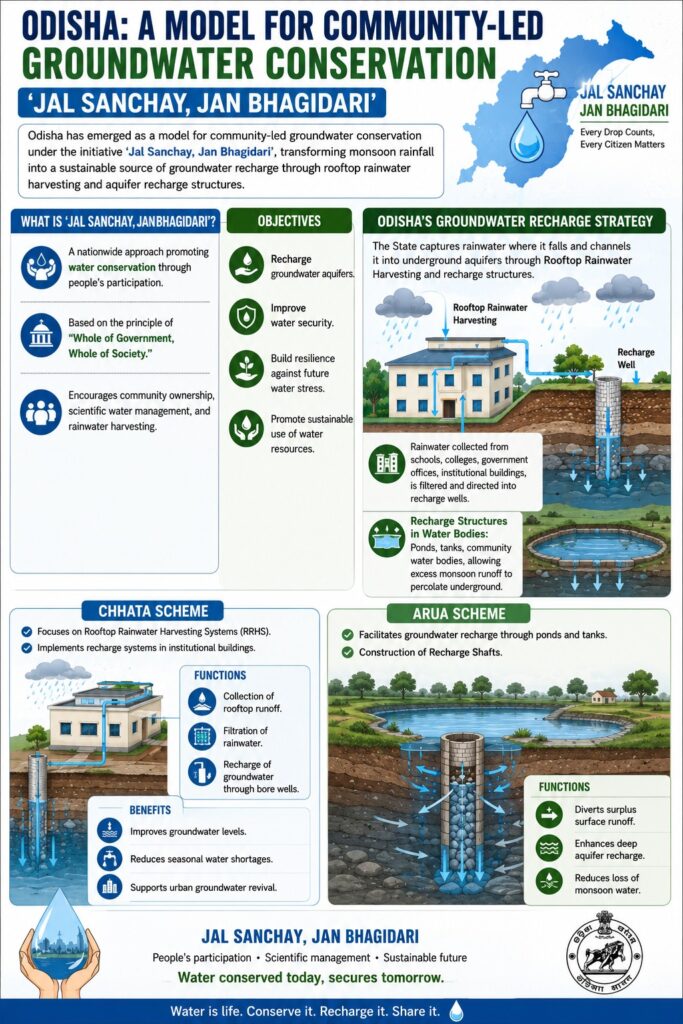
Odisha has emerged as a model for community-led groundwater conservation under the initiative ‘Jal Sanchay, Jan Bhagidari’, transforming monsoon rainfall into a sustainable source of groundwater recharge through rooftop rainwater harvesting and aquifer recharge structures.
What is ‘Jal Sanchay, Jan Bhagidari’?
A nationwide approach promoting: Water conservation through people’s participation.
Based on the principle of “Whole of Government, Whole of Society.”
Encourages Community ownership, Scientific water management, and Rainwater harvesting.
Objective
Recharge groundwater aquifers.
Improve water security.
Build resilience against future water stress.
Promote sustainable use of water resources.
Odisha’s Groundwater Recharge Strategy
The State captures rainwater where it falls and channels it into underground aquifers through Rooftop Rainwater Harvesting
Rainwater collected from: Schools, Colleges, Government offices, Institutional buildings, is filtered and directed into recharge wells.
Recharge Structures in Water Bodies: Ponds, Tanks, Community water bodies, allowing excess monsoon runoff to percolate underground.
CHHATA Scheme
Focuses on Rooftop Rainwater Harvesting Systems (RRHS).
Implements recharge systems in institutional buildings.
Functions
Collection of rooftop runoff.
Filtration of rainwater.
Recharge of groundwater through bore wells.
Benefits
Improves groundwater levels.
Reduces seasonal water shortages.
Supports urban groundwater revival.
ARUA Scheme
About: Facilitates groundwater recharge through ponds and tanks.
Construction of Recharge Shafts.
Functions
Diverts surplus surface runoff.
Enhances deep aquifer recharge.
Reduces loss of monsoon water.
[2022] Which one of the following has been constituted under the Environment (Protection) Act, 1986?
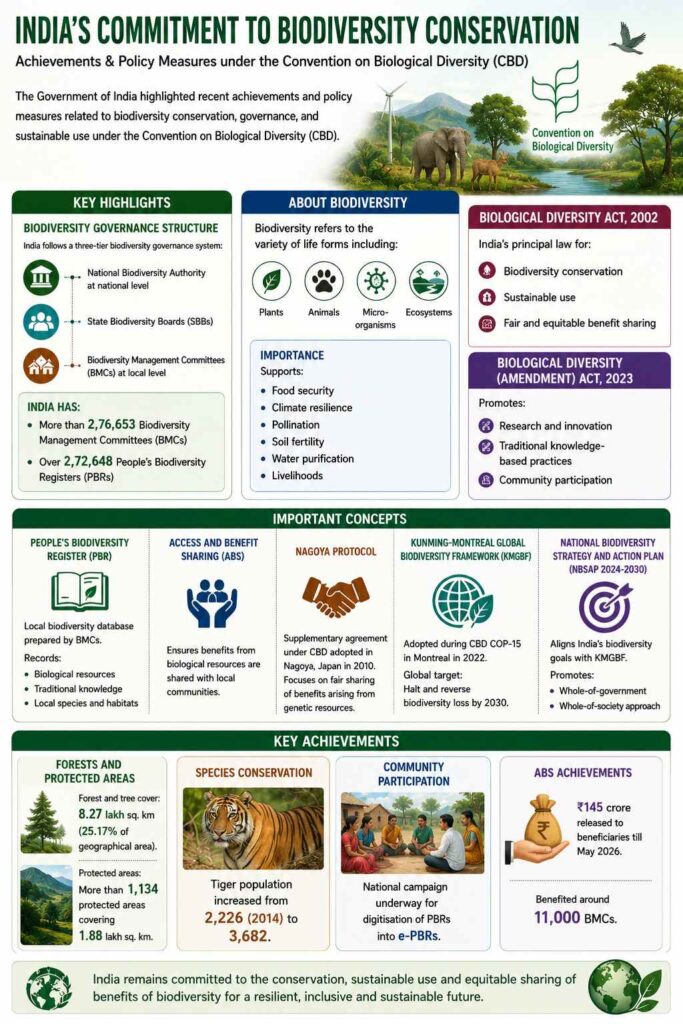
The Government of India highlighted recent achievements and policy measures related to biodiversity conservation, governance, and sustainable use under the Convention on Biological Diversity (CBD).
Biodiversity Governance Structure
India follows a three-tier biodiversity governance system:
National Biodiversity Authority at national level
State Biodiversity Boards (SBBs)
Biodiversity Management Committees (BMCs) at local level.
India has:
More than 2,76,653 Biodiversity Management Committees (BMCs)
Over 2,72,648 People’s Biodiversity Registers (PBRs).
Note: Biodiversity Management Committees (BMCs) are local-level statutory bodies in India, mandated by the Biological Diversity Act of 2002.
About Biodiversity
Biodiversity refers to the variety of life forms including:
Plants
Animals
Microorganisms
Ecosystems.
Biological Diversity Act, 2002
India’s principal law for:
Biodiversity conservation
Sustainable use
Fair and equitable benefit sharing.
Biological Diversity (Amendment) Act, 2023
Promotes:
Research and innovation
Traditional knowledge-based practices
Community participation.
Important Concepts
People’s Biodiversity Register (PBR)
Local biodiversity database prepared by BMCs.
Records:
Biological resources
Traditional knowledge
Local species and habitats.
Access and Benefit Sharing (ABS)
Ensures benefits from biological resources are shared with local communities.
Nagoya Protocol
Supplementary agreement under CBD adopted in Nagoya, Japan in 2010.
Focuses on fair sharing of benefits arising from genetic resources.
Kunming-Montreal Global Biodiversity Framework (KMGBF)
Adopted during CBD COP-15 in Montreal in 2022.
Global target:
Halt and reverse biodiversity loss by 2030.
National Biodiversity Strategy and Action Plan (NBSAP 2024-2030)
Aligns India’s biodiversity goals with KMGBF.
Promotes:
Whole-of-government
Whole-of-society approach.
Key Achievements
Forests and Protected Areas
Forest and tree cover: 8.27 lakh sq. km (25.17% of geographical area).
Protected areas: More than 1,134 protected areas covering 1.88 lakh sq. km.
Species Conservation
Tiger population increased from: 2,226 (2014) to 3,682.
Community Participation
National campaign underway for digitisation of PBRs into e-PBRs.
ABS Achievements
₹145 crore released to beneficiaries till May 2026.
Benefited around 11,000 BMCs (Biodiversity Management Committees).
[2023] Consider the following statements: 1. In Biodiversity the India, Management Committees are key to the realization of the objectives of the Nagoya Protocol. 2. The Biodiversity Management Committees have important functions in determining access and benefit sharing, including the power to levy collection fees on the access of biological resources within its jurisdiction. Which of the statements given above is/are correct?
Cyclone Dana highlighted how Odisha’s mangroves protected coastal communities, strengthening the case for nature-based coastal defence over seawalls. This has renewed attention on India’s continued preference for spending ₹2,641 crore on hard infrastructure despite evidence that mangroves and other coastal ecosystems provide long-term, cost-effective protection to nearly 250 million coastal residents.
Why Are India’s Coastal Regions Becoming Increasingly Vulnerable to Climate Change?
Rising sea levels: The Arabian Sea and Bay of Bengal are experiencing accelerating sea-level rise, threatening low-lying coastal districts, deltas, and island territories.
Intensifying cyclones: Climate change is increasing both the frequency and intensity of cyclones along India’s coast, the eastern seaboard (Odisha, Andhra Pradesh, West Bengal) is particularly exposed.
Saline intrusion: Saltwater intrusion into freshwater aquifers and agricultural land is degrading livelihoods. This directly affects food security and drinking water in coastal communities.
Storm surges: Storm surges linked to cyclonic events are intensifying. These cause disproportionate damage to ecologically fragile coastal landscapes and displacing communities.
Compound risk: These interacting hazards do not operate independently. They multiply threats along India’s coastline, making the fragile coastal landscape both physically and economically vulnerable.
Large Population Exposure: Nearly 250 million people living along India’s coastline face direct impacts of climate-related coastal risks.
Why Are Mangroves, Seagrasses and Coral Reefs Considered Natural Coastal Defences?
Coral Reefs: The First Line of Defense
Natural Breakwaters: Coral reefs sit furthest out in the ocean and absorb up to 97% of incoming wave energy before it can reach the shore.
Friction and Depth: The jagged, complex structures of coral skeletons create immense bottom friction, forcing waves to break early and lose their destructive power
Seagrass Meadows(The Middle Buffer): Reduce coastal erosion, trap sediments and support marine biodiversity.
Erosion Control: Located in the shallow waters between reefs and the shore, seagrasses act as underwater carpets that anchor the seabed with their roots.
Sediment Trapping: Their long blades slow down water currents, forcing suspended sand and organic particles to drop to the seafloor, which actively builds up the underwater terrain.
Mangroves: The Intertidal Shield
Storm Surge Mitigation: Mangrove forests act as the final, dense barrier against extreme weather, capable of reducing storm surge heights by up to 66%.
Energy Dissipation: Their massive networks of tangled prop roots and thick trunks create a dense obstacle course that rapidly saps the remaining power of waves and incoming floods.
How Does Ecosystem-based Adaptation (EbA) Strengthen Climate Resilience?
EbA uses biodiversity and ecosystem services to help people adapt to climate change. This reduces climate impacts while sustaining ecosystems that support fisheries, agriculture, and tourism.
Climate Risk Reduction: Uses biodiversity and ecosystem services to help people adapt to climate change.
Livelihood Protection: Supports fisheries, agriculture and tourism-dependent communities.
Long-Term Sustainability: Maintains ecosystem functions while reducing climate vulnerabilities.
Cost Effectiveness: Avoids repeated expenditure on expensive hard infrastructure maintenance.
Disaster Risk Reduction: Reduces losses from cyclones, flooding and coastal erosion.
Nature-based Solutions: Integrates conservation and restoration into adaptation planning.
What Evidence Demonstrates the Effectiveness of Ecosystem-based Adaptation?
Bhitarkanika Mangroves During Cyclone Dana
Cyclone Protection: Mangroves in Odisha’s Bhitarkanika quietly protected communities from cyclone impacts.
Natural Buffer: Reduced climate impacts while strengthening ecosystem health and livelihoods.
Global Evidence
Protection Capacity: A healthy hectare of coastal habitat protects more people per hectare than almost any other natural asset.
Sundarbans Example
Mangrove Restoration: Around 18,000 women restored 4,600 hectares of mangroves.
Cyclone Mitigation: Restoration reduced impacts of Cyclones Amphan and Yaas.
Livelihood Benefits: Strengthened local economic opportunities and social outcomes.
Kerala Example
Seawall Consequences: Armouring and erosion-control measures protected specific sites.
Adjacent Damage: Accelerated erosion in neighbouring areas, illustrating unintended consequences of hard infrastructure.
Why Does India Continue to Prefer Seawalls and Embankments?
Seawalls are massive, heavy-duty structures built directly parallel to the shoreline where the sea meets the land. They are designed as a last line of defence to protect high-value coastal areas, like cities and roads, from intense wave action. Embankments are raised earthen ridges or mounds constructed along rivers, lakes, or low-lying coastlines. They focus on holding back water from flat, expansive areas rather than fighting heavy, crashing ocean waves.
Engineering Bias: Adaptation planning strongly favours hard infrastructure such as seawalls, groynes, embankments and tetrapods.
Political Visibility: Seawalls and embankments provide visible and immediate outputs, making them attractive for governments.
Institutional Preference: Existing planning, procurement and budgeting systems are designed around construction-based projects.
Administrative Familiarity: Engineers and local authorities are more experienced with hard infrastructure than ecosystem restoration.
Perceived Certainty: Seawalls provide tangible and measurable protection, whereas ecosystem benefits are often viewed as less predictable.
What does India’s coastal adaptation spending pattern reveal about institutional bias toward hard infrastructure?
Hard protection dominance: Coastal States spent ₹2,641 crore on hard protection measures over the last decade. This reflects a stark preference for engineered measures such as seawalls, groynes, embankments, and tetrapods.
National Coastal Mission decline: Budget fell from ₹195 crore in 2022-23 to just ₹50 crore in 2024-25.
PSL and visibility bias: Fragile institutional mandates, weak monitoring, and a preference for visible infrastructure often leave ecosystem-based interventions buried within broader sectoral programmes rather than recognised as adaptation in their own right.
Reporting gap: Adaptation benefits of coastal ecosystems are rarely assessed or recorded separately, making India’s coastal EbA portfolio appear much weaker than it is.
What Prevents Ecosystem-based Adaptation from Becoming Mainstream Policy?
Fragmented Terminology: EbA overlaps with Nature-based Solutions (NbS), Coastal Adaptation (EbCA), Ecosystem-based Disaster Risk Reduction (Eco-DRR) and related concepts.
Classification Challenges: Similar interventions are recorded under conservation, restoration or management categories instead of adaptation.
Weak Monitoring: Limited mechanisms exist to measure adaptation outcomes.
Institutional Fragmentation: EbA interventions remain dispersed across multiple schemes and sectors.
Inadequate Recognition: Policymakers often fail to identify adaptation benefits generated by ecosystem restoration.
Limited Financing: Absence of dedicated adaptation financing restricts scale and replication.
Why Does Classification of Ecosystem-based Adaptation Matter?
Policy Recognition: Enables clear identification of adaptation actions.
Monitoring Frameworks: Facilitates tracking and evaluation of adaptation outcomes.
Financing Access: Strengthens eligibility for climate adaptation funding.
Evidence Generation: Supports measurement of climate resilience benefits.
Policy Integration: Ensures ecosystem restoration becomes part of mainstream adaptation planning.
How Does the Mangrove Initiative for Shoreline Habitats and Tangible Incomes (MISHTI) Reflect the Potential of EbA?
MISHTI is a dedicated central government scheme in India aimed at reviving and expanding the country’s mangrove cover while generating sustainable livelihoods for coastal communities. Announced during the Union Budget 2023-24 and officially launched on World Environment Day (5 June 2023), it serves as a core part of India’s strategy to build a nature-based “bio-shield” against climate change.
Programme Objective: Targets restoration of 540 sq km of mangroves across nine States.
Climate Resilience: Enhances natural protection against coastal hazards.
Livelihood Support: Generates economic opportunities linked to ecosystem restoration.
Current Limitation: Primarily framed as a restoration programme rather than a climate adaptation initiative.
What Policy Reforms Are Needed to Mainstream Ecosystem-based Adaptation?
Policy Integration: Embeds EbA within coastal planning and adaptation frameworks.
Dedicated Financing: Expands budgetary support for ecosystem-based interventions.
Outcome Monitoring: Develops indicators for adaptation benefits.
Institutional Coordination: Harmonises fragmented schemes and programmes.
Climate Accounting: Recognises ecosystem restoration as an adaptation investment.
Natural Capital Approach: Treats ecosystems as strategic climate-resilience assets.
Conclusion
The choice before India is not merely between two adaptation techniques but between two development pathways. While seawalls offer localised and short-term protection, mangroves and other coastal ecosystems provide durable climate resilience, biodiversity conservation and livelihood security. Mainstreaming Ecosystem-based Adaptation will be critical for protecting India’s 250 million coastal residents in an era of accelerating climate change.
Value Addition
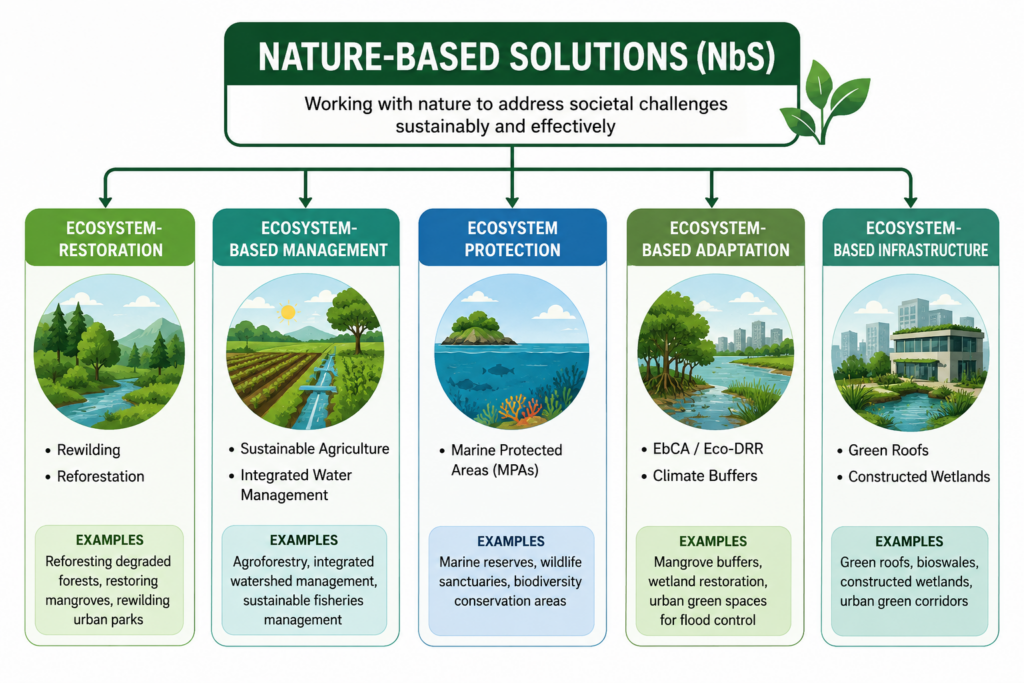
Nature-based Solutions (NbS)
Definition: Nature-based Solutions (NbS) is an umbrella concept defined by the International Union for Conservation of Nature (IUCN) as actions to protect, sustainably manage, and restore natural or modified ecosystems. These actions address societal challenges, such as climate change, food security, water security, human health, and disaster risk, while simultaneously providing human well-being and biodiversity benefits.
India’s NDC 2022 references NbS for carbon sequestration through forests.
Ecosystem-based Adaptation (EbA)
Definition: Use of biodiversity and ecosystem services to help people adapt to adverse impacts of climate change.
Key Features
Ecosystem conservation
Ecosystem restoration
Climate risk reduction
Community participation
Livelihood enhancement
Disaster resilience
Ecosystem-based Coastal Adaptation (EbCA)
EbCA is a subset of Ecosystem-based Adaptation (EbA). It focuses specifically on helping coastal communities adapt to the long-term, gradual changes brought by climate change.
The Core Strategy: It uses coastal biodiversity and ecosystem services to help human societies adapt to climate pressures.
Primary Targets: Sea-level rise, coastal erosion, saltwater intrusion into agricultural land, and changing ocean temperatures.
Example: Dynamically planting salt-tolerant mangrove species along an eroding coastline. As sea levels rise, the mangroves naturally trap sediment, raising the land.
Ecosystem-based Disaster Risk Reduction (Eco-DRR)
Eco-DRR focuses on using ecosystems to reduce the immediate impact, frequency, and severity of sudden natural disasters.
The Core Strategy: It manages and restores ecosystems to act as physical shock absorbers against extreme physical hazards.
Primary Targets: Sudden disasters like cyclones, tsunamis, massive storm surges, and flash floods.
Example: Protecting an offshore coral reef. When a cyclone strikes, the reef acts as a natural breakwater, absorbing up to 97% of the wave energy before it crashes into coastal towns, directly reducing casualties and property destruction.
Ecological Bio-Shields:
A bio-shield is a dense strip of vegetation planted along a coast to act as a barrier against natural hazards.
Casuarina trees, mangroves, and coastal palms are frequently used together to create multi-tiered, living walls that trap flying debris and slow down incoming water.If
Integrated Coastal Zone Management (ICZM):
India’s ICZM project (World Bank-assisted) aimed to address coastal erosion, pollution, and habitat loss through integrated planning.
EbA mainstreaming is its natural evolution.
PYQ Relevance
[UPSC 2022] Explain the causes and effects of coastal erosion in India. What are the available coastal management techniques for combating the hazard?
Linkage: The PYQ examines coastal vulnerability and compares different coastal protection approaches, including structural and ecosystem-based measures. The article extends the PYQ by assessing whether ecosystem-based solutions such as mangroves can provide more sustainable and cost-effective coastal protection than conventional seawalls and embankments.
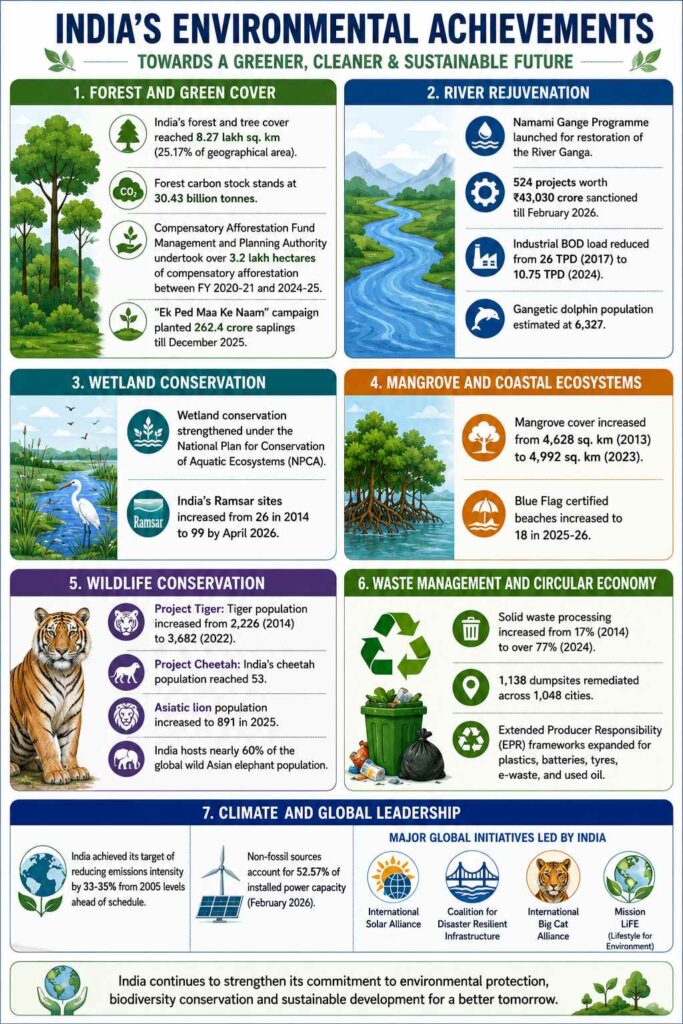
The Government of India highlighted major achievements in environmental protection, biodiversity conservation, climate action, and sustainable development over the last 12 years.
Forest and Green Cover
India’s forest and tree cover reached 8.27 lakh sq. km (25.17% of geographical area).
Forest carbon stock stands at 30.43 billion tonnes.
Compensatory Afforestation Fund Management and Planning Authority undertook over 3.2 lakh hectares of compensatory afforestation between FY 2020-21 and 2024-25.
“Ek Ped Maa Ke Naam” campaign planted 262.4 crore saplings till December 2025.
River Rejuvenation
Namami Gange Programme launched for restoration of the River Ganga.
524 projects worth ₹43,030 crore sanctioned till February 2026.
Industrial BOD load reduced from 26 TPD (2017) to 10.75 TPD (2024).
Gangetic dolphin population estimated at 6,327.
Wetland Conservation
Wetland conservation strengthened under the National Plan for Conservation of Aquatic Ecosystems (NPCA).
India’s Ramsar sites increased from 26 in 2014 to 99 by April 2026.
Mangrove and Coastal Ecosystems
Mangrove cover increased from 4,628 sq. km (2013) to 4,992 sq. km (2023).
Blue Flag certified beaches increased to 18 in 2025-26.
Wildlife Conservation
Project Tiger: Tiger population increased from 2,226 (2014) to 3,682 (2022).
Project Cheetah: India’s cheetah population reached 53.
Asiatic lion population increased to 891 in 2025.
India hosts nearly 60% of the global wild Asian elephant population.
Waste Management and Circular Economy
Solid waste processing increased from 17% (2014) to over 77% (2024).
1,138 dumpsites remediated across 1,048 cities.
Extended Producer Responsibility (EPR) frameworks expanded for plastics, batteries, tyres, e-waste, and used oil.
Climate and Global Leadership
India achieved its target of reducing emissions intensity by 33-35% from 2005 levels ahead of schedule.
Non-fossil sources account for 52.57% of installed power capacity (February 2026).
Major global initiatives led by India:
International Solar Alliance
Coalition for Disaster Resilient Infrastructure
International Big Cat Alliance
Mission LiFE
[2025] Consider the following statements: Statement I: Circular economy reduces the emissions of greenhouse gases. Statement II: Circular economy reduces the use of raw materials as inputs. Statement III : Circular economy reduces wastage in the production process. Which one of the following is correct in respect of the above statements?
[A] Both Statement II and Statement III are correct and both of them explain Statement I
[B] Both Statement II and Statement III are correct but only one of them explains Statement I
[C] Only one of the Statements II and III is correct and that explains Statement I
[D] Neither Statement II nor Statement III is correct
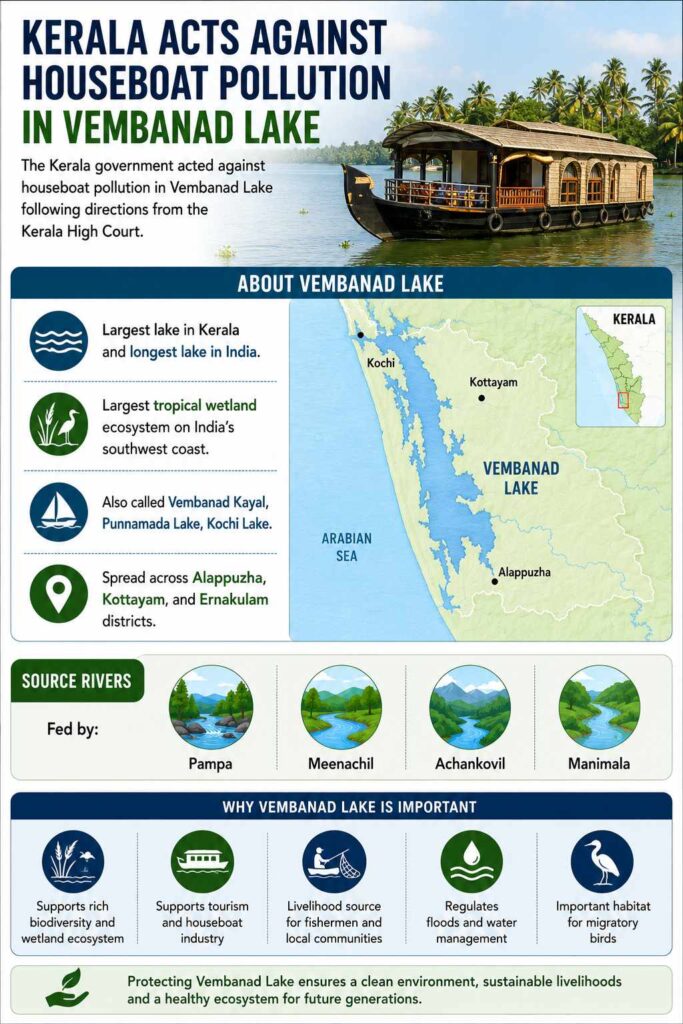
The Kerala government acted against houseboat pollution in Vembanad Lake following directions from the Kerala High Court.
About Vembanad Lake
Largest lake in Kerala and longest lake in India
Largest tropical wetland ecosystem on India’s southwest coast
Also called Vembanad Kayal, Punnamada Lake, Kochi Lake
Spread across Alappuzha, Kottayam, and Ernakulam districts
Source Rivers
Fed by:
Pampa
Meenachil
Achankovil
Manimala
Ecological Importance
Ramsar Site since 2002
Supports fisheries, biodiversity, flood control, and groundwater recharge
Part of National Wetlands Conservation Programme
Agriculture
Famous for below sea-level farming in the Kuttanad region
Tourism and Culture
Major part of Kerala backwaters tourism
Known for houseboats and inland water transport
Hosts Nehru Trophy Snake Boat Race in August
[2022] Consider the following pairs : Wetland/Lake Location 1. Hokera Wetland: Punjab 2. Renuka Wetland: Himachal Pradesh 3. Rudrasagar Lake: Tripura 4. Sasthamkotta Lake: Tamil Nadu How many pairs given above are correctly matched?