đŸ’„Join UPSC 2027,2028 Mentorship (July Batch) + XFactor Notes & Microthemes PDF

Subject: Conservation & Mitigation

1. Conservation Progs.
2. Worldwide initiatives
3. Mitigation Strategies
4. Conventions and Protocols

  • [pib] Recycling Carbon Technology

    A Bangalore-based startup has received the National Award 2021 for developing efficient catalysts and methodologies for the conversion of CO2 to methanol and other chemicals.

    Carbon Recycling

    • It has led to the improvisation of process engineering to enhance the production of chemicals and fuels from anthropogenic CO2.
    • It has integrated multiple components involved in the CCUS (Carbon capture, utilization, and sequestration) to develop a complete solution for the environmental issues due to global warming.
    • The current capacity of CO2 conversion is 300 kg per day, which can be scaled up to several 100 tons on an industrial scale.

    What is CCUS?

    • Carbon Capture, Utilization, and Storage (CCUS) encompass methods and technologies to remove CO2 from the flue gas and from the atmosphere.
    • CCUS involves multiple aspects that need to be in sync for the successful removal or capture of CO2 from the flue gas or the atmosphere, followed by utilization and storage.
    • Carbon capture involves the development of sorbents that can effectively bind to the CO2 present in flue gas or the atmosphere, which is expensive.
    • In addition, there has been a considerable debate about the fate of captured and compressed CO2.
  • Benefits of environmental fiscal reforms

    The article highlights the advantages of environmental fiscal reforms in India.

    Status of  out-of-pocket spending on health in India

    • As per WHO data, in 2011,  17.33% of the population in India made out-of-pocket payments on health that was more than 10% of their income.
    • The percentage was higher in rural areas compared to urban areas.
    • Globally, 12.67% of the population spent more than 10% of their income (out of their pocket) on health.
    • In Southeast Asia, 16% spent more than 10% of their household income on health.
    • Similarly, 3.9% of the population in India made more than 25% of out-of-pocket payments on health, with 4.34% of it in the rural areas.

    Alternate source of health financing: Eco tax

    • The Economic Survey of India 2019-20 has outlined that an increase in public spending from 1% to 2.5-3% of GDP, can decrease out-of-pocket expenditure from 65% to 30% of overall healthcare expenses.
    • The National Health Policy of 2017 also envisages increase in public spending from 1% to 2.5-3% of GDP.
    • This is where the importance of alternate sources of health financing in India needs to be stressed.
    • Fiscal reforms for managing the environment are important, and India has great potential for revenue generation in this aspect.

    Environmental tax reforms

    • Environmental tax reforms generally involve three complementary activities:
    • 1. Eliminating existing subsidies and taxes that have a harmful impact on the environment;
    • 2. Restructuring existing taxes in an environmentally supportive manner;
    • 3. Initiating new environmental taxes.
    • Taxes can be designed either as revenue neutral or revenue augmenting.
    • Revenue augmenting model: In case of revenue augmenting, the additional revenue can either be targeted towards the provision of environmental public goods or directed towards the overall revenue pool.
    • In developing countries like India, the revenue can be used to a greater extent for the provision of environmental public goods and addressing environmental health issues.

    Eco tax

    • The success of an eco tax (environment tax) in India would depend on its architecture, that is, how well it is planned and designed.
    • It should be credible, transparent and predictable.
    • Ideally, the eco tax rate ought to be equal to the marginal social cost arising from the negative externalities associated with the production, consumption or disposal of goods and services.
    • This would include the adverse impacts on the health of people, climate change, etc.
    • The eco tax rate may, thus, be fixed commensurate to the marginal social cost so evaluated.
    • There is also a need to integrate environmental taxes in the Goods and Service Tax framework.

    In India, eco taxes can target three main areas

    • One, differential taxation on vehicles in the transport sector purely oriented towards fuel efficiency and GPS-based congestion charges.
    • Two, in the energy sector by taxing fuels which feed into energy generation.
    • Three, waste generation and use of natural resources.

    Benefits of implementation of eco taxes

    • The implementation of an environmental tax in India will have three broad benefits: fiscal, environmental and poverty reduction.
    • Finance basic public services: Environmental tax reforms can mobilise revenues to finance basic public services when raising revenue through other sources proves to be difficult or burdensome.
    • Reduce distorting taxes: It can can also help to reduce other distorting taxes such as fiscal dividend.
    • Finance research: Environmental tax reforms help internalise the externalities, and the said revenue can finance research and the development of new technologies.

    Impact

    • Environmental regulations may lead to slow productivity growth and high cost of compliance in private sector.
    • This could result in the possible increase in the prices of goods and services.
    • However, the European experience shows that most of the taxes also generate substantial revenue and there is no evidence on green taxes with sustainable development goals leading to a ‘no growth’ economy.
    • Negligible impact on GDP: Most countries’ experiences suggest negligible impact on the GDP, though such revenues have not necessarily been used for environmental considerations.
    • The negligible impact on the GDP may be a temporary phenomenon.

    Conclusion

    This is the right time for India to adopt environmental fiscal reforms as they will reduce environmental pollution and also generate resources for financing the health sector.

  • Person in news: Sunderlal Bahuguna

    Veteran environmentalist and architect of the Chipko Movement Sundarlal Bahuguna, 94 has succumbed to COVID.

    Answer this PYQ in the comment box:

    Q.In India, the problem of soil erosion is associated with which of the following?

    1. Terrace cultivation
    2. Deforestation
    3. Tropical climate

    Select the correct answer using the code given below:

    (a) 1 and 2 only

    (b) 2 only

    (c) 1 and 3 only

    (d) 1, 2 and 3

    Sunderlal Bahuguna

    • Bahuguna was one of the leaders of the Chipko movement, fighting for the preservation of forests in the Himalayas.
    • Chipko means ‘embrace’ or ‘tree huggers’ and this vast movement was a decentralized one with many leaders usually being village women.
    • Often, they would chain themselves to trees so that loggers could not cut down forests.
    • These actions slowed down the destruction, but more importantly, they brought deforestation to the public’s attention.

    His contributions

    • From 1981-1983, Sundarlal Bahuguna led a 5,000-kilometre march across the Himalayas, ending with a meeting with late PM Indira Gandhi, to protect some areas of the Himalayan forests from tree-felling.
    • Sundarlal Bahuguna was also a leader in the movement to oppose the Tehri dam project and in defending India’s rivers.
    • He also worked for women’s rights and the rights of the poor.
    • His methods were Gandhian, making use of peaceful resistance and non-violence.
    • The Chipko Movement received the 1987 Right Livelihood Award, also referred to as the Alternative Nobel Prize.
  • Native Indian turtles face U.S. slider threat across Northeast

    About red-eared slider

    • The red-eared slider (Trachemys scripta elegans) derives its name from red stripes around the part where its ears would be and from its ability to slide quickly off any surface into the water.
    • Native to the U.S. and northern Mexico, this turtle is an extremely popular pet due to its small size, easy maintenance, and relatively low cost.

    Reports about threat

    • Between August 2018 and June 2019, a team of herpetologists from NGO Help Earth published the finding in ‘Reptiles & Amphibians’, journal of the U.S.-based International Reptile Conservation Foundation in August 2020.
    • But the alarm was raised experts from Mizoram University’s Department of Zoology published another report in the same journal in April this year.

    How is it a threat?

    • They grow fast and virtually leaves nothing for the native species to eat.
    •  People who keep it as pets become sensitive about turtle conservation but endanger the local ecosystem, probably unknowingly, by releasing them in natural water bodies after they outgrow an aquarium, tank or pool at home.
    • Much like the Burmese python that went to the U.S. as a pet to damage the South Florida Everglades ecosystem, the red-eared slider has already affected States such as Karnataka and Gujarat, where it has been found in 33 natural water bodies.
    • Preventing this invasive species from overtaking the Brahmaputra and other river ecosystems in the Northeast is crucial because the Northeast is home to more than 72% of the turtle and tortoise species in the country, all of them very rare.

    Way forward

    • Although the red-eared slider is traded legally, the time has come for the government to come up with regulations against keeping invasive as pets.
    • There is a need to create awareness among pet traders for maintaining a database of red-eared slider buyers.
    • They can be contacted to hand over the turtles to the repository insulated from any wetland or natural water body.
  • Global Energy Review 2021 report

    Initial estimates for 2020 energy demand and CO2 emission was released recently in an annual report Global Energy Review by International Energy Agency (IEA).

    https://www.world-nuclear-news.org/BlankSiteASPX/media/WNNImported/mainimagelibrary/corporate%20branded/Global-Energy-Review-2021-(IEA).jpg?ext=.jpg

    • The Global Energy Review is annual update on the latest trends in world energy and CO2 emissions.
    • It covers all the main fuels and technologies, providing insights across regions, economies and countries.

    Highlights of the report:

    • Global energy-related carbon dioxide (CO2) emissions are on course to surgeby 1.5 billion tonnes in 2021 driven by in the resurgence of coal use in the power sector.
      • The second-largest increase in history.
      • This would be the biggest annual rise in emissions since 2010, during the carbon-intensive recovery from the global financial crisis.
    • CO2 emissions will increase by almost five per cent in 2021 to 33 billion tonnes.
      • The key driver is coal demand, which is set to grow by 4.5 per cent, surpassing its 2019 level and approaching its all-time peak from 2014, with the electricity sector accounting for three-quarters of this increase.
    • Global energy demand is set to increase by 4.6 per cent in 2021, led by emerging markets and developing economies, pushing it above its 2019 level.
    • Demand for all fossil fuels is on course to grow significantly in 2021, with both coal and gas set to rise above their 2019 levels.
    • Oil is also rebounding strongly but is expected to stay below its 2019 peak, as the aviation sector remains under pressure.
      • More than 80 per cent of the projected growth in coal demand in 2021 is set to come from Asia, led by China.
    • Electricity generation from renewables is set to leap by over eight per cent in 2021.
    • The biggest contribution to that growth comes from solar and wind.
      • Electricity generation from wind is projected to grow by 275 terawatt-hours, or around 17 per cent, from last year.
      • Electricity generation from solar PV is expected to increase by 145 terawatt-hours, up almost 18 per cent from last year.
      • Their combined output is on track to reach more than 2800 terawatt-hours in 2021.
    • Renewables are set to provide 30 per cent of electricity generationworldwide in 2021.
    • China is expected to account for almost half of the global increase in electricity generation from renewables, followed by the US, the European Union and India.
  • Frame protection rules for exotic animals not included in WPA

    The Delhi High Court issued an order directing the Centre to take a decision on framing rules to confer protection for exotic animals that are currently not under the purview of the Wildlife (Protection) Act, 1972.

    Key highlights:

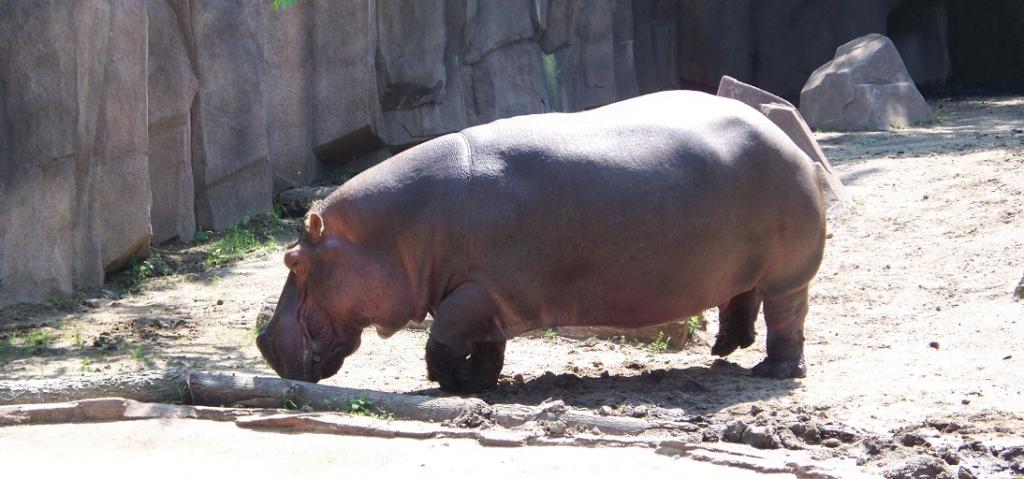
    • The court’s order came in response to a petition filed by animal rights group, People for the Ethical Treatment of Animals (PETA) India about the status of a male hippopotamus rescued from the Asiad Circus in Uttar Pradesh.
    • The court directed that the hippo be permanently kept in a spacious facility in Jamnagar, Gujarat.
    • The hippo was in the company of a rescued female hippopotamus and was receiving expert veterinary care.
    • The facility met the Central Zoo Authority’s Guidelines on Minimum Dimensions of Enclosures for Housing Exotic Animals of Different Species and recommended that the facility be allowed to provide the hippopotamus with lifelong care.

    About Hippopotamus:

    • Hippopotamus is a large, mostly herbivorous, semiaquatic mammal and ungulate native to sub-Saharan Africa.
    • It is one of only two extant species in the family Hippopotamidae, the other being the pygmy hippopotamus.
    • After the elephant and rhinoceros, the hippopotamus is the third-largest type of land mammal and the heaviest extant artiodactyl.
    • Despite their physical resemblance to pigs and other terrestrial even-toed ungulates, the closest living relatives of the Hippopotamidae are cetaceans from which they diverged about 55 million years ago.
  • Agreement  on Cities combating plastic entering the marine environment

    Recently, India and Germany signed Cities combating plastic entering the marine environment’.


    The agreement was signed by the Ministry of Housing and Urban Affairs and the respective ministry of Germany.

    Key Points:

    • The project envisaged under the contours of the Joint Declaration of Intent regarding cooperation in the field of ‘Prevention of Marine Litter’ signed between Republic of India and Federal Republic of Germany in 2019.
    • It aims to prevent plastic entering the marine environment.
    • Focus will be on three cities namely Kanpur, Kochi and Port Blair.
    • Total time for the project is  3.5 years.

    About Marine Litter:

    According to UN Environment, marine litter is any persistent, manufactured or processed solid material discarded, disposed of or abandoned in the marine and coastal environment.

    Sources:

    • Items that have been made or used by people and deliberately discarded into the sea or rivers or on beaches.
    • indirectly brought to the sea by rivers, sewage, storm water or winds.
    • accidentally lost, including material lost at sea in bad weather (fishing gear, cargo)
    • deliberately left by people on beaches and shores.

    Impacts:

    • Marine litter threatens ecosystems and adversely affects fishery and tourism industries around the globe.
    • Affects  public health with increased concerns about micro-plastic and risk of particles entering the food chain.

    Suggestions

    • Port reception facilities
    • Creating a garbage management system
    • Sewage treatment plants designed to capture plastic litter.
    • Strict enforcement of norms preventing human led plastic waste discharge into aquatic and marine environments.
  • Take remedial action against WTE plants: NGT

    National Green Tribunal has directed Central Pollution Control Board (CPCB) and Delhi Pollution Control Committee (DPCC) to take remedial action against the three waste-to-energy plants in Ghazipur, Okhla and Narela-Bawana.

    Waste to Energy:

    • Waste to Energy or Waste to Power is the process of generating energy in the form of electricity and heat from the primary treatment of waste.

    Methods for waste to Power generation:

    1. Thermal technologies:

    • Incineration:
      • It is the most common and popular method for waste to energy generation.
      • The organics from the waste collected are burnt at high temperatures.
    • Gasification: Produces combustible gas, hydrogen, synthetic fuels
    • Thermal depolymerization: Produces synthetic crude oil, which can be further refined
    • Pyrolysis: Produces combustible tar/bio-oil and chars
    • Plasma arc gasification or plasma gasification process (PGP): Produces rich syngas including hydrogen and carbon monoxide usable for fuel cells or generating electricity to drive the plasma arch.

    2. Non-thermal technologies:

    • Anaerobic digestion: Biogas rich in methane
    • Fermentation production: Examples are ethanol, lactic acid, hydrogen
    • Mechanical biological treatment: Combines a sorting facility with a form of biological treatment such as composting.

    Advantages of WTE plants:

    • Decreases quantity of waste
    • Efficient waste management
    • Production of heat and power
    • Reduction of pollution
    • Incinerators have filters for trapping pollutants
    • Saves on transportation of waste
    • Provides better control over odour and noise
    • Prevents the production of methane gas

    Challenges for India:

    • Lack of general awareness on waste management
    • Unsegregated waste
    • High moisture content
    • Unorganized sector
    • High wear and tear of equipment due to foreign materials
    • Only electricity demand
    • Cycle Efficiency is low
    • Lack of enforcement of rules / regulations
    • Lack of Transparency in plant management
    • Lack of adequate waste disposal cost
    • Lack of customization of plant and machinery to suit Indian condition
  • Bustard Poaching in Pakistan

    The recent shooting of two Great Indian Bustards (GIBs) in Pakistan’s Cholistan desert has left wildlife activists in Rajasthan shocked and outraged.

    Great Indian Bustards

    • The GIB is one of the heaviest flying birds and can weigh up to 15 kg which grows up to one metre in height.
    • In July 2011, the bird was categorised as “critically endangered” by the International Union for Conservation of Nature (IUCN).
    • It is considered the flagship grassland species, representing the health of the grassland ecology.
    • For a long, conservationists have been demanding to secure this population, warning that the bird might get extinct in the coming decades.
    • It would become the first mega species to disappear from India after Cheetah in recent times.
    • Till the 1980s, about 1,500-2,000 Great Indian Bustards were spread throughout the western half of India, spanning eleven states.
    • However, with rampant hunting and declining grasslands, their population dwindled.

    Why in news?

    • The GIB, which is the state bird of Rajasthan, is considered India’s most critically endangered bird.
    • It is one of the most critically threatened species in India, with less than 150 birds left in the wild.

    Try this PYQ:

    Q.Which one of the following groups of animals belongs to the category of endangered species?

    (a) Great Indian Bustard, Musk Deer, Red Panda, Asiatic Wild Ass

    (b) Kashmir Stag, Cheetah, Blue Bull, Great Indian Bustard.

    (c) Snow Leopard, Swamp Deer, Rhesus Monkey, Saras (Crane)

    (d) Lion Tailed Macaque, Blue Bull, Hanuman Langur, Cheetah

  • Indian Rhino Vision 2020

    The ambitious Indian Rhino Vision 2020 (IRV 2020) came to a close with the release of two rhinos — an adult male and a female — in Assam’s Manas National Park transported from Pobitora Wildlife Sanctuary about 185 km east.

    Try this PYQ:

    Q.Recently there was a proposal to translocate some of the lions from their natural habitat in Gujarat to which one of the following sites?

    (a) Corbett National Park

    (b) Kuno Palpur Wildlife Sanctuary

    (c) Mudumalai Wildlife Sanctuary

    (d) Sariska National Park

    What is IRV 2020?

    • In 2005, conservationists, alongside the Bodoland Territorial Council and the Government of Assam, came together to develop a long-term strategy to manage the species.
    • Their vision was ambitious; to build a 3,000-strong wild population of Greater one-horned rhinos by 2020, spread across seven sites in the state of Assam.
    • Thus the “Indian Rhino Vision 2020” (IRV2020) was born.

    Success of the IRV

    • Designed in 2005, the IRV2020 is believed to have achieved its target of attaining a population of 3,000 rhinos in Assam.
    • But the plan to spread the Rhinoceros unicornis across four protected areas beyond Kaziranga National Park, Orang National Park and Pobitora could not materialise.
    • Assam had at least five rhino-bearing areas till the 1980s.
    • Manas, in focus for the near-extinction of the pygmy hog, lost the World Heritage Site tag it received in 1985 along with Kaziranga from the UNESCO.
    • The translocated rhinos helped Manas National Park get back its World Heritage Site status in 2011.