💥Join UPSC 2027,2028 Mentorship (July Batch) + XFactor Notes & Microthemes PDF

Subject: International Relations

  • [26 March 2024] The Hindu Op-ed: China, a ‘want-to-be’ superpower

    [26 March 2024] The Hindu Op-ed: China, a ‘want-to-be’ superpower

    PYQ Relevance:Mains: 

    Q) The China-Pakistan Economic Corridor (CPEC) is viewed as a cardinal subset of China’s larger ‘One Belt One Road’ initiative. Give a brief description of CPEC and enumerate the reasons why India has distanced itself from the same. (UPSC IAS/2018) 

    Q) ‘China is using its economic relations and positive trade surplus as tools to develop potential military power status in Asia’, In the light of this statement, discuss its impact on India as her neighbor. (UPSC IAS/2017) 

    Prelims:

    Southeast Asia has captivated the attention of the global community over space and time as a geostrategically significant region. Which among the following is the most convincing explanation for this global perspective?  (UPSC IAS/2011) 

    a) It was the hot theatre during the Second World War
    b) Its location between the Asian powers of China and India
    c) It was the arena of superpower confrontation during the Cold War period
    d) Its location between the Pacific and Indian Oceans and its pre-eminent maritime character

    Note4Students: 

    Prelims: International Relations;

    Mains: International Relations;

    Mentor comments: The enmity between Iran, a Shia-majority theocracy, and Saudi Arabia, a Sunni-majority absolute monarchy, has been one of the dominant drivers of conflicts in the region. The Saudi-Iran reconciliation in a China-brokered agreement reflects the new reality in West Asia where old rivals are warming up to each other and Beijing is increasingly willing to play a bigger role at a time when the U.S., the region’s traditional great power, is preoccupied with challenges elsewhere. Iran has agreed to prevent attacks against Saudi Arabia, including those from the Houthi-controlled parts of Yemen, and both countries would restore full diplomatic relations, which were severed in 2016. The later years saw the Arab world and Israel, faced with the common Iran challenge, deepening their cooperation, despite Israel’s brutal occupation of Palestine territory. As the U.S. has deprioritized West Asia — it is now heavily focused on Ukraine and countering China’s Indo-Pacific influence — its allies in West Asia have started looking out for solutions for what they see as America’s diminishing security guarantees. This agreement also marks Dragon’s arrival on the Sand as a power broker.

    Let’s learn. 

    Why in the News?

    Chinese strategy in West Asia seems aimed at working steadily to translate its economic clout in the region into geopolitical clout in the medium term.

    Context:

    • On 9 October, two days after the horrific Hamas attack, Chinese foreign ministry spokeswoman, Mao Ning, said China had been “deeply saddened” by the civilian casualties and opposes and condemns acts that harm civilians. She did not refer to Hamas by name and went on to add that it was “essential to restart the peace talks, implement the two-state solution, and settle the Palestine question fully and properly through political means.”
    • However, it has adopted a seemingly neutral stance, refusing to name Hamas in its condemnation of the violence there and reiterating its known positions on the need for a two-state solution to the Palestine issue.
    • It aims to ensure that it maintains its traction with the Arab states of the region, who are once again focused on the Palestinian issue.

    What are the present aims of Beijing?

    • Diplomatic aims: In early 2023, Wang Yi gave his endorsement to a plan to set up a new China-backed International Mediation Organization headquartered in Hong Kong. Countries like Algeria, Belarus, Cambodia, Djibouti, Indonesia, Laos, Pakistan, Serbia, and Sudan were signatories to the initial statement as a preparatory office was launched.
    • Infrastructural Aims: The Chinese establishment hopes to link the mediation initiative to its expansive economic corridor, the Belt and Road Initiative (BRI). The BRI has extensive membership in West Asia as well, with Iran, Saudi Arabia, and the UAE among others being part of China’s economic highways.
    • Exceptional country: Israel, being heavily reliant on the United States for its security, is not a signatory. However, Israel’s embattled Prime Minister Benjamin Netanyahu aired the fact last year that China had invited him for a state visit.

    Efforts made by the Chinese government in West Asia to be a ‘Superpower’:

    • Multilateral Peace Talks: China has been involved in the Iran nuclear deal (2015) peace talks (from which the U.S. unilaterally withdrew in 2018), but this is the first time Beijing is using its leverage directly to bring conflicting parties to reconciliation.
    • Chinese concern: Stability in West Asia, a major energy source, is essential for China, which is the world’s largest oil importer. And unlike the U.S., which has hostile ties with Iran, Beijing enjoys good ties with Tehran and Riyadh, as a leading oil buyer and trading partner, respectively.
    • West Asian Scenario: Saudi Arabia, which is undergoing rapid changes, wants peace in its neighborhood, while Iran, which is under U.S.-imposed sanctions, wants more diplomatic and economic openings. Hence if this agreement holds towards its capacity, it will have far-reaching implications on regional geopolitics, from peace in Yemen to stability in Lebanon.

    Dilemma on Chinese Government stand: China’s absence in the Red Sea crisis

    • Beijing’s role in the Saudi-Iran agreement: The war in Gaza has drawn strong red lines between China and Israel. This raises interesting questions about the exact role Beijing played in the Saudi-Iran issue. The probability of China being pulled into the process by Riyadh and Tehran, rather than actively brokering a deal, remains high.
    • Efforts made by Western players: China has also been absent through the crisis in the Red Sea, where predominantly Western naval forces have attempted to maintain the free flow of trade in this critical waterway. Contrarily, Yemen-based Houthis were not targeting Chinese and Russian ships.
    • China’s crafty diplomacy: These two incidents show China’s diplomacy was to predominantly protect its interests and not wade into the crisis as an influential power looking to use its position to broker peace or even a ceasefire. Much of this kind of actual heavy lifting remains at the doorsteps of the White House.

    What is China’s actual role in the more challenging geopolitical regions such as West Asia?

    • On the Palestinian Issue: Beijing’s support for the Palestinian cause without criticizing Hamas practically aligns with the larger Arab posture. This stands against U.S. support for Israel, which is increasingly being criticized for its absolutist nature.
    • ‘Mediation’ which is non-existent in high-stake conflicts: Following both aims is to counter long-standing American influence and to take advantage of crevasses in regional diplomacy.
      • It aims to position itself as an antithesis to what Beijing sees as decades worth of Western interventionist policies, specifically in a region such as West Asia, where conflict has a direct correlation with colonial history.
      • It aims to increase its own geopolitical weight as a responsible international actor and power.

    In Global perspective:

    • West Asia (or the Middle East) is emerging as a premier playground for these new geopolitical fissures as Arab states look to renegotiate their historical relations with the United States.
    • Beyond these regional trends, the global order is also under duress. The US today is increasingly discussed, in the words of former US Secretary of Defense Robert M Gates, as a “dysfunctional superpower”.
    • The frameworks of Multipolarity, Multilateralism, and Minilateralism are being re-shaped and re-constructed amid issues of climate change, food security, and global health.

    Conclusion: In all of these, Beijing’s role is not insular nor is it avoidable as it continues to be an economic and military power, the world’s biggest factory and consumer, and more than often the refiner of natural resources.

    https://www.thehindu.com/opinion/op-ed/china-a-want-to-be-superpower/article67991729.ece#:~:text=The%20war%20in%20Gaza%20colours,Beijing%20stand%20out%20as%20hollow.

    https://www.orfonline.org/expert-speak/chinas-long-game-in-west-asia

    https://www.orfonline.org/research/the-dragon-in-the-sands-unpacking-china-s-presence-in-contemporary-west-asia

  • [23 March 2024] The Hindu Op-ed: Two wars, the consequences for America’s standing

    Relevance: GS II (International Relations)

    Prelims- Conflict zone with geographical location

    Mains- Impact of conflict over world 

    Why in the news? 

    The extent to which the Ukraine and Gaza wars will be influenced by U.S. election-year politics versus following their own course remains uncertain.

    The U.S. and the Ukraine War /  Ukraine War influenced by US election- 

    • Global Issues and U.S. Elections: The conflicts in Ukraine and between Israel and Hamas are unfolding amidst the lead-up to the U.S. presidential elections in November 2024. The extent to which these conflicts will be influenced by election-year politics versus their own course is unclear, but the U.S. plays a significant role in both.
    • U.S. Assistance to Ukraine: The U.S. has provided substantial military and civil aid to Ukraine, totaling $75 billion since February 2022. However, an additional $60 billion in assistance has been held up in the U.S. Congress, potentially impacting Ukraine’s military capabilities.
    • Uncertainty Surrounding Further U.S  Military Aid: There is uncertainty about whether the U.S. will provide further military aid to Ukraine in 2024, as a new package approved by the Senate needs to pass the House of Representatives.
    • U.S. Position on Ukraine Conflict: The U.S. aims to prevent a Russian victory in Ukraine but also wants to avoid further escalation or prolongation of the conflict.
    • Political Dynamics in the U.S. Congress: Speaker Mike Johnson faces challenges in passing the Senate bill for further military aid to Ukraine in the House of Representatives, as it may lead to divisions within the Republican Party.

    Israel and its Gaza actions/ criticism of Israel action by USA-

    • U.S. Concerns and Criticisms: President Joe Biden and Senate Majority Leader Chuck Schumer have publicly raised concerns about Israeli strategy in the conflict with Hamas, signaling a shift in public sentiment within the Democratic Party and the liberal Jewish-American community.
    • Criticism of Netanyahu’s Leadership: Former U.S. official Richard N. Haass, along with others, criticizes Israeli Prime Minister Benjamin Netanyahu’s handling of the conflict, suggesting it has damaged Israel’s relationship with the U.S. and caused harm to innocent Palestinians.
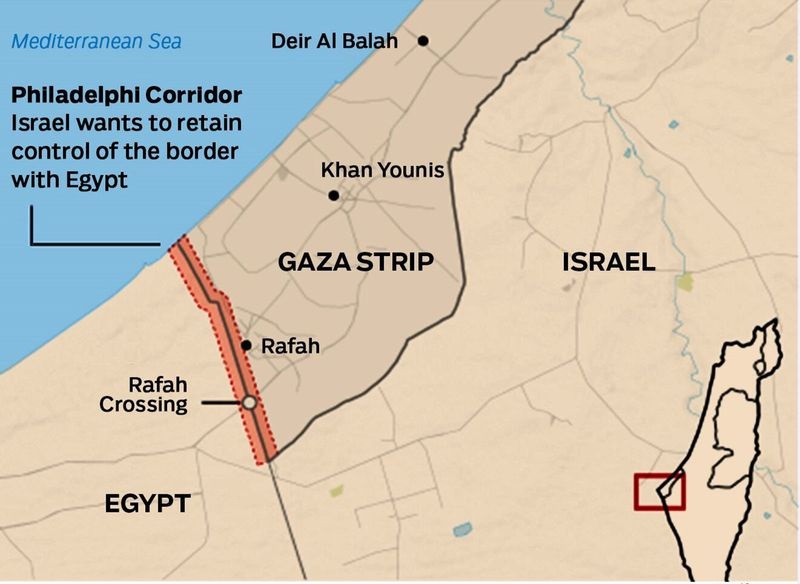
    • Israeli Military Actions in Gaza: The destruction in Gaza due to Israeli military operations is highlighted, with concerns about potential further civilian casualties if Israeli forces target Rafah.
    • Netanyahu’s Political Motivations: Netanyahu’s motivations are questioned, with suggestions that his actions are primarily driven by his own political survival rather than strategic considerations.

    The Trump factor/ Trump’s potential impact on the situation are-

    • Potential Disruption with Trump Victory: A victory for Mr. Trump in the upcoming U.S. election could lead to significant disruptions in U.S. policy, particularly regarding Ukraine. Trump’s policies towards Ukraine are expected to differ from those of the current administration.
    • Continued Support for Israel: Trump is likely to maintain strong support for Israel, as evidenced by his decision to recognize Jerusalem as the Israeli capital.
    • Implications for NATO and European Security: A Trump victory may lead to uncertainty and shifts in U.S. commitment to NATO and European security. European allies are concerned about filling potential gaps left by a change in U.S. policy.
    • Potential Ukrainian Collapse: The momentum in the conflict is currently with Russia, and if Ukraine is unable to regain it and the U.S. decides to step aside, there is a possibility of a Ukrainian collapse.
    • Wider Consequences: American unreliability in European security matters could have broader consequences, impacting alliance relationships in the Indo-Pacific region, including with countries like South Korea, Japan, the Philippines, and India.

    Impact of Gaza crises on Ukraine war –

    • Diverting attention- The conflict in the Middle East, particularly the Israel-Hamas war, is diverting attention away from Russia’s war in Ukraine, benefiting Russia by shifting focus from its aggression against Ukraine
    • Support from Africa and Latin America- Russia is seeking allies globally to support its interests, especially in Africa and Latin America, as part of a strategy that started under Vladimir Putin’s leadership
    • Decline in Moscow’s influence Israel-Hamas conflict serves as a distraction from the war in Ukraine but poses risks for Russia, potentially leading to a decline in Moscow’s influence in the Middle East regardless of the conflict’s outcome

    Conclusion-

    The conflicts in Ukraine and Israel’s actions in Gaza are intertwined with U.S. politics, especially the upcoming presidential elections. U.S. assistance to Ukraine faces uncertainty, while criticism of Israel’s actions and concerns about a potential Trump victory add complexity to the situation.

    Prelims PYQ-

    Southeast Asia has captivated the attention of the global community over space and time as a geostrategically significant region. Which among the following is the most convincing explanation for this global perspective? (UPSC IAS/2011)

    a) It was the hot theatre during the Second World War

    b) Its location between the Asian powers of China and India

    c) It was the arena of superpower confrontation during the Cold War period

    d) Its location between the Pacific and Indian oceans and its pre-eminent maritime character

    Mains PYQ-

    Q-There arose a serious challenge to the Democratic State System between the two World Wars.” Evaluate the statement. (UPSC IAS/2021)

    https://www.thehindu.com/opinion/lead/two-wars-the-consequences-for-americas-standing/article67981473.ece#:~:text=the%20Ukraine%20war-,The%20Israel%2DHamas%20and%20the%20Ukraine%20wars%20are%20two%20important,own%20future%20course%20is%20unclear.

  • China objects to US recognizing Arunachal as Indian Territory

    Why in the news? 

    China on Thursday said it firmly opposes the US recognition of Arunachal Pradesh as part of Indian territory

    Context-

    • China’s strong reaction came hours after US State Department Principal Deputy Spokesperson Vedant Patel’s remarks that the United States “recognises Arunachal Pradesh as Indian territory.
    • US representative strongly oppose any unilateral attempts to advance territorial claims by incursions or encroachments, military or civilian, across the Line of Actual Control.

    Border Issues between Indian and China-

    • Aksai Chin: China administers it as part of Xinjiang, while India claims it as part of Ladakh.Aksai Chin holds strategic importance due to its proximity to the China-Pakistan Economic Corridor (CPEC) and its potential as a military route.
    • Arunachal Pradesh: China claims the entire state as “South Tibet,” while India administers it as a northeastern state.
    • Lack of Clear Demarcation: The border between India and China lacks clear demarcation throughout. The Line of Actual Control (LAC) was established after the 1962 Indo-China war, contributing to the complexity of the situation.Absence of a mutually agreed Line of Actual Control (LAC) along certain stretches leads to ambiguity and potential for conflicts.

    Military Standoffs between India and China- 

    • 1962 Sino-Indian War– It was a conflict over border disputes, primarily centered around Aksai Chin and Arunachal Pradesh, resulting in a decisive victory for China.
    • Confrontations have escalated since 2013-The most serious  conflict were in Galwan Valley in Ladakh in 2020 and in Tawang in Arunachal Pradesh in 2022.

    Border Dispute Settlement Mechanisms between India and China-

    • Panchsheel Agreement of 1954: The Panchsheel doctrine distinctly expressed a commitment to respect each other’s sovereignty and territorial integrity.
    • Peace and Tranquility Agreements1993: Both countries have signed several agreements aimed at maintaining peace and tranquility along the border, such as the Agreement on the Maintenance of Peace and Tranquility along the Line of Actual Control (LAC) in the India-China Border Areas signed in 1993.
    • The Agreement on Confidence Building Measures in the Military Field along the LAC- It was signed in 1996, which laid down pledges on non-aggression, prior notification of large troop movements, and exchange of maps to resolve disagreements over the LAC.
    • Working Mechanism for Consultation and Coordination on India-China Border Affairs (WMCC): This mechanism, established in 2012, aims to address day-to-day management of the border, enhance communication, and prevent misunderstandings or conflicts.
    • Joint Military Exercises: India and China occasionally conduct joint military exercises aimed at improving mutual understanding and cooperation, which indirectly contributes to confidence-building measures. For example Hand in Hand.

    Suggestive measures to resolve the border dispute between India and China:

    • Diplomatic Dialogue: Both countries should engage in sustained diplomatic negotiations at various levels to address the underlying issues causing the dispute.
    • Bilateral Agreements: Continuation and reinforcement of existing bilateral agreements aimed at maintaining peace and tranquillity along the border.
    • Border Management Mechanisms: Strengthening and enhancing border management mechanisms such as Border Personnel Meetings (BPMs) and the Working Mechanism for Consultation and Coordination on India-China Border Affairs (WMCC) to effectively manage and resolve disputes.
    • Clarification of LAC: Work towards mutual clarification and delineation of the Line of Actual Control (LAC) to reduce ambiguity and prevent misunderstandings.
    • Disengagement and De-escalation: Prioritize efforts to disengage troops and de-escalate tensions in disputed areas along the border.
    • Conflict Prevention: Implement measures aimed at preventing confrontations and conflicts, such as prior notification of military exercises and troop movements.
    • Third-Party Mediation: Consider the involvement of neutral third-party mediators or international organizations to facilitate dialogue and negotiation.
    • People-to-People Contacts: Promote cultural and people-to-people exchanges to foster better understanding and trust between the two nations.

    How USA can help to resolve border dispute between India and China- 

    • Facilitate Diplomatic Dialogue: The USA can encourage and facilitate diplomatic dialogue between India and China to resolve the border dispute peacefully.
    • Mediation Role: Offer to mediate or provide assistance as a neutral third-party mediator if both parties consent to such involvement.
    • Provide Strategic Support: Offer strategic support and expertise in conflict resolution to help address the complex issues underlying the dispute.
    • Pressure for Peaceful Resolution: Use diplomatic channels to exert pressure on both India and China to prioritize peaceful resolution of the dispute.
    • Regional Stability: Emphasize the importance of resolving the border dispute for regional stability and economic development.
    • Support Existing Mechanisms: Support existing border dispute settlement mechanisms, such as the Working Mechanism for Consultation and Coordination on India-China Border Affairs (WMCC), through funding or technical assistance.

    Conclusion-

    China’s objection to the US recognizing Arunachal Pradesh as Indian territory underscores the need for diplomatic dialogue. The US can play a constructive role by facilitating negotiations and supporting existing mechanisms for peaceful resolution. 

  • [pib] India to co-chair of its ITU Digital Innovation Board

    What is the news-

    • Neeraj Mittal, Secretary of the Department of Telecommunications, Government of India was unanimously elected as co-chair of the Digital Innovation Board of International Telecommunication Union (ITU).

    About ITU Digital Innovation Board


    • This board is established under the Innovation and Entrepreneurship Alliance for Digital Development.
    • It comprises of Ministers and Vice Ministers of Telecom/ICT of 23 Member Countries.
    • The Alliance establishes the Board to provide strategic guidance, expertise and advocacy regarding its mission of building critical local enablers.


    Innovation and Entrepreneurship Alliance


    • ITU has started this Alliance to respond to significant unmet needs of ITU Membership in the area of innovation.
    • It is based on the Kigali Action Plan adopted at the World Telecommunication Development Conference 2022 (WTDC-22) and the Outcomes of the ITU Plenipotentiary Conference 2022 (PP-22).
    • The Alliance has three main vehicles: –
    1.     Digital Transformation Lab
    2.     Network of Acceleration Centres
    3.     Digital Innovation Board

    What is the International Telecommunication Union (ITU)?

    • The ITU is a specialized agency of the United Nations (UN) responsible for issues related to information and communication technologies (ICTs).
    • It was established in 1865 as the International Telegraph Union, making it one of the oldest international organizations.
    • In 1932, the organization was renamed the International Telecommunication Union to reflect its broader mandate.
    • It is headquartered in Geneva, Switzerland.
    • Its functions include:
    1. Allocate global radio spectrum and satellite orbits,
    2. Develops the technical standards that ensure networks and technologies seamlessly interconnect, and
    3. Strives to improve access to ICTs to underserved communities worldwide.

    Membership:

    • ITU’s membership includes 193 member states (countries) and over 900 private sector entities, including telecommunications companies, equipment manufacturers, research institutions, and non-governmental organizations (NGOs).
    • India has been an active member of the ITU since 1869 and has been a regular member of the ITU Council since 1952.

    PYQ:

    2020: In India, the term “Public Key Infrastructure” is used in the context of

    1. Digital security infrastructure
    2. Food security infrastructure
    3. Healthcare and education infrastructure
    4. Telecommunication and transportation infrastructure


    Practise MCQ:

    The global telecom body International Telecommunication Union (ITU) has recently elected India as the co-chair of the Digital Innovation Board. Which of the following statements about ITU is/are correct?

    1. It is the United Nations specialised agency for Information and Communication Technologies.
    2. Its entry is open to all countries, Private Companies as well as institutions.
    3. India has been a member of ITU since 1869.

    Select the correct option:

    1. All are correct
    2. Only 3
    3. 1 and 3
    4. 1 and 2
  • World Happiness Report, 2024: Key Highlights

    What is the news-

    • India was ranked 126th out of 143 nations in the World Happiness Report 2024, a global happiness index which was released, March 20 to mark the UN’s International Day of Happiness.

    About the World Happiness Report

    • The WHR is an annual publication of the UN Sustainable Development Solutions Network.
    • It is released in partnership by Gallup, the Oxford Wellbeing Research Centre, the UN Sustainable Development Solutions Network (SDSN), and the World Happiness Report’s Editorial Board
    • It measures three main well-being indicators: life evaluations, positive emotions, and negative emotions (described in the report as positive and negative affect).
    • The report considers six key factors: social support, income, health, freedom, generosity, and the absence of corruption.
    • It was adopted by the UN General Assembly based on a resolution tabled by Bhutan.

    Key Highlights of the 2024 Report

    • Top: For the seventh successive year, Finland topped the list of the happiest countries in the world.
    • Runner-ups: The other countries in the top ten were Denmark, Iceland, Sweden, Israel, the Netherlands, Norway, Luxembourg, Switzerland and Australia.
    • Bottom: Afghanistan was at the bottom of the list.

    Indian Scenario

    • Ranking: India maintains its position at 126th in the happiness index. Surprisingly, it is behind Pakistan, Libya, Iraq, Palestine and Niger.
    • Neighbourhood: China was ranked 60th, Nepal at 93, Pakistan at 108, Myanmar at 118, Sri Lanka at 128 and Bangladesh at 129th spots.
    • Influencing Factors: Marital status, social engagement, physical health, and satisfaction with living arrangements influence life satisfaction among older Indians.
    • Gendered Happiness: Older Indian women tend to report higher life satisfaction despite facing more stressors and health challenges.
    • Key Predictors: Factors like education level, social caste, social support, perceived discrimination, and self-rated health significantly impact life satisfaction among older Indians.

    PYQ:

    2018: “Rule of Law Index” is released by which of the following?

    1. Amnesty International
    2. International Court of Justice
    3. The Office of UN Commissioner for Human Rights
    4. World Justice Project


    Practice MCQ:

    With reference to the World Happiness Report, 2024, consider the following statements:

    1. The report is an annual publication of the UN Sustainable Development Solutions Network.
    2. It was adopted by the UN General Assembly based on a resolution tabled by Bhutan.
    3. India’s ranking has been consistently improved in this report in last two years.

    How many of the given statements is/are correct?

    1. One
    2. Two
    3. Three
    4. None
  • India pursues Lowering Cost of Cross Border Remittances at WTO

    What is the news-

    • India is strongly pursuing its proposal for lowering the cost of cross-border remittances, which it presented at the WTO’s 13th Ministerial Conference in Abu Dhabi last month.
    • It has now requested the WTO’s general council (GC) to initiate a work program to make recommendations for reducing remittance costs.

    Why discuss this?


    • In 2023, India witnessed the highest remittance inflows globally, amounting to USD 125 billion.
    • Lowering the costs of remittances would primarily benefit low and middle-income countries, which accounted for 78% of remittances flow in 2023, according to estimates.
    • India’s draft proposal at MC13 highlighted that the global average cost for sending remittances remained high at 6.18%, more than twice the SDG target.

     What is Cost of Remittances?

    • Remittances are financial transfers sent by migrant workers to their families or relatives in their home countries.
    • The cost of remittances refers to the expenses incurred by individuals or businesses when sending money from one location to another, typically across international borders.
    • The cost components of cross-border payments can include:
    1. Bank fees,
    2. Intermediary fees,
    3. Compliance fees,
    4. Operational costs, and
    5. FX (foreign exchange) rate margin
    • Innovative technologies like DeFi payment rails are emerging to reduce the total cost of payments for cross-border transactions.

    About World Trade Organization (WTO)

    Details
    Establishment 1995, replacing GATT
    Objective To regulate international trade
    Headquarters Geneva, Switzerland
    Members
    • 164
    • India is a Founding Member.
    Objectives
    • Formulate rules for trade
    • Negotiate further liberalization
    • Settle disputes
    • Assist developing countries
    • Cooperate with major economic institutions
    Principles
    • Non-Discrimination
    • Most Favored Nation
    • National Treatment
    • Reciprocity
    • Predictability through Binding Commitments
    • Transparency
    • Encourage Development and Reforms
    Important Trade Agreements
    • Agreement on Agriculture (AoA),
    • Agreement on TRIPS (Trade-Related Aspects of Intellectual Property Rights),
    • Agreement on the Application of Sanitary and Phytosanitary Measures (SPS),
    • Agreement on Technical Barriers to Trade (TBT),
    • Agreement on Trade-Related Investment Measures (TRIMS),
    • General Agreement on Trade in Services (GATS) etc.
    WTO Agreement on Agriculture (AoA)
    • Negotiated during Uruguay Round (1995)
    • Aims to reform trade in agriculture
    • Allows support for rural economies with fewer trade “distortions”
    • Focuses on improving market access, reducing subsidies, and eliminating export subsidies

    Subsidies Types:

    1. Green Box – No distortion in trade
    2. Amber Box – Can distort production and trade (subject to limits)
    3. Blue Box – Subsidies linked to production-limiting programs
    Most Favoured Nation Clause
    • Ensures non-discriminatory trade
    • Prevents discrimination among trade partners
    • First clause in GATT
    • Special trade statuses extended to all WTO members


    PYQ:

    Q.The terms ‘Agreement on Agriculture’, ‘Agreement on the Application of Sanitary and Phytosanitary Measures’ and Peace Clause’ appear in the news frequently in the context of the affairs of the: (2015)

    1. Food and Agriculture Organization
    2. United Nations Framework Conference on Climate Change
    3. World Trade Organization
    4. United Nations Environment Programme


    Q.Which of the following constitute Capital Account? (2013)

    1. Foreign Loans
    2. Foreign Direct Investment
    3. Private Remittances
    4. Portfolio Investment

    Select the correct answer using the codes given below.

    1. 1, 2 and 3
    2. 1, 2 and 4
    3. 2, 3 and 4
    4. 1, 3 and 4


    Practice MCQ:

    Consider the following statements:

    1. India is the highest recipient of remittances globally.
    2. UAE is the largest source of remittances to India.
    3. The current cost of remittances meets the SDG target.

    How many of the given statements is/are correct?

    1. One
    2. Two
    3. Three
    4. None
  • [20 March 2024] The Hindu Op-ed: Ties that epitomize India’s neighborhood first policy

    PYQ Relevance:Mains: 

    Q) What is meant by Gujral doctrine? Does it have any relevance today? Discuss. (2013)

    Q) Analyze internal security threats and transborder crimes along Myanmar, Bangladesh, and Pakistan borders including the Line of Control (LoC). Also, discuss the role played by various security forces in this regard. (2020)

    Prelims:

    Q) What is the importance of developing Chabahar Port by India? (2017)

    (a) India’s trade with African countries will enormously increase.
    (b) India’s relations with oil-producing Arab countries will be strengthened.
    (c) India will not depend on Pakistan for access to Afghanistan and Central Asia.
    (d) Pakistan will facilitate and protect the installation of a gas pipeline between Iraq and India.

    Note4Students: 

    Prelims: Constitutional Provisions for Women;

    Mains: Women Issues; Government Schemes and Initiatives for Minorities;

    Mentor comments: Since the recent infrastructure project – ‘Gelephu’, Bhutan has long known that there is no real threat to its sovereignty or identity from its southern flank. Hence, it has looked to India to help it grow, develop and prosper. India has lived up to this expectation. Over the past decade, India has demonstrated its unwavering support for its neighbouring nations during times of crisis. Whether responding to natural disasters, health emergencies, economic challenges, or providing support on the international stage, India has consistently been the first to offer assistance and will continue to do so. Furthermore, we have established sustained diplomatic outreach within India’s Neighborhood First Policy.

    Let’s learn. 

    Why in the News?

    According to recent observations, ‘Neighborhood Policy’  has continued to develop through dialogs and sentiments considering South Asian demography.

    Context:

    • Gelephu Project is near remote parts of West Bengal and Assam, and the success of this city will have positive socio-economic spillovers for these geographies as well. 
    • It will provide yet another example of the win-win cooperation between India and Bhutan on the lines of Neighborhood First Policy.

    About India’s ‘Neighborhood First’ policy: 

    • The South Asian region, which is home to eight countries, and the Indian Ocean region come under the broad geographic expanse of India’s neighborhood – the nations include Afghanistan, Bhutan, Bangladesh, Maldives, Pakistan, Nepal, Myanmar, Tibetan (autonomous region of China) and Sri Lanka. 
    • The ‘Neighborhood First’ policy is a foreign policy initiative introduced by India in 2014 which aims to strengthen India’s relations with its immediate neighbours emphasizing on creating a peaceful, prosperous, and stable neighborhood.
    • Principles of ‘Neighborhood First’ policy
      • Sovereignty and territorial integrity
      • Mutual respect and sensitivity
      • Non-interference in internal affairs.
      • Shared prosperity
      • Connectivity for regional integration 
      • People-to-people exchanges
    Govt. of India initiatives to harmonize the relations in the neighborhood: Country-specific initiatives: 

    Bhutan: 
    India signed the Indo-Bhutan Treaty of Peace and Friendship in 1949 and the Agreement on cooperation in Hydropower in 2006. India also provides financial support to Bhutan’s five-year plans. India is also part of the sub-regional grouping of the Bangladesh–Bhutan–India–Nepal (BBIN) network.

    Myanmar: India has also been assisting in various fields such as education, healthcare, disaster management, capacity-building
    culture etc.Promoting connectivity initiatives such as the Kaladan multimodal transit transport project in Myanmar.

    Sri Lanka: India is assisting in implementing the ‘Unitary digital identity framework’. India has also been providing financial support in the face of the recent balance of payment crisis in Sri Lanka.

    Afghanistan: PM Narendra Modi went to visit Afghanistan in 2015 and inaugurated the Afghan Parliament, which was made with the help of India. He visited Afghanistan again in 2016 to inaugurate the Salma Dam in Herat. 

    Nepal: India signed the Treaty of Peace and Friendship in 1950. There are various agreements related to hydropower projects like the Arun hydropower project etc. PM Modi was the first Indian PM to visit Nepal after 17 years in 2014.

    Bangladesh: India has signed agreements relating to the sharing of river waters with Bangladesh.

    Maldives: Greater Male connectivity project by an Indian company to provide connectivity in Maldives, restoration of Addu atolls, etc.

    Other initiatives: 
    Development cooperation: Providing development assistance through various initiatives such as the Indian Technical and Economic Cooperation (ITEC) Program, the Indian Council for Cultural Relations (ICCR), etc.
    Vaccine Maitri: India, through its vaccine diplomacy, extended help on priority to its neighbors during the COVID-19 pandemic.
    Leveraging Science and Technology: India successfully launched the first-ever South Asia Satellite (SAS) to boost communication and improve disaster links among its South Asian neighbors. 

    What are the challenges in India’s relations with its Neighbours?

    India’s relations with its neighbors have been marked by a range of challenges and issues over the years.

    • Terrorism and Illegal Immigration: India has been a victim of terrorism perpetrated by groups based in neighboring states, especially Pakistan and Bangladesh.
      • Example: Recent Assam and Tripura Issue (2024)
    • Border disputes: India has long-standing border disputes, particularly with China (Line of Actual Control) and Pakistan (Line of Control), which have led to military conflicts and tensions.
      • China Factor: India’s growing geopolitical and economic influence in the region has led to competition with China. This has led to tensions over issues such as borders, trade and investment.
        • Example: Recent Galwan Valley and border conflicts with Arunachal Pradesh (2023).
    • Water sharing: India shares rivers with several of its neighbors like Pakistan, Bangladesh, and Nepal, and water sharing has been a source of tension, which has led to disputes.
      • Example: Disputes over the Indus Water Treaty with Pakistan (the recent being on the Ravi water dispute).
    • Political instability: Several of India’s neighbors have experienced political instability and internal ethnic conflicts, which have had an impact on regional stability and security.
      • Example: Recent Manipur issue (2023).

    Way forward for strengthening India’s relations with its neighbors:

    • Economic cooperation: South Asia’s intra-regional trade is the lowest globally, constituting only 5% of the region’s total trade. By increasing trade, investment, and cross-border connectivity we can stand on weighted sides.
    • People-to-people exchanges: India can promote people-to-people exchanges by facilitating cultural, educational, and tourism exchanges.
    • Security cooperation: India can strengthen security cooperation with its neighbors to address common security challenges such as terrorism, cyber threats, and transnational crime. SAARC and BIMSTEC frameworks can play an important role in this.
    • Regional integration: India can support regional integration by participating actively in regional forums such as SAARC, BIMSTEC, and IORA.
    • Diplomatic outreach: India should engage in sustained diplomatic outreach to its neighbors to promote dialogue, resolve outstanding issues, and build mutual trust. 
    Some of the India’s Neighborhood Policies:

    Look East policy: Launched in 1991, it aimed to strengthen economic and political ties with countries in Southeast Asia.

    The Gujral Doctrine of 1996: It was a set of five principles to guide the conduct of foreign relations with India’s immediate neighbors.Non-reciprocity with neighbours.Territory should not be used against the interest of another country.Non-interference in internal affairs.Respect each other’s territorial integrity and sovereignty.Settle all disputes through peaceful bilateral negotiations. 

    Bay of Bengal Initiative for Multi-Sectoral Technical and Economic Cooperation (BIMSTEC), 1997: BIMSTEC was established as a regional organization comprising seven member states (Bangladesh, Bhutan, India, Nepal, Sri Lanka, Myanmar, and Thailand) lying in the littoral and adjacent areas of the Bay of Bengal constituting a contiguous regional unity. 

    Indian Ocean Rim Association (IORA) of 1997: It is an intergovernmental organization that brings together countries bordering the Indian Ocean to promote regional cooperation and economic integration.

    https://www.thehindu.com/opinion/op-ed/ties-that-epitomise-indias-neighbourhood-first-policy/article67969422.ece

    https://prsindia.org/policy/report-summaries/india-s-neighbourhood-first-policy

    https://pib.gov.in/PressReleasePage.aspx?PRID=2005229

  • All eyes are now on the Indian Ocean region

    Why in the News? 

    Since October 2023, the Indian government has shifted its focus from the Indo-Pacific to the Indian Ocean, diverting attention from strengthening the Quad alliance.

    • Both the Western Indian Ocean and the Northern Indian Ocean have become active geographies again.

    What are the reasons behind this Policy Shift?

    • Maldives and China- The Maldives, under President Mohamed Muizzu, is strengthening ties with China, potentially straining its relationship with India.
    • Sri Lanka and India- Sri Lanka has shown sensitivity to India’s security concerns by imposing a moratorium on foreign research ships, including Chinese ones, to its ports.
    • India-Mauritius Cooperation– India’s SAGAR policy resulted in inaugurating infrastructure in the Agaléga Islands, enhancing Mauritius’s capability to manage its Extended Economic Zone.
    • Geopolitical Dynamics-  The Western Indian Ocean and Northern Indian Ocean regions are witnessing increased activity, including conflicts and disruptions in maritime trade routes.
      • Example-In the Western Indian Ocean, the ongoing conflict between Israel and Hamas has escalated, leading to attacks by Houthi rebels on international shipping.
    • China’s Naval Expansion- China aims to assert dominance in the region by expanding its naval footprint and fostering partnerships with countries under the string of pearls policy like the Maldives.
    • India-China Strategic Competition– India and China are engaged in strategic competition, highlighted by China’s efforts to create an adverse environment for India’s security and its quest for naval bases in key locations.

    Suggestive measures:

    • Shift in Focus to Indian Ocean: India should prioritize the Indian Ocean region over the Indo-Pacific and convey this clearly to its strategic partners.
    • Evaluation of Existing Mechanisms: There is a need for a critical audit of the Indian Ocean Rim Association (IORA) and the Colombo Security Conclave (CSC) due to their perceived underperformance and ineffectiveness.
    • Proposal for a New Mechanism: India should consider advocating for the creation of a new organization focused on bolstering maritime security and promoting the Blue Economy in the Indian Ocean region.
      • This proposed organization could include India, Sri Lanka, Bangladesh, Myanmar, Mauritius, Seychelles, Comoros, and Madagascar.
      • The ninth seat may be kept for the Maldives if it adopts a sensible policy. This group can be named the ‘Indian Ocean Cooperation Organisation.
    • Enhancement of Indian Navy: India should allocate new budgetary resources to strengthen its Navy further, aiming to make it the third or fourth most powerful navy globally, in line with India’s ambition to become the third-largest economy.

    Conclusion

    India’s policy shift towards the Indian Ocean region necessitates prioritizing strategic partnerships, auditing existing mechanisms, advocating for new collaborative initiatives, and enhancing naval capabilities to safeguard regional security and promote economic prosperity.

  • [18 March 2024] The Hindu Op-ed: The Myanmar conflict is a regional problem

    Mains PYQ Relevance:

    1. Analyze internal security threats and transborder crimes along Myanmar, Bangladesh, and Pakistan borders including the Line of Control (LoC). Also, discuss the role played by various security forces in this regard. (UPSC CSE 2020)
    2. The cross-border movement of insurgents is only one of the several security challenges facing the policing of the border in North-East India. Examine the various challenges currently emanating across the India-Myanmar border. Also, discuss the steps to counter the challenges. (UPSC CSE 2019)
    3. Evaluate the economic and strategic dimensions of India’s Look East Policy in the context of the post-Cold War international scenario. (UPSC CSE 2016)

    Note4Students: 

    • Prelims: ASEAN; Bilateral Relations;
    • Mains: North-East India; Bilateral Relations; International Organisation; Act East Policy;

    Mentor comments: The conflict in Myanmar is not just a domestic issue but a regional problem that requires support from ASEAN and other international stakeholders. The situation on the ground is dire, with over two million civilians displaced within Myanmar and 1.5 million seeking refuge outside the country since the 2021 coup. This mass exodus has led to significant destabilization, affecting approximately 25 million people living in poverty in Myanmar. The conflict has spilled over into neighboring countries, posing security risks and humanitarian challenges for Bangladesh, China, India, and Thailand. We must study and analyze this issue given the ASEAN neighbors step up their efforts to resolve the conflict and support Myanmar’s people in their quest for stable, prosperous, and democratic resolutions.

    Let’s learn.

    Why in the News?

    Despite efforts by ASEAN and other international bodies to mediate, the conflict has worsened over the past three years.

    • By the end of 2023, most of Myanmar’s townships are experiencing active fighting, with a substantial portion out of democratic control.
    What is the Current Situation?
    • By the end of 2023, around 40% of Myanmar’s townships were beyond the junta’s control, with a surge in resistance groups challenging the junta’s authority.
    • Operation 1027, an offensive by ethnic forces in October 2023, successfully overran numerous junta camps and gained control of border gates.

    What are the two major causes that are responsible for the illegal migration of the Myanmar Population?

    Since the 2021 coup in Myanmar, the two major issues have led to significant displacement, with over 1.5 million individuals seeking refuge outside the country.

    • The Ethnic Conflict and ‘Rohingya Crisis’:
      • The crisis has particularly affected the Rohingya population, with more than 960,000 Rohingya refugees living in Bangladesh, primarily in the Cox’s Bazar region.
      • Previously the conflict escalated in August 2017, leading to a massive exodus of Rohingya refugees following brutal crackdowns by the military in Rakhine State.
      • This was described as “the most persecuted minority in the world,” that faced decades of violence, discrimination, and persecution in Myanmar.
    • Natural Disasters:
      • The situation has been worsened by environmental hazards like cyclones and monsoons, which pose additional risks with inadequate shelter and sanitation facilities.
      • Cyclone Mocha in May 2023 caused widespread destruction and impacted Rohingya refugees.
      • Although the International community, including organizations like UNHCR, is working towards providing humanitarian assistance, protection, and support, still the issue continues with escalations.

    The challenges for ASEAN in Stability with Myanmar:

    • Ineffectiveness of ASEAN:
      • Despite claims of over 260 meetings by Indonesia, the ASEAN chair, to address the crisis in Myanmar, the conflict in Myanmar has worsened over the past three years, with most townships experiencing active fighting and a significant portion out of the junta’s control.
      • ASEAN special envoy was stonewalled by Naypyidaw. This has been criticized for its inability to address the escalating violence and human rights abuses in Myanmar.
    • Post-Coup Dilemma:
      • After the 2021 coup in Myanmar, international stakeholders, including the US, UN, and EU, looked to ASEAN to lead efforts in resolving the conflict.
      • However, ASEAN was engaged in discussions with junta leader General Min Aung Hlaing, reaching a five-point consensus after one month of serious events like the looting of Mizzima’s headquarters.
    • Criticism for Ignoring People’s Response:
      • Despite widespread calls for an end to military rule and the establishment of democracy, the State Administration Council (SAC) – the junta’s self-styled name – continues to ignore the people’s demands.
      • The junta has escalated its suppression tactics, including arbitrary arrests, torture, extrajudicial killings, and attacks on civilians and journalists, disregarding the population’s pleas for change.

    Challenges faced by Independent Media in Myanmar:

    • Media Landscape Post-Coup: Post military coup in 2021, led to severe crackdowns on independent media outlets, with licenses revoked and journalists facing violent repression hampering Freedom of Expression.
      • Myanmar’s media landscape has evolved over the years, transitioning from strict censorship to more openness before facing setbacks post-coup.
      Journalists’ Safety: Journalists were among the first targets after the coup, leading to arrests, killings, and a significant decline in the fundamentals of Living Rights and Press Freedom.
    • Financial Struggles: Independent media outlets in Myanmar face financial challenges due to a collapse in digital advertising prices and restrictions on social media platforms.

    How India’s Act East Policy can play a significant role in addressing the Myanmar issue?

    • Economic Development and Trade: By promoting trade relations with ASEAN countries for economic development and industrialization, India can contribute to Myanmar’s economic growth and stability, which is crucial for addressing the ongoing crisis.
    • Connectivity and Infrastructure Development: Projects like the Kaladan Multi-Modal Transit Port Project, which connects India’s eastern seaports to Myanmar’s Sittwe Port, initiatives can improve trade routes and facilitate economic development in Myanmar, contributing to stability and progress.
    • Humanitarian Assistance and Refugee Crisis: The Act East Policy can address the humanitarian aspect by providing support to refugees and working towards resolving the root causes of displacement, India can contribute to alleviating the humanitarian challenges faced by Myanmar and its people.
    • Diplomatic Engagement and Regional Cooperation: India’s diplomatic efforts within ASEAN through active engagement and dialogue, India can support peace-building initiatives and contribute to stability in Myanmar.

    Conclusion: The international community, including ASEAN and the UN, continues to work towards finding a political solution in Myanmar, emphasizing the importance of coordinated action, targeted sanctions, and diplomatic efforts to address the crisis and protect the people of Myanmar.

    https://www.thehindu.com/opinion/op-ed/the-myanmar-conflict-is-a-regional-problem/article67961958.ece

    https://thewire.in/article/south-asia/has-military-rule-in-myanmar-affected-indias-act-east-policy

    https://economictimes.com/news/india/significance-of-myanmar-in-indias-act-east-policy/articleshow/101763567.cms

    https://timesofindia.com/india/explainer-why-myanmar-is-a-major-hurdle-to-indias-act-east-push/articleshow/101810016.cms

  • India abstains in UNGA on Pak Resolution on Islamophobia

    Why in the news

    • India abstained from voting on a UN General Assembly draft resolution on Islamophobia introduced by Pakistan and co-sponsored by China.
    • India asserted that while condemning all acts of religious discrimination, it’s crucial to recognize religiophobia against various faiths rather than singling out one religion.

    India’s Position on Islamophobia:


    • Prevalence of Religiophobia: India emphasized that religiophobia extends beyond Abrahamic religions and affects followers of Hinduism, Buddhism, and Sikhism.
    • Opposition to Precedence: India expressed concerns that adopting the resolution could set a precedent for numerous resolutions centered on specific religious phobias, potentially dividing the United Nations along religious lines.
    • Religious Autocracy: India urged member states to consider the broader scope of religious discrimination globally in non-secular theocracies, highlighting the need to address challenges faced by all faiths.
    • Contemporary Forms: India cited examples of attacks on religious places of worship and the spreading of hatred against non-Abrahamic religions as evidence of contemporary religiophobia.

     What is UN General Assembly?

    • The UNGA is the main policy-making organ of the United Nations, founded in 1945.
    • It serves as a forum for all Member States to discuss and make recommendations on a wide range of international issues covered by the UN Charter.
    • The UNGA is the only universally representative body of the UN, focusing on topics like international peace and security, development, disarmament, human rights, and international law.

    Members/Observers

    • The UNGA comprises all Member States, with each having an equal vote in the assembly. It elects non-permanent members of the Security Council, appoints the Secretary-General, and approves the UN budget.
    • It has granted observer status to international organizations, entities, and non-member states, allowing them to participate in its work with certain limitations.
    • Notable observers include the European Union, the Holy See, and the State of Palestine.

    Functions

    • The UNGA discusses, debates, and makes recommendations on various international issues within its competence, including political, economic, humanitarian, social, and legal matters.
    • It plays a central role in standard-setting, codification of international law, and making recommendations to promote international political cooperation.
    • It has the power to
    1. Consider and approve the UN budget,
    2. Elect non-permanent members of the Security Council, and
    3. Make recommendations on maintaining international peace and security, disarmament, and other matters outlined in the UN Charter.

    What are UNGA Resolutions?

    • A UNGA resolution is a formal expression of the General Assembly’s opinion, will, or intention on various matters of global significance.
    • UNGA resolutions are adopted through a voting process during plenary sessions of the General Assembly.
    • Each member state has one vote, and decisions are typically made by a two-thirds majority of those present and voting.
    • While UNGA resolutions are not legally binding on their own, they can influence the development of customary international law and provide guidance for the interpretation of treaties and conventions.
    • Types of Resolutions:
      1. Binding Resolutions: Some resolutions are legally binding on member states, requiring them to take specific actions or comply with certain obligations.
      2. Non-binding Resolutions: Many resolutions are non-binding, serving as recommendations, expressions of concern, or statements of principle. While non-binding, these resolutions carry significant political weight and influence.

    PYQ:

    With reference to the United Nations General Assembly, consider the following statements:

    1. The UN General Assembly can grant observer status to the non-member States.
    2. Inter-governmental organisations can seek observer status in the UN General Assembly.
    3. Permanent Observers in the UN General Assembly can maintain missions at the UN headquarters.

    Which of the statements given above are correct? (2022)

    1. 1 and 2 only
    2. 2 and 3 only
    3. 1 and 3 only
    4. 1, 2 and 3