💥Join UPSC 2027,2028 Mentorship (July Batch) + XFactor Notes & Microthemes PDF

Subject: International Relations

  • Explained: Birth of United Nations

    The United Nations completed 75 years this year. In order to commemorate the historic moment, world leaders have come together, at a one-day high-level meeting of the UN General Assembly.

    Try this:

    Q.Discuss the various success and failures of the United Nations. (150W)

    Birth of United Nations

    • The United Nations was born out of the horrors of World War II.
    • At the time of its foundation, it was primarily tasked with the goal of maintaining world peace and saving future generations from the evils of war.

    A historical backgrounder

    • The UN was born out of the ashes of yet another international organisation created with the intention of keeping war away.
    • The League of Nations was created in June 1919, after World War I, as part of the Treaty of Versailles.
    • However, when the Second World War broke out in 1939, the League closed down and its headquarters in Geneva remained empty throughout the war.
    • Consequently, in August 1941, American President Franklin D. Roosevelt and British PM Winston Churchill held a secret meeting aboard naval ships in Placenta Bay, located in the southeast coast of Newfoundland, Canada.

    The Atlantic Charter

    • The heads of the two countries discussed the possibility of creating a body for international peace effort and a range of issues related to the war.
    • Together they issued a statement that came to be called the Atlantic Charter. It was not a treaty, but only an affirmation that paved the way for the creation of the UN.
    • It declared the realization of “certain common principles in the national policies of their respective countries on which they based their hopes for a better future for the world.”

    The name ‘UN’

    • The United States joined the war in December 1941, and for the first time the term ‘United Nations’ was coined by president Roosevelt to identify those countries which were allied against the axis powers.
    • On January 1, 1942, representatives of 26 allied nations met in Washington DC to sign the declaration of the United Nations, which basically spelt out the war objectives of the Allied powers.
    • Over the next couple of years, several meetings took place among the Allied big four — The USA, the Soviet Union, the UK and China — to decide on the post-war charter that would describe the precise role of the UN.

    Coming to existence

    • The UN finally came into existence on October 24, 1945, after being ratified by 51 nations, which included five permanent members (France, the Republic of China, the Soviet Union, the UK and the US) and 46 other signatories.
    • The first meeting of the General Assembly took place on January 10, 1946.

    Its achievements

    • While at the time of its formation, the UN consisted of only 51 member states, independence movements and decolonization in the subsequent years led to an expansion of its membership.
    • At present, 193 countries are members of the UN.
    • It has also expanded its scope to resolve over a large number of global issues such as health, environment, and women empowerment among others.
    • Soon after its formation, it passed a resolution to commit to the elimination of nuclear weapons in 1946. In 1948, it created the World Health Organisation (WHO) to deal with communicable diseases like smallpox, malaria, HIV.
    • In 1950, the UN created the High Commissioner for Refugees to take care of the millions who had been displaced due to World War II.
    • More recently in 2002, the UN established the UN criminal court to try those who have committed war crimes, genocide, and other atrocities.

    Various criticisms

    • The UN has also met with its share of criticisms. In 1994, for instance, the organisation failed to stop the Rwandan genocide.
    • In 2005, UN peacekeeping missions were accused of sexual misconduct in the Republic of Congo, and similar allegations have also come from Cambodia and Haiti.
    • In 2011, the UN peacekeeping mission in South Sudan was unsuccessful in eliminating the bloodshed caused in the civil war that broke out in 2013.
  • Role for India in Afghan peace push

    The U.S. objectives

    • Following  4 were the states as objectives of the Afghan peace process.
    • 1) An end to violence by declaring a ceasefire.
    • 2) An intra-Afghan dialogue for a lasting peace.
    • 3) The Taliban cutting ties with terrorist organisations such as al Qaeda.
    • 4)  U.S. troop withdrawal.

    Evolving Indian stand in the peace process

    • India’s vision of a sovereign, united, stable, plural and democratic Afghanistan is one that is shared by a large constituency in Afghanistan, cutting across ethnic and provincial lines.
    • At Doha meeting, India’s External Affairs Ministerreiterated that the peace process must be “Afghan led, Afghan owned and Afghan controlled”.
    • But Indian policy has evolved from its earlier hands-off approach to the Taliban.
    • U.S. and Russian representatives suggested if India had concerns regarding anti-India activities of terrorist groups, it must engage directly with the Taliban. In other words.

    Limited interest of the major powers

    • Major powers have limited interests in the peace process.
    • The European Union has made it clear that its financial contribution will depend on the security environment and the human rights record.
    • China can always lean on Pakistan to preserve its security and connectivity interests.
    • For Russia, blocking the drug supply and keeping its southern periphery secure from extremist influences is key.
    • That is why no major power is taking ownership for the reconciliation talks, but merely content with being facilitators.

    Conclusion

    A more active engagement will enable India to work with like-minded forces in the region to ensure that the vacuum created by the U.S. withdrawal does not lead to an unravelling of the gains registered during the last two decades.

  • Indus Water Treaty turns 60

    September 19 this year marks the 60th anniversary of the Indus Water Treaty (IWT) between India and Pakistan.

    Tap to read more about Indus River System:

    Drainage System | Part 3

    Indus Waters Treaty, 1960

    • The Indus Waters Treaty is a water-distribution treaty between India and Pakistan, brokered by the World Bank signed in Karachi in 1960.
    • According to this agreement, control over the water flowing in three “eastern” rivers of India — the Beas, the Ravi and the Sutlej was given to India
    • The control over the water flowing in three “western” rivers of India — the Indus, the Chenab and the Jhelum was given to Pakistan
    • The treaty allowed India to use western rivers water for limited irrigation use and unrestricted use for power generation, domestic, industrial and non-consumptive uses such as navigation, floating of property, fish culture, etc. while laying down precise regulations for India to build projects
    • India has also been given the right to generate hydroelectricity through the run of the river (RoR) projects on the Western Rivers which, subject to specific criteria for design and operation is unrestricted.

    Based on equitable water-sharing

    • Back in time, partitioning the Indus rivers system was inevitable after the Partition of India in 1947.
    • The sharing formula devised after prolonged negotiations sliced the Indus system into two halves.
    • Equitable it may have seemed, but the fact remained that India conceded 80.52 per cent of the aggregate water flows in the Indus system to Pakistan.
    • It also gave Rs 83 crore in pounds sterling to Pakistan to help build replacement canals from the western rivers. Such generosity is unusual of an upper riparian.
    • India conceded its upper riparian position on the western rivers for the complete rights on the eastern rivers. Water was critical for India’s development plans.

    India plays resilient

    • That the treaty has remained “uninterrupted” is because India respects its signatory and values trans-boundary Rivers as an important connector in the region in terms of both diplomacy and economic prosperity.
    • There have been several instances of terror attacks which could have prompted India, within the Vienna Convention on the Law of Treaties, to withdraw from the IWT.
    • However, on each occasion, India chose not to do so.

    Significance of the treaty

    • It is a treaty that is often cited as an example of the possibilities of peaceful coexistence that exist despite the troubled relationship.
    • Well-wishers of the treaty often dub it “uninterrupted and uninterruptible”.
    • The World Bank, which, as the third party, played a pivotal role in crafting the IWT, continues to take particular pride that the treaty functions.

    Need for a rethink

    • The role of India, as a responsible upper riparian abiding by the provisions of the treaty, has been remarkable.
    • However, of late, India is under pressure to rethink the extent to which it can remain committed to the provisions, as its overall political relations with Pakistan becomes intractable.
  • Our larger China picture

    Context

    • After the skirmish at the border, Beijing started to concentrate troops, armoured vehicles and munitions opposite our posts in Aksai China at Galwan.

    2 interpretations of China’s move

    • First believes that the Chinese exercise was a territorial snatch in Aksai Chin, which they believe is entirely theirs.
    • The move was accompanied by a “lesson” to the Indians on aggressive Indian behaviour in not conceding Aksai Chin.
    • The second school of thought in India believes that territory has nothing to do with it.
    • They believe that, due to growing economic power, Beijing will lay down the rules of world governance.

    How it matters for India

    • India contest China’s entire southern border, refuse to join the Belt and Road initiative, create an anti-China maritime coalition, compete with them for influence in South East Asia and Africa.
    • India is also unsupportive of their crackdown on Taiwan, Hong Kong and Xinjiang and move ever closer to the United States.
    • When China assumes hegemonic power after 2030, India is going to get a nasty surprise.
    • Secularism, democracy and the rights of man will play no part in Chinese foreign policy.
    • China will overturn every international, financial, trade, diplomatic, arms control and nuclear agreement that the world has put together in seven decades.

    Way forward

    • We in India need to conduct a large and vociferous debate on Chinese intentions.
    • If the Chinese intention is to “teach us a lesson” we need a new national strategy, combining diplomatic and military means.
    •  If our national goal is to concentrate on the creation of wealth and growing GDP, let us proclaim it, tighten our belt, look down and avoid conflict.

    Conclusion

    What China wants is Indian acceptance of Beijing’s benign superiority, and that is a purely Chinese trait, not to be confused with the known rules of international diplomacy. Talking from a position of inferiority will not lead to an equitable solution. But first, a national debate.

  • India joins Djibouti Code of Conduct

    India has joined the Djibouti Code of Conduct/ Jeddah Amendment (DCOC/JA) as Observer, following the high-level virtual meeting.

    Try this MCQ:

    Q.The Djibouti Code of Conduct is related to:

    (a) International trade in precious stones (b) Maritime Security (c) Data sharing on Terrorism related activities (d) Data Localization

    Djibouti Code of Conduct

    • DCOC/JA is a grouping on maritime matters comprising 18 member states adjoining the Red Sea, Gulf of Aden, the East coast of Africa and Island countries in the IOR.
    • The DCOC, established in January 2009, is aimed at the repression of piracy and armed robbery against ships in the Western Indian Ocean Region, the Gulf of Aden and the Red Sea.

    Provisions of the code

    • The Code provides a framework for capacity building in the Gulf of Aden and Western Indian Ocean to combat the threat of piracy.
    • It is a partnership of the willing and continues to both deliver against its aims as well as attract increasing membership.
    • The Code was signed on January 29 by the representatives of Djibouti, Ethiopia, Kenya, Madagascar, Maldives, Seychelles, Somalia, the United Republic of Tanzania and Yemen.
    • Since the meeting, further countries have signed bringing the total to 18 countries from the 21 eligible.

    Significance for India

    • India joins Japan, Norway, the UK and the US as Observers to the DCOC/JA.
    • As an Observer at the DCOC/JA, India looks forward to working together with DCOC/JA member states towards coordinating and contributing to enhanced maritime security in the Indian Ocean Region.
    • Delhi has been steadily increasing its strategic footprints in Western and Eastern Indian Ocean besides Eastern African coastal states.
  • India needs to change the framework of non-involvement

    Realignment of relations is taking place in the Middle East with wider implications for the future of the region. India needs to reconsider its framework based on the non-involvement.

    Recent geopolitical developments

    • India-China tensions have soared over the border issue.
    • The Afghan peace process is underway with the first direct talks between Kabul and the Taliban insurgents at Doha, in Qatar.
    • The normalisation of the relations between Israel and Arab countries began with the UAE and Bahrain normalising the relations.

    Issues with the development

    • The chances of failure in Afghanistan are real.
    • The momentum behind the normalisation of ties between Israel and the Gulf kingdoms, may not necessarily lead to broader peace in the Middle East.
    • The US initiatives in Afghanistan and Arabia are driven by President Donald Trump’s quest for diplomatic victories.

    Why it matters to India

    1) The vulnerability of the peace process

    • Because of competing interests, the peace process in Afghanistan and the Middle East remain vulnerable.
    • The unfolding dynamic will alter the geopolitical landscape in both places.
    • Whether peace breaks out in Afghanistan or not, the Taliban is here to stay.
    • As UAE and Bahrain join Egypt and Jordan in having formal relationships with Israel, the contradiction between Arabs and Israelis is no longer the dominant one in the region.

    2) India should recognise the importance of Arabia

    •  India’s strategic community tends to take too narrow a view of the Arabian salience.
    • The focus is mostly on ensuring oil supplies, promoting manpower exports, and managing the Pakistan problem.
    • We should consider that the Afghan peace talks are taking place in Qatar, a tiny Gulf Kingdom.
    • The UAE and Saudi Arabia were the only countries to recognise the Taliban government in the late 1990s.
    • This time around, they appear to have taken a backseat.
    • Delhi will need to pay more attention to the unfolding realignments between the Arabs and non-Arab states like Iran, Turkey and Israel.

    3) Paradox of American power

    • The U.S. is being seen as a declining power in the matters of the Middle East and Afghanistan.
    •  But the reality remains that the US is the one forcing a change in both the places.

    4) Implications of strategic vacuum created by the U.S. exit

    • As the US steps back from the region, the resulting strategic vacuum is likely to be filled by Russia and China.
    • Russia and China are quite active in both the Middle East and Afghanistan.
    •  China’s future role in Afghanistan, in partnership with Pakistan, could be quite significant and will be of some concern for India.
    • Regional powers have already acquired much say in the new geopolitics of the Middle East.
    • Qatar and UAE punch way above their weight, Iran, Saudi Arabia, and Turkey are locked in a major contest for regional influence.

    5) Domestic politics in the country

    • Religious radicalism, sectarian and ethnic divisions, and the clamour for more representative governments are sharpening conflicts within and between countries.
    • The collapse of the oil market is undermining the region’s economic fortunes.
    • Collapsing oil market is also making it harder for political elites to address the emerging political challenges.

    Consider the question “Middle East is going through the major realignment of relations. What are its implications for India?.

    Conclusion

    As the old order begins to crumble in the greater Middle East, the question is no longer whether India should join the geopolitical jousting there; but when, how and in partnership with whom.

  • India becomes a member of UN Commission on Status of Women

    India has been elected as a member of the United Nation’s Commission on Status of Women (UN-CSW), a body of the Economic and Social Council (ECOSOC).

    Try this PYQ:

    Q.Democracy’s superior virtue lies in the fact that it calls into activity:

    (a) The intelligence and character of ordinary men and women

    (b) The methods for strengthening executive leadership

    (c) A superior individual with dynamism and vision

    (d) A band of dedicated party workers

    UN Commission on Status of Women

    • The Commission on the Status of Women (CSW or UNCSW) is a functional commission of the UN Economic and Social Council (ECOSOC), one of the main organs within the United Nations.
    • CSW has been described as the UN organ promoting gender equality and the empowerment of women.
    • Every year, representatives gather at UN Headquarters in New York to evaluate progress gender equality, identify challenges, set global standards and formulate concrete policies to promote gender equality and advancement of women worldwide.
    • India will be a member of United Nation’s Commission on Status of Women for four years, 2021 to ‘25.
    • This year is the 25th anniversary of the famous Beijing World Conference on Women (1995).
  • Singapore Convention on Mediation

    The Singapore Convention on Mediation has finally come into force.

    Try this MCQ:

    Q. The Singapore Convention recently seen in news is related to:

    Climate change/ Arbitration and conciliation/ Foreign trade/ Marine Regulation

    Singapore Convention

    • It is aimed to provide a more effective way of enforcing mediated settlements of corporate disputes involving businesses in India and other countries that are signatories to the Convention.
    • Also known as the UN Convention on International Settlement Agreements Resulting from Mediation, this is also the first UN treaty to be named after Singapore.
    • With the Convention in force, businesses seeking enforcement of a mediated settlement agreement across borders can do so by applying directly to the courts of countries that have signed and ratified the treaty.
    • The harmonized and simplified enforcement framework under the Convention translates to savings in time and legal costs.

    Its signatories

    • The Convention has 53 signatories, including India, China and the U.S.
    • Singapore had worked with the UN Commission on International Trade Law, other UN member states and non-governmental organisations for the Convention.

    Significance of the convention

    • The Convention would boost India’s ‘ease of doing business’ credentials by enabling swift mediated settlements of corporate disputes.
    • Businesses in India and around the world will now have greater certainty in resolving cross-border disputes through mediation.
  • Neither war nor peace between India and China

    The article analyses the challenges in the India-China border dispute and the recent events of Chinese aggression.

    Trust deficit

    • The recent Chinese actions have set back trust between the two countries by decades.
    • Trust made sense when both sides could assume that the other side either did not have the capacity or would not rapidly deploy troops in strategic positions at the border.
    • With the building of infrastructure on both sides, this trust was bound to break.
    • Even after temporary disengagement, both sides will now have distrust about the deployment of the other side.
    • An infrastructure-thick environment will require a permanent presence and closer deployments.

    Challenges

    •  At the level of the army, India seems to have consistently misread the PLA’s intentions.
    •  The closer the armies get, the greater the risks.
    • There is a political logic that does not bode well. There is still speculation on why the Chinese are taking an aggressive posture.
    • The very fact that we are not sure of Chinese motives means it is hard to know their endgame.

    Chinese fears

    • At a basic level, they will want to secure their interests in CPEC.
    • Tibet issue has also been a sensitive issue for China.
    •  Chinese interest in Nepal is less to encircle India. It is to ensure Nepal is not used as a staging ground of resistance in Tibet.

    Tibet issues in India-China relations

    • On Tibet issue India is in an awkward situation.
    • Due to the presence of the Dalai Lama in India, China will see it as a potential threat to its cultural hegemony in Tibet.
    • Ladakh and Tawang are also important pieces in that cultural consolidation.
    • The Sino-India peaceful relations were premised on keeping the Tibet issue in check.
    • But just as we are not sure of Chinese motives, they may not be sure of our motives either.

    New paradigm in India’s foreign policy

    • India growing power means it needs a new paradigm of foreign policy.
    • This policy will supposedly safeguard India’s interests more assertively.
    • If diplomatically not well managed, this change also causes great uncertainty in the international system.
    • India’s Pakistan policy is premised entirely on keeping them guessing on what we might do, including possible military options and altering the territorial status quo.
    • Our domestic ideological articulation of India’s position ranges from reclaiming PoK to Aksai Chin.
    • We cannot abandon Tibetans.
    • This underscores a narrative of uncertainty over our intentions.

    Conclusion

    Our own trumpeted departure from the past, without either the diplomatic preparation, domestic political discipline, and full anticipation of military eventualities, does not make it easy for others to understand our endgame.

  • Finding alternative to non-alignment

    The article analyses role of non-alignment in India’s foreign policy and India’s struggle to find the alternative to the non-alignment.

    Background

    • Non-alignment was a policy fashioned during the Cold War, to retain the autonomy of policy between two politico-military blocs.
    • The Non-Aligned Movement (NAM) provided a platform for newly independent developing nations to join together to protect this autonomy.
    • NAM campaigned for de-colonisation, universal nuclear disarmament and against apartheid.
    • After the end of the Cold War, the NAM countries were able to diversify their network of relationships across the erstwhile east-west divide.

    Non-alignment and India’s foreign policy in the present context

    • For a few years now, non-alignment has not been projected by our policymakers as a tenet of India’s foreign policy.
    • India has not yet found a universally accepted alternative to the non-alignment yet.
    • “Strategic autonomy” as an alternative soon acquired a connotation similar to non-alignment, with an anti-U.S. tint.
    •  Multi-alignment has not found universal favour, since it may convey the impression of opportunism, whereas we seek strategic convergences.
    • Seeking issue-based partnerships or coalitions is a description that has not stuck.
    • “Advancing prosperity and influence” was a description External Affairs minister settled for, to describe the aspirations that our network of international partnerships seeks to further.

    Role of geography and politics

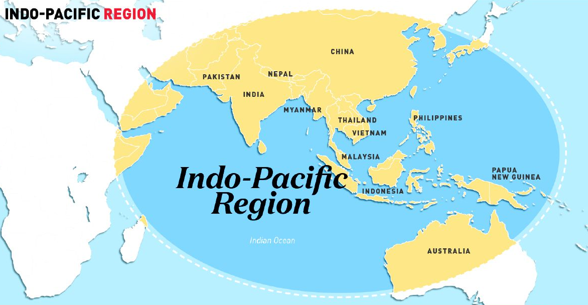
    • Two major imperatives flow from India’s geography-1) economic and security interests in the Indo-Pacific space. 2) the strategic importance of the continental landmass to its north and west.
    • The Indo-Pacific has inspired the Act East policy of bilateral and multilateral engagements in Southeast Asia and East Asia and the Pacific.
    • Shared India-U.S. interests in dealing with the challenge from China in the maritime domain have been a strategic underpinning of the bilateral partnership since the early 2000s.

    Issues in India’s engagement with the U.S.

    • In the immediate-term, Indian and U.S. perspectives are less convergent in India’s continental neighbourhood.
    • Connectivity and cooperation with Afghanistan and Central Asia need engagement with Iran and Russia, as well as with the Russia-China dynamics in the region.
    • Russia extends to the Eurasian landmass bordering India’s near and extended neighbourhood.
    • A close Russia-China partnership should move India to broad-base relations with Russia.
    • A strong stake in relations with India could reinforce Russia’s reluctance to be a junior partner of China.
    • As the U.S. confronts the challenge to its dominance from China, classical balance of power considerations would dictate accommodation with Russia.
    •  U.S. should see ties with India as a joint venture not an alliance in which they could pursue shared objectives to mutual benefit and accept that differences of perspectives will have to be addressed.
    • This template could have wider applicability for bilateral relations in today’s world order, which former could be described as militarily unipolar, economically multipolar and politically confused. 
    • The U.S. could acknowledge that India’s development of trade routes through Iran which could provide it route to Afghanistan and Central Asia, bypassing Pakistan and Russia, respectively.

    Consider the question “India has not been able to find an alternative to NAM which has been described as the basic tenet of India’s foreign policy. Discuss.”

    Conclusion

    India should find the alternative to the non-alignment which accommodate its interest in relations with the U.S. at the same time allow it “strategic autonomy”.