💥Mains Ready By December. Smash Mains & Smash PYQ Admissions Open

Subject: International Stories of Key Importance

  • UK’s Rwanda asylum seeker deportation plan is lawful, court rules

    rwanda

    Britain’s plan to send migrants to Rwanda is lawful, London’s High Court ruled, in a victory for PM Rishi Sunak who has made a high-stakes political promise to tackle the record number of migrant arrivals.

    Immigrant’s crisis in UK

    • Since 2018, there has been a marked rise in the number of refugees and asylum seekers that undertake dangerous crossings between Calais in France and Dover in England.
    • Most such migrants and asylum seekers hail from war-torn countries like Sudan, Afghanistan, and Yemen, or developing countries like Iran and Iraq.
    • The Britain that has adopted a hardline stance on illegal immigration, these crossings constitute an immigration crisis.
    • The Nationality and Borders Bill, 2021, which is still under consideration in the UK, allows the British government to strip anyone’s citizenship without notice under “exceptional circumstances”.
    • The Rwanda deal is the operationalization of one objective in the Bill which is to deter illegal entry into the United Kingdom.

    What is the Rwanda Deal?

    • The UK and Rwanda Migration and Economic Development Partnership or the Rwanda Deal is a Memorandum of Understanding (MoU) signed between the two governments.
    • Under this deal, Rwanda will commit to taking in asylum seekers who arrive in the UK on or after January 1, 2022, using illegally facilitated and unlawful cross border migration.
    • Rwanda will function as the holding centre where asylum applicants will wait while the Rwandan government makes decisions about their asylum and resettlement petitions in Rwanda.
    • Rwanda will, on its part, accommodate anyone who is not a minor and does not have a criminal record.

    Rationale of the deal

    • The deal aims to combat “people smugglers”, who often charge exorbitant prices from vulnerable migrants to put them on unseaworthy boats from France to England that often lead to mass drownings.
    • The UK contends that this solution to the migrant issue is humane and meant to target the gangs that run these illegal crossings.

    What will the scheme cost the UK?

    • The UK will pay Rwanda £120 million as part of an “economic transformation and integration fund” and will also bear the operational costs along with an, as yet undetermined, amount for each migrant.
    • Currently, the UK pays £4.7 million per day to accommodate approximately 25,000 asylum seekers.
    • At the end of 2021, this amounted to £430 million annually with a projected increase of £100 million in 2022.
    • The Rwanda Deal is predicted to reduce these costs by outsourcing the hosting of such migrants to a third country.

    Will the Rwanda Deal solve the problem of illegal immigration?

    • This deal will be implemented in a matter of weeks unless it is challenged and stayed by British courts.
    • While Boris Johnson’s government is undoubtedly bracing for such legal challenges, it remains unclear if the Rwanda Deal will solve the problem of unlawful crossings.
    • Evidence from similar experiences indicates that such policies do not fully combat “people smuggling”.

    Criticisms of the deal

    • There are dangers of transferring refugees and asylum seekers to third countries without sufficient safeguards.
    • The refugees are traded like commodities and transferred abroad for processing.
    • Such arrangements simply shift asylum responsibilities, evade international obligations, and are contrary to the letter and spirit of the Refugee Convention.
    • Rwanda also has a known track record of extrajudicial killings, suspicious deaths in custody, unlawful or arbitrary detention, torture, and abusive prosecutions, particularly targeting critics and dissidents.

    Do any other countries send asylum seekers overseas?

    • Yes, several other countries — including Australia, Israel and Denmark — have been sending asylum seekers overseas.
    • Australia has been making full use of offshore detention centres since 2001.
    • Israel, too, chose to deal with a growing influx of asylum seekers and illegal immigrants from places like Sudan and Eritrea by striking deals with third countries.
    • Those rejected for asylum were given the choice of returning to their home country or accepting $3,500 and a plane ticket to one of the third countries.
    • They faced the threat of arrest if they chose to remain in Israel.


    Click and get your FREE Copy of CURRENT AFFAIRS Micro Notes

    (Click) FREE 1-to-1 on-call Mentorship by IAS-IPS officers | Discuss doubts, strategy, sources, and more

  • Back in news: Organization of Islamic Cooperation (OIC)

    oic

    India strongly condemned the Organisation of Islamic Cooperation chief’s visit to Line of Control (LoC) from the Pakistani side.

    What is OIC?

    • The OIC — formerly Organisation of the Islamic Conference — is the world’s second-largest inter-governmental organization after the UN, with a membership of 57 states.
    • The OIC’s stated objective is “to safeguard and protect the interests of the Muslim world in the spirit of promoting international peace and harmony among various people of the world”.
    • OIC has reserved membership for Muslim-majority countries. Russia, Thailand, and a couple of other small countries have Observer status.

    India and OIC

    • At the 45th session of the Foreign Ministers’ Summit in 2018, Bangladesh suggested that India, where more than 10% of the world’s Muslims live, should be given Observer status.
    • In 1969, India was dis-invited from the Conference of Islamic Countries in Rabat, Morocco at Pakistan’s behest.
    • Then Agriculture Minister Fakhruddin Ali Ahmed was dis-invited upon arrival in Morocco after Pakistan President Yahya Khan lobbied against Indian participation.

    Recent developments

    • In 2019, India made its maiden appearance at the OIC Foreign Ministers’ meeting in Abu Dhabi, as a “guest of honor”.
    • This first-time invitation was seen as a diplomatic victory for New Delhi, especially at a time of heightened tensions with Pakistan following the Pulwama attack.
    • Pakistan had opposed the invitation to Swaraj and it boycotted the plenary after the UAE turned down its demand to rescind the invitation.
    • Earlier this year, the ousted Pakistani PM called a OIC summit which ended up without any remarks.

    What is the OIC’s stand on Kashmir?

    • It has been generally supportive of Pakistan’s stand on Kashmir and has issued statements criticizing India.
    • Last year, after India revoked Article 370 in Kashmir, Pakistan lobbied with the OIC for their condemnation of the move.
    • To Pakistan’s surprise, Saudi Arabia and the UAE — both top leaders among the Muslim countries — issued nuanced statements, and were not as harshly critical of New Delhi as Islamabad had hoped.
    • Since then, Islamabad has tried to rouse sentiments among the Islamic countries, but only a handful of them — Turkey and Malaysia — publicly criticized India.

    How has India been responding?

    • India has consistently underlined that J&K is an integral part of India and is a matter strictly internal to India.
    • The strength with which India has made this assertion has varied slightly at times, but never the core message.
    • It has maintained its “consistent and well known” stand that the OIC had no locus standi.
    • India asserts that- OIC has become a “mouthpiece” of Pakistan and that the organisation has been taking “blatantly communal, partisan and factually incorrect approach to issues”.

    OIC members and India

    • Individually, India has good relations with almost all member nations. Ties with the UAE and Saudi Arabia, especially, have looked up significantly in recent years.
    • The OIC includes two of India’s close neighbors, Bangladesh and Maldives.
    • Indian diplomats say both countries privately admit they do not want to complicate their bilateral ties with India on Kashmir but play along with OIC.

    Way ahead

    • India now sees the duality of the OIC as untenable, since many of these countries have good bilateral ties and convey to India to ignore OIC statements.
    • But these countries sign off on the joint statements which are largely drafted by Pakistan.
    • India feels it important to challenge the double-speak since Pakistan’s campaign and currency on the Kashmir issue have hardly any takers in the international community.


    Click and get your FREE Copy of CURRENT AFFAIRS Micro Notes

    (Click) FREE 1-to-1 on-call Mentorship by IAS-IPS officers | Discuss doubts, strategy, sources, and more

  • China reiterates ‘No First Use’ Nuke Policy

    China responded to a US report alleging a major build-up in Beijing’s nuclear capabilities. It said, it adheres to its policy of no first use of nuclear weapons.

    What is the news?

    • The Pentagon released an annual China security report that warned Beijing would likely have 1,500 nuclear.
    • China currently has 350 nuclear warheads.
    • As of 2022, Russia possesses a total of 5,977 nuclear warheads compared to 5,428 in the US inventory.

    What is ‘No First Use’ Doctrine?

    • In nuclear ethics and deterrence theory, NFU is a commitment to never use nuclear weapons first under any circumstances, whether as a pre-emptive attack or first strike, or in response to non-nuclear attack of any kind.

    Where do nuclear-armed countries stand on No First Use?

    • China is the only nuclear-armed country to have an unconditional NFU policy.
    • India maintains a policy of NFU with exceptions for a response to chemical or biological attacks.
    • France, North Korea, Pakistan, Russia, the UK and the US maintain policies that permit the first use of nuclear weapons in a conflict.
    • Israel does not acknowledge the existence of its nuclear arsenal so has no publicly known position.

    Why advocate for global NFU commitments now?

    • The world after US bombing of Japan has never faced any crises that could escalate to nuclear conflict.
    • In addition to the precarious situation on the Korean peninsula, we’re running acceptably high risks of nuclear weapons use between-
    1. NATO and Russia: Amid ongoing Ukrainian Invasion
    2. India and Pakistan: Jihadist acquiring nuclear weapons
    3. US and China: Due to provocations over the South China Sea and Taiwan
    • In fact right now the chances that nuclear weapons will be used — intentionally, accidentally, or due to miscalculation — are the highest they’ve been since the worst days of the Cold War.
    • Establishing global NFU would immediately make the world safer by resolving uncertainty about what a nuclear-armed country might do in a crisis.
    • It removes pressure and incentive for any one country to “go nuclear” first in a crisis and thus create a moral obligation on others.

    Consequences of nuclear war

    • Any use of a nuclear weapon would invite massive retaliation.
    • Not to mention the horrific aftermath of nuclear war.
    • A 2014 study shows that so-called “limited” nuclear war in South Asia, in which 100 nuclear weapons are used, would have global consequences.
    • Millions of tons of smoke would be sent into the atmosphere, plunging temperatures and damaging the global food supply.
    • Two billion people would be at risk of death by starvation.

    What lies ahead?

    • Global No First Use would be an important step toward making nuclear weapons irrelevant to national security.
    • These policies would strip nuclear weapons of value in the eyes of military planners, enable future nuclear disarmament negotiations, and accelerate the dismantling of these weapons.
    • It would also serve as a “confidence-building measure” that establishes greater trust among nuclear-armed countries.
    • It thus makes it easier to work together to reduce nuclear risks and ultimately eliminate all nuclear weapons.


    Click and get your FREE Copy of CURRENT AFFAIRS Micro Notes

    (Click) FREE 1-to-1 on-call Mentorship by IAS-IPS officers | Discuss doubts, strategy, sources, and more

  • Foreign Policy: India as a Pole in Itself

    India

    Context

    • The ongoing war in Ukraine on the one hand and the confrontation between Russia and the United States and the West, on the other have increased the frequency/regularity of the question, whose side is India on, after all? Is India with Russia or with the U.S./the West in this war?

    What is the issue of India taking the either side?

    • India doesn’t support the either camp: When great powers seek India’s support during geopolitical contestations, such as the one over Ukraine, they end up facing a stubborn India that is reluctant to toe the line.
    • India is not a satellite state: The inherent reason behind Indian reluctance, however, is not stubbornness but a sense of self which views itself as a pole in the international system, and not as a satellite state or a camp follower.
    • India has a different position than two poles: India refuses to take sides because it views itself as a side whose interests are not accounted for by other camps or poles.
    • India projects the multipolar world order: New Delhi’s constant exhortations of a multipolar world are also very much in tune with this thinking about itself as a pole in a multipolar world.

    Click and get your FREE Copy of CURRENT AFFAIRS Micro Notes

    India

    India’s history of not taking the side (non-alignment)

    • Historically different civilization: The origins of this thought can be found in the character of the country’s long struggle for independence; the pre- and post-Independence articulations of leaders such as Jawaharlal Nehru, Gandhiji, and Bal Gangadhar Tilak among others on international politics; the (not uncontested) primacy India inherited as the legatee state of the British empire in South Asia; India’s larger than life civilizational sense of self.
    • Non-Aligned Movement (NAM) experiment: NAM have contributed to India’s desire for a unique foreign policy identity and a voice in the comity of nations. For much of its modern independent history, India’s foreign policy has been a unique experiment.
    • Independent foreign policy: Historically, India’s view of itself as a pole is evident in the manner in which it used to pursue non-alignment for several decades after Independence. Some vestiges of this continue to inform India’s foreign policy to this day.
    • Non-alignment is not a neutrality: It is also important to point out that India’s non-alignment is often misunderstood given that a number of foreign commentators and practitioners interpret it as neutrality. For India, however, non-alignment is not neutrality, but the ability to take a position on a given issue on a case-by-case basis.

    How India asserts itself as a different pole in international affairs?

    • No domination in south Asia: India has a different view of itself as a pole. It has not actively sought to dominate the South Asian regional subsystem even when it could.
    • No alliance like NATO: Its balancing behaviour has been subpar, it has refused to build alliances in the classical sense of the term, or sought camp followers or allegiances. As a matter of fact, even its occasional balancing behaviour (for instance, the 1971 India-Soviet Treaty during the Bangladesh war) was contingent on emergencies.
    • South Asia is not a Strategic periphery: It does believe it has a strategic periphery in South Asia where it has a natural claim to primacy.
    • Doesn’t allow interference in south Asia: It discourages interference by other powers in that space.
    • India speaks for global south: India often tends to speak for ‘underprivileged collectives’, physical (South Asia) or otherwise (NAM, developing nations, global south, etc. in varying degrees); and it welcomes the rule of law and regional order.

    India

    What should world learn from India’s position as a pole in itself?

    • India as unique player in international system: India’s recent or past statements on issues of global importance be it Ukraine or Iraq, or the North Atlantic Treaty Organization’s aerial campaign in Serbia, or bringing climate change to the United Nations Security Council (UNSC) indicate that it tends to take positions that not just suit its interests but are also informed by its sense of being a unique player on the global stage.
    • India as partner not cheerleader: Western powers must, therefore, treat India as a partner rather than as a cheerleader. They should mainstream India into global institutions such as the UNSC, and consult India rather than dictate to India which side to take.

    India

    Conclusion

    • As India becomes the chair of the G20 and the SCO in 2022, it will further seek to assert itself as a major pole in the international system, and dissuade demands to follow one camp or another. Therefore, those wishing to work with India on the global stage must learn to deal with the ‘India pole’.

    Mains Question

    Q. Analyse the India’s policy of not taking the position of west or Russia on global issues. How India asserts itself as a different pole in international affairs?

    (Click) FREE1-to-1 on-call Mentorship by IAS-IPS officers | Discuss doubts, strategy, sources, and more


  • Russia’s withdrawal from Kherson

    kherson

    Ukraine’s defence and intelligence unit has reported on the withdrawal of Russian troops from Kherson but predicts it to be a delusion for a retreat.

    Where is Kherson?

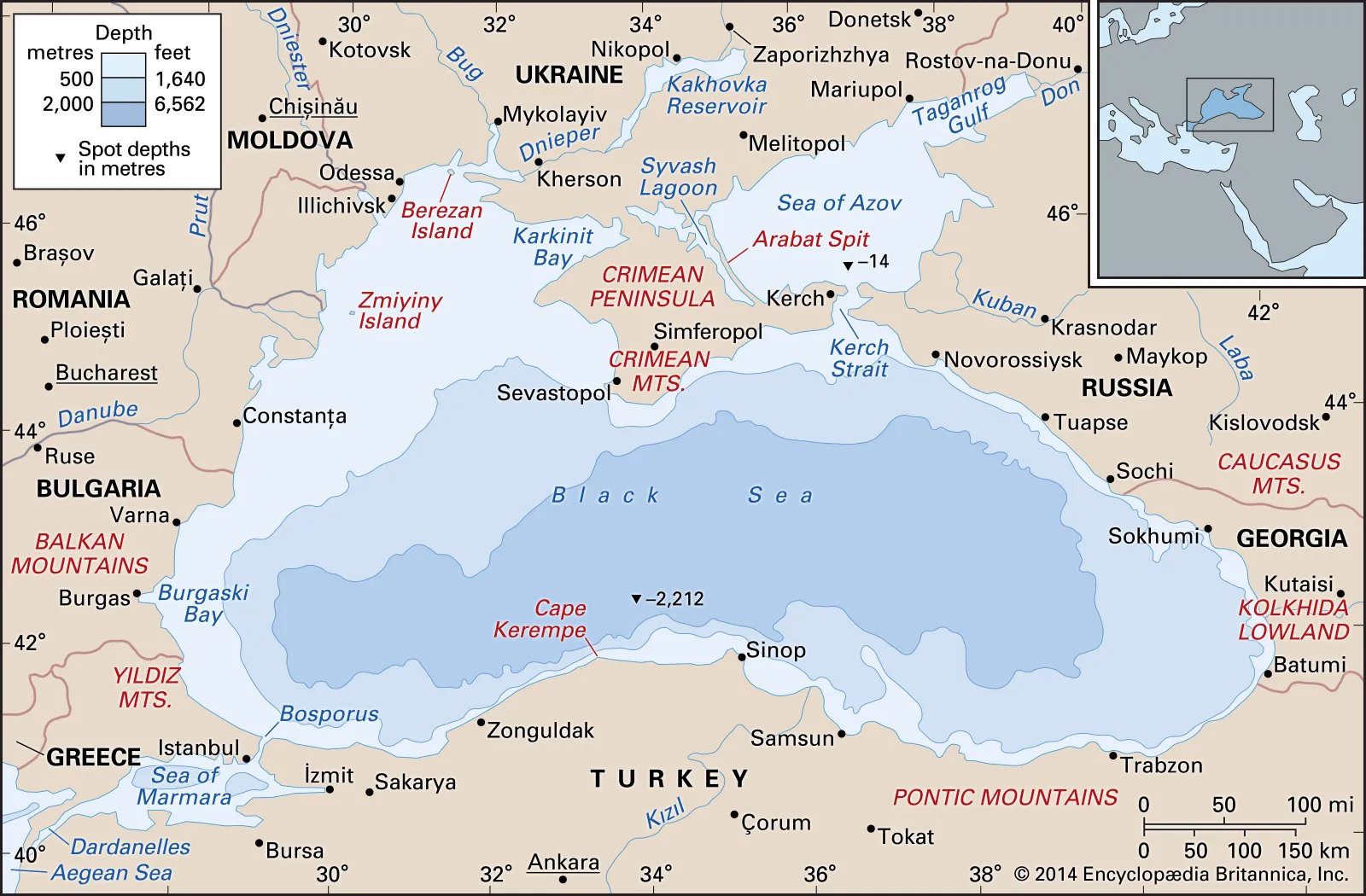
    • Geographically, Kherson is a strategic location for Russia and Ukraine.
    • Situated in the northwest of the Dnipro River, the province shares borders with Donetsk, Crimea and the Black Sea.

    Why is it important for Russia?

    • With Moscow capturing Crimea in 2014, the occupation of Kherson in March 2022 has benefited Russia in transferring its military from Crimea to counter Ukraine.
    • It provides access to Odesa and Black Sea ports in the west and serves as the main route to secure southern Ukraine.

    Implications of regaining for Ukraine

    • For Ukraine, regaining Kherson is significant to protect its population in Kalanchak and Chaplynka districts and also to recapture Crimea.
    • Kherson is also an important agricultural region, with irrigation channels.

    How did Kherson come under Russia’s control?

    • In early March 2022, Kherson was captured by Russia through intense fighting.
    • The battle of Kherson proved to be the starting point to capturing and occupying the southern part of Ukraine while the battles for Kharkiv and Kyiv in the north progressed.
    • Russia’s hold over Kherson since March 2022 enabled Moscow to capture the key port cities — Mariupol in the Sea Azov, and Odesa, thus expanding control.
    • Kherson’s irrigation canals were used as defence positions, creating a strong line preventing Ukraine’s counter-attacks.
    • Russia also had positioned its soldiers in Kherson and stockpiled the ammunition.

    Why has Moscow announced its withdrawal from Kherson?

    • Mobilisation failure: When Russia was advancing rapidly in capturing the southern and northern cities of Ukraine, its military personnel and weapon systems started to run thin.
    • Unexperienced troops: The failure of new recruits added an additional challenge to Russia to keep its hold against the Ukraine counter-offensive in Kherson.
    • Inability of Russia to govern Kherson: Despite imposing martial law, Russia could not effectively rule Kherson; the three-level security in the occupied areas could not enforce Russia’s control on the ground.
    • Ukraine’s expanding counter-offensive: Until August, Ukraine was supplied only with short-range and low-grade weapons by the West. On the other hand, Russia has been facing challenges in augmenting its military hardware on the battleground.

    Is the withdrawal final, or a tactical move by Russia?

    • Ukraine is advancing: Russia’s new mobilisation has failed to stop the advancing of Ukraine forces.
    • Russia is weakening: The challenges to remobilise its defence systems and the shortage of weapons must have played a role in Russia’s withdrawal.
    • Inevitable western intervention: With Ukraine strengthening its military capacity through support from the west, upgrading from land-based to air-based to heavy battle tanks, Russia is facing a challenge to hold its occupied territories in Ukraine.

    Conclusion

    • Withdrawal from Kherson exposes a serious gap in Russia’s strategy to hold southern Ukraine.
    • However, it also underlines its strategy — to withdraw under serious attack or resistance by the Ukrainian forces — as it happened in Kyiv and Kharkiv.


    Click and get your FREE Copy of CURRENT AFFAIRS Micro Notes

  • Black Sea Grain Initiative

    black sea

    The UN Secretary-General Antonio Guterres has called for the renewal of the Black Sea Grain Initiative as Russia has agreed to resume its participation.

    Black Sea Grain Initiative

    • The Initiative eased Russia’s naval blockade and saw the reopening of three key Ukrainian ports.
    • The agreement to create the sea corridor was negotiated by representatives from Ukraine, Russia, the UN and Turkey in July this year.
    • The agreement created procedures to safely export grain from certain ports to attempt to address the 2022 food crisis.
    • It provides a safe maritime humanitarian corridor for Ukrainian exports (particularly for food grains) from three of its key ports, namely, Chornomorsk, Odesa and Yuzhny/Pivdennyi in the Black Sea.

    Outcomes of this deal

    • Approximately 9.8 million tonnes of grains have been shipped so far since the deal was brokered.
    • People hoarding the grain in the hope of selling it for a sizable profit owing to the supply crunch were now obligated to sell.
    • The initiative has also been credited for having made a huge difference to the global cost of living crisis.

    What would suspension of the deal mean?

    • In a nutshell, the deal’s suspension was expected to re-introduce the price pressures on grain prices, especially that of wheat, with inventory being at historical lows.
    • It could particularly impact countries in the Middle East and Africa such as Egypt, Turkey, Lebanon, Sudan and Yemen which have benefitted from the resumption and are particularly dependent on Russian and Ukrainian exports

    About Black Sea

    black sea

    • The famed water body is bound by Ukraine to the north and northwest, Russia and Georgia to the east, Turkey to the south, and Bulgaria and Romania to the west.
    • It links to the Sea of Marmara through the Bosphorus and then to the Aegean through the Dardanelles.

    Significance of Black Sea for Russia

    • Domination of the Black Sea region is a geostrategic imperative for Moscow.
    • Black Sea has traditionally been Russia’s warm water gateway to Europe.
    • For Russia, the Black Sea is both a stepping stone to the Mediterranean.
    • It acts as a strategic buffer between NATO and itself.
    • It showcases the Russian power in the Mediterranean and to secure the economic gateway to key markets in southern Europe.
    • Russia has been making efforts to gain complete control over the Black Sea since the Crimean crisis of 2014.


    Click and get your FREE Copy of CURRENT AFFAIRS Micro Notes

  • Assertive China, Implication for world and India

    China

    Context

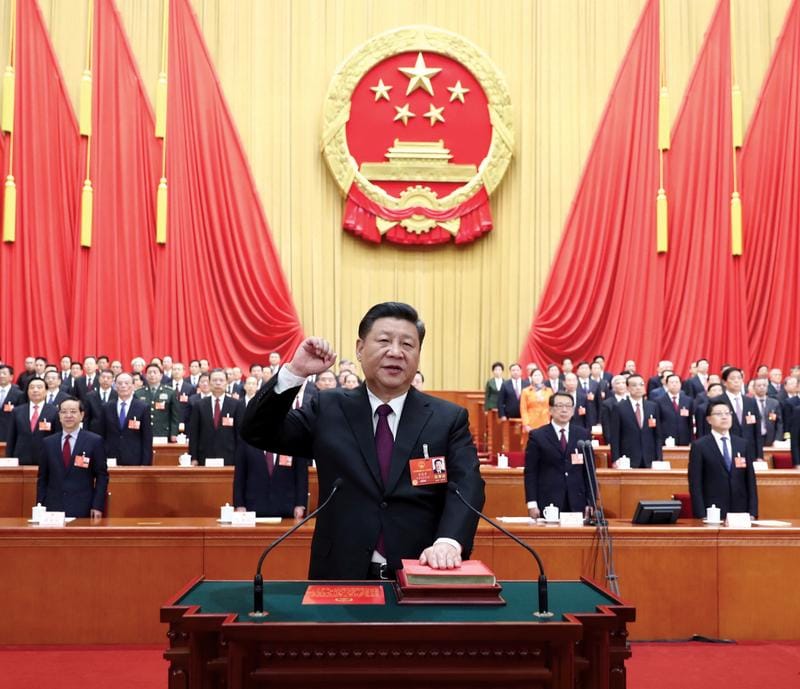
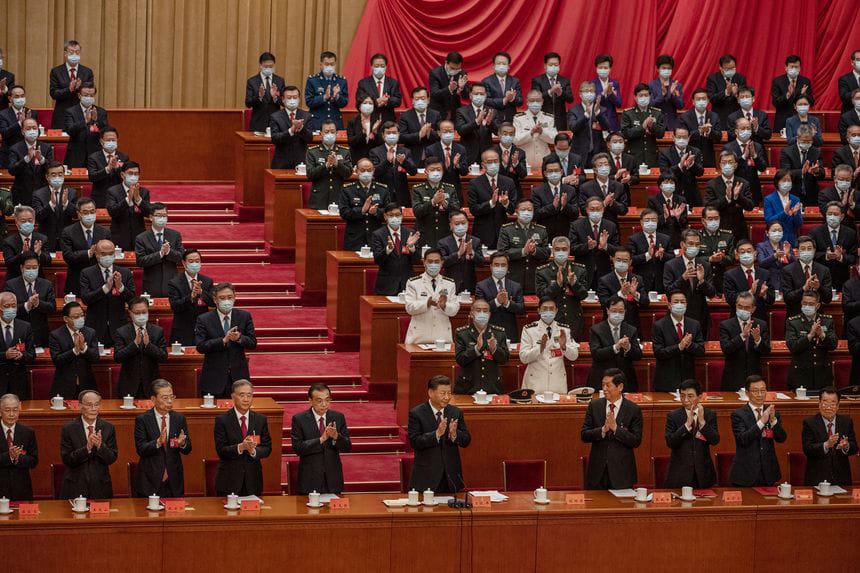
    • China’s 20th Party Congress concluded with hardly any surprises, and a predetermined script was implemented without any hitch. Xi Jinping was anointed President for an unprecedented third term, and all six of his acolytes made it to the powerful Politburo Standing Committee.

    Why China’s 20th Party Congress is important?

    • Extension of tenure of Xi Jinping: Xi’s ‘core’ status has been further reinforced, and he is now set to eclipse Deng Xiaoping and Jiang Zemin, placing him next only to Mao. Mr. Xi’s Thought on ‘Socialism with Chinese Characteristics for a New Era’ will be the Chinese Communist Party/Communist Party of China (CCP)’s guiding philosophy for the future.
    • Xi’s control over party: It was also evident that Mr. Xi enjoys wide, if not overwhelming, support within the Party elite, enabling him to infuse a renewed sense of purpose alongside tightening of controls over it.
    • High focus on national security: National security would be the key factor dictating all aspects of governance. A common theme that permeated the proceedings was affirmation of the CCP’s historical mission.
    • Emphasized ideological coherence: There was only a single narrative, crafted in a manner that extolled Mr. Xi’s role in revitalization of the CCP, further enhancing his cult status. Unequivocally rejected was an earlier Xi thesis of a ‘Community of Common Destiny’ which has been replaced by the belief that international public opinion was currently anti-China and also included an incitement to overthrow the existing Communist regime. To counter such disruptive philosophies, it had become necessary for the CCP to emphasize ideological coherence and internal discipline.
    • Avoiding the soviet style collapse: This would help to avoid the danger of a ‘Soviet style collapse’ caused by ideological laxity, corruption, divisions within the party and attempts by outsiders to foment unrest.

    China

    What are the problematic declarations at 20th party congress?

    • Undermining the USA: In the realm of geopolitics, the Congress declared that the objective is to effectively reduce the authority and the power of the United States.
    • Rejecting the Indo-pacific: This was especially true of China’s neighborhood, essentially the Indo-Pacific.
    • Achieving the lost glory: Also, to be eschewed by China were the vague and contradictory goals of the past, made at a time when China sought to make rapid progress in several directions.
    • Theory of victimhood of international conspiracy: Implicit in the proceedings was the belief that China was being deliberately denied access, and the ability, to import certain vital technological items, and in this regard, of being a victim of major international conspiracies. Earlier pragmatism was replaced by concerns about western pressures to derail China’s progress.
    • Possible lifelong tenure to Xi: The Party Congress is indicative of the fact that Mr. Xi is much more than a mere party ‘restorer’, and that he adheres to the belief that the CCP’s role is central to Chinese society and critical to determining China’s role in world affairs.
    • Raising the national strength and international influence: In terms of China’s world view, the Party Congress reiterated that the goal is to make China a modern socialist power by 2035, boost per capita income to middle income levels, and modernise the armed forces. By 2049, the 100th anniversary of the Peoples’ Republic of China, China is determined to lead the world in terms of composite national strength and international influence.

    China

    What are the implications for the world?

    • Premature takeover of Taiwan: one can expect that notwithstanding the level of rhetoric and assertions that this is a dangerous phase, China is unlikely to take any premature step to take over Taiwan, and thereby risk a wider conflict with the U.S. and the rest of the world at this point. Mr. Xi is far more likely to devote attention to internal matters within China, since unity within the Communist Party remains ephemeral; while dissent has been stamped out for the present, more consolidation would be necessary.
    • Short term conciliation with world: Consequently, one might well see China stepping back from its present confrontational posture with the U.S. and several other countries, and adopting a more conciliatory approach in the near future.
    • Conflicts are likely to happen: There are, of course, certain red lines any attempt at provocation within the ‘First Island Chain’, or encouraging Taiwan to seek independence or break away from China are certain to lead to a conflict, irrespective of how it would adversely affect China’s 2049 plans and objectives.

    China

    Implications for India

    • Border incursion will rise: In India’s case, further skirmishes between the two countries along the several thousand kilometres of the undefined land border is to be expected.
    • Conflicts in Indian ocean: China is unlikely to embark on an open conflict with it anywhere else in the Indian Ocean region. This could alter, if India were to pursue a more aggressive policy in support of the West’s ‘open seas policy’ in waters in China’s vicinity.
    • Prime target in west vs China battle: India is, however, likely to be a principal target of Chinese wrath in the next few years. As India’s economic fortunes steadily improve even as China’s declines, the perception conflict will become more intense.
    • China’s progress at the cost of India: Moreover, if India is seen as a major recipient of western technology, the kind being denied to China, China would make it a point to use its economic, rather than military muscle, to deter India’s progress. For China to achieve greatness by 2049, subduing India economically, and reducing its image in the eyes of the world would be critically important.

    Conclusion

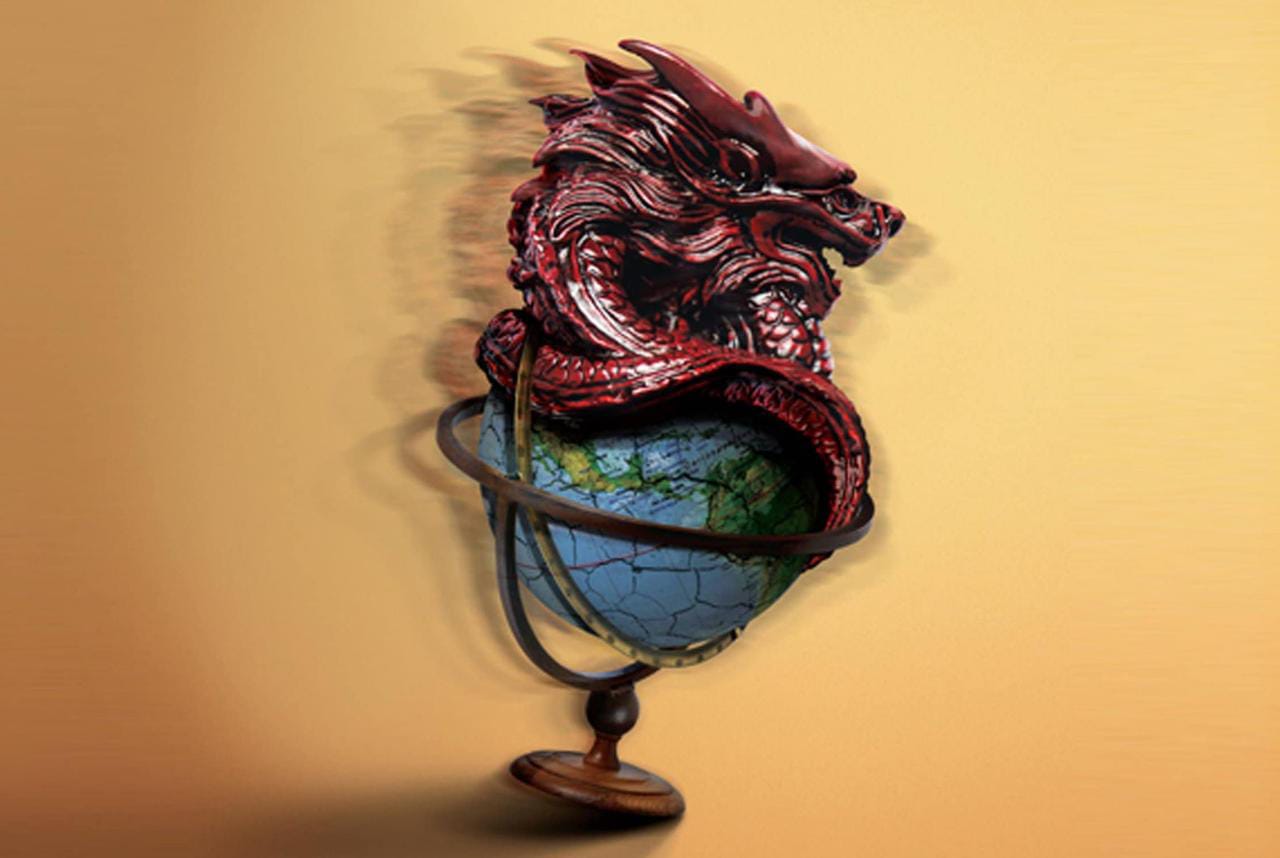
    • China’s middle kingdom complex, unjustified assertion, paranoic claims on borders and seas and wolf warrior diplomacy is against the international rules and order. China has challenged the USA’s hegemony and entire international system without any tangible punishment. India has to choose its options carefully without compromising national security and ambitions.
  • AIIB set to lend Pakistan $500 million

    The Asian Infrastructure Investment Bank (AIIB) is scheduled to lend $500 million to Pakistan in this month.

    Asian Infrastructure Investment Bank (AIIB)

    • The Asian Infrastructure Investment Bank (AIIB) is a multilateral development bank with a mission to improve social and economic outcomes in Asia, began operations in January 2016.
    • It aims to stimulate growth and improve access to basic services by furthering interconnectivity and economic development in the region through advancements in infrastructure.
    • AIIB has now grown to 102 approved members worldwide.
    • The US & Japan are not its members.
    • It is a brainchild of China. It has invested in 13 member regions.

    Capital and shareholding of AIIB

    • It has authorized capital of US 100 billion dollars and subscribed capital of USD 50 billion.
    • It offers sovereign and non-sovereign finance for projects in various sectors with an interest rate of London Interbank Offered Rate (LIBOR) plus 1.15 % and a repayment period of 25 years with 5 years in grace period.
    • China is the largest shareholder in AIIB with a 26.06% voting power, followed by India with 7.62% and Russia with 5.92% voting power.

    Try this question from CSP 2019

    Q.With reference to Asian Infrastructure Investment Bank (AIIB), consider the following statements

    1. AIIB has more than 80 member nations.
    2. India is the largest shareholder in AIIB.
    3. AIIB does not have any members from outside Asia.

    Which of the statements given above is/are correct?

    (a) 1 only

    (b) 2 and 3 only

    (c) 1 and 3 only

    (d) 1, 2 and 3


    [wpdiscuz-feedback id=”7t4xlmyyu4″ question=”Please leave a feedback on this” opened=”1″]Post your answers here.[/wpdiscuz-feedback]


    UPSC 2023 countdown has begun! Get your personal guidance plan now! (Click here)

  • Fateful Triangle China,USA and India and Changing World Order

    China

    Context

    • America’s national security strategy issued by the Joe Biden Administration last week and the Chinese Communist Party’s 20th Congress this week promise to reshape the geopolitics of Asia and the Indo-Pacific.

    Historical background of USA-CHINA

    • Context of World War II: Asia has seen multiple phases in the US-China relationship. In the second half of the 19th century, American missionaries began to arrive in China and began to generate empathy for the nation. During World War II, Washington backed Chinese nationalists in their fight against Japanese occupation.
    • US efforts to isolation China: The US tried to isolate China from 1949 when the communists prevailed over the nationalists.
    • Cooperation to counter Soviet: The 1970’s saw the US and communist China come together to counter the Soviet Union.
    • Multiple Economic engagement: The 1980s saw the beginning of an economic engagement that turned into a huge commercial and technological partnership from the 1990s.

    China

    What is the USA’s assumption and China’s ambition?

    • China as responsible stakeholder: The US establishment dismissed the idea of China as potential threat and bet that Beijing could become a “responsible stakeholder” in the world order.
    • Democratization of Chinese society is inevitable: America also believed that China’s growing economic prosperity would inevitably lead to greater democratisation of its society.
    • Visible decline of west: China, however, has steadily moved in the other direction, especially under Xi, who has convinced himself that the West is in terminal decline.
    • China’s ambition to change the world order: Xi is determined to seize this moment to reshape the Asian as well as the global order to suit Chinese interests. At the same time, China has become increasingly repressive at home.
    • Explicit expression of ambition: Xi made no effort to hide China’s new geopolitical ambition nor has he been defensive about his authoritarian rule. This, in turn, bestirred the US into rethinking its China policy in the second decade of the 21st century.

    China

    How China is asserting itself?

    • Asserting own version of Global order: Beijing, argues that recent history points to the superiority of the Chinese system over the Western one. And it offers its own versions of a global order – economic, political and social. Since the end of the Cold War, ideological arguments had receded into the background but are now back in significant play.
    • China offering model Economic Globalization: China continues to sing praises of the model of economic globalisation that has facilitated Beijing’s rise over the last four decades. But under Xi, China has emphasised the importance of self-reliance in the name of a “dual circulation strategy”.
    • Leveraging world’s dependence for strategic gain: At the same time, Beijing has sought to enhance the world’s dependence on its economy and leverage it for strategic benefit. The profound political backlash against trade and economic cooperation with China in the US led to the questioning of economic globalisation in the Trump years.
    • China building the powerful military: As China became a richer country, it also focused on building a powerful army. Using both the instruments of hard power, China under Xi has actively sought to undermine US alliances in Asia and mount pressure on American forward military presence in Asia.

    China

    How USA’s policy is changing towards China?

    • Structured policy of rivalry: The traditional soft attitude to China yielded to a more confrontational approach during the Donald Trump presidency. Joe Biden has developed that into a more structured policy of competing with China.
    • Combine challenge of China and Russia: The National Security Strategy of the Trump administration postulated the return of great power rivalry and the need to respond to the challenges presented by Russia and China. Biden’s NATIONAL SECURITY STRATEGY builds on that proposition and identifies China as the more demanding challenge than Russia, despite Moscow’s aggression against Ukraine.
    • China is more capable than Russia: In his foreword to the National security strategy, Biden says “Russia poses an immediate threat to the free and open international system, recklessly flouting the basic laws of the international order today, as its brutal war of aggression against Ukraine has shown.” He names China, on the other hand, as “the only country with both the intent to reshape the international order and, increasingly, the economic, diplomatic, military and technological power to advance that objective”. While the European challenge is real, the Biden Administration now sees the Indo-Pacific as the principal strategic theatre.
    • Projecting China as autocracy against the democracy: The US has sought to locate the conflict with China (and Russia) as a fundamental struggle between “democracies and autocracies”. Recognising the limited enthusiasm for the framing in Asia, the National security strategy now talks of broadening the coalition to include countries that may not be democratic. Beijing, on the other hand, argues that recent history points to the superiority of the Chinese system over the Western one.
    • Building the bilateral alliances: The US is now pushing back. The principal instrument in the US response has been rebuilding the traditional bilateral alliances with Japan and Australia as well as constructing new partnerships with countries like India and developing new regional coalitions.

    India’s role in shaping the world order

    • Convergence of National interest wit USA: Today, Indian and American policies are converging. For both Delhi and Washington, Beijing presents the main national challenges.
    • Reducing economic dependence on China: On the economic and technological front, both India and the US are trying to reduce their exposure to China.
    • Keeping independent foreign policy: On the geopolitical front, a US plan to look beyond formal alliances suits Delhi, which is wedded to an independent foreign policy.
    • Opportunity for cooperation: It is never easy to translate abstract convergence into concrete policies. The current churn in Asia provides Delhi and Washington with a historic opportunity to build on the new convergences in the areas of trade, technology, and geopolitics.

     Conclusion

    • changing world order will have short term repercussion on economic front for developing country like India. India has a great opportunity to be the rule maker of new global order rather than just a rule follower. World order of 21st century will revolve around the fateful triangle of India, China and USA.

    Mains Question

    Q.Why the present world order is challenged by China? What role India can play as rule maker of new World order?

    UPSC 2023 countdown has begun! Get your personal guidance plan now! (Click here)

  • Israel and Lebanon reach an Agreement on Maritime Border

    israel

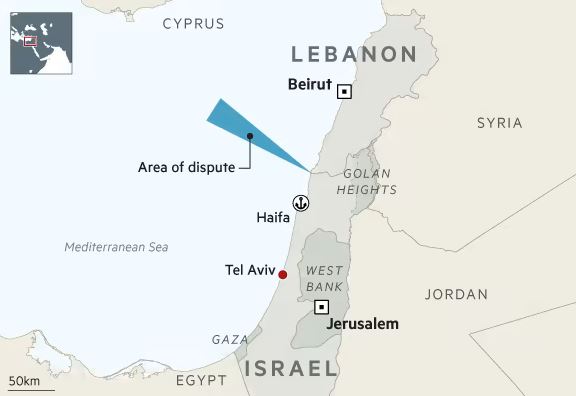
    Israel has reached a US-brokered agreement with Lebanon to settle their long-disputed maritime border. This has been seen as a historic deal.

    Israel-Lebanon Boundary Issue

    • The draft agreement aims to settle Israel and Lebanon’s competing claims over offshore gas fields in the region.
    • A major source of friction was the Karish gas field, which Israel insisted fell entirely within its waters and was not a subject of negotiation.
    • The issue is a little over a decade old, after the two countries declared overlapping boundaries in 2011 in the Mediterranean Sea.
    • Since both countries have been technically at war, the United Nations was asked to mediate.
    • The issue gained significance after Israel discovered two gas fields off its coast a decade ago, which experts had believed could help turn it into an energy exporter.

    Key terms of the Agreement

    • The agreement seeks to resolve a territorial dispute in the eastern Mediterranean Sea, in an area that Lebanon wants to explore for natural gas.
    • The gas field in question is located on the maritime boundary between the two countries and this agreement would allow both countries to get royalties from the gas.
    • It also sets a border between the maritime waters of Lebanon and Israel for the first time.

    Why is this agreement signed?

    • Averting terror threats: The agreement is expected to avert the immediate threat of conflict between Israel and Hezbollah militants in Lebanon, after fears of escalation if negotiations fell apart.
    • Energy exploitation: The agreement will create new sources of energy and income for both countries, particularly important for Lebanon, which is facing a crippling energy and financial crises.
    • Alternative energy for Europe: It could also have a potentially wider impact: it would likely provide Europe with a potential new source of gas amid energy shortages caused by the Russian invasion of Ukraine.

    What the agreement does not address?

    Ans. Blue Line Issue

    • The agreement does not touch on the shared land border between Israel and Lebanon, which is still disputed, but where both countries are committed to a ceasefire.
    • This border is also called the Blue Line, a boundary that was drawn up by the UN after Israel withdrew from southern Lebanon in 2000.
    • This land border is currently patrolled by the United Nations forces.


    UPSC 2023 countdown has begun! Get your personal guidance plan now! (Click here)