Living with diabetes?
Image: Source

The Nobel Prize in Chemistry 2015 is awarded to Tomas Lindahl (UK), Paul Modrich (USA) and Aziz Sancar (USA) for having mapped, at a molecular level, how cells repair damaged DNA and safeguard the genetic information.
Their work has provided fundamental knowledge of how a living cell functions and is, for instance, used for the development of new cancer treatments.
Each day our DNA is damaged by UV radiation, free radicals and other carcinogenic substances, but even without such external attacks, a DNA molecule is inherently unstable.
Thousands of spontaneous changes to a cell’s genome occur on a daily basis. Furthermore, defects can also arise when DNA is copied during cell division, a process that occurs several million times every day in the human body.
The reason our genetic material does not disintegrate into complete chemical chaos is that a host of molecular systems continuously monitor and repair DNA.
The Nobel laureate scientists, who have mapped how several of repair systems function at a detailed molecular level.

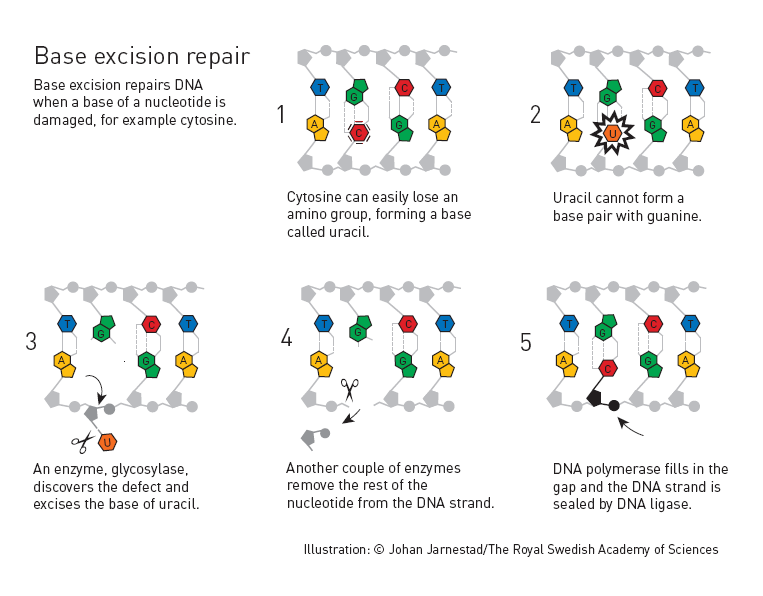
In the early 1970s, scientists believed that DNA was an extremely stable molecule, but Tomas Lindahl demonstrated that DNA decays at a rate that ought to have made the development of life on Earth impossible. This insight led him to discover a molecular machinery, base excision repair, which constantly counteracts the collapse of our DNA.
This was the start of 35 years of successful work, during which Tomas Lindahl has found and examined many of the proteins in the cell’s toolbox for DNA repair.
Bit by bit, Lindahl pieced together a molecular image of how base excision repair functions, a process in which glycosylases, enzymes similar to the one he had found in 1974, are the first step in the DNA repair process.
Base excision repair also occurs in human beings and, in 1996, Tomas Lindahl managed to recreate the human repair process in vitro.
The decisive factor for Tomas Lindahl was the realisation that DNA inevitably undergoes change, even when the molecule is located in the cell’s protective environment. However, it had long been known that DNA can be damaged by environmental assaults such as UV radiation.
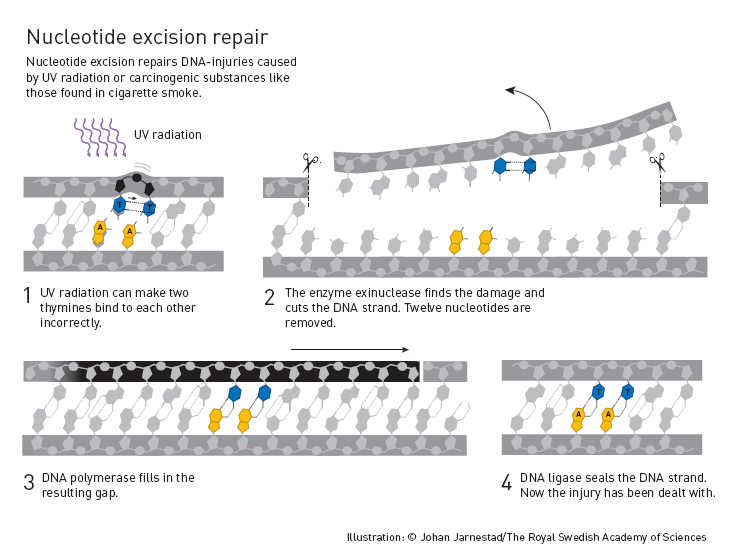
The mechanism used by the majority of cells to repair UV damage, nucleotide excision repair, was mapped by Aziz Sancar, born in Savur, Turkey, and professionally active in the USA.
Aziz Sancar has mapped nucleotide excision repair, the mechanism that cells use to repair UV damage to DNA. People born with defects in this repair system will develop skin cancer if they are exposed to sunlight. The cell also utilises nucleotide excision repair to correct defects caused by mutagenic substances, among other things.
Aziz Sancar’s ability to generate knowledge about the molecular details of the process changed the entire research field. He published his findings in 1983.
He mapped the next stages of nucleotide excision repair. In parallel with other researchers, including Tomas Lindahl, Sancar investigated nucleotide excision repair in humans.
The molecular machinery that excises UV damage from human DNA is more complex than its bacterial counterpart but, in chemical terms, nucleotide excision repair functions similarly in all organisms.
Once his father, a biology teacher, said: “You should learn about this DNA stuff.” This was in 1963, the year after James Watson and Francis Crick had been awarded the Nobel Prize for discovering the structure of DNA.
A few years later, that “DNA stuff” really became central to Paul Modrich’s life.
Paul Modrich has demonstrated how the cell corrects errors that occur when DNA is replicated during cell division. This mechanism, mismatch repair, reduces the error frequency during DNA replication by about a thousandfold. Congenital defects in mismatch repair are known, for example, to cause a hereditary variant of colon cancer.
In conclusion, the basic research carried out by the 2015 Nobel Laureates in Chemistry has not only deepened our knowledge of how we function, but could also lead to the development of lifesaving treatments.
In the words of Paul Modrich: “That is why curiosity-based research is so important. You never know where it is going to lead… A little luck helps, too.”

Irish-born William Campbell and Japan’s Satoshi Omura won half of the prize for discovering avermectin, a derivative of which has been used to treat hundreds of millions of people with river blindness and lymphatic filariasis, or elephantiasis.
China’s Tu Youyou was awarded the other half of the prize for discovering artemisinin, a drug that has slashed malaria deaths and has become the mainstay of fighting the mosquito-borne disease. She is China’s first Nobel laureate in medicine.

Satoshi Omura, a Japanese microbiologist and expert in isolating natural products, focused on a group of bacteria, Streptomyces, which lives in the soil and was known to produce a plethora of agents with antibacterial activities (including Streptomycin discovered by Selman Waksman, Nobel Prize 1952).
Equipped with extraordinary skills in developing unique methods for large-scale culturing and characterization of these bacteria, Omura isolated new strains of Streptomyces from soil samples and successfully cultured them in the laboratory.
From many thousand different cultures, he selected about 50 of the most promising, one of these cultures later turned out to be Streptomyces avermitilis, the source of Avermectin, a medicine that has nearly eradicated river blindness and radically reduced the incidence of filariasis, which can cause the disfiguring swelling of the lymph system in the legs and lower body known as elephantiasis.

Also known as onchocerciasis or Robles’ Disease, is caused by transmission of the parasitic worm Onchocerca volvulus by black flies of the genus Simulium. Vector lives near rivers, thus the name.Inside the host, the worms create larvae that travel to the skin, and infect other flies that bite the victim.
Symptoms include severe itching, eruptions under the skin, and blindness. About 17-25 million are infected; some 0.8 million have some degree of vision loss. Most infections in sub-Saharan Africa.
It is tropical disease caused by transmission of parasites classified as nematodes (roundworms) of the family Filariodideato, to humans by mosquitoes.
Adult worms lodge in lymphatic system and disrupt immune system. Causes abnormal enlargement of body parts, pain, severe disability and social stigma.
Over 120 million people are infected, about 40 million disfigured or incapacitated. About 1.23 billion in 58 countries are threatened, 80% of whom live in 10 countries, including India, Bangladesh and Nepal.

An expert in parasite biology working in the USA, acquired Omura’s Streptomyces cultures and explored their efficacy.
Campbell showed that a component from one of the cultures was remarkably efficient against parasites in domestic and farm animals.
The bioactive agent was purified and named Avermectin, which was subsequently chemically modified to a more effective compound called Ivermectin.
Ivermectin was later tested in humans with parasitic infections and effectively killed parasite larvae (microfilaria) .
Collectively, Omura and Campbell’s contributions led to the discovery of a new class of drugs with extraordinary efficacy against parasitic diseases.


Ms. Youyou Tu, won Nobel in Medicine for a therapy against malaria.
Malaria was traditionally treated by chloroquine or quinine, but with declining success. By the late 1960s, efforts to eradicate Malaria had failed and the disease was on the rise.
At that time, Youyou Tu in China turned to traditional herbal medicine to tackle the challenge of developing novel Malaria therapies.
Tu revisited the ancient literature and discovered clues that guided her in her quest to successfully extract the active component from Artemisia annua.
Tu was the first to show that this component, later called Artemisinin, was highly effective against the Malaria parasite, both in infected animals and in humans.
Artemisinin represents a new class of antimalarial agents that rapidly kill the Malaria parasites at an early stage of their development, which explains its unprecedented potency in the treatment of severe Malaria.

The discoveries of Avermectin and Artemisinin have fundamentally changed the treatment of parasitic diseases.
Ivermectin is highly effective against a range of parasites, has limited side effects and is freely available across the globe.
The importance of Ivermectin for improving the health and wellbeing of millions of individuals with River Blindness and Lymphatic Filariasis, primarily in the poorest regions of the world, is immeasurable.
Treatment is so successful that these diseases are on the verge of eradication, which would be a major feat in the medical history of humankind. Malaria infects close to 200 million individuals yearly.
Artemisinin is used in all Malaria-ridden parts of the world. When used in combination therapy, it is estimated to reduce mortality from Malaria by more than 20% overall and by more than 30% in children. For Africa alone, this means that more than 100 000 lives are saved each year.
The discoveries of Avermectin and Artemisinin have revolutionized therapy for patients suffering from devastating parasitic diseases.
Campbell, Ōmura and Tu have transformed the treatment of parasitic diseases. The global impact of their discoveries and the resulting benefit to mankind are immeasurable.
Published with inputs from Arun
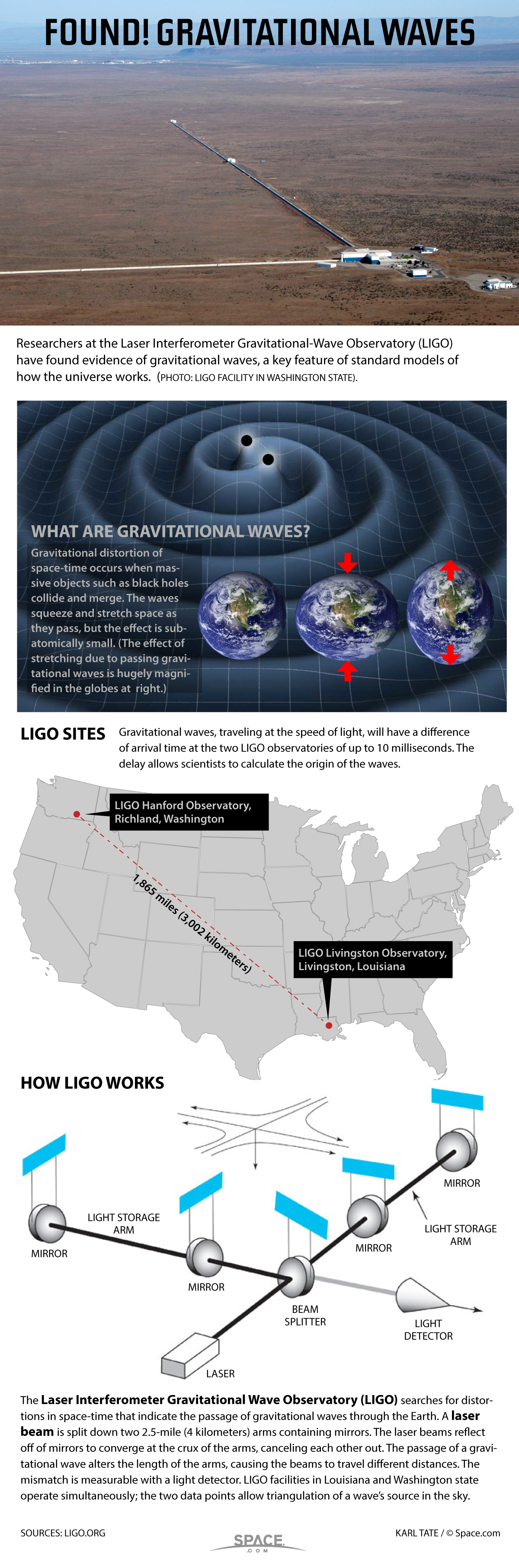
Recently, Gravitational waves, the cosmic ripples that distort space-time itself, have been directly detected for the first time. Let’s know about this unprecedented discovery!
[ Einstein’s mathematics showed that massive accelerating objects (such as neutron stars or black holes orbiting each other) would disrupt space-time in such a way that ‘waves’ of distorted space would radiate from the source ]

Can we expect some answers from you guys?
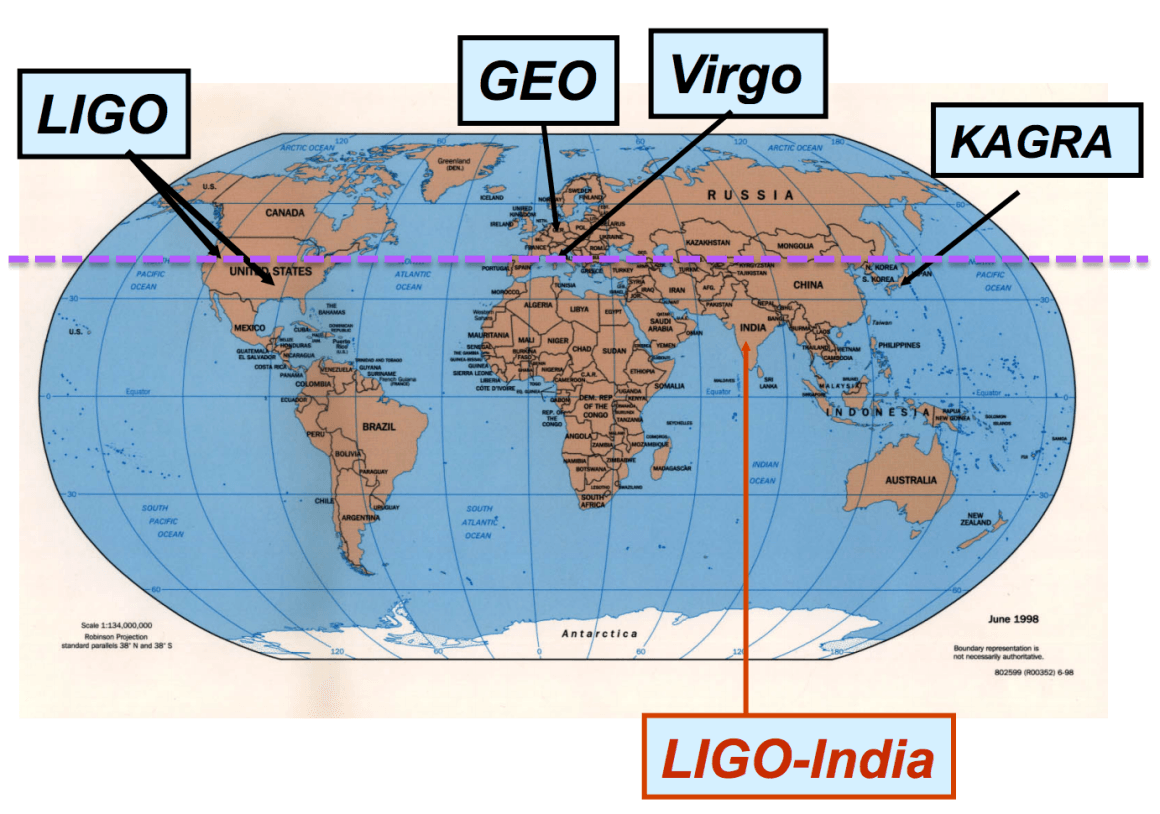
#Q. Recently, Union cabinet has approved a proposal to establish a gravitational wave observatory, one of the mega science projects in India. Discuss, how will this project help India if it becomes a reality.
Published with inputs from Arun | Image: space.com
The World Health Organization (WHO) expects that Zika virus, a mosquito-borne disease, spreading through the Americas, to affect between 3 million and 4 million people. Let’s analyse this in brief!
Trivia : Do you know why is it called Zika Virus?
It was first isolated from Rhesus monkeys in Zika forest near Lake Victoria in Uganda.
Find Out why was Ebola virus named as such?

Is there something more that you wanted to know which we did not answer yet? Drop in with your questions.
Published with inputs from Arun | Image - Outbreaknews

NASA’s Mars Odyssey orbiter entered Mars orbit in 2001. Odyssey’s Gamma Ray Spectrometer detected significant amounts of hydrogen on Mars,thought to be contained in large deposits of water ice.
The Mars Express mission of the European Space Agency (ESA) reached Mars in 2003. It carried the Beagle 2 lander, which was not heard from after being released and was declared lost in February 2004.
In early 2004 the Mars Express Planetary Fourier Spectrometer team announced the orbiter had detected methane in the Martian atmosphere. ESA announced in June 2006 the discovery of aurorae on Mars.
In January 2004, the NASA twin Mars Exploration Rovers named Spirit (MER-A) and Opportunity (MER-B) landed on the surface of Mars. Both have met or exceeded all their targets.
On March 10, 2006, the NASA Mars Reconnaissance Orbiter (MRO) probe arrived in orbit to conduct a two-year science survey.
The orbiter began mapping the Martian terrain and weather to find suitable landing sites for upcoming lander missions. The MRO snapped the first image of a series of active avalanches near the planet’s north pole.
The Mars Science Laboratory mission was launched on November 26, 2011 and it delivered the Curiosity rover, on the surface of Mars on August 6, 2012 UTC.
The Indian Space Research Organisation (ISRO) launched Mars Orbiter Mission (MOM) on November 5, 2013. It was successfully inserted into Mars orbit on 24 September 2014.

New findings from NASA’s Mars Reconnaissance Orbiter (MRO) provide the strongest evidence yet that liquid water flows intermittently on present-day Mars.
Using an imaging spectrometer on MRO, researchers detected signatures of hydrated minerals on slopes where mysterious streaks are seen on the Red Planet.
They darken and appear to flow down steep slopes during warm seasons, and then fade in cooler seasons. They appear in several locations on Mars when temperatures are above min0us 10 degrees Fahrenheit (minus 23 Celsius), and disappear at colder times.
It appears to confirm that water is flowing today on the surface of Mars.These downhill flows, known as recurring slope lineae (RSL), often have been described as possibly related to liquid water.
The new findings of hydrated salts on the slopes point to what that relationship may be to these dark features. The hydrated salts would lower the freezing point of a liquid brine, just as salt on roads here on Earth causes ice and snow to melt more rapidly.
Scientists say it’s likely a shallow subsurface flow, with enough water wicking to the surface to explain the darkening.

Dark narrow streaks called recurring slope lineae emanating out of the walls of Garni crater on Mars. The dark streaks here are up to few hundred meters in length.
The spectral signatures as caused by hydrated minerals called perchlorates. The hydrated salts most consistent with the chemical signatures are likely a mixture of magnesium perchlorate, magnesium chlorate and sodium perchlorate.
On Earth, naturally produced perchlorates are concentrated in deserts, and some types of perchlorates can be used as rocket propellant.
NASA’s Mars Reconnaissance Orbiter (MRO) has been examining Mars since 2006 with its six science instruments.
The ability of MRO to observe for multiple Mars years with a payload able to see the fine detail of these features has enabled findings such as these:
first identifying the puzzling seasonal streaks and now making a big step towards explaining what they are?
The new findings are more proof that the mysterious lines he first saw darkening Martian slopes five years ago are, indeed, present-day water.
The discovery is the latest of many breakthroughs by NASA’s Mars missions
It took multiple spacecraft over several years to solve this mystery, and now we know there is liquid water on the surface of this cold, desert planet.It seems that the more we study Mars, the more we learn how life could be supported and where there are resources to support life in the future.
Then, Mars is more habitable than previously thought so, Can we go to Mars for living really? Yes probably. Because NASA is planning for it by 2030.
Published with inputs from Arun