đŸ’„Join UPSC 2027,2028 Mentorship (July Batch) + XFactor Notes & Microthemes PDF

Subject: Internal Security

  • Cross-border movement of insurgents is only one of the several security challenges facing the policing of the border in North-East India. Examine the various challenges currently emanating across the India-Myanmar border. Also, discuss the steps to counter the challenges.

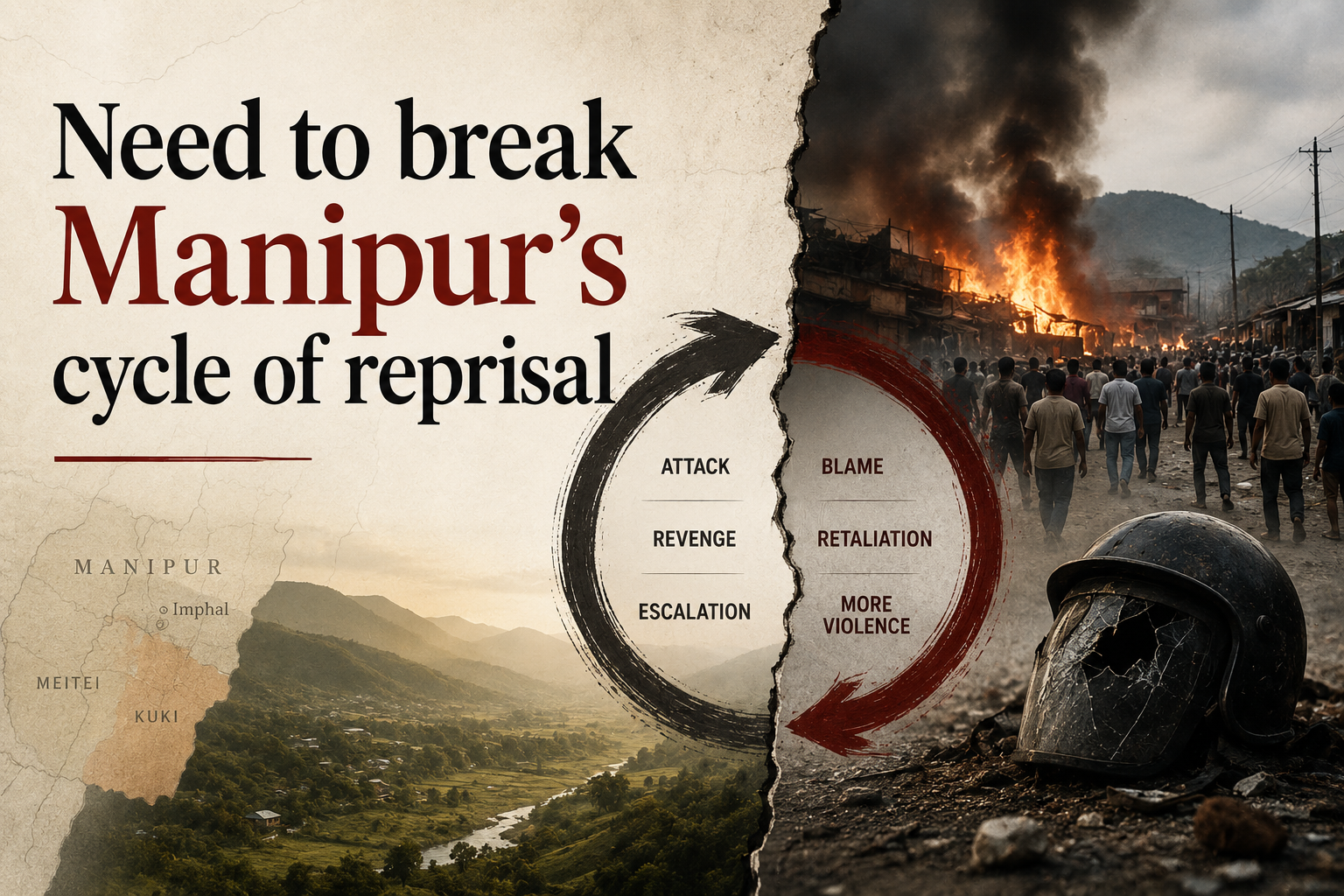
    The instability following the 2021 Myanmar military coup has transformed 1,643 km India-Myanmar border into a ‘high-risk zone’

    Security Challenges Emanating Across the India-Myanmar Border

    Parallel government by insurgent groups. Eg- charging 1% to 2% “revolutionary tax” on legal infrastructure projects and “safe passage fees” from drug mafias

    Refugee Crisis & Demographic Shifts- Since the 2021 coup, over 95,000 refugees (primarily Chin and Sagaing residents) have entered Mizoram and Manipur.

    “The Golden Triangle” Spillover- Myanmar’s civil war has led to a surge in poppy cultivation. Profits are used to fund ethnic militias, creating a “narcotics-insurgency nexus.”

    Arms Smuggling- The border town of Moreh (Manipur) has become a primary transit hub for weaponry smuggled from China.

    With the Myanmar military (Tatmadaw) losing control of nearly 86% of its territory, rebel groups like the Chin National Army (CNA) and PDFs operate freely in “ungoverned spaces”

    China’s deep investments in Myanmar (CMEC) creates threat to India’s “Chicken’s Neck” corridor

    Misuse of FMR- Although the government scraped it in 2024, enforcing the new “Regulated Border Pass System” remains a challenge due to local opposition.

    Overburdened security forces – The Assam Rifles is dual-tasked with border guarding and counter-insurgency.

    Steps Taken to Counter the Challenges

    Shift to “Security-First” border management strategy

    Abolition of FMR (visa-free travel up to 16 km) in 2024

    Push for the completion of the Kaladan Multi-Modal Project and the Trilateral Highway by 2027

    Operation Sunrise – Joint operation by Indian and Myanmar Army against insurgent groups

    Biometric Documentation of all refugees and border-crossers

    15 BSF battalions deployed to aid Assam Rifles.

    Steps Required to Counter the Challenges

    Strict Implementation of the New Pass System

    Federal coordination through North-East zonal council

    Accelerate the Smart Fencing System (SFS) using laser walls and sensors.

    Creation of strictly monitored 10 km “Buffer Zone” to curb spontaneous illegal crossings.

    Intelligence Fusion- Set up real-time data-sharing hubs to track the movement of “Golden Triangle” narcotics and arms shipments.

    Humanitarian Infrastructure- Build refugee camps near the border to prevent undocumented migrants from blending into local populations.

    Engage with local Ethnic Armed Organizations (EAOs) in Myanmar that control the border to secure Indian infrastructure projects.

    Extend Vibrant Villages Programme to the eastern border for better infrastructure

    Upgrade Outposts (BOPs) with drones and satellite imagery for 24/7 surveillance of forested infiltration routes.

    “3C Strategy”of Containment, Cooperation and Connectivity is need to transform the region from a “conflict zone” to an “economic corridor.”

  • The banning of ‘Jamaat-e – islaami’ in Jammu and Kashmir brought into focus the role of over-ground workers (OGWs) in assisting terrorist organizations. Examine the role played by OGWs in assisting terrorist organizations in insurgency affected areas. Discuss measures to neutralize the influence of OGWs.

    Recently, MHA has declared ‘Jamaat-e-Islami Jammu Kashmir (JeI)’ as an ‘Unlawful Association’ under Section 3 of the Unlawful Activities (Prevention) Act, 1967.

    Role played by OGWs

    Intelligence Gathering – provide real-time information on troop movement, patrol timings and security vulnerabilities.

    Logistical Support – arrange shelter, vehicles, food, medical aid and safe houses for militants to evade detection.

    Radicalisation and Recruitment through religious networks, student groups and social media.

    Terror Financing – raise funds locally, manage extortion, run front organisations and facilitate hawala transfers.

    Facilitating Arms Movement – OGWs act as couriers, store arms, and help smuggle weapons across borders or LoC. Eg- collecting drone-dropped arms.

    Information Warfare – They generate pro-terror content, circulate videos and organise protests to delegitimise the state.

    Maintaining Militant-Local Community Linkages- create public sympathy for militants, and organise funerals or protests to build support. Eg- funeral of Burhan Wani

    Measures to Neutralise the Influence of OGWs

    Intelligence and Policing Measures

    Integrated Intelligence Grid (IIG) – Real-time coordination between police, IB, NIA and security forces to identify OGW networks.

    Use of Technology for Profiling – AI-based monitoring of suspicious financial transactions, travel patterns and digital communication.

    Strengthening Local Police and Community Intelligence – Eg- Village Defence Groups in Rajouri-Poonch.

    Tightening Border Surveillance – Use of drones, sensors, and night-vision to check infiltration and OGW courier routes.

    Legal and Institutional Measures

    Action through UAPA & NIA Act – Freezing bank accounts and shutting down front organisations.

    Regulating NGOs, Religious Networks – Eg- FCRA audits of charity organisations

    Community and Preventive Measures

    De-radicalisation and Counselling of youth

    Heart and mind strategy – Eg- Operation Sadbhavana (Goodwill) of Indian Army

    Employment and Skill Development to mainstream youth. Eg- Udaan Scheme

    OGWs are the backbone of insurgency. A multi-layered approach is needed to break the support ecosystem of terrorism.

  • Discuss different types of cyber crimes and measures required to be taken to fight the menace

    The National Cybercrime Reporting Portal defines Cybercrime as any unlawful act where a computer, computer network, or electronic device is used as a tool or target to commit or facilitate a crime.

    Types of cybercrimes

    Authorized Push Payment- Deceiving victims into voluntarily transferring funds to fraudulent accounts. Eg- “Digital Arrest” scams in 2024-25 – losses of over .

    Ransomware-as-a-Service (RaaS)- Deploying malicious software that encrypts critical data, demanding payment for the key. Eg- attack on Delhi’s Sant Parmanand Hospital

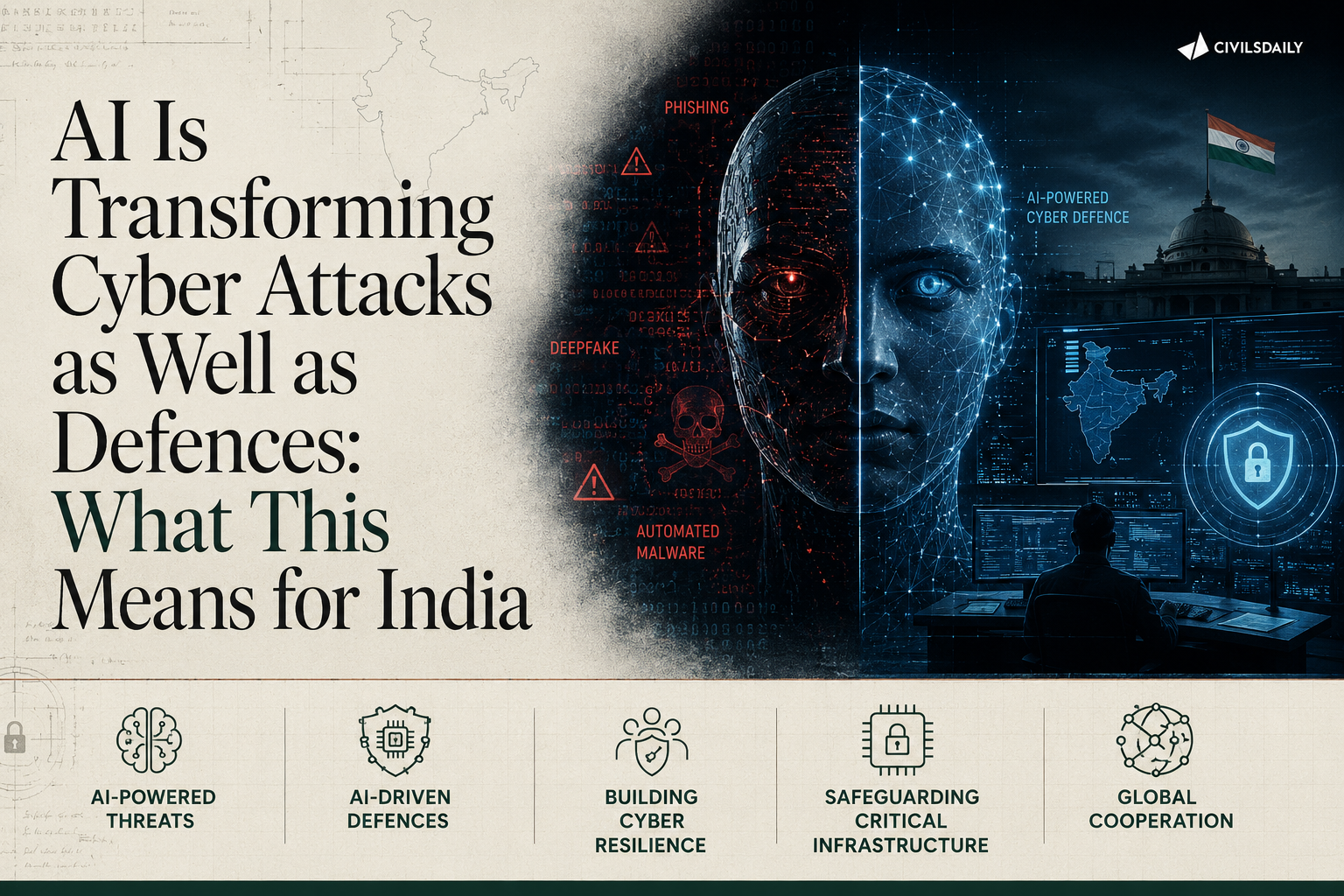
    AI-Enabled Deepfakes & Phishing- Eg- rise in “Deepfake Voice Cloning” used to authorize fraudulent bank transfers.

    Digital Espionage- Unauthorized exfiltration of sensitive personal or strategic data from state or corporate servers.

    State-Sponsored Advanced Persistent Threats (APTs)- Eg- Pakistan-linked actors used “Dance of the Hillary” malware to infiltrate DRDO systems during “Operation Sindoor”

    Cryptocurrency Heists – Eg- theft of $230 million from WazirX exchange

    Cyber-Slavery – Trafficking individuals to foreign “fraud factories” to operate transnational scam centers. Eg- “Cyber Slavery” hubs in Cambodia and Myanmar

    Cyber Stalking and Harassment – Eg- Women targeted through doxxing and revenge porn.

    Online Radicalisation – Eg- ISIS recruitment through social media.

    Man-in-the-Middle (MitM) Attacks- Intercepting and potentially altering communications between two parties without their knowledge. Eg- Pune businessman losing Rs 6.49 cr

    Measures to Strengthen Cyber Security in India

    Legal Measures

    Stringent implementation of the Digital Personal Data Protection Act to hold “Data Fiduciaries” (companies) accountable for breaches.

    Replacing the IT Act, 2000, with the proposed Digital India Act to address modern threats like Deepfakes, AI-driven extortion.

    Institutional Measures

    Expanding the Indian Cyber Crime Coordination Centre to serve as a 24/7 national “War Room” for real-time threat mitigation and interstate coordination.

    Strengthening the NCIIPC to secure “Critical Information Infrastructure” (CII) such as power grids, nuclear plants, and banking systems.

    Establishing dedicated cyber-police stations in every district, integrated with the National Cybercrime Reporting Portal (1930).

    Policy Measures

    Implementing the National Cyber Security Strategy focusing on Sovereign Cyber Defense and building a “Cyber-Resilient” ecosystem.

    Adhering to the CERT-In Cyber Security Audit Policy, which mandates annual third-party audits for all government and critical sector entities.

    Promoting the Golden Hour Protocol to report financial frauds within the first 2 hours.

    Technological Measures

    Zero-Trust Architecture (ZTA)- Transitioning from traditional perimeter security to a “Never Trust, Always Verify” model for all digital access requests.

    AI-Driven Threat Intelligence- Deploying machine learning algorithms for real-time detection of anomalies and Automated Incident Response (AIR).

    Promoting the “Atmanirbhar” development of indigenous operating systems and security software. Eg- Maya OS

    Global Measures

    Leveraging partnerships like the Quad Senior Cyber Group to share threat intelligence on state-sponsored APTs (Advanced Persistent Threats) in the Indo-Pacific.

    Collaborating with Interpol (Project Gateway) and FATF to track and dismantle the financial backbones of transnational “Cyber Slavery” hubs.

    Social Measures

    Digital Literacy (Cyber Shikshaa)- awareness campaigns like #CyberDost

    Capacity building of the judicial and police workforce through the CyTrain portal

    Cyber Hygiene- Eg- Multi-Factor Authentication (MFA) and use of the “Chakshu” portal for reporting suspicious communications.

    As cybercrimes move into the realm of “Grey Zone Warfare,” India’s cyber defense must be proactive rather than reactive.

  • For effective border area management, discuss the steps required to be taken to deny local support to militants and also suggest ways to manage favourable perception among locals

    Border Management involves securing a nation’s frontiers against unauthorized movement of people and goods while facilitating legitimate trade and commerce.

    Steps to Deny Local Support to Militants

    Neutralizing Overground Workers to prevent “3L” support to terrorists- Logistics, Location (shelter), and Liaison (intelligence)

    Strengthening the Multi-Agency Centre (MAC) to share real-time data between central and state forces to identify local sympathizers.

    Curbing Online Radicalization- Monitoring Telegram and social media pages used for indoctrination.

    Strict Enforcement of UAPA to create a high legal cost for aiding terrorists.

    Monitoring NGOs and Hawala channels that funnel foreign funds to border areas.

    Community Policing- Eg- Project Prahari in Assam.

    Counter-Propaganda- Using local radio and influencers to highlight the personal costs of supporting violence.

    Surrender & Rehabilitation Policy to mainstream misguided youth. Eg- 2024 Revised Surrender Policy in J&K.

    Ways to manage favourable perception among locals

    Army-led goodwill initiatives – Eg- Army Goodwill Schools under Operation Sadbhavana.

    Skill development, entrepreneurship push – Eg- Mission Youth and Himayat

    Social infrastructure development under Operation Sadbhavanaibrant Village program

    Connectivity initiatives for tourism promotion. Eg- Chenab Bridge, and running Vande Bharat trains

    De-radicalisation Centres – Counselling sessions for first-time offenders.

    Targeted Security Approach – Eg- Focus on OGWs and hybrid militants without mass crackdowns.

    Grassroots Democracy- Empowering PRIs to give locals a say in development.

    “Bharat Darshan” Tours- Sponsoring trips for border youth to major Indian cities to foster a sense of national integration.

    Building cooperation and trust ensures the population becomes the “First Line of Defence”

  • Analyze internal security threats and transborder crimes along Myanmar, Bangladesh and Pakistan borders including Line of Control (LoC). Also discuss the role played by various security forces in this regard

    With 15,106.7 km of land borders, the sanctity of India’s frontiers is the primary shield against unconventional “hybrid” warfare and transnational organized crime.

    Myanmar Border (1,643 km)

    Safe Havens for Insurgent Groups (IIGs)- Groups like ULFA-I and NSCN-K utilize “ungoverned spaces” in Myanmar to train and retreat.

    “Golden Triangle” Narcotics- Myanmar is a global hub for Methamphetamines. Eg- ED raids in Champhai (Mizoram) uncovering a network.

    Precursor Chemical Smuggling- Sending pseudoephedrine from India to Myanmar for drug production.

    Weapon Proliferation- Smuggling of sophisticated Western and Chinese arms from Myanmar’s black markets into Manipur.

    Bangladesh Border (4,096 km)

    Illegal Migration- Movement of undocumented individuals

    Illegal Cattle Smuggling (billion-dollar) – leads to border skirmishes.

    Bangladesh acts as a transit point for high-quality Fake Indian Currency Notes (FICN).

    Human Trafficking- A major route for trafficking women and children for forced labor.

    Radicalization Spillover- groups like Ansarullah Bangla Team (ABT) attempting to establish sleeper cells in West Bengal and Assam.

    Pakistan Border & LoC- The “Hybrid Warfare” Zone (3,323 km)

    Drone-Based Narco-Terrorism in Punjab through Golden Crescent

    Infiltration of “Hybrid” Terrorists- Eg- The April 2025 Pahalgam attack which killed 26 tourists.

    Loitering Munition Attacks to target military infrastructure dueing ‘Op Sindoor’

    Role of OGW – generate pro-terror content, circulate videos and organise protests to delegitimise the state.

    Role Played by Various Security Forces

    India follows the “One Border, One Force” principle to ensure specialized guarding.

    Indian Army (Line of Control & Siachen)

    Mandate- High-intensity combat and maintaining the sanctity of the LoC and LAC.

    Counter-Infiltration through Anti-Infiltration Obstacle System (AIOS) (a multi-layered fence equipped with sensors)

    Siachen Defense- Guards the world’s highest battlefield at heights above 20,000 feet.

    Border Security Force (BSF)

    Guards the International Borders (IB) with Pakistan and Bangladesh.

    Anti-Smuggling Operations- Intercepts narcotics, cattle, and arms smuggling.

    Implements the Comprehensive Integrated Border Management System (CIBMS).

    Anti-Drone Warfare- Operates specialized jammers and “hard-kill” interceptors

    Indo-Tibetan Border Police (ITBP)

    Guards the Indo-China Border (LAC) from Ladakh to Arunachal Pradesh.

    Acts as the first responder for avalanches and landslides in the Himalayan region.

    Assam Rifles (AR)

    Guards the Indo-Myanmar Border and conducts counter-insurgency operations in N-E.

    Responsible for implementing the 2024-25 scrapping of the Free Movement Regime (FMR) and biometric profiling of border-crossers.

    Sashastra Seema Bal (SSB)

    Guards the Nepal and Bhutan Borders.

    Acts as the Lead Intelligence Agency (LIA) to identify “Third-Country Nationals”

    Other Steps taken

    Multi-Agency Centre (MAC) for intelligence sharing

    Vibrant Villages Programme

    The integration of modern technology with civil-military cooperation is essential to create “Multi-layered Security Shield.”

  • What are the determinants of left-wing extremism in Eastern part of India? What strategy should Government of India, civil administration and security forces adopt to counter the threat in the affected areas?

    LWE refers to violent insurgency driven by Maoist or Naxalite ideologies, with an objective of overthrowing the government and establishing a communist society.

    Determinants of Left-Wing Extremism in Eastern India

    Maoist ideology of armed class struggle, anti-state revolution, and redistribution of resources appeals to sections alienated by inequality and exclusion. Eg- narrative of a “people’s war.”

    Land Displacement – Eg- Mining-induced displacement in Jharkhand’s coal belt (Ramgarh, Hazaribagh).

    Poor implementation of FRA, 2006, and PESA. Eg- Nearly 15% of forest and community land claims under the FRA are pending.

    Historical Socio-Economic Deprivation– Eg- LWE districts like Malkangiri, Sukma have some of the lowest HDI indicators.

    Unemployment & Lack of Livelihood Options- Eg- Jharkhand’s rural districts have among the highest youth unemployment in Eastern India.

    Governance Deficit – Eg- Large parts of Southern Bastar lacked road connectivity until recent years.

    Favourable Terrain – Eg- Dandakaranya region offers natural hideouts and logistical advantages for guerrilla warfare.

    Porous and forested borders between Chhattisgarh-Jharkhand-Odisha-Maharashtra allow safe movement and sanctuary for cadres.

    Ineffective Policing & Security Gaps – Poor training, lack of mobility, and limited intelligence in forest interiors.

    Parallel Governance – Maoists run jan adalats, levy taxes, provide quick dispute resolution-gaining perceived legitimacy in ungoverned spaces.

    Strategy to Counter LWE in Affected Regions

    Government of India

    Implement the “National Policy and Action Plan (2015)” in timely manner

    Accelerate Development – Road Requirement Plan (RRP-I), mobile towers, banking, health centres, PDS reforms in LWE belts.

    Strengthening PESA –

    real-time digital dashboards for fund utilization to Gram Sabhas

    “Bottom-Up” planning model – from “state imposition” to “participatory development”

    Economic development

    “Forest-to-Market” Value Chain development through Van Dhan Vikas Kendras (VDVKs)

    Promotion of Tribal-Start-up Ecosystem in food processing – Eg- export of products like Mahua and wild honey

    Civil Administration strategy

    “The only way to end insurgency is to win the hearts and minds of people through inclusive governance.” – Rajnath Singh

    Transparent and Participatory Mining & Resource Management- Eg- share of mineral royalties to local communities through the DMF Funds

    Technology for Governance – Use GIS mapping, drones, and e-governance platforms for service delivery and monitoring.

    Build Trust with Communities – Dialogue-based approach through “administration-public interface programmes”. Eg- Janta Darbars for grievance redressal

    Security Forces Strategy

    Strengthen Intelligence & Tech-Enabled Policing – Use of drones, satellite mapping, GPS-based tracking, communication intercept tools.

    Capacity building – Eg- fortified police stations, all-terrain vehicles for deep forest movement.

    Inter-State Coordination – Coordination between Chhattisgarh-Odisha-Jharkhand-Maharashtra in tri-junction zones.

    Community Policing – Initiatives like Jan Maitri, sports outreach, and anti-propaganda programmes.

    Progress anchored in justice and inclusion is the best antidote to extremism.

  • Analyse the complexity and intensity of terrorism, its causes, linkages and obnoxious nexus. Also, suggest measures required to be taken to eradicate the menace of terrorism

    As per Bruce Hoffman, “Terrorism is the deliberate creation and exploitation of fear through violence or the threat of violence in the pursuit of political change.”

    Complexity of Terrorism

    Absence of a universally accepted definition makes global consensus and coordination difficult.

    Multi-actor nature – Involves state-sponsored, non-state, proxy and lone-wolf actors

    Decentralised structure limits traceability. Eg- lone wolf attacks

    Transnational character – Funding, training, ideology and operations span across borders.

    Technological sophistication increases operational complexity. Eg- Use of encrypted communication, drones and digital finance.

    Intensity of Terrorism (Global Terrorism Index 2025)

    Over 8,000 terrorism-related deaths globally (2024)

    Islamic State (IS) expanded its operations to 22 countries

    Terrorist attacks jumped by 63% in the West

    India witnessed Pahalgam terrorist attack in 2025

    High psychological impact

    Causes of Terrorism

    Political Causes

    Political instability – Weak or exclusionary governance fuels extremism. Eg- in Syria

    Ideological radicalisation through identity and grievance politics. Eg- ISIS

    State repression – Eg- Militant recruitment in Kashmir exploiting allegations of rights abuses.

    Socio-Economic Causes

    Poverty and unemployment Create fertile ground for recruitment. Eg- in Palestine (Hamas)

    Inequality – Disparity between haves and have-nots fuels resentment.

    Regional underdevelopment and ‘Governance vaccum’- Eg- Insurgency in India’s Northeast

    Geopolitical Causes

    Proxy warfare and state sponsorship – Eg- Pakistan’s policy of bleeding India by thousand cuts

    Regional conflicts – Eg- Iran’s support “Axis of Resistance” including Lebanon’s Hezbollah, Yemen’s Houthis.

    Technological and Global Factors

    Online radicalisation – Eg- Use of Telegram and encrypted platforms by terror outfits.

    Ease of connectivity and funding – Eg- Hawala networks financing terror modules in India

    Linkages and Obnoxious Nexus

    Terrorism-Organised Crime Nexus – Eg- role of D-Company in 1993 Bombay blast

    Terrorism-Narco Nexus – Drug trade finances terror operations and insurgency.

    Terrorism-Religious Extremism Nexus for recruitment and legitimacy.

    Terrorism-Cyber Nexus – Use of social media and encrypted platforms for propaganda

    Terrorism-State and Non-State Actor Nexus. Eg- Pakistan’s support to LeT and JeM

    The zero tolerance against terrorism strategy needs 6-fold approach

    Robust counter-terror legal framework – Swift investigation, prosecution and conviction.

    Strengthening HUMINT (Human Intelligence) and TECHINT (Technological Intelligence).

    SMART Borders (Madhukar Gupta Committee)

    Raising cost of terrorism for Pakistan. Eg- Operation Sindoor

    Human-centric Counterinsurgency

    International Cooperation – Intelligence sharing, financial sanctions and diplomatic pressure on sponsors of terrorism. Eg- FATF Grey Listing

    Thus a holistic strategy is needed for ‘Terror free world’.

    Role of External State and Non-state Actors

  • Keeping in view India’s internal security, analyse the impact of cross-border cyber attacks. Also, discuss defensive measures against these sophisticated attacks.

    As per report of CloudSEK, India emerged as the second most targeted nation in terms of cyber attacks in 2024.

    Impact of Cross-Border Cyber Attacks

    Threat to Critical Information Infrastructure (CII) – Eg – attempts by the Pakistan-linked APT36 group to infiltrate India’s Northern Power Grid

    Economic Destabilization by attacks on financial gateways like UPI or BSE.

    Salami-Slicing of Intellectual Property (IP)- Eg- theft of IP from manufacturing and pharmaceutical sectors to weaken India’s “Make in India” competitive edge.

    State-Sponsored Advanced Persistent Threats (APTs)- Eg- Pakistan-linked actors used “Dance of the Hillary” malware to infiltrate DRDO systems during “Operation Sindoor”

    Compromise of National Defense & Military Intelligence- “Operation FlightNight” targeted Indian defense and energy sectors using malware disguised as an Indian Air Force invitation.

    Psychological Warfare- Eg- Following the Pahalgam attack, Pakistan-linked groups flooded social media with 2 lakh deepfakes and “forged” government documents to spread panic.

    Threat to privacy. Eg- Star Health Insurance breach leaking data of 31 million customers

    “Mass Defacement” – Simultaneously taking down hundreds of government websites to Undermine government authority

    Measures to Strengthen Cyber Security in India

    Legal Measures

    Stringent implementation of the Digital Personal Data Protection Act to hold “Data Fiduciaries” (companies) accountable for breaches.

    Empower the CBI to investigate cybercrime cases nationwide without needing general consent from state. (Parliamentary panel on home affairs)

    Replacing the IT Act, 2000, with the proposed Digital India Act to address modern threats like Deepfakes, AI-driven extortion.

    Institutional Measures

    Expanding the Indian Cyber Crime Coordination Centre to serve as a 24/7 national “War Room” for real-time threat mitigation and interstate coordination.

    Strengthening the NCIIPC to secure “Critical Information Infrastructure” (CII).

    Establishing dedicated cyber-police stations in every district, integrated with the National Cybercrime Reporting Portal (1930).

    Policy Measures

    Implementing the National Cyber Security Strategy focusing on Sovereign Cyber Defense and building a “Cyber-Resilient” ecosystem.

    Adhering to the CERT-In Cyber Security Audit Policy, which mandates annual third-party audits for all government and critical sector entities.

    Promoting the Golden Hour Protocol to report financial frauds within the first 2 hours.

    Technological Measures

    Zero-Trust Architecture (ZTA)- Transitioning from traditional perimeter security to a “Never Trust, Always Verify” model for all digital access requests.

    AI-Driven Threat Intelligence- Deploying machine learning algorithms for real-time detection of anomalies and Automated Incident Response (AIR).

    Promoting the “Atmanirbhar” development of indigenous operating systems and security software. Eg- Maya OS

    Global Measures

    Leveraging partnerships like the Quad Senior Cyber Group to share threat intelligence on state-sponsored APTs (Advanced Persistent Threats) in the Indo-Pacific.

    Collaborating with Interpol (Project Gateway) and FATF to track and dismantle the financial backbones of transnational “Cyber Slavery” hubs.

    Social Measures

    Digital Literacy (Cyber Shikshaa)- awareness campaigns like #CyberDost

    Capacity building of the judicial and police workforce through the CyTrain portal

    Cyber Hygiene- Eg- Multi-Factor Authentication (MFA) and use of the “Chakshu” portal for reporting suspicious communications.

    As cybercrimes move into the realm of “Grey Zone Warfare,” India’s cyber defense must be proactive rather than reactive.

  • Analyse the multidimensıonal challenges posed by external state and non-state actors, to the internal security of India. Also, discuss measures required to be taken to combat these threats

    Internal security can be defined as the management of security within the border of a country. It involves the maintenance of peace, law and order, upholding the sovereignty of the country and dealing with external state and non-state actors.

    Multidimensional Challenges Posed by External Actors

    Challenges from External State Actors

    Proxy Warfare by Pakistan to ‘Bleed India by thousand cuts’. Eg- Pakistan-backed LeT and JeM in Jammu & Kashmir.

    Border incursions by china. Eg- Galwan clash

    Cyber spionage targeting digital and critical systems. Eg- APT41 (China), targeted Indian telecom, power grids

    Strategic Encirclement under ‘string of pearls’. Eg- Chinese presence at Gwadar, Hambantota and Maldives.

    Disinformation Operations – Use of social media and digital platforms to spread fake news, incite communal unrest, and delegitimize democratic institutions.

    Hybrid Warfare – Eg- use of drones by Pakistan to challenge India’s air defenses during 2025 Operation Sindoor

    Illegal migration along porus border impacting demography in border states and leading to social unrest. Eg- Rohingya infiltration via Bangladesh

    Challenges from External Non-State Actors

    Terrorist Organisations – Violence to create fear and instability. Eg- Red Fort Bombings

    Organized Crime Syndicates – Terror-financing, arms & drug smuggling, extortion, money laundering etc. Eg- D-Company

    Left-Wing Extremists (Naxalites) – Guerrilla attacks on police and destruction of infrastructure. Eg- dantewada attack

    North-East Insurgent Groups – Ethnic militancy, drug and human trafficking along India-Myanmar border. Eg- NSCN (IM), ULFA

    Cyber Criminals – Data breaches, espionage, financial frauds, infrastructure sabotage etc. Eg- RedEcho group (China-linked)

    Foreign-Funded NGOs – Anti-development protests, exploitation of tribal/ethnic fault lines (loss of 2% of GDP – IB Report).

    Narco-Terrorism – Drug trade funding violence and terrorism. Eg- Heroin and arms smuggling via Punjab border.

    Measures required

    Policy measures

    Finalisation of National security doctrine

    Federal coordination through national internal security council

    Security and Intelligence Measures

    Strengthening HUMINT (Human Intelligence) and TECHINT (Technological Intelligence).

    SMART Borders (Madhukar Gupta Committee)

    Legal and Institutional Measures

    Robust Counter-Terror and AML Frameworks – Swift investigation, prosecution and conviction under UAPA and PMLA

    Cyber Security Capacity – Expansion of CERT-In, cyber commands and AI-based monitoring.

    Diplomatic Measures

    International Cooperation through intelligence sharing and financial sanctions. Eg- FATF Grey Listing

    Raising cost of terrorism for Pakistan. Eg- Operation Sindoor

    Social and developmental Measures

    De-radicalisation and Counselling of youth

    Heart and mind strategy – Eg- Operation Sadbhavana (Goodwill) of Indian Army

    Employment and Skill Development to mainstream youth. Eg- Udaan Scheme

    Technological Measures

    Use of AI, Big Data and Satellites – Predictive policing and early threat detection.

    As per Kautilya, security witthin borders is indispensible for achieving Yogakshema – security, welfare, and prosperity of citizens