💥Join UPSC 2027,2028 Mentorship (July Batch) + XFactor Notes & Microthemes PDF

Subject: Internal Security

  • Explained: BSF powers and jurisdiction

    The Ministry of Home Affairs (MHA) has extended the jurisdiction of the Border Security Force (BSF) up to 50 km inside the international borders in Punjab, West Bengal and Assam.

    Do you know?

    BSF currently stands as the world’s largest border guarding force. It has been termed as the First Line of Defence of Indian Territories.

    About Border Security Force (BSF)

    • The BSF is India’s border guarding organization on its border with Pakistan and Bangladesh.
    • It comes under the Ministry of Home Affairs.
    • It was raised in the wake of the 1965 War on 1 December 1965 for ensuring the security of the borders of India and for matters connected therewith.
    • The BSF has its own cadre of officers but its head, designated as a Director-General (DG), since its raising has been an officer from the Indian Police Service (IPS).

    What are the new modifications?

    • The MHA has exercised the powers under the Border Security Force Act of 1968.
    • It has thus outlined the area of BSF’s jurisdiction.
    • While the places marked here are within 50 km of the respective borders, this is not meant to represent the BSF’s jurisdiction.
    • At the same time, the Ministry has reduced BSF’s area of operation in Gujarat from 80 km from the border, to 50 km.

    Powers exercised by BSF in its jurisdiction

    BSFs jurisdiction has been extended only in respect of the powers it enjoys under:

    1. Criminal Procedure Code (CrPC)
    2. Passport (Entry into India) Act, 1920 and
    3. Passport Act, 1967

    Arrest and search

    • BSF currently has powers to arrest and search under these laws.
    • It also has powers to arrest, search and seize under the NDPS Act, Arms Act, Customs Act and certain other laws.

    Its powers under these will continue to be only up to 15 km inside the border in Punjab, Assam and West Bengal, and will remain as far as 80 km in Gujarat.

    Sanctions behind such powers

    • Scarcely populated borders: At that time, border areas were sparsely populated and there were hardly any police stations for miles.
    • Trans-border crimes: To prevent trans-border crimes, it was felt necessary that BSF is given powers to arrest.
    • Manpower crunch: While police stations have now come up near the border, they continue to be short-staffed.

    Various issues at Borders

    1. Encroachment
    2. Illegal incursion
    3. Drug and cattle smuggling

    Why has the government extended the jurisdiction?

    • The objective of the move is to bring in uniformity and also to increase operational efficiency. Earlier BSF had different jurisdictions in different states.
    • BSF often gets information relating to crime scenes that may be out of their jurisdiction.
    • The move was also necessitated due to increasing instances of drone-dropping of weapons and drugs.

    Impact on State Police jurisdiction


    • This move will complement the efforts of the local police. Thus, it is an enabling provision.
    • It’s not that the local police can’t act within the jurisdiction of the BSF.
    • The state police have better knowledge of the ground. Hence BSF and local Police can act in cooperation.

    Criticism of the move

    • At a basic level, the states can argue that law and order is a state subject and enhancing BSF’s jurisdiction infringes upon powers of the state government.
    • In 2012, then Gujarat CM and the present PM had opposed a central government moves to expand BSF’s jurisdiction.


    UPSC 2022 countdown has begun! Get your personal guidance plan now! (Click here)

  • The sanctions cloud over India-U.S. ties

    Context

    The delivery of the S-400 Triumf air defence systems from Russia is expected according to schedule. In response, U.S. Deputy Secretary of State Wendy Sherman hoped that both the U.S. and India could resolve the issue.

    Background of the CAATSA

    • The Countering America’s Adversaries through Sanctions Act (CAATSA) was passed when the U.S. sought to discourage trade in the defence and intelligence sectors of Russia.
    • The Act mandates the President to impose at least five of the 12 sanctions on persons engaged in a “significant transaction” with Russian defence and intelligence sectors.
    • These sanctions include suspending export licence, banning American equity/debt investments in entities, prohibiting loans from U.S. financial institutions and opposing loans from international finance institutions.
    • The Act also built in a safety valve in the form of a presidential waiver.
    • The “modified waiver authority” allows the President to waive sanctions in certain circumstances.
    • There are a few more provisions including one that allows for sanctions waivers for 180 days, provided the administration certifies that the country in question is scaling back its ties with Russia.

    Implications of CAATSA sanctions against India and scope for waiver

    • Impact on bilateral relationship: Sanctions have the tremendous potential of pulling down the upward trajectory of the bilateral relationship between the U.S. and India, which now spans 50 sectors, especially in the field of defence.
    • India turned sullen over the manner in which the U.S. negotiated the exit deal with the Taliban.
    • Quad engagement: Yet, on the strategic plane, India remained on course by agreeing to the upgrading of the Quadrilateral Security Dialogue and sharing the same vision as the U.S. on the Indo-Pacific construct.
    • The U.S.’s apprehension is that bringing India under a sanctions regime could push New Delhi towards its traditional military hardware supplier, Russia.
    • The U.S. Sanctions can stir up the latent belief in India that Washington cannot be relied upon as a partner.
    • While the administration will have to do the heavy lifting, the role of Indian-Americans should be significant just as they rallied around to support the Civil Nuclear Deal in the face of stiff resistance from Democrats opposed to nuclear proliferation.
    • Decrease in imports from Russia: India’s import of arms decreased by 33% between 2011-15 and 2016-20 and Russia was the most affected supplier, according to a report by the Stockholm-based defence think-tank SIPRI.
    • In recent years, though, there have been some big deals worth $15 billion including S400, Ka-226-T utility helicopters, BrahMos missiles and production of AK-203 assault rifles.
    • Increase in defence import from US: On the other hand, over the past decade, government-to-government deals with the U.S. touched $20 billion and deals worth nearly $10 billion are under negotiation.

    Conclusion

    The CAATSA test will determine the course of the India-U.S. strategic partnership. Whether the Biden administration sail through opposition within his party remains to be seen.

    UPSC 2022 countdown has begun! Get your personal guidance plan now! (Click here)

  • Challenges facing Indian Air Force

    Context

    A host of challenges greets India’s new Air Chief.

    Challenges

    • The challenges include the rewiring of India’s military into new theatre commands, the reservations expressed by the IAF about its “support” role and the visible depletion in operational air assets due to obsolescence and lack of new platforms.
    • The decline in platforms is stark and from a strength of 42 combat squadrons in 2002, the IAF now operates barely 30.
    • This shortfall in numbers would remain through this decade.
    • Even as there are plans to create new theatre commands and allocate existing air assets to the new formations, the depletion in numbers merits urgent review.

    Steps taken

    • The purchase of 83 Tejas Light Combat Aircraft (LCA) will be a fillip even as the sturdy MIGs are finally phased out.
    • In the next decade, the IAF hopes to induct the indigenous fifth-generation Advanced Medium Combat Aircraft (AMCA) and the Multi-Role Fighter Aircraft (MRFA) — a new platform that would be built in India with a foreign entity, the “original equipment manufacturer” (OEM), and thereby move up to 35 squadrons.
    • Issues: The AMCA is “under design” and India’s track record in the design and manufacture of indigenous fighter aircraft is cost- and time-intensive.
    • As regards the MRFA, the request for information for 114 jets has just been issued.
    • The Rafale experience and the long delays associated with it would suggest that speedy selection of an OEM will be elusive.

    Way forward

    • Air power is becoming technologically more refined with unmanned platforms, cyber-space linkages and AI advances.
    • The inherent trans-border nature of this military capability needs astute professional and political husbanding.
    • Acquiring credible aerospace power with a meaningful degree of indigenisation will need a greater degree of national resolve, professional integrity and resource allocation than is the case now.
    • China has demonstrated the degree of suasion and intimidation that airpower can bring to bear in relation to Taiwan.

    Conclusion

    A reality check about the quantity and quality of India’s air power and the roles it can undertake should precede its disaggregation to theatre commands in the run-up to India@75.

    UPSC 2022 countdown has begun! Get your personal guidance plan now! (Click here)

  • DRDO tests Akash Prime Missile

    The Defence Research and Development Organisation (DRDO) has successfully tested a new version of Akash Surface to Air missile Akash Prime from the Integrated Test Range at Chandipur, Odisha.

    About Akash Missile System

    • Akash is a medium-range mobile surface-to-air missile (SAM) system.
    • It is developed by the Defence Research and Development Organisation (DRDO) and produced by Bharat Dynamics Limited (BDL).
    • It can target aircraft up to 50–80 km away, at altitudes up to 18,000 m.
    • It has the capability to neutralise aerial targets like fighter jets, cruise missiles and air-to-surface missiles as well as ballistic missiles.
    • It is in operational service with the Indian Army and the Indian Air Force.

    Upgrade in Akash Prime

    • In comparison to the existing Akash System, Akash Prime is equipped with an indigenous active Radio Frequency (RF) seeker for improved accuracy.
    • Other improvements also ensure more reliable performance under low temperature environment at higher altitudes.


    UPSC 2022 countdown has begun! Get your personal guidance plan now! (Click here)

  • National Intelligence Grid (NATGRID)

    The PM is soon expected to launch the National Intelligence Grid or NATGRID that aims to provide cutting-edge technology to enhance India’s counter-terror capabilities.

    What is NATGRID?

    • NATGRID is an intelligence sharing network that collates data from the standalone databases of the various agencies and ministries of the Indian government.
    • It is a counter terrorism measure that collects and collates a host of information from government databases including tax and bank account details, credit/debit card transactions, visa and immigration records and itineraries of rail and air travel.
    • It will also have access to the Crime and Criminal Tracking Network and Systems, a database that links crime information, including First Information Reports, across 14,000 police stations in India.
    • As of 2019, NATGRID is headed by an Indian Police Service (IPS) officer Ashish Gupta.

    Its establishment

    • The 26/11 terrorist siege in Mumbai back in 2008 exposed the deficiency that security agencies had no mechanism to look for vital information on a real-time basis.

    Access to NATGRID

    • Prominent federal agencies of the country have been authorized to access the NATGRID database.
    • They are the:
    1. Central Bureau of Investigation
    2. Directorate of Revenue Intelligence,
    3. Enforcement Directorate
    4. Central Board of Indirect Taxes and Customs
    5. Central Board of Direct Taxes (for the Income Tax Department)
    6. Cabinet Secretariat
    7. Intelligence Bureau
    8. Directorate General of GST Intelligence
    9. Narcotics Control Bureau
    10. Financial Intelligence Unit, and
    11. National Investigation Agency

    Future prospects

    • According to the first phase plan, 10 user agencies and 21 service providers will be connected with the NATGRID, while in later phases, about 950 additional organizations will be brought on board.
    • In the following years, more than 1,000 organizations will be further integrated into the NATGRID.
    • These data sources include records related to immigration entry and exit, banking and financial transactions, and telecommunications.

    UPSC 2022 countdown has begun! Get your personal guidance plan now! (Click here)

  • The national security discourse is changing

    Context

    From a rising China to the pressures of climate change; from the challenges of counter-terrorism to the COVID-19 pandemic (the four Cs), the old order is collapsing much faster than the ability of nations to create the foundations of a new one.

    The reduced difference between the domestic and foreign policy of the  U.S.

    • The idea that foreign and domestic policies are tightly intertwined is not a novel one.
    • All serious grand strategic thinking in democracies looks for sustenance in popular public support.
    • A process that was started by former U.S. President Donald Trump has been taken forward by the Biden Administration.
    • Asserting that “foreign policy is domestic policy and domestic policy is foreign policy,” the new administration has suggested that their task is to re-imagine American national security for the unprecedented combination of crises they face at home and abroad.
    • These crises include the pandemic, the economic crisis, the climate crisis, technological disruption, threats to democracy, racial injustice, and inequality in all forms”.
    • There is a growing bipartisan acknowledgment in the U.S. today that the requirements of American national security today are different from what they were during the Cold War.
    • Today’s strategic environment requires a different response for national security: one that shores up domestic industrial base helps in maintaining pre-eminence in critical technologies, makes supply chains for critical goods more resilient, protects critical infrastructure from cyberattacks and responds with a sense of urgency to climate change.

    Indian situation: Dependence on the external supply chain is the national security challenge

    • In India too, there is greater recognition of the challenges emanating on national security from domestic vulnerabilities.
    • Dependence on Chinese manufacturing: One of the most significant consequences of the COVID-19 pandemic has been to reveal how deeply India has been dependent on Chinese manufacturing for critical supplies.
    • At a time when Indian armed forces were facing the People’s Liberation Army, this exposed India to a new realization that dependence on overseas supply chains is a national security challenge of the highest order.
    • Dimensions of national security: The Indian Army chief has argued that “national security comprises not only warfare and defence but also financial security, health security, food security, energy security, and environmental security apart from information security”.

    Way forward for India

    • Shore up domestic capacities: India has since moved towards increasing domestic capacities in critical areas and also started looking at free trade agreements through a new lens.
    • Whole-of-government approach: Army Chief had suggested that instead of viewing national security “primarily from the perspective of an armed conflict, there is a need to take a whole-of-government approach towards security”.
    • Investment in armed forces: The Army chief has pointed out that investment in the armed forces contributes to the national economy.
    • Therefore, indigenization of defence procurement provides an impetus to indigenous industries, aid to civil authorities, or Humanitarian Assistance and Disaster Relief (HADR).
    • Demand for hi-tech military products by the armed forces helps entire industries.
    • Transportation and logistics capacities of the armed forces are acting as force enablers for the Government in times of emergencies.

    Consider the question “The idea that foreign and domestic policies are tightly intertwined is not a novel one. In light of this, examine the challenges facing India’s national security that are linked with its domestic vulnerability. Suggest the ways forward.”

    Conclusion

    As nations across the world reconceptualise their strategic priorities, policymakers will need to think more creatively about the roles of various instruments of statecraft. National security thinking is undergoing a shift. India cannot be left behind.

    UPSC 2022 countdown has begun! Get your personal guidance plan now! (Click here)

  • Needed: A tribunal for CAPF

    Context

    There have been numerous cases of Central Reserve Police Force (CRPF) officers overstaying leave. The Ministry of Home Affairs (MHA) to issue orders to the CRPF headquarters to “include the provisions of Security Force Court (SFC), for initiating disciplinary action against the delinquent officers.

    Departmental enquiries Vs SFC

    • The SFC is a purely judicial process where the guilt must be proved beyond reasonable doubt and the charged official is at liberty to engage a legal practitioner to defend him.
    • Departmental enquiry is a quasi-judicial proceeding where the mere element of the preponderance of probability is enough to determine guilt.
    • Though the Central Reserve Police Force Act of 1949 provides for conducting judicial trial by a Commandant in his capacity as a Magistrate, seldom is it exercised as it gets into the realm of the judicial process.
    • Hence, the conduct of a departmental enquiry is the better option.

    What leads to delay in departmental enquiries against gazetted officers?

    • CRPF rules lay down the procedure for the conduct of departmental enquiries against non-gazetted ranks, and in normal circumstances, the departmental enquiries are completed within three to six months.
    • But when gazetted officers are charge-sheeted, the time taken to order the enquiries is longer.
    • Delay due to getting the views of other institutions: In the case of a gazetted officer, the other institutions like the Union Public Service Commission, the Central Vigilance Commission, the Department of Personnel and Training, and the MHA are also roped in for their views and legal opinion.
    • Dealy due to postponement: When the delinquent officers appear before the inquiring authority presence of the presenting officer and the defence assistant of the charged official is also required.
    • Even if one of them fails to appear for the hearing, the conduct of enquiry must be postponed.
    • Procedural delay: Often, the enquiry is conducted ex parte (without the presence of the charged official), so the recorded statements and other documents must be sent to the charged official.
    • Quite often, delays occur in providing certain prosecution documents to the charged official who may demand them for preparing his own defence.
    • Postal delays further aggravate the matter.
    • Since most officers are busy with operational matters, which gain priority over everything else.

    Way forward

    • Appoint retired officers as inquiring authorities: The solution lies in appointing retired officers as inquiring authorities, who can afford to devote their time to the conduct of enquiries as is being done in most departments of the government.
    • Tribunal for CAPF: With increasing cases being filed in the High Courts across the country in service matters, it is high time the government considered the setting up of tribunals for the CAPFs on the lines of the Armed Forces Tribunal for defence services.
    • Retired officers of the rank of Inspectors General and Additional Directors General from the CAPFs could be part of these tribunals along with retired judges of High Courts.

    Conclusion

    Taking the steps suggested here would ensure the speedy delivery of justice and reduce the burden of the High Courts.

    UPSC 2022 countdown has begun! Get your personal guidance plan now! (Click here)

  • Exercise ZAPAD 2021

    A contingent of 200 Army personnel will participate in the multinational Exercise ZAPAD 2021 being held at Nizhniy, Russia.

    ZAPAD 2021

    • ZAPAD is one of the theatre-level exercises of Russian armed forces and will focus primarily on operations against terrorists.
    • The NAGA Battalion group participating in the exercise will feature an all arms combined task force.
    • The exercise aims to enhance military and strategic ties amongst the participating nations while they plan and execute this exercise.
    • In all, 17 countries have been invited by Russia for the exercise. Of these nine are Participating countries which include Mongolia, Armenia, Kazakhstan, Tajikistan, Kyrgyzstan, Serbia, Russia, India, and Belarus.
    • The other eight countries are Observers which include Pakistan, China, Vietnam, Malaysia, Bangladesh, Myanmar, Uzbekistan, and Sri Lanka.

    UPSC 2022 countdown has begun! Get your personal guidance plan now! (Click here)

    Must read:

    [Prelims Spotlight] Various Defence Exercises in News

  • [pib] Exercise Malabar

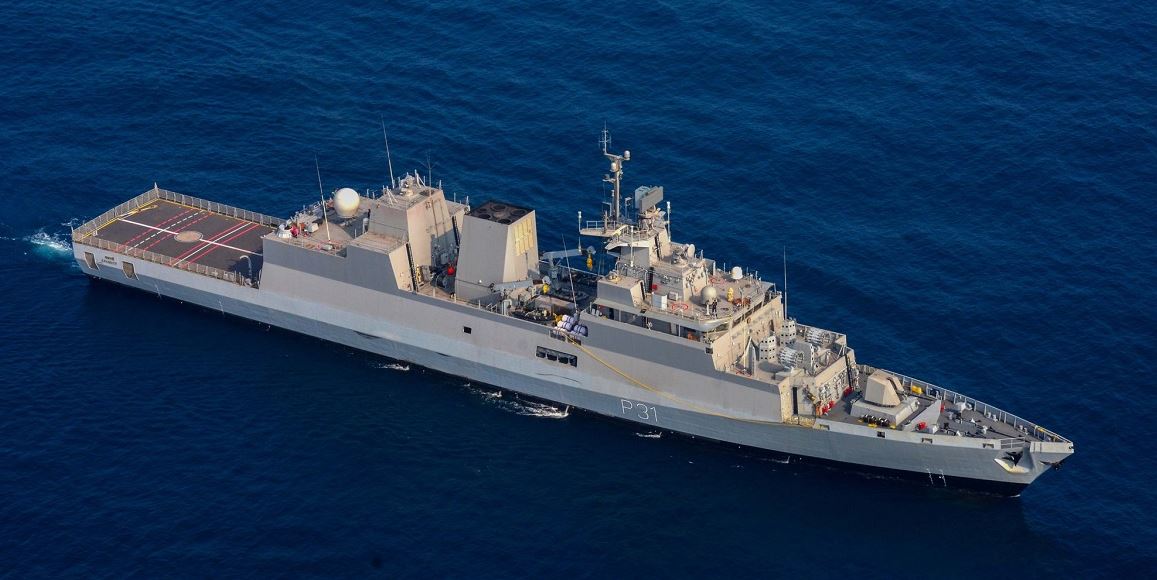
    Indian Naval Ships Shivalik and Kadmatt have arrived at Guam, an Island Territory of the USA to participate in the annual Exercise MALABAR-21.

    Also read:

    [Prelims Spotlight] Various Defence Exercises in News

    Ex Malabar

    • MALABAR series of maritime exercises commenced in 1992 as a bilateral IN-USN exercise and has grown in stature over the years to include four prominent navies in the Pacific and Indian Ocean Region.
    • It is carried out between navies of Australia, India, Japan, and the USA
    • The exercise provides an opportunity for common-minded navies to enhance inter-operability, gain from best practices and develop a common understanding of procedures for Maritime Security Operations.

    Significance

    • The exercise will see the participation of all four Quad countries.
    • Indian Navy also conducted a number of Passage Exercises (PASSEX) with navies from Japan, Australia and the US.

    Another Exercise in news: Ex Konkan 2021

    • Exercise Konkan 2021 was held between INS Tabar and HMS Westminster on 16 Aug 21 in the English Channel.

    UPSC 2022 countdown has begun! Get your personal guidance plan now! (Click here)


    Back2Basics: Quad Security Dialogue

    • QSD is a strategic dialogue between the United States, Japan, Australia and India that is maintained by talks between member countries.
    • The dialogue is paralleled by joint military exercises of an unprecedented scale, titled Exercise Malabar.
    • Quad is widely viewed as a response to increased Chinese economic and military power.
  • India’s leadership in the debate on maritime security

    Context

    Indian PM recently addressed  the UNSC High-Level Open Debate on “Enhancing Maritime Security: A Case For International Cooperation”, convened by India.

    Highlights of the UNSC debate on Maritime Security

    • India’s leadership: As President of the UN Security Council for the month of August, India’s leadership in the debate on maritime security has strengthened its credentials as a key stakeholder in the maritime commons.
    • Ocean as a common heritage: Prime Minister Modi described the oceans as a common heritage for humankind and a lifeline for the future of the planet.
    • Culture, history, geography: In enunciating five principles, Mr. Modi linked free and open trade to India’s civilisational ethos.
    • He outlined a far-sighted vision rooted in India’s culture, history and geography.
    • SAGAR: The relevance of SAGAR (Security And Growth For All In The Region) was also reiterated.
    • Need for a common framework: The global community needs to develop a common framework to deal with contemporary challenges, including maritime disputes and natural disasters.

    Importance of high seas

    • Ninety per cent of global trade is conducted on the high seas, for the simple reason that it continues to be the most cost-effective mode of transport.
    • Spread of prosperity: Freedom of navigation and unimpeded commerce are key to the spread of prosperity. 
    • Critical supply chains depend on the concept of mare liberum (open seas).

    Suggestions and role of India

    1) Maritime dispute settlement  based on international law

    • The Prime Minister advocated the peaceful settlement of maritime disputes on the basis of international law.
    • The importance of the United Nations Convention on the Law of the Sea as the legal framework governing all maritime activity needs to be emphasised.
    • India’s acceptance of the award by the Permanent Court of Arbitration in 2014 paved the way for India and Bangladesh to put aside their maritime dispute and forge even closer ties.
    • In 2016, China summarily rejected the Permanent Court of Arbitration ruling in favour of the Philippines.
    • The neo-colonial concept of mare clausum (closed seas) in the South China Sea is anathema to the future of the global economy.

    2) Deling with natural disasters and maritime threats

    • Natural disasters and maritime threats posed by non-state actors have grown exponentially.
    • The global community needs to rally together to deal effectively with the ravages of cyclones, tsunami and maritime pollution.
    • First responder: India’s role as ‘first responder’ in the Indian Ocean, whether in thwarting piracy or providing relief after the Boxing Day tsunami in 2004, is well-documented.
    • The Indian Coast Guard’s operational reach and capability has vastly improved in dealing with environmental hazards and piracy.
    • White shipping agreements: India now has white shipping agreements with several countries.
    • Cooperation: The Indian Navy’s state-of-the-art Information Fusion Centre-Indian Ocean Region (IFC-IOR) based in Gurugram hosts officers from the United States, Japan, France, Australia and the United Kingdom.
    • Training:The Indian Navy regularly offers a large number of training slots to friendly countries.

    3) Environmental concerns

    • The oceans remain our lifeline.
    • Yet, they have been overwhelmed by plastic waste which chokes all forms of marine life.

    4) Connectivity and infrastructure

    • Connectivity: The development of connectivity and infrastructure are also a major priority.
    • There are heightened concerns today over China’s Belt and Road Initiative (BRI).
    • Openness and transparency India stands for openness and transparency in the execution of projects, based on local priorities, with in-built fiscal viability and environmental sustainability.
    • Blue Dot Network: The U.S., Japan and Australia are also promoting better standards for global infrastructure through the Blue Dot Network.

    Conclusion

    India’s natural interests stretch across both the Indian and Pacific Oceans as reflected in its inclusive Indo-Pacific vision. No doubt, India’s initiative will further the prospects for a stable and enduring maritime environment.

    UPSC 2022 countdown has begun! Get your personal guidance plan now!