💥Join UPSC 2027,2028 Mentorship (August Batch) + XFactor Notes & Microthemes PDF

Subject: Space Technology

  • Uncontrolled Descent of Space Debris

    A Chinese booster rocket made an uncontrolled return to earth, leading to US furore against Beijing for not sharing information about the potentially hazardous object’s descent.

    Yet another Chinese irresponsibility

    • Ending over a week of global anxiety and alarm, the debris from a large Chinese rocket – the Long March 5B — crashed to earth over the Pacific and the Indian oceans.
    • It felt into the Sulu Sea near Malaysia.
    • The 22-tonne core stage of the rocket hurtled uncontrollably back to earth. There were fears that it might hit a populated area.
    • China, however, had dismissed these fears despite widespread criticism for rocket re-entry risks imposed by it on the world.

    What is an Uncontrolled Re-entry?

    • Generally, the core or first stage of a rocket is made up of heavy pieces that usually don’t reach orbit after liftoff, and fall back safely along a near-precise projected trajectory.
    • If they do enter an orbit, then a costly de-orbit manoeuvre is required for a steered, controlled return using engine burn.
    • Without a de-orbit manoeuvre, the orbital core stage makes an uncontrolled fall.

    Why did it fell back?

    • Gigantic remnants from China’s Long March 5B rockets’ core stage are known to make such fiery, out-of-control descents back to earth.
    • Most nations’ rockets, separate the launcher from the payload before leaving the atmosphere.
    • An extra engine then gives the payload a final boost.
    • But China’s 5B series does NOT use a second engine and pushes right into orbit, the report points out.

    Why is it difficult to track uncontrolled descents?

    • The variables involved make it difficult to precisely track the re-entry time and drop zone of rocket debris in uncontrolled descents.
    • The factors that make this prediction extremely challenging include atmospheric drag, variations in solar activity, angle and rotational variation of the object among others.
    • A miscalculation of even a minute in re-entry time could result in the final resting place of the debris changing by hundreds of kilometres.
    • It’s important to understand that among the 10 tough things that we do in space, debris re-entry is probably one of the toughest ones to predict.

    Are there laws regulating space junk?

    Yes. The Space Liability Convention of 1972.

    • It defines responsibility in case a space object causes harm.
    • The treaty says that a launching State shall be absolutely liable to pay compensation for damage caused by its space objects on the surface of the earth or to aircraft, and liable for damage due to its faults in space.
    • The Convention also provides for procedures for the settlement of claims for damages.
    • However, there is no law against space junk crashing back to earth.
    • In April this year, suspected debris from a Chinese rocket was found in two Maharashtra villages.

    Cases of settlements

    • In 1979, the re-entry of NASA’s 76-ton Skylab had scattered debris over uninhabited parts of Australia, and the space agency was fined $400 for littering by a local government.
    • The only settlement using the Liability Convention was between the erstwhile Soviet Union and Canada over the debris of Soviet Cosmos 954 falling in a barren region.
    • Canada was paid CAD 3 million in accordance with international law for cleaning up the mess.

    Do you know?

    The 1979 Skylab was rumoured to be falling in India. We may ask our parents who were apparently kids at that time. The event was widely perceived as a Pralay (doomsday) in rural India back then! People were in all joy with festive food/partying every day fearing so that they would never see the next dawn!!

  • Russia to leave International Space Station (ISS)

    Russia will pull out of the International Space Station (ISS) after 2024 and focus on building its own orbiting outpost.

    Why in news?

    • Russia will end a symbolic two-decade orbital partnership between Moscow and the west.

    International Space Station (ISS)

    • The ISS was launched in 1998 as part of joint efforts by the U.S., Russia, Japan, Canada and Europe.
    • The idea of a space station originated in the 1984 State of the Union address by former U.S. President Ronald Reagan.
    • The space station was assembled over many years, and it operates in low-earth orbit.
    • Since its inception, it has served as a laboratory suspended in space and has aided multiple scientific and technological developments.
    • The ISS was originally built to operate for 15 years.

    Why was ISS launched?

    • A space station permits quantum leaps in research in science, communications, and in metals and lifesaving medicines which could be manufactured only in space.
    • ISS has consistently maintained human presence for the past 21 years, providing astronauts with sophisticated technologies for scientific research.

    What is Russia’s role in maintaining the ISS?

    • The ISS is built with the cooperation of scientists from five international space agencies — NASA of the U.S., Roscosmos of Russia, JAXA of Japan, Canadian Space Agency and the European Space Agency.
    • Each agency has a role to play and a share in the upkeep of the ISS.
    • Both in terms of expense and effort, it is not a feat that a single country can support.
    • Russia’s part in the collaboration is the module responsible for making course corrections to the orbit of the ISS.
    • They also ferry astronauts to the ISS from the Earth and back.
    • Until SpaceX’s dragon spacecraft came into the picture the Russian spacecraft was the only way of reaching the ISS and returning.


    UPSC 2023 countdown has begun! Get your personal guidance plan now! (Click here)

  • Private Sector Boost in India’s Space Industry

    Principal Scientific Adviser stated earlier this month that the government would soon come up with a new space policy that could initiate the rise of India’s own “SpaceX-like Ventures”.

    Prospects of the proposed Space Policy

    • The final version of the policy would soon be referred to the Empowered Technology Group for further examination.
    • The proposed move would increase private sector participation in the industry.
    • The policy document recognizes that India has not tapped into its complete potential in space sector.

    Why is development in the space sector important?

    Ans. Address wide range of problems

    (1) Climate Change

    • Satellites provide more accurate information on weather forecasts and assess (and record) long-term trends in the climate and habitability of a region.
    • By monitoring the long-term impact of climate change at regional, territorial, and national scales, governments would be able to devise more pragmatic and combative plans of action for farmers and dependent industries.
    • Additionally, they can also serve as real-time monitoring and early-warning solutions against natural disasters such as earthquakes, tsunamis, floods, wildfires, mining etc.
    • Real-time tracking can also serve multiple purposes in defence.

    (2)  Connectivity

    • In this light, it must be noted that satellite communications, which are used to facilitate telecommunication services, are among the major categories for investment in the space technology sector.
    • Satellite communication can reach more remote areas where conventional networks would require a heavy complimenting infrastructure.
    • Additionally, as to reliability, the World Economic Forum had stated that satellite communication can help connect 49% of the world’s unconnected population.
    • Other prominent categories include spacecraft and equipment manufacturing.
    • What essentially needs to be remembered is that the strategic space avenue is an integration of the aerospace, IT hardware and telecom sectors.

    Where does India stand in the global space market?

    • As per SpaceTech Analytics, India is the sixth-largest player in the industry internationally having 3.6% of the world’s space-tech companies (as of 2021).
    • US holds the leader’s spot housing 56.4% of all companies in the space-tech ecosystem.
    • Other major players include UK (6.5%), Canada (5.3%), China (4.7%) and Germany (4.1%).
    • The Indian Space Industry was valued at $7 billion in 2019 and aspires to grow to $50 billion by 2024.

    Why does India matter in the global space-tech market?

    • The country’s standout feature is its cost-effectiveness.
    • India holds the distinction of being the first country to have reached the Mars’ orbit in its first attempt and at $75 million — way cheaper than Western standards.

    Future prospects of India’s private ‘Space’

    Ans. India may lead in space junk management

    • Almost 60-odd start-ups had registered with the Indian Space Research Organisation (ISRO) this year.
    • A majority of them were dealing in projects related to space debris management.
    • As space becomes more congested with satellites, the technology would thus help in managing ‘space junk’ (debris of old spacecraft and satellites).

    Where does India lack?

    Ans. Undisputedly, it is the finances

    • The US and Canada were the highest receivers of space-related investment in 2021.
    • The US’s space budget was $41 billion in 2021, $23.3 billion of which was focused on NASA.
    • India’s total budgetary allocation for FY2022-23 towards the Department of Space was ₹13,700 crore ($172 million).
    • Further, as per Tracxn data, funding into the sector’s start-ups (in India) nearly tripled to $67.2 million on a year-over-year basis in 2021.

    How is the private sector’s involvement regulated in India?

    • In June 2020, the Union government announced reforms in the space sector enabling more private players to provide end-to-end services.
    • The central idea was to bring forth a predictable policy and regulatory environment for them and additionally provide access to ISRO facilities and assets to improve their capacities.

    (1) Establishment of IN-SPACe

    • An announcement for the establishment of the Indian National Space Promotion and Authorisation Centre (IN-SPACe) was made.
    • It was mandated the task of promoting, authorising and licensing private players to carry out space activities.
    • As an oversight and regulatory body, it is responsible for devising mechanisms to offer sharing of technology, expertise, and facilities free of cost to promote non-government private entities (NGPEs).
    • IN-SPACe’s Monitoring and Promotion Directorate oversees NGPE’s activities as per prescribed regulations and reports back in case any corrective actions or resolutions are required.
    • ISRO shares its expertise in matters pertaining to quality and reliability protocols, documentation, and testing procedure through IN-SPACe’s ‘interface mechanism’.

    (2) Establishment of NSIL

    • Additionally, constituted in March 2019, New Space India Ltd (NSIL), is mandated to transfer the matured technologies developed by the ISRO to Indian industries.
    • All of them are under the purview of the Ministry of Defence.
    • Private sector’s involvement in the long term, as with other commercial sectors, is believed to help spur investment and expertise in the realm which is capital-intensive and demands high technology.


    UPSC 2023 countdown has begun! Get your personal guidance plan now! (Click here)

  • What are Fast Radio Bursts (FRB)?

    A strange radio signal (called Fast Radio Bursts) has been detected in a galaxy several billion light-years from Earth, a recent study claimed.

    What is an FRB?

    • The first FRB was discovered in 2007, since when scientists have been working towards finding the source of their origin.
    • Essentially, FRBs are bright bursts of radio waves (radio waves can be produced by astronomical objects with changing magnetic fields).
    • Its durations lie in the millisecond scale, because of which it is difficult to detect them and determine their position in the sky.

    Who discovered it?

    • The X-ray portion of the simultaneous bursts was detected by several satellites, including NASA’s Wind mission.
    • Further, a NASA-funded project called Survey for Transient Astronomical Radio Emission 2 (STARE2) also detected the radio burst.

    Why are they significant?

    • First noticed in 2018 by the Canadian observatory the waves have created ripples across the globe for one reason — they arrive in a pattern.
    • This gave birth to theories that they could be from an alien civilization.
    • Initially, it was believed that the collision of black holes or neutron stars triggers them.
    • But the discovery of repeating FRBs debunked the theory of colliding objects.


    UPSC 2023 countdown has begun! Get your personal guidance plan now! (Click here)

  • James Webb Space Telescope

    NASA has unveiled images from the James Webb Space Telescope, the largest and most powerful orbital observatory ever launched.

    What is the image about?

    • NASA released a deep field photo of a distant galaxy cluster, SMACS 0723, revealing the most detailed glimpse of the early universe recorded to date.
    • The collection also included fresh images of another galaxy cluster known as Stephan’s Quintet, first discovered in 1877.

    James Webb Space Telescope

    • JWST is a joint NASA–ESA–CSA space telescope that is planned to succeed the Hubble Space Telescope as NASA’s flagship astrophysics mission
    • It is the most powerful space telescope ever built.
    • It will enable a broad range of investigations across the fields of astronomy and cosmology, including observing some of the most distant events and objects in the universe,
    • It would help understand events such as the formation of the first galaxies, and detailed atmospheric characterization of potentially habitable exoplanets.

    Its significance

    • Some have called JSWT the “telescope that ate astronomy.”
    • It is said to look back in time to the Dark Ages of the universe.

    What does the ‘Dark Ages’ of the universe mean?

    • Evidence shows that the universe started with an event called the Big Bang 13.8 billion years ago, which left it in an ultra-hot, ultra-dense state.
    • The universe immediately began expanding and cooling after the Big Bang.
    • One second after the Big Bang, the universe was a hundred trillion miles across with an average temperature of an incredible 18 billion F (10 billion C).
    • Around 400,000 years after the Big Bang, the universe was 10 million light-years across and the temperature had cooled to 5,500 F (3,000 C).
    • Throughout this time, space was filled with a smooth soup of high-energy particles, radiation, hydrogen and helium.
    • There was no structure. As the expanding universe became bigger and colder, the soup thinned out and everything faded to black.

    This was the start of what astronomers call the Dark Ages of the universe.

    How will JWST study this?

    Ans. Looking for the first light

    • The Dark Ages ended when gravity formed the first stars and galaxies that eventually began to emit the first light.
    • Astronomers aim to study this fascinating and important era of the universe, but detecting first light is incredibly challenging.
    • Compared to massive, bright galaxies of today, the first objects were very small and due to the constant expansion of the universe, they’re now tens of billions of light years away from Earth.
    • Also, the earliest stars were surrounded by gas left over from their formation and this gas acted like fog that absorbed most of the light.
    • It took several hundred million years for radiation to blast away the fog. This early light is very faint by the time it gets to Earth.


    UPSC 2023 countdown has begun! Get your personal guidance plan now! (Click here)

  • Outer Space

    Recently, the UK hosted the fourth summit for Space Sustainability in London in collaboration with the Secure World Foundation.

    What does Sustainability in Outer Space mean?

    • One of the hot issues when it comes to space sustainability is orbital crowding.
    • With the emergence of large constellations and complex satellites, there is a risk of collisions and interference with radio frequencies.
    • It poses a direct threat to the operations and safety of a mission and is likely to cause legal and insurance-related conflicts.
    • Space debris is another prominent issue.
    • After the completion of a mission, an ‘end-of-life protocol’ requires space objects to be moved to the graveyard orbit or to a low altitude.
    • Other causes of concern are solar and magnetic storms which potentially damage communication systems.
    • Such space weather threats need to be addressed along with the efforts to identify the terrestrial carbon footprint of outer space missions.

    Why was a conference held in the UK?

    • Long-term sustainability looks toward space research and development of technology to ensure the reuse and recycling of satellites at every stage.
    • The UK plan proposes active debris removal and in-orbit servicing.

    Policy measures so far

    • As the outer space is considered a shared natural resource, the United Nations Committee on the Peaceful Uses of Outer Space (COPUOS) in 2019 adopted a set of 21 voluntary, non-binding guidelines.
    • They aim to ensure the long-term sustainability of outer space activities.

    What does the UK plan for space sustainability entail?

    • The UK calls for an “Astro Carta” for space sustainability, based on the Artemis Accords model for sustainable space exploration.
    • The UK Space Sustainability plan mentions four primary elements:
    1. To review the regulatory framework of the UK’s orbital activity
    2. To work with organisations such as the G-7 and the UN to emphasise international engagement on space sustainability
    3. To try and develop safety and quality-related metrics that quantify the sustainability of activities; and
    4. To induce additional funding of $6.1 million on active debris removal
    • The UK also confirmed investments in its National Space Surveillance and Tracking Programme, which works on collision assessment services for UK-licenced satellite operators.

    Where does India stand on space sustainability?

    • India is well on its way to create a subsystem that addresses global sustainability questions.
    • The headquarters of the Indian National Space Promotion and Authorisation Centre (In-SPACe) was formally inaugurated last month.
    • One can expect an increased role of the private sector in India’s space activities.
    • The ISRO has initiated ‘Project NETRA’ to monitor space debris.
    • To provide in-orbit servicing, ISRO is developing a docking experiment called ‘SPADEX’.
    • It looks at docking a satellite on an existing satellite, offering support in re-fuelling and other in-orbit services while enhancing the capability of a satellite.

    Way forward

    • Outer space in the 2020s can no longer be considered a ‘space race’ because of the cost, when compared to the beginning of this century.
    • Today, any entity (government or private) with the necessary access to resources and technology can invest in outer space.
    • Sustainable practices in outer space would directly help reduce orbital crowding and collision risk while nurturing future technologies.
    • As the natural course of evolution, the Plan for Space Sustainability, which includes private industries, is a timely move.
    • This would serve as a model for other space programmes.


    UPSC 2023 countdown has begun! Get your personal guidance plan now! (Click here)

  • What is PSLV Orbital Experimental Module (POEM)?

    The ISRO has launched three Singaporean satellites in precise orbit through the PSLV Orbital Experimental Module or ‘POEM’.

    What is POEM?

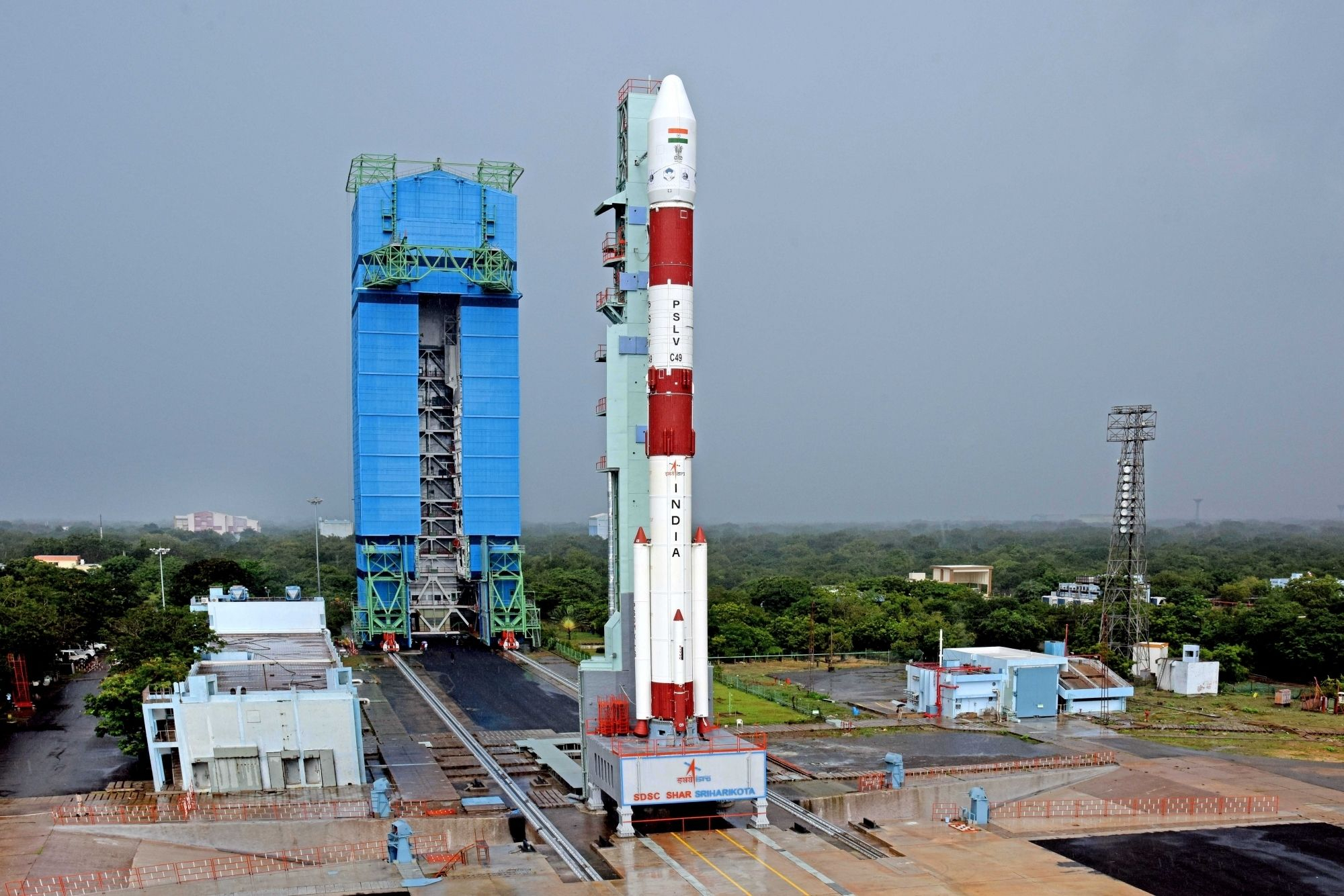
    • The POEM is a platform that will help perform in-orbit experiments using the final, and otherwise discarded, stage of ISRO’s workhorse rocket, the Polar Satellite Launch Vehicle (PSLV).
    • The PSLV is a four-stage rocket where the first three spent stages fall back into the ocean, and the final stage (PS4) — after launching the satellite into orbit — ends up as space junk.
    • However, in PSLV-C53 mission, the spent final stage will be utilised as a “stabilised platform” to perform experiments.
    • POEM is carrying six payloads, including two from Indian space start-ups Digantara and Dhruva Space.

    Features of POEM

    • POEM has a dedicated Navigation Guidance and Control (NGC) system for attitude stabilisation, which stands for controlling the orientation of any aerospace vehicle within permitted limits.
    • The NGC will act as the platform’s brain to stabilize it with specified accuracy.
    • POEM will derive its power from solar panels mounted around the PS4 tank, and a Li-Ion battery.
    • It will navigate using four sun sensors, a magnetometer, gyros & NavIC.
    • It carries dedicated control thrusters using Helium gas storage. It is enabled with a telecomm and feature.

    Has ISRO repurposed and used PS4 rocket junk earlier?

    • The Indian space agency first demonstrated the capability of using PSLV-C44 as an orbital platform in 2019.
    • It injected Microsat-R and Kalamsat-V2 satellites into their designated orbits.
    • The fourth stage in that mission was kept alive as an orbital platform for space-based experiments.
    • While in that mission, the fourth stage had Li-Ion batteries, solar panels are an addition this time.
    • The latest repurposing and upgrade of the fourth stage of the PSLV rocket involves the stabilization of the orbital platform.


    UPSC 2023 countdown has begun! Get your personal guidance plan now! (Click here)

  • CAPSTONE: NASA’s satellite, newly launched

    NASA has launched CAPSTONE, a microwave oven-sized CubeSat weighing just 55 pounds (25 kg).

    What is CAPSTONE?

    • CAPSTONE, short for Cislunar Autonomous Positioning System Technology Operations and Navigation Experiment, is designed to test a unique, elliptical lunar orbit.
    • It aims to help reduce risk for future spacecraft by validating innovative navigation technologies, and by verifying the dynamics of the halo-shaped orbit.

    Its launch

    • It is heading toward an orbit intended in the future for Gateway, a Moon-orbiting outpost that is part of NASA’s Artemis program.
    • The orbit is known as a near-rectilinear halo orbit (NRHO).
    • It is significantly elongated, and is located at a precise balance point in the gravities of Earth and the Moon.
    • This offers stability for long-term missions like Gateway, NASA said on its website.

    Mission details

    • CAPSTONE will enter NRHO, where it will fly within 1,600 km of the Moon’s North Pole on its near pass and 70,000 km from the South Pole at its farthest.
    • The spacecraft will repeat the cycle every six-and-a-half days and maintain this orbit for at least six months to study dynamics.


    UPSC 2023 countdown has begun! Get your personal guidance plan now! (Click here)

  • What is IN-SPACe?

    The Prime Minister inaugurated the headquarters of the Indian National Space Promotion and Authorisation Centre (IN-SPACe) at Bopal, Ahmedabad.

    What is IN-SPACe?

    • The establishment of IN-SPACe was announced in June 2020.
    • It is an autonomous and single window nodal agency in the Department of Space for the promotion, encouragement and regulation of space activities of both government and private entities.
    • It also facilitates the usage of ISRO facilities by private entities.
    • It comprises technical experts for space activities along with safety expert, academic experts and legal and strategic experts from other departments.
    • It also comprises members from PMO and MEA of Government of India.

    Roles and Responsibilities

    • Space activities including building of launch vehicles and satellites and providing space based services as per the definition of space activities.
    • Sharing of space infrastructure and premises under the control of ISRO with due considerations to on-going activities.
    • Establishment of temporary facilities within premises under ISRO control based on safety norms and feasibility assessment

    How is it different from ANTRIX?

    • Antrix Corporation Limited (ACL), Bengaluru is a wholly-owned Government of India Company under the administrative control of the Department of Space.
    • It is as a marketing arm of ISRO for promotion and commercial exploitation of space products, technical consultancy services and transfer of technologies developed by ISRO.
    • Antrix is engaged in providing Space products and services to international customers worldwide.

    What about New Space India Limited (NSIL)?

    • It functions under the administrative control of the Department of Space (DOS).
    • It aims to commercially exploit the research and development work of ISRO Centres and constituent units of DOS.
    • The NSIL would enable Indian Industries to scale up high-technology manufacturing and production base for meeting the growing needs of the Indian space program.
    • It would further spur the growth of Indian Industries in the space sector.


    UPSC 2023 countdown has begun! Get your personal guidance plan now! (Click here)

  • What are Fast Radio Bursts (FRB)?

    In a paper published in Nature, astronomers have reported a fast radio burst (FRB) whose characteristics are different from almost all other FRBs previously detected.

    Such news makes us think about alien and extraterrestrial life at the first. Do not get carried away with such thoughts. Its simply a space based phenomena.

    Fast Radio Burst (FRB)

    • FRBs are super intense, millisecond-long bursts of radio waves produced by unidentified sources in the distant cosmos.
    • They were first discovered in 2007 when scientists combed through archival pulsar data.
    • Pulsars refer to spherical, compact objects in the universe, which are about the size of a large city but contain more mass than the sun.
    • They often look like flickering stars but are not stars.

    Why in news?

    • The new study in Nature describes FRB 20190520B, first discovered in 2019.
    • What makes it different is that unlike many other FRBs, it emits frequent, repeating bursts of radio waves.
    • And between bursts, it constantly emits weaker radio waves.
    • FRB 190520B is co-located with a compact, persistent radio source and associated with a dwarf host galaxy of high specific star formation.


    UPSC 2023 countdown has begun! Get your personal guidance plan now! (Click here)