💥Join UPSC 2027,2028 Mentorship (August Batch) + XFactor Notes & Microthemes PDF

Distribution: weekly

  • Drone Census

    India’s first drone census has seen only 2,500 Ownership Acknowledgment Numbers (OANs) being issued by the Ministry of Civil Aviation (MoCA) since five days of beginning.

    Drone Census

    • The MoCA had issued a notice providing a one-time opportunity for voluntary disclosure of all drones and operators starting from January 14.
    • The DGCA issued the Civil Aviation Requirements (CAR), Section 3 – Air Transport Series X, Part I, Issue I, dated August 27, 2018 regulates use of drones.
    • It provides the process for obtaining Unique Identification Number, Unmanned Aircraft Operator Permit (UAOP) and other operational requirements; there are drones that do not comply with the CAR.
    • If a drone is not enlisted by 5 p.m. on January 31, then it will most definitely be confiscated.
    • After January 31, only authorised retailers will be allowed to sell them after uploading buyers’ Know your Customer (KYC) and sale invoice, similar to the sale of mobile phones and cars.

    Why such move?

    • The exercise will give the government a picture of who owns what kind of drone in which part of the country.
    • It will help in making policy decisions that should ideally become the base for understanding the scale of operations.
  • Irrawaddy Dolphins

    146 Irrawaddy dolphins were recently sighted in Chilika Lake of Odisha. The lake has highest single lagoon population of the aquatic mammal in the world.

    Irrawaddy Dolphins

    • IUCN Status: Endangered
    • Scientific Name: Orcaella brevirostris
    • Habitats: Lakes, Rivers, Estuaries, and Coasts

    • The Irrawaddy dolphin is a euryhaline species of oceanic dolphin found in discontinuous subpopulations near sea coasts and in estuaries and rivers in parts of the Bay of Bengal and Southeast Asia.
    • They are also found in coastal areas in South and Southeast Asia, and in three rivers: the Ayeyarwady (Myanmar), the Mahakam (Indonesian Borneo) and the Mekong.
    • The total population of these aquatic mammals in the world is estimated to be less than 7,500.
    • Of these, more than 6,000 Irrawaddy dolphins have been reported from Bangladesh, while the dolphin distribution in Chilika is considered to be the highest single lagoon population.
  • K-4 Missile

    India successfully test-fired the 3,500-km range submarine-launched ballistic missile, K-4. The test was carried out by the DRDO from a submerged pontoon off the Visakhapatnam coast around noon.

    K-4

    • K-4 is a nuclear-capable Intermediate-range submarine-launched ballistic missile developed and tested successfully in the month of January 2020 by DRDO.
    • The missile has a maximum range of about 3500 km.
    • Once inducted, these missiles will be the mainstay of the Arihant class of indigenous ballistic missile nuclear submarines (SSBN).
    • It will give India the standoff capability to launch nuclear weapons submerged in Indian waters.

    What’s so special about K-4?

    : Circular Error Probability

    • India’s Circular Error Probability (CEP) is much more sophisticated than Chinese missiles.
    • The CEP determines the accuracy of a missile.
    • The lower the CEP, the more accurate the missile is.
    • There are very few countries which have managed to achieve this technological breakthrough.

    About INS Arihant

    • The Advanced Technology Project (ATV) began in the 1980s and the first of them, Arihant, was launched in 2009.
    • INS Arihant, the first and only operational SSBN is armed with K-15 Sagarika missiles with a range of 750 km.
    • Given India’s position of ‘No-First-Use’ (NFU) in launching nuclear weapons, the SSBN is the most dependable platform for a second-strike.
    • Because they are powered by nuclear reactors, these submarines can stay underwater indefinitely without the adversary detecting it.
    • The other two platforms — land based and air launched are far easier to detect.
  • [op-ed of the day] Business possibilities in a world of digital payments

    Context

    UPI has brought digital payments to the common man and it has immense scope for growth.

    Zero MDR rate

    • Recently the finance minister made the announcement of the zero merchant discount rate (MDR) policy for payments through RuPay debit cards and Unified Payments Interface (UPI) instruments.
    • What does it mean? This policy dictates that when a consumer pays a merchant using RuPay or UPI, the bank may not charge the merchant a commission on the sale value that it usually charges a merchant.
    • Criticism of the move: Critics of this policy lament that it would begin to reverse the progress India has made in recent years to expand the digital payments network.

    Some facts and figures

    • Setting up of NPCI: In 2008 the National Payments Corporation of India (NPCI) was set up as an umbrella organization for operating retail payments and settlements in India
    • UPI:  In 2016, NPCI introduced UPI.
      • UPI has since registered 100 million users.
      • UPI now clocks more than 1 billion transactions every month.
    • Growth prospects for mobile payments: According to the NITI Aayog, mobile payments in India are expected to grow nearly 20-fold to $190 billion in the next three years.
    • Digital payment for the common man: There are 1 billion mobile phone users in India.
    • 420 million users have a feature phone, these users can use the *99# USSD service to dial into 13 different languages.
    • Which would connect them to UPI and brings digital payments to the common man.

    Need for innovation

    • We are far behind: India is far behind china, where 55% of spending is done digitally, compared to only 11% in India.
      • The outlook for future growth is mind-boggling.
      • There is a need for innovation at three levels.
    • First level-Adoption
      • A better understanding of human behaviour, technology, use cases and dis-use cases will facilitate the 10x growth necessary in adoption rates to cover the entire population.
    • Second level-Policy
      • The government has the rare opportunity to develop a data-centric understanding of how the economy conducts itself and uses money, and can set taxes accordingly.
    • Third level-Technology
      • Voice for authentication: At the technology level, there is an opportunity to use voice as a means for authentication and conduct transactions across multiple local languages.
      • Data analysis: Copious amounts of data from payment transactions can be analysed to understand user needs and develop personalized loans and financial solutions at scale.

    Taking UPI to Global Level

    • UPI in Singapore and UAE: The NCPI is gearing up to take UPI to other countries, beginning with Singapore and the United Arab Emirates.
      • NCPI is working with its counterpart in Singapore, the Network for Electronic Transfers for Singapore, to bring UPI live in Singapore.
    • The low hanging fruit is to provide payment solutions to Indians travelling abroad.
    • Competition with global peers: The bigger and tougher game is to increase its usage among local people in countries outside India.
      • This would put UPI in competition with the likes of PayPal and Skrill.

    Conclusion

    We have seen just the tip, albeit a very substantial tip, of the digital payments iceberg. In the coming years, young business leaders of today must learn to uncover the iceberg itself.


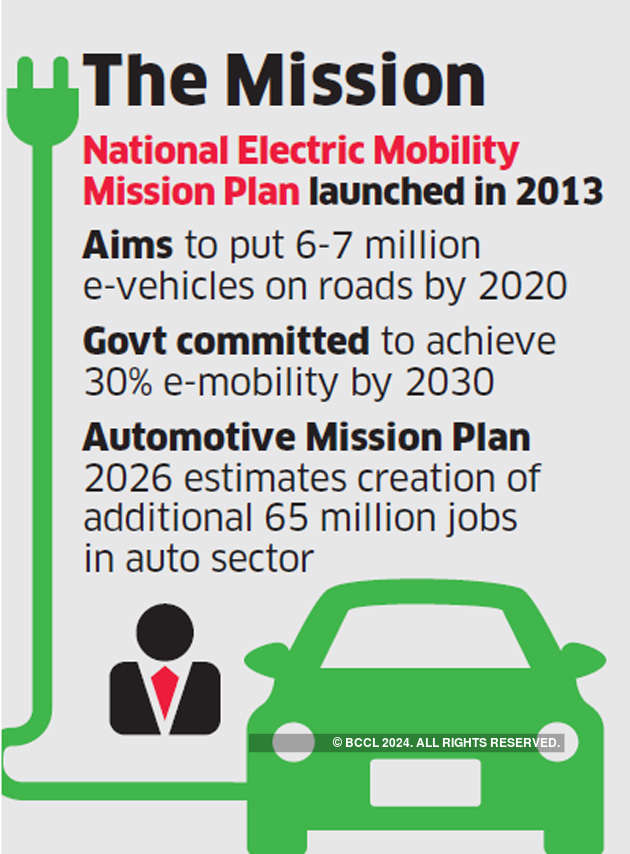
  • National E-Mobility Mission Plan 2020


    The Supreme Court has sought the response of the government on a petition that alleges the non-implementation of the National E-Mobility Mission Plan, 2020 (NEMMP), which came out in 2012.

    National Electric Mobility Mission Plan (NEMMP) 2020

    • The plan was launched by the Government of India in 2013 with the objective of achieving national fuel security by promoting electric and hybrid vehicles.
    • It had set a target of achieving a sale of seven million EVs by 2020 and thereby aimed to cut total carbon dioxide emissions by three per cent from the ‘do nothing’ scenario.
    • The government would provide fiscal and monetary incentives for this industry.
    • The plan had made several recommendations for the adoption of electric vehicles (EVs), including electric-powered government fleets and public transportation and subsidies for those who opt for EVs.

    What was the petition about?

    • The petition contended that the governmental apathy has violated the fundamental rights of citizens to health and clean environment guaranteed under Articles 14 and 21 of the Constitution.
    • The government had failed in its obligation to mitigate the impact of climate change and air pollution partly attributable to emissions from vehicles that burn fossil fuels.
    • Government’s failure to suitably implement these recommendations is the direct cause of air pollution levels that have turned our cities into virtual ‘gas chambers’.
  • [pib] APNA UREA – SonaUgle


    APNA UREA – SonaUgle

    • The Union Minister for Chemicals and Fertilizers launched the “APNA UREA – SonaUgle” brand of Hindustan Urvarak & Rasayan Limited (HURL).
    • HURL is Joint Venture Company promoted by the three Maharatna Companies i.e. Coal India Limited (CIL), NTPC Limited (NTPC) and Indian Oil Corporation Limited (IOCL) as the lead promoters with FCIL and HFCL as other two partners.
    • The commissioning of the HURL’s three Units in the states of UP, Bihar and Jharkhand will open forward and backward linkages for business activity in the Eastern part of India.
    • It will be instrumental in opening new avenues for the generation of income and employment in the Eastern part of our country.
  • Telecommunication Consumers Education and Protection Fund (TCEPF)

    The Telecom Regulatory Authority of India (TRAI) has informed that telecom service providers will need to deposit all unclaimed money of consumers, including excess charges and security deposit, in the Telecommunication Consumers Education and Protection Fund (TCEPF).

    Telecommunication Consumers Education and Protection Fund (TCEPF)

    • The TCEPF Regulations, 2007 have been amended to provide the basic framework for depositing unclaimed money of consumers by service providers, maintenance of the TCEPF and other related aspects.
    • Any unclaimed / unrefundable amount belonging to consumers in the TCEP fund will be utilized for the welfare measures of the consumers.
    • With this amendment, service providers will deposit any unclaimed consumer money of any form such as excess charges, security deposit, plan charges of failed activations, or any amount belonging to a consumer, which service providers are unable to refund to consumers.

    Why such move?

    • The TRAI observed that there is a need to bring clarity among service providers in depositing money which they are unable to refund to the consumers.
    • While some service providers were depositing money only on account of excess billing revealed in the audit, others were depositing unclaimed money such as security deposits and plan charges of failed activations.
  • Yada Yada Virus

    A new virus detected in Australian mosquitoes has been provisionally named the Yada Yada virus (YYV).

    Yada Yada

    • It is an alphavirus, a group of viruses that the researchers described as small, single-stranded positive-sense RNA viruses.
    • It includes species important to human and animal health, such as Chikungunya virus and Eastern equine encephalitis virus.
    • They are transmitted primarily by mosquitoes and (are) pathogenic in their vertebrate hosts.
    • Unlike some other alphaviruses, Yada Yada does not pose a threat to human beings.
  • [op-ed of the day] Preventing mob lynching

    Context

    The spate of incidents of lynching over the past few years has led to a heightened sense of insecurity among the marginalised communities. The Centre should specify penal action against officials and doctors accused of dereliction of duty.

    2018 Supreme Court Judgement

    • In 2018, the Supreme Court described lynching as a “horrendous act of mobocracy”.
    • The Court exhorted the Centre and State governments to frame laws specifically to deal with the crime of lynching.
    • The SC laid down certain guidelines to be incorporated in these laws including
      • Fast-track trials.
      • Compensation to victims, and
      • Disciplinary action against lax law-enforcers.

    The State laws

    • Manipur bill for the law against lynching:  The Manipur government came up first with its Bill against lynching in 2018, incorporating some logical and relevant clauses.
      • Provision of nodal officer: The Bill specified that there would be nodal officers in each district to control such crimes.
      • Compensation to the victim: The law provides for adequate monetary compensation to the victims or their immediate kin.
      • Punishment for failure to enforce the law: Police officers who fail to prevent the crime of lynching in their jurisdiction are liable to be imprisoned for a term that may extend from one to three years with a fine limit of ₹50,000.
      • No concurrence of state for the prosecution of the police: No concurrence of the State government is required to prosecute them for dereliction of duty.
    • Rajasthan bill: The government has accepted only a few guidelines issued by the apex court.
      • No action against police officers: The bill is also silent on any action to be initiated against police officers who may be accused of dereliction of duty.
    • West Bengal bill: Most other guidelines of the Supreme Court have been adopted by the State.
      • Stringent punishment: Punishment for lynching to death is punishable with the death penalty or life imprisonment and a fine of up to ₹5 lakh.

    What the Centre can do

    • Adoption of the SC guidelines: The Centre should adopt the guidelines provided by the SC to deal with the crime.
    • Action against doctors: Centre would do well to incorporate sections in the law for penal action against doctors who stand accused of-
      • Dereliction of duty.
      • For delay in attending to victims of lynching.
      • For submitting false reports without carrying out a proper and thorough medical examination of the victims.
    • The compensation scheme for victims: Under the compensation scheme for the victims, the amount to be paid to the victims should be recovered from the perpetrators of the crime.
      • Collective fines: Collective fines should be imposed on the villagers where the lynching takes place.
    • Punishment for a political leader for inciting the mob: Centre could even provide for punitive action against political leaders found guilty of inciting mobs.
    • Punitive action against police: Punitive action to be taken against police officers accused of dereliction of duty, as incorporated in the law enacted by Manipur government, could be replicated in the Central law too.
      • Punitive action as a deterrent: It would deter police officials acting in a partisan manner in favour of the lynch mob.

    Conclusion

    Until a zero-tolerance attitude is adopted in dealing with mob lynching, this crime will continue to show a rising trend.


  • [op-ed snap] Maoist rebellion: policy fade-out, policy fade-in

     Context

    When much is made of peace talks with rebels in Northeast India, avoidance of peace talks with Maoist rebels is strange.

    States left to deal with the Maoists

    • Scale and extent of the problem: Officially in 2019, there are 11 states and 90 affected districts.
    • State subject: This is because policing and maintaining law and order are matters devolved to states.
    • The approach adopted to deal with the problem: According to MHA-
      • Capacity building: Primarily by capacity building of the state governments.
      • Areas of capacity building: Capacity building is to be carried out in areas of security and development. This will continue with the-
      • Better police training.
      • Better intelligence gathering.
      • Reinforcing police stations in conflict zones.
      • And recruiting locals into auxiliary forces.
    • Support by MHA: MHA will continue to provide the Central Reserve Police Force (CRPF) and other paramilitaries under its command.
      • Support of NTRO: Intelligence gathering outfits such as the National Technical Research Organisation (NTRO).
      • NTRO has in the past year increased drone surveillance over the densely forested Abujhmad area in southwest Chhattisgarh, which remains the main rebel hub.

    The success achieved so far

    • Influence reduced to 90 districts: The policies so far has certainly contained the rebels across 90 affected districts.
    • Surrender and rehabilitation policy: Most Maoist-affected states in India have a surrender and rehabilitation policy.
    • Surrender policy along with search and destroy : Surrender policy rides in tandem with search-and-destroy missions that police and paramilitaries provide.
    • This pincer has massively depleted rebel leadership and ranks with regular killings, arrests, and surrender of its leaders and cadres.

    Return of conflict displaced people

    • It is crucial for the conflict-displaced to return to their homes.
    • Issues related to return of displaced: Agencies discourage those returning from going back to their old home and instead are offered state-mandated enclaves.
      • No or little economic imperatives: Those returning are offered little economic imperative besides daily wage labour and scrambling for government handouts.
      • Some government jobs: For some, jobs are offered in
      • That is, in any case, the present for much of the 50,000 or so who did not manage to escape to Telangana and elsewhere.

    Conclusion

    • The central government would do well to focus here and in beginning negotiations for peace.
    • The Left-wing rebellion, a reality for over 50 years, is difficult to end until poor governance is improved.