💥Join UPSC 2027,2028 Mentorship (August Batch) + XFactor Notes & Microthemes PDF

Distribution: weekly

  • 27th edition of UN-Conference of Parties (UN-COP)

    cop

    The port city of Sharm El-Sheikh, Egypt is hosting the 27th edition of the UN-Conference of Parties (UN-COP).

    Quick recap

    • Last year, PM Modi, at the 26th edition of the COP in Glasgow, Scotland, committed to India becoming net-zero, or in effect carbon neutral, by 2070 along with Panchamrita
    • Environment Minister will be leading the Indian delegation to COP-27 in Egypt.
    • India is determined to press developed countries into making good their unfulfilled commitment to deliver $100 billion a year of climate finance by 2020 and every year thereafter till 2025.

    Conference of Parties (CoP): A Backgrounder

    • The CoP comes under the United Nations Climate Change Framework Convention (UNFCCC) which was formed in 1994.
    • The UNFCCC was established to work towards “stabilisation of greenhouse gas concentrations in the atmosphere.”
    • It laid out a list of responsibilities for the member states which included:
    1. Formulating measures to mitigate climate change
    2. Cooperating in preparing for adaptation to the impact of climate change
    3. Promoting education, training and public awareness related to climate change
    • The UNFCCC has 198 parties including India, China and the USA. COP members have been meeting every year since 1995.

    COP1 to COP25: Key takeaways

    • COP1: The first conference was held in 1995 in Berlin.
    • COP3: It was held in Kyoto, Japan, in 1997, the famous Kyoto Protocol (wef 2005) was adopted. It commits the member states to pursue limitation or reduction of greenhouse gas emissions.
    • COP8: India hosted the eighth COP in 2002 in New Delhi. It laid out several measures including, ‘strengthening of technology transfer… in all relevant sectors, including energy, transport and R&D,  and the strengthening of institutions for sustainable development.
    • COP21: it is one of the most important that took place in 2015, in Paris, France. Here countries agreed to work together to ‘limit global warming to well below 2, preferably at 1.5 degrees Celsius, compared to pre-industrial levels.’

    Significance of COP

    • The event will see leaders from more than 190 countries, thousands of negotiators, researchers and citizens coming together to strengthen a global response to the threat of climate change.
    • It is a pivotal movement for the world to come together and accelerate the climate action plan after several discussion.

    Key agenda of the COP27

    Ans. Loss and Damage Funding

    • The term ‘Loss and Damage’ refers to the economic and non-economic impacts of climate change, including extreme events in countries that are particularly vulnerable to the adverse effects of climate change.
    • Rich countries, historically responsible for the climate crisis, have bullied poorer nations to protect polluters from paying up for climate damages.
    • The term was brought up as a demand in 1991 by the island country of Vanuatu, which was representing the Alliance of Small Island States (AOSIS).


    Try this PYQ:

    Q.With reference to the Agreement at the UNFCCC Meeting in Paris in 2015, which of the following statements is/are correct?

    1. The Agreement was signed by all the member countries of the UN and it will go into effect in 2017.
    2. The Agreement aims to limit the greenhouse gas emissions so that the rise in average global temperature by the end of this century does not exceed 2 degree Centigrade or even 5 degree Centigrade above pre-industrial levels.
    3. Developed countries acknowledged their historical responsibility in global warming and committed to donate dollar 1000 billion a year from 2020 to help developing countries to cope with climate change.

    Select the correct answer using the code given below:

    (a) 1 and 3 only

    (b) 2 only

    (c) 2 and 3 only

    (d) 1, 2 and 3


    [wpdiscuz-feedback id=”xhsg56vfu5″ question=”Please leave a feedback on this” opened=”1″]Post your answers here.[/wpdiscuz-feedback]


    Click and get your FREE Copy of CURRENT AFFAIRS Micro Notes

  • In news: Wangala Dance of Garo Tribe

    wangala

    This newscard is an excerpt from a picture in the print edition of TH.

    Wangala Dance

    wangala

    • Wangala is also called the festival of “The Hundred Drums“.
    • It is a harvest festival celebrated by the Garo tribe in Meghalaya, Nagaland and Assam and Greater Mymensingh in Bangladesh.
    • In this post-harvest festival, they give thanks to Misi Saljong the sun god, for blessing the people with a rich harvest.
    • Wangala is celebrated in the months from September to December, with different villages setting different dates for the occasion.

    Course of celebration

    • The ceremony performed on first day is known as “Ragula” is performed inside the house of the chief.
    • On the second day is known as “Kakkat“.
    • Folks dressed in their colorful costumes with feathered headgears dance to the tune of music played on long oval-shaped drums.
    • While the men beat the drums, the line moves forward in rhythmic accord.
    • The ‘orchestra’ of men includes drums, gong and flutes, punctuated by the sonorous music of an primitive flute made of buffalo horn.


    Click and get your FREE Copy of CURRENT AFFAIRS Micro Notes

  • Good News: Child marriage is on the decline

    Child marriage

    Content

    • The steering committee of a global programme to end child marriage is on a visit to India to witness state interventions which have helped reduce the prevalence of child marriage.

    What are the findings of the committee?

    • Increase in Child marriage as a pandemic effect: The visit by the UNFPA-UNICEF Global Programme to End Child Marriage team is in view of an estimated increase in number of child brides due to the pandemic. The UNFPA-UNICEF estimates that 10 million children could become child brides as a result of the pandemic globally.
    • Child marriages reduced in India according to NFHS-5: In India, child marriage reduced from 47.4% in 2005-06 to 26.8% in 2015-16, registering a decline of 21% points during the decade. In the last five years, it declined by 3.5% points to reach 23.3% in 2020-21, according to the latest National Family Health Survey-5 data.

    What is the situation in the world?

    • As per the UNICEF data: The total number of girls married in childhood stands at 12 million per year, and progress must be significantly accelerated in order to end the practice by 2030 the target set out in the Sustainable Development Goals. Without further acceleration, more than 150 million additional girls will marry before they turn 18 by 2030.
    • Progress is Uneven and not enough: While it is encouraging that in the past decade great progress has been made in South Asia, where a girl’s risk of marrying before she is 18 has dropped by more than a third, from nearly 50% to below 30%, it is not enough, and progress has been uneven.
    • Dire consequences of child marriage: Rights activists and health experts say the consequences of child marriage are dire, not only because it violates children’s rights, but also because it results in more infant and maternal deaths. Children born to adolescent mothers have a greater possibility of seeing stunted growth as they have low weight at birth. According to NFHS-5, prevalence of child stunting is 35.5% in 2019-21.

    Child marriage

    Where does India stand?

    • Declining trend in overall child marriage: There is a growing trend for decline in the overall prevalence of child marriage, but 23.3% is still a disturbingly high percentage in a country with a population of 141.2 crore. Eight States have a higher prevalence of child marriage than the national average.
    • High prevalence in some bigger States: West Bengal and Bihar have the highest prevalence of girl child marriage. States with a large population of tribal poor have a higher prevalence of child marriage. West Bengal, Bihar and Tripura top the list with more than 40% of women aged 20-24 years married below 18, according to NFHS data.
    • Scenario in Jharkhand and Assam: In Jharkhand, 32.2% of women in the age bracket 20-24 got married before 18, according to NFHS-5; infant mortality stood at 37.9%, and 65.8% of women in the 15-19 age bracket are anaemic. Assam too has a high prevalence of child marriage (31.8% in 2019-20 from 30.8% in 2015-16).
    • Child marriages reduced in some states: Some States have shown a reduction in child marriages, like Madhya Pradesh (23.1% in 2020-21 from 32.4% in 2015-16), Rajasthan (25.4% from 35.4%) and Haryana.
    • Several States are pegged just below the national average: In Odisha, 20.5% of women were married off before 18 in 2020-21 from 21.3% in 2015-16.
    • States on better social indices as a result of high literacy: States with high literacy levels and better health and social indices have fared much better on this score. In Kerala, women who got married before the age of 18 stood at 6.3% in 2019-20, from 7.6% in 2015-16. Tamil Nadu too has shown improved figures with 12.8% of women in the age group 20-24 years getting married before 18 compared to 16.3% in 2015-16.

    Child marriage

    What are the laws and policy interventions?

    • Prohibition of Child Marriage Act, 2006 and the Protection of Children from Sexual Offences Act, 2012: These laws aim at protecting children from violation of human and other rights.
    • A positive debate on raising the age of Marriage: A parliamentary standing committee is weighing the pros and cons of raising the age of marriage for women to 21, which has been cleared by the Union Cabinet. With various personal laws governing marriages in India, the government wants to amend the law, a reform that activists and agencies have said will not be enough to stop the practice of child marriage.
    • Various schemes: There are no of Centralised schemes like the Beti Bachao Beti Padhao, which are performing better on empowering the girl children
    • Various initiatives by the states: States have launched many initiatives to improve the factors linked to child marriage, from education to health care and awareness programmes. For instance, West Bengal’s Kanyashree scheme offers financial aid to girls wanting to pursue higher studies, though women’s activists have pointed out that another scheme Rupashree, which provides a one-time payment of ₹25,000 to poor families at the time of a daughter’s marriage, may be counter-productive. Bihar and other States have been implementing a cycle scheme to ensure girls reach safely to school; and U.P. has a scheme to encourage girls to go back to school.

    Child marriage

    What needs to be done?

    • Need a multidimensional approach: According to Sandeep Chachra, ActionAid Association India, which has been working with UNICEF and UNFPA said the solution lies in empowering girls, creating proper public infrastructure and addressing societal norms.
    • Awareness not only about the law but also about the dire consequences on Health: Uma Mahadevan-Dasgupta, who serves in the IAS, says several thousand child marriage prohibition officers have been notified in Karnataka and 90,000 local gram panchayat members have been oriented to spread awareness on child marriage, not only that it is illegal to get a child married off before 18, but also the dangers to the child’s health and her offspring.
    • Focusing on the overall girl child development: They stress on an all-pronged approach to end the practice; strong laws, strict enforcement, preparing an ideal situation on the ground to ensure that the girl child girls with either or below primary level education have experienced higher levels of child marriage as data show gets an education and preferably vocational training as well so that she can be financially independent.
    • Schemes need better implementation: Centralised schemes like the Beti Bachao Beti Padhao, which need better implementation on the ground. Various schemes by the states needs through analysis and better implementation at the grass root level.

    Conclusion

    • Data shows that child marriage is a key determinant of high fertility, poor maternal and child health, and lower social status of women. There has been a rise in child marriages during the pandemic, but many have been prevented as well. A lot more needs to be done on factors closely linked to child marriage, including eradication of poverty, better education and public infrastructure facilities for children, raising social awareness on health, nutrition, regressive social norms and inequalities.

    Question

    Q. Child marriages comes with dire consequences on adolescent mothers and children born to them. Evaluate the status on prevalence of child marriages In India and how to address the situation?

    Click and Get your FREE copy of Current Affairs Micro notes


  • Unscientific Highway Infrastructure: A Cause of Accidents

    Highway

    Context

    • In a March 2019 circular, the National Highways Authority of India (NHAI) raised the subject of premature issuance of completion certificates for national highway works. NHAI had noticed that, in certain cases, completion certificates had been issued even before the completion of works ‘up to the standards and specifications’ prescribed by the Ministry of Road Transport & Highways.

    Highway

    Status of National highways and deaths

    • 35 percent of all road deaths: NHAI is the principal organization responsible for construction of National Highways in India. National highways constitute a mere 2 percent of the country’s road network, but account for close to 35 percent of all road deaths.
    • Record 37 kms per day: The ministry has been taking credit for the pace at which national highways are being constructed. In the fiscal year 2021, it reached a record 37 kms per day. This has come down to 19.44 km per day in the first six months of the financial year 2022.

    What was the circular issued by NHAI?

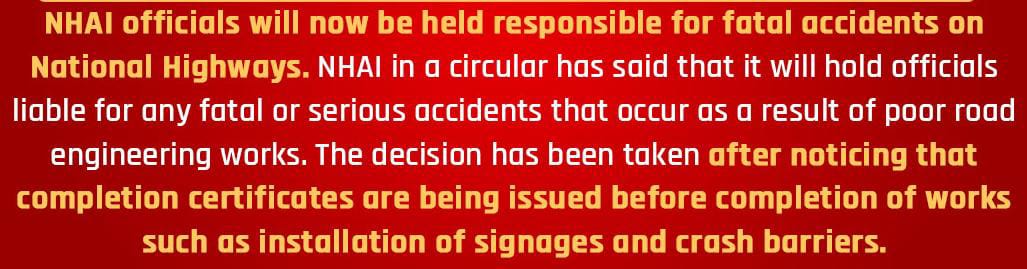
    • Issuance of completion certificate: The circular forbade the issuance of such certificates, especially if non-completion resulted in ‘material inconveniences to users’ or affected their safety.
    • Likely cause of fatalities: Items such as road shoulders, road signs, markings, dressing of slopes, and road furniture were explicitly mentioned. circular was not taken with due seriousness by some authorized engineers. This negligence could have contributed to road crashes, probably resulting in fatalities.
    • Dereliction of duty by NHAI’s officials: The NHAI has now warned the delinquents that such behavior would be treated as a serious dereliction of duty and disciplinary action would be taken against officers issuing such certificates to incomplete road works. Additionally, the officers would be held personally liable in case of serious accidents that occur on such unfinished infrastructure.
    • Safety is better than pace of construction: The Minister for Road Transport & Highways stressed that it is necessary to build safer roads even if this decelerated the pace of construction.

    Highway

    Case study of NHAI’s road construction?

    • Death of Cyrus Mistry: Unfortunately, self-introspection by the NHAI in regard to safety failures and the large number of deaths on national highways was not in evidence in the aftermath of the death of Cyrus Mistry on the Ahmedabad-Mumbai national highway in September 2022.
    • Crash was result of poor infrastructure: In this instance, a seven-member forensic investigation team found that the car crash was the result of an infrastructure issue. The car in which Mistry was travelling happened to tragically hit a bridge that was faultily designed.
    • Invisible dividers: The bridge parapet was found to be protruding into the shoulder lane. Furthermore, the road with three lanes unexpectedly narrowed to a road with two lanes with a dangerous L-shaped concrete divider that had no proper paint on it.
    • Inadequate safety signs: Road signages were grossly inadequate, making that road stretch a ‘black spot’. This epithet is used for a road section where accidents are a frequent occurrence.
    • Expressways are constructed for more speed: The accident also raised issues of the excessive speed of the car that crashed. It was said that the car was travelling at a speed in excess of 100 km per hour. However, the minister himself has been in favour of higher speeds on Indian expressways and national highways. He proposed a speed limit of 140 kmph on expressways and at least 100 kmph on four-lane national highways. This, he stated, was advocated on account of considerable improvements in the quality of India’s highways that permit vehicles to go faster than in the past.
    • Speed limit safety needs to be revise: The minister was also critical of some judicial rulings that disallowed hiking speeds on national highways. However, in the light of certain facts repeatedly surfacing in regard to safety issues of national highways, it does appear that greater caution in regard to increasing speed needs to be taken.

    Critical analysis of NHAI’s road construction and maintenance

    • Rains and potholes: While the government claims that they are of international standard, a recent report highlighted the plight of road travelers on national highways post India’s monsoons. The rains have left the country’s arterial network in poor shape as they have become riddled with potholes.
    • Higher toll but poor roads: The cited report mentioned the Gurgaon-Jaipur stretch of NH-8, which, despite a hike in toll rates, remains incomplete and terribly potholed. The reason for this sorry state of affairs was revealed in a reply by the government to a parliamentary standing committee.
    • Insufficient maintenance: The budgetary provision for maintenance of national highways was a mere 40 percent of their own estimated standards. Clearly, maintenance of national highways was being discounted in favour of more kilometres of road construction. The shortfall of 60 percent of maintenance money was terribly high and resulted in the resources being thinly spread, making adequate maintenance intervention highly unlikely.
    • Inadequate budgetary allocation: The parliamentary committee pointed out in its report titled ‘Issues related to road sector’ that the shortfall in sufficient budgetary allocation was echoed in the poor quality of national highways often witnessed across the country. The committee emphasized that the maintenance of national highways was vitally significant in regard to safety and good average traffic speeds and ought to be given high priority. The issue had been repeatedly flagged by the committee.
    • NITI Aayog’s acknowledgement of poor infrastructure: Similarly, NITI Aayog, in its report titled ‘Strategy for New India @75’, advised that the government should earmark 10 percent of its annual budget for maintenance of roads and highways and move towards the developed country norm of marking 40 percent of the budget for road upkeep. It is evident that if national highways are not in shape, the economy of the country and the states takes a hit.

    Highway

    Conclusion

    • It is absolutely necessary for citizens to follow road safety norms but government cannot look away from its responsibility. Scientific road construction even at the cost of slow construction rate is non-negotiable for sake of accident prevention. Safety of citizens is prior to any world record.

  • Person in news: Dadabhai Naoroji

    dadabhai

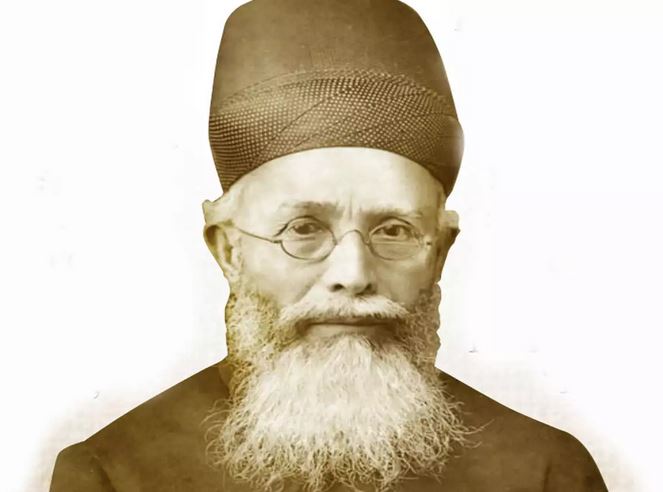
    This year, 2022, marks the 130th anniversary of the election, in 1892, of the first person of Indian origin, Dadabhai Naoroji to the House of Commons.

    Why in news?

    • Election of Rishi Sunak as British PM with a narrow majority has brought to focus Naoroji.
    • He too had won Finsbury seat as a MP with a three vote’s majority.

    Dadabhai Naoroji (1825-1917)

    • Dadabhai Naoroji is well known as the “Grand Old Man of India” and “Unofficial Ambassador of India”.
    • He was a Liberal Party Member of Parliament in the British House of Commons, represnting Finsbury Central between 1892 and 1895.
    • He was the second person of Asian descent to be a British MP, the first being Anglo-Indian MP David Ochterlony Dyce Sombre.
    • He was an Indian political leader, merchant, scholar and writer who was served as 2nd, 9th, and 22nd President of the Indian National Congress from 1886 to 1887, 1893 to 1894 & 1906 to 1907.
    • His book Poverty and Un-British Rule in India brought attention to his theory of the Indian “wealth drain” into Britain.
    • He was also a member of the Second Communist International (1889).

    Other works

    • Started the Rast Goftar Anglo-Gujarati Newspaper in 1854.
    • The manners and customs of the Parsees (Bombay, 1864)
    • The European and Asiatic races (London, 1866)
    • Admission of educated natives into the Indian Civil Service (London, 1868)
    • The wants and means of India (London, 1876)
    • Condition of India (Madras, 1882)

    Influence on Gandhi and Jinnah

    • Before his Finsbury win, Naoroji met a young student of law in Inner Temple, 23-year-old Mohandas K Gandhi, and left an everlasting impact on the future leader.
    • He also met another aspiring lawyer then enrolled at Lincoln’s Inn — 16-year-old Mohammed Ali Jinnah, who was to serve for a while as Naoroji’s secretary.
    • Jinnah had the distinction of hearing Naoroji’s maiden speech in the House of Commons from the Visitors’ Gallery.


    Click and get your FREE copy of Current Affairs micro notes

  • Child Welfare Police Officers a must in all police stations: Home Minister

    cwpo

    The Ministry of Home Affairs has asked the States/Union Territories to appoint a Child Welfare Police Officer (CWPO) in every police station to exclusively deal with children, either as victims or perpetrators.

    Who is a Child Welfare Police Officer (CWPO)?

    • Police play a pivotal role in the prevention and investigation of child abuse and neglect while helping to make communities safer for children and families.
    • CWPO is stipulated in advisory issued by the National Commission for Protection of Child Rights.
    • The Juvenile Justice (Care and Protection of Children) Act, 2015, also calls for designating at least one officer, not below the rank of an Assistant Sub-Inspector, as CWPO in every station.

    Functions of CWPO

    • To handle cases of both juveniles in conflict with law and children in need have care of protection
    • To function as a watch-dog for providing legal protection against all kinds of cruelty, abuse and exploitation of children and report instances of non-compliance for further legal action
    • To take serious cognizance of adult perpetrators of crimes against children
    • To ensure that the accused are apprehended immediately and booked under the appropriate provisions of the law
    • To ensure that the juvenile or child is provided with immediate medical attention, basic needs and create a child-friendly atmosphere at the time of first contact.

    Need for CWPO

    • CWPO ensure that juvenile or child is treated with decency and dignity during investigation, enquiry, search etc.
    • They help upheld right to confidentially and privacy of the juvenile/child.

    Back2Basics: National Commission for Protection of Child Rights (NCPCR)

    • The NCPCR is a statutory body established by the Commission for Protection of Child Rights (CPCR) Act, 2005.
    • The Commission works under the aegis of Ministry of Women and Child Development.
    • The Commission is mandated under section 13 of CPCR Act, 2005 to ensure that all laws and policies are in consonance with the Child Rights perspective as enshrined by the UN Convention on the Rights of the Child.
    • As defined by the commission, a child includes persons up to the age of 18 years.


    Click and get your FREE copy of Current Affairs micro notes

  • What is Parole?

    Recently a self-proclaimed god-man convicted for rape and murder in Haryana has been released on Parole.

    What is Parole?

    • Furlough and parole envisage a short-term release from custody, both aimed as reformative steps towards prisoners.
    • Parole is granted to meet a “specific exigency” and cannot be claimed as a matter of right.
    • Both provisions are subject to the circumstances of the prisoner, such as jail behaviour, the gravity of offences, sentence period and public interest.
    • Furlough may be granted without any specific reason after a convict spends a stipulated number of years.
    • It is a matter of right although cannot be claimed as an ‘absolute legal right’.

    Is ‘parole an extraordinary move?

    • The state governments often take a compassionate view on applications for parole during festivals of Diwali, Rakshabandhan etc.
    • The legislature/politicians do not have direct powers to grant parole on suo-motu cognizance.

    Who can opt for parole and how?

    • The provision of parole is available to convicts found guilty by a court and such a prisoner.
    • The prisoner’s relative/legal aid may submit an application to the prison superintendent.
    • He/she in turn forwards the application to the ‘competent authority’, often under the jurisdiction of district magistrate concerned and comprising prison and police authorities, to sanction release.
    • After due verification of reasons and prisoner’s conduct by the competent authority, an order for grant of release on parole will be issued.
    • In case of rejection of the said application, a convict may approach the High Court.

    Duration of Parole

    • The Prison rules state that parole period may be granted for not more than 30 days.
    • The competent authority may exercise its discretion in case of serious illnesses or death of “nearest relative such as mother, father, sister, brother, children, spouse of the prisoner, or in case of natural calamity.”
    • Parole or extension of parole cannot be granted without a report of the police
    • Apart from the remedy to approach a high court for parole in case of a rejected application, a prison can also approach the high court directly in case of an extraordinary emergency.

    Try this PYQ from CSP 2021:

    Q. With reference to India, consider the following statements:

    1. When a prisoner makes a sufficient case, parole cannot be out denied to such prisoner because it becomes a matter of his/her right.
    2. State Governments have their own Prisoners Release on Parole Rules.

    Which of the statements given above is/are correct?

    (a) 1 only

    (b) 2 only

    (c) Both 1 and 2

    (d) Neither 1 nor 2


    [wpdiscuz-feedback id=”pikkbaqdsm” question=”Please leave a feedback on this” opened=”1″]Post your answers here.[/wpdiscuz-feedback]


    Click and get your FREE copy of Current Affairs micro notes

  • 2022 AP7: the Planet Killer Asteroid

    asteroid

    A team of astronomers have spotted a massive near-Earth asteroid called 2022 AP7 believed to be the largest planet killer-sized asteroid to be spotted in nearly a decade.

    2022 AP7 Asteroid

    • An asteroid is a relatively small chunk of rocky minerals that orbits the Sun, often described as a minor planet.
    • 2022 AP7 is among the three asteroids hiding in the glare of the Sun.
    • It is 1.5-kilometre-wide and has an orbit that may someday put it on a collision course with our planet.
    • At present, researchers have little information about the asteroid, including further details on its possible trajectory and its composition.
    • It was found using the Dark Energy Camera at the Cerro Tololo Inter-American Observatory in Chile.

    What about the other two?

    • The two — 2021 LJ4 and 2021 PH27 — have orbits that are safely constrained inside the limits of Earth’s orbit.
    • At less than a kilometer in diameter, 2021 LJ4 is the smallest in size.
    • The asteroid, 2021 PH27, is the closest known asteroid to the Sun.
    • Due to this, its surface gets hot enough to melt lead.

    Is there an immediate threat to Earth?

    • At present, the asteroid only crosses the Earth’s orbit while it is on the opposite side of the Sun i.e., when the Sun comes between the Earth and the asteroid.
    • This will continue for several centuries as it takes the asteroid about five years to orbit the sun.
    • If impacted, Earth’s atmosphere would be inundated with dust and pollutants for years, preventing sunlight from entering.


    Click and get your FREE copy of Current Affairs micro notes

  • Two finger test: Undermining the dignity of women

    finger test

    Context

    • On October 31, a two-judge bench of the Supreme Court noted that the two-finger test is a sexist medical practice that re-victimizes and re-traumatizes rape survivors. The Court also issued directions to the Union and state governments to implement the 2014 guidelines of the Ministry of Health and Family Welfare for health providers in sexual violence cases.

    What is two finger tests?

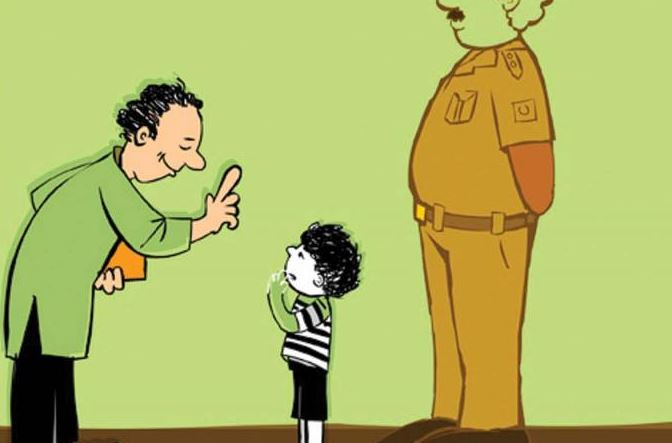
    • The two-finger test involves the medical examiner inserting their two fingers into the vagina of a survivor to note the presence or absence of the hymen and the so-called laxity of the vagina.

    finger test

    What is the expert doctor’s opinion?

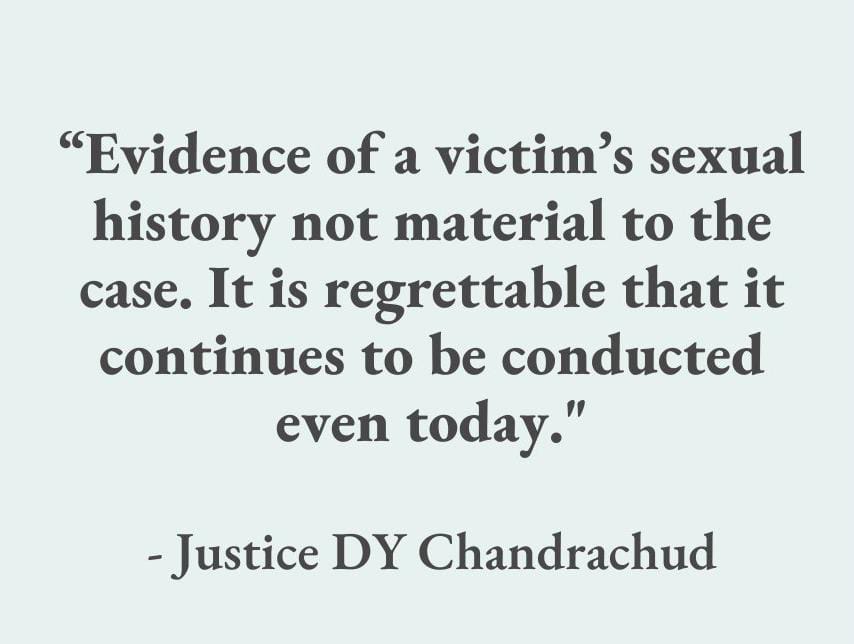
    • Misogynistic belief: While a hymen can be torn and its orifice may vary in size for many reasons unrelated to sex, the origin of the two-finger test lies in the misogynistic belief that a torn hymen is an indication that the survivor is habituated to sex and therefore, cannot be raped or is more likely to make false claims about being raped.

    What is the law against such infringement of bodily privacy?

    • SC prohibited test in Rajesh v. State of Haryana 2013 case: “Medicalization of consent” where women’s bodies are given precedence over their voices. Recognizing this as an invasion of privacy and a violation of a survivor’s dignity, the Supreme Court prohibited the test in Lillu at Rajesh v. State of Haryana (2013).
    • Guidelines for medico-legal care for survivors of sexual violence: Shortly after, in March 2014, taking forward the recommendations of the Justice J S Verma Committee Report, the Ministry of Health & Family Welfare issued guidelines for medico-legal care for survivors of sexual violence. These guidelines explicitly prohibited the two-finger test and discussed the need for training medical examiners to respond to the needs of the survivors in a sensitive and non-discriminatory manner.

    Why the practice of two finger tests still persists?

    • Lack of political will: Nearly eight years since the guidelines were issued, the two-finger test still remains a reality. Its prevalence is a reflection of the complete lack of political will to address the issue.
    • No pan-India comprehensive review: While fragmented pieces of narratives and research indicate that the two-finger test continues in rape cases to date, it is incumbent upon the executive to undertake a comprehensive pan-India review to assess the nature and extent of the problem.
    • Change in format and unclarity: The changed format (introduced after the passing of the Criminal Law Amendment Act, 2013) of the medico-legal certificate used by doctors in rape cases did not require them to make a note of the finding of the two-finger test. However, according to the lawyers, this did not mean that the test was not happening anymore. Some says they it was no longer being recorded as such but was still being conducted.
    • Poor medical infrastructure: The continued existence of the two-finger test is a result of the overall poor state of forensic medicine infrastructure in India.
    • Lack of awareness: Lack of awareness amongst the medical community about the unscientific nature of the two-finger test.

    finger test

    What is the opinion of the court?

    • Government must enforce the protocol: The Court commenting on the sorry state of affairs and issuing directions to the government on enforcement of the protocol including the emphasis on workshops and the medical school curriculum is significant.
    • Holding a person, a guilty of misconduct: The Court took a step further by holding a person conducting the two-finger test on a rape survivor guilty of misconduct. It is unclear if the Court was making a reference to professional misconduct on part of the medical examiner.

    finger test

    What should be the way forward?

    • Caregiving to victim: Medical practitioners must see themselves as caregivers when handling sexual violence cases.
    • Awareness about legal system: Medical practitioners should be made to understand as their role in the criminal legal system, specifically towards rape survivors.
    • Training of medical examiners: The training in medical school must prepare medical examiners for their role in the justice system.
    • Police should play an active role: The institution of police should be sensitized on the continued use of the two-finger test in rape cases.
    • Modules on sexuality: Training and workshops designed for doctors needs to include modules on sexuality and discrimination.

    Conclusion

    • Two finger test is further traumatizing the victim of rape. Despite the directives of courts years ago and unscientific nature, two finger test continues. Women empowerment is not only about the earnings and livelihood its also about the right to privacy and dignity of life.

    Mains Question

    Q. What is two finger tests? what is the law against the two-finger test? give the reasons for continuation of two finger test?

    Click and Get your FREE copy of Current Affairs Micro notes


  • What are Coronal Holes?

    coronal

    Recently, NASA tweeted an image of the sun seemingly ‘smiling’. NASA explained that the patches are called coronal holes, which can be seen in ultraviolet light but are typically invisible to our eyes.

    What are Coronal Holes?

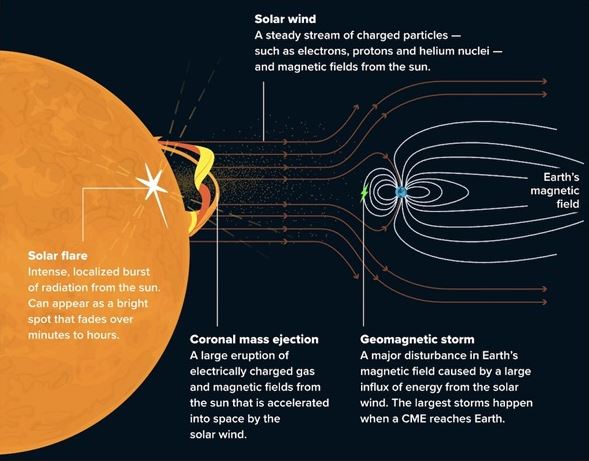
    • Coronal holes are regions on the sun’s surface from where fast solar wind gushes out into space.
    • Because they contain little solar material, they have lower temperatures and thus appear much darker than their surroundings.
    • Here, the magnetic field is open to interplanetary space, sending solar material out in a high-speed stream of solar wind.
    • They can last between a few weeks to months.
    • The holes are not a unique phenomenon, appearing throughout the sun’s approximately 11-year solar cycle.
    • They can last much longer during solar minimum – a period of time when activity on the Sun is substantially diminished.

    How are they formed?

    • It is unclear what causes coronal holes.
    • They correlate to areas on the sun where magnetic fields soar up and away, without looping back down to the surface as they do elsewhere.

    What do they tell us?

    • These ‘coronal holes’ are important to understanding the space environment around the earth through which our technology and astronauts travel.
    • In 2016 coronal holes covering “six-eight per cent of the total solar surface” were spotted.
    • Scientists study these fast solar wind streams because they sometimes interact with earth’s magnetic field, creating what’s called a geomagnetic storm.
    • These storms can expose satellites to radiation and interfere with communications signals.

    Back2Basics: Geomagnetic Storms

    coronal

    • Geomagnetic storms relate to earth’s magnetosphere – the space around a planet that is influenced by its magnetic field.
    • When a high-speed solar stream arrives at the earth, in certain circumstances it can allow energetic solar wind particles to hit the atmosphere over the poles.
    • Such geomagnetic storms cause a major disturbance of the magnetosphere as there is a very efficient exchange of energy from the solar wind into the space environment surrounding earth.
    • In cases of a strong solar wind reaching the earth, the resulting geomagnetic storm can cause changes in the ionosphere, part of the earth’s upper atmosphere.
    • Radio and GPS signals travel through this layer of the atmosphere, and so communications can get disrupted.


    Click and get your FREE copy of Current Affairs micro notes