šŸ’„Join UPSC 2027,2028 Mentorship (July Batch) + XFactor Notes & Microthemes PDF

GS Paper: GS3-19.Disaster and Disaster Management.

  • Policy: Making India Earthquake Prepared

    Policy

    Central Idea

    • The destruction caused by earthquakes in Turkey should be alarming for India. Over the last three weeks, tremors have been felt in Himalayan states. Moreover, geologists have warned of a probable massive earthquake in the Himalayan state. In this context the Delhi High Court asked the state government to file a status report and action plan on the structural safety of buildings in Delhi. Nearly 58 per cent of the Indian landmass is vulnerable to earthquakes and the concerns that have been raised by the court need a policy response instead.

    Get your Rs 10,000 worth of UPSC Strategic Package for FREE | PDFs, Zoom session, Tests, & Mentorship

    How do earthquakes happen?

    • According to the theory of plate tectonics, the Earth’s crust and upper mantle are made of large rigid plates that can move relative to one another.
    • Slip on faults near the plate boundaries can result in earthquakes.
    • The point inside the Earth where the earthquake rupture starts is called the focus or hypocentre.
    • The point directly above it on the surface of the Earth is the epicentre.

    What is missing in India’s policy on earthquake preparedness?

    • Current policy operates primarily at the scale of structural details: Guided by the National Building Codes, this includes specifying dimensions of the structural members columns, beams, etc. and details of the reinforcements that join these elements together.
    • While scientifically sound, this view on earthquake preparedness is myopic:
    1. It ignores the buildings that were constructed before such codes were published in 1962. Such buildings form a large part of our cities.
    2. It assumes infallibility in the processes of enforcement, relying only on penalisation and illegalities.
    3. It treats earthquakes as a problem of individual buildings, as if they exist and behave in complete isolation from their urban context.

    What needs to be done?

    • Preparedness at Building and City Scale through policy: Earthquake preparedness, therefore, needs to act at the scale of building details as well as that of cities. Moreover, we must think about it in the realm of policy and not just legal enforcement.
    • Need for Comprehensive Policy: At the scale of building details, we need to create a system of retrofitting existing structures and enforcing seismic codes with more efficiency. While there has been political talk and piecemeal efforts towards retrofitting, we still lack a comprehensive policy.

    A policy should include two measures

    1. Retrofitting Buildings to Seismic Codes:
    • To create a system of tax-based or development rights-based incentives for retrofitting one’s building up to seismic codes.
    • Such a system of incentives will enable the growth of an industry around retrofitting and will generate a body of well-trained professionals and competent organisations.
    1. Improving Seismic Code Enforcement:
    • By ensuring better enforcement of seismic codes through a similar model. A step forward in this direction was the National Retrofitting Programme launched in 2014.
    • Under the programme, the Reserve Bank of India directed banks to deny loans for any building activity that does not meet the standards of earthquake-resistant design.

    Case study: Japan

    • Japan has invested heavily in technological measures to mitigate the damage from the frequent earthquakes that it experiences.
    • Skyscrapers are built with counterweights and other high-tech provisions to minimise the impact of tremors.
    • Small houses are built on flexible foundations and public infrastructure is integrated with automated triggers that cut power, gas, and water lines during earthquakes.
    • All of this has been a result of cultivating an industry around earthquake mitigation and fostering expertise.

    Criteria for an urban-level policy to generate earthquake vulnerability maps

    1. The percentage of vulnerable structures in the area;
    2. The availability of evacuation routes and distances from the nearest open ground;
    3. Density of the urban fabric;
    4. Location of nearest relief services and the efficiency with which these services can reach affected sites.
    • For example: Flood zone mapping is a good example of such an exercise that has proven to be successful in terms of timely evacuation and efficient implementation.

    Conclusion

    • Governments and policymakers ought to know better than act in a piecemeal manner. Programmes like the ongoing Urban 20 meetings are an excellent opportunity for international knowledge exchange on earthquake preparedness. The Delhi High Court’s directions must act as a reminder for the inclusion of an earthquake preparedness policy in urban renewal programmes such as the Smart Cities Mission. A policy on earthquake preparedness requires a visionary, radical and transformative approach.
  • Turkey hit by series of powerful Earthquakes: The science behind it

    turkey

    More than 4000 people died and several hundred were injured after a major earthquake of magnitude 7.8 hit south-central Turkey and Northwest Syria.

    What is an Earthquake?

    • An earthquake is an intense shaking of the ground caused by movement under the earth’s surface.
    • It happens when two blocks of the earth suddenly slip past one another.
    • This releases stored-up ā€˜elastic strain’ energy in the form of seismic waves, which spreads through the earth and cause the shaking of the ground.

    What exactly causes Earthquakes?

    • As we know, the earth’s outermost surface, crust, is fragmented into tectonic plates.
    • The edges of the plates are called plate boundaries, which are made up of faults.
    • The tectonic plates constantly move at a slow pace, sliding past one another and bumping into each other.
    • As the edges of the plates are quite rough, they get stuck with one another while the rest of the plate keeps moving.
    • Earthquake occurs when the plate has moved far enough and the edges unstick on one of the faults.
    • The location below the earth’s surface where the earthquake starts is called the hypocenter, and the location directly above it on the surface of the earth is called the epicentre.

    How prone is Turkey to Earthquakes?

    • Turkey and Syria lie in a seismically active region
    • The region where the earthquake has struck lies along a well-known seismic fault line called the Anatolia tectonic block that runs through northern, central, and eastern Turkey.
    • It is a seismically active zone — though not as active as, say, the Himalayan region which is one of the most dangerous regions in the world from the perspective of earthquakes.

    What makes Turkey a hotbed of seismic activity?

    turkey

    • Turkey is frequently shaken by earthquakes. In 2020 itself, it recorded almost 33,000 earthquakes in the region.
    • Turkey is located on the Anatolian tectonic plate, which is wedged between the Eurasian and African plates.
    • On the north side, the minor Arabian plate further restricts movement.
    • One fault line — the North Anatolian fault (NAF) line, the meeting point of the Eurasian and Anatolian tectonic plates — is known to be ā€œparticularly devastatingā€.
    • Then there is the East Anatolian fault line, the tectonic boundary between the Anatolian Plate and the northward-moving Arabian Plate.
    • It runs 650 kilometers from eastern Turkey and into the Mediterranean.
    • In addition to this, the Aegean Sea Plate, located in the eastern Mediterranean Sea under southern Greece and western Turkey, is also a source of seismic activity in the region.

    Where was the earthquake epicentered?

    • The centre of the earthquake was centred about 33 km from Gaziantep, around 18 km deep.
    • Its effect was felt across West Asia, Northern Africa and South Eastern Europe with residents of Lebanon, Cyprus, Greece, Israel and Egypt also reporting tremors.

    Aftermath: Many Aftershocks hits the region

    • Aftershocks are a sequence of earthquakes that happen after a larger mainshock on a fault.
    • Aftershocks occur near the fault zone where the mainshock rupture occurred and are part of the ā€œreadjustment processā€ after the main slip on the fault.
    • While they become less frequent with time, although they can continue for days, weeks, months, or even years for a very large mainshock.

    Can earthquakes be predicted?

    • An accurate prediction of an earthquake requires some sort of a precursory signal from within the earth that indicates a big quake is on the way.
    • Moreover, the signal must occur only before large earthquakes so that it doesn’t indicate every small movement within the earth’s surface.
    • Currently, there is no equipment to find such precursors, even if they exist.

    India offers assistance

    • India is among the 45 countries, which have so far offered assistance to Turkey.
    • It’s sending search and rescue teams of the National Disaster Relief Force (NDRF) and medical teams along with relief material to the West Asian nation.
  • Disasters at Himalayan Region (Uttarakhand)

    Himalay

    Context

    • Disasters have become commonplace in the Himalayan state of Uttarakhand, the most recent one being the sinking of Joshimath. Although climate change has triggered these events, the most important underlying factors are poor planning and a lack of vision.

    Crack Prelims 2023! Talk to our Rankers

    Recent disasters on Himalaya

    • Kedarnath floods: Nature has given enough warnings of the dangers in the Himalayas. The 2013 Kedarnath floods took more than 5,000 lives, according to official records.
    • Nepal earthquake: The 2015 Gurkha Earthquake in Nepal killed as many as 8000 individuals.
    • Floods in Pakistan: The recent floods in Pakistan left millions of people homeless and devastated.
    • Sinking of Joshimath: The ā€˜Joshimath sinking’ phenomenon has received national and global attention. However, other cities and towns across Uttarakhand are also on the brink of collapse. Joshimath is the first one to succumb to human pressures, thankfully without causing any damage to human lives.

    Reasons for disasters at Himalaya (Uttarakhand)

    • Construction in Prohibited areas: The geological fragility of Uttarakhand is part of scientific and popular knowledge. Government policies and bylaws prohibit people from constructing houses on vulnerable slopes.
    • Mindless decision making: With increasing access to internet facilities, almost everyone can find information. Yet one is compelled to ask about the role technological advancement and information abundance have played in environmental decision-making as mindless construction over vulnerable slopes continues uninhibited.
    • Ignorance by bureaucrats: The technicalities of science and academic jargon are complex for bureaucrats to understand and laypersons and bureaucratic mindsets only engage with the research community for obligatory and cosmetic purposes.

    Infrastructure of mountainous area and plain area

    • Normal construction methods for fragile ecology: We have continued to borrow practices from elsewhere for implementation on the delicate eco-geological systems of the Himalayas.
    • Gurugramisation of Uttarakhand: Gurugram’s infrastructure development took a toll on Gurugram itself. For the Himalayas, Gurugram-style development is enormously devastating. The ā€œGurugramisationā€ of Uttarakhand needs to stop.
    • Disregards to laws and regulations: The divide between science–policy, and people, has promoted disconnected decision-making and encouraged individuals to casually flout bylaws and regulatory policies. A common Uttarakhandi is forced to live a life full of uncertainty and fear.

    Case study of Nainital

    • Vulnerable to landslides: Nainital, one of the most vulnerable cities in the entire Himalayan region. The Nainital lake is situated over an active Faultline and surrounded by slopes vulnerable to landslides.
    • Earthquake prone area: It falls under a high earthquake-prone zone (Zone IV). Since its settlement in 1841 small and big landslides continue to threaten the city. The most devastating of them was the 1880 landslide that took 151 human lives.
    • Construction on vulnerable slopes: Despite having robust scientific evidence, building bylaws, and an aware citizenry, the brutal assaults on the biophysical environment of the city are ongoing. The slope that collapsed in 1880 (less than a fraction of a second earlier on a geological time scale) is now inhabited by more than 15,000 individuals.
    • Ground water exploitation: In 2017, the Nainital lake level plummeted 18 feet due to the excessive withdrawal of water from the lake bed to meet local and unprecedented tourism needs. Such a decline was never experienced in the past.
    • Mindless tourism activities: The biggest threat to Nainital is the crumbling ā€œBalianalaā€. To make matters worse, construction work over the most important recharge area of the Nainital lake ā€œSukhatalā€ is underway. The intention is to enhance tourism-related activity. But the question is, does a city that receives more than 10,000 tourists and 2,000 vehicles on a daily basis in the summer months and weekends need more tourism?

    Himalay

    Conclusion

    • The carrying capacity of the cities in Himalayas has been exhausted. The natural infrastructure is fatigued and dangers of a possible collapse are visible to the human eye. Government must the amend and implement the construction laws and regulations for sustainability of Himalayas.

    Mains Question

    Q. What are the reasons for recent sinking in Joshi math? Illustrate the vulnerability of Himalayas using the case study.

    (Click) FREE 1-to-1 on-call Mentorship by IAS-IPS officers | Discuss doubts, strategy, sources, and more

  • In news: Bhopal Gas Leak Tragedy

    bhopal

    The Supreme Court has grilled the Centre on how the settlement can be reopened, when Union Carbide has already paid over $ 470 million to the Bhopal gas tragedy victims, and also expressed concern over Rs 50 crore undisbursed funds.

    Why in news?

    • Union Carbide, now a part of Dow Jones – has not fulfilled its responsibility in terms of providing just compensation.
    • Around 19 years after compensation was agreed upon, the Indian government filed a curative petition in 2010 to seek additional compensation from Dow, of more than ten times the amount it gave in 1989.

    Bhopal Gas Tragedy

    • On the night of December 2, 1984, one of the biggest industrial disasters to ever take place began unfolding in Bhopal.
    • Harmful Methyl Isocyanate (MIC) gas started leaking from a nearby Union Carbide pesticide plant, eventually resulting in the Bhopal Gas tragedy.
    • An estimated 3,000 people died within the first few days.
    • Over time, similarly horrifying numbers of those who suffered life-long health issues would become known.

    Health hazards of the disaster

    • Its effects were such that apart from killing thousands of people in a short span of time, it led to disease and other long-term problems for many who inhaled the gas.
    • The sources of water around the factory were deemed unfit for consumption and many handpumps were sealed.
    • To date, the reproductive health of many of Bhopal’s women has been affected.
    • Children born to those exposed to the gas have faced congenital health problems.

    How did govt respond to the disaster?

    The incident pointed to the lack of specific laws in India at the time for handling such matters. Ā This changed after Bhopal.

    • Environment (Protection) Act, 1986: It authorised the central government to take relevant measures and regulate industrial activity for environmental and public safety.
    • Public Liability Insurance Act of 1991: It was also passed to provide public liability insurance for providing immediate relief to the persons affected by an accident occurring while handling any hazardous substance.


    Crack Prelims 2023! Talk to our Rankers

    (Click) FREE 1-to-1 on-call Mentorship by IAS-IPS officers | Discuss doubts, strategy, sources, and more

  • What is Joshimath Crisis?

    joshimath

    Many families living in Uttarakhand’s Joshimath has shifted to safe places after their homes developed deep cracks, leaving them in a panicked state.

    Joshimath Crisis

    • Joshimath lies on an ancient landslide, resting on a deposit of sand and stone, not rock.
    • The rivers Alaknanda and Dhauli Ganga play their part in triggering landslides, by eroding the river banks and mountain edges.
    • It is believed that increased construction activity and growing population have contributed to frequent landslides in the area, the 1976 Mishra Committee Report had pointed out.

    What is Land Subsidence?

    • Land subsidence is when the ground sinks or settles.
    • It can happen because people are taking too much water or minerals from the ground, which causes the ground to sink.
    • It can also be caused by natural processes, like soil compaction or the movement of the earth’s crust.
    • Land subsidence can cause problems like damage to buildings and roads, and can make it more likely for flooding to occur.

    Why is it sinking?

    • Joshimath is a deposit of sand and stone — it is not the main rock — hence it was not suitable for a township.
    • Vibrations produced by blasting, heavy traffic, etc. has led to a disequilibrium in natural factors.
    • Lack of proper drainage facilities also leads to landslides.
    • A lot of water has been percolating down into the porous crystalline rocks beneath the surface, softening them further.
    • When water is not allowed to flow down its natural course, it creates a lot of pressure, either over the ground, or underneath.
    • The existence of soak pits, which allow water to slowly soak into the ground, is responsible for the creation of cavities between the soil and the boulders.
    • This leads to water seepage and soil erosion.

    Issues with Joshimath’s town-planning

    • Overt tourism: The place is now the hub of tourists headed to at least three important shrines — Badrinath, Hemkund Sahib and Shankaracharya temple — as a result of which major infrastructure development has taken place.
    • Ignoring topography: There are lots of loose soft rocks, moraine (material left behind by retreating glaciers), and sediments. The soil is, therefore, not ideal for large constructions.
    • Seismically active area: Added to this is the fact that the area falls in a highly seismic zone, and experiences regular tremors, making the top soil unstable.

    Preventing a disaster

    1976 Mishra Committee Report suggested-

    • Imposition of restrictions on heavy construction: Construction should only be allowed after examining the load-bearing capacity of the soil and the stability of the site, and restrictions should also be imposed on the excavation of slopes.
    • Keeping the boulders: In the landslide areas, stones and boulders should not be removed from the bottom of the hill as it would remove toe support, increasing the possibility of landslides.
    • Sealing of cracks: Cracks which have developed on the slopes should be sealed. The toe of a landslide is its bottom-most point.
    • Conserving of trees: It has also advised against cutting trees in the landslide zone, and said that extensive plantation work should be undertaken in the area, particularly between Marwari and Joshimath, to conserve soil and water resources.
    • Agriculture on the slopes must be avoided: Activities like ploughing loosens the soil thereby triggering the scope for landslides.
    • Preventing water seepage: To prevent any more landslides in the future, the seepage of open rain water must be stopped by the construction of a pucca drainage system.
    • Cobbled roads: Roads should be metalled and without scuppers, that drain away the water from the road surface.
    • River training: The construction of structures to guide the river’s flow should be carried out. Hanging boulders on the foothills should be provided with appropriate support.

    Way forward

    • Ensuring safety of people: This should be immediate priority. State government should establish a clear and continuous communication channel with the affected people.
    • Time-bound reconstruction plan must be prepared.
    • Continuous seismic monitoring must be done.
    • A risk sensitive urban development plan for Joshimath should also be developed.


    Crack Prelims 2023! Talk to our Rankers

    (Click) FREE 1-to-1 on-call Mentorship by IAS-IPS officers | Discuss doubts, strategy, sources, and more

  • What is Post-Disaster Needs Assessment (PDNA)?

    pdna

    Post-Disaster Needs Assessment (PDNA) is now being done simultaneously in Assam, Himachal Pradesh, Gujarat, Karnataka, Jharkhand, Maharashtra, Odisha and Meghalaya.

    Why in news?

    • PDNA is now being used to evaluate the financial and social cost of local disasters in eight states in India.
    • These states all experienced severe flooding in the last few months.
    • The results of these assessments are likely to come out next month.

    What is PDNA?

    • PDNA is an internationally accepted methodology for determining the physical damages, economic losses, and costs of meeting recovery needs after a natural disaster through a government-led process.
    • It is an international framework for assessing losses and damages in the aftermath of a disaster.
    • The framework helps get recovery and reconstruction efforts right following a disaster.
    • Globally, of the 55 PDNAs conducted worldwide since 2008, only two droughts — one in Malawi and the other Marshall Islands in 2016 — were of slow-onset disasters.

    Components of PDNA

    • PDNA includes a calculation of the disaster’s impact on Gross Domestic Product, the balance of payment and fiscal budget.
    • Secondly, how this affects the flow of revenue to multiple sectors is evaluated.
    • For example, the number of farmers’ income affected per damaged acre of land and the livelihoods lost.
    • Overall, a quantitative assessment is additionally done on the social and environmental impact of the disaster.

    History of PDNA in India

    • This is not the first time PDNA has been conducted in India.
    • It was first adopted during the Kerala floods of 2018 and again during the cyclone in Odisha in 2019, both unprecedented disasters.
    • Until now, the assessment was only limited to massive disasters that required international funding from the World Bank, the Asian Development Bank and the United Nations.

    15th Finance Commission provision

    • The 15th finance commission report of 2021, for the first time, made a provision for recovery and reconstruction in the national disaster management budget, which is at the core of the PDNA.
    • The states did not receive international funding to do the current ongoing PDNAs, as they are expected to take the money from the budget.


    UPSC 2023 countdown has begun! Get your personal guidance plan now! (Click here)

  • Urban Challenge, Problems and Solutions

    Context

    • After flooding of major metropolitan cities of Bengaluru, Gurgaon and Delhi following heavy rainfall, the Centre has pointed to two cities – Davanagere and Agartala – as successful examples of cities that have curbed urban flooding.

    Why cities areĀ  so important in India?

    • Drivers of Growth: Urbanisation has played and will continue to play a critical role in India’s growth story in the 21st century.
    • Cities are seen as GDP multipliers: By some estimates, Indian cities already contribute up to 70% of the country’s GDP. Yet, depending on which official estimates you use, India is just 26% or 31% urban. But there is growing evidence that India is more urban than is officially recognized.
    • Cities have more productivity: Well-functioning and diverse cities allow for the sharing and cross-pollination of ideas, which in turn drive greater productivity.

    Urban

    What are the Urban challenges?

    • Lack of Planning: current urban planning policies and practice have led to suboptimal use of land in Indian cities. This has multiple consequences. There is not enough floor space for accommodating migrants in search of economic opportunities; they make space for themselves in informal settlements. There is also not enough land in the public domain for developing adequate open spaces or augmenting infrastructure capacities.
    • Lack of Housing:The pandemic revealed that the cities’ economies rely on migrant populations in the formal and informal sectors. Workers in both markets move from rural to urban and urban to urban areas as they find better opportunities; they are mobile and need adequate rental options. Today, in most Indian cities, this demand is not met and leads to unaffordable options, pushing the poorer sections out to slums and other informal settlements.
    • Lack of Transport: Indian cities are infamous for their road congestion; three of them rank in the 10 most congested in the world according to the 2020 TomTom Travel Index with Mumbai ranking second. The existing public transportation systems are already overcrowded and of poor quality.
    • Lack of Public health: Like other health crises, the COVID-19 pandemic revealed the need to ensure adequate healthcare services and sanitation infrastructure for a healthy population in cities. In the initial months of the outbreak, the focus of health services shifted entirely towards addressing the novel coronavirus, leaving other health issues unaddressed and shutting down routine care services.
    • Impact on Environment: The causes for low air quality are multiple; vehicular movement and on-road congestion are major contributors. A safe and clean environment is key to good public health.
    • Problems faced by vulnerable sections: The economic shock and work from home guidelines changed migration patterns; workers in cities returned to their home towns and villages. Slum dwellers, with limited access to adequate infrastructure, and migrant workers, disenfranchised from social protection systems or daily wagers, were more vulnerable to this shock. In the medium and long term, it is difficult to predict what the job market will be in cities.

    Urban

    What can be done to address the urban challenges?

    • Future planning is necessary: Manage the spatial growth of cities and allow them to build more planned road networks for future horizontal expansion and revoke faulty policies that constrain the use of floor space to build vertically.
    • Housing for all scheme is important: Focus on providing public housing for the poor; India can learn from successful models in Singapore or Hong Kong and understand the strategic challenges of other international examples such as Mexico. India can also work toenable efficient rental markets
    • Holistic transport should be focused: Integrate formal and informal modes of transportation into holistic transportation strategies to ensure seamless mobility, as well as first and last mile connectivity.
    • Increasing funds to Cities: Decentralise fiscal powers to the local level and train city authorities so that they can make more strategic decisions in health expenditures or public health infrastructure, as well as gain the capacity to raise their own resources.
    • Need of a healthy Environment: Increase the number of open spaces in the public domain, maintain them and monitor their use. Prepare for disasters with robust framework of physical infrastructures, road networks and large open spaces. Build adequate infrastructure to support the sustainable development of emerging Tier-2 and Tier 3 towns.
    • More attention to vulnerable: Develop more systematic identification mechanisms of the urban poor to ameliorate the delivery of public services and social protection. Collect accurate data on migrant population and capture their socio-economic diversity to better address their needs. Monitor access to services, housing and jobs of the vulnerable communities in real time.

    Urban

    Conclusion

    • Urban infrastructure is crumbling day by day. In the next 25 years, cities will have more population than rural areas. Indian cities need urgent reform in order to unlock their economic potential and transform quality of life.

    Mains Question

    Q.Discuss the urban infrastructure challenges? What are the governments scheme and actions to address the urbanization challenges?

    UPSC 2023 countdown has begun! Get your personal guidance plan now! (Click here)

  • Nord Stream Pipeline Leakage: A climate Catastrophe

    Nord StreamContext

    • Four leakages were reported at different points in the Nord Stream pipelines, linking Russia and Europe, since September 26. Two of the leaks were in Swedish waters while the other two were reported from Danish waters. The European Union said they suspected ā€œsabotageā€ behind the leaks.

    What is Nord Stream Pipeline?

    • Nord Stream 1:
    • Nord Stream 1 is the biggest pipeline transportingĀ natural gasĀ betweenĀ RussiaĀ andĀ Europe via Germany.It is a system of offshore natural gas pipelines running under the Baltic Sea from Russia to Germany.
    • Nord Stream 1 is a 1,224 km underwater gas pipeline that runs from Vyborg in northwest Russia to Lubmin in northeastern Germany via the Baltic Sea.
    • Nord Stream 2:
    • Russian threats to choke this gas supply to Europe present an economic threat to Germany.
    • To expand options and double the supply from Russia, Germany decided to build Nord Stream 2.
    • The construction of the $11 billion-worth Nord Stream 2 was completed in 2021 but never began commercial operations.

    Nord StreamWhy the Nord Stream pipeline is so important?

    • For Germany: Energy prices in Germany, Europe’s largest economy, are among the lowest in the continent because of the cheap gas supplies via Nord Stream 1. This also makes German manufactured goods more competitive in theĀ international market.
    • For European Union: In 2021, Russia supplied nearly 40 per cent of the EU’sĀ natural gasĀ needs through this pipeline. The flows through Nord Stream play a vital role in filling up the national storage tanks of EU. It is crucial to provide the required heating in the upcoming winter.
    • For Russia: Russia is using the supplies via the crucial pipeline as a bargain to navigate its economy through sanctions from the western countries.

    What is the current status of Nord Stream Pipeline?

    • Nord stream pipeline is the largest single supply route for Russian gas to Europe. The Russian state owned gas company Gazprom has a majority ownership in the pipeline.
    • While it was running at just 20% of its capacity since the Russia-Ukraine conflict began, the company, in early September fully cut gas flows from the pipeline on the pretext of maintenance.
    • According to Bloomberg, while 40% of Europe’s pipeline gas came from Russia before Russia Ukraine the war, the number now stands at just 9%.
    • Even though both pipelines were not running commercially, they had millions of cubic metres of gas stored in them.

    The recent leakage in the pipeline

    • Commercial Methane: Measuring satellite firm GHGSat says, that a conservative estimate based on available data suggested that the leaks together were releasing ā€˜more than500 metric tonnes of methane per hour’ when first breached, with the flow decreasing over time.
    • Biggest methane leakage ever: According to UNEP The leakage from the Nord Stream natural gas pipeline system under the Baltic Sea have led to perhaps the single biggest release of methane ever recorded.
    • Amount of leakage: The rate of leakage at one of the four points of rupture in the pipeline was 22,920 kg per hour. That is equal to burning about 286,000 kg of coal every hour, according to scientists.

    Nord StreamWhat will be the Impact of methane leakage?

    • Possibility of more leakage: With the timeframe for repairs being uncertain, the pipelines were unlikely to provide any gas to Europe in the forthcoming winter months, even if the political will to resume supply was found.
    • Commercial damage: European gas prices spiked after reports of the leaks emerged; European Benchmark prices rose 12% on Tuesday, while Dutch and British Prices continued to rise.
    • Ozone formation: Methane is the primary contributor to the formation of ground-level ozone, a hazardous air pollutant and greenhouse gas, exposure to which causes 1 million premature deaths every year.
    • Green House gas: Methane is also a powerful greenhouse gas. Over a 20-year period, it is 80 times more potent at warming than carbon dioxide.
    • Global warming: Methane has accounted for roughly 30 per cent of global warming since pre-industrial times and is proliferating faster than at any other time since record keeping began in the 1980s.
    • Emission have already increased during the lockdown: According to data from the United States National Oceanic and Atmospheric Administration, even as carbon dioxide emissions decelerated during the pandemic-related lockdowns of 2020, atmospheric methane shot up.

    Nord Stream

    Why is it important to reduce methane emission?

    • Short lifespan: Carbon dioxide remains in the atmosphere for hundreds to thousands of years. But it takes only about a decade for methane to break down. So, reducing methane emissions now would have an impact in the near term and is critical for helping keep the world on a path to 1.5°C.
    • Human caused methane emissions: Human-caused methane emissions could be reduced by as much as 45 per cent within the decade. This would avert nearly 0.3°C of global warming by 2045, helping to limit global temperature rise to 1.5˚C and putting the planet on track to achieve the Paris Agreement targets.
    • Prevent premature deaths: Every year, the subsequent reduction in ground-level ozone would also prevent 260,000 premature deaths, 775,000 asthma-related hospital visits, 73 billion hours of lost labour from extreme heat and 25 million tonnes of crop losses.
    • Reducing the Agriculture emission: Agriculture and allied activities remains the biggest contributor of methane emission. The UN’s Koronivia Joint Work on Agriculture initiative is supporting the transformation of agricultural and food systems, focusing on how to maintain productivity amid a changing climate. Representatives are also working to mainstream agriculture into the UN Framework Convention on Climate Change.

    Conclusion

    • Nord stream pipeline leakages will further exacerbate the ozone formation, Green House Gas emissions global warming and thereby climate change. In the spirit of Paris climate change agreement nations must act together to rein in the menace of GHG emissions.

    Mains Questions

    Q.Methane emission into atmosphere is done more by human activities than natural causes. In the spirit of Paris climate change agreement nations must act together to rein in the menace of GHG emissions. Explain

    Ā 

    UPSC 2023 countdown has begun! Get your personal guidance plan now! (Click here)


  • Transboundary Flood Disasters

    Transboundary Flood Disasters

    Context

    • Pakistan experiencing devastation, with a spread of diseases and severe shortage of potable water after intense flooding. In June this year Assam experienced one of its worst floods in which it affected over 30 districts. Assam and Bihar frequently suffer from transboundary flood disasters.

    What is transboundary flood?

    • Floods that are originate in upper riparian state crosses the international boundary and also affects the lower riparian state. For example, river Brahmaputra causes flood both in China and India simultaneously.

    Transboundary Flood DisastersHow the transboundary floods are difficult to manage than normal floods?

    • Flooding is still considered to be a natural phenomenon that cannot be entirely prevented. But it is compounded by the lack of transparency in the sharing of hydrological information and also information relating to activities (such as by one riparian state) that are transboundary in their effect (affecting other riparian states), thus serving as an obstacle in understanding the magnitude of flooding.

    Transboundary Flood DisastersWhat is a riparian state?

    • A riparian state is state (or country) located alongside a river.

    What are the International laws governing transboundary waters?

    There are at two international treaties that governs the transboundary water

    • UNWC:
    • United Nations Convention on the Law of the Non-Navigational Use of International Watercourses (UNWC) 1997.UNWC contains a direct reference to floods, which covers harmful conditions and the emergency situations.
    • Article 27 of the Convention says, Watercourse States shall individually and, where appropriate, jointly, take all appropriate measures to prevent or mitigate conditions that may be harmful to other watercourse States, whether resulting from natural causes or human conduct or desertification.
    • Environmental Impact Assessment:
    • The International Court of Justice (ICJ), in the Pulp Mills on the River Uruguay (Argentina vs Uruguay) case of 2010, upheld that conducting a transboundary environmental impact assessment (TEIA) of a planned measure or projects on the shared water course is part of customary international law.
    • In fact, the ICJ noted that the acting state must notify the affected party of the results of TEIA for assessment of its own damages that are likely to occur.
    • UNECE: United Nations Economic Commission for Europe (UNECE) on the Protection and Use of Transboundary Watercourses and International Lakes 1992 (Water Convention).

    Transboundary Flood DisastersHow India manages transboundary flood?

    • Note:Neither India nor China are signatory to UNWC or UNCEC.
    • River Brahmaputra: India has signed the memorandum of understanding (MoU) with China in 2013 with a view to sharing hydrological information during the flood season (June to September). The MoU does not allow India access to urbanisation and deforestation activities on the Chinese side of the river basin.
    • Rivers Gandak and kosi: Floods are also a recurrent problem in the Kosi and Gandak river basins that are shared by India and Nepal.
    • The India-Nepal Kosi agreement 1954: Agreement aimed at reducing devastating flooding in the river basin. The treaty-based joint bodies have also tried to refine the early warning systems for flood forecasting.

    What are the suggestions?

    • Signing the treaty: Expert suggests, India by becoming a party to either the UNWC and the Water Convention could lay the groundwork for a bilateral treaty on the Brahmaputra but subject to the reservation that it should not insist on the insertion of a dispute settlement mechanism provision.
    • Information exchange: In contravention of procedural customary international law obligation, India considers data on transboundary rivers as classified information, which is one of the key challenges in developing cross-border flood warning systems. India needs to share the hydrological and river information for its own sake.

    Conclusion

    • Climate change has accelerated the frequency and intensity of floods across the world. with Changing climate India should also change its strategy to protect its people, to preserve the soil and to save its resources from the scourge of floods.

    Mains Questions

    Q.Climate change has created a more difficult challenge in flood management. In this context, what measures can be taken to deal with frequent transboundary floods in India. Discuss.

    UPSC 2022 countdown has begun! Get your personal guidance plan now! (Click here)

  • Urban floods mitigation

    floods
    Context

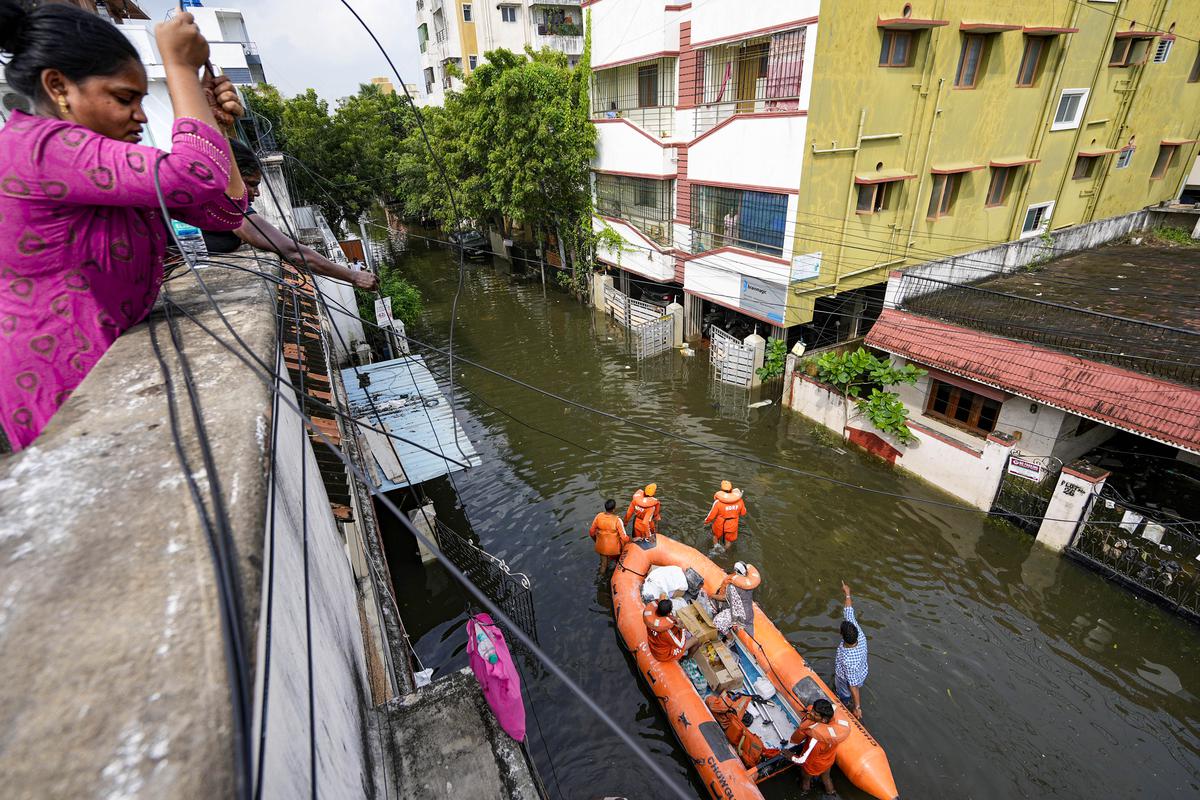
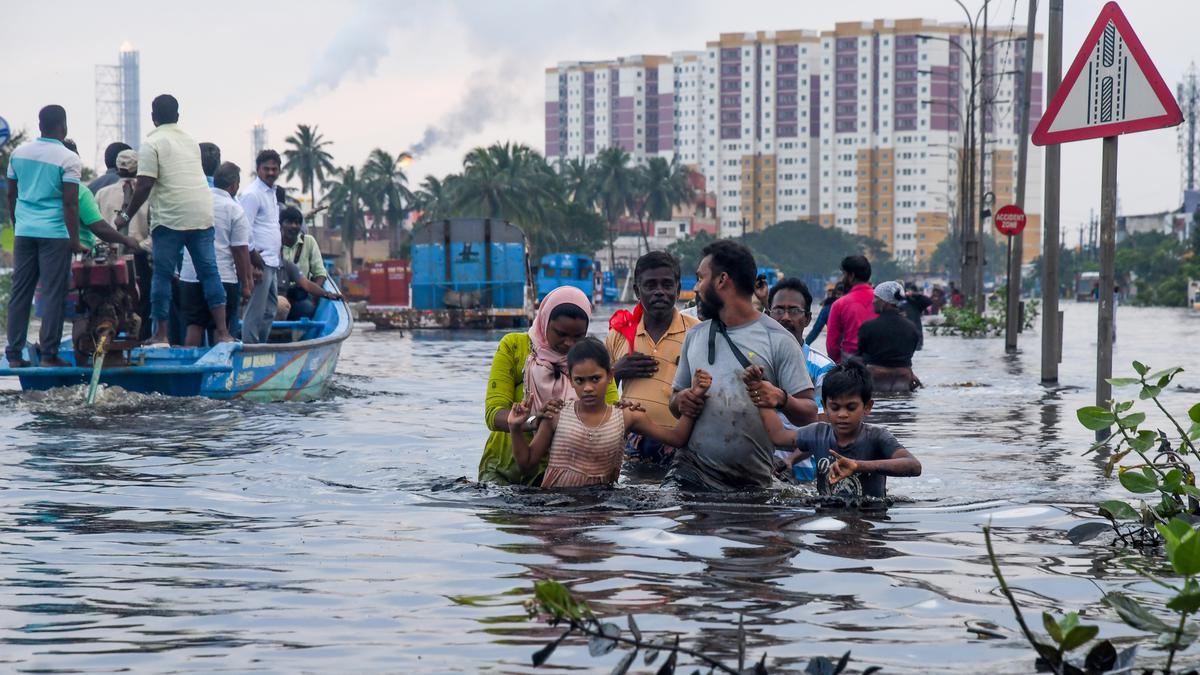
    • Bengaluru floods are alarming us to go for robust disaster management strategies.

    What is flood?

    • Floods areĀ the most frequent type of natural disaster and occur when an overflow of water submerges land that is usually dry. Floods are often caused by heavy rainfall, rapid snowmelt or a storm surge from a tropical cyclone or tsunami in coastal areas.

    Causes of frequent urban floods

    Natural

    • Meteorological Factors:Heavy rainfall, cyclonic storms and thunderstorms causes water to flow quickly through paved urban areas and impound in low lying areas.
    • Hydrological Factors: Overbank flow channel networks, occurrence of high tides impeding the drainage in coastal cities.
    • Climate Change: Climate change due to various anthropogenic events has led to extreme weather events.

    Anthropological

    • Unplanned Urbanization:Unplanned Urbanization is the key cause of urban flooding. A major concern is blocking of natural drainage pathways through construction activity and encroachment on catchment areas, riverbeds and lakebeds.
    • Destruction of lakes: A major issue in India cities. Lakes can store the excess water and regulate the flow of water. However, pollution of natural urban water bodies and converting them for development purposes has increased risk of floods.
    • Unauthorised colonies and excess construction: Reduced infiltration due paving of surfaces which decreases ground absorption and increases the speed and amount of surface flow
    • Poor Solid Waste Management System: Improper waste management system and clogging of storm-water drains because of silting, accumulation of non-biodegradable wastes and construction debris.
    • Drainage System:Old and ill maintained drainage system is another factor making cities in India vulnerable to flooding.
    • Irresponsible steps: Lack of attention to natural hydrological system and lack of flood control measures.

    floodsImpact of the devastation due to floods:

    • On economy: Damage to infrastructure, roads and settlements, industrial production, basic supplies, post disaster rehabilitation difficulties etc.
    • On human population and wildlife:Trauma, loss of life, injuries and disease outbreak, contamination of water etc.
    • On environment:Loss of habitat, tree and forest cover, biodiversity loss and large scale greenery recovery failure.
    • On transport and communication: Increased traffic congestion, disruption in rail services, disruption in communication- on telephone, internet cables causing massive public inconvenience.

    Solutions for effective flood management

    • Improved flood warning systems: effective flood warning systems can help take timely action during natural calamities and can save lives. Pre-planning can significantly reduce the effects of floods, giving people time to migrate to safer locations and stock up essentials.
    • Building flood-resilient housing systems: concreting floors can be very useful during floods. Houses should be water proofed and electric sockets should be placed at higher levels up the walls to reduce the chances of shocks.
    • Constructing buildings above flood levels: buildings should be constructed a metre above from the ground to prevent flood damage and evacuation during floods.
    • Resilience to Climate change: drastic climate changes have increased the frequency of natural disasters in many parts of the world. Governments should bring about environment-friendly policy level changes and eliminate the ones hazardous to the environment to tackle the problem of global warming.
    • Create wetlands and encourage reforestation: creating more and more wetlands can help soak up excessive moisture since wetlands act as sponges. Wooded areas can also slow down heavy water flow, minimizing the effects of floods. Reforesting upstream regions can significantly reduce the effects of flood damage.
    • Improve soil conditions: improper soil management, animal hooves, and machinery can make soil compacted. As a result, instead of holding water in and absorbing moisture, the water runs off immediately. Properly drained soil can absorb large amounts of rainwater and can prevent it from flowing into the rivers.
    • Installing flood barriers: these are flood gates designed to prevent the area behind the barrier from flooding. They can also be kept around buildings to keep floodwaters outside the boundary created.
    • Development of GIS– Geographical Information System (GIS) based National Database: for disaster management. GIS is an effective tool for emergency responders to access information in terms of crucial parameters for disaster-affected areas.
    • Developing a Federal flood management plan: with responsibilities of union and state clearly defined.
    • Creation of 2nd flood commission: (Rashtriya Barh Aayog, created in 1976) to study the flood situation in India under rising challenges of climate change and propose a national-level flood resilience and management plan.

    Way forward

    • Resilience of people: The rapid transformation in rainfall characteristics and flooding patterns demand building people’s resilience.
    • Reconsider projects: Construction projects that impede the movement of water and sediment across the floodplain must be reconsidered.
    • Use of technology: At the same time, climate-imposed exigencies demand new paradigms of early-warning and response systems and securing livelihoods and economies.

    Conclusion

    • We can learn to live with nature, we can regulate human conduct through the state and we can strategically design where we build. We need to urgently rebuild our cities such that they have the sponginess to absorb and release water without causing so much misery and so much damage to the most vulnerable of our citizens.

    Mains question

    Q. We need to urgently rebuild our cities such that they have the sponginess to absorb and release water. Discuss the statement in context of urban flood management strategy in India.

    UPSC 2023 countdown has begun! Get your personal guidance plan now! (Click here)