💥UPSC 2026, 2027, 2028 UAP Mentorship (March Batch) + Access XFactor Notes & Microthemes PDF

Search results for: “”

  • Millets the future of Sustainable Agriculture

    Millets

    Context

    • International Year of Millets in 2023 was approved by the Food and Agriculture Organisation (FAO) in 2018 and the United Nations General Assembly has declared the year 2023 as the International Year of Millets. The Odisha Government had launched Odisha Millet Mission (OMM), which aims to bring millets back to its fields and food plates by encouraging farmers to grow the crops that traditionally formed a substantial part of the diet and crop system in tribal areas.

    Millets

    Importance of millets

    • Nutrition rich: Millet is a good source of protein, fibre, key vitamins, and minerals. The potential health benefits of millet include protecting cardiovascular health, preventing the onset of diabetes, helping people achieve and maintain a healthy weight, and managing inflammation in the gut.Millet is fibrous in content, has magnesium, Niacin (Vitamin B3), is gluten-free and has a high protein content.
    • Requires less water: Millet’s comprise a significant staple in the semiarid tropic and guarantee food and nutritional security for needy individuals, who can’t develop other food crops because of poor rainfall and soil fertility. They are profoundly nutritious and are utilized by people in the rural area.
    • Requires Moderate fertile soils: They can grow in low to medium fertile soils and in areas of low rainfall. Jowar, Bajra, and Ragi are the significant Millet’s developed in India.
    • Profitable crop: Millets are the good choice for farmers to achieve primary goals of Farming e.g., profit, versatility, and manageability.
    • Drought resistant and sustainable: Millet’s are the ‘marvel grains’ of the future as they are drought resistant which need few external inputs. Due to its high resistance against harsh conditions, millets are sustainable to the environment, to the farmer growing it, and provide cheap and high nutrient options for all.
    • Long shelf life: Nearly 40 percent of the food produced in India is wasted every year. Millets do not get destroyed easily, and some of the millets are good for consumption even after 10-12 years of growing, thus providing food security, and playing an important role in keeping a check on food wastage.

    Millets

    What is Odisha Millet mission (OMM) and its impact?

    • Promotion of millets: OMM promotes production and consumption of seven millets. But so far, focus has been on ragi, which has accounted for 86 per cent of the total area under millets, according to data on the OMM website. In contrast, little millet, foxtail millet, sorghum, pearl millet, kodo millet and barnyard millet cover less than 13 per cent of the area.
    • Non ragi millets: Mission aimed at looking for high-yielding seeds for non-ragi millets. Farmers are urged to plant some non-ragi millets
    • Limited procurement: In 2020-21, the state government procured slightly more than 20 million kg of ragi. However, this accounts for only 27 per cent of the total ragi produced, as OMM procures only 500 kg of ragi per ha and leaves the rest for farmers to consume.
    • Millets in diet for complete nutrition: This practice has prompted farmers to consume more millets in all seasons, shows a mid-term evaluation by NCDS in 2019-20. But given that average yield is 1,500 kg per ha, much of the produce does not get procured and farmers are forced to sell it at distressed rate. OMM officials also admit that despite ragi being distributed in PDS and as a mix through anganwadi centres in two districts, its consumption has not picked up in a significant manner.
    • Diverse products of Millets: OMM also sells millet products, such as cookies, savoury snacks, vermicelli and processed millets, under a brand called “Millet Shakti” through food trucks, cafés, kiosks and other outlets.
    • Food processing chain using SHGs: Women self-help groups (SHGs) have been kept at the centre of the programme. They do not just pay a major role in manufacturing biological inputs to improve millet yields and undertake processing of the produce, but also operate the millet-based cafés and outlets.The full potential of SHGs, though, has not yet been realised. So far, only three women’s SHGs manufacture and process Millet Shakti products, which limits the volume available, income generated, and consumption.
    • Market linkage by FPOs: OMM also leverages farmer-producer organisations (FPOs) to provide better marketing linkages. Until now, OMM has tapped into existing FPOs to sell processed millets in the open market or aggregate produce for Tribal Development Co-operative Corporation of Odisha Limited; if a block does not have an FPO, an SHG or community group is registered as one.
    • Current status of FPO’S: Currently, there are 76 FPOs under OMM. But some of them are engaged only in minor processing and aggregation, without plans of scaling up market linkages. Encouraging FPOs with better incentives and benefit-sharing will help them compete in the market

    Millets

    What are other government efforts to promote millet crops?

    • Smart food campaign: Smart Food with the tagline ‘good for you, good for the planet and good for the smallholder farmer’ is an initiative that will initially focus on popularising millets, and sorghum and has been selected by LAUNCH Food as one of the winning innovations for 2017.
    • Popularising the millets: Smart Food will be taken forward as a partnership and many organisations have already teamed up to popularise millets. In India, this includes Indian Institute of Millet Research (IIMR), National Institute of Nutrition (NIN), MS Swaminathan Research Foundation (MSSRF) and Self-Employed Women’s Association (SEWA).

    Conclusion

    • One way to double farm incomes and encourage farm diversification is to make millet production attractive by introducing millet cultivation in areas where farmers’ distress is visible.Dedicated programmes with proper training and capacity-building initiatives that urge farmers to move away from loss-making crops toward diversification via millets can be a timely method to pull farmers away from the region’s distress.

    Mains Question

    Q.why millets cultivation is suitable for geographic conditions of India? Analyse the various efforts by government to promote the millets.

    UPSC 2023 countdown has begun! Get your personal guidance plan now! (Click here)

  • Adopting Sustainable Space Technology

    Sustainable

    Context

    • World Space Week this year is themed around ‘Space and Sustainability’. Among other things, the 2022 theme seeks to specifically inspire focus on the challenges the world faces to keep space safe and sustainable.

    What is mean by Space?

    • Space is an almost perfect vacuum, nearly void of matter and with extremely low pressure. In space, sound doesn’t carry because there aren’t molecules close enough together to transmit sound between them. Not quite empty, bits of gas, dust and other matter floats around “emptier” areas of the universe, while more crowded regions can host planets, stars and galaxies.
    • From our Earth-bound perspective, outer space is most often thought to begin about 62 miles (100 kilometers) above sea level at what is known as the Kármán line. This is an imaginary boundary at an altitude where there is no appreciable air to breathe or scatter light. Passing this altitude, blue starts to give way to black because oxygen molecules are not in enough abundance to make the sky blue.

    Sustainable

    What is mean by Space sustainability?

    • Space sustainability is ensuring that all humanity can continue to use outer space for peaceful purposes and socioeconomic benefit now and in the long term. This will require international cooperation, discussion, and agreements designed to ensure that outer space is safe, secure, and peaceful.

    What necessitate the sustainable space technology debate?

    • Mounting challenge of Space debris: Challenges are endless in both quantitative and qualitative terms, i.e., they are several and severe, ranging from satellite crowding and collision risk to space debris in the Low Earth Orbit (LEO).
    • Ever increasing satellites: The sense of urgency around space sustainability is already skyrocketing—more than 80 countries currently contribute to the over 6,800 active satellites in orbit, of which many are used for both civilian and military purposes, as well as over 30,000 pieces of orbital debris.
    • Militarization of space: Given the development of new and emerging space technologies, the rapid militarisation and securitisation of space, and the growing distrust amongst nations in the domain, space activity is only set to increase and acquire a more national security-oriented focus.
    • Large scale Development of ASAT: This is already visible in several countries around the world. There has been a recent uptick in the development and testing of destructive anti-satellite (ASAT) weapons, with 26 tests in the past two decades conducted by the four countries that have access to these weapons (US, Russia, China, and India).
    • Massive investment into military space capability: France, which is currently leading the European Council, has also invested several billion euros into military space capabilities, and regularly emphasises the security importance of space for other EU countries.
    • Increasing Defence space commands: Australia set up its Defence Space Command in early 2022 to increase its strategic potential in space, and South Korea deployed a spy satellite to better monitor North Korea in June 2022, giving its military space plan a huge push.
    • However, none of these countries have a sustainability provision in their defence space operations or programmes.

    Sustainable

    What are the challenges of Security and sustainability of Space?

    • Dichotomy in Security and sustainability: Sustainability and security are two sides of the same coin, but as a result of this inherent dichotomy, they are often juxtaposed against each other.
    • Keeping Security is the priority: The contrast between highly motivated and funded national security efforts and the relatively non-prioritised international engagements around space sustainability is an example of a larger trend of indifference towards sustainable development in favour of higher military spending.
    • SDG on backburner: To substantiate this point, funding for the Sustainable Development Goals (SDGs) was adversely affected due to COVID-19 in 2021, and this reportedly dramatically pushed back progress on the SDGs, but the global military expenditure has consistently been on an upward incline and crossed the US$2 trillion mark for the first time in the same year.
    • Securitization of space: The trade-off between security and sustainability can jeopardise sustainable development within a plethora of issue domains, thus, increasing the likelihood of exhausting limited resources. This in turn could exacerbate the risk of conflict due to the resulting scarce resources, ultimately creating a vicious cycle of securitisation and conflict.
    • Rat race in Space : As a case in point, the incumbent space race has always been marked by competing security and commercial interests, which has resulted in a constant escalation of global government spending on space programmes to its record value of US$98 billion in 2021. Space sustainability, on the other hand, has only seen activity recently, and primarily in an international and voluntary set-up.

    Sustainable

    What regulations are needed for Sustainable Space?

    • Prioritising peaceful use of space: A Working Group on the Long-term Sustainability of Outer Space Activities was set up by the Committee on the Peaceful Uses of Outer Space (COPUOS) in 2010, which has 95 UN member states taking part in it. The Group adopted a set of guidelines by consensus in 2019, although it failed to make these guidelines or any other regulations legally binding. It agreed to work over it for 5 years from 2022 onwards, but since the Group uses a consensus-based approach to reach agreements, it is difficult to expect more stringent or extensive regulatory frameworks to emerge from it.
    • Consensus is difficult but necessary: Consensus-based approaches in multilateral forums, especially related to arms or other security objectives, often contrast with individual national security interests of its member states and have been criticised for their slow or ineffective progress.
    • Convention on Certain Conventional Weapons: Another example of this is the Convention on Certain Conventional Weapons’ (CCW) Group of Government Experts (GGE) meetings on lethal autonomous weapons systems (LAWS), which have only produced a set of 11 non-binding guiding principles since deliberations around LAWS began in 2014.
    • Space sustainable ratings should be developed: The World Economic Forum, for instance, introduced a new standard called the Space Sustainability Rating (SSR), in 2022, which aims to recognise, reward, and encourage space actors to design and implement sustainable and responsible space missions. It remains to be seen whether countries will respond favourably to tools like the SSR, which are based on a positive reinforcement model, to be more space sustainability-conscious.

    Conclusion

    • space sustainability is only at the cusp of becoming actionable. When space experts, intergovernmental organisations, or countries themselves conclude that sustainability should be a part of their space mandate, and when they devise possible methods to help achieve this, they cannot do so in a vacuum. Space sustainability should not become the political football like climate change.

    Mains Question

    Q.What are the threats to sustainable space technology? Comment on various laws, regulations, forums on sustainable space technology.

    UPSC 2023 countdown has begun! Get your personal guidance plan now! (Click here)

  • Bringing Business friendly Industrial Laws

    Business

    Context

    • The government’s proposal to bring a “holistic decriminalisation” bill in the Winter Session of Parliament, If gets enacted into law, it will be one of India’s greatest reforms since 1991. One of the objectives of this proposed law is to “end harassment and reduce compliance burden on businesses.

     What is Holistic decriminalisation Bill?

    • A new holistic decriminalisation bill is set to amend burdensome provisions in laws related to businesses.
    • Union Minister of Commerce and Industry, Piyush Goyal said that the Decriminalising sections of various laws will end the harassment faced by businesses and reduce compliance burden. Seeking quick industry feedback on problematic areas that can be covered in the proposed Bill.

    What is the status of existing laws in India?

    • Burden of Imprisonment clauses: Business regulatory universe comprises 1,536 laws, of which more than half, or 843 laws, carry imprisonment clauses. Under these laws, there are 69,233 compliances businesses face as an aggregate, of which almost two out of five, or 26,134, carry imprisonment clauses.
    • Union and state legislations on the compliance: Of the 843 laws with imprisonment clauses, 28.9 percent, or 244 laws, have been enacted by Parliament; the rest by State legislatures and rules. Of the 26,134 compliances that carry imprisonment clauses, a fifth, or 5,239 clauses are situated in Union laws.
    • No institutional support for informal sector: Of the 69 million enterprises in India, only 1 million are formal employers; as a result, the remaining informal enterprises get no access to institutional capital, talent, or supply chains.
    • Smaller the better attitude: India’s predatory and rent-seeking policy infrastructure ensures that businesses choose to remain under the regulatory radar—small may not be beautiful but it is certainly safe. For instance, a small business with 150 employees or more has to deal with 500 to 900 compliances a year, on which it can end up spending up to INR 12-18 lakhs by hiring consultants to be compliant with labour laws, taxes, factories, and so on.
    • Burden of compliance is cost-effective: Creating a regulatory bias against small businesses once a line of scale is crossed, managing a compliance department becomes cost-effective; until then, for the small business owner-manager, compliances becomes a risk-management strategy, almost an economic activity.

    Business

    Why such reforms in business laws are necessary?

    • To attract more investment: When viewed through the lens of the government’s intention to make India an investment destination for global and domestic capital, it would be a reform that should end the endemic of harassment, corruption, and rent-seeking by officials of the Union government.
    • To end corruption at state level: Corruption by officials of state governments will end when criminal provisions in State laws and rules get similarly rationalised; some of these will get rationalised with amendments to Union laws that are enforced by state governments.
    • Encouraging the entrepreneurial spirit: Regulatory framework is cumulative policy actions of the three arms of the State the executive, the legislature, and the judiciary using instruments of legislations, rules, regulations, or orders, to create or raise barriers to a smooth flow of ideas, organisation, money, and, most importantly, the flow of the entrepreneurial spirit.

    Business

    What are the recommendations for Holistic decriminalization?

    • Amend the overreaching laws: Reform all compliances with overarching legislation, across ministries and departments. Smaller steps being taken to ease doing business in India, such as shifting the responsibility under the Legal Metrology Rules from directors to executives, should converge into this single bill.
    • There should be Justifiable imprisonment: Use criminal penalties in business laws with extreme restraint the idea of using a criminal clause as a default option should be done away with and replaced by a justification for imprisonment, including the term in jail.
    • Ending the criminalisation: End the criminalisation of all compliance procedures such as filing on a wrong form or mislabelling.
    • Introducing new laws: Introduce sunset clauses for all imprisonment clauses this needs a new enabling law as a precursor.
    • Bringing extensive Digitisation: Digitise all compliance filings, as has been done by the income tax department.
    • Focus on paperless work: Convert every department that acts as a regulatory body to go paperless and faceless. This should look beyond merely creating a website and uploading records. This will enable automated record reconciliation, identify leakages, detect frauds, and flag discrepancies.
    • More such steps in the right direction: By reducing the compliance burden such that it ends harassment, the government is moving in the right direction. To prevent any policy holes left after the passage of the bill into an act, this is a law that needs to be studied hard, debated well, and only then enacted. Of course, there will be political opposition. It is up to the government to ignore the rhetoric and embrace the solutions for the greater good of the country.

    BusinessConclusion

    • The country is getting ready for third-generation reforms. Among them are reforms that rationalise compliances and imprisonment clauses—retain a handful, reduce or remove most, compound the rest and turn physical imprisonment into financial penalties. The Inspector Raj, expressed through the colonial, corrupt, and rent-seeking policy infrastructure, must be disassembled and jobs, wealth, and large enterprises created.

    Mains Question

    Q. Why current industrial policy and laws are causing the harassment of entreprenuers? Discuss the reforms needed in the light of proposed “ Holistic Discrimination” Bill.

    UPSC 2023 countdown has begun! Get your personal guidance plan now! (Click here)

  • [Sansad TV] Perspective – Theatre Commands

    UPSC 2023 countdown has begun! Get your personal guidance plan now! (Click here)

    Context

    • India’s first Chief of Defence Staff, late General Bipin Rawat was instrumental in laying down the foundation for joint theatre commands in India.
    • His successor, Lt. General Anil Chauhan has now spelt it as his priority area.
    • In his maiden communication with the three defence forces, the new CDS asked the Army, the Navy and the Air Force to make a move ahead toward the creation of integrated theatre commands.

    What is Theaterisation?

    theatre
    • It is a concept that seeks to integrate the capabilities of the three services — army, air force and navy — and optimally utilise their resources for wars and operations.
    • Specific theatre commands – or units – will be placed under the Theatre Commander.
    • Such commands are expected to come under the operational control of an officer from any of the three services, depending on the function assigned.

    The committee, which was headed by Lt General DB Shekatkar (retd) has recommended the creation of 3 integrated theatre commands i.e.: 

    1. Northern for the China border,
    2. Western for the Pakistan border and
    3. Southern for the maritime role.

     What will it entail?

    • The current theaterisation model under consideration seeks to set up at least six new integrated commands.
    • The first phase involves the creation of Air Defence Command and Maritime Theatre Command.
    • Air Defence Command: This will control air defence resources of all three services and will be tasked with protecting military assets from airborne enemies. It will be headed by a top three-star Indian Air Force officer based in Prayagraj.
    • Maritime Theatre Command: This will be responsible for securing India from seaborne threats and will have army and air force elements. It will be headed by a top three-star Indian Navy officer and will be based in Karwar, Karnataka.
    • Ultimately, India is expected to have three other integrated commands to secure its western, northern and eastern fronts.
    • Additionally, a logistics command is in the works to avoid duplication of efforts and resources.

    How many commands does the military currently have?

    • The armed forces currently have 17 single-service commands spread across the country’s geography.
    • The Army has 7 commands, IAF has 7 commands and the Navy, 3 commands.
    • Creating theatres would involve merging existing commands.
    • The Port Blair-based Andaman and Nicobar Command is the only tri-service command.

    What is the current status?

    • Lack of consensus: A lack of consensus on the military’s theaterisation model emerged during a key meeting of top government officials reviewing a draft cabinet note on the new joint structures.
    • Expert panel working in tandem: This led to the government setting up an expert committee last week for consultations and to remove differences before the reform plan is sent to the Cabinet Committee on Security for approval.  The panel has members of the armed forces, defence ministry and other ministries (finance and home).

    Who has reservations about the current model?

    • In-favor: While the army and navy are in favour of theatre commands, the IAF has concerns about the model over the division of its air assets, the nomenclature of commands, the leadership of theatre commands and dilution of powers of chiefs.
    • Against: The IAF’s traditional resistance to theaterisation is well-known and has been articulated by its top leadership. The expert committee is expected to hold more discussions to iron out the details of the theaterisation plan and bring all stakeholders, especially the IAF, on board.

    Deliberations on the proposal are likely to take more time and previous timelines may have to be revised.

    How will the role of service chiefs change?

    • Operational control of the theatre commands will eventually come under the CDS, with the service chiefs being responsible for raising, training and sustaining their forces.
    • CDS is expected to have operational control over all integrated commands when they are fully functional — this will be in his role as CDS, and not as permanent chairman, COSC.

    Which other militaries have theatre commands?

    • Most leading militaries, including those of the US, Russia, China, UK and France, function as per the theatre command concept with the idea of seamless integration.
    • The US military, the world’s most powerful, has 11 combatant commands, each with a geographic or functional mission.
    • Similarly, the Chinese People’s Liberation Army has five theatre commands — eastern, southern, western, northern and central, with its western theatre handling the entire border with India.
    • Pakistan has sought Beijing’s help to reorganise its forces under the same military concept.

    Why is there a need to integrate Armed Forces?

    • Changed nature of warfare: The nature of warfare itself has witnessed a paradigm shift in the planning and execution of operations. The modern-day wars will be fought with simultaneity in a non-linear pattern across the spectrum of land, sea and air.
    • Multi-pronged strategy: The execution of operations would entail well-coordinated offensive-defensive manoeuvres, net-centric operations, information warfare, cyber-attacks, possibly under nuclear overhang etc.
    • Magnifying security threats: India has two hostile nuclear neighbours. Additionally, there is Left Wing Extremism (LWE) in almost half the districts in the country and international power play unfolding in the Indian Ocean region (IOR) as well as the Asia-Pacific Regions.

    Arguments for integrated theatre command

    • Better acclimatisation of troops: This aims to the given battle space, which will assist them to comprehend the operational requirements correctly in the assigned area of operation.
    • Training needs and administrative requirements: This can be better understood for troops, which would allow specialisation and suitable honing of battle drills at all levels.
    • Quick mobilization of troops: Equipment can be procured, maintained and pre-positioned for quick mobilisation and apt application during the envisaged, short-duration, high-intensity war.
    • Optimal use of resources: The allocation of military hardware, in terms of weapon systems, command, control and communication equipment and combat support elements will be theatre specific and result in optimisation of the resources.
    • Precision in combat action: Unified command of the three Services under one designated commander will allow for prompt and precise decision-making and will remove unnecessary tri-services one-man-up ship.

    Challenges ahead

    • Perception of superiority: There is deep-rooted insecurity among the Services, arising out of loss of absolute authority over its Service, loss of identity of each Service in an integrated set up and erosion of empire within each Service. This may lead to unwillingness among the Armed Forces to integrate.
    • Political willingness and divided opinions: This will despite being convinced about the requirement of integration of the Armed Forces. There is a sense of reluctance arising out of insecurity to bestow the complete authority of Armed Forces with one individual.
    • Military hierarchy: The structure of command, i.e. who will report to who within the tri-services and joint theatre command configurations, and who will have operational command over personnel and machinery, service chiefs or theatre commanders.
    • Shortage of resources: Shortages within the Indian Air Force (IAF) which has only 31 operational squadrons against a modest sanctioned strength of 42, would make it difficult for the IAF to permanently station assets in a particular command with territorial boundaries.
    • Inter-services competition: This exists everywhere in the world wherein each service zealously oversees its own assets and strives for a greater share of the defense budget and influence might prove to be an obstacle in creating synergy among the services.
    • India’s limited experience:  India may require a fair bit of mid-course corrections which would require problems to be timely identified and remedied, and slow down the integration process regardless.

    Conclusion

    • Even though both merits and demerits highlight logical arguments, the truth is this was a much-needed reform in Indian Armed Forces.
    • Thus this integration would lead to theaterisation which would further lead to the modernization of forces. Until now, modernization was implemented from the equipment and weapons system per se but this restructuring into unified commands is the other side of modernization of forces.
    • Even though there is a line of difference between Jointmanship among armed forces and Integration of Armed Forces, cooperation is a prerequisite of armed forces.

    UPSC 2023 countdown has begun! Get your personal guidance plan now! (Click here)

  • Justice DY Chandrachud nominated as next CJI

    cji

    Chief Justice of India U.U. Lalit nominated Justice D.Y. Chandrachud as his successor. He will be 50th CJI.

    How is CJI selected?

    • Justice U.U. Lalit is the senior-most judge in the Supreme Court now.
    • The ‘Memorandum of Procedure of Appointment of Supreme Court Judges’ says “appointment to the office of the CJI should be of the seniormost Judge of the SC considered fit to hold the office”.
    • The process begins with the Union Law Minister seeking the recommendation of the outgoing CJI about the next appointment.

    What is the time frame?

    • The Minister has to seek the CJI’s recommendation at the “appropriate time”.
    • The Memorandum does NOT elaborate or specify a timeline.

    Making final appointment

    The Memorandum says:

    1. Receipt of the recommendation of the CJI
    2. The Union Minister of Law, Justice and Company Affairs will put up the recommendation to the PM
    3. PM will advise the President in the matter of appointment
    4. The President of India appoints the CJI

    Chief Justice of India: A brief background

    • The CJI is the chief judge of the Supreme Court of India as well as the highest-ranking officer of the Indian federal judiciary.

    Appointment

    • The Constitution of India grants power to the President to nominate, and with the advice and consent of the Parliament, appoint a chief justice, who serves until they reach the age of 65 or until removed by impeachment.
    • Earlier, it was a convention to appoint seniormost judges.
    • However, this has been broken twice. In 1973, Justice A. N. Ray was appointed superseding 3 senior judges.
    • Also, in 1977 Justice Mirza Hameedullah Beg was appointed as the chief justice superseding Justice Hans Raj Khanna.

    Qualifications

    The Indian Constitution says in Article 124 (3) that in order to be appointed as a judge in the Supreme Court of India, the person has to fit in the following criteria:

    • He/She is a citizen of India and
    • has been for at least five years a Judge of a High Court or of two or more such Courts in succession; or
    • has been for at least ten years an advocate of a High Court or of two or more such Courts in succession; or
    • is, in the opinion of the President, a distinguished jurist

    Functions

    • As head of the Supreme Court, the CJI is responsible for the allocation of cases and appointment of constitutional benches which deal with important matters of law.
    • In accordance with Article 145 of the Constitution and the Supreme Court Rules of Procedure of 1966, the chief justice allocates all work to the other judges.

    On the administrative side, the CJI carries out the following functions:

    • maintenance of the roster; appointment of court officials and general and miscellaneous matters relating to the supervision and functioning of the Supreme Court

    Removal

    • Article 124(4) of the Constitution lays down the procedure for removal of a judge of the Supreme Court which is applicable to chief justices as well.
    • Once appointed, the chief justice remains in the office until the age of 65 years. He can be removed only through a process of removal by Parliament as follows:
    • He/She can be removed by an order of the President passed after an address by each House of Parliament supported by a majority of the total membership of that House and by a majority of not less than two-thirds of the members of that House present.
    • The voting has been presented to the President in the same session for such removal on the ground of proven misbehavior or incapacity.


    UPSC 2023 countdown has begun! Get your personal guidance plan now! (Click here)

  • India gets 4th set of Swiss Bank account details

    swiss

    India has received the fourth set of Swiss Bank account details of its nationals and organizations as part of annual information exchange, under which Switzerland has shared particulars of nearly 34 lakh financial accounts with 101 countries.

    How India gets such information?

    Ans. Automatic Exchange of Information (AEOI) Agreement

    • In an effort to bring in transparency and restrict money laundering, the Swiss Federal Office gives a detailed account of the massive AEOI exchange.
    • This is the fourth tranche of information that India has received from Switzerland since the two countries entered into an Automatic Exchange of Information (AEOI) agreement in January 2018.
    • The first such exchange with India took place in 2019.
    • Some countries which have been added to the Swiss AEOI list for the first time are Turkey, Peru and Nigeria.
    • The Swiss Federal Tax Administration office has also informed that with 74 of these 101 countries, the information exchange was reciprocal.

    What is the volume, nature of data?

    • In 2019, prior to India receiving its first batch of banking information via the AEOI, India would be among 73 countries that would be receiving the data.
    • In India’s case “several dispatches” would be required, giving an indication of the large volume of account holders.

    Guidelines for exchange of such sensitive banking information

    • The guidelines and parameters for the AEOI are set by the OECD (Organisation for Economic Co-operation and Development), the Paris-based international body.
    • The annual exercise of AEOI exchange, such as the current Swiss bonanza of banking details, is strictly meant for “tax only” purposes and in India.
    • This data is kept in the custody of and for action by the Central Board of Direct Taxes (CBDT).
    • Under the OECD’s guidelines, details of the quantum of funds or the names of account holders cannot be publicised.

    What is the scope of India’s AEOI network?

    • Under the OECD umbrella of AEOI, India presently shares bulk financial and banking information with 78 countries.
    • It receives the same from 107 countries, with Switzerland known to be sharing some of the most voluminous data.

    Institutional mechanism in India

    • Primarily to the large volume of FI data coming in from now a 100 countries, the CBDT last year set up a network of Foreign Asset Investigation Units (FAIUs) in 14 of its investigation wings.
    • The information of a region which has reached India via the AEOI route is transmitted in a secure manner.
    • It is the FAIUs that do the follow-up probe of the such data, and to begin with, investigate whether the taxpayer has declared the foreign bank account/s in tax returns or not.

    Why do people park their money in Swiss Banks?

    • As wealth became easily mobile across international borders, the safety and stability of Swiss banks, located in a peaceful country presented an irresistible attraction for the super-rich.
    • Switzerland itself is a politically neutral country.
    • Swiss bank accounts are attractive to depositors because they combine low levels of risk with very high levels of privacy.
    • The Swiss economy is extremely stable, and the banks are run at very high levels of professionalism.
    • Opening an account is not difficult, and requires not much more than basic KYC, including a proof of identity such as a passport.

    Question of Black Money

    • “Black money” allegedly stashed away by Indians in Swiss banks is a political issue in India.
    • Leaders and political functionaries have often made promises to “bring it back” and credit 15 Lakh Rupees in every Indian’s account.
    • Swiss authorities have maintained that they cooperate with the Indian government to fight tax evasion and fraud.

    Also read:

    What are Swiss Banks?


    UPSC 2023 countdown has begun! Get your personal guidance plan now! (Click here)

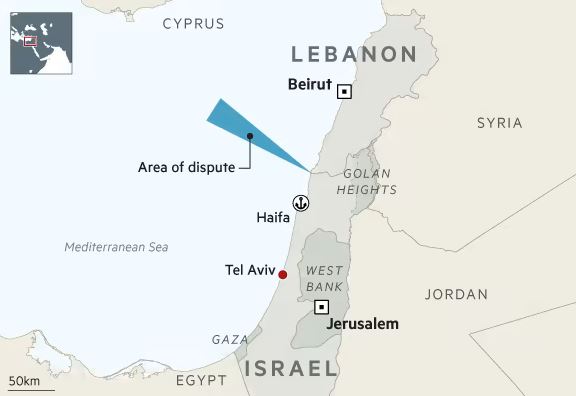
  • Israel and Lebanon reach an Agreement on Maritime Border

    israel

    Israel has reached a US-brokered agreement with Lebanon to settle their long-disputed maritime border. This has been seen as a historic deal.

    Israel-Lebanon Boundary Issue

    • The draft agreement aims to settle Israel and Lebanon’s competing claims over offshore gas fields in the region.
    • A major source of friction was the Karish gas field, which Israel insisted fell entirely within its waters and was not a subject of negotiation.
    • The issue is a little over a decade old, after the two countries declared overlapping boundaries in 2011 in the Mediterranean Sea.
    • Since both countries have been technically at war, the United Nations was asked to mediate.
    • The issue gained significance after Israel discovered two gas fields off its coast a decade ago, which experts had believed could help turn it into an energy exporter.

    Key terms of the Agreement

    • The agreement seeks to resolve a territorial dispute in the eastern Mediterranean Sea, in an area that Lebanon wants to explore for natural gas.
    • The gas field in question is located on the maritime boundary between the two countries and this agreement would allow both countries to get royalties from the gas.
    • It also sets a border between the maritime waters of Lebanon and Israel for the first time.

    Why is this agreement signed?

    • Averting terror threats: The agreement is expected to avert the immediate threat of conflict between Israel and Hezbollah militants in Lebanon, after fears of escalation if negotiations fell apart.
    • Energy exploitation: The agreement will create new sources of energy and income for both countries, particularly important for Lebanon, which is facing a crippling energy and financial crises.
    • Alternative energy for Europe: It could also have a potentially wider impact: it would likely provide Europe with a potential new source of gas amid energy shortages caused by the Russian invasion of Ukraine.

    What the agreement does not address?

    Ans. Blue Line Issue

    • The agreement does not touch on the shared land border between Israel and Lebanon, which is still disputed, but where both countries are committed to a ceasefire.
    • This border is also called the Blue Line, a boundary that was drawn up by the UN after Israel withdrew from southern Lebanon in 2000.
    • This land border is currently patrolled by the United Nations forces.


    UPSC 2023 countdown has begun! Get your personal guidance plan now! (Click here)

  • UN World Geospatial Information Congress (UNWGIC)

    UNWGIC

    PM has inaugurated the second United Nations World Geospatial Information Congress (UNWGIC) in Hyderabad.

    What is UNWGIC?

    • The first United Nations World Geospatial Information Congress was held in Deqing, Zhejiang Province, China in 2018.
    • The United Nation Committee of Experts on Global Geospatial Information Management (UN-GGIM) organizes the UNWGIC every four years.
    • It is hosted by the Ministry of Science and Technology of the Government of India.
    • The objectives are enhancing international collaboration among the Member States and relevant stakeholders in Geospatial information management and capacities.
    • The theme of UNWGIC 2022 is ‘Geo-Enabling the Global Village: No one should be left behind’.

    Objectives of UNWGIC

    • The move aims to provide high-quality and trustworthy geospatial data to support global and national policy agendas.
    • It also stresses international cooperation and coordination in the development of human data linked to geography.
    • It promotes societal development and well-being, addresses environmental and climate challenges, and embraces digital transformation and technological advancement.

    Why collaborate on geospatial technology?

    • Geospatial technology can be used to create intelligent maps and models which help to collect geographically referenced data.
    • Decisions based on the value and importance of resources, most of which are limited, can become easy through geospatial technology.
    • Intelligent maps and models can be created using geospatial technology.
    • It can be used to reveal spatial patterns hidden in large amounts of data that are complex to access collectively through mapping.


    UPSC 2023 countdown has begun! Get your personal guidance plan now! (Click here)

  • 11th October 2022| Daily Answer Writing Enhancement(AWE)

    Topics for Today’s questions:

    GS-1          Modern Indian history from about the middle of the eighteenth century until the present – significant events, personalities, issues.

    GS-2        Issues relating to development and management of Social Sector/Services relating to Health, Education, Human Resources.

    GS-3        Infrastructure: Energy, Ports, Roads, Airports, Railways etc.

    GS-4         Philosophical basis of governance and probity; Information sharing and transparency in government, Right to Information, Codes of Ethics, Codes of Conduct, Citizen’s Charters, Work culture, Quality of service delivery, Utilization of public funds, challenges of corruption.

    Question 1)


    Q.1 Bal Gangadhar Tilak and Mahatma Gandhi were two of the stalwarts of the Indian National Movement. Do you think that Gandhian politics was, in a sense, the continuation of Tilak’s politics? (10 Marks)


    Question 2)

    Q.2 Despite being lauded for its patient centric approach, the implementation of the Mental Healthcare Act, 2017, remains sluggish and mired with various issues. Discuss. (10 Marks)

    Question 3)

    Q.3 The recently launched National Logistics Policy truly has the potential to be a game-changer in India’s infrastructure transformation. Discuss. (15 Marks)

    Question 4)  

    Q.4 Ethical foundations are as much responsible for good governance as the rule of law. Discuss why ethics is important for good governance and upholding the rule of law. (10 Marks)


    HOW TO ATTEMPT ANSWERS IN DAILY ANSWER WRITING ENHANCEMENT(AWE)?

    1. Daily 4 questions from General studies 1, 2, 3, and 4 will be provided to you.

    2. A Mentor’s Comment will be available for all answers. This can be used as a guidance tool but we encourage you to write original answers.

    3. You can write your answer on an A4 sheet and scan/click pictures of the same.

    4.  Upload the scanned answer in the comment section of the same question.

    5. Along with the scanned answer, please share your Razor payment ID, so that paid members are given priority.

    6. If you upload the answer on the same day like the answer of 11th  February is uploaded on 11th February then your answer will be checked within 72 hours. Also, reviews will be in the order of submission- First come first serve basis

    7. If you are writing answers late, for example, 11th February is uploaded on 13th February , then these answers will be evaluated as per the mentor’s schedule.

    8. We encourage you to write answers on the same day. However, if you are uploading an answer late then tag the mentor like @Staff so that the mentor is notified about your answer.

    *In case your answer is not reviewed, reply to your answer saying *NOT CHECKED*. 

    1. For the philosophy of AWE and payment: 

  • Migrant workers in India

    Migrant

    Context

    • India has used Aadhaar (digital identity) and UPI (digital payments) extensively to address the challenges of identification and financial inclusion in social protection delivery, particularly in the case of migrants.

    Who is a migrant worker?

    • A “migrant worker” is a person who either migrates within their home country or outside it to pursue work.
    • Usually, migrant workers do not have the intention to stay permanently in the country or region in which they work.
    • As per the census 2011, the total number of internal migrants in India is 36 crore or 37% of the country’s population.
    • The Economic Survey pegged the size of the migrant workforce at roughly 20 percent or over 10 crores in 2016.

    Migrant

    What are the problems faced by migrants?

    • Issues with finding local Employment: Most migrant workers have a seasonal nature of employment. During off-seasons, they struggle to feed their families. Repeated lockdowns made situations more difficult for migrants to find jobs in their localities. They faced travel restrictions which hindered their job search as well.
    • Lack of Insurance Benefits in a Pandemic Environment: Migrant workers work in precarious conditions with little wages and no access to government schemes and services. Poor and unsafe working and living conditions make them prone to diseases. Greater threats of occupational illnesses, nutritional diseases, alcoholism, HIV, and communicable diseases are rampant in the migrant workforce.
    • Issue of timely and Fair Payment of Wages: The informal workforce in India consists of more than 150.6 million regular and daily wage earners. Most of these workers are unaware of their rights as ‘migrant workers. Many unscrupulous agents coerce them and don’t pay minimum wages as per law.
    • Lack of portability of benefits: Migrants registered to claim access to benefits at one location lose access upon migration to a different location. This is especially true of access to entitlements under the PDS.  The ration card required to access benefits under the PDS is issued by state governments and is not portable across states.  This system excludes inter-state migrants from the PDS unless they surrender their card from the home state and get a new one from the host state.
    • Lack of affordable housing: The proportion of migrants in urban population is 47%. In 2015, the Ministry of Housing and Urban Affairs identified migrants in urban areas as the largest population needing housing in cities. There is inadequate supply of low-income ownership and rental housing options.

    Migrant

    Government steps for migrant workers

    • Pradhan Mantri Garib Kalyan Yojana: After the lockdown, Pradhan Mantri Garib Kalyan Yojana with a financial package of Rs. 1.7 lakh crore was launched to help poor, needy, and unorganized sector workers of the country.
    • PM SVANidhi Scheme: PM SVANidhi Scheme was launched to facilitate collateral-free working capital loans up to Rs.10,000/- of one-year tenure, to approximately, 50 lakh street vendors, to resume their businesses.
    • Pradhan Mantri Garib Kalyan Rojgar Abhiyan: In order to facilitate the employment of migrant workers who have gone back to their home state, Pradhan Mantri Garib Kalyan Rojgar Abhiyan was initiated in 116 districts in Mission Mode.
    • State migrant cell: Migrant workers’ Cell is being created to prepare a database of migrant workers in states with mapping.
    • eShram portal: It is a national database created to register the unorganised workers in the country, including the migrant workers.
    • National policy on migrant workers: NITI Aayog has been mandated to prepare a draft national policy on migrant workers to reimagine labour-capital relations while integrating the migrant workers within the formal workforce.

    How technology could provide Solutions?

    • Providing digital public infrastructure (DPI):  Digital public infrastructure systems that enable the effective provision of essential society-wide functions and services  can enable a paradigm shift, allowing governments to co-create solutions with the private sector and civil society.
    • Adopting Public private partnership models: There are three key areas where DPI can enable public-private partnerships (PPP) in the delivery of social protection of migrants,
    1. Awareness of entitlements: One barrier faced at the initial stage is lack of awareness of entitlements or of the need to reapply, when migrants move from one state to another. Jan Saathi is an application that provides migrants withinformation on eligible social security schemes. Organisations such as Haqdarshak not only inform potential beneficiaries about their eligibility for various schemes, Central or State, but also help them avail entitlements.
    2. Information about livelihoods and housing: The informal nature of the labour market makes access to affordable and safe living conditions a challenge, especially if the family migrates as a unit. Ministry of Housing and Urban Affairshas introduced the Affordable Rental Housing Complexes under PMAY-Urban but the availability of such facilities is inadequate compared to the number of migrants. Bandhu’s ecosystem of applications connect migrant workers directly with employers and housing providers, to give them more informed choices. Jobsgaar and MyRojgaar also play a similar role by connecting workers to employers.
    3. Healthy Grievance redressal Mechanism: Gram Vaani bridges the gap in grievance redressal by providing a platform where citizens can use Interactive Voice Response (IVR) to record their grievance in accessing entitlements. Aajeevika Bureau and The Working People’s Charter built the India Labourline to provide legal aid and mediation services to migrant workers.
    • Adopting a well-designed data: While a growing ecosystem of private players (NGOs, civil society organisations, not-for-profit and for-profit entities) are addressing these needs, well designed data exchanges can help unlock a strong public-private collaboration in the delivery of social protection.

    Migrant

    What more government can do to address the issue of migrants?

    • Creating centralized data: The state’s digital efforts are often in siloes and the need to maximize the use of data across schemes and departments is a high priority.
    • E-Shram: Initiatives such as direct benefit transfers and linking schemes for the portability of entitlements have shown promise. e-Shram, which is a national database of unorganized workers, aims to reduce access barriers to social protection for migrants.
    • Making portable entitlement: Recent announcements of API-based integration of e-Shram with the various state government labor departments and with the One Nation One Ration Card scheme are a step in that direction.
    • Working with the private sector: Enabling linkages of migrant data with the private sector can lead to benefits on the demand side, in the form of reduced transaction costs in identifying jobs, affordable housing, and redressal of grievances.
    • Engaging the private sector: Private players who have established relationships with these mobile populations can help the state in planning and forecasting the demand for benefits. An example of this is the digital payment ecosystem since the introduction of UPI.

    Conclusion

    • Digital technologies have potential solutions to problems and transform the livelihood of migrants. The need for adequate data protection and safeguards is essential for the implementation of any such initiative.

    Mains Question

    Q.Enlist the problem faced by migrant workers? Elaborate on how use of technology can solve the many problems of migrants.


More posts