💥UPSC 2026, 2027, 2028 UAP Mentorship (March Batch) + Access XFactor Notes & Microthemes PDF

Search results for: “”

  • Road safety in India

    Road SafetyContext

    • A horrific car accident killed Cyrus Mistry and Jehangir Pandole. This tragedy got plenty of people thinking about road safety measures. Sadly, neither Mistry nor Pandole was wearing their rear-seat safety belts this highlights importance of following road safety norms.

    What’s the meaning of road safety?

    • Road safety means methods and measures aimed at reducing the likelihood or the risk of persons using the road network getting involved in a collision or an incident that may cause property damages, serious injuries and/or death.

    What is road safety education?

    • The aim of education, training and encouragement in Road Safety is to educate all road users in the proper and safe use of roads in order to change user attitudes and behaviour and to stimulate an awareness of the need for improvement in road safety.

    What affects road safety?

    • Several factors most notably speed, traffic density, flow, congestion, demographics (namely age gender and deprivation), driving behaviour (involving alcohol consumption, helmet or seat belt usage) and land use, such as residential or economic zones, were found to have mixed effects on road safety.

    Road SafetyWhat are examples of road safety?

    • Pedestrian crossing warning;
    • Left turn driver assistance; and
    • Approaching emergency vehicle warning.

    Road Accidents in India A lookover

    • In spite of several years of policymaking to improve road safety, India remains among the worst-performing countries in this area.
    • Total 1,47,913 lives lost to road traffic accidents in 2017 as per Ministry of Road Transport and Highways statistics.
    • The National Crime Records Bureau (NCRB) figure for the same year is 1,50,093 road accident deaths.

    Do you know?

    The ‘golden hour’ has been defined as ‘the time period lasting one hour following a traumatic injury during which there is the highest likelihood of preventing death by providing prompt medical care.

    Causes of Road Accidents in India

    • Sub-standard roads: The life of roads is not good due to the substandard raw materials and potholes accidents caused.
    • Traffic: The increasing traffic on roads and conditions of roads are not proportionate to each other.
    • Use of mobile phone: Most of the people are on call while driving thus they drive recklessly and accidents happen as most of the Indians now have mobile phones.
    • Drunk Driving: Drinking makes people lose the ability to focus and function properly. This makes it dangerous for the driver to operate the vehicle.
    • Dis-obedience for traffic rules: Indian drivers are quick to learn to drive but they don’t learn traffic rules and the purpose of such rules.
    • Malpractices: Malpractices such as over-speeding, triple riding, underage driving, etc are reducing the safety of road users.
    • Implementation drawbacks: Police are supposed to execute the rules but, it may be a lack of workforce or lack of intention, they also fail to execute.
    • Corrupt practices: Mostly police use the rules to mint money either officially by Chalan or in person.

    Key data for value addition

    Despite being home to only 1% of the world’s vehicles, India shoulders 11% of the global road crash fatality burden.

    Road SafetyVarious Policy Initiatives by government

    • Road Safety: In the area of road safety, the Act proposes to increase penalties to act as deterrent against traffic violations. Stricter provisions are being proposed in respect of offences like juvenile driving, drunken driving, driving without licence, dangerous driving, over-speeding, overloading etc. Stricter provisions for helmets have been introduced along with provisions for electronic detection of violations.
    • Vehicle Fitness: Automated fitness testing for vehicles has been made mandatory. This would reduce corruption in the transport department while improving the road worthiness of the vehicle. Penalty has been provided for deliberate violation of safety/environmental regulations as well as for body builders and spare part suppliers.
    • Recall of Vehicles: The Act allows the central government to order for recall of motor vehicles if a defect in the vehicle may cause damage to the environment, or the driver, or other road users.
    • Road Safety Board: A National Road Safety Board, to be created by the central government through a notification to advise the central and state governments on all aspects of road safety and traffic management. This would include standards of motor vehicles, registration and licensing of vehicles, standards for road safety, and promotion of new vehicle technology.
    • Protection of Good Samaritan: The Act lays down the guidelines and provides rules to prevent harassment of Good Samaritan to encourage people to help road accident victims.
    • Cashless Treatment during Golden Hour: The Act provides for a scheme for cashless treatment of road accident victims during golden hour.

    Value addition for good marks

    The 4 ‘E’ Approach

    • The Government of India put forth Engineering, Economy, Enforcement and Education as the fundamental areas to focus on in order to ensure road safety.

    Way forward

    • Road safety education from the primary level: Those already using our roads and driving or riding on it could have formed bad habits that are difficult to change or undo. So it’s important that we catch them young and start educating children on road safety and correct behaviour on the road.
    • Better first aid and paramedic care: In most cases, the public and police are the first ones to reach the site of an accident. But sadly, neither has any first aid training and the police don’t even have even simple things like a first aid box or stretcher. This initial trauma care has to improve.
    • Stricter criteria for driving licenses: Fortunately, the government has recognized the need for this, and getting a driving license is no longer as easy as before. Lots of the process has been digitalized and made more stringent. But it’s still far from perfect and lots more needs to be done
    • Better road design, maintenance, and signage: Many of our roads are poorly designed with badly placed junctions, acute corners, uneven gradients, sudden speed-breakers, etc. And this is made worse by poor road maintenance and many accidents occur because a driver suddenly swerves to avoid a pothole.
    • Heavy crackdown against non-compliance: This is one of the leading causes of road accidents in India and while we do have strict laws, the enforcement, particularly on our highways is quite lax. Consumption of drugs by truck drivers while driving is rampant, and this needs to stop completely.
    • Stricter enforcement of traffic rules: The Amended Motor Vehicles Act has higher penalties and punishment to deter people from committing traffic offenses and driving rashly. It’s high time we enforced our traffic rules and imposed discipline while driving and using the road.
    • Encouraging better road behaviour: The people should motivate themselves to behave in a better manner on the road. The campaigns such as “Be the Better Guy”, need to be applauded, encouraged and expanded.

    Mains question

    Q. In spite of several years of policymaking to improve road safety, India remains among the worst-performing countries in this area. Critically analyse.


    UPSC 2023 countdown has begun! Get your personal guidance plan now! (Click here)

  • [Burning Issue] India-Bangladesh Relationship

    UPSC 2023 countdown has begun! Get your personal guidance plan now! (Click here)
    Context

    • Bangladesh PM Sheikh Hasina has arrived in India for a four-day visit to boost bilateral ties.
    • India has marched past Britain to emerge as the fifth-largest economy and similarly, with Sheikh Hasina at the helm for over 13 years, her country has come of age. 
    • In this context, this edition of the burning issue will analyse the growing India-Bangladesh bilateral partnership, its achievements and irritants and finally conclude with a more can be achieved through this partnership.

    History of the India-Bangladesh Relationship

    • The two neighbours, India and Bangladesh, are organically linked — with their common heritage and shared history, common memories of tragic loss, and the separation of families on a massive scale following the Partition of India in 1947.
    • Also, Rabindranath Tagore created the national anthems of both Bangladesh and India in 1905 and 1911 respectively.
    • However, the bilateral relations between the two nations formally started after the Bangladesh liberation war,1971 which had played a key role along with the Mukti Bahini, thus helping East Pakistan (as called then) to separate from Pakistan and emerge as an independent nation. Bangladesh liberation day, 16th December is celebrated as “Vijay Diwas” in India.
    • India was the first country to recognize Bangladesh as a separate and independent state and established diplomatic relations with the country immediately after its independence in December 1971.

    India-Bangladesh ties: An organic transformation

    • India’s links with Bangladesh are civilization, cultural, social and economic.
    • There is much that unites the two countries – a shared history and common heritage, linguistic and cultural ties, and passion for music, literature and the arts.
    • It is also worth recalling that India shares its longest border of 4,096.7 kilometres with Bangladesh, which is also the fifth-longest border in the contemporary world.
    • With the onset of economic liberalization in South Asia, they forged greater bilateral engagement and trade.

    Significance of Bangladesh for India

    • Strategic– From the perspective of India’s Northeast, Bangladesh is India’s most strategic neighbour. The only connection between India’s mainland and the northeast was the Chicken’s Neck – a narrow strip of land that has always been a huge security concern.
    • Connectivity to East Asia– India’s dream of ‘Act East Policy’ can only be materialized with the helping hands of Dhaka. Perhaps on top of the list is connectivity between India’s mainland and the crucial northeast, which is part of India’s “Look East” Policy.
    • Internal Security– The other big security concern for India is that Bangladesh should not turn into the frontline of radical terror in the southeast. Bangladesh could turn into a launchpad for religious radical terror activities in India if relations are not maintained well.
    • Countering China– India’s relationship with Bangladesh is also linked to its relationship with China. India did not want Bangladesh to become a pearl in China’s “String of Pearls” strategy to hem in India by using its neighbours.
    • Trade- Bangladesh is currently India’s biggest trade partner in the South Asian region.

    Achievements of the relationship

    (1) Border settlements

    • In September 2011, the two countries signed a major accord on border demarcation to end the 4-decade old disputes over boundaries. This came to be known as the Tin Bigha corridor. India also granted 24-hour access to Bangladeshi citizens in the Tin Bigha Corridor.
    • On 7 May 2015 the Indian Parliament, in the presence of Bangladeshi diplomats, unanimously passed the Land Boundary Agreement (LBA) as its 100th Constitutional amendment, thereby resolving all 68-year-old border disputes since the end of the British Raj.

    (2) Power cooperation

    • India’s Reliance power agreed to invest US$3 billion to set up a 3,000 MW LNG-based power plant (which is the single largest foreign investment ever made in Bangladesh). Adani power will also be setting up a 1600 MW coal-fired power plant at a cost of US$1.5 billion.
    • In 2018, the leaders of both countries inaugurated the 130 km long Bangladesh-India Friendship pipeline to supply 4 lakh tonnes of diesel to Bangladesh.
    • India is also looking to export electricity from its northeastern region with the potential to generate some 58,971 MW to its eastern States through Bangladesh. Bangladesh hopes to have access to Nepal and Bhutan’s power through India. Bangladesh has formally requested a ‘power corridor’ to access the Bhutanese and Nepalese markets. 
    • Bangladesh currently imports 1160 MW of power from India.

    (3) Connectivity

    • The Modi government along with the Sheikh Hasina regime restarted that with Bandhan in 2017. The Bandhan Express was the second train to be flagged off after the introduction of Maitree Express between Kolkata and Dhaka Cantonment in April 2008.
    • In September 2018, the Bangladesh cabinet approved the draft of a proposed agreement with India to allow it to use the Chittagong and Mongla sea ports for transporting goods to and from its land-locked northeastern states.
    • Bangladesh-Bhutan-India-Nepal (BBIN) initiative Motor Vehicles Agreement has also been underway to promote connectivity in the region.
    • In August 2021, the two sides started a regular movement of freight trains between the newly-restored link between Haldibari in India and Chilahati in Bangladesh.

    (4) Cooperation on Rivers

    • India and Bangladesh have 54 rivers in common and a bilateral Joint Rivers Commission (JRC) has been working since June 1972 to maximize cooperation in sharing the waters of these rivers.

    (5) Defence and Security

    • The militaries of the two countries will conduct joint exercises and training, Exercise Sampriti and Navy (Exercise Milan). India will help Bangladesh set up manufacturing and service centres for defence platforms that both countries possess with the aim of achieving self-sufficiency in defence manufacturing in Bangladesh, and will also provide the Bangladesh military with expert training, and technical and logistic support.
    • India also extended its first ever defence-related line of credit to a neighbouring country, by providing Bangladesh with $500 million to purchase defence equipment.
    • Closer cooperation to fight against extremist radical groups, terrorist organisations, smuggling of arms, drugs and fake currency and also organized crime as a shared priority.
    • India and Bangladesh are also engaged in regional cooperation through multilateral forums such as SAARC (South Asian Association for Regional Cooperation), BIMSTEC (Bay of Bengal Multi-Sectoral Technical and Economic Cooperation) and IORARC (Indian Ocean Rim Association for Regional Cooperation)
    • For the first time, a contingent of the Bangladesh Armed Forces, comprising 122 members from its tri–services, participated in the Indian Republic Day parade.

    (6) Economic development

    • India has extended a line of credit of US$ 800 million to Bangladesh for a range of projects, including railway infrastructure, supply of Broad-Gauge microprocessor-based locomotives and passenger coaches, procurement of buses, and dredging projects.
    • The bilateral trade between India and Bangladesh stood at $10.8 billion in 2020-21, as against $9.5 billion in 2019-20. Major exports from India to Bangladesh include cotton, cereals, fuel, vehicle parts and machinery and mechanical appliances.

    (7) People’s connectivity

    • Scholarships and training programmes under ITEC, TCS of Colombo Plan, ICCR, AYUSH, Commonwealth, SAARC and IOR-ARC scholarships/ fellowship schemes are being offered to Bangladesh nationals.
    • Both countries jointly celebrated year-long celebrations of the 150th birth Anniversary of Rabindranath Tagore and the 90th Anniversary of the publication of the poem ‘Bidrohi’ by Kazi Nazrul Islam in 2011-12.
    • Also, people from Bangladesh form the biggest foreign tourists arrival in India and also the biggest benefiter of cheap Medical tourism in India.

    Issues hurting the relationship

    (1) Illegal migration

    • This has always been a primary problem for India since the partition of Bengal.
    • In view of this, recently, the Supreme Court asked the Centre to complete the fencing of the India-Bangladesh border soon to check illegal immigration from Bangladesh into Assam.
    • Continuous border killing of Bangladeshi people by Indian border guards, aiding illegal immigrants, helping in armed dacoity, fake money transfer and illegal drug trades by both Indian and Bangladeshi people are the major problems between Bangladesh and India.

    (2) Increasing Chinese footprint

    • In 2016 when Chinese President Xi Jinping visited Bangladesh, the smaller country agreed to join the OBOR.
    • Bangladesh is increasingly tilting towards China due to the Asian giant’s massive trade, infrastructural and defence investments in these countries.
    • In spite of its Neighbourhood First Policy, India has been losing its influence in the region to China.

    (3) NRC conundrum

    • The National Register of Citizens (NRC) has left out 1.9 million Assamese from the list with a group labelled as “illegal immigrants from Bangladesh” living in Assam post-1971.
    • India plans to seek their repatriation to Bangladesh.
    • Bangladesh remains firm in its stance that no migrants travelled to Assam illegally during the 1971 war of independence and that the controversial NRC risks hurting relations.

    (4) Rohingya Issue

    • The Rohingya issue and India’s remarks in 2017 on the issue have been upsetting for Bangladesh which has been facing the challenge of providing shelter to more than a million refugees fleeing persecution.

    (5) River disputes

    • India and Bangladesh have failed to conclude a framework agreement to optimise the use of waters from six rivers including the Manu, Muhuri, Khowai, Gumti, Dharla and Dudhkumar, which has been discussed for several months.
    • No progress was reported on the long-pending Teesta water-sharing agreement either after the recent visit.

    (5) Rising radicalization

    • Bangladesh is witnessing rising radicalization as evident from multiple attacks on religious places of Hindu minorities in the nation and also from the massive violence during PM Modi’s visit to Bangladesh last year.

    (6) Killings at the border

    • The shooting of smugglers by BSF personnel at the Indo-Bangladesh Border is often seen by Bangladesh nationals as the killing of innocent Bangladeshis and ‘Big Brother’ attitude of India. Recently, a BSF jawan was also killed by smugglers on the border.

    Outcomes from Recent PM Sheikh Hasina’s visit to India (September 2022)

    • Bangladesh Prime Minister Sheikh Hasina’s ongoing state visit to India and meeting with Prime Minister Narendra Modi have resulted in positive outcomes and seven agreements.
    • These include the conclusion of the first water-sharing agreement in 26 years. The water sharing agreement on the Kushiyara, which was preceded by the first Joint River Commission meeting in 12 years, is a particularly hopeful sign of resolving water management, and a very contentious issue, of 54 transboundary rivers.
    • While there has been a smaller agreement on the withdrawal of 1.82 cusecs from the Feni in the interim period, the Kushiyara agreement is the first time the Centre has been able to bring on board Assam and other north-eastern States, for the agreement since the 1996 Ganga water treaty.
    • India and Bangladesh have decided to start negotiations this year on a bilateral Comprehensive Economic Partnership Agreement—a free trade agreement in goods, services, investments and other related areas—aiming to implement the pact by the time Bangladesh graduates out of its LDC status in 2026.
    • Much of her focus was also on attracting investment by Indian industry, which now constitutes a small fraction of Bangladesh’s FDI inflows. Ms. Hasina made particular mention of two dedicated Special Economic Zones for Indian companies, coming up at Mongla and Mirsarai.
    • An MoU on scientific cooperation between the Council of Scientific and Industrial Research (CSIR), India and the Bangladesh Council of Scientific Industrial Research (BCSIR) has been signed.

    About Kushiyara- Kushiyara River is one of the transboundary rivers between India and Bangladesh. The Barak of India originates from the northern hills of Assam. The river enters Bangladesh and separates into two arms. The northwest arm is the Surma and the southwestern arm is the Kushiyara.

    Way forward

    • The future will present itself with an abundance of opportunities to help the two countries to reach a new plane of bilateral relations higher than ever before.
    • Both nations should play their diplomatic cards with more maturity and pragmatism, keeping the regional aspirations and nuances of both countries in mind.
    • A judicious aggregation of regional expectations on both sides of the border will help in achieving their mutual national objectives.
    • To make the recent gains irreversible, both countries need to continue working on the three Cs — cooperation, collaboration, and consolidation.

    Conclusion

    • After reaching a mutual understanding on issues related to maritime delimitation, land border arrangement, enclaves, short sea shipping as well as inland waterways, both countries are at a positive juncture in their diplomatic relations as called by PM Modi “Sonali Adhyaay” (Golden Chapter).
    • While cross-border sensitivities in South Asia often run high over such political rhetoric, it is necessary that New Delhi and Dhaka remain focused on their future cooperation, built on their past partnership, and what is referred to as the “Spirit of 1971”.

    UPSC 2023 countdown has begun! Get your personal guidance plan now! (Click here)
  • How to write perfect answers in UPSC mains 2022-23? Masterclass by Sajal sir (GS toppers 2017) | Register for the recorded session (*VIDEO) and Get 20 best practices of answer writing pdf with examples for free

    Register and get FREE recorded tips.

    This Masterclass concluded for CivilsDaily’s UPSC Mains 2022 students only.


    The 1750 marks of the Mains exam will decide your IAS destiny. Though UPSC has given a very detailed and crisp syllabus, it can’t resist the urge to add surprising elements in questions every year to keep candidates on their toes and to test their mettle.

    In the Mains exam hall, it is all about execution. UPSC Toppers focus on certain fundamental principles and they follow them firmly and perfectly.

    UPSC 2022 Mains are here. You must have covered everything by now, all notes revised or in the final lap, filling up the gaps and adding answer writing tricks/hacks, etc. Content or information-wise we are convinced that you are well equipped. However, in the exam hall, it is about the execution of whatever information you have read, gathered, scavenged, understood, and analyzed.

    Aspirants can boost their Mains score by more than 100 marks. And that is enough to make the difference where a single mark can decide success and failure. This Masterclass was designed for CivilsDaily’s students only.

    Acknowledging the need to ensure removing difficulties, the students face, we conducted an on-demand MASTERCLASS. How to boost your mains Score 2022, sticking to the basic sources, and practicing answer writing in expert-prescribed ways, even after many things are pending.


    UPSC Score Booster Masterclass concluded on 8th September (Thursday), 7 PM

    Main points were discussed:

    1. Identifying and tackling directive words and tail words in the Mains Question. There are more than 30 directives and you must answer according to that only. We will discuss how to approach an answer wrt to these directives

    2. When, where, and how to use diagrams, flowcharts, tables, etc?

    It is a common notion that more diagrams = more marks, but this is not true. You must draw diagrams/flowcharts to address certain parts of the question only. 

    3. Understanding the core and non-core parts of the questions. 

    There is one part of the Mains question that is directly asked and is an obvious question. The non-core part at times might not be obvious but you must address that. 

    4. How to use anecdotes, facts, data, examples, and case studies? – even using the most common ones in the most impactful manner, in such a manner that it fetches you more marks

    5. How to answer a question with limited content or knowledge? Basically – Bouncer/googly questions. Keywords in questions: Thoroughly explain what each keyword means. Analyzing critically is different from explaining or elaborating. So, how to read the question carefully and then start answering?

    6. How to complete the paper in 3hours? And what should be the correct sequence of answering sections in the Mains paper? 

    This is very essential to maintain your speed as well as consistency in your thinking process. 

    7. Making a trade-off between quality and quantity in your answers. You might now be able to recall every info for all the answers.

    8. When to write answers in Paragraph form and when to write in heading, subheading, and points? What should be the ideal length of a sentence, paragraph, and number of points?

    9. What should be your strategy for the last week before Mains 2022?

    10. How to go about the Final Revision before Mains 2022? Focus on making more revisions: If you can’t remember any points, how to put things in your notes during the exam. What are the exact ways to revise at least 10 times before the exam? Things must be your tips.


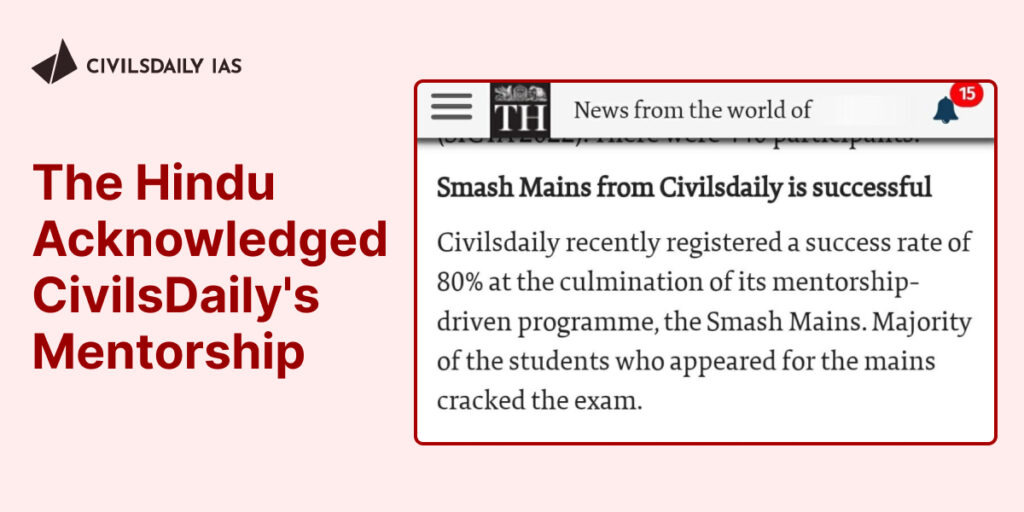
    What The Hindu mentioned about Civilsdaily Mentorship

  • 9th September 2022| Daily Answer Writing Enhancement(AWE)

    Topics for Today’s questions:

    GS-1        Modern Indian history from about the middle of the eighteenth century until the present – significant events, personalities, issues.

    GS-2        Development processes and the development industry —the role of NGOs, SHGs, various groups and associations, donors, charities, institutional and other stakeholders.

    GS-3        Indian Economy

    GS-4        Case Studies

    Question 1)


    Q.1 Battle of Plassey was a watershed moment in history marking the end of middle ages and beginning of modern phase in India. Comment. (10 Marks)


    Question 2)

    Q.2 Why is the role of Corporate Social Responsibility(CSR) becoming important in NGO funding? What are the issues with CSR funding? Discuss the way forward. (15 Marks)

    Question 3)

    Q.3 Recent data shows India’s exports declined marginally in August on a year-on-year basis, while it contracted by about 9 % sequentially. Highlighting the reasons for falling exports and rising imports., mention its impact on the Indian economy. (10 Marks)

    Question 4)  

    Q.4 You have recently started playing online chess at a popular Internet-based gaming platform. The platform has online lessons on tricks and tips for improving skills in the game. These lessons have helped you improve a lot in a short time. You are also amazed at the possibility of playing with players of all levels of skills from all over the world. The platform provides you analysis of your games and suggests areas of improvement. While testing and improving your chess skills on the platform, you have made friendship and acquaintances with many competitive chess players from different parts of the world. Of late though, racial, religious and stereotypical remarks have started being thrown at you on the online platform by other players. Initially you ignored such things as childish tactics by an opponent to distract you during the game. Later you would try to engage with such people to dispel stereotypes. But increasingly such experiences are making you sad and bitter. Now you block such people as you encounter them. The online game which started as a fun and stimulating experience for you, has become a source of negativity in your life. In your discussions with other people, you come to realize that others have also experienced similar racial and religious slurs, and many people have left the platform to avoid the abusive experience. You also realize that this is not an issue specific to the gaming platform but is part of the generally seen behavior on social media. You used to consider online trolling as harmless puns, but after experiencing its dark side as a victim you are realizing its negative impact. Given this information, what are your thoughts on the following: a) How should one deal with the issues of on-line abuse such as in the case above? What options are available to you? b) What values should guide online behavior? Do these values differ from values governing offline conduct? (20 Marks)


    HOW TO ATTEMPT ANSWERS IN DAILY ANSWER WRITING ENHANCEMENT(AWE)?

    1. Daily 4 questions from General studies 1, 2, 3, and 4 will be provided to you.

    2. A Mentor’s Comment will be available for all answers. This can be used as a guidance tool but we encourage you to write original answers.

    3. You can write your answer on an A4 sheet and scan/click pictures of the same.

    4.  Upload the scanned answer in the comment section of the same question.

    5. Along with the scanned answer, please share your Razor payment ID, so that paid members are given priority.

    6. If you upload the answer on the same day like the answer of 11th  February is uploaded on 11th February then your answer will be checked within 72 hours. Also, reviews will be in the order of submission- First come first serve basis

    7. If you are writing answers late, for example, 11th February is uploaded on 13th February , then these answers will be evaluated as per the mentor’s schedule.

    8. We encourage you to write answers on the same day. However, if you are uploading an answer late then tag the mentor like @Staff so that the mentor is notified about your answer.

    *In case your answer is not reviewed, reply to your answer saying *NOT CHECKED*. 

    1. For the philosophy of AWE and payment: 

  • India- China disengage at LAC friction points in Ladakh

    lac

    India and China have announced that their Armies have begun to disengage from Patrolling Point-15 in the Gogra-Hot springs area at LAC.

    What is LAC- the Line of Actual Control?

    • The LAC is the demarcation that separates Indian-controlled territory from Chinese-controlled territory.
    • India considers the LAC to be 3,488 km long, while the Chinese consider it to be only around 2,000 km.
    • It is divided into three sectors: the eastern sector which spans Arunachal Pradesh and Sikkim, the middle sector in Uttarakhand and Himachal Pradesh, and the western sector in Ladakh.
    • The LAC is only a concept – it is not agreed upon by the two countries, neither delineated on a map nor demarcated on the ground.

    What is the disagreement?

    • The alignment of the LAC in the eastern sector is along the 1914 McMahon Line, and there are minor disputes about the positions on the ground as per the principle of the high Himalayan watershed.
    • The major disagreements are in the western sector where the LAC emerged from two letters written by Chinese Prime Minister Zhou Enlai to PM Jawaharlal Nehru in 1959, after he had first mentioned such a ‘line’ in 1956.

    When did India accept the LAC?

    • The LAC was discussed during Chinese Premier Li Peng’s 1991 visit to India, where PM P V Narasimha Rao and Li reached an understanding to maintain peace and tranquillity at the LAC.
    • India formally accepted the concept of the LAC when Rao paid a return visit to Beijing in 1993 and the two sides signed the Agreement to Maintain Peace and Tranquillity at the LAC.
    • The reference to the LAC was unqualified to make it clear that it was not referring to the LAC of 1959 or 1962 but to the ‘LAC’ at the time when the agreement was signed.
    • To reconcile the differences about some areas, the two countries agreed that the Joint Working Group on the border issue would take up the task of clarifying the alignment of the LAC.

    How was the disengagement carried on?

    • As per the understanding reached earlier on disengagement, a buffer zone is to be created at the friction points.
    • Once troops are withdrawn by both sides, new patrolling norms are to be worked out after complete disengagement and de-escalation.

    Why sudden disengagement?

    • The move comes ahead of the Shanghai Cooperation Organisation (SCO) summit in Uzbekistan next week.
    • However, neither side has, so far, confirmed if the two leaders would hold bilateral talks on the sidelines of the summit.
    • The leaders have not spoken to each other since a November 2019 meeting during the BRICS Summit in Brasilia and the beginning of the stand-off in April 2020.

    Significance of the disengagement

    • Since the stand-off began in May 2020, the two sides have so far held 16 rounds of talks.
    • Earlier, disengagement was undertaken from both sides of Pangong Tso in February 2021, and from PP-17 in the Gogra-Hot springs area in August, in addition to Galwan in 2020 after the violent clash.
    • The friction points that remain now are Demchok and Depsang, which China has constantly refused to accept, maintaining that they are not a part of the current stand-off.

    What was the dispute over LAC?

    • In what was the worst clash between the two countries in over 40 years, the Galwan incident reverberated around the world.
    • The casualties in the clash were the first in the disputed Sino-Indian border since 1975.
    • The Galwan episode led to a rapid build-up of forces on both sides of the Line of Actual Control.
    • This incident is being seen as major punctuation in the bilateral relations between India and China and what does the future hold for both neighbors.

    Why did India change its stance on the Line of Actual Control?

    • Indian and Chinese patrols were coming in more frequent contact during the mid-1980s.
    • This was after the government formed a China Study Group in 1976 which revised the patrolling limits, rules of engagement and pattern of Indian presence along the border.

    Is the LAC also the claim line for both countries?

    • Not for India. India’s claim line is the line seen in the official boundary marked on the maps as released by the Survey of India, including both Aksai Chin and Gilgit-Baltistan.
    • In China’s case, it corresponds mostly to its claim line, but in the eastern sector, it claims entire Arunachal Pradesh as South Tibet.
    • However, the claim lines come into question when a discussion on the final international boundaries takes place, and not when the conversation is about a working border, say the LAC.

    Why are these claim lines controversial in Ladakh?

    • When the Shimla Agreement on the McMahon Line was signed by British India, Aksai Chin in Ladakh province of the princely state of J&K was not part of British India, although it was a part of the British Empire.
    • Thus, the eastern boundary was well defined in 1914 but in the west in Ladakh, it was not.
    • India, in July 1948, had two maps: one had no boundary shown in the western sector, only a partial colour wash; the second one extended the colour wash in yellow to the entire state of J&K, but mentioned “boundary undefined”.

    Way forward

    • The impasse in India-China relations CANNOT be overcome by more talks through diplomatic and military channels, and possibly require the intervention of the top leadership of both countries.
    • Therefore, as Dr. Jaishankar put it, the management of the fissures within Asia will require adherence to established laws, norms, and rules.


    UPSC 2023 countdown has begun! Get your personal guidance plan now! (Click here)
  • Floods in Pakistan and the pulls and pressures of India-Pak Disaster Diplomacy

    pakistan
    Pakistan

    Prime Minister Modi has tweeted his condolences and hoped for an early restoration of normalcy in flood devastated Pakistan.

    Why in news?

    • The statement by the PM last month came as a surprise to many.
    • This is on the grounds of steady deterioration of ties over the last eight years since Modi came to power.

    PM Modi and Pakistan

    (A) Early failure

    • PM Modi had famously begun his tenure with an invitation to Pakistan’s then PM Nawaz Sharif for the swearing-in ceremony in May 2014.
    • Sharif had come to India, along with the leaders of other SAARC nations.
    • This gesture promised a new beginning for the bilateral relationship that had suffered a severe setback after the 26/11 terrorist attacks in Mumbai in 2008.
    • However, a string of incidents followed, the terrorist attacks in Pathankot and Uri — impacted the relationship negatively, and New Delhi made it clear that “talks and terror can’t go together”.

    (B) India strengthens resolute

    • Ties have been hit further over the last few years, especially after the Pulwama terror attack in February 2019, and the abrogation of Article 370 in August that year.
    • That led to the downsizing of the High Commissions in both capitals; there are no full-time High Commissioners in either country now.

    Change of PM in Pak

    • After the ouster of Imran Khan, and the coming to power of the new coalition government led by PM Shehbaz Sharif, some positive noises have emanated from Islamabad.
    • India however reiterated the desired peace and stability in a region free of terrorism.
    • New Pak PM criticized his predecessor, Imran Khan, for not making “serious and diplomatic efforts” when India abrogated Article 370 in August 2019.

    Responses to disasters

    In the past, when natural disasters struck India and Pakistan, the two countries at times reached out to each other with offers of help.

    • Bhuj earthquake: For example, in January-February 2001, after the earthquake hit Bhuj in Gujarat, Pakistan had reached out with help, and had sent tents and blankets for the survivors.
    • 2005 earthquake: A powerful earthquake struck both India and Pakistan, India sent aircraft with relief supplies to Pakistan and pledged $ 25 million through the United Nations to support Pakistan’s relief efforts.

    In 2010, when a “superflood” — the worst in recent decades until the deluge of 2022 — hit Pakistan, India offered $ 5 million in help, but Islamabad declined to accept it.

    The case for help now

    • Though there has not been much follow-up activity, the PM Modi’s outreach by way of a message created a potential opening for “disaster diplomacy”.
    • Pakistan’s Finance Minister said that the government can consider importing vegetables and other edible items from India following the destruction of standing crops due to the floods.
    • Prices of vegetables and fruit have gone through the roof as supplies from Balochistan, Sindh, and south Punjab especially, have been badly affected.

    Why should India respond?

    • For the Indian government, the case for extending humanitarian help ties in well with its desire to project itself as the “first responder” in times of disaster and crisis in the neighbourhood.
    • In recent months and years, India has extended its hand of help and cooperation to the Maldives, Bangladesh, Sri Lanka, Myanmar, Nepal, Bhutan, and Afghanistan.
    • Trucks filled with Indian grain have travelled to Taliban-ruled Afghanistan via Pakistan.

    What is Pakistan’s position?

    • Pakistan’s establishment (none other but Pak Army) has discussed the possibility of getting food grains through international organisations, who want to send relief material from India.
    • The help from India can be at the micro and short-term level: food, fuel, tents, medicines, and emergency essential supplies.
    • At the macro and medium-to-long-term, it could involve help in the reconstruction of damaged homes and properties, and the archaeological site of Mohenjo Daro, part of the cultural heritage of both countries.
    • India’s healthcare can be of help in the post-floods scenario — dengue is already on the rise, and diseases such as typhoid are expected to spike sharply.

    Issues in re-engagement

    • Some in the Indian establishment believe that the government’s stated policy of talks and terror can’t go together, and the extending of help to Pakistan are at odds with each other.
    • For New Delhi, the decision is as much about projecting power as a global responder as with managing the ruling party’s domestic political base.


    UPSC 2023 countdown has begun! Get your personal guidance plan now! (Click here)

  • India ranks 132 in HDI as score drops

    hdi
    hdi

    India ranks 132 out of 191 countries in the Human Development Index (HDI) 2021, after registering a decline in its score over two consecutive years for the first time in three decades.

    What is Human Development Index (HDI)?

    • The HDI combines indicators of life expectancy, education or access to knowledge and income or standard of living, and captures the level and changes to the quality of life.
    • The index initially launched as an alternative measure to the gross domestic product, is the making of two acclaimed economists from Pakistan and India, namely Mahbub ul Haq and Amartya Sen.
    • It stresses the centrality of human deve­lop­ment in the growth process and was first rolled out by the United Nations Development Programme in 1990.

    Dimensions of the Human Development Index – HDI

    • The idea that progress should be conceived as a process of enlarging people’s choices and enhancing their capabilities is the central premise of the HDI.
    • Since its launch, the HDI has been an important marker of attempts to broaden measures of progress.
    • The HDI considers three main dimensions to evaluate the development of a country:
    1. Long and healthy life
    2. Education
    3. Standard of living

    Limitations of HDI

    HDR has been always disputable and has caught the public-eye, whenever it was published. It has many reasons.

    One of them is that the concept of human development is much deeper and richer than what can be caught in any index or set of indicators. Another argument is that its concept has not changed since 1990 when it was also defined in the first.

    (1) An incomplete indicator

    • Human development is incomplete without human freedom and that while the need for qualities judgement is clear; there is no simple quantitative measure available yet to capture the many aspects of human freedom.
    • HDI also does not specifically reflect quality of life factors, such as empowerment movements or overall feelings of security or happiness.

    (2) Limited idea of development

    • The HDI is not reflecting the human development idea accurately.
    • It is an index restricted to the socio-economic sphere of life; the political and civil spheres are in the most part kept separate.
    • Hence there is a sub-estimation of inequality among countries, which means that this dimension is not being taken into consideration appropriately.

    (3) A vague concept

    • Concerning data quality and the exact construction of the index HDI is conceptually weak and empirically unsound.
    • This strong critic comes from the idea that both components of HDI are problematic. The GNP in developing countries suffers from incomplete coverage, measurement errors and biases.
    • The definition and measurement of literacy are different among countries and also, this data has not been available since 1970 in a significant number of countries.

    (4) Data quality issues

    • The HDI, as a combination of only four relatively simple indicators, doesn’t only raise a questions what other indicators should be included, but also how to ensure quality and comparable input data.
    • It is logical that the UNDP try to collect their data from international organizations concentrating in collecting data in specific fields.
    • Quality and trustworthiness of those data is disputable, especially when we get the information from UN non-democratic members, as for example Cuba or China.

    (5) A tool for mere comparison

    • The concept of HDI was set up mainly for relative comparison of countries in one particular time.
    • HDI is much better when distinguishing between countries with low and middle human development, instead of countries at the top of the ranking.
    • Therefore, the original notion was not to set up an absolute ranking, but let’s quite free hands in comparison of the results.

    (6) Development has to be greener

    • The human development approach has not adequately incorporated environmental conditions which may threaten long-term achievements on human development. The most pervasive failure was on environmental sustainability.
    • However, for the first time in 2020, the UNDP introduced a new metric to reflect the impact caused by each country’s per-capita carbon emissions and its material footprint.
    • This is Planetary Pressures-adjusted HDI or PHDI. It measured the amount of fossil fuels, metals and other resources used to make the goods and services it consumes.

    (7) Wealth can never equate welfare

    • Higher national wealth does not indicate welfare. GNI may not necessarily increase economic welfare; it depends on how it is spent.
    • For example, if a country spends more on military spending – this is reflected in higher GNI, but welfare could actually be lower.

    Significance of HDI

    • It is one of the few multidimensional indices as it includes indicators such as literacy rate, enrollment ratio, life expectancy rate, infant mortality rate, etc.
    • It acts as a true yardstick to measure development in real sense.
    • Unlike per capital income, which only indicates that a rise in per capital income implies economic development; HDI considers many other vital social indicators and helps in measuring a nation’s well-being.
    • It helps as a differentiating factor to distinguish and classify different nations on the basis of their HDI ranks.

    Way forward

    • Both sustainable development and poverty eradication are both long-term and urgent endeavours, requiring not only the gradual and substantial redirection of country policies but a rapid response to pressing problems.
    • Ideally, sustainable development could provide an overarching framework within which all sub-goals (eg poverty eradication, social equality, ecosystem maintenance, climate compatibility) are framed.
    • It is not a subset of development; it is development (in a modern world of resource limits).
    • Environmental issues are not one factor among many but the meta-context within which poverty and other goals are sought.
    • Investing more in public research could lead to technological solutions to poverty and sustainability problems becoming more rapidly and openly available.


    UPSC 2023 countdown has begun! Get your personal guidance plan now! (Click here)

  • Mother Tongue as a medium of instruction

    languageContext

    • English should be taught effectively not as the medium, but as a second language

    What is the debate?

    • Over the years, there has been a raging debate over the need for children to have their mother tongue as the medium of instruction in schools.
    • While educationists have emphasised the importance of learning in the mother tongue to enhance a child’s learning and overcome glaring inequities, there has been an equally steady demand for English-medium schools in several States.

    languageHistoric context to this debate

    • Orientalist: Orientalists were the group of people who wanted to give education to Indian people in the Indian language. The emphasis was on the knowledge of the East. They wanted Indians to learn about Indian philosophy, science, and literature. In the Initial stage, company officials favoured oriental learning.
    • Anglicist: Anglicists were those people who supported the teaching of modern western education to Indian people in the English language. People who favoured Anglicists were Thomas Babington, Macaulay, James’s mill, Charles wood, Charles Trevelyan, and Elphinstone. The Anglicists were supported by the most advanced Indians like Raja Ram Mohan Roy.

    languageWhy mother tongue is important?

    • Suitability to child: There is an almost-complete consensus among educationists, linguistic experts and psychologists that the mother tongue, or the language of the region where the child lives, is the only appropriate language of learning for the child.
    • Incomprehension: A child can be taught any number of languages, particularly later in life, but the medium of learning should be the mother tongue. As a number of classrooms today are stalked by the curse of incomprehension.
    • Pressure of English language: There are a growing number of schools, mostly private, that teach in English. Government schools too in States like Tamil Nadu, unable to bear the pressure from parents and to stop students from migrating to private schools, are switching to English medium.
    • Development in every way: The mother tongue, home language or the first language educationally means the language which the child is using to connect to the world, to people, to nature, to the environment, and to make sense of everything that’s going on. This is the language which helps the child to build, grow and develop in every way.
    • Inability to learn: English medium education is a profound tragedy in Indian education today. Millions are languishing because of their inability to learn in English not English as a language but as a medium through which they acquire any knowledge of any subject.

    Why English Should Be the Medium of Instruction in Schools, Colleges?

    • Connectivity with The Rest of the World: To communicate and be on par with the world, the first language that stands common is English. With English, a student can remain on par with what is happening across the globe. Lack of English knowledge or alone mother tongue does not allow children to progress with the rest of the world.
    • Technologies Can Be Used Only With English Instruction: Most of the modern technologies are invented, reinvented and modernized in foreign shores. The inventors keep the English language for the instruction manual of the technological gadget so that the gadget can be used worldwide.
    • Higher Education Emphasizes on The English language: The main focus of teaching medium in higher secondary as well as in graduation and post-graduation colleges in India. There is no doubt that lecturers also teach in Hindi or other regional languages. However, question design comes in both English and regional language. But most of the classes are taught in English.

    How multilingual approach helps

    • Firstly, multilingualism gives equal status to all languages and there’s enough work, history and research on this.
    • Second, children come from different backgrounds, and in some cases, they are first-generation learners with not much support at home.
    • The multilingual approach thus, is much more flexible, closer to the child, and inclusive. It is democratic, and it accepts that the teacher is not coming from a place of authority and is only correcting spellings and pronunciations.

    Conclusion

    • This myth must be broken that our education system is class and caste neutral. A powerful political movement will have to take place to make the language of learning a choice that is made democratically.

    Mains question

    Q. Should the mother tongue or English be the medium of instruction? Critically explain.

    UPSC 2023 countdown has begun! Get your personal guidance plan now! (Click here)

  • Global pandemic treaty to avert future mishap

    pandemic treatyContext

    • The outline of an essential global pandemic treaty.

    Purpose of the treaty

    • A pandemic treaty under the umbrella of the World Health Organization would build coherence and avoid fragmentation of response.

    Severity of this pandemic demands such treaty

    • COVID-19 would count as being among some of the most severe pandemics the world has seen in the last 100 years. An estimated 18 million people may have died from COVID-19, according various credible estimates, a scale of loss not seen since the Second World War.
    • Further, with over 120 million people pushed into extreme poverty, and a massive global recession, no single government or institution has been able to address this emergency singlehandedly.
    • This has given us a larger perspective of how nobody is safe until everybody is safe.

    Catchy line for value addition

    Nobody is safe until everybody is safe

    pandemic treatyThere is widespread inequity in healthcare

    • Gross inequity in distribution: Health-care systems have been stretched beyond their capacity and gross health inequity has been observed in the distribution of vaccines, diagnostics, and therapeutics across the world.
    • Irreversible consequences: While high-income economies are still recovering from the aftereffects, the socioeconomic consequences of the novel coronavirus pandemic are irreversible in low and low middle-income countries.
    • The monopolies: Held by pharma majors such as Pfizer, BioNTech, and Moderna created at least nine new billionaires since the beginning of the COVID-19 pandemic and made over $1,000 a second in profits, even as fewer of their vaccines reached people in low-income countries.
    • Skewed distribution: As of March 2022, only 3% of people in low-income countries had been vaccinated with at least one dose, compared to 60.18% in high-income countries. The international target to vaccinate 70% of the world’s population against COVID-19 by mid-2022 was missed because poorer countries were at the “back of the queue” when vaccines were rolled out.

    https://www.civilsdaily.com/yojana-archive-the-pandemic-global-synergy/India’s lead role

    • Dynamic response: India’s response to the COVID-19 pandemic and reinstating global equity by leveraging its own potential has set an example to legislators worldwide.
    • Vaccine diplomacy: India produces nearly 60% of the world’s vaccines and is said to account for 60%-80% of the United Nations’ annual vaccine procurement “vaccine diplomacy” or “vaccine maitri” with a commitment against health inequity.
    • We lead by example: India was unfettered in its resolve to continue the shipment of vaccines and other diagnostics even when it was experiencing a vaccine shortage for domestic use. There was only a brief period of weeks during the peak of the second wave in India when the vaccine mission was halted.
    • A classic example of global cooperation: As of 2021, India shipped 594.35 lakh doses of ‘Made-in-India’ COVID-19 vaccines to 72 countries a classic example of global cooperation. Among these, 81.25 lakh doses were gifts, 339.67 lakh doses were commercially distributed and 173.43 lakh doses were delivered via the Covax programme under the aegis of Gavi, the Vaccine Alliance.

    Why the treaty is needed for?

    • Data sharing: A treaty should cover crucial aspects such as data sharing and genome sequencing of emerging viruses.
    • Rapid response mechanism: It should formally commit governments and parliaments to implement an early warning system and a properly funded rapid response mechanism.
    • Health investments: Further, it should mobilise nation states to agree on a set of common metrics that are related to health investments and a return on those investments. These investments should aim to reduce the public-private sector gap.

    Conclusion

    • A global pandemic treaty will not only reduce socioeconomic inequalities across nation states but also enhance a global pandemic preparedness for future health emergencies. India must take the lead in this.

    Mains question

    Q. Nobody is safe until everybody is safe. What do you understand by this? Why there is need of global pandemic treaty?.


    UPSC 2023 countdown has begun! Get your personal guidance plan now! (Click here)

  • MPSC 2023 special programs: Super Mentorship Program and MPSC AWE Launched | Get UPSC ranker from Maharashtra as your mentor | Batch 1 starting from 12th Sept. Timetable inside

    MPSC 2023 special programs: Super Mentorship Program and MPSC AWE Launched | Get UPSC ranker from Maharashtra as your mentor | Batch 1 starting from 12th Sept. Timetable inside

    Guys, the Maharashtra PSC pattern and syllabus has changed from 2023. Now the main exam will be subjective/descriptive (essay type answers) instead of objective (MCQ type) questions. Besides, an ethics paper has also been introduced, modern history will also be included.

    In MPSC Mains we will now have 9 papers from the previous 6 papers, the total marks in Mains now stand at 1750, which closely resembles the pattern of UPSC.

    So, it’s time to revamp your preparation full of Josh. But, how to prepare or start prepping for MPSC? 

    Table of Content:

    1. Super Mentorship Program for MPSC 2023
    2. MPSC AWE

    MPSC has been aligned with UPSC and aspirants preparing for UPSC as well must have an integrated preparation. To bring direction, efficiency, and 360-degree preparation Civilsdaily is launching Super Mentorship Program for MPSC 2023. 

    Without your involvement, you can’t succeed and with your involvement, you can not fail


    This certainly makes MPSC Mains more comprehensive, requiring a wide range of knowledge similar to UPSC.

    • It will be easier for UPSC candidates to prepare for MPSC and vice versa.
    • It improves the appearance and UPSC clearing percentage of Marathi candidates as the paper pattern is almost the same.
    • It will provide equal opportunity to rural and urban areas. Now every candidate has to play on a level playing field.
    • For those UPSC aspirants who have exhausted their efforts, it will be easy to appear and crack MPSC.
    • Those appearing again in 2023 will have to treat it as a fresh attempt as they will have to study almost from scratch.
    • All this creates an opportunity as well as a challenge for the candidates but definitely calls for a change in strategy.

    We know that not every MPSC aspirant has a bureaucrat uncle or Bhaiya to guide them in this MPSC journey. Moreover, due to the sheer competition in this exam, the vast and complex, new syllabus, and the same unpredictable nature that of UPSC, clearing this exam becomes a task, that not all can achieve.

    Aspirants due to lack of guidance get stuck in a vicious cycle of back-to-back failures. We at CivilsDaily understand the importance of mentorship and we have upgraded our mentorship program to include three layers in Super Mentorship Program:


    About Three Layered Super Mentorship Program

    Layer 1: You will be assigned a dedicated in-house mentor who will keep track of our progress from start till your final interview.

    Layer 2: Sajal Singh, Pravin sir and the team will be constantly with you through various programs like Samachar Manthan, Prelims, Essay, etc.

    Layer 3: A UPSC MPSC ranker (one who has cleared this exam) from Maharasthra will be supervising your progress as your super mentor.

    Batch 1 starting from 12th September 2022:

    This is a limited-seat, invite-only program. Please fill up the form to register.


    Details for MPSC Super Mentorship Program:

    CALL/Whatsapp here to enroll: +91 86685 82260

    Visit our Pune center: Civilsdaily IAS, First floor, 518, Ramprasad, opposite Radhika Bhel, Sadashiv Peth, Pune, Maharashtra 411030

    Fees: Rs 60,000 40,000 (Early bird discount)

    SMP includes UAP Sept Batch onwards.

    Batch 1 starts: on 12th September 2022

    Timetable for September batch


    A look at the programs in Our MPSC SMP Program

    👉 Question paper in English and Marathi

    👉 Explanation in English

    PRELIMS TS

    • 40 PRELIMS MOCK TESTS (36 PAPER 1, 4 CSAT)
    • DEDICATED MONTHLY CA TEST
    • ALL INDIA RANKINGS
    • DETAILED EXPLANATIONS
    • MONTHLY CA MAGAZINES (NEWS, OP-ED, PIB, GOVT.REPORTS)

    SAMACHAR MANTHAN

    • WEEKLY NEWS ANALYSIS (VIDEO + NOTES)
    • MAINS LEVEL Q&A EVALUATION TO COMPLIMENT THE LECTURES
    • CHECKED COPY DISCUSSION ON PHONE/ IN-PERSON

    MAINS TS

    • 12 SECTIONAL + 12 FLTS
    • MODEL ANSWER SOLUTIONS
    • CHECKED COPY DISCUSSION ON PHONE/ IN-PERSON

    ESSAY TS

    • 14 TESTS (28 ESSAYS) ON 8 BROAD MPSC-UPSC TRENDS SINCE 2010
    • SAMPLE STRUCTURE, VIEW SOLUTIONS, PERSONALISED EVALUATIONS
    • SHARING BEST ESSAY COPY (REAL-TIME)
    • PERSONALISED IMPROVEMENT TRACKING EXCEL

    DECIMATE PRELIMS

    • 36 PRELIMS MOCK TESTS (32 PAPER 1, 4 CSAT)
    • DEDICATED MONTHLY CA TEST
    • ALL INDIA RANKINGS
    • Tikdam FOR SMART HACKS & INTELLIGENT GUESSTIMATES
    • DETAILED EXPLANATIONS
    • MONTHLY CA MAGAZINES (NEWS, OP-ED, PIB, GOVT.REPORTS)

    MPSC AWE: Answer Writing Enhancement

    Answer writing practices through Civilsdaily’s Daily AWE program can reduce test anxiety and helps you ace the GS Mains answer writing. And what could be the better way to practice for MPSC Mains Examinations than attempting Questions which are the closest to the demands of the updated pattern of MPSC Mains Examination

    The more you are accustomed to sitting for a period of time, answering questions, and pacing yourself, the more comfortable you will feel when you actually sit down to take the real MPSC Mains examinations yourself.

    We are working hard to make the program more effective and loaded with features, highlight the best answers, and show the competency levels of students.

    What does the Program include?

    Weekly 20 Questions (Monday-friday) + Doubt Clearing Session 

    Mode: Offline and Online both

    1. Daily 4 questions from General studies 1, 2, 3, and 4 will be provided to you. A sample 2-week schedule is available below.
    2. Weekly 3 hrs long discussion will be taken in Marathi by our renowned faculty/mentor- Every Saturday
    3. Doubt clearing 24*7 via WhatsApp. You can also mail at staff@civilsdaily.com for doubt clearing
    4. On Day 1 we post the questions with the mentor’s comments and on the next day, we provide the model answers for the previous day.
    5. A Mentor’s Comment will be available for all answers. This can be used as a guidance tool but we encourage you to write original answers.
    6. You can write your answer on the same day and attach a scanned copy. Within 72 hours, a review of your answer will be provided.
    7. Also, write the Razor payment ID, when you attach your answer.
    8. If you are writing answers late, then please tag the mentor, to let him know about your submission. These answers will be evaluated as per the mentor’s schedule.
    9. It is a 2 months renewable program
    10. Monthly charges: Rs. 999 + GST

    CALL/Whatsapp here to enroll: +91 86685 82260

    We are all the more motivated now to churn out more and more rankers from Maharashtra.

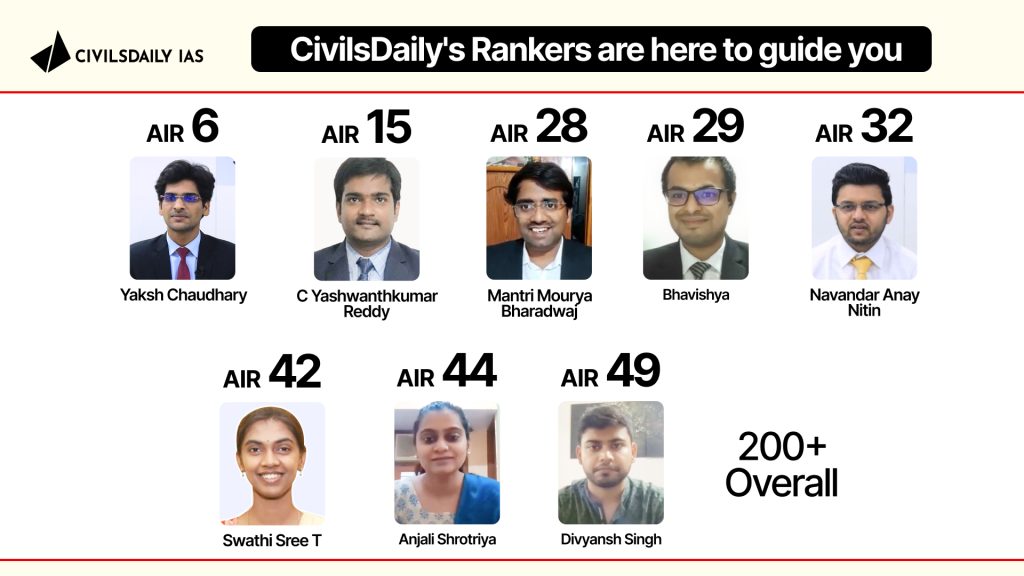
    Some of our Ranker from Maharashtra

More posts