MASTERCLASS on how do Toppers write ‘Impactful Intro’ in UPSC Essay & score 150+ concluded |Register and get FREE mentorship and Samachar Manthan current week’s module
Whether it’s Philosophical or topical or any other UPSC essay topic, ideally, the introduction should not only introduce mere the topic/issue/concept to the examiner but also (very) briefly describe the central premise of the answer. Zeeshan sir says that a good essay doesn’t require very advanced English.
But the introduction should be such that the examiner knows in advance that you know the answer and you’re not going to beat around the bush or weave a boring net of ornamental words looking for the right answer.
Feedback on Zeeshan sir’s mentorship by AIR 65, Pranav (from Quora: https://qr.ae/pvH4yA)
Acknowledging the need to ensure removing difficulties, the students face, we are conducting an on-demand MASTERCLASS on How to write an impactful introduction in UPSC Essay to make a great first impression on the examiner.
You don’t want to miss out on this great chance to learn the subtleties of the Essay introduction and discuss your queries in a 1-1 session with a senior IAS expert.
An advanced technique for writing successfully is to create an impactful introduction for different types of UPSC essays that you can recall at short notice.
UPSC Essay favorite topics
Philosophical Essay: You shouldn’t ignore them as UPSC is focused on them. In 2021, most of the questions were philosophical. So, how to write that intro? Should you start with a quote/story/anecdote/or self-written poem? Will be thoroughly discussed.
Topical essay: You should not ignore them completely and prepare a few important topics which are repeated often like IR, Women, Health and Education, Environment, Agriculture, etc. A fitting mark-leaving intro will be different from that of a ‘Philosophical essay’. All these super important points are going to be discussed in this masterclass.
Whichever essay topic you choose – It should be based on the topic you like or you are comfortable with. You have to write impactful introductions that leave a great first impression on the examiner.
Though you can prepare for UPSC and give your attempts anytime till 32 years, the optimal time to begin your preparation is during your college days. A graduation degree is for 3 years and almost all toppers have prepared for the same amount of time to get the success they now enjoy.
One of the biggest advantages for a college student is that they can easily switch to study mode as there are no other additional family responsibilities or expectations. Plus, an IAS officer who clears the exam within 23 years is more likely to hold the highest position of cabinet secretary than someone who cleared it in their late twenties. Youthful enthusiasm is the biggest internal motivation that college students possess which can help them in clearing this exhausting exam.
So, now that you have broken the news to your parents about wanting to write the UPSC-CSE exam, you might be now wondering — what is UPSC-CSE? How to prepare for it? Should I attend a coaching institute? What is the syllabus? How many hours to study… the list is endlessand daunting.
However, you would have missed the obvious question— What kind of questions come in the paper and what kind of answers UPSC expects from an aspirant?
Is UPSC CSE really about reading Unlimited Sources?
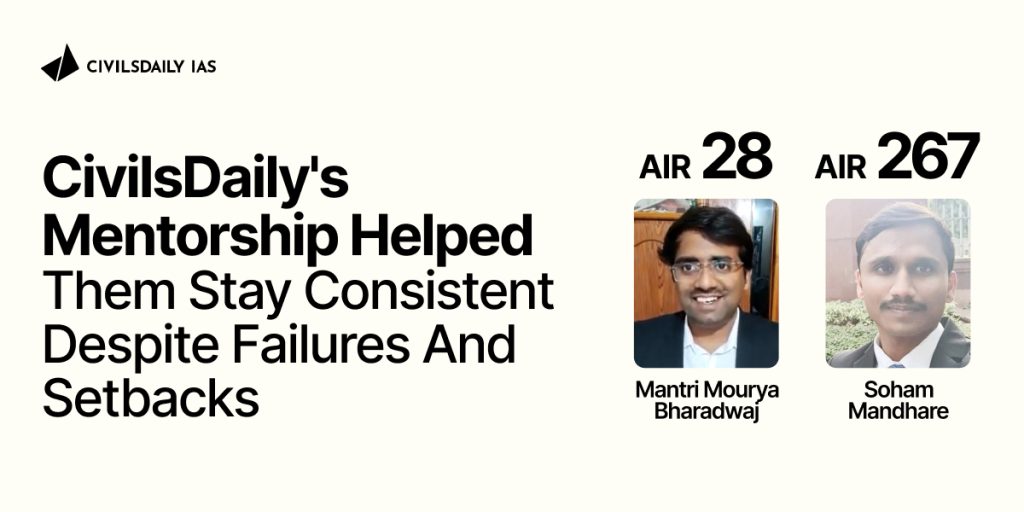
Some of us will ask advices from all our friends and family on how to prepare for the exam, resulting in confusion in following through the UPSC syllabus. Don’t let these questions play the devil and make you postpone your UPSC preparation by a few more years. Having the right direction and guidance can help you save 2-3 critical attempts in UPSC. Listen to our Civilsdaily student and AIR 32 2021 UPSC topper Anay on how he improved his performance after 2 attempts with the guidance of Civilsdaily mentor, Sajal sir.
Without much ado, register yourself for our free 1-on-1 counselling session at Civilsdaily known as Samanvaya. Your counsellors are trained mentors who have given the Mains exam six times and have attended UPSC interview multiple times. Experienced mentors like Sajal sir and his team have nearly mentored 500+ students.
How Sajal sir and CivilsDaily helped these toppers?
List goes on and on.
What are the other mistakes in UPSC preparation first-time aspirants are likely to make?
About 60% of the UPSC toppers have mostly prepared the wrong way in their first attempt. This could range from books, notes to time and consistency. If you want to start in the right direction, then it’s about time you booked a slot with your Samanvaya mentor.
First-time aspirants often make the mistake of reading many sources for a single subject. If there is a new book in the market, they will not hesitate to buy it. UPSC preparation is not about reading multiple books, but one book multiple times.
Few others, answer the essay paper in a very academic and technical manner.
Most of the first-time aspirants skip studying for the language and CSAT paper.
In the first few months of preparation, all of us read the entire 24 pages of the newspaper and waste 3-4 hrs of time. Some of us are over-confident of clearing the exam with our own preparation or by our institute’s coaching. We might be making notes but we will not be updating them or revising them.
First-time aspirants struggle to understand what to skip in a book or what to cover. They take atleast 2-3 months to finish books like Laxmikanth and yet don’t have conceptual clarity.
You can go through this video over here to get a basic understanding of the UPSC preparation.
Toppers were once Beginners. And they began with Samanvaya.
We, at Civilsdaily, are extremely proud to announce the incredible success of our students who have made their dreams come true. Today, we celebrate the hard work, commitment, and dedication with which they prepared for this exam, and succeeded! They are the heroes of today and leaders of tomorrow, and we are extremely glad to have been a part of their journey.
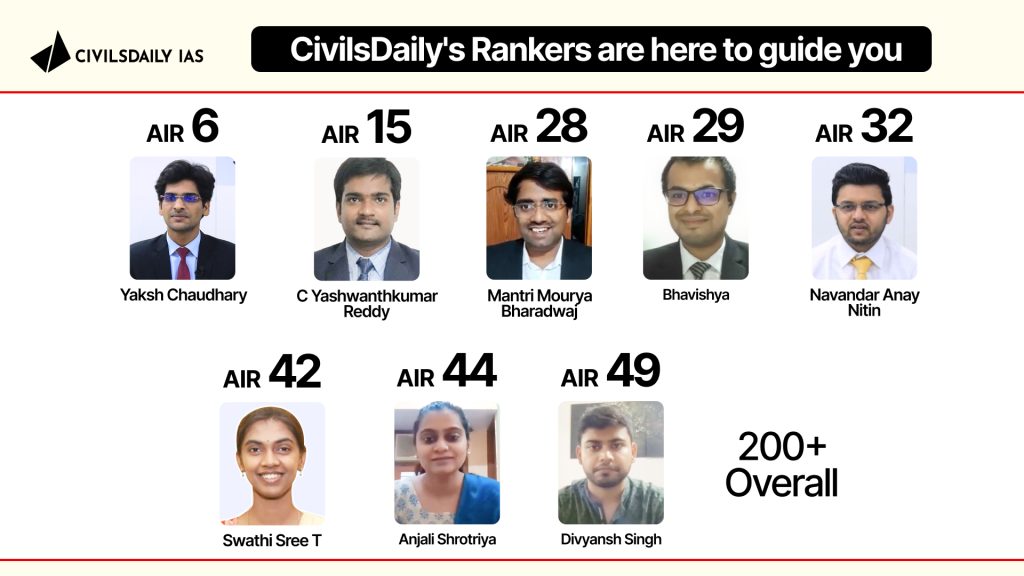
We are also happy to announce that 78 Civilsdaily students (and counting) are now rank holders in UPSC. Our success rate has increased by 77% from last year in terms of rank holders. Civilsdaily is proud to say that 20 of our students are in the top 100 ranks. And this is a phenomenal 25% increase in our success rate for the top 100 positions since last year.
And finally, we are extremely proud of our mentors whose tireless efforts helped our students become officers today. Their daily guidance, skilled mentorship, round-the-clock support, and dedication to work with the students day-in and day-out has led to this wonderful occasion where we celebrate the success of our students together!
How is Samanvaya, UPSC Counselling Session Planned?
At Civilsdaily, your assigned mentors interact with you on a daily basis. They are not just teachers, but coaches, philosophers, and guides. And this is how they will help you succeed:
Motivating you for one whole year and pushing you to complete the modules on time.
Helping you restart preparation despite low scores in test series.
Helping you study for 6 hours every day if you are working.
Guiding you on how to revise the whole syllabus 3 months before prelims and mains.
Providing you topic-wise notes.
Teaching you elimination techniques, tikdams and helpful strategies like 4-2-4 model of preparation.
Keeping you updated on what to study and from where to study.
Three stages of Samanvaya FREE mentorship
1.30-minute counseling session:Once you fill the form, our senior mentors get on a 30-40 minute call with you to understand your preparation level, study constraints, your strategy for the last 6 months, and create measurable targets for next week, next month and so on. You will hear back from us within 24 hours. The first counseling session is absolutely free for all, however, there are limited slots available. So please register now.
2.Access to our invite-only chat platform, Habitat: This is where you can post your daily doubts, discuss your test questions and have real-time, live discussions on news and op-eds, and connect with other aspirants in your optional groups.
3. 1 on 1 mentor allotment: The mentor will be available on scheduled calls with you throughout all the stages of your UPSC preparation and will daily assess, evaluate, and plan the next module according to the available time. We will help you pick the right books, make you practice answers daily, evaluate them and design practical & personalstrategies that you can follow everyday
India’s links with Bangladesh are civilization, cultural, social and economic.
There is much that unites the two countries – a shared history and common heritage, linguistic and cultural ties, passion for music, literature and the arts.
India was one of the first countries, along with Bhutan, to recognise Bangladesh as a sovereign state on 6 December 1971.
It is also worth recalling that India shares its longest border of 4,096.7 kilometres with Bangladesh, which is also the fifth-longest border in the contemporary world.
Trade between two
CEPA: Trade will be a focal point during Ms. Hasina’s visit as the two countries gear up to sign a Comprehensive Economic Partnership Agreement.
Bangladesh dependency: Bangladesh imports critical industrial raw material from India on which its exports are reliant.
Leveraging Indian support: Bangladesh also could improve several manufacturing industries by leveraging Indian expertise in service sectors.
Connectivity
IMT highway: Bangladesh has expressed its interest in joining the India-Myanmar-Thailand highway project.
Waterway: India-Bangladesh bilateral waterway trade will get boosted as India can now use the Mongla and Chittagong ports.
Logistics: India’s Northeast and Bangladesh is important for bilateral cooperation. Currently, three express trains and international bus services operate between Indian and Bangladesh.
Key data to remember
Bangladesh is India’s sixth largest trade partner with bilateral trade rising from $2.4 billion in 2009 to $10.8 billion in 2020-21.
Regional geopolitics
Chinese influence: Chinese inroads into the neighbourhood have been a cause of worry for India. China has been actively pursuing bilateral ties with Bangladesh. Bangladesh had successfully approached China for a mega project to enhance Teesta river water flow.
Strategic location: From the perspective of India’s Northeast, Bangladesh is India’s most strategic neighbour, whom New Delhi cannot ever afford to ignore.
Cooperation needed: India’s dream of ‘Act East Policy’ can only be materialized with the helping hands of Dhaka.
Gateway to northeast: The bridge ‘Maitri Setu’ has been built over the Feni River which flows between the Indian boundary in Tripura State and Bangladesh. It is set to become the ‘Gateway of North East’ with access to Chittagong Port of Bangladesh, which is just 80 kms from Sabroom.
Way forward
The future will present itself with an abundance of opportunities to help the two countries to reach a new plane of bilateral relations higher than ever before.
Both nations should play their diplomatic cards with more maturity and pragmatism, keeping the regional aspirations and nuances of both countries in mind.
A judicious aggregation of regional expectations on both sides of the border will help in achieving their mutual national objectives.
To make the recent gains irreversible, both countries need to continue working on the three Cs — cooperation, collaboration, and consolidation.
Conclusion
For India it will take more than cosy relations with one particular government to have long-term stable relations with its most trusted friend in the neighbourhood.
Mains question
Q. Do you think Bangladesh is most trusted friend in the neighbourhood? Discuss bilateral relations between two in terms of trade, connectivity and geopolitics.
5 September is teacher’s day. Teachers’ Day or Shikshak Divas marks the birthday of the country’s first Vice President (1952–1962) who went on to become the second President of India (1962-1967), a scholar, philosopher, Bharat Ratna awardee, a highly-respected teacher and prolific statesman – Dr Sarvapalli Radhakrishnan.
Less attractive career: It seems that teaching the young is no longer an attractive profession because systemic conditions are so discouraging. It points towards the reforms that education now requires.
Diversion from teaching: Teaching children is not regarded as a serious profession. Non-teaching duties are routinely assigned, and now the digital regime has washed away the few traces of professional autonomy even in the best of private schools.
Bureaucratic over vigilance: So deep is official suspicion of their integrity that many states have installed CCTV cameras in classrooms. That is not the only form of insult teacher’s face. They have little power to assert their professional dignity in the face of bureaucratic or managerial authority.
Marginalisation by coaching institutes: The Indian school teacher now faces new social and economic forces. Coaching institutions have marginalised the secondary-level science teacher. All over the country, children are allowed to bunk school to attend NEET and JEE coaching classes. Science and math teachers were, in any case, aware that their pedagogic effectiveness would be measured by an unreformed examination system.
Reliability issue due to internet overuse: Social Science teachers are coping with a different kind of challenge to justify their knowledge and interpretation. Children’s access to the internet exposes them to a wilderness of socio-political ideas and information. It is not easy for social science teachers to convince children that they are more reliable than a YouTube video or a WhatsApp message.
Catchy line in this context for value addition
Jinke jiwan me guru nahi, unka jiwan abhi shuru nahi.
How to address these challenges
Supporting teacher control over curriculum and instruction: Classical top-down school leadership needs to be re-examined, and teachers must be recognized as professionals who have expertise to make good learning decisions for their students.
Establish adequate pay scales and financial incentives: Compensation systems signal what skills and attributes are valued and what kinds of contributions are rewarded.
Establish and conduct personnel evaluation systems: Teachers need regular feedback and accurate information on job expectations.
Provide adequate planning time for teachers: While all teachers work under tremendous time constraints, experienced teachers generally are able to complete their planning more quickly. For new teachers, adequate planning time can allay feelings of being overwhelmed.
Provide a structure for team planning and teaching: Teachers often report feeling isolated in their classrooms. Team planning and teaching can be an important step in retaining a high quality teaching force.
Conclusion
Since the teacher is the pivot of the entire educational system and is the main catalytic agent for introducing desirable changes in the teaching learning process, all attempts need be made for motivating teachers to become innovative and creative. It goes without saying that a self-motivated and really industrious teacher can utilise his own resources to keep themselves abreast of new knowledge and skills.
Mains question
Q. It seems that teaching the young is no longer an attractive profession because systemic conditions are so discouraging. Critically analyse.
The Prime Minister has called for “Energy Atmanirbharta” by 2040.
What is Atmanirbharta?
Atmanirbharta translates literally to self-reliance.
What is the main purpose of Atmanirbhar Bharat?
The aim is to make the country and its citizens independent and self-reliant in all senses. Five pillars of Aatma Nirbhar Bharat are – Economy, Infrastructure, System, Vibrant Demography and Demand.
How to achieve energy self-reliance?
Definitional clarity: Atmanirbharta translates literally to self-reliance. Many interpret it to mean self-sufficiency. That should not be our goal. Energy self-sufficiency is infeasible and uneconomic. A better statement of intent would be “strategic autonomy”.
Affordable access to fuel: Our policy must continue to emphasise affordable and secure access to oil and gas. Part of this objective could be met by intensifying domestic exploration.
Prioritise access to the building blocks of green energy: The sine qua non for realising this forecast will be cost-competitive access to minerals/components (copper, cobalt, lithium, semiconductor chips etc) required to build EVs, solar panels, wind turbines and batteries.
Infrastructure development: We must expand our strategic petroleum reserves to cover at least 30 days of consumption and upgrade the transmission grid and battery storage systems to scale up renewables and smoothen its supplies. We will need to develop innovative financing mechanisms to fund green infrastructure. It should be emphasised that all such investments will get impaired if state discoms are financially insolvent.
Green incentives: The government’s production-linked incentive scheme (PLI) offers benefits for investment in green energy.
Demand conservation and efficiency: Energy usage norms must be standardised and tightened. Legislation should be contemplated to ensure compliance.
Energy diplomacy: Our diplomats should add the arrows of energy diplomacy to their quiver. This is because of our dependence on the international energy supply chains. Success in navigating the cross-currents of economic and geopolitical uncertainties will rest greatly on skilful diplomacy.
Holistic governance: The current siloed structures of energy governance are suboptimal. A root and branch administrative overall is required. Institutions should be created to facilitate integrated energy planning and implementation.
Case study for value addition
Costa Rica lasted 300 consecutive days on renewable energy alone. Costa Rica set the record in 2017 for most consecutive days with renewable energy. The previous record for this feat was in 2015 when Costa Rica lasted 299 consecutive days on pure, clean energy.
Challenges ahead
Anti-nuclear public sentiment: The Fukushima-Daiichi accident resulted in growing concern over the safety of nuclear plants in India .The construction of a nuclear plant in Kudankulam, Tamil Nadu, brought the issue directly into the public domain in 2012.
Management autonomy: Power sector is dominated by public sector companies or PSUs (owned by the central and state government). Some parts of the energy sector have made very little progress in attracting private investment since 2007.
Pricing: is the key to ensure the commercial viability of business entities and to attract investment into each fuel sector.
Rigid tariff setting mechanism: Theoretically, prices should be supervised and adjusted in a timely manner and adequately by independent regulators to reflect changing costs. However, in India, regulators including CERC and SERCs operate in a very rigid way due to political considerations. This jeopardises the operational profitability of companies.
Conclusion
We need leadership that can reconcile temporal differences and balance the short-term pressures of elections with the longer-term imperatives of sustainability in energy security which calls for bold and pragmatic decision making by the leadership.
Mains question
Q. How India can achieve “Energy Atmanirbharta” by 2040 an ambitious target stated by prime minister? What are the challenges in achieving this goal?.
Former Tata Sons chairman Cyrus Mistry was recently killed in a horrific and unfortunate road accident!
Context
Deaths by accidents on roads increased by almost 17 per cent in 2021 compared to 2020.
This indicates an INCREASE in the rate of deaths per 1,000 vehicles in India, according to the latest NCRB report.
Road Accidents in India
In 2021, 1.55 lakh people died in accidents on Indian roads, up from 1.33 lakh in 2020, when much of the year saw a nationwide lockdown.
Total road accidents reported was 4.03 lakh in 2021, up from 3.54 lakh the year before.
But the 2021 accident numbers were significantly lower than those in 2019, when 4.37 lakh mishaps had been recorded, killing 1.54 lakh people.
As in previous years, two-wheelers accounted for most deaths (44.5%). Buses accounted for 3% of deaths in accidents.
Speeding caused 87,000 deaths, accounting for over half of all deaths, while dangerous and careless driving was attributed as cause for 42,000 deaths, the report stated.
State-wise data
The maximum increase in number of traffic accident cases from 2020 to 2021 was reported in Tamil Nadu (from 46,443 to 57,090), followed by Madhya Pradesh (from 43,360 to 49,493), Uttar Pradesh (from 30,593 to 36,509), Maharashtra (from 24,908 to 30,086), and Kerala (from 27,998 to 33,051).
These traffic accidents resulted in injuries to 3,73,884 people and 1,73,860 deaths in 2021.
Uttar Pradesh (24,711 deaths) followed by Tamil Nadu (16,685 deaths) and Maharashtra (16,446 deaths) have reported the maximum fatalities in traffic accidents in the country.
Factors causing Road Accidents
A new analytical series on road safety worldwide, published by The Lancet, proposes that India and other countries could cut accident-related deaths by 25 to 40%.
This is based on evidence that preventive interventions produce good outcomes when applied to four well-known risk factors:
High speed
Driving under the influence of alcohol
Not using proper helmets
Not wearing seat-belts and not using child restraints
Issues highlighted in developing countries
The structural problems linked to unplanned motorisation and urbanisation remain.
In India, speedy highway construction takes place without reconciling fast and slow-moving traffic.
There is a rampant presence of ramshackle vehicles, wrong-side driving, absence of adequate traffic police forces etc.
Why are there so many road fatalities in India alone?
Weak enforcement of traffic laws: People hardly oblige to traffic rules and find easier to bribe policemen rather than paying hefty challans.
Speeding issue: More accidents on the highways have been attributed to higher vehicle speeds and higher volume of traffic on these roads.
Engineering bottlenecks: Issues such as gaps in the median on the national highways, untreated intersections, and missing crash barriers are some of the biggest engineering issues.
Behavioural issue: Driver violations such as wrong-side driving, wrong lane usage by heavy vehicles, and mass violation of traffic lights, intoxication are the biggest behavioural issues.
Lack of Golden hour treatment: Lack of rapid trauma care on highways leads to such high fatalities.
Various steps taken by India
India amended Motor Vehicles Act in 2019, but its implementation by State governments is not uniform or complete.
A National Road Safety Board was constituted under the Act, with advisory powers to reform safety.
The World Bank has approved a $250 million loan to support for India State Support Programme for Road Safety.
Issues with implementation
The focus of State governments, however, remains conventional, with an emphasis on user behaviour (drivers and other road users), education and uneven enforcement.
Low emphasis is placed on structural change such as raising engineering standards for roads, signages, signals, training for scientific accident investigation, raising policing skills and fixing responsibility on government departments for the design, creation and maintenance of road infrastructure.
What can be done to cut death and injury rates?
The ambitious amendments to the Motor Vehicles Act in 2019 (MV Act) have not yielded significant results.
Major interventions in India, first suggested by the Sundar Committee (2007) and ordered by the Supreme Court in Rajasekaran vs Union of India have not made a dent in the problem.
Key findings of Sundar Committee
The Sundar Committee pointed out that India lacked a technically competent investigation arm that could determine the cause of accidents.
There is little clarity on whether the States have formed such units to aid traffic investigation, or whether the insurance industry has pressed for these to accurately determine fault.
In the absence of scientific investigation, perceptions usually guide the fixing of liability.
Solutions provided by the Lancet
The Lancet calculated that 17% of road traffic injury-related deaths could be avoided iftrauma care facilities improved.
This is significant as several accidents take place in rural areas on highways, and victims are taken to poorly-equipped district hospitals or medical college hospitals.
While positive user behaviour — slower travel, wearing of helmets, seat belts and so on — could save thousands of lives.
In the short term, slowing down traffic, particularly near habitations, segregating slower vehicles, enforcing seat belt and helmet use and cracking down on drunken drivers could produce measurable gains.
Imbibing road safety: Way forward
Road safety education
Better road design, maintenance and warning signage
Crackdown on driving under influence of alcohol and drugs
Cybercrime is any criminal activity that involves a computer, networked device or a network. While most cybercrimes are carried out in order to generate profit for the cybercriminals, some cybercrimes are carried out against computers or devices directly to damage or disable them.
What data states?
India reported 52,974 cases of cybercrime in 2021, an increase of over 5 per cent from 2020 (50,035 cases) and over 15 per cent from 2019 (44,735 cases), according to latest government data.
How many cyber criminals are caught in India?
In 2020, over 18.4 thousand people were arrested on account of cyber-crimes across India.
Who is responsible for cyber security centre or state?
With ‘police’ and ‘public order’ being in the State List, the primary obligation to check crime and create the necessary cyberinfrastructure lies with States.
At the same time, with the IT Act and major laws being central legislations, the central government is no less responsible to evolve uniform statutory procedures for the enforcement agencies.
Status of cyber investigation
There is no separate procedural code for the investigation of cyber or computer-related offences.
As electronic evidence is entirely different in nature when compared with evidence of traditional crime, laying down standard and uniform procedures to deal with electronic evidence is essential.
What are general guidelines for cyber investigation?
The broad ‘guidelines for the identification, collection, acquisition and preservation of digital evidence’ are given in the Indian Standard IS/ISO/ IEC 27037: 2012, issued by the Bureau of Indian Standards (BIS).
This document is fairly comprehensive and easy to comprehend for both the first responder (who could be an authorised and trained police officer of a police station) as well as the specialist (who has specialised knowledge, skills and the abilities to handle a wide range of technical issues).
The guidelines, if followed meticulously, may ensure that electronic evidence is neither tampered with nor subject to spoliation during investigation.
What is the meaning of digital evidence or electronic evidence?
Digital evidence is information stored or transmitted in binary form that may be relied on in court. It can be found on a computer hard drive, a mobile phone, among other places. Digital evidence is commonly associated with electronic crime, or e-crime, such as child pornography or credit card fraud.
Arjun Khotkar vs Kailash Gorantyal Judgement
The Court held that a certificate under Section 65B(4) of the Indian Evidence (IE) Act was a mandatory pre-requisite for the admissibility of (secondary) electronic record if the original record could not be produced.
What is Indian evidence act?
The Indian Evidence Act, originally passed in India by the Imperial Legislative Council in 1872, during the British Raj, contains a set of rules and allied issues governing admissibility of evidence in the Indian courts of law.
Judicial activism for cyber security
A significant attempt has been made by the higher judiciary in this field also. As resolved in the Conference of the Chief Justices of the High Court in April 2016, a five judge committee was constituted in July 2018 to frame the draft rules which could serve as a model for the reception of digital evidence by courts.
The committee, after extensive deliberations with experts, the police and investigation agencies, finalised its report in November 2018, but the suggested Draft Rules for the Reception, Retrieval, Authentication and Preservation of Electronic Records are yet to be given a statutory force.
What needs to be done?
Upgrade cyber labs: The cyber forensic laboratories of States must be upgraded with the advent of new technologies.
Digital rupee: Offences related to cryptocurrency remain under-reported as the capacity to solve such crimes remains limited. The central government has proposed launching a digital rupee using block-chain technology soon.
Empowering states: State enforcement agencies need to be ready for new technologies. The Centre helps in upgrading the State laboratories by providing modernisation funds, though the corpus has gradually shrunk over the years.
Need for localisation of data: Most cybercrimes are trans-national in nature with extra-territorial jurisdiction. The collection of evidence from foreign territories is not only a difficult but also a tardy process.
Conclusion
Centre and States must not only work in tandem and frame statutory guidelines to facilitate investigation of cybercrime but also need to commit sufficient funds to develop much-awaited and required cyber infrastructure.
Mains question
Q.With the increasing use of computers in society, cybercrime has become a major issue. Analyse the loopholes in cyber security regime of India by giving suggestions to rectify the same.
The delay in payment of wages has pushed MGNREGS workers in West Bengal to the brink. There are allegations of corruption against the State government, the Centre’s reluctance in releasing payments, and the plight of the workers caught in this tussle.
What is MGNREGA?
The MGNREGA stands for Mahatma Gandhi National Rural Employment Guarantee Act of 2005. This is labour law and social security measure that aims to guarantee the ‘Right to Work’. The act was first proposed in 1991 by P.V. Narasimha Rao.
Significant Features of the scheme
Fixed employment: MGNREGA is unique in not only ensuring at least 100 days of employment to the willing unskilled workers, but also in ensuring an enforceable commitment on the implementing machinery i.e., the State Governments, and providing a bargaining power to the labourers.
Assured compensation: The failure of provision for employment within 15 days of the receipt of job application from a prospective household will result in the payment of unemployment allowance to the job seekers.
Locality is ensured: Employment is to be provided within 5 km of an applicant’s residence, and minimum wages are to be paid.
Legal backing: Thus, employment under MGNREGA is a legal entitlement.
Non-purposive spending and corruptions: Many works sanctioned under MGNREGA often seem to be non-purposive. Quite often, they are politically motivated hotspots to create rampant corruption by dominant sections of the local population. Even social audits of such projects are locally manipulated.
Workers penalized for administrative lapses: The ministry withholds wage payments for workers of states that do not meet administrative requirements within the stipulated time period (for instance, submission of the previous financial year’s audited fund statements, utilization certificates, bank reconciliation certificates etc). There is no logical or legal explanation for this bizarre arrangement. It is beyond any logic as to why workers would be penalized for administrative lapses.
Genuine job cards being deleted: Genuine job cards are being randomly deleted as there is a huge administrative pressure to meet 100 per cent DBT implementation targets in MGNREGA. In states like Jharkhand, there are multiple examples where the districts had later requested to resume job cards after civil society interventions into the matter.
Too much centralization weakening local governance: A real-time MIS-based implementation and a centralised payment system has further left the representatives of the Panchayati Raj Institutions with literally no role in implementation. It has become a burden as they hardly have any power to resolve issues or make payments.
Local priorities being ignored: MGNREGA could be a tool to establish decentralized governance. But, with the administration almost dictating its implementation, it is literally a burden now for the people and especially for the local elected representatives. The Gram Sabhas and gram panchayats’ plans are never honoured. This is a blatant violation of the Act as well.
Lack of fund has negative implications
Delayed payment: Due to this, payments for MGNREGA workers as well as material costs will be delayed, unless States dip into their own funds.
Livelihood loss: MGNREGA data shows that 13% of households who demanded work under the scheme were not provided work.
Halt of work: Many workers are simply turned away by officials when they demand work, without their demand being registered at all.
Fall in demands: This has led to stop the generation of work. There is an artificial squeezing of demand.
What can be done according to rural development committee?
Utilization of funds: A large amount of funds allocated for MGNREGA have remained un-utilised. For example, in 2010-11, 27.31% of the funds remained unutilised. The Committee recommends that the Department of Rural Development should analyse reasons for poor utilisation of funds and take steps to improve the same. In addition, it should initiate action against officers found guilty of misappropriating funds under MGNREGA.
Context specific projects and convergence: Since states are at various stages of socio-economic development, they have varied requirements for development. Therefore, state governments should be allowed to undertake works that are pertinent to their context. There should be more emphasis on skilled and semi-skilled work under MGNREGA. In addition, the Committee recommends a greater emphasis on convergence with other schemes such as the National Rural Livelihoods Mission, National Rural Health Mission, etc.
Regulation of job cards: Offences such as not recording employment related information in job cards and unlawful possession of job cards with elected PRI representatives and MGNREGA functionaries should be made punishable under the Act.
Participation of people with disabilities: Special works (projects) must be identified for people with disabilities and special job cards must be issued and personnel must be employed to ensure their participation.
Payment of unemployment allowance: Dated receipts for demanded work should be issued so that workers can claim unemployment allowance. Funds for unemployment allowance should be met by the central government.
Some innovation in MGNREGA can address the challenges
1) Looping in the skilled worker
First, there is a suggestion to use it to meet the wage cost of their employment in small and medium enterprises (SMEs).
Accordingly, skilled migrant workers may be placed in SMEs and their wages would be charged to MGNREGA.
2) Including farm related works
In the last few years, un-remunerative prices of several crops have been the root cause of widespread agrarian distress.
The suggestion is to allow farmers to employ MGNREGA workers in agricultural operations like land preparation, sowing, transplantation of paddy, plucking of cotton, intercultural operations and harvesting of crops etc. so as to reduce the cost of cultivation.
The idea is to pay part of the wages of labour in agricultural operations from MGNREGA.
3) Increasing the number of Work Schemes
Currently, there are only 2-3 work schemes (say PMAY) running per panchayat, which is leading to the crowding of workers at worksites.
To prevent this and to ensure that all willing households are able to access employment through NREGA, the number of schemes needs to be increased, and 6-8 schemes must be introduced in each village.
4) Paying Workers Immediately
Rural households urgently need cash-in-hand, and so the emerging demand is for immediate payment to workers. NREGA payments are frequently delayed by weeks or months.
Given the circumstances, such delays will be entirely counterproductive.
It is recommended that in remote areas, wage payments should be made in cash, and paid on the same day.
Conclusion
Government and NGOs must study the impact of MGNREGA in rural areas so as to ensure that this massive anti-poverty scheme is not getting diluted from its actual path.
Mains question
Q. Large scale social security programmes like MGNREGA are subjected to undergo several stumbling blocks in the times to come due to lack of fund. Analyse these roadblocks and give some innovative measures to tackle these roadblocks.
Millets are a group of highly variable small-seeded grasses, widely grown around the world as cereal crops or grains for human food and as fodder.
Features Millet crops in India
Big three: The three major millet crops currently growing in India are jowar (sorghum), bajra (pearl millet) and ragi (finger millet).
Examples: India also grows a rich array of bio-genetically diverse and indigenous varieties of “small millets” like kodo, kutki, chenna and sanwa.
Area of production: Major producers include Rajasthan, Andhra Pradesh, Telangana, Karnataka, Tamil Nadu, Maharashtra, Gujarat and Haryana.
What are Advantages of millet cultivation?
Low input cost: cereals are good for the soil, have shorter cultivation cycles and require less cost-intensive cultivation.
Climate resilience: These unique features make millets suited for and resilient to India’s varied agro-climatic conditions.
Drought tolerance: cereals are not water or input-intensive, making them a sustainable strategy for addressing climate change and building resilient agri-food systems.
Reduction in millet production
Effects of Green Revolution: The Green Revolution succeeded in making India food sufficient, however, it also led to water-logging, soil erosion, groundwater depletion and the unsustainability of agriculture.
Deficit mind-set: Current policies are still based on the “deficit” mind-set of the 1960s.
Biased policies: The procurement, subsidies and water policies are biased towards rice and wheat.
Skewed cropping pattern: Three crops (rice, wheat and sugarcane) corner 75 to 80 per cent of irrigated water.
Lack of diversification: Diversification of cropping patterns towards cereals, pulses, oilseeds, horticulture is needed for more equal distribution of water, sustainable and climate-resilient agriculture.
What can be done to promote millets as nutri-cereals?
1) Rebranding the cereals as nutri-cereals
The first strategy from a consumption and trade point of view was to re-brand coarse cereals/millets as nutri-cereals.
As of 2018-19, millet production had been extended to over 112 districts across 14 states.
2) Incentive through hiking MSP
Second, the government hiked the MSP of nutri-cereals, which came as a big price incentive for farmers.
From 2014-15 to 2020 MSPs for ragi has jumped by 113 per cent, by 72 per cent for bajra and by 71 per cent for jowar.
MSPs have been calculated so that the farmer is ensured at least a 50 per cent return on their cost of production.
3) Providing steady markets through inclusion in PDS
To provide a steady market for the produce, the Modi government included millets in the public distribution system.
4) Increasing area, production and yield
The Ministry of Agriculture & Farmers’ Welfare is running a Rs 600-crore scheme to increase the area, production and yield of nutri-cereals.
With a goal to match the cultivation of nutri-cereals with local topography and natural resources, the government is encouraging farmers to align their local cropping patterns to India’s diverse 127 agro-climatic zones.
Provision of seed kits and inputs to farmers, building value chains through Farmer Producer Organisations and supporting the marketability of nutri-cereals are some of the key interventions that have been put in place.
5) Intersection of agriculture and nutrition
The Ministry of Women and Child Development has been working at the intersection of agriculture and nutrition by -1) setting up nutri-gardens, 2) promoting research on the interlinkages between crop diversity and dietary diversity 3) running a behaviour change campaign to generate consumer demand for nutri-cereals.
Conclusion
India should aim for a food systems transformation, which can be inclusive and sustainable, ensure growing farm incomes and nutrition security. As the government sets to achieve its agenda of a malnutrition-free India and doubling of farmers’ incomes, the promotion of the production and consumption of nutri-cereals seems to be a policy shift in the right direction.
Mains question
Q. Promotion of millet crops serves the dual purpose of securing health and supporting farmers. Elucidate.
![[MASTERCLASS] How do UPSC toppers write ‘Impactful Intoductions’ in UPSC Essay and score 150+ marks? | Register for the recorded *VIDEO* & Get Best Introduction PDF and Essay Test (FREE)](https://d18x2uyjeekruj.cloudfront.net/wp-content/uploads/2022/07/Zeeshan.jpg)




 Context
  Trade between two
 Connectivity
  Context
 Conclusion
  Context
 Case study for value addition
  Conclusion


 Context
  Status of cyber investigation
 Context
  What are the issues?
 Lack of fund has negative implications
  Context
  What are Advantages of millet cultivation?
 Reduction in millet production