💥UPSC 2026, 2027, 2028 UAP Mentorship (March Batch) + Access XFactor Notes & Microthemes PDF

Search results for: “”

  • The Jal Jeevan and Swachh Bharat Missions are improving people’s well-being

    Context

    The performance of the Jal Jeevan and Swachh Bharat Missions highlights the importance of convergence as an operating principle of the government.

     Jal Jeevan Mission: Progress made so far

    • Jal Jeevan Mission (JJM) is a flagship programme of the Government of India, launched by Hon’ble Prime Minister on 15th August 2019.
    • Jal Jeevan Mission, is envisioned to provide safe and adequate drinking water through individual household tap connections by 2024 to all households in rural India.
    • Community approach: The Jal Jeevan Mission is based on a community approach to water and will include extensive Information, Education and communication as a key component of the mission.
    • Over 9.6 crore rural households get tap water supply; notably, more than 6.36 crore households have been provided tap water connections since the programme was announced in August 2019.

    Achievements of Swachh Bharat Mission

    • Universal sanitation coverage: To accelerate the efforts to achieve universal sanitation coverage and to put the focus on sanitation, the Prime Minister of India had launched the Swachh Bharat Mission on 2nd October 2014.
    • Under the mission, all villages, Gram Panchayats, Districts, States and Union Territories in India declared themselves “open-defecation free” (ODF) by 2 October 2019, the 150th birth anniversary of Mahatma Gandhi.
    • To ensure that the open defecation free behaviours are sustained, no one is left behind, and that solid and liquid waste management facilities are accessible, the Mission is moving towards the next Phase II of SBMG i.e ODF-Plus.
    • Swachh Bharat Mission Phase-2: The government has launched Swachh Bharat Mission Phase 2 with a focus on plastic waste management, biodegradable solid waste management, grey water management and faecal sludge management.
    •  Under Swachh Bharat Mission Phase-2, arrangements for solid and liquid waste management have been made in 41,450 villages; nearly 4 lakh villages have minimal stagnant water.
    • ODF Plus: Nearly 22,000 villages have been named “model village” under the ODF Plus scheme, and another 51,000 villages are on their way to achieving this tag.
    • Sludge treatment and plastic waste management: Before the government embarked on Swachh Bharat Mission, nearly 1,20,000 tonnes of faecal sludge was left untreated as two-thirds of all toilets were not connected to the main sewer lines
    • The scale of India’s plastic waste pollution is staggering.
    • Both these problems find themselves on the agenda of Swachh Bharat Mission’s Phase 2.
    • In a short time, 3.5 lakh villages have become plastic dump free and nearly 4.23 lakh villages have minimal litter.
    • Nearly 178 faecal sludge treatment plants and nearly 90,000 km of drains have been constructed.

    How convergence between SBM and JJM enabled each other

    • Principle of convergence: The late Arun Jaitley introduced convergence as one of the primary operating principles of the government in his first budget speech.
    • One enabling the other: The best exhibition of this can be found in the ways in which the Jal Jeevan Mission and Swachh Bharat Mission work in tandem, one enabling the other.
    • More than 10 crore toilets were built under SBM but this accomplishment could have been difficult had the government not had the foresight to build the toilets on a twin-pit design that has in-situ treatment of faecal sludge.
    • Now, providing tap water connections through the Jal Jeevan Mission is among the government’s top priorities.
    • Managing grey water discharge: The Jal Jeevan Mission faces a challenge similar to that faced by the Swachh Bharat Mission — managing grey water discharge.
    • Holistic sanitation: When household tap connections were provided, the Jal Jeevan Mission converged with the Swachh Bharat Mission to achieve holistic sanitation in which the treatment of grey water became a vital component.
    • Focus on women: The Jal Jeevan mission intends to relieve women of the drudgery of travelling long distances to fetch water.
    • The Swachh Bharat Mission too is centred around the dignity of women.
    • A joint study by the Bill and Melinda Gates Foundation and UNICEF revealed that an overwhelming number (80 per cent) of the respondents stated that safety and security were the main drivers of their decision to construct toilets.
    • The Jal Jeevan Mission is catalysing change at the grass roots level by reserving 50 per cent seats for women in village and water sanitation committees.
    • In every village, at least five women have been entrusted with water quality surveillance and many of them have been trained as plumbers, mechanics and pump operators.

    Impact on growth and economy

    •  In 2006, a joint study by WSP, Asian Development Bank and UKAID revealed that inadequate sanitation cost India Rs 2.4 trillion — 6 per cent of India’s GDP at that time.
    • The Swachh Bharat Mission, apart from preventing GDP loss, provides annual benefits worth Rs 53,000 per household.

    Conclusion

    The success of Jal Jeevan Mission and Swachh Bharat Mission is a good example of convergence, one of the primary operating principles of the government.

    UPSC 2023 countdown has begun! Get your personal guidance plan now! (Click here)

  • (Direct Joining Link) WEBINAR | How toppers improved from rookie to pro? Track their growth journey in today’s webinar by Sukanya ma’am: Register and Get toppers copy free over e-mail

    (Direct Joining Link) WEBINAR | How toppers improved from rookie to pro? Track their growth journey in today’s webinar by Sukanya ma’am: Register and Get toppers copy free over e-mail


    Webinar Starts at 7:30 P.M. Join Zoom Meeting

    https://us06web.zoom.us/j/84586069955?pwd=bEU4T0VNRmk0TmJVOWE2a2I4L28wUT09

    Meeting ID: 845 8606 9955

    Passcode: 726047

    Civilsdaily Team is inviting you to a scheduled Zoom meeting.
    Topic: Civilsdaily Team’s Zoom MeetingTime: Jun 9, 2022 07:10 PM Mumbai, Kolkata, New Delhi

    Get access to GS Mains copies via email and PDF of Mains answer writing practices by toppers

    UPSC Prelims 2022 is over & now it’s time to cross the higher bar. Knowing the unpredictability of this journey, many believe that only hard work can make them luckier. But shockingly, even after working with all their might, 90% of them remain very much clueless about their “strategy” being right or wrong. 

    What are the things our toppers have done different this year?

    Moreover, a quick strategy re-orientation is required for 2022 Mains aspirants as no time is left now.

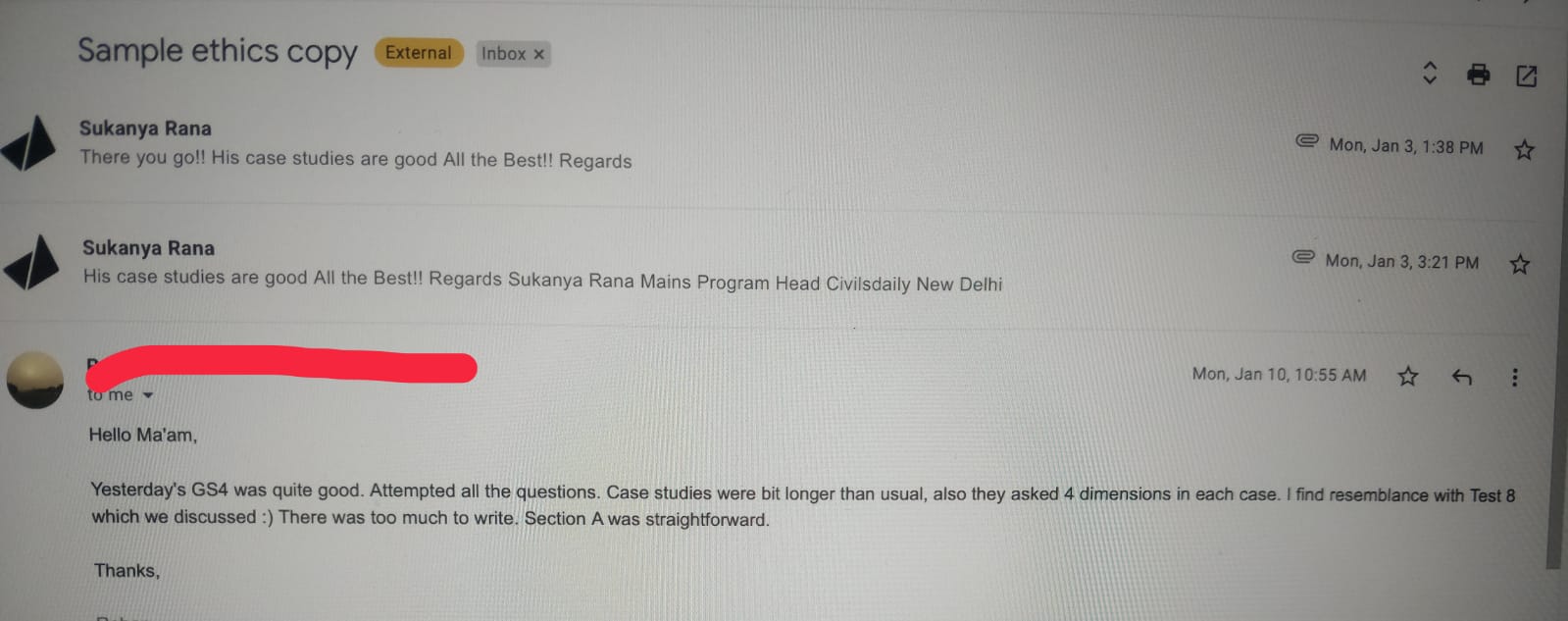
    Sukanya ma’am will be analyzing and dissecting toppers’ answers for you to highlight what makes their answers different from an average aspirant.

    Webinar Details:

    Strategies & Approaches, in This Free Live Webinar by Sukanya Ma’am!

    1. How CD’s Mains programs guaranteed  200+ aspirants to enter in UPSC 2021 final merit list. & what are the things they have done different this year. Best, authentic, minimum materials for UPSC-CSE Mains Preparation. Do’s & Dont’s, How to remake ‘Recognition of information’ into ‘recall, analyze & express’.
    1. Whether your answers ought to reflect the editorial standards of The Hindu! What should be the foolproof strategy? What subject to pick up first to start your Mains Preparation!
    1. How toppers prioritize speed over content, and content over structure. How to fix your answer writing structure, improve the content
    2. How to create a basic conceptual framework of the answer before committing anything to paper. Implications of overstretching your imagination.
    3. How to fetch maximum score in both ‘Essay’ & ‘Ethics’ papers to enhance your marks in total.
    4. What is the difference between ‘Opinion-based’ & ‘Fact-based’ questions will also be discussed thoroughly in this webinar?
    5. How & where to present the answer, replete with a Map/diagram/flowchart/, It will help to get extra 0.25-0.5 marks across 80 questions of GS papers. If the question is in two parts, sticking to the word limit, how to address the demand of each part. What is the way to enclose also any critical analysis you should have within the subheading?
    6. How to enhance writing patterns, where to take mock regularly, how many mock tests are fit, Etc. will be discussed in this live webinar.
    7. The untold secret of coverage of the Mains syllabus is that the syllabus can be covered 100%. The most brilliant of candidates will testify that even their coverage of the syllabus was not completely 100%.

    About Sukanya Rana Ma’am:

    Our Civilsdaily Mains Program Head Mrs. Sukanya Rana has been mentoring 1500+ students & 100+ Rankers across multiple stages from prelims to mains to interviews. She is part of Smash Mains as an Ethics Mentor and helped Civilsdaily topper to achieve their dream.

    She has firsthand experience of 4 mains and 2 interviews of UPSC. She has also appeared in the State PCS interview.

    Sukanya Ma’am has scored consistently 100+ marks in ethics and in 2019 her marks were 140 in GS 4. In 2020 and 2021, under her mentorship, many smash mains students were able to secure 110+ marks.

  • Smash Ethics 2022(Batch 2) with 1-to-1 Mentorship | Score 110+ in Ethics GS-4 | 8 Full Length Tests | Limited Seats

    Smash Ethics 2022(Batch 2) with 1-to-1 Mentorship | Score 110+ in Ethics GS-4 | 8 Full Length Tests | Limited Seats


    Guys! Mains GS Paper 4 aka Ethics is the most dynamic paper out of the lot. There is no “ONE WAY approach” in ethics. In our experience of working with 2000+ students, ethics is a gamechanger for the UPSC examination. Scoring well in the ethics paper is the sine qua non for getting featured in the final list and one’s desired service. The ETHICS paper is designed to evaluate the ‘ethical competence‘ but not the ‘knowledge about ethics‘. REMEMBER: General studies paper 4 is the only paper where you can score 120+ marks easily. The TRICK is to learn the static portion, link them to current affairs and bring it in writing. So, the ethics paper needs to hold over ART OF ANSWER WRITING as well as STATIC MATERIAL.

    Watch:- Messages of our Hall of Fame 2021 Top Rankers

    👉 The Smash ethics program will focus on both the needs of answer writing and static coverage of the syllabus. Being the composition paper, it offers maximum returns. With very little effort, one can score good marks. Thorough preparation of this paper also helps in adding the moral dimension to answers in GS Paper-1, 2, and 3 papers and also the essay paper. It also helps in coming across as a person who has the qualities desired of a civil servant in the personality test.

    The Hindu has acknowledged CD’s Mains answer writing & Mentorship programs.

    Trends In Ethics Paper

    • Shift towards more conceptual questions than direct static questions
    • More current affairs focused
    • Complex case studies
    • Lengthier paper

    Smash Ethics Program Inclusion:

    • Comprehensive Video Lectures covering Paper 4
    • Full syllabus Notes.
    • 8 FLT tests
    • 1-1 Mentorship support after every test
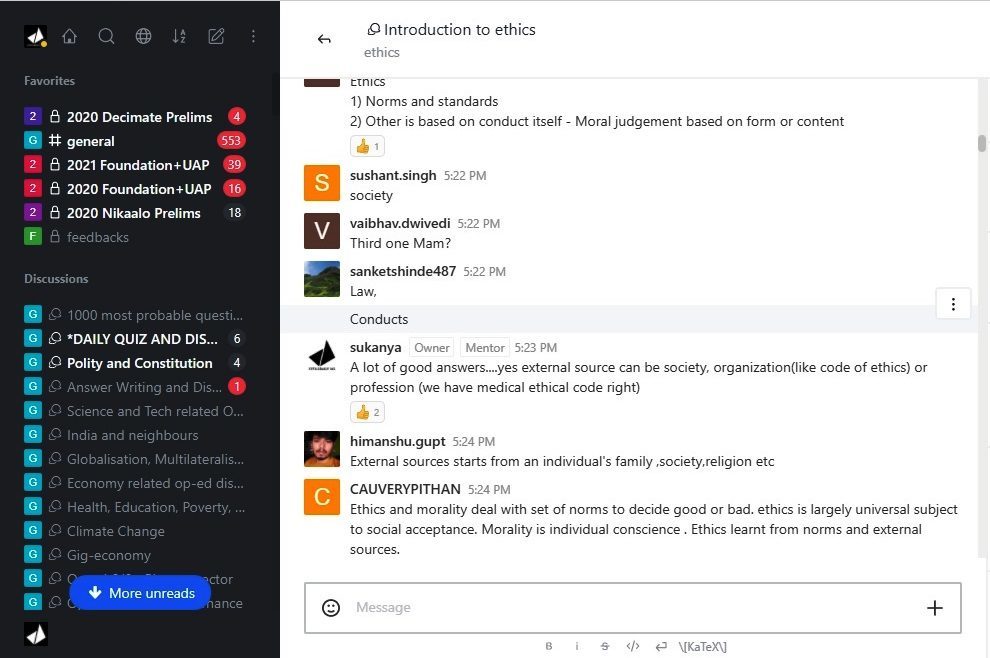
    • Membership of Ethics group (exclusive) on Civilsdaily’s Habitat
    • Doubt resolution session on Habitat

    Here’s what the program includes:

    Video Lectures: 

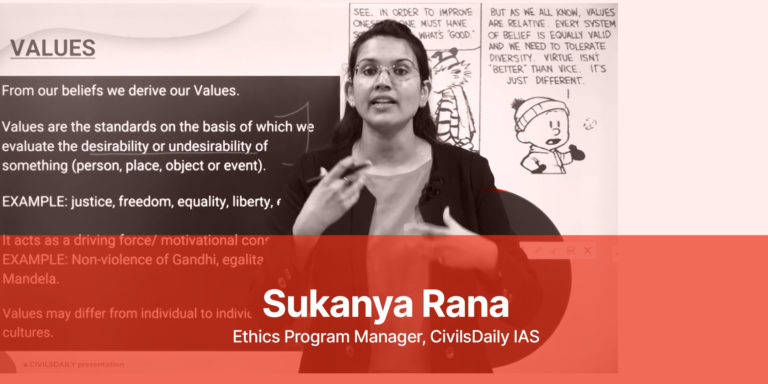
    Structured video lectures of Paper 4 for a concrete understanding of the syllabus. Our novel methodology accompanied by an in-depth explanation ensures comprehensive coverage of every topic in the syllabus. Added to this, we have made sure to add that extra element of fun. Here’s a snapshot of the lecture for you:

    8 FLT Tests:

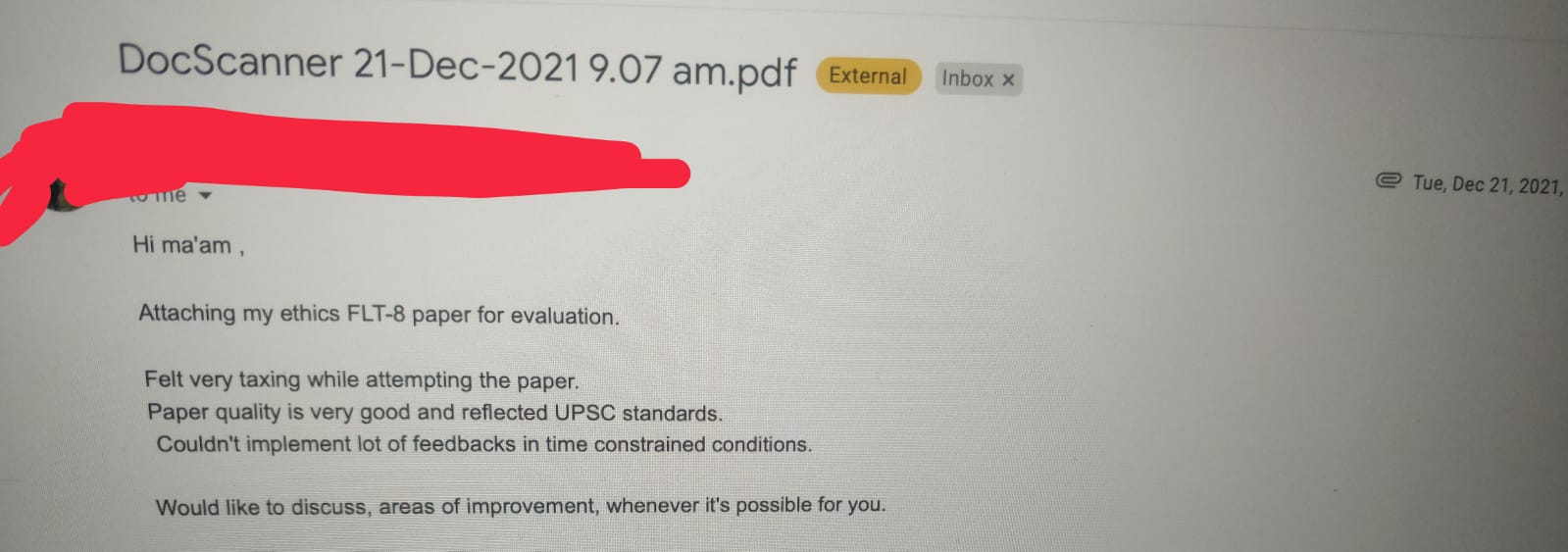
    FLT tests will help to bring together the ideas and concepts to the art of answer writing. Practice full-length tests to evaluate your levels. With every test and discussion on strategies to follow, one can improve with every test. Questions framed are from the most important UPSC relevant themes and papers are based on the latest pattern of UPSC. Get model answers covering all the aspects of a question and providing enriching points to the student.

    1-1 Mentorship support

    A schedule is created where dedicated days are kept to discuss your doubts regarding each test and lecture. Weekly zoom calls can help boost ideas and discussion on various techniques, also among peers so that one can get a lot of exposure to various answer writing techniques and points to write in the answer. Also, the best answer copy of the week can be taken for discussion so that you can get an idea of how to write better.

    👉Acknowledging the need to ensure fastest mentorship response, Senior IAS mentor like Partha Sir, Swatantra Sir, will receive your call.

    Civilsdaily’s Handholding

    You’ll be given membership to an exclusive group on Civilsdaily’s Habitat. The group will be headed by Sukanya ma’am herself. From doubt resolution and discussion will be done by Sukanya ma’am only. Here you can directly connect with ma’am. Habitat is where everything comes together learning, doubt clearing, mentor’s support, and a focused community. You’re going to learn and discuss it like never before.


    About the Mentor:

    Sukanya Rana Ma’am:

    Sukanya ma’am has firsthand experience of 4 mains and 2 interviews of UPSC. She has also appeared in the State PCS interview. Before she worked as an officer in a public sector bank and now as a Mentor at Civilsdaily, she aims to guide future aspirants in finding success. Sukanya Ma’am has scored consistently 100+ marks in ethics and in 2019 her marks were 140 in GS 4. In 2020, under her mentorship, many smash mains students were able to secure 120+ marks.

    👉 Acknowledging the need to ensure fastest mentorship response, Senior IAS mentor like Partha Sir, Swatantra Sir, will receive your call.


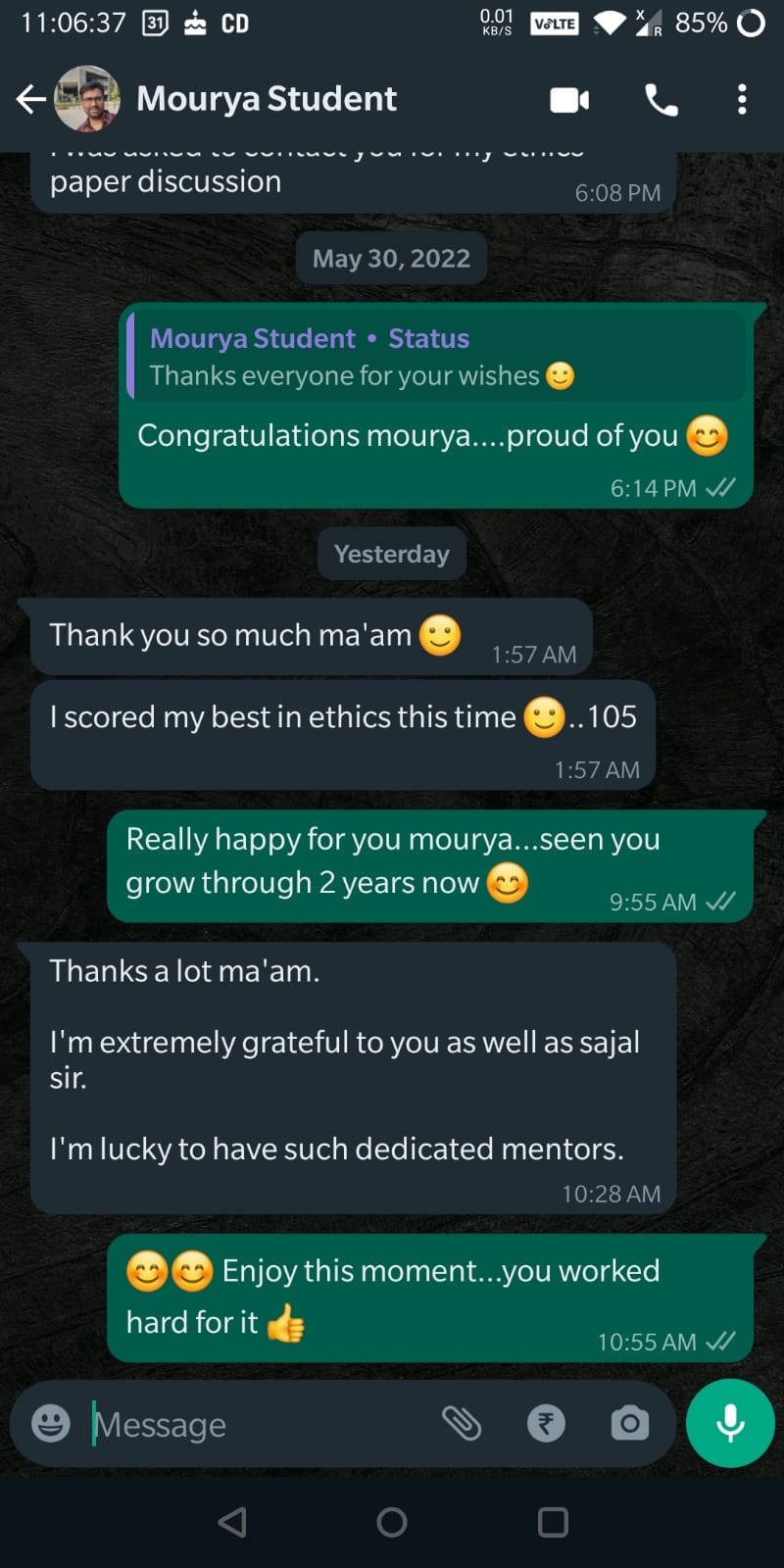
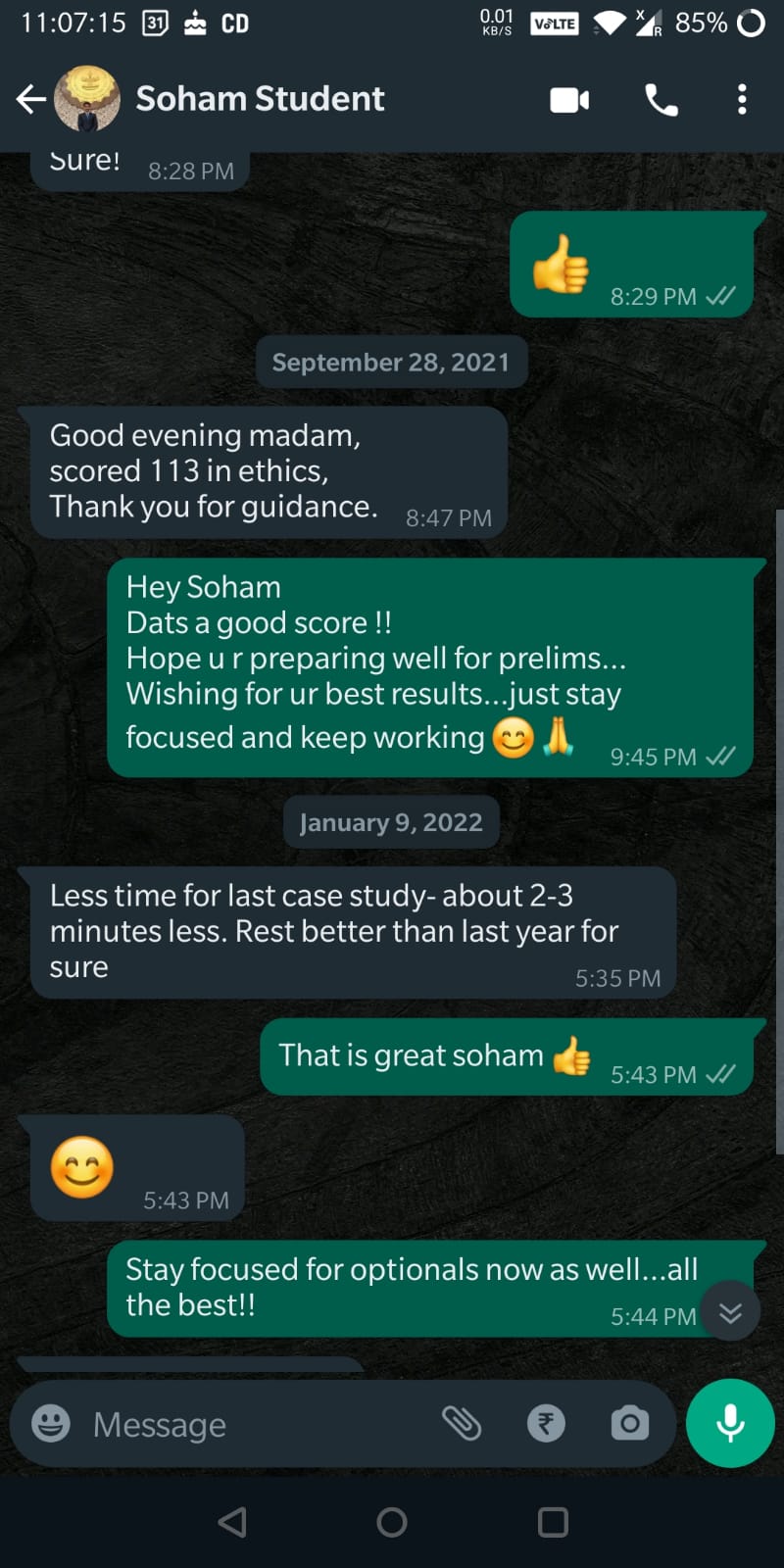
    Student’s Gratitude Messages:

    MANTRI MOURYA BHARADWAJ AIR-28 Roll: 1009473


    Rohan, Top Ranker UPSC-2021.
    Soham Mandre AIR 267 UPSC 2021 Roll: 6629429
    The Hindu has acknowledged CD’s Mains answer writing & Mentorship programs.

    Wish You All The Best..

  • India and Vietnam sign Mutual Logistics Agreement

    India and Vietnam signed a MoU on mutual logistics support.

    India and other such Logistics Agreements

    • Logistics agreements are administrative arrangements facilitating access to military facilities for exchange of fuel.
    • It provides for logistical support and increasing operational turnaround of the military when operating away from India.
    • India has signed several logistics agreements including with all Quad countries, France, Singapore and South Korea beginning with the Logistics Exchange Memorandum of Agreement (LEMOA) with the U.S. in 2016.

    What makes this newer agreement special?

    • The MoU is the first such major agreement which Vietnam has signed with any country.
    • Both nations signed key pacts including a rare 10-year vision document.
    • Both have similar territorial challenges from China.

    Why Vietnam is at the centre of India’s policy to counter China?

    • India entered the contested region of the South China Sea via Vietnam.
    • India signed an agreement with Vietnam in October 2011 to expand and promote oil exploration in the South China Sea.
    • It stood by its decision despite China’s challenge to the legality of Indian presence.
    • Hanoi has been publicly sparring with Beijing over its claims to the South China Sea for some years now.
    • India and Vietnam share a Comprehensive Strategic Partnership since 2016 and defence cooperation is a key pillar of this partnership.
    • Vietnam is an important partner in India’s Act East policy.

    Significance of such ties

    • If China wants to expand its presence in South Asia and the Indian Ocean region, the thinking in New Delhi goes, India can do the same thing in East Asia.
    • India can develop robust ties with states on China’s periphery such as Vietnam without giving China a veto on such relationships.

    Contributing factor: India’s Necklace of Diamonds Strategy

    • Over the past few years, China is expanding its footprint in the Indian Ocean through its ‘Debt Trap Diplomacy’ and ‘String of Pearls Strategy’.
    • Through its String of Pearls strategy, China is expanding its footprints to contain Indian hold in the Indian Ocean.
    • It is creating a ring around India through strategically placed nations such as at Chittagong (Bangladesh), at Karachi, Gwadar port (Pakistan) and at Colombo, Hambantota (both in Sri Lanka) and other facilities.

    What is Necklace of Diamonds Strategy?

    • It strategy aims at garlanding China or in simple words, the counter encirclement strategy.
    • India is expanding its naval bases and is also improving relations with strategically placed countries to counter China’s strategies.
    • Under this strategy, India’s strategic bases include-
    1. Changi Naval Base, Singapore
    2. Sabang Port, Indonesia
    3. Duqm Port, Oman
    4. Assumption Island, Seychelles
    5. Chabahar Port, Iran
    • Apart from getting direct access to the strategically placed naval bases, India is also developing new naval bases, developing the old bases to garland China.

    Conclusion

    • India has a perfect antidote for Chinese expansion.
    • It has been successful in establishing healthy relations with all the nations on China’s periphery.


    UPSC 2023 countdown has begun! Get your personal guidance plan now! (Click here)

  • Next-Generation Corvettes for Indian Navy

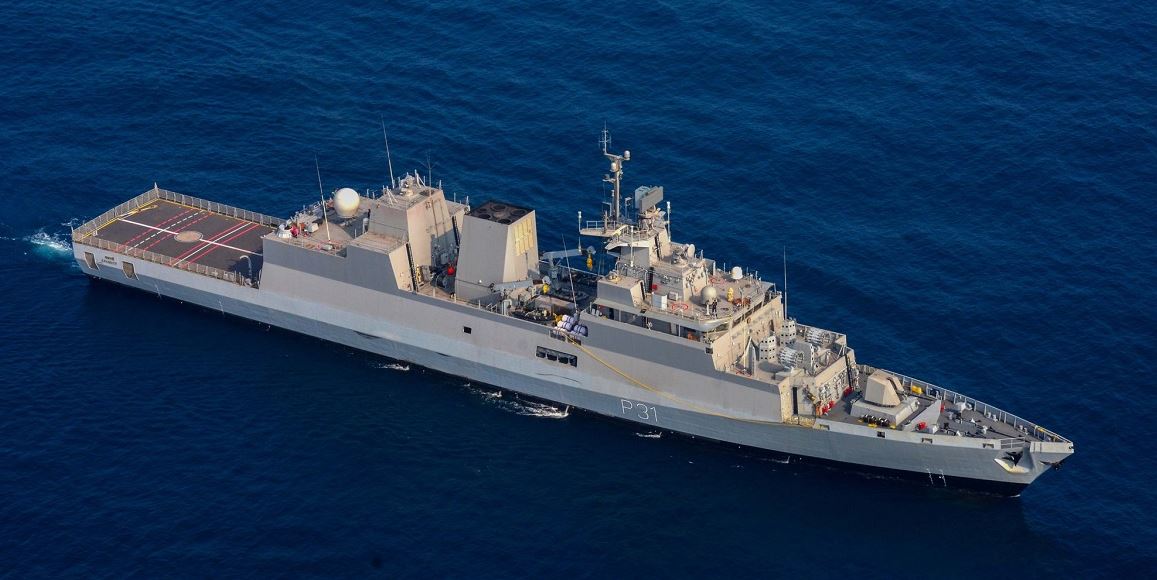
    The Defence Acquisition Council (DAC) has given the Acceptance of Necessity (AoN) for the procurement of next-generation Corvettes for the Indian Navy at an approximate cost of Rs 36,000 crore.

    What is a Corvette?

    • A Corvette is the smallest class of naval ships and it falls below the warship class of a frigate.
    • These are highly agile ships and are categorised as missile boats, anti-submarine ships, coastal patrol crafts and fast attack naval vessels.
    • The word corvette itself is derived from French and Dutch origin.
    • During World War II, the term Corvette was used to describe vessels which had anti-submarine roles assigned to them.
    • Modern Corvettes can go up to 2,000 tons in displacement which helps in keeping them agile.

    What kind of Corvettes does the Indian Navy possess?

    • The Indian Navy at present has the Kamorta Class Corvettes, which are also known as Project 28.
    • These ships have an anti-submarine role and are manufactured at Garden Reach Shipbuilders and Engineers in Kolkata.
    • The four Kamorta Class Corvettes that the Indian Navy possesses are named INS Kamorta, INS Kadmatt, INS Kiltan and INS Kavaratti.
    • The first of these was commissioned in 2014 and the last one in 2020.

    What new capabilities will the new generation Corvettes have?

    • The next-generation Corvettes will be manufactured for various roles like surveillance missions, escort operations, deterrence, surface action group operations, search and attack and coastal defence.
    • It is worth noting that these roles will be in addition to the anti-submarine roles being already performed by the existing Corvettes in the Navy.
    • Corvettes will be constructed based on new in-house design of the Indian Navy using latest technology of ship buildings.
    • They would contribute to further the government’s initiative of Security and Growth for all in the region (SAGAR).


    UPSC 2023 countdown has begun! Get your personal guidance plan now! (Click here)

  • Dostarlimab: The New Wonder Cancer Drug

    A trial on 18 colorectal cancer patients in the US found that cancer could be treated without chemotherapy or surgery. The world is sitting up and taking note of Dostarlimab, which has been called a wonder drug.

    What is Dostarlimab?

    • Dostarlimab is an experimental drug. It contains laboratory-produced molecules.
    • It acts as substitute antibodies. It is sold under the brand name Jemperli.
    • It was approved for medical use in the United States and the European Union in 2021.
    • Its side-effects include vomiting, joint pain, itching, rash, fever etc.

    What are the findings?

    • The trial showed that immunotherapy alone – without any chemotherapy, radiotherapy, or surgery that have been staples of cancer treatment.
    • It could completely cure the patients with a particular kind of rectal cancer called ‘mismatch repair deficient’ cancer”.
    • All 12 patients had completed the treatment and were followed for six to 25 months after.
    • No cases of progression or recurrence had been reported during the follow-up.
    • The response too was rapid, with symptoms resolving in 81% of the patients within nine weeks of starting the therapy.

    Is Dostarlimab actually very effective?

    • Dostarlimab is not a new drug but a combination of drugs that are already approved for use in immunotherapy.
    • There is a possibility that Dostarlimab may improve the outcome and survival rate in rectal cancer patients but to say it as a magic drug for cancer is completely going overboard.

    How does this drug cure?

    • PD1 is a protein that regulates immune function and can sometimes keep T cells from killing cancer cells.
    • The therapy in the trial used PD1 blockades, allowing T cells to kill cancer cells.
    • ‘Mismatch repair deficient’ cancer is most common among colorectal, gastrointestinal, and endometrial cancers.
    • Patients suffering from this condition lack the genes to correct typos in the DNA that occur naturally while cells make copies.
    • Immunotherapy belongs to a category called PD1 blockades that are now recommended for the treatment of such cancers rather than chemotherapy or radiotherapy.

    Will Indian patients get access to the drug?

    • At present, Indian doctors seem to be generally wary of prescribing Dostarlimab for their patients.
    • Experts have termed as optimistic the findings of an ongoing trial—a group of rectal cancer patients showed no signs of a tumour after taking the drug for six months.
    • None of the participants reported any severe side-effects either.
    • Yet, doctors say they want to assess the duration of the response.

    What do we know about the clinical trial?

    • Cancer was treated in all the patients and could not be detected by physical examination, endoscopy, positron emission tomography, or magnetic resonance imaging.
    • Thus, there is a thought that cancer can be treated without chemotherapy or surgery.

    Is it too early to celebrate?

    • Cancer specialists said initial signals show how precision medicine is building the future but they need to test more patients from different areas and other types of cancers.
    • The combination of drugs was administered to a small number of patients and for a specific type of cancer.


    UPSC 2023 countdown has begun! Get your personal guidance plan now! (Click here)

  • RBI plans to link Credit Cards with UPI

    The RBI has proposed to allow the linking of credit cards with the Unified Payments Interface (UPI).

    Integrating Credit Cards to UPI

    • The integration will first begin with the indigenous RuPay credit cards.
    • Both the RuPay network and UPI are managed by the same organisation – the National Payments Corporation of India (NPCI).

    What is UPI?

    • UPI is an instant real-time payment system developed by National Payments Corporation of India (NPCI) facilitating inter-bank transactions.
    • The interface is regulated by the Reserve Bank of India and works by instantly transferring funds between two bank accounts on a mobile platform.

    Why such move?

    • The linkage of UPI and credit cards could possibly result in credit card usage zooming up in India given UPI’s widespread adoption.
    • The integration also opens up avenues to build credit on UPI through credit cards in India, where in the last few years, a number of startups like Slice, Uni, One etc. have emerged.
    • The move could also be a push to increase adoption by banking on UPI’s large user base.
    • So far, UPI could only be linked to debit cards and bank accounts.
    • This will provide additional convenience to the users and enhance the scope of digital payments.

    What could be the hurdles?

    • There are some regulatory areas that would have to be addressed before the linkage happens.
    • For instance, it is not clear how the Merchant Discount Rate (MDR) will be applied to UPI transactions done through credit cards.
    • UPI and RuPay attract zero-MDR, meaning that no charges are applied to these transactions, which is a key reason behind the prolific adoption of UPI both by users and merchants.
    • The norm has faced pushback from the payments industry.
    • It has argued that it limits the aggregators’ ability to invest in and maintain the financial infrastructure of the payment ecosystem that they have built.
    • Applicability of zero-MDR on UPI could also be a reason why other card networks such as Visa and Mastercard may not have been onboarded to UPI for credit cards yet.

    Note: MDR is a fee that a merchant is charged by their issuing bank for accepting payments from their customers via credit and debit cards.

    What is the big picture?

    • UPI has become the most inclusive mode of payment in India with over 26 crore unique users and five crore merchants on the platform.
    • The progress of UPI in recent years has been unparalleled.
    • Many other countries are engaged with us in adopting similar methods in their countries.
    • In May, UPI processed 5.95 billion transactions worth over Rs 10 trillion, a record high since its launch in 2016.
    • NPCI is looking to soon process a billion transactions a day.


    Try this PYQ from CSP 2017:

    Q.Which one of the following best describes the term “Merchant Discount Rate” sometimes seen in news?


    (a) The incentive given by a bank to a merchant for accepting payments through debit cards pertaining to that bank

    (b) The amount paid back by banks to their customers when they use debit cards for financial transactions for purchasing goods or services

    (c) The charge to a merchant by a bank for accepting payments from his customers through the bank’s debit cards

    (d) The incentive is given by the Government to merchants for promoting digital payments by their customers through Point of Sale (PoS) machines and debit cards


    Post your answers here.


    UPSC 2023 countdown has begun! Get your personal guidance plan now! (Click here)

  • [pib] Children in Street Situations (CiSS) Application

    The National Commission for the Protection of Child Rights (NCPCR) has launched a “CiSS application” under the Baal Swaraj portal to help in the rehabilitation process of Children in Street Situations (CiSS).

    CiSS Application

    • The CiSS application is used for receiving data of children in street situations from all the states and union territories, tracking their rescue and rehabilitation process.
    • The initiative is taken under the direction of the Supreme Court of India.
    • The program embodies Article 51 (A) of the Constitution of India, as it provides a platform to the public and organizations catering to the welfare of the children to report any child in need of assistance.
    • The platform serves to collect data and report to the District Child Protection Officer (DCPO) for them to take necessary action.
    • It also provides a platform for professionals and organizations to provide any help that they can to children in need.
    • Help can be provided in the form of open shelters, counselling services, medical services, sponsorships, de-addiction services, education services, legal/paralegal services, volunteering etc.

    Its working framework

    • It categorizes any child under ‘Children in Street Situation’ if the child is living on the streets alone, living on the streets during the day, or living on the streets with the family.
    • The root cause of this phenomenon is the migration of families from rural to urban areas in search of a better standard of living.

    How does it work?

    It follows six stages framework for the rehabilitation of children.

    1. Collection of the child’s details, which is accomplished through the portal.
    2. Social Investigating Report (SIR)e. investigating the child’s background. This is done under the supervision of the District Child Protection Unit (DCPU) by the District Child Protection Officer (DCPO) by conversing and counselling the child.
    3. Formulating an Individual Care Plan (ICP) for the child.
    4. Child Welfare Committee (CWC) based on the SIR submitted to the CWC.
    5. Allocating the schemes and benefits that the beneficiary can avail of.
    6. A checklist is made for the evaluation of the progress i.e. (Follow Ups).


    UPSC 2023 countdown has begun! Get your personal guidance plan now! (Click here)

  • Environmental Performance Index (EPI), 2022

    India has objected to a report, called the EPI, 2022, that places the country last (along with Nigeria) on a list of 180 countries on managing climate change, environmental health, and ecosystem vitality.

    Environmental Performance Index

    • The report is prepared by researchers at the Yale and Columbia universities.
    • It provides a data-driven summary of the state of sustainability around the world.
    • Using 40 performance indicators across 11 issue categories, the EPI ranks 180 countries on climate change performance, environmental health, and ecosystem vitality.
    • These indicators provide a gauge at a national scale of how close countries are to established environmental policy targets.
    • The EPI offers a scorecard that highlights leaders and laggards in environmental performance and provides practical guidance for countries that aspire to move toward a sustainable future.

    Why the report is inherently biased?

    • The US placed itself at the 20th spot of the 22 wealthy democracies in the global west and 43rd overall.
    • The relatively low ranking has put all blame on the rollback policies during the Trump administration.
    • It goes on to preach that developing countries do not have to sacrifice sustainability for economic security.

More posts