Two months after the RBI issued guidelines on digital lending, banks, NBFCs and fintech players are still awaiting clarity on many aspects, including the First Loss Default Guarantee (FLDG) system.
What is FLDG System?
FLDG is an arrangement between a fintech company and regulated entity (RE), including banks and non-banking finance companies, wherein the fintech compensates the RE to a certain extent if the borrower defaults.
Under this, the fintech originates a loan and promises to compensate the partners up to a pre-decided percentage in case customers fail to repay.
The bank/NBFC partners lend through the fintech but from their own books.
FLDG helps expand the customer base of traditional lenders but relies on the fintechs underwriting capabilities.
FLDG is also seen as a validation of the fintechs underwriting capabilities for loans disbursed.
Issues with FLDGs
A report by an RBI-constituted working group on digital lending has laid down risks of FLDG agreements with unregulated entities.
The other concern is that FLDG costs are often passed on to customers.
Question of the day: What do you mean by the Minimum Support Price (MSP)? Critically analyse the efficacy of MSP in achieving its objectives? (15 Marks- 250 words)
We call this daily answer writing as Daily Answer Wars. Apart from this we also do Daily Check-ins making your daily Timetable and in Night owl discussions, we discuss important terms in news.
The essence of CD War Zone
With Daily Answer Wars and Night Owl Discussions our aim is to ensure that you write and discuss themes/topics/terms that have a very high probability of appearing in the exam.
Writing is a whole different ball game. When you sit down to write, it’s an entirely different process. It’s about streamlining your thinking, and your ideas. You might be thorough with a concept but you might fail to pen it down. That’s worse than not having ideas at all. Moreover, when we all sit together and write an answer, we get access to various unexplored dimensions. By doing a Peer Review, you can add those dimensions to your War Notes. These War Notes will come handy when you would be revising your Mains notes.
When you discuss, you will almost always discover new concepts in the process. There is no substitute for this kind of discovery. Talking with others is a good way to develop a deeper understanding and ensure you retain better. Retention is everything. When you share with your fellow Aspirants regarding Academic and Non-Academic issues of the UPSC Exam, you get the best solutions to those problems.
So many aspirants just keep looking for content and hoard all kinds of PDFs. At Civilsdaily we don’t believe such PDFs are helpful at all. You need to be on a path of discovery and be actively involved. If you are a serious aspirant, you can’t afford to just consume information. That is why our emphasis is on the Notes(read War Notes) that you yourself prepare in this process. We Believe every Answer has the potential to become a Model Answer, rather than giving you a Model Answer, we help you make your Answers a Model answer.
Join the Civilsdaily Telegram Group to become a part of an extremely Positive and Vibrant UPSC Community.
Notwithstanding the likely slowdown in economic momentum in the second half of the year, the Union government’s tax collections are on track to surpass its budgeted target by a significant amount this year.
The current status Union government’s tax collection
Gross tax collections have already touched the target: Data released by the Controller General of Accounts last week shows that gross tax collections have already touched 58 per cent of the full year’s target, growing by 18 per cent in the first seven months (April-October) of the current financial year.
Healthy growth in corporate tax collection: Under the broad rubric of taxes, direct tax collections have grown by a robust 26 per cent in the first seven months of the financial year, with healthy growth being seen across both corporate and income tax collections.
Higher than the nominal GDP growth: While the pace of direct collections has eased during July-October when compared to the first quarter, it continues to be higher than nominal GDP growth in the second quarter.
Healthy indirect tax collection: On the indirect tax side, GST collections continued to witness healthy growth, recording an increase of 11 per cent in November.
Memory shot in short: Types of Direct Taxes
Income Tax: Depending on an individual’s age and earnings, income tax must be paid. Various tax slabs are determined by the Government of India which determines the amount of Income Tax that must be paid. The taxpayer must file Income Tax Returns (ITR) on a yearly basis. Individuals may receive a refund or might have to pay a tax depending on their ITR. Penalties are levied in case individuals do not file ITR.
Wealth Tax: The tax must be paid on a yearly basis and depends on the ownership of properties and the market value of the property.
Estate Tax: It is also called Inheritance Tax and is paid based on the value of the estate or the money that an individual has left after his/her death.
Corporate Tax: Domestic companies, apart from shareholders, will have to pay corporate tax. Foreign corporations who make an income in India will also have to pay corporate tax.
Capital Gains Tax: It is a form of direct tax that is paid due to the income that is earned from the sale of assets or investments
Higher devolution to states: Higher tax collections at the level of the central government imply that devolution to states will be higher than the budgeted amount of Rs 8.16 lakh crore. The months of August and November have in fact witnessed double instalments as the Centre has stepped up devolution.
States can increase fiscal expenditure: Along with the interest free loan scheme extended by the Centre, higher devolution implies that states have considerable fiscal room to increase capital expenditure. However, this has not been the case so far. Capex by states has been rather muted.
Provides comfort to governments fiscal arithmetic: As per recent statements by revenue secretary Tarun Bajaj, the government is now hopeful of exceeding the budgeted target by nearly Rs 4 lakh crore. With its spending also likely to surpass earlier expectations by a considerable margin, higher tax collections will provide some comfort to the government’s fiscal arithmetic.
Challenges on the expenditure side
Increased subsidy bills: On the expenditure side, the Union government is facing a massive increase in its subsidy bill.
Spending is more than actual budget: Actual spending on the food and fertilizer subsidy and also on LPG will be significantly higher than what has been budgeted for. This is likely to make the fiscal situation challenging.
Effective utilization is necessary: Considering that the central government has maintained the momentum on its capital spending, growing by around 60 per cent in the first seven months of the year, the overall general government fiscal impulse will depend on how effectively states are able to utilise the extra space available to them.
Conclusion
Calls for increasing spending to support the economy during this uncertain period will only gain traction as the budget approaches. The government must however resist the temptation. It should stick to the glide path of fiscal consolidation.
Mains Question
Q. In a time of possible economic slowdown, India’s tax collection is on a healthy path. Discuss what good tax collection means for economy?
The increasing trend of criminalization of politics is dangerous and has steadily been eating into the vitals of our democratic polity along with growing corruption of a humongous nature.
What is criminalization of politics?
Criminals becomes legislators: The criminals entering the politics and contesting elections and even getting elected to the Parliament and state legislature. Criminalization of politics is the focus of public debate when discussion on electoral reforms takes place.
Criminal nexus: It is result of nexus between politicians and criminals.
What are the reasons for criminalization of politics
Political control of state machinery: Increasing trend of criminalization of politics is linked to political control of state machinery, corruption, vote-bank politics and above all, loopholes in the legal system.
Inaction from bureaucrats: We cannot expect probity and integrity from the bureaucracy if it is controlled in large measure, by criminals. Good governance gets seriously undermined when, for instance, criminals, gangsters or mafia dons, become the political bosses of bureaucrats and subvert the system to serve their interests.
Embracing the corruption: In such a scenario, the bureaucratic system ceases to resist corruption and often embraces it to carry out the diktats of criminal political bosses and also to suit its own ends.
Hampering free and fair election: limited choice of voters to elect a candidate to parliament or state. It is against the spirit of free and fair election which is the bedrock of a democracy.
Unhealthy democratic practice: The major problem is that the law-breakers become law-makers, this affects the efficacy of the democratic process in delivering good governance. These unhealthy tendencies in the democratic system reflect a poor image of the nature of India’s state institutions and the quality of its elected representatives.
Circulation of black money: It also leads to increased circulation of black money during and after elections, which in turn increases corruption in society and affects the working of public servants.
Culture of violence: It introduces a culture of violence in society and sets a bad precedent for the youth to follow and reduces people’s faith in democracy as a system of governance.
Weakening the institutions: This is a pervasive malaise in our body politic, which is assuming cancerous proportions. As a result, the three main pillars of our democracy, namely, Parliament, judiciary and executive, get progressively weakened, and the fundamental concept of a democratic system gets subverted.
What should be done?
Fast judicial process: Fast-tracking the judicial process will weed out the corrupt as well as criminal elements in the political system.
Political consensus is necessary: It is high time all political parties came together and developed a consensus on keeping criminals some of them with serious charges including kidnapping, rape, murder, grave corruption and crimes against women out of the system.
Warning by Vohra committee: The Vohra Committee set up by the Centre in 1993 sounded a note of warning saying that “some political leaders become the leaders of these gangs/armed senas and, over the years, get themselves elected to local bodies, state assemblies and the national Parliament.” This was nearly three decades ago.
Efforts by Supreme court and Executive
Disclosure of criminal records: In 2002, the Court ruled that every candidate contesting election has to declare his criminal and financial records along with educational qualifications. It must be said that mandatory declaration of assets and existing criminal charges in self-sworn affidavits to the EC, prior to elections, has brought in some degree of transparency.
Formation of special courts: As a follow-up to these directives, in 2017, the Union government started a scheme to establish 12 special courts for a year to fast track the trial of criminal cases against MPs and MLAs. The apex court has since then issued many directions, including asking the Centre to set up a monitoring committee to examine reasons for delay of investigation in these cases.
Tackling the pendency of cases: The number of pending cases continues to be a matter of grave concern, so much so that the Supreme Court had been informed, as per media reports of February 2022, that the number of pending criminal cases against sitting and former MLAs and MPs had risen to close to 5,000 towards the end of December 2021.
Conclusion
There cannot be any leniency to criminals and the corrupt in public life, especially when it comes to a range of crimes which are serious and heinous in nature. Fast tracking trials and expediting the judicial process through a time-bound justice delivery system alone can cleanse our public life and rid it of this widespread disease.
Mains Question
Q. What is the criminalization of Politics? Enlist the reasons for criminalization of politics and solution to tackle the same.
As soil is the basis of food systems, it is no surprise that soil health is critical for healthy food production. World Soil Day (WSD) 2022, annually observed on December 5, aligns with this.
WSD 2022, with its guiding theme, ‘Soils: Where food begins’, is a means to raise awareness on the importance of maintaining healthy soils, ecosystems and human well-being by addressing the growing challenges in soil management, encouraging societies to improve soil health, and advocating the sustainable management of soil.
What is soil?
Soil is the loose material of the earth’s surface in which the terrestrial plants grow. It is usually formed from weathered rock or regolith changed by chemical, physical and biological process.
Back to basics: Composition of soils
Mineral matter: It includes all minerals inherited from the parent material as well as those formed by recombination from substances in the soil solution.
Organic matter: It is derived mostly from decaying plant material broken down and decomposed by the actions of animals and microorganisms living in the soil. It is this organic portion that differentiates soil from geological material occurring below the earth’s surface which otherwise may have many of the properties of a soil. (Note: The end product of breakdown of dead organic material is called humus.)
Air and water: Normally, both air and water fill the voids in soil. Air and water in the soil have a reciprocal relationship since both compete for the same pore spaces. For example, after a rain or if the soil is poorly drained, the pores are filled with water and air is excluded. Conversely, as water moves out of a moist soil, the pore space is filled with air. Thus the relationship between air and water in soils is continually changing.
Why is soil so important?
Healthy soils are essential for our survival: They support healthy plant growth, habitat for many insects and other organisms, It enhance both our nutrition and water percolation to maintain groundwater levels, act as a filtration system for surface water.
Second largest carbon sink after ocean: Soils help to regulate the planet’s climate by storing carbon and are the second largest carbon sink after the oceans. They help maintain a landscape that is more resilient to the impacts of droughts and floods.
Contribute to the economies: They also support buildings and highways and contribute to the economies of our cities. For instance, the rich, deep fertile soils of the Ganga plain especially its delta and the coastal plains of Kerala support a high density of population through agricultural prosperity.
Main drivers of soil degradation: The main drivers contributing to soil degradation are industrial activities, mining, waste treatment, agriculture, fossil fuel extraction and processing and transport emissions. Further, excessive use of fertilizers and pesticides, and irrigation with contaminated wastewater are also polluting soils.
Reasons behind the nutrient loss: The reasons behind soil nutrient loss range from soil erosion, runoff, leaching and the burning of crop residues.
Increasing soil pollution undermines food security: Today, nutrient loss and pollution significantly threaten soils, and thereby undermine nutrition and food security globally.
Soil degradation affects around 29% of India’s total land area: Soil degradation in some form or another affects around 29% of India’s total land area. This in turn threatens agricultural productivity, in-situ biodiversity conservation, water quality and the socio-economic well-being of land dependent communities. Nearly 3.7 million hectares suffer from nutrient loss in soil (depletion of soil organic matter, or SOM).
Irreparable consequences: Impacts of soil degradation are far reaching and can have irreparable consequences on human and ecosystem health.
India’s Soil conservation strategy
Five- pronged strategy: The Government of India is implementing a five-pronged strategy for soil conservation. This includes making soil chemical-free, saving soil biodiversity, enhancing SOM, maintaining soil moisture, mitigating soil degradation and preventing soil erosion.
Soil Health Card (SHC) scheme: Earlier, farmers lacked information relating to soil type, soil deficiency and soil moisture content. To address these issues, the Government of India launched the Soil Health Card (SHC) scheme in 2015. The SHC is used to assess the current status of soil health, and when used over time, to determine changes in soil health. The SHC displays soil health indicators and associated descriptive terms, which guide farmers to make necessary soil amendments.
Pradhan Mantri Krishi Sinchayee Yojana: Other pertinent initiatives include the Pradhan Mantri Krishi Sinchayee Yojana, to prevent soil erosion, regeneration of natural vegetation, rainwater harvesting and recharging of the groundwater table.
Promoting organic farming practices under National Mission for Sustainable Agriculture (NMSA): In addition, NMSA has schemes promoting traditional indigenous practices such as organic farming and natural farming, thereby reducing dependency on chemicals and other agri-inputs, and decreasing the monetary burden on smallholder farmers.
FAO’s various initiatives to support government efforts in soil conservation: The Food and Agriculture Organization of the United Nations (FAO) undertakes multiple activities to support the Government of India’s efforts in soil conservation towards fostering sustainable agrifood systems.
FAO’s collaboration on developing data analytics and forecasting tools: The FAO is collaborating with the National Rainfed Area Authority and the Ministry of Agriculture and Farmers’ Welfare (MoA&FW) to develop forecasting tools using data analytics that will aid vulnerable farmers in making informed decisions on crop choices, particularly in rainfed areas.
FAO working with target States
To increase capacities of farmers to farm livelihood: The FAO, in association with the Ministry of Rural Development, supports the Deen Dayal Antyodaya Yojana-National Rural Livelihoods Mission’s (DAY-NRLM) Community Resource Persons to increase their capacities towards supporting on-farm livelihoods for the adoption of sustainable and resilient practices, organic certification and agri-nutri-gardens.
Target states: The FAO works in eight target States, namely, Madhya Pradesh, Mizoram, Odisha, Rajasthan, Uttarakhand, Chhattisgarh, Haryana and Punjab, for boosting crop diversification and landscape-level planning. In Andhra Pradesh, the FAO is partnering with the State government and the Indian Council of Agricultural Research (ICAR) to support farmers in sustainable transitions to agro-ecological approaches and organic farming.
Way ahead
There is a need to strengthen communication channels between academia, policymakers and society for the identification, management and restoration of degraded soils, as well as in the adoption of anticipatory measures.
These will facilitate the dissemination of timely and evidence-based information to all relevant stakeholders.
Greater cooperation and partnerships are central to ensure the availability of knowledge, sharing of successful practices, and universal access to clean and sustainable technologies, leaving no one behind.
Conclusion
A key component of sustainable food production is healthy soil as nearly 95 percent of global food production depends on soil. The current state of soil health is alarming and unprecedented soil degradation is a major challenge for sustainable food production. India is on track to restore 26 million hectares of degraded land by 2030.
Mains Question
Q. Soil is the basis of the food system, its degradation and nutrient depletion in recent years is alarming. Discuss the soil conservation strategy of India.
By 2047, India will complete 100 years after Independence. By that time, India strives to achieve the status of a developed economy, which means achieving a minimum per capita income equivalent to $13,000.
Economic growth during the British period
Poor state of economy: It is not realized often that India’s economic progress in the first half of the 20th century under British rule was dismal. According to one estimate, during the five decades, India’s annual growth rate was just 0.89%.
Negligible growth in per capita: With the population growing at 0.83%, per capita income grew at 0.06%. It is not surprising that immediately after Independence, growth became the most urgent concern for policymakers.
In the early period, India’s strategy of development comprised four elements:
Raising the savings and investment rate;
Dominance of state intervention;
Import substitution, and
Domestic manufacture of capital goods.
Modest growth till 1970: India’s average growth till the end of the 1970s remained modest, with the average growth rate being 3.6%. With a population growth of 2.2%, the per capita income growth rate was extremely modest at 1.4%.
Improvement in social indicators: On certain health and social parameters, such as the literacy rate and life expectancy, there were noticeable improvements.
The success of green revolution: While India had to rely on the heavy imports of food grains on a concessional basis, initially, there was a breakthrough in agriculture after the Green Revolution.
Industrial base widened: The industrial base expanded with time. India became capable of producing a wide variety of goods including steel and machinery.
Unsustainable fiscal policy: Plan after plan, actual growth was less than what was projected. The Indian economy did grow at 5.6% in the 1980s. But it was accompanied by a sharp deterioration in the fiscal and current account deficits, and the economy faced its worst crisis in 1991-92.
Statistics of economic growth after 1991
Rapid economic growth: Between 1992-93 and 2000-01, GDP at factor cost grew annually by 6.20%. Between 2001-02 and 2012-13, it grew by 7.4% and the growth rate between 2013-14 and 2019-20 was 6.7%.
Sustained period of high growth rate: The best performance was between 2005-06 and 2010-11 when GDP grew by 8.8%, showing clearly what the potential growth rate of India was. This is the highest growth experienced by India over a sustained period of five to six years. This was despite the fact that this period included the global crisis year of 2008-09.
Rising investment rate: There was a corresponding increase in the savings rate. The current account deficit in the Balance of Payments (BOP) remained low at an average of 1.9%.
Setback to growth after 2011-12: However, the growth story suffered a setback after 2011-12. The growth rate fell to 4.5% in 2012-13 according to the 2004-05 series. The growth rate since then has seen ups and downs. The growth rate touched the 3.7% level in 2019-20.
Roadmap for Future Growth
Keeping the sustained growth rate: The first and foremost task is to raise the growth rate. Calculations show that if India achieves a 7% rate of growth continuously over the next two decades and more, it will make a substantial change to the level of the economy. India may almost touch the status of a developed economy.
Maintaining theincremental capital output ratio: If India maintains the incremental capital output ratio at 4, which is a reflection of the efficiency with which we use capital, India can comfortably achieve a 7% rate of growth.
Investment must be increased: Raising the investment rate depends on a number of factors. A proper investment climate must be created and sustained.
Private investment is crucial: While public investment should also rise, the major component of investment is private investment, both corporate and non-corporate. It is this which depends on a stable financial and fiscal system. The importance of price stability in this context cannot be ignored.
New technologies must be embraced: India needs to absorb the new technologies that have emerged, and that will emerge. Its development strategy must be multidimensional.
Strong Export and manufacturing: India need a strong export sector. It is a test of efficiency. At the same time, India needs a strong manufacturing sector. The organized segment of this sector must also increase.
Strengthened the social safety nets: As output and income increase, India must also strengthen the system of social safety nets. Growth without equity is not sustainable.
Challenges for India’s growth
Low per capita income: India today is the fifth largest economy. This is an impressive achievement. However, in relation to per capita income, it is a different story. In 2020, India’s rank was 142 out of 197 countries. This only shows the distance we have to travel.
Declining growth in developing countries: The external environment is not going to be conducive. The Organization for Economic Co-operation and Development reports a secular decline in growth in developed countries.
Climate change may affect the growth: Environmental considerations may also act as a damper on growth. Some adjustment on the composition of growth may become necessary.
Conclusion
Considering the India’s population, India has no option but to grow continuously. Government has undertaken major structural reform and policy initiatives like GATI-SHAKTI to give fillip to growth of economy. These are the steps in the right directions and more such liberalizing initiatives need to be encouraged.
Mains Question
Q. Briefly describe the history of economic growth of India after independence. What could be the roadmap for future growth of India till 2047?
The US has proposed to cap price of Russia’s oil exports along with other G7 allies as a way to limit Russia’s earnings while keeping Russian oil flowing to the global economy.
The cap is set to take effect from today, the same day when European Union will impose a boycott on most Russian oil.
If there was ever any doubt what the premise of the cap was, it’s now clear: the US and its allies want Russia’s crude to keep flowing.
What is the Russian Oil Price Cap?
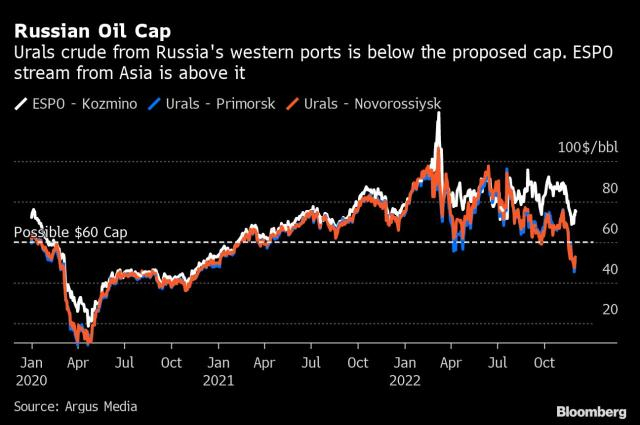
The $60 per barrel cap is intended to cut Russia’s oil revenues while keeping Russian crude on the market by denying insurance, maritime services, and finance provided by the Western allies for tanker cargoes priced above a fixed dollar-per-barrel cap.
Without insurance, tanker owners may be reluctant to take on Russian oil and face obstacles in delivering it.
The US-proposed cap aims to hurt Moscow’s finances while avoiding a sharp oil price spike if Russia’s oil is suddenly taken off the global market.
How would oil keep flowing to the global economy?
Universal enforcement of the insurance ban, imposed by the EU and U.K. in earlier rounds of sanctions, could take so much Russian crude off the market that oil prices would spike.
Western economies would suffer, and Russia would see increased earnings from whatever oil it can ship in defiance of the embargo.
Russia, the world’s No. 2 oil producer, has already rerouted much of its supply to India, China and other Asian countries at discounted prices after Western customers shunned it even before the EU ban.
Russian response to the cap
Russia has said it will not observe a cap and will halt deliveries to countries that do.
It could retaliate by shutting off shipments in hopes of profiting from a sharply higher global oil price on whatever it can sell around the sanctions.
Buyers in China and India might not go along with the cap, while Russia or China could try to set up their own insurance providers to replace those barred by US, UK and Europe.
How can Russia bypass this cap?
Using dark fleet: Russia also could sell oil off the books by using “dark fleet” tankers with obscure ownership, as have Venezuela and Iran.
Blending: Oil could be transferred from one ship to another and mixed with oil of similar quality to disguise its origin.
How does it impact G7?
For countries that join the coalition, it would mean simply not buying Russian oil unless the price is reduced to where the cap is determined.
For countries that don’t join the coalition, or buy oil higher than the cap price, they would lose access to all services provided by the coalition countries including for example, insurance, currency payment, facilitation and vessel clearances for their shipments.
Most insurers are located in the EU or the United Kingdom and could be required to participate in the cap.
Implications of the Oil Price Cap
Inflationary impacts: Initially, traders and the tanker owners would find it difficult. There might be a drop in exports and some shock in the production of necessary commodities.
Energy insecurity: Countries all over the world will have to bear the spillovers effects of the cap. The effect will be more pronounced for developing countries.
Efficacy of the Cap
Non-comprehensiveness: There is no consensus regarding the cap that should be imposed because of internal disputes in the European Union (EU). Moreover, there is no clarity on the price yet.
Dual pricing: It is going to create a dual-price market with an official price and a discounted price. We already know that Russia is already selling oil at a discounted price to India, China, and Turkey.
Global price dynamics: The implications of the sanction on Russia will depend on a number of factors including the World oil prices.
Loopholes of sanctions: Sanctions are difficult to enforce. Earlier sanctions on Russia have not yielded the desired results.
Hurdles to US intentions
OPEC+ price control: Much remains to be seen on the response of the OPEC plus countries, where Russia is a major player.
Lack of consensus: The enforcement of the sanctions would be difficult as there is no consensus among the members.
Impacts on India
The price cap imposed by the G7, EU and which also includes Australia is aimed to force Russia to sell its crude not above $60.
China and India purchased crude at a massive $33.28 discount to Brent, indicating that the prices were well below the price cap imposed this week.
The price cap applies to nations intending to use Western ships and Western insurers—which means it won’t apply to India.
How has India responded?
The US tried to bring India on board with: from asking India to change its uncritical stance on Russia by-
Cutting down oil imports
Stopping defence and other purchases from Russia and
Avoid the rupee-rouble payment mechanism that circumvent their sanctions
India has rejected any “moral” duty to join the price cap coalition.
Conclusion
India has made it clear, through its cabinet ministers, that it will work to ensure energy security of its citizens and will prioritise that over anything else.
China’s top development aid agency convened the first “China-Indian Ocean Region Forum” in the southwestern Chinese city of Kunming.
What is the China Indian Ocean Region Forum?
It is organised by the China International Development Cooperation Agency (CIDCA).
It is the latest Chinese initiative focusing on the Indian Ocean Region (IOR).
It underlines Beijing’s growing strategic interests in a region where its economic footprint has been deepening.
What is it about?
The CIDCA is China’s new development aid agency similar to the United States Agency for International Development (USAID).
It aims to-
Strengthen policy coordination,
Deepen development cooperation,
Increase resilience to shocks and disasters, and
Enhance relevant countries’ capacity to obtain economic benefits through use of marine resources such as fisheries, renewable energy, tourism, and shipping in a sustainable way
Which countries have backed the forum?
The organisers have said the forum was attended by high-level representatives and senior officials from 19 countries.
But at least two of those countries, Australia and Maldives, subsequently released statements rebutting the claim, emphasising that they did not participate officially.
Why such a move by China?
China’s ambitions in the Indian Ocean have been motivated by three factors-
Gaining significance of Indo-Pacific: As the new world order unveils around the Indo-Pacific, Beijing aims to challenge other major powers, such as India, and establish its hegemony.
Domestic energy security: Beijing needs the Indian Ocean to ensure its energy security and continue fuelling its growth, which defines its foreign policy and international leverage.
Hegemony establishment: Establishing new and alternative institutions with IOR countries helps China display its presence and influence from the China Sea to the Indian Ocean, reflecting its status as a significant power.
How is China perceiving its interests?
Political corruption: Beijing has cultivated close and personal relationships with political elites and parties of IOR countries, usually through corruption, party funding, and by turning a blind eye to their human rights abuses and democratic infirmities.
Fractionalization: Friendship with different political parties in Pakistan; bonhomie with the Rajapaksa clan in Sri Lanka, and close relations with Maldives’ Abdulla Yameen are some examples of this widespread phenomenon.
Elite capture: In addition, China has often used the elite capture tactic to ensure a pro-China policy and bag geo-economically and strategically significant projects. This includes concessions on Pakistan’s Gwadar Port and Sri Lanka’s Colombo Port City project.
Where does India stand?
India was the lone absentee in the forum ignoring the invitation.
China has exposed its intention with the Indian Ocean Region (IOR) countries.
New Delhi has viewed China’s recent moves in the region warily, including the recent visit of a Chinese military tracking vessel, the Yuan Wang 5, to Sri Lanka.
The forum has underlined China’s stepped-up interest in the IOR, where it is already a major trading partner for most countries and where sea routes lie vital to China’s economic interests.
The CIDCA forum is the latest initiative to reflect Beijing’s view that it has a clear stake in the region, and that more such initiatives are likely.
Has China out-powered India in the IOR with this move?
The Chinese initiative looks like a kind of delayed response.
It can be seen only as a comparison and competitor to India’s SAGAR (Security and Growth for All in the Region), as outlined by PM Modi in Mauritius in 2015.
The Indian idea is implemented through the nation’s ‘Neighbourhood First’ policy and such other initiatives as ‘‘Project Mausam’ and ‘Integrated Coastal Surveillance System’ (now shared with Maldives).
All of them are confined to the Indian Ocean, where India too belongs legitimately, unlike China.
Conclusion
In a way, the new initiative reflects China’s unending greed.
It also reflects China’s desire and ambition to measure up to the US in reach and outreach, and through them, geo-economics, geopolitical, and geostrategic comparability.
The government has opened yet another week-long window for electoral bond sales starting December 5.
What are Electoral Bonds?
Electoral bonds are banking instruments that can be purchased by any citizen or company to make donations to political parties, without the donor’s identity being disclosed.
It is like a promissory note that can be bought by any Indian citizen or company incorporated in India from select branches of State Bank of India.
The citizen or corporate can then donate the same to any eligible political party of his/her choice.
An individual or party will be allowed to purchase these bonds digitally or through cheque.
About the scheme
A citizen of India or a body incorporated in India will be eligible to purchase the bond
Such bonds can be purchased for any value in multiples of ₹1,000, ₹10,000, ₹10 lakh, and ₹1 crore from any of the specified branches of the State Bank of India
The purchaser will be allowed to buy electoral bonds only on due fulfillment of all the extant KYC norms and by making payment from a bank account
The bonds will have a life of 15 days (15 days time has been prescribed for the bonds to ensure that they do not become a parallel currency).
Donors who contribute less than ₹20,000 to political parties through purchase of electoral bonds need not provide their identity details, such as Permanent Account Number (PAN).
Objective of the scheme
Transparency in political funding: To ensure that the funds being collected by the political parties is accounted money or clean money.
Who can redeem such bonds?
The Electoral Bonds shall be encashed by an eligible Political Party only through a Bank account with the Authorized Bank.
Only the Political Parties registered under Section 29A of the Representation of the People Act, 1951 (43 of 1951) and which secured not less than one per cent of the votes polled in the last General Election to the Lok Sabha or the State Legislative Assembly, shall be eligible to receive the Electoral Bonds.
Restrictions that are done away
Earlier, no foreign company could donate to any political party under the Companies Act
A firm could donate a maximum of 7.5 per cent of its average three year net profit as political donations according to Section 182 of the Companies Act.
As per the same section of the Act, companies had to disclose details of their political donations in their annual statement of accounts.
The government moved an amendment in the Finance Bill to ensure that this proviso would not be applicable to companies in case of electoral bonds.
Thus, Indian, foreign and even shell companies can now donate to political parties without having to inform anyone of the contribution.
Issues with the Scheme
Opaque funding: While the identity of the donor is captured, it is not revealed to the party or public. So transparency is not enhanced for the voter.
No IT break: Also income tax breaks may not be available for donations through electoral bonds. This pushes the donor to choose between remaining anonymous and saving on taxes.
No anonymity for donors: The privacy of the donor is compromised as the bank will know their identity.
Differential benefits: These bonds will help any party that is in power because the government can know who donated what money and to whom.
Unlimited donations: The electoral bonds scheme and amendments in the Finance Act of 2017 allows for “unlimited donations from individuals and foreign companies to political parties without any record of the sources of funding”.
Way ahead
The worries over the electoral bond scheme, however, go beyond its patent unconstitutionality.
The concern about the possibility of misuse of funds is very pertinent.
The EC has been demanding that a law be passed to make political parties liable to get their accounts audited by an auditor from a panel suggested by the CAG or EC. This should get prominence.
Another feasible option is to establish a National Election Fund to which all donations could be directed.
This would take care of the imaginary fear of political reprisal of the donors.
The National Payments Corporation of India (NPCI) has extended by two years the deadline to comply with its 30 percent cap on the market share of platforms operating on the Unified Payments Interface (UPI).
What is UPI?
Unified Payments Interface (UPI) is an instant real-time payment system developed by National Payments Corporation of India (NPCI) facilitating inter-bank transactions.
The interface is regulated by the Reserve Bank of India (RBI) and works by instantly transferring funds between two bank accounts on a mobile platform.
What is the NPCI plan for UPI?
NPCI had initially planned to enforce the market cap rules in January 2021.
It aimed to limit any single payments app from processing more than 30 per cent of UPI transactions in a month.
Why extension?
The extension is being seen as a major relief for Walmart and Flipkart-backed PhonePe and Google Pay, which currently command a majority of the UPI market share.
How could it impact UPI platforms?
Industry analysts believe the move comes as a shot in the arm for PhonePe and Google Pay, which collectively control more than 80 per cent of UPI’s market share.
For platforms like Paytm and WhatsApp Pay, however, the extension could be seen as a natural loss.
As of October, Paytm had a market share of 15 per cent on UPI.
In comparison, PhonePe had a 47 per cent market share, while GooglePay accounted for around 35 per cent.
How is UPI performing?
According to the Reserve Bank of India’s Payment Vision 2025, UPI is expected to register an average annualized growth of 50 percent.
After touching a new high of Rs 12.11 lakh crore in October, the UPI transaction value for the month of November came in at Rs 11.90 lakh crore.
However, the transaction count at 7.3 billion in October remained the same in November.
Try this PYQ:
With reference to digital payments, consider the following statements:
BHIM app allows the user to transfer money to anyone with a UPI-enabled bank account.
While a chip-pin debit card has four factors of authentication, BHIM app has only two factors of authentication.
Which of the statements given above is/ are correct? (CSP 2018)
In 2020, India has been ranked first in the Social Hostilities Index (SHI) released by US think-tank Pew Research Center.
What is Social Hostilities Index (SHI)?
SHI measures acts of religious hostility by private individuals, organisations or groups in society.
The SHI measures acts of religious hostility by private individuals, organizations or groups.
The index comprises 13 metrics, including religion-related armed conflict or terrorism and mob or sectarian violence.
Questions used to compute the SHI included whether the country saw violence motivated by religious hatred or bias, whether individuals faced harassment or intimidation motivated by religious hatred or bias and whether there was mob violence against those of particular religious groups.
How bad has India fared?
At 9.4 out of a maximum possible score of 10, India’s SHI in 2020 was worse than neighbouring Pakistan and Afghanistan, and a further increase in its own index value for 2019, the Pew data showed.
India has faced severe backlash due to its crackdown on a ‘religious’ congregation held in New Delhi defying the COVID pandemic.
Other components: Government Restrictions Index (GRI)
India much better on a second index: the Government Restrictions Index (GRI).
This index looks at laws, policies and state actions restricting religious beliefs and practices.
China ranked the worst, with a score of 9.3.
India’s 34th rank was enough to categorize it among countries with “high” levels of such government restrictions.
The GRI comprises 20 measures, including efforts by governments to ban particular faiths, prohibit conversion, limit preaching or give preferential treatment to one or more religious groups
Official data for substantiation
By India’s own official crime statistics, the picture is more mixed.
According to police data, religious riots for which cases were filed rose substantially in 2020, and declined again in 2021.
But there have been significant variations over time, and the numbers are too low as a share of overall rioting incidents to indicate a definitive trend.
Moreover, the home ministry no longer provides data on “communal incidents”, and the National Crime Records Bureau (NCRB) now only publishes data on religious “riots”.
In the rankings by the International Civil Aviation Organisation (ICAO), India is now at the 48th position, a “quantum leap” from the 102nd rank it had in 2018.
ICAO Assessment
Under the ICAO standards, the Effective Implementation (EI) of six areas were assessed. They are LEG, ORG, PEL, OPS, AIR and AGA.
LEG is Primary Aviation Legislation and Specific Operating Regulations;
ORG is Civil Aviation Organisation;
PEL is Personnel Licensing and Training;
OPS is Aircraft Operations;
AIR is Airworthiness of Aircraft; and
AGA is Aerodrome and Ground Aid.
How has India fared in ICAO ranking?
With a score of 85.49 per cent each, India and Georgia are at the 48th position.
Neighbouring Pakistan is at the 100th spot with a score of 70.39 per cent.
Global scenario
The rankings are topped by Singapore with a score of 99.69 per cent.
It is followed by the UAE at the second position with a score of 98.8 per cent and the Republic of Korea is at the third place (98.24 per cent).
Others in the top ten are France (4th; 96.42 per cent), Iceland (5th; 95.73 per cent), Australia (6th; 95.04 per cent), Canada (7th; 94.95 per cent), Brazil (8th; 94.72 per cent), Ireland (9th; 94.6 per cent) and Chile (10th; 93.9 per cent).
What is ICAO?
The ICAO is a specialized agency of the UN that coordinates the principles and techniques of international air navigation.
It fosters the planning and development of international air transport to ensure safe and orderly growth.
ICAO headquarters are located in the Quartier International of Montreal, Quebec, Canada.
Functions of ICAO
Standardization: The ICAO Council adopts standards and recommended practices concerning air navigation, its infrastructure, flight inspection, prevention of unlawful interference, and facilitation of border-crossing procedures etc.
Investigation standards: ICAO defines the protocols for air accident investigation that are followed by transport safety authorities in countries signatory to the Chicago Convention on International Civil Aviation.
Marathi Seminar by IPS, Amol Murkut sir | Career guidance session on how to prepare for government competitive exams including MPSC and UPSC | Register &Get Value-added Free notes for MPSC & UPSC
Guys, Every year millions of candidates start and sit for various Govt. job exams. As vacancies are few and aspirants are many, only a minuscule number of candidates can get through these exams.
Apart from that Government Job vacancies have also dwindled in recent years. So, be it MPSC, UPSC, or any other Govt. job exam every aspirant needs experts’ guidance with some sort of motivation.
Civilsdaily’s Mentorship Students are today’s UPSC Rankers
Success is nothing but more than a few simple disciplines practiced every day
Amol Murkut, IPS
The journey to the final job offer is very long, especially in today’s time. Have you ever thought about what you would do if finally you find that you faced only failure? What will be the consequences if you choose any other profession just leaving Govt job preparation? Can you easily succeed soon?
Make hay while the sun shines, the proverb means that we must not let any opportunity slip, but make prompt and full use of it whenever it comes.
Opportunities do not always come. If we miss one opportunity, we may miss it forever and suffer consequences. Therefore, we must always take full and prompt advantage of any opportunity that may come our way.
Acknowledging the need for the removal difficulties of Freshers/unsuccessful students, Dr. Amol Murkut, IPS officer and Super mentor in Civilsdaily is conducting a need of the hour Career guidance session on how to prepare for government competitive exams including MPSC and UPSC. Registration is absolutely free.
Post-seminar CivilsDaily will share a special Preparatory Package both for UPSC & MPSC candidates.
You are also entitled to a personalized intensive mentorship session by a senior IAS mentor wherein you can avail of a personalized study plan, schedule, and doubt resolution session.
A UPSC/MPSC beginner – confused about the syllabus, prioritizing subjects, making timetables & targets, or just getting started.
A working professionalor college student who will be attempting UPSC 2023 with a job. Facing a serious time crunch and mismanagement in UPSC preparation.
A veteran or aspirant trying to improve your rank in UPSC 2023 attempt.
Strategic planning will help you fully uncover your options, set priorities for them, and define the methods to achieve them.
This is going to be an interactive 1-1 session with Senior mentors and an IPS officer. You will get ample time and opportunity to discuss this with Amol sir. These points will be discussed.
1. What is the basic but mostly required strategy to crack any Government job is your first attempt? How to make a plan for the day. Day-to-day time management.
2. Dealing with negative emotions such as despair and stress. How did Soham study when he was feeling down?
3. His sources for current events, and strategy
4. Should an aspirant participate in a study group and prepare? Soham responds.
6. What practices did Soham altogether avoid what was popular among other aspirants?
7. What shall be the macro plan for the next coming months
8. Revision Cycle strategy
9. Different approach of Prelims and mains and Integrated Preparation of both for MPSC and UPSC – 2023, 24.
10. Answer Writing Strategy
11. Importance of hobby
12. Essay approach: what things work.
13. How toppers prioritize momentum mover content and content over structure. ‘How to fix your static answer writing structure, improved with the current affairs?
14. Whether your answers ought to reflect the editorial standards of The Hindu! What should be the foolproof strategy of note-making from current affairs? What points ought to be included in your notes?
15. How to create a basic conceptual framework of the current affairs answer before committing anything to paper. Implications of overstretching your imagination.
16. What is the difference between ‘Opinion-based current affairs’ & ‘Current issues with Fact-based’ questions will also be discussed thoroughly in this webinar.
17. How to enhance writing patterns, where to take mock regularly, and how many mock tests are optimal?
Recently, Maharashtra Tourism Minister Mangal Lodha triggered a controversy by equating Chhatrapati Shivaji Maharaj’s legendary Agra escape to Chief Minister Eknath Shinde’s defection from the Uddhav Thackeray-led camp in Maharashtra. His comments drew sharp criticism from political parties and other organisations that venerate Shivaji as a Maratha icon, with no parallel in the past or present.
Brief Political background of the issue
Eknath Shinde’s “revolt” against party leadership and CM Uddhav Thackeray in June this year led to the fall of the coalition government of the Shiv Sena, NCP, and the Congress. He has since taken the reins of Maharashtra as its CM.
Who was Chhattrapati Shivaji Maharaj?
Chhatrapati Shivaji Maharaj (1630-1680): He was born on 19th February, 1630 at Shivneri Fort in District Pune in the present-day state of Maharashtra. He was born to a general Shahaji raje who served different Deccan Sultans over the course of his life and Jijabai, as known to be an influential and determined woman who was an embodiment of self-respect and virtue.
Founder of an Independent Maratha kingdom: Shivaji Maharaj was keen on expanding his father’s fiefdom of modern-day Pune into an independent Maratha state. He carved out an independent Maratha kingdom from various Deccan states in the 17th century. At the time of his death, he held around 300 forts over an area that stretched across the Konkan coast, from Surat to near Goa, and was overlooked by the strategic Western Ghats.
Contemporary kingdoms and power struggle: At this point of time, several Sultanates (mainly Bijapur, Golkonda and Ahmadnagar) and the Mughals were vying for the control of the Deccan. As Mughal power grew, these Sultanates would become tributaries to the Mughal Empire (while often continuing to bicker among themselves) with the rulers and ruling clans being given positions in the Mughal court.
Lifetime conflicts and fights for Swaraj: His conflict with the Adil Shahi Sultanate of Bijapur began when he was only 16. He would spend the rest of his life fighting various opponents, and in the process, laying the foundation for the Maratha Empire which would stretch across large parts of the Indian subcontinent and rule till the 19th Century.
Importance of forts in his times: Early in his life, he realised that the key to holding power in the Deccan (or for that matter, many places in India in that era) was to capture and hold important forts. Thus, his strategies would be centred around taking control of forts in strategic locations, often on hilltops. He also repaired and built new forts as his sphere of control increased.
An inspiration to fight against the colonial rule: Shivaji remained a Maratha folk legend until two centuries after his death. It was the British Raj and the subsequent anti-colonial movement that marked his increasing stature in history and as a pan Indian hero.
From a folk hero to a Pan India hero: Nationalist historians saw him as an example of an local Indian ruler who was able to successfully resist and defeat the powerful and oppressive “outsiders” (Muslim rulers, including both Mughals and the Deccan Sultans). Thus, Shivaji rose from being a folk hero to a nationalist icon, seen as a proto-nationalist himself.
Tales of his bravery and just rule used to infuse motivation: Tales of his bravery were told to galvanise a population that was enduring emasculation and injustices under its British overlords. Over the 19th and 20th centuries, the narrative around Shivaji Maharaj emphasised on both his military heroism and his just rule.
Shivaji Maharaj and the Mughals
Meteoric rise: Shivaji Maharaj’s meteoric rise posed challenges to the suzerainty of the Mughals. His first direct encounter with the Mughals was during Aurangzeb’s Deccan campaigns of the 1650s. As Aurangzeb went North to fight for the Mughal throne, Shivaji Maharaj was able to seize further territory.
Swift and smart warfare tactics beyond understanding of the Mughals: His tactics against the Mughals were adapted to the specific nature of his force and the flabby Mughal armies. Using swift cavalry attacks, he would raid and pillage Mughal strongholds. While on the rare occasion he would engage in battle to actually capture and hold Mughal positions, most often, he would simply cause much menace, raid the treasury, and leave with the Mughals in terror and disarray.
Well know Seize of Surat: Famously, in 1664, he attacked the port of Surat (now in Gujarat) and plundered one of the richest and busiest commercial towns of Mughal India while the local governor hid in a nearby fort.
Posed a greatest challenge to Aurangzeb and subsequent treaty of Purandar: As the legend of Shivaji and the physical sphere of his influence grew, Aurangzeb sent a 100,000-strong, well-equipped army under Raja Jai Singh I to subdue him in 1665. After putting up a valiant fight, Shivaji was besieged in the Purandar hill fort.
The chronology of the great escape
Taken to Agra after purandar treaty: He was taken to Aurangzeb’s court in Agra in 1666. He presented Aurangzeb with various gifts, but he felt slighted at the treatment he received in return, and made his displeasure clear in open court.
Kept under strict House arrest: Aurangzeb put him under house arrest in Agra. Far away from home and help, Shivaji realised he needed to escape to save himself and his territories. He began to plot a plan to return home and keep up his fight against the Mughals.
The perfect plan of escape: The story of Shivaji’s subsequent escape is now part of common lore. The popularly told story involves an elaborate plan, under which he began daily distribution of alms to brahmans. The alms would be sent from his home in Agra in large, covered baskets.
The final escape right under the nose of Mughals: After some time, the Mughal guards became lax about checking the contents of the baskets that daily left his house. One day, Shivaji slipped into one of the baskets, and put his young son, Sambhaji, in another basket. It was in these covered baskets that Shivaji and his son left Agra, right under the noses of the Mughals.
Smart and swift movement in disguise from the Mughal territory: From there, he would traverse across Mughal territory, living incognito until he reached the safer lands closer to home. Some versions of this story say that he took the disguise of a wandering ascetic while others say he had a number of different disguises. His exact path is not known, though folktales and songs memorialising Shivaji often mention different towns and places he crossed.
Embarrassed Aurangzeb regarded him as a king: Aurangzeb was livid and embarrassed. But he chose not to start an immediate conflict with Shivaji again. Instead, he offered Shivaji the title of Raja and guaranteed his authority in the Maratha lands as long as he acknowledged the supremacy of the Mughals and maintained truce.
Coronation of Shivaji Maharaj to Chhatrapati and the ideal rule
By 1669, Shivaji had regrouped and raised an effective army. Using his old guerilla tactics, he would swiftly descend into static Mughal and Bijapuri strongholds, looting and pillaging the shocked Mughals.
During this time, Aurangzeb was occupied with Pathan revolts in the North-West corner of his Empire. Shivaji deftly regained his lost positions in the Konkan coast. In 1674, he crowned himself Chhatrapati, officially creating an independent Maratha kingdom.
The next six years were spent expanding his rule and forging new political norms, replacing the prevailing Indo-Persian court culture. He promoted the use of Marathi and Sanskrit in his courts and created an elaborate administrative system with a council of ministers known as “Ashta Pradhan.”
Conclusion
Chhatrapati Shivaji Maharaj is not just a name or a person but to many he is an idea, a life and inspiration for today and tomorrow, which has no parallel in the past or the present.
Protection of the Swarajya and welfare of his subjects were the motives that pushed Shivaji Maharaj to escape from Agra. Comparing his love for his subjects with the political exigencies and manoeuvers of present-day politicians will be an injustice to the astuteness of Chhatrapati Shivaji Maharaj.
Mains question
Q. Chhatrapati Shivaji Maharaj is considered as the king of the people; Discuss how he is remembered today and what qualities make him stand tall and different from those of the past and present?
India’s ‘Look East’ and ‘Act East’ policies have moved into the phase of Indo-Pacific policy and strategy. But what we in the national capital interpret as the ‘Indo-Pacific’ is different from the perceptions of this policy in North-eastern and eastern India.
What is Indo-pacific?
The Indo-Pacific is geographic region interpreted differently by different countries.
For India, the geography of the Indo-Pacific stretches from the eastern coast of Africa to Oceania whereas, for US, it extends up to the west coast of India which is also the geographic boundary of the US Indo-Pacific command.
Importance of North-East
Security of India: The Northeast which comprises seven ‘sisters’ or States and one ‘brother’, Sikkim, has been witnessing transformation as it heads towards better security conditions and development
Geography and Biodiversity: North-eastern Indian States are blessed with a wide range of physiographic and ecoclimatic conditions and the geographical ‘gateway’ for much of India’s endemic flora and fauna.
Siliguri corridor only connecting link: North-East is home to 3.8% of the national population and occupies about 8% of India’s total geographical area. Siliguri corridor, a narrow strip of land in West Bengal, popularly known as “chicken’s neck” connects this region to the rest of mainland India.
Present condition of north east
Improved security: Security conditions have improved significantly since 2017. However, the core issues behind the insurgency have remained unresolved.
Serious non-traditional threats: A notable contrast in security assessments of the authorities and others came to the fore. The official perspective was that the pernicious phenomena of smuggling, drug trafficking, transnational border crime, insurgent activity, and the influx of refugees (from Myanmar) represented serious non-traditional threats.
Chinese hand in nefarious activities: China was viewed as a ‘constant player’ behind these nefarious activities. This has necessitated vigilance and strict action by the Assam Rifles and other security agencies.
Sensitive border management: The insensitive handling of those engaged in lawful exchanges with the neighbouring countries. A balanced view indicates that considerable scope exists for more effective and people-sensitive border management in the future.
Development as priority in North East
Rising road infrastructure: The Northeast is on the right path to concentrate on economic development. More is awaited through improvement in roads linking north-eastern towns and job creation for thousands of graduates produced by local universities.
Hub of medical tourism: Manipur needs to be promoted as the hub of medical tourism for other Indian States and neighbours such as Myanmar.
Investment needs to increase: The State’s research and development facilities to leverage the region’s biodiversity should be expanded. Accelerated development requires increased investment by Indian corporates and foreign investors as well as better management.
Blueprint for economic development: Strategic and business community to contribute to crafting a concrete blueprint for leveraging opportunities relating to commerce, connectivity, and human capital development.
Cultural diplomacy from North east
Showcasing the culture of north east: An ambitious endeavour by 75 artists from nine countries highlighted the region’s ‘unity in diversity’ through music, dance, drama, and cuisine.
Education, tourism and trade: Clearly, expanding the reach of cultural diplomacy and people-to-people cooperation through greater educational exchanges, tourism, and trade is desirable.
Regional cooperation through cultural exchange: Harsh Vardhan Shringla, former Foreign Secretary, aptly stressed that the “shared culture, history and mutual social threads that tie the region with India also an important component towards fostering regional cooperation”.
Geo-cultural dimension: At Kolkata, intellectuals and performers in the cultural domain from India, the U.S., Japan, Thailand, Sri Lanka, and Bangladesh reflected on the Indo-Pacific construct’s cultural dimensions. Moving beyond geopolitics and geo-economics, neighbors should focus on “the geo-cultural dimension” of the Indo-Pacific.
Expanding people to people cooperation: Diplomats from the region agree on the importance of expanded people-related cooperation which would lead to wider acceptance of the Indo-Pacific and consolidation of the Quad.
Conclusion
While implementing India’s Indo-Pacific strategy, voices from Northeast and eastern India must be heard. Thus, beyond ‘Look East’ and ‘Act East’ lies ‘Think and Relate East’, especially within our own country.
The Reserve Bank of India (RBI) has launched the first pilot of the retail digital rupee, also known as e₹-R, on December 1, 2022. The digital token that represents legal tender will be issued in the same denominations as paper currency and coins. The RBI’s pilot on the digital rupee will test the robustness of the new system. Let’s understand it in detail.
The first pilot project of retail digital rupee
Allowed banks: Initially, only four banks- State Bank of India, ICICI Bank, Yes Bank and IDFC First Bank in four cities have been allowed to offer e₹-R. The scope of the pilot will be increased gradually to include more banks, users and locations.
Transaction: People will get e₹-R from banks and will be able to make transactions via their digital wallets. The digital rupee can be stored on mobile phones or devices.
Like fiat currency in digital form: CBDC is a legal tender issued by the central bank in digital form. Like rupee notes or coins, which are in physical form. Like fiat currency, it can also be exchanged between people. Simply, put it’s just like rupee (₹) notes but in digital form (e₹). You can also exchange e₹ for physical currency notes.
Unlike fiat currency no need to have account: However, unlike fiat currency that’s usually stored in banks and hence their liability, CBDC is a liability on the RBI’s balance sheet. That’s why you don’t necessarily need to have a bank account to own a digital rupee.
Why do we need CBDC?
Cost efficient management: CBDC will cut the cost related to physical cash management. India spent ₹4,984.80 crore on printing money in FY22 and ₹4,012.10 crore a year before that. These expenses are borne by people, businesses, banks and the RBI. e₹ cuts all kinds of printing, storage, transportation and replacement and settlement costs. Though the RBI will invest a significant amount in building CBDC infrastructure, subsequent marginal operating costs will be very low.
Boost to digital economy and financial inclusion: It’ll fulfil the higher cash requirement of the country. The government will be able to make money available in areas where it’s a challenge to provide physical cash. Also, it’ll boost India’s digital economy, enhance financial inclusion, and make the financial system efficient.
People will have money in uncertain times: Since e₹ is the central bank money, in any uncertain situation like COVID-19, it’ll save people’s savings. Banks only insure deposits up to Rs 5 lakh. In case of defaults, people could lose their savings.
Multiple saving and transaction options: e₹ will provide you with other options like e-wallets, mobile banking, and UPI to make payments.
Much safer payment option: e₹ is a safe central bank instrument, with direct access to the RBI money for payment and settlement. It is an electronic version of cash, whose main use case is retail
Will CBDC replace UPI?
Not expected to substitute but supplement payment option: The CBDC-based payment system is not expected to substitute other modes of existing payment options. It will supplement by providing another payment avenue to people.
India already has a sound payment system: UPI uses your money deposited with banks but with CBDC, the money becomes the liability of RBI India already has a sound payment system, with payment products like RTGS, NEFT and UPI, etc., coupled with an exponential increase in digital transactions.
No interest on e₹? but why?
No interest on digital money: According to the RBI, if it starts paying interest on digital money, it could lead to a massive disintermediation in the financial system, in which banks will lose deposits, and thus hurt their credit creation capacity in the economy.
Rationale behind No interest on digital rupee: Banks may be compelled to increase deposit rates, which will increase their costs of funding and decrease net interest income. Ultimately, the cost will be passed on to borrowers.
CBDC will be attractive payment option without interest: If there is no interest, CBDC can still be attractive as a medium of payment, even while its attractiveness as a savings instrument diminishes. Also, banks would restrain themselves from distributing CBDCs if they find it as a threat to bank deposits, which can hamper credit flows and the adoption of CBDCs.
How will CBDC be different from crypto?
CBDC is Algorithm based unlike crypto mining: The central bank will be issuing CBDCs based on algorithm-driven processes, rather than mining through competitive reward methods. These algorithms will have energy efficiency and environmental friendliness as their core principles, unlike private crypto mining.
Less energy consumption unlike crypto: Therefore, issuance and management of CBDCs are expected to have much lesser energy consumption vis-à-vis more energy-intensive processes normally associated with the mining and distribution of private cryptocurrencies.
Legal consumer protection: Unlike private cryptos wherein any individual can compete to mine and create the cryptocurrency, only the central bank can issue the CBDC and can simply opt for conversion of the bank’s existing balances to CBDC balances. So, CBDCs will provide the public with the benefits of virtual currencies, while ensuring consumer protection by avoiding the damaging social and economic consequences of private virtual currencies.
Why India needs a digital rupee?
Online transactions: India is a leader in digital payments, but cash remains dominant for small-value transactions.
High currency in circulation: India has a fairly high currency-to-GDP ratio.
Cost of currency management: An official digital currency would reduce the cost of currency management while enabling real-time payments without any inter-bank settlement.
Conclusion
e₹-R is a digital token that has real value like rupee notes or coins. CBDC will make transactions and currency exchange smoother, and it’ll boost financial inclusion. The RBI’s pilot on the digital rupee will test the robustness of the new system.
Mains question
Q. What is central bank digital currency? Why do we need CBDC? It is said that digital rupee is different from crypto currency. Discuss.