💥UPSC 2026, 2027, 2028 UAP Mentorship (March Batch) + Access XFactor Notes & Microthemes PDF

Search results for: “”

  • Q.3 Instances have come to light where states with highest debt-to-GDP levels take fiscally profligate actions. In this regard, analyse how fiscal devolution is causing a lack of state-level fiscal responsibility and what needs to be done to improve it? (10 Marks)

    Mentor’s Comments-

  • Q.2 Do you think time has come for the implementation of Uniform Civil Code (UCC) in the country? What are the arguments against it? (10 Marks)

    Mentor’s Comments-

  • Q.1 Conducting a caste census is important for better targeting of welfare services; however, such an exercise is fraught with challenges to social harmony and risks polarization. Discuss. (15 Marks)

    Mentor’s Comments-

    • Briefly write about the context of Caste Census, mentioning Mandal Commission, 1931 Census and 2011 SECC.
    • In the next part, explain its significance such as its use in evidence-based policy making, equitable representation, and understanding exact deprivation level.
    • Also explain the challenges to it, both substantive and procedural such as caste being context-specific, vote bank politics and caste polarization, cumbersome process and failure of 2011 SECC.
    • Conclude by mentioning that reservation is not a solution to problem of employment as it is being shown.
  • Supreme Court, in a majority verdict, upholds the EWS Quota

    ews

    A Constitution Bench of the Supreme Court, in a 3:2 majority decision, upheld the validity of the 103rd Constitutional Amendment, which provides 10% reservation in government jobs and educational institutions to the Economically Weaker Sections (EWS) of society.

    What else?

    • The judgment excludes the “poorest of poor” among Scheduled Castes (SC), Scheduled Tribes (ST), Socially and Educationally Backward Classes (SEBC) and Other Backward Classes (OBC) from its scope.

    What was the 103rd Amendment?

    • The 103rd Amendment inserted Articles 15(6) and 16(6) in the Constitution to provide up to 10 per cent reservation to the economically weaker sections (EWS) among non-OBC and non-SC/ST sections .
    • In other words, the amendment had changed the Constitution and introduced a quota for the poor among the so-called ‘forward castes’ or ‘general category’.

    Quota available to EWS

    • The quota is available in:
    1. Admissions to higher educational institutions and
    2. Initial recruitment in central government jobs
    • The amendment also empowered state governments to provide reservation on the basis of economic backwardness.

    On what basis was the quota challenged?

    Ans. Violation of Basic Structure

    • Violation of basic structure: Essentially, the challenge was based on the argument that the 103rd amendment violated the “basic structure” of the Constitution.
    • Socially disadvantage: The primary argument in this case stemmed from the view that the special protections guaranteed to socially disadvantaged groups is part of the basic structure.
    • Sole economic criterion: The 103rd Amendment departs from this by promising special protections on the sole basis of economic status.

    Key arguments by the Judges

    [A] Majority Opinion

    Three judges, Justices Dinesh Maheshwari, Bela Trivedi, and S B Pardiwala, have upheld the validity of the 103rd amendment.

    1. Justice Dinesh Maheshwari: He has ruled that reservation based only on economic criteria does not violate the basic structure of the Constitution, and that the exclusion of classes covered in Article 15(4) and 16(4) — that is OBCs and SC/STs — in the 103rd amendment does not damage the basic structure.
    2. Justice Bela Trivedi: She has concurred with Justice Maheshwari. She ruled that treating EWS as a separate class would be a reasonable classification, and that treating unequals equally would violate the principle of equality under the Constitution.
    3. Justice Trivedi: He said that 75 years after independence, it was time to revisit the system of reservation in the larger interest of society.
    4. Justice S B Pardiwala: He concurred with Justice Maheshwari and Justice Trivedi. He observed that “Reservation is not an end, it is means, it should not be allowed to become a vested interest.

    [B] Minority (Dissenting) Opinion

    1. Justice Bhat: He has ruled that while reservation on economic criteria is per se not violative of the Constitution, excluding SC/ST/OBC from the purview of EWS is violative of basic structure. He has struck down Articles 15(6) and 16(6) for being discriminatory and violative of the equality code.
    2. CJI Lalit: He said he concurs entirely with the judgment of Justice Bhat.

    What about the 50% ceiling on quotas?

    • The judgment appears to have struck down the ceiling of 50%.
    • Justice Maheshwari said that reservations for EWS does not violate basic structure on account of 50% ceiling limit because ceiling limit is not inflexible.

    How the judiciary deviated from its earlier judgments?

    • However, the dissenting opinion says that permitting breach of 50% would result in compartmentalization, and the rule of right to equality will become right to reservations.
    • The apex court has repeatedly underlined the 50% ceiling on reservations imposed by the landmark Indra Sawhney judgment of 1992.
    • On that basis, attempts by a number of states have been struck down.
    • Several of those issues can now be reopened. Now states can rebel with their populist moves to provide reservations to some communities. Ex. Nomadic Tribes case in Maharashtra.

    What is the EWS Quota?

    • The EWS criteria for employment and admission was notified on January 31, 2019 by the Department of Personnel and Training (DoPT) based on the 103rd Amendment.
    • Under the 2019 notification, a person who was not covered under the scheme of reservation for SCs, STs, and OBCs, and whose family had a gross annual income below Rs 8 lakh, was to be identified as EWS.
    • The notification specified what constituted “income”, and excluded some persons from the EWS category if their families possessed certain specified assets.

    Broad issues with EWS quota

    • Reduction within general category: The EWS quota remains a controversy as its critics say it reduces the size of the open category, besides breaching the 50% limit on the total reservation.
    • Arbitrariness over income limit: The court has been intrigued by the income limit being fixed at ₹8 lakh per year. It is the same figure for excluding the ‘creamy layer’ from OBC reservation benefits.
    • Socio-economic backwardness: A crucial difference is that those in the general category, to whom the EWS quota is applicable, do not suffer from social or educational backwardness, unlike those classified as the OBC.
    • Metropolitan criteria: There are other questions as to whether any exercise was undertaken to derive the exceptions such as why the flat criterion does not differentiate between metropolitan and non-metropolitan areas.
    • OBC-like criteria: The question the court has raised is when the OBC category is socially and educationally backward and, therefore, has additional impediments to overcome.
    • Not based on relevant data: In line with the Supreme Court’s known position that any reservation or norms for exclusion should be based on relevant data.
    • Breaches reservation cap: There is a cap of 50% on reservation as ruled in the Indira Sawhney Case. The principle of balancing equality ordains reservation.

    Way forward

    • Preserving the merit: We cannot rule out the sorry state of economic backwardness hampering merit in our country.
    • Rational criteria: There has to be collective wisdom to define and measure the economic weakness of certain sections of society in order to shape the concept of economic justice.
    • Judicial guidance: Judicial interpretation will pave the wave forward for deciding the criterion for EWS Quota.
    • Targetted beneficiaries. The center needs to resort to more rational criteria for deciding the targeted beneficiary of this reservation system. Caste Census data can be useful in this regard.
    • Income study: The per capita income or GDP or the difference in purchasing power in the rural and urban areas, should be taken into account while a single income limit was formulated for the whole country.


    Click and get your FREE Copy of CURRENT AFFAIRS Micro Notes

  • Centre opposes petition in HC against provisions of Surrogacy Law

    surrogacy

    The Centre has opposed before the Delhi HC a petition challenging certain provisions of the surrogacy laws, including the Assisted Reproductive Technology (Regulation) Act, 2021, and the Surrogacy (Regulation) Act, 2021.

    What is the case?

    • The provisions challenged includes the exclusion of a single man and a married woman having a child from the benefit of surrogacy as a reproductive choice.
    • It challenged the ban on commercial surrogacy.
    • In their plea, the petitioners have stated that commercial surrogacy is the only option available to them.

    Invoking Article 21

    • The personal decision of a single person about the birth of a baby through surrogacy, that is, the right of reproductive autonomy is a facet of the right to privacy guaranteed under Article 21 of the Constitution.
    • Thus, the right affecting a decision to bear or beget a child through surrogacy cannot be taken away, the petition said.

    What rules say?

    • Under the Surrogacy (Regulation) Act, 2021, a married couple can opt for surrogacy only on medical grounds.
    • The law defines a couple as a married Indian “man and woman” and also prescribes an age-criteria with the woman being in the age of 23 years to 50 years and the man between 26 years to 55 years.
    • The couple should not have a child of their own.
    • Though the law allows single women to resort to surrogacy, she has to be a widow or a divorcee between the age of 35 and 45 years.
    • The law does not allow single men to go for surrogacy.

    Distinct features of the Surrogacy (Regulation) Act, 2021

    • Definition of surrogacy: It defines surrogacy as a practice where a woman gives birth to a child for an intending couple with the intention to hand over the child after the birth to the intending couple.
    • Regulation of surrogacy: It prohibits commercial surrogacy, but allows altruistic surrogacy which involves no monetary compensation to the surrogate mother other than the medical expenses and insurance.
    • Purposes for which surrogacy is permitted: Surrogacy is permitted when it is: (i) for intending couples who suffer from proven infertility; (ii) altruistic; (iii) not for commercial purposes; (iv) not for producing children for sale, prostitution or other forms of exploitation; and (v) for any condition or disease specified through regulations.
    • Eligibility criteria: The intending couple should have a ‘certificate of essentiality’ and a ‘certificate of eligibility’ issued by the appropriate authority ex. District Medical Board.

    Eligibility criteria for surrogate mother:

    • To obtain a certificate of eligibility from the appropriate authority, the surrogate mother has to be:
    1. A close relative of the intending couple;
    2. A married woman having a child of her own;
    3. 25 to 35 years old;
    4. A surrogate only once in her lifetime; and
    5. Possess a certificate of medical and psychological fitness for surrogacy.
    • Further, the surrogate mother cannot provide her own gametes for surrogacy.


    Click and get your FREE Copy of CURRENT AFFAIRS Micro Notes

  • MHA annual report underlines need to update NPR

    The Home Ministry in its latest annual report has underlined the need to update the National Population Register (NPR) database across the country, except Assam.

    What did the MHA say?

    • The report said the NPR is prepared under various provisions of the Citizenship Rules, 2003, framed under the Citizenship Act, 1955.
    • In 2015, a few fields such as name, gender, date and place of birth, place of residence and father’s and mother’s name were updated and Aadhaar, mobile and ration card numbers were collected.
    • To incorporate the changes due to birth, death and migration, the MHA pressed the need to update it again.

    What is National Population Register (NPR)?

    • The NPR is a Register of usual residents of the country.
    • It is being prepared at the local (Village/sub-Town), sub-District, District, State and National level.
    • This is carried under provisions of the Citizenship Act 1955 and the Citizenship Rules, 2003 (Registration of Citizens and issue of National Identity Cards).
    • It is mandatory for every usual resident of India to register in the NPR.
    • A usual resident is defined for the purposes of NPR as a person who has resided in a local area for the past 6 months or more or a person who intends to reside in that area for the next 6 months or more.

    Why NPR is under fire?

    • Though NPR was first compiled in 2010 and updated in 2015, the new questions were part of a trial exercise involving 30 lakh respondents in September 2019.
    • The exercise has perceived the first step toward the compilation of the National Register of Indian Citizens (NRIC) according to Citizenship Rules, 2003.

    How are NRIC and NPR related?

    • Out of the NPR, a set of all usual residents of India, the government proposes to create a database of “citizens of India”.
    • Thus, the “National Register of Indian Citizens” (NRIC) is a sub-set of the NPR.
    • The NRIC will be prepared at the local, sub-district, district and State levels after verifying the citizenship status of the residents.
    • The rules say the particulars of every family and individual found in the Population Register shall be verified and scrutinized by the Local Registrar.

    How NPR is different from Census?

    • The census involves a detailed questionnaire — there were 29 items to be filled up in the 2011 census.
    • They are aimed at eliciting the particulars of every person, including age, sex, marital status, children, occupation, birthplace, mother tongue, religion, disability and whether they belonged to any SC or ST.
    • On the other hand, the NPR collects basic demographic data and biometric particulars.
    • While the census is legally backed by the Census Act, 1948, the NPR is a mechanism outlined in a set of rules framed under the Citizenship Act, 1955.


    Click and get your FREE Copy of CURRENT AFFAIRS Micro Notes

  • Species in news: Snow Leopard

    leopard

    The first-ever recording of the snow leopard from the Baltal-Zojila region has renewed the hope for the elusive predator in the higher altitudes of Jammu and Kashmir and Ladakh.

    Why in news?

    • Not much is known about the number of snow leopards in J&K and Ladakh.
    • The Snow Leopard Population Assessment of India (SPAI) has been concluded so far in Himachal Pradesh and Uttarakhand.
    • The estimated population of the great cat is 50 and 100 in these two States respectively.

    Snow Leopard

    • Snow leopards live in the mountainous regions of Central and Southern Asia.
    • In India, their geographical range encompasses a large part of the western Himalayas, including the UTs of J&K and Ladakh, Himachal Pradesh, Uttarakhand and Sikkim and Arunachal Pradesh in the eastern Himalayas.
    • Project Snow Leopard was launched in 2009 for strengthening wildlife conservation in the Himalayan high altitudes.
    • It aims at promoting a knowledge-based and adaptive conservation framework that fully involves the local communities, who share the snow leopard’s range, in conservation efforts.

    Conservation status

    • In the IUCN- Red List, the snow leopard is listed as Vulnerable.
    • In addition, the snow leopard, like all big cats, is also listed in Appendix I of the Convention on International Trade of Endangered Species (CITES).
    • In India, the snow leopard is listed under Schedule I of the Wildlife (Protection) Act, 1972, giving it the highest protection status under the country’s laws.

    Conservation Efforts by India

    • The Government of India has identified the snow leopard as a flagship species for the high altitude Himalayas.
    • India is also party to the Global Snow Leopard and Ecosystem Protection (GSLEP) Programme since 2013.
    • HimalSanrakshak: It is a community volunteer programme, to protect snow leopards, launched in October 2020.
    • In 2019, First National Protocol was also launched on Snow Leopard Population Assessment which has been very useful for monitoring populations.
    • SECURE Himalaya: Global Environment Facility (GEF)-United Nations Development Programme (UNDP) funded the project on conservation of high altitude biodiversity and reducing the dependency of local communities on the natural ecosystem.
    • Project Snow Leopard (PSL): It was launched in 2009 to promote an inclusive and participatory approach to conserve snow leopards and their habitat.
    • Snow Leopard is on the list of 21 critically endangered species for the recovery programme of the Ministry of Environment Forest & Climate Change.
    • Snow Leopard conservation breeding programme is undertaken at Padmaja Naidu Himalayan Zoological Park, Darjeeling, West Bengal.

    Global Snow Leopard and Ecosystem Protection (GSLEP) Programme

    • The GSLEP is a high-level inter-governmental alliance of all the 12 snow leopard range countries.
    • The snow leopard countries namely, India, Nepal, Bhutan, China, Mongolia, Russia, Pakistan, Afghanistan, Kyrgyzstan, Kazakhstan, Tajikistan, and Uzbekistan.
    • It majorly focuses on the need for awareness and understanding of the value of Snow Leopard for the ecosystem.

    Living Himalaya Network Initiative

    • Living Himalayas Initiative (LHI) is established as one of WWF’s global initiatives to bring about transformational conservation impact across the three Eastern Himalayan countries of Bhutan, India (North-East) and Nepal.
    • Objectives of LHI include adapting to climate change, connecting to habitat and saving iconic species.


    Click and get your FREE Copy of CURRENT AFFAIRS Micro Notes

  • Price regulation of UPI

    UPI

    Context

    • The recent discussion paper by the RBI on charges in payment systems has triggered widespread public debate, especially on the zero-charge framework for UPI transactions.

    Know the basics- What is UPI?

    • UPI is an instant real-time payment system developed by National Payments Corporation of India (NPCI) facilitating inter-bank transactions.
    • The interface is regulated by the Reserve Bank of India and works by instantly transferring funds between two bank accounts on a mobile platform.

    Why RBI wants to intervene?

    • Two important reasons:
    1. Goals of financial inclusion: Viewing digital payments as a public good and
    2. Addressing market failures: Such as the presence of dominant firms or externalities that may arise due to the two-sided nature of this market.
    • For both objectives, regulators might want to cap or set to zero the MDR or merchant discount rate (paid by merchants to their payments service provider) or the interchange fee (paid by the acquiring bank to the issuing bank), or both.

    UPI

    What is the present scenario of Pricing UPI?

    • Subsidies on operational cost: In the case of UPI, the government subsidizes the operational costs of facilitating UPI transactions, which is reportedly inadequate. In January 2022, the Payments Council of India reported that the industry expected a loss of Rs 5,500 crore.
    • Subsidies are inadequate: Even with a public good motive, in the absence of evidence, one cannot assume this to be the best allocation of limited government resources. As per the Indian Digital Payments Report (second quarter of 2022), the average ticket size of P2M transactions (person to merchant) on UPI is Rs 820. RBI’s estimated cost of Rs 2 for processing a Rs 800 transaction, is 0.25 per cent of the transaction value, much lower than the MDR cap set at 0.9 per cent for debit cards and an MDR of 2 per cent being pro- posed for RuPay credit cards on UPI.
    • Presently MDR is Zero: A floor MDR of 0.25 per cent is, therefore, not unreasonable. Arguably, these are substitutable services competing for the same pool of merchants. Policymakers must also bear in mind behavioural challenges in moving from zero MDR to a positive MDR. Anchored at a zero MDR since January 2020, merchants, especially ones with thin margins, may hesitate to accept an increase in MDR, even if they benefit on net terms.

    How RBI can regulate price?

    • Understanding what to regulate: In order to understand how and what to regulate, we borrow from the rationale followed for other two-sided markets that exhibit cross-platform externalities. consumers benefit more if the size of the merchant network accepting a payment instrument (for example, debit cards) is larger and, at the same time, merchants benefit more if many consumers use debit cards.
    • Recovering the cost from merchants: Card networks like Visa and Mastercard compete for banks, usually not too many, to issue their cards. Since the acquiring bank must pay the interchange fee, they recover these costs from merchants.
    • Regulating the interchange fee: In most jurisdictions, the interchange fee is regulated to prevent banks from charging exploitative rates and the MDR is left to be commercially determined. This is also done for administrative ease, since banks are fewer, while monitoring bank-merchant contracts can be onerous.
    • Charging the MDR: In the UPI parallel, involving payment service providers of payers and payees, the remitter and beneficiary banks as well as NPCI, RBI could either regulate the inter change fee between payment service providers or the merchant discount rate charged by them.
    • Deciding between MDR and interchange fee: The market for merchant acquisition is usually more competitive and can be left unregulated, and if necessary, the interchange fee between the two payment service providers can be regulated. If both markets are sufficiently competitive, regulation could mean establishing a floor/ cap charge. The decision what to regulate is, therefore, crucial.
    • Example of telecom industry: A related example is available in the telecom industry where facilities provision is regulated through the interconnection fee, while retail prices for the relatively competitive telecom services segment are left to the market. For externalities of the two-sided market to be internalized, the choice of instrument must be carefully evaluated.
    • Determining the actual price: The next step is to determine the price level, which is a lot trickier. Drawing from economic theory, the optimal level would depend on whether the regulator cares only about consumer welfare (as op- posed to total welfare), and whether the issuing and acquiring banks make positive margins on each transaction.

    UPI

    How digital payment is charged around the world and India’s requirement?

    • Example of PIX of Brazil: Pix, a two-year-old interoperable digital payments system in Brazil, provides a good comparison of how price setting might be considered in the UPI context. Pix does not regulate MDR, payment service providers have the freedom to set MDR, though in practice most banks currently don’t charge an MDR, largely to onboard more merchants on their platforms.
    • MDR appears less attractive: The indicated cost is R$ 0.01 for each 10 transfers, or 16 paise in Indian rupees for every s10 transactions. This is substantially lower than the costs estimated for India and is also perhaps the reason why payment service providers are not immediately inclined to recover costs through MDR.
    • Not hampering the innovation and investment: In general, benefits of regulatory intervention should outweigh the costs of intervening. The costs of intervening not only include the administrative costs, but also potential costs arising from setting the wrong interchange fee or cap, as well as any costs arising from the impact of the intervention on future investment and innovation in the market.

    Do you know what is Merchant Discount Rate?

    • Merchant Discount Rate (alternatively referred to as the Transaction Discount Rate or TDR) is the sum total of all the charges and taxes that a digital payment entails.
    • Simply put, it is a charge to a merchant by a bank for accepting payment from their customers in credit and debit cards every time a card gets swiped in their stores.
    • Similarly, MDR also includes the processing charges that a payments aggregator has to pay to online or mobile wallets or indeed to banks for their service.

    Do you know what is Merchant Discount Rate? Merchant Discount Rate (alternatively referred to as the Transaction Discount Rate or TDR) is the sum total of all the charges and taxes that a digital payment entails. Simply put, it is a charge to a merchant by a bank for accepting payment from their customers in credit and debit cards every time a card gets swiped in their stores. Similarly, MDR also includes the processing charges that a payments aggregator has to pay to online or mobile wallets or indeed to banks for their service.

    Conclusion

    • Policymakers must collect more data on costs of transfer, user preferences, both merchants and consumers, as well as undertake a thorough analysis of substitutability and competition in the digital payments sector, to put our best foot forward in helping achieve the potential of UPI in India.

    Mains Question

    Q. Explain the reasons for success of UPI in India? Analyze the Role of UPI in financial inclusion in India?

    Click and Get your FREE copy of Current Affairs Micro notes

  • 7th Nov| Daily Answer Writing Enhancement

    Topics for Today’s questions:

    GS-1           Population and associated issues

    GS-2          Important aspects of governance, transparency and accountability, e-governance applications

    GS-3          Conservation, environmental pollution and degradation, environmental impact assessment.

    GS-4          Aptitude and foundational values for Civil Service, integrity, impartiality and non-partisanship, objectivity, dedication to public service, empathy, tolerance and compassion towards the weaker sections.

    Question 1)


    Q.1 “The processes of industrialization, urbanization and migration have led to loosening of the traditional methods of social control rendering an individual vulnerable to the stresses and strains of modern life.” Discuss the above statement with reference to the rising problem of drug abuse in Indian society. (15 Marks)


    Question 2)

    Q.2 Highlighting the major hurdles in citizen-centric digitalization, suggest ways to further democratize digitilization in the country. (10 Marks)

    Question 3)

    Q.3 The inclusion of loss and damage finance in the agenda for COP27 has renewed the fight for justice for communities losing their homes, crops, and income. Discuss. (10 Marks)

    Question 4)  

    Q.4 Examine the relevance of following in the context of civil services: 1) Neutrality 2) Intellectual Courage 3) Diligence 4) Selflessness (10 Marks)


    HOW TO ATTEMPT ANSWERS IN DAILY ANSWER WRITING ENHANCEMENT(AWE)?

    1. Daily 4 questions from General studies 1, 2, 3, and 4 will be provided to you.

    2. A Mentor’s Comment will be available for all answers. This can be used as a guidance tool but we encourage you to write original answers.

    3. You can write your answer on an A4 sheet and scan/click pictures of the same.

    4.  Upload the scanned answer in the comment section of the same question.

    5. Along with the scanned answer, please share your Razor payment ID, so that paid members are given priority.

    6. If you upload the answer on the same day like the answer of 11th  February is uploaded on 11th February then your answer will be checked within 72 hours. Also, reviews will be in the order of submission- First come first serve basis

    7. If you are writing answers late, for example, 11th February is uploaded on 13th February , then these answers will be evaluated as per the mentor’s schedule.

    8. We encourage you to write answers on the same day. However, if you are uploading an answer late then tag the mentor like @Staff so that the mentor is notified about your answer.

    *In case your answer is not reviewed, reply to your answer saying *NOT CHECKED*. 

    1. For the philosophy of AWE and payment: 

  • Q.4 Examine the relevance of following in the context of civil services: 1) Neutrality 2) Intellectual Courage 3) Diligence 4) Selflessness (10 Marks)

    Mentor’s Comments-

    • Introduce by defining the terms in the context of application in civil services.
    • Briefly explain their relevance in 1-2 points each.
    • Add examples to illustrate.
  • Q.3 The inclusion of loss and damage finance in the agenda for COP27 has renewed the fight for justice for communities losing their homes, crops, and income. Discuss. (10 Marks)

    Mentor’s Comments-


  • Q.2 Highlighting the major hurdles in citizen-centric digitalization, suggest ways to further democratize digitilization in the country. (10 Marks)

    Mentor’s Comments-

  • Q.1 “The processes of industrialization, urbanization and migration have led to loosening of the traditional methods of social control rendering an individual vulnerable to the stresses and strains of modern life.” Discuss the above statement with reference to the rising problem of drug abuse in Indian society. (15 Marks)

    Mentor’s Comments-

    • In the introduction, mention the increase in consumption of narcotic substances in India.
    • In the body, explain how the increase is an effect of industrialization, urbanization and migration.
    • Suggest a way forward.
    • Conclude on an optimistic note.
  • Unrecognized Madrasas and Government’s role

    Madrasa

    Context

    • There has been a lot of unhappiness about the UP-government’s decision to conduct a survey of unrecognized madrasas in Uttar Pradesh.

    What is the intention of Government behind such survey?

    • The government’s claim: The survey being an exercise to help the madrasas and their students has been less than convincing.
    • Questionable intention: In the past, the government has called into question the patriotism of madrasa students by asking their management to hoist the national flag on Independence Day, record the proceedings, and submit the same to the local magistrate.

    Madrasas

    Know the History of Madrasa

    • After the birth of Islam in the seventh century, Muslims who wanted a religious education joined study circles in mosques where teachers provided instruction.
    • Over the next 400 years, additional centers of learning, founded and endowed by rulers, high officials and wealthy members of the community, met in public and private libraries. These were early forms of madrasa.
    • By the 11th century madrasas were well-established independent centers of learning with some of the features they retain today.
    • As economies modernized, Muslims who continued to choose madrasas over other schools found that they lacked the training needed for well-paid jobs. Their socioeconomic mobility suffered. Nonetheless, many madrasas refused to integrate nonreligious subjects into their curriculum.

    What is the status of unrecognized madrasas?

    • Lack of direction: Most are floundering for lack of direction. Many impart elementary theological instruction through semieducated teachers.
    • Dependence on community funding: If at all there, secular education is, at best, piecemeal. Madrasas depend almost fully on community funding.
    • Funding cut with covid19: With the economic downturn first post demonetization and then postCOVID19, that funding has reduced to a trickle. Under normal circumstances, an institute pressed for funds cuts down on expansion plans or puts new courses on hold.
    • Existential crisis for madrasa: It has become an existential crisis for tens of thousands of students. The dwindling community sponsorship has translated into less food to eat and no warm clothes for them. If that makes it seem as though the madrasas’ prime purpose is to feed and clothe the needy, the reality is not entirely different.
    • Feeding and imparting the literacy: Most students are first generation learners. Many of them are sent by parents with the idea that there will be one less mouth to feed at home. For poverty-stricken parents, the madrasas’ free boarding and lodging is a blessing. The education is often considered a bonus. The Much-maligned madrasas feed the hungry and impart literacy.

    Madrasas

    What the case studies reveal about education via unrecognizes madrasas?

    • Example of CBSE along with Quran: Jamiatul Hamd in Gautam Buddha Nagar district is a rare madrasa which encouraged its students to take the Central Board of Secondary Education exams alongside learning to be Hafize Quran (one who has memorized the Quran).
    • Shortage of funds: The madrasa is so short of funds that the management does not know where the next meal for the students will come from. In the past, Good Samaritans sent packs of rice, lentils, wheat flour and cooking oil.
    • Decline in sponsorship: Sponsorship has come down drastically, leaving the students with the prospect of going to bed hungry. Also, 40% of the students in this madrasa who went back home during the COVID19 pandemic did not return.
    • Jamia Mahade Noor madrasa in Dadri: Where 30% of the students dropped out after COVID19. Day scholars face an uncertain future. Some teachers could not be retained due to paucity of funds.
    • Closing down of madrasa: The cash-strapped Jamia Naseeriya Islamia in Ghaziabad closed down its wing for outstation students. In mosques across Uttar Pradesh, community aid is sought for unrecognized madrasas after daily prayers.
    • Fear about survey: In almost every madrasa, there are lingering apprehensions about their fate after the survey. Many packed off their outstation students in panic when the survey started. The students may never return.
    • Some student never returned: Incidentally, these schools had also sent back their outstation students after the nationwide lockdown was imposed in March 2020. Many students did not return as their parents got them employed as either farm labourers or at sundry tea shops or eateries. A student who may have at one time dreamed of becoming a scholar of Islam is now a menial worker.

    What government can do?

    • Upholding the Constitutional right: According to constitution the Right of a citizen not to be denied admission into state maintained and state-aided institution on the ground only of religion, race, caste, or language [Art.29(2)2]-” No citizen shall be denied admission into any educational institution maintained by the State or receiving aid out of State funds on grounds only of religion, race, caste, language or any of them”
    • Survey for collecting the data: Aim of survey should not be harassment but the know the status of madrasa and they’re by collecting the data to draft policy for educational and social upliftment of students of madrasa.
    • Recognition of madrasa: Following the due procedure of law government can seek Registration and recognition of madrasa.
    • Financial assistance to madrasa: State government can provide the one-time financial assistance for and after the feedback and review state may continue the funding.
    • Education should be the priority: Government objective should be the modern education of those who are getting poor quality of education. Any constitutional or legal hindrances should not be the excuse to provide the help to needy.

    Conclusion

    • While government is duty bound to provide aid to registered and recognized madrasa but not mandatory to provide financial aid to unrecognized madrasa. Government can revamp the unrecognized madrasa into modern education imparting institutions. Whatever government decides, state must provide the quality education without any biases.

    Mains Question

    Q. What are the cultural and educational rights enshrined under constitution? Explain government can provide the educational assistance to unrecognized religious institutions in India?

    Click and Get your FREE copy of Current Affairs Micro notes


  • India’s Troubled Neighborhood, Myanmar

    India-myanmar

    Context

    • Twenty-one months after a military coup, which derailed a decade old experiment with limited democracy, Myanmar is struggling to cope with the consequences. People are suffering, authorities and opposition forces are locked in a cycle of violent clashes, the economy is deteriorating, and ASEAN’s mission to produce a solution has failed.

    Background of Present situation in Myanmar

    • Violation of constitution by Military: When the Tatmadaw (military), unhappy with the victory of the Aung San Suu Kyi led National League for Democracy in the November 2020 elections, chose to violate the constitution, it acted in the belief that the people would accept its diktat, as they had done in previous decades.
    • Civilian opposition continues: Clearly, military junta underestimated public anger and their commitment to freedom and democracy. Even after killing over 2,300 people and imprisoning thousands, including Ms. Suu Kyi, the military still faces a rebellion. Its plan to hold an election next year stands jeopardized.
    • Imprisonment of Suu Kyi: Suu Kyi, 77, the most popular leader, has been sentenced to 26 years of imprisonment in multiple cases on apparently trumped-up charges. Besides, 1.1 million Rohingya, driven by military oppression to seek shelter in Bangladesh in 2017, continue to languish there. Dhaka’s efforts to arrange their safe return have failed.
    • Migration crisis in India and Bangladesh: Armed clashes between the military and their ethnic opponents in the border region are having a spill-over effect in Bangladesh. Dhaka continues to show restraint and a preference for diplomacy to manage the situation.

    India-Myanmar

    How is the response of civilian opposition against military?

    • National unity Government: The parallel National Unity Government (NUG) may not be recognized by any state, but it continues to receive political and financial support from abroad. It has effectively channelled popular indignation against military rule, while still being vulnerable due to the paucity of resources and the absence of a visible leader.
    • Support of ethnic groups to NUG: About 20 ethnic armed organizations (EAOs), located in the east, north and west of Myanmar’s periphery, have divergent approaches towards the postcoup conflict. Many view it as an intra Bamar contestation, an issue of limited concern to them. Some like the Karens and Kachin’s support the NUG, while others, especially those controlled or supported by China, remain aloof.
    • Strong military but disunity among groups: Those operating in the Chin and Rakhine states are engaged in a fierce armed conflict with the military and have enfeebled it. But overall, due to their divergences and relative weaknesses, the EAOs are unlikely to defeat the military.
    • No nationwide opposition: While the opposition has performed well, it is unable to turn the tide in its favour, without a nationwide front against the Tatmadaw. National reconciliation between the military and civilian forces, and ethnic reconciliation between the majority Bamars and ethnic minorities, have been put on hold.

    India-Myanmar

    UN and International criticism

    • Criticism of coup: The UN has been forthright in criticizing the coup. It has expressed concern over continuing violence, support for a ‘democratic transition’, a release of all political prisoners and dialogue among the parties concerned.
    • Division among international community: However, the UN Secretary General’s special envoy has had little success in promoting peace. The UN’s failure lies in the sharp divisions within the international community on how to deal with this vexed issue.
    • Sanction on military: The western powers have been severely critical of the military. They have put in place several restrictive measures and imposed more sanctions. They have extended support to the NUG.
    • Russian support to military: On the other hand, Russia has given considerable backing to the military regime, seeing in its own isolation an opportunity to strengthen bilateral cooperation in defence and energy supplies.
    • China’s exploiting the opportunity: China is keeping a door open to democratic forces even while doing business with the regime and exploiting every opportunity to ensure progress on the China-Myanmar Economic Corridor.
    • ASEAN’s divided response: ASEAN is divided in three ways: Indonesia, Malaysia, and Singapore are prodemocracy; Thailand and Laos are promilitary; and Vietnam and the Philippines are ambivalent. This disunity and the Tatmadaw’s refusal to cooperate with ASEAN have led to the non-implementation of the Five Point Consensus. The upcoming ASEAN summit may provide clues on whether the grouping can forge a united stand and devise something that works better.

    India-Myanmar

    India’s reaction to Myanmar situation

    • Refugee crisis in India: India is concerned as the postcoup conditions have adversely impacted its interests and hampered bilateral cooperation. Mega projects stand delayed. Some 50,000 refugees, as per unofficial estimates, have been camping in Mizoram.
    • Advocating the democracy: Meanwhile, there is an erroneous perception that India has abandoned the Myanmar people. The reality is that India proactively advocates an early restoration of democracy, the release of prisoners, and internal dialogue.
    • Myanmar under the shadow of India-China relations: Can India do more? It can explore the possibility of a combined mediatory role with ASEAN and likeminded neighbors. Will China have a role in such a group? India-China relations preclude that possibility.
    • Brokering the political settlement: Through greater unity, external players can help Myanmar in creating a suitable environment for dialogue on a political settlement. Distant countries such as Norway and Japan can play a helpful role as catalysts. But the principal responsibility to construct a solution must rest with the Myanmar elite and leadership of both camps. Through resilience and pragmatism, they crafted a way out in 2011-21. They must recreate that spirit.

    Conclusion

    • India has been walking on tight rope on balancing national interest and restoration of democracy in Myanmar. Sooner the civil war in Myanmar ends better for India and especially for Mizoram. ‘The Golden Land’, where Lord Buddha is revered, needs to be reinspired by his teachings. Else, a prolonged, contested military rule or a failed state seems a distinct possibility.

    Mains Question

    Q. How situation in Myanmar is affecting the national interest of India? What is the India’s response to the military coup in Myanmar?

    Click and Get your FREE copy of Current Affairs Micro notes

  • [Sansad TV] Perspective – Israel Elections: Netanyahu Returns

    Click and get your FREE Copy of CURRENT AFFAIRS Micro Notes

    Context

    • Israel’s former Prime Minister Benjamin Netanyahu is on the brink of a dramatic comeback, after partial election results showed he was on course to win a majority in parliament with the far right’s help.
    • Netanyahu is its master and Israel is a nation now shaped more by the right wing – and perhaps its most extreme elements – than at any point in its history.

    Netanyahu’s comeback: Implications on the World

    Netanyahu has proven himself inherently risk-averse when it comes to acting on matters of war and peace.

    • Crackdown on Palestine: The confrontation with Palestinians in the West Bank or in Jerusalem, between Israeli Jews and Arabs will likely grow.
    • Iranian rhetoric: On Iran, Netanyahu’s rhetoric will intensify. The US will have an opportunity to intensify its crackdown on Iran.

    Implications on India

    • Netanyahu’s likely victory could see an upward trajectory in Indo-Israel ties, which flourished while he was in power till 2021.
    • Over this, Prime Minister Modi congratulated Netanyahu for his success in the Israeli general elections and said he looks forward to continuing their joint efforts to deepen the India-Israel strategic partnership.

    A quick recap of bilateral ties

    • In January this year, India and Israel marked 30 years of full diplomatic relations.
    • Israel had opened its embassy in Delhi in February 1992.
    • The Indian Embassy in Tel Aviv opened on May 15 that year.

    How PM Modi and Netanyahu re-shaped India-Israel Relations?

    (1) First ever visit by Indian PM

    • An advocate of strong bilateral ties with India, Netanyahu was the second Israeli PM to visit India in January 2018.
    • PM Modi made his historic visit to Israel, the first by an Indian Prime Minister, in July 2017 when the ‘chemistry’ between the two leaders became the subject of intense discussion.

    (2) Trade

    • The strong relations between the two nations can be gauged from the fact that the bilateral merchandise trade grew from $200 million in 1992 to $7.86 billion during 2021-2022.
    • The balance of trade is highly in India’s favour.
    • Discussions around a Free Trade Agreement are underway, but it has not matched the heightened hype so visible with Netanyahu in power.

    (3) Strategic Partnership

    • India and Israel elevated their bilateral relations to a strategic partnership during Modi’s visit to Israel.
    • Since then, the relationship between the two countries has focused on expanding knowledge-based partnership, which includes collaboration in R&D, including boosting the ‘Make in India’ initiative.
    • India’s relations with Israel progressed with I2U2 (India, Israel, the United States and the United Arab Emirates).

    Reasons for India prioritizing Israel

    • India’s exclusion from OIC: The formation of an Organisation of Islamic Cooperation (OIC) in 1969 which neglected the sentiments of Indian Muslims by blocking India’s membership to this group by Pakistan is one of the primary triggers for the change instance.
    • Backing of Kashmir: India has received no backing from the Arab countries on the Kashmir Issue. There have been no serious attempts by the Arab world to put pressure on Pakistan to reign in the cross-border insurgency in Kashmir.
    • Support in crucial wars: Israel supported India during the Indo-Pak wars even before full diplomatic ties were established.
    • India’s US allegiance: With the collapse of the Soviet Union and the rise of the US as a superpower, India started aligning itself with the US, and this further added to our improved relations with Israel.
    • Deviation from NAM: After decades of Non-Alignment and Pro-Arab policy, in 1992 India changed its stance and established full diplomatic ties with Israel.
    • Support at global forums: Israel has always been a vocal supporter of India’s permanent seat in the UNSC.
    • Technology: India’s world-class institutes of higher education could benefit from the strong culture of research and high-end innovation that thrives in Israel.

    Israeli interests in India

    • Huge Indian markets: India presents a massive market for Israel’s manufactured goods and technology.
    • Respect for religion: India has for long enjoyed great goodwill among Israel’s citizens as the only country in the world where Jews have not faced anti-Semitism.
    • Support for holocaust survivors: There are many instances of Jews under Hitler’s persecution finding shelter in India including some that were said to have been facilitated by Nehru. The minuscule Jew community was able to rise to eminence in various fields.
    • Haifa war support: Israel cherishes its admirers in India for its ability to thrive in spite of very adverse situations in its short history as an independent nation.

    Why is Israel India’s most crucial partner?

    [A] Military Collaboration

    • Against terrorism: India and Israel have increased collaboration in military ventures since both nations face the threats of rising radical terrorism and separatism.
    • Arms trade: India is the largest buyer of Israeli military equipment and Israel is the second-largest defense supplier to India after Russia.
    • Security: Working groups in areas of border management, internal security and public safety, police modernization, and capacity building for combating crime, crime prevention, and cybercrime were established.
    • Defence R&D: IAI is developing the Barak 8 missile for the Indian Navy and Indian Air Force which is capable of protecting sea vessels and ground facilities from aircraft and cruise missiles.

    [B] Agriculture collaboration

    • India has chosen Israel as a strategic partner (G2G) in the field of agriculture.
    • This partnership evolved into the Indo-Israel Agricultural Project (IIAP), under the Indo-Israel Action Plan, based on an MOU signed by Indian and Israeli ministers of Agriculture in 2006.
    • The partnership aims to introduce crop diversity, increase productivity & increase water use efficiency.
    • India has a lot to learn from the dryland agriculture of Israel. The Economic Survey 2016-17 batted for Indo-Israel cooperation in drip-irrigation technologies.

    Various deterrents in ties

    • Bilateral Trade and investment still below potential: From just $200 million in 1992, bilateral trade (excluding defense) peaked at about $5 billion in 2012 but since then it has dropped to about $4 billion. Also, bilateral trade has not diversified much—diamonds and chemicals still make up for the large chunk of the pie.
    • Connectivity between the two countries is still poor with just one direct flight from Mumbai 3 times a week and no direct flights from Delhi.
    • Historical retrenchment: India’s consistent support for a sovereign, independent, viable, and united Palestinian state with East Jerusalem as its capital, living within secure and recognized borders, side by side, and at peace with Israel and Pro-Arab stance has been a sticky point.
    • Limited People to People ties and cultural differences: Israelis and Indian approach business differently and often find it difficult to get on the same page.
    • India’s support for Palestinian Cause: Though formal ties were established in 1992, the ideological divide resurfaces time and again due to India’s affinity for Palestine.

    Way forward

    • Indian policy appears to be guided primarily by strategic considerations.
    • There is a strong need to use soft power diplomacy to build people-to-people bridges and to add to economic benefits through robust inter-country tourism.
    • The Indian and Israeli markets do not compete with one another but complete one another.
    • A potential quadrilateral with US and UAE can help this relationship soar to new heights.

    Click and get your FREE Copy of CURRENT AFFAIRS Micro Notes

  • How is India planning to end Child Marriage?

    child-marriage

    The steering committee of a UNFPA-UNICEF Global Programme to End Child Marriage is on a visit to India to witness state interventions that have helped reduce the prevalence of child marriage.

    Why such visit?

    • The UNFPA-UNICEF estimates that 10 million children could become child brides as a result of the pandemic globally.

    What is Child Marriage?

    • Child marriage refers to any formal marriage or informal union between a child under the age of 18 and an adult and another child.
    • The Prohibition of Child Marriage (Amendment) Bill, 2021, fixes 21 years as the marriageable age for women.

    Reasons behind its prevalence

    • Role of poverty: A large proportion of child marriages take place primarily because of poverty and the burden of the huge costs of dowry associated with delayed marriages.
    • Norms: It is because of social norms in many regions and cultures that parents begin preparations for a girl’s marriage once she has reached puberty.
    • Crisis: Conflict increases the inequalities that make girls vulnerable to child marriage – and its consequences. Families may arrange marriages for girls, believing marriage will protect their daughters from violence.

    Issues with Child Marriage

    (1) Social implications

    • Impacts girl child more: Globally, the prevalence of child marriage among boys is just one sixth that among girls.
    • Leads to deprivation: Child marriage robs girls of their childhood and threatens their lives and health.
    • Exclusion: The practice can also isolate girls from family and friends and exclude them from participating in their communities, taking a heavy toll on their physical and psychological well-being.
    • Academic loss: Girls who marry before 18 are more likely to experience domestic violence and less likely to remain in school.

    (2) Health issues

    • Life threats: Child brides often become pregnant during adolescence, when the risk of mortality during for themselves and their infants.
    • Forced pregnancy: Girls are forced into adulthood before they is physically and mentally ready. This is the main cause of global prevalence of malnutrition.

    (3) Economic impacts

    • Child marriage negatively affects the Indian economy and can lead to an intergenerational cycle of poverty.
    • It suddenly pulls out the children involved out of workforce before they grow as adult.
    • Girls and boys married as children more likely lack the skills, knowledge and job prospects needed to lift their families out of poverty and contribute to their country’s social and economic growth.

    What is the situation in the world?

    • According to data from UNICEF, the total number of girls married in childhood stands at 12 million per year.
    • It strives to end the practice by 2030 — the target set out in the Sustainable Development Goals.

    Where does India stand?

    GOOD:  Declining trend

    • There is a growing trend for a decline in the overall prevalence of child marriage.
    • In India, child marriage reduced from 47.4% in 2005-06 to 26.8% in 2015-16, registering a decline of 21% points during the decade.
    • In the last five years, it declined by 3.5% points to reach 23.3% in 2020-21, according to the latest National Family Health Survey-5 data.

    BAD: State-wise disparity is very higher

    • However, 3% is still a disturbingly high percentage in a country with a population of 141.2 crore.
    • Some states have a higher prevalence than the national average — West Bengal, Bihar and Tripura top the list with more than 40% of women aged 20-24 years married below 18 (NFHS).
    • In Kerala, women who got married before the age of 18 stood at 6.3% in 2019-20, from 7.6% in 2015-16.

    Laws and policy interventions in India

    • There are crucial laws that aim at protecting children from violation of human and other rights including the-
    1. Prohibition of Child Marriage Act, 2006 and
    2. Protection of Children from Sexual Offences Act, 2012
    • Raising the age of marriage: A parliamentary standing committee is weighing the pros and cons of raising the age of marriage for women to 21, which has been cleared by the Union Cabinet.
    • Beti Bachao Beti Padhao Scheme: It aims to address the issue of the declining child sex ratio image (CSR).
    • Kanyashree scheme: West Bengal’s scheme offers financial aid to girls wanting to pursue higher studies, though women’s activists have pointed. Bihar and other States have been implementing a cycle scheme to ensure girls reach safely to school, and UP has a scheme to encourage girls to go back to school.

    Way forward

    • Ensure education: Much of the benefits can be reaped by ensuring that women complete education at least up to 12 years.
    • Upskilling: Bangladesh shows that improving women’s education and imparting modern skills to them that increase their employability reduces child marriage and improves health and nutrition.
    • Educational attainment criteria in schemes: Schemes which ease the financial burden of marriage but the eligibility criteria of which should essentially link to educational attainment in addition to age demand attention.

    Conclusion

    • A legalistic approach to increasing the age at marriage will produce positive results only if it leads to an improvement in women’s education and skill acquisition for employability.
    • In the absence of an enhancement in women’s schooling or skills, a legalistic approach to ending child marriage might become counterproductive.


    Click and get your FREE Copy of CURRENT AFFAIRS Micro Notes

  • 27th edition of UN-Conference of Parties (UN-COP)

    cop

    The port city of Sharm El-Sheikh, Egypt is hosting the 27th edition of the UN-Conference of Parties (UN-COP).

    Quick recap

    • Last year, PM Modi, at the 26th edition of the COP in Glasgow, Scotland, committed to India becoming net-zero, or in effect carbon neutral, by 2070 along with Panchamrita
    • Environment Minister will be leading the Indian delegation to COP-27 in Egypt.
    • India is determined to press developed countries into making good their unfulfilled commitment to deliver $100 billion a year of climate finance by 2020 and every year thereafter till 2025.

    Conference of Parties (CoP): A Backgrounder

    • The CoP comes under the United Nations Climate Change Framework Convention (UNFCCC) which was formed in 1994.
    • The UNFCCC was established to work towards “stabilisation of greenhouse gas concentrations in the atmosphere.”
    • It laid out a list of responsibilities for the member states which included:
    1. Formulating measures to mitigate climate change
    2. Cooperating in preparing for adaptation to the impact of climate change
    3. Promoting education, training and public awareness related to climate change
    • The UNFCCC has 198 parties including India, China and the USA. COP members have been meeting every year since 1995.

    COP1 to COP25: Key takeaways

    • COP1: The first conference was held in 1995 in Berlin.
    • COP3: It was held in Kyoto, Japan, in 1997, the famous Kyoto Protocol (wef 2005) was adopted. It commits the member states to pursue limitation or reduction of greenhouse gas emissions.
    • COP8: India hosted the eighth COP in 2002 in New Delhi. It laid out several measures including, ‘strengthening of technology transfer… in all relevant sectors, including energy, transport and R&D,  and the strengthening of institutions for sustainable development.
    • COP21: it is one of the most important that took place in 2015, in Paris, France. Here countries agreed to work together to ‘limit global warming to well below 2, preferably at 1.5 degrees Celsius, compared to pre-industrial levels.’

    Significance of COP

    • The event will see leaders from more than 190 countries, thousands of negotiators, researchers and citizens coming together to strengthen a global response to the threat of climate change.
    • It is a pivotal movement for the world to come together and accelerate the climate action plan after several discussion.

    Key agenda of the COP27

    Ans. Loss and Damage Funding

    • The term ‘Loss and Damage’ refers to the economic and non-economic impacts of climate change, including extreme events in countries that are particularly vulnerable to the adverse effects of climate change.
    • Rich countries, historically responsible for the climate crisis, have bullied poorer nations to protect polluters from paying up for climate damages.
    • The term was brought up as a demand in 1991 by the island country of Vanuatu, which was representing the Alliance of Small Island States (AOSIS).


    Try this PYQ:

    Q.With reference to the Agreement at the UNFCCC Meeting in Paris in 2015, which of the following statements is/are correct?

    1. The Agreement was signed by all the member countries of the UN and it will go into effect in 2017.
    2. The Agreement aims to limit the greenhouse gas emissions so that the rise in average global temperature by the end of this century does not exceed 2 degree Centigrade or even 5 degree Centigrade above pre-industrial levels.
    3. Developed countries acknowledged their historical responsibility in global warming and committed to donate dollar 1000 billion a year from 2020 to help developing countries to cope with climate change.

    Select the correct answer using the code given below:

    (a) 1 and 3 only

    (b) 2 only

    (c) 2 and 3 only

    (d) 1, 2 and 3


    Post your answers here.


    Click and get your FREE Copy of CURRENT AFFAIRS Micro Notes

  • What is Sealed Cover Jurisprudence?

    seal

    The Supreme Court has suggested a way out of routinely filing documents in sealed covers, especially in cases touching on national security.

    What did the apex Court say?

    • The court said the government could redact the sensitive portions and show the rest to the petitioners.
    • This would address both the state’s concerns about “national security” and the “right to know” of petitioners.

    What is Sealed Cover Jurisprudence?

    • It is a practice used by the Supreme Court and sometimes lower courts, of asking for or accepting information from government agencies in sealed envelopes that can only be accessed by judges.
    • A specific law does not define the doctrine of sealed cover.
    • The Supreme Court derives its power to use it from Rule 7 of order XIII of the Supreme Court Rules and Section 123 of the Indian Evidence Act of 1872.

    Nature of the power: Upholding Secrecy

    • If the Chief Justice or court directs certain information to be kept under sealed cover or considers it of confidential nature, no party would be allowed access to the contents of such information.
    • There is an exception to this if the Chief Justice himself orders that the opposite party be allowed to access it.
    • It also mentions that information can be kept confidential if its publication is not considered to be in the interest of the public.
    • As for the Evidence Act, official unpublished documents relating to state affairs are protected and a public officer cannot be compelled to disclose such documents.

    Grounds of such secrecy

    Other instances where information may be sought in secrecy or confidence is when its publication:

    1. Impedes an ongoing investigation of cases related to national security
    2. Details that are part of the police’s case diary or
    3. Breaches the privacy of an individual

    Prominent cases of sealed jurisprudence

    Sealed cover jurisprudence has been frequently employed by courts in the recent past.

    (1) Rafale Deal

    • In the case pertaining to the controversial Rafale fighter jet deal, a Bench headed by CJI Ranjan Gogoi in 2018, had asked the Centre to submit details related to deal’s decision making and pricing in a sealed cover.
    • This was done as the Centre had contended that such details were subject to the Official Secrets Act and Secrecy clauses in the deal.

    (2) Bhima Koregaon Case

    • In the Bhima Koregaon case, in which activists were arrested under the Unlawful Activities Prevention Act.
    • The Supreme Court had relied on information submitted by the Maharashtra police in a sealed cover.

    Issues with such jurisprudence

    • This practice appears to be unfavorable to the principles of transparency and accountability of the Indian justice system.
    • It stands in contrast to the idea of an open court, where decisions can be subjected to public scrutiny.
    • It is also said to enlarge the scope for arbitrariness in court decisions, as judges are supposed to lay down the reasoning for their decisions.
    • Besides, it is argued that not providing access to such documents to the accused parties obstructs their passage to a fair trial and adjudication.


    Click and get your FREE Copy of CURRENT AFFAIRS Micro Notes

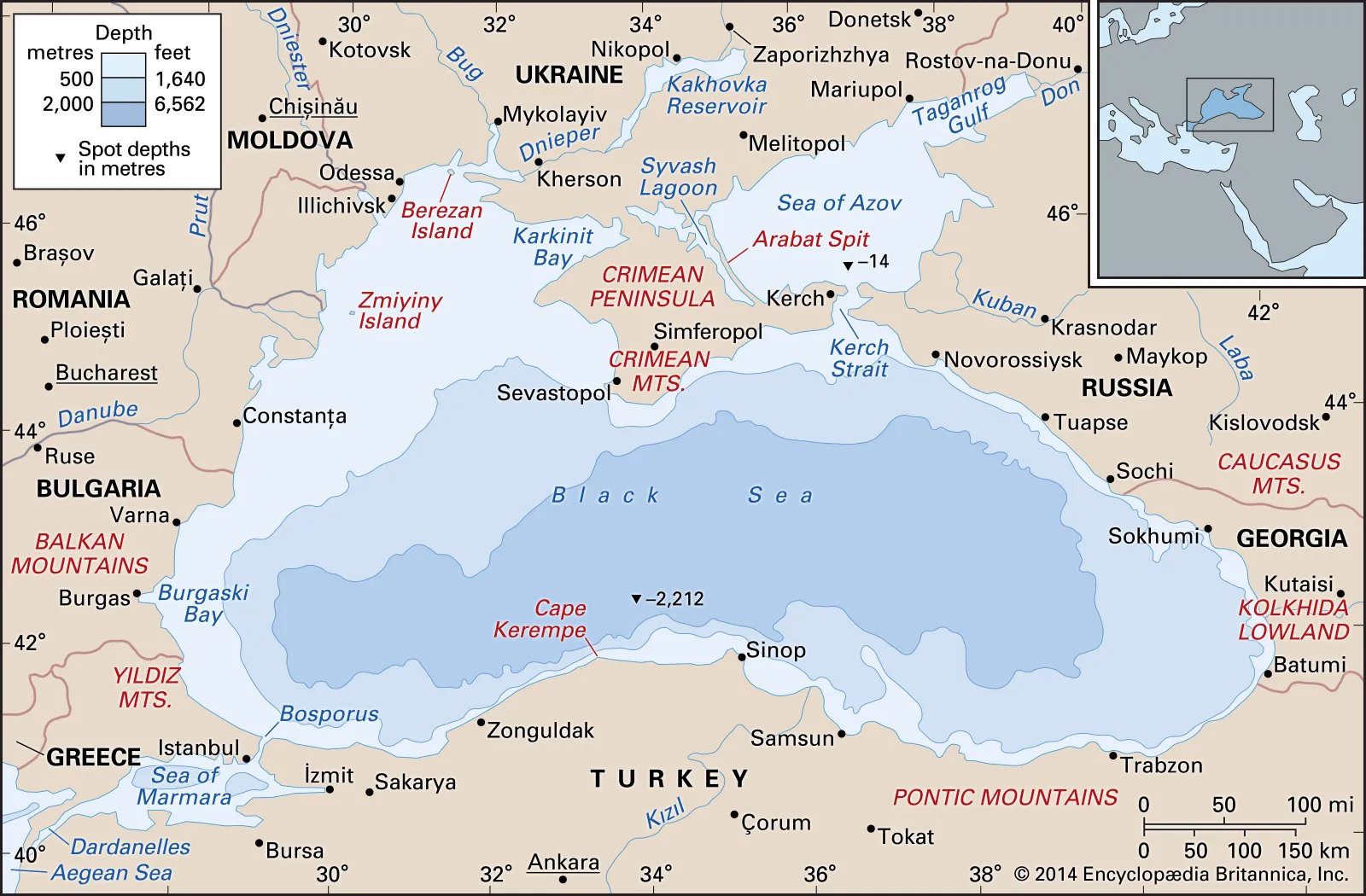
  • Black Sea Grain Initiative

    black sea

    The UN Secretary-General Antonio Guterres has called for the renewal of the Black Sea Grain Initiative as Russia has agreed to resume its participation.

    Black Sea Grain Initiative

    • The Initiative eased Russia’s naval blockade and saw the reopening of three key Ukrainian ports.
    • The agreement to create the sea corridor was negotiated by representatives from Ukraine, Russia, the UN and Turkey in July this year.
    • The agreement created procedures to safely export grain from certain ports to attempt to address the 2022 food crisis.
    • It provides a safe maritime humanitarian corridor for Ukrainian exports (particularly for food grains) from three of its key ports, namely, Chornomorsk, Odesa and Yuzhny/Pivdennyi in the Black Sea.

    Outcomes of this deal

    • Approximately 9.8 million tonnes of grains have been shipped so far since the deal was brokered.
    • People hoarding the grain in the hope of selling it for a sizable profit owing to the supply crunch were now obligated to sell.
    • The initiative has also been credited for having made a huge difference to the global cost of living crisis.

    What would suspension of the deal mean?

    • In a nutshell, the deal’s suspension was expected to re-introduce the price pressures on grain prices, especially that of wheat, with inventory being at historical lows.
    • It could particularly impact countries in the Middle East and Africa such as Egypt, Turkey, Lebanon, Sudan and Yemen which have benefitted from the resumption and are particularly dependent on Russian and Ukrainian exports

    About Black Sea

    black sea

    • The famed water body is bound by Ukraine to the north and northwest, Russia and Georgia to the east, Turkey to the south, and Bulgaria and Romania to the west.
    • It links to the Sea of Marmara through the Bosphorus and then to the Aegean through the Dardanelles.

    Significance of Black Sea for Russia

    • Domination of the Black Sea region is a geostrategic imperative for Moscow.
    • Black Sea has traditionally been Russia’s warm water gateway to Europe.
    • For Russia, the Black Sea is both a stepping stone to the Mediterranean.
    • It acts as a strategic buffer between NATO and itself.
    • It showcases the Russian power in the Mediterranean and to secure the economic gateway to key markets in southern Europe.
    • Russia has been making efforts to gain complete control over the Black Sea since the Crimean crisis of 2014.


    Click and get your FREE Copy of CURRENT AFFAIRS Micro Notes

More posts