💥Mains Ready By December. Smash Mains & Smash PYQ Admissions Open

Subject: Basic Sciences

  • Mission Samudrayan: India’s First and Unique Manned Ocean

    Union Minister of Earth Sciences has launched India’s First Manned Ocean Mission Samudrayan at Chennai.

    Mission Samudrayan

    • The Samudrayan project has been undertaken by the National Institute of Ocean Technology (NIOT).
    • It will be a part of the Rs 6,000 crore Deep Ocean Mission.
    • It is designed to carry 3 persons in 2.1meter diameter Titanium Alloy Personnel Sphere with an operational endurance of 12hrs and systems to support emergency endurance up to 96hrs.
    • It could work at a depth between 1000 and 5500 meters.

    Objectives

    • Samudrayan shall facilitate carrying out deep ocean exploration of the non-living resources such as polymetallic manganese nodules, gas hydrates, hydro-thermal sulphides and cobalt crusts.
    • The mission would carry out subsea activities such as high-resolution bathymetry, biodiversity assessment, geo-scientific observation, search activities, salvage operation and engineering support.

    Focus areas of the Project

    • Ocean climate change advisory services
    • Underwater vehicles
    • Underwater robotics-related technologies
    • Deep-sea mining: Exploitation of polymetallic nodules

    Components of the mission

    Some of the critical subsystems of the manned submersibles are:

    • Development of Titanium Alloy Personnel Sphere, Human support and safety system in enclosed space, low density buoyancy modules, Ballast and Trim System
    • Pressure compensated batteries and propulsion system, control and communication systems and Launching and Recovery System.

    Progress till date

    • The preliminary design of the manned submersible MATSYA 6000 is completed.
    • Sea trials of 500 metre rated shallow water version of the manned submersible are expected to take place in the last quarter of 2022 and the MATSYA 6000.
    • The deep-water manned submersible will be ready for trials by the second quarter of 2024.

    Why need such mission?

    • This manned submersible mission provides a feel of direct physical presence for researchers and has better intervention capability.
    • With the advancing subsea technologies, the recent Fendouzhe manned submersible developed by China in 2020 has touched ~11000m water depths.
    • With Samudrayan, India joins the elite club of nations such as USA, Russia, Japan, France and China to have such underwater vehicles for carrying out subsea activities.

    Back2Basics: India and International Seabed Authority (ISA)

    • The ISA, an autonomous international organization established under the 1982 United Nations Convention on the Law of the Sea, allots the ‘area’ for deep-sea mining.
    • India was the first country to receive the status of a ‘Pioneer Investor’ in 1987 and was given an area of about 1.5 lakh sqkm in the Central Indian Ocean Basin (CIOB) for nodule exploration.
    • In 2002, India signed a contract with the ISA, and after a complete resource analysis of the seabed, India surrendered 50%, and the country retained an area of 75,000 sqkm.
    • Further studies have helped narrow the mining area to 18,000 sqkm, the ‘First Generation Mine-site’.


    UPSC 2022 countdown has begun! Get your personal guidance plan now! (Click here)

  • What are Non-Transgenic Gene Editing techniques?

    The Centre is yet to decide on a research proposal from scientists which would allow plants to be genetically modified without the need for conventional transgenic technology.

    What is Genome Editing?

    • Genome editing (also called gene editing) is a group of technologies that give scientists the ability to change an organism’s DNA.
    • These technologies allow genetic material to be added, removed, or altered at particular locations in the genome.
    • Several approaches to genome editing have been developed.

    Techs for Genome Editing

    The core technologies now most commonly used to facilitate genome editing are

    1. Clustered regularly interspaced short palindromic repeats (CRISPR)- associated protein 9 (Cas9)
    2. Transcription activator-like effector nucleases (TALENs)
    3. Zinc-finger nucleases (ZFNs)
    4. Homing endonucleases or meganucleases

    Newer technologies

    • The Institute has now moved to newer technologies such as Site-Directed Nuclease (SDN) 1 and 2.
    • They aim to bring precision and efficiency into the breeding process using gene-editing tools such as CRISPR, whose developers won the Nobel Prize for Chemistry in 2020.

    About CRISPR

    • CRISPR-Cas9 was adapted from a naturally occurring genome editing system in bacteria.
    • The bacteria capture snippets of DNA from invading viruses and use them to create DNA segments known as CRISPR arrays.
    • The CRISPR arrays allow the bacteria to “remember” the viruses (or closely related ones).
    • If the viruses attack again, the bacteria produce RNA segments from the CRISPR arrays to target the viruses’ DNA.
    • The bacteria then use Cas9 or a similar enzyme to cut the virus DNA apart, which disables the virus.
    • This method is faster, cheaper, more accurate, and more efficient than other existing genome editing methods.

    What is Non-Transgenic Gene Editing?

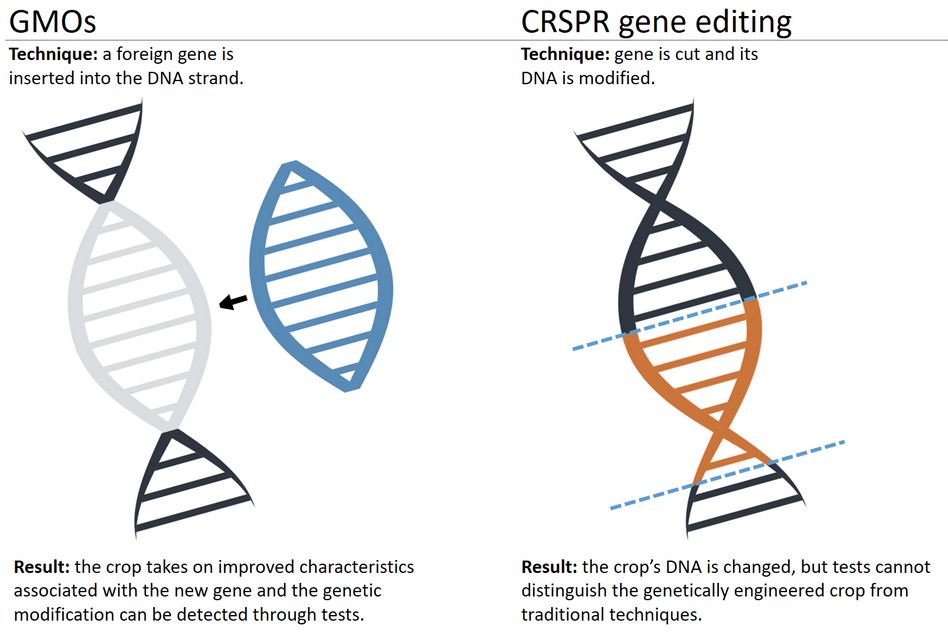
    • Unlike the older GM technology which involves the introduction of foreign DNA, the new proposal involves the use of gene editing tools to directly tweak the plant’s own genes instead.
    • It does not involve inserting any foreign DNA.

    Use in India

    • Scientists at the Indian Agricultural Research Institute (IARI) are in the process of developing resilient and high-yield rice varieties using such gene editing techniques.
    • However, this proposal has been pending with the Genetic Engineering Appraisal Committee (GEAC) for almost two years.

    Why need such technique?

    • Similar to natural mutation: But in this case, this protein is right there in the plant, and is being changed a little bit, just as nature does through mutation.
    • Faster and cheaper: It is much faster and far more precise than natural mutation or conventional breeding methods which involve trial and error and multiple breeding cycles.
    • Safe for consumption: When a protein comes from an outside organism, then you need to test for safety.
    • Pathbreaking: It is potentially a new Green Revolution.

    No approval issues

    • The SDN 1 and SDN 2 categories of genome-edited plants do not contain any foreign DNA when they are taken to the open field trials.
    • The US, Canada, Australia and Japan are among the countries which have already approved the SDN 1 and 2 technologies as not akin to GM.
    • So, such varieties of rice can be exported without any problem.
    • The European Food Safety Authority has also submitted its opinion that these technologies do not need the same level of safety assessment as conventional GM.


    UPSC 2022 countdown has begun! Get your personal guidance plan now! (Click here)

  • Punjab farmers create Bio-Enzymes from Kinnow

    Some farmers in Punjab, especially in the Kinnow belt, have started making Bio-Enzymes (BEs) from this waste fruit — peel and ‘D’ grade, very small kinnows.

    What is a Kinnow?

    • The ‘Kinnow’ is a high yield citrus fruit cultivated extensively in the wider Punjab region of India and Pakistan.
    • It is a year-long duration crop and the main harvesting period is from November-end to March.
    • It looks similar to orange but is smaller in size.

    Agricultural significance of Kinnows

    • Fallen fruit is a major challenge for kinnow farmers in the state as one needs to dig up small pits to bury them, otherwise the fallen fruit rot and invite a fly attack on the healthy fruit still on the plants.
    • But now, some farmers are using this waste kinnow to improve the pH level and soil fertility of their land by making BEs from this waste fruit.

    What are Bio-Enzymes?

    • Chemically, the Bio Enzymes are a mixture of complex organic substances such as proteins, salts and other materials that are by-products of the bacteria/yeast.
    • They produced through fermentation of organic waste including various fruits, vegetable peels and flowers, by mixing in sugar, jaggery/molasses and water.
    • BE’s also have a lot of usage in our daily lives. They can be used as natural cleansers.

    Benefits offered by BEs

    • BEs have a lot of good microbes and one of the major methods which helps overall improvement of our ecology.
    • It helps in mitigating the imbalance occurred due to overuse of chemicals, in our soil, air and water.
    • In a state like Punjab where water table is depleting fast and water contamination is also major issue, BEs can bring the soil back to life.
    • It helps in better water recharging and also stops the contamination of water by improving the health of soil.


    UPSC 2022 countdown has begun! Get your personal guidance plan now! (Click here)

  • Places in news: Mawsmai Cave

    A micro snail species named Georissa mawsmaiensis has recently been discovered from Mawsmai, a limestone cave in Meghalaya, 170 years after the last such discovery was made.

    Georissa mawsmaiensis

    • Georissa is found in soil or subterranean habitats in lowland tropical forest as well as high altitude evergreen forests or on rock surfaces rich in calcium.
    • The members of the Georissa genus are widely distributed across and reported from Africa, Asia, and the Pacific.
    • However, they are confined to microhabitats consisting of limestone caves or karst landscapes formed by the dissolution of limestone.

    About Mawsmai Cave

    • The Mawsmai cave is situated in the small village of Mawsmai, around four kilometres from Cherrapunjee (Sohra) in the East Khasi Hills district of Meghalaya.
    • It is located at an altitude of 1,195 metres above sea level and is indirectly influenced by the streams of the Kynshi river originating from the East Khasi Hills.
    • The term ‘Mawsmai’ means ‘Oath Stone’ in the Khasi language. The Khasi people use the local term ‘Krem’ for the cave.
    • It is famous for its fossils, some which can be spotted looking at the walls and formations inside.
    • The longest is Krem Liat Prah in the Jaintia Hills, which is 30,957 m (31 km approx.)


    UPSC 2022 countdown has begun! Get your personal guidance plan now! (Click here)

  • Type Of Technologies in Solar Panels

    Context

    Large-scale solar projects in Tamil Nadu have seen rapid growth in recent years. By embracing advances in solar technologies, India can continue to lead in this sector.

    Factors driving growth

    • In the past five years, the cumulative installed capacity witnessed a four-fold increase in Tamil Nadu to 4.4 GW, as of March 2021.
    • High insolation level: Aiding this capacity addition is the State’s reasonably high insolation levels and matching solar potential, estimated at 279GW.
    • Decline in price: The sharp decline in the prices for solar and resulting cost competitiveness is another factor.
    • National target: Additionally, in response to the ambitious national targets and to spur sector specific development, Tamil Nadu released the Solar Policy of 2019, aiming for 9GW of solar installations by 2023.

    Type of technology use for solar panel

    • 1) Mono-crystalline Vs multi-crystalline panels: ‘First-generation’ solar cells use mono-crystalline and multi-crystalline silicon wafers.
    • The efficiency of mono-crystalline panels is about 24%, while for multi-crystalline panels it is about 20%.
    • Mono-crystalline cells are dominant today.
    • Although mono-crystalline panels are priced higher than multi-crystalline ones, the difference is diminishing and will soon attain parity.
    • This would result in mono panels being preferred over multi due to their higher efficiency, greater energy yield and lower cost of energy.
    • 2) Bifacial solar cells: Newer technologies incorporating crystalline silicon focus on bifacial solar cells, capable of harvesting energy from both sides of the panel.
    • Bifacials can augment the power output by 10-20%.
    • Within this, the Passive Emitter and Rear Contact technology is predicted to gain popularity. However, it is yet to achieve price parity for large-scale deployment.
    • 3) Thin-film technologies: It is classified as the ‘second generation of solar PVs.
    • In addition to being used in solar farms and rooftops, thin films with their low thickness, light weight and flexibility are also placed on electronic devices and vehicles, power streetlights and traffic signals.
    • Mainstream thin films utilise semiconductor chemistries like Cadmium Telluride with module efficiencies of around 19%.
    • Other technologies include Amorphous Silicon and Copper Indium Gallium Di-Selenide.
    • Nanocrystal and dye-sensitised solar cells are variants of the thin film technology. These are in early stages for large-scale commercial deployment
    • However, the efficiency of thin films is lower than that of crystalline silicon.
    • 4) Perovskite: These are grouped as ‘third generation’ and contain technologies such as perovskite, nanocrystal and dye-sensitised solar cells.
    • Perovskites have seen rapid advances in recent years, achieving cell efficiency of 18%.
    • They have the highest potential to replace silicon and disrupt the solar PV market, due to factors such as ease of manufacture, low production costs and potential for higher efficiencies.
    • 5) Use of Graphene Quantum-dots: Graphene is made of a single layer of carbon atoms bonded together as hexagons.
    • Solar cells made of graphene are of interest due to high theoretical efficiency of 60% and its super capacitating nature.
    •  Quantum-dot PVs use semiconductor nanocrystals exhibiting quantum mechanical properties capable of high efficiency of about 66%.
    • However, both these are in the early stages of research.

    Technologies to better integrate solar PVs into the grid

    • These technologies include weather forecasting and power output prediction systems; operation monitoring and control systems; and scheduling and optimisation systems.
    • Additionally, automatic systems have been developed for the smooth resolution of output fluctuations.

    Way forward

    • A portion of the budget for renewable energy targets should be set aside exclusively for new technologies.
    • Grants and subsidies can also be provided for their adoption.
    • Efforts must be taken to address gaps in research, development, and manufacturing capabilities in the solar sector through sector-specific investment and incentives.
    • There must also be greater industry-academia collaborations and funding opportunities for startups.
    • A comprehensive sector-specific skilling programme is also required for workers.

    Conclusion

    All these efforts would help the country become a global player in the solar power sector.

    UPSC 2022 countdown has begun! Get your personal guidance plan now! (Click here)

  • Zeolite Oxygen Concentrators: Chemistry in 3-D

    To meet the demand of oxygen supply in the country during the peak of pandemic, the Defence Research and Development Organisation (DRDO) had chartered the Air India to import ‘Zeolite’ from different countries.

    What are Zeolites?

    • Zeolites are highly porous, 3-dimensional meshes of silica and alumina.
    • In nature, they occur where volcanic outflows have met water.
    • Synthetic zeolites have proven to be a big and low-cost boon.

    Uses in Oxygen Concentrator

    • One biomedical device that has entered our lexicon during the pandemic is the oxygen concentrator.
    • This device has brought down the scale of oxygen purification from industrial-size plants to the volumes needed for a single person.
    • At the heart of this technology are synthetic frameworks of silica and alumina with nanometer-sized pores that are rigid and inflexible.
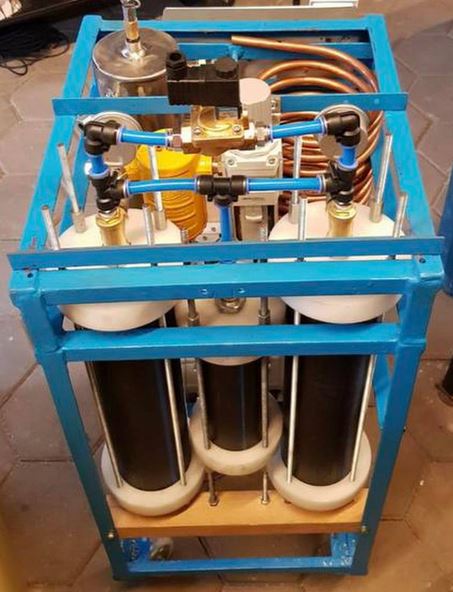
    • Beads of one such material, zeolite 13X, about a millimeter in diameter, are packed into two cylindrical columns in an oxygen concentrator.

    How does it work?

    • Zeolite performs the chemistry of separating oxygen from nitrogen in air.
    • Being highly porous, zeolite beads have a surface area of about 500 square meters per gram.
    • At high pressures in the column, nitrogen is in a tight embrace, chemically speaking, with the zeolite.
    • Interaction between the negatively charged zeolite and the asymmetric nucleus (quadrupole moment) of nitrogen causes it to be preferentially adsorbed on the surface of the zeolite.
    • Oxygen remains free, and is thus enriched.
    • Once nitrogen is captured, what flows out from the column is 90%-plus oxygen.
    • After this, lowering the pressure in the column releases the nitrogen, which is flushed out, and the cycle is repeated with fresh air.


    UPSC 2022 countdown has begun! Get your personal guidance plan now! (Click here)

  • [pib] Indian Space Association

    The PM has launched the Indian Space Association (ISpA), an industry body consisting of various stakeholders of the Indian space domain.

    Indian Space Association (ISpA)

    • The ISpA is a premier industry association of space and satellite companies, which aspires to be the collective voice of the Indian space industry.
    • It will be headed by retired Lieutenant General AK Bhatt, who will be its Director General.
    • It will target to undertake policy advocacy and engage with all stakeholders in the Indian space domain. It will engage with the government and all its agencies.

    Why is the formation of ISpA significant?

    • Million-dollar industry: Governments across the world have poured millions of dollars to push the envelope in term of exploring the edges of the space.
    • Collaborated research: With time, governments and government agencies collaborated to explore newer planets and galaxies in search of life forms that exist outside Earth.
    • Private players involvement: In the recent past, private sector companies such as Elon Musk’s SpaceX, Richard Branson’s Virgin Galactic, and Jeff Bezos’ Blue Origin have taken the lead in spaceflight.
    • Easing workload on ISRO: Though India too has made significant strides in space exploration over time, state-run ISRO has been at the centre and front of this progress.

    What does ISpA aim to achieve?

    • Supplementing space research: One of the main goals of the organisation is to supplement the government’s efforts towards making India a global leader in commercial space-based excursions.
    • Commercial space exploration: ISpA said it would engage with stakeholders across the ecosystem for the formulation of an enabling policy framework which fulfills the government vision of leading commercial space exploration.
    • Establishing global linkages: ISpA will also work towards building global linkages for the Indian space industry to bring in critical technology and investments into the country to create more high skill jobs.

    Who are the stakeholders in this organisation? How will they contribute?

    • ISpA will be represented by leading domestic and global corporations that have advanced capabilities in space and satellite technologies.
    • It has taken off with several Indian and international companies betting on it as the next frontier to provide high-speed and affordable Internet connectivity to inaccessible areas as well.
    • This includes SpaceX’s StarLink, Sunil Bharti Mittal’s OneWeb, Amazon’s Project Kuiper, US satellite maker Hughes Communications, etc.
    • OneWeb, for example, is building its initial constellation of 648 low-earth orbit satellites and has already put 322 satellites into orbit.

    Why is satellite-based Internet important in India?

    • The expansion of the Internet in India is crucial to the Modi government’s dream of a digital India where a majority of government services are delivered directly to the customer.
    • The government aims to connect all villages and gram panchayats with high-speed Internet over the next 1000 days through BharatNet.
    • However, internet connectivity in hilly areas and far-flung places of Northeast India are still a challenge.
    • To overcome this, industry experts suggest that satellite Internet will be essential for broadband inclusion in remote areas and sparsely populated locations where terrestrial networks have not reached.
    • Satellite communications remain limited to use by corporates and institutions that use it for emergency use, critical trans-continental communications and for connecting to remote areas with no connectivity.


    UPSC 2022 countdown has begun! Get your personal guidance plan now! (Click here)

  • Linear No-Threshold (LNT) Model for Radiation Safety

    The U.S. Nuclear Regulatory Commission (NRC) decisively upheld the Linear No-Threshold (LNT) model to prescribe radiation safety standards, ending the protracted controversy on the topic.

    What is the LNT Model?

    • The LNT is a dose-response model used in radiation protection to estimate stochastic health effects such as radiation-induced cancer, genetic mutations etc. on the human body due to exposure to ionizing radiation.
    • The LNT model states that biological effects such as cancer and hereditary effects due to exposure to ionising radiation increase as a linear function of dose, without threshold.
    • It provides a sound regulatory basis for minimizing the risk of unnecessary radiation exposure to both members of the public and radiation workers.

    Why in news?

    • LNT model continues to provide a sound basis for a conservative radiation protection regulatory framework that protects both the public and occupational workers.
    • The model helps the agencies to regulate radiation exposures to diverse categories of licensees, from commercial nuclear power plants to individual industrial radiographers and nuclear medical practices.
    • There are also studies and findings that support the continued use of the LNT model, including those by national and international authoritative scientific advisory bodies.


    UPSC 2022 countdown has begun! Get your personal guidance plan now! (Click here)

  • Nobel Prize 2021

    (1) Nobel Prize for Economic Sciences, 2021

    The 2021 Nobel Prize in Economic Sciences has been awarded in one half to Canadian-born David Card and the other half jointly to Israeli-American Joshua D Angrist and Dutch-American Guido W Imbens.

    • David Card has been awarded for his empirical contributions to labor economics. Joshua D Angrist and Guido W Imbens won the award “for their methodological contributions to the analysis of causal relationships.”
    • The 2020 Nobel Prize in Economic Sciences was awarded to Paul R Milgrom and Robert B Wilson “for improvements to auction theory and inventions of new auction formats”.

    Contributions

    • David Card: He has analyzed how minimum wages, immigration and education impact the labor market.
      • One of the significant findings of this research was that“increasing the minimum wage does not necessarily lead to fewer jobs”.
      • It also led to the understanding that“people who were born in a country can benefit from new immigration, while people who immigrated at an earlier time risk being negatively affected”.
      • It also illuminated the role of resources available in school in shaping the future of students in the labor market.
    • Joshua Angrist and Guido Imbens: They were rewarded for their “methodological contributions” to the research tool.
      • Their work demonstrated “how precise conclusions about cause and effect can be drawn from natural experiments”.

     (2) Nobel Prize for Chemistry, 2021

    The 2021 Nobel Prize in Chemistry was awarded to Benjamin List and David MacMillan for the development of asymmetric organocatalysis.

    • Last year, the honour went to Frenchwoman Emmanuelle Charpentier and American Jennifer Doudna, for developing the gene-editing technique known as CRISPR-Cas9 – DNA snipping “scissors”.

    About the Development

    • They have developed a new and ingenious tool for molecule building: organocatalysis.
      • Many research areas and industries are dependent on chemists’ ability to construct molecules that can form elastic and durable materials, store energy in batteries or inhibit the progression of diseases. This work requires catalysts.
      • According to researchers, there were just two types of catalysts available: metals and enzymes. Catalysts are any substance that increases the rate of a reaction without itself being consumed.
    • In 2000, they, independent of each other, developed a third type of catalysis. It is called asymmetric organocatalysis and builds upon small organic molecules.
    • Significance:
      • Its uses include research into new pharmaceuticals and it has also helped make chemistry greener.
      • Both these sets of catalysts (metals and enzymes) had limitations.
      • Heavier metals are expensive, difficult to mine, and toxic to humans and the environment.
        • Despite the best processes, traces remained in the end product; this posed problems in situations where compounds of very high purity were required, like in the manufacture of medicines.
        • Also, metals required an environment free of water and oxygen, which was difficult to ensure on an industrial scale.
      • Enzymes on the other hand, work best when water is used as a medium for the chemical reaction. But that is not an environment suitable for all kinds of chemical reactions.

    Organocatalysis

      • Organic compounds are mostly naturally-occurring substances, built around a framework of carbon atoms and usually containing hydrogen, oxygen, nitrogen, sulphur, or phosphorus.
      • Life-supporting chemicals like proteins, which are long chains of amino acids (carbon compounds containing nitrogen and oxygen) are organic.
      • Enzymes are also proteins, and therefore, organic compounds. These are responsible for many essential biochemical reactions.
      • Organocatalysts allow several steps in a production process to be performed in an unbroken sequence, considerably reducing waste in chemical manufacturing.
      • Organocatalysis has developed at an astounding speed since 2000. Benjamin List and David MacMillan remain leaders in the field, and have shown that organic catalysts can be used to drive multitudes of chemical reactions.
        • Using these reactions, researchers can now more efficiently construct anything from new pharmaceuticals to molecules that can capture light in solar cells.

    Asymmetric Organocatalysis

      • The process called asymmetric organocatalysis has made it much easier to produce asymmetric molecules – chemicals that exist in two versions, where one is a mirror image of the other.
      • Chemists often just want one of these mirror images – particularly when producing medicines – but it has been difficult to find efficient methods for doing this.
      • Some molecules with mirror versions have different properties. An example is the chemical called carvone, which has one form that smells like spearmint and a counterpart that smells like the herb, dill.
      • Different versions of the same molecule might have different effects when ingested. Then it becomes important to be able to make only the mirror image of a drug that has the desired physiological effect.

    (3) Nobel Prize in Physics, 2021

    The 2021 Nobel Prize in Physics is awarded with one half jointly to Syukuro Manabe, Klaus Hasselmann and the other half to Giorgio Parisi “for groundbreaking contributions to our understanding of complex physical systems.”

    • This is the first time climate scientists (Manabe and Hasselmann) have been awarded the Physics Nobel. Last year, the award was given for the research into black holes.

    Manabe and Hasselmann

    • Awarded for work in physical modelling of Earth’s climate, quantifying variability and reliably predicting global warming.
    • Demonstrated how increases in the amount of carbon dioxide in the atmosphere would increase global temperatures, laying the foundations for current climate models.

    Parisi

    • Awarded for “the discovery of the interplay of disorder and fluctuations in physical systems from atomic to planetary scales.”
    • He “built a deep physical and mathematical model” that made it possible to understand complex systems in fields such as mathematics, biology, neuroscience and machine learning.

    (4) Nobel Prize for Physiology/Medicine, 2021

    Recently, two United States-based scientists, David Julius and Ardem Patapoutian have been awarded the 2021 Nobel Prize for Physiology/Medicine for their discoveries of receptors for temperature and touch.

    • They have focused their work on the field of somatosensation, that is the ability of specialized organs such as eyes, ears and skin to see, hear and feel.

    About the Discoveries

    David Julius:

    • He discovered TRPV1, a heat-sensing receptor.
    • His findings on the skin’s sense of temperature was based on how certain cells react to capsaicin, the molecule that makes chili peppers spicy, by simulating a false sensation of heat.

    Ardem Patapoutian

    • He discovered two mechanosensitive ion channels known as the Piezo channels.
      • The Piezo1 is named after the Greek word for pressure, ‘píesi’.
    • He is credited for finding the cellular mechanism and the underlying gene that translates a mechanical force on our skin into an electric nerve signal.

    Significance of Discoveries

      • The findings have allowed us to understand how heat, cold and mechanical force can initiate the nerve impulses that allow us to perceive and adapt to the world around us.
      • This knowledge is being used to develop treatments for a wide range of disease conditions, including chronic pain.

    Back To Basics: About Nobel Prizes

    • The will of the Swedish scientist Alfred Nobel established the five Nobel prizes in 1895.
    • The Nobel Prizes are a set of recognition given to fields of Chemistry, Literature, Peace, Physics, and Physiology or Medicine by The Nobel Foundation.
      • The Nobel Foundation is a private institution established in 1900, has ultimate responsibility for fulfilling the intentions in Alfred Nobel’s will.
    • The prizes in Chemistry, Literature, Peace, Physics, and Physiology or Medicine were first awarded in 1901.
    • In 1968, Sveriges Riksbank established the Sveriges Riksbank Prize in Economic Sciences in Memory of Alfred Nobel.
     

  • What is Border Gateway Protocol (BGP) ?

    The outages at Facebook, WhatsApp and Instagram occurred because of a problem in the company’s domain name system. At the heart of it was a BGP or Border Gateway Protocol issue.

    What is BGP?

    • Simply put, it is the protocol that runs the internet or makes it work.
    • Since the internet is a network of networks, BGP is the mechanism that bounds it together.
    • When the BGP doesn’t work, internet routers can’t really figure out what to do and that leads to the internet not working.
    • The routers — big ones — keep up on updating other possible routes that are used to deliver network packets to the last possible source.
    • In this case, Facebook platforms were the last point of destination and BGP problem meant Facebook was unable to tell other networks know that it was on the internet.

    How does it work?

    • The BGP is like an entity that is responsible for creating and more importantly updating maps that lead you to sites like Google, Facebook or YouTube.
    • So if someone is responsible for making and updating the map, and they make a mistake, then the traffic — or users — will not end up reaching that place.

    How did a BGP issue affect Facebook?

    • A BGP update message informs a router of any changes you’ve made to a prefix advertisement or entirely withdraws the prefix.
    • There were a lot of routing changes from Facebook last night and then routes were withdrawn, Facebook’s Domain Name Server went offline.

    Role of DNS

    • DNS is the phonebook of the Internet.
    • People access information online through domain names — timesofindia.com or facebook.com.
    • Internet browsers use IP or Internet Protocol addresses and what DNS does is that it translates domain names to IP addresses to browsers can load Internet resources.
    • If DNS is the internet’s phone book, BGP is its postal service.
    • When a user enters data in the internet, BGP determines the best available paths that data could travel.


    UPSC 2022 countdown has begun! Get your personal guidance plan now! (Click here)