Frustrated by the continuous actions against them by Sri Lankan authorities, Tamil Nadu fishermen announced an indefinite strike starting February 17, disrupting their daily activities.
The fishermen’s protest led to an unprecedented decision to abstain from the annual St. Antony’s Church festival at Katchatheevu, a significant event symbolizing their fishing rights.
Katchatheevu Island: Historical Background
Colonial Influence: Katchatheevu, a 285-acre island, has its origins in a 14-century volcanic eruption. It was historically under the control of the Jaffna kingdom in Sri Lanka and later the Ramnad Zamindari in India.
British-Era Claims: Both India and Sri Lanka claimed Katchatheevu in the early 20th century to establish fishing boundaries. The ownership dispute continued even during the British Raj.
1974 Indo-Sri Lankan Maritime Agreement
Landmark Decision: Indira Gandhi’s government decided to cede Katchatheevu to Sri Lanka as part of the 1974 agreement, aiming to establish maritime borders.
Political Implications: The decision raised concerns in Tamil Nadu, where voices protested the lack of state assembly consultation and the impact on traditional fishing rights.
Fishing Ambiguity: The agreement allowed Indian fishermen access to Katchatheevu “hitherto,” but fishing rights remained ambiguous, leading to disputes.
Sri Lankan Civil War and Beyond
Civil War Dynamics: The Sri Lankan civil war (1983-2009) shifted focus from the Katchatheevu issue as Sri Lanka’s naval forces grappled with internal strife.
Post-War Reality: Post the civil war, Sri Lanka reinforced maritime defense, leading to the arrest of Indian fishermen venturing into their waters, reigniting demands for Katchatheevu’s retrieval.
Tamil Nadu’s Persistent Concerns
Political Backlash: Tamil Nadu politicians across parties raised objections against ceding Katchatheevu without state assembly consent, citing historical ties and livelihood impacts.
Legal Battles: Late J Jayalalitha’s AIADMK filed petitions challenging the 1974 agreement, arguing it affected traditional fishing rights. However, the Union government’s stance remained unaltered.
Government’s Position: Despite vocal demands from Tamil politicians, the Modi government maintained that the island’s status was finalized in 1974 and reclaiming it would require drastic measures.
Contemporary Implications
Symbol of Sovereignty: Katchatheevu symbolizes regional and sovereignty concerns, reflecting tensions between Tamil Nadu’s interests and central government decisions.
Geopolitical Dilemma: The case highlights the delicate balance between historical claims, political sentiments, and international agreements in the context of bilateral relations.
Conclusion
The island of Katchatheevu continues to serve as a reminder of India’s historical intricacies, reflecting the delicate balancing act between state interests, national decisions, and regional aspirations.
While Tamil Nadu’s calls for retrieval echo in the political corridors, the longstanding 1974 agreement and subsequent geopolitical realities create a complex landscape.
As the island’s fate intertwines with broader diplomatic relations, Katchatheevu remains a testament to the complexities of national sovereignty and regional sentiment.
Indian customs officials at Mumbai Port seized two advanced Computer Numerical Control (CNC) machines manufactured by GKD, Italy, en route to the port of Karachi from China.
The CNC machines, critical for manufacturing parts utilized in Pakistan’s missile development program, were destined for Karachi.
What are Dual-Use Items?
Definition: Dual-use items refer to commodities that possess the potential for application in both civilian and military contexts.
Regulatory Scrutiny: These items are subject to stringent regulation due to their capability to be initially designed for civilian purposes but later repurposed for military or even terrorist activities.
Examples: Examples of dual-use items include global positioning satellites, missiles, nuclear technology, chemical and biological weapons, night vision technology, drones, precision-engineered aluminium pipes, and specific types of ball bearings.
Global Control Mechanisms for Dual-Use Items
(1) Missile Technology Control Regime (MTCR):
Established: In 1987 by G-7 countries.
Purpose: To limit the proliferation of missiles capable of delivering weapons of mass destruction.
Membership: Consists of 35 member countries.
Guidelines: Members coordinate national export controls to prevent missile proliferation.
India’s Membership: India became the 35th member in 2016.
(2) Wassenaar Arrangement (WA):
Established: In 1996 with 42 participating states.
Purpose: Prevent destabilizing accumulations of conventional arms and dual-use goods and technologies.
Export Controls: Member countries apply controls on listed items to avoid enhancing military capabilities.
India not a member: It it has expressed interest in joining to strengthen its export controls and enhance its non-proliferation efforts.
(3) Australia Group (AG):
Formation: Prompted by Iraq’s use of chemical weapons in 1985.
Focus: Initially on chemical weapons precursor chemicals, expanded to include biological weapons prevention.
Membership: Composed of 42 member countries. India is NOT a member.
Objective: Harmonization of international export controls on chemical and biological technologies.
(4) Nuclear Suppliers Group (NSG):
Established: In 1974 in response to India’s nuclear tests.
Purpose: Control nuclear and nuclear-related technology to prevent proliferation.
Membership: Consists of 48 participating governments.
Guidelines: Aim to prevent the spread of nuclear weapons through control measures.
[Note: India is also party to key conventions such as the Chemical Weapons Convention (CWC) and Biological and Toxic Weapons Convention (BWC).]
India’s in-house mechanisms against Dual-Use Items
Role of DGFT: The Director General of Foreign Trade (DGFT) in India oversees the regulation of dual-use items through the SCOMET list (Specialty Chemicals, Organisms, Materials, Equipment, and Technologies).
SCOMET List: SCOMET items encompass special chemicals, organisms, materials, equipment, and technologies with dual-use potential.
Regulatory Framework: Exporting SCOMET items is subject to strict regulations, either requiring a license or being prohibited altogether.
Alignment with International Controls: The SCOMET control list aligns with the control lists of various multilateral export control regimes and conventions.
Prelims: The area known as ‘Golan Heights’ sometimes appears in the news in the context of the events is related to: (2015) a) Central Asia b) Middle East c) South-East Asia d) Central Africa
Mains:
1. The question of India’s Energy Security constitutes the most important part of India’s economic progress. Analyze India’s energy policy cooperation with West Asian Countries. (2017)
2. “India’s relations with Israel have, of late, acquired a depth and diversity, which cannot be rolled back.” Discuss. (2018))
Note4Students:
Mains: International issues;India-West Asia;
Prelims: Two-state solution; Israel-Palestine;
Mentor comments:India has historically supported Palestine while also developing ties with Israel. Prime Minister Modi expressed solidarity with Israel after a Hamas attack but India’s stance on Palestine remains balanced. Over the years, India’s policy towards Palestine has evolved, recognizing Israel in 1950 but supporting a two-state solution. Recent UN votes show India’s continued support for Palestine despite abstaining from some resolutions. What are those?
Let’s Learn.
Why in the News?
The strategic implications of recent events in West Asia have influenced India’s Foreign Policy towards Israel and Palestine, emphasizing the importance of stability and resolution in West Asia.
Background: India’s historical policy towards Palestine:
India’s solidarity with Palestine was rooted in anti-colonial and non-aligned principles, aligning with Arab states and advocating for Palestinian statehood.
• In 1947: Initially, India strongly supported the Palestinian cause, voting against the partition of Palestine and recognizing the Palestinian Liberation Organization (PLO) as the legitimate representative of Palestinians.
• In 1992: Despite recognizing Israel in 1950, India did not establish full diplomatic relations until 1992.
• In 2003: India co-sponsored the draft resolution on “the right of Palestinians to self-determination” and voted in favor of it during the 53rd session of the United Nations General Assembly (UNGA). India also voted in favour of the UNGA Resolution in October 2003 against construction of the Separation Wall by Israel.
• In 2011: India voted in favor of including Palestine as a full member of UNESCO.
• India has further strengthened ties with Israel, marking a strategic shift towards closer relations. This shift is driven by structural imperatives like independent foreign policy, strategic goals, and counterterrorism efforts especially in defense and trade.
Paradigm shift of India’s policy towards Palestine:
While India has maintained its support for the Palestinian cause, it has also deepened its ties with Israel, particularly in defense and trade.
In 1950: India recognized Israel in 1950 but did not establish full diplomatic relations until 1992. Since then, bilateral ties have grown significantly, with India becoming Israel’s top market for defense exports.
In 2017-18: Prime Minister Narendra Modi’s government has been more public in its engagement with Israel, with Modi being the first Indian Prime Minister to visit Israel in 2017 and the first to visit Ramallah in 2018.
In 2023: Barely three weeks after the Hamas attack, India abstained from a vote at the United Nations General Assembly (UNGA) that called for an “immediate, durable and sustainable humanitarian truce” in Gaza.
While India maintains support for a two-state solution and Palestinian rights, its alignment with Israel reflects a nuanced balancing act influenced by changing geopolitical dynamics and national interests. India has also faced criticism for its perceived shift towards Israel.
Balancing the approach of India at UNGA after the terror attack:
Recognizing Palestinian rights: India supported resolutions affirming Palestine by condemning Israeli settlements in Palestine, expressing concern over Israel’s occupation of Golan Heights, and calling for a humanitarian ceasefire. It was neither a strong moral critic, like Brazil or South Africa, of the way Israel is conducting the war, nor a mute spectator or enabler of Israel, like the United States or the United Kingdom.
Supporting Two-state solution: This stance reflects India’s commitment to a two-state solution and a balanced approach in addressing the complexities of the Israel-Palestine conflict. Despite growing ties with Israel in defense and trade, India maintains support for Palestinian statehood while strategically engaging with Israel.
What is the present Scenario and Indian Interests considering the present context?
Being Leader for Global South: India’s support for Palestine is rooted in National interests, including the humanitarian crises in Gaza and the need to maintain its reputation as a leader in the Global South.
Reflecting towards its commitment: India’s criticism of Israel’s action and its support for a two-state solution reflect its commitment to international law and stability in the Global south region.
The strategic implications of recent events in the region, such as the Abraham Accords and the crises in Gaza, have influenced India’s Foreign policy towards Israel and Palestine, emphasizing the importance of stability and resolution in West Asia.
Way Forward
Supporting a two-state solution requires ending violence, promoting dialogue, condemning settlements, and upholding Palestinian self-determination. India aligns with this approach, emphasizing diplomacy over conflict. In contrast, the U.S., despite claiming support for a two-state solution, votes against relevant UN resolutions and fails to endorse ceasefire calls.
PM Modi in collaboration with his Mauritian counterpart Pravind Jugnauth, inaugurated a series of projects on Mauritius’ Agalega Island.
Agalega Island: A Strategic Location
Agaléga are two outer islands of Mauritius located in the Indian Ocean, about 1,000 kilometers north of Mauritius island.
The islands have a total area of 2,600 ha (6,400 acres).
Notable settlements include Vingt Cinq on the North Island and Sainte Rita on the South Island, serving as primary hubs for residents and economic activities.
Significance of New Airstrip and the Base
India’s Strategic Presence: The inauguration of a new airstrip and jetty underscores India’s commitment to strengthening its influence in the southwestern Indian Ocean, aligning with its broader strategic objectives.
Economic Impetus: Agalega Island’s strategic location facilitates trade and connectivity in the Indian Ocean region, enhancing economic opportunities for Mauritius and neighboring countries.
Trade Security: With a significant portion of India’s trade traversing the Indian Ocean, the development of infrastructure on Agalega Island contributes to safeguarding trade routes and ensuring maritime security.
Benefits for Mauritius
Developmental support: Historically a slave plantation, North Agalega Island reflects the legacy of colonial exploitation, with its main town, Vingt Cinq, evoking the brutality of slavery.
Strategic boost: India’s development initiatives aim to ameliorate conditions for the island’s inhabitants, alongside bolstering Mauritian Defence Force operations.
India’s Strategic Imperative
Counterbalancing Chinese Influence: India’s developmental endeavors on Agalega Island serve as a proactive measure to counter China’s expanding ‘String of Pearls’ strategy, safeguarding its regional interests and sovereignty.
Enhanced Security Infrastructure: By upgrading security infrastructure, including facilities for surveillance and monitoring, Mauritius strengthens its security apparatus, contributing to overall regional stability and resilience.
Regional Cooperation: The projects on Agalega Island are aligned with India’s Security and Growth for All in the Region (SAGAR) policy initiative, aimed at fostering regional development and security cooperation among Indian Ocean Rim countries.
India has completed the Shahpur Kandi Barrage Project, halting the flow of water from the Ravi river into Pakistan after 45 years of waiting.
Under the 1960 Indus Water Treaty, India possesses exclusive rights to the waters of the Ravi river, enabling it to utilize the resource for local agricultural purposes.
What are the Potential Benefits for India of stopping Ravi River Water to Pakistan?
Water Security: Retaining Ravi river water can enhance water security for Indian regions. The Jammu and Kashmir region will now benefit from the 1,150 cusecs of water that was previously allocated to Pakistan.
Agricultural Productivity: By ensuring access to Ravi river water, India can support increased agricultural productivity and efficiency, promoting sustainable farming practices and boosting food security
Economic Opportunities: Retaining control over Ravi river water can lead to the creation of new job opportunities, additional revenue streams from commercial activities along the riverbanks, and improved habitat quality supporting biodiversity
Urban Development: Halting the flow of Ravi river water to Pakistan can facilitate the development of sustainable urban areas along the riverbanks, contributing to planned urban housing and economic growth in India.
India can implement modern waste management systems, promote recycling industries, and adopt circular economies for sustainable water usage and protection of ecosystems.
Health Benefits: India can ensure cleaner drinking water sources, reducing health risks associated with contaminated water and enhancing public health outcomes.
About Shahpur Kandi Barrage Project
It is located on the Ravi River, in Punjab’s Pathankot district, near the border of Punjab and Jammu and Kashmir.
Project Evolution:
The foundation stone of the Shahpur Kandi Barrage Project was laid by then Prime Minister PV Narasimha Rao in 1995.
In 2016, the government started to optimize water resources from the Sutlej, Beas, and Ravi rivers for Indian farmers, leading to renewed efforts to complete the project.
Finally, Jammu and Kashmir and Punjab signed an agreement in 2018 to resume work on the Shahpur-Kandi dam project, which had been hanging fire for the last 40 years.
Project Capacity:
The project comprises a 5 m high concrete gravity dam, a 7.7 km long hydel channel, two head regulators, and two powerhouses.
It is expected to generate up to 206MW of electricity and provide irrigation to Punjab (5,000 Ha) and Jammu and Kashmir (32,173 Ha).
Indus Waters Treaty
The Indus Waters Treaty is an agreement between India and Pakistan, mediated by the World Bank in 1960.
The treaty allocates the Western Rivers (Indus, Jhelum, Chenab) to Pakistan and the Eastern Rivers (Ravi, Beas, Sutlej) to India.
However, the treaty permits limited usage of the Eastern Rivers by Pakistan and vice versa.
The treaty created the Permanent Indus Commission, comprising one representative from each nation, to facilitate communication and dispute resolution.
The treaty facilitated the construction of dams, link canals, barrages, and tube wells, providing water to Pakistan as per its previous entitlement.
The treaty came into effect due to the partition in 1947, leading to the division of the water systems.
After the expiry of the temporary Standstill Agreement of 1947, India started holding back water from canals flowing towards Pakistan.
The Inter-Dominion Accord of May 4, 1948, mandated India to supply water to Pakistani areas of the basin in exchange for yearly payments.
Try this PYQ from CSP 2021:
d) Sutlej
Q. Present an account of the Indus Water Treaty and examine its ecological, economic and political implications in the context of changing bilateral relations. (UPSC 2016)
[wpdiscuz-feedback id=”gvjopkqbvh” question=”Please leave a feedback on this” opened=”1″]Post your answers here.[/wpdiscuz-feedback]
The article emphasizes the deepening partnership between the United Kingdom and India, highlighting their shared interests in maritime security, global trade, and defense cooperation. It underscores the importance of strategic relationships, particularly in the face of global challenges such as maritime threats and conflicts like the Ukraine crisis. The piece celebrates the growing ties between the two nations and their collaborative efforts towards peace, prosperity, and upholding the rules-based International Order.
Key Highlights:
Mutual reliance on maritime trade and the significance of securing global sea routes.
Collaboration in Operation Prosperity Guardian to protect commercial shipping in the Red Sea and Gulf of Aden.
Support for Ukraine against Russian aggression, including substantial military aid and ongoing assistance.
Recognition of the Indo-Asia-Pacific region’s growing economic importance and the establishment of the U.K. tilt towards it.
Strengthening defense ties between the UK and India, with increased military interactions, joint exercises, and defense industrial partnerships.
Key Challenges:
Threats to maritime security, including aggression from groups like the Houthis and conflicts like the Ukraine crisis.
Balancing national interests with international cooperation in addressing global challenges.
Navigating geopolitical complexities and maintaining alliances amidst shifting power dynamics.
Ensuring sustainable economic growth and prosperity in the face of global uncertainties.
Main Terms:
Maritime security
Global trade
Defense partnership
Operation Prosperity Guardian
Indo-Asia-Pacific region
Rules-based International Order
Important Phrases for mains answer writing:
“The global lifelines of goods and resource”
“Wanton violence and disregard for international law”
“Strategies of isolationism or coercion”
“Rules-based International Order”
“Shared operational capabilities”
Quotes that can add value to to your arguments in mains answers:
“Our nations need to secure, and make free from aggression and exploitation, the global lifelines of goods and resource that flow across the seas.”
“The U.K., India, and the world have a common interest in ensuring this wanton violence and disregard for international law are not allowed to become normalised.”
“The possibilities for global prosperity cannot be understated, and the importance of the Indo-Asia Pacific, not just to the United Kingdom, but to the world, has never been clearer.”
Anecdotes:
Highlighting the successful efforts of Ukraine’s armed forces in resisting Russian aggression and reopening maritime corridors for grain exports.
The positive reception of the UK Carrier Strike Group during its visit to India and the hospitality extended by Indian authorities.
Useful Statements for mains answer writing:
“In this ever more unstable world, the U.K. is fortunate to have India as a good friend.”
“History teaches us that strategies of isolationism or coercion have rarely produced strong coalitions.”
Examples and References:
Mention of Operation Prosperity Guardian and the joint efforts to protect maritime trade routes.
Ukraine’s resilience against Russian aggression and the support provided by the UK.
Increased military interactions and defense collaborations between the UK and India.
Facts and Data for credibility in your answer:
£2.5 billion in military aid provided by the UK to Ukraine in 2024-25, totaling almost £12 billion since 2022.
Record numbers of UK ship visits to India and the deepening defense partnership between the two nations.
The shift of the global economic center of gravity towards the Indo-Asia-Pacific region by 2050.
Critical Analysis:
The article provides a comprehensive overview of the strategic partnership between the UK and India, emphasizing shared interests in maritime security, global trade, and defense cooperation. It effectively highlights the challenges posed by maritime threats and conflicts like the Ukraine crisis while advocating for continued international cooperation and upholding the rules-based International Order. The piece demonstrates the importance of strategic alliances in navigating global uncertainties and promoting peace and prosperity.
Way Forward:
Strengthening defense ties and collaborative efforts in maritime security.
Continued support for Ukraine and other nations facing security threats.
Enhancing economic cooperation and leveraging the opportunities in the Indo-Asia-Pacific region.
Advocating for the rules-based International Order and promoting stability through diplomatic engagement and multilateral cooperation.
The INDUS-X Summit will be held on February 20-21 in New Delhi, marking a significant milestone in the collaborative efforts between India and the US in defense innovation.
What is INDUS-X?
The ‘INDUS-X’ summit is a joint initiative between India and the US, which signifies a pivotal milestone in bilateral defense cooperation, fostering strategic technology partnerships and industrial collaboration.
Inception: June 2023.
Aim: To bolster defense innovation and technology collaboration between the two nations.
Objectives:
Advancing strategic co-operation: By expanding strategic technology partnerships and defense industrial cooperation.
Bridging Innovation Gaps: Establish a defense innovation bridge encompassing joint challenges, academia engagement, industry-startup connect, and investment in defense projects.
Focus Areas:
Fostering greater horizontal cooperation between governments, academia, and laboratories, as well as vertical partnerships between established defense primes and startups or Small and Medium Enterprises (SMEs).
Increasing the number of contact points between startups and prime contractors for critical defense assets such as jet engines, long-range artillery, and infantry vehicles.
Supporting India’s goal of achieving $5 billionin defense exports by 2025.
Contributing to a more stable and secure Indo-Pacific region.
Key Participants:
India’s Innovations for Defence Excellence (iDEX), U.S. Department of Defense, U.S.-India Business Council (USIBC), U.S. Chamber of Commerce, and Society of Indian Defence Manufacturers (SIDM).
About Innovations for Defense Excellence (iDEX)
iDEX is a flagship initiative launched in 2018by the Ministry of Defence, Government of India.
Aim: Fostering innovation and technology development in the defense and aerospace sectors.
Objective: Creating an ecosystem to rapidly develop new, indigenized, and innovative technologies for the Indian defense and aerospace sector.
It’s Significance:
Funding: The program provides grants and funds to support research and development efforts and facilitate the creation of functional prototypes of products/technologies relevant to national security.
Inclusive Growth: The program creates a culture of engagement with innovative startups, encourages co-creation for defense and aerospace sectors, and empowers a culture of technology co-creation and co-innovation within the defense and aerospace sectors.
Engagement with the Industrial sector: The program focuses on engaging industries, including MSMEs, startups, and individual innovators, to deliver technologically advanced solutions for modernizing the defense and aerospace sectors.
Collaboration: iDEX works through various programs such as the Defense India Startup Challenge (DISC), which involves problem statements from the Armed Forces, DPSUs, and OFB.
Implementation of Program:
The iDEX framework is implemented by the Defense Innovation Organization (DIO) a not-for-profit company formed under the Companies Act 2013, which acts as a bridge between the requirements of the Armed Forces and the solution providers.
Therefore, the program focuses on making India self-reliant and self-sufficient in defense matters by fostering innovation, entrepreneurship, and technology development in the defense and aerospace sector.
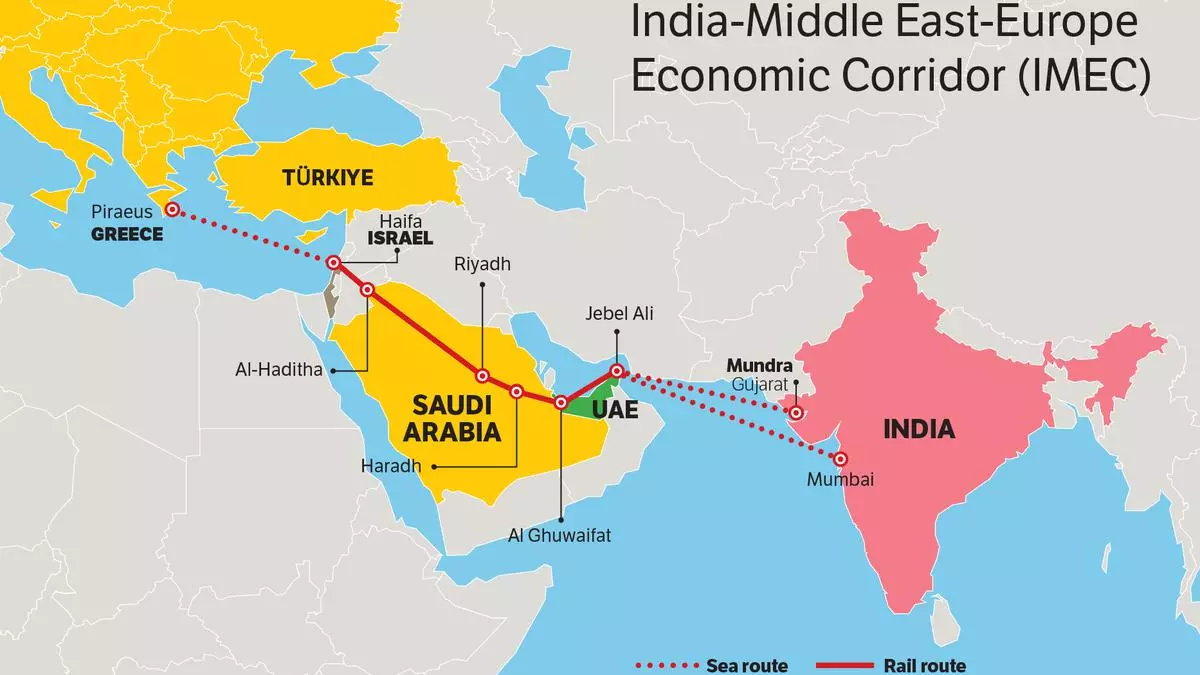
The article discusses the growing strategic relationship between Greece and India, emphasizing the importance of deepening bilateral ties across various sectors. It highlights the mutual benefits of collaboration, the significance of security and stability in their respective regions, and the potential for economic cooperation through initiatives like the India-Middle East-Europe Economic Corridor (IMEEC).
Key Highlights:
The visit of Greek Prime Minister Kyriakos Mitsotakis to India signifies the momentum in strengthening bilateral relations initiated by Indian Prime Minister Narendra Modi’s visit to Greece.
Both countries recognize the strategic importance of their geographical locations and the need for cooperation to ensure security, stability, and prosperity.
Collaboration extends across strategic, military, and business sectors, with examples such as joint military exercises and investment partnerships.
Economic reforms in Greece under the Mitsotakis government aim to boost sustainable growth and position the country as a reliable partner in the Eastern Mediterranean.
The concept of the India-Middle East-Europe Economic Corridor (IMEEC) emerges as a promising avenue for enhancing economic ties between India and Greece.
Emphasis is placed on fostering people-to-people ties through cultural exchanges, education programs, and media cooperation.
Key Challenges:
The pace of bilateral cooperation has been slow, indicating a need for greater momentum.
Despite existing collaborations, there is room for further expansion and diversification of partnerships.
Ensuring sustained commitment from both governments and businesses to deepen ties amidst global uncertainties.
“Constructing the India-Middle East-Europe Economic Corridor (IMEEC)”
“Critical year in the building of the Greece-India strategic partnership”
Quotes:
“India will find no better gateway to Europe than my country and for Greece there is no better gateway to Asia than a close strategic relationship with India.”
“Greece is still by far the best European country to invest in.”
“The fact that the political leaders of Greece and India are exchanging visits within a short time frame shows not just their determination to move the relationship forward but also the urgency they attach to this task.”
Useful Statements:
Collaboration between Greece and India is essential for ensuring security, stability, and prosperity in their respective regions.
Economic reforms in Greece aim to position the country as a reliable partner in the Eastern Mediterranean.
Initiatives like the India-Middle East-Europe Economic Corridor (IMEEC) offer significant potential for enhancing bilateral economic ties.
Examples and References:
Joint military exercises between the Indian Navy and Greek armed forces.
Investment partnerships between Indian and Greek businesses, such as the construction of a new airport on the island of Crete.
The involvement of Indian-Canadian billionaire Prem Watsa in Greek investments, advocating for Greek-Indian business cooperation.
Facts and Data:
Historic visit of Indian Prime Minister Narendra Modi to Greece in August 2023.
Collaboration between Indian and Greek businesses in various sectors, including construction, shipping, and finance.
Critical Analysis:
The article underscores the significance of deeper collaboration between Greece and India in light of geopolitical challenges and economic opportunities.
It highlights the need for accelerated efforts to overcome historical inertia and realize the full potential of the bilateral relationship.
Emphasis on people-to-people ties reflects a holistic approach to strengthening cultural and educational exchanges alongside economic and strategic cooperation.
Way Forward:
Both governments should prioritize the implementation of existing agreements and explore new avenues for cooperation.
Continued engagement between businesses from both countries is crucial for diversifying and expanding partnerships.
Investing in educational and cultural exchanges can foster mutual understanding and long-term cooperation.
Regular high-level visits and dialogue mechanisms should be maintained to sustain momentum and address emerging challenges.
Recent reports reveal a concerning development along India’s northeastern border with China as the Chinese people have begun occupying several Xiaokang border defence villages. Let’s delve into the details of these villages, their significance, and India’s response to this escalating situation.
About Xiaokang Border Defence Villages
Construction Initiative: China initiated the construction of 628 Xiaokang or “well-off villages” along India’s borders with the Tibet Autonomous Region over five years ago, including areas along the Line of Actual Control (LAC).
Infrastructure: These villages boast mostly double-storey, spacious buildings, designed for dual-use purposes, raising concerns from a defense standpoint.
Purpose and Concerns
Dual-Use Infrastructure: The exact purpose of these villages remains unclear, but they are perceived as strategic assets, capable of serving both civil and military functions.
Territorial Assertions: Many in the strategic community view these villages as a means for China to assert its claims over specific areas along the LAC, exacerbating tensions between the two nations.
India’s Response
Vibrant Villages Programme: In response, India launched the Vibrant Villages Programme in 2022, aiming to modernize border villages and promote tourism.
Pilot Projects: At least 17 border villages along the China-India border have been selected for development, including areas in Ladakh, Himachal Pradesh, Uttarakhand, Sikkim, and Arunachal Pradesh.
Focus on Northeast: Villages in Arunachal Pradesh’s eastern region and the Tawang area are specifically targeted for development, highlighting India’s strategic focus in this region.
Infrastructure Developments
China’s Initiatives: China has been actively constructing infrastructure along the LAC, including roads, bridges, and housing in Bhutanese territory.
India’s Countermeasures: India is also bolstering its border infrastructure, focusing on enhancing connectivity and developing alternate routes to the LAC, particularly in the northeast region.
Conclusion
The occupation of Xiaokang border defence villages by China raises significant concerns about regional stability and territorial integrity.
India’s proactive response through developmental initiatives underscores its commitment to safeguarding its borders and promoting socio-economic progress in border areas.
As tensions persist, both nations continue to navigate this complex geopolitical landscape with vigilance and strategic foresight.